Tokyo Subway: Two Operators, Thirteen Lines
I once watched a man at the Otemachi transfer between the Tokyo Metro Marunouchi Line and the Toei Mita Line tap his Pasmo against the orange gate, walk forty metres, then tap it against a blue gate, and stop dead. He turned to his wife and said, in Japanese, “we just paid two companies.” She said, “yes, that’s how it works.” He shook his head and went on. He had lived in Tokyo for, I would guess, twenty years.
In This Article
- The strange shape of the thing
- Why the fare gate beeps twice
- Why the colour codes are the same on both
- The line that started it: Asakusa to Ueno, 1927
- The wartime nationalisation
- The post-war push and the Marunouchi Line
- Answer Number One
- Why Toei is on three different gauges
- The 1960s build-out
- The line colours, 1970
- The 1990s and the Sarin attack
- Privatisation: 2004
- Why the merger has never happened
- The Fukutoshin Line and the through-running peak
- The 2024 IPO
- The fleets, briefly
- What this means today when you ride
- Buy the right ticket once
- The transfer rules
- Reading the through-service board
- Where the system runs above ground
- The level crossing
- The lines, in one paragraph each
- Where this fits in the rest of Tokyo’s rail network
- The walk past Ueno depot
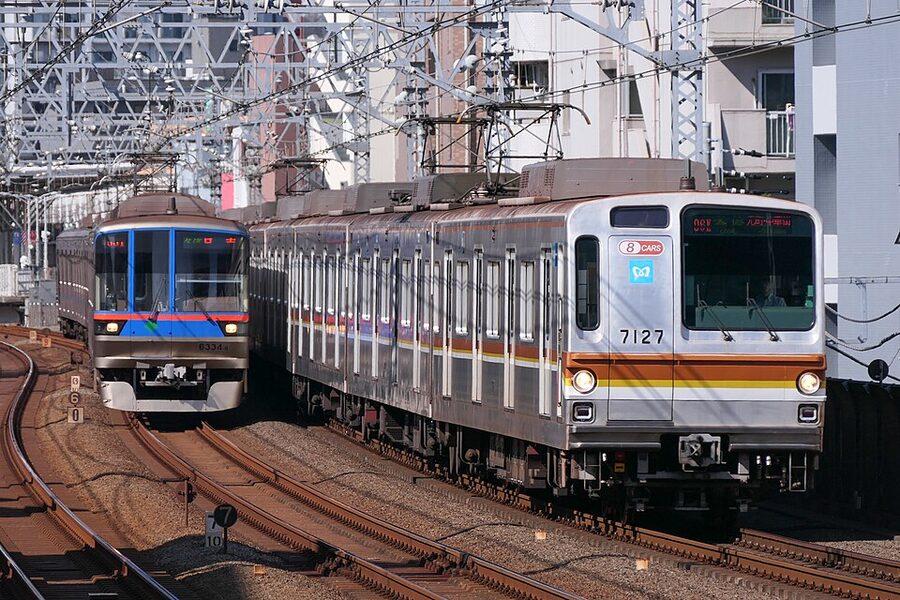
That is the Tokyo subway. Almost every major world city runs one subway operator. Tokyo runs two: Tokyo Metro with nine lines and Toei with four. The two are owned in separate boxes, tariffed in separate boxes, branded in separate boxes, and they let private suburban railways and a JR commuter line drive trains through both. The system you ride is a 99-year accumulation of compromises that produced what is, by some measures, the most heavily through-run urban rail network on the planet. This is how it got that way and what it means when you ride it.
The strange shape of the thing
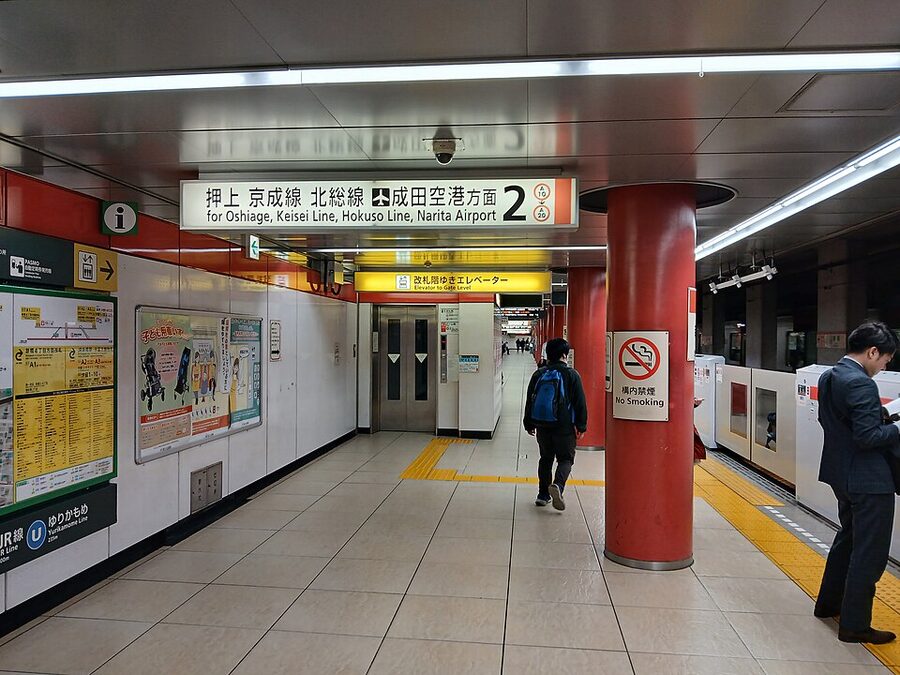
The numbers, before the story. Two operators. Thirteen lines: the Ginza, Marunouchi, Hibiya, Tozai, Chiyoda, Yurakucho, Hanzomon, Namboku, and Fukutoshin lines under Tokyo Metro; the Asakusa, Mita, Shinjuku, and Oedo lines under Toei. 286 stations between them. 304 km of track. A combined ridership somewhere around 8 million people on a normal weekday, which puts it in the same league as London, Moscow, and Seoul, behind only Beijing and Shanghai.
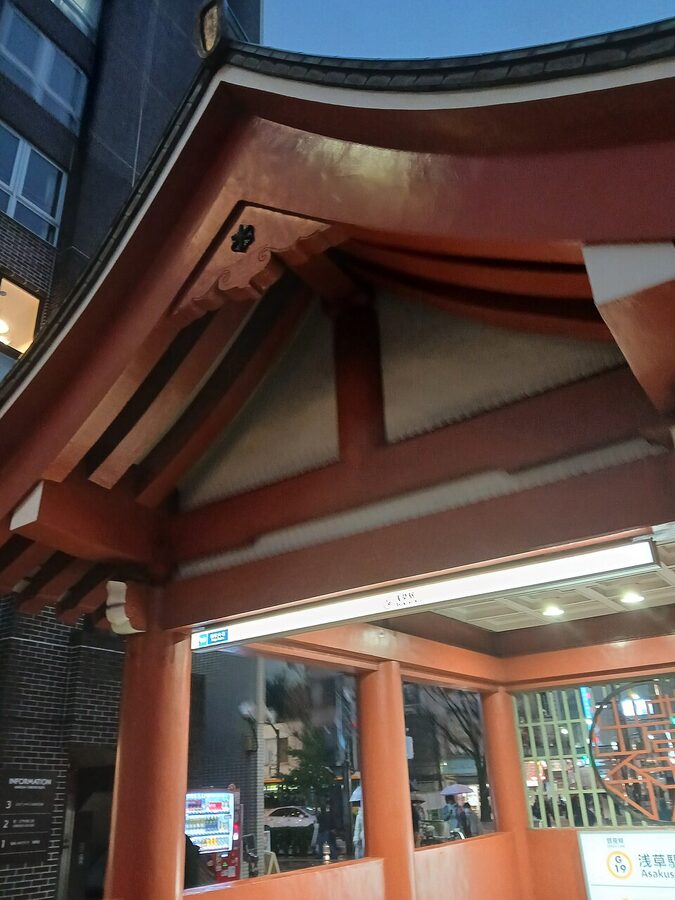
The split is roughly two-thirds, one-third. Tokyo Metro carries about 6.5 million passengers a day on 195 km of route; Toei carries about 2.7 million on 109 km. Tokyo Metro is the older operator by 33 years and ran what was, until April 2024, a fully publicly-owned company. Toei is, and always has been, a department of the Tokyo Metropolitan Government, which is why its stations carry the city seal at the gate and Tokyo Metro’s do not.
This was not anyone’s design. It is the residue of decisions that were each defensible at the time and which together produced a system nobody would build from scratch.
Why the fare gate beeps twice
The two-operator structure shows up in your wallet. A trip that crosses operators charges you both companies’ minimum fares minus a ¥70 transfer discount. So an inner-Tokyo Metro-only ride starts at ¥180; an inner-Toei-only ride starts at ¥180; a ride that touches both starts at around ¥290. If you are doing more than four rides in a day on both networks, the Tokyo Subway Ticket, sold to foreign passport holders for ¥800 (24 hours), ¥1,200 (48), or ¥1,500 (72), is genuinely useful. Locals get the ¥900 Toei + Metro one-day pass instead.
Pasmo and Suica work everywhere on both networks, on every private suburban operator they through-run with, and on JR East. They have been mutually accepted nationwide since 23 March 2013. You can tap a Suica bought at Tokyo Station onto the Sapporo subway eight months later and it just works.
Why the colour codes are the same on both
What looks like one network from the rider’s seat is held together by an interface layer. Both operators use the same family of line colours, the same letter-plus-number station codes (G01 Shibuya on the Ginza Line, A09 Sengakuji on the Toei Asakusa Line), and the same map design language. The line colours were standardised in 1970, the station numbering scheme was added in 2004 on the day Eidan became Tokyo Metro, and most of the signage typography has been Gothic 4550 since the early 1970s.
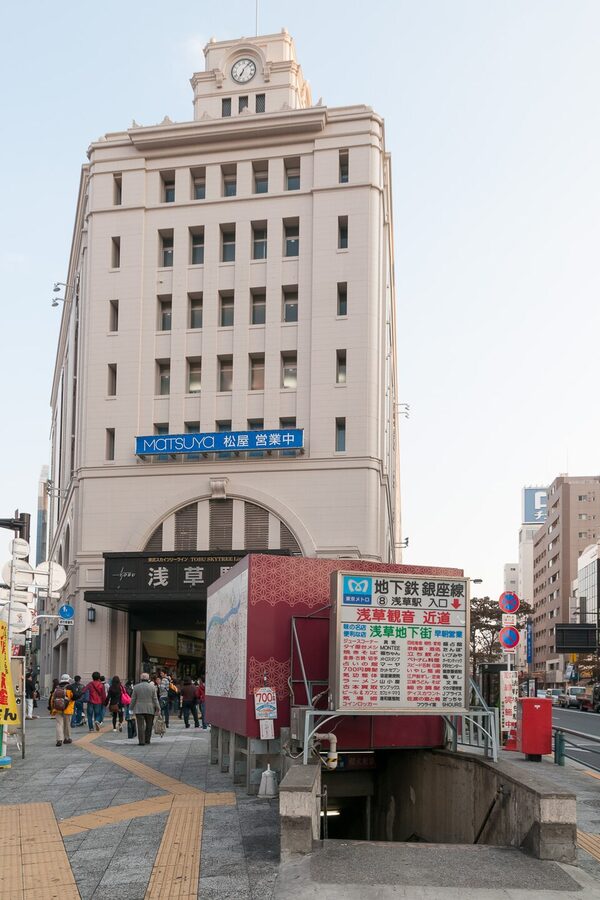
The interface layer is the reason you can navigate Tokyo’s subway without reading kanji. Once you learn the alphabet, the kanji is decorative. The interface layer was largely Eidan’s work in the 1970s, kept by Tokyo Metro after privatisation, and adopted by Toei because Toei would have been mad not to. The 1989 Japan Design Award went to Eidan’s sign system. The Tokyo Metropolitan Government quietly copied most of it.
The line that started it: Asakusa to Ueno, 1927
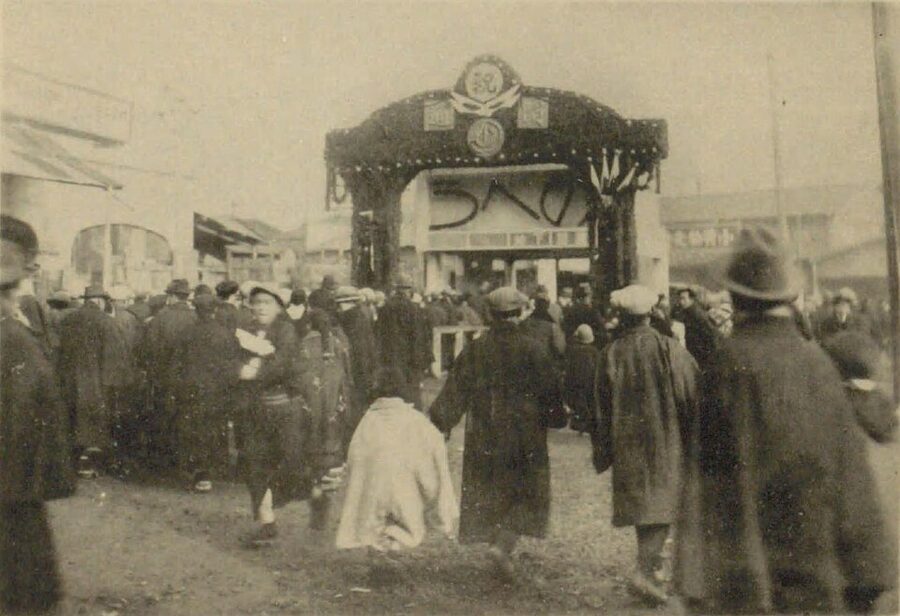
The story starts with one man and one stretch of track. Hayakawa Noritsugu founded the Tokyo Underground Railway Company on 29 August 1920 with the explicit ambition of building Tokyo a London-style metro. He had been to London. He had been to New York. He came back, formed the company, and started buying land in 1925. The 2.2 km between Asakusa and Ueno opened on 30 December 1927. Two-hour queues for a five-minute ride. The slogan on the opening posters: 東洋唯一の地下鉄道, “the Orient’s only underground railway”. This was, narrowly, true.
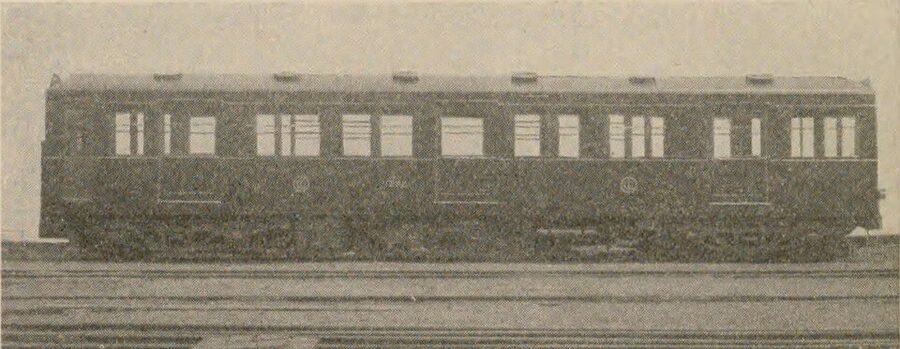
The original idea had been to push straight through to Shimbashi and then on to Shinagawa, but the 1923 Great Kanto Earthquake had drained Tokyo’s investment markets, so Hayakawa picked the highest-traffic short stretch instead. Asakusa was at the time Tokyo’s biggest entertainment district. Ueno was the city’s main rail terminus for trains to the north. Connecting them by underground was, commercially, the closest thing to a guaranteed return Tokyo offered. The financing was tight enough that Hayakawa had to negotiate construction subsidies from the department stores along the route. Mitsukoshi paid for an entirely new station to be built, which is why the Mitsukoshimae stop exists at all and why it lets you out directly into the Mitsukoshi basement food hall. Nihombashi Takashimaya paid for the Nihombashi station. Several other big stores covered fragments of construction cost in exchange for direct underground access.
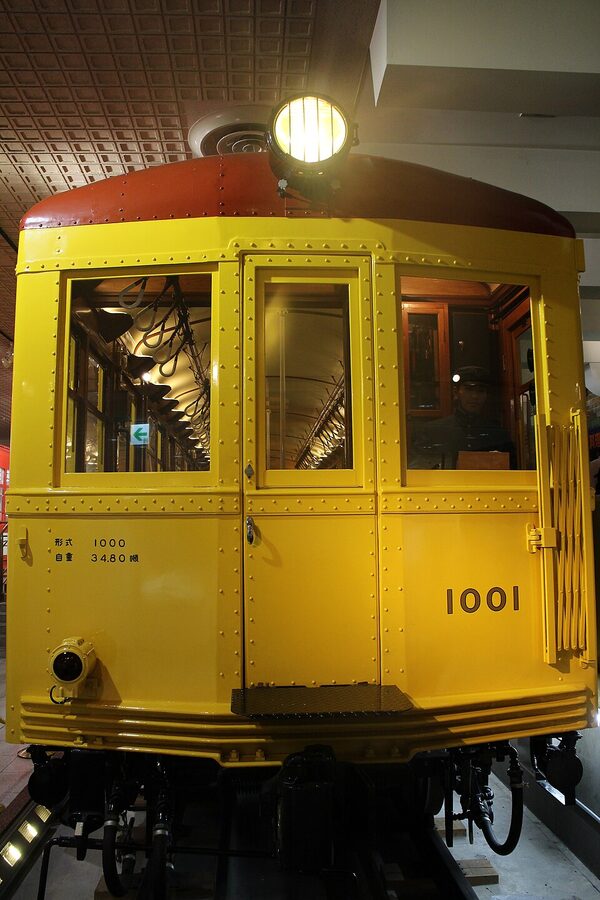
The Asakusa-to-Ueno tunnel reached Shimbashi in stages over the next seven years, terminating there on 21 June 1934. By then, it was no longer the only underground game in town. A second company, the Tokyo High-Speed Railway, had got a licence in 1934 to build the western half: Shibuya to Shimbashi. The High-Speed Railway was backed by Goto Keita, the same man who would build out the Tokyu Corporation from the Meguro-Kamata Electric Railway. Goto and Hayakawa did not get on. Both lines used the same standard gauge and the same 600 V DC third rail, deliberately, but neither company wanted to share platforms.
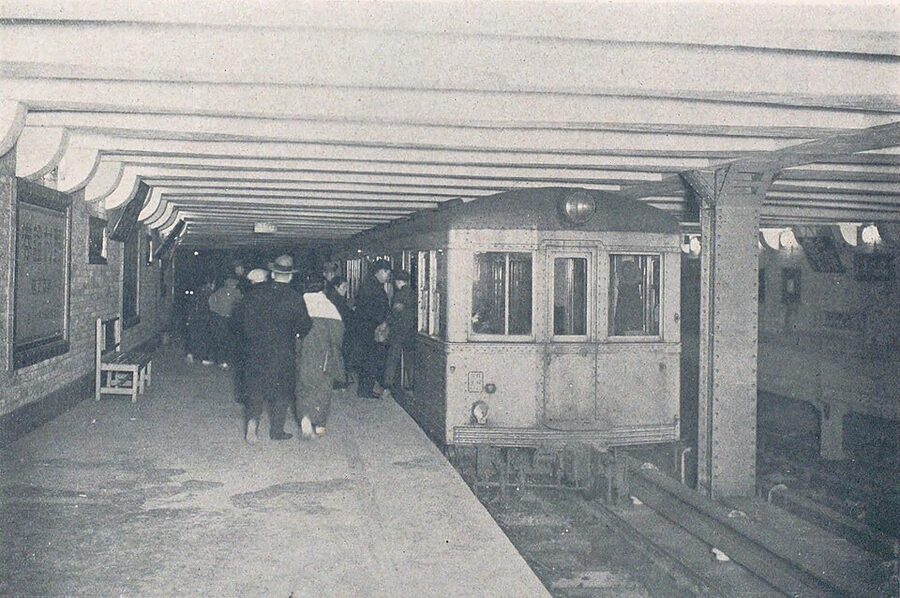
The High-Speed Railway opened Shibuya to Toranomon in November 1938 and pushed on to Shimbashi in January 1939. For nine months in 1939, Shimbashi had two parallel “Shimbashi” stations on the same alignment, one belonging to each company, with passengers walking between them across a connector tunnel. On 16 September 1939 the two companies agreed to through-run, and the Asakusa-to-Shibuya end-to-end Ginza Line as we know it began. Two operators on one continuous route, sharing trains, splitting revenue, fighting about everything. The arrangement lasted exactly two years.
The wartime nationalisation
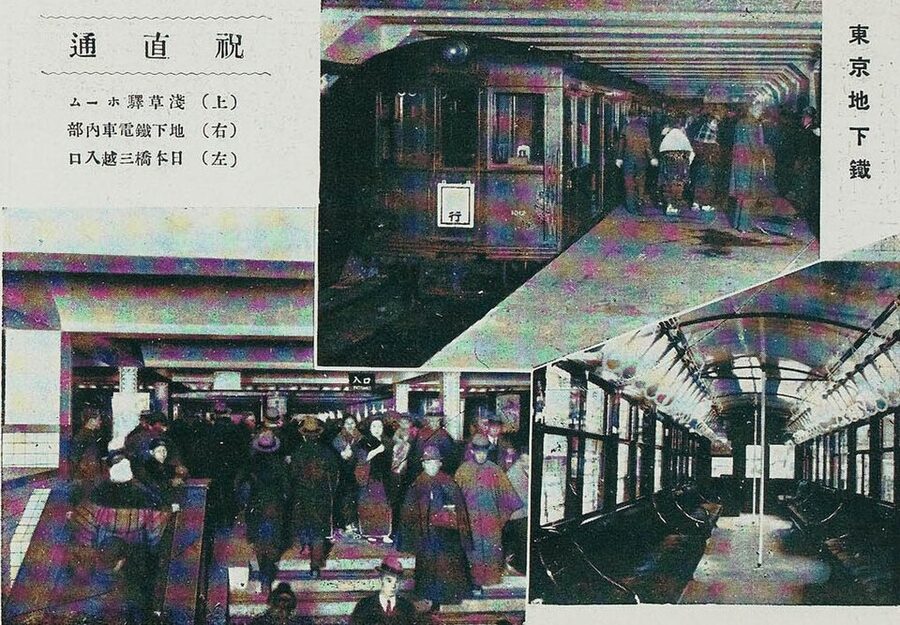
By 1941, Japan had been at war in China for four years and was three months from Pearl Harbor. The state needed to consolidate transport. The Land Transport Coordination Law (陸上交通事業調整法) had passed in 1938, in theory to let Tokyo merge its overlapping bus, tram, and rail operators along London Transport lines. In practice, by 1941, it became the legal vehicle for nationalising whatever the government wanted nationalised, and Tokyo’s two underground operators were a natural target.
On 4 July 1941, the cabinet established a new public-law corporation: the Teito Rapid Transit Authority (帝都高速度交通営団, abbreviated TRTA in English and almost universally called Eidan in Japanese). Eidan was capitalised at ¥60 million, of which ¥40 million came from the central government, ¥10 million from Tokyo City, and the rest from a deliberately mixed group of private railways: ¥2 million each from Tokyu’s predecessor Tokyo-Yokohama Electric and from Tobu; ¥1 million each from Keisei and from Odakyu; smaller amounts from Seibu and Musashino. On 1 September 1941, both subway operators were folded into Eidan. Hayakawa was sidelined. Goto’s company kept its property holdings but lost its underground operation.
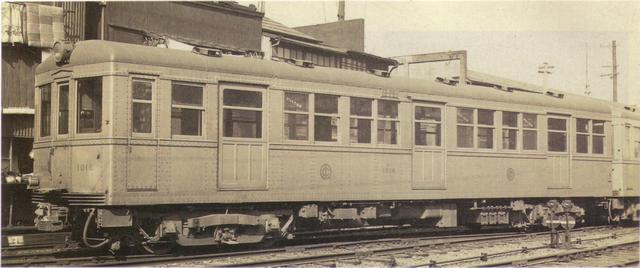
What “Eidan” meant in 1941 is worth slowing down for. The word 営団 was a wartime coinage for a public-law corporation funded jointly by state and private capital, set up to manage a strategic sector. There were several: a Housing Eidan, a Food Eidan, a Forestry Eidan. After the war, the occupation authorities under SCAP dissolved most of them as instruments of the war economy. Eidan Subway was different. The Tokyo Metropolitan Government wanted Eidan dissolved too, and to absorb the network as a city department, but Eidan’s executives argued, successfully, that subway-building had been a global trend in the 1930s and not a war measure: London, Berlin, Moscow had all been doing it. SCAP accepted the argument. The Tokyo Metropolitan Government did not forget the rejection, and the long-term consequence was that fifteen years later, when Tokyo wanted more subway built, the city would push for permission to build its own.

The Pacific War made the subway, briefly, the most reliable surface in central Tokyo. American B-29s bombed the wooden city above for months in 1944 and 1945. The 27 January 1945 raid took out Ginza Station and Kyobashi Station directly, killed many passengers, and burst the water main that flooded the Nihombashi-to-Shimbashi tunnel for two months. By June 1945, only 24 of 84 cars in the Ginza Line fleet were operational. The line never closed entirely, but it ran on partial-section shuttles for half of 1945 and through the immediate post-war period, when electricity rationing was the binding constraint.
The post-war push and the Marunouchi Line
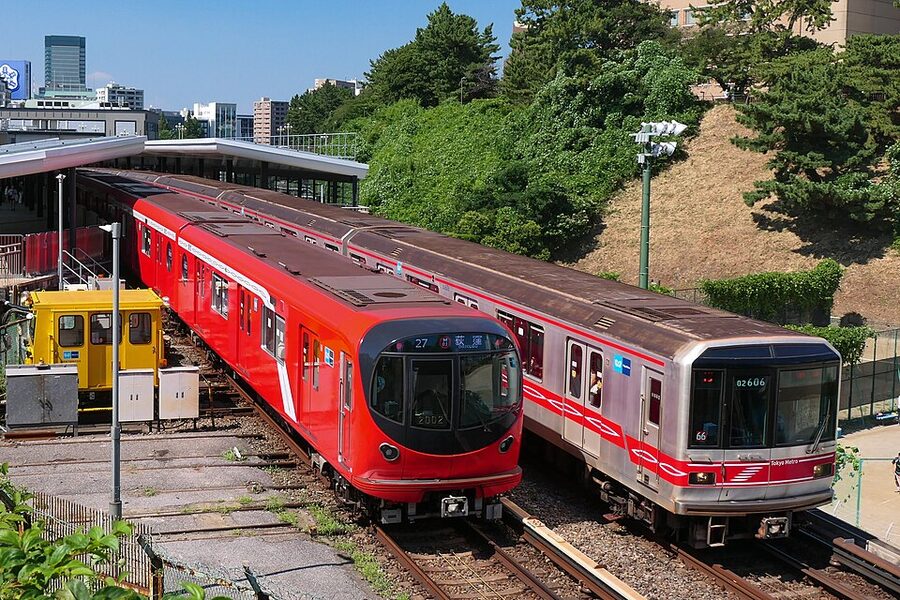
The first new subway line in post-war Asia opened on 20 January 1954: the Marunouchi Line, Ikebukuro to Ochanomizu, 6.4 km, in Eidan red. It used the same standard gauge and 600 V DC third rail as the Ginza Line, deliberately, so the two networks could exchange rolling stock through the connector at Akasaka-mitsuke. That gauge-and-power compatibility was a decision Eidan would not repeat on the next four lines, and the contrast tells you something about how Tokyo’s underground priorities shifted.
By 1956 the Transport Ministry had a problem on its desk. Tokyo’s outer suburbs were filling in faster than anyone had planned. The big private suburban railways, Tobu and Tobu in particular, plus Keio, plus Odakyu, plus Tokyu, plus the Keihin Electric Express Railway (Keikyu), plus Keisei, were all queueing up to extend their own lines into central Tokyo as underground sections. If each had been allowed to build its own central-Tokyo tunnel, you would have ended up with seven or eight independent inner-Tokyo subway operators, fragmenting fares and complicating planning.
Answer Number One

The fix arrived in two pieces. In June 1956, the Urban Transport Council issued Answer Number One (都市交通審議会答申第1号). It said: instead of letting every private railway dig its own central tunnel, force them to terminate at the city limits and through-run with whoever holds the inner-Tokyo subway licence. The system would expand by relay rather than by parallel.
In June 1957, the council issued the second piece. It split the inner-Tokyo subway-building licence. Eidan would keep some lines. The Tokyo Metropolitan Government, refused permission to take over Eidan in 1945, would build the others. The first to be transferred to the city was Line 1, the future Asakusa Line. The licence the city wanted was handed over jointly to the Metropolitan Government and to Keikyu, with the city as builder.

The Toei Asakusa Line opened on 4 December 1960, Oshiage to Asakusabashi. The first day’s timetable showed Keisei trains running into Toei tunnels: the first time in Japanese rail history a major private railway sent its own trains under another operator’s contact-line, and the moment that locked Tokyo into the through-running model that defines the network today. Keikyu joined the through-service in 1968, when the Asakusa Line reached Sengakuji and connected to the Keikyu main line. By 1970 you could ride a single Keisei train from Narita to a Keikyu station near Yokohama, switching power systems mid-journey, with one ticket and no transfer.
Why Toei is on three different gauges
The follow-on consequence was that every new subway line had to be built to the gauge of its through-running partner, not to a citywide standard. The Asakusa Line is 1,435 mm standard gauge to match Keisei and Keikyu. The Mita Line, opened in 1968, is 1,067 mm narrow gauge to match Tokyu’s Meguro Line. The Shinjuku Line, opened in 1978, is 1,372 mm baba-kido “horse-tram” gauge to match Keio, the only operator in Tokyo on that gauge and one of perhaps three in the world. The Oedo Line, opened in 2000, is standard gauge but uses linear-motor propulsion in a tunnel small enough to fit a smaller car, which means it cannot through-run with anything.
The Tokyo Metro side picked up the same constraint. The Hibiya Line is 1,067 mm to through-run with Tobu and, until 2013, Tokyu Toyoko. The Tozai Line is 1,067 mm to through-run with the JR Chuo Line. The Chiyoda Line is 1,067 mm to through-run with Odakyu and JR Joban. The Hanzomon Line is 1,067 mm to through-run with Tokyu Den-en-toshi. Only the Ginza and Marunouchi lines kept their pre-war standard gauge and third rail; only those two cannot through-run with anything else, and only those two get an entirely self-contained fleet of trains.
The 1960s build-out
The 1960s were the years the Tokyo subway turned from a Ginza-and-Marunouchi pair into a system. The pace of opening, in this decade, was relentless:
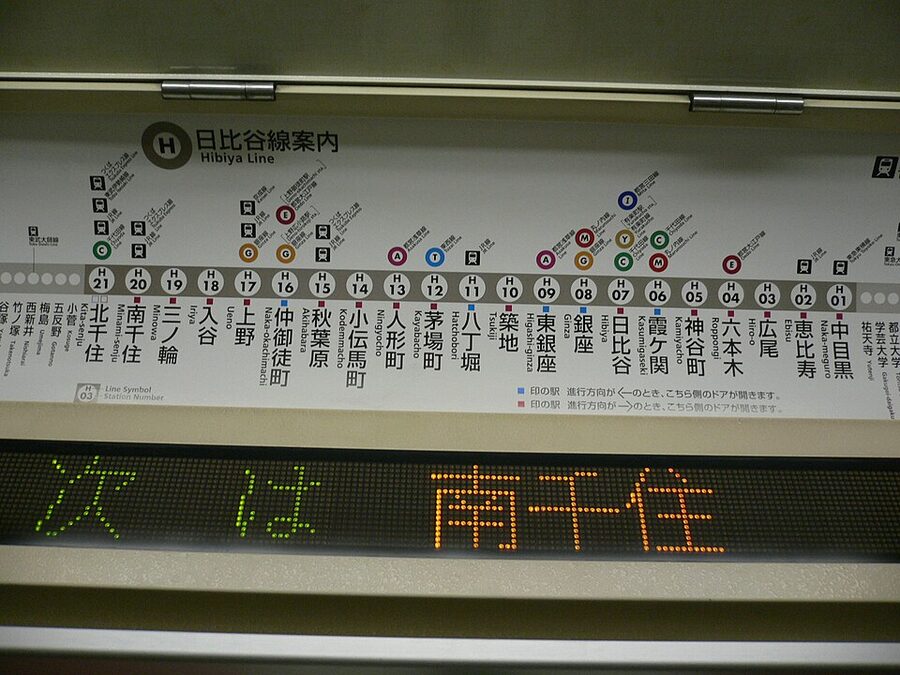
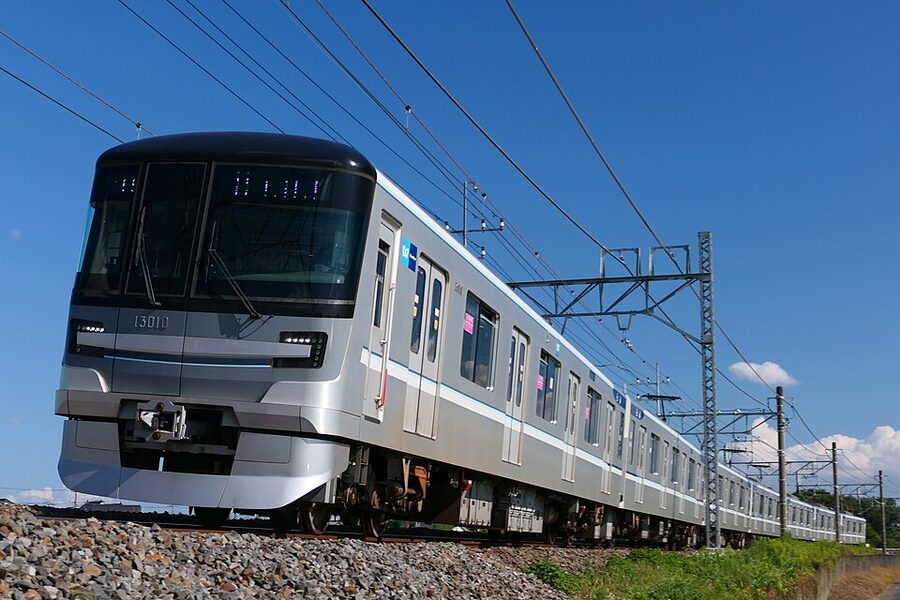
The Hibiya Line opened in 1961 (Minami-Senju to Naka-Okachimachi) and was extended in stages to Naka-Meguro by 29 August 1964. From day one of the Naka-Meguro extension it through-ran with Tokyu Toyoko, and it had been through-running with Tobu Isesaki at the other end since 31 May 1962. This was the first time Eidan ran a line that interworked with a major private railway from both ends. The 13000 series, in service since March 2017, replaced the venerable 03 series in 2020.
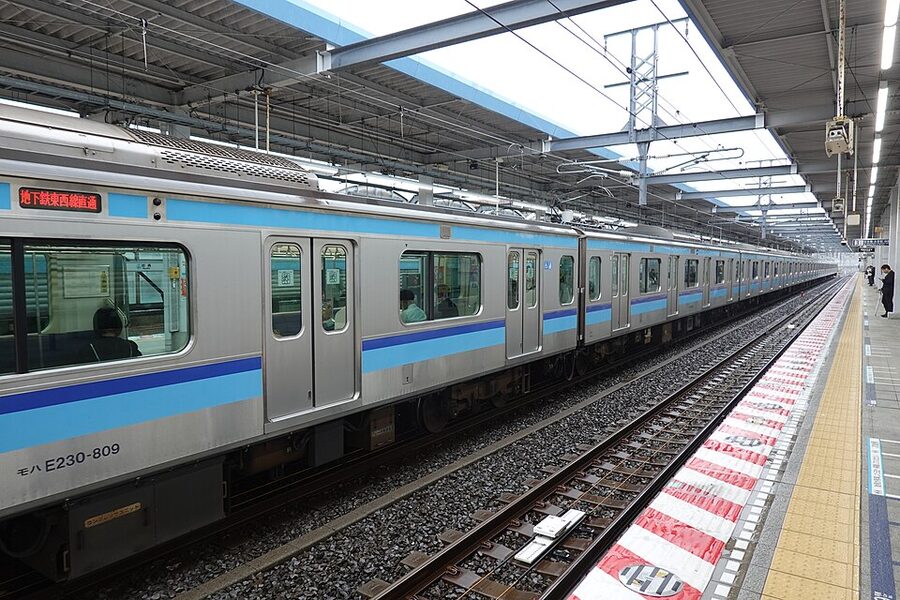
The Tozai Line opened in stages from 23 December 1964 (Takadanobaba to Kudanshita) and reached its full run by March 1969. From 1 October 1966 it through-ran with the JR Chuo Line at Nakano; from late 1969, with the JR Sobu Line at Nishi-Funabashi. The Tozai is, even now, the line on which JR commuter trains regularly drive into Tokyo Metro tunnels and back out again on a single ticket, the most-counterintuitive arrangement on the network.
The Mita Line, Toei’s second, opened in stages from 27 December 1968. The Chiyoda Line, Eidan’s fifth, opened on 20 December 1969. The Asakusa Line completed its full Oshiage-to-Sengakuji length on 30 November 1968 and connected through to Keikyu the same day. By the end of 1970 Tokyo had eight subway lines where it had had two in 1960. Most of them were already through-running with at least one suburban private railway.
The line colours, 1970
In 1970, with eight lines opened or planned and through-services proliferating, Eidan made a small decision that turned out to be enormous. Each line was assigned a single permanent colour. Ginza orange. Marunouchi red. Hibiya silver. Tozai sky blue. Chiyoda green. Yurakucho gold. Hanzomon purple. Namboku emerald. Fukutoshin brown. Toei matched: Asakusa rose, Mita Indigo blue, Shinjuku leaf green, Oedo magenta. The colours have not changed since adoption, except for a small palette tune in 2014-2016 to make the Yurakucho yellow distinguishable from the Ginza orange on smaller smartphone screens.
The single line colour applied across operators is the closest thing the Tokyo subway has to a citywide design system. The Tokyo Metropolitan Government adopted Eidan’s colour codes for Toei without comment. Tokyo Metro published the design manual after privatisation, and the rest of Japan’s subway operators (Sapporo, Sendai, Yokohama, Nagoya, Kyoto, Osaka, Fukuoka, Kobe) all adopted variations on it.
The 1990s and the Sarin attack
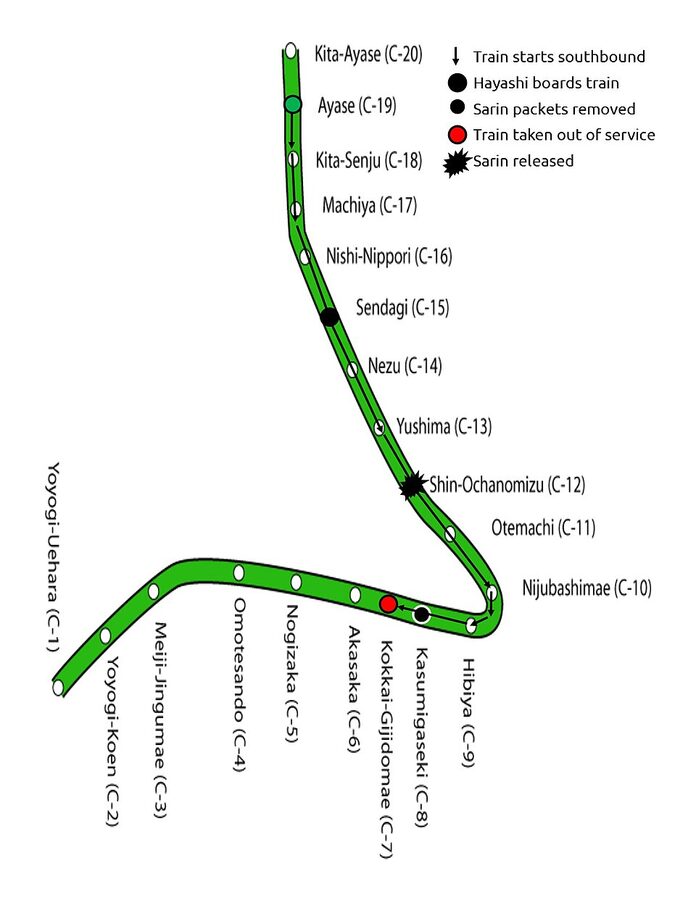
The single most consequential day in the Tokyo subway’s history was 20 March 1995. Five members of the Aum Shinrikyo cult released sarin in plastic bags on the Marunouchi, Hibiya, and Chiyoda lines during the morning rush. Twelve passengers died (the official judicial figure; some accounts cite 14 across longer-term complications). Around 5,500 were injured. The Hibiya Line, the most heavily contaminated, suspended all-day. The Chiyoda and Marunouchi lines suspended in the morning. Two Eidan station staff members at Kasumigaseki died trying to remove the bags from the floor of the trains.
The aftermath restructured everything that followed. Eidan and Toei accelerated the rollout of automatic ticket gates (already underway, completed in 1995). They began installing platform-edge doors. They retrofitted CCTV across the network. They restructured emergency response, including a new joint-headquarters with the police. The 1995 attack is also part of the reason Tokyo subway stations have, to this day, a noticeable absence of public rubbish bins on the concourse: the bins were one of the obvious places to drop a second bag, and removing them was the simplest defence.
Privatisation: 2004
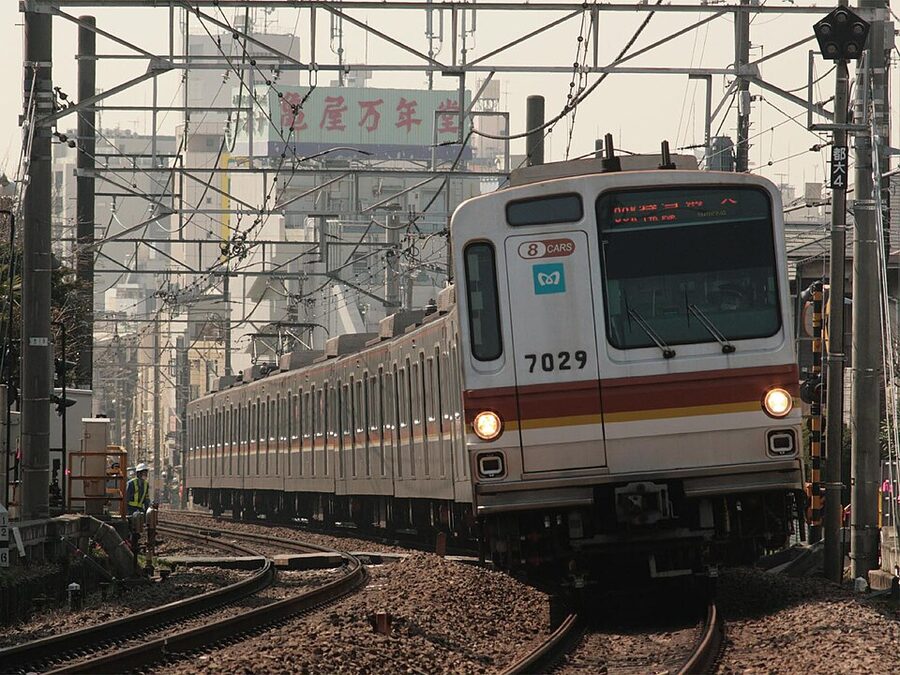
Eidan was, by the late 1990s, an anomaly. The other wartime 営団 public corporations had been dissolved decades earlier. The privatisation of Japanese National Railways in 1987 had set a template for converting public-rail bureaucracies into joint-stock companies. The Hashimoto and then Koizumi cabinets in the late 1990s and early 2000s ran a sweeping public-corporation review, the Special Public-Law Reform, which set itself the goal of either privatising or abolishing roughly 160 special public-law bodies. Eidan was on the list.
The cabinet had decided in 1995 that Eidan would be privatised once the Namboku or Hanzomon lines were complete. The 2001 Koizumi cabinet pushed it to spring 2004. The Tokyo Metro Company Law (東京地下鉄株式会社法) was promulgated on 18 December 2002, naming the new joint-stock entity that would inherit Eidan’s lines. Note: this was not the standard JNR-style break-up. Eidan was not insolvent, was not in debt distress, and was not being broken up to deal with structural problems. The privatisation was framed as administrative reform, not financial repair, and the case for privatisation was contentious enough that several Eidan-era executives publicly opposed it.
The transition happened on 1 April 2004. Eidan’s name, assets, debts, employees, rolling stock, and operating licences all transferred wholesale to the new Tokyo Metro Co., Ltd.. The new operator was capitalised on the back of Eidan’s capital structure: 53.4% of the shares went to the central government (initially the Ministry of Finance, on the JNR Settlement Corporation paper trail), 46.6% to the Tokyo Metropolitan Government. Both shareholders were public bodies. The legal form was tokushu kaisha, “special joint-stock company”, not a fully private company; share issuance, board appointments, and other governance matters required ministerial sign-off. From the rider’s perspective, what changed on 1 April 2004 was the heart-M logo, the station numbering scheme, and the launch of TV advertising (which Eidan, as a public corporation, had been forbidden to run).
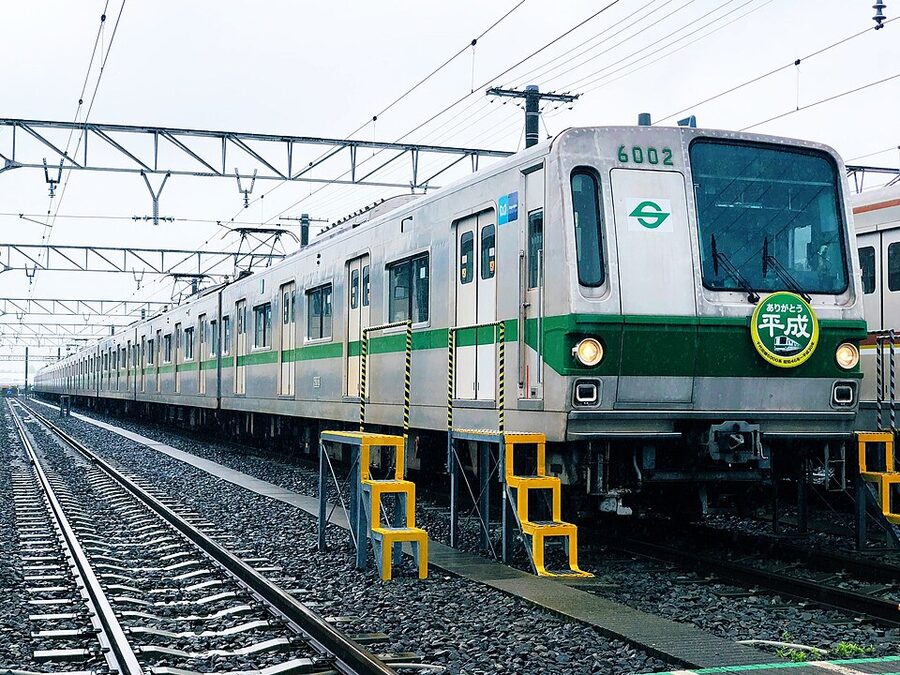
The thing that did not change was Toei. Toei was already a city-government department; it stayed a city-government department. From 1 April 2004 onwards, the Tokyo Metropolitan Government was a 46.6% shareholder in Tokyo Metro AND the operator of Toei. The conflict that produces is part of why mergers between the two have been floated, in 2010-11 and again in 2017, and have repeatedly come to nothing.
Why the merger has never happened
The basic structural objection is that Toei carries massive construction debt left over from the Oedo Line build-out (the Oedo Line had to be tunnelled deep, in linear-motor format, through layers of inner-Tokyo development that ruled out cut-and-cover; the cost overran badly). A merger would put that debt onto Tokyo Metro’s balance sheet, and Tokyo Metro management has consistently declined to absorb it. The Ministry of Land, Infrastructure, Transport and Tourism, the central-government regulator, has not pushed.
The interim, agreed in 2011 between then-Vice-Governor Inose Naoki and the central government, was: keep the operators separate, lock in Tokyo’s veto over any future Tokyo Metro share sale, and increase the inter-operator transfer discount and the number of free-transfer stations between the two networks. That deal is why the ¥70 transfer discount exists. The deal is also why, when Tokyo Metro finally listed in 2024, the Tokyo Metropolitan Government had to consent to the share sale.
The Fukutoshin Line and the through-running peak
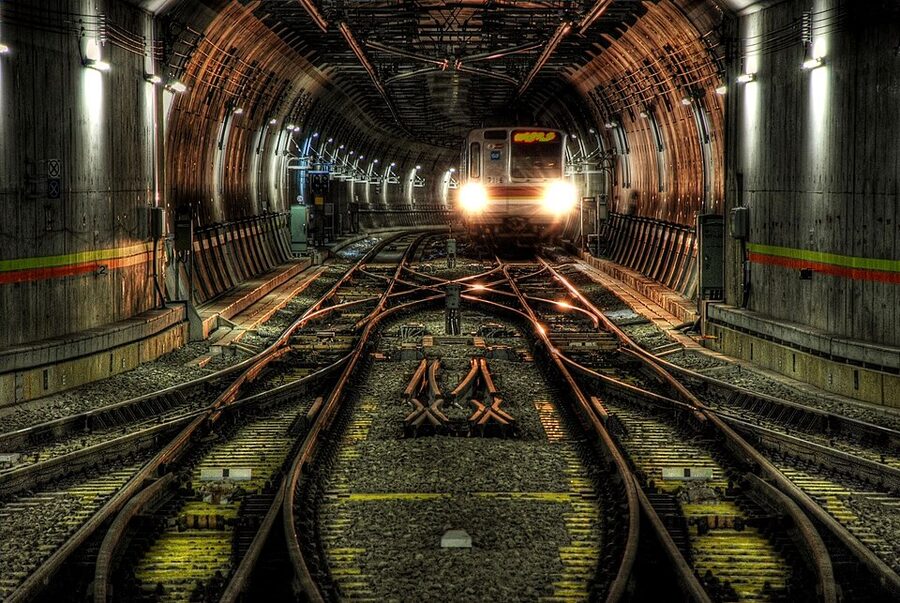
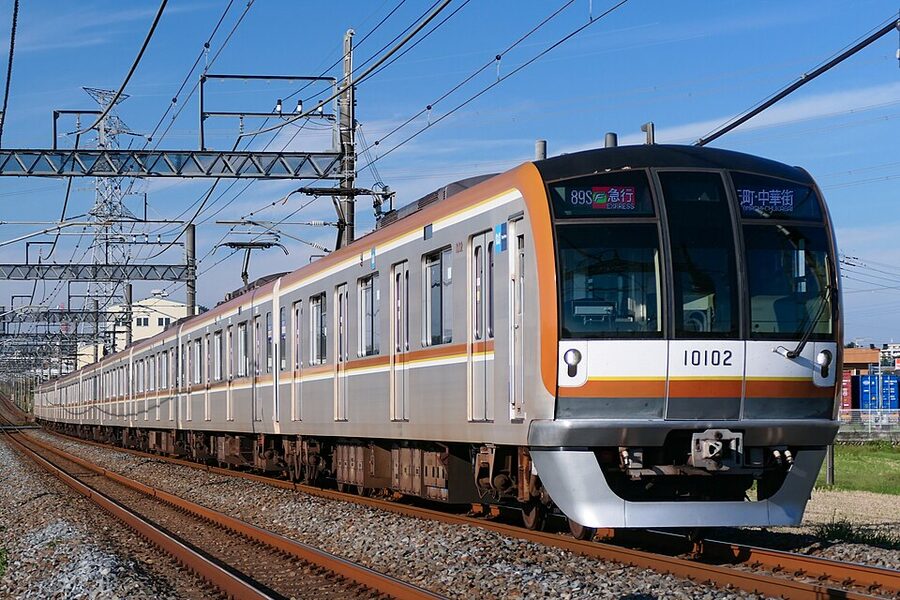
Tokyo Metro’s first and to date only new line under the new name was the Fukutoshin Line, opened 14 June 2008. It runs north-south through the western inner suburbs, Wakoshi to Shibuya, where it connects to the Tokyu Toyoko Line and continues, on a single ticket, all the way to Yokohama Motomachi-Chukagai. Through-services from the north over Tobu Tojo and Seibu Ikebukuro pass through Tokyo Metro and continue south on Tokyu and Minato Mirai. Five operators on a single revenue-sharing pattern.
The Fukutoshin’s Shibuya-end interchange with Tokyu Toyoko was rebuilt over five years for that 2008 opening, and the change had a knock-on effect that gives you a sense of how dependent the network is on its private partners. Until 16 March 2013, Tokyu Toyoko trains had been through-running the Hibiya Line at the other end of the Toyoko alignment. On 16 March 2013, that arrangement was discontinued. Toyoko switched its through-service from the Hibiya to the Fukutoshin. Hibiya Line trains, displaced from Toyoko, retreated to Naka-Meguro as their southern terminus.
The next reconfiguration came in 2023. On 18 March, the Sotetsu Shin-Yokohama Line opened, linking the Sotetsu suburban network to Tokyu Shin-Yokohama and from there into the Tokyo Metro network at Meguro. That single junction extended through-services to Sagami-Ono and Ebina; a rider boarding a Saitama Railway 2000 series at Urawa-Misono can now ride end-to-end to Ebina, traversing four operators and 87 km, on one ticket.
The 2024 IPO
The Tokyo Metro IPO had been planned, on paper, since 2008. The original idea was to list shortly after the Fukutoshin Line completed and the network was finished. The 2008 financial crisis pushed it back. The 2011 Tohoku earthquake pushed it back again. The 2010-11 Inose deal between Tokyo and the central government pushed it back further. By 2020, with COVID having compressed ridership by 40%, the question was whether it would happen at all.
It happened on 23 October 2024. Tokyo Metro listed on the Tokyo Stock Exchange Prime Market at ¥1,200 per share, raising approximately ¥348 billion (about ¥3.48 trillion). The two existing public shareholders, the central government and the Tokyo Metropolitan Government, sold half their stakes; the company itself issued no new shares. Each shareholder kept 50% of its original stake, which means the post-IPO ownership is roughly 26.7% central government, 23.3% Tokyo, 50% public float.
The proceeds were earmarked, by both shareholders, before the listing. The central government’s share of the proceeds, around ¥174 billion, was committed by statute to the Tohoku reconstruction fund (the disaster-rebuilding budget that has been running since 2011). The Tokyo Metropolitan Government’s share, also around ¥174 billion, was committed to network expansion: principally the southern Namboku Line extension to Shinagawa (target opening 2030), the Yurakucho Line extension into the Toyosu-Sumiyoshi area, and a citywide disaster-resilience capital programme. The IPO is, in other words, the closest thing the modern Tokyo subway has to a self-funding capital cycle: the network goes public, the capital raised goes back into the network, the central government recovers something for the Tohoku response.
Tokyo Metro is still, post-IPO, a special joint-stock company under the 2002 statute. The two public shareholders together hold 50% and a coordination veto. Full privatisation, the original 2002 ambition, has not happened. It is not clear, in mid-2026, that it will.
The fleets, briefly
The rolling stock answers, briefly, because the Tokyo Metro trains piece covers the operator’s fleet in detail. As of mid-2026:
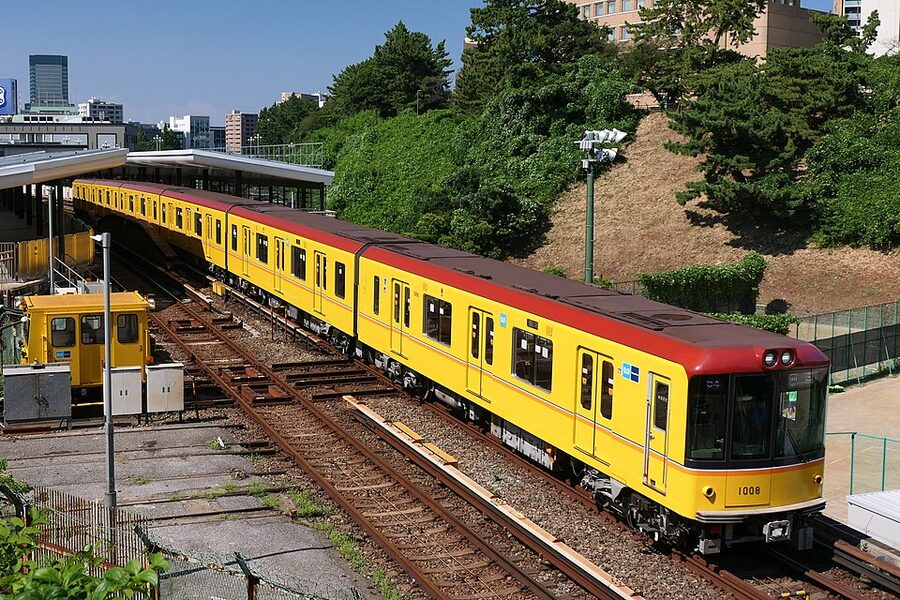
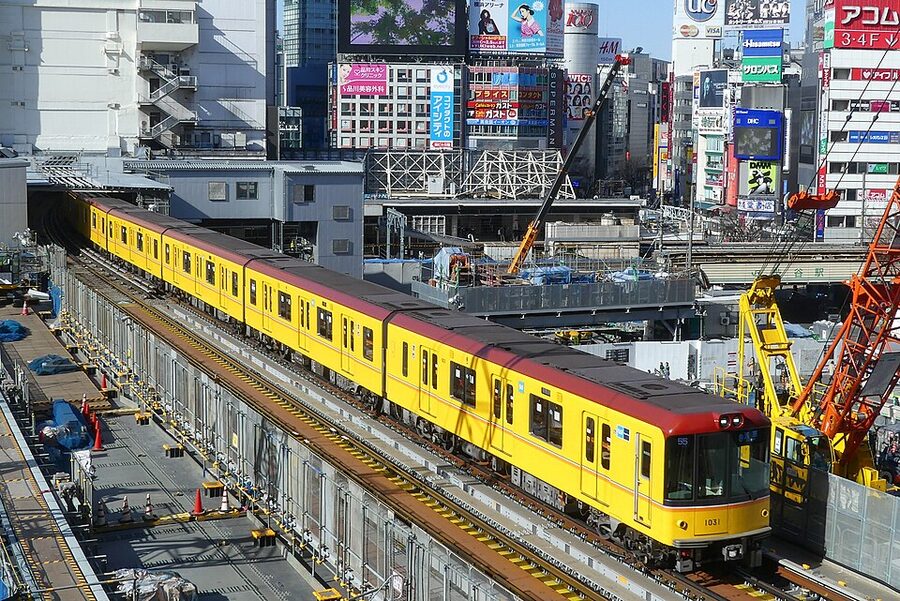
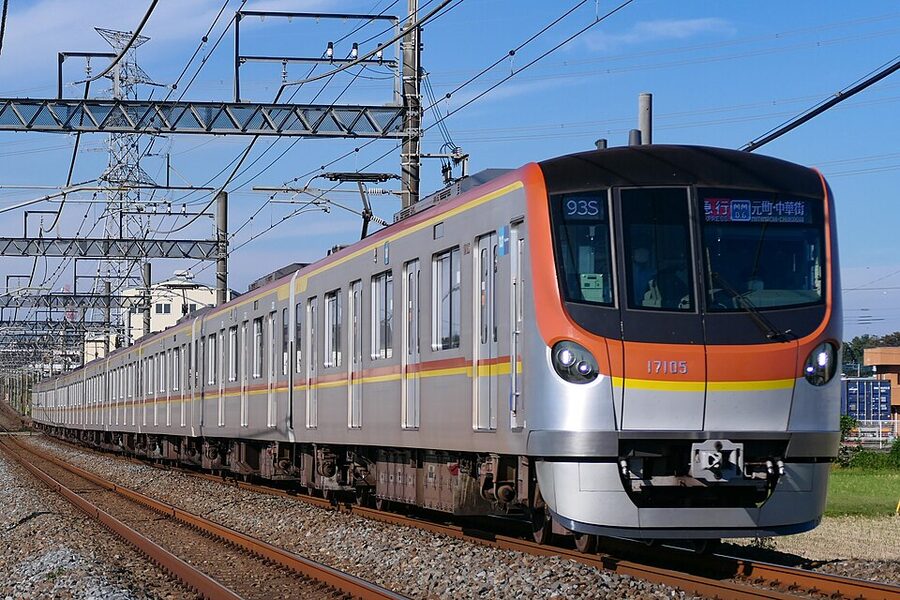
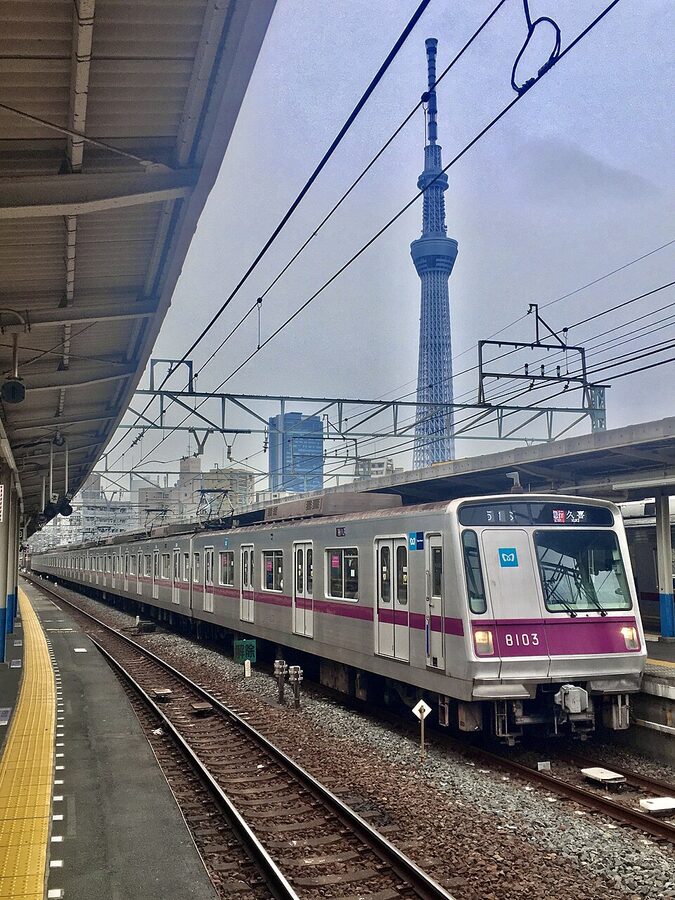
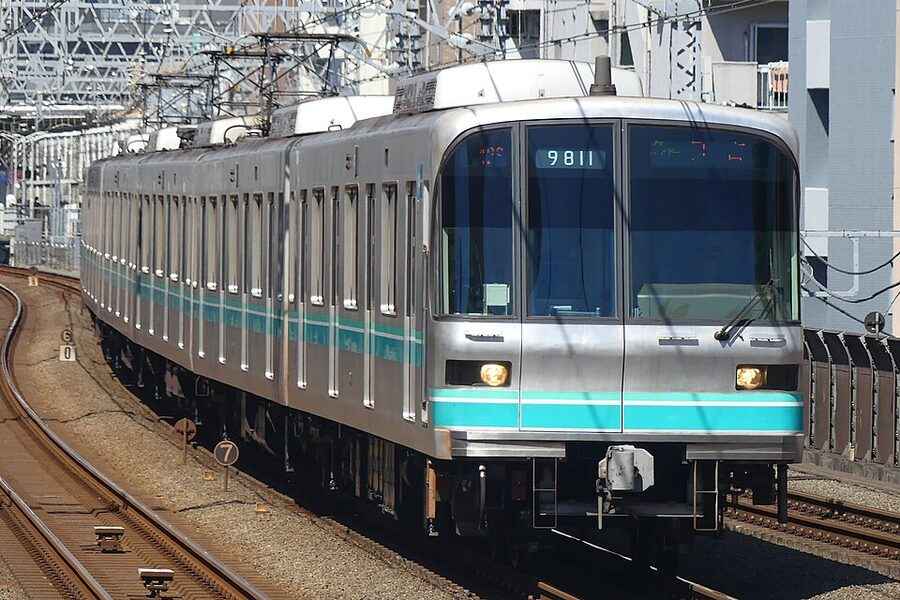
Tokyo Metro: Ginza Line 1000 series; Marunouchi Line 2000 series; Hibiya Line 13000 series; Tozai Line 05/07/15000 series; Chiyoda Line 16000 (and 05); Yurakucho/Fukutoshin Line 10000 and 17000 series; Hanzomon Line 8000 (retiring), 08, and 18000 series; Namboku Line 9000 series.
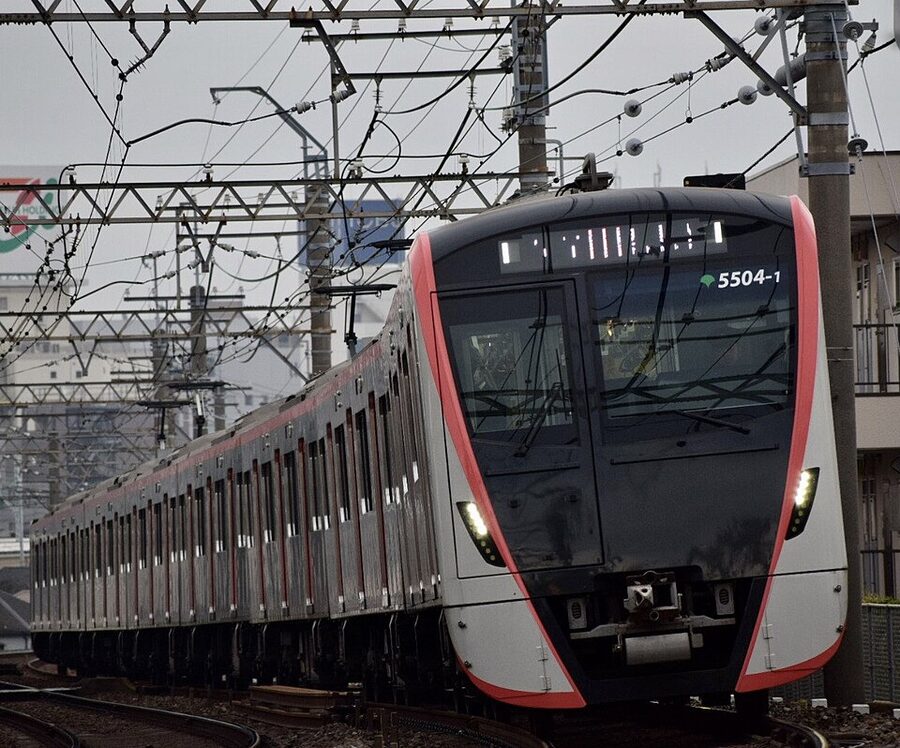
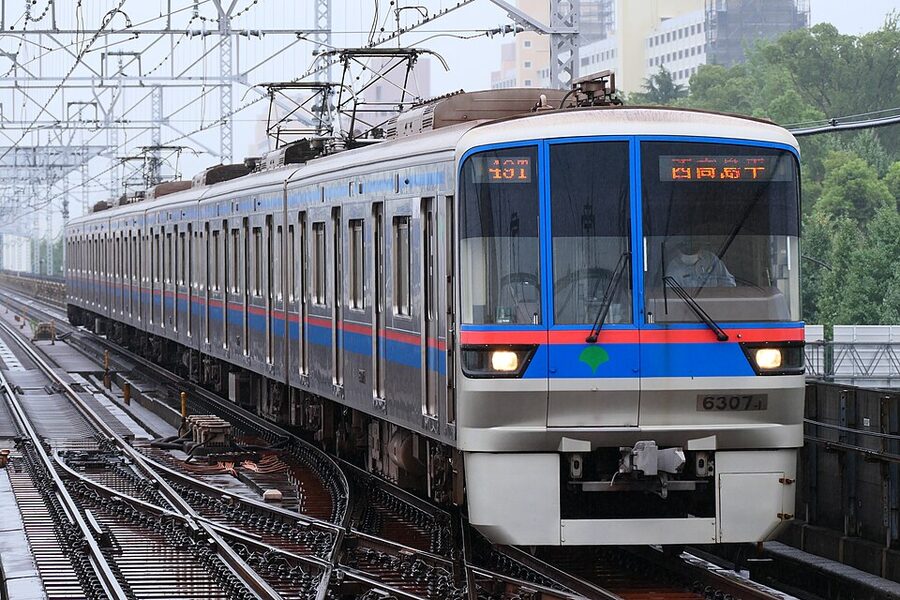
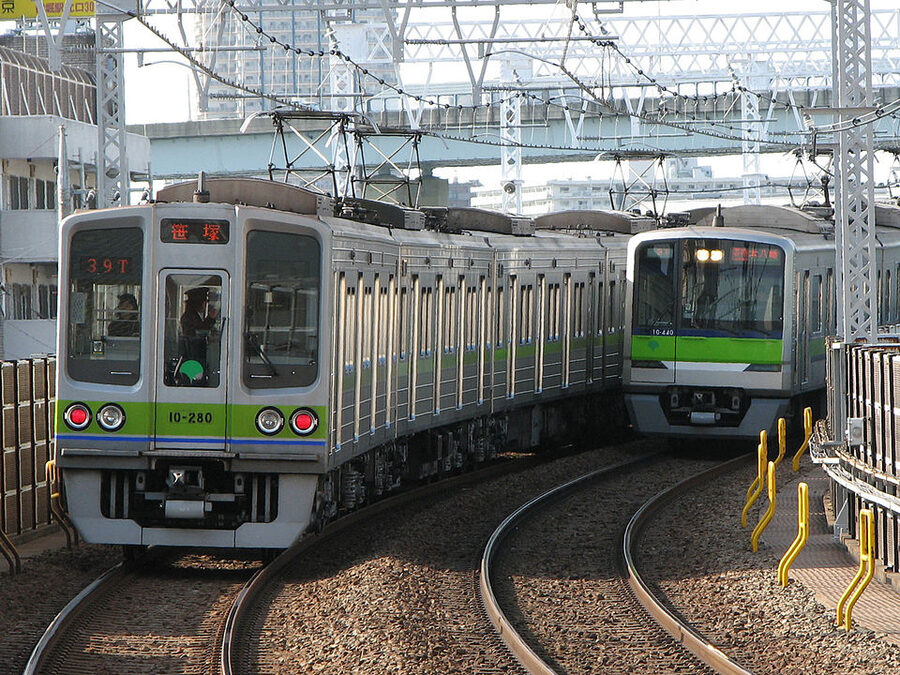
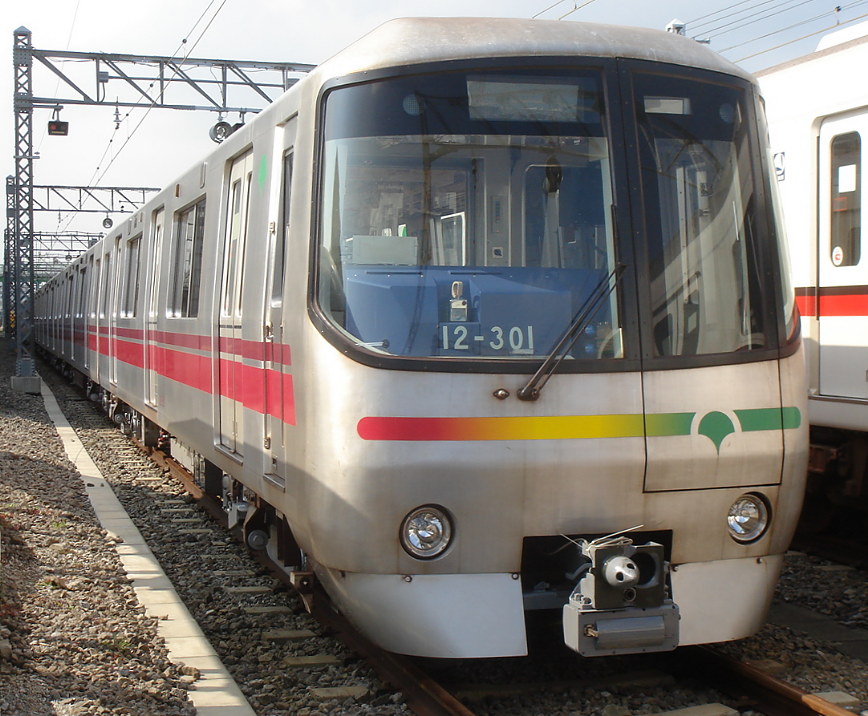
Toei: Asakusa Line 5500 series; Mita Line 6300 (retiring) and 6500 series; Shinjuku Line 10-300 series; Oedo Line 12-000 and 12-600 series. The 12-000 was the first linear-motor metro train in Japan; it has been on the Oedo Line since the partial opening in 1991.
What this means today when you ride
The two-operator structure has practical consequences you can feel on a normal trip. Here is what to keep in mind.
Buy the right ticket once
If you are touring central Tokyo for a day or two and expect to be on the subway more than four times, the Tokyo Subway Ticket (foreign-passport-only, sold at Narita, Haneda, BIC Camera, and select tourist counters) is the cleanest option. The 24-hour version is ¥800; if you ride five or more rides crossing both operators, it pays for itself by the late afternoon. The 48- and 72-hour versions are ¥1,200 and ¥1,500 and the same logic applies, scaled up.
Locals and longer-staying foreign residents use the standard Toei + Tokyo Metro one-day ticket at ¥900, sold from the ticket machine at any station, which has the same full-day single-day coverage but no foreign-passport restriction. If you only need one operator, the Tokyo Metro 24-hour ticket alone is ¥700, and the Toei one-day ticket is ¥500. If you are staying one full day in inner Tokyo, the ¥500 Toei pass is the underrated option for east-side itineraries (Asakusa Line + Mita Line cover most of the historic core).
The transfer rules
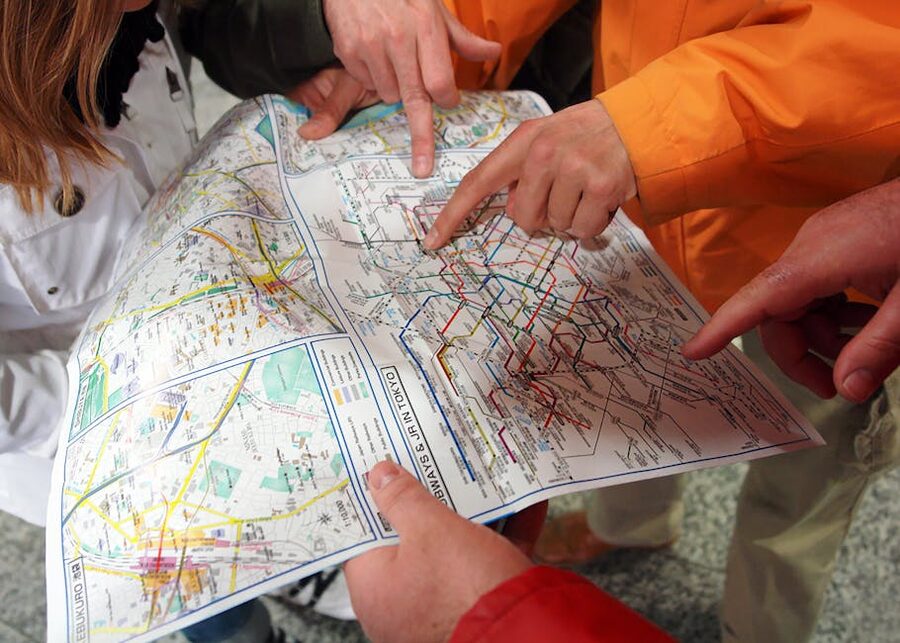
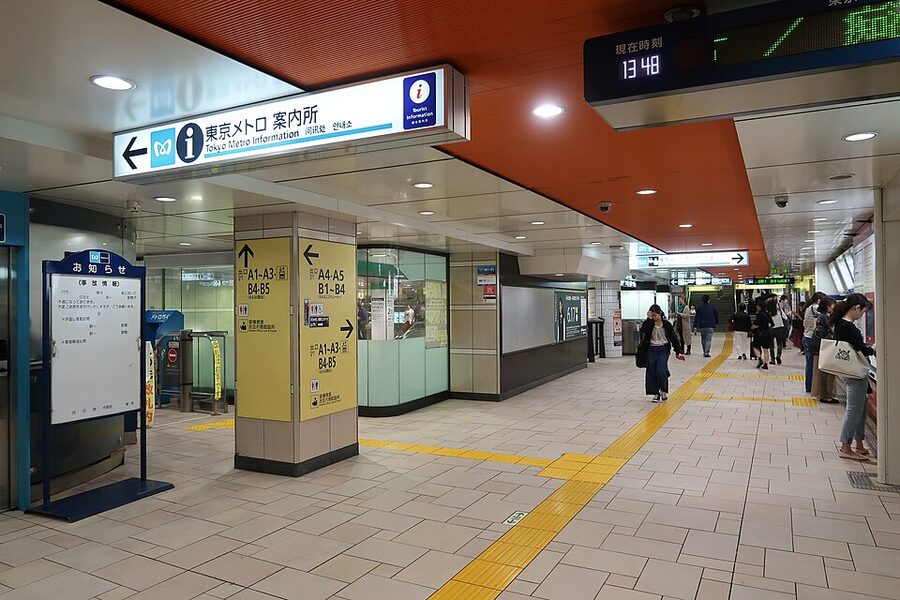
If you transfer between Tokyo Metro and Toei, you save ¥70 (adult) on the cross-operator combined fare. The discount applies automatically on Suica/Pasmo if your transfer is completed inside 60 minutes (paper-ticket transfers are unconstrained). At a handful of stations, you walk through a single connecting concourse without leaving the fare-paid area; at most, you tap out and tap back in. Both gates beep the same way; only the colour of the bezel tells you which operator’s gate you are using.
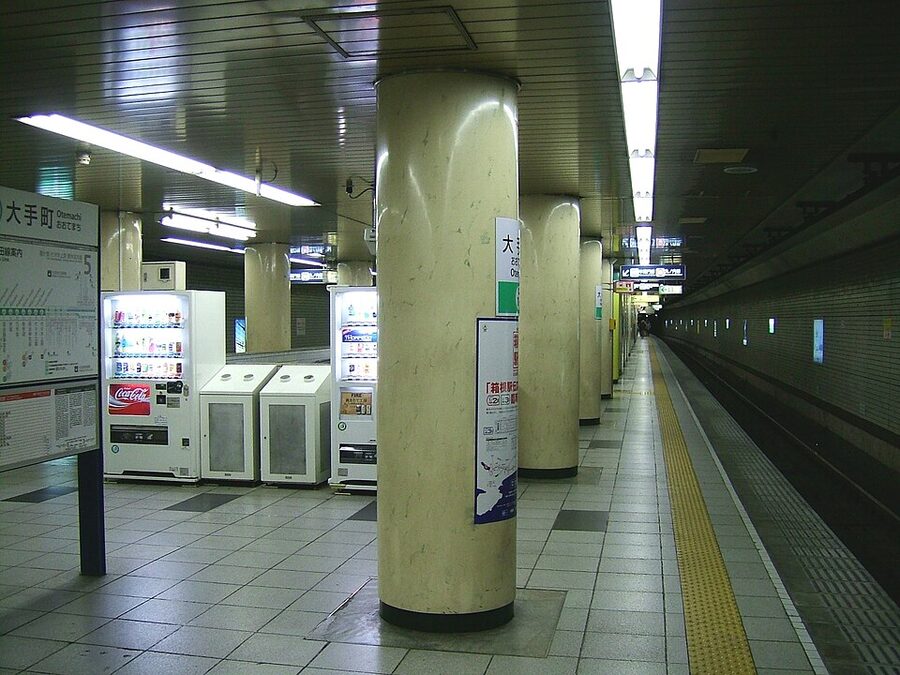
Stations to know for the cross-operator interchange: Otemachi (Marunouchi/Chiyoda/Tozai/Hanzomon Tokyo Metro, plus Mita Toei), Iidabashi (Tozai/Yurakucho/Namboku, plus Oedo), Akasaka-mitsuke / Nagatacho (Ginza/Marunouchi/Hanzomon, plus Yurakucho), and Aoyama-itchome (Ginza/Hanzomon, plus Oedo).
Reading the through-service board
The destination boards on the Tokyo subway are confusing on first reading because they show your train’s eventual destination, not the next subway-network stop. A Hanzomon Line train at Shibuya may show “Kuki” as its destination; that is on the Tobu Nikko Line, 65 km out of central Tokyo, and the same train will deliver you there without you changing carriages. A Chiyoda Line train at Otemachi may show “Hon-Atsugi”; that is on the Odakyu Odawara Line, well past the Tokyo Metro service area. The colour-and-letter code of the line you are looking at is reliable. The romaji destination beneath it is the long-haul terminus, which is often a different operator’s line.
Where the system runs above ground
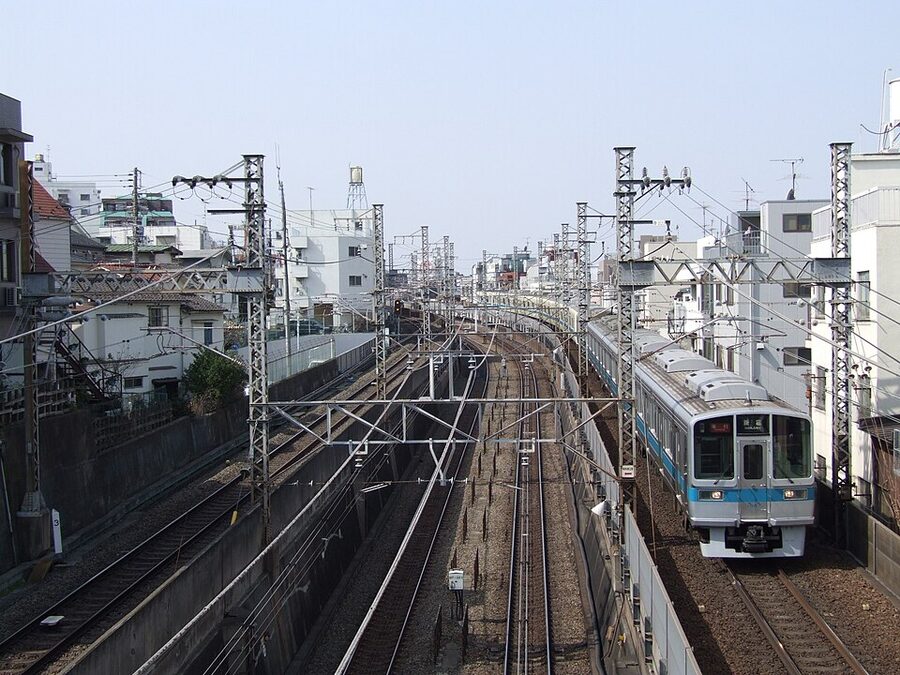
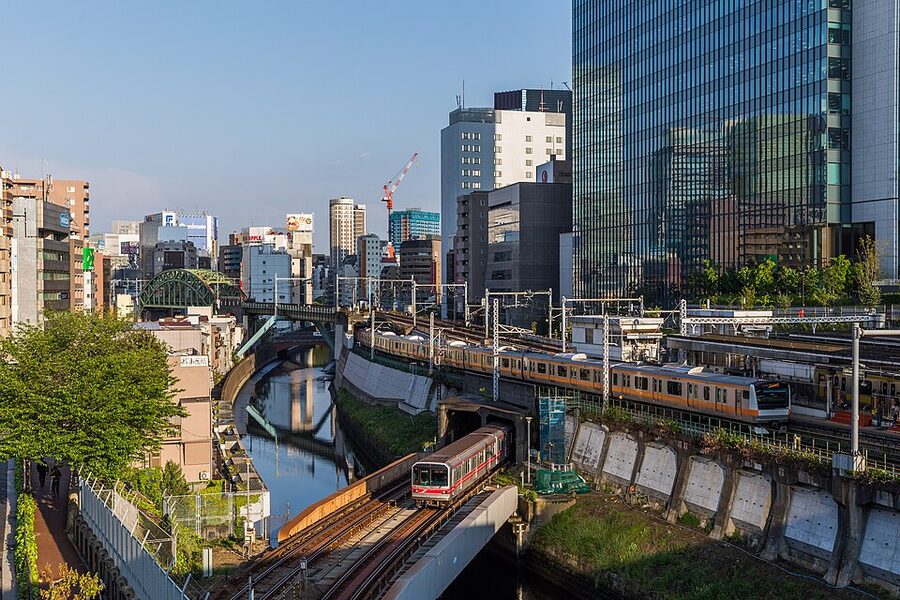
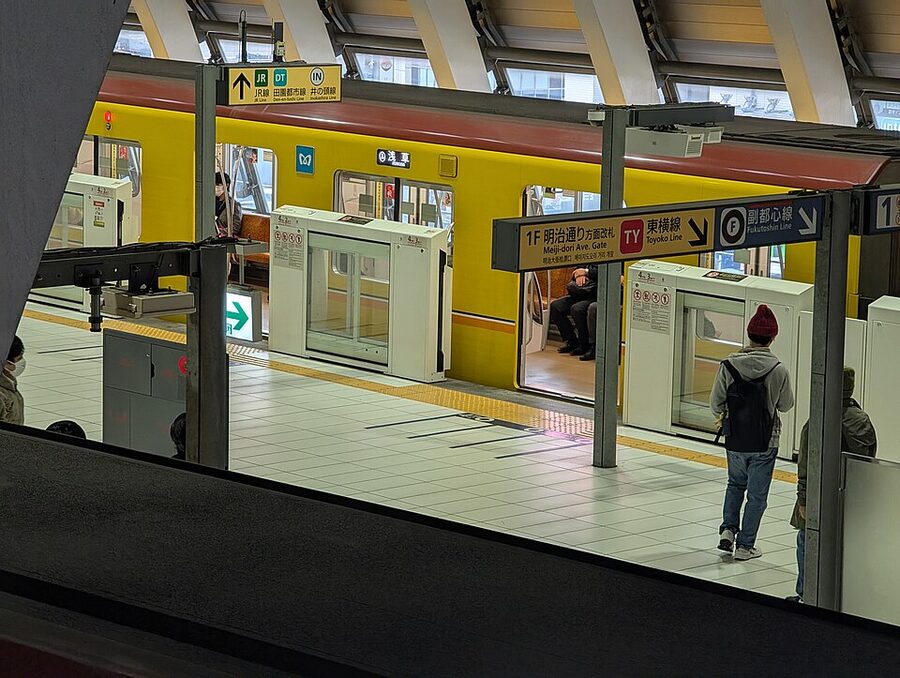
The Tokyo subway is not entirely subterranean. The Tozai Line surfaces east of Minami-Sunamachi for the elevated run to Nishi-Funabashi. The Hibiya Line surfaces at Kita-Senju to interwork with Tobu. The Chiyoda Line has a short above-ground section between Ayase and Kita-Ayase. The Hanzomon Line stays below ground but its through-service partner Tokyu Den-en-toshi runs above ground from Shibuya south. The Ginza Line surfaces dramatically at Shibuya, where it terminates on what was, until 2020, the third floor of the Tokyu Toyoko department store; the platform now sits in a new structure on the Hikarie side, but the overhead view from the south is still the most visible piece of subway anywhere in the city.
The level crossing
The Ueno depot of the Ginza Line has the only railway level crossing on a Japanese subway. It is tucked behind the depot wall on the surface; the road has gates that close when a train enters or leaves the depot. It is a track-priority crossing, where the road has to wait, which is rare anywhere in the world but particularly rare in the depot setting. If you are in Ueno with twenty minutes spare, walk along the south side of Ueno Park to the depot wall and watch a 1000 series come out for service. It is a small, oddly satisfying piece of underground railway showing its mechanism.
The lines, in one paragraph each
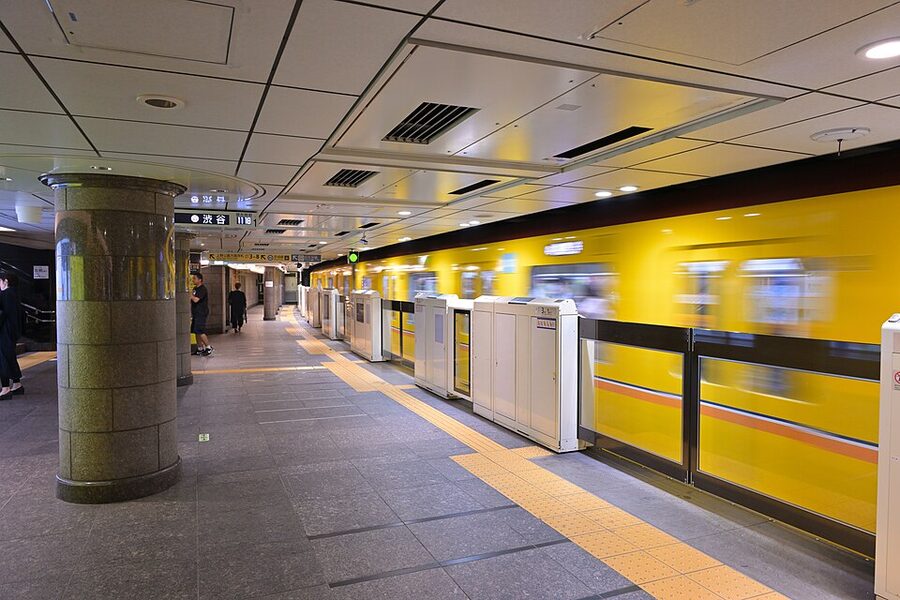
Ginza Line (G, orange). Asakusa to Shibuya, 14.2 km, 19 stations. The 1927 original. Standard gauge, third rail, no through-service. Most stations are shallow cut-and-cover, often one flight below the street; the platforms are tighter than any other line. Frequencies four minutes most of the day. Highest frequency on the network at peak hours.
Marunouchi Line (M, red). Ogikubo / Honancho to Ikebukuro, 27.4 km, 28 stations. Opened 1954-1962. Standard gauge, third rail, no through-service. The deepest line that still uses cut-and-cover, with most stations 5-15 metres down. Surfaces briefly at Ochanomizu to cross the Kanda River, the only Tokyo Metro line with a daylight section in central Tokyo. Curving “M” symbol on every car-side.
Hibiya Line (H, silver). Naka-Meguro to Kita-Senju, 20.3 km, 22 stations. Opened 1961-1964. Narrow gauge, overhead catenary. Through-runs Tobu Skytree/Isesaki/Nikko to the north-east; the Tokyu Toyoko through-service ended 2013. The 13000 series, in service since 2017, has been the most thorough fleet refresh on the network in a decade.
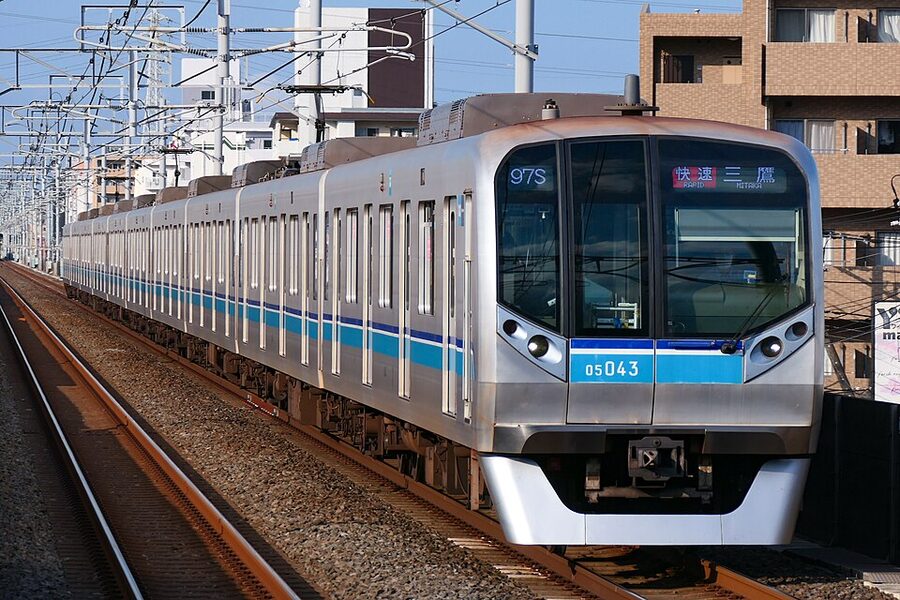
Tozai Line (T, sky blue). Nakano to Nishi-Funabashi, 30.8 km, 23 stations. Opened 1964-1969. Narrow gauge, overhead catenary. Through-runs JR Chuo Sobu west to Mitaka; through-runs JR Sobu and Toyo Rapid east to Toyo-Katsutadai. The single busiest line in the city at the morning peak, with sustained 200%+ crush-load on the Toyocho-Otemachi inbound segment.
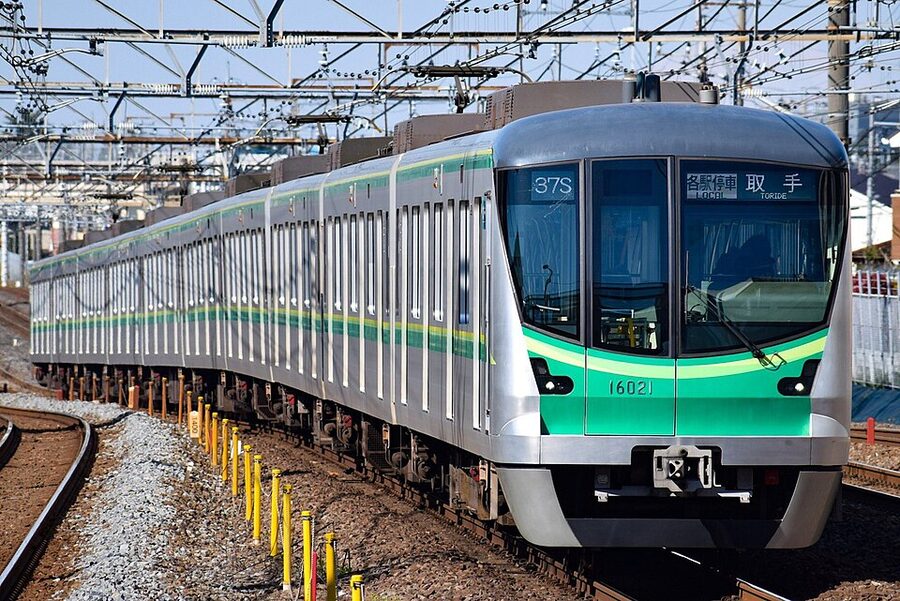
Chiyoda Line (C, green). Yoyogi-Uehara to Ayase, 24.0 km, 20 stations, plus the Kita-Ayase branch. Opened 1969-1979. Narrow gauge, overhead catenary. Through-runs JR Joban Local east to Toride; through-runs Odakyu Odawara/Tama west to Hon-Atsugi/Karakida. Hosts the Odakyu Romancecar from 2008, the first paid limited-express service into a metro tunnel in Japan.
Yurakucho Line (Y, gold). Wakoshi to Shin-Kiba, 28.3 km, 24 stations. Opened 1974-1988. Narrow gauge, overhead catenary. Through-runs Tobu Tojo north-west and Seibu Yurakucho/Ikebukuro/Chichibu west. The Tokyo branch line (“Yurakucho New Line”) was absorbed into the Fukutoshin Line in 2008.
Hanzomon Line (Z, purple). Shibuya to Oshiage, 16.8 km, 14 stations. Opened 1978-2003. Narrow gauge, overhead catenary. Through-runs Tokyu Den-en-toshi south-west to Chuo-Rinkan; through-runs Tobu Skytree/Isesaki north-east to Kuki/Minami-Kurihashi. The Hanzomon was built deliberately as a Ginza Line bypass to relieve crowding on the original.
Namboku Line (N, emerald). Meguro to Akabane-Iwabuchi, 21.3 km, 19 stations. Opened 1991-2000. Narrow gauge, overhead catenary. Through-runs Tokyu Meguro/Toyoko/Shin-Yokohama and now Sotetsu south-east; through-runs Saitama Railway 2000 series north to Urawa-Misono. First line on the network with platform doors, regenerative-only braking, and one-man operation.
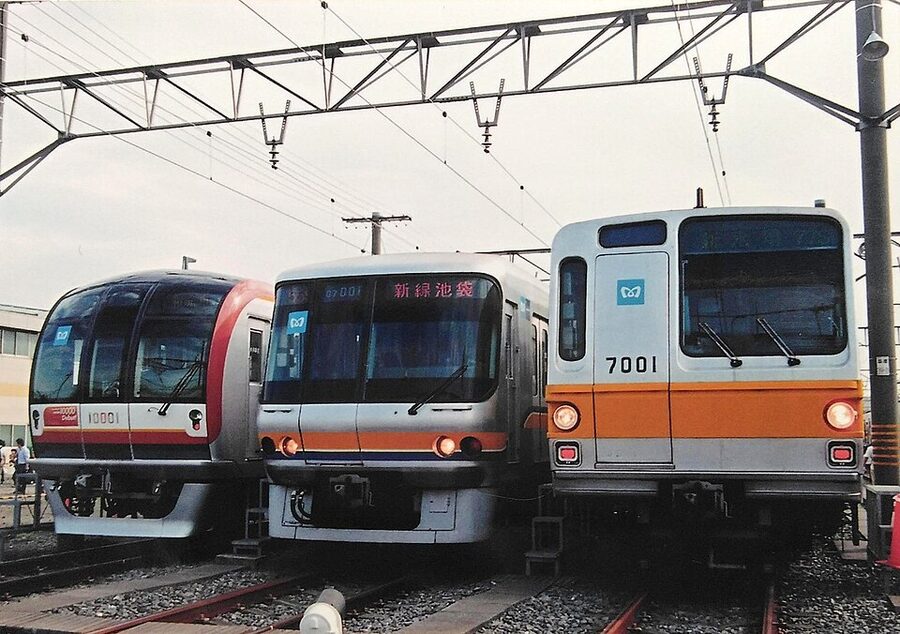
Fukutoshin Line (F, brown). Wakoshi to Shibuya, 20.2 km, 16 stations. Opened 14 June 2008, the only line opened by Tokyo Metro under that name. Narrow gauge, overhead catenary. Through-runs to Tobu Tojo, Seibu Ikebukuro, Tokyu Toyoko, and Minato Mirai, all on a single ticket. The five-operator chain at peak hours is the longest single through-service on the entire Japanese commuter network.
Asakusa Line (A, rose). Oshiage to Nishi-Magome, 18.3 km, 20 stations. Toei. Opened 1960-1968. Standard gauge, overhead catenary. Through-runs Keisei Oshiage to Narita Airport, and through-runs Keikyu south to Haneda Airport, Misakiguchi, and Zushi-Hayama. The only single line that connects both Tokyo airports without a transfer; the Asakusa Line is, on this measure alone, the most useful subway line for arriving travellers.
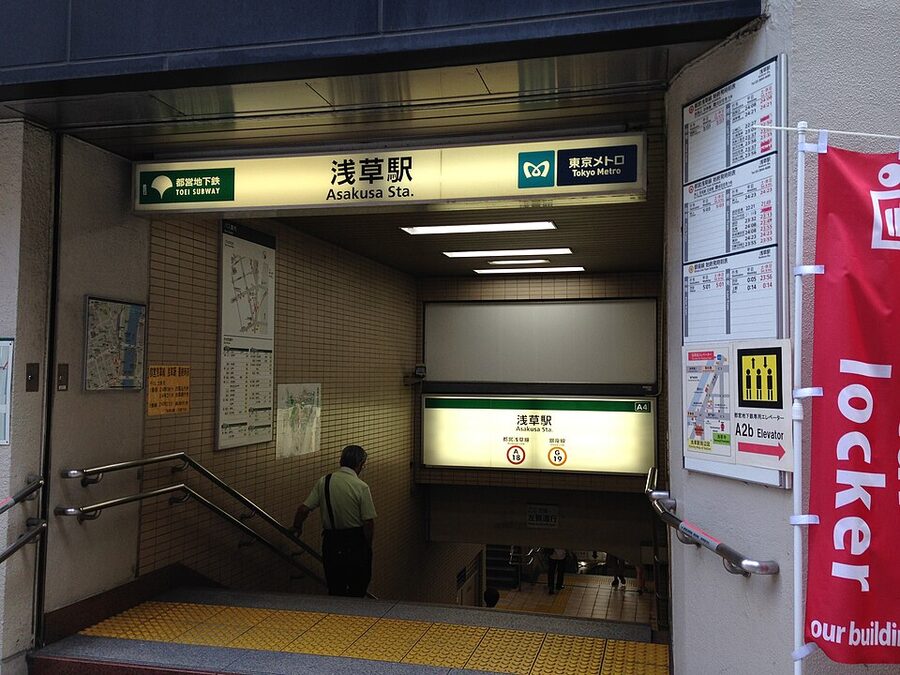
Mita Line (I, indigo blue). Meguro to Nishi-Takashimadaira, 26.5 km, 27 stations. Toei. Opened 1968-2000. Narrow gauge, overhead catenary. Through-runs Tokyu Meguro south to Hiyoshi/Ebina/Shonandai, plus the new Sotetsu connection to Yokohama. The Meguro-Shirokanedai segment is shared with Tokyo Metro Namboku, the only inter-operator track-sharing arrangement on the system.
Shinjuku Line (S, leaf green). Shinjuku to Motoyawata, 23.5 km, 21 stations. Toei. Opened 1978-1989. Variant 1,372 mm gauge, overhead catenary. Through-runs Keio Shin-Sen and Sagamihara Lines west to Hashimoto and Takaosanguchi. Built specifically for through-service with Keio, which is on a gauge unique to the Tokyo region.

Oedo Line (E, magenta). Hikarigaoka to Tochomae and Ryogoku, 40.7 km loop-and-tail, 38 stations. Toei. Opened 1991-2000. Standard gauge, linear-motor propulsion, smaller car body, deepest stations on the network. No through-service. The Oedo is structurally a different beast from every other line: it had to be built deep enough to clear all earlier subway tunnels, which required the linear-motor format to keep the cross-section tractable.
Where this fits in the rest of Tokyo’s rail network
The subway is one piece of Tokyo’s rail network. The other pieces matter for understanding it. JR East runs the Yamanote Line and the dozen-odd commuter lines that connect Tokyo Station and Shinjuku to the satellite cities. The major private operators ring the city: Tobu to the north-east, Keio to the west, Odakyu to the south-west, Tokyu to the south, Keikyu to the south coast, Keisei to Narita, Seibu to the north-west. Each of these operators feeds at least one Tokyo Metro or Toei line at the city limits and, in most cases, sends its own trains into the subway tunnels.
This is the network’s distinguishing feature. There are 16 inter-operator through-services on the subway today, more than any other metro system in the world. The arithmetic is messier than the through-running of, say, the Berlin S-Bahn or the Paris RER, because it is not one operator running everything; it is a long chain of independent companies, each with its own rolling stock and its own fares, agreeing to use the other’s track.
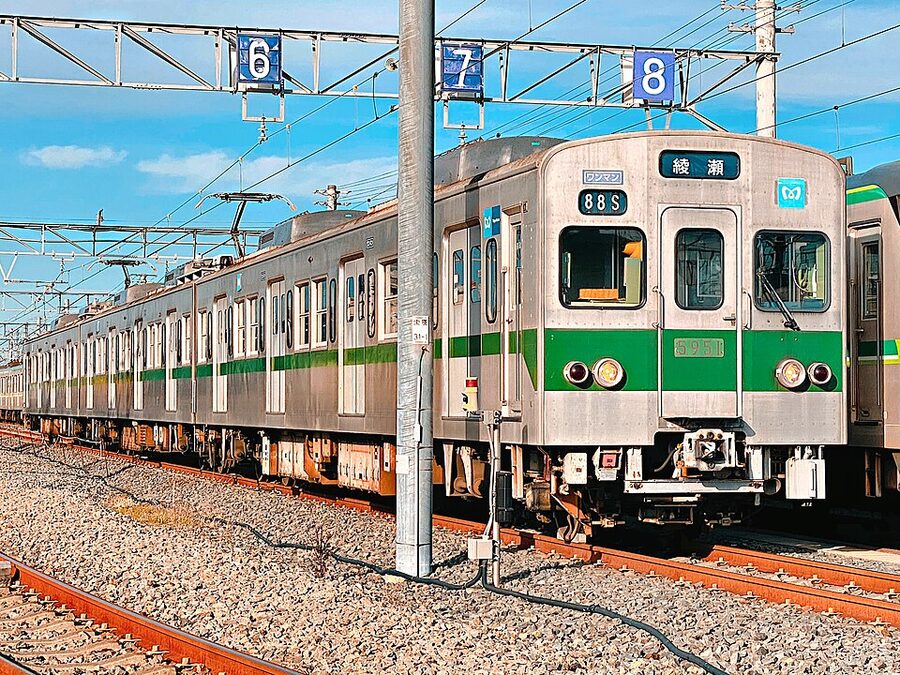
If you have read the JR origins piece, the contrast with JR’s nationwide consolidation is the cleanest single comparison: the Japanese rail system as a whole was integrated under one state operator from 1907 to 1987, then broken into six regional companies at the moment Tokyo’s subway was being negotiated for the Toei second-operator decision. The two stories ran in parallel for forty years and then diverged. JR consolidated, then privatised in pieces. The subway never consolidated, and privatised only the half it could agree on.
The walk past Ueno depot

Ninety-nine years after Hayakawa’s first 2.2 km opened, the Tokyo subway is still adding line extensions. The Yurakucho extension is targeted for 2030. The Namboku Line will reach Shinagawa around the same time. There are paper plans for an Asakusa Line through-link to Tokyo Station that may yet materialise. Tokyo Metro’s IPO has given both operators capital headroom they did not have for fifteen years.
What it has not changed, and probably will not change, is the structural quirk that made the network strange in the first place: there are still two operators, still two fare structures, still two sets of trains. Down a side street in the south-east corner of Ueno Park, on a quiet afternoon when the road traffic is light, the level-crossing gates of the Ueno depot drop, and a 1000 series in retro orange comes out of the depot wall and rolls into the cut leading down to the line. The whole apparatus, that man at Otemachi shaking his head and turning to his wife, that 99-year tunnel from Asakusa, the wartime Eidan, the second-operator answer, the 2024 IPO with its ¥348 billion split between Tohoku and the Namboku extension, all rolls past in the form of a four-car set of red trains designed to look like the wooden 1927 originals. The crossing gates lift again. He has lived in Tokyo for, I would guess, twenty years. He has seen the trains a thousand times. He still pays both companies.