
The Odakyu Line: Hakone, Romancecars, Setagaya
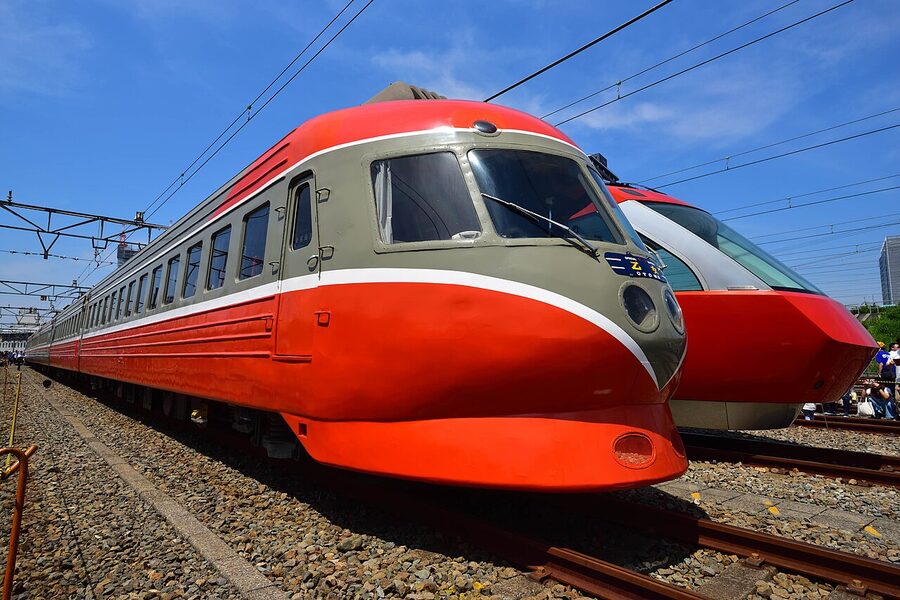
Odakyu’s first proper limited express was tested at 145 km/h on a borrowed stretch of JNR’s Tokaido Main Line in September 1957, and the engineers who watched it run were not from Odakyu. They were from Japan National Railways, taking notes for a project they had not yet announced: the Tokaido Shinkansen. The little vermilion train they were watching, the 3000 SE, was a private-railway commuter set on a stretch of narrow-gauge track that JNR had loaned out for the day. It set the world record for narrow-gauge speed and held it for years. Seven years later, when the Shinkansen opened on standard gauge at 210 km/h, large parts of its high-speed bogie geometry, its weight-distribution philosophy, and its electric multiple unit traction layout were directly traceable to the data Odakyu had handed over.
In This Article
- What you are actually riding
- The decade Odakyu wasn’t called Odakyu
- The most over-engineered private railway of its decade
- The song that named the company
- Greater Tokyu and the wartime swallow
- Hakone, and the third rail down a mountain
- The Hakone Golden Course
- The Romancecar arc
- 1700 series: where the name comes from
- 3000 SE: the train that fed the Shinkansen
- 3100 NSE: cab on the second floor
- 7000 LSE: the bubble-era Romancecar
- 30000 EXE: the Romancecar that admits commuters exist
- 50000 VSE: the Romancecar built for tourism, retired by tourism
- 60000 MSE and 70000 GSE: the present fleet
- The half-century battle to build the four-track
- The Setagaya residents and the 53-year wait
- What the four-track actually changed
- The lines that didn’t happen, and the line that did
- The Tama Line (1974)
- The Mukogaoka-Yuen monorail (1966–2001)
- The commuter fleet you actually ride
- 5000 series first generation (1969–2012)
- 2400 HE: the train that fed the SE
- 1000 and 8000 series, still running
- Riding it today
- What it costs
- Where to actually start the trip
- The Mt. Fuji service
- The Ebina detour, if you have a half-day
- What Hakone is, today
- Where the line sits in the network
- The argument that the railway has had with itself
That is not the story most railway-history books tell about the Odakyu Line. The standard version starts in 1927 with a 38-station opening between Shinjuku and Odawara, walks through the war years, and lands on the modern commuter map. I think you miss the point that way. Odakyu has spent a hundred years arguing with itself about what a railway is for: a commuter conveyor for the bedroom suburbs of west Tokyo, or a tourist conveyor to Hakone, and every important decision the operator has made since 1948 has been a vote in that argument. The Romancecar is the company saying tourism. The four-track expansion through Setagaya is the company saying commuting. The 50000 VSE retired after only seventeen years in service is what happens when one of those votes loses.
What you are actually riding
Three lines, 70 stations, 120.5 km of double- or quadruple-tracked rail, all 1,067 mm narrow gauge, all 1,500 V DC overhead. The Odawara Line is the spine: 82.5 km from Shinjuku southwest through Setagaya, Machida and Hon-Atsugi to Odawara. The Enoshima Line branches off at Sagami-Ono and runs 27.4 km to Katase-Enoshima on Sagami Bay. The Tama Line peels off at Shin-Yurigaoka and feeds the Tama New Town development with a 10.6 km spur to Karakida.
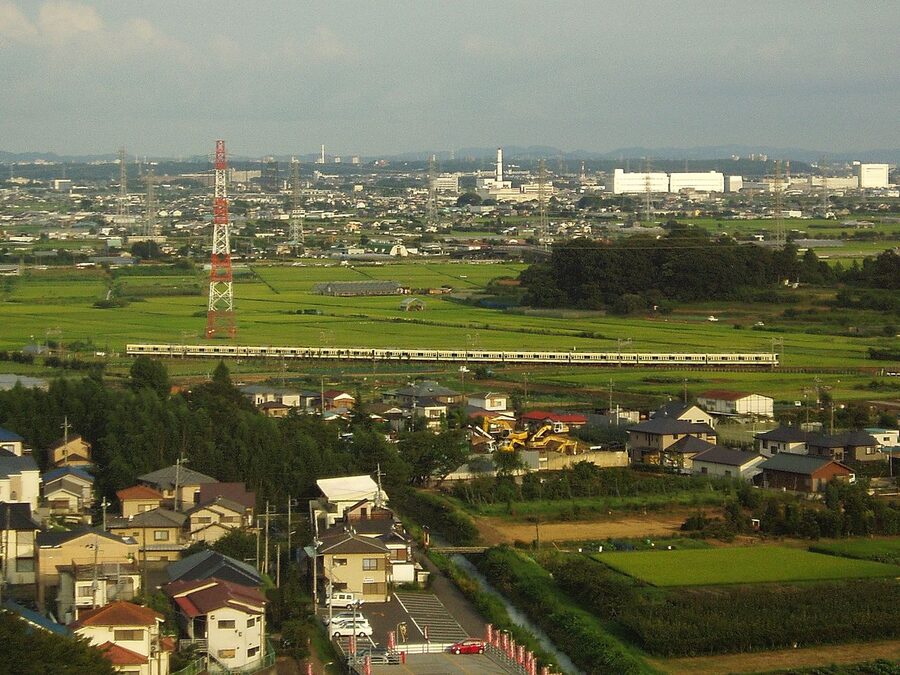
Owned trains run through onto three other operators’ lines. The Tokyo Metro Chiyoda Line picks up at Yoyogi-Uehara and carries Odakyu commuter sets through to Otemachi and Kita-Senju; the JR East Joban Line picks them up beyond Kita-Senju and runs them out to Ayase and Toride. JR Central’s Gotemba Line takes the Mt. Fuji limited express off the Odawara Line at Shin-Matsuda and runs it to Gotemba. And Hakone Tozan Railway takes Odakyu trains the last 6.1 km from Odawara up to Hakone-Yumoto, on dual-gauge track that Odakyu paid to have laid in 1950.
The dual-gauge section is the giveaway. A railway that lays a third rail down a competitor’s mountain line is not behaving like a commuter operator. It is behaving like a tourism business that happens to own a railway. That is where the company started, and that is the argument running through everything that follows.
The decade Odakyu wasn’t called Odakyu
The company was founded on 1 May 1923 as Odawara Express Railway (Odawara Kyuko Tetsudo) by an electricity-industry lawyer named Toshimitsu Tsurumatsu. He was not primarily a railway man; he ran Kinugawa Hydroelectric, a power generator, and saw private suburban railways as a way to use the company’s transmission-line right-of-way and to develop the residential land along the corridor. Five other Tsurumatsu railway projects went into licensing at the same time. Most never opened.
The most over-engineered private railway of its decade
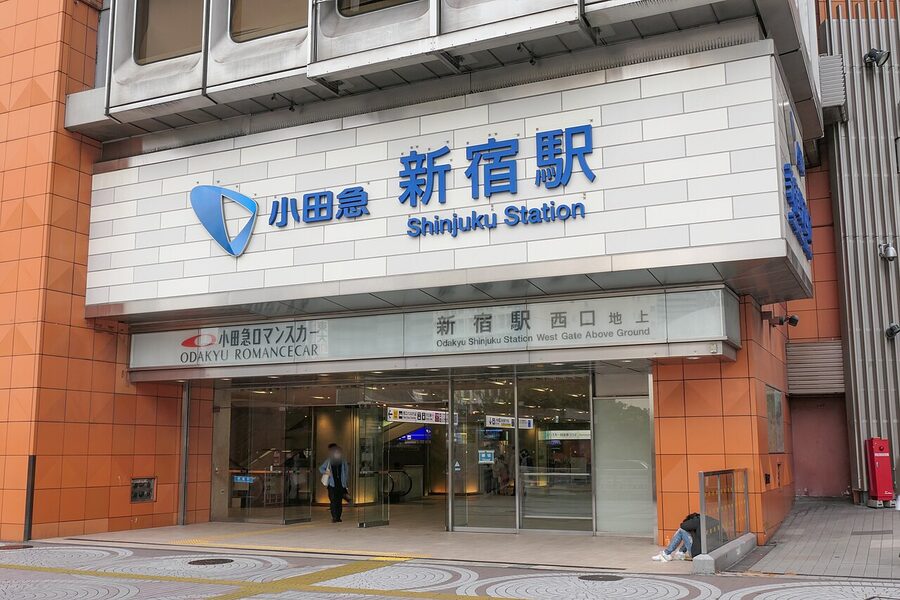
Odawara Express opened on 1 April 1927 with the entire Shinjuku–Odawara line in service. 38 stations. Double-track and fully electrified end to end on day one. Pre-war Japanese private railways did not normally do this. They opened single-track sections one at a time, electrified later, and added the second track when the books allowed. Odakyu’s 83 km of double-track-from-day-one was the most over-engineered private railway debut of the 1920s, and it nearly killed the company. The Showa financial crisis hit within months, and the operator spent the next decade financially weak.
The Enoshima Line opened two years later, on 1 April 1929, branching off at what is now Sagami-Ono and running south to Katase-Enoshima on the Sagami coast. 13 stations. Also fully double-track. By the late 1920s, the corporate name on the timetables was Odawara Kyuko, but Tokyo passengers had already begun to shorten it.
The song that named the company
“Odakyu” was a slang abbreviation. It became the official name in March 1941, but the city had been calling the railway that for at least twelve years before that, on the strength of a single song lyric. The 1929 film Tokyo Koshinkyoku (“Tokyo March”) had a title song with a verse the city sang for years afterwards: isso Odakyu de nigemashoka: “let’s just run off on the Odakyu”. The line is about a young woman fed up with city life, and the railway in the lyric is the escape route. That song carried the name “Odakyu” into the popular vocabulary at a moment when the company was still officially Odawara Kyuko Tetsudo. By the time Kinugawa Hydroelectric absorbed Odawara Express in March 1941 and renamed itself Odakyu Electric Railway, the new name was already what passengers were saying.
Greater Tokyu and the wartime swallow
Then Odakyu briefly stopped existing. On 1 May 1942, under the Land Transport Business Adjustment Law, Tokyo Yokohama Electric Railway absorbed Odakyu, Keihin Electric Railway and (in 1944) Keio Electric Tramway into a single state-encouraged conglomerate that the press nicknamed Greater Tokyu (Daitokyu). The chairman who engineered most of it, Keita Goto, became the chairman of the combined company. For six years, the trains running between Shinjuku and Odawara had Tokyo Express painted on them.
The merger was formally about wartime resource allocation. In practice it was a corporate takeover under cover of state policy, and when the war ended the original four operators wanted out. They got out on 1 June 1948. Odakyu, Keio and Keihin Express each separated and re-formed as new companies. The name on this article’s masthead, Odakyu Electric Railway, dates from that 1948 re-formation rather than from the 1923 founding. Technically the present company is 77 years old, the railway is 99.
Two assets moved between operators in the 1948 split that mattered. The Inokashira Line (the present Keio Inokashira Line) had spent the war as an Odakyu route; in the separation it went to Keio. In compensation Odakyu was given Hakone Tozan Railway, which Tokyo Express had picked up during the war years from a struggling local operator in Odawara. That trade is the single most important business decision in Odakyu’s history. Without Hakone Tozan, there is no through service to Hakone-Yumoto. Without through service to Hakone-Yumoto, there is no Romancecar.
Hakone, and the third rail down a mountain
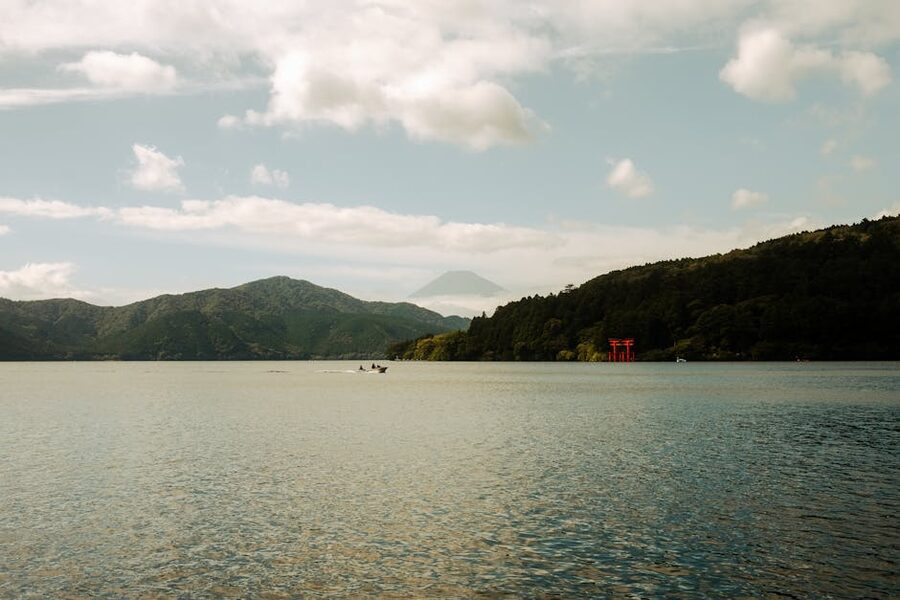
Through service to Hakone-Yumoto opened on 1 August 1950. To make it work, the Hakone Tozan section between Odawara and Hakone-Yumoto, 6.1 km of mountain track on 1,435 mm standard gauge, was converted to dual-gauge, with a third rail laid for Odakyu’s 1,067 mm narrow-gauge stock. The catenary voltage on the same section was raised from 600 V to 1,500 V to match Odakyu, and the Hakone Tozan trains themselves were converted to dual voltage. The 1,435 mm and 1,067 mm rails sat side by side until 2006, when the third rail was lifted on the through-service section to free up gauge clearance for more Odakyu trains. (The Hakone Tozan depot still has dual gauge inside, which is why railfans go there.)
It is hard, looking at the 2026 timetable, to take in how strange that arrangement was. Two operators with two different gauges, two different histories and two different parent corporations, sharing 6.1 km of mountain track for 56 years, with the trains physically running on different rails. It worked because Odakyu had already decided, by 1950, that the railway was going to be a tourism delivery system to Hakone before it was anything else. The third rail down a mountain is a 56-year capital expense that only makes sense if you believe that.
The Hakone Golden Course
Through-service Romancecars carried tourists to Hakone-Yumoto from 1950, but the marketing concept that locked in Hakone as Odakyu territory was the Hakone Golden Course (Hakone Goruden Kosu), introduced on 7 September 1960. The “course” was a single ticket that bought the round trip Shinjuku to Hakone, the Hakone Tozan train up to Gora, the funicular to Sounzan, the ropeway across the volcanic vents at Owakudani to Togendai, the boat across Lake Ashi, and the bus back. Five different vehicles. Two different gauges of railway. One ticket. By the early 1960s, more than half the inbound tourists to Hakone arrived this way.
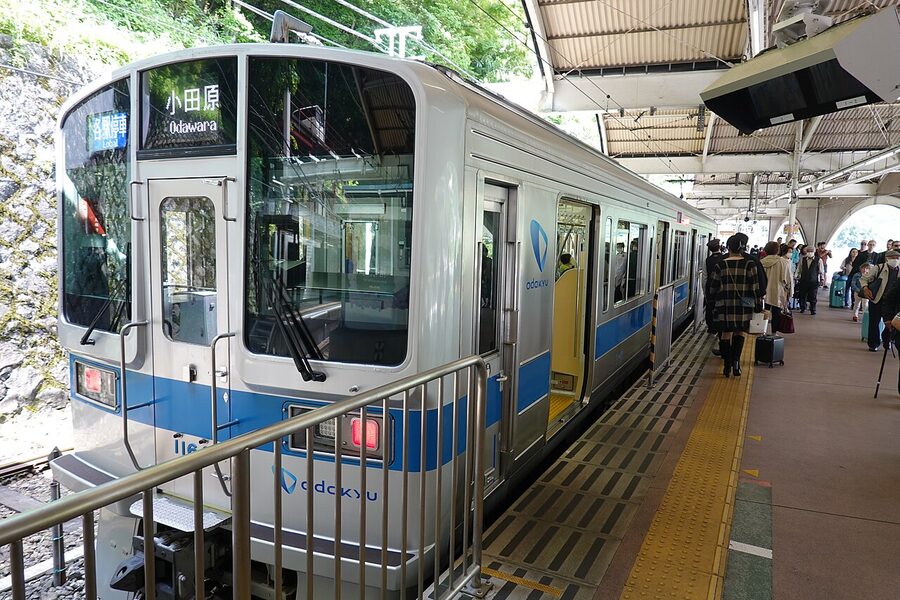
The Hakone Frikipasu (Hakone Free Pass), launched in March 1967, modernised the same idea. Buy the pass at Shinjuku, ride everything in Hakone for two or three days, get a small Romancecar surcharge discount on top. It is still on sale, still the easiest way to do Hakone, and still the single product Odakyu pushes hardest in its inbound-tourism marketing. The Hakone Goruden Kosu is the reason Odakyu opened a foreign-traveller information centre at Shinjuku Station in 1999, the first private railway in Japan to do so. (For the contemporary version of the same calculation by another operator, the Tobu Railway piece walks through how Tobu fought JNR for the Nikko tourist trade for thirty years and ended up running through-services with the company it had been competing with.)
The Romancecar arc
If you only remember one thing about the Odakyu Line, the Romancecar should probably be it. Eleven generations of limited express trains in 78 years, each designed around a different theory of what the Hakone-bound passenger wants, each launched with the inevitable Blue Ribbon Award nomination from the Japan Railfan Club, several preserved in the museum at Ebina, several scrapped on schedule, one (the 50000 VSE) retired after only seventeen years, which is what happens to the loser of an internal company argument.
1700 series: where the name comes from
“Romancecar” is not an Odakyu invention and not really a Japanese word. The name describes a 2+0 transverse seat configuration without a centre armrest, what Japanese passengers from the 1930s called a “romance seat” because it sat couples next to each other. Several operators ran “romance car” services in the early post-war years. Odakyu used the term informally on its first dedicated limited-express stock, the 1910 series of 1949, and locked in the trademark in the 1990s. The 1700 series of February 1951 is usually called the first proper Romancecar; it ran the Shinjuku–Odawara express in 90 minutes at 95 km/h and carried what the company called a “running tea room” with seat-side service.
3000 SE: the train that fed the Shinkansen
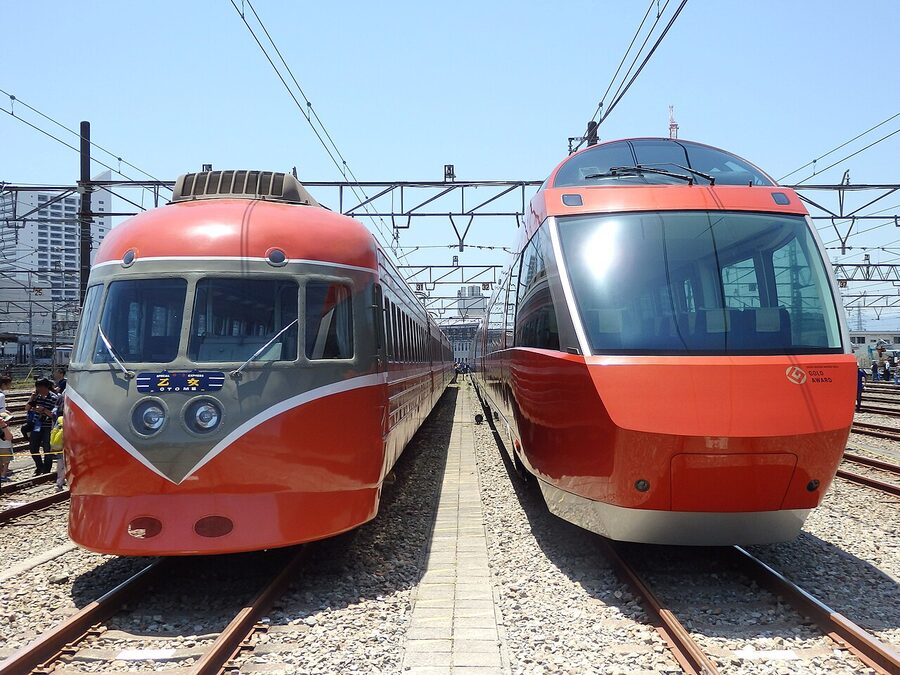
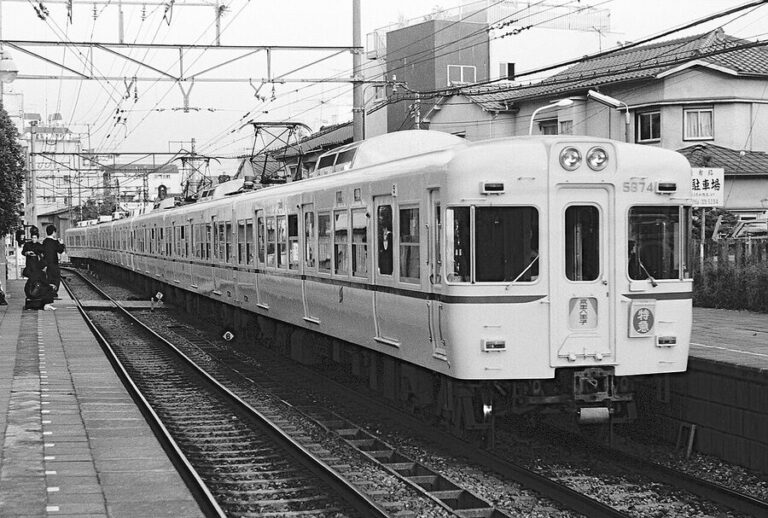
The 3000 SE entered service on 6 July 1957. It was an eight-car articulated set with a streamlined nose, a low centre of gravity, and a body that dropped its weight 25 percent below the equivalent JNR limited express of the same year. JNR’s Railway Technical Research Institute had collaborated on the design specifically because they wanted high-speed narrow-gauge data; the 3000 was, in effect, a JNR research project that an Odakyu shareholder paid for. It cut the Shinjuku–Odawara time to 64 minutes by 1961.
The reason it sits in every Japanese railway history is the speed test on the Tokaido Main Line in September 1957. JNR loaned out the section between Hakone-yama and Numazu and pushed the 3000 to 145 km/h, a world record on 1,067 mm narrow gauge that held until the 1980s. The Shinkansen team at JNR’s Railway Technical Research Institute used the data directly: the lightweight body, the articulated bogie, the EMU traction layout. The 0 series Shinkansen of 1964, opening on standard gauge at 210 km/h, was a different scale of train, but parts of it inherited the 3000’s brief.
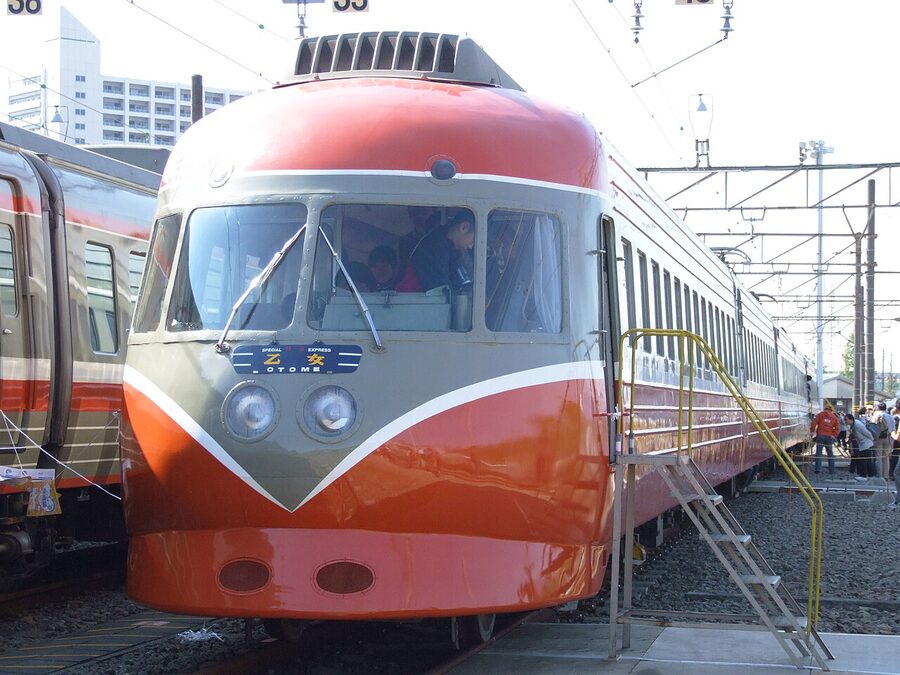
The SE itself stayed in service until 1992, with a 1968 conversion to a shorter five-car set for the Gotemba Line through-service when JNR electrified the Gotemba route. By that point JR Central had taken over Gotemba and the Mt. Fuji limited express was a quietly different service, but the same underlying train was doing the work. 35 years of revenue from a 1957 design is a real return.
3100 NSE: cab on the second floor
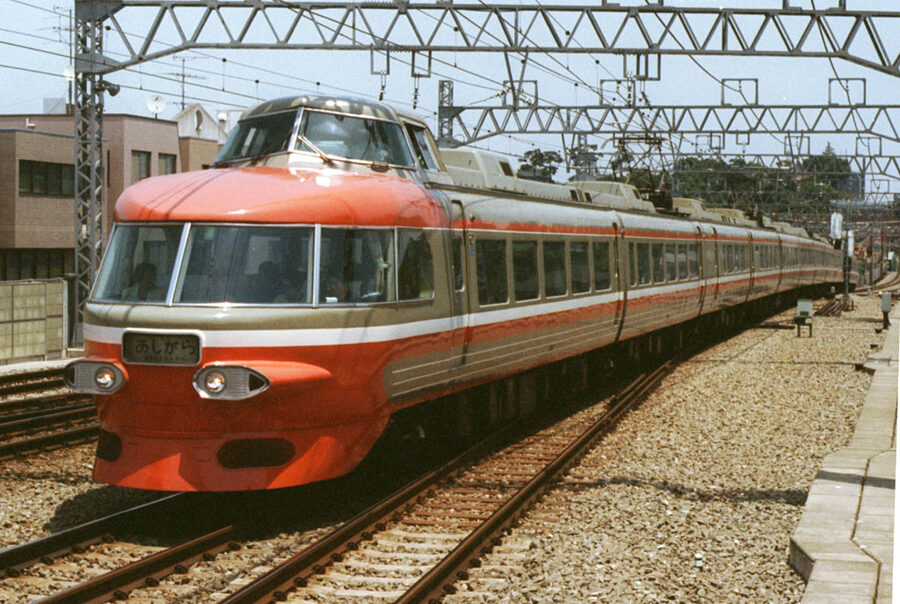
The 3100 NSE (New Super Express) entered service on 16 March 1963, in time for the 1964 Tokyo Olympics. The headline change was the cab. Odakyu’s design team mounted the driver’s compartment on a small upper deck, freeing the entire ground-floor nose for passenger seats with a panoramic windscreen. This is the configuration most people picture when they hear the word Romancecar. Every Odakyu observation-seat Romancecar since (the 7000 LSE, the 10000 HiSE, the 50000 VSE, the 70000 GSE) has inherited it, and so have most of the imitators on other Japanese private railways.
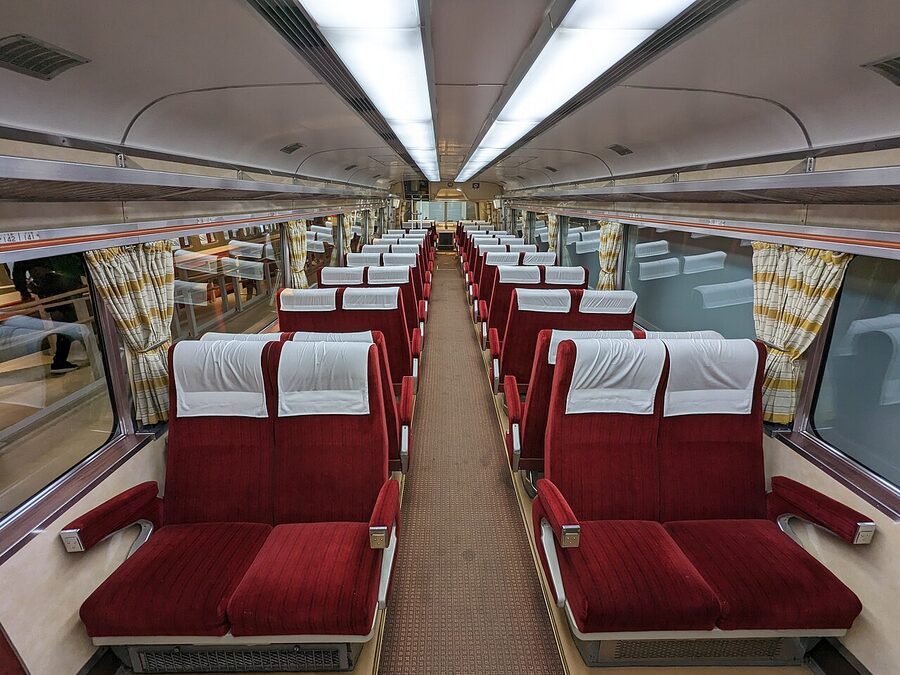
The NSE ran for 37 years and retired in 2000. By that point the 7000 LSE had been on the line for two decades, and the older NSE looked dated by comparison; on the Romancecar fleet, by historic Odakyu standards, 37 years is closer to median than long.
7000 LSE: the bubble-era Romancecar
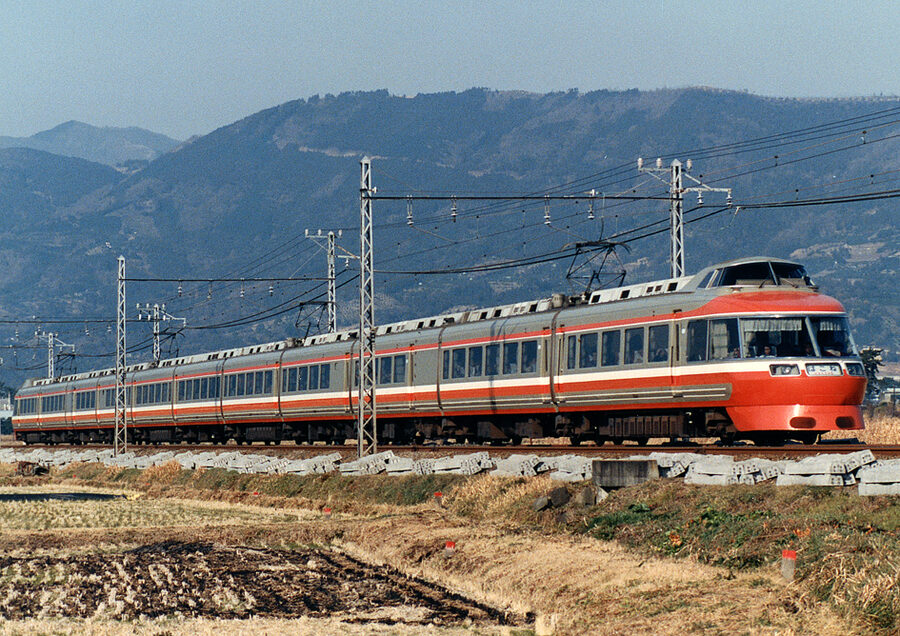
The 7000 LSE (Luxury Super Express) entered service on 27 December 1980 and ran for 38 years. It is the longest-serving Romancecar in the line’s history. Externally the LSE was a contemporary reading of the 3100 NSE: the same observation-cab configuration, the same articulated bogies, with 1980s-comfort seats and 110 km/h top speed. The original 3000 SE was retired three months after the LSE entered service; the company had decided that the old shape was the ongoing language of the brand and was investing in it for the long run.
The LSE retired on 10 July 2018 with departure ceremonies at both Shinjuku and Hakone-Yumoto. Odakyu ran a “LSE Thank You Campaign” for collected ticket stubs and gave the first 100 entrants a commemorative ride. By the standards of Japanese rolling-stock retirement, this is restrained.
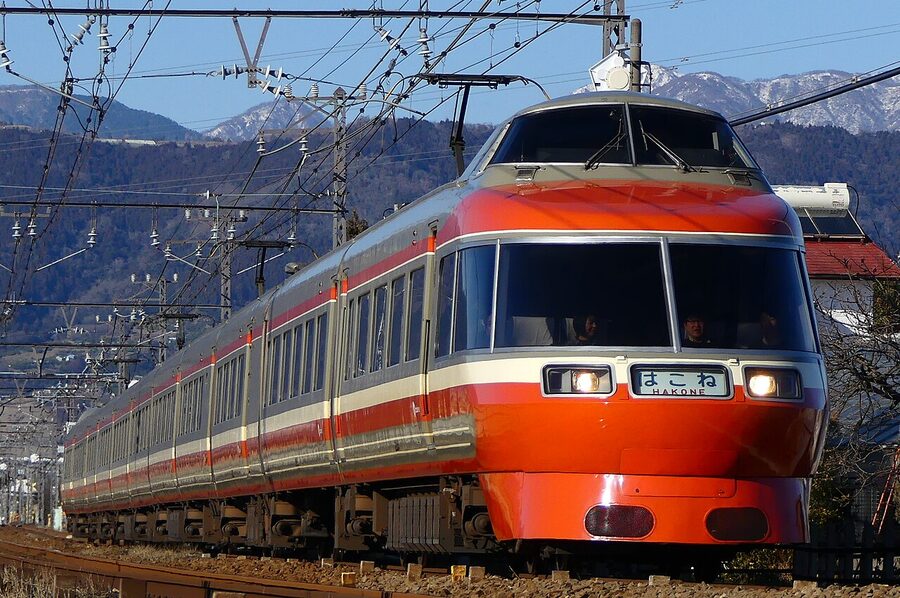
30000 EXE: the Romancecar that admits commuters exist
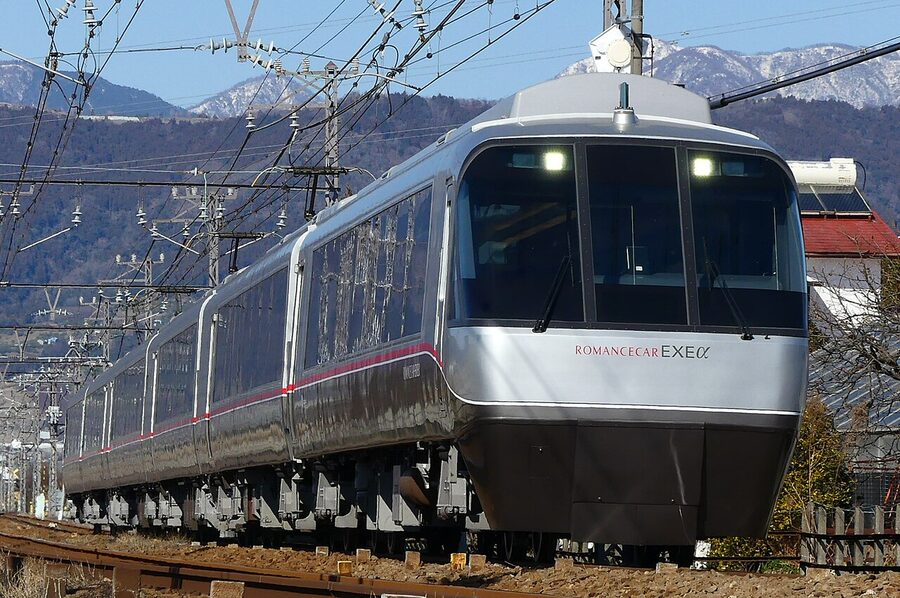
The 30000 EXE entered service on 23 March 1996. It is the Romancecar that loses on aesthetics and wins on operations. There is no observation cab. The lead end has a flat windscreen, two doors, and a high-capacity ten-car configuration that splits into 6+4 sets at Sagami-Ono so half the train can run to Odawara and the other half to Katase-Enoshima. It carries seasonal commuters as a paid limited express on the Hometway / Sagami services as well as the Hakone tourist run.
You can read the EXE as the company starting to admit, in the mid-1990s, that the Romancecar fleet had to make money on the commute as well as the weekend. The renewed sub-fleet, EXEalpha (EXEa), still runs the Hakone, Sagami and Hometway services every day and is the most-seen Romancecar on the line. Booking it for Hakone is fine. It is the right ticket if you are going to Hakone for a meeting, less right if you want the Romancecar experience the postcards sell.
50000 VSE: the Romancecar built for tourism, retired by tourism
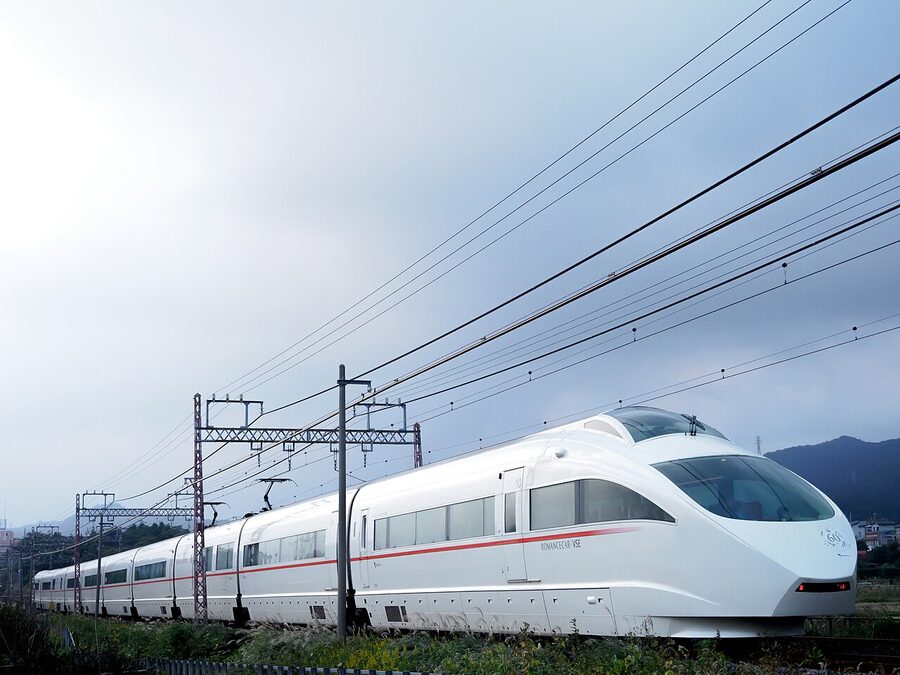
The 50000 VSE (Vault Super Express) entered service in March 2005 and was retired in March 2022. Seventeen years. By the standards of a Romancecar that is a short life. The VSE was Odakyu’s most explicit “tourist Romancecar” since the 3000 SE: a white body for the Hakone marketing, observation cabs at both ends, articulated bogies, a vaulted ceiling, and a passenger experience that was straightforwardly designed around inbound holidaymakers. It was also tied to a single-purpose vehicle in a way the EXE was not.
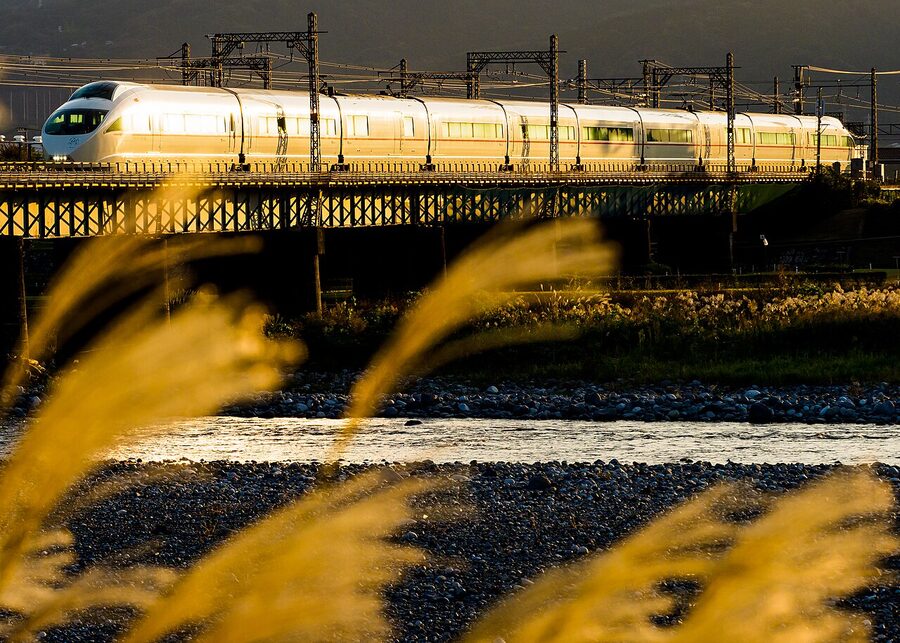
The VSE retired because of mechanical wear, specifically aluminium-body fatigue from the articulated bogie geometry. But the underlying argument was that, after 2020, Hakone tourism collapsed for two years and the EXE-based commuter Romancecar fleet covered the surviving demand without it. When inbound revenue fell to the floor, the train that had been built for that traffic specifically had no role to play. Odakyu announced the retirement quietly. The trains were dismantled in 2023 and 2024.
If you want to ride a VSE today, the only one left is the preserved set inside the Romancecar Museum at Ebina. (Or one of the old observation seat tickets sold for ¥510 above the basic Romancecar fare in the train’s last weekend, now an enthusiast collectible.)
60000 MSE and 70000 GSE: the present fleet
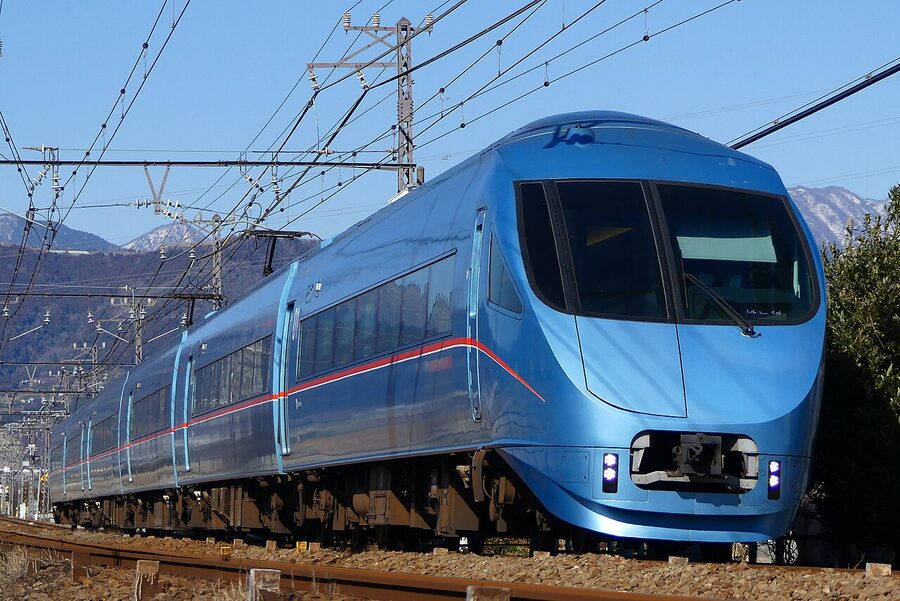
The 60000 MSE (Multi Super Express) entered service in March 2008. The MSE was built to a brief that no Romancecar before it had: it had to operate through the Tokyo Metro Chiyoda Line and out to Kita-Senju, picking up commuters from northeast Tokyo and dropping them in Hakone or back into central Shinjuku, depending on direction. That meant subway-clearance front-end (no observation cab), couplers at both ends for splitting, and dual control gear for Tokyo Metro signalling. The MSE is a working train and looks it.
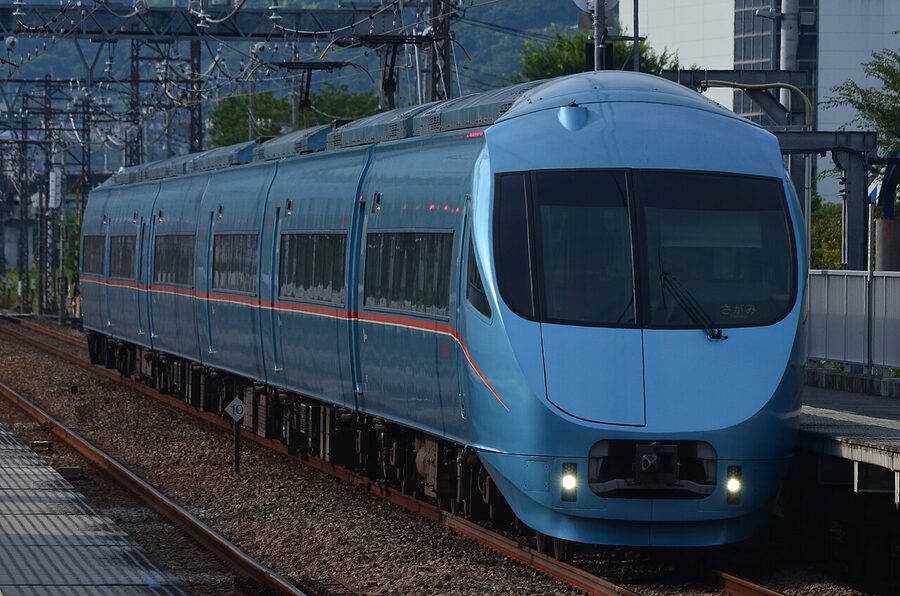
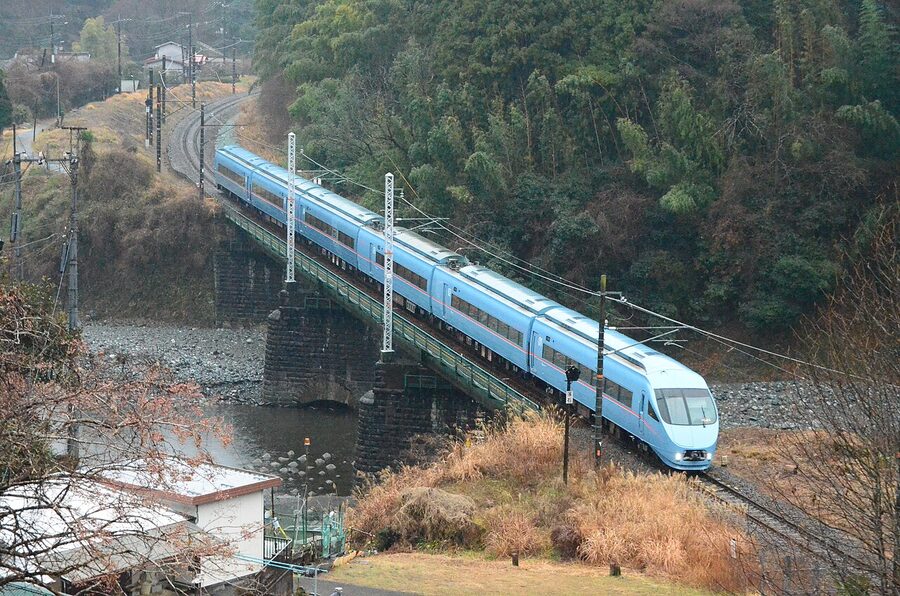
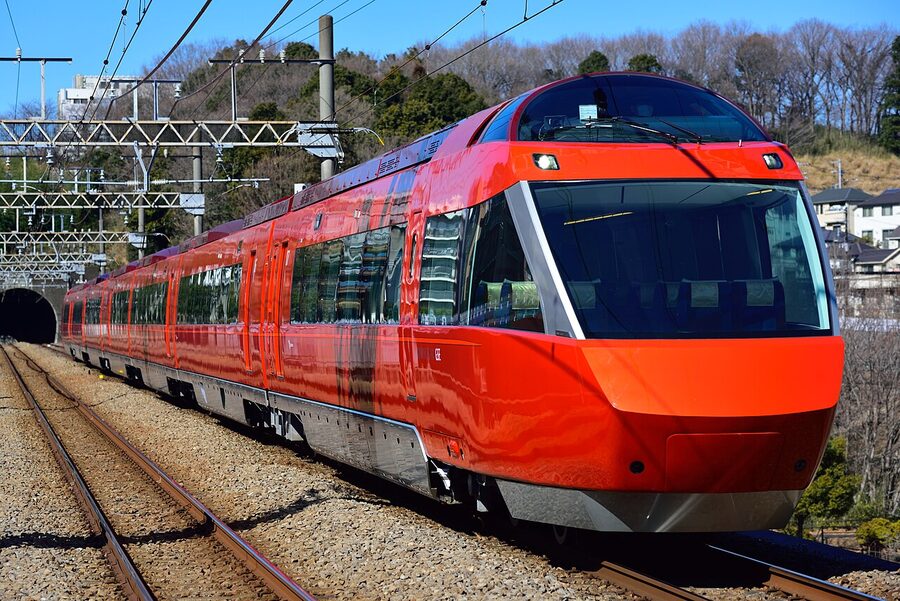
The 70000 GSE (Graceful Super Express) entered service on 17 March 2018, the same week the four-track-through-Setagaya project finished. The GSE is the current top-of-fleet observation-cab Romancecar, replacing the LSE which retired four months later and (in the medium term) the VSE which retired four years later. Two seven-car sets, 7051 and 7052; both run the Hakone “Super Hakone” and “Hakone” services as the Sunday-best presentation of the line.
The half-century battle to build the four-track
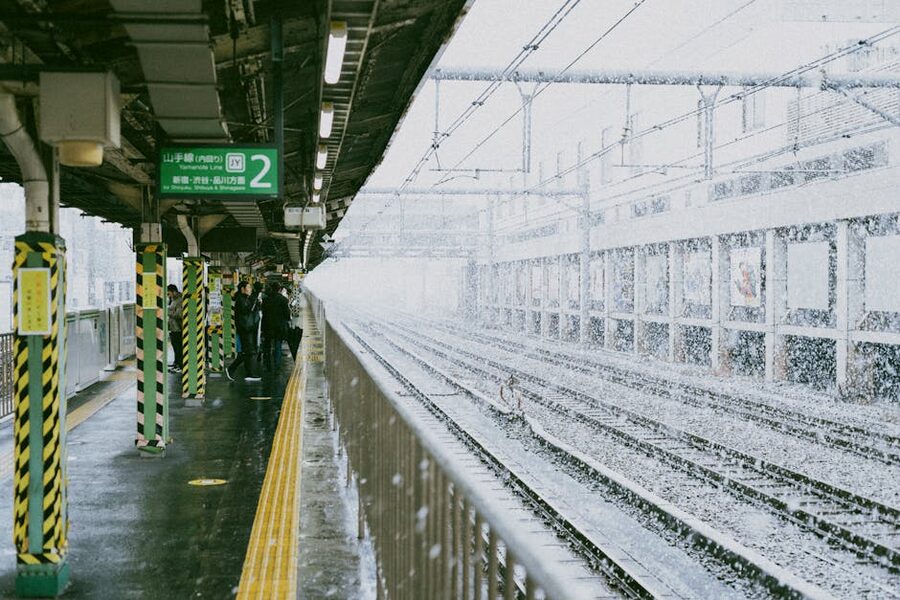
The other half of the company’s last 60 years is the part that has nothing to do with Hakone. By the early 1960s the population along the Odawara corridor was rising faster than any of the original 1927 plans had assumed. Setagaya, Suginami and Komae were filling up. Morning peak commuter loads on the Odawara Line were running at congestion ratios above 240 percent, which is the polite way of describing trains in which passengers cannot move their arms.
The Setagaya residents and the 53-year wait
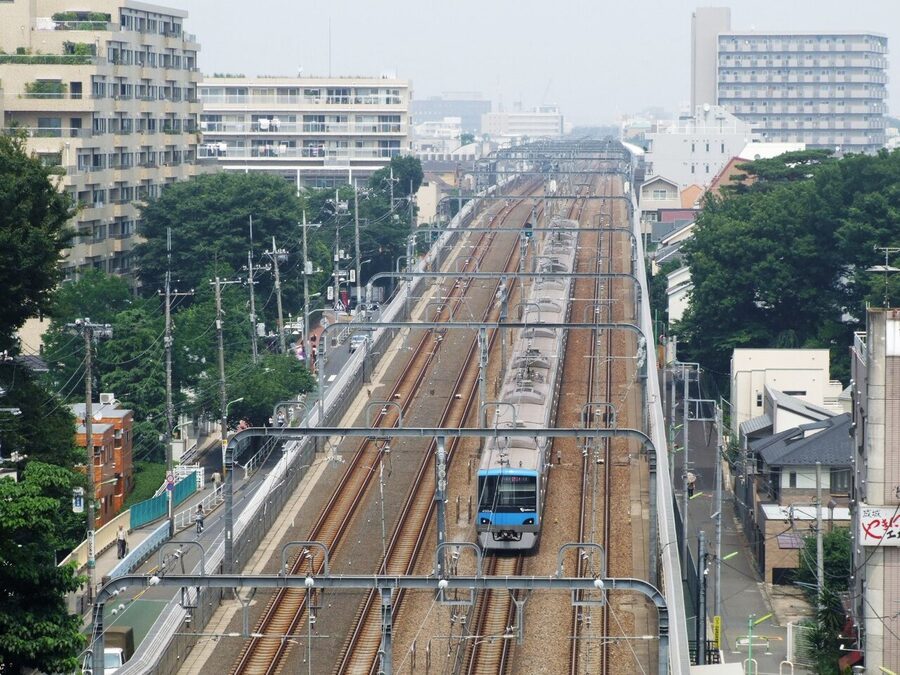
Odakyu’s solution, decided in December 1964, was to convert the 11.7 km between Yoyogi-Uehara and Mukogaoka-Yuen from double-track to four-track. Inner pair for express, outer pair for local. On paper, an obvious project; in practice, a 53-year fight. Land acquisition through Setagaya Ward was contested at every step. Residents formed citizens’ groups; the case went into the courts; multiple cabinets came and went; sections of the line were raised onto viaducts, some buried, some rebuilt around resident objections. The southernmost section, between Setagaya-Daita and Higashi-Kitazawa, was still under construction in 2010.
The whole four-track project completed on 3 March 2018. From a December 1964 decision to a March 2018 ribbon-cutting is 53 years and three months. By that standard, the dual-gauge stretch into Hakone (laid in 1950, lifted in 2006) was a quick win.
What the four-track actually changed
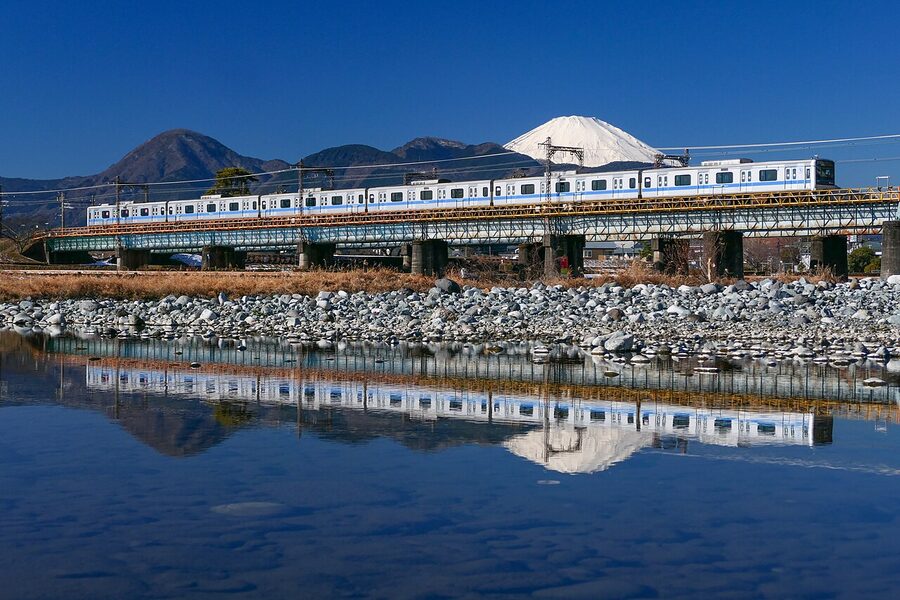
For the rider, the four-track means the Rapid Express (Kyuko Junkyu, in the present timetable nomenclature) skips 18 stations between Yoyogi-Uehara and Mukogaoka-Yuen on a separate pair of tracks, without slowing the local service. Morning-peak congestion ratios on the affected sections came down from 240 percent to roughly 150 percent, still crowded, but inside the comfortable range for a Tokyo commuter line. The Romancecar was a beneficiary in passing: with the express tracks unblocked, it can now hold its scheduled 64-minute Shinjuku–Odawara time year-round, where previously it sometimes lost three or four minutes in the morning to local-service queueing.
The lines that didn’t happen, and the line that did
Not every Odakyu plan got built. The original Tsurumatsu portfolio of the 1920s had a Tokyo high-speed underground line, a Yamanote-orbital express line, a Shibuya express line, and an Odawara-to-Nikko mainline up the Kinugawa transmission corridor. None of them happened. (The Tokyo high-speed line was eventually built, by Keita Goto’s group, as the Ginza Line.) The Setagaya land-acquisition fight is partly the legacy of a corporation that has spent its history reaching for more line than it could realistically build.
The Tama Line (1974)
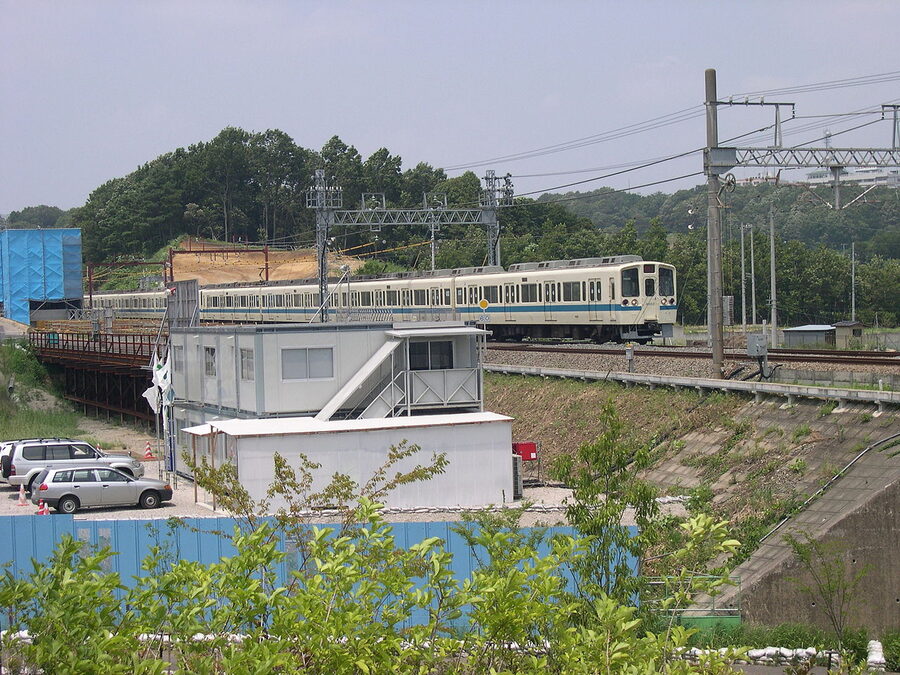
Tama New Town was a 1960s housing development on the western edge of Tokyo, designed for 300,000 residents. Three private railways (Odakyu, Keio and JR, then JNR) competed for access to it. Odakyu’s Tama Line opened on 1 June 1974 from Shin-Yurigaoka, with a 5.6 km initial section to Odakyu-Nagayama; the second extension to Odakyu-Tama-Center followed in 1975 and the line reached its current Karakida terminus in March 1990. By the 1990s, however, Keio’s competing Sagamihara Line had captured the larger share of Tama-into-Tokyo commuters, and the Odakyu Tama Line has always run with lower load factors than the Odawara mainline. The 70000 GSE picture you saw a few sections ago was taken on the Tama Line during a test run, which gives you a feel for what its ridership levels look like, visibly emptier than the Odawara stretch on a weekday afternoon.
The Mukogaoka-Yuen monorail (1966–2001)
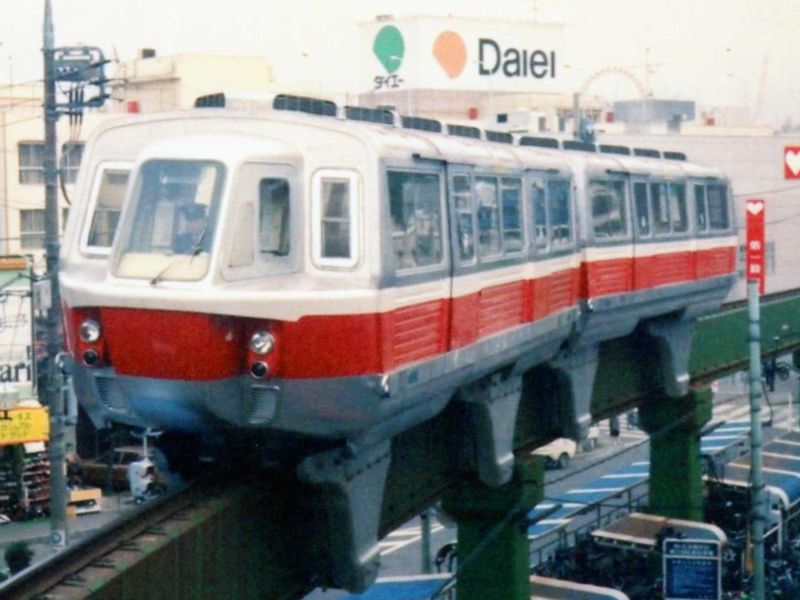
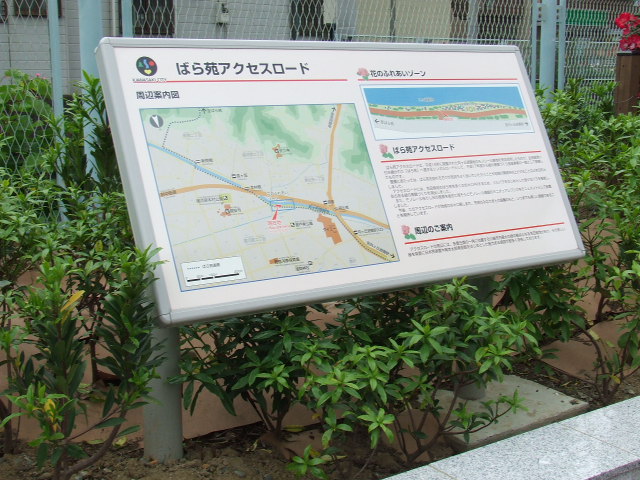
One Odakyu line you can no longer ride. The Mukogaoka-Yuen Monorail opened on 23 April 1966, a 1.1 km Lockheed-style straddle-beam monorail running from Mukogaoka-Yuen Station up to the Mukogaoka Yuenchi amusement park. Two stations. Operated for 35 years and closed on 12 February 2001 when the parent amusement park closed. Odakyu kept some of the rolling stock; one is preserved at the Ebina museum.
The commuter fleet you actually ride
The Romancecar is the line’s brand and the four-track is its monument. The trains most readers will board are the commuter sets: ten generations of EMU stock from 1969 onwards, in a livery that has barely changed in 50 years (off-white body, royal-blue stripe down the side). For the rolling-stock-by-rolling-stock breakdown, see the Odakyu Line trains piece in this collection. A short summary here is enough.
5000 series first generation (1969–2012)
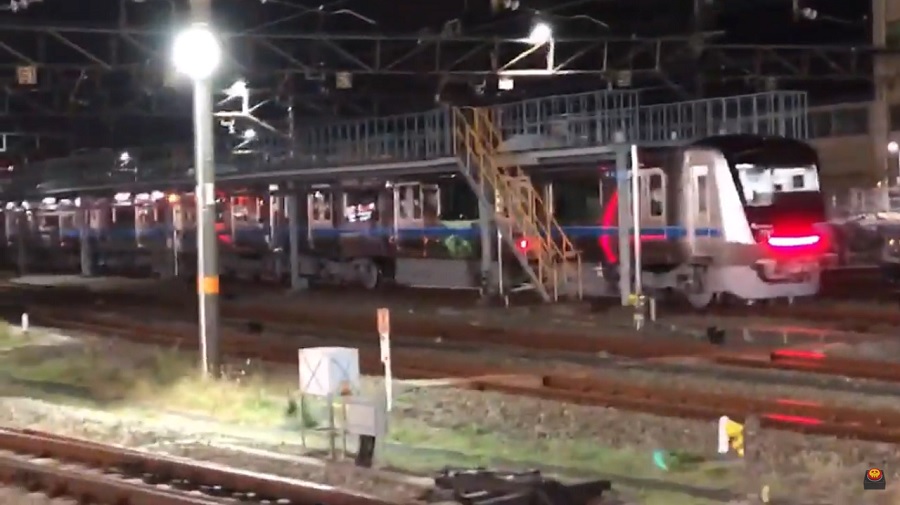
The first 5000 series entered service on 17 October 1969 and ran for 43 years. Six-car steel-bodied EMU, 110 km/h, the bedrock of the morning peak through the 1970s and 1980s. Followed by the 9000 (1972), 8000 (1983), and 1000 (1988, Odakyu’s first stainless-steel commuter set).
2400 HE: the train that fed the SE
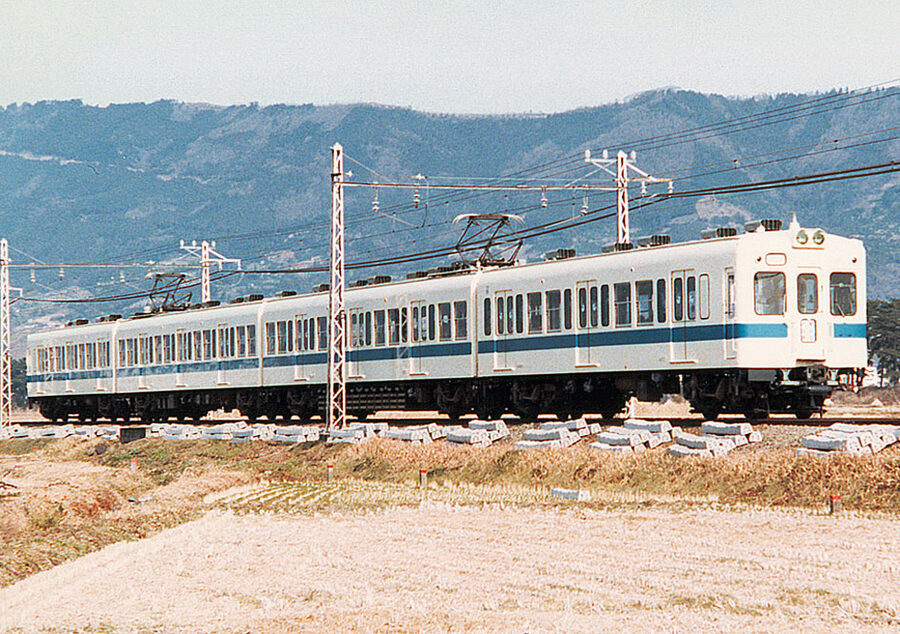
The 2400 series HE entered service on 20 January 1960. It is the train that explains why the 3000 SE worked: Odakyu had committed to the same lightweight, articulated, low-centre-of-gravity philosophy on the commuter fleet, so the engineering was already mature when the 3000 brief came. Worth flagging in this article because the SE story is usually told as a one-off engineering feat; in fact it sat on top of a quietly continuous Odakyu rolling-stock R&D programme through the 1950s and early 1960s. The 2400 retired in the late 1980s.
1000 and 8000 series, still running
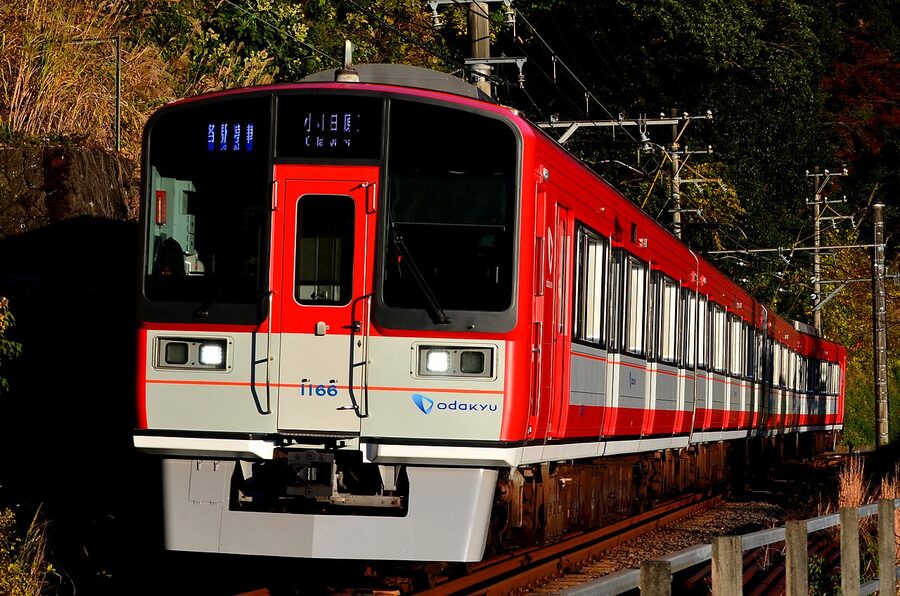
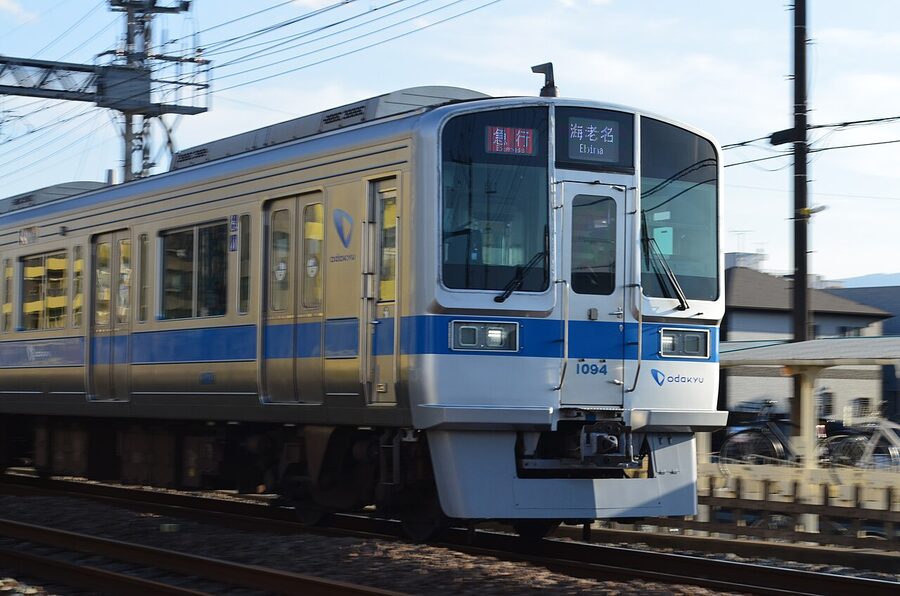
The 1000 series of 1988 is Odakyu’s first stainless-steel commuter EMU. It is the one most likely to be running through to Hakone-Yumoto, in either standard Odakyu blue-stripe livery or the Hakone-Tozan-styled Allegra red-and-blue livery you see on the through-services. Variable-frequency drives, 110 km/h, ten-car configurations.
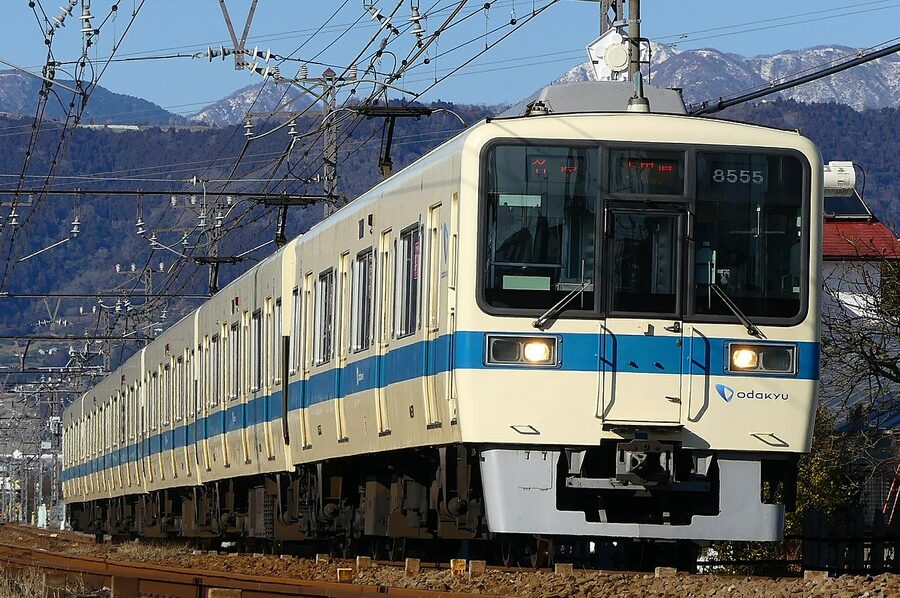
The 8000 of 1983 is the last steel-bodied Odakyu commuter EMU, given a major renewal in the 2000s that has kept it on the line into the 2020s. Less common on the through-services, more common on local Odawara Line work. Outside the daily commute, the 1000 and 8000 are the trains you are most likely to ride if you board a non-Romancecar local in 2026.
Riding it today
What it costs
The Odawara–Shinjuku one-way fare on a Romancecar is the basic ticket of ¥910 plus a ¥1,000 limited-express surcharge (Hakone-Yumoto adds about ¥110). So Shinjuku to Hakone-Yumoto on the Romancecar reserves at roughly ¥2,330. A normal Shinjuku to Odawara on a local or rapid express is just the ¥910 base fare; the Romancecar surcharge is what you pay for the seat, the timekeeping, and the through-service to Hakone-Yumoto without changing trains at Odawara.
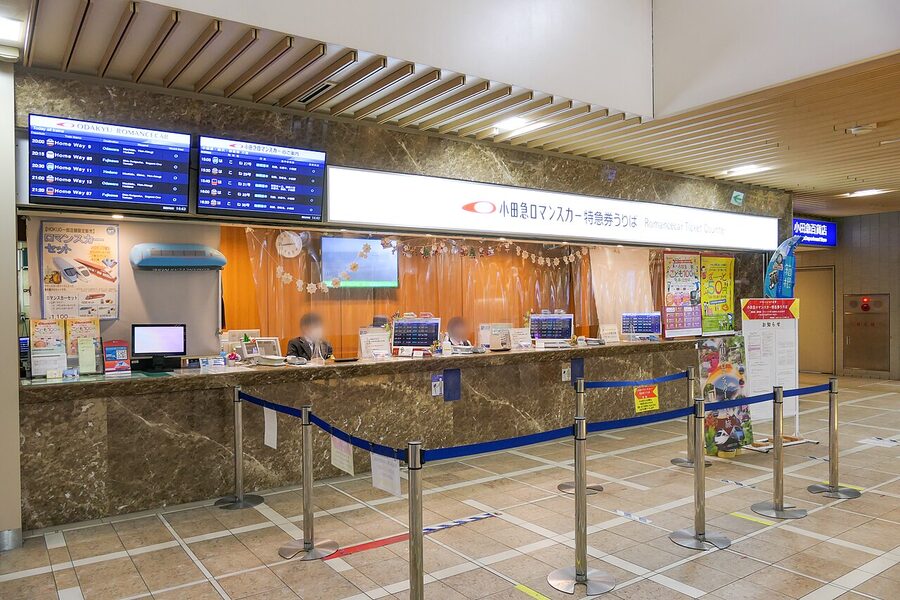
The single most useful product if you are doing Hakone properly is the Hakone Free Pass, which covers the Romancecar surcharge separately, all eight Hakone-region operators (Hakone Tozan, the funicular, the ropeway, the Lake Ashi boat, the Tozan bus and three others) for two or three days. Two-day pass ¥6,100 from Shinjuku, three-day ¥6,500. Available at Odakyu Shinjuku, Shinjuku South-South-East ticket office, the EMot app, and the Odakyu Foreign Tourist Centre on the ground floor of the Odakyu Department Store at Shinjuku.
Where to actually start the trip
For Hakone, you start at Shinjuku, on the Odakyu side of the station; the Romancecar terminal is on the ground concourse, west exit (subway level, not the JR concourse, easy to mistake). Trains run roughly hourly through the day and twice an hour in peak, taking 73 minutes Shinjuku to Hakone-Yumoto on the Super Hakone (the express stop pattern: only Machida) or 90 minutes on the standard Hakone (more stops). The 06:00–09:00 morning departures are the busiest because Odakyu sells the Romancecar to day-tripping commuters as well as tourists.
For Enoshima, you board the same Shinjuku trains and either change at Sagami-Ono onto the Enoshima Line, or take a direct Enoshima-named limited express. The line runs on a similar pattern to the Odawara Line, slightly less frequent, and gets you to Katase-Enoshima in about 75 minutes if you catch the through Romancecar. (Beach traffic on the Enoshima run is most of the demand in summer; off-season the train is half-empty.)
The Mt. Fuji service
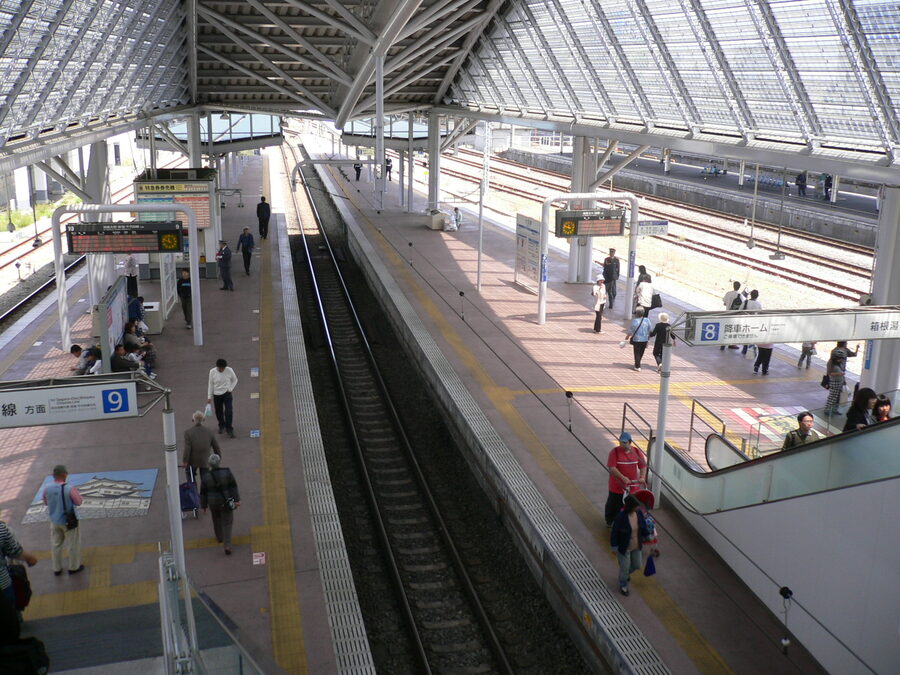
The most unusual Odakyu through-service is the Mt. Fuji limited express, which runs Romancecar stock from Shinjuku, leaves the Odawara Line at the Shin-Matsuda branch, picks up JR Central’s Gotemba Line, and terminates at Gotemba Station, the most direct rail approach to the south side of Mt. Fuji from Tokyo. Eight trains a day in each direction. You ride a 60000 MSE; the train physically crosses between operators at the Shin-Matsuda branch with a brief stop and a small change of running staff. Started in 1991 when JR Central electrified the Gotemba Line for through-running.
The Ebina detour, if you have a half-day
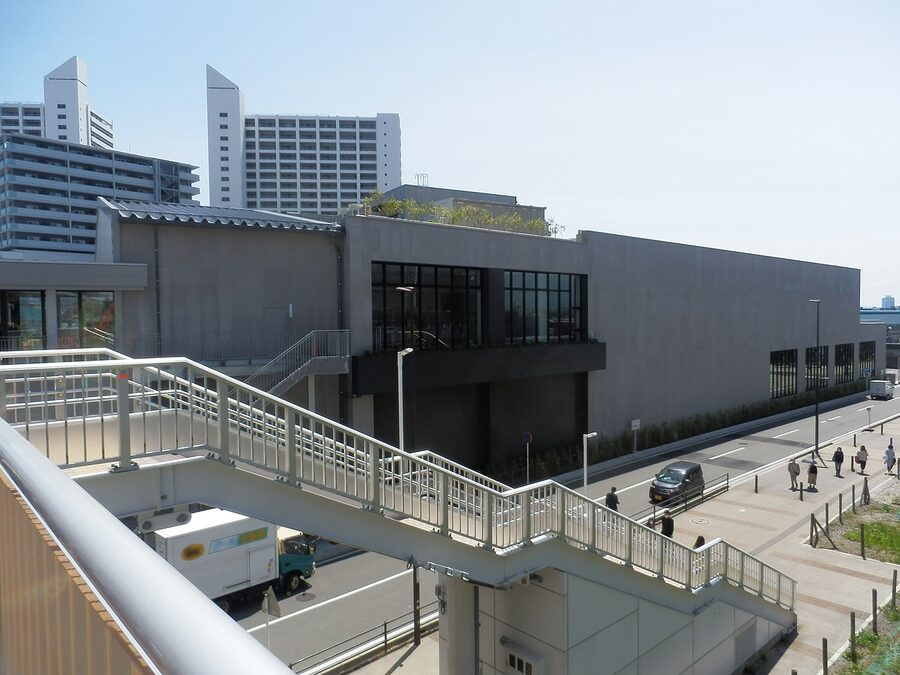
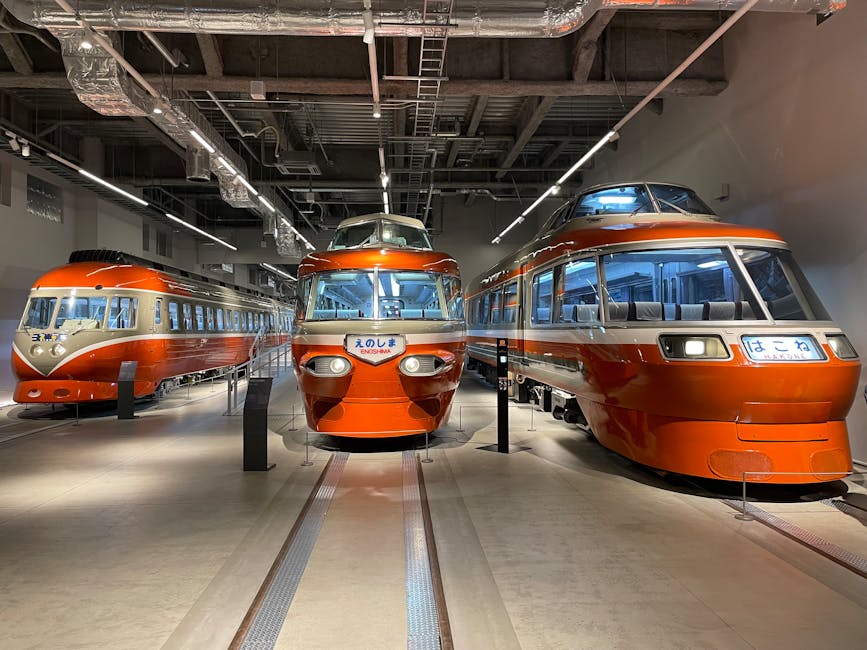
If you are at all interested in the rolling-stock side of any of this, set aside half a day at Ebina. The Romancecar Museum at Ebina opened on 19 April 2021 and preserves the SE, NSE, LSE, HiSE and RSE generations on a single open-air-ish hall, with the original Bose-Wave-equipped 7000 LSE saloon on display, the 3100 NSE forward observation cabin you can sit in, and a small modelling room covering the line’s pre-1960 stock. Adult admission ¥900, children ¥100, open Wednesday–Monday 10:00–18:00, closed Tuesdays and New Year. The station-side entrance is the south concourse, two minutes’ walk from the JR Sotetsu interchange that the Ebina station picture shows.
What Hakone is, today
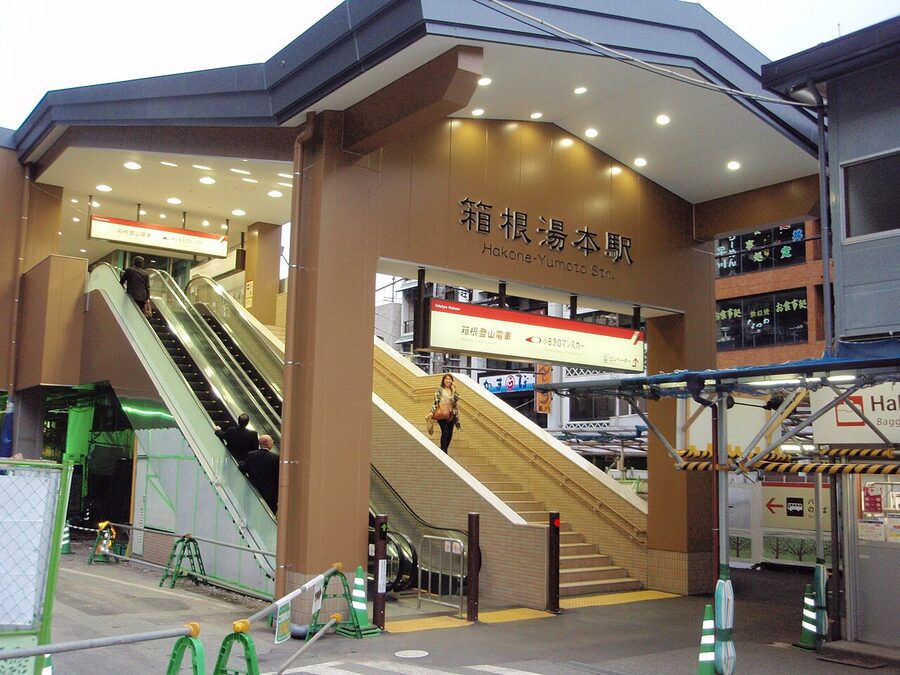
Hakone is the destination Odakyu has been selling for 76 years, and the destination that built the company. The town of Hakone-Yumoto is the gateway: hot springs in the river valley, ryokan walking distance from the Romancecar platform, the start of the Hakone Tozan switchback line up the mountain. From there, the Hakone Goruden Kosu is still the standard half-day route: Hakone Tozan switchback to Gora, Hakone Tozan funicular to Sounzan, Hakone Ropeway across Owakudani volcanic vents, sightseeing boat across Lake Ashi to Hakone-machi, and Hakone Tozan Bus back. Round trip from Hakone-Yumoto in five hours if you do not stop for lunch; eight if you do.
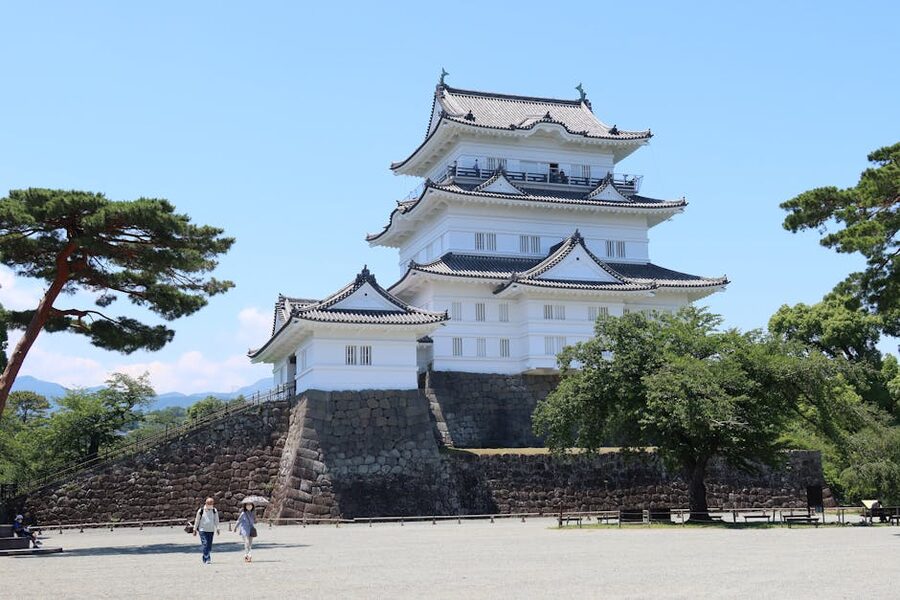
The town of Odawara at the line’s terminus is older than Hakone-Yumoto by several centuries and was the seat of the Hojo clan in the Sengoku period. Odawara Castle (reconstructed concrete in 1960, but on the historical foundations) is fifteen minutes’ walk from Odawara Station’s east exit and worth it if you are passing.
Where the line sits in the network
If you have read the Odakyu Line trains piece, the rolling-stock arc is more or less covered, from the 2400 HE through the present 5000 second-generation, plus all the Romancecar generations. The piece you are reading now is the operator-and-tourism side of the same story.
For comparison with how other Tokyo private operators handled the same problem in the same decades, three pieces in this collection are worth pulling alongside this one. The Tobu Railway piece walks through Tobu’s 30-year fight with JNR for the Nikko tourist trade, which is the closest parallel to Odakyu’s Hakone Goruden Kosu strategy. The Keio Electric Railway piece covers the operator that took the Inokashira Line off Odakyu in the 1948 separation and went on to compete with Odakyu for Tama New Town traffic. And the Tokyu Corporation piece is the company that swallowed Odakyu in the wartime Daitokyu merger and that still owns most of the Tokyo private railway network’s adjoining property.
The argument that the railway has had with itself
The 3000 SE that JNR borrowed in September 1957 is preserved 25 minutes’ Romancecar ride from Shinjuku, in a hall at Ebina that opened in 2021. You can walk past it on a Wednesday afternoon for ¥900. The same week the SE was running its 145 km/h test, Odakyu’s commuter platforms at Yoyogi-Uehara were already overcrowded, and the company was beginning the planning that would commit it to a 53-year four-track project through Setagaya. Both decisions are in the same museum. Neither one has finished its argument with the other.
The 50000 VSE in the same hall is what happens when one side loses an argument: a tourism-only Romancecar built in 2005 to revive the Hakone fare base, retired in 2022 because that fare base did not survive a pandemic and the EXE-based commuter Romancecar covered everything that did. The 70000 GSE, two seven-car sets currently working the Super Hakone services, is the company picking the argument up again on the tourism side. The next replacement Romancecar, whenever it is ordered, will tell you which side won this round.
If you board the Romancecar from Shinjuku tomorrow morning, you are riding the result of the argument so far. The seat reservation is the tourism side. The 64-minute Shinjuku–Odawara timekeeping is the commuting side. The third rail down the Hakone Tozan section that you cross at Odawara, lifted in 2006 but visible in the trackwork if you know where to look, is the side of the argument that the company decided 76 years ago to pay for in capital expense. None of it was inevitable. The line you are riding is the one Toshimitsu Tsurumatsu would not have recognised, and yet he is the reason it is double-track and electrified end to end on the morning you board.


.jpg)


