Tokyu: the property empire that runs eight train lines
The story I keep coming back to with Tokyu is the one about the empty trains. Goto Keita took over the Meguro-Kamata Electric Railway as managing director on 2 October 1922, six months before the line opened, with a clear problem on his desk. The track was finished. Den-en-chofu, the new English-style garden suburb the company existed to serve, had been laid out on the bare hills west of the Tama River. Lots had even been sold. But the houses were not built and the people were not commuting, and a railway with no commuters is a balance sheet that bleeds. Goto did not solve this by running better trains. He solved it by selling the suburb.
In This Article
- Why this operator is different from everyone else on the network
- Goto Keita and the makings of an empire
- The 1922 deal that made everything else possible
- The Mekama becomes the spine
- The Daitokyu years: 1942 to 1948
- Buying Odakyu, Keio and Keihin under government order
- The 1948 break-up under MacArthur
- 1950s and 1960s: the modern model takes shape
- The Tama Den-en-toshi project, announced January 1953
- The 1958 succession and the diversification of the 1960s
- The eight lines, in order of how Tokyu would rank them
- The Toyoko Line: Shibuya to Yokohama, the original 1926 route
- The Den-en-toshi Line: the suburb-and-railway play, post-war
- The Meguro Line: the 2000 split that fixed the Mekama
- The Oimachi Line and the bypass strategy
- The Ikegami Line: the 1933 takeover that became local-character infrastructure
- The Setagaya Line: the 1969 cull, and the one tram that survived
- How Tokyu builds its trains
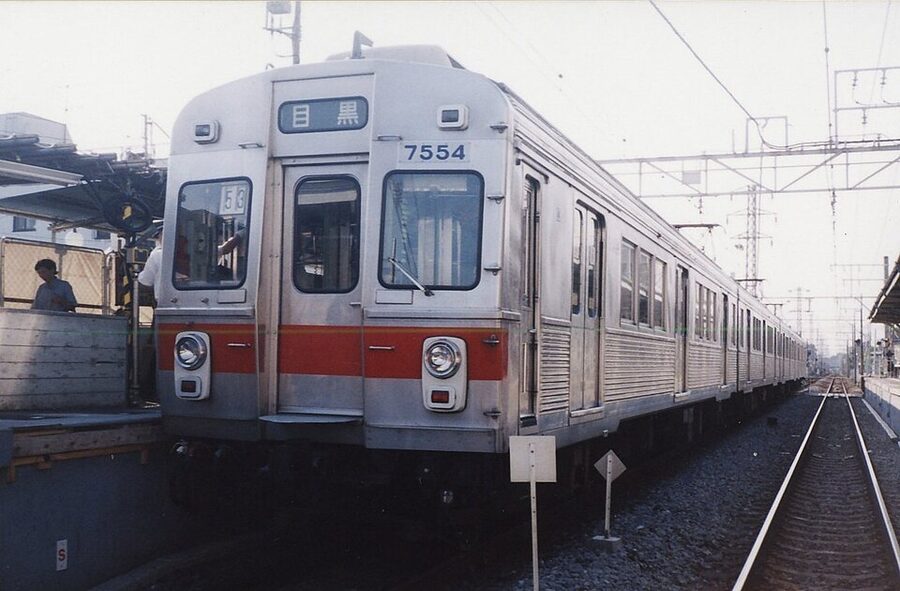
- The 8000 family: the 1969 stainless-steel template
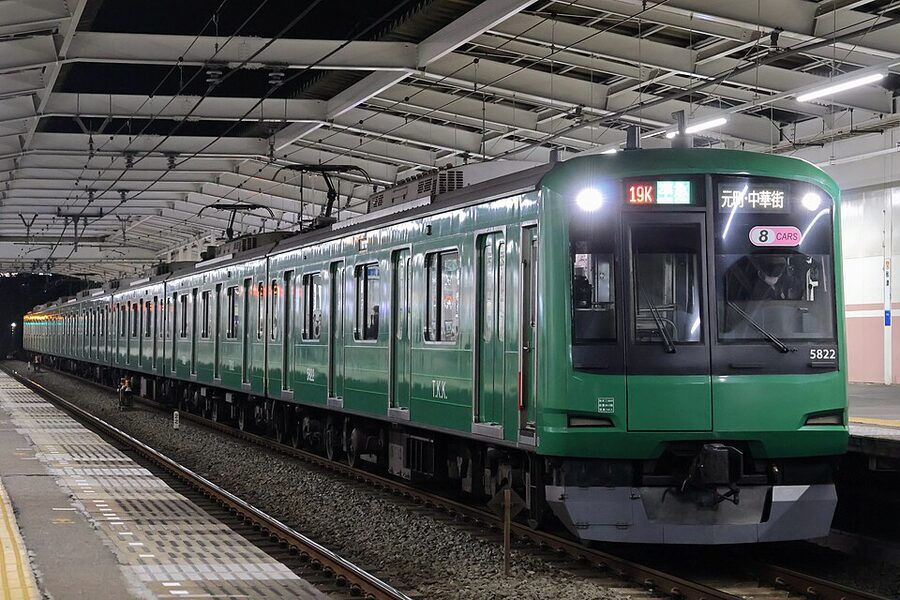
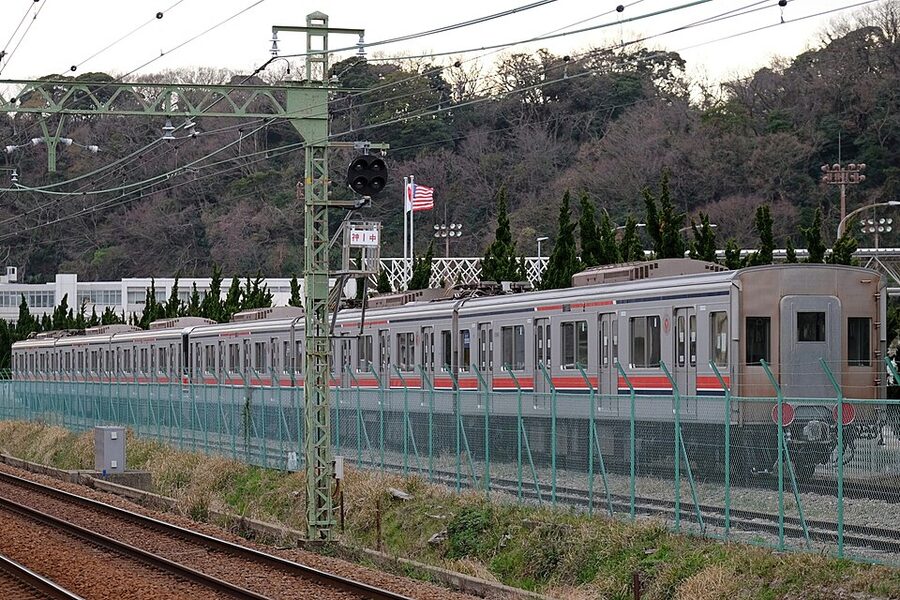
- The 5000 and 5050: the modern through-running fleet
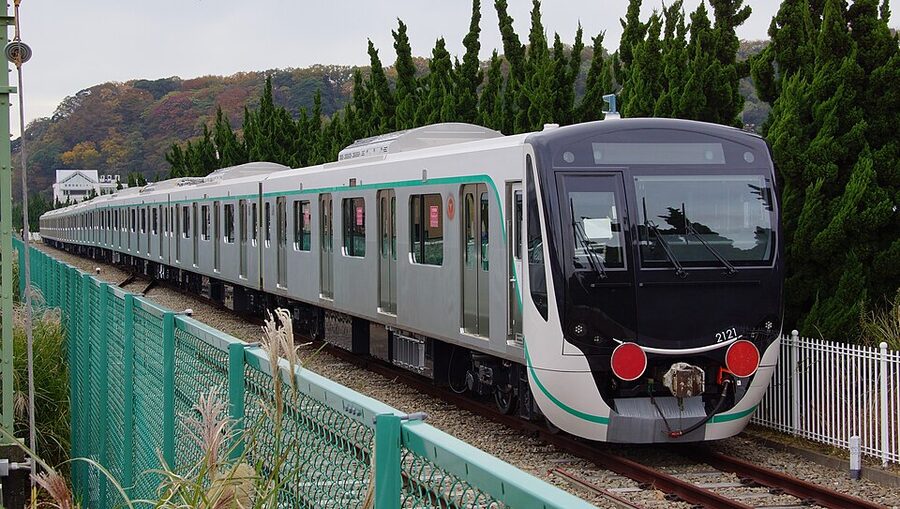
- The 2020 and 3000: the latest generation, J-TREC-built
- The 2019 spin-off: tidying up rather than strategy
- Shibuya: the project that justifies all of it
- Hikarie, Scramble Square and the underground Toyoko terminus
- What this means at the station
- The crossing, and what is happening above it
- Yokohama and the southern terminus
- Den-en-chofu, where the whole story started
- Riding it today
- Where Tokyu sits in the wider network
- Sources, and what they disagree on
- The trains, and the company
That sequence, build the line, sell the houses to fill it, then build the shop and the school and the cinema at each end, has been the Tokyu business model ever since. A century later the operating company runs about ¥163.5 billion of railway revenue against more than ¥1 trillion of group consolidated revenue. The trains are profitable. They are also rounding error in a property-and-retail empire that uses them as a value anchor. If you ride a 5050 series down the Toyoko Line from Shibuya to Yokohama and assume Tokyu is a railway with side businesses, you have read the company exactly the wrong way round.
Why this operator is different from everyone else on the network
Open the share register and the structure tells you. Tokyu Railways Co., Ltd. is a wholly owned subsidiary of Tokyu Corporation, the holding company. Real estate, hotels, retail, leisure, construction, advertising and cable broadband all sit alongside it under the same umbrella. JR East is bigger by every measure but JR East is a railway. Odakyu is a railway with one famous limited express. Tobu is a railway with one famous tower in Asakusa. Tokyu is a property developer that happens to own eight lines and an upscale department-store chain.
The peculiarity is older than every other private operator’s identity. Odakyu and Keio both began as scrappy interurbans chasing Hakone or Tama. Keisei and Keikyu chased the temple traffic to Narita and the docks at Yokohama respectively. Tokyu started as a real-estate company that needed a railway. The railway came second.
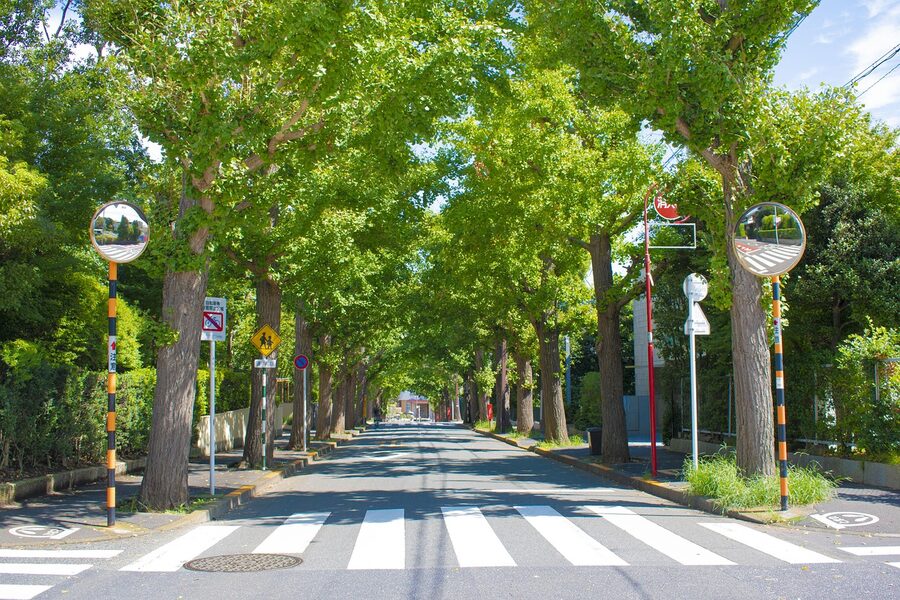
That order of events matters because it dictates everything that follows. A railway with a fixed track, a fixed terminus and a fixed schedule cannot grow much. A railway that owns the land it runs through can grow as fast as the city around it. Goto figured this out by 1923 and the next four decades were spent applying it.
Goto Keita and the makings of an empire
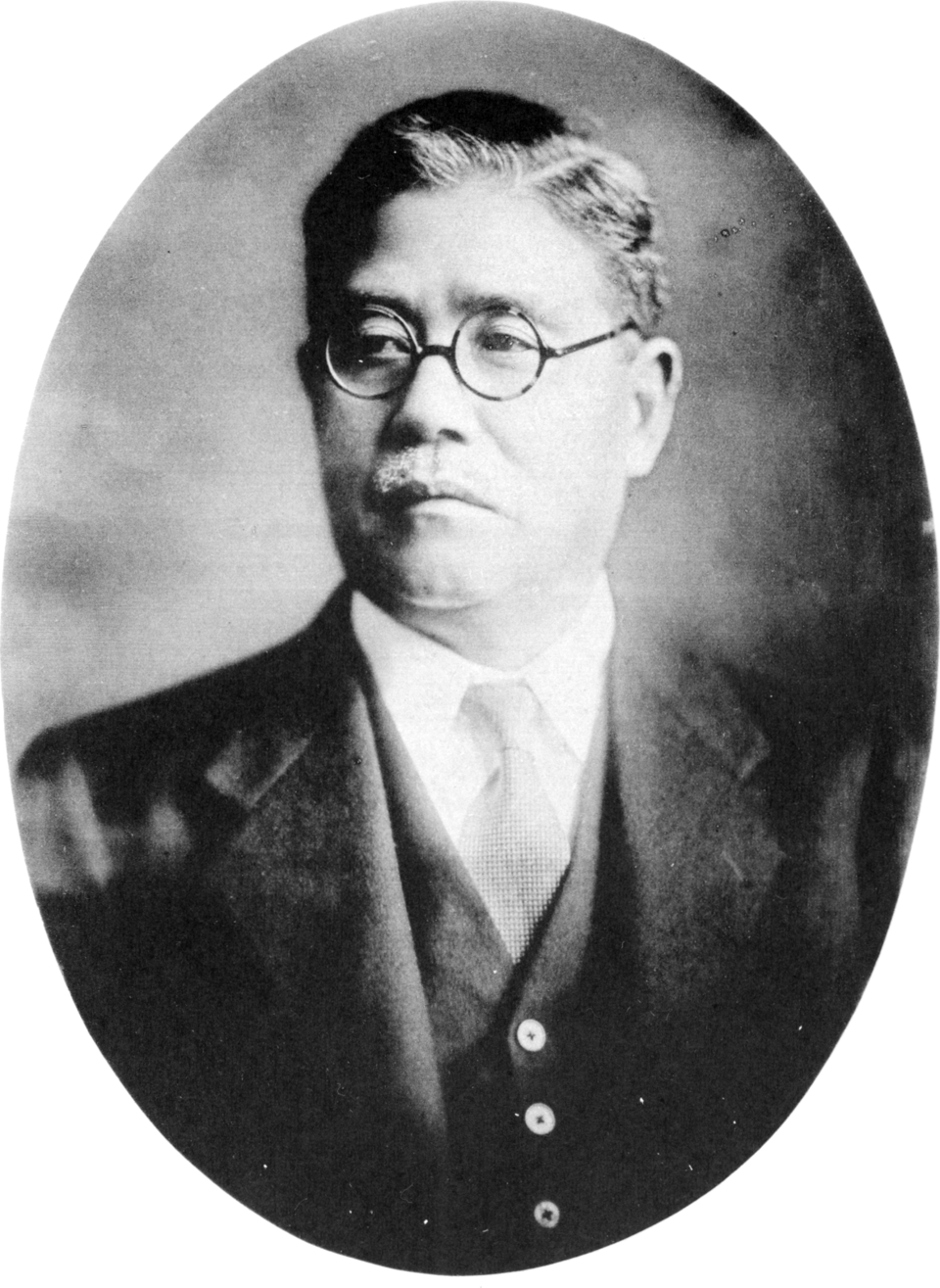
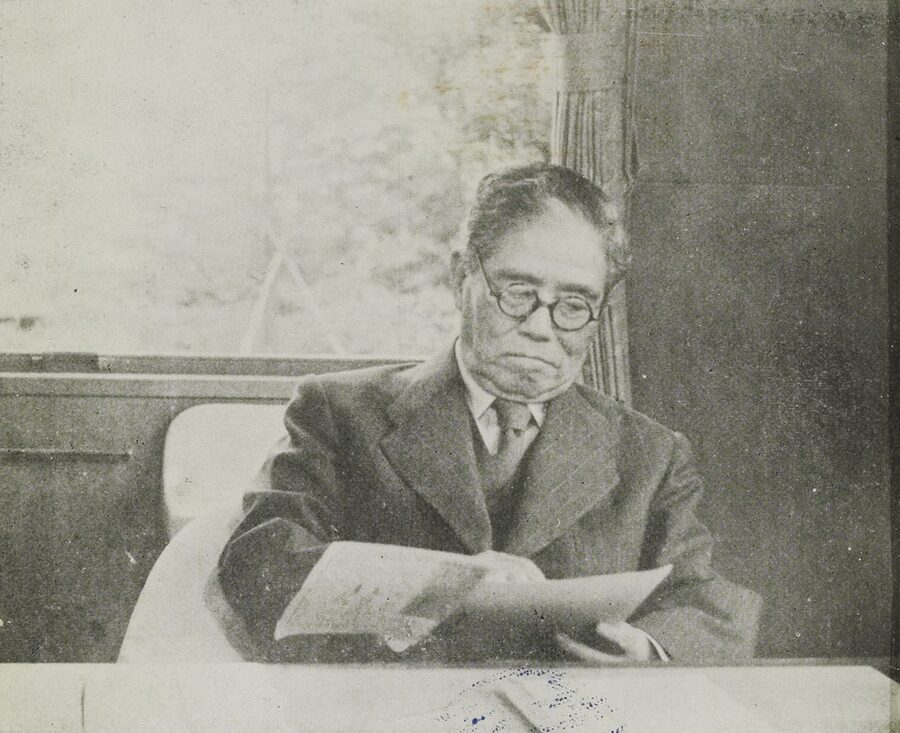
Goto was born Kobayashi Keita in 1882 in Aoki village in Nagano. He went to Tokyo Imperial University, graduated in 1907, took the prestigious slot in the Agricultural Ministry that politician Kato Takaaki had arranged for him, and changed his surname to his wife’s family name Goto, which means “later raider”, a pun that every business journalist of his generation went on to use about him. By the time he was forty he had moved to the Ministry of Railways, where his job was supervising private operators that had run aground.
One of those operators, the Musashi Electric Railway, was on his list. Musashi held a paper concession but had never run a train. In 1920 Goto was sent in as a director. In 1922 he bought controlling interest for ¥50,000 and merged it into a new company called Tokyo Kyuko Electric Railway, “Tokyu” being the contraction of those two words that the company would carry, in one form or another, for the next century.
The 1922 deal that made everything else possible
The same year, Eiichi Shibusawa, the industrialist who founded the Tokyo Stock Exchange and seemingly half of modern Japanese industry, was in trouble with his Den-en Toshi Company. Shibusawa had bought up the bare hills west of the Tama River in 1918 to build a garden city on the Letchworth model. The houses were drawn, the streets were laid, but no railway ran out there yet. Shibusawa needed a railway operator and he asked Hankyu’s Kobayashi Ichizo, who had pioneered the rail-and-property model in Osaka, for a recommendation. Kobayashi recommended Goto.
Goto became managing director of Shibusawa’s railway arm, the Meguro-Kamata Electric Railway, on 2 October 1922. The first section opened on 11 March 1923, six months before the Great Kanto Earthquake levelled most of central Tokyo on 1 September. The earthquake was the unintended marketing campaign for the suburb. Den-en-chofu, on solid ground at the western edge of the city, was barely shaken, while old wooden Tokyo central was burning. The garden suburb sold itself in weeks. Goto had his commuters.
The Mekama becomes the spine
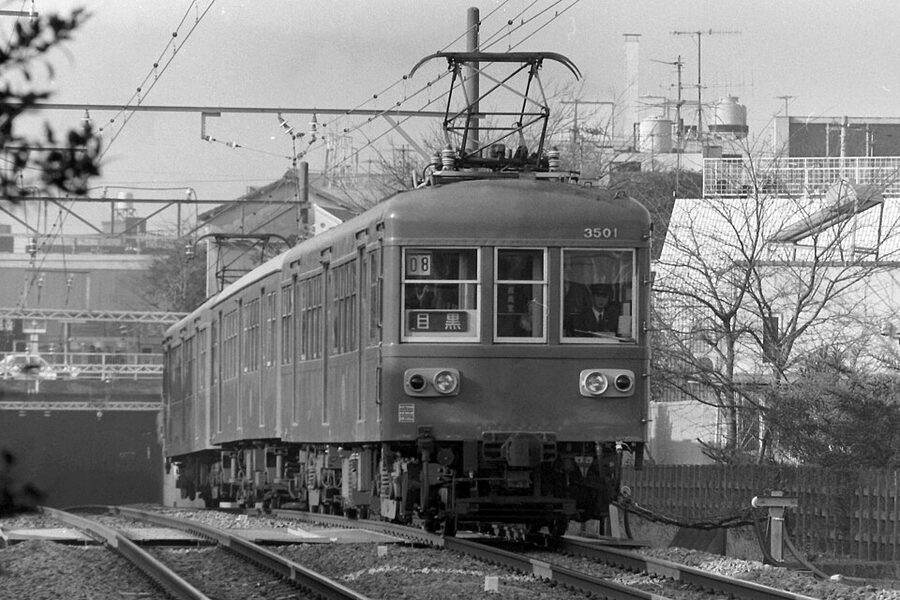
By 1924, Musashi Electric Railway had been renamed Tokyo-Yokohama Electric Railway, the Toyoko, and acquired Meguro-Kamata as a subsidiary. By 1928, Den-en Toshi Company, the original developer, was folded into the Mekama, which meant Tokyu owned both the railway and the dirt under the houses it carried commuters towards. By the late 1920s the Toyoko Line was running between Shibuya and Yokohama, the Mekama between Meguro and Kamata, and Goto had begun what he openly called his “buying career” of distressed regional rail operators.
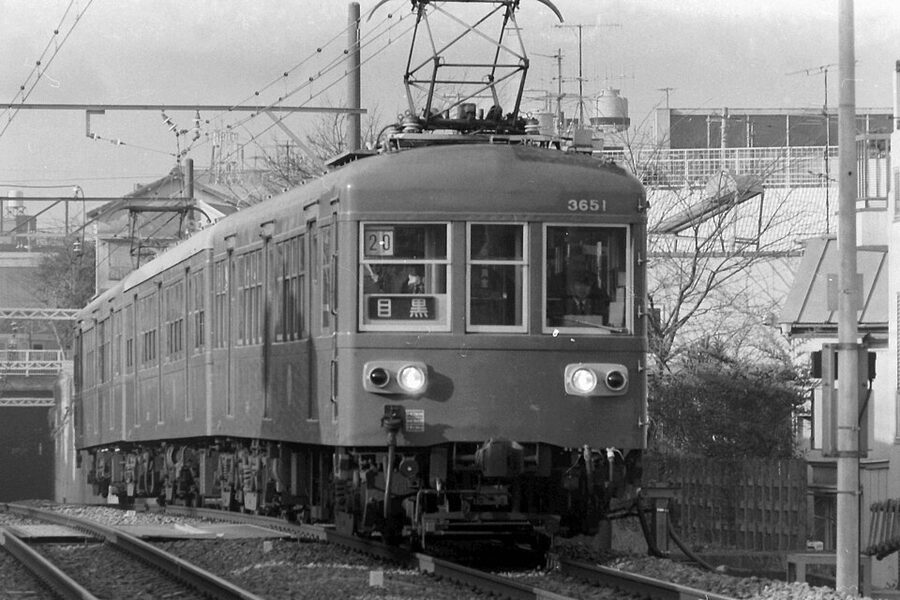
In May 1933, Goto bought the Ikegami Electric Railway from the Kawasaki zaibatsu in a single overnight cash transaction. In 1934 he opened the Toyoko Department Store at the Toyoko Shibuya terminus, locating retail at the rail terminus for the first time in Japan, an idea Hankyu’s Kobayashi had pioneered in Osaka but that had not yet crossed the Tone River. In 1937, Tokyu opened the Shibuya-Shinbashi underground link, threading the first proto-Hanzomon Line under central Tokyo. Other acquisitions ran in parallel: Enoshima Electric Railway, Shizuoka Electric Railway, the Sotetsu transport company, Kanto United Cars (a rolling-stock builder). Goto bought weak operators, fixed them, and absorbed them.
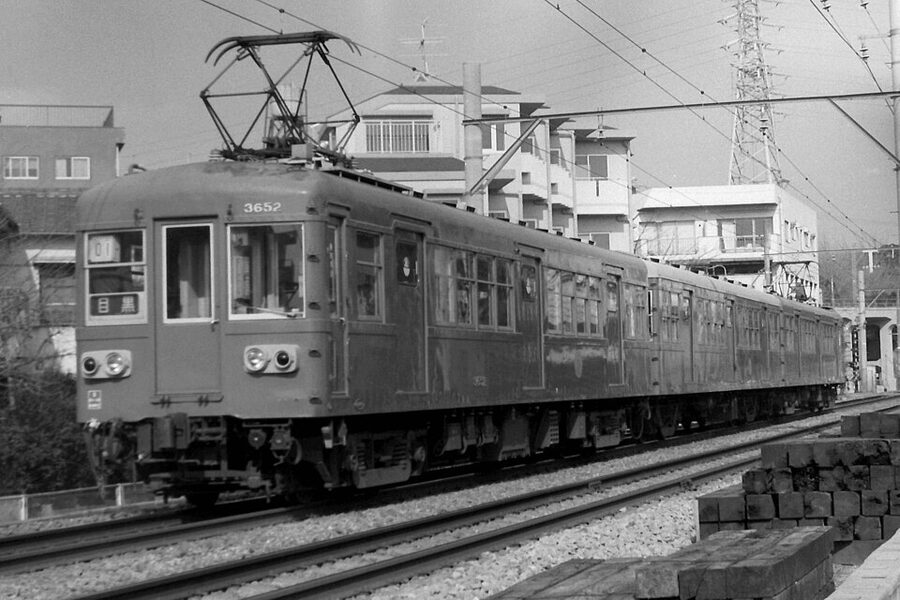
The Daitokyu years: 1942 to 1948
The wartime regime made Goto’s job easier and harder at the same time. Easier because the cabinet of February 1943 ordered the small private railways of Tokyo into a single operator, on the theory that consolidated rail would be more useful for the war than competition would be. Harder because Goto was both the obvious agent for that consolidation and a target of the post-war occupation authorities for having executed it.
Buying Odakyu, Keio and Keihin under government order
The Tokyo-Yokohama Electric Railway took the name Tokyu Corporation on 1 May 1942. The cabinet directive of February 1943 then required Tokyu to absorb the Odawara Express Railway (today’s Odakyu) and the Keihin Electric Railway (today’s Keikyu). In 1944 the merger swallowed the Keio Teito Electric Railway, which had itself absorbed Odawara Express in 1940. By the end of the war Tokyu controlled essentially the entire south and west of Tokyo’s commuter network. The combine was known colloquially as Daitokyu, “Great Tokyu”, and Goto became Minister of Transport and Communications in February 1944, signing wartime orders he had effectively written for himself.
The Daitokyu years were strategically peculiar. The combined operator never integrated its operations the way Goto had assumed it could. Odakyu, Keio and Keihin kept their own depots, fleets, and operating cultures, and the unified branding never quite stuck. The wartime air raids of 1944 and 1945 then hit the network hard, especially the Toyoko viaduct sections through Shibuya and Yokohama. By August 1945 the war was over and the Daitokyu balance sheet looked considerably worse than the Tokyu balance sheet of 1942.
The 1948 break-up under MacArthur
The occupation authorities under General Douglas MacArthur applied the Economic Decentralization Law to the rail and bus combines from 1947. The Decentralization Law was originally aimed at the financial-and-industrial zaibatsu, Mitsubishi and Mitsui chief among them, but Tokyu, with its 220 subsidiaries spanning rail, real estate, hotels, retail, advertising, manufacturing and a film studio, looked enough like a zaibatsu to qualify. Goto was purged from public life in early 1948 and the combine was broken up in stages through that year.
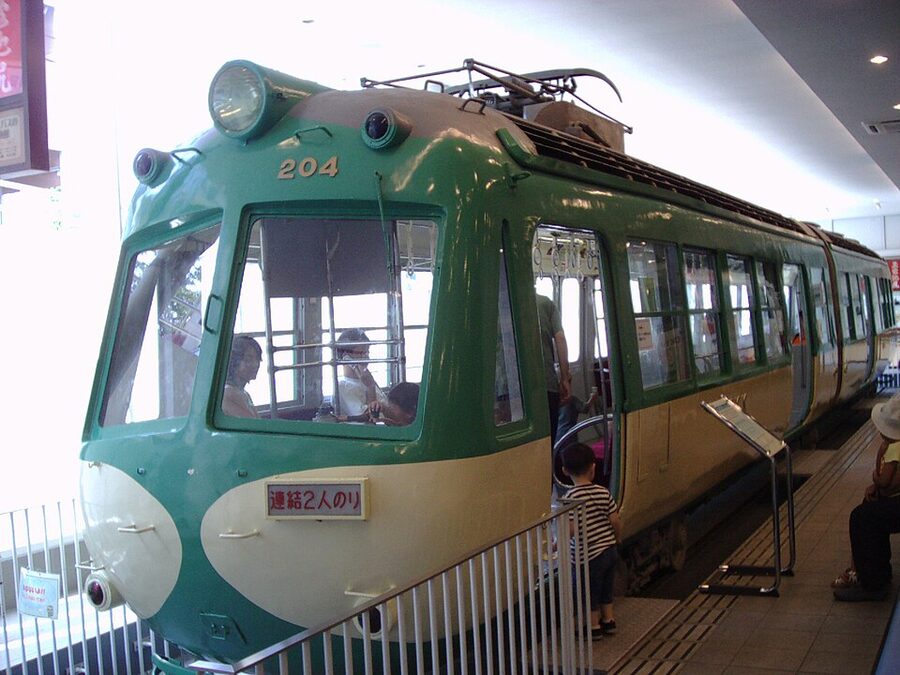
Three pieces broke off and resumed independent existence as the operators they had been before 1942: Odawara Express became Odakyu Electric Railway; Keihin Electric became Keikyu Corporation; Keio Teito became Keio Electric Railway. What was left was Tokyo Kyuko Electric Railway, the original Toyoko-and-Mekama core, plus the Ikegami line, plus the Tamagawa streetcar network. Twelve years of acquisition unwound into roughly the geography Goto had bought into in 1922.
1950s and 1960s: the modern model takes shape
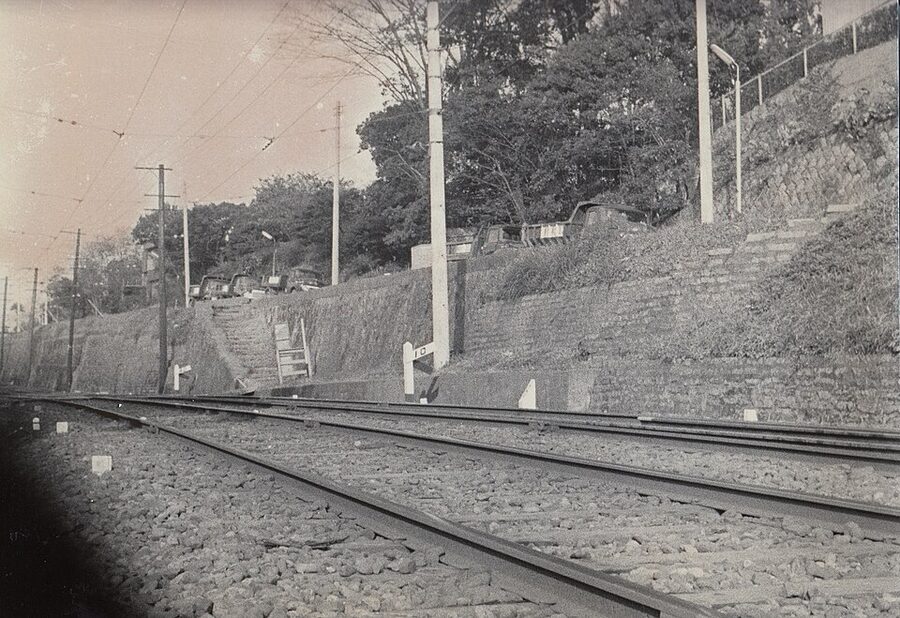
What followed the break-up is what makes Tokyu the operator it is today. Goto came back to chairmanship in 1952. He was, by then, seventy years old and conscious that his son Noboru was the man who would have to apply the lessons. The 1948 break-up had stripped the railway down. Rather than chase reacquisition, Goto pivoted. The future, he argued, was not more track. It was more property along the existing track.
The Tama Den-en-toshi project, announced January 1953
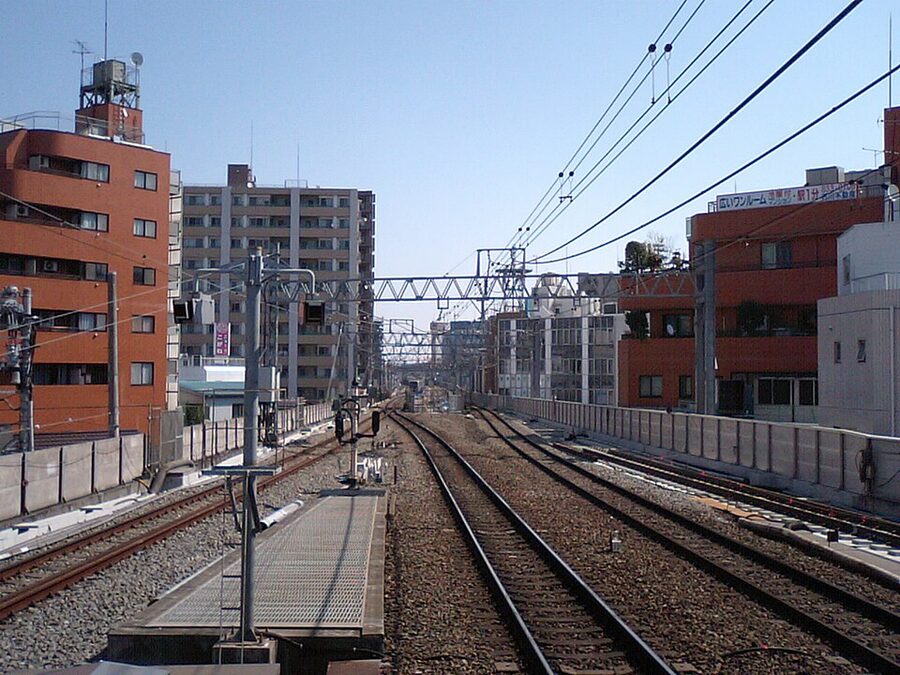
Goto announced the Tama Den-en-toshi project in January 1953. The plan was to develop roughly 5,000 hectares of farmland west of Yokohama into a planned commuter suburb of about 500,000 people, with a Tokyu-built and Tokyu-run railway threading through it from Shibuya. The economics were the Den-en-chofu economics from 1923 with two zeros added. Tokyu would buy raw land at agricultural prices, lay a railway, build the houses and the schools and the shops, and sell the resulting commute-in-50-minutes-from-Shibuya land at thirty to fifty times what the farmland had cost.
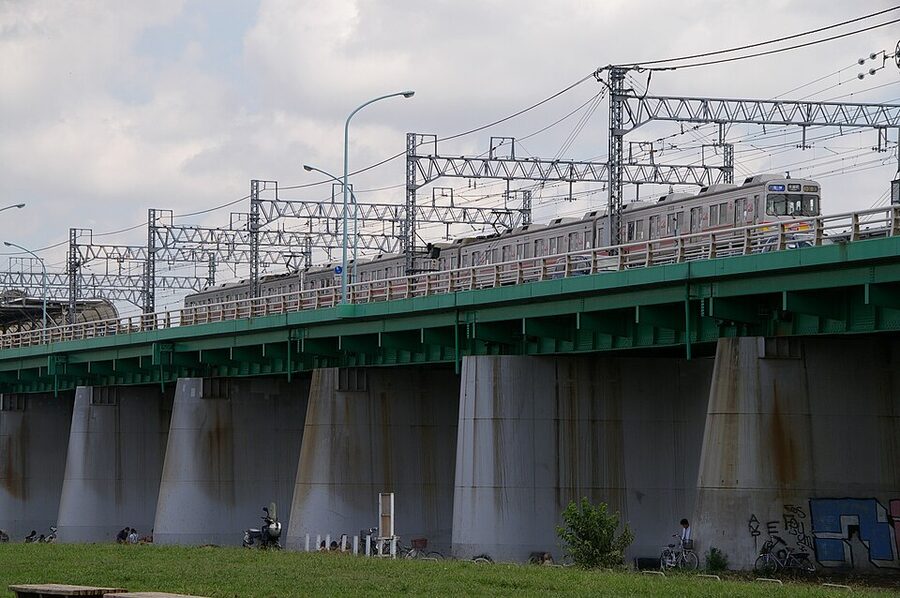
The line opened in stages from 1966, reaching Chuo-Rinkan in 1984. The suburb that the line served, Tama Den-en-toshi, ended up housing close to 600,000 people across Aoba, Midori and Tsuzuki wards in northwest Yokohama. By the early 1980s, Tokyu was selling the model overseas, applying the same template in Seattle, Perth, Jakarta and (later) Hanoi. The model that Goto had been forced to invent on the fly in 1922 had become a corporate franchise.
The 1958 succession and the diversification of the 1960s
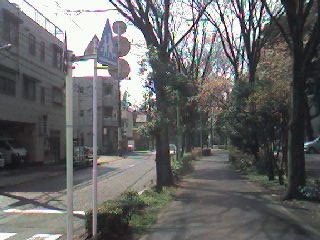
Goto Noboru, the son, became president in 1958 at age 38. Keita died in August 1959. By the time Noboru took over, Tokyu was reshaping into the multi-business conglomerate it is today. The Tokyu Department Store Company had been formed in 1948. The Tokyu Tourist Corporation followed in 1956. Tokyu entered hotels in 1960, formed Toa Domestic Airlines and the Tokyu Agency advertising agency in 1961, set up Izukyu Corporation (a separate operator running tourist trains to Izu) the same year, and added Shiroki Corporation, an automotive parts manufacturer, in 1964. By 1966 the addition of the new Den-en-toshi services brought the Tokyu rail count to seven lines totalling more than 100 km. By the mid-1970s the group ran two hotel chains, a domestic airline, a national-scale advertising agency, a real-estate development arm working in Hawaii and Vancouver, and three foundations including the Gotoh Museum, which still holds the only complete original manuscript of the Tale of Genji on public view in Japan.
The eight lines, in order of how Tokyu would rank them
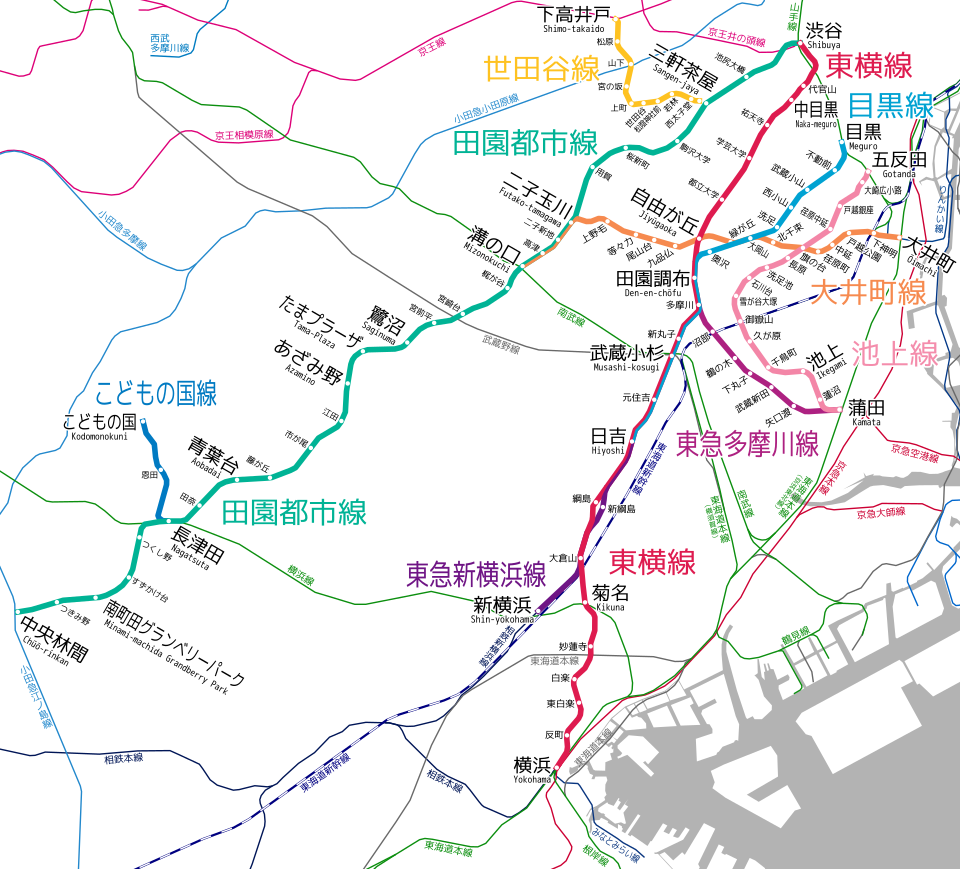
I would rank the network not by passenger count but by what each line tells you about the company. By that measure the Toyoko comes first, the Den-en-toshi second, the Meguro third, the Oimachi fourth, and the four short lines, the Ikegami, Tamagawa, Setagaya and the new Shin-Yokohama, fall in behind.
The Toyoko Line: Shibuya to Yokohama, the original 1926 route
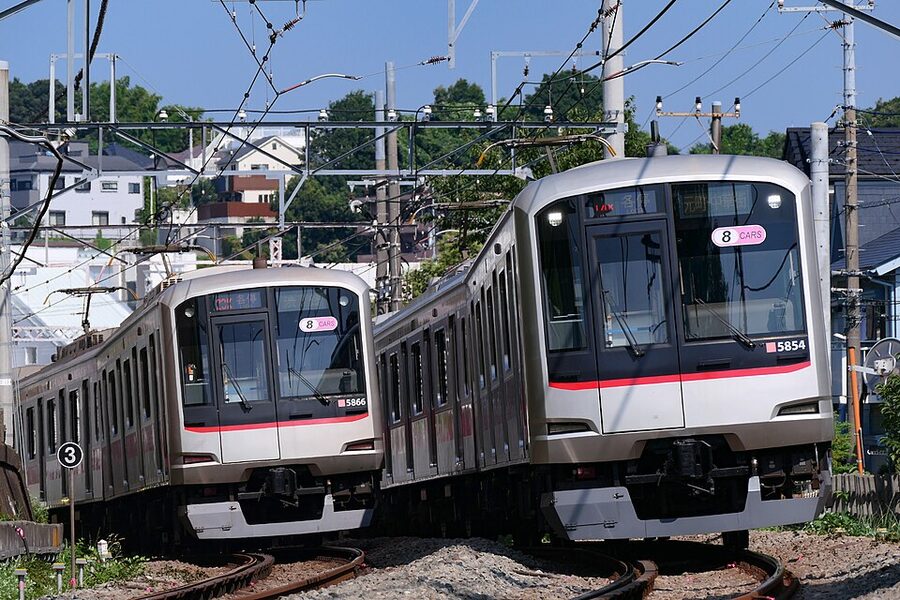
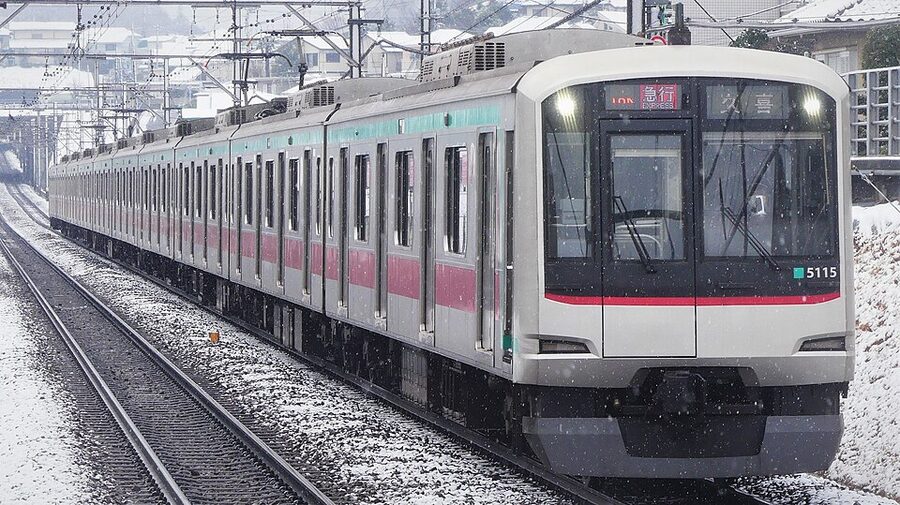
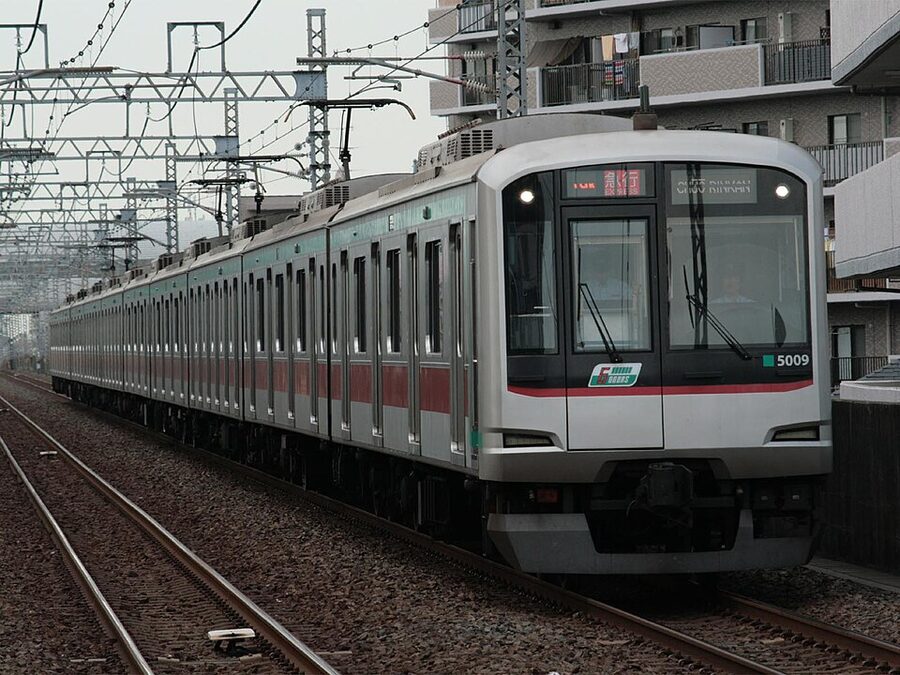
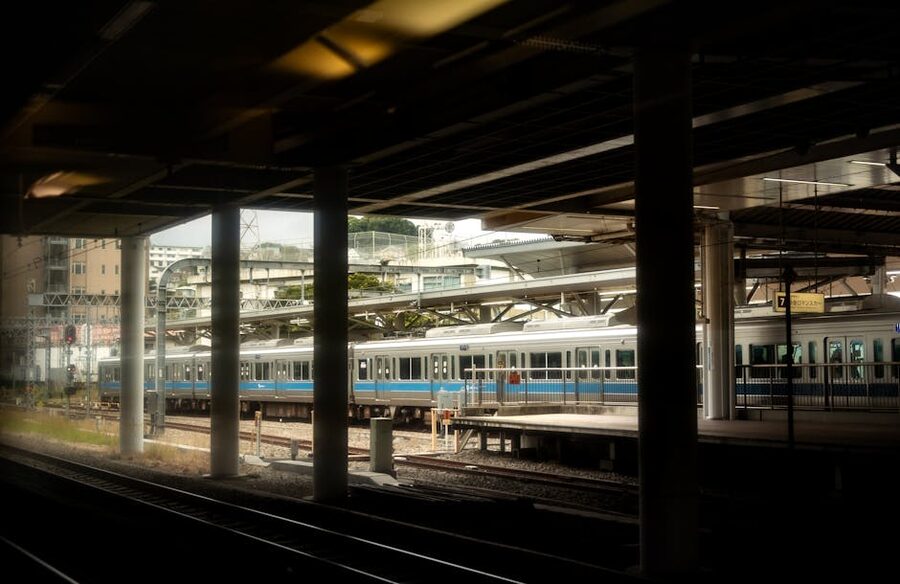
The Toyoko, opened in stages from 1926, is the original Tokyo-Yokohama Electric Railway. 24.2 km, 21 stations, the historical and emotional centre of the network. It served the Den-en-chofu suburb that started everything. It now carries through-running services from Yokohama all the way up the spine of central Tokyo via the Tokyo Metro Fukutoshin Line, onto the Tobu Tojo Line into Saitama and the Seibu Ikebukuro Line into the western suburbs. The same 5050 set may run as Toyoko, Fukutoshin, Tobu Tojo or Seibu Ikebukuro on its destination boards within an hour.
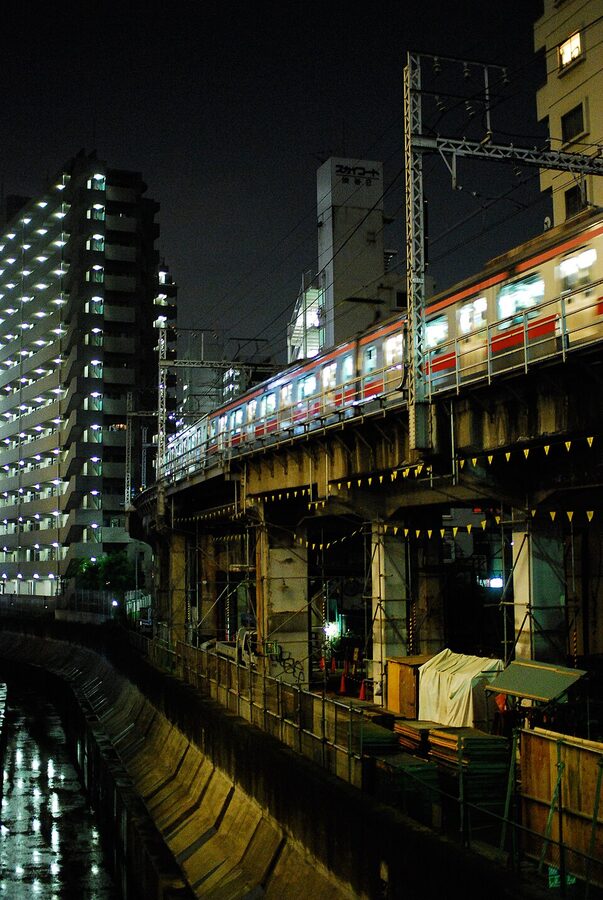
What changed the Toyoko in 2013 was the move underground. Trains had run from an elevated terminus at Shibuya since 1934. On 16 March 2013, the elevated terminus closed forever and the Toyoko trains began emerging from a four-storey-deep underground hall directly below the new Hikarie tower. The same day, through-running with the Fukutoshin began. The surface real estate that the elevated platforms had occupied became Tokyu’s redevelopment lot, the start of what is now the Greater Shibuya Project.
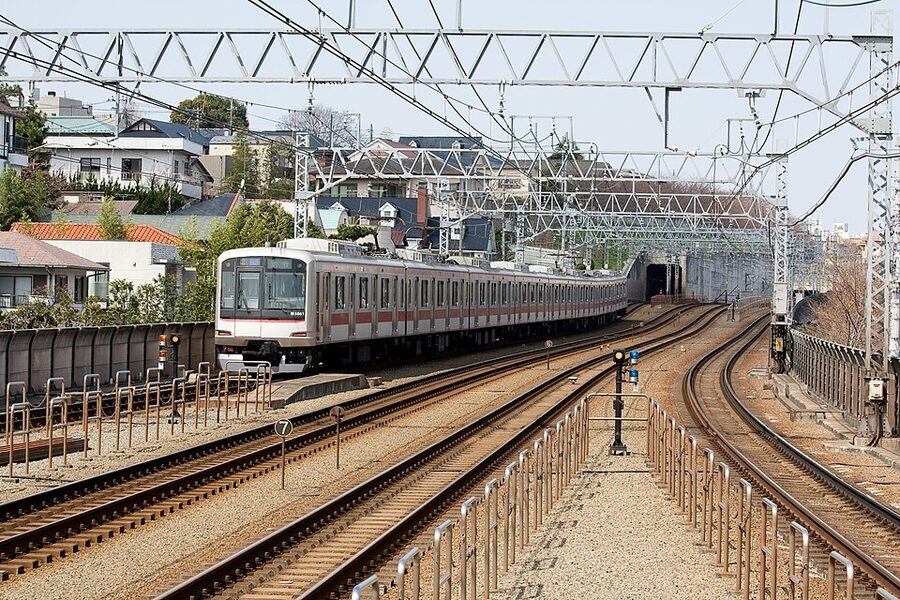
The Den-en-toshi Line: the suburb-and-railway play, post-war
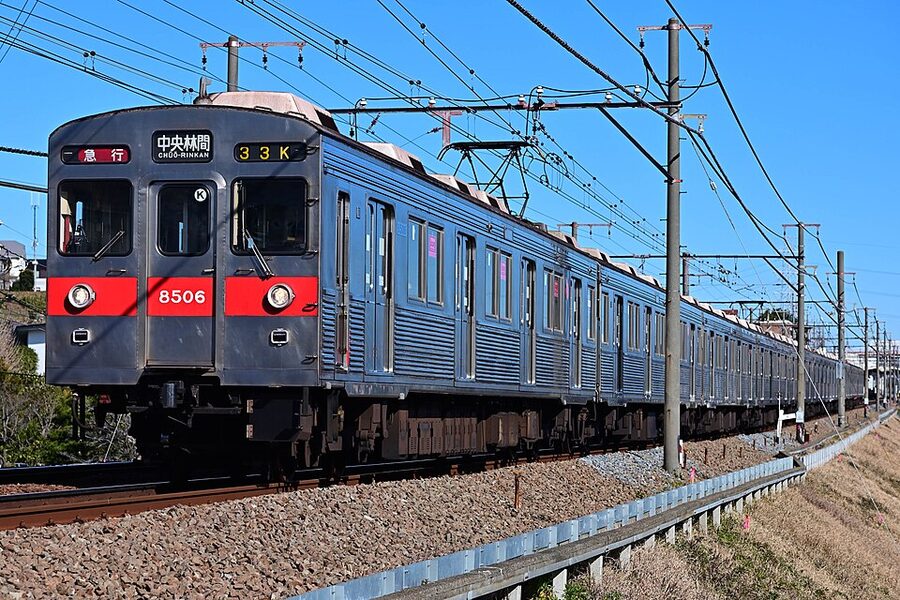
The 31.5 km Den-en-toshi was the post-war reset, opened in stages between 1966 and 1984 to serve the suburb Goto announced in 1953. Through-running with the Tokyo Metro Hanzomon Line began in August 1978; through-running into the Tobu Skytree and Isesaki lines into Saitama opened a 100-km commute from Chuo-Rinkan to Kuki on a single ticket. The line is the company’s biggest revenue earner and the one that justifies the corporate structure. Without the Den-en-toshi, Tokyu’s property arm would not have its largest single asset class.
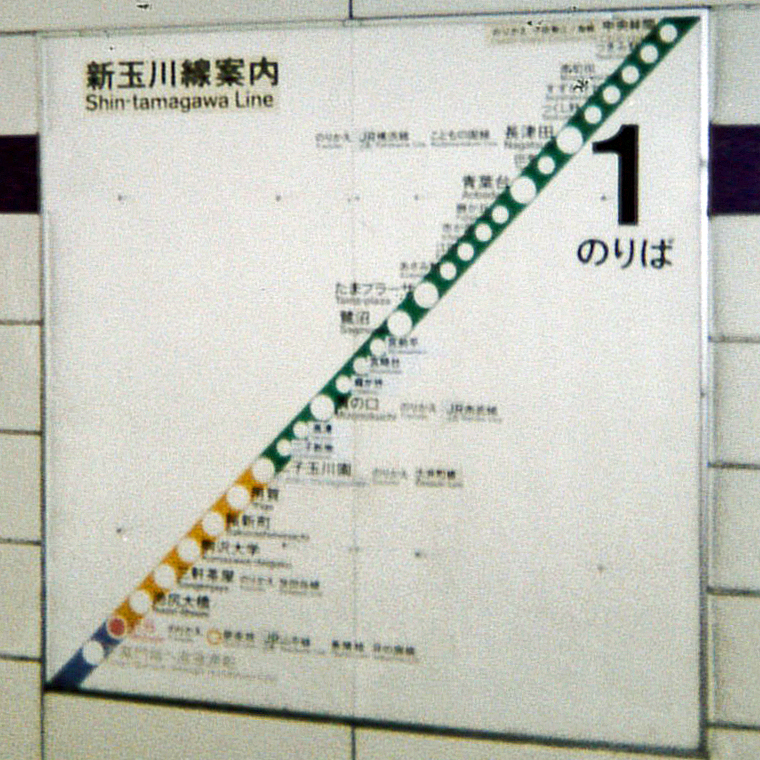
The Meguro Line: the 2000 split that fixed the Mekama
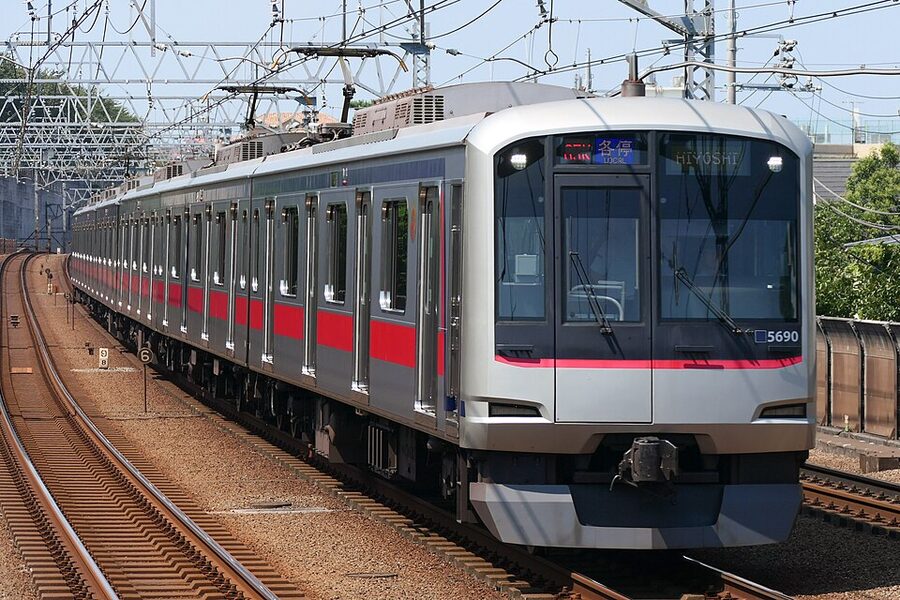
The Meguro Line is the cleanest example of how Tokyu uses its network as a strategic instrument rather than a fixed asset. On 6 August 2000, the original Meguro-Kamata Line, the founding 1923 spine, was split. The northern half, Meguro to Hiyoshi, became the Meguro Line. The southern half, Tamagawa to Kamata, became the Tokyu Tamagawa Line. The Meguro half got new through-running gear into the Tokyo Metro Namboku Line, the Toei Mita Line and the Saitama Rapid Railway, immediately turning it into a high-frequency commuter route into the Marunouchi business district.
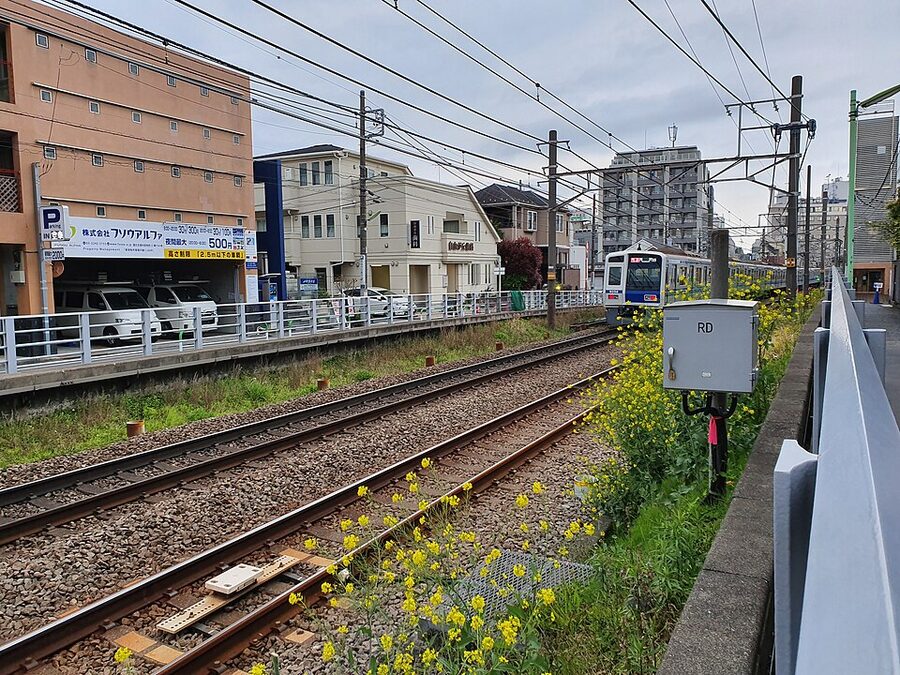
The 2023 Shin-Yokohama Line extension, opened on 18 March 2023, added a 5.8 km tunnel south from Hiyoshi to Shin-Yokohama. It is technically a separate line in the Tokyu timetable but operationally an extension of both the Meguro and the Toyoko, with a new direct rail link from central Shibuya and central Yokohama to the Shinkansen platforms at Shin-Yokohama.
The Oimachi Line and the bypass strategy
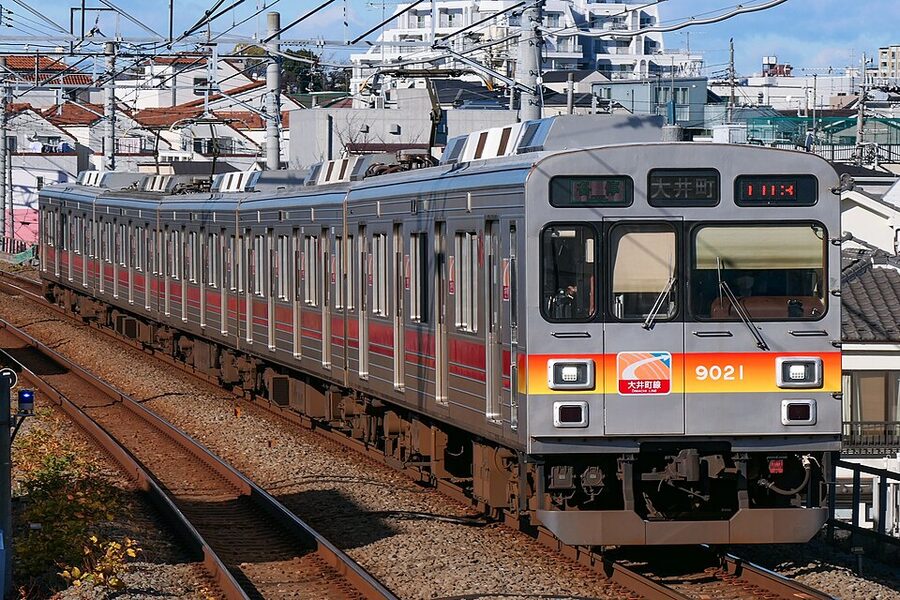
The Oimachi connects Oimachi (on the JR Keihin-Tohoku and Rinkai lines) westward to Mizonokuchi on the Den-en-toshi. Since 2009 it has functioned as a Den-en-toshi bypass during the morning peak, with rapid services from Oimachi continuing onto the Den-en-toshi to skip the Shibuya bottleneck. The bypass is one of the smarter pieces of operational engineering on the Tokyu network, because it shifts perhaps 40,000 daily commuters off the choke point at Shibuya and reduces the most expensive infrastructure problem the company has, which is fitting more trains through the underground hall under Hikarie.
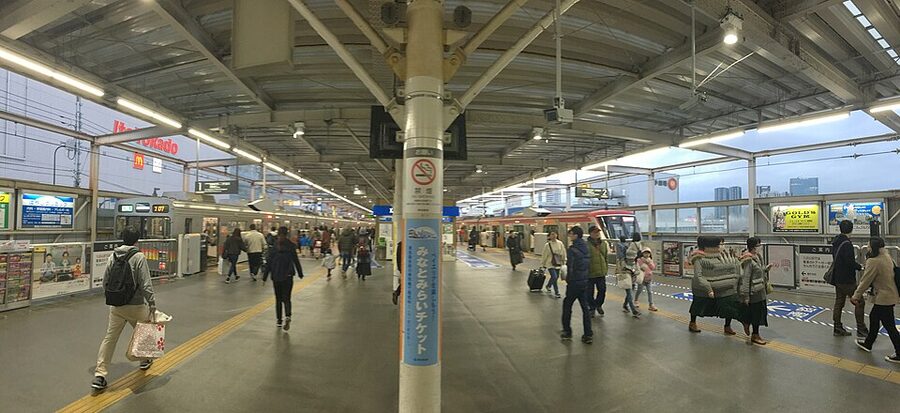
The Ikegami Line: the 1933 takeover that became local-character infrastructure
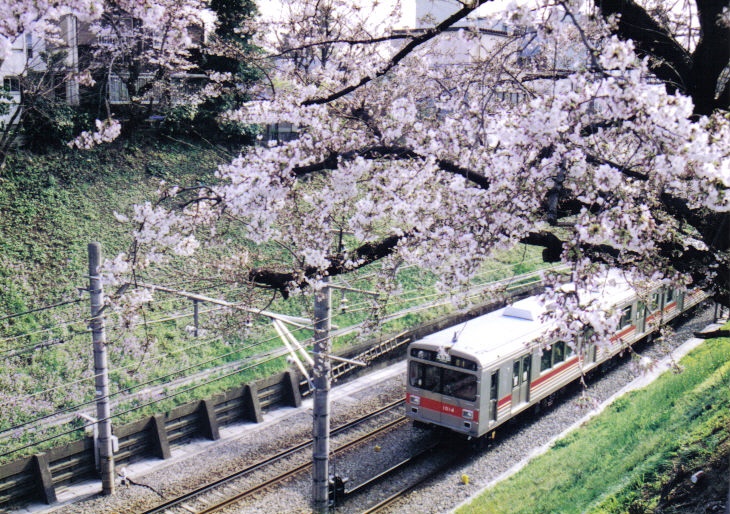
The 10.9 km Ikegami runs from Gotanda south to Kamata and is the line that does not feel like the rest of Tokyu. Three-car trains, no through-running, no high-rise development at the stations, single-track platforms still at the older end of the route. It is Tokyu’s local-character line. The Ikegami Honmonji temple, where the Buddhist priest Nichiren died in 1282, is a five-minute walk from Ikegami Station, and the autumn-colour cherry trees in the temple grounds make the line worth riding for the Honmonji visit alone.
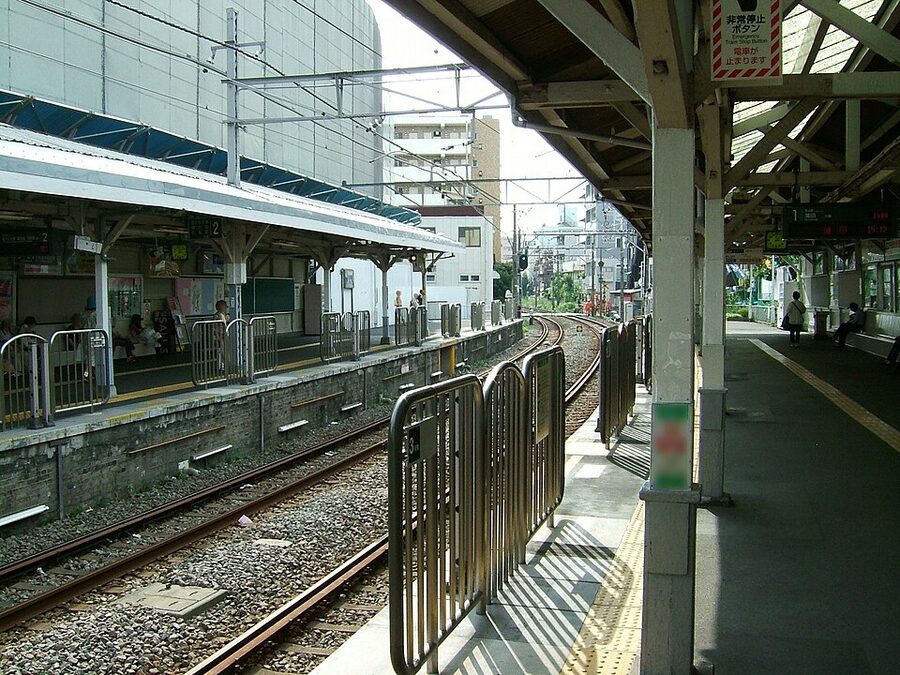
The Setagaya Line: the 1969 cull, and the one tram that survived
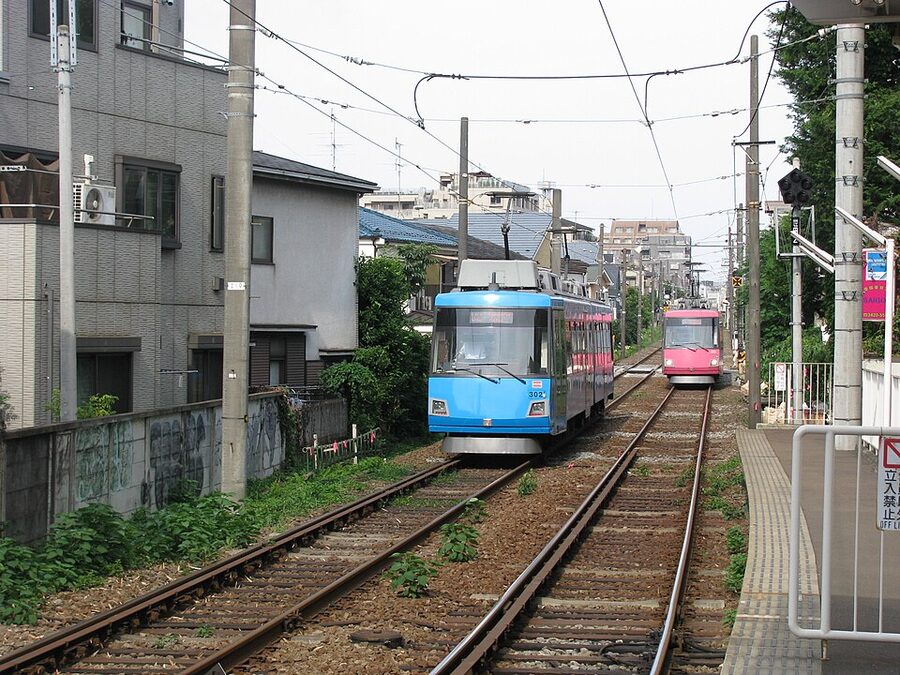
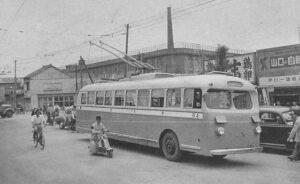
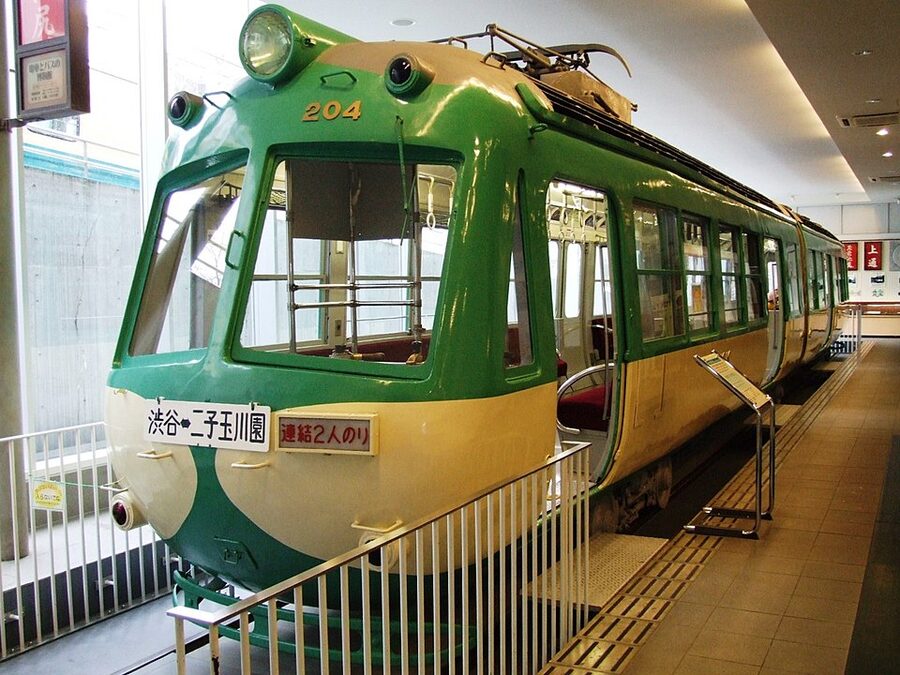
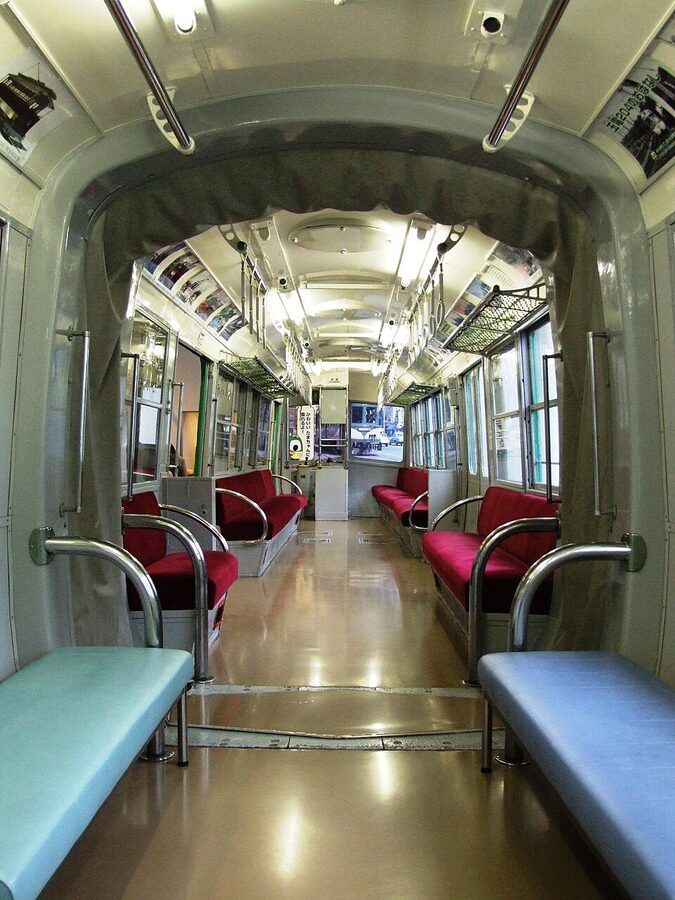
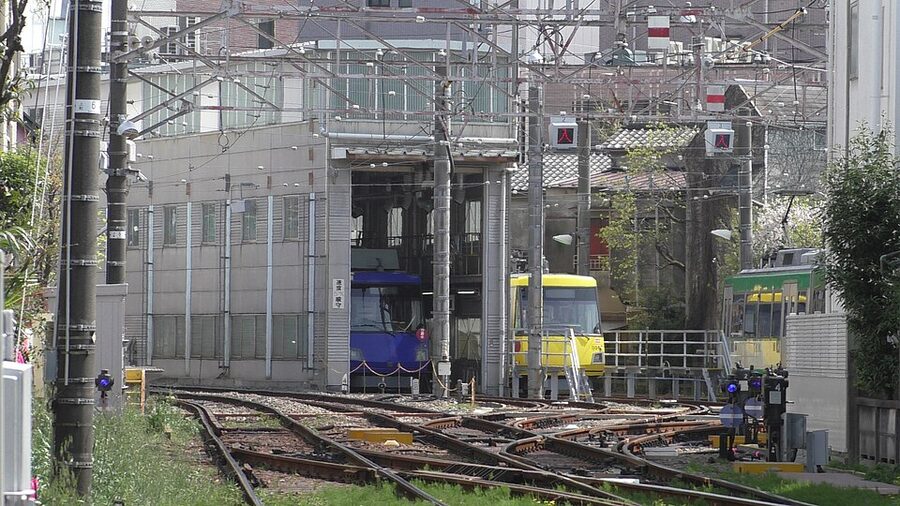
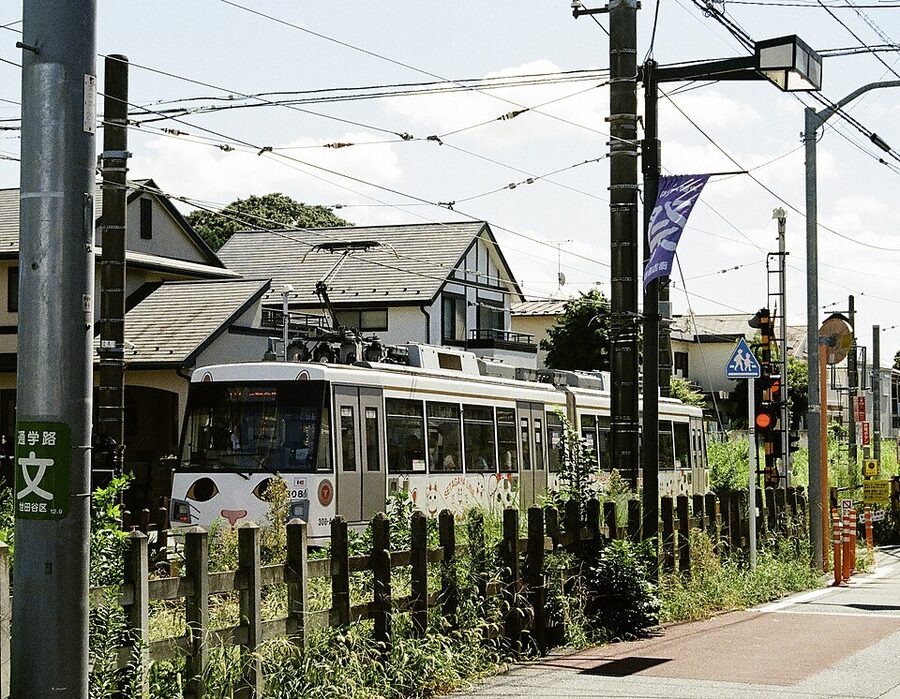
Tokyu used to run a much larger streetcar network. The Tamagawa Line, 9.1 km between Shibuya and Futakotamagawa, closed on 10 May 1969, replaced first by buses and later by the underground Shin-Tamagawa Line. The Kinuta branch and the rest of the Tamagawa group went the same way. The 5.0 km Setagaya Line survived because, alone among the Tokyu trams, it never crossed a major road and never blocked the buses or the cars. It is now the only piece of street-running track Tokyu still operates and runs ten 300 series two-car units, each painted a different solid colour.
How Tokyu builds its trains
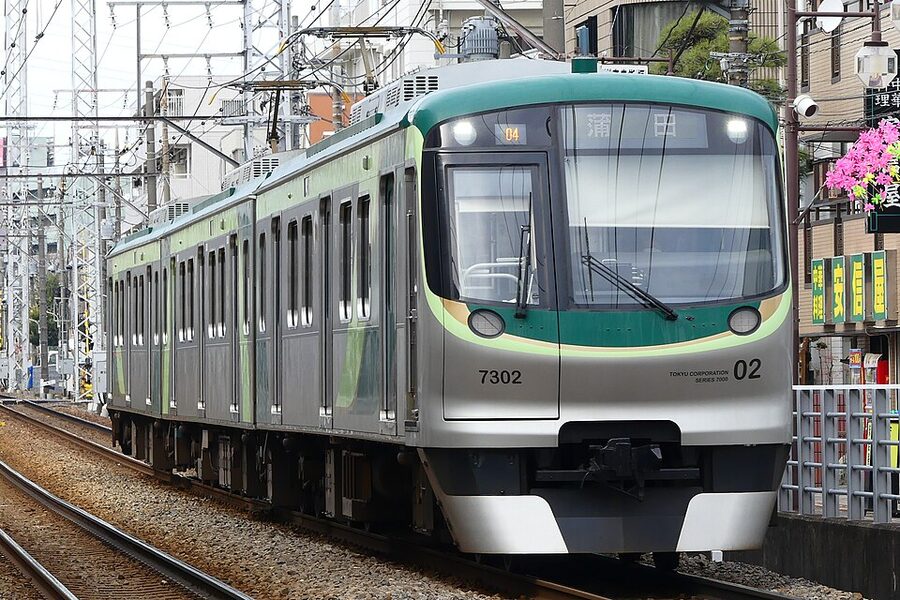
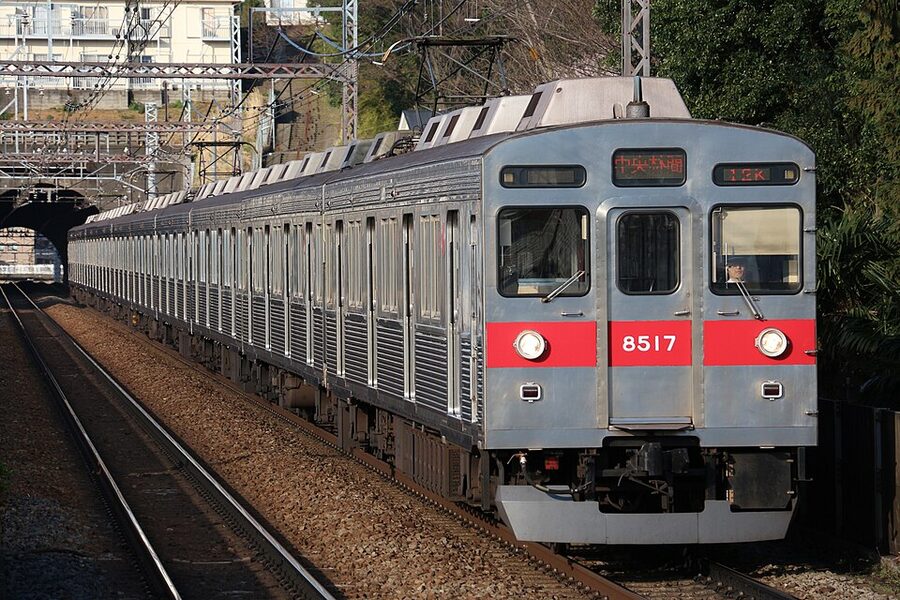
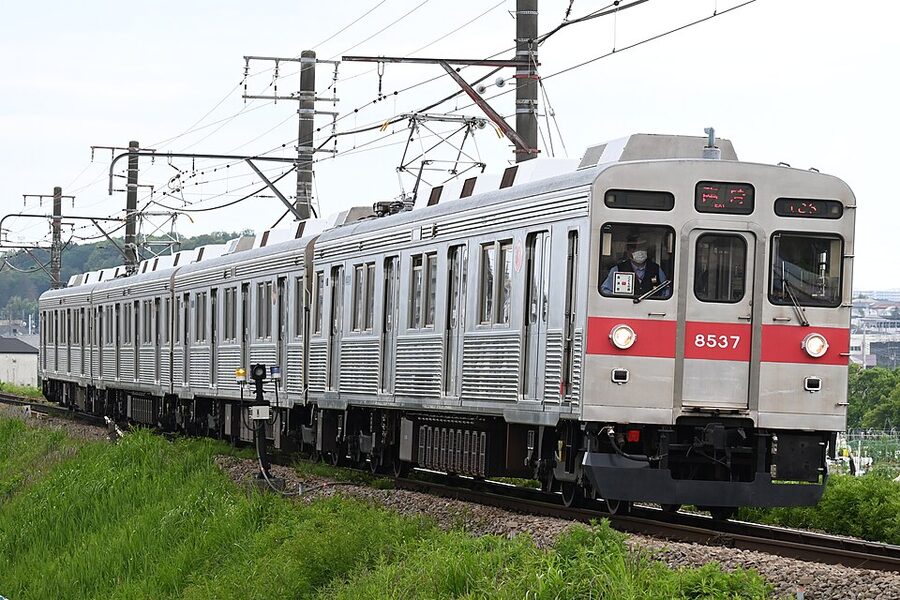
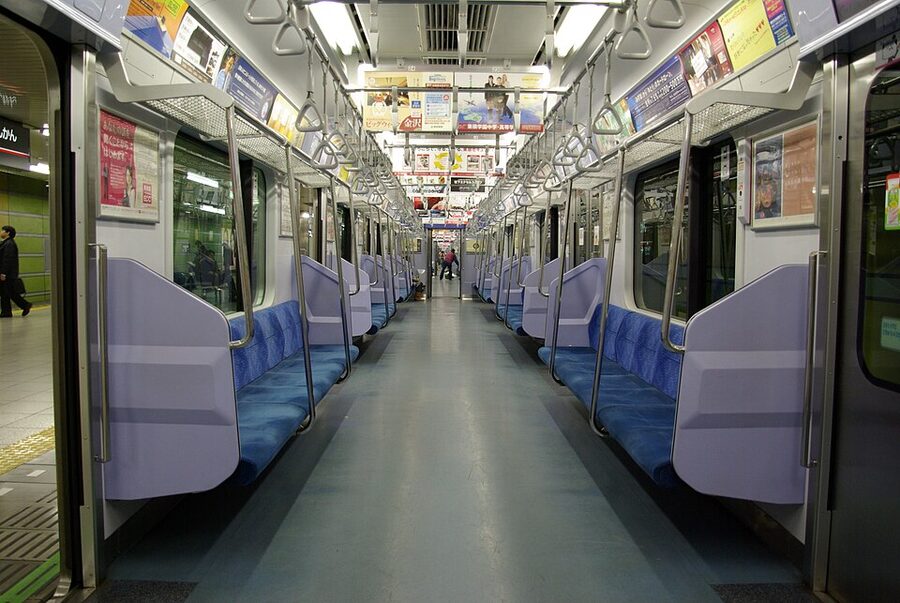
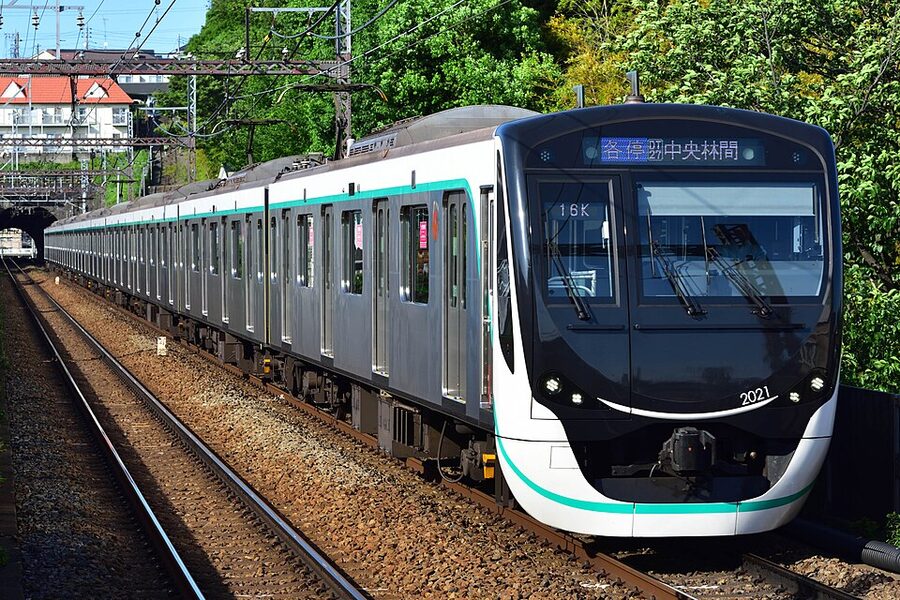
The rolling stock tells you the same story as the lines. Tokyu has been building its own trains for almost the entire post-war period and the fleet is the most consistent of any private operator in Japan: stainless-steel bodies, a corporate red accent band, longitudinal seating, four-and-a-half-inch destination boards. There is a recognisable Tokyu shape that has evolved cleanly from the 1969 8000 series prototype to the 2018 2020 series.
The 8000 family: the 1969 stainless-steel template
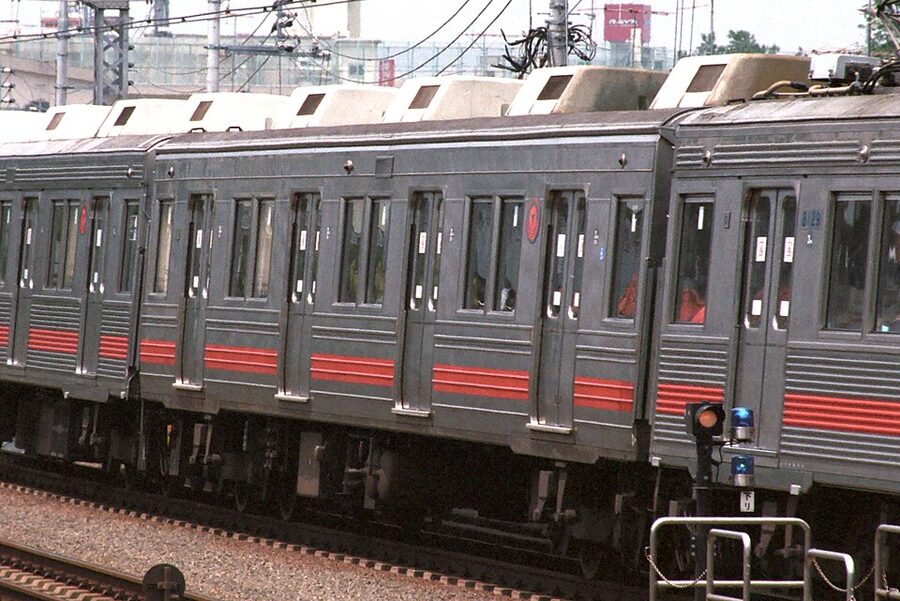
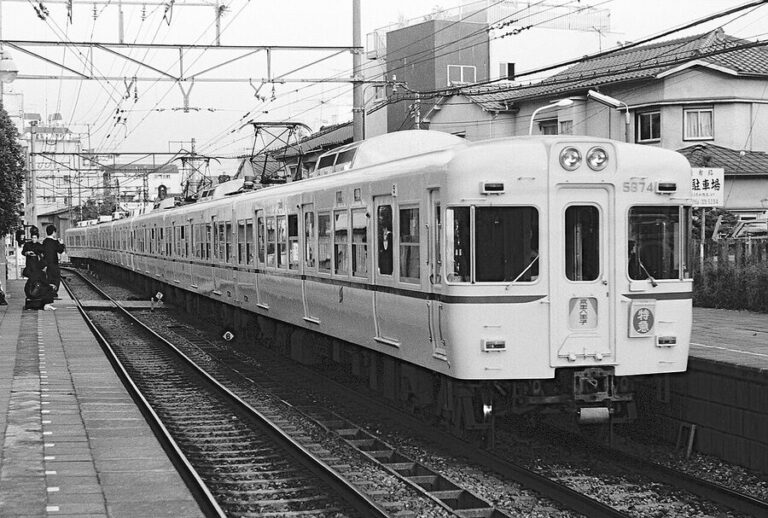
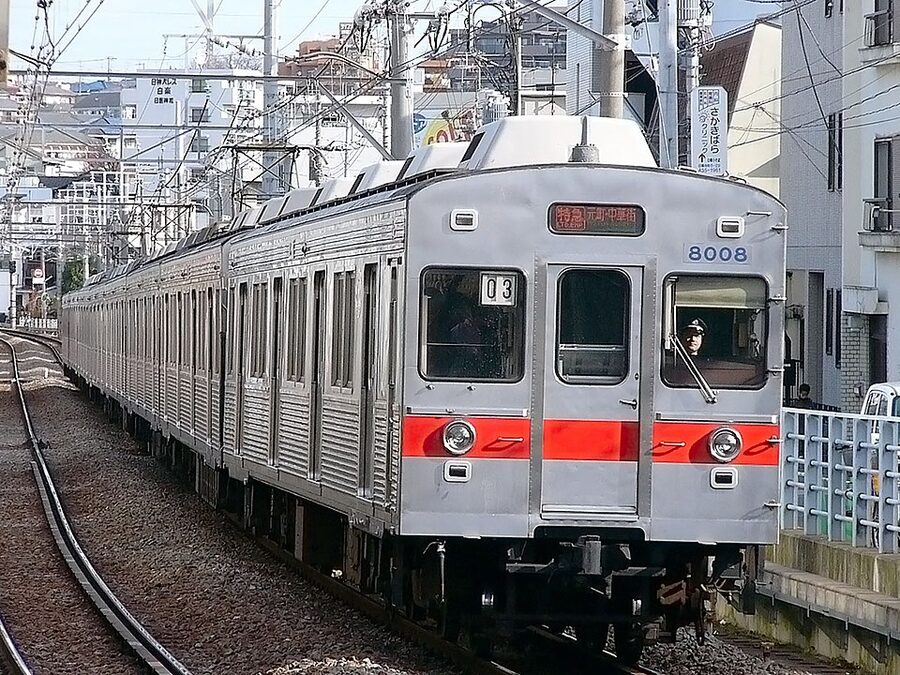
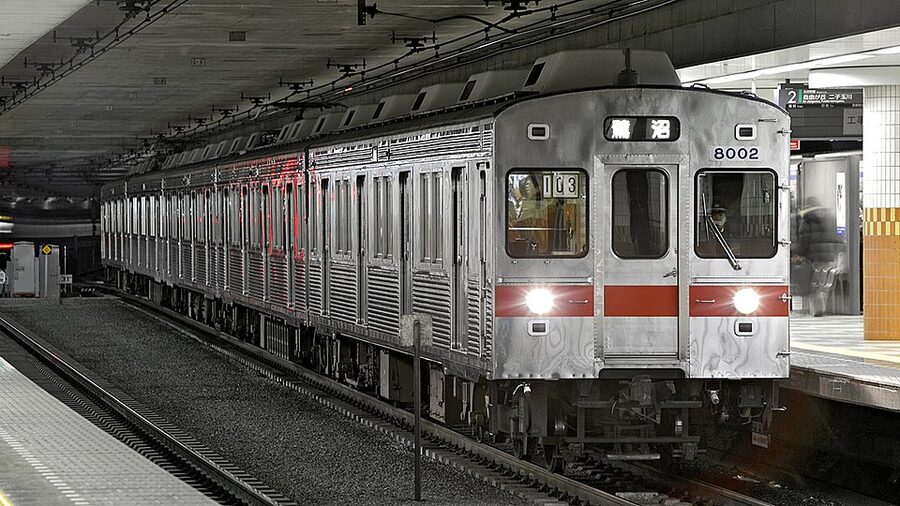
The 8000 series, which entered service in November 1969, was Tokyu’s first stainless-steel electric multiple unit and its first lightweight design. It established the formula. Stainless body to skip painting cycles. Corporate red around the window band, added at first overhaul in 1973 when Tokyu adopted the current red corporate mark. Wide doors, narrow seats, longitudinal layout for high-density commuter packing. The 8500 series of 1975, which extended the design with through-running gear for the Tokyo Metro Hanzomon Line, was the form the basic Tokyu commuter set in for almost half a century.
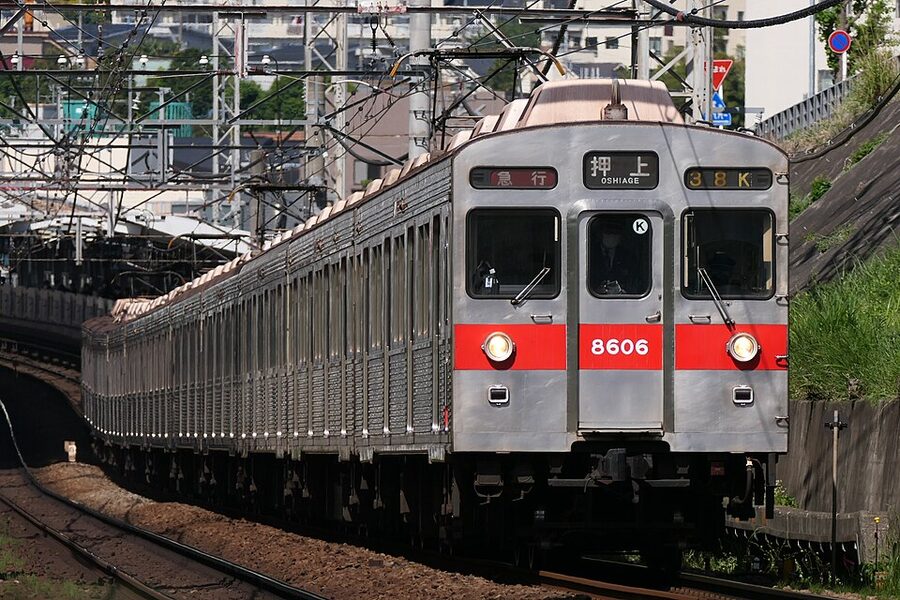
The 5000 and 5050: the modern through-running fleet
The 2020 and 3000: the latest generation, J-TREC-built
The 2019 spin-off: tidying up rather than strategy
The latest twist in the corporate structure happened on 2 September 2019. Tokyo Express Electric Railway Co., Ltd. dropped the “Electric Railway” half of its name. The new Tokyu Corporation became a holding company, with Tokyu Railways Co., Ltd. as its 100% subsidiary running the trains. Real estate, hotels, retail, leisure, construction, advertising and broadband sat alongside the rail subsidiary as separate operating arms under the same parent.
The split was tidying-up rather than strategy. The rail business had been a single division of an unwieldy 220-company conglomerate for decades. Pulling it out clarified governance and let each side report cleanly. The brand stayed identical; you cannot ride a train and tell that the corporate restructure ever happened. The platform staff still wear the same uniforms and the rolling stock still carries the 1973 red corporate mark. The change is on the share register and in the audit trail.
If you want a reading on what the structural separation actually does for the company, look at how cleanly the property arm has been able to push the Greater Shibuya Project since the split. Tokyu Fudosan, Tokyu Land Corporation and Tokyu Corporation can each invest in the same Shibuya block without internal accounting confusion that previously cost weeks of effort to reconcile. The split is a balance-sheet readability project at heart.
Shibuya: the project that justifies all of it
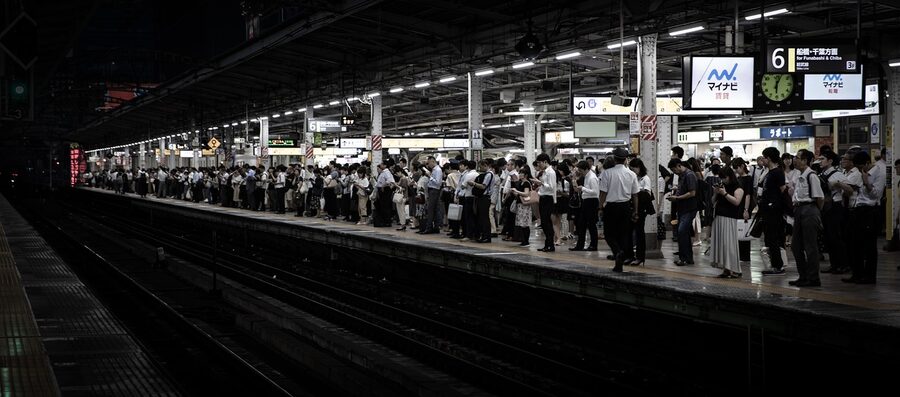
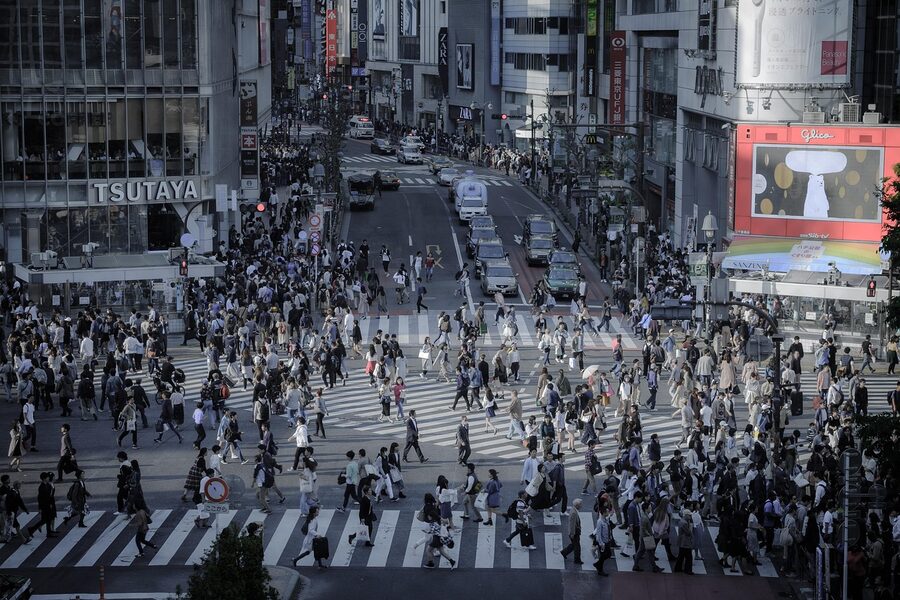
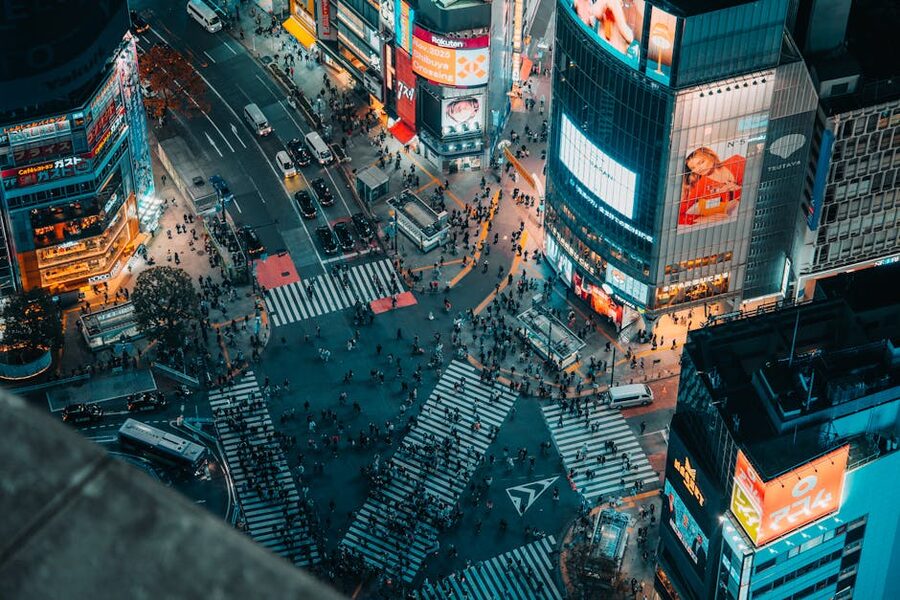
Shibuya is the corner that Goto opened the Toyoko Department Store on in November 1934 and the corner the company has been buying outward from ever since. The Greater Shibuya Project, formally announced in the late 2010s, commits Tokyu to roughly ¥500 billion in capital across 800,000 square metres of redevelopment over the next decade. The pitch is unromantic: turn Shibuya into an integrated work-live-play district that keeps the foot-traffic premium that has defined the area since the 1990s.
Hikarie, Scramble Square and the underground Toyoko terminus
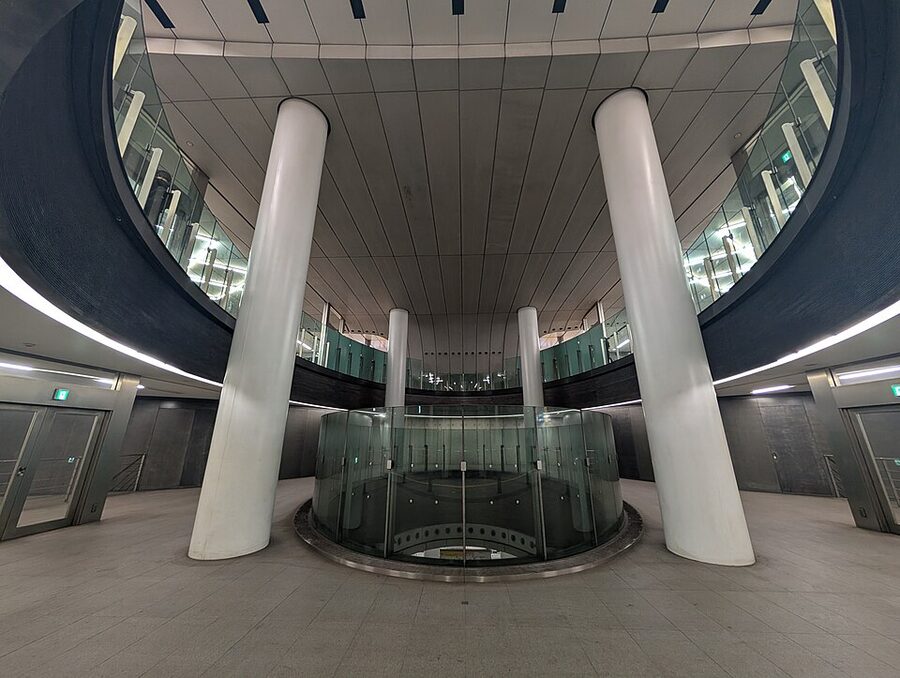
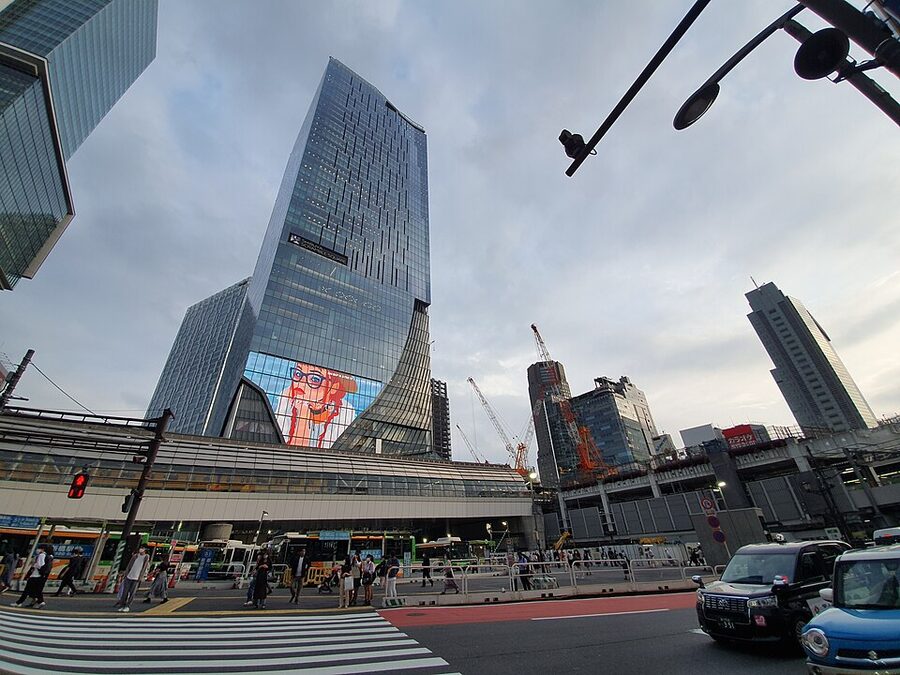
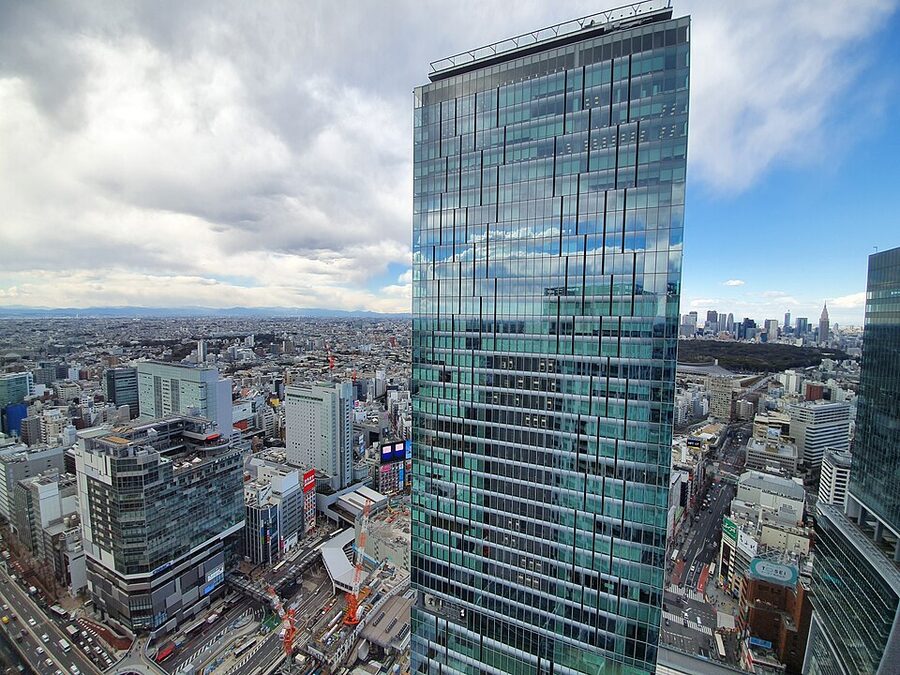
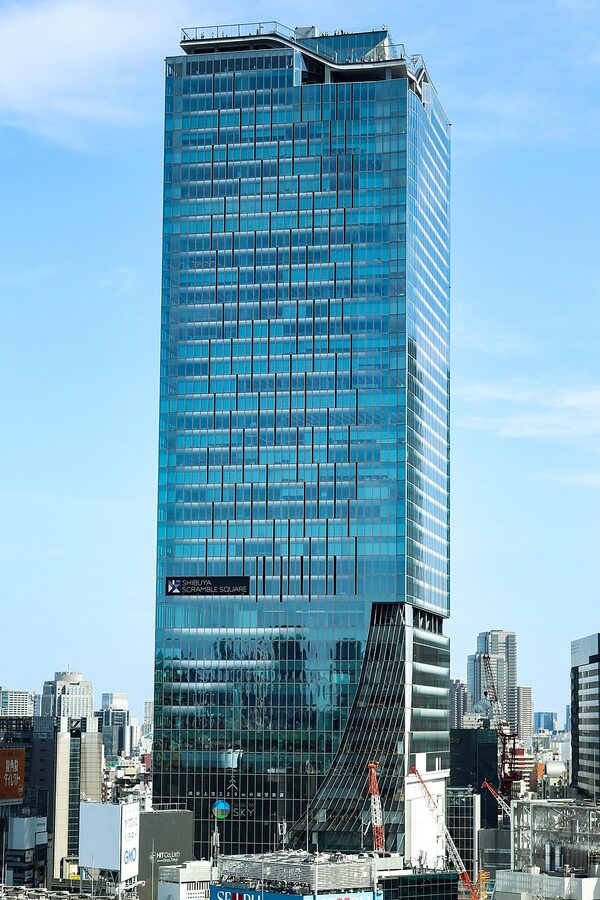
The first piece of the Shibuya project was Hikarie, opened in April 2012, which replaced the demolished Toyoko Department Store with a 34-storey shopping-and-cultural tower including the Tokyu Theatre Orb. The second piece was the underground Toyoko terminus, opened on 16 March 2013, which freed up the surface footprint for redevelopment. The third was Shibuya Scramble Square, opened on 1 November 2019, a 230 m skyscraper that is the tallest building in Shibuya Ward.
What this means at the station
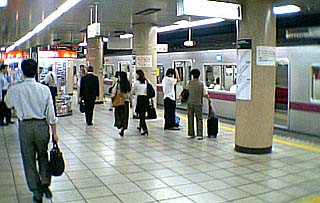
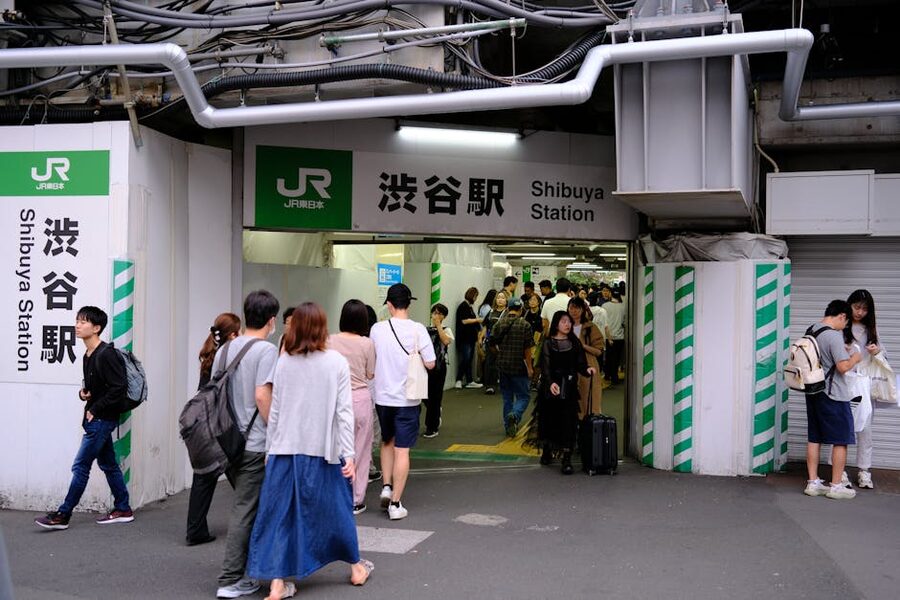
For the rider, the practical consequence of the Shibuya project is a station that has been getting larger and more navigable in stages since the early 2010s. The Toyoko underground hall is now four storeys deep, the Den-en-toshi platforms feed directly into the Tokyo Metro Hanzomon Line, and the JR Yamanote / Saikyo platforms sit two storeys above. The full transfer between Toyoko and JR is around five minutes and signposted in four languages. A decade ago it took ten and you needed to leave the building.
The crossing, and what is happening above it
Yokohama and the southern terminus
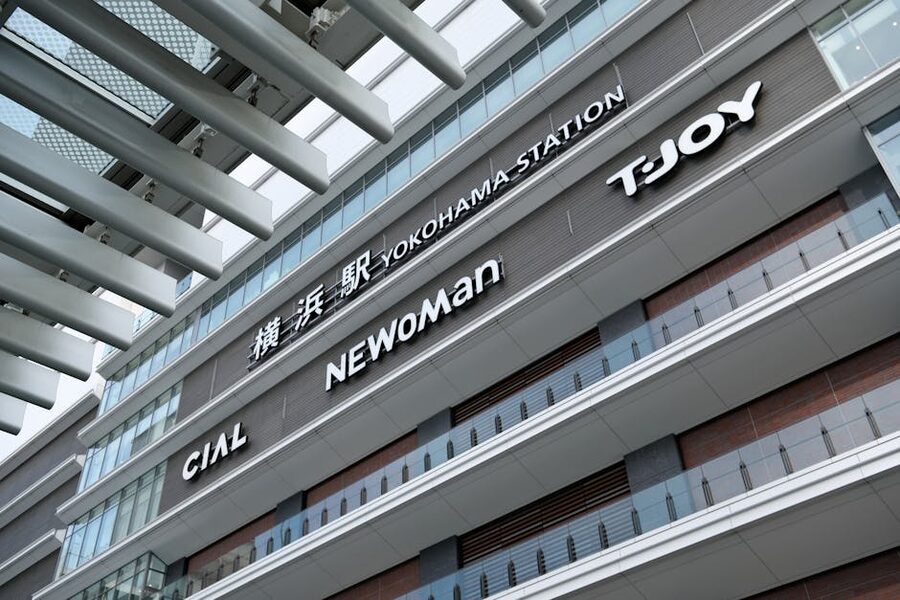
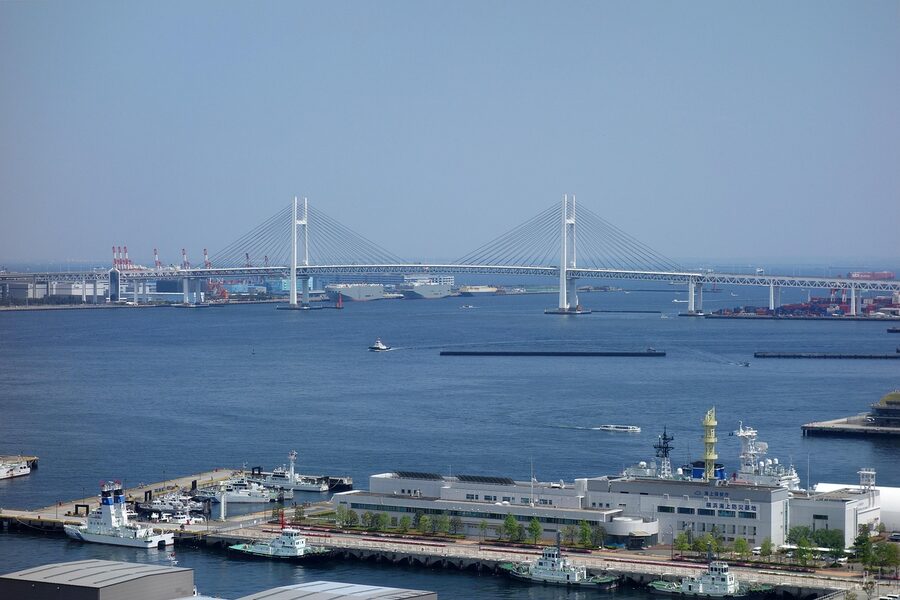
The Toyoko terminates at Yokohama. Trains continue south onto the Yokohama Minatomirai Line, a separate operator of which Tokyu owns roughly a third, running through to Motomachi-Chukagai under the Yokohama waterfront. The connection means a 5050 set leaving Wakoshi on the Tobu Tojo can reach Motomachi-Chukagai 75 minutes later without changing trains. The same set has covered four operators’ rails by the time it gets there.
Den-en-chofu, where the whole story started
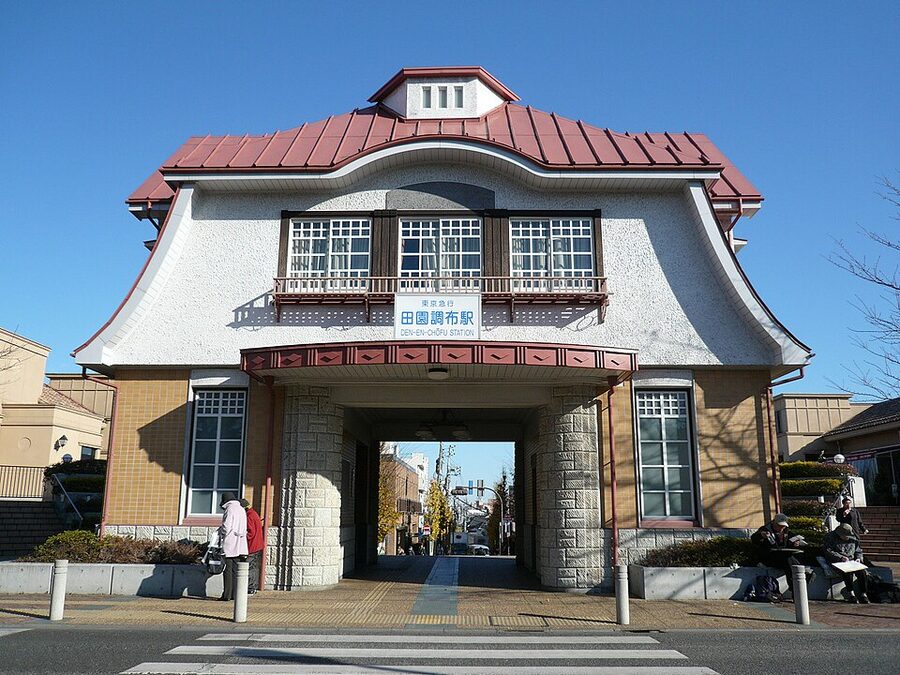
If you want to read the company end to end in an afternoon, take the Toyoko from Shibuya to Den-en-chofu, eight minutes by express, walk west along the radial streets that fan out from the station, then come back via the Meguro Line and break at Hiyoshi for the Shin-Yokohama tunnel. That sequence covers the 1922 founding, the 1923 ridership crisis, the Mekama break-up of 2000 and the 2023 extension, in roughly an hour. Den-en-chofu itself is residential, low, and quiet, much as Shibusawa intended in 1918, and the radial layout still surprises riders who have only seen Tokyo’s grid neighbourhoods.
Riding it today
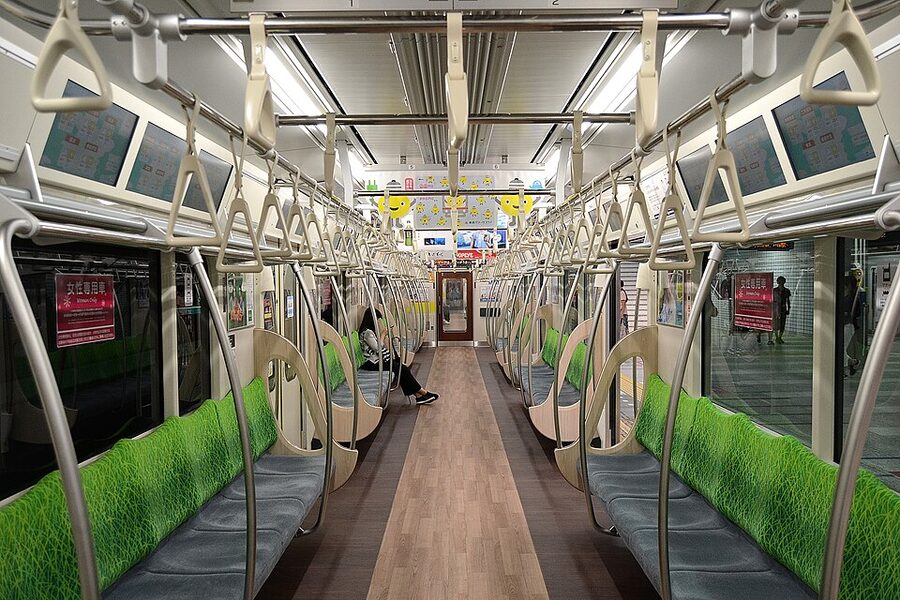
You can use a Suica or Pasmo on every Tokyu train and gate. There is no Tokyu-only IC card and no JR Pass coverage, because Tokyu is private. Adult fares run from ¥140 IC for short hops on the Setagaya tram up to about ¥300 for the full Toyoko Shibuya-Yokohama run. Reserved seats are not standard; the only Tokyu reservation is Q Seat on the Toyoko 5050 evenings (¥500 surcharge, reservable via the EMot app), which gives you a 2+2 cross-seat in the otherwise longitudinal carriage on a peak return run. It is fine. Skip it on weekends.
The day-ticket option is the One Day Open Ticket (¥780 IC for adults, ¥390 child), which gives unlimited Tokyu rides for one calendar day. It pays for itself if you ride more than four times, and the Setagaya tram is excluded. There is also a combined Tokyu plus Tokyo Metro day pass at ¥1,150 if you are also riding the through-running services into central Tokyo.
For day-trippers from outside the network, the most useful thing to know is which station to start at. Shibuya is the obvious entry. Naka-Meguro is the second-cleanest, a five-minute walk from the Hibiya Line on Tokyo Metro. Meguro is the third, accessible from JR Yamanote and the Toei Mita Line. If you are already at Yokohama from a JR-led day, the Tokyu side gates are clearly signed at the east end of the JR concourse.
Where Tokyu sits in the wider network
Read in the company of its Tokyo private-railway peers, Tokyu is the property-led outlier. Odakyu and Keio are pure railway operators with substantial subsidiary businesses. Tobu is a railway with one famous tower. Keio is a railway with a small property arm and a strong department-store franchise. None of them has built a second corporate identity around suburban planning the way Tokyu has, and none has the same balance-sheet inversion where group revenue dwarfs rail revenue by a factor of six.
The closest analogue, structurally, is Hankyu Hanshin in the Kansai region, the model Goto borrowed from in 1922. Kobayashi Ichizo built Hankyu around the rail-and-property model two decades before Goto applied it to Tokyo. Both groups now sit roughly the same way: a parent that owns property, retail, hotels and a railway, with the railway as the gravitational anchor for the rest. The Tokyu version is the larger of the two by group revenue.
If you have read the Odakyu and Keio pieces, the comparison will land. The 1942 Daitokyu merger that pulled both operators into Tokyu, and the 1948 break-up that pushed them out again, are the same event seen from different sides of the platform. From the Odakyu side, Daitokyu was an interruption that ended in restoration. From the Tokyu side, it was the moment the company stopped being a regional operator and became a national-tier corporation, even if half of what it gained was returned six years later.
For the underground side of through-running, the corresponding piece is the Tokyo Metro and Toei history, which sits opposite this article in the network. Three Tokyu lines, the Toyoko, the Meguro, and the Den-en-toshi, each through-run with multiple Metro and Toei lines. Half the Tokyu services you ride are partly underground operations.
Sources, and what they disagree on
The Tokyu corporate site (tokyu.co.jp/company/ayumi/) and the Tokyu Fudosan Holdings English history page give the official corporate timeline. The English Wikipedia article on Tokyu Corporation is workmanlike but compresses some events; in particular it gives the founding year as 1922 (Meguro-Kamata) but drops the 1910 Musashi Electric Railway date, which the Japanese Wikipedia article uses as the alternative founding marker. FundingUniverse has the deepest narrative on Goto Keita personally, including the Kobayashi-to-Gotoh name change and the ¥50,000 Musashi takeover figure that the corporate site does not advertise. The Japanese Wikipedia article (東急電鉄) is the single most detailed source by a clear margin, particularly on the post-1948 line-by-line restructuring; I have leaned on it for the rolling-stock and route-naming detail. Where the dates differ, I have followed tokyu.co.jp.
The trains, and the company
The companion piece on the rolling stock and the line-by-line operating detail is the Tokyu trains article, which is the place to go if you want the series-by-series fleet history rather than the corporate one. The two pieces are designed to read together: this one for why Tokyu does what it does, the other for what it actually runs.
What I keep coming back to with Tokyu, though, is not the trains. It is the empty carriage on the Mekama in March 1923 and the man who decided the answer was to go and sell the suburb. A century later, the carriages are full, the suburb has 600,000 people in it, and Tokyu is committing ¥500 billion to redevelop ten more blocks of Shibuya around the corner where Goto Keita opened his first department store on a November afternoon in 1934. Some companies have a strategy. Tokyu has a habit, and the habit has been profitable for a hundred years and counting.
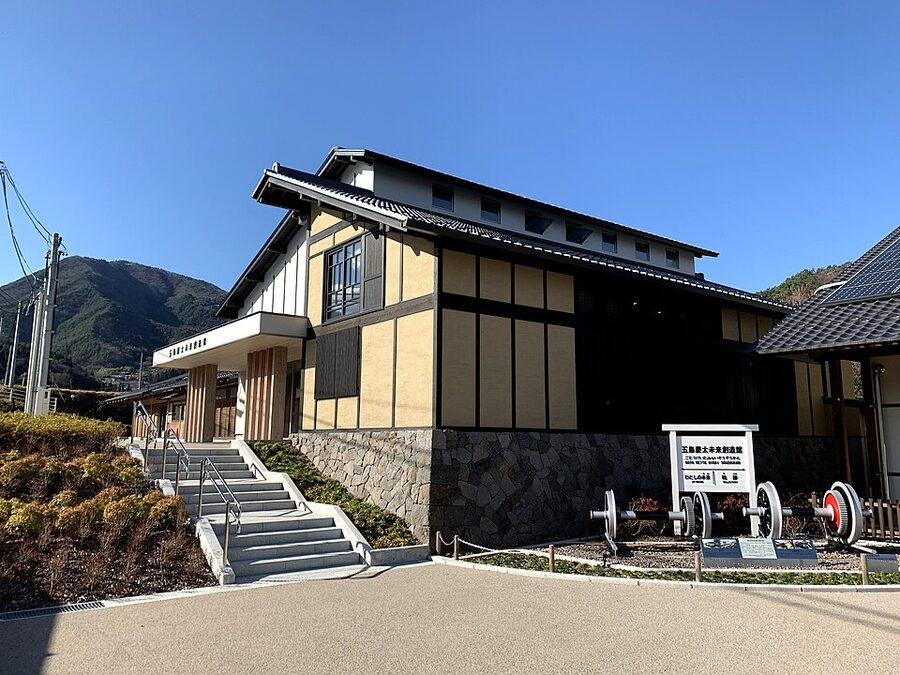
If you want to see how that habit started, the museum at Aoki keeps Goto Keita’s correspondence from 1922, the year the Den-en-chofu houses had not yet been built and the trains had not yet had passengers to carry. Get off at Bessho Onsen on the Ueda Dentetsu Bessho Line, walk five minutes, look at the December 1922 letter on the wall about a railway with no riders, and then take the Hokuriku Shinkansen back to Tokyo. By the time you reach Ueno, you are riding through the hills he intended to fill.