
Chichibu Railway: The Line That Eats a Mountain
The mountain that the trains are taking apart is called Mount Buko, and you can see it from every passenger window for the last twenty kilometres of the line. It used to be 1,336 metres tall. The 1900 survey said so. By 1977 it was 1,295 metres. The current official figure is 1,304 metres, but only because the surveyors moved the reference point after the original summit was blown up with explosives in September 1980. Mount Buko has been mined for limestone since 1940 and the visible east face is now a series of horizontal terraces stepping down from where the peak used to be. The 700-tonne ore trains you can hear from the platform at Bushu Haratani Station are what the missing 41 metres of mountain look like in transit.
In This Article
- The freight is the railway
- Why this matters when you’re a passenger
- The DeKi locomotives, in order
- DeKi 100: the elder statesmen
- DeKi 200: the steam shepherd
- DeKi 300: the in-betweens
- DeKi 500: the workhorses
- DeKi 1 and ED38: museum pieces
- The SL Paleo Express, and what is actually JR East’s
- The 2012 derailment, briefly
- Riding the Paleo
- The EMU fleet, by series
- 5000 series: a Toei subway car in farm country
- 6000 series: the only express stock
- 7000 series: ex-Tokyu Den-en-toshi stock in retirement
- 7500 series: ex-Tokyu 8090, the geopark trains
- 7800 series: cut-down 8090s
- 1000 series: gone, but worth knowing about
- Where the line goes, and which station does what
- Kumagaya: the JR connection
- Yorii: the Tobu and JR Hachiko junction
- Ohanabatake: the Seibu interchange
- Chichibu, Nagatoro, and the tourist core
- Mitsumineguchi: the western terminus
- Riding the line, and what it costs
- Day passes
- IC cards and the 2022 PASMO change
- The express versus the local
- Where the line fits in the Tokyo private-railway picture
- Two hours of Saitama, one mountain
- What the line is, when you stand at the platform
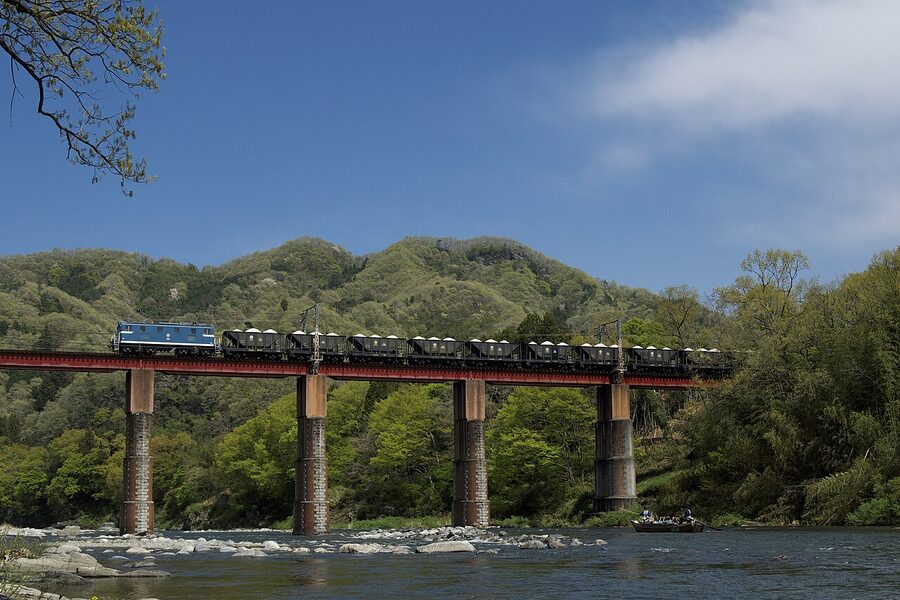
The Chichibu Railway is a 71.7 km single-track line through northern Saitama Prefecture. The largest shareholder is Taiheiyo Cement (33.51 per cent). The line was built between 1901 and 1930 to connect the limestone at Mount Buko with the rest of the rail network. Passenger service is the second job. It pays for itself, more or less, but the company’s headcount and depot capacity are sized for the freight, and so is the rolling stock budget, which is approximately none. What you ride on as a passenger is a fleet of second-hand commuter cars from Tokyu, Toei, and Seibu, refitted to run a country line. What does the actual work, the work the railway was built for, is a fleet of mid-sized electric locomotives that Chichibu commissioned for itself in the 1960s and 70s and that haven’t been replaced since.
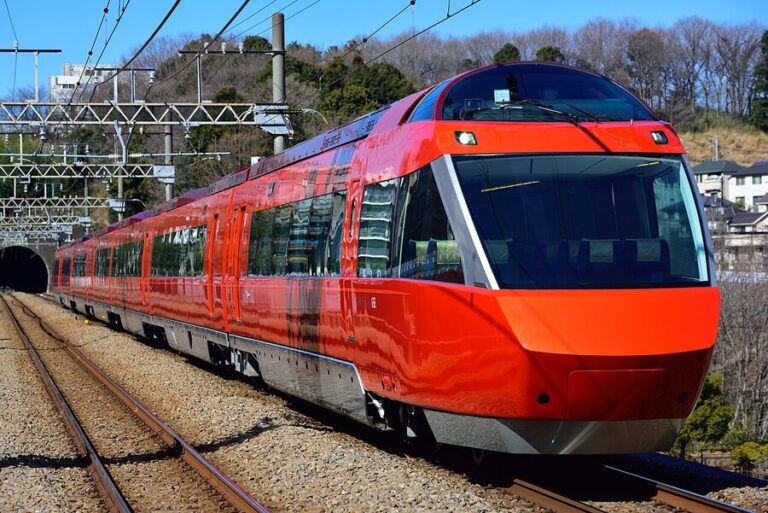
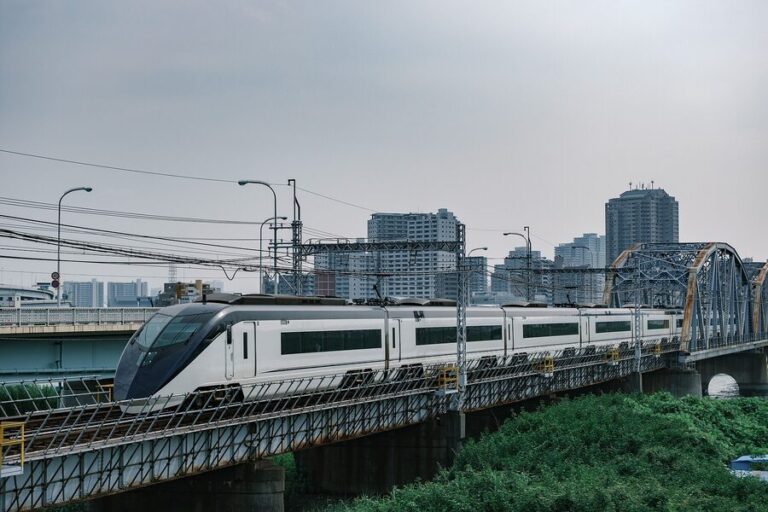
This article is about both halves of the fleet, but it leads with the freight, because the freight is what the line is. If you have ridden the Odakyu Romancecar fleet or the Tobu Spacia X and assumed Japanese private railways are about commuter speed and luxury limited expresses, the Chichibu is the corrective. The whole timetable is built around getting limestone to the cement plant.
The freight is the railway
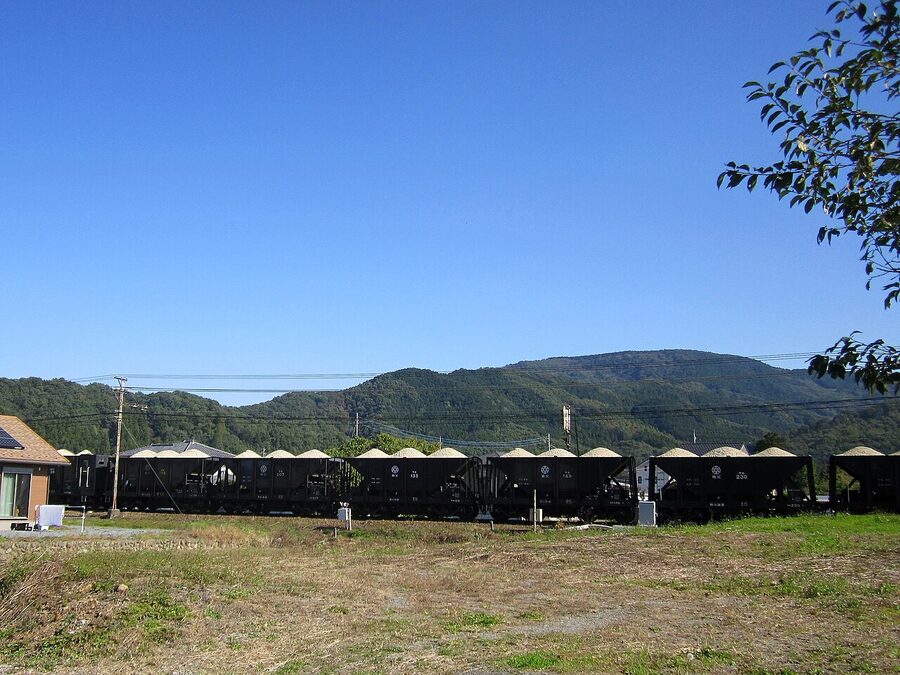
For most of the twentieth century, Chichibu’s freight ran straight through to the JR network. Limestone left Mount Buko, ran north along the main line to Yorii or down the Mikajiri freight branch, and from there onto JR Takasaki Line metals via the Kumagaya Freight Terminal, where it was handed over for the long haul down to the cement plants on Tokyo Bay. That arrangement ended in stages. Cement clinker shipments stopped in 2006 when Taiheiyo consolidated production. Coal hauling, the other major freight working, ended on 28 February 2020. The Mikajiri Line itself, the freight-only branch from Takekawa to Kumagaya Kamotsu Terminal, was abolished on 31 December 2020. Today there is no freight interchange with JR at all.
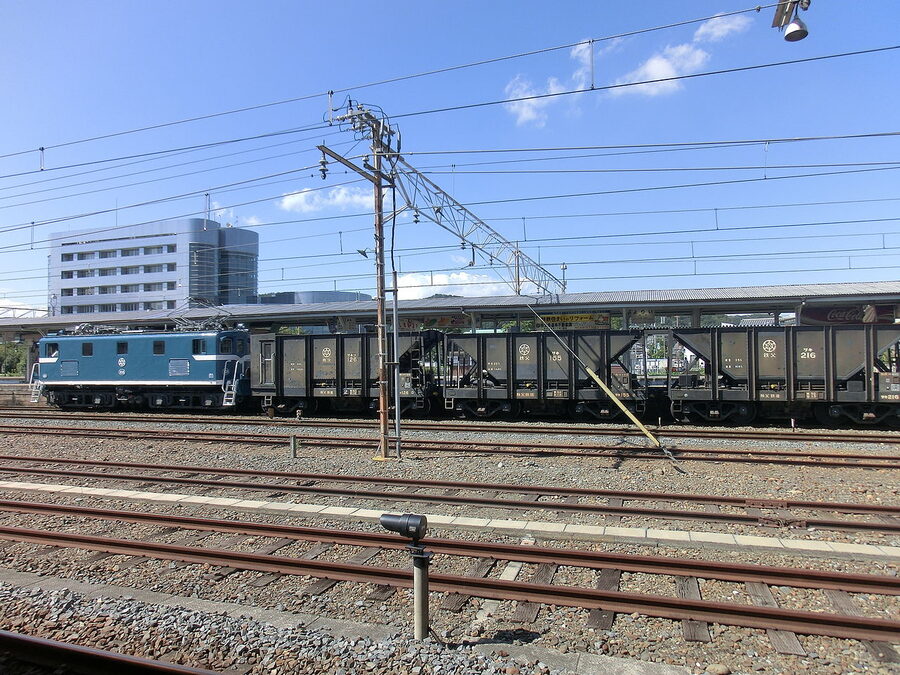
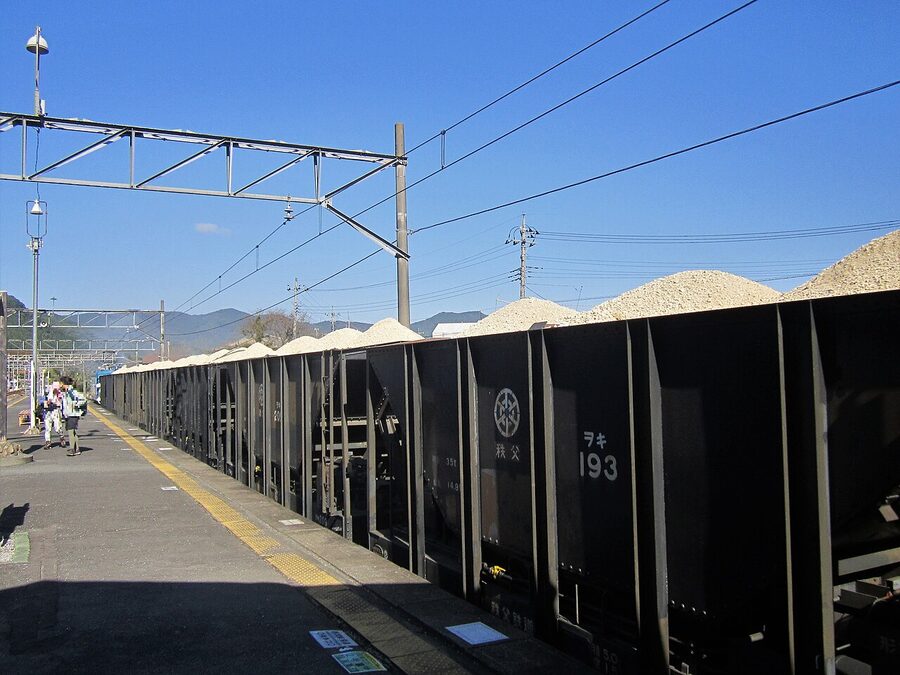
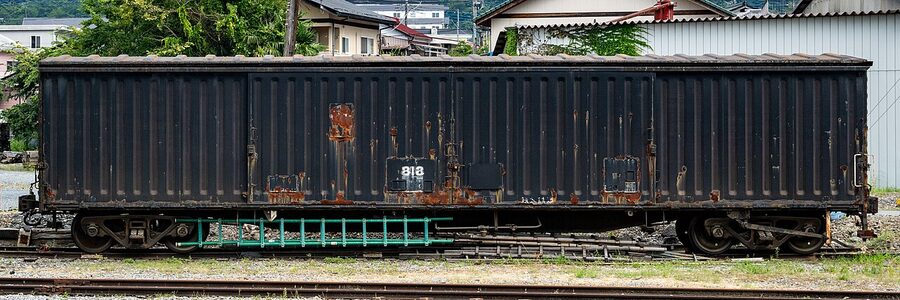
What’s left is the limestone, and it never leaves the Chichibu Railway. The whole working pattern now sits between two stations: Bushu Haratani (where the cement plant is) and Kageshima / Mikajiri area (the bottom of Mount Buko). Loaded trains drop down from the mountain to the plant; empties go back up. Each rake is around twenty Wokifu-100 hopper wagons, total trainset weight close to 1,000 tonnes, of which about 700 tonnes is the rock itself. By Japanese rail freight standards that is a lot of weight for a single locomotive, especially on the gradient out of the quarry, which is why the line has more electric locomotives than most operators ten times its size.
Why this matters when you’re a passenger
Three things, mostly. First, the freight’s existence is why the line is electrified at 1,500 V DC. A 71.7 km single-track passenger railway from Hanyu to Mitsumineguchi could happily run on diesel, and a competing operator on similar geography would. Chichibu electrifies because the limestone freight needs the traction power, and the electrification subsidises everything else, including your local. Second, the freight’s gradient profile is why the line tops out at 85 km/h and not faster, even on the express; the alignment was laid down for ore trains, not for commuters. Third, you will see the freight from the platform. The timetable is structured so passenger services hold at passing loops to let the empties out and the loads come down, especially in the morning. If you take the Chichibu seriously as a rail trip, the loaded freight crossing your local at Bushu Haratani is the moment that explains the railway.
The DeKi locomotives, in order
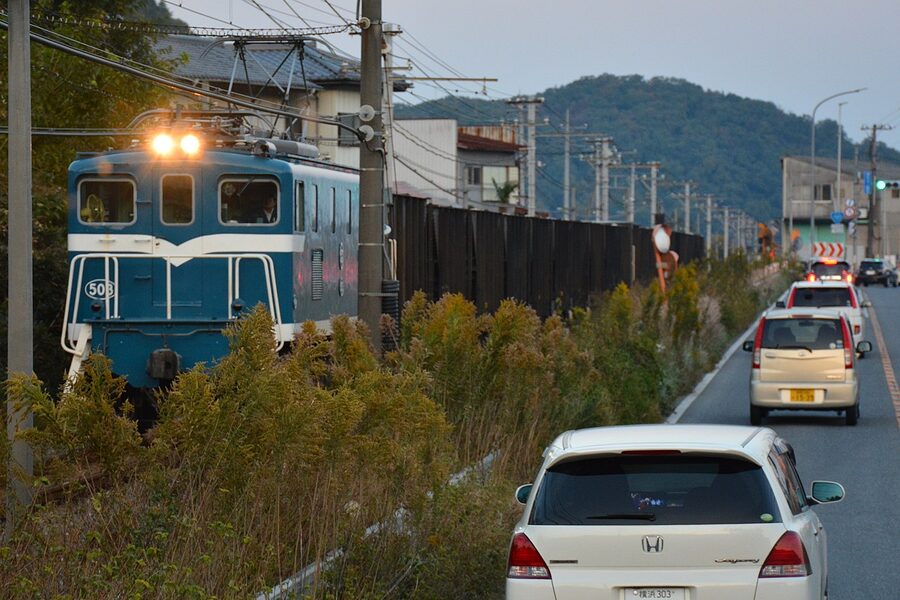
Of everything that runs on the Chichibu Railway, the DeKi (デキ) electric locomotive fleet is the only stock the railway can claim was built for it. The EMUs are all hand-me-downs. The C58 steam locomotive belongs to JR East. The passenger coaches are ex-JNR. But the DeKis were ordered new from Toyo Electric, Hitachi, and Kawasaki for this railway, for this freight, on this gradient, and they are still doing the job they were ordered for fifty to seventy years on.
DeKi 100: the elder statesmen
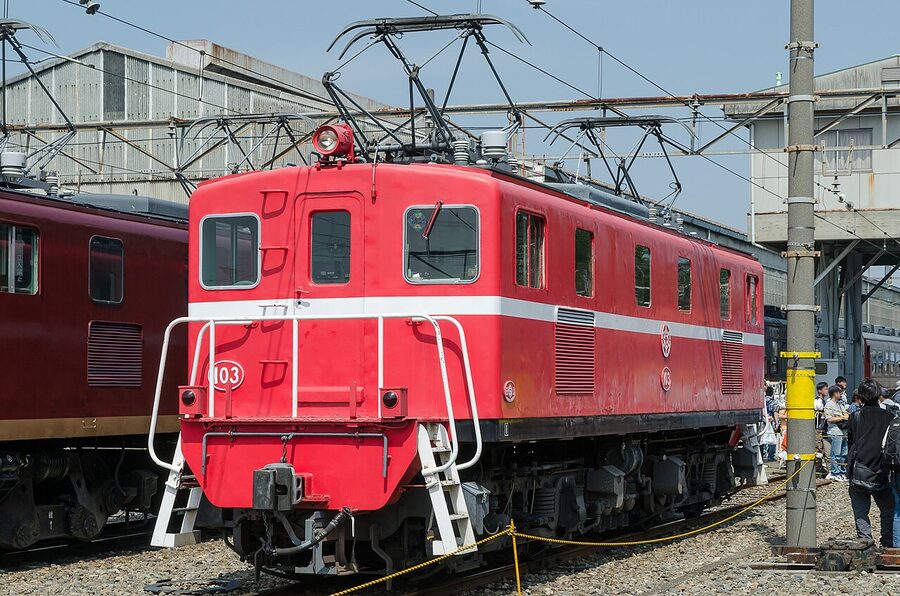
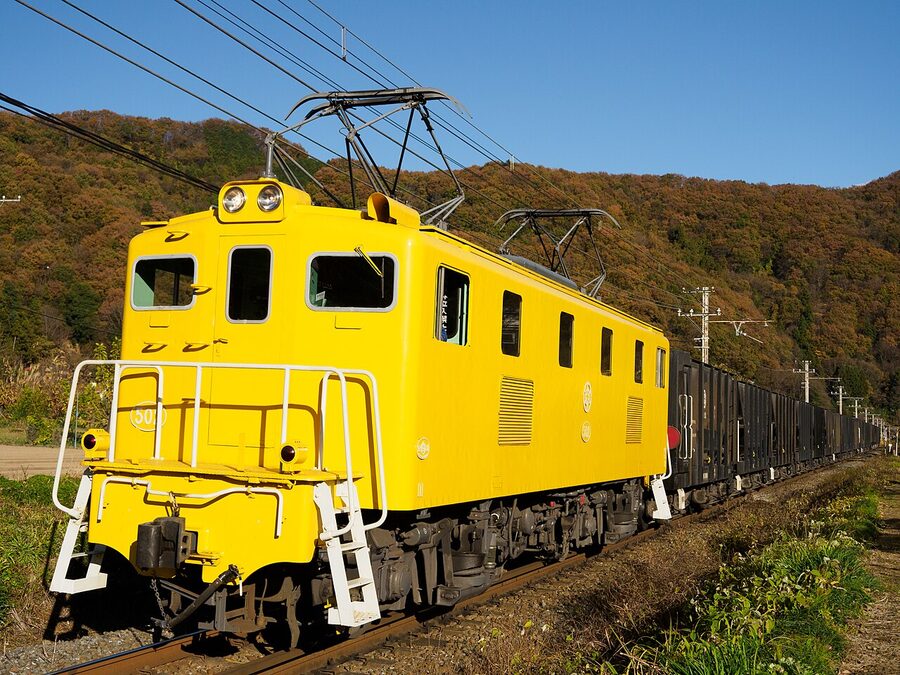
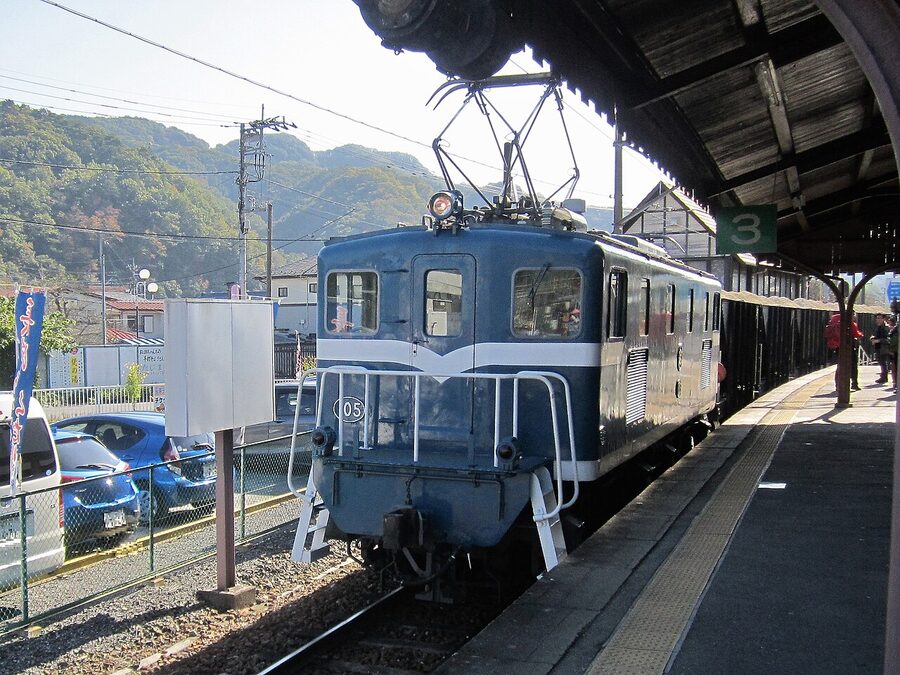
The DeKi 100 series is the foundation. Six locomotives, built between 1951 and 1956, six axles each (Bo-Bo-Bo wheel arrangement), all still on the operator’s books. DeKi 101 to 106 were built directly for Chichibu Railway. DeKi 107 and 108 came from the Matsuo Mining Railway in Iwate when that operator’s mining traffic dried up; same body design, same era, slotted in without much fuss.
If you want to see one in its other regular role, watch out for new train deliveries on the line. Because Chichibu connects to so many other operators (JR East at Kumagaya, Tobu and JR at Yorii, Seibu at Ohanabatake), it is a natural pass-through route for new EMUs being delivered from manufacturers in Yamaguchi or Aichi to operators in northern Tokyo. When a new Tobu set or a new Tokyo Metro set runs over Chichibu metals on a delivery move, a DeKi 100 typically pulls it. The visual is a sixty-year-old freight loco hauling a brand-new commuter train through the cherry blossom country, and it happens often enough that Japanese rail photographers stake out specific bridges for it.
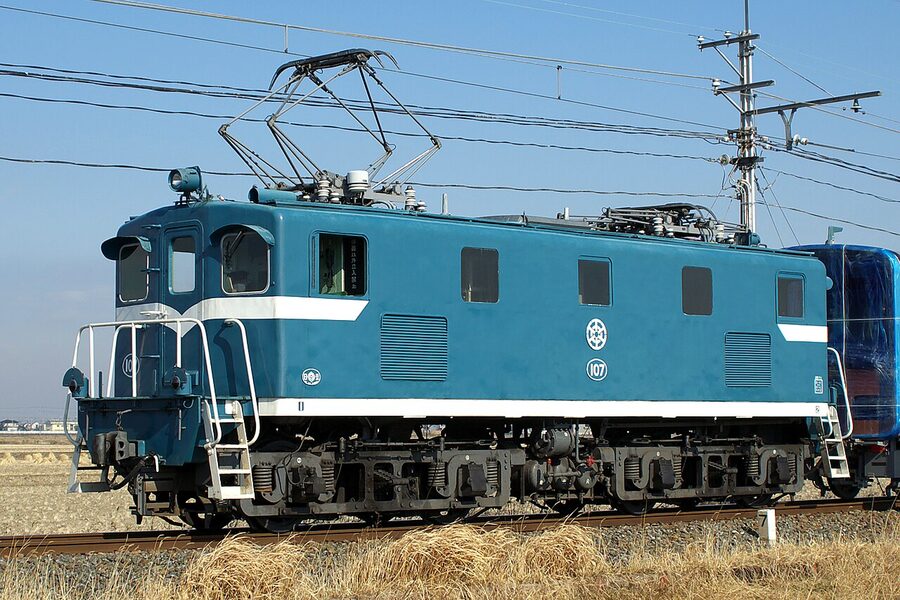
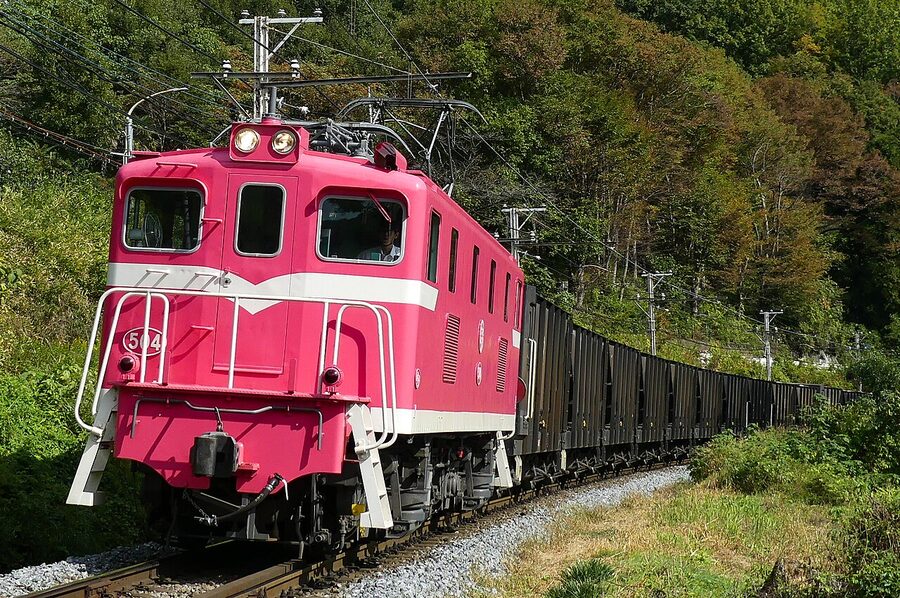
The 100s share their freight working with the 300s and 500s in a common pool, so on any given weekday morning the engine you see on the front of the limestone train could be any of the three. DeKi 103 wears a chocolate-brown revival livery; the rest are standard freight blue, with one pink Geopark Chichibu wrap on a 500-series sibling.
DeKi 200: the steam shepherd
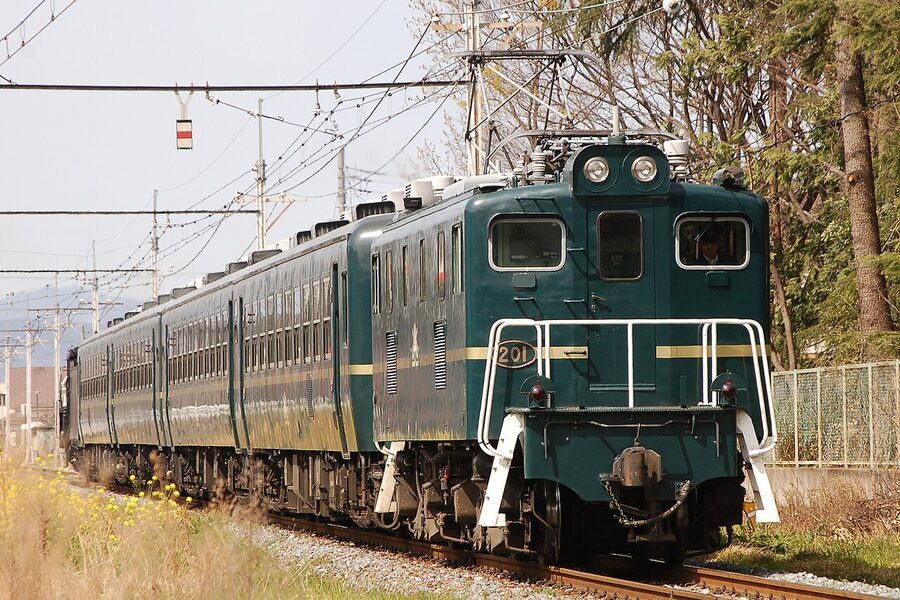
DeKi 201 is the singleton: built for Chichibu in 1963, no siblings, kept alive because it does one job that nothing else on the line can do as cleanly. Every morning the SL Paleo Express runs, DeKi 201 pulls the C58 and its passenger coaches out of Hirosegawara to Kumagaya for boarding, then runs alongside the timetable as the standby in case the steam locomotive fails. Most weeks it is a backup; on bad weeks, particularly in winter when the C58 is sluggish to fire, the 201 pulls the rake all the way to Mitsumineguchi and the service runs as an “EL Paleo Express” rather than SL.
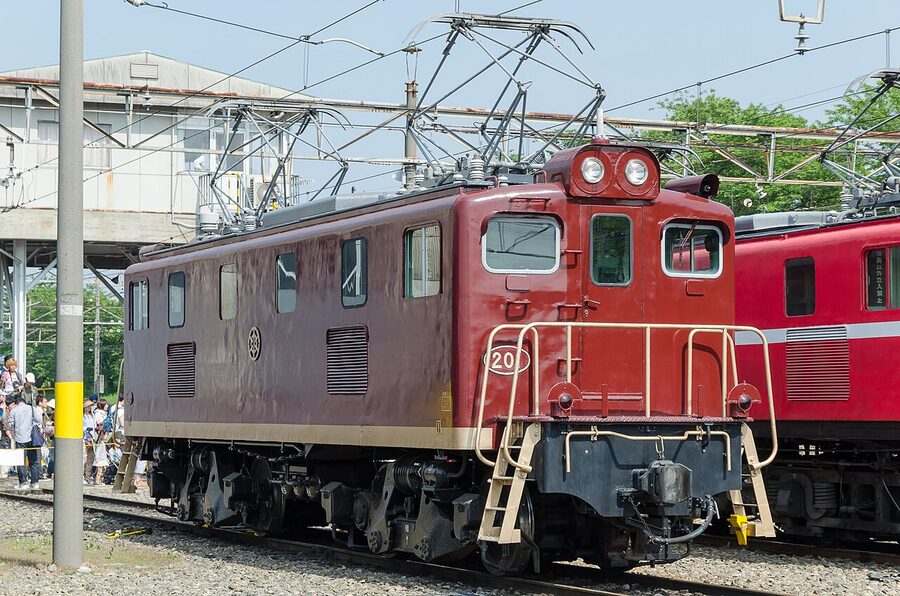
DeKi 300: the in-betweens
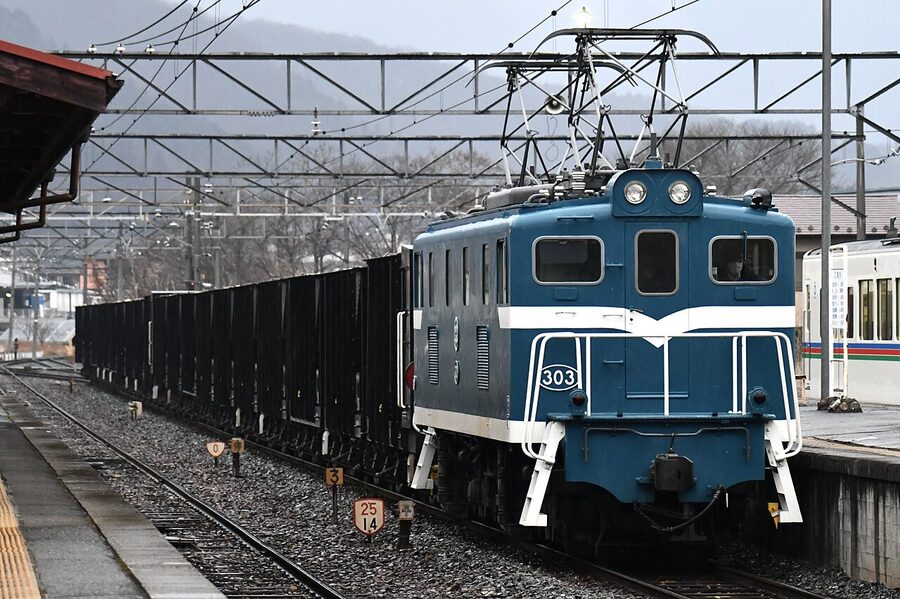
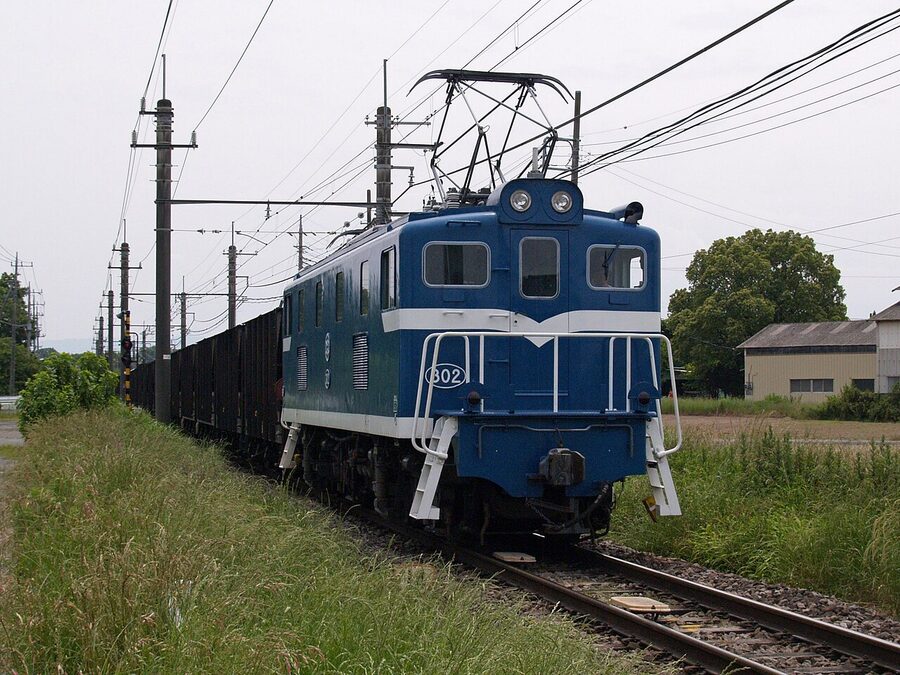
The DeKi 300 series is three locomotives, all built in 1967. Same general layout as the 100s, more modern traction control. They are the locomotives that took over the EL Paleo Express when the C58 was out of service after the 2012 derailment, which is the unsung detail of that whole episode: the Paleo kept running while the steam was being repaired, with a 300-series electric on the front and the same 12-series passenger coaches behind. Tourists who didn’t know the difference still got their day out.
DeKi 500: the workhorses
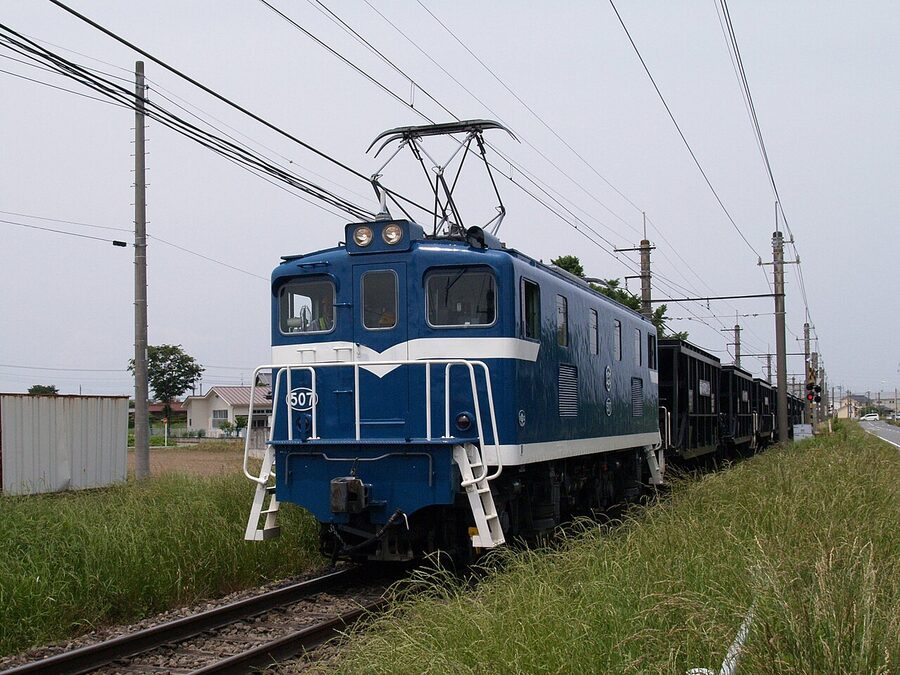
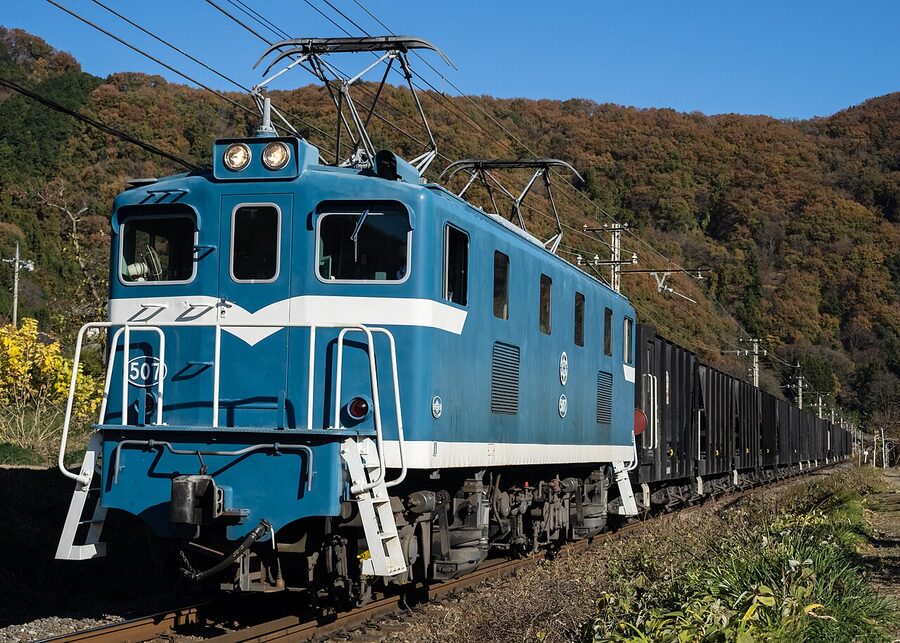
The DeKi 500 is the youngest design and the workhorse. Seven units, built 1973 to 1980, more tractive effort than the 100s and 300s. The 500s do most of the limestone runs you’ll actually catch on a normal weekday. DeKi 507 is the dedicated Taiheiyo Cement-livery loco, the one with cement-company branding on the side; it pulls one of the regular limestone rakes and almost nothing else.
DeKi 1 and ED38: museum pieces
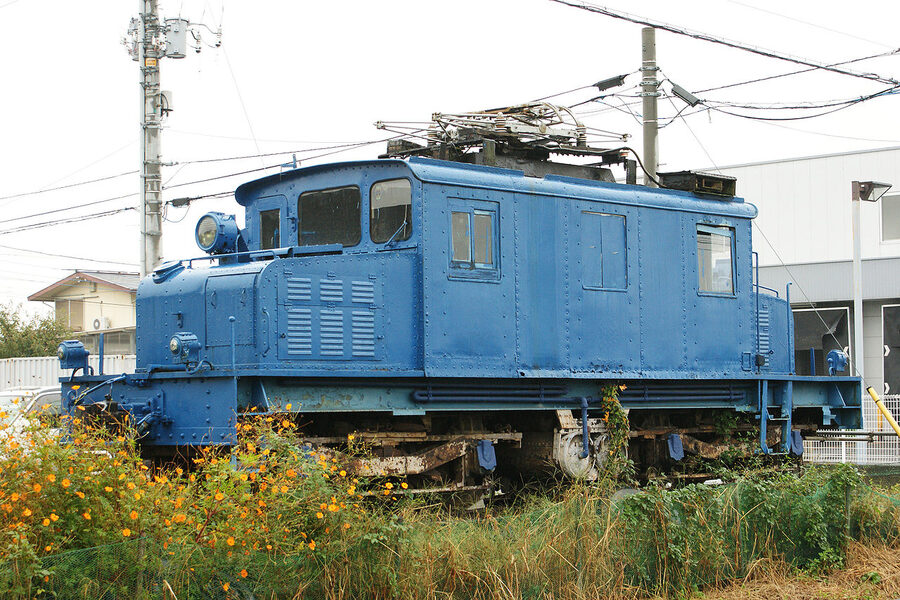
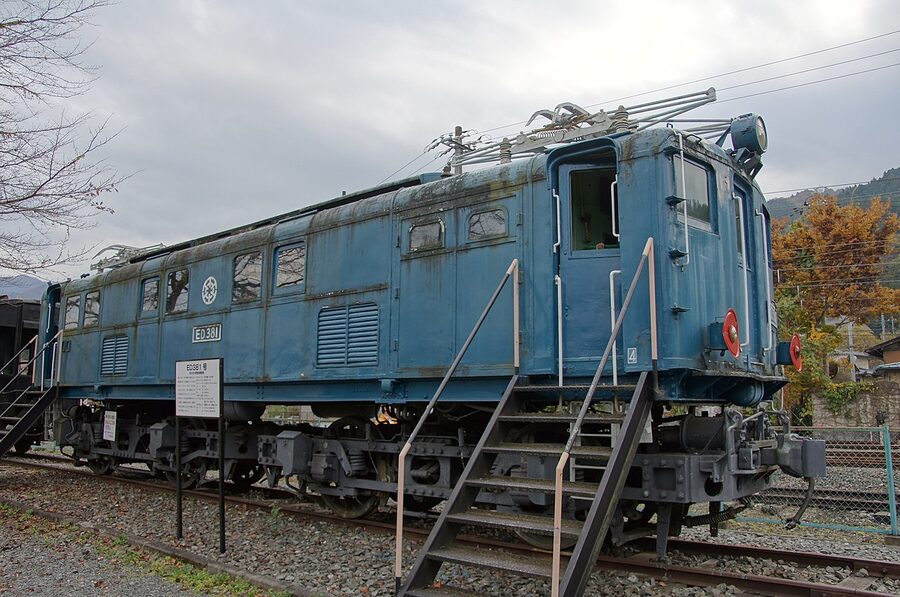
DeKi 1, the original, was built in 1922 by Westinghouse and Baldwin for Chichibu’s first electrification. It is now preserved at the small open-air rolling-stock display park immediately next to Mitsumineguchi Station, alongside an ED38, an ex-Hanwa Railway loco bought second-hand in 1960 and retired in 1986. Both are on static display. If you take the Paleo to its terminus, the museum is a five-minute walk from the platform and free; opening hours match the timetable on Saturdays and Sundays.
The SL Paleo Express, and what is actually JR East’s
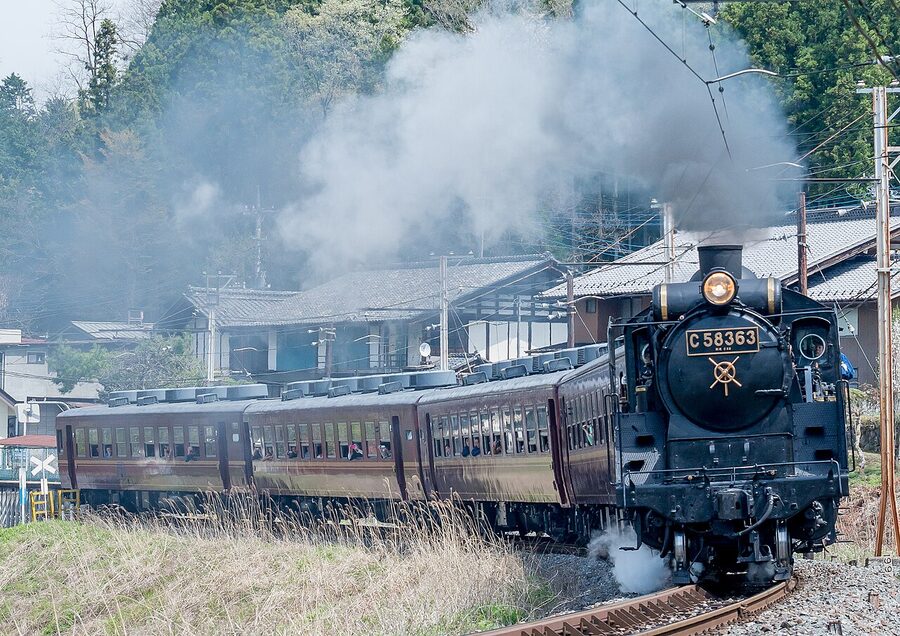
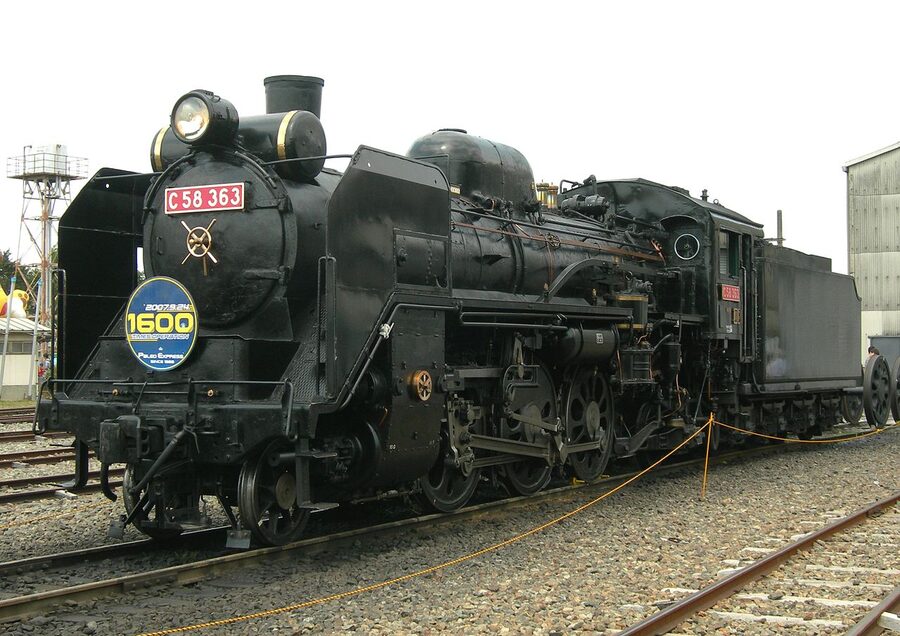
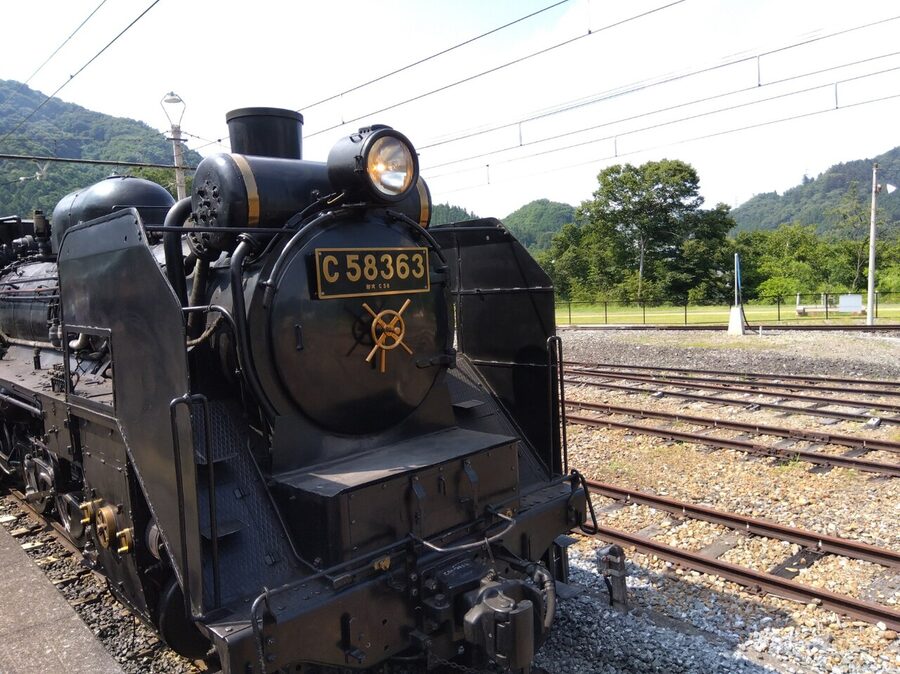
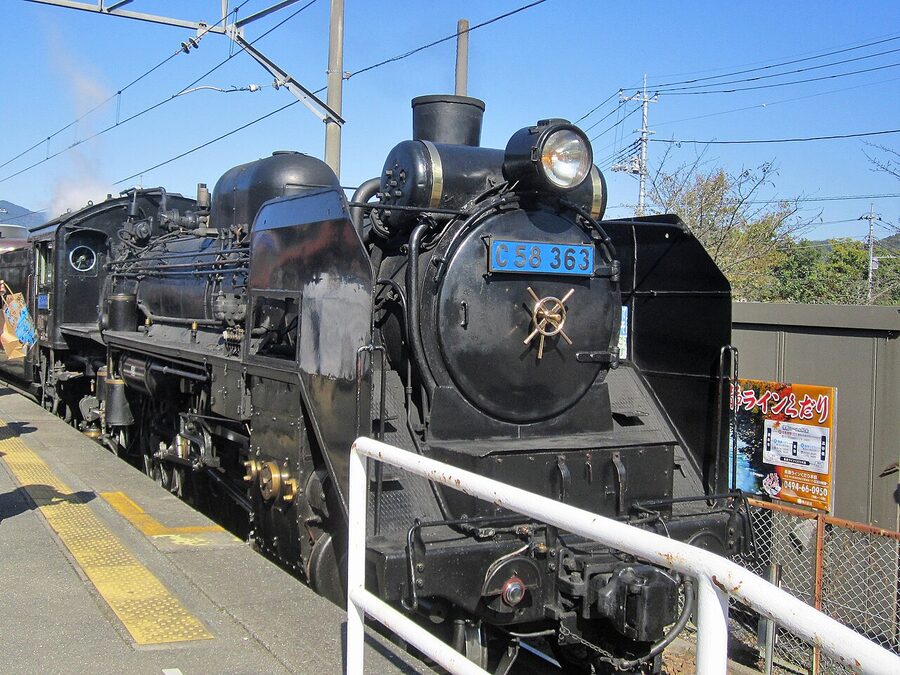
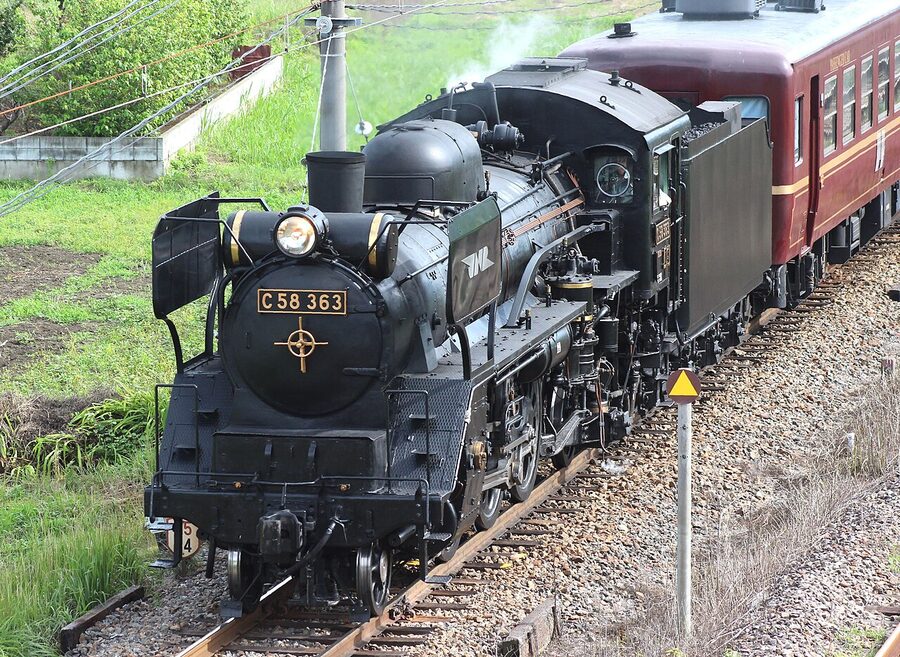
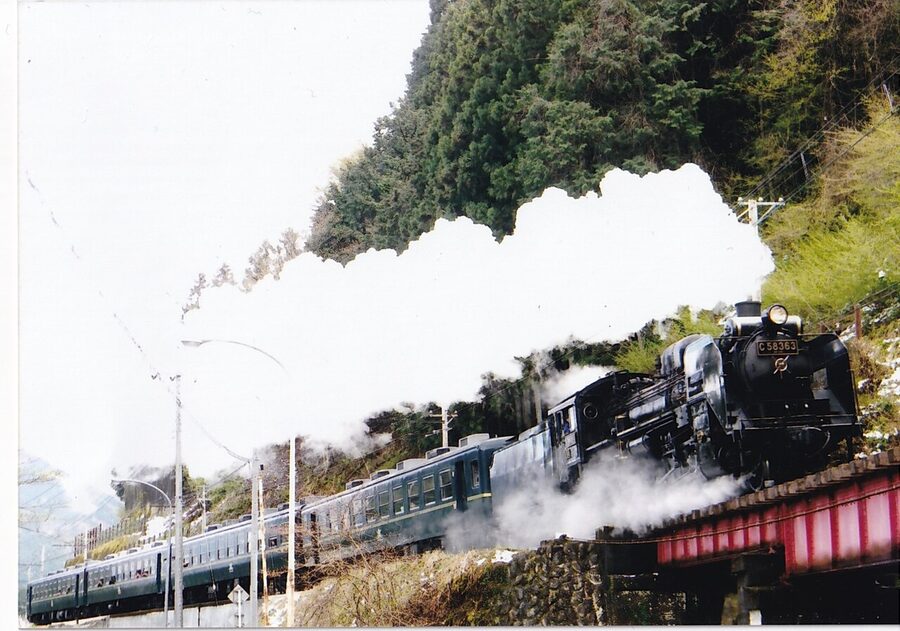
The Paleo Express is the line’s tourist halo, and almost none of it is technically Chichibu rolling stock. The locomotive, C58 363, is a 1944-built JNR mixed-traffic 2-6-2 that spent most of its life at Tsuruga and Kameyama before being plinthed at Fukiage Elementary School in Kumagaya in the 1970s. JR East fished it out of the schoolyard, certified it on 6 March 1987, and based it at Takasaki Depot under JR East ownership. It runs on the Chichibu Main Line on a long-running operating agreement, but JR East maintains the locomotive and supplies the crew.
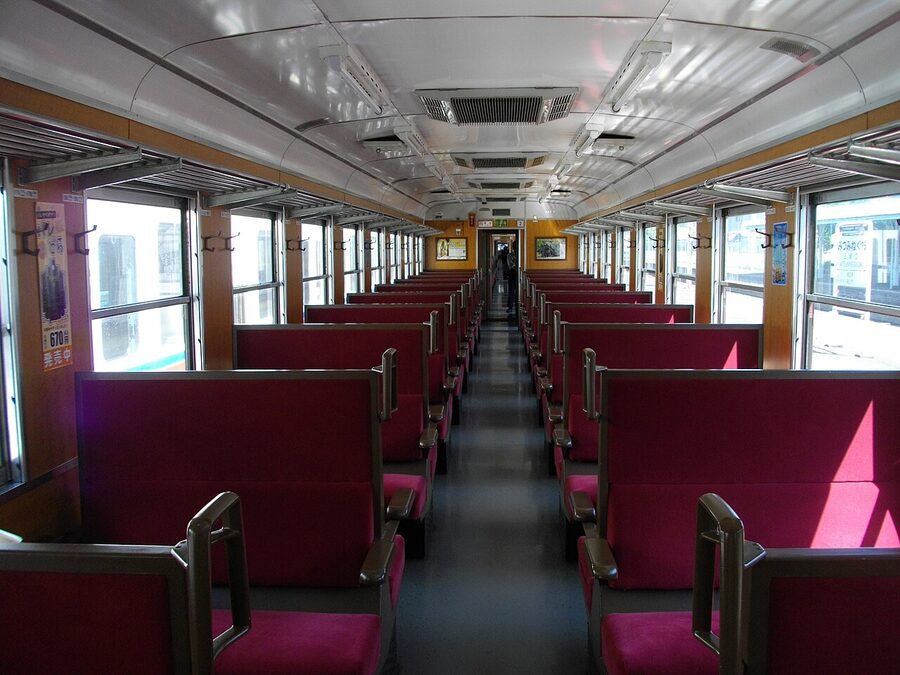
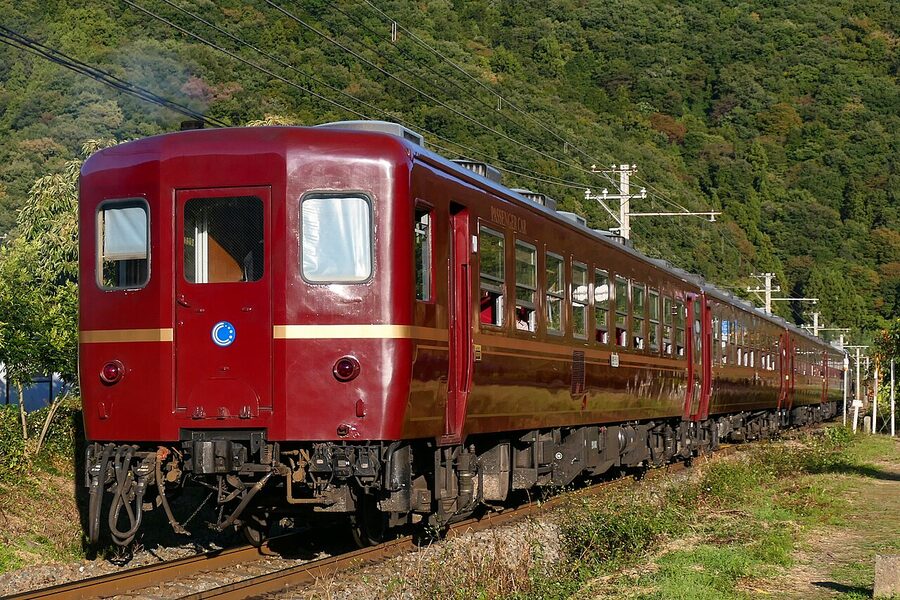
The four passenger coaches behind it are JNR Series 12, bought from JR East in 2000 and renumbered: Suhafu 12 102, Oha 12 112, Oha 12 111, Suhafu 12 101 (formerly 152, 32, 34, and 149 respectively). They were repainted from JR East dark green to a reddish-brown retro livery during the 2012 refurbishment, after the C58 derailment. The interior is wooden-trim 1970s long-distance JNR; if you have ridden a JNR-era train in Japan in the last two decades, this is what one looked like.
The 2012 derailment, briefly
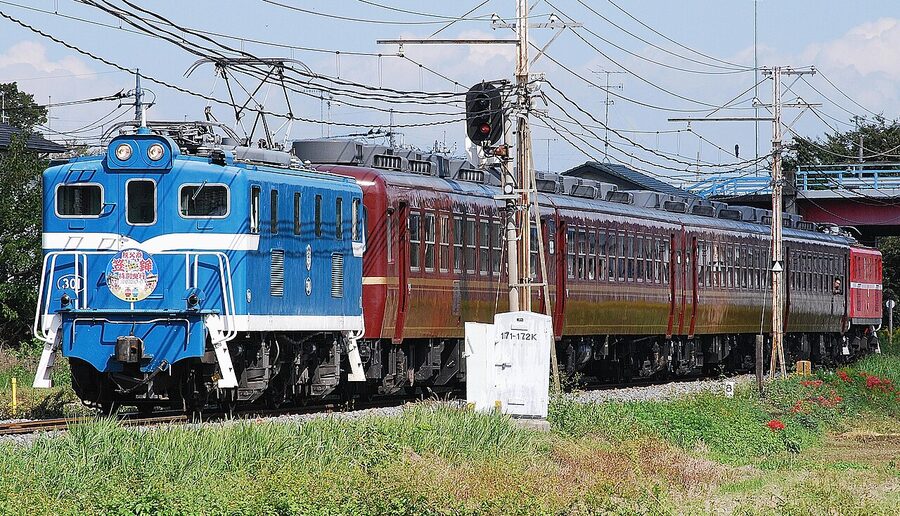
On 6 August 2012, while shunting at the Hirosegawara depot, C58 363 derailed at low speed and damaged its leading bogie and front truck. Repairs took until 20 March 2013. For the months in between, the Paleo ran on schedule with a DeKi 300 series in place of the steam loco; the railway sold tickets at the same SL fare and the trains went out at the timetabled departures. From the platform you could tell because there was no smoke. From the seat, the only difference was the soundscape.
The locomotive went into a planned heavy overhaul in late 2019, was out of operation for roughly fourteen months, and returned to service on 13 February 2021 with a “First Run” headboard. It has been running since.
Riding the Paleo
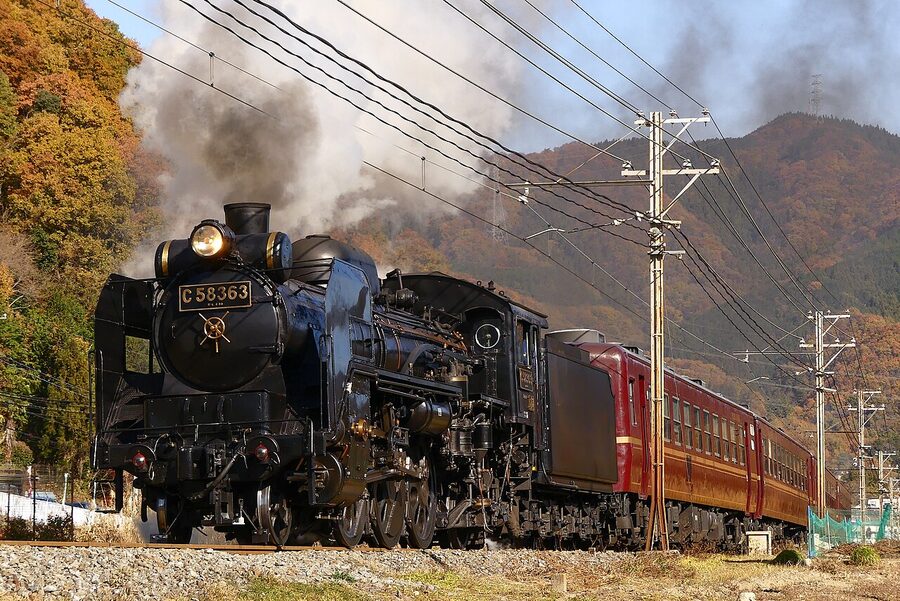
The Paleo runs Kumagaya to Mitsumineguchi, 56.8 km in about 2h 39m southbound and 2h 15m northbound (the steamer goes faster downhill). One return service per running day. The schedule is weekends and public holidays from mid-March to early December, with extra summer-holiday and special-event runs (Saitama Prefectural Day on 14 November, the Chichibu Night Festival on 3 December). It does not run in winter.
Fares: standard Chichibu Main Line fare from your boarding station to your alighting station, plus an SL surcharge of ¥740 for a designated seat or ¥520 unreserved. If the locomotive fails and the run becomes EL-hauled, the surcharge is refunded. Bookings used to be sold through JR East’s Green Window counters, but that arrangement ended on 29 September 2019; since February 2021 the operator handles its own reservations through the Chichibu Railway online system. Buy ahead for the Night Festival weekend in early December and for autumn-colour Saturdays in November; both fill out a week in advance.
The EMU fleet, by series
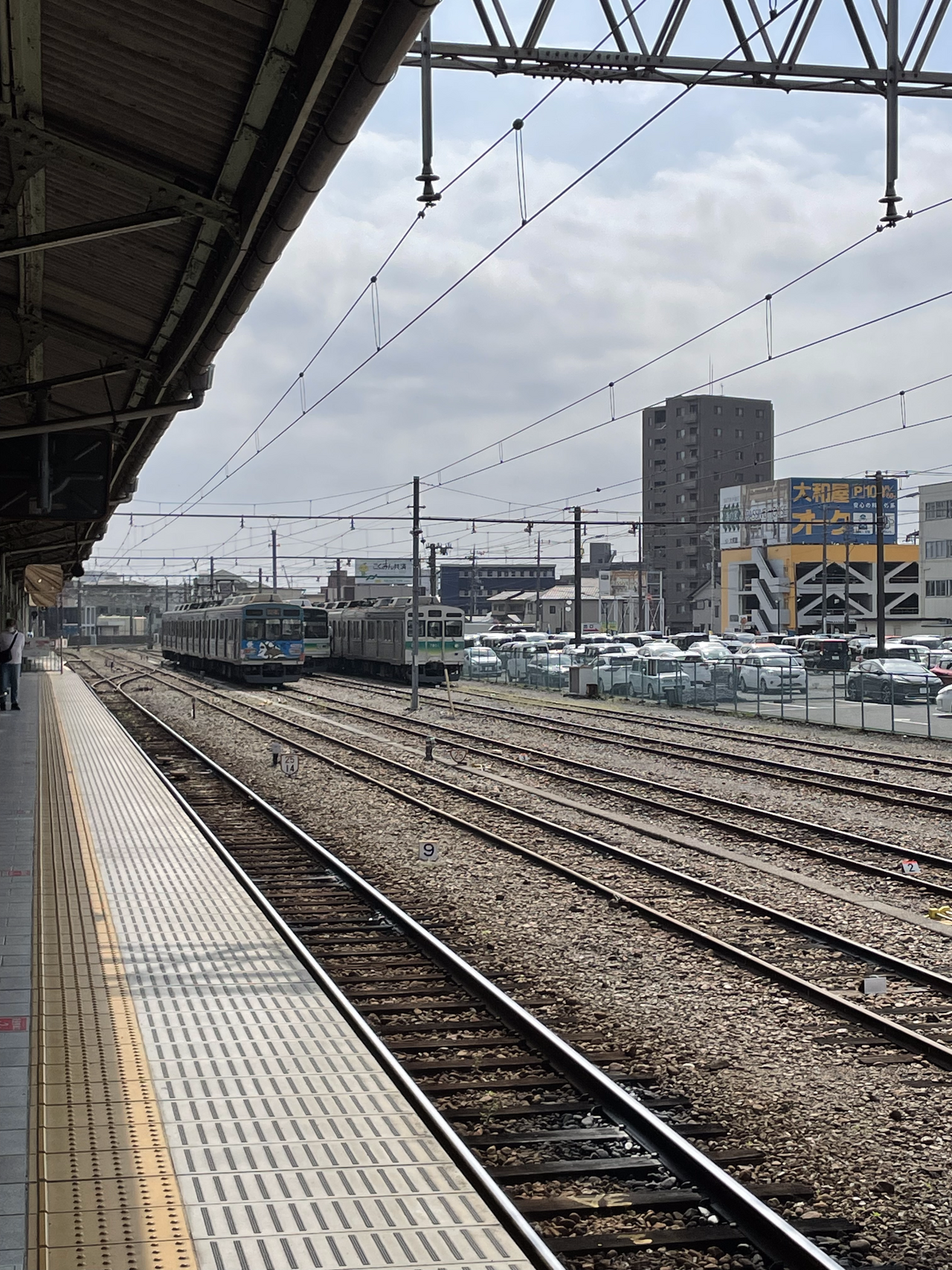
The passenger fleet is what most riders see, and it is where the Chichibu earns its reputation as the place Tokyo’s commuter trains go to retire. Five EMU series carry the regular timetable, and four of the five are former Tokyu or Toei stock. The fifth is ex-Seibu. The two-decade replacement programme that dragged Chichibu into the present took the line out of its own ageing 1000 series (themselves ex-JNR 101s, the loop is recursive) and into a fleet of stainless-steel Tokyu and Seibu cars. Most of the new arrivals are now older themselves than the trains they replaced.
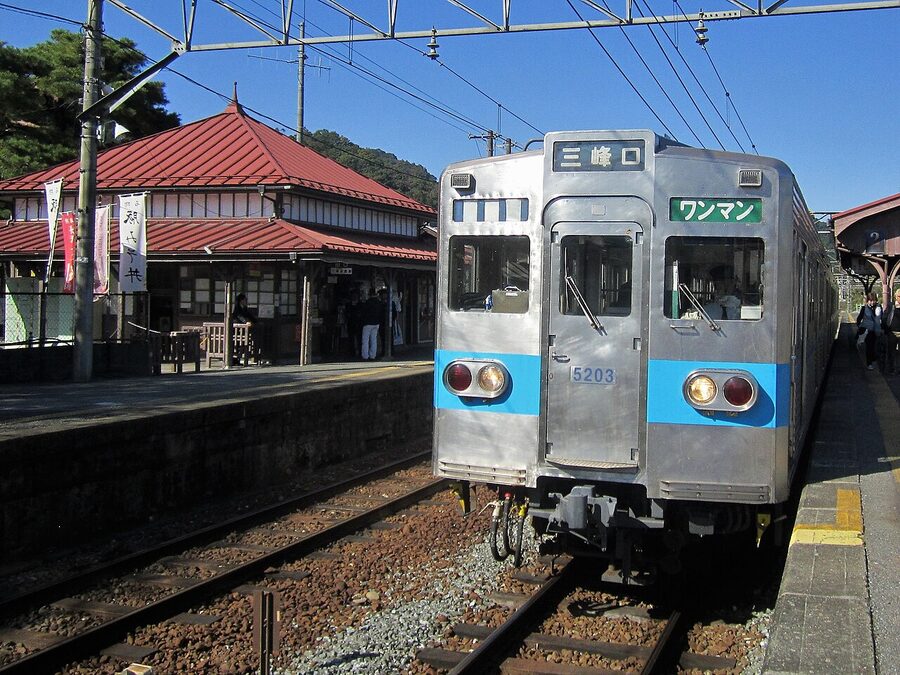
5000 series: a Toei subway car in farm country
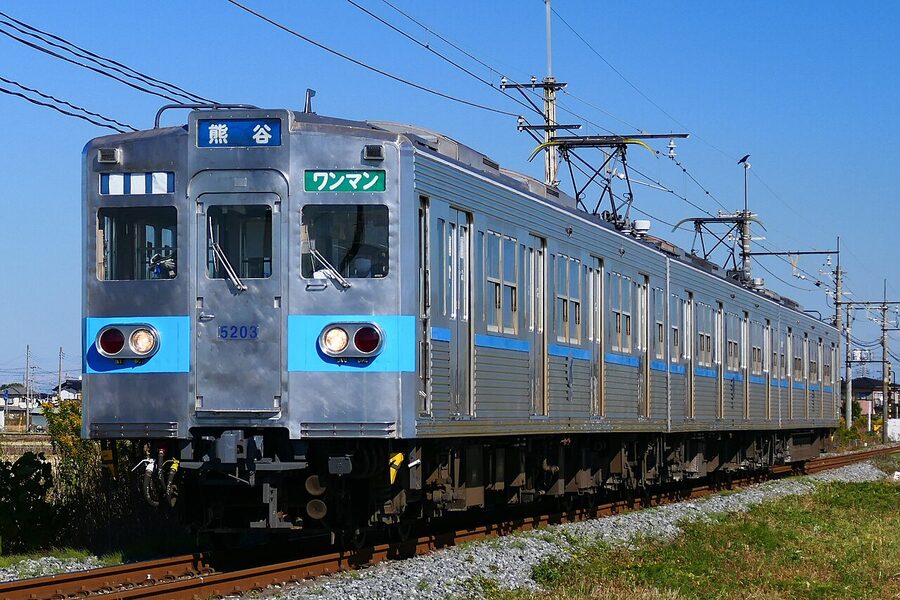
Three three-car sets, all rebuilt from Toei 6000 series Mita Line cars that ran the central Tokyo subway from 1968 to the late 1990s. They moved to Chichibu in 1999 and have been the line’s local-service backbone ever since. Originally four sets came across from Toei; one was scrapped, leaving the three you can find today (sets 5001, 5002, 5003).
How to spot one: long slab-side body with three small windows per door section, the original Toei blue stripe still on the waistline, round tail-lights set deep in the cab face. The front-end profile of the 6000-series Mita stock is unmistakable once you’ve ridden a Mita train. They tend to roster on the all-stations local from Hanyu to Mitsumineguchi rather than the express; if you board at Kumagaya for Chichibu and get a 5000, expect about 90 minutes.
6000 series: the only express stock
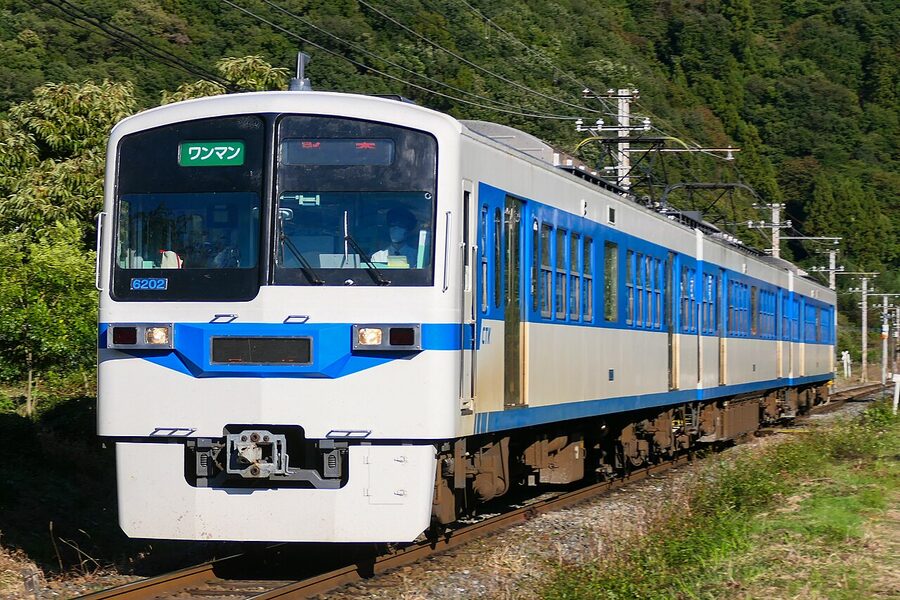
Three three-car sets, all converted from Seibu New 101 series in 2006. Cross-seating instead of the longitudinal benches the rest of the fleet uses, with curtains, drink holders, and pull-down windows. Compared to the rest of the line it feels almost civilised. The 6000 is the only Chichibu stock that runs the ¥220-surcharge express, the Chichibuji, which links Kumagaya and Mitsumineguchi a few times a day.
The Chichibuji is three return services on weekdays, four on weekends. The default weekday departures from Kumagaya are 09:00, 13:00 and 17:00; check the operator’s PDF before relying on that. The express skips the smaller halts between Kumagaya and Yorii and runs all-stops from Yorii onwards. The base fare is the standard Chichibu Main Line distance fare, plus the ¥220 surcharge paid on board. For 90 minutes through Saitama farm country and into the Arakawa Gorge, that is a fair exchange.
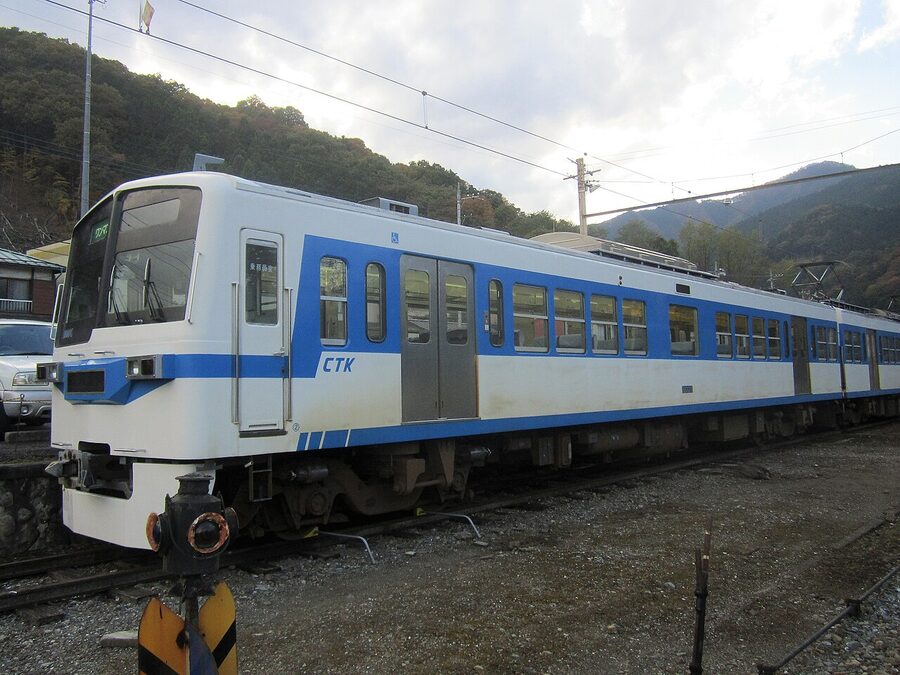
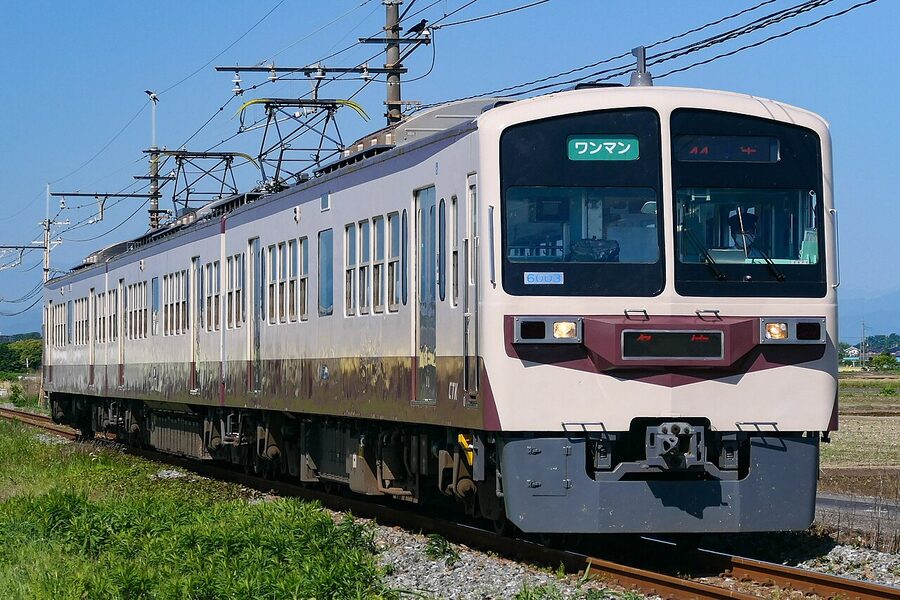
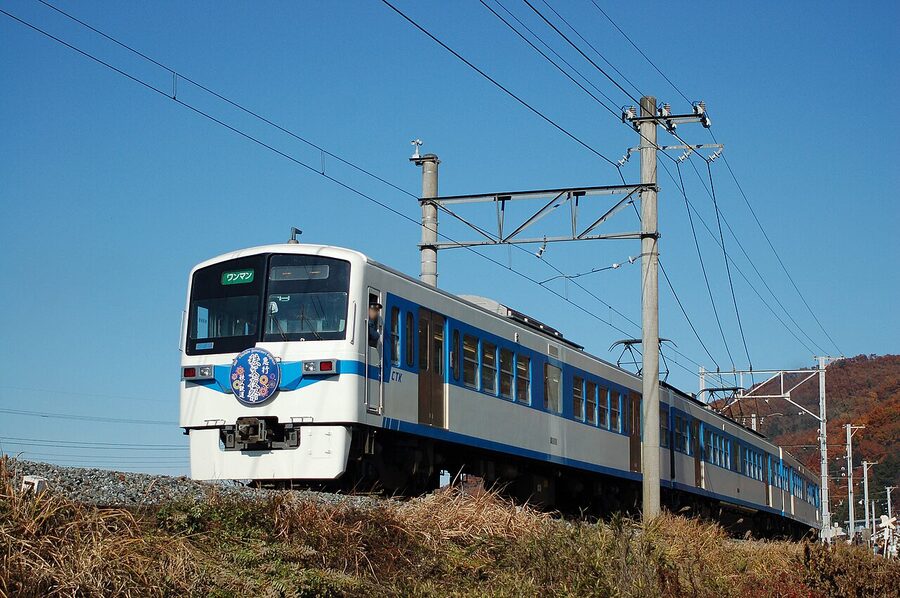
7000 series: ex-Tokyu Den-en-toshi stock in retirement
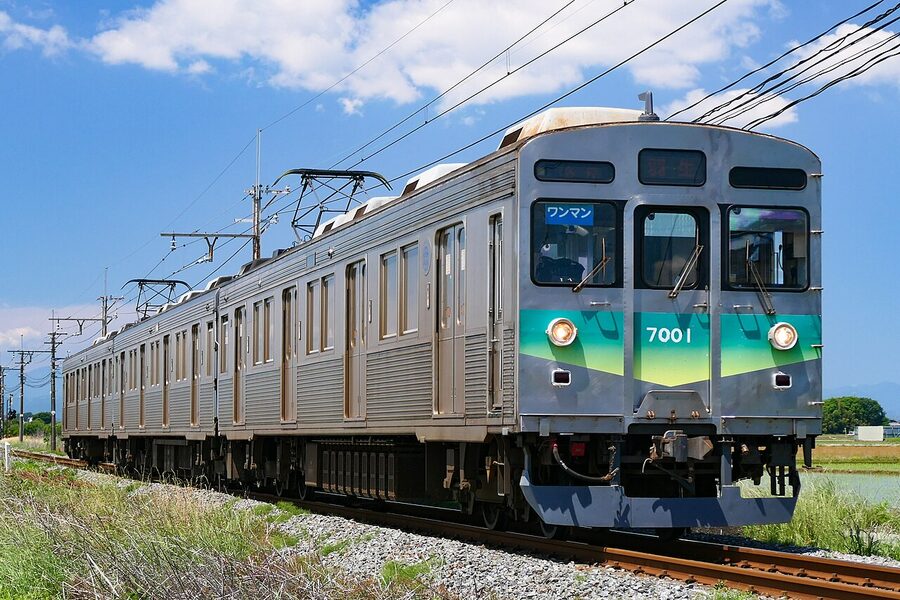
The 7000 series is the start of Chichibu’s three-line ex-Tokyu programme. Two three-car sets, both rebuilt from the Tokyu 8500 series that worked the Den-en-toshi Line and the through-running services to the Tokyo Metro Hanzomon Line from 1976 to the mid-2000s. They arrived at Chichibu in March 2009 and replaced the last of the original 1000 series.
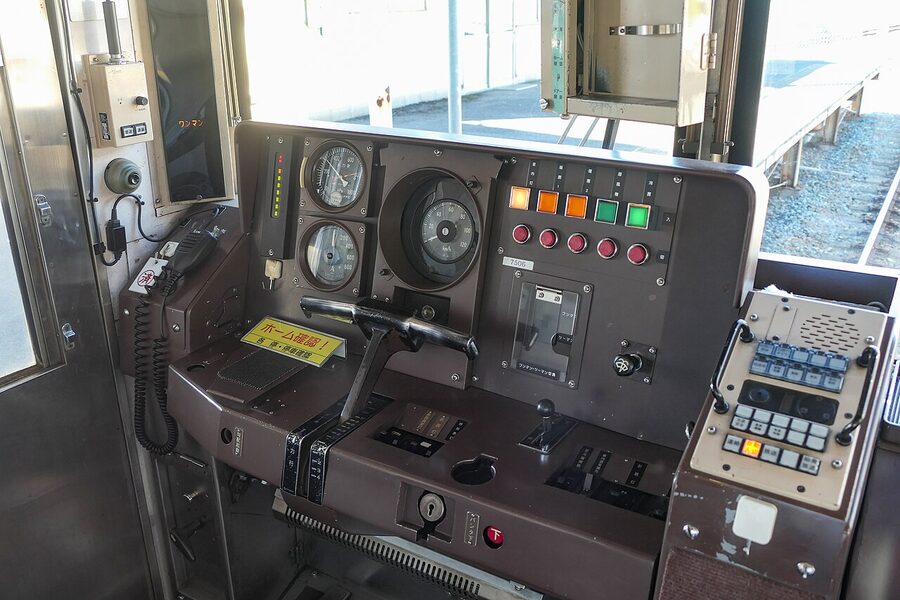
The transfer was structurally cheap: both Tokyu and Chichibu run 1,067 mm narrow gauge with 1,500 V DC overhead, so the cars needed nothing more than livery changes, end-cab repaints, and Chichibu’s own driver-control re-fits. The 8500 stainless steel bodies were built for a fifty-year service life; Tokyu retired them at twenty-five because they had cycled through Tokyo’s commuter peak. Chichibu is using the second half of the design intent.
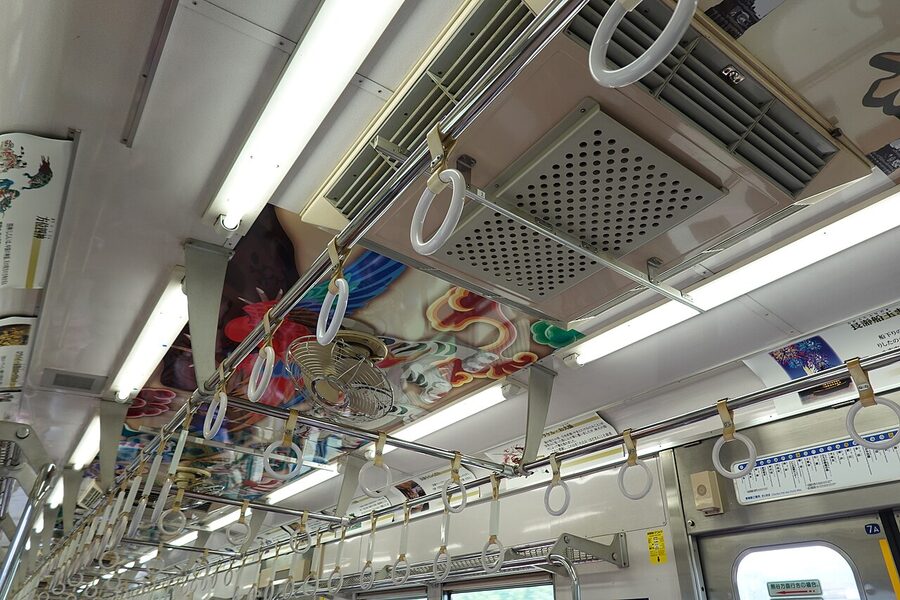
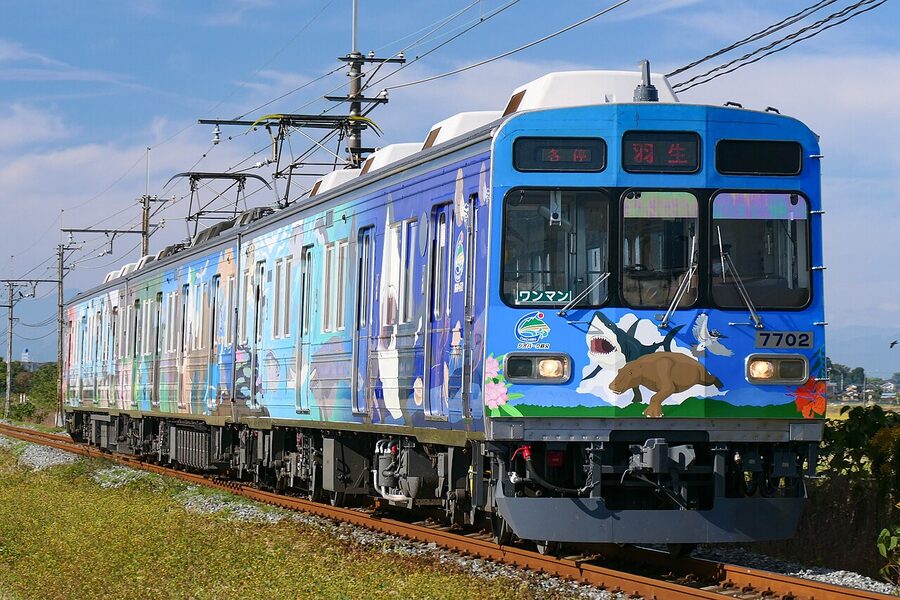
7500 series: ex-Tokyu 8090, the geopark trains
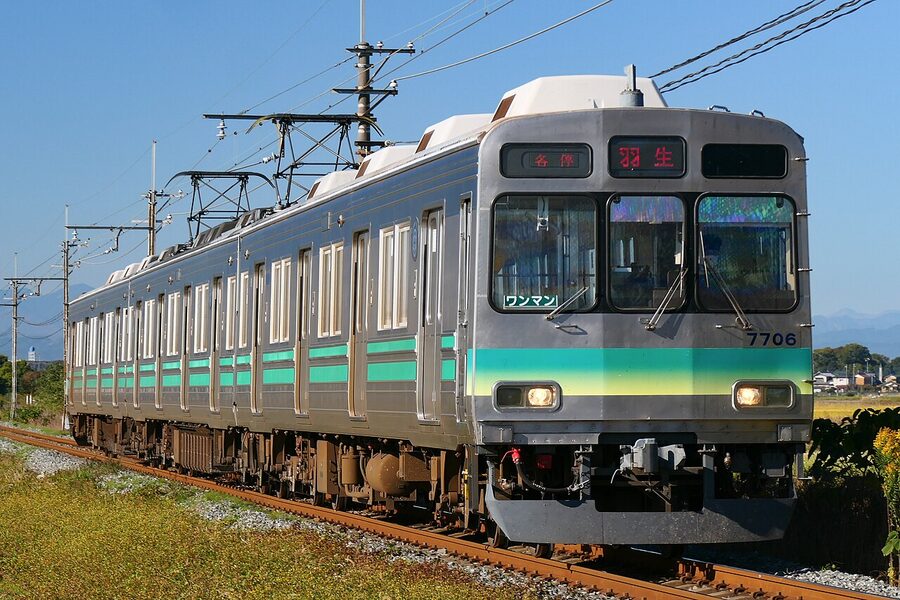
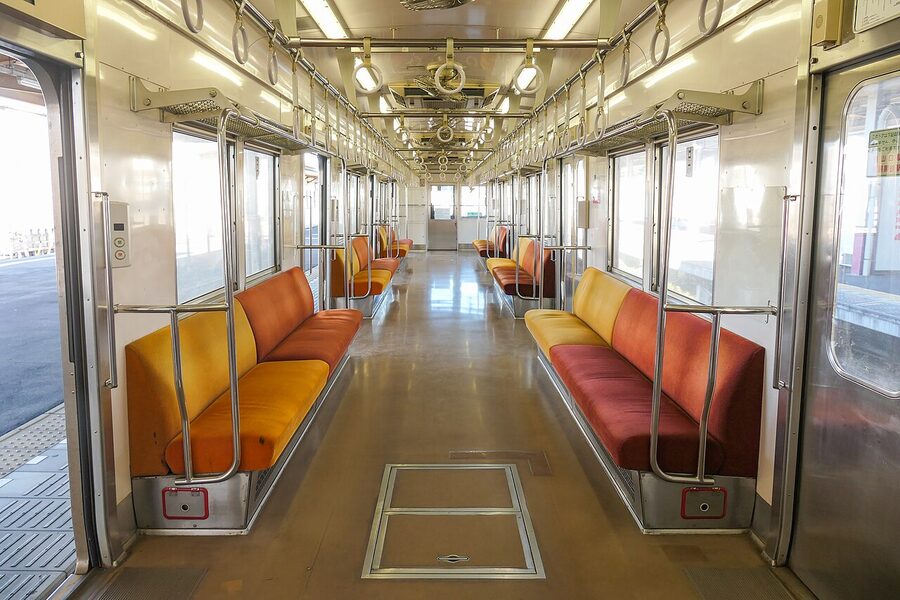
The 7500 series is seven three-car sets, all converted from Tokyu 8090 series in 2010. The 8090 was the first Tokyu design with corrugated stainless construction, and you can still see the corrugations on the side. They’re the most numerous class on the line by some distance, and they handle the bulk of the regular timetable when the 7000 and 7800 aren’t covering specific runs.
7800 series: cut-down 8090s
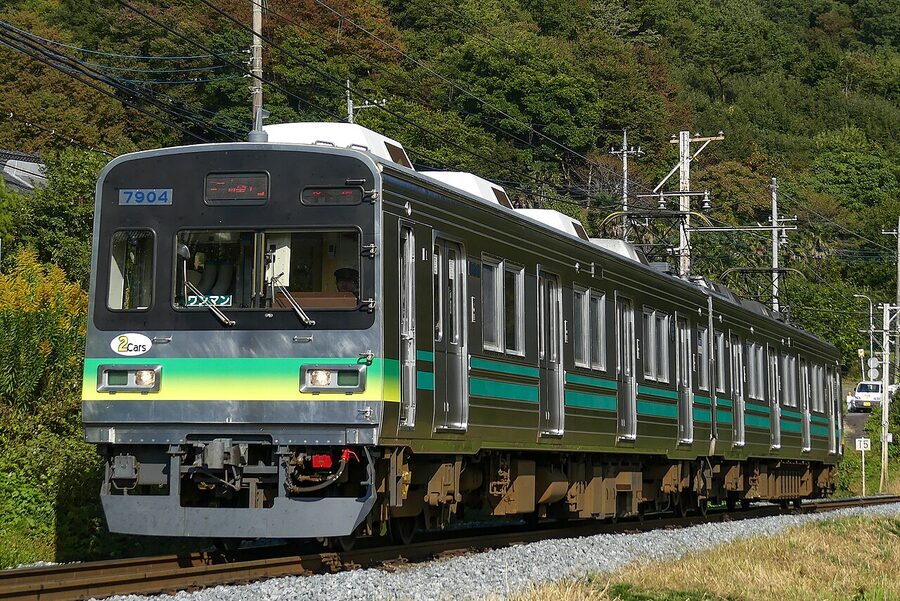
The 7800 series is the most engineering-heavy of the conversions: four two-car sets, each built around a pair of original Tokyu 8090 middle cars (which had no driving cab) plus newly fabricated cab ends. The cab-end fabrication is the giveaway. Look at where the front face meets the side body and you can see the join, slightly different in panel curvature from the rest of the body. The dimensions of the partition window between cab and saloon are different from the equivalent on the 7500.
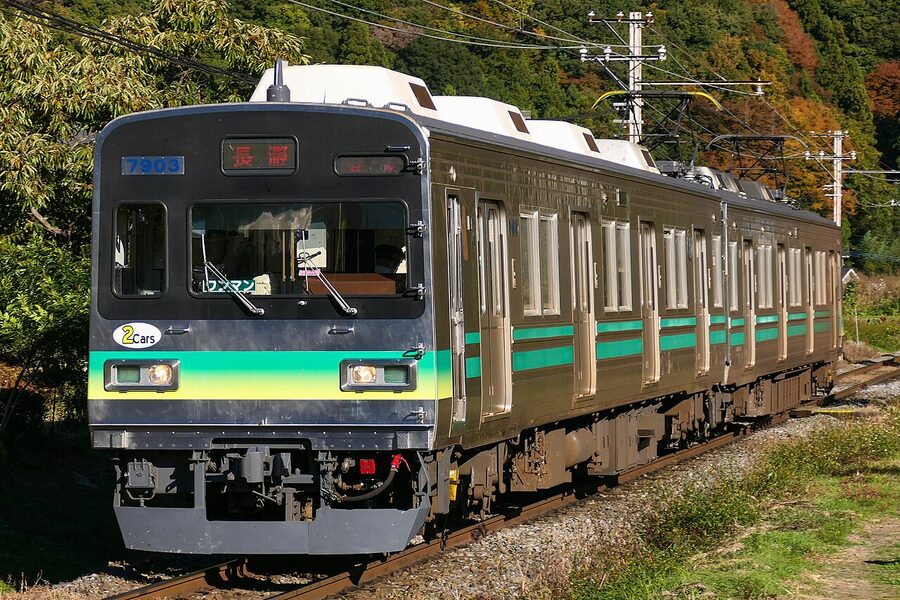
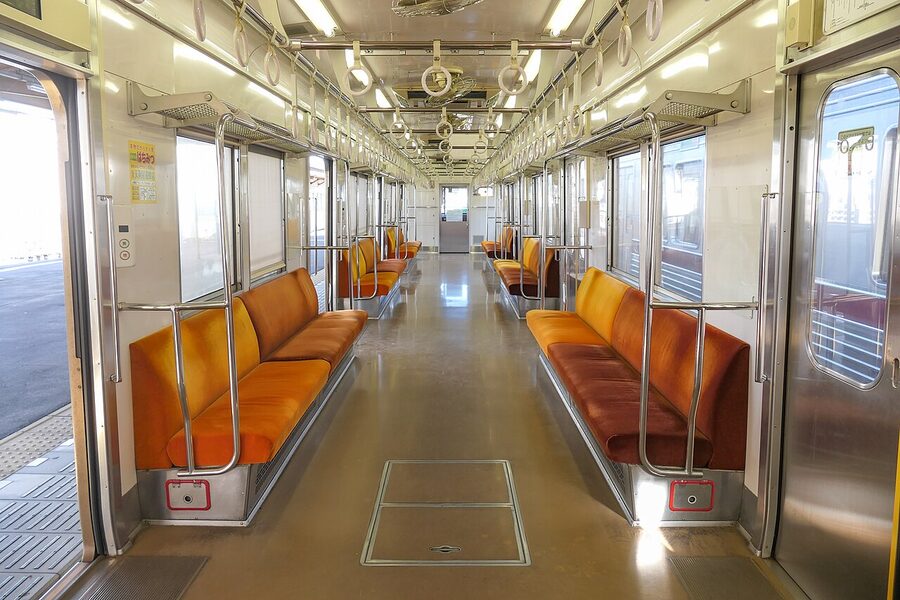
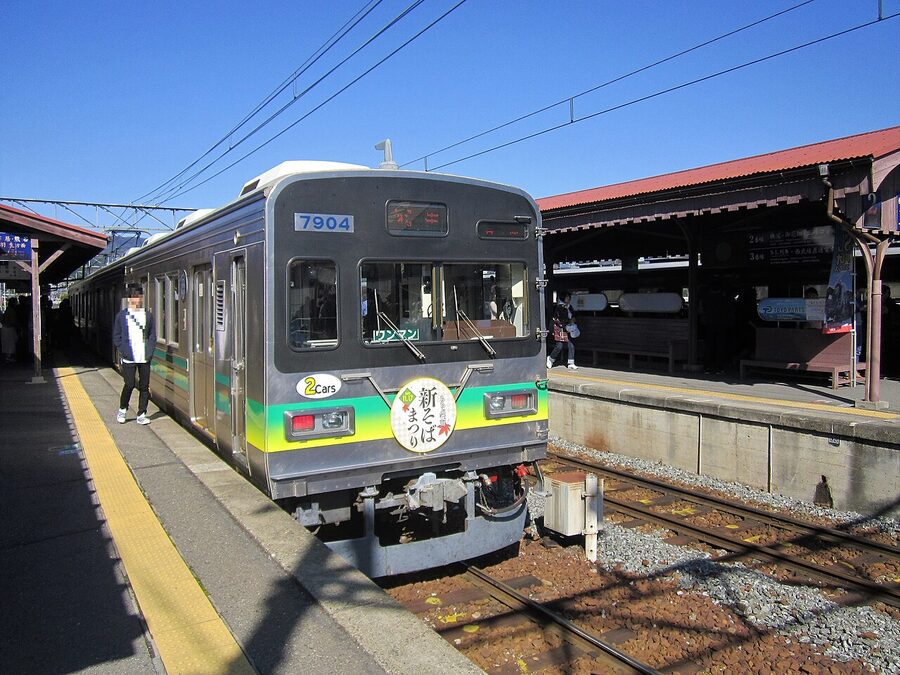
1000 series: gone, but worth knowing about
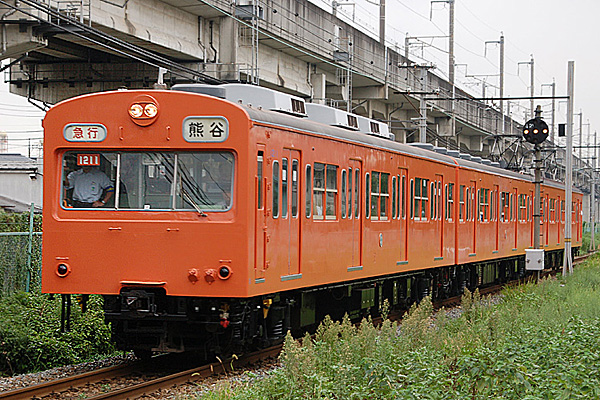
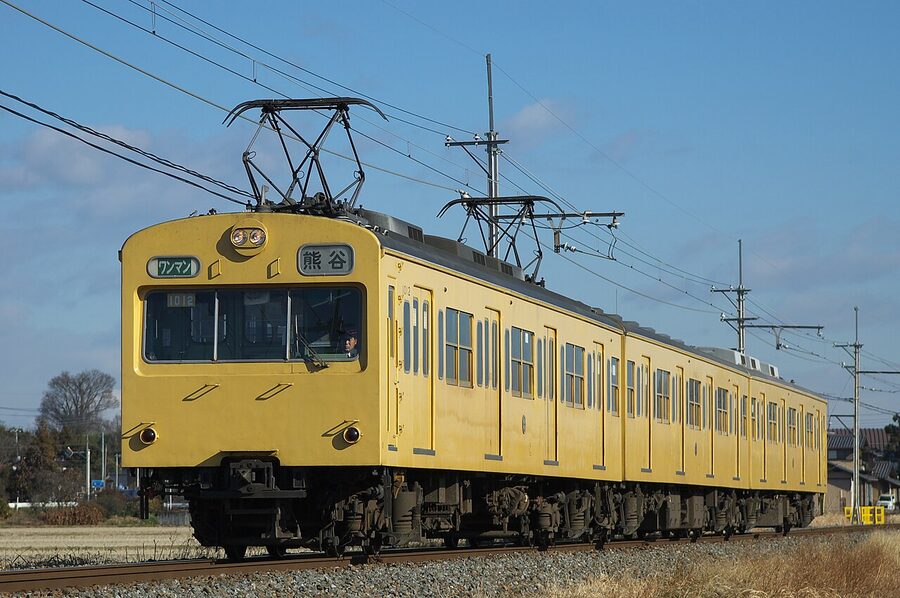
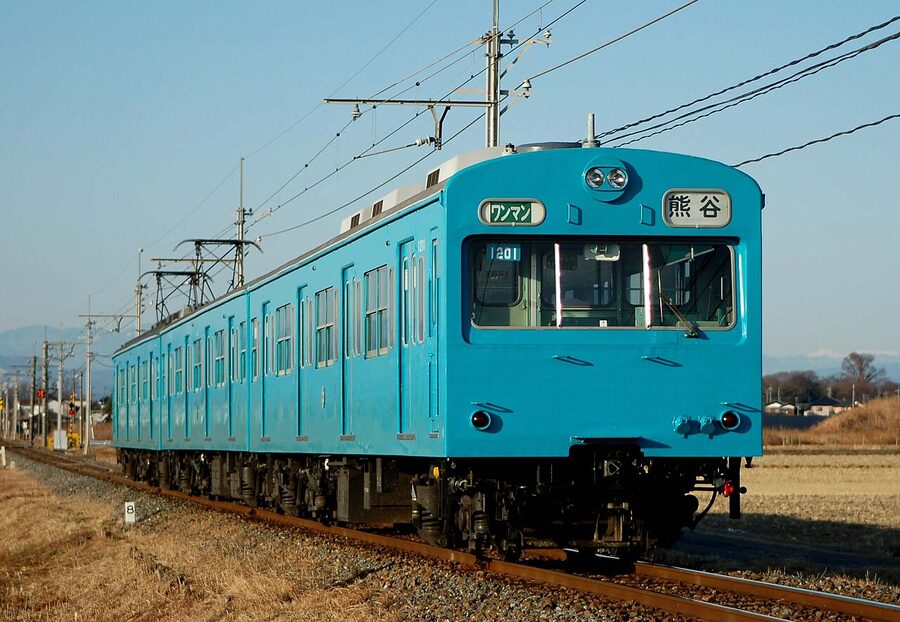
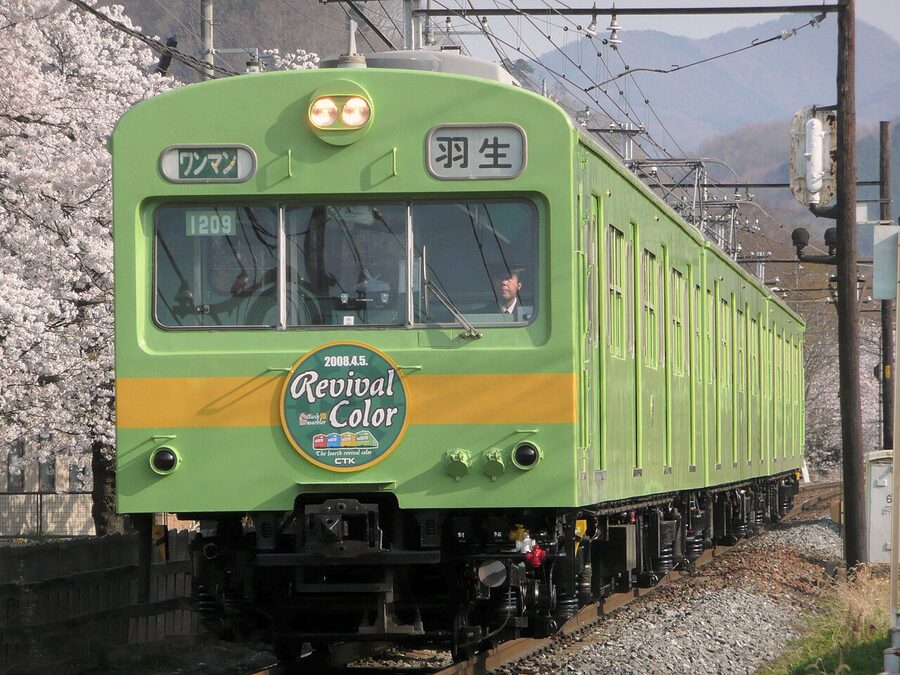
The 1000 series ran on the Chichibu from 1986 to 2014 and is the reason the current fleet exists in the form it does. Bought used from JNR (and then JR East after privatisation), the 1000s were 101-series cars dating to the late 1950s and early 1960s. Towards the end of their lives, the operator put them through a rolling programme of revival liveries to celebrate the line’s history: vermilion orange (Chuo Line), canary yellow (Sobu Line), sky blue (Keihin-Tohoku), and Kansai-line tan. The 7800 series replaced them in 2013 and the last set went off the books in 2014.
Where the line goes, and which station does what
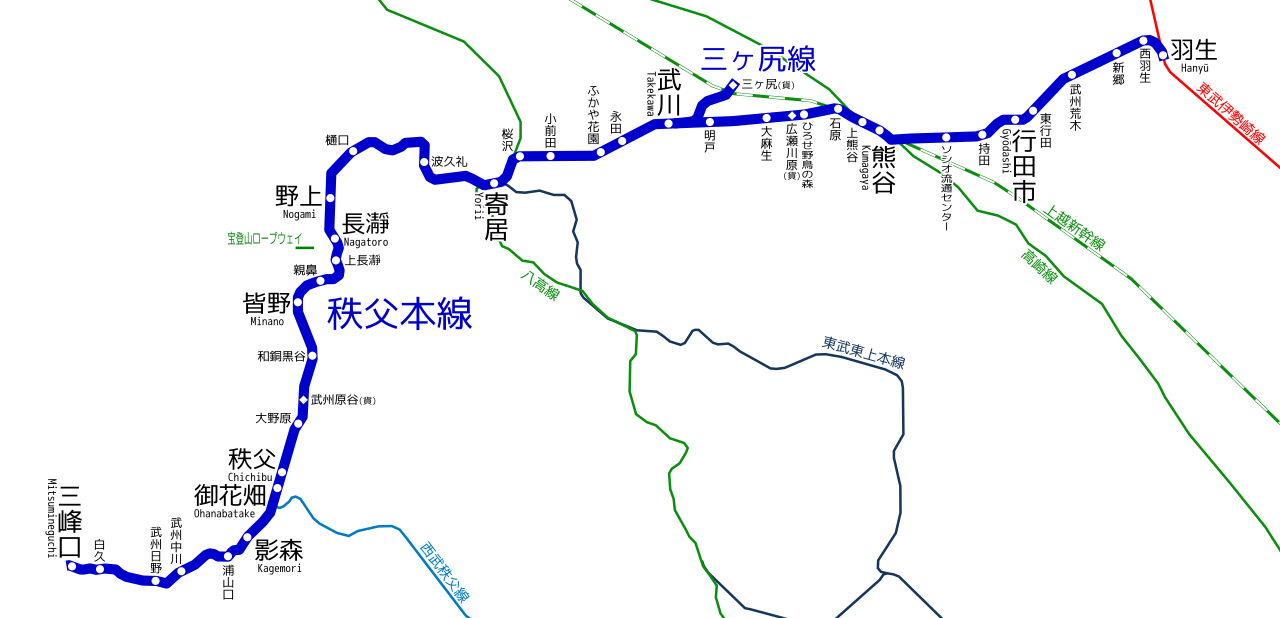
The line is a 71.7 km single track from Hanyu to Mitsumineguchi, with three useful interchange points where most international visitors actually join the railway: Kumagaya (JR Takasaki), Yorii (Tobu Tojo and JR Hachiko), and Ohanabatake (Seibu Chichibu Line). The eastern end at Hanyu is the operational terminus but most timetable maps treat Kumagaya as the practical anchor.
Kumagaya: the JR connection
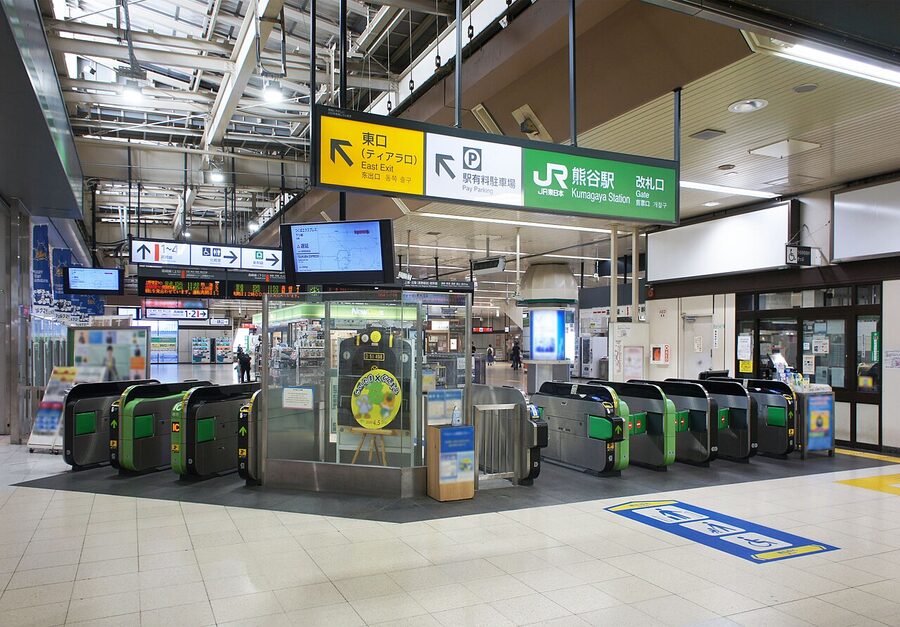
Kumagaya is where most travellers actually start a Chichibu trip, because Kumagaya is on the Joetsu Shinkansen and the JR Takasaki Line and a 40-minute Shinkansen ride from Tokyo Station. The Chichibu platform is on the south side of the JR concourse, separated by a paid-area gate; you exit JR, walk through a small shopping arcade, and re-enter through the Chichibu gates to your left. The transfer takes five minutes if you know where you’re going, ten if you don’t.
Yorii: the Tobu and JR Hachiko junction
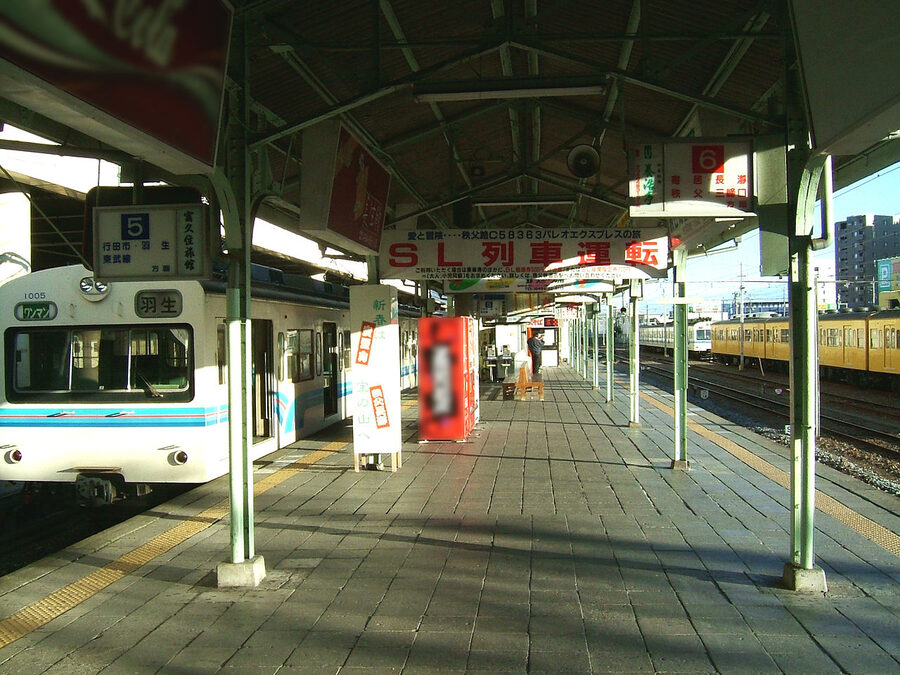
Yorii sits at km 33.8 and is the second major interchange. Tobu Tojo runs from here back to Ikebukuro, JR Hachiko runs north to Takasaki and south to Hachioji. If you are coming from northern Tokyo on Tobu, Yorii is a more direct gateway than Kumagaya; the Tobu express from Ikebukuro plus the change at Ogawamachi gets you here in under two hours.
For the Saitama side of the cluster, this is also the first interchange where you can swap between Chichibu and the Tobu Railway network. The two operators have a small reciprocal-recognition agreement on a handful of through-tickets, mostly for tourists doing Mitsumine plus Kawagoe in one trip.
Ohanabatake: the Seibu interchange
Ohanabatake (km 56.0, just before Chichibu Station proper) is where the Seibu Chichibu Line ends and the Chichibu Railway is your onward ride. The interchange is at-grade and unstaffed at off-peak; if you are coming on the Seibu Red Arrow Limited Express from Ikebukuro, this is your final stop on Seibu metals and a 200-metre platform-to-platform walk to the Chichibu line.
The Seibu run is the option international visitors most often take, because the Red Arrow is a comfortable seated express and the through-fare from Ikebukuro is competitive. The catch is that the Seibu Red Arrow only runs to Seibu-Chichibu (just past Ohanabatake by 800 metres); you have to walk between the two stations or change trains at Ohanabatake. Most rail-aware travellers do the second.
Chichibu, Nagatoro, and the tourist core
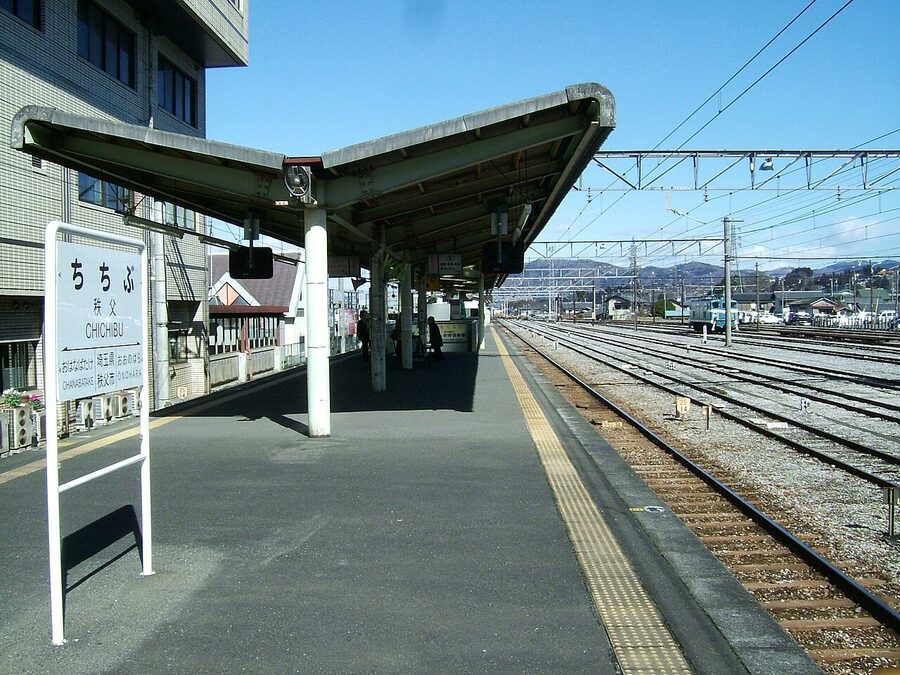
Chichibu Station (km 59.0) is the city centre and the line’s busiest passenger stop. From here the streets fan out for the Yomatsuri night festival, the temple pilgrimage circuit, and the riverside walks down to Nagatoro. If you are doing a weekend trip and don’t want to commit to Mitsumineguchi, alight at Chichibu and walk.
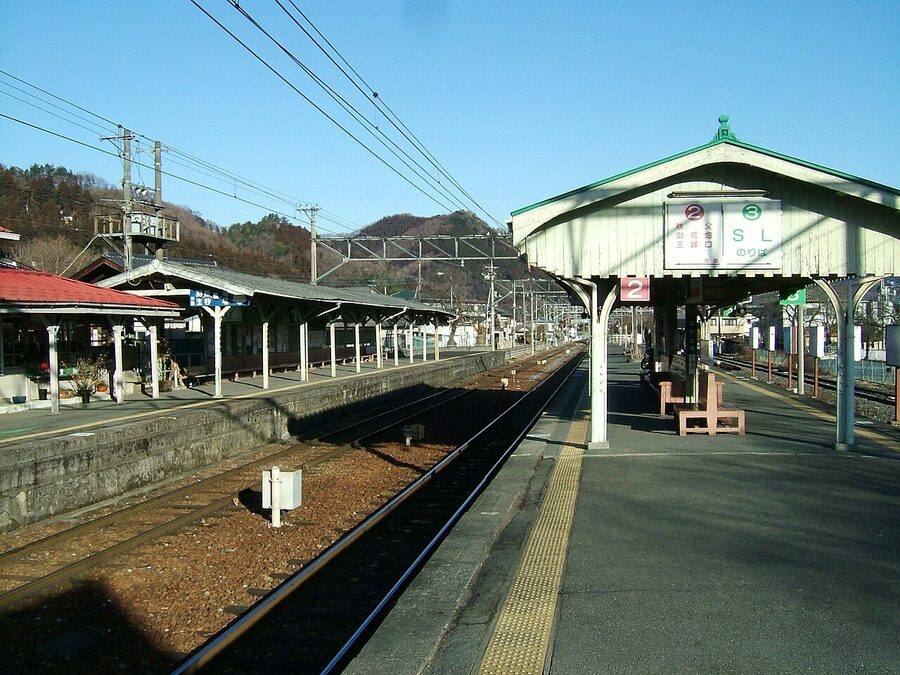
Nagatoro Station (km 51.5) is the busiest tourist stop and arguably the line’s strongest single attraction outside Mt Buko itself. The Arakawa River runs through a sandstone gorge here; rafting boats leave from below the road bridge. The station building dates from the 1910s and has not been replaced.
Mitsumineguchi: the western terminus
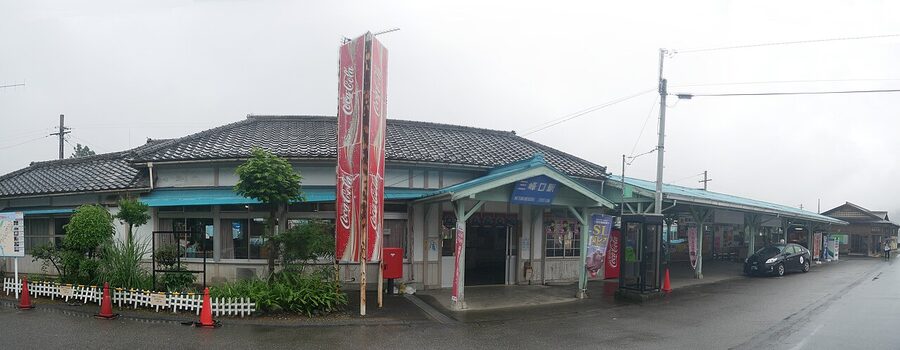
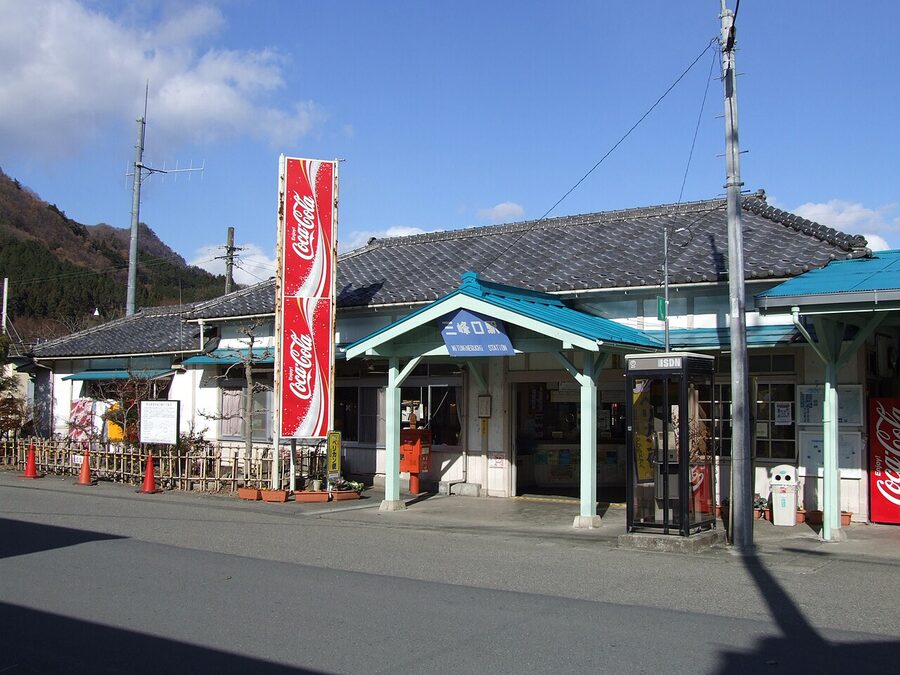
Mitsumineguchi (km 71.7) is the western terminus, the end of passenger service, and the parking lot for the connecting bus up to Mitsumine Shrine, which is one of the three great Kanto mountain shrines (the other two being Mitake and Hodosan). The shrine bus is a 50-minute climb up the gorge road; the shrine itself sits at 1,100 metres on the ridge above. If you take the Paleo to its terminus, the bus connection is timed to give you about three hours at the shrine before the last service back. From the shrine, the Mitsumineguchi rolling-stock display park is a short walk; DeKi 1 from 1922 lives here.
Riding the line, and what it costs
The Chichibu Main Line is fare-distance based, no flat-fare gimmicks. Kumagaya to Mitsumineguchi end-to-end is ¥1,030 IC (or paper, since the difference is rounded). Kumagaya to Chichibu (city centre) is ¥820. The express surcharge on the Chichibuji is ¥220 flat regardless of distance. The Paleo SL surcharge is ¥740 designated or ¥520 unreserved, on top of the standard fare.
Day passes
The line sells a one-day unlimited pass (秩父路遊々フリーきっぷ, Chichibuji Yuyu Free Ticket) for ¥1,600 weekdays, ¥1,800 weekends and holidays, valid for the whole 71.7 km. If you are doing Kumagaya to Mitsumineguchi-and-back plus a stop at Nagatoro, the pass pays itself off easily. There is also a Chichibu-area combo pass with the Seibu side that is worth checking against your specific itinerary; the operator’s English page lists current pricing.
IC cards and the 2022 PASMO change
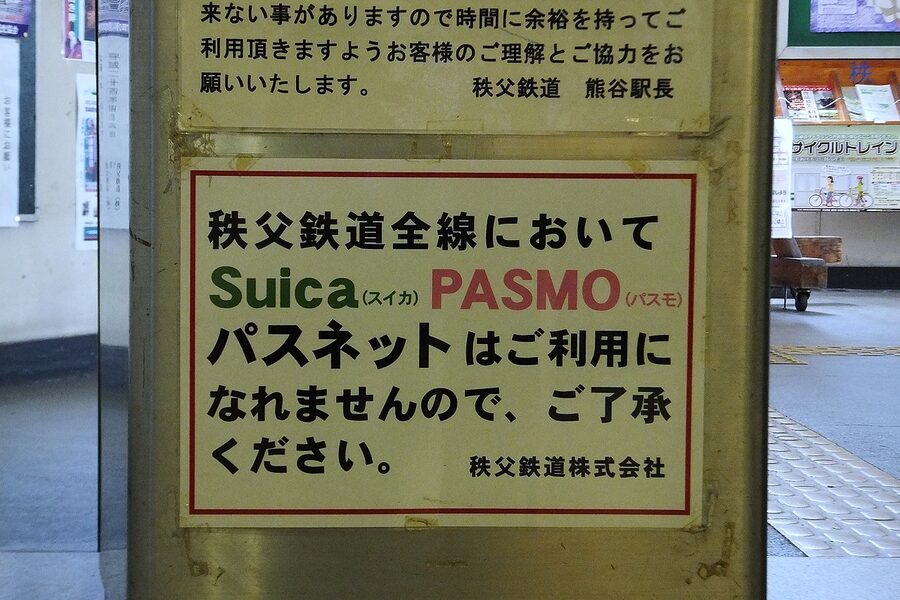
PASMO and Suica work on the Chichibu Main Line as of 12 March 2022, and they read at every station gate. Before that, the line was paper-only, which caught Tokyo commuters out for years. The lone wrinkle is that the Chichibu IC reader doesn’t accept the day pass; if you have the Yuyu Free Ticket, you have to use the staffed gate.
The express versus the local
Three or four Chichibuji express services per day cover the full length faster than the local. End-to-end, the express is about 15 minutes quicker. If you are heading for the Paleo at Kumagaya from the Tokyo side, the express is wasted because the Paleo runs at SL-pace anyway. If you are doing a same-day return and want to maximise time at Mitsumineguchi or Nagatoro, the express on the way out and a local on the way back is the standard pattern. Get the ¥220 surcharge from the conductor on board if the station counter is closed.
Where the line fits in the Tokyo private-railway picture
Most of the operators on this site, including JR East and the bigger private railways, share a basic operating logic: shift commuters to and from central Tokyo, build the timetable around the morning and evening peaks, run revenue-protected limited expresses for tourists on the side. The Chichibu does not work that way. It runs commuters because the limestone working leaves spare capacity. The fleet is sized for the freight, not the passenger demand. The depot at Hirosegawara is sized for freight maintenance. The crew rostering is freight-led.
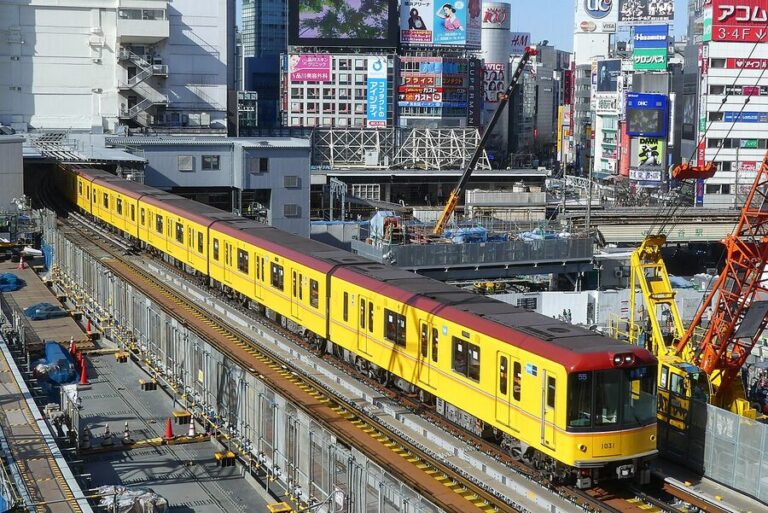
Compare this with the Tokyo subway operators, where the entire engineering tradition is about moving as many people through tunnels per hour as possible. Or with the Tokyo Metro fleet, where every series is purpose-built and the ten-year replacement cycle is a marketing event. Chichibu’s planning horizon is fifty years and the fleet is what other operators don’t want.
If you have ridden the Keio fleet or the Keio backstory, you’ll recognise the contrast immediately: Keio runs ten newly designed series in a generation, Chichibu runs five second-hand series across forty years. They are answering different questions about what a railway is for.
For the passenger, this means Chichibu is the cheapest legitimate way in Saitama to ride trains your grandparents would recognise. The 5000 series is fundamentally a 1968 subway car. The DeKi 100 is a 1951 Boxcab. The C58 is a 1944 wartime steam locomotive. None of this is performative: the trains run because they still work.
Two hours of Saitama, one mountain
If you set out from Tokyo on a Saturday morning and take the 08:00 Joetsu Shinkansen Toki to Kumagaya, you are at the Chichibu gate at 08:43. The Paleo Express leaves Kumagaya at around 10:10 and arrives at Mitsumineguchi about 12:50. The first regular service out goes at 09:25 and arrives at 10:55, which gives you time at Nagatoro before the SL catches you up. Either way, you’ll cross at least one DeKi-hauled freight before lunch. Mitsumineguchi has a small soba shop, a bus stop, and the rolling-stock park; the bus to Mitsumine Shrine leaves on the hour. The last Paleo back to Kumagaya departs Mitsumineguchi around 14:25; a regular local runs hourly until early evening.
If you are doing a longer trip, the Chichibu Railway works as a one-day extension to a Tokyo itinerary, an overnight in Chichibu city if you want to do the Yomatsuri (3 December), or a two-day rail-and-mountain combination using Odakyu and the Seibu Red Arrow as the connecting tissue. For deeper history on how the line ended up structured this way, the Chichibu Railway history piece covers the founding, the pre-war freight build-out, the Mt Buko rights, and how Taiheiyo Cement ended up owning a third of the operator.
What the line is, when you stand at the platform
Mount Buko is shrinking. Not visibly in any one trip, but on a ten-year scale, yes, in metres. The terraces step a little further down. The summit, which doesn’t exist any more, was blasted away in 1980 because there was limestone underneath it. Stand on the platform at Bushu Haratani long enough and you can hear the next loaded freight coming down from Kageshima, twenty Wokifu wagons long, somewhere between 700 and 800 tonnes of mountain on the move. The DeKi locomotive on the front of it is older than the engineer driving it. The mountain is older than that. The trains are taking the mountain apart at about a thousand tonnes a day, and they are taking it apart with equipment that was built before anyone now riding it was born. There is no Shinkansen to Chichibu and there isn’t going to be. The cargo doesn’t need one. Neither does the mountain.


.jpg)


.jpg)

.jpg)


.jpg)


