Keio Corporation: the cheap and decisive railway
In May 1944, with the war already lost in everything but name, the wartime transport ministry was rolling up Tokyo’s private railways into a single state-managed conglomerate, and Tokutaro Inoue, the president of Keio Electric Tramway, was holding out. He held out longer than anyone else in Tokyo. When the order finally came down and Keio was absorbed into Tokyo Kyuko, the company that would later be called Daitokyu, Inoue is supposed to have said something close to: “Keio is small but a diamond; Tokyo Express is large but just rubble.” He lost. The merger went through on 31 May 1944. But the line stuck, and four years later, when the Allied occupation forced Daitokyu to break itself up again, Keio walked out of the rubble with a bigger railway than it had walked in with.
In This Article
- Why Keio is the operator the rest of Tokyo underrates
- 1913: the tramway that was meant to haul gravel
- Gravel, the Tama River, and the branch that became the Sagamihara Line
- What the prewar trams actually looked like
- 1944: the wartime absorption Inoue could not stop
- The 1948 split, and the bonus that came with it
- 1948 to 1971: rebuilding on borrowed track
- The Inokashira Line gets its own personality
- 1971 and Tama New Town: building the line into a city that did not exist
- Why the Sagamihara Line is busier than it looks on a map
- Through-running with the Toei Shinjuku Line
- The 6000 series, the 7000 series, the 8000: the ordinary backbone
- The 1998 rename and the corporate house style
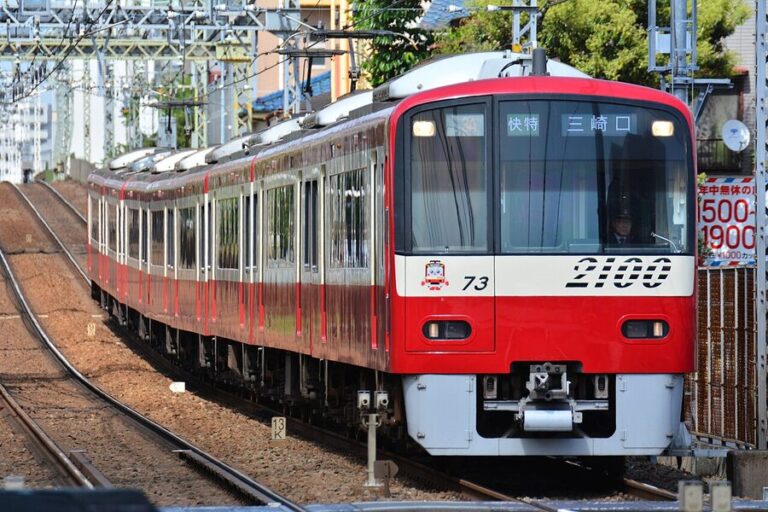
- 2018: the Keio Liner, and what an ¥410 surcharge actually buys
- The Mt Takao branding
- The network you ride in 2026
- The 1,372 mm Keio main-line system
- The 1,067 mm Inokashira Line
- If you have one Keio ride to make
- If you have an evening to spare
- Where to see the old fleet
- Cross-network notes
- The verdict
The thing about a sentence like Inoue’s is that it sounds like an old man’s pride and turns out, on the network as you ride it now, to be roughly correct. Keio is a small operator by total route mileage, 84.7 km against the >500 km that JR East runs in the same prefecture. It uses a track gauge nobody else uses on a major Japanese line. It charges a reserved-seat surcharge on its premium service that costs less than a coffee. And it picked up, in 1948, the most pleasant short urban railway in Tokyo, the Inokashira Line, which it had not built and did not own before the war. None of that is glamorous. All of it works, and most of it works because the founders kept the company cheap on purpose. This is the railway Inoue thought was worth fighting for. Here is why.
Why Keio is the operator the rest of Tokyo underrates
Three things, briefly, before the history. First, the gauge. The Keio main-line system runs on 1,372 mm track, the old Tokyo street-tramway gauge, which no other major private railway in Japan uses today. It is a leftover from Keio’s origin as an interurban tramway, and it is the reason Keio cannot through-run with anything except the Toei Shinjuku Line, which was deliberately built to the same gauge in the 1970s precisely to interchange with Keio. The Inokashira Line, by contrast, runs on standard 1,067 mm narrow gauge, because it was originally a different company. Two systems, one operator, two gauges. The history below is why.
Second, the fares. The Keio Liner reserved-seat surcharge is ¥410. The equivalent on the Odakyu Odawara Line Romancecar to Hakone is up to ¥1,200. The equivalent on the Tobu Spacia X to Nikko is ¥1,940 in standard. Keio runs its premium service the way a commuter operator runs an off-peak limited express, not the way a tourist operator runs a holiday train. That is a 1910 instinct, written down in the original company prospectus, that the company has never seen any reason to change.
Third, the network shape. Keio runs into Shinjuku from the west, along the same Koshu Kaido corridor that the JR Chuo Rapid runs slightly to the north. It feeds Tama New Town, the largest planned residential development in postwar Japan, by way of the Sagamihara Line. It runs to Mt Takao, the most-climbed mountain in the world. And the Inokashira Line, the small narrow-gauge sibling, links Shibuya to Kichijoji in 16 minutes flat with seven different pastel-coloured trainsets that locals can identify by colour at a hundred metres. None of these are flagship lines. All of them earn their fares.
1913: the tramway that was meant to haul gravel
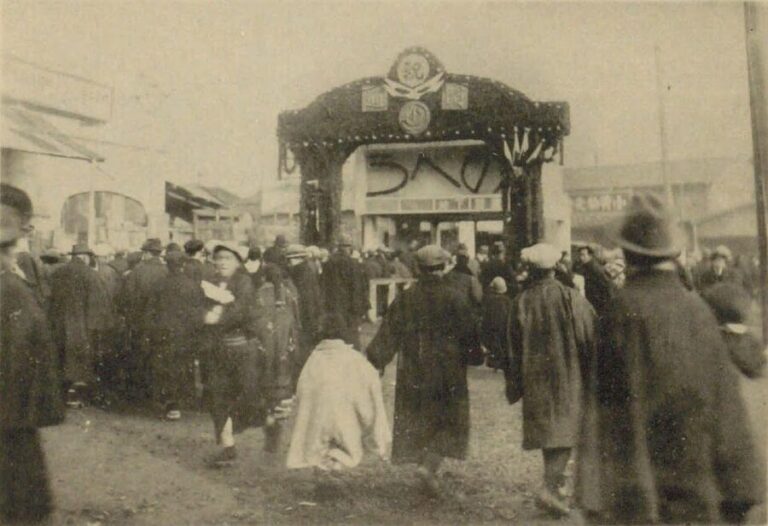
Go back to the founding and the modesty is the giveaway. The earliest direct predecessor was incorporated in 1905 as Nippon Electric Railway, reshuffled in 1906 as Musashi Electric Railway, and renamed in 1910 to Keio Electric Tramway (京王電気軌道, Keio Denki Kido) with starting capital of 1.25 million yen. The 1910 prospectus reads like a small-town municipal proposal rather than a railway charter: an interurban tramway along the Koshu Kaido, gravel extraction and haulage from the Tama River, leisure-area development on the riverbank, and electric-lighting supply to villages along the route. A railway was one of four revenue lines on the document, not the headline.
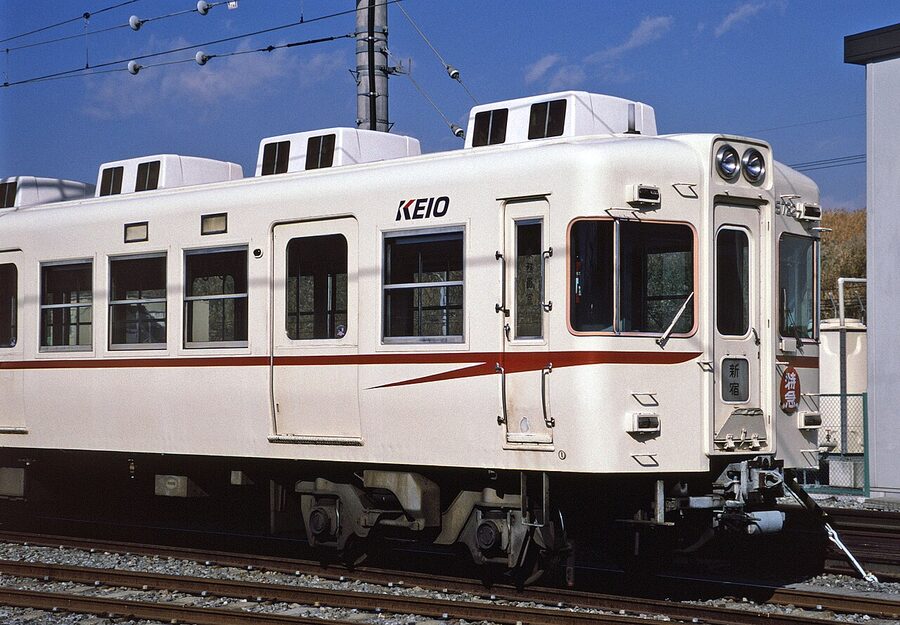
The first 12.2 km of track opened on 15 April 1913 between Sasazuka and Chofu, single-track, 600 V DC, on the Tokyo street-tramway gauge of 1,372 mm. The choice of gauge was not aesthetic. It was the gauge the Tokyo city tramways used. Keio’s promoters wanted to be able to run their interurban cars onto the city tramway network at Shinjuku and pick up urban passengers without a transfer. The arrangement worked for the first decade and stopped working when the city tramways consolidated and re-gauged. By then Keio had hundreds of kilometres of pole-and-wire infrastructure, dozens of trams, and switching equipment all built to 1,372 mm, and re-gauging the lot was a cost it would never quite face up to. The gauge stayed. It is still there, on every track Keio owns except the Inokashira Line.
Gravel, the Tama River, and the branch that became the Sagamihara Line
The gravel detail is worth dwelling on, because it is the reason Keio reaches as far west as it does today. After the 1913 main-line opening, Keio extended a short branch south from Chofu to Tamagawa-hara (now Keio Tama-River) in 1916, single-track and primarily for freight. The Tama River bed was the cheapest source of construction aggregate in greater Tokyo, and Keio’s branch existed to lift it. The Great Kanto Earthquake of 1923 wrecked central Tokyo and tripled aggregate demand inside three months. By 1927 the gravel side of the business was big enough to spin out as Keio Gravel KK. The 1916 branch did not become a passenger-led route until the 1970s, when it was renamed the Sagamihara Line and pushed across the Tama Hills toward Hashimoto. But the alignment was already there.
The main line itself extended westward in increments. Fuchu by 1916. Higashi-Hachioji, now Keio-Hachioji, by 1925. The Hachioji extension was originally laid to standard 1,067 mm gauge because the Imperial Railways at the time required it for any railway approaching their network, and Keio later regauged it back to 1,372 mm to match the rest of the line. That kind of after-the-fact engineering compromise turns up over and over in the Keio story.
What the prewar trams actually looked like
Until 1945 the rolling stock on Keio looked like trams because it essentially was. Single-unit four-wheel cars at first, then bogied two-car sets in the 1920s. Air-conditioning was several decades away. There were no limited-express services in the modern sense; the timetable was a uniform local pattern with the occasional rapid that skipped suburban halts. The big visual change came in the 1930s when Keio acquired its first all-steel cars, but you would not have called any of it a serious commuter railway by Odakyu or Tobu standards. It was a regional tramway with intercity ambition, gravel money in the back office, and not much else.
1944: the wartime absorption Inoue could not stop
The Land Transportation Business Adjustment Law (陸上交通事業調整法) of 1938 was the legal lever that broke up Tokyo’s prewar private-rail competition. The law gave the wartime transport ministry the power to consolidate competing operators in the name of fuel efficiency, freight capacity, and air-raid resilience. By 1942 it had merged Tokyo-Yokohama Electric, Odakyu, and Keihin into the single conglomerate informally called Daitokyu, the Greater Tokyu, under the steel-jawed presidency of Keita Goto. Sagami Railway was added in 1945. The original Tokyu Corporation, the modern survivor of that wartime entity, was for those few years the largest private rail operator in Japan.
Keio held out for two more years. Inoue’s argument was that Keio was profitable, well-run, and small enough not to matter for the wartime calculation. The argument did not convince the ministry. On 31 May 1944, by ministerial order, Keio Electric Tramway was absorbed into Daitokyu as the Keio Operating Division. The previous year, 1942, the Inokashira Line, then operated by Teito Electric Railway (帝都電鉄), had also been pulled into Daitokyu via Odakyu, which had absorbed Teito in 1940. So by the end of the war both halves of what is now Keio Corporation were inside the same wartime conglomerate, but as separate divisions and on separate gauges, with no operating relationship between them.
The 1948 split, and the bonus that came with it
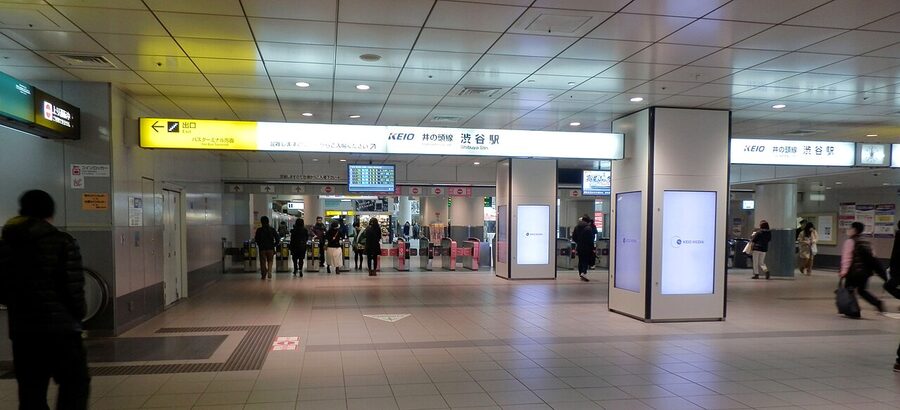
The dissolution order came down in 1947 and took effect on 1 June 1948. The Allied occupation’s anti-monopoly directive forced Daitokyu to break itself up into its constituent prewar firms, with one significant adjustment: the Inokashira Line, which had come into Daitokyu via the Teito-Odakyu route, did not go back to Odakyu. The shareholders of Tokyu voted to spin it off with the Keio operations into a new combined company, Keio Teito Electric Railway (京王帝都電鉄). The Teito in the name was the leftover from the 1933 Imperial Electric Railway that had originally built the Shibuya-Kichijoji line. The Keio was the original operator of the main Shinjuku-Hachioji corridor. Two unrelated railways, on two different gauges, operating two unconnected routes through different parts of west Tokyo, became one company on 1 June 1948.
This is the bookkeeping fact that explains the modern Keio network. Inoue had fought the merger to keep the Keio Main Line independent. He failed, technically. But Keio came out of the merger with a 12.7 km second railway it had not built, in the most expensive part of the city, that has been profitable on every annual report since. The diamond, as it turned out, picked up another diamond in the rubble.
1948 to 1971: rebuilding on borrowed track
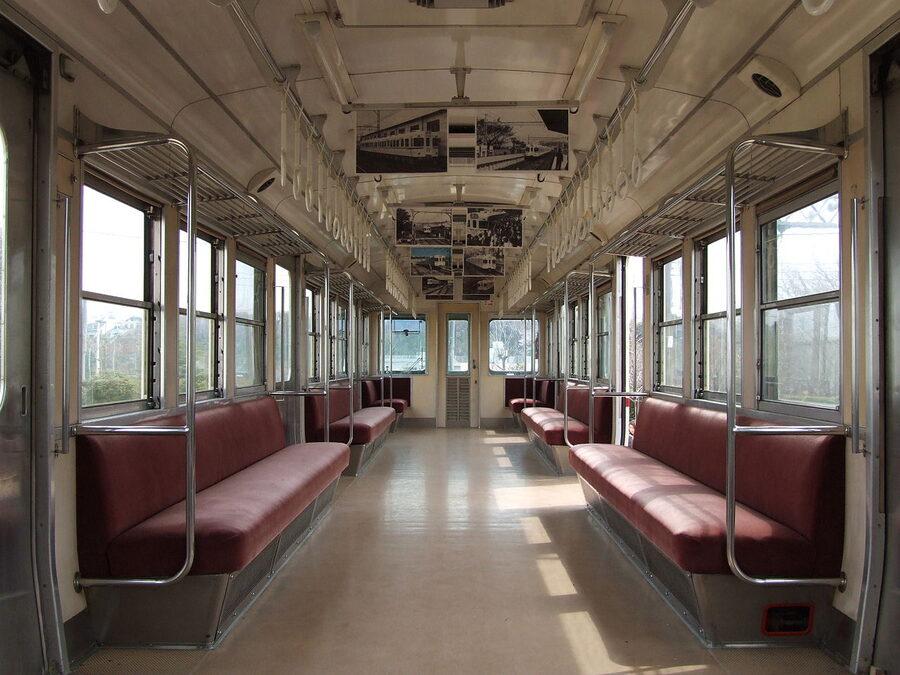
The first twenty years after the split are the years Keio became a commuter railway in the modern sense, and most of it happened on infrastructure inherited from the tramway era. The Shinjuku terminus moved underground in 1963, voltage went up from 600 V to 1,500 V the same year, the original at-grade street-running into Shinjuku was buried, and the line was upgraded car-by-car to support proper rapid services. The 5000 series of 1963, which won that year’s Laurel Prize, was the first Keio train that looked like a Tokyo commuter train rather than a slightly larger tram. It was orange-and-cream when new, then red-and-purple diagonals, and it carried the limited-express marker through to its retirement in 1996.
The Inokashira Line gets its own personality
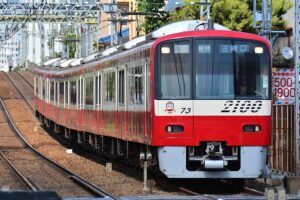
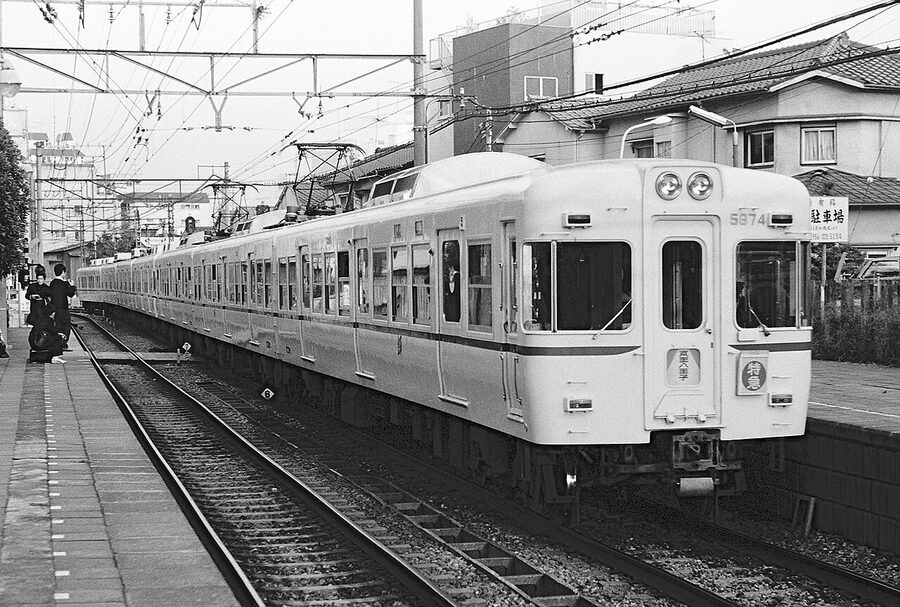
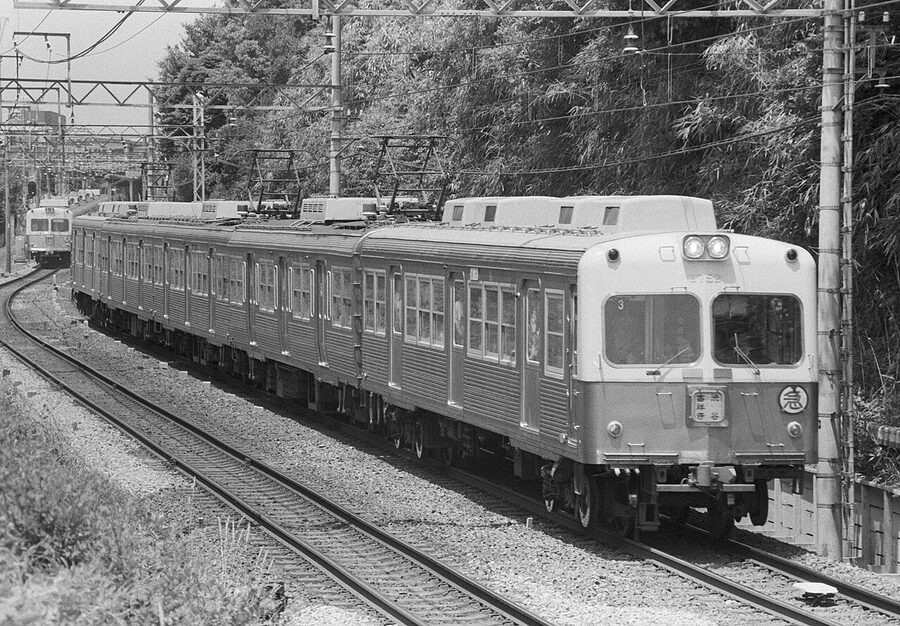
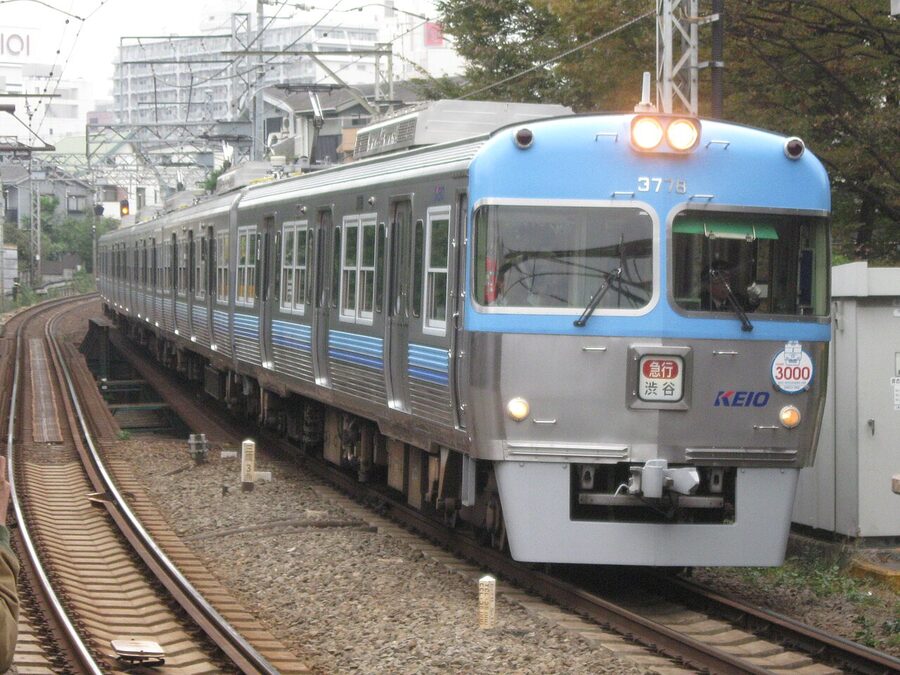
The Inokashira Line did not slot quietly into Keio operations. It kept its 1,067 mm gauge, kept its Shibuya terminus, and kept its own depot. In 1962 Keio took delivery of the 3000 series, an all-stainless-steel train designed specifically for the Inokashira and built by Tokyu Car. The 3000 was the first all-stainless commuter train in Japan, also a Laurel Prize winner, and it set the visual identity of the line for the next half-century. Twenty-nine five-car sets were built between 1962 and 1991. From the late 1960s onward each set was painted with a different pastel-coloured front: blue-green, ivory, salmon pink, light green, violet, beige, and light blue. The “rainbow Inokashira”, as it was inevitably called, ran in those colours on the same train sets until the last cars retired in 2011.
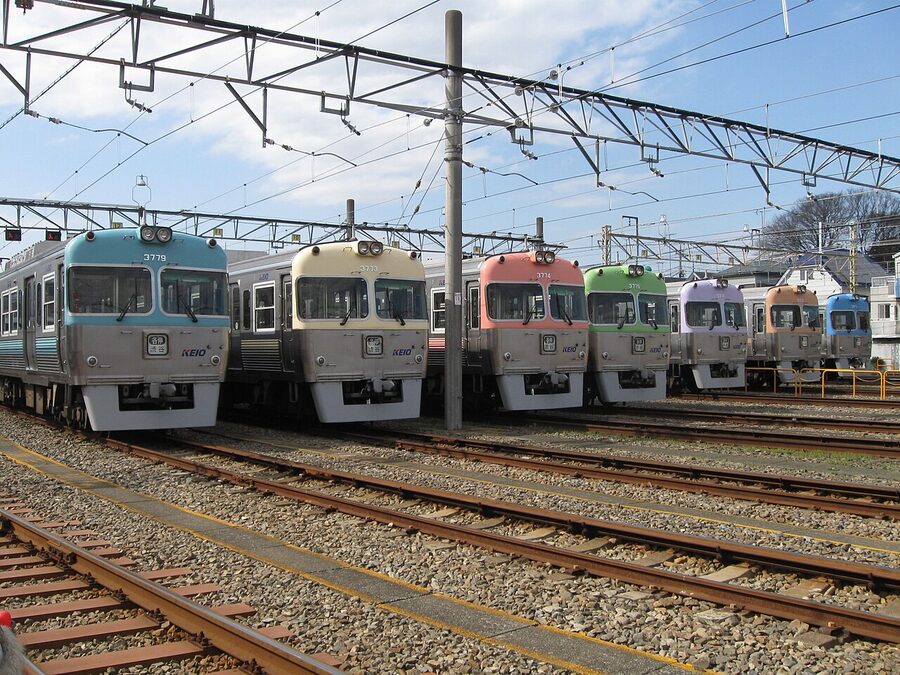
The 3000 series outlived its design life by more than a decade. When the 1000 series II started replacing it in 1996, the seven colours were carried over. They are still in service today on the second-generation 1000, which runs the Inokashira as a five-car formation in the same colour scheme it inherited from the 3000. Seventy-eight years after the line was inherited from the war, it still announces itself by colour rather than by destination board. That is a piece of operational continuity I find quite striking; nobody else in Tokyo bothers.
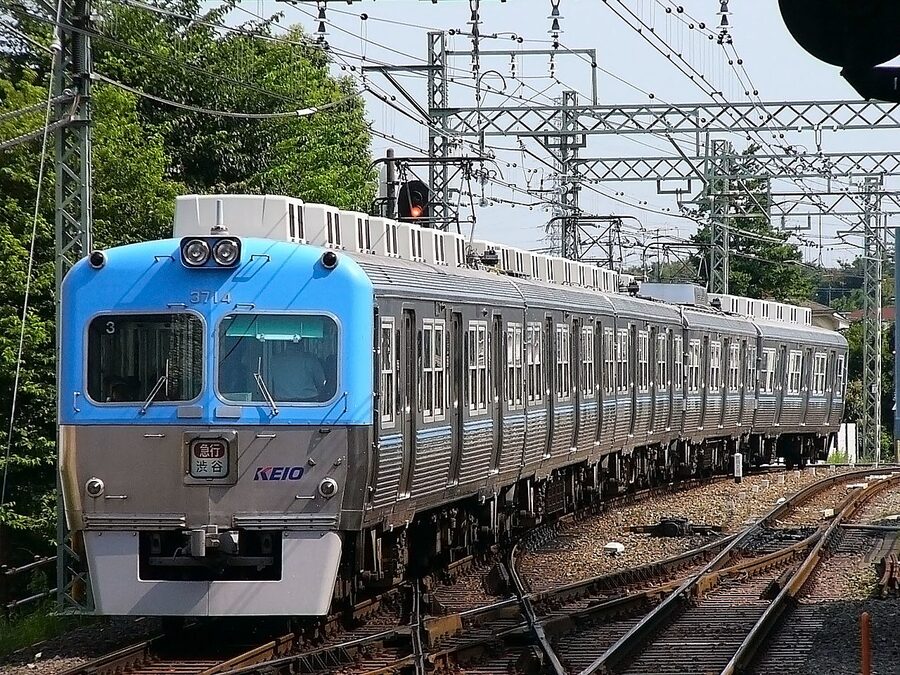
What happened to the retired 3000s is also part of the Keio story. They were sold cheap, in five-car sets, to provincial railways across Japan that needed a step up from older equipment. Iyo Railway in Matsuyama took ten sets and runs them as 3000 series there to this day, in a different livery. Jomo Electric in Gunma took eight. Hokuriku Railroad, Gakunan, Matsumoto Electric (now Alpico Kotsu): all took sets. One car, 3719, sits in the open at Keio Rail-Land for visitors. The rest are still earning fares. A 1962 design that started on the Inokashira is still rolling on regional lines from Shikoku to the Hokuriku coast in 2026, in colours its first passengers would recognise.
1971 and Tama New Town: building the line into a city that did not exist
The decisive postwar development for Keio was the Tama New Town project. Tokyo’s land prices had been climbing through the 1960s, and the Japanese Housing Corporation, the Tokyo Metropolitan Government, and what would become the Housing and Urban Development Corporation jointly designated 2,892 hectares of farmland and forest west of Chofu for a planned residential city for 342,000 people. Construction began in 1966. The first residents moved in on 1 April 1971. By the early 2000s the population had stabilised around 200,000. It is the largest planned residential development in Japan.
The transit was always going to be the deciding factor. Two operators were given the corridor: Keio’s Sagamihara Line and Odakyu’s Tama Line, running in parallel from Chofu and Shinyurigaoka respectively, both terminating at Tama-Center, both eventually reaching Hashimoto. The Keio extension came first. The 1916 gravel branch from Chofu to Keio Tama-River was extended west to Keio-Yomiuri-Land on 1 April 1971, the same day the first Tama New Town residents moved in, then to Keio-Tama-Center on 18 October 1974, then to Minami-Osawa in 1988, and finally all the way to Hashimoto on 30 March 1990. The Sagamihara Line is now 22.6 km long, with twelve stations.
Why the Sagamihara Line is busier than it looks on a map
If you take the Sagamihara Line in 2026, you are riding the rail line that built the city it serves. Tama-Center, Eitokuyama, Karakida, Minami-Osawa: all of these are 1970s and 1980s station-area developments planned around the railway, with shopping concourses on the elevated platforms and wide pedestrian decks running back into residential blocks. There is almost nothing pre-1971 within walking distance of any of them. It is the closest Japan has to a British new-town railway, and Keio has held on to roughly half the Tama-area commuter market against Odakyu’s parallel Tama Line for the simple reason that Keio runs faster trains into Shinjuku for less money. The Tama Line into Shinjuku via Odakyu costs ¥380 base; Keio Sagamihara to Shinjuku costs ¥360.
Through-running with the Toei Shinjuku Line
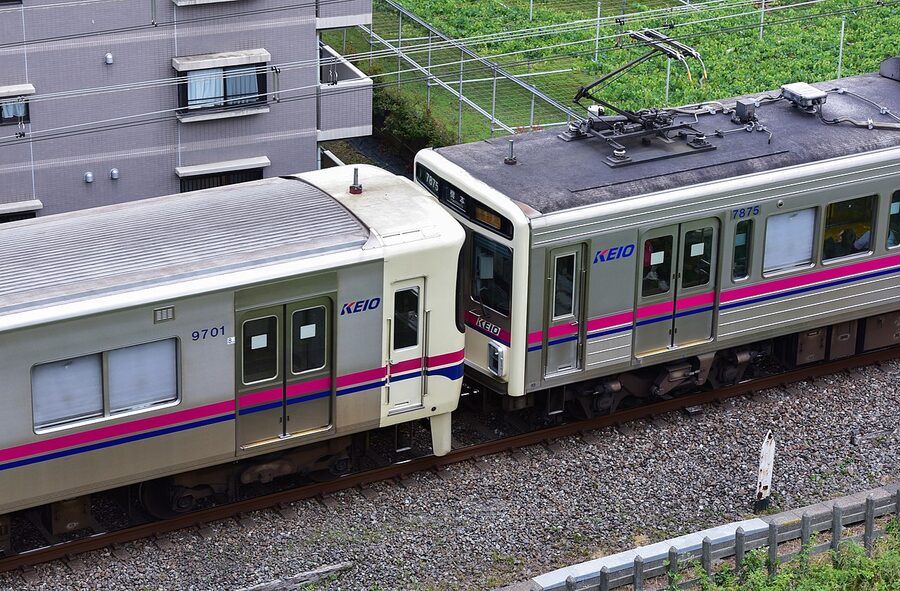
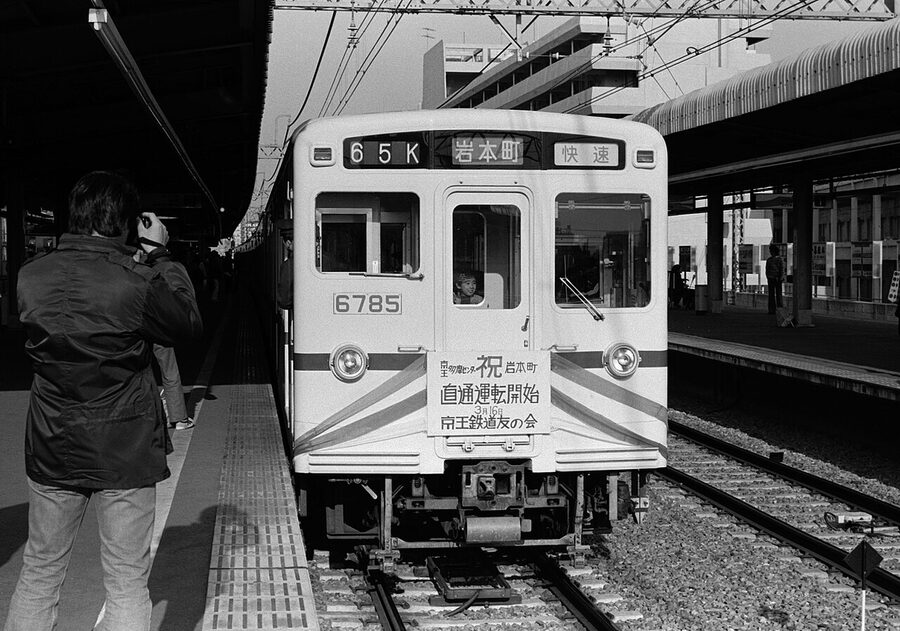
The 1980 opening of the Toei Shinjuku Line is the other piece of Keio’s modern shape, and it explains why some Keio trains do not terminate at Keio Shinjuku at all. The Toei subway was built to 1,372 mm gauge, deliberately matching Keio rather than the standard Tokyo subway 1,435 mm, so that Keio commuter trains could continue past Shinjuku and run east through central Tokyo all the way to Motoyawata. From 1980 onwards the through-service has gone both ways: Toei 10-000 series trains run west onto the Keio Main Line and Sagamihara Line as far as Hashimoto, and Keio 9000 and 5000 series trains run east into Toei tunnels as far as Motoyawata. The interlocking is the reason Keio trains can carry a Shinjuku-area commuter directly to Jimbocho, Iwamotocho, or Bakuro-yokoyama without a transfer. The Toei Shinjuku Line is, in operating terms, an extension of the Keio Main Line.
The 6000 series, the 7000 series, the 8000: the ordinary backbone
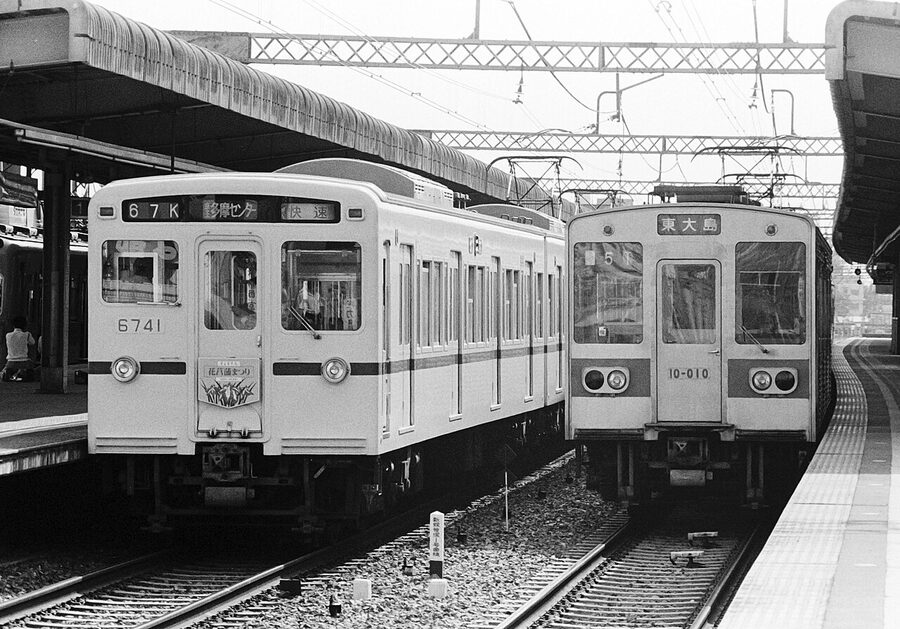
The Keio fleet from the 1970s through the early 2000s is the operator’s quiet middle period. The 6000 series, introduced in 1972, was the through-service train designed to run on Toei from day one. It looked roughly like a Toei subway car because it was specified as one. Thirty-eight sets were built and ran on every Keio main-line service for decades. Withdrawal began in 2004 and finished on 5 March 2011, with the final farewell run carrying the “Arigato 6000-kei” headboard.
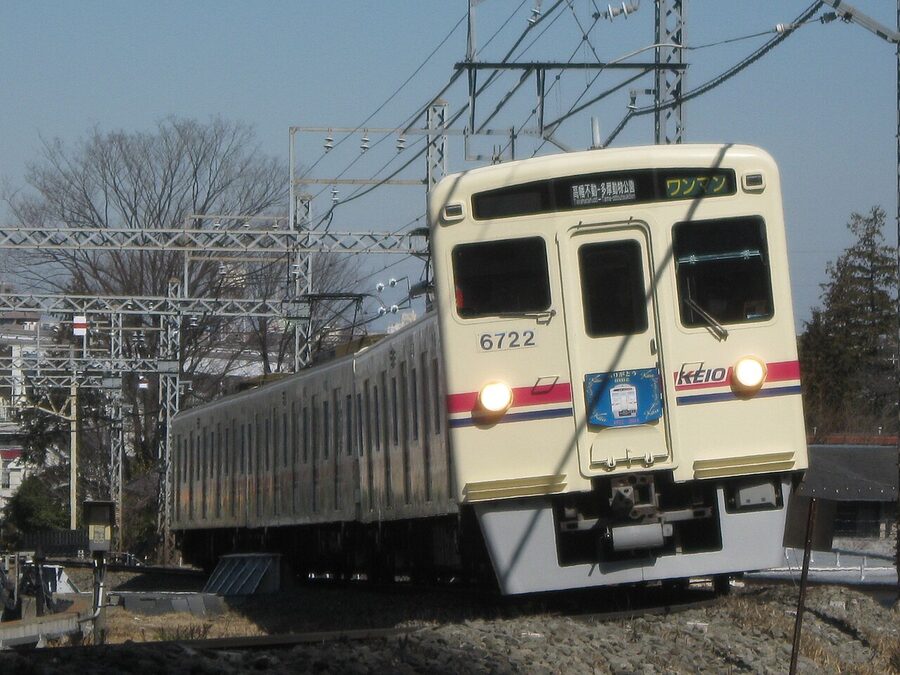
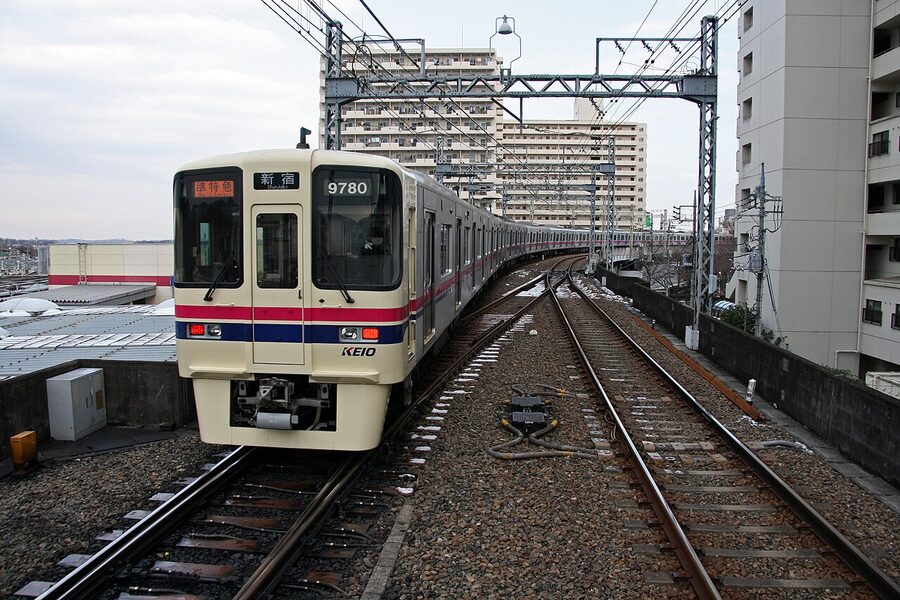
The 7000 series followed in 1984, the 8000 in 1992, the 9000 in 2001. None of these are exotic trains. They are well-built, air-conditioned, four- or three-door commuter stock. The 8000 was the first Keio train to use VVVF inverter control. The 9000 was the first to be designed for through-running with Toei from the outset. They run, year after year, with very little fuss and very few headlines, which is approximately the impression you get from the operator generally.
The 1998 rename and the corporate house style
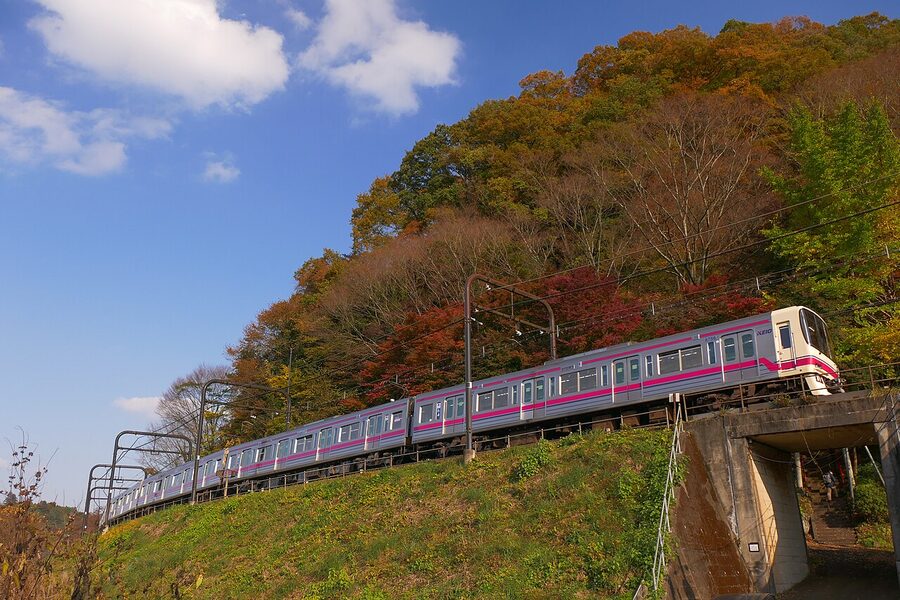
On 1 July 1998, Keio Teito Electric Railway dropped the “Teito” and renamed itself to Keio Electric Railway, then the English-language name Keio Corporation came into formal use on 29 June 2005. The Teito half had been a leftover of the 1948 forced merger, and dropping it was deliberately a fiftieth-anniversary statement. By the time the rename happened, almost nobody outside the company used “Keio Teito” in conversation anyway. The rolling stock had stopped wearing the Teito lettering years before. The 1998 rename was an administrative tidy-up of a status quo that had been visible on the trains for a decade.
2018: the Keio Liner, and what an ¥410 surcharge actually buys
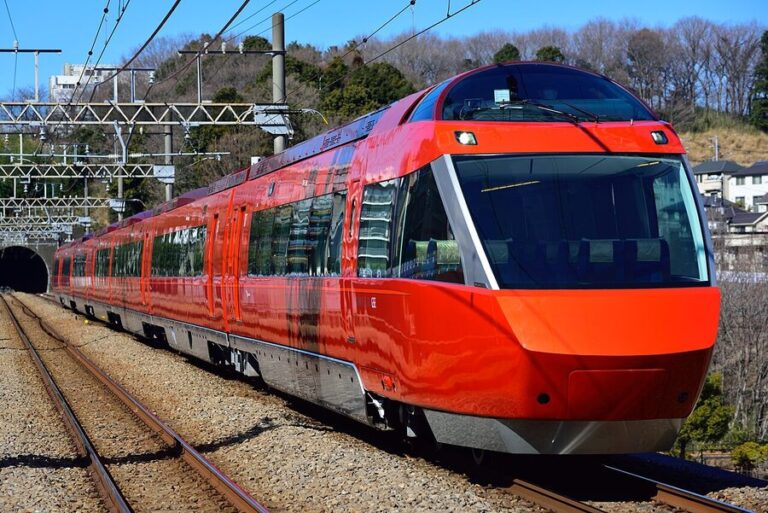
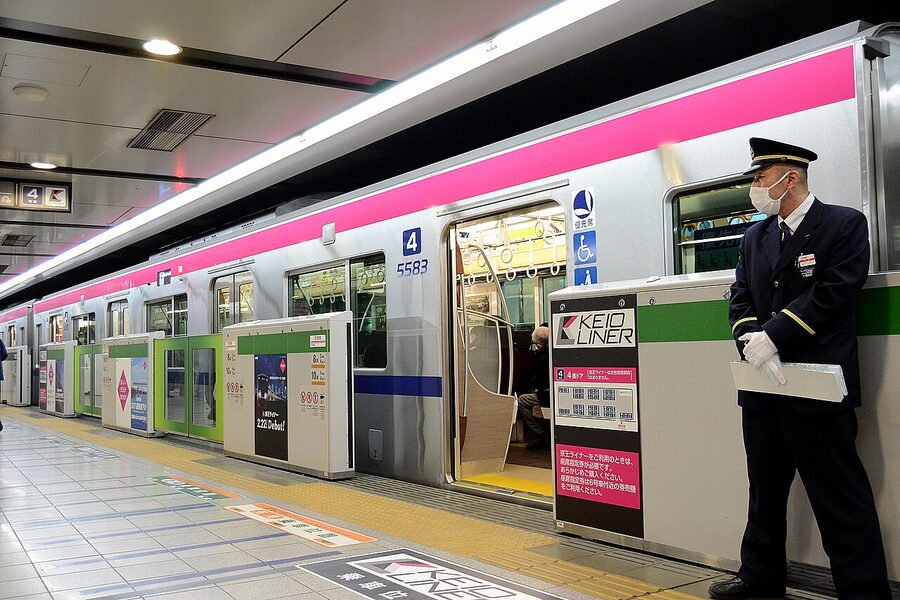
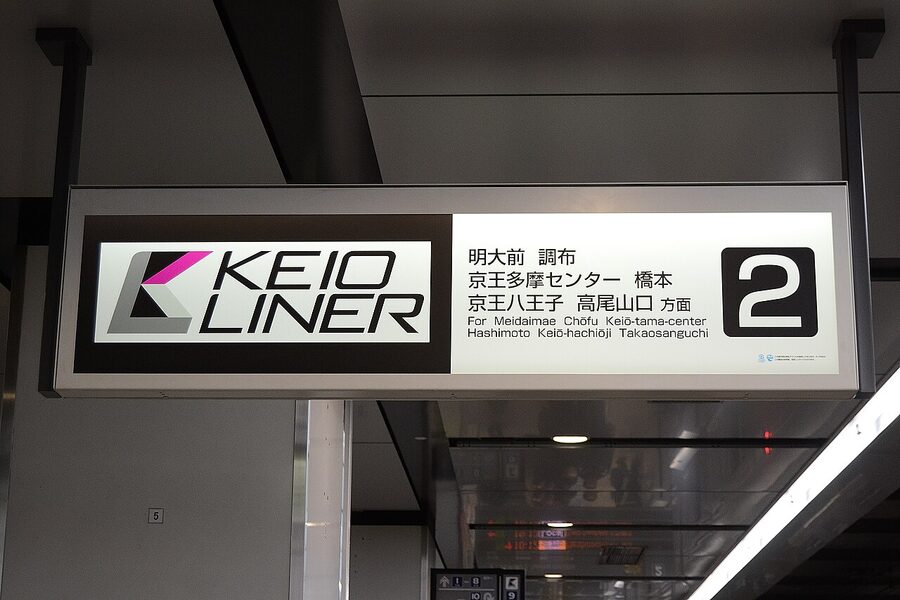
The 5000 series II entered service on 29 September 2017 and took over a new reserved-seat operation on 22 February 2018, branded Keio Liner. Two things make this train interesting and one of them is administrative.
The interesting engineering bit is the dual-mode seating. Each row of seats is mounted on a rotating base. During off-peak commuter service the rows turn 90 degrees and lock parallel to the side wall, giving you longitudinal bench seating, a standard Tokyo commuter layout. For the evening Keio Liner runs the rows turn forward, the cushions reset, and the train becomes a transverse-facing reserved-seat express. One train, two seating modes, no separate fleet required. JR East does the same on the Joban Liner with the E657, but Keio was first in private-railway use.
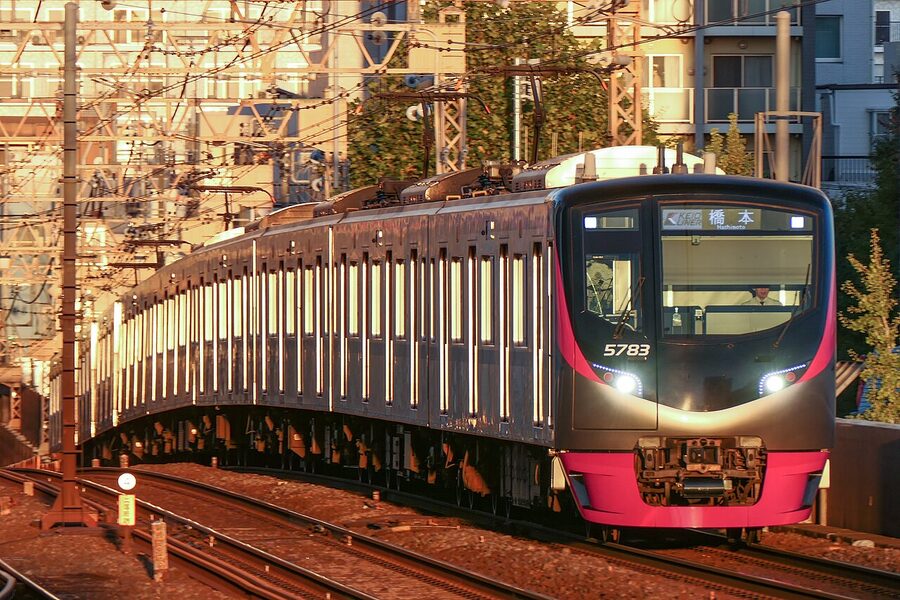
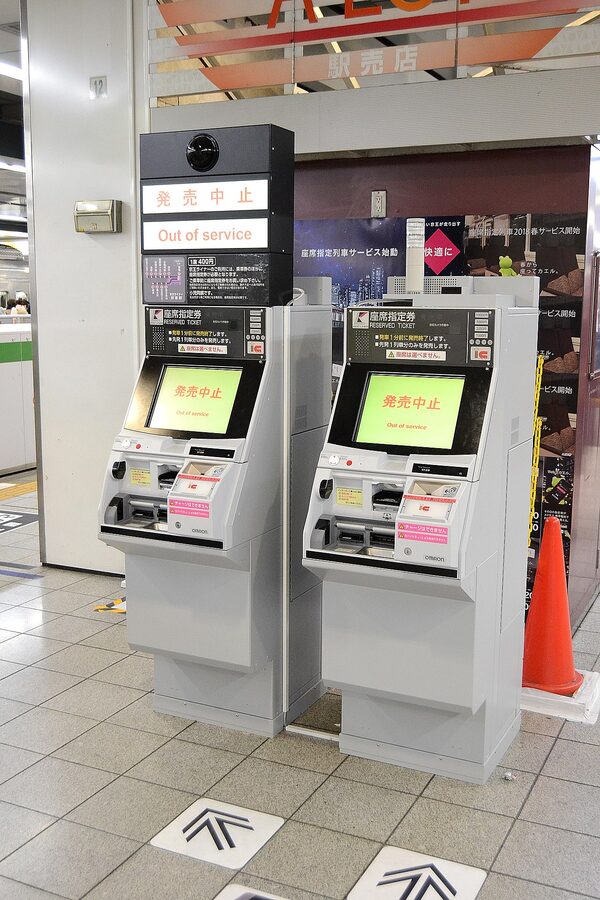
The administrative bit is the price. The Keio Liner reserved-seat surcharge is ¥410 on top of the regular IC fare, which by Tokyo private-rail standards is almost giving the seat away. Compared to the Romancecar surcharge (¥750–1,200 depending on distance) on the Odakyu fleet, the Tobu Spacia X surcharge (¥1,940), or the JR East E657 Joban Liner surcharge (¥750 to Toride, ¥1,000 onward), Keio is selling its premium seats at a third of the going rate. The pricing is a Keio decision, and it has been a Keio decision for as long as the company has existed. Inoue’s diamond was always cheap to mount.
The Mt Takao branding
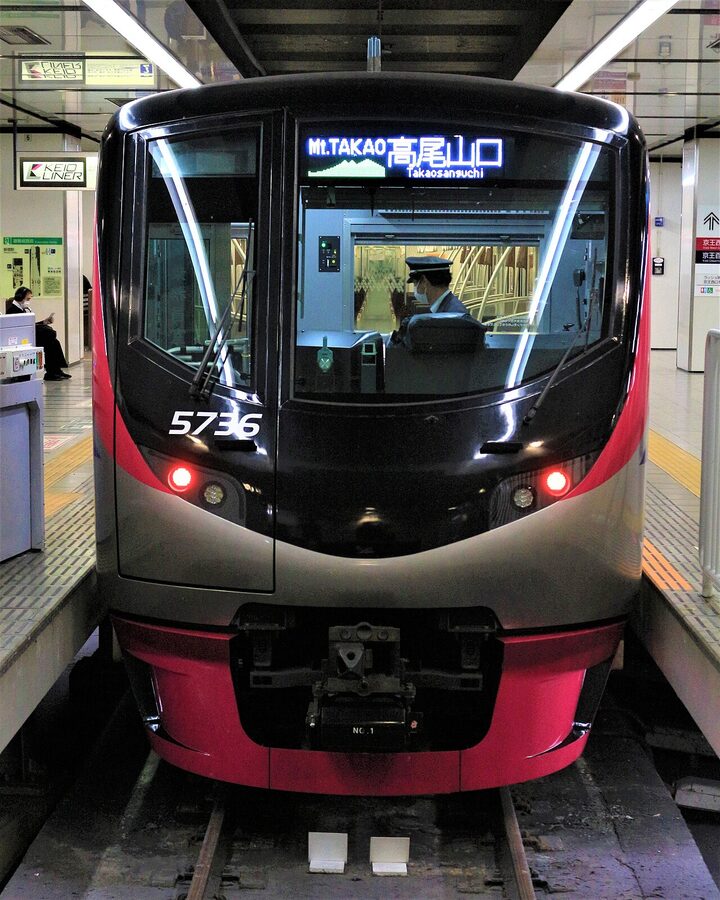
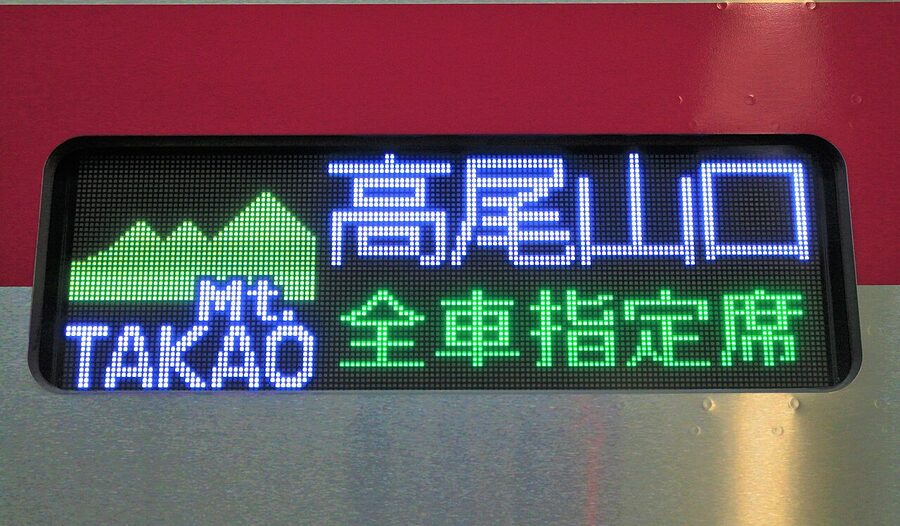
From late 2018 onward Keio has run a weekend-and-holiday daytime variant of the Liner branded Mt. TAKAO, also using the 5000 series, that connects Shinjuku directly to Takaosanguchi at the foot of Mt Takao. The Mt. TAKAO service is the operator’s only concession to leisure-tourism marketing, and even then the surcharge stays at ¥410. Hikers fill the train from about 08:00 onwards on a clear weekend, then refill it in the late afternoon coming back down. It is the cheapest reserved-seat ride to a hiking trailhead anywhere in Tokyo.
The network you ride in 2026
The current Keio system has seven lines on the books and runs as effectively two networks, divided by gauge.
The 1,372 mm Keio main-line system
The trunk is the Keio Main Line, 37.9 km from Shinjuku to Keio-Hachioji, 32 stations, with the Keio New Line as a separate underground alignment under the central Shinjuku approach for through-services to Toei. Off the main line are the Sagamihara Line (Chofu to Hashimoto, 22.6 km, 12 stations), the Takao Line (Kitano to Takaosanguchi, 8.6 km), the Keibajo Line (a short branch to Fuchu Race Course), the Dobutsuen Line (a single-stop spur to Tama Zoo Park), and the Sotenji branch. All run on the 1,372 mm gauge. All can interchange with each other and through to Toei.
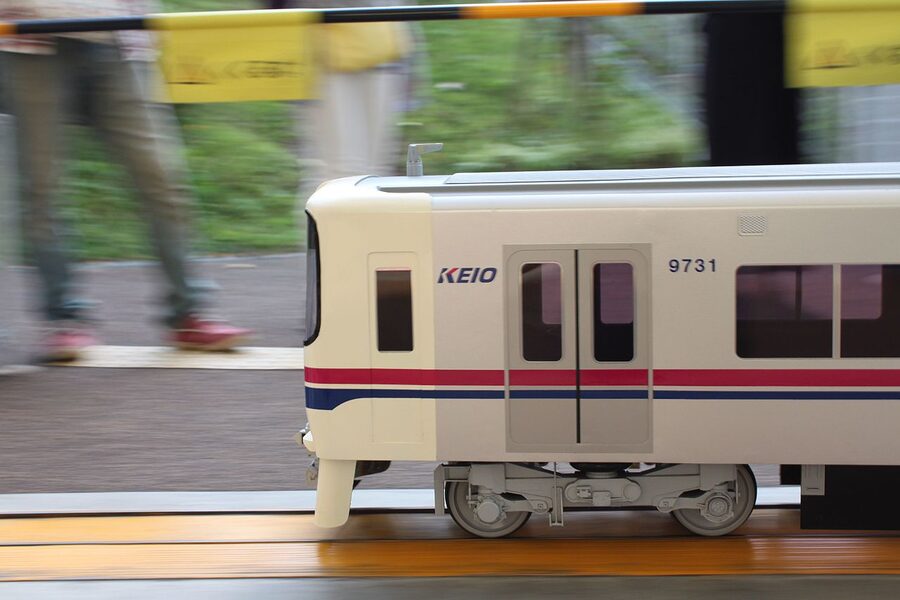
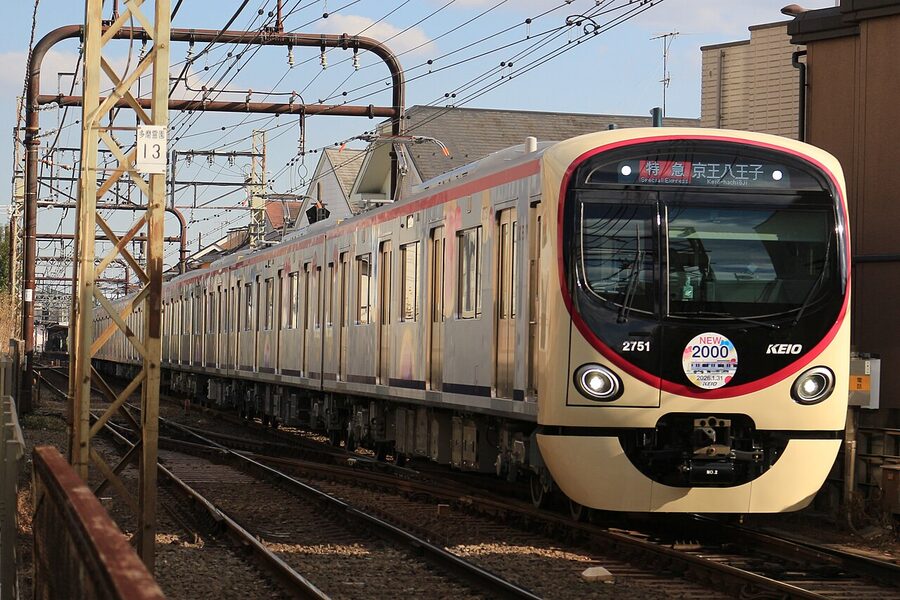
The current rolling stock on the main-line system is covered in detail in the Keio fleet piece: the 7000 (1984), 8000 (1992), 9000 (2001), 5000 II (2017) and the brand-new 2000 series III which entered service in early 2026. The 2000 III is replacing the older 7000 stock from the start of 2026 onward and is built for the same Toei through-run pattern the 6000 was specified for in 1972. The continuity is striking: same gauge, same through-route, four generations of rolling stock later.
The 1,067 mm Inokashira Line
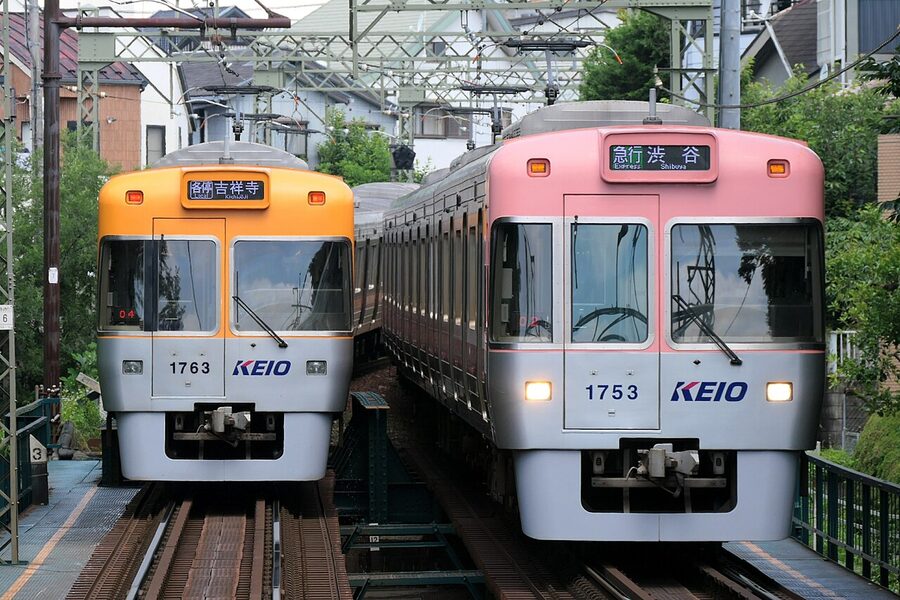
The Inokashira Line is 12.7 km from Shibuya to Kichijoji, 17 stations, on standard 1,067 mm narrow gauge, with the 1000 series II as its only fleet. Trains run every three to four minutes through the daytime, every five at night. The 1000 II carries the seven pastel front colours that the 3000 wore for half a century. Off-peak the run from Shibuya to Kichijoji takes 16 minutes; peak it lengthens to 19. There is no through-running with anything; the line is its own self-contained system. There is also no reserved-seat service, no premium fare, and no air-conditioned business-class car. It is the most Tokyo-style commuter railway you can ride for ¥230.
If you have one Keio ride to make
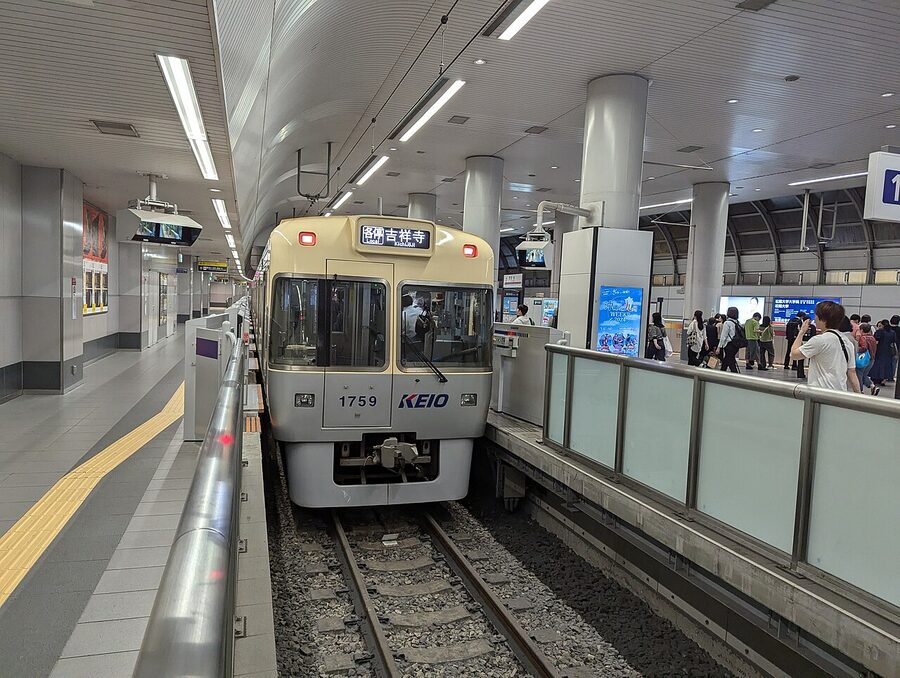
Take the Inokashira from Shibuya to Kichijoji, the full length, and stop at Shimokitazawa for ten minutes. It costs ¥230 IC and runs every three minutes between 06:00 and 23:00. Sit on the right-hand side leaving Shibuya for the Yamanote crossover view at Komaba-Todaimae. Get off at Inokashira-koen, walk through the park to the lake, then re-board for Kichijoji and exit by the north side for the Sun Road shopping street. You can do the whole thing inside an afternoon. Of every Tokyo commuter line that does not aim itself at tourists, this is the one I would put first on a visitor’s day off.
If you have an evening to spare
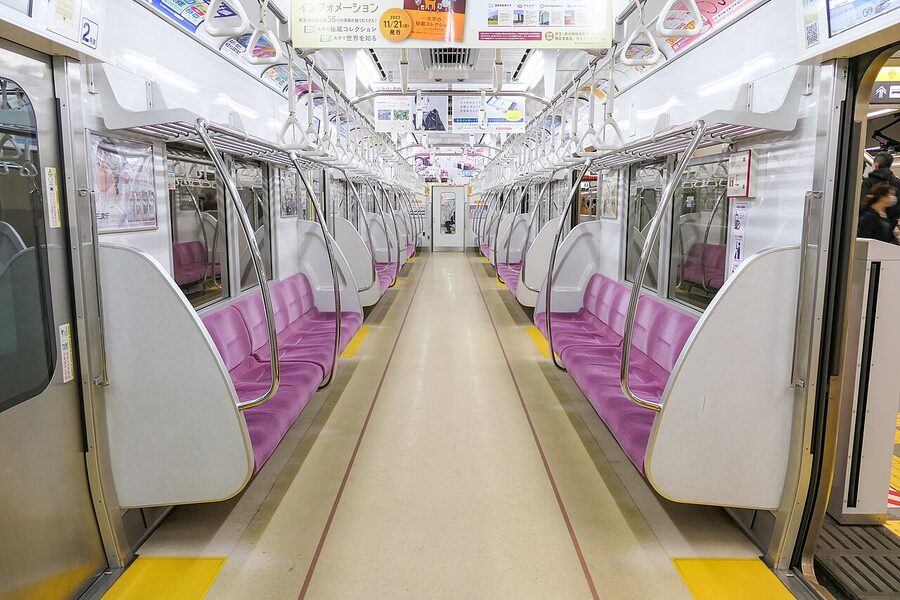
Book a Keio Liner at Shinjuku for the 19:00–21:00 window. ¥410 reserved-seat surcharge plus the IC fare. Sit in carriage 4 or 5 if you want the longest cross-seat run; the end cars have shorter rotating-seat configurations. The Liner takes about 36 minutes to Keio-Hachioji and 41 to Hashimoto. Dinner at Hachioji is one ramen and one local izakaya away from the station, and the return run on the regular express is 51 minutes for the regular fare. As an evening, that is excellent value for around ¥1,800 all-in.
Where to see the old fleet
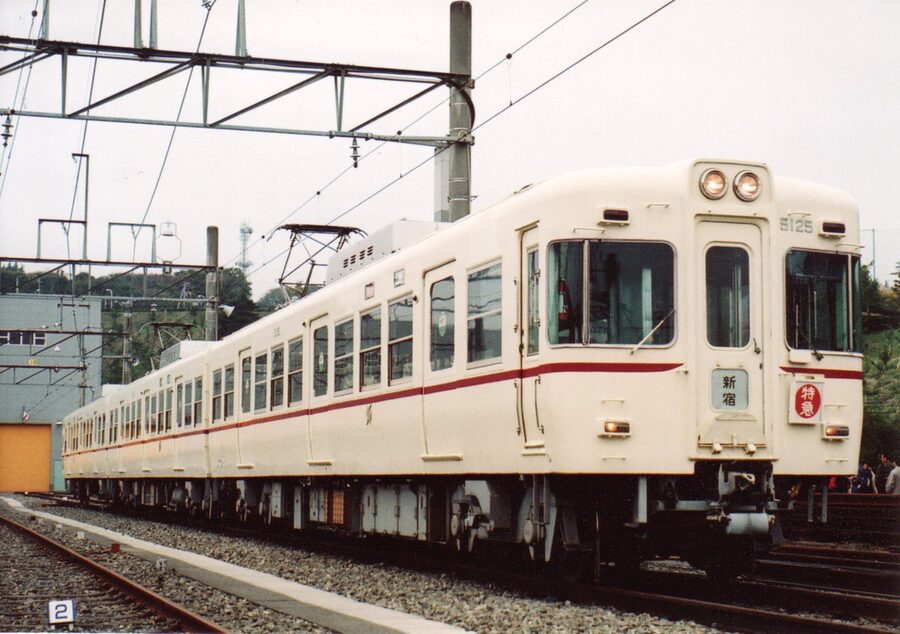
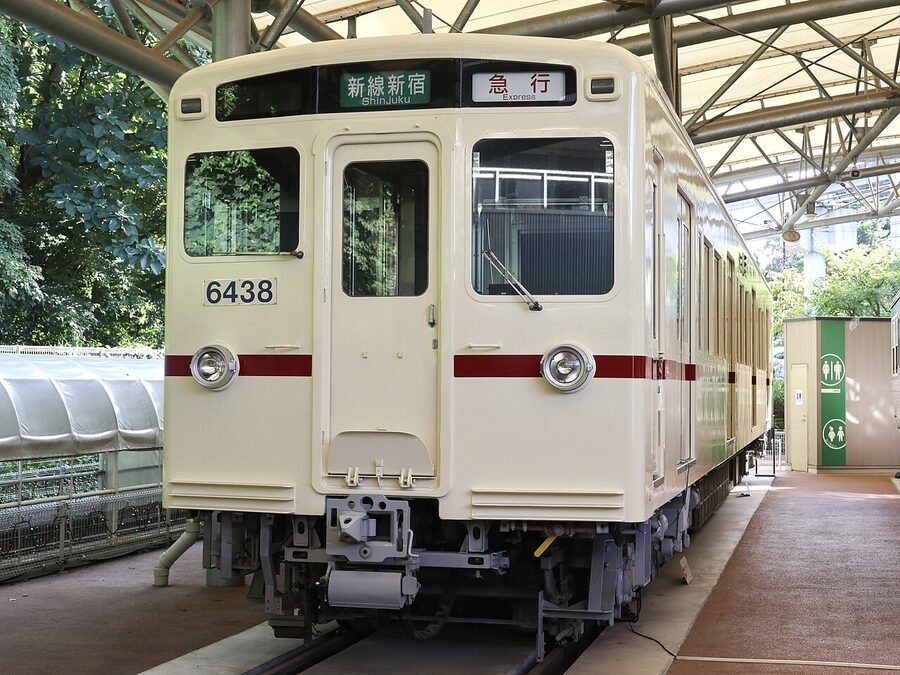
Keio Rail-Land at Tama-Dobutsukoen Station is the operator’s small museum, and the rolling-stock yard out the back is genuinely worth twenty minutes if you have any interest at all in pre-2010 Tokyo commuter trains. Admission is ¥310. Two preserved 5000 cars, two 6000 cars (one cab, one cut body), one 9000 set, the 3719 from the Inokashira, and a working signalling demonstrator. The yard is open Wednesday to Monday, 09:30 to 17:30, closed Tuesdays.
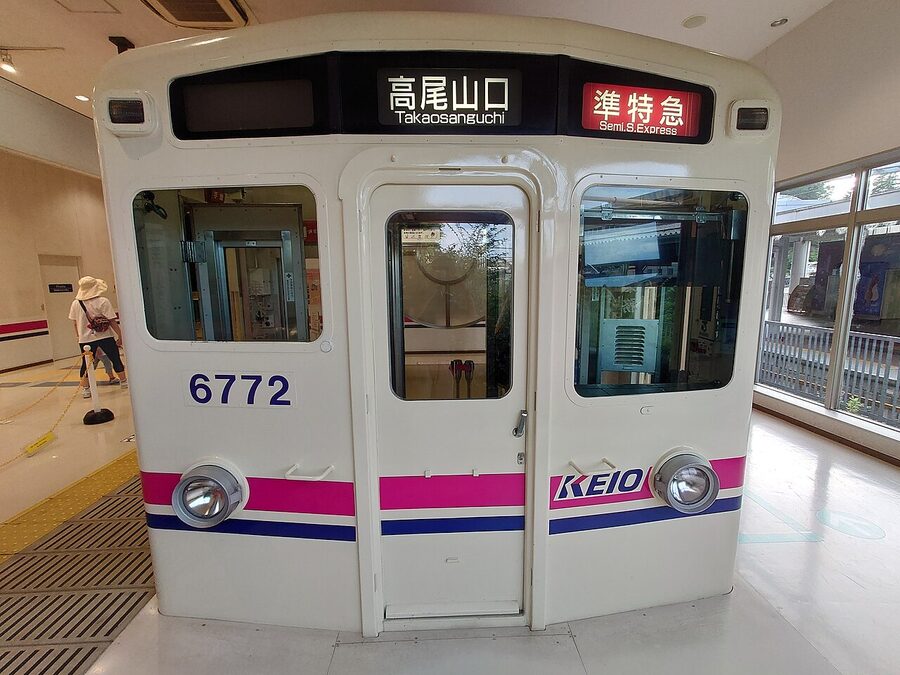
The other place worth visiting if you are seriously into the rolling stock is the Inokashira Line itself in late October. The 1000 II is out in all seven colours by daylight; if you stand at Shimokitazawa for thirty minutes you will see the whole rainbow pass through. There is a small group of Tokyo railfans who do this every year on a clear autumn afternoon and have been doing it since the 3000 days. I have done it twice. It is a small pleasure that does not pretend to be more than it is.
Cross-network notes
If you are reading this off the back of the Odakyu history piece, the contrast is the obvious one: same prewar political pressure, same 1944 wartime conglomerate, same 1948 GHQ-mandated breakup, but Odakyu came out of it with a Hakone tourist line and Keio came out with the Inokashira Line and the future Tama New Town corridor. The two operators have spent the ensuing eighty years competing on parallel routes into Shinjuku from west Tokyo without seriously interfering with each other’s catchments. Look at the Tama Hills on a relief map: Odakyu runs along the southern edge, Keio along the northern, and they meet only at Hashimoto.
If you are coming from Tobu, the contrast is on the rolling-stock-and-pricing side. Tobu runs the Spacia X to Nikko at ¥1,940 reserved, full leisure-flagship branding. Keio runs the same engineering trick, dual-mode rotating seats, on the Liner at ¥410. The two operators face fundamentally different markets, but the gap in surcharge philosophy is striking. Tobu is selling a destination experience. Keio is selling a quieter commute.
If you are reading this from the Tokyo subway history piece, note that the Toei Shinjuku Line is the only one of the thirteen Tokyo subway lines built deliberately to interchange with a private railway at gauge level. Every other Toei and Tokyo Metro line either uses the standard 1,435 mm subway gauge or the 1,067 mm narrow gauge of the JR system. The Shinjuku Line’s 1,372 mm matches Keio and only Keio. The 1980 opening was effectively a state-funded eastward extension of the Keio Main Line through central Tokyo to Motoyawata.
The verdict
If you ride Keio in 2026 the operator does not announce itself. There is no equivalent of the Odakyu Romancecar painted as a Hakone tourism object, no equivalent of the Tobu Spacia X branded as Nikko’s signature train, no equivalent of the JR-East Saphir Odoriko marketed for the Izu coast. There is the Mt. TAKAO branding on the weekend Liner, and even that is restrained. The trains are well-engineered, well-maintained, on time, and cheap. The reserved-seat surcharge is a third of every other operator’s. The fleet on the Inokashira Line still wears the seven pastel colours it inherited from a 1962 design. The Toei Shinjuku Line still uses Keio’s 1,372 mm gauge.
None of this happened by branding decision. It happened because Keio’s founding generation, including the Tokutaro Inoue who lost the 1944 fight against the wartime merger, set the company up to be inexpensive and useful and small enough to keep running on a thin margin. The diamond he was talking about was not the prewar railway specifically. It was the operating principle: you build cheaply, you charge cheaply, you run reliably, and over the decades, while the larger operators take the headlines, you take the riders. Eighty-two years after the merger he could not stop, the company is still doing exactly that.
Inoue lost his independence on 31 May 1944 and the company was given it back, reshaped, on 1 June 1948. He was right that the Keio he had built was small. He was right that it was a diamond. The diamond is the ¥410 surcharge, the Inokashira Line in seven colours, the 1,372 mm gauge, and the cheapest trip to a 599-metre summit anywhere in Tokyo. If you have an afternoon free, ride the Inokashira from Shibuya to Kichijoji and pay the smallest fare in the network. That is the operating principle Inoue refused to give up. It is still on the timetable.