
The Chichibu Railway, in five hard decisions
October 1986. The Tobu Railway closes its freight yards at Narihirabashi and Shimo-Itabashi. By the next morning the Chichibu Railway, sixty-odd kilometres up the line, has lost the connection that carried most of its cement onto the national network. The freight that paid 60-70 per cent of the railway’s bills through the 1970s is suddenly looking for a truck. The Saitama prefecture branch line that no foreign visitor has ever heard of has just been told to find a new business model, and it has roughly a decade to do it before the 2006 collapse of cement-by-rail finishes the job nationally.
In This Article
- What the railway is, and why I find it interesting
- Decision one, 1899: register a railway company in a Tokyo back office and aim it at a mountain
- Shibusawa, his cousin Moroi, and the cement decision
- The line completes, slowly, through 1930
- Decision two, 1925-1979: become a cement railway
- The Mikajiri Line and the freight at its peak
- What a freight train looks like on this line
- The strike of 1932 and the air raid of 1945
- Decision three, 1986-1988: stop being only a freight line
- The Paleo Express, March 1988
- Through-running from Seibu, 1989
- Decision four, 2006-2020: let the cement business go
- What still moves on the freight side
- The shareholding side of the same story
- Decision five, 2007-2025: turn the rest of the line into a tourism business
- A 2025 IC card story that says everything about the operator
- Riding it today
- Route 1: Ikebukuro → Hanno → Seibu through-running
- Route 2: Tokyo → Kumagaya on the Takasaki Line, then change
- Route 3: Tobu Tojo Line to Yorii, then change
- The express called Chichibu-ji
- Booking the Paleo Express
- The connection at Ohanabatake
- The 5000-series local stock, ex-Toei
- Where to break the journey
- Nagatoro
- Chichibu town
- Mitsumineguchi and the vehicle park
- Kumagaya
- Cross-references for the rest of the network
- Closing: back to Mount Buko
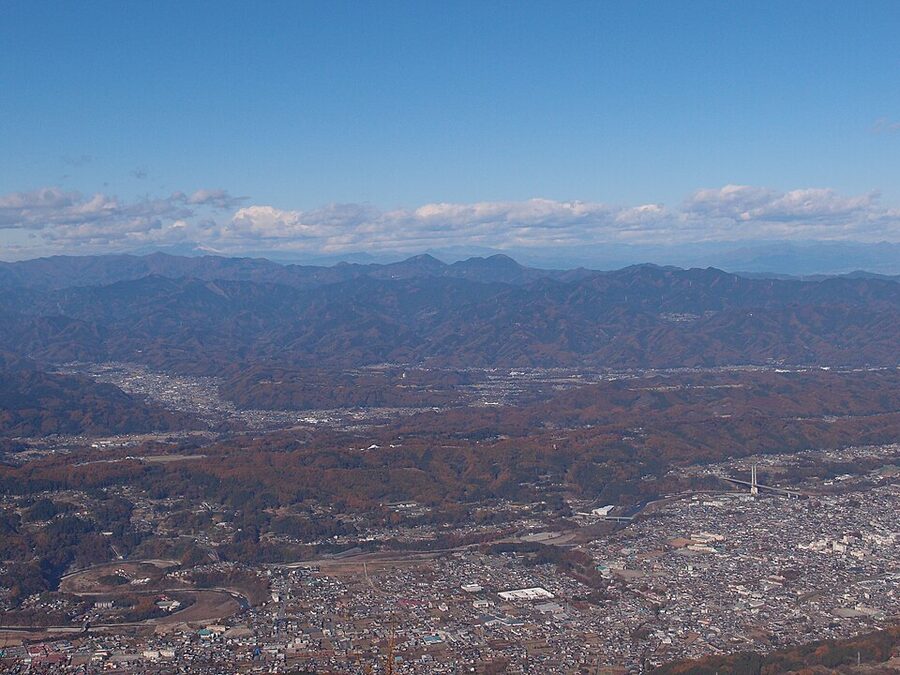
I keep coming back to the Chichibu Railway because it is one of the few private lines in Japan where you can read the entire industrial history of the Kanto plain off a single timetable. The freight is not a sideshow on this railway. It is the railway. The passenger service that day-trippers know, the steam-hauled Paleo Express, the through-running from Seibu, the limited express called Chichibu-ji that runs three times a day, all of it is what the company built on top of a cement business that has been running in some form since 1925. Take the cement out and the line does not exist. Take the cement back and you can answer most of the questions a rail nerd would ask about why this operator does what it does.
This is not a guide to riding the line. The sibling piece, the Chichibu Railway rolling-stock guide, covers the cast-off Tokyu, Toei, and Seibu trains in detail. This article is about how five decisions, taken over 125 years, made the railway what it is.
What the railway is, and why I find it interesting
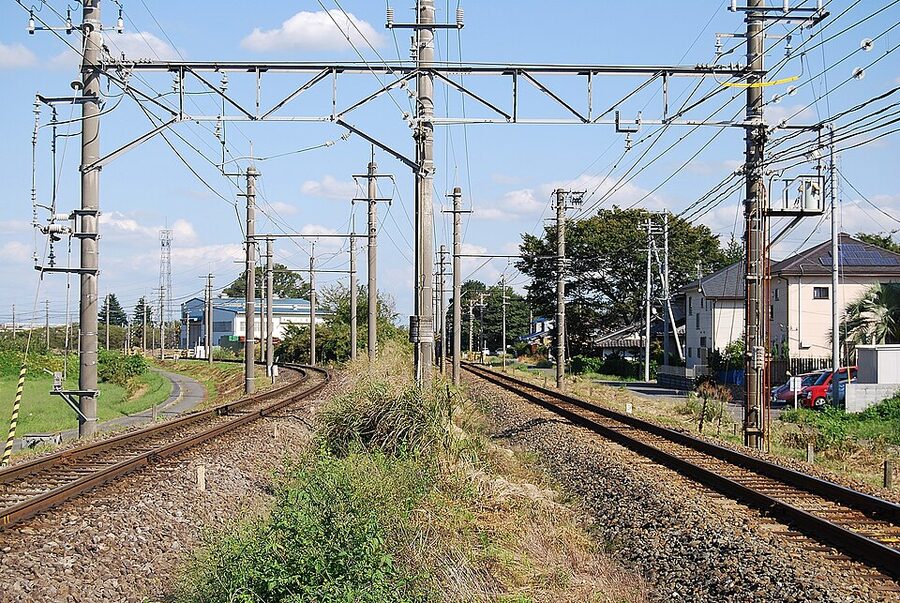
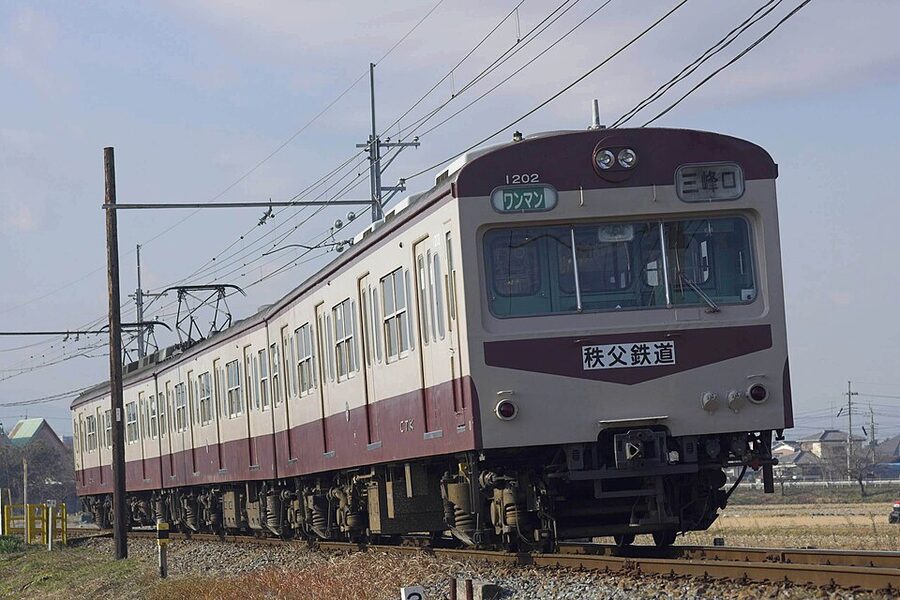
The Chichibu Railway runs two routes. The main line, all 71.7 km of it, crosses the top of Saitama from Hanyu in the eastern flatland to Mitsumineguchi at the head of the Chichibu basin, with 37 passenger stations between them. The freight-only Mikajiri Line, 3.7 km long, links Takekawa on the main line to the Taiheiyo Cement plant. Add the two together and you get 75.4 km of operating track, which puts the company near the top of the table for regional private operators in Japan. The whole line is single track. The whole line is electrified at 1,500 V DC, narrow gauge, 1,067 mm. Top speed is 85 km/h on the easy section between Hanyu and Yorii, slower in the basin, and there is not a single tunnel on the route. None. The line picks its way around the mountains rather than through them, which is part of why it took thirty years to build.
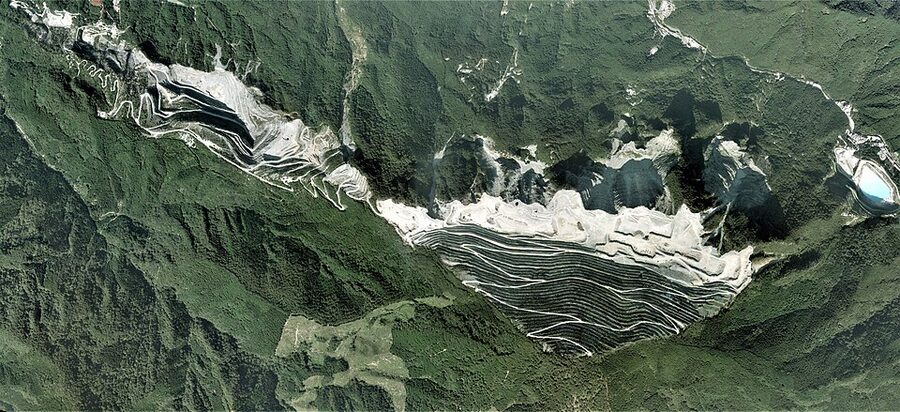
Stake in the line: Taiheiyo Cement, the corporate descendant of the original Chichibu Cement that the railway helped found in 1923, is the largest shareholder. The two businesses are entangled at the level of the share register, the timetable, and the geology. If you know that going in, the rest of the article is a lot easier to follow.
Decision one, 1899: register a railway company in a Tokyo back office and aim it at a mountain
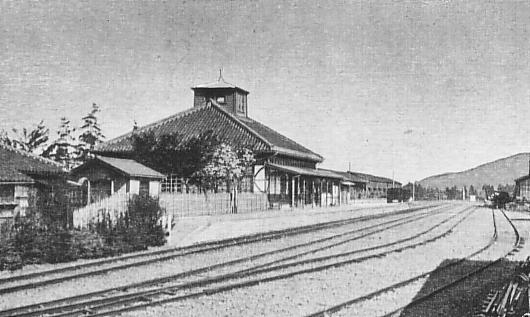
The line begins, on paper, in November 1899, when six businessmen led by Kakihara Manzō register a company called Jōbu Railway in Horie-cho, Nihonbashi-ku, in the back streets of central Tokyo. The plan is to push 18.9 km of track west from Kumagaya on the Takasaki Line to a small market town in the foothills called Yorii. They get the licence in 1898, register the company in 1899, and run their first train on 7 October 1901. The headquarters move to Yorii in 1903, then to Kumagaya in 1911, in time for the next push west into the basin.
What they are aiming at is not, in 1899, a cement business. The Chichibu basin in the late Meiji period was a silk and timber economy with a regular weekly market in the town of Chichibu, and the railway is conceived as the standard answer to a standard problem: get raw materials and finished silk to Tokyo faster than horseback or river boat. That is a respectable plan, and it works for the first decade. Then in 1907 Shibusawa Eiichi, the most influential business figure of late Meiji Japan, puts money into the project to finance the extension west of Yorii, and the railway gets a glimpse of what its future actually looks like.
Shibusawa, his cousin Moroi, and the cement decision
Shibusawa was not a passive backer. His cousin, Moroi Tsunehei, joined the Chichibu Railway as a director in 1910, and what Moroi saw on his first inspection visits to the basin was not silk but limestone. The northern face of Mount Buko, the 1,304-metre peak that closes off the basin to the south, is one of the largest and purest limestone deposits in Japan. The 1900 government survey put the original peak at 1,336 metres and estimated 400 million tons of recoverable rock. Local people had been using the stuff for whitewash since the Edo period; nobody in the basin had thought of it as a cement business yet because there was no efficient way to get it out.
The line solved that. In 1915 Kakihara and Moroi acquired the limestone mining rights to the upper slope of Mount Buko at a place called Kageshige. In 1916 the company changed its name from Jōbu Railway to Chichibu Railway, less to honour the basin than to put a more recognisable label on what it now did. By 1923 Moroi, with Shibusawa as a backer, had set up Chichibu Cement to use the limestone the railway hauled. By 1925 the cement plant was running. The two businesses, the railway and the cement company, were never the same legal entity, but they were closely held by an overlapping cast of investors and they thought of themselves as one operation. They more or less still do.
If you have read the Tobu Railway piece, the parallel is sharp. Both Tobu and Chichibu were Meiji-era private operators founded around the same time to tie a regional economy to the Tokyo network. Both stayed in private hands through the 1906 Railway Nationalisation Act because the government decided their reach was too local to be worth absorbing. Both then turned, in the 1910s and 1920s, into vehicles for an industrial business their founders considered the real enterprise: in Tobu’s case Tochigi-region freight and silk; in Chichibu’s case the limestone of Mount Buko.
The line completes, slowly, through 1930
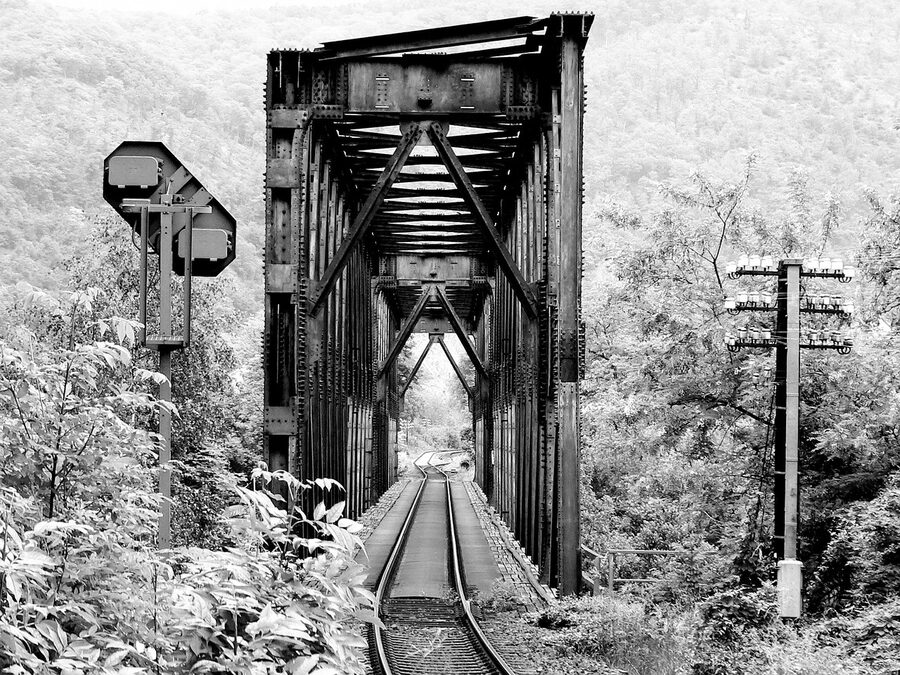
The full main line took thirty years to build. Yorii to Hanyu was added piecemeal: the eastern leg through Gyoda, completed in 1922 by the absorption of the Hokubu Railway, and the western leg by 1914 to Chichibu town and 1930 to Mitsumineguchi. The western section is where the engineering got hard. The line had to climb 250 metres into the basin without using a single tunnel, threading along river valleys and around Mount Buko’s western shoulder. The maximum gradient is 21.0 per mille, which is steep for a freight line built before the war. There is a reason the steam locomotives on this line were always small and busy.
The 1929 move of the headquarters from Kumagaya to Chichibu town reflected where the business actually was. Three years later the company moved the offices back to Kumagaya, where they have been ever since, because Kumagaya was where the railway met the JR network and where the freight got handed off. The whole company history is full of these small administrative shuffles in service of a freight line that had to be in two places at once.
Decision two, 1925-1979: become a cement railway
The years 1925 to 1979 are the period in which Chichibu Railway becomes the freight operation it still is. Chichibu Cement plant one starts in 1925. Plant two follows in 1956, designed by Tokyo Tech professor Taniguchi Yoshirō, and that is the building that is still operating today as the Taiheiyo Cement Chichibu works. The Korean War boom in the early 1950s pushed cement demand high enough that the second plant got commissioned, and Taniguchi, given the unusual brief of designing a working factory rather than a museum, turned out a building that architects still write about in the design press. It was the right plant at the right time. By the late 1950s the railway was hauling several thousand tons of limestone every operating day.
The Mikajiri Line and the freight at its peak
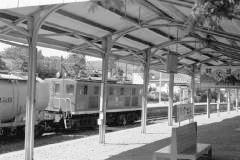
The freight business reached its commercial peak in the 1970s. By that decade the railway’s accounts showed 60-70 per cent of revenue coming from cement and limestone, with passengers as the loss-making sideshow. The bottleneck, oddly, was the connection to the JR network. The cement works was at Mikajiri, just east of Kumagaya, but the only way to get freight from Mikajiri onto the main line was through a flat junction at Kumagaya itself, which was inconvenient and slow. The fix was the 3.7 km Mikajiri Line, opened in 1979, running directly from Takekawa on the main line to the Kumagaya freight terminal. That tied the cement plant straight into the JR Takasaki Line at the freight terminal, which was the connection that made cement-by-rail competitive with cement-by-truck for the next seven years.
What a freight train looks like on this line
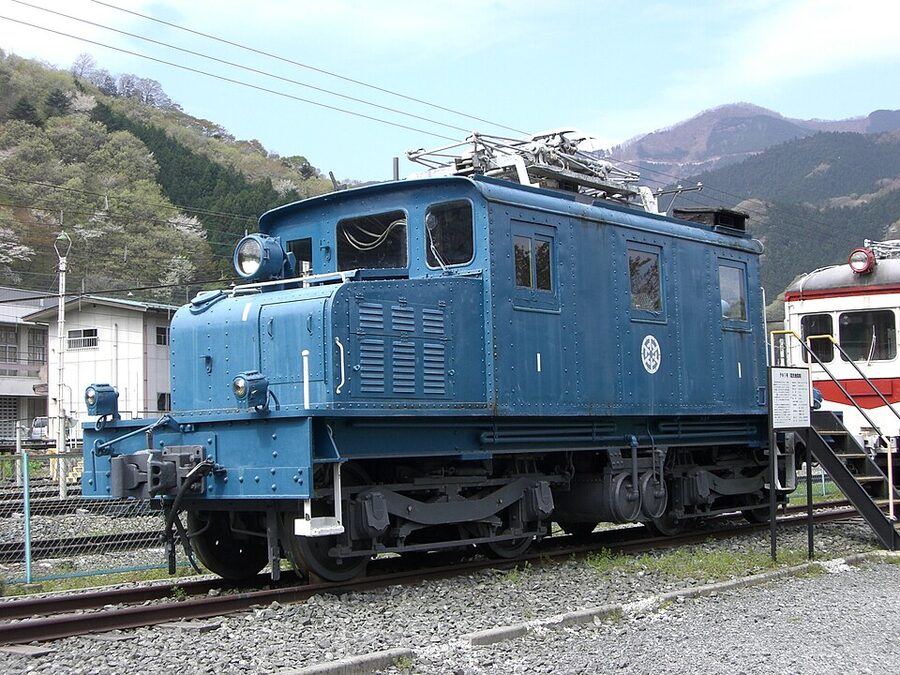
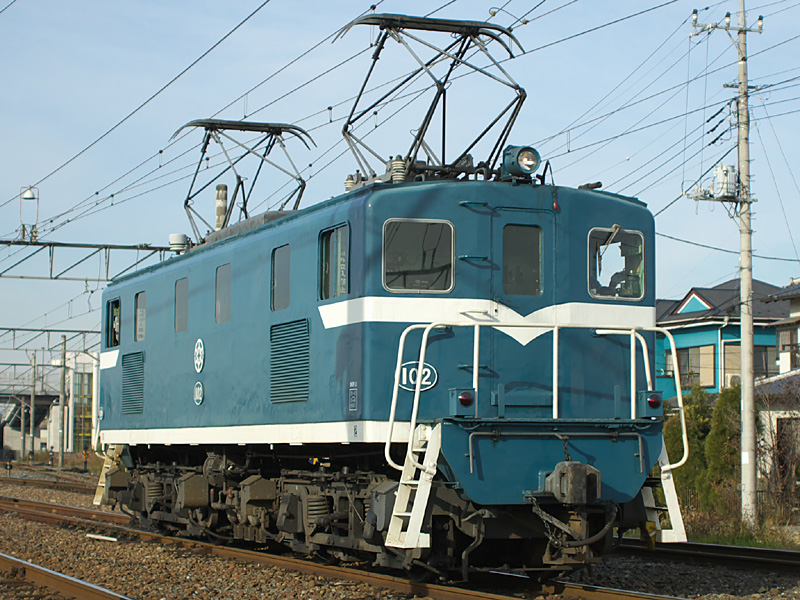
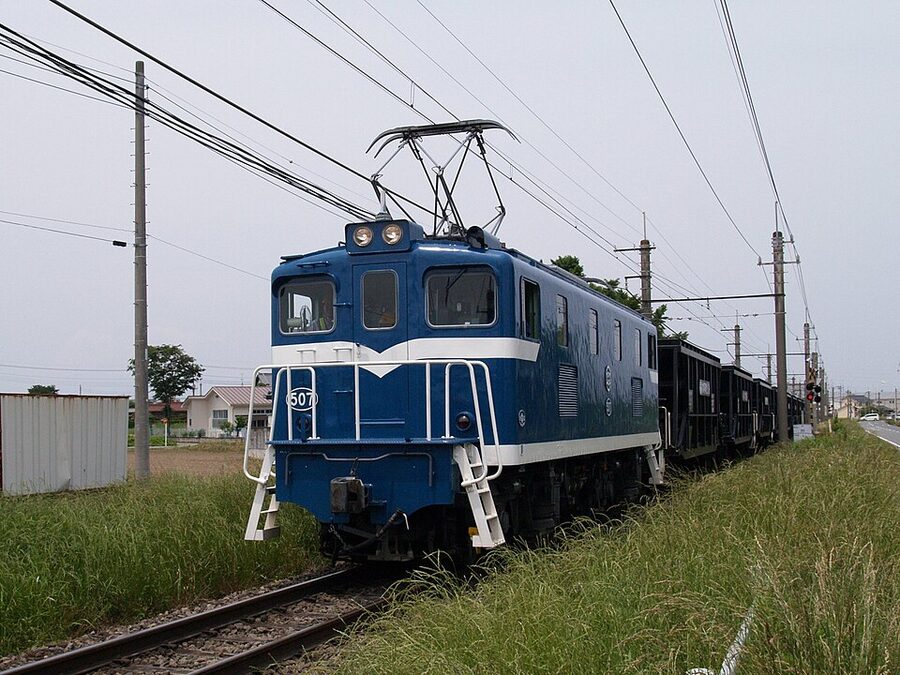
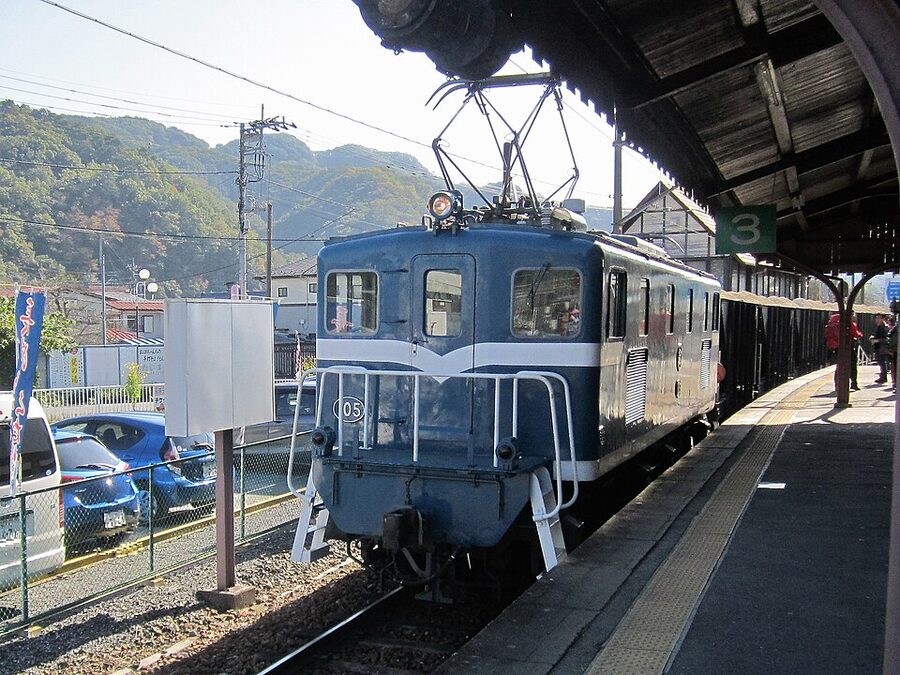
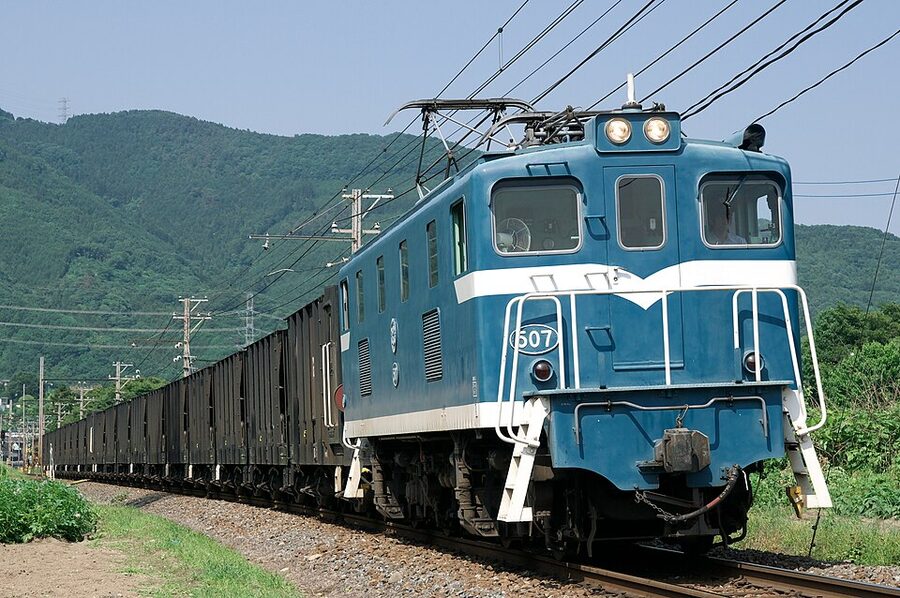
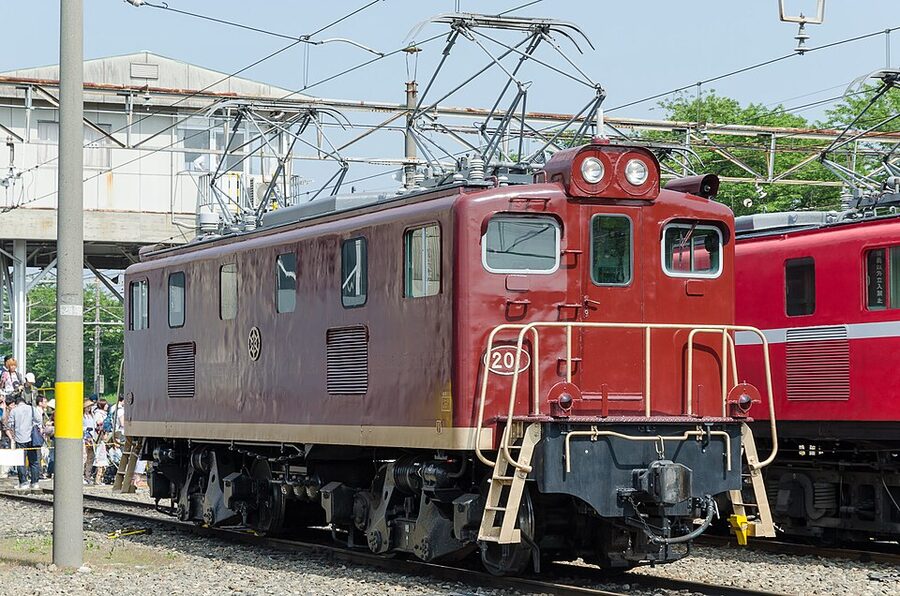
Today’s mineral train is twenty Woki-100 series hopper cars, hauled by a single Deki-class locomotive, total weight 1,000 tons of which 700 tons is the limestone itself. They run several times a day between the quarries at Mitsuwa and Kanoyama, the cement plant at Mikajiri, and the intermediate yards at Kageshige and Buyobaratani. The hoppers are uniform, dusty white, the colour of the mountain. They have not changed materially in forty years. If you stand on the platform at Buyobaratani in the afternoon you will see one of them roll past at 30 km/h, with a single Deki at its head and the wagons making the soft hissing sound that comes from steel-on-steel under serious weight. It is one of the more atmospheric pieces of working freight rail in Japan, and it is doing the same job it did in 1925.
The strike of 1932 and the air raid of 1945
Two events from this period deserve mention because they shape the company’s modern temperament. In 1932 the workforce went out on a major strike. The dispute was over wages and the working day; the railway responded by moving its corporate headquarters back to Kumagaya from Chichibu town to put administrative distance between management and the labour force. The strike is part of the reason Chichibu Railway has had a paternalistic, family-led management culture ever since. The presidency stayed inside the Kakihara family for most of the 20th century: Manzō, his brother-in-law Sadakichi, Moroi (the cement man), then Kameichi, then a second Manzō, then Ken’ichi, then Kyōichi. It is, by Japanese private-rail standards, an unusual run.
The August 1945 Kumagaya air raid burned the Chichibu Railway head office to the ground along with most of the rest of the city. The company kept running. Trains rolled in the second week of September. The cement plant came back online in stages through the autumn. None of this is glamorous, but it is the record of a company that was small, regional, and well-run enough to survive the worst test you can give a private railway in Japan.
Decision three, 1986-1988: stop being only a freight line
By 1986 the cement business is in trouble nationally. The Tobu freight yard closures at Narihirabashi and Shimo-Itabashi in October that year are the public moment, but the underlying shift had been building for a decade: cement plants increasingly preferred truck logistics for their flexibility, the JR system was about to be broken up and privatised in April 1987, and the Showa-era construction boom that had absorbed everything Mount Buko could produce was running out. Chichibu Railway looked at its 1985 accounts, saw freight trending the wrong way, and decided to stop being only a freight company. The thing they decided to add was not what an outside observer would have predicted.
The Paleo Express, March 1988
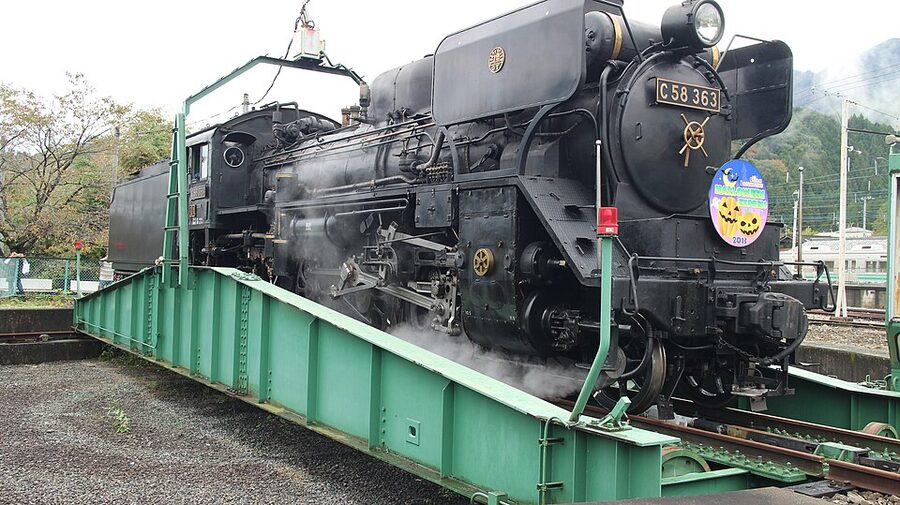
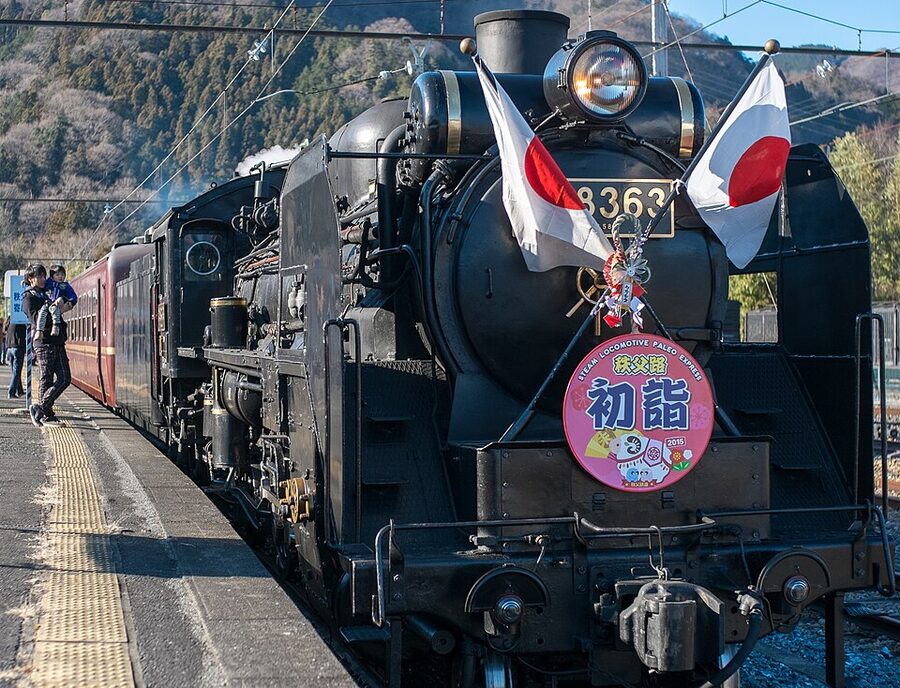
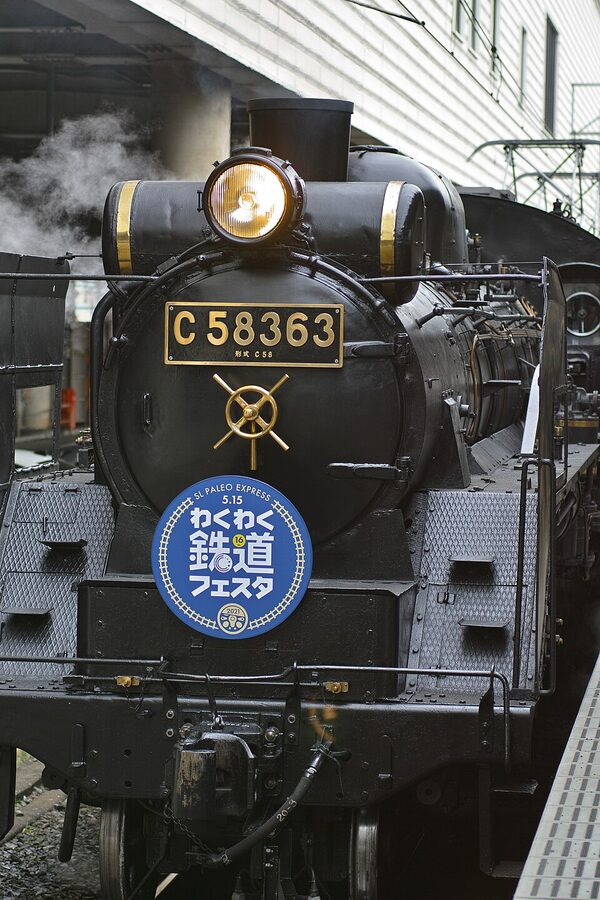
The decision was a steam train. Specifically: a Class C58 freight locomotive, number 363, that had been retired in 1973 and put on a plinth in the playground of Yoshimura Elementary School in Konosu, just east of Kumagaya. In March 1987 the Japanese National Railways, in its last weeks of existence, restored the locomotive to its books, transferred it to the Takasaki depot of the soon-to-be-formed JR East, and made it available for a tourist service. On 15 March 1988, in time for the ’88 Saitama Expo at Kumagaya, Chichibu Railway ran the inaugural SL Paleo Express from Kumagaya to Mitsumineguchi.
The name comes from Paleoparadoxia, a marine mammal of the late Miocene that lived in the shallow sea that covered the Chichibu basin 13 million years ago. Its fossils are still found in the Nagatoro gorge today, and they form the centrepiece of the Saitama Prefectural Museum of Natural History at Kami-Nagatoro. Chichibu Railway picked the name because it was distinctive, locally rooted, and absurd, and the marketing department got mascots out of it (Paleo-kun in 2001, Palena-chan in 2008). The train was meant as a one-summer expo special. It went year-round in late August 1988 because demand was higher than anyone had forecast.
Through-running from Seibu, 1989
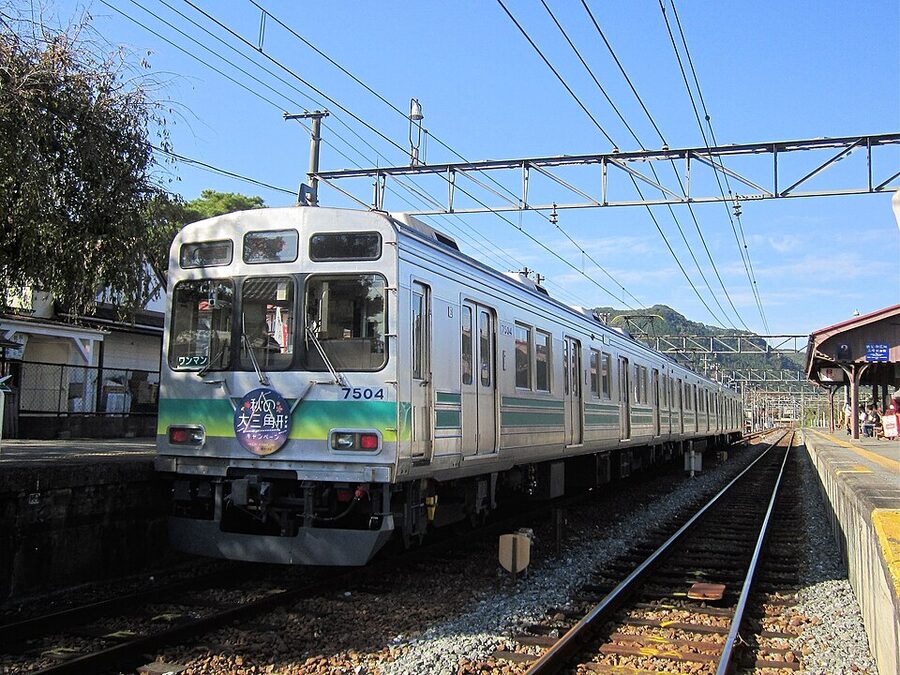
The other half of the late-1980s reinvention was a deal with Seibu Railway. From April 1989, on weekends and holidays, Seibu 4000-series trains began running through from Hanno on the Seibu Ikebukuro Line, via the short Seibu Chichibu connector, onto the Chichibu Main Line as far as Mitsumineguchi and Nagatoro. This was a coup. It tied Chichibu directly into Tokyo’s commuter map for the first time, gave day-trippers from Ikebukuro a one-train option to Nagatoro, and signalled, four years before the Japanese tourism boom of the 1990s, that the basin was being marketed as a Tokyo-day-out destination rather than as a depopulating regional terminus.
The Tobu Railway through-running ended on the same timeline in the other direction. From 1954 Tobu had been sending trains down the Tojo Line, via Yorii, into Chichibu, with named services such as Mitsumine, Chichibu, Nagatoro, and the wonderfully branded Flying Tojo. The last of these ran in April 1992, when the introduction of automatic train stop systems made the cross-network operations untenable. So Chichibu lost a Tobu route at almost the same moment it gained a Seibu one. The Seibu service has slowly contracted since 2020, with weekday trains withdrawn in 2021 and Mitsumineguchi-bound runs cut back, but you can still board at Hanno on a Saturday morning and ride one continuous train to Nagatoro. If you are coming from central Tokyo, that is the route I would recommend.
Decision four, 2006-2020: let the cement business go
The cement freight business that the railway had built itself around did not collapse all at once. It eroded steadily through the 2000s. In 2006 the company stopped offering scheduled cement freight as a saleable service: the cement plant kept producing, but it shipped out by truck. The remaining freight was raw limestone, fly ash, and small amounts of coal for the cement kilns, all of it on internal short-haul runs.
The Mikajiri Line, the 1979 freight branch that had been the railway’s commercial lifeline, was cut down in 2020. On 30 September the company terminated freight service between the Kumagaya freight terminal and Mikajiri. On 31 December the Mikajiri-Kumagaya freight terminal section was formally abolished. The remaining stub between Takekawa and Mikajiri kept running for the cement plant’s internal logistics. So the railway lost its connection to the JR network for freight purposes, the connection that had defined it for forty years, in the closing weeks of 2020.
What still moves on the freight side
What the railway hauls today is limestone from the Mitsuwa quarry on the south flank of Mount Buko, and from the Kanoyama quarry across the Saitama-Gunma prefectural border in Kannamachi. Both quarries feed the Taiheiyo Cement Chichibu plant at Mikajiri. Trains run between Kageshige and Buyobaratani, with Mikajiri as the terminus. Operating practice depends on the day’s quarry output: the early train sometimes runs all the way to Mikajiri, the late train often turns back at Buyobaratani. So the freight is real, scheduled, and still substantial, but it is internal logistics rather than the inter-regional rail freight it used to be.
The shareholding side of the same story
Taiheiyo Cement, the corporate descendant of Chichibu Cement, still owns the largest single block of Chichibu Railway shares, and that is what makes the freight business the asset it remains. The two companies have a contract for limestone haulage that runs forward; the cement plant has no realistic substitute for the rail link to its quarry feed; and the railway is, for cement-business purposes, not really a third-party operator but a long-term subsidiary contractor. This is a less visible piece of the story than the steam train, but it is the more important one. The Paleo Express does not pay the bills. The mineral train does.
Decision five, 2007-2025: turn the rest of the line into a tourism business
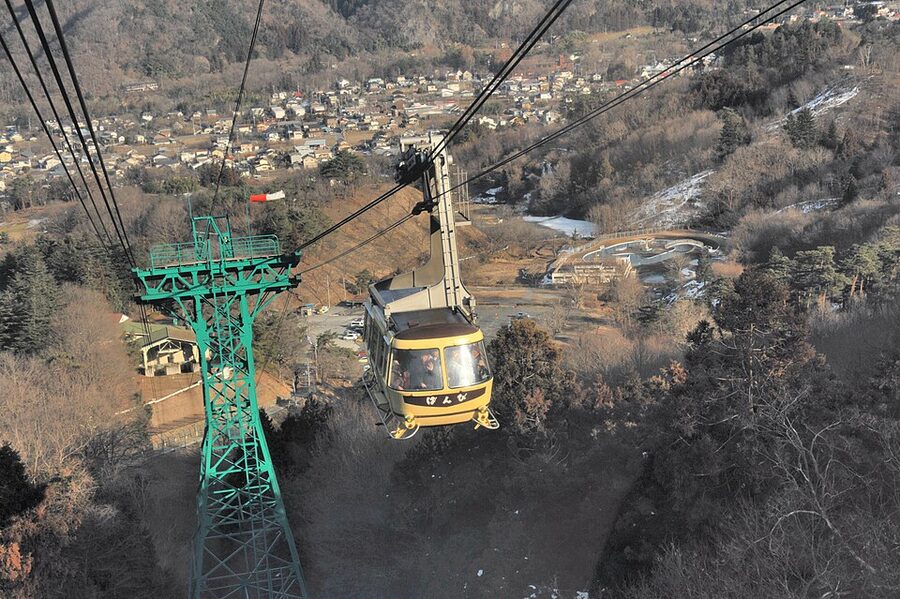
The most recent twenty years are the ones in which the railway has commercially completed its turn from a freight operator with passenger service to a tourism business with freight service. The Hodosan ropeway above Nagatoro, originally opened in 1961 as a separate operating company, has been part of the same corporate family throughout. The company also runs the Nagatoro Line river-boat operation that descends the Arakawa rapids, a small zoo on Mount Hodo, the Yurin restaurant in Nagatoro, and the Yurin pork-rice diner adjacent to it. In October 2025 it absorbed Hodo Kogyo, the ropeway operator, into the parent company.
The non-rail businesses are not a sideshow. They are roughly half of group revenue once you net out cement-related freight income. The town of Nagatoro recorded 2.69 million visitors in 2016, up roughly thirty per cent on the 2006 number, and a non-trivial share of those visitors arrived by Chichibu Railway. Real estate, which the company entered in 1970 as a way of putting the railway’s land bank to work, is another solid contributor. The bus business, spun off in 1997 as Chichibu Railway Tourist Bus, still operates the lines feeding the steeper sections of the basin where the train cannot go.
A 2025 IC card story that says everything about the operator
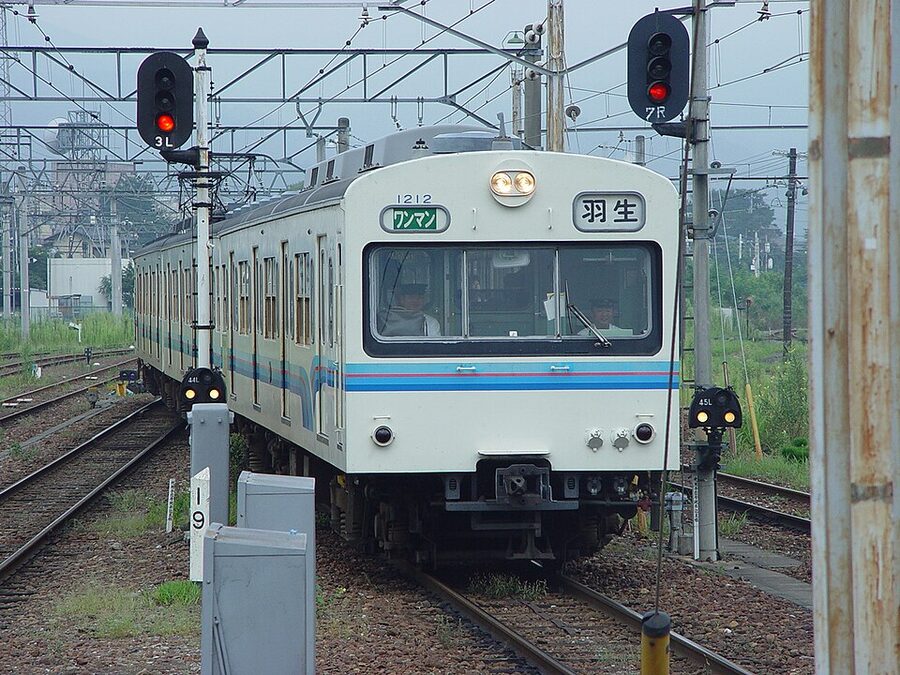
Two recent ticketing changes show how slowly this operator moves and how quickly it can move when there is a reason to. PASMO IC card support arrived on Chichibu Railway only on 12 March 2022, fifteen years after PASMO went live elsewhere in the Kanto region. The reason for the delay was straightforward: gate-side IC infrastructure is expensive, the line has 37 passenger stations, and the financial case for installing it depends on commuter volumes the railway does not really have. The company waited until it could spread the cost across the full network and then turned it on at every station on the same day.
Then in June 2025 the railway switched its paper tickets to QR-code authentication, with bespoke QR-reader gates installed at every station. The two-step move is a perfect illustration of an operator that is small enough to think about its IC strategy in a way that, say, JR East is not. There is one decision-maker. There is one budget. The railway can wait fifteen years to install IC and then leapfrog half the bigger operators by going straight to QR a few years later. It is not the kind of nimbleness most foreign visitors associate with Japanese rail.
Riding it today
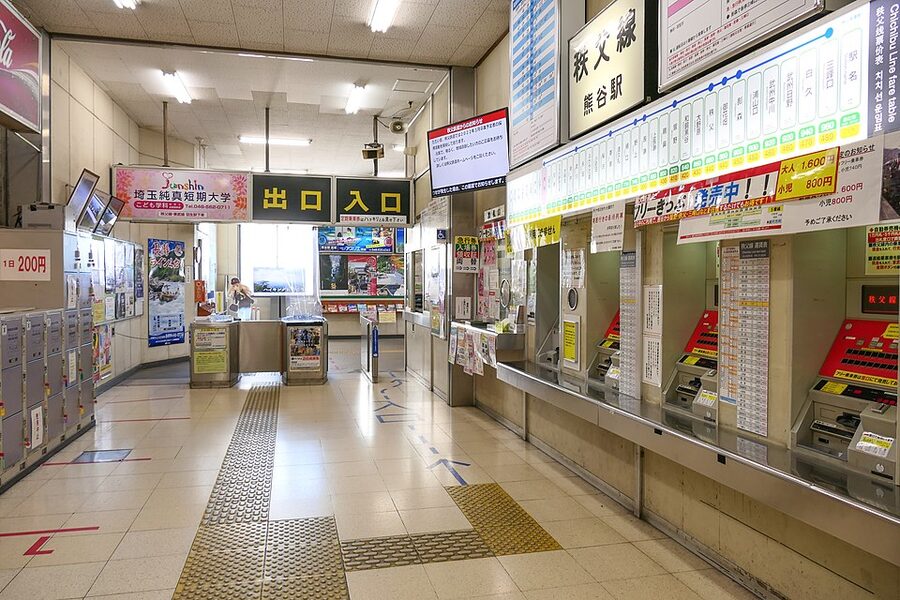
If you are coming from Tokyo for the first time, the practical question is which end of the line you board at. There are essentially three legitimate routes onto Chichibu Railway and they suit different trips.
Route 1: Ikebukuro → Hanno → Seibu through-running
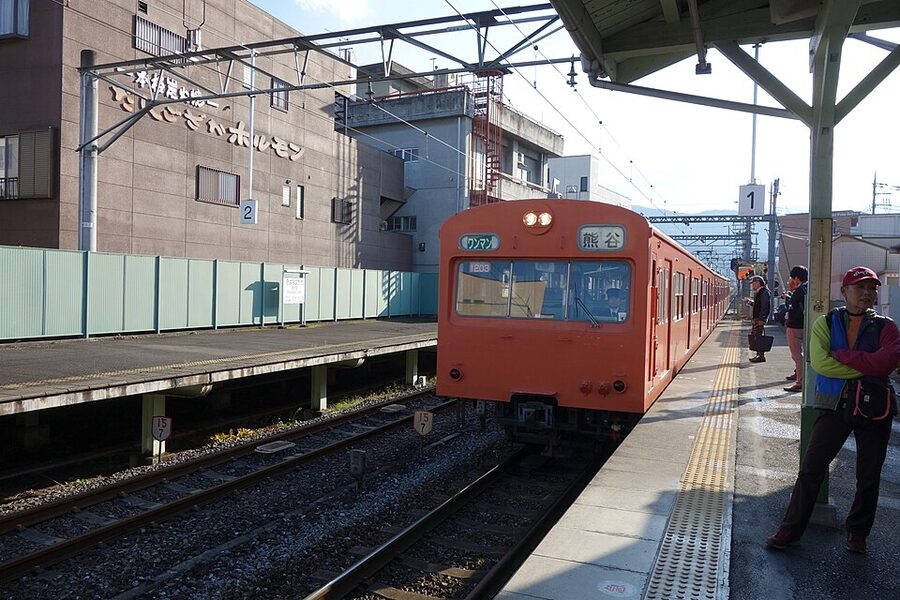
The route I would recommend for almost any first-time visitor. Take the Seibu Ikebukuro Line from Ikebukuro to Hanno, change for the Seibu Chichibu Line, and on a Saturday or Sunday morning you can board a Seibu 4000-series that runs straight through to Mitsumineguchi or Nagatoro. End-to-end is two hours forty minutes, ¥1,510 with PASMO. No need to change at the prefectural border. You arrive at Nagatoro with the river gorge and the rapids on your right and the Hodosan ropeway entrance two minutes’ walk from the station. This is the single best way to do it. Through-running is weekends and holidays only since the 2021 timetable revision; check the timetable in advance for weekday trips.
Route 2: Tokyo → Kumagaya on the Takasaki Line, then change
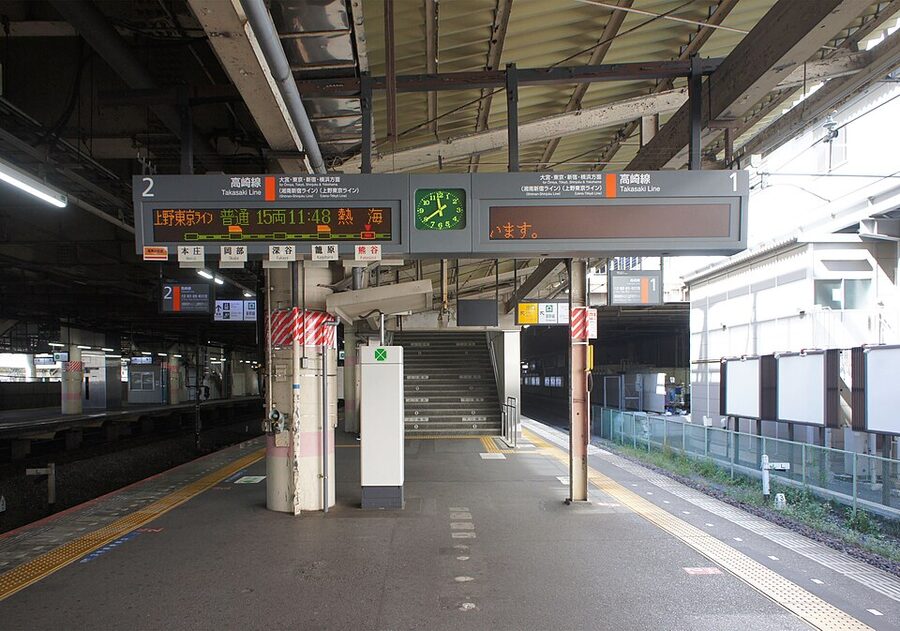
If your trip starts at Tokyo Station or anywhere east-of-Ikebukuro, the practical route is the JR Takasaki Line to Kumagaya, then the Chichibu Railway across to Nagatoro or Mitsumineguchi. Tokyo to Kumagaya takes 50 minutes, ¥1,690 by ordinary rapid. The Tohoku Shinkansen also stops at Kumagaya from Tokyo Station in 38 minutes for ¥3,990 reserved seat, which is a poor decision unless you have a JR Pass that covers it. From Kumagaya the Chichibu Railway runs about every 20 minutes during the day, takes 1 hour 50 minutes to reach Mitsumineguchi, and costs ¥1,030 IC end-to-end.
Route 3: Tobu Tojo Line to Yorii, then change
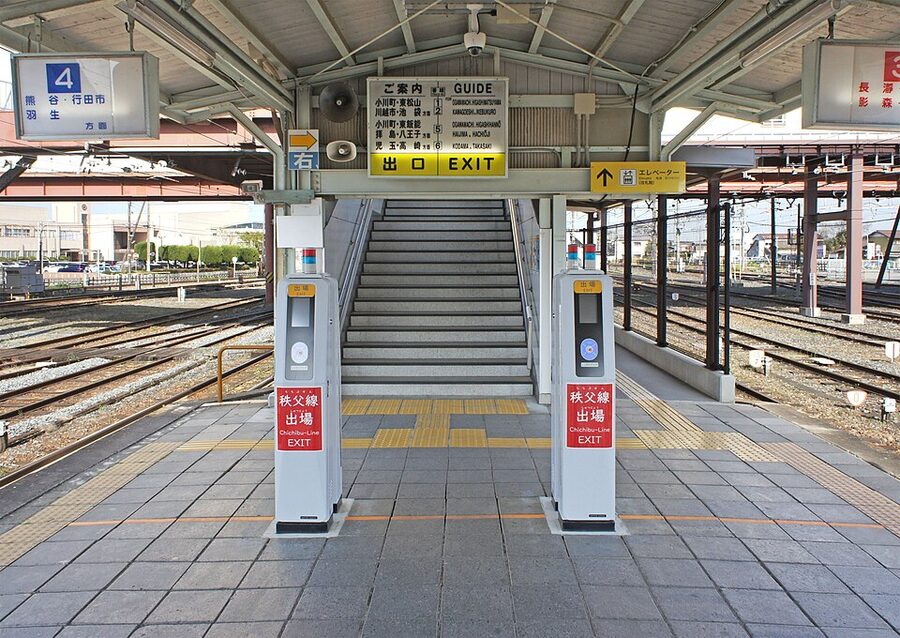
If you are coming from northern Tokyo (Ikebukuro again, but on the Tobu side), the alternative is the Tobu Tojo Line direct to Yorii, then change to Chichibu Railway westbound. End-to-end Ikebukuro to Yorii is 1h 25m on the Tobu Tojo Liner with the limited-express surcharge, ¥1,580 reserved. Yorii to Mitsumineguchi is then another hour, ¥780 IC. This is the least well-known of the three and the slowest, but the run from Ogawamachi over the Saitama hills is one of the prettier 30-minute stretches of branch-line rail in Kanto. If you have read the Tobu Railway rolling-stock guide, this also gives you the chance to ride the most recent Tojo Line generation right up to the change point.
The express called Chichibu-ji
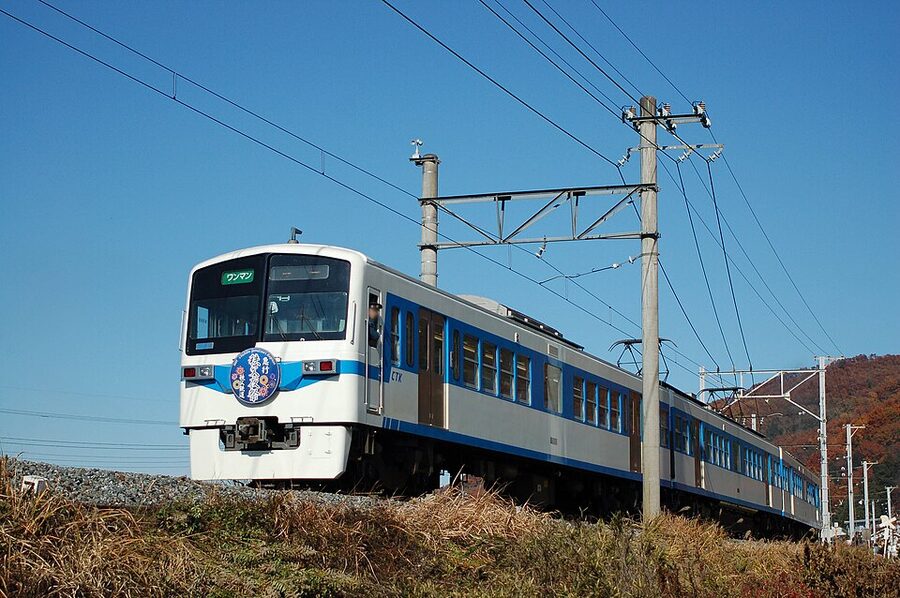
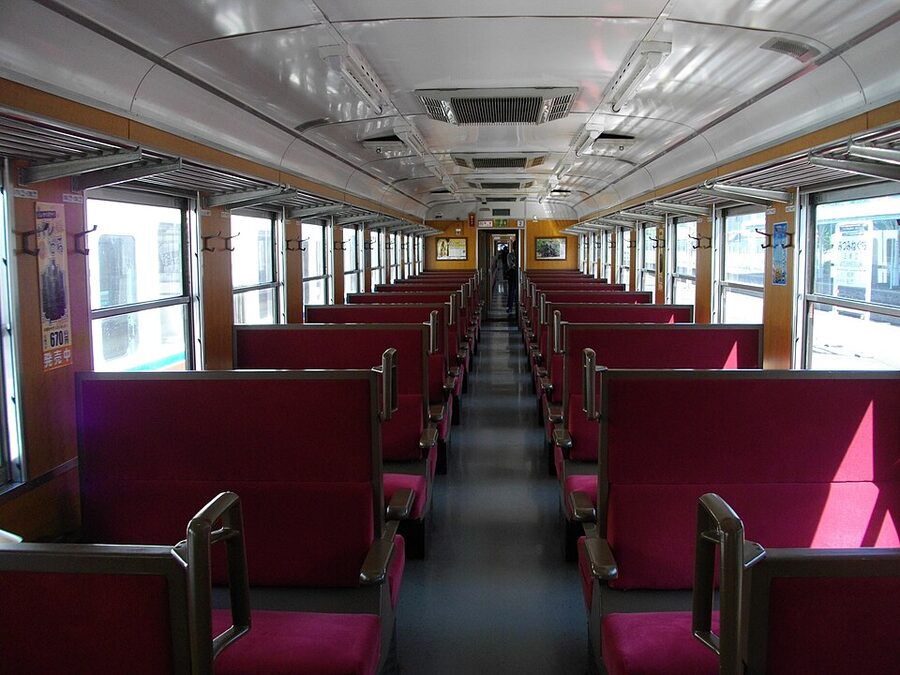
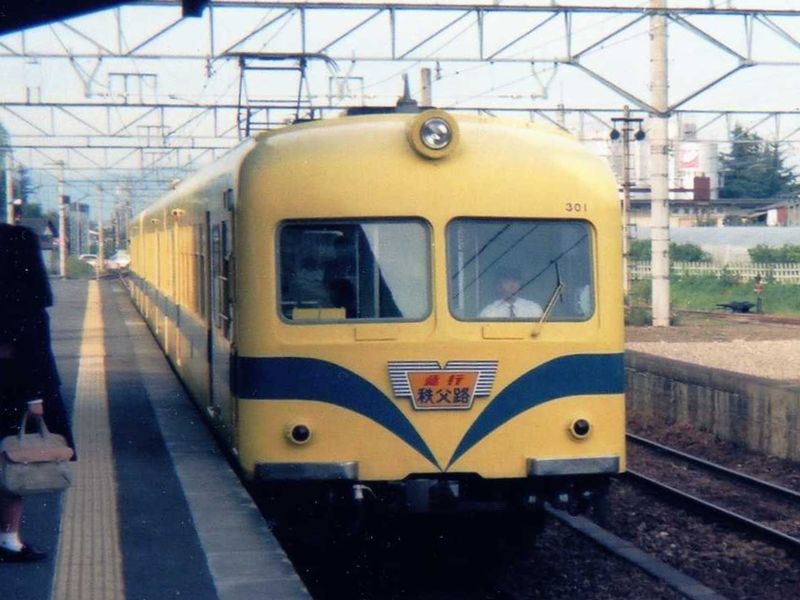
The on-line express service is called Chichibu-ji and runs three round-trips a day on weekends, two on weekdays. It uses the 6000 series (ex-Seibu New 101) in three-car formation with seat-back tray-tables and a snack-counter at one end. Express ticket is ¥220 on top of the standard fare, payable at the gate or onboard. Almost nobody outside the basin has heard of it, which is a recommendation: you can ride it on a Saturday afternoon and have most of the carriage to yourself. The schedule cluster reads like a 1980s commuter timetable, which it more or less is.
Booking the Paleo Express
The Paleo Express runs on weekends and holidays from mid-March to early December, with a winter break for inspection. Reservation is mandatory since 2021; SL reserved-seat ticket is ¥740 in addition to your basic fare from Kumagaya. You book through the Chichibu Railway SL Reservation System, which is a Japanese-language web form with a 28-day advance window. JR East stopped selling the SL ticket through Midori-no-Madoguchi in September 2019, so do not bother going to the JR ticket window. Day-of tickets are theoretically available at Kumagaya but in practice only on quiet weekdays; on a peak-season Saturday the train will sell out a week ahead.
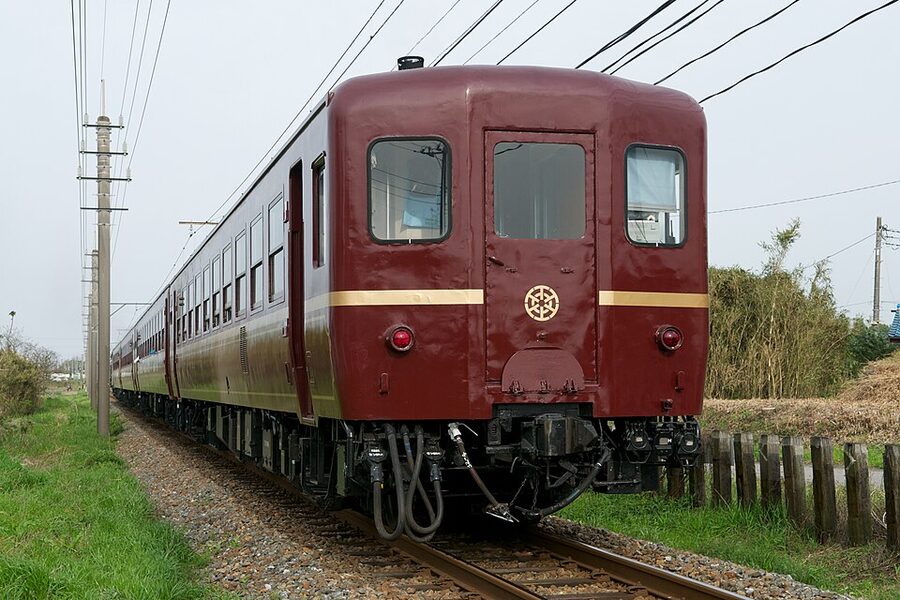
Departure is from Kumagaya at 10:10, arrival Mitsumineguchi 12:55. Return from Mitsumineguchi 14:25, back at Kumagaya 17:08. The schedule includes long station holds at Yorii, Nagatoro, and Chichibu, where you can get off, photograph the locomotive, and board again. The turntable manoeuvre at Mitsumineguchi (rotating C58 363 for the return run) is open to spectators on the platform, which is part of the whole experience and worth the round-trip ticket on its own.
The connection at Ohanabatake
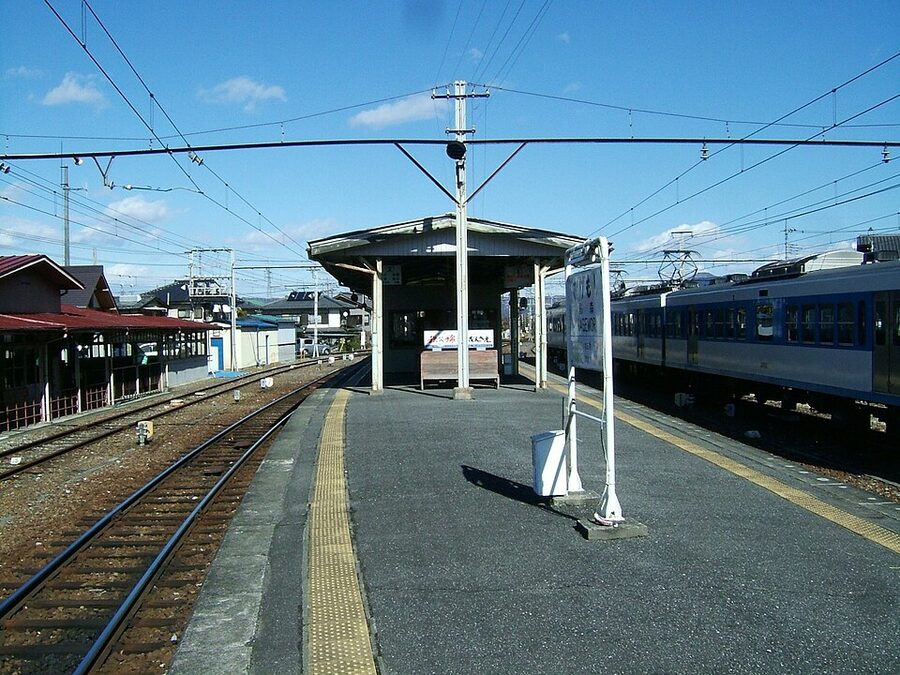
If you arrived via Seibu and want to go further west than Mitsumineguchi, you change at Ohanabatake to a westbound Chichibu local. Ohanabatake and Seibu Chichibu are 200 metres apart on opposite sides of a small plaza; the walk takes two minutes. Seibu Chichibu is on the Seibu Chichibu Line; Ohanabatake is on the Chichibu Main Line. The two stations have different IC zones but the same PASMO reader scheme, so a single tap covers both. This is the connection most overseas guidebooks fail to explain, and it is the reason a lot of first-time visitors end up at the wrong station.
The 5000-series local stock, ex-Toei
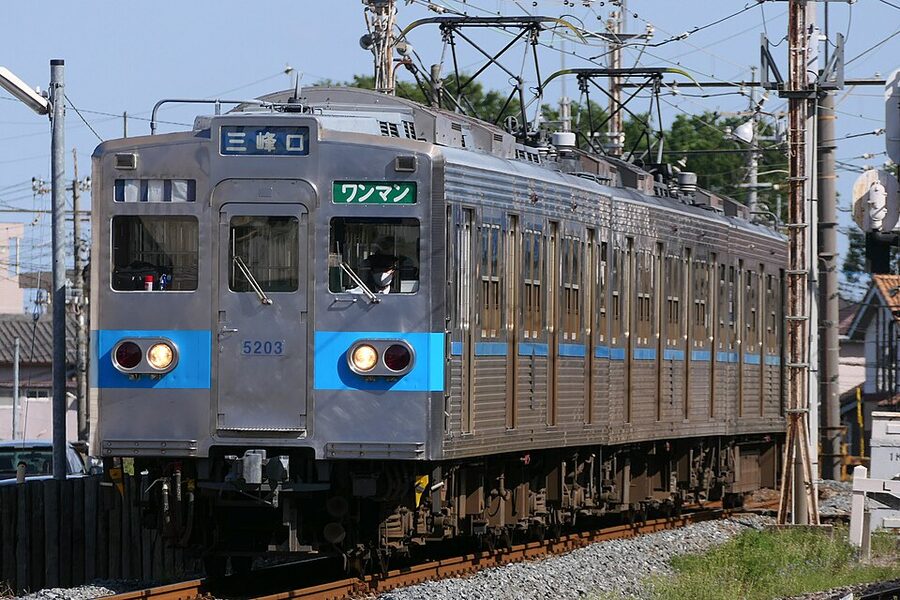
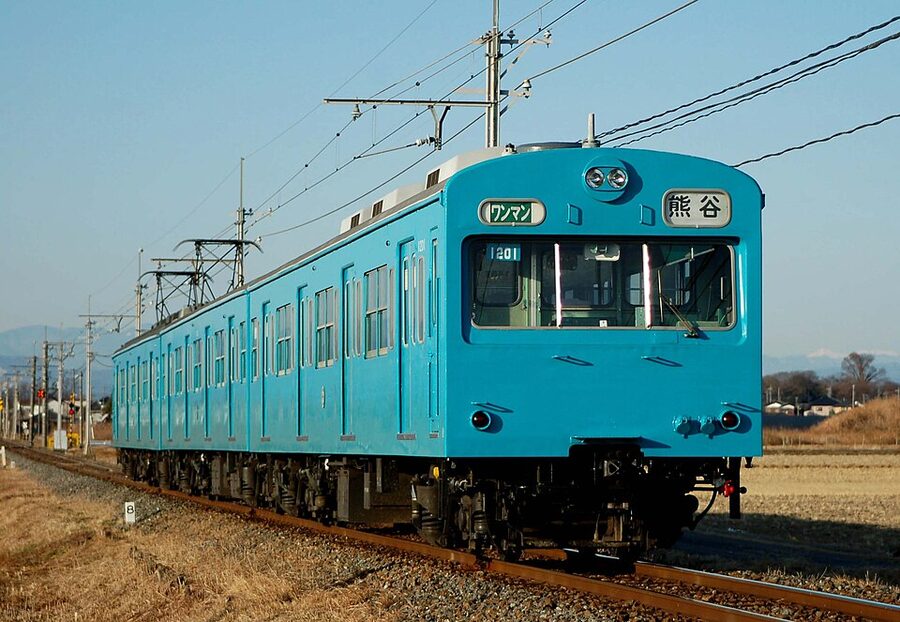
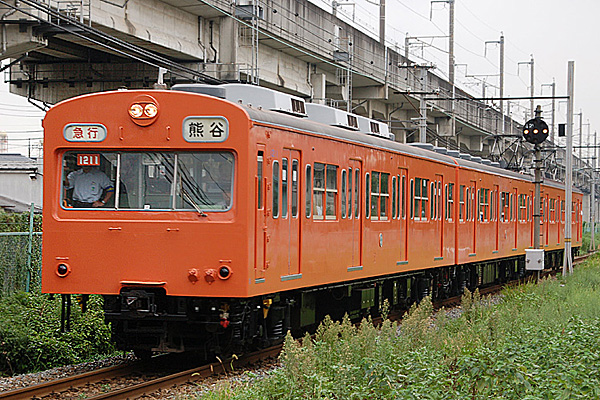
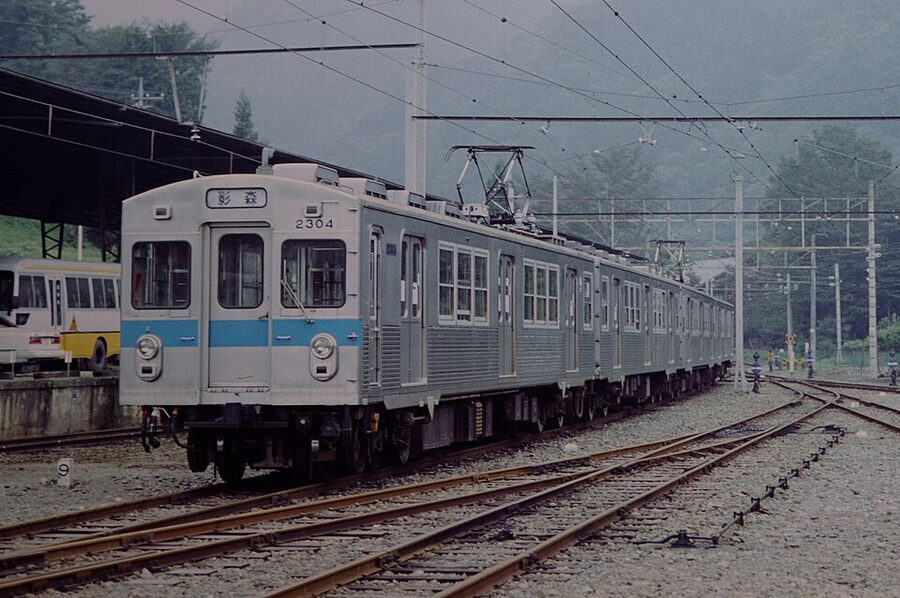
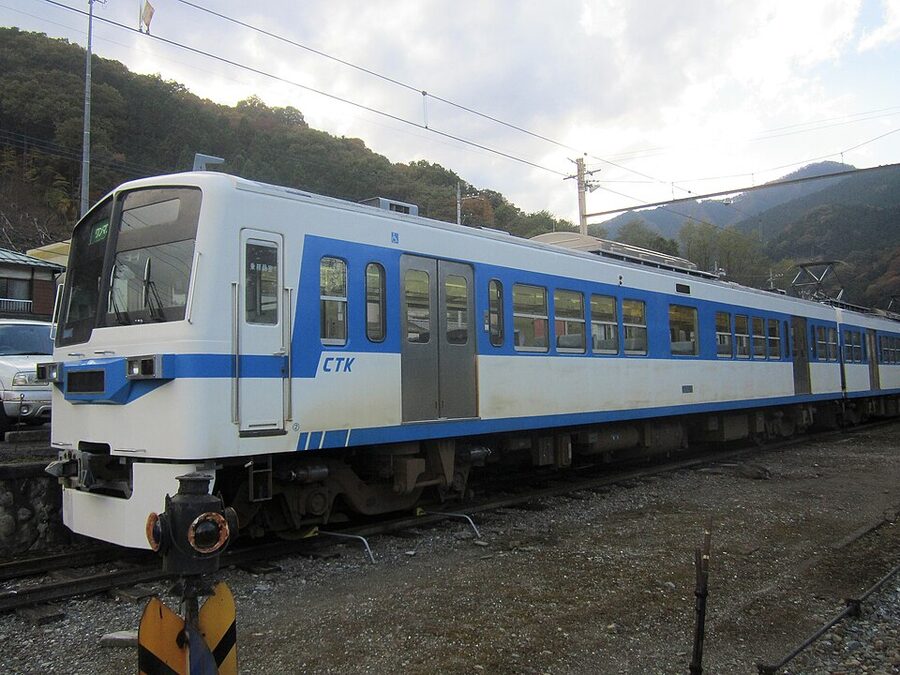
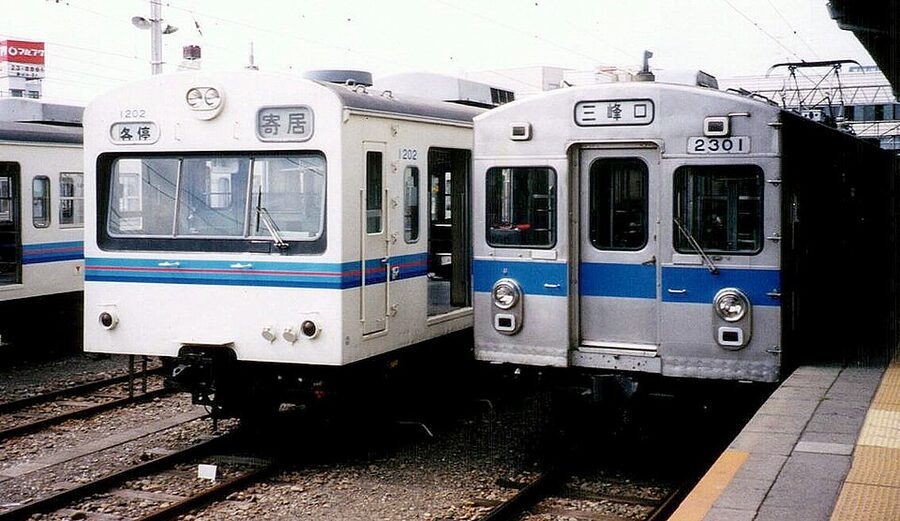
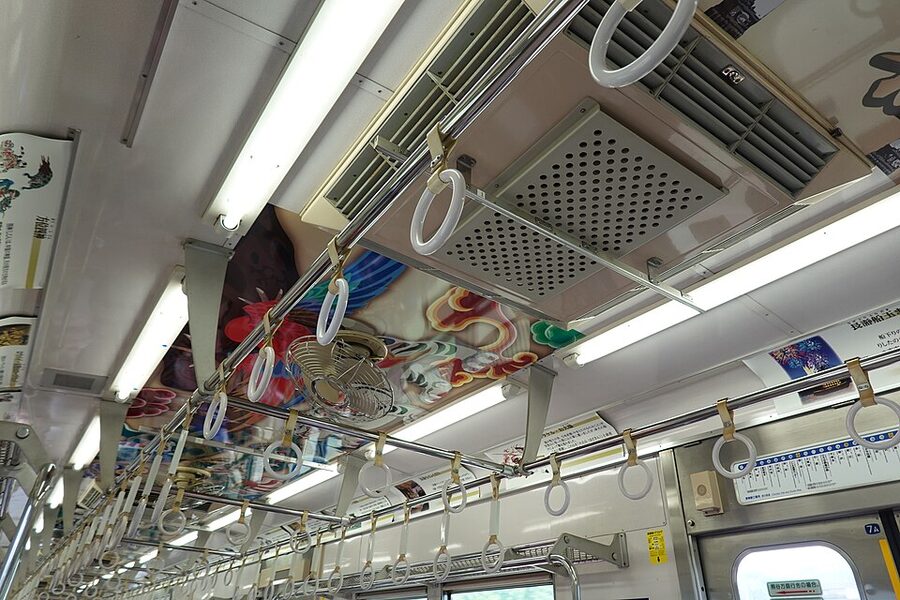
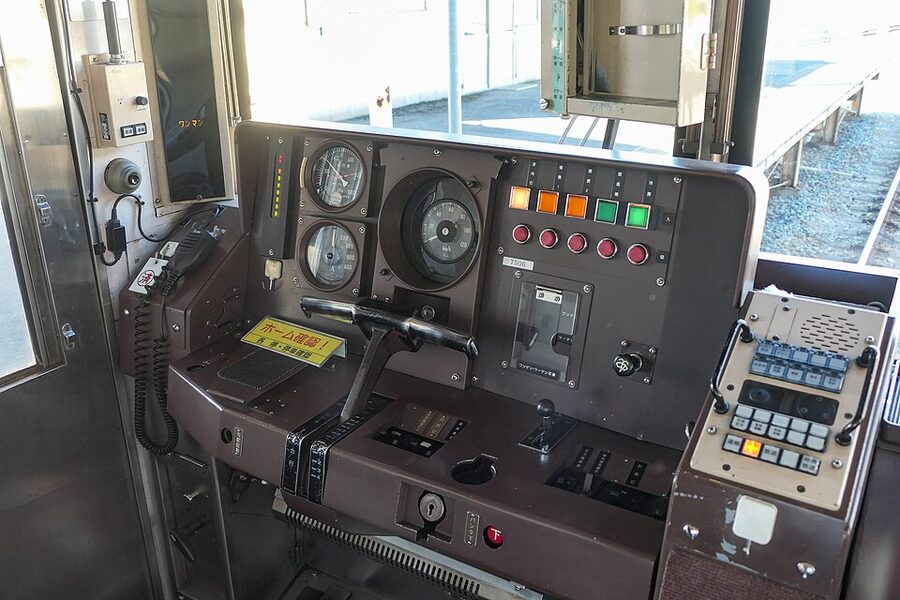
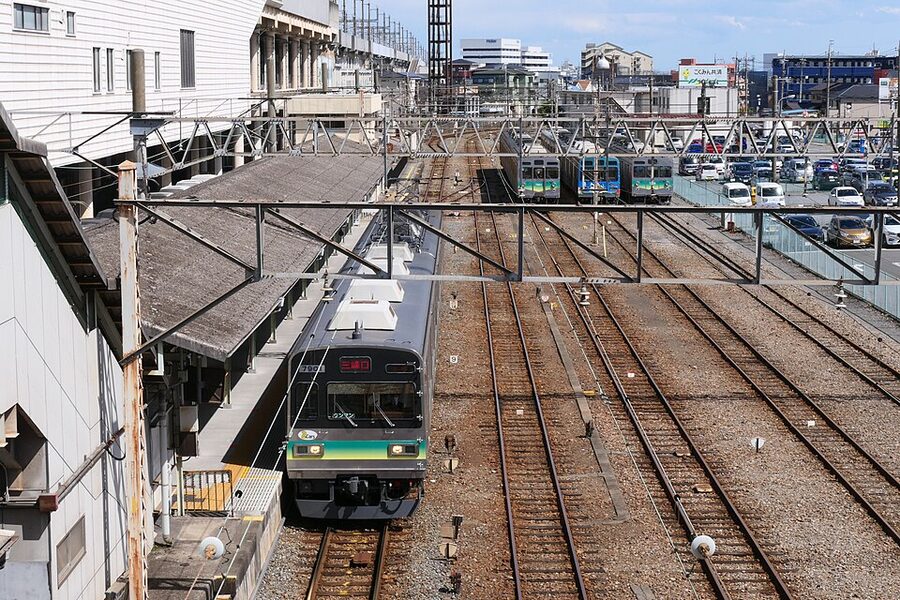
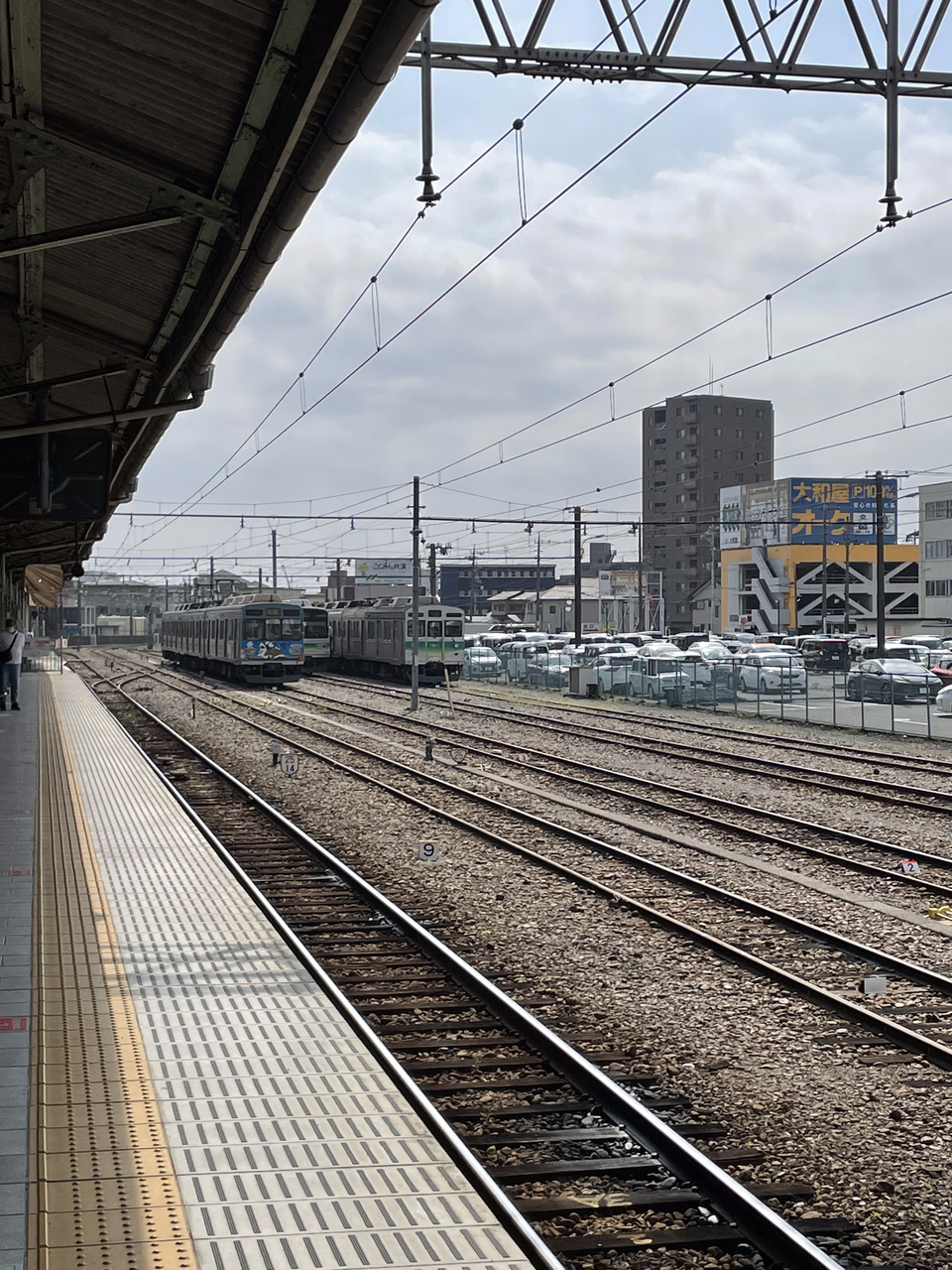
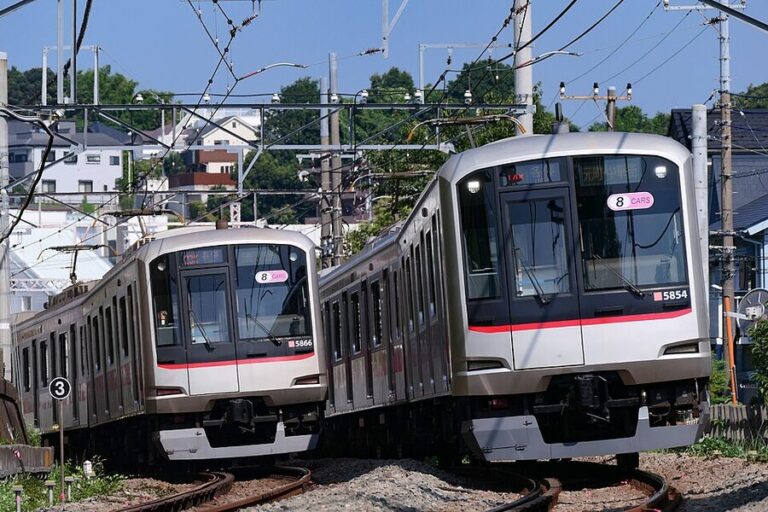
The local services run a mix of three- and two-car sets. The 5000 series are ex-Toei Mita Line 6000s (the line is also called the Tokyo Metropolitan Transportation Bureau Mita Line in formal Toei language). The 7000, 7500, and 7800 series are ex-Tokyu 8500 and 8090 cars. The 6000 series, used on the Chichibu-ji express, are ex-Seibu New 101s. Over a typical weekend you can ride three or four different generations of cast-off Tokyo commuter rolling stock, all of them past the age at which their original operators retired them. If you have read the Tokyu rolling-stock piece, this is where Tokyu’s old 8500 series ended up.
Where to break the journey
Three places earn an overnight, three more earn an hour. In rough order of how much time they reward.
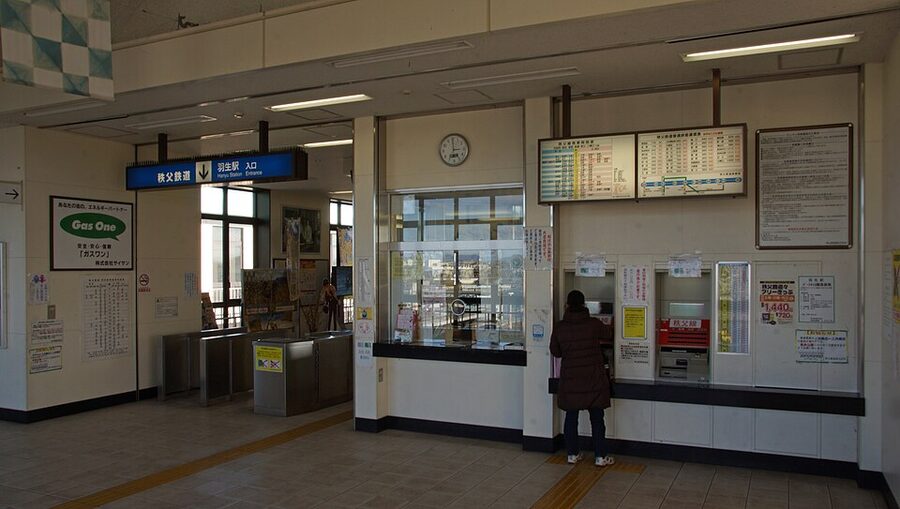
Nagatoro
Nagatoro is the obvious anchor. The 1.6 km gorge of the Arakawa river runs from Kami-Nagatoro Station south to Nagatoro Station, with the iwadatami flat-rock formations on the east bank, the river-rafting ride that Chichibu Railway has run since the Taisho era, and the Saitama Prefectural Museum of Natural History at Kami-Nagatoro. The Hodosan ropeway is a five-minute walk from Nagatoro Station, runs every 15 minutes, and gives you a 832-metre cable ride to a small zoo and a Mount Hodo shrine on the summit. Round-trip ropeway is ¥830, the museum is ¥200, and you can do the whole thing in four hours from Tokyo if you start early. If you want longer, the town is small enough to walk in an afternoon and there are a dozen ryokan along the river-side streets.
Chichibu town
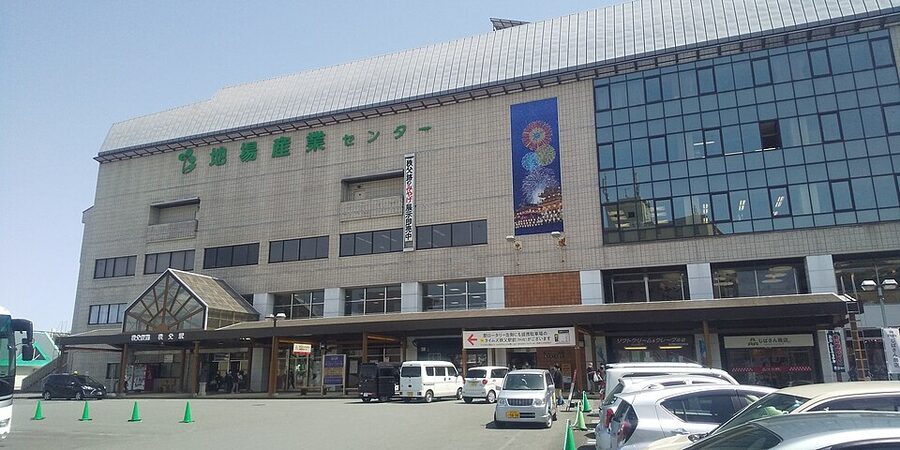
Chichibu town itself, the basin’s regional capital, is a 10-minute walk from Chichibu Station. The 2,000-year-old Chichibu Shrine is the focal point, the festival float storage building is open to the public most of the year, and the local sake brewery (Chichibu-Nishikie at Bushu-Nakagawa) is one of the better small distillers in Saitama. The Chichibu Yomatsuri night festival, held on 3 December, is a UNESCO Intangible Cultural Heritage event and is when the railway runs the heaviest scheduled passenger service of the year. Book accommodation 12 months ahead if you want to be there.
Mitsumineguchi and the vehicle park
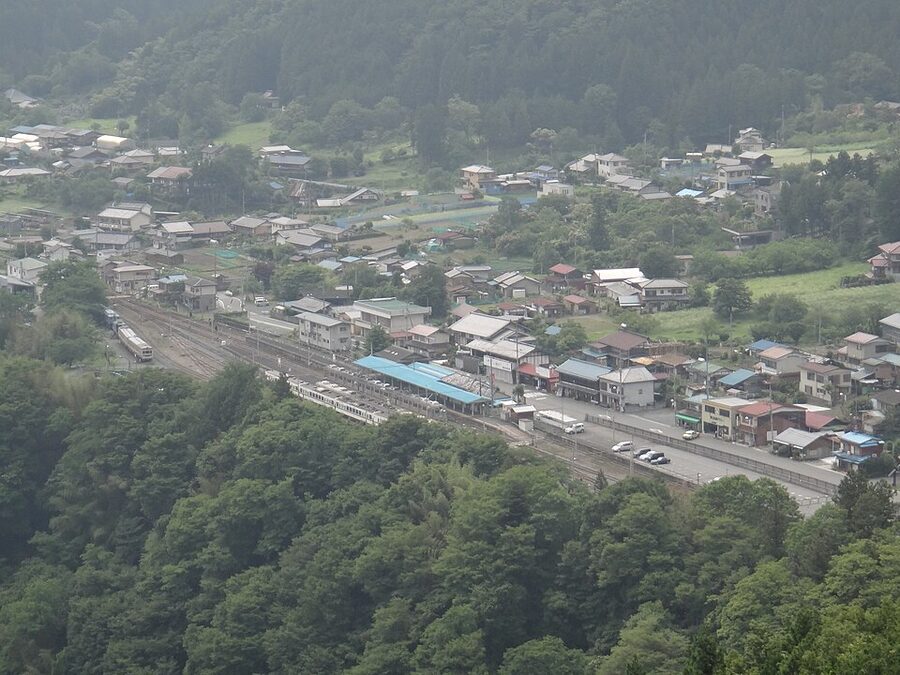
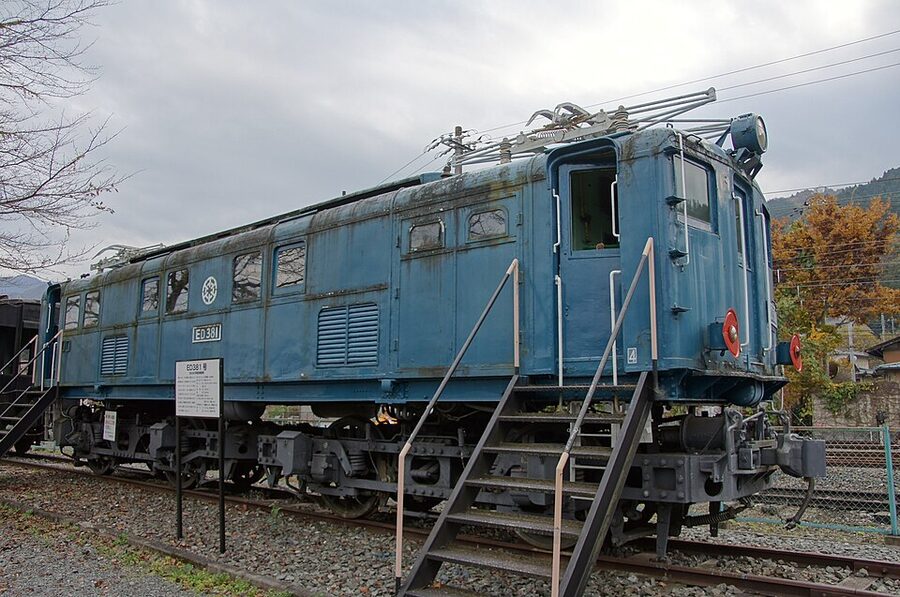
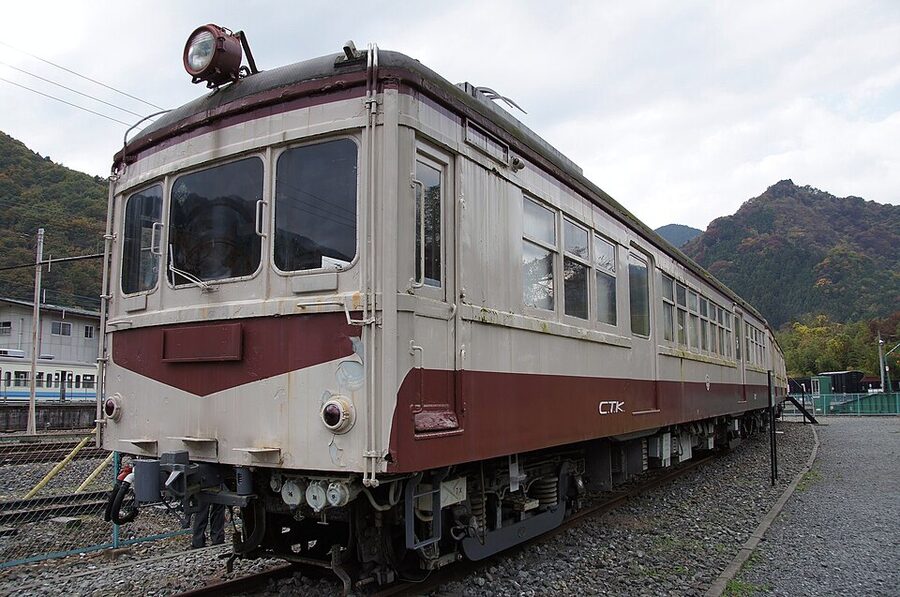
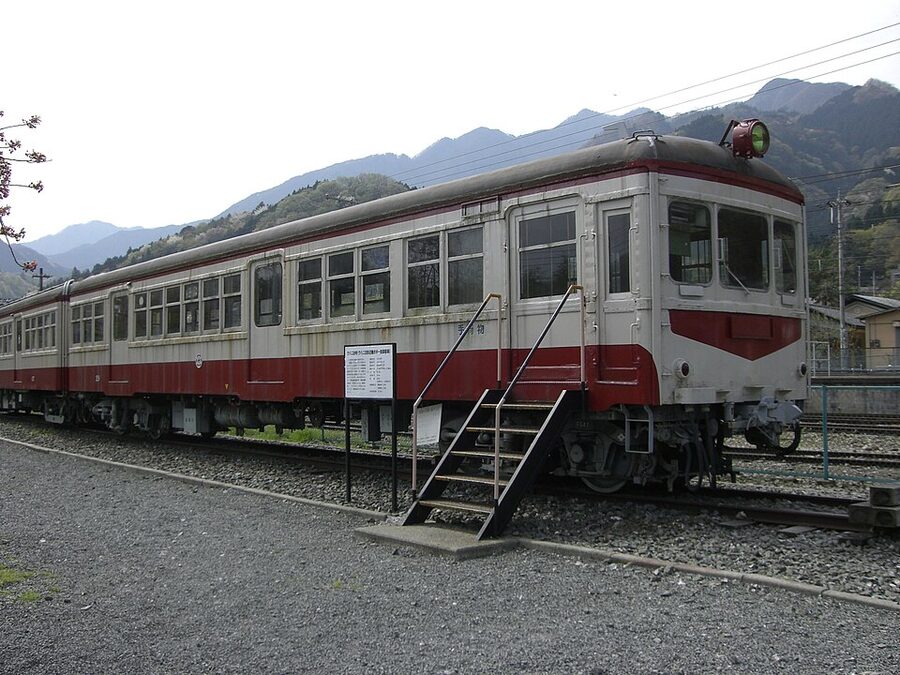
Mitsumineguchi is the western terminus, the turnaround point for the Paleo Express, and the home of the Chichibu Railway Vehicle Park (秩父鉄道車両公園), a small free-entry preservation site with seven historical units on display: ED38 1, DeHa 107, KuHaNi 29, KuHa 800, and three older freight cars. The park is a five-minute walk from the station and worth an hour even if you do not stay for the steam train turnaround. From Mitsumineguchi, the Mitsumine Shrine bus runs up the mountain to one of the more important shrines in the upper basin (round-trip bus ¥1,440, allow three hours total).
Kumagaya
Kumagaya itself rewards an hour rather than a day. The JR-side concourse and the Chichibu-side concourse share a building; the Chichibu Railway is on the south side, accessible without leaving the JR ticket gate. If you have time before the Paleo departure at 10:10, the Kumagaya Plaza Hotel coffee shop on the south concourse runs from 06:30 and is the only sensible breakfast within the station. Kumagaya is also the only place on the line where the Chichibu Railway interchanges with a Shinkansen, although as noted above the Shinkansen is the wrong train for this trip.
Cross-references for the rest of the network
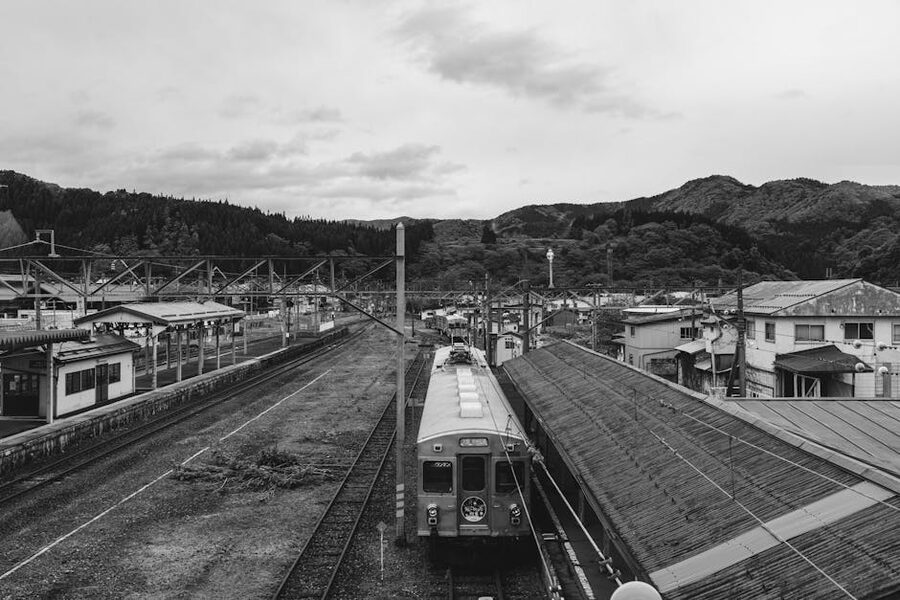
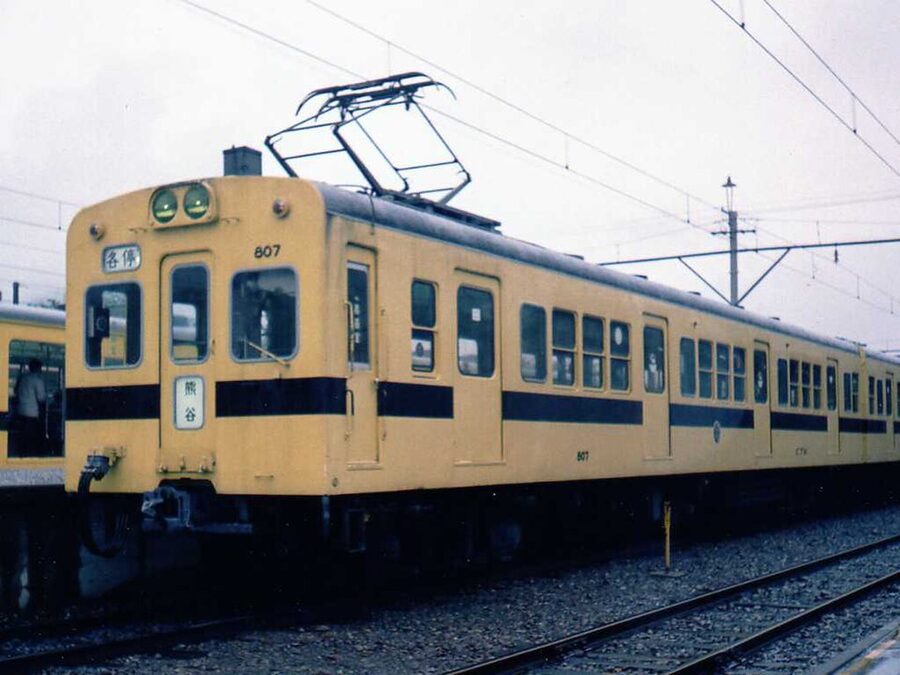
If you have read the Tobu Railway piece, the Tobu-Chichibu through-running era of 1954-1992 is one of the more interesting branches of the Tobu network’s history; the 8000 series cars Tobu sent down the Tojo Line to Chichibu were retired off the Chichibu network in 1992 because of the ATS upgrade, and the cement freight yard closures at Narihirabashi in 1986 are part of the same shared timeline. The Odakyu history piece is a useful counterpoint: Odakyu’s 1800 series cars, sold cheap to Chichibu in the 1980s as the 800 series, were the same generation Odakyu was retiring as it modernised the Hakone-bound Romancecar fleet. Different operators, the same generation of trains finding a second life on a Saitama line. The Toei history piece covers the other side of Chichibu’s 5000-series cascade: the Mita Line 6000s that Toei replaced in the 1990s and that still run the Chichibu Main Line today. The Keio piece rounds out the list of Tokyo private operators whose stock has eventually ended up on this line, although Keio cars have not run on Chichibu directly.
The sibling rolling-stock guide, the Chichibu Railway rolling-stock piece, covers the 5000, 6000, 7000, 7500, 7800 and Deki families in more detail than I have used here. If you came to this article looking for series-by-series specifications, that is the piece to follow.
Closing: back to Mount Buko
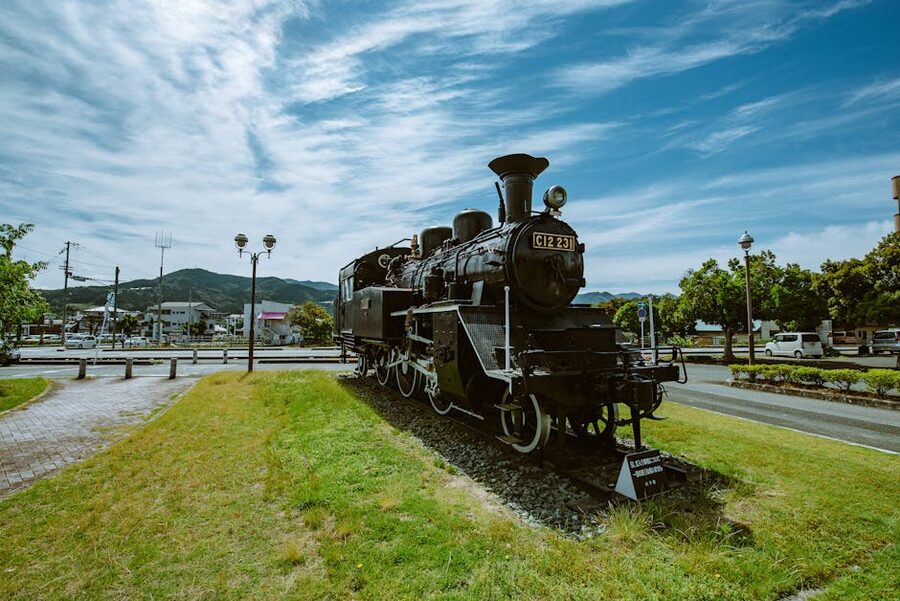
The 1986 Tobu freight yard closure with which I opened this article was the moment Chichibu Railway looked at its accounts and stopped being only a freight company. Most regional private operators in Japan, faced with the same arithmetic in the late 1980s, did the predictable thing: cut services, lay off staff, ask for a prefectural subsidy, eventually fold or get absorbed. Chichibu did the strange thing instead, which was to spend money on a steam locomotive and a deal with Seibu, and to accept that the cement business would shrink while it built a tourism business that could carry the line.
That decision is why the railway is still in private hands in 2026, still listed on the Tokyo Stock Exchange Standard Market under code 9012, still hauling freight, and still running the closest scheduled steam train to Tokyo. Mount Buko is now 32 metres shorter than it was when the line was surveyed in 1900. The cement plant at Mikajiri runs around the clock. The mineral train, twenty hoppers and a single Deki, takes the long way down the mountain three or four times a day, the same job it has done since 1925.
If you go, take the Saturday Seibu through-train from Hanno, change at Ohanabatake for a westbound Chichibu local, and ride to Mitsumineguchi. Walk up to the vehicle park, look at the ED38 and the KuHaNi, and come back via the Paleo Express on its 14:25 return. Pay the ¥740 SL ticket. The river runs grey-green below the windows. The driver opens the throttle on the gradient out of Hagiyama and the engine note climbs through the carriage. None of it is nostalgia. The train is a working business decision taken in 1987 and renewed every season since.
.jpg)


.jpg)


.jpg)


