
Keikyu Trains: The Tokyo Railway Built for Speed
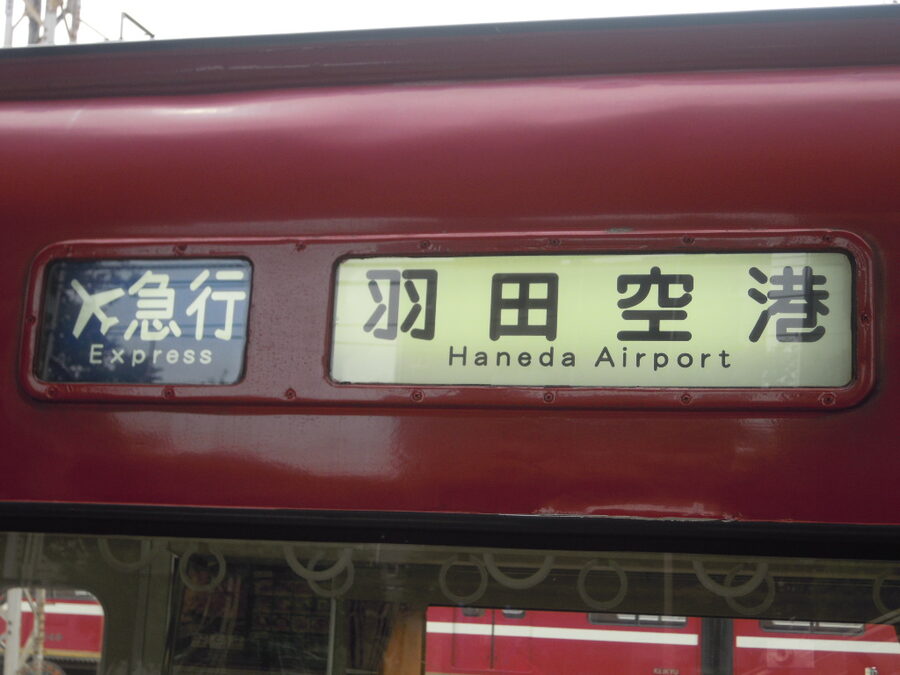
Shinagawa, platform 2, late afternoon. The destination board flips to “Airport Limited Express, Haneda Airport Terminal 1·2”, and you have ninety seconds to decide. The eight-car set rolling in is a 2100 series, painted Keikyu red with a white stripe, two doors per side, and rows of cross-seats facing forward. It is not the train most travellers expect to see on a commuter run. It looks like a limited express to a hot-spring resort. Between Shinagawa and Haneda it covers 14.6 km in 18 minutes, no surcharge, no reservation, ¥327 on an IC card. Up the corridor at JR Hamamatsucho, the Tokyo Monorail leaves for the same airport, costs ¥500, and gets there in 25 minutes if the timetable holds. So you board the 2100, the doors close, and somewhere between Aomono-yokocho and Keikyu Kamata you remember that the rest of Keikyu’s fleet was designed to do exactly this.
In This Article
- Why Keikyu is not like the others
- Standard gauge by accident, then by strategy
- Speed as an operating philosophy
- Haneda. The reason for everything else.
- The Airport Limited Express service pattern
- The trick at Keikyu Kamata
- The Hanetoku ticket and the airport bargain
- The 2100 series, and the Siemens song
- Why Siemens motors, and why the song stopped
- Wing service and the cross-seat trick
- The new 1000 series. The workhorse that does everything.
- Aluminium versus stainless: what changed in 2007
- The 1800 sub-series and the through-running detail
- The 1890 toilet experiment
- The 600 and the Twingle Seat
- The Twingle Seat: a clever idea that did not quite work
- The 1500 series and the steel-aluminium split
- How to tell a 1985 1500 from a 1993 1500
- The Daishi Line in retirement years
- The retired stock that still defines the company
- The 230 series, and what a 1930s suburban EMU looked like
- Through-running: the Asakusa-Keikyu-Keisei spine
- The longest single-train commute in Tokyo
- What rolls through and what stays home
- Read this one alongside
- Riding it today: services, fares, and the IC card line
- What an IC card actually buys you
- The Wing Pass and the Wing Ticket
- The Misaki Maguro Day Trip
- Kanazawa-Bunko, where the trains are made
- The Keikyu Museum, briefly
- The accidents the company will not forget
- The strange case of the missing toilets
- What is coming next
- The verdict
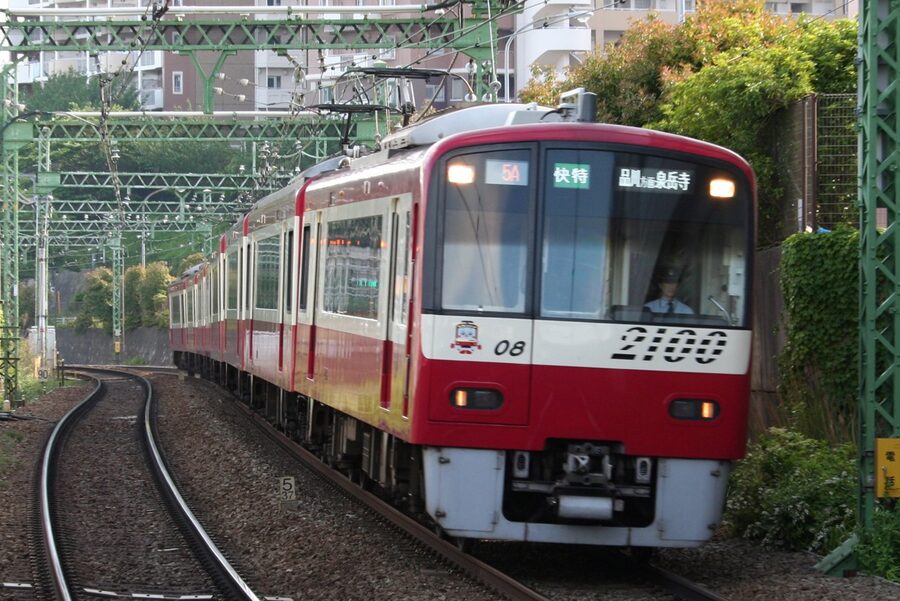
Keikyu, more formally Keihin Electric Express Railway (renamed Keikyu Corporation in October 2010), is the private operator that runs the 87 km network from inner Tokyo down through Kawasaki, Yokohama, and out to the Miura Peninsula, plus the airport branch. It is the third-fastest private railway in the Tokyo region after the Keisei Skyliner and the Tsukuba Express, with a top operational speed of 120 km/h on the main line and a fleet that has been deliberately built around getting people to and from Haneda. I have ridden every active series on the network, from the rebuilt 1500 still on the Daishi Line to the brand-new 1000-1890 fitted with toilets for the longer Wing runs. None of them are quiet. Most of them sing, the Siemens-built 2100 famously so until the last GTO unit was retired in mid-2021. They are also the most consistently underrated commuter trains in Tokyo, and this article is about why.
Why Keikyu is not like the others
Every other major private railway in Tokyo runs on the standard Japanese narrow gauge of 1,067 mm. Odakyu, Tobu, Keio, Seibu, Tokyu, all of them, plus the entire JR network in the Kanto region. Keikyu does not. It runs on 1,435 mm standard gauge, the same gauge as the Shinkansen, and the same gauge as Toei Asakusa Line, Keisei, and the Hokuso Railway. That single fact decides almost everything else about how the company operates.
Standard gauge by accident, then by strategy
The original 2 km of what became the Daishi Line opened on 21 January 1899 as standard gauge, the third electric line in Japan after Hanshin and Meitetsu. The Keihin Railway, as it was then, extended through to Shinagawa by 1905. Then in 1904 it re-gauged to 1,372 mm to match Tokyo’s tram network, and stayed that way until 1933 when it re-gauged again to 1,435 mm to match the Shonan Electric Railway it had acquired in 1941. The third re-gauging stuck. Through-running planning with the Toei Asakusa Line in the late 1950s locked it in: when the Asakusa Line opened on 4 December 1960, it was built to 1,435 mm specifically so Keikyu and Keisei trains could share it.
The result is the network you see today. A Keikyu 1000 series can leave Misakiguchi at the bottom of the Miura Peninsula, run up the main line to Sengakuji, dive under central Tokyo on the Toei Asakusa Line, surface at Oshiage, run up Keisei’s Oshiage Line, and arrive at Narita Airport without ever changing tracks. Roughly 110 km, three operators, one train. The cluster of operators sharing standard-gauge stock around Asakusa, often called the Asakusa-Keikyu-Keisei (AKK) through-running network, exists because of decisions taken three-quarters of a century ago.
Speed as an operating philosophy
The other thing the gauge buys you is stability at speed. Keikyu’s Kaitoku Limited Express runs at 120 km/h on stretches of the main line south of Yokohama, which is where the line straightens out. The competing JR Tokaido Main Line and Yokosuka Line do similar speeds in the same corridor, but JR uses 1,067 mm narrow gauge with a heavier underframe. Keikyu’s standard-gauge bogies, lighter aluminium-bodied stock, and 1,500 V DC overhead let the trains accelerate harder out of stations. The Kaitoku from Shinagawa to Yokohama covers 22.2 km in 16 minutes, an average of about 83 km/h including station dwells. JR’s Yokosuka Line takes 20 minutes for the same trip. The fare is ¥310 IC on Keikyu, ¥310 IC on JR. The four-minute saving is essentially free.
Haneda. The reason for everything else.
If you only ever ride Keikyu once, you will ride it to or from Haneda. The Airport Line is 6.5 km long, opened in stages, and reached the international terminal (now Terminal 3) on 21 October 2010, which was also the day the company changed its English name from Keihin Electric Express Railway to Keikyu Corporation. The two events were not a coincidence. The international terminal opening was the corporate event of the decade for Keikyu, and the rebrand was timed to land with it.
The Airport Limited Express service pattern
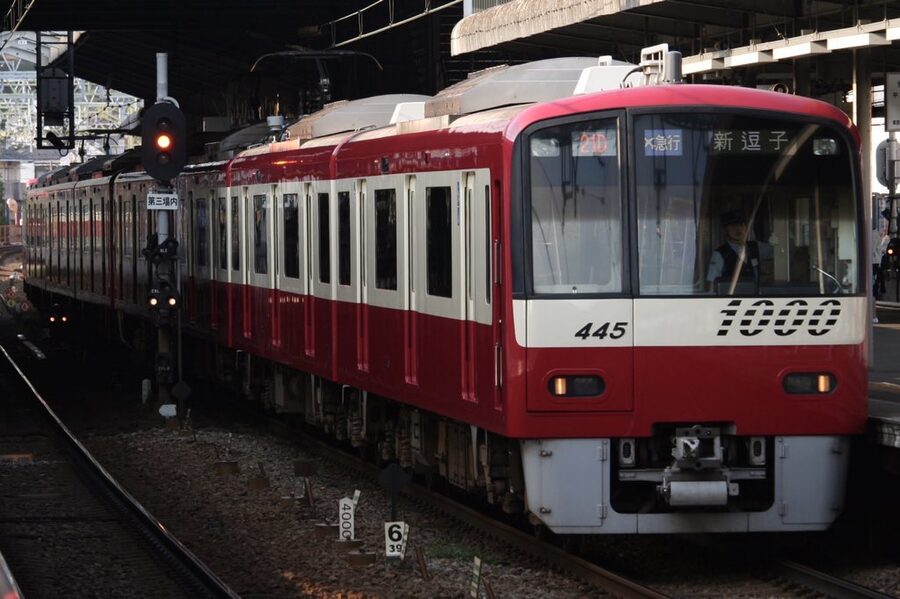
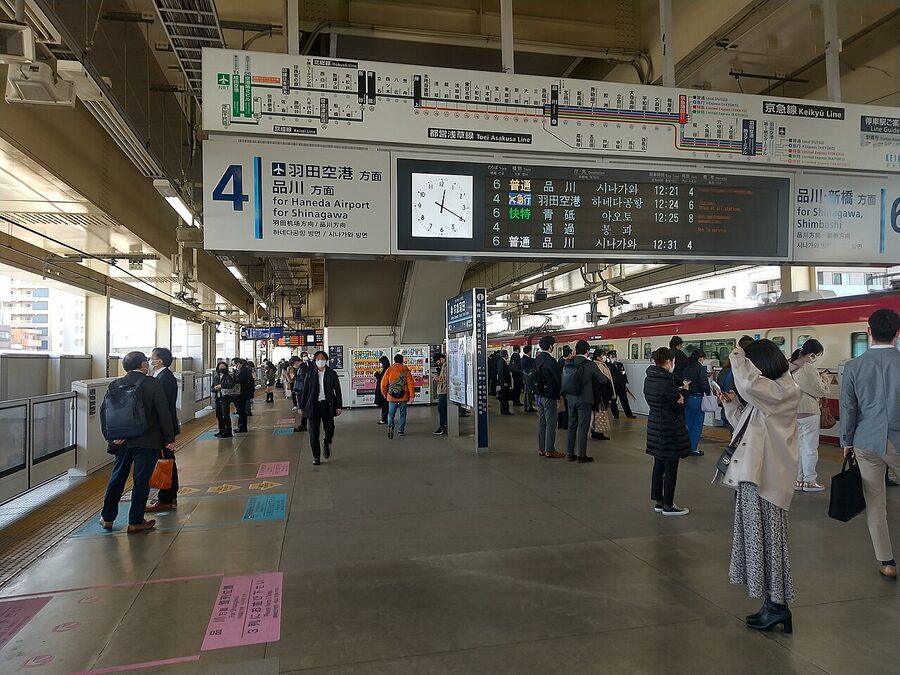
The headline run is the Airport Limited Express (Airport Kaitoku, エアポート快特), which runs non-stop from Sengakuji and Shinagawa to Haneda Airport Terminal 3 and Terminal 1·2. Six minutes from Shinagawa to Keikyu Kamata, then a U-turn onto the Airport Line, then two more stops, and you are at the gates. Eighteen minutes total. From Sengakuji, where the train through-runs from the Toei Asakusa Line, it is twenty minutes. From Yokohama (via Keikyu Kamata) it is twenty-five.
The competition is the Tokyo Monorail, which runs from Hamamatsucho on the JR Yamanote Line. The Monorail is a fine ride, with the better water views as you cross Tokyo Bay, but it costs ¥500 versus Keikyu’s ¥327 to Shinagawa, and it takes 25 minutes including the walk from the Yamanote Line. Keikyu drops you straight onto the Asakusa Line for central Tokyo without changing trains. For someone arriving at Haneda jet-lagged with a suitcase, the Keikyu wins on every metric except possibly the views.
The trick at Keikyu Kamata
The one quirk worth knowing is the reverse at Keikyu Kamata. The Airport Line branches off the main line here, but the geometry of the junction means most Airport services from Shinagawa pull into the upper-level platform at Kamata, then back out southbound, then U-turn west onto the Airport Line. The train physically reverses. If you are sitting forward on the way in, you are sitting backward by the time you reach Otorii. The 2100’s cross-seats turn automatically at the terminus, but the in-flight reverse at Kamata is left as is. Locals know to face the centre of the carriage; first-time travellers spend the second half of the journey peering over their own shoulders.
The Hanetoku ticket and the airport bargain
If you are landing at Haneda and going on to a Tokyo Metro or Toei subway destination, the Keikyu Hanetoku Ticket & Tokyo Subway Ticket is the buy. It bundles a one-way Keikyu ride from Haneda to Sengakuji with a 24, 48, or 72-hour Tokyo Subway pass. From ¥1,200 for the 24-hour version, which is ¥73 less than buying the Keikyu fare and the subway pass separately, and the subway pass is ¥800 on its own anyway. Available at Haneda Airport Terminal 3 ticket gates and at the Keikyu information counter on the arrivals floor. Most travellers buying it for the first time miss that you can also get an Asakusa Line through-fare bundled in. Worth asking.
For the return: the same ticket exists in reverse, but you can also just tap in with an IC card and pay the ¥327 at the gate. Keikyu does not run separate “airport surcharge” pricing the way some operators do, which is partly why the Monorail’s ¥500 looks so steep next to it.
The 2100 series, and the Siemens song
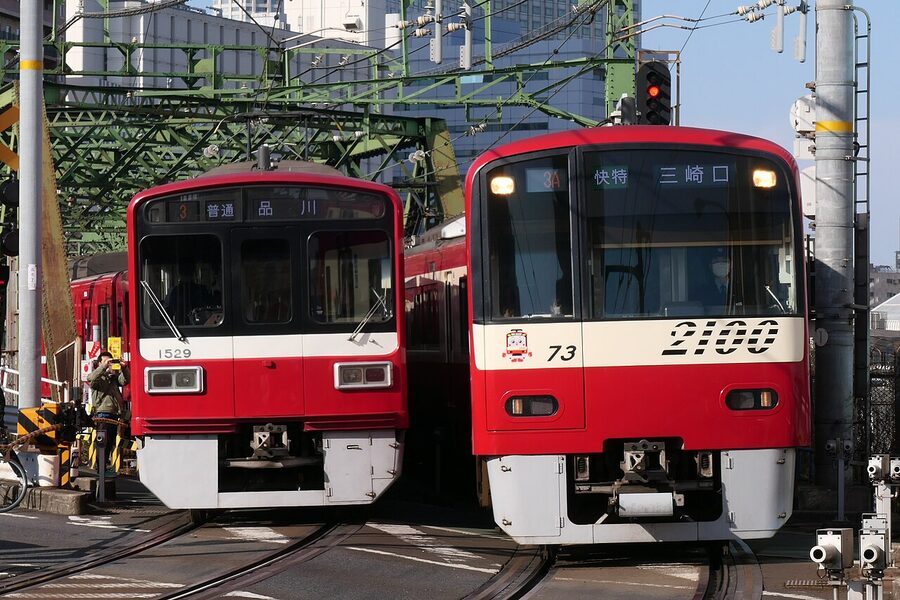
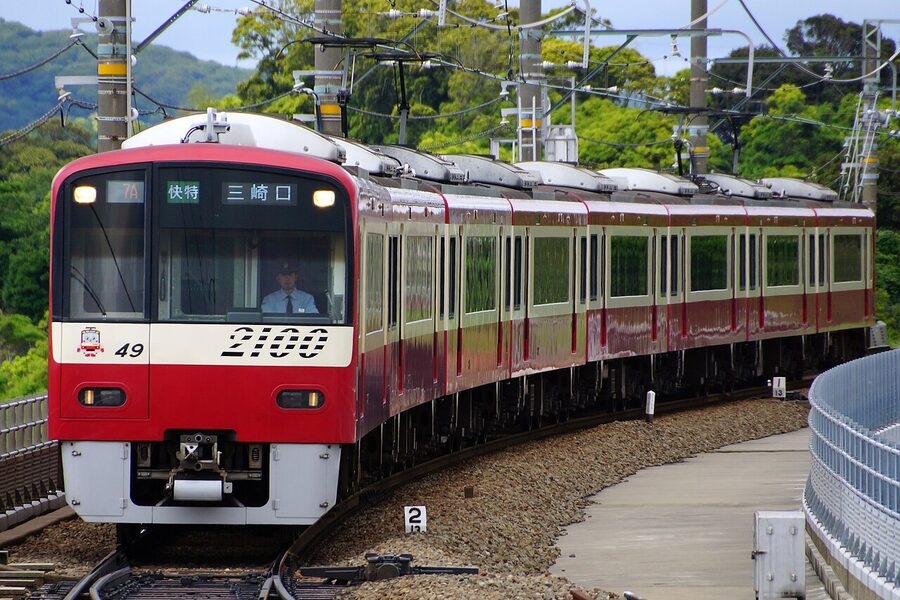
The 2100 series is the Keikyu train you photograph if you only photograph one. It is the only major commuter train on a Tokyo private railway with two doors per side and forward-facing cross-seats, the kind of layout normally reserved for limited express services that demand a surcharge. On Keikyu it costs the base fare. Ten 8-car sets, 80 cars total, all built between 1998 and 2000 by Tokyu Sharyo and Kawasaki Heavy Industries.
Why Siemens motors, and why the song stopped
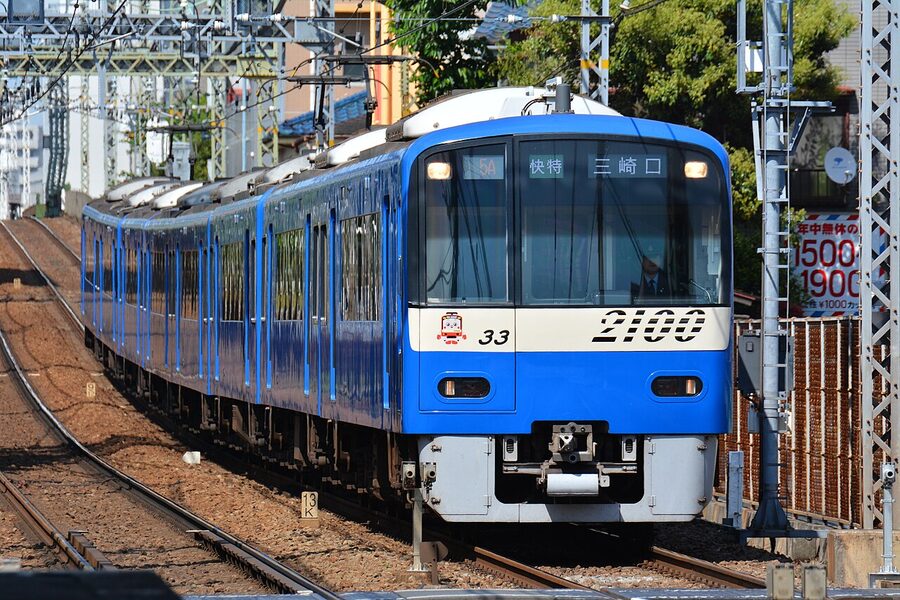
The interesting thing about the 2100 is what is underneath it. To hit a corporate target of cutting per-car cost by ¥10 million versus the previous 2000 series, Keikyu sourced the traction motors and VVVF inverters from Siemens in Germany, the brake compressors from Knorr-Bremse, the high-speed circuit breakers from Sécheron in Switzerland, and the seats from Norwegian manufacturer Georg Eknes. The Siemens GTO inverters made a distinctive musical scale on acceleration, what Japanese railfans called the “Doremifa inverter” (ドレミファインバータ), a chromatic rising tone that moved through approximately Do, Re, Mi, Fa as the train accelerated through the lower speed band. It is one of the most recorded train sounds in Japan; YouTube is full of it.
The song stopped in stages between 2014 and 2021 as the original Siemens IGBT and GTO units were replaced with domestic Toshiba IGBT inverters. Keikyu issued the official last-run notice on the final unaltered set on 16 July 2021. If you board a 2100 today and hear a more conventional rising whine instead of the chromatic scale, that is why. The car is still the 2100; the soundtrack is not.
Wing service and the cross-seat trick
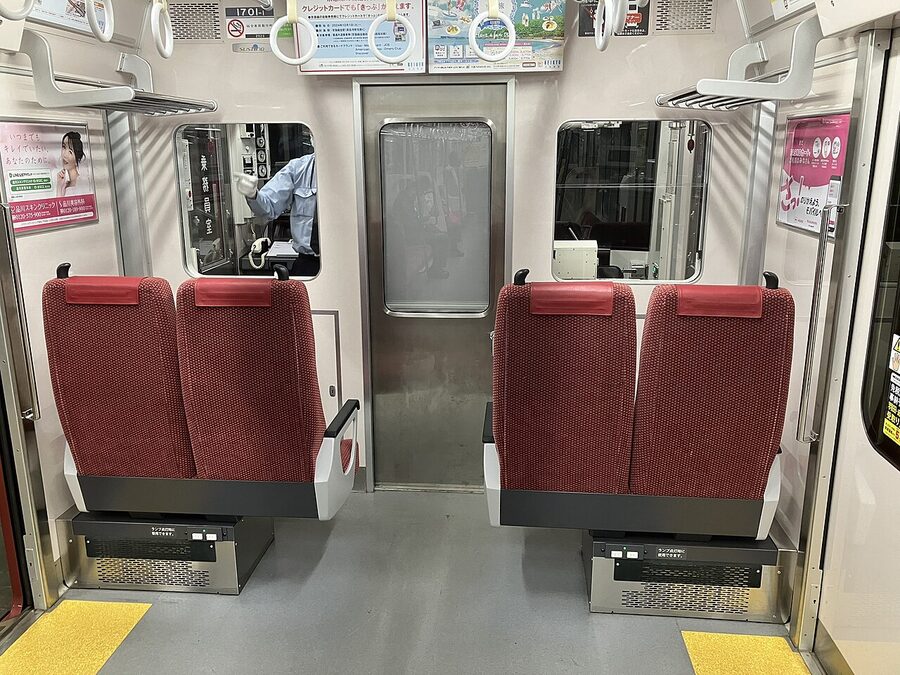
The 2100 also runs the Morning Wing and Evening Wing reserved-seat commuter services. ¥300 surcharge on top of the base fare buys you a guaranteed seat from Shinagawa or Sengakuji to Yokosuka-chuo or Misakiguchi in the evening, or in reverse in the morning. The seats are the same cross-seats as the regular service; the difference is the reservation. On a 5-day pass it works out cheap. The Wing services do not run through to the Asakusa Line; the 2100 does not enter the subway at all, partly because the cross-seat layout would jam against the rush-hour passenger flow at Asakusa Line stations.
The cross-seats themselves are transverse and unidirectional in normal service. At Misakiguchi or Keikyu Kurihama, where the train terminates, the seats rotate automatically, the whole car at once, on a thirty-second cycle that is genuinely worth standing on the platform to watch. You cannot manually rotate them yourself; the rotation is centralised.
The new 1000 series. The workhorse that does everything.
If the 2100 is the headline, the new 1000 series is the network. There are more 1000s on Keikyu than every other active class combined, and as of March 2025 there are 378 cars across stainless and aluminium body variants, in 4-, 6-, and 8-car formations. They have been in production since 2002 and are still being built. The latest sub-class, the 1890-bantai introduced in 2021, has fitted toilets, transverse seats that convert to longitudinal during peak hours, and is mostly used on the longer Wing runs out to Misakiguchi.
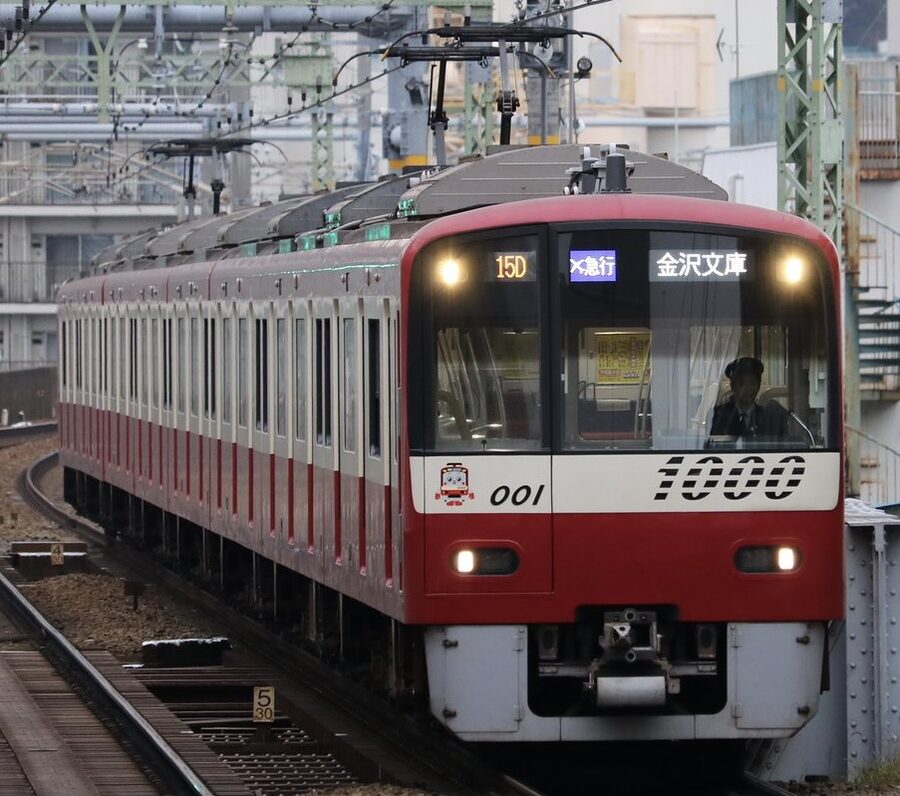
Aluminium versus stainless: what changed in 2007
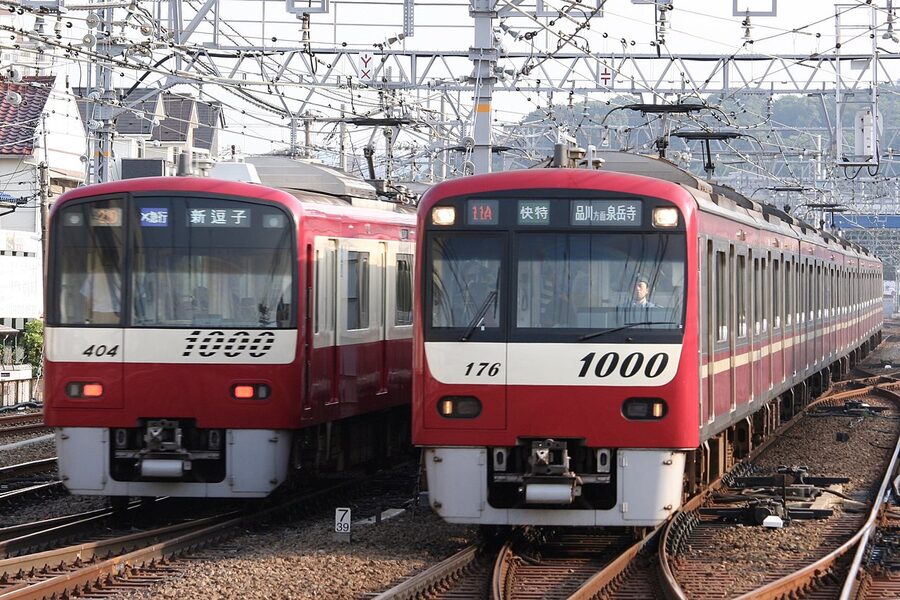
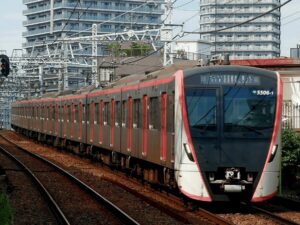
The first 1000s, from 2002 to 2006, were aluminium-bodied and fully painted Keikyu red, in the tradition of the older 600 and 1500 series. Then from March 2007 the body construction switched to stainless steel, both because the aluminium tooling at Tokyu Sharyo was reaching end of life and because Keikyu wanted to lower lifetime maintenance costs. The catch was that bare stainless looked nothing like the operator’s flagship red. The compromise: paint the cab front in red, then apply red carbody film along the sides, with the joints between car bodies left bare stainless. From 2017 the company went further and painted the entire side red on later builds. Side by side at Shinagawa you can pick the variant by looking at the joint edges.
The 1800 sub-series and the through-running detail
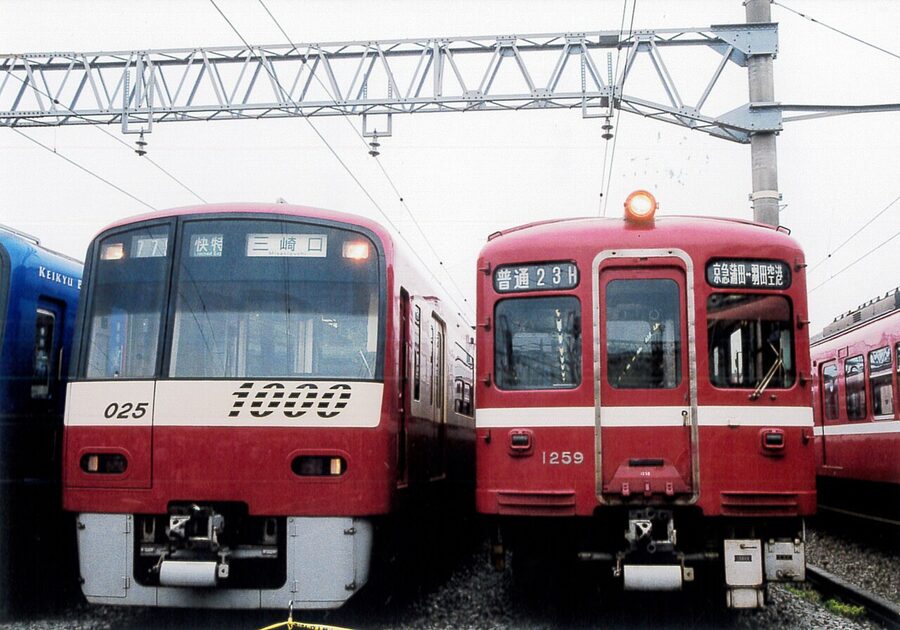
The 1800 sub-series, from 2016, is a 4-car version with full-width emergency doors at the cab front, designed specifically for through-running into the Toei Asakusa Line and beyond to Keisei. The full-width door is required by Toei’s subway evacuation standards. If you are riding from Haneda all the way to Narita on a single train, the train you are on is most likely an 1800. The 1800s are also the trains the through-running planners assign first to the longest runs, because the toilet-free 8-car formations would be hard going on a 110 km journey.
The 1890 toilet experiment
The 1890-bantai, introduced in February 2021, is the most distinctive 1000 sub-series and the only Keikyu commuter train with a toilet. It also uses Le-Croissant-style seats that rotate from cross to longitudinal mode depending on the time of day, controlled centrally from the driver’s cab. Daytime: cross-seat. Rush hour: longitudinal. The mechanism is a Japanese first for a regular commuter train. There are only two 4-car sets in the 1890 sub-series so far, and they are kept on Morning and Evening Wing duty plus selected Misakiguchi runs. If you spot one on a Friday evening Wing service, that is the one to ride.
The 600 and the Twingle Seat
The 600 series (third generation, to distinguish from earlier Keikyu trains that shared the model number) entered service on 29 March 1994 as the company’s first VVVF-controlled, aluminium-bodied subway-through-running unit. Eighty-eight cars across fourteen sets. They were built specifically to replace the original 1000 series on the Toei Asakusa Line through-runs, with full-width emergency doors and improved safety equipment to meet subway standards.
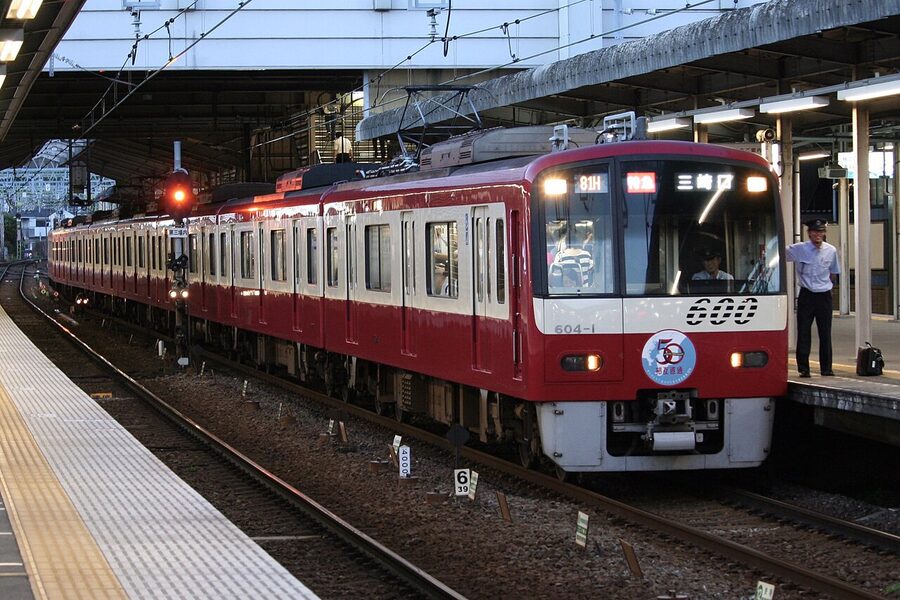
The Twingle Seat: a clever idea that did not quite work
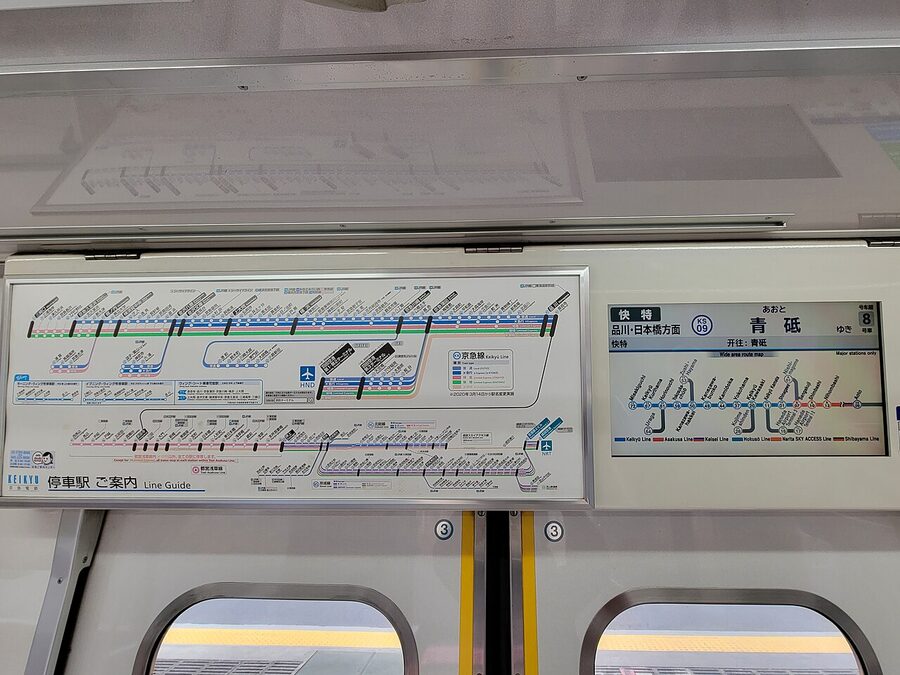
The 600 launched with what Keikyu called the Twingle Seat (ツイングルシート), a Twin + Single hybrid layout where the door-end seats were standard longitudinal but the centre-of-car seats were cross-seat, with a mechanism to fold them flat against the wall when packed commutes needed the floor space. It was a good idea on paper. In practice, switching the seat in service required staff intervention, and during heavy rushes the cross-seat cars filled up first while the longitudinal cars stayed manageable, which made boarding uneven across the train. By 2005 the conversion mechanism was being disabled on selected cars, by 2010 the Twingle Seat had been formally replaced with longitudinal seating across the entire fleet, and the original cross-seat hardware was scrapped. The 600 today is a conventional longitudinal commuter train.
What survives is the through-running role. The 600 still runs Toei Asakusa Line and Keisei through-services daily, and the 4-car formations work the Daishi Line and shorter Yokohama-Kawasaki sectors. The remaining 8-car sets handle full main-line service.
The 1500 series and the steel-aluminium split
The 1500 series is the workhorse-veteran on the network. Production ran from 1985 to 1993, 166 cars built, and the early units used a steel body while the later batches switched to aluminium in 1988. Some original 1500s are now over forty years old. They are still in everyday revenue service, having been re-equipped twice with new traction (first to GTO VVVF in the early 1990s, then to IGBT VVVF from the mid-2010s).
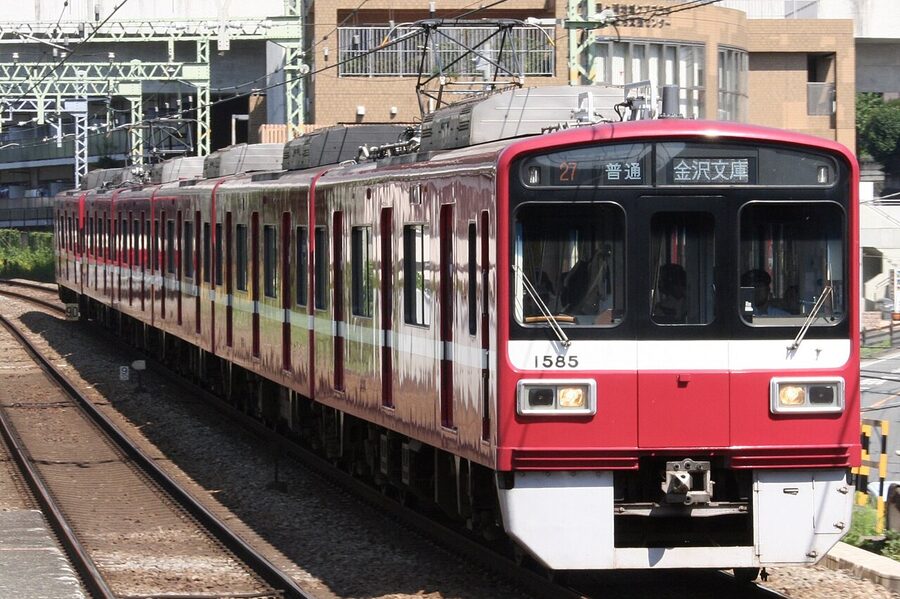
How to tell a 1985 1500 from a 1993 1500
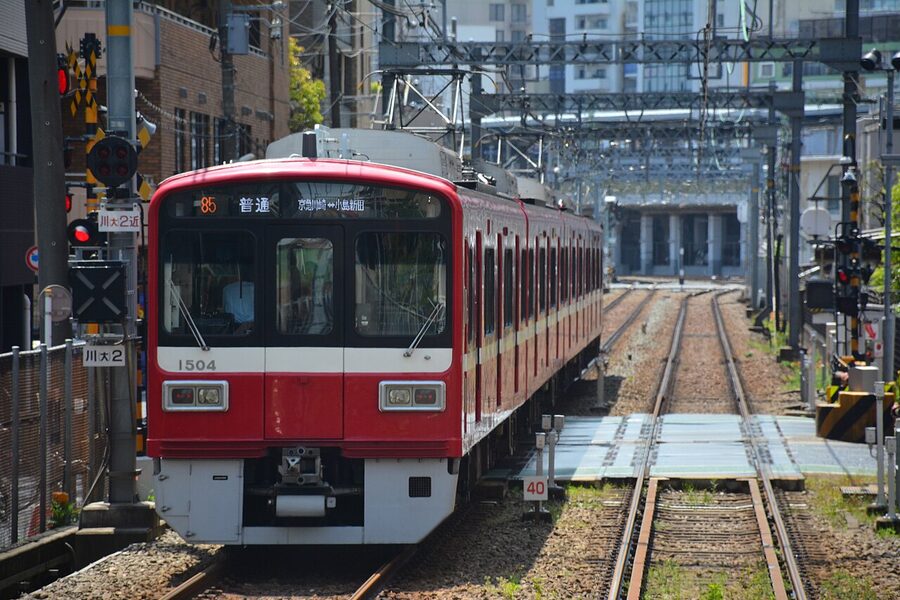
Three giveaways. First, the doors: the steel-body cars have slightly narrower door pockets and a visible weld line above each doorway. Second, the body section between the bogies: aluminium cars have a flatter, wider profile (2,830 mm versus 2,798 mm), so they look subtly broader at platform height. Third, the cab fronts: the original steel cars used field-chopper control and had a slightly different headlight cluster. By the time the cars reached their second rebuild, even most of the steel cars had been re-bodied with aluminium panels at the doorway, so the difference is now finicky to spot from the platform. From inside the carriage there is essentially no difference except interior trim.
The Daishi Line in retirement years
The Daishi Line, the original 1899 alignment from Keikyu Kawasaki to Kojimashinden, runs 4-car sets only. As of 2026 the 1500 dominates this branch, with newer 1000-series 4-car sets in rotation. The Daishi Line is also where the bright-red Akafuda-go commemorative wrap appears on a 1500 set on selected days, a callback to the original 1899 service livery. Worth a Saturday morning visit if you are a livery completionist.
The retired stock that still defines the company
Keikyu’s retired-stock list is unusually deep, and the trains that left service still shape what the network does today. The 1000 series first generation (1959 to 2010), unrelated to the new 1000 by anything except the model number, was the train that first demonstrated standard-gauge through-running into the Toei Asakusa Line on 4 December 1960. The 800 series (1978 to 2019) was the standard 4-door commuter that handled local services for forty-one years. The 2000 series (1982 to 2018) was the predecessor cross-seat flagship before the 2100, and demonstrated that cross-seat 2-door layouts could work on a Tokyo private railway at all.
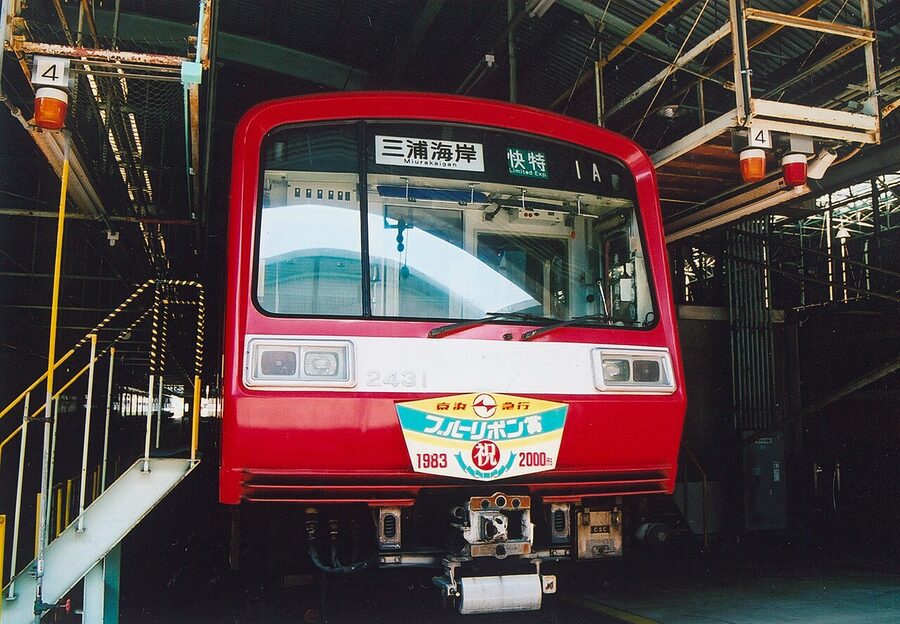
The 230 series, and what a 1930s suburban EMU looked like
The oldest surviving Keikyu rolling stock is the 230 series, introduced in 1930 by the Shonan Electric Railway and absorbed into the Keihin Express in 1941. The 230s ran in revenue service until the early 1980s and one cab section is preserved at the Keikyu Museum in Minatomirai. Two-axle trucks, slatted wooden roof rails, hand-cranked headlamps, the whole 1930s suburban interurban look. If you have read the Tokyu history piece about the wartime Daitokyu absorption that briefly merged Keikyu, Tokyu, and the Odakyu lines under one operator from 1942 to 1948, the 230 is the train that survived all of it.
Through-running: the Asakusa-Keikyu-Keisei spine
The single most consequential operational decision in Keikyu’s modern history was the agreement, signed in the late 1950s and implemented on 4 December 1960, to through-run with the Toei Asakusa Line and onwards into Keisei. From day one the Toei Asakusa Line was built on 1,435 mm standard gauge specifically because Keikyu and Keisei already ran on it. Both private operators committed to building all future stock to subway through-running specification, and the Toei subway committed to building no termini in the central section: the line opens to the Keikyu network at Sengakuji on the south side and the Keisei Oshiage Line on the north side.
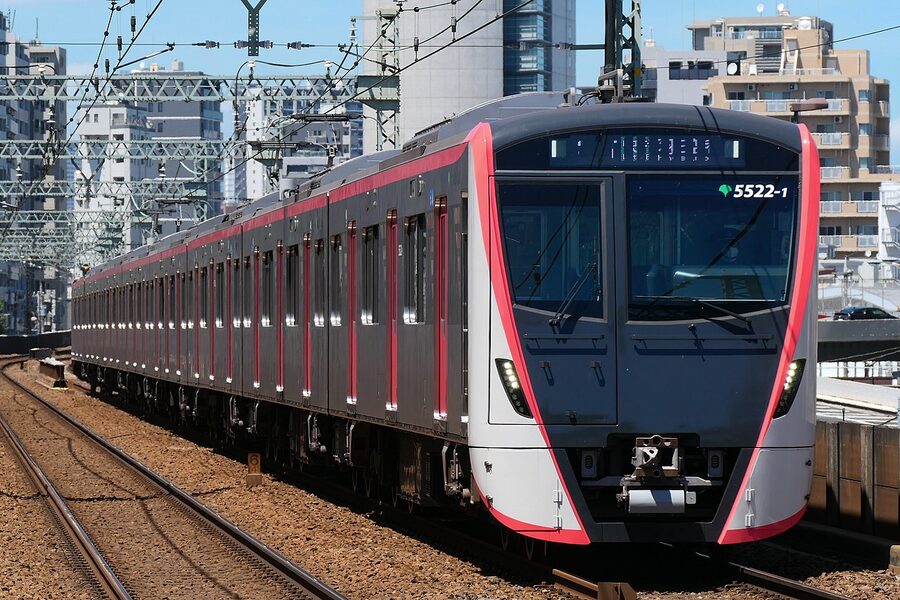
The longest single-train commute in Tokyo
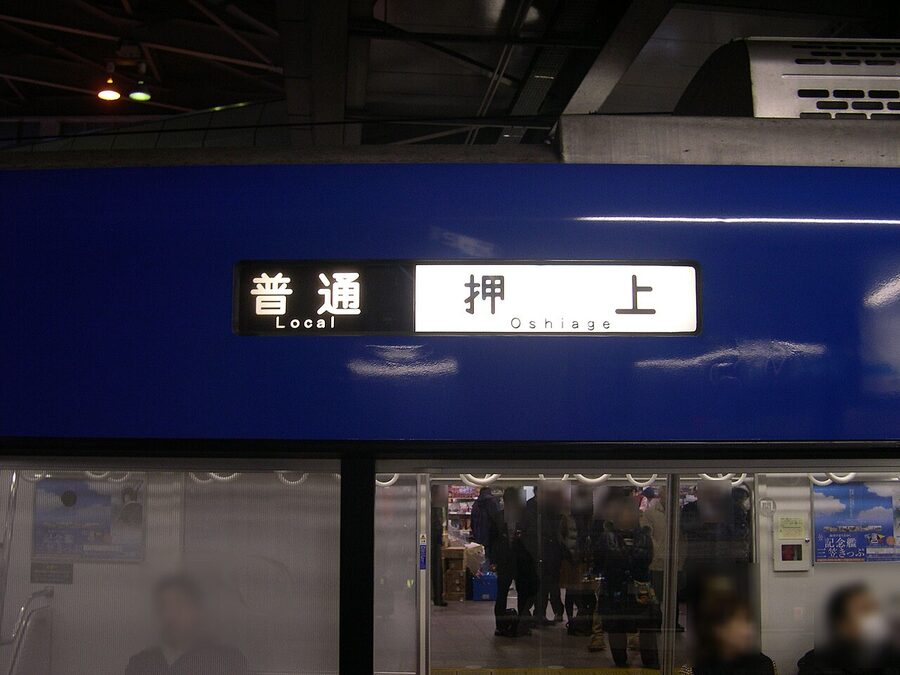
The Misakiguchi to Narita Airport Terminal 1 run, when it operates as a through-service, covers approximately 110 km across three operators’ lines. It is the longest single-train commute in metropolitan Tokyo. About four trains a day operate the full route in each direction. Most through-running trains turn at Aoto on the Keisei side or at Sengakuji on the Keikyu side, but the small handful of full Misakiguchi-Narita workings are popular with railfans for obvious reasons. The fare is straight Keikyu plus Toei plus Keisei distance-based, totalling around ¥1,800 IC. It is faster than going through central Tokyo and changing twice; it is also the only way to do the Haneda-Narita transfer without leaving a train.
What rolls through and what stays home
Not every Keikyu series goes onto the Asakusa Line. The 2100 stays home, because of the cross-seat layout and the 2-door configuration that does not match Toei’s 4-door subway loading. The 600 and the new 1000 are the through-runners; specifically the 1800 sub-series of the 1000, which has the full-width emergency cab door required by subway evacuation rules. The 1500 in current configuration is technically certified for through-running but in practice rarely leaves the Keikyu network. If you board a Keikyu train at Sengakuji and find yourself on the Toei Asakusa Line a minute later, the train under you is almost certainly a 600 or a 1000-1800.
Read this one alongside
If you have already read the Toei trains piece and the Tokyo Metro overview, the gauge and through-running story here will land. The Toei lines split into two camps: the Asakusa Line on Keikyu/Keisei standard gauge, and the Mita and Shinjuku Lines on JR-compatible narrow gauge. The Oedo Line is its own quirk, on iron-wheel linear-motor stock and 1,435 mm standard gauge but with no through-running. Keikyu plays only with the Asakusa Line, and that is the rolling stock you see in everyday service.
Riding it today: services, fares, and the IC card line
Five service patterns, increasing in stops: Local, Express, Tokkyu Limited Express, Kaitoku (Rapid) Limited Express, and Airport Limited Express. There is no surcharge for any of them. You tap in with a Suica or Pasmo at any station gate, board whichever service is at the platform, tap out at the destination. The fare display panels above each platform show the next four trains by service type, and Airport-bound services are flagged with a small aircraft icon. The Kaitoku is the one to ride if you have a choice; the Tokkyu is fine; the Airport Limited Express is reserved for airport runs and skips the intermediate stations between Sengakuji/Shinagawa and Keikyu Kamata.
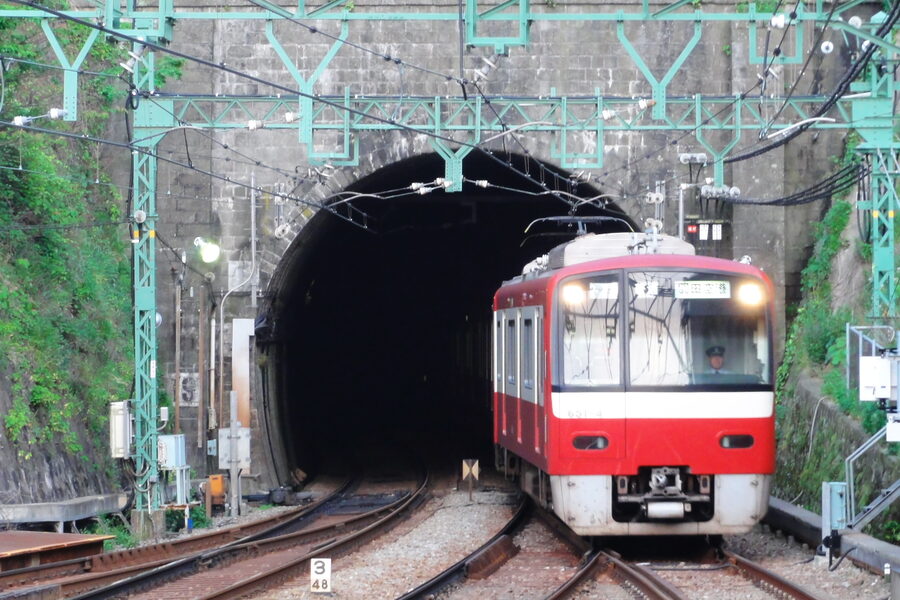
What an IC card actually buys you
Suica, Pasmo, ICOCA, and the rest of the mutual-acceptance brood all work on Keikyu. The IC fare is ¥1 to ¥3 cheaper than the paper fare, which is meaningful only if you ride the network often. The bigger benefit is gate-to-gate convenience: you can tap from any JR/Tokyo Metro/Toei station, ride through Sengakuji onto Keikyu, and tap out at Haneda without ever buying a separate ticket. The fare calculation handles the operator transitions automatically. Through-running into the Asakusa Line and on to Keisei works the same way; you tap in at Tokyo Station on the Yamanote Line and tap out at Narita Airport, and the system charges you the cumulative distance fare across all three operators.
The Wing Pass and the Wing Ticket
For commuters there is the Keikyu Wing Pass, a monthly seat reservation product. For tourists and infrequent travellers the Wing Ticket is per-trip, ¥300 on top of the base Keikyu fare, available via the Keikyu Line app or paper-machine at Shinagawa, Sengakuji, Yokohama, and the major Yokosuka stations. Worth it on a peak-hour run when the standard service is standing room only. Off-peak, when you can sit on a Kaitoku 2100 cross-seat for ¥327 to Yokohama, it is not.
The Misaki Maguro Day Trip
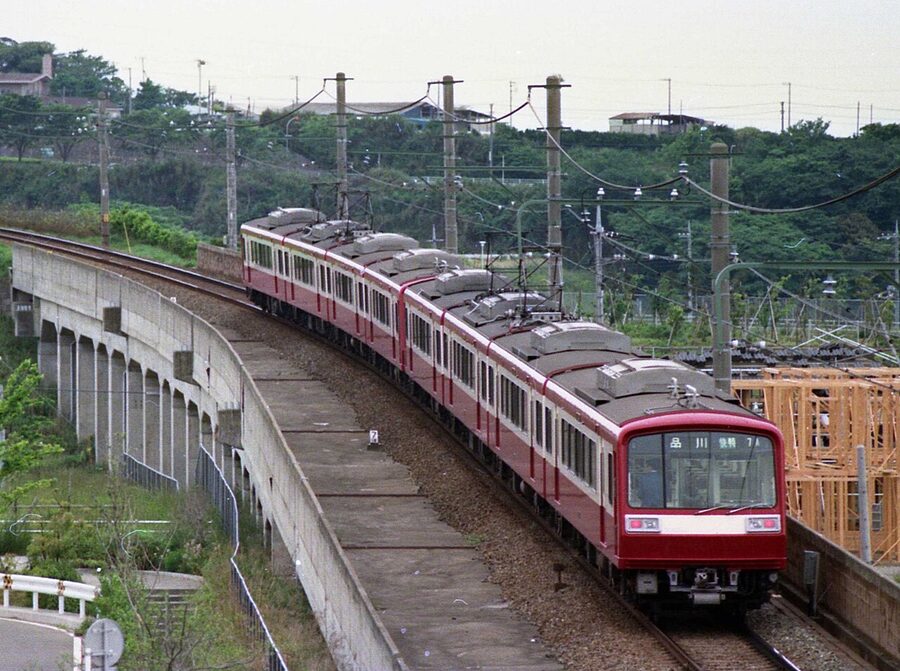
The Misaki Maguro Day Trip Ticket is the ticket I have bought most often for non-rail reasons. From ¥3,750 on the Keikyu app, ¥4,250 paper, it covers a one-day round-trip Keikyu fare from any station to Misakiguchi at the bottom of the Miura Peninsula, plus unlimited Keikyu bus rides in the Misaki area, plus a tuna lunch ticket at one of about 25 participating restaurants in Misaki Port, plus a souvenir or attraction-admission voucher. The maguro itself is the point; Misaki has a working tuna fishing fleet, the morning auction is real, and the harbour-side restaurants serve genuinely good chu-toro and o-toro at lunch prices. The Keikyu run from Shinagawa to Misakiguchi takes about 75 minutes on the Kaitoku, with the 2100 cross-seats earning their keep.
Kanazawa-Bunko, where the trains are made
Most Keikyu rolling stock is built or maintained at Kanazawa-Bunko, the company’s main depot and works in Yokohama. The site is also home to the Tokyu Sharyo Yokohama works (now J-TREC after the 2012 reorganisation), which built most of the network’s aluminium 1500s, the 600s, and the 2100s. New stock arrives by rail trailer along the main line from the Hitachi Kasado plant in Yamaguchi or directly from J-TREC Yokohama. Withdrawn stock heads the other way, mostly to scrap, occasionally to preservation at the Keikyu Museum.
The Keikyu Museum, briefly
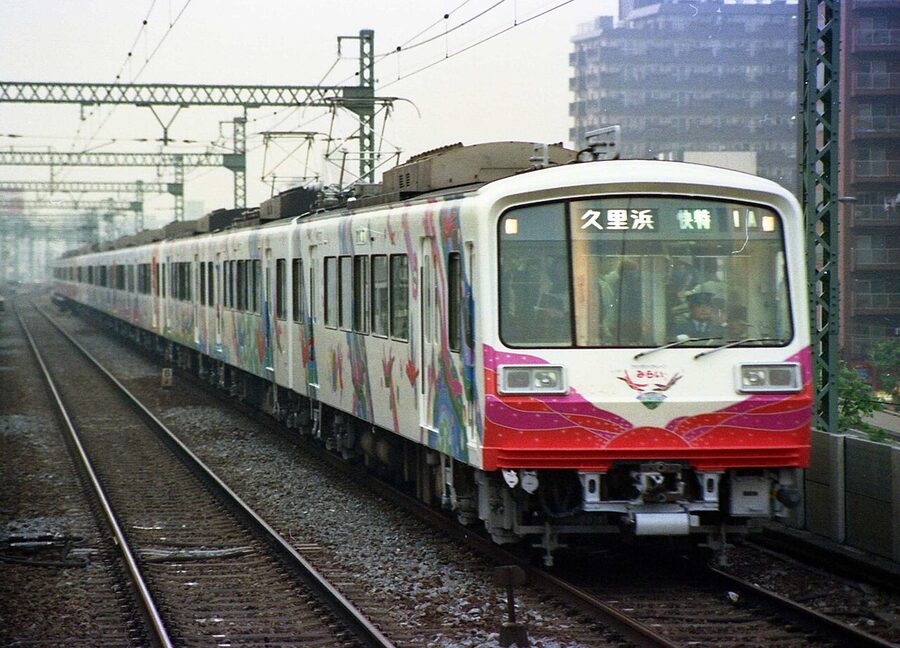
The Keikyu Museum opened in January 2020 inside the company’s Yokohama HQ at the Minatomirai 21 development, two minutes’ walk from Shin-Takashima Station on the Minatomirai Line. Free admission. The headline exhibit is the preserved 230-series Deha 236 cab, restored to its 1930s appearance; a smaller display covers the 1000 and 800 series with cab cutaways. There is also a working model railway and a driving simulator that uses real 2100 series cab equipment. Closed Tuesdays. If you have an hour in Yokohama anyway, worth the stop.
The accidents the company will not forget
Keikyu has had a small number of serious accidents in its modern history, mostly mudslides on the cliff sections of the Main Line south of Yokohama. The worst was the 24 September 2012 derailment between Oppama and Keikyu Taura, when an eight-car train hit a mudslide of about 12 m height triggered by typhoon rain. The first three cars derailed, twenty-eight people were injured, and the line was shut for around 55 hours during clean-up. The company has since installed enhanced ground-monitoring sensors on the cliff sections and rebuilt the at-risk retaining walls.
The other watershed was 5 September 2019, when a Keikyu Limited Express collided with a 13-tonne fruit lorry that had stalled at a level crossing in Kanagawa-Shinmachi. The train derailed, the lorry driver was killed, and 35 passengers were injured. The investigation found that Keikyu’s emergency-stop signalling at the crossing had functioned correctly but the train was already past the trigger point at the time of the collision. The company subsequently installed forward-facing imaging cameras on the cab and revised the level-crossing speed limit on the Main Line.
The strange case of the missing toilets
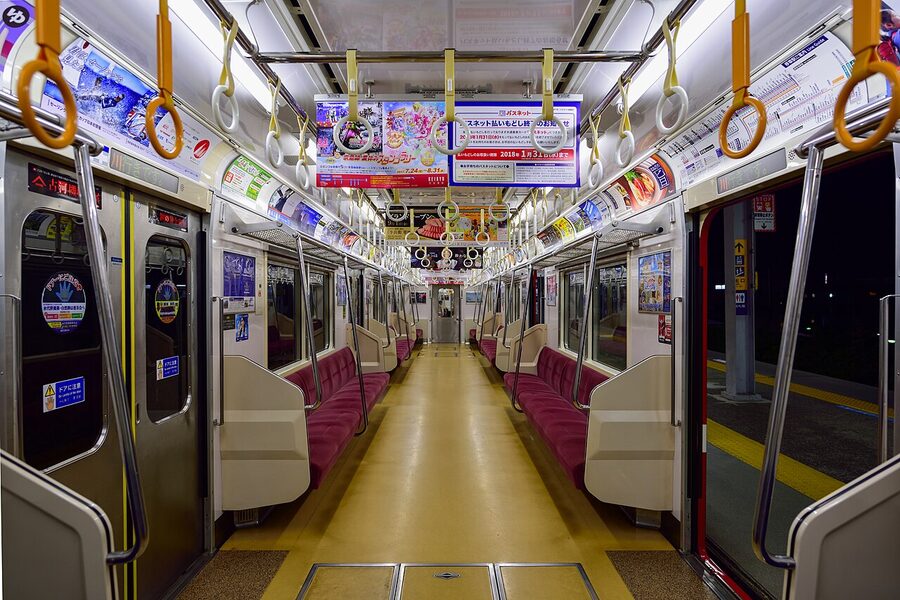
Keikyu is one of the only major Tokyo private railways without toilets on most of its commuter stock. The 2100 has none. The 600 has none. The 1500 has none. Even the Wing services do not get toilets on most runs. The exception is the 1890-bantai 1000 sub-series introduced in 2021, which has them, and which is therefore the train of choice for a Friday evening Misakiguchi run. The reason is partly tradition, partly the through-running constraint (Toei subway stock has no toilets, and the Keikyu fleet is built to be cycle-compatible), and partly the calculation that the longest non-stop Keikyu run, Shinagawa to Yokosuka-chuo on the Wing, is about 50 minutes. Most passengers can manage. Most.
What is coming next
Two items on the horizon. First, the elevation of the Shinagawa-Shimbamba section, currently underway and due for completion in 2029, will eliminate the last few level crossings on the inner Main Line and allow the company to run higher-frequency Airport Limited Express services without conflicts at Kitashinagawa. Second, a new commuter sub-series, provisionally referred to as the 1900 in railfan press, is in design at J-TREC for late-decade introduction. Whether it appears as a full new model or a further 1000 sub-series remains to be seen. The pressure is partly the ageing 1500 fleet (some units are now over 40 years old) and partly the company’s longer-term plan to standardise on a single core platform across the network.
The verdict
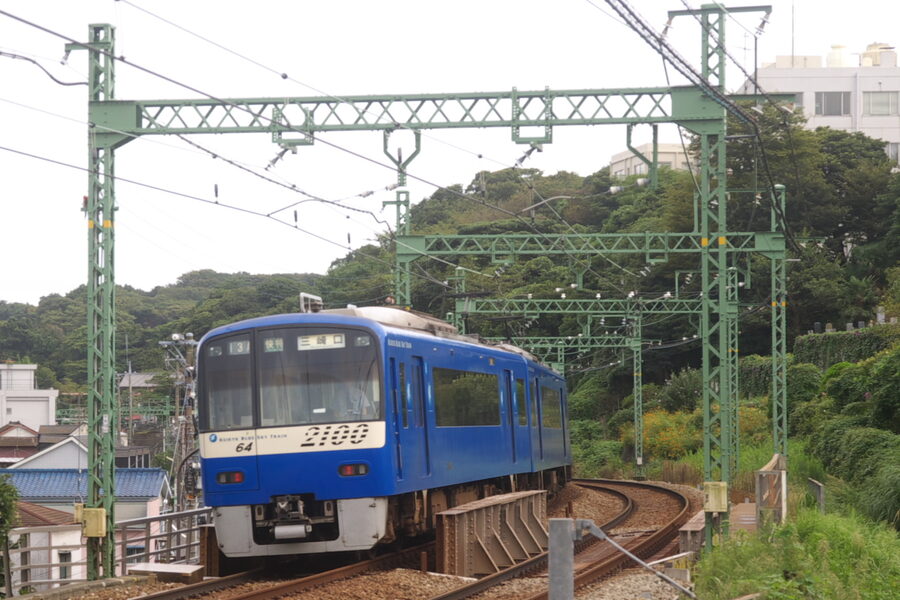
If you are going to Haneda from central Tokyo and you are not already at Hamamatsucho with a Yamanote ticket, take Keikyu. If you are deciding between Tokyo’s private operators on a one-week trip and you want to ride the one with the most distinctive rolling-stock culture, ride Keikyu. If you have read the Odakyu piece and want to compare the cross-seat philosophy on a commuter network, the 2100 is the comparison: where Odakyu reserved its cross-seats for the Romancecar (which charges a premium), Keikyu put its cross-seats on the everyday Kaitoku and asked for nothing extra. That is the company’s self-conception in one design choice. They do not believe a comfortable seat is a luxury good.
Back at Shinagawa, platform 2, the destination board is rolling again. The next service is a Tokkyu (not Airport, not Kaitoku) for Misakiguchi via Yokohama, and the train pulling in is a 1500 in its IGBT-rebuilt configuration. The cross-seats on the 2100 you almost boarded earlier are sitting at Keikyu Kurihama, rotating through their thirty-second auto-flip. The Monorail leaves Hamamatsucho in three minutes. The Keikyu leaves Shinagawa in two. You already know which one you are taking, and somewhere in central Tokyo there is a 1000-1800 nosing into Sengakuji from the Asakusa Line, having started at Narita Airport ninety minutes ago. None of this is fast in absolute terms. All of it is faster than any of the alternatives. That is what Keikyu sells you, every day, since 1899, on standard gauge that nobody else in Tokyo runs.


.jpg)


.jpg)

.jpg)

.jpg)