
The Keio Liner and the Rest of Keio
22 February 2018, platform 1 of Shinjuku Station underground, 17:00 sharp. The first scheduled Keio Liner pulled out for Keio-Hachioji with a 5000 series II ten-car set, KH-39, and a small group of railfans on the platform photographing the departure board because Keio had not sold a seat on a commuter train for ninety years and now suddenly was. The fare was ¥410. The trip was 43 minutes. The seats had a hinge that swung 90 degrees on demand, locking into bay-cross or sliding back into longitudinal-bench format depending on whether the train was running as a Liner or as plain commuter stock. None of the rest of Keio’s rolling stock could do that. None of it had ever needed to. The 5000 II was the operator’s first serious attempt to charge for sitting down, and the way it works tells you what the rest of the fleet is shaped around.
In This Article
- Why the Keio fleet looks small but runs three railways
- Three gauges, three voltages, one network
- Meidaimae is the seam
- Through-running with Toei Shinjuku is the through-line
- The 5000 II: an essay in compromise
- The seat that does two jobs
- The bits that look hand-built
- The lithium battery under the floor
- The 8000 series and the rest of the workhorse fleet
- 8000 series: the express backbone
- 9000 series: the through-runner
- 7000 series: the workhorse that wouldn’t die
- The new fleet bookends: 2000 II and 1000 II
- 2000 series II: the new commuter, three weeks in service
- 1000 series II: the Inokashira’s only fleet
- Riding the Keio Liner today
- Down-direction service: Shinjuku to the suburbs
- Up-direction service: the morning commute
- Fares, reservations, the app
- The Mt TAKAO weekend service
- Retired and preserved fleets at Keio Rail-Land
- The original 5000 series
- The pre-war stock
- The Dewa 5000 work train
- The branch lines and what runs on them
- The Takao Line
- The Sagamihara Line
- The Dobutsuen and Keibajo branches
- The Inokashira Line is its own world
- The 1000 II’s seven liveries
- Why the line is faster than JR for Shibuya-Kichijoji
- Practical questions, briefly
- Is there an English app for Keio?
- Can I use a JR Pass on Keio?
- Which Keio service is fastest to Hachioji?
- Which is the most scenic line?
- How early does the first train run?
- What to ride and what to skip if you only have one day
- Back to platform 1, Shinjuku
The naming was the first hint that Keio was approaching the product in its own particular way. In April and May 2017 the operator ran a public vote on what to call the new service. Five candidates: “Keio Liner”, “Keio Smart Liner”, “Keio Prime Liner”, “Luxpress” and “WESTAR”. About 24,000 votes came in. The most boring option, “Keio Liner”, won with roughly 6,300 of them. There was no kanji play, no foreign-loan-word flourish, no pretence at luxury. Keio took the result, printed the result on the headboards, and got on with it. That tone runs through the rest of the fleet too. This is a guide to what Keio currently runs on its 88.3 km of track, why the trains look the way they do, and which ones are worth the trouble of seeking out. The matching operator-history piece is a separate article on Keio Electric Railway; this one is about the rolling stock.
Why the Keio fleet looks small but runs three railways
The first thing to know is that Keio is not one railway. It is three, stitched together at Meidaimae and a couple of other interchanges, and the trains are designed for the railway they run on, not the operator’s brand. There is the main Keio Line family, 84.7 km of route running on 1,372 mm gauge from Shinjuku out west to Keio-Hachioji and Hashimoto, with the Takao, Sagamihara, Keibajo and Dobutsuen branches feeding off it. There is the Inokashira Line, 12.7 km on 1,067 mm narrow gauge from Shibuya to Kichijoji, acquired in the 1940s and never regauged because the cost would not have penciled out. And there is the Toei Shinjuku Line through-service, which puts Toei 10-300 series and Keio 9000 series sets onto each other’s metals at Sasazuka and Hashimoto.
Three gauges, three voltages, one network
1,372 mm is an awkward width by any standard. Wider than the 1,067 mm narrow gauge used by every JR commuter line in Tokyo, narrower than the 1,435 mm standard gauge used by the Shinkansen, the Toei Asakusa, and Keisei. It is a Tokyo-tram gauge, inherited from the Meiji-era street-railway companies that became Keio’s spine, and it locks Keio out of through-service to almost everyone. The exception is Toei Shinjuku Line, which was deliberately built to 1,372 mm in the 1970s to allow exactly this through-running, and it is the only mainline subway in Japan that runs on the gauge. Tokyo Metro is on 1,067 mm or 1,435 mm depending on the line. Toei Asakusa is on 1,435. Even Toei Mita, two stops on a sister Toei subway from Toei Shinjuku, is on 1,067 mm.
The Inokashira Line is its own creature again. It came into Keio’s hands in 1948 as part of the post-war breakup of the wartime Daito Kyuko conglomerate, and it kept the 1,067 mm gauge it had been built on by Teito Electric Railway in 1933. There has never been an operational reason to regauge it, because there is nothing to through-run with: the line dead-ends at Shibuya at one end and Kichijoji at the other, neither of which connects to any Keio Line track. So Keio runs two electrically incompatible fleets, with two separate maintenance depots (Wakabadai for the Keio Line family, Tomizaka for the Inokashira), and the two never share rolling stock. A 1000 series II from the Inokashira will never work a service on the Keio Line, and an 8000 series from the Keio Line will never work the Inokashira.
Meidaimae is the seam
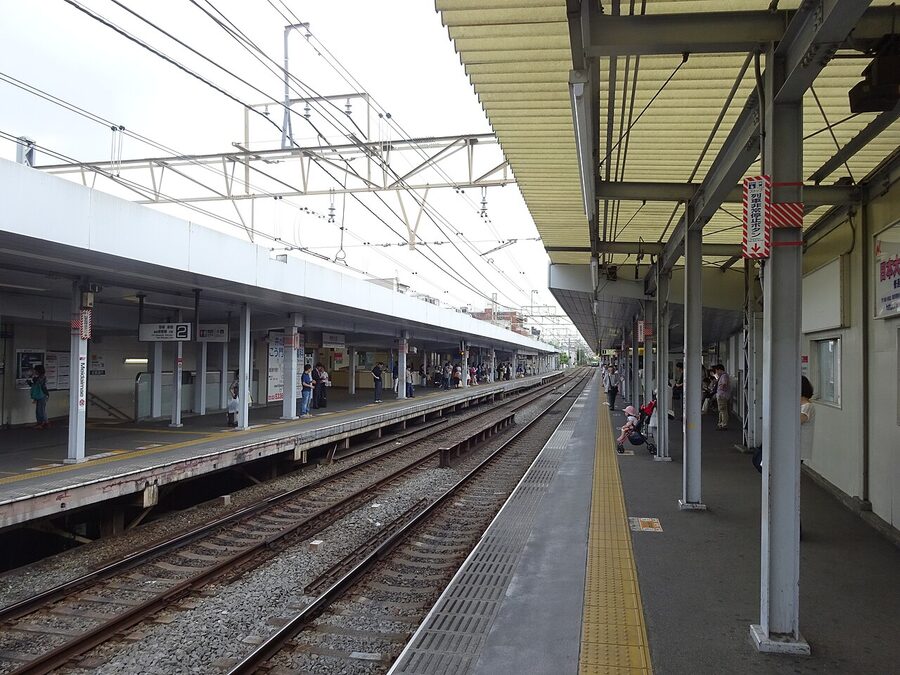
You can see all of this at Meidaimae if you know where to look. The Keio Line runs at ground level on a gentle curve. The Inokashira Line crosses it on a viaduct directly above, at right angles. The transfer takes a minute and a flight of stairs, and you cross a gauge boundary while doing it. Keio sells through-tickets on the connection because nobody cares about the gauge as a passenger, but the operating reality is that the entire western Keio service is a 1,372 mm island anchored at Shinjuku, with a 1,067 mm narrow-gauge tram service hanging off its midpoint that ends at Shibuya.
Voltage is the same on both: 1,500 V DC overhead. The Keio Line was 600 V DC until 1963, when the operator did the conversion in stages overnight to allow through-running with the long-planned subway connection that became the Toei Shinjuku Line. The Inokashira had been at 1,500 V since the 1940s. Today it is the gauge, not the voltage, that keeps the two fleets apart.
Through-running with Toei Shinjuku is the through-line
Toei Shinjuku Line through-services are why the Keio New Line exists. The New Line is a 3.6 km tunnel between Shinjuku and Sasazuka that opened in 1978 and runs underneath the original Keio Line tracks. It was built specifically to bring Keio into the same Shinjuku-station basement as Toei Shinjuku Line and to provide the connecting curve that lets a Toei 10-300 set continue west onto the Keio Sagamihara Line at Hashimoto. Keio’s 9000 series, introduced in 2001, was developed for this run. So was the 5000 II, in principle, although the operator has never scheduled a Keio Liner through to Toei metals because the Toei Shinjuku Line is on a different signalling system and the through-service uses standard four-door commuter sets, not dual-seat ones.
If you have read the Odakyu Romancecar fleet piece, the comparison with Keio is instructive. Odakyu sells the Romancecar as a Hakone-day-out product and runs through to Tokyo Metro Chiyoda Line in commuter format. Keio sells the Liner as a commuter-with-a-seat product and through-runs to Toei in the boring stock. The two operators rate the same trick differently. Odakyu’s calculation is that someone going to Hakone wants a souvenir train. Keio’s is that someone going home from Shinjuku to Hashimoto wants a chair. Both calculations have proved correct in their own catchments.
The 5000 II: an essay in compromise
The 5000 series II is the only train in Keio’s main-line fleet built from the ground up for dual-mode operation. Twelve sets, all ten-car formations, all built by J-TREC at Yokohama in batches between 2017 and 2024. The first five sets entered general service on 29 September 2017 in plain longitudinal-seat mode, working ordinary Keio Line commuter rosters for five months while drivers and conductors learned the new TIMS interface and the seat-rotation procedure. On 22 February 2018, with the timetable change of that month, Keio Liner service started for real and the seats began swinging cross-wise in the early evening for the down direction and in the morning rush for the up.
The seat that does two jobs
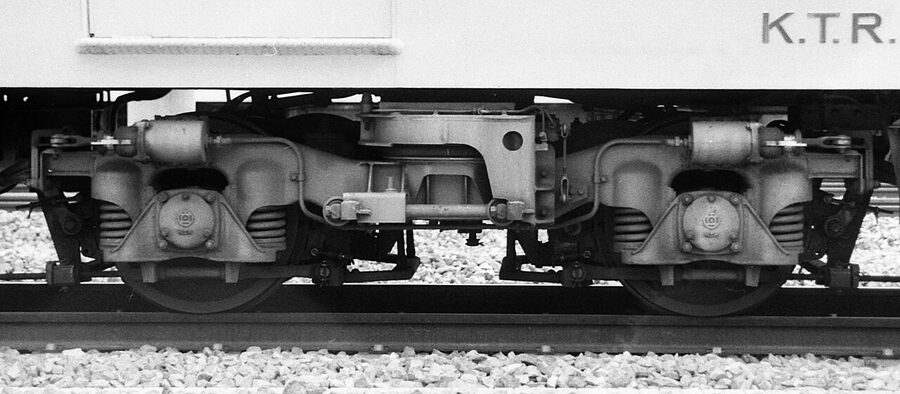
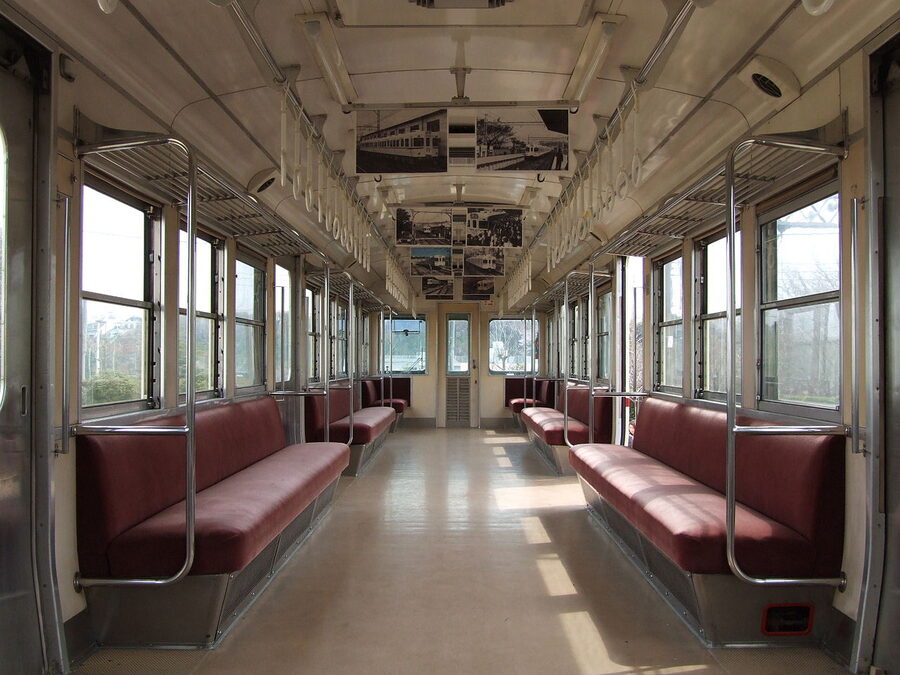
The dual-seat is an engineering compromise rather than a luxury fitting. Keio is not Odakyu and the 5000 II is not a Romancecar. The aim was to keep the cabin as a proper four-door commuter for the bulk of its working day (because Keio cannot afford to take ten-car sets out of regular service for one Liner round trip an evening) and to switch them to cross-bay configuration for the 60 minutes a day they sell as Liner. The hinge mechanism is electrically actuated, runs on a rotary linkage Coito Electric and J-TREC co-developed for the project, and rotates each two-seat bay through 90 degrees on a centre pivot.
The seats are 460 mm wide per person in cross-bay mode. That is narrower than a proper limited-express seat (the Romancecar GSE comes in around 480) and noticeably narrower than the Tokaido Shinkansen reserved car. It is wider than the 430 mm of an Odakyu commuter long-bench. The compromise is visible in the body language of the seats themselves: the armrests are recessed into the seatback rather than mounted on the bay sides, and the seat pivot is offset rather than central, so the seats nest against the bodywork without clipping the windows when they rotate.
The bits that look hand-built
Three details that telegraph the engineering effort. First, the cabin lighting is dimmable and colour-shiftable LED: cool-white in commuter mode, warm-amber in Liner mode. Second, every seat has an AC socket on the bay leg, fitted by Shiroki Industries, which is the same supplier that did the Shinkansen N700S sockets. Third, the audio system is by KEF, the British speaker manufacturer, with eight units per car, four left-channel and four right-channel, and the result is genuinely the best on-board sound on a Tokyo commuter train. None of this is normally noticed in the morning rush. All of it is a flex aimed at the evening Liner customer, who is going to be in the seat for 43 minutes and who Keio does not want to lose to JR’s Chuo Line green car.
The 2024-build sets, numbered from 5739 onward, added drink-holders to the seat backs and an armrest to the priority-seating bench at the car ends. The 2022 set 5737 was the first dual-seat in Japan to add a recline mechanism, although the operator does not advertise the recline and it is not differentiated in the timetable. If you happen to ride 5737 you will know because the seatback is noticeably softer.
The lithium battery under the floor
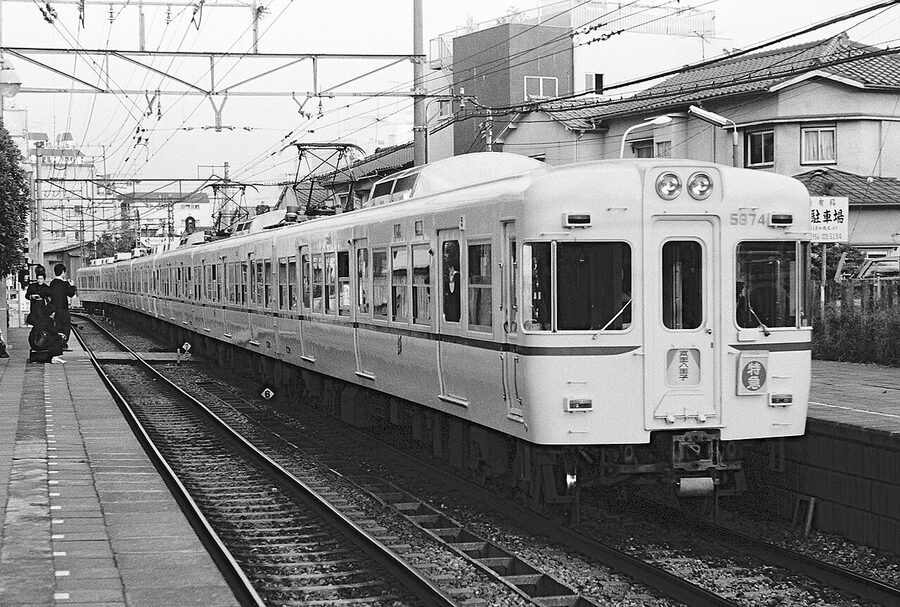
Each ten-car 5000 II carries a 15.2 kWh Hitachi lithium-ion battery pack, 680 V, four series, four parallel, mounted under the floor of car 5 (the middle motor car). On normal running the battery captures regenerative braking energy and recycles it as traction power. On a power-loss event, the battery is rated to drive one VVVF inverter and one motor unit, two cars worth of traction, off two motor units’ eight motors. Keio’s specification is to clear a bridge or get to the next station rather than to limp the whole train home. It is the first lithium auxiliary system on a Keio fleet, and the technology has now propagated to the 2000 II.
The 5000 II is rated for 130 km/h, which is a step up from the 110 km/h of the older Keio fleet, and the operator has not yet built timetable into the extra speed. The line speed limits along the Keio Line do not currently exceed 110 km/h. Keio is keeping the speed margin in reserve for a future timetable accelaration that has been on the corporate medium-term plan since 2019.
The 8000 series and the rest of the workhorse fleet
Walk Shinjuku platform 1 on a normal Tuesday at 14:00, off-peak, and you will see the Keio fleet that does 80% of the operating work. The 8000 series, the 9000 series, and the 7000 series. Three generations of commuter EMU built between 1984 and 2009, all 1,372 mm gauge, all 1,500 V DC, all four-door longitudinal-seat 20-metre stock, all running shifted-routine all-station-stops or expresses depending on the schedule slot. None of them are particularly photogenic. All of them are reliable and not going anywhere fast.
8000 series: the express backbone
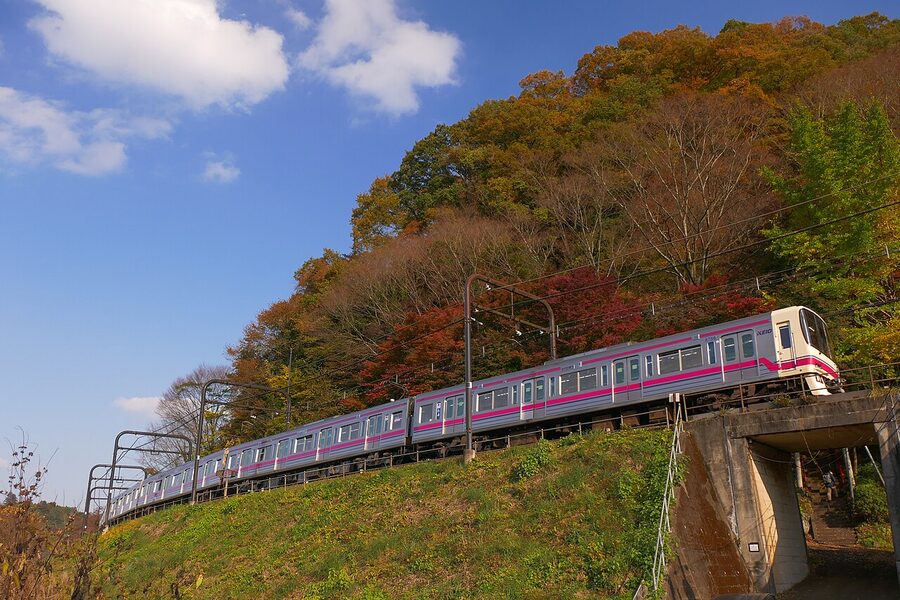
The 8000 series, introduced in 1992, is the train you are most likely to ride if you take a Tokkyu (Special Express) or a Junkyu (Semi-Express) on the Keio Line. Twenty-seven sets, mostly ten-car, a few eight-car, all built by Nippon Sharyo and Tokyu Sharyo. The 8000 was Keio’s first VVVF-inverter-controlled fleet, and it remains the operator’s go-to express stock thirty-three years on. Refurbishment started in 2014 and added LCD information screens above the doors, LED interior lighting, and a thirty-fifth-anniversary headmark on selected sets. The bodyshell is the same 20 m four-door stainless-steel design that runs through the 9000 family and now the 2000 II, so to a non-spotter the three series can blur. The give-away is the cab fascia: the 8000 has a higher, more upright cab nose, with the gangway door on the right (driver’s side) rather than the offset left of the 5000 and 2000 II.
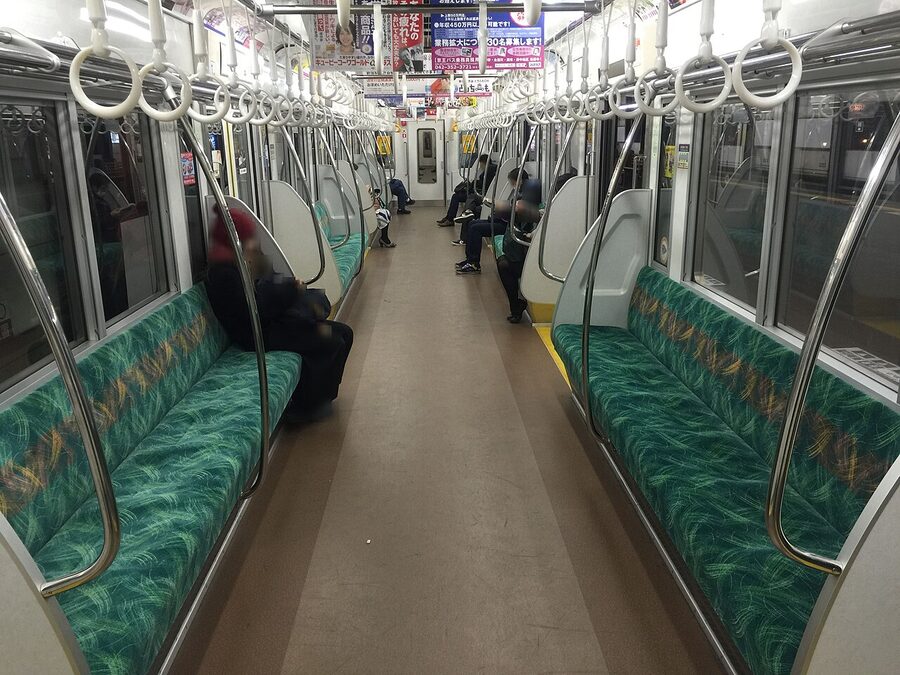
The 8000 is the train I default to recommending if a reader asks which Keio set to ride for the experience of an ordinary day. It is well-maintained, it is everywhere, and it sits on the line in a way that the newer fleets do not yet quite manage. It will be retired before the decade is out, on current corporate planning, but it is not gone yet.
9000 series: the through-runner
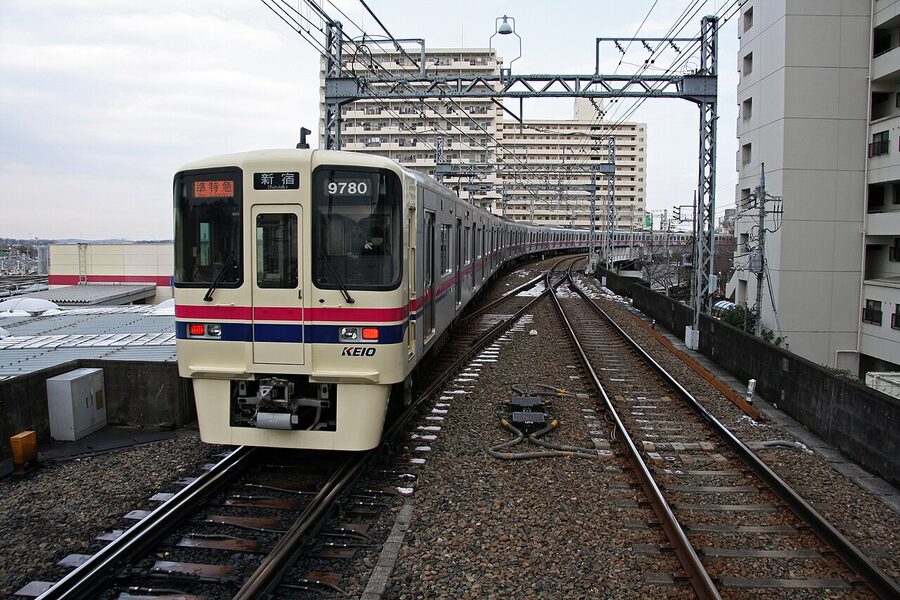
The 9000 series, built between 2001 and 2009, is the train designed for through-running to the Toei Shinjuku Line. Twenty sets, ten-car, again Nippon Sharyo and Tokyu Sharyo. They sit on the corporate fleet between the 8000 (older, no through capability) and the 5000 II (newer, dual-seat, also through-certified but rarely scheduled). The 9000 has a flatter, squarer cab nose than the 8000, lower windows, and the route-board LEDs are full-colour rather than the older orange dot-matrix. Inside, the seat-end glass partitions are noticeably more substantial than the 8000’s, a signal that the train was built for the longer through-run timing where bodies pile up at door pockets in tunnel sections.
Through-running on the 9000 is the only realistic way to ride a Keio set onto Toei metals. Pick up at any Toei Shinjuku Line station east of Shinjuku, and you stand a fair chance of catching a 9000 working an inbound from Hashimoto or Keio-Hachioji. The operator does not flag through-services in obvious ways at platform level; you read the destination board, and if it says Hashimoto or Keio-Tama-Center on a Toei platform, that is a Keio set in your face.
7000 series: the workhorse that wouldn’t die
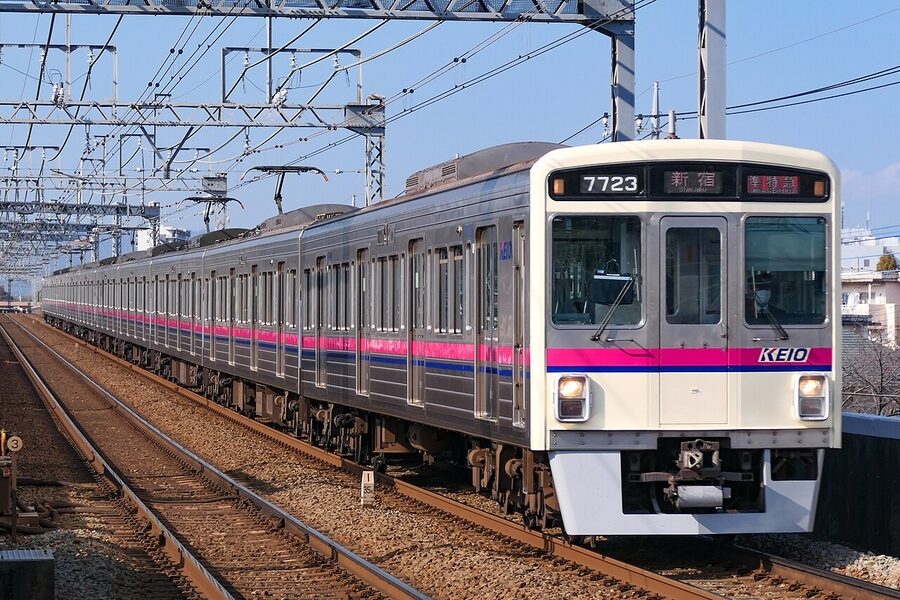
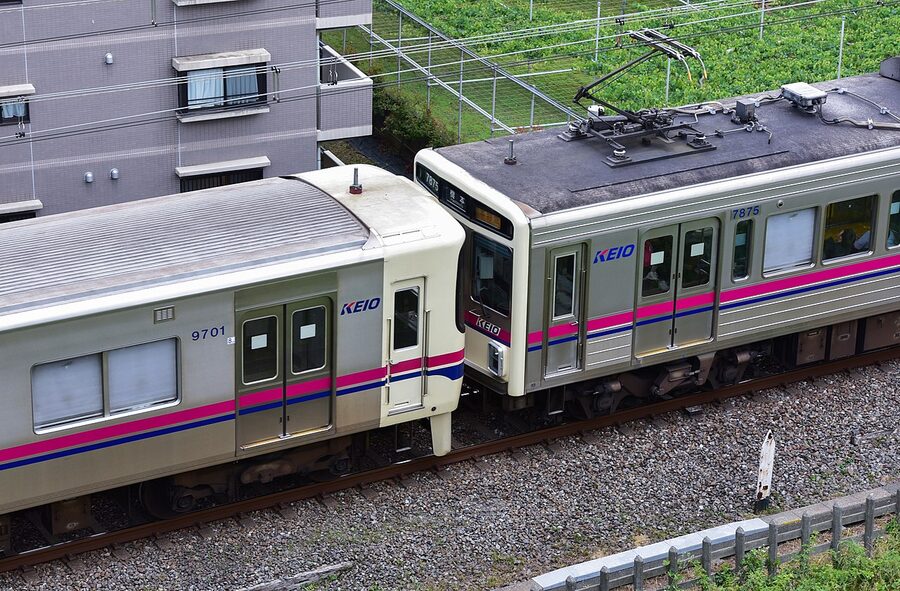
The 7000 series, dating to 1984, is the oldest stock currently in Keio passenger service and the operator has been trying and failing to retire it for years. The original twenty-six sets ran on chopper-control for the first decade and a half, then went through a VVVF retrofit programme in the 2000s, and have been progressively refreshed and refurbished since. The 7000 is the train that does the unglamorous Keio work: all-stations Keio Line locals, the Dobutsuen Line shuttle, the Keibajo Line shuttle, the off-peak Inokashira-line connector services that do not justify a 9000.
The 5000 II’s arrival in 2017 was supposed to start the 7000 retirement clock, and a small number of 7000 cars were scrapped to balance the new-build delivery. Then the 2020 ridership collapse hit, and Keio paused the retirement programme. The 2000 II, delivered in early 2026, has now restarted it. The current corporate planning suggests the 7000 will be substantially gone by the end of 2030, but the 7000 is the kind of train you can never quite fully bury, and a small fleet may stay on the Keibajo and Dobutsuen branches indefinitely because nothing else is small enough to justify those branch workings.
The new fleet bookends: 2000 II and 1000 II
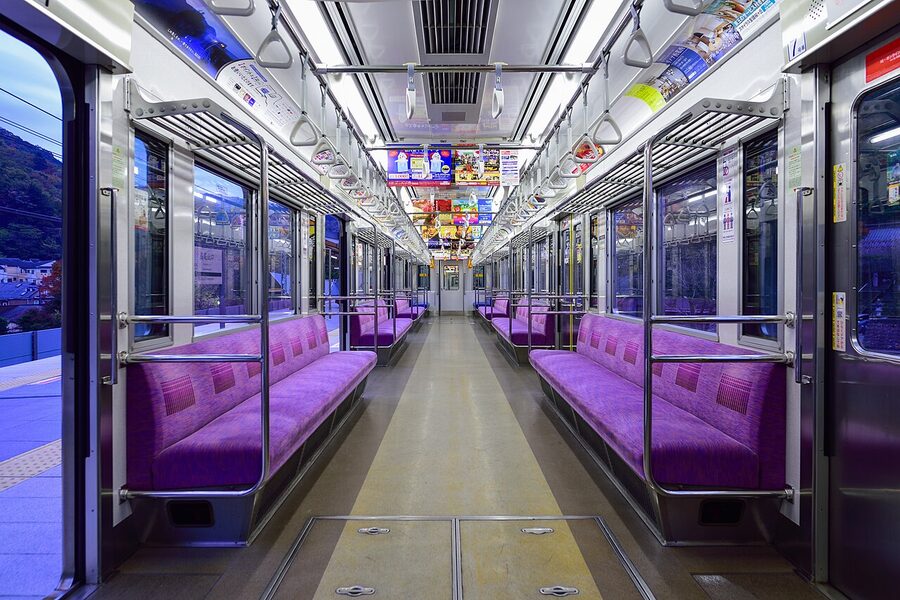
The two newest fleets sit at opposite ends of Keio’s network. The 2000 series II, on Keio Line metals, started revenue service on 31 January 2026 and is the operator’s first new commuter fleet (as opposed to limited-express) since the 9000 of 2001. The 1000 series II, on Inokashira Line metals, started running in 1996 and got a substantial mid-life refresh in 2018. Together they tell you what Keio thinks the next 20 years of its commuter network looks like.
2000 series II: the new commuter, three weeks in service
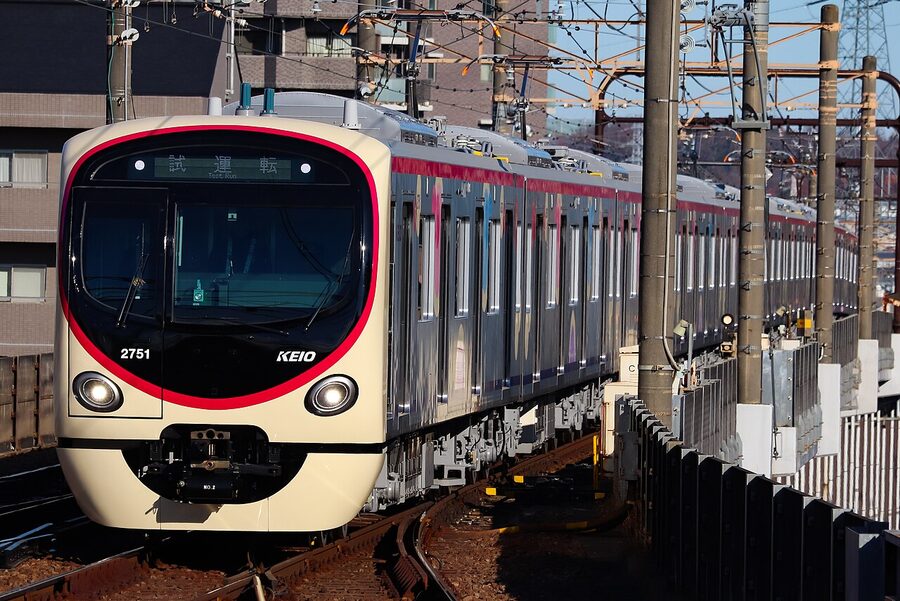
The 2000 II is what the 7000 retirement programme is being held for. Four sets in service as of writing, all ten-car, all from J-TREC, with deliveries scheduled to continue through 2027. The bodyshell shares the SUSTINA stainless-steel platform of the 5000 II and inherits its lithium battery system, but the seating is straight longitudinal-bench commuter (no dual-mode hinges). Top speed 110 km/h to match the line speeds. The corporate aim is twenty sets in service by 2030, replacing a corresponding number of 7000s and freeing the 8000 fleet to drift further into the express-and-Liner roster.
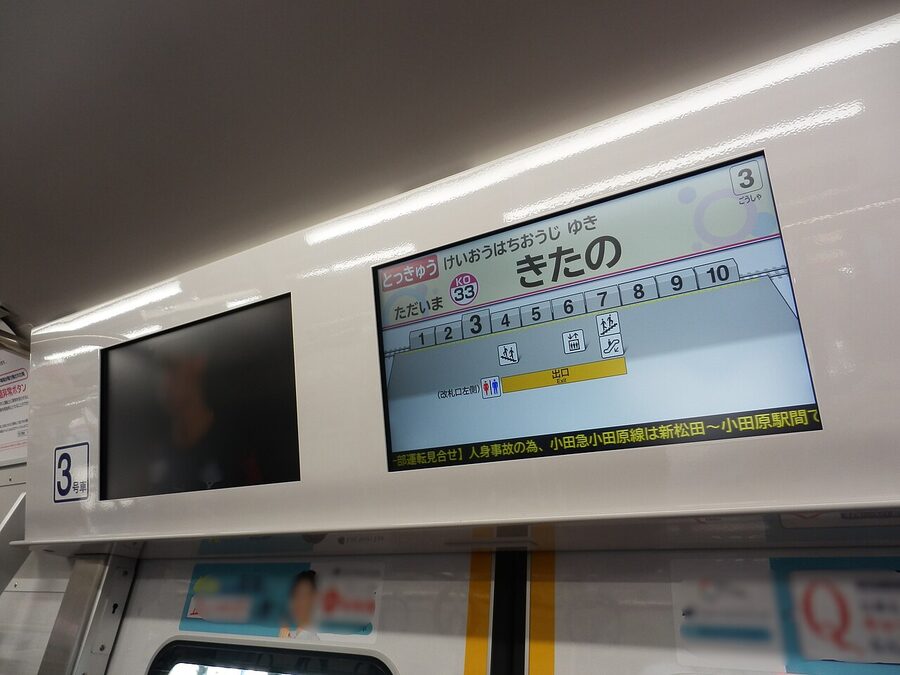
The new internal feature that did not exist on any previous Keio fleet is the wheelchair, pram, and luggage free-space zone, one per ten-car set, replacing a full bay of seats. The free-space car is positioned consistently for ease of recognition; on down-direction trains it is car 4 from the Shinjuku end. The grey hi-vis non-slip floor pad makes it visible from the platform.
1000 series II: the Inokashira’s only fleet
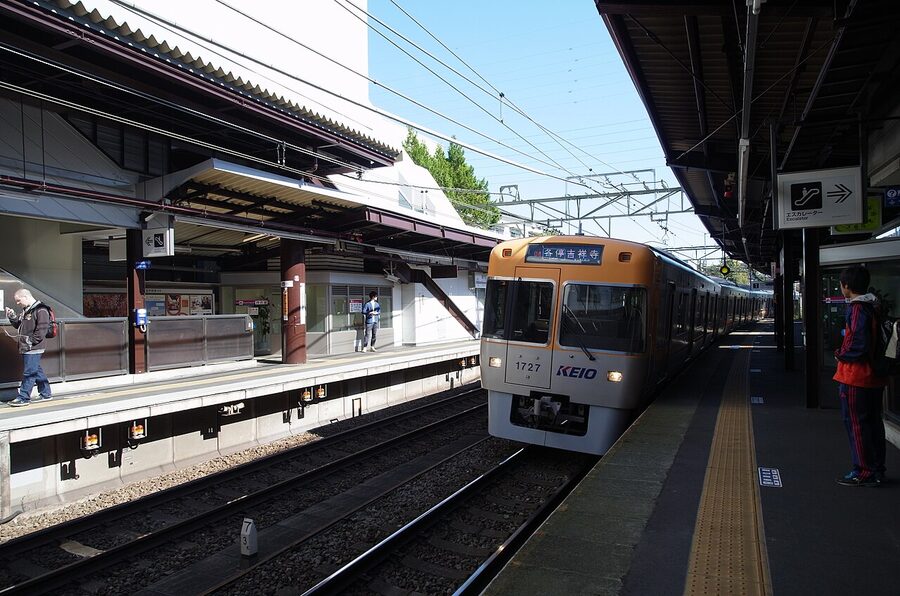
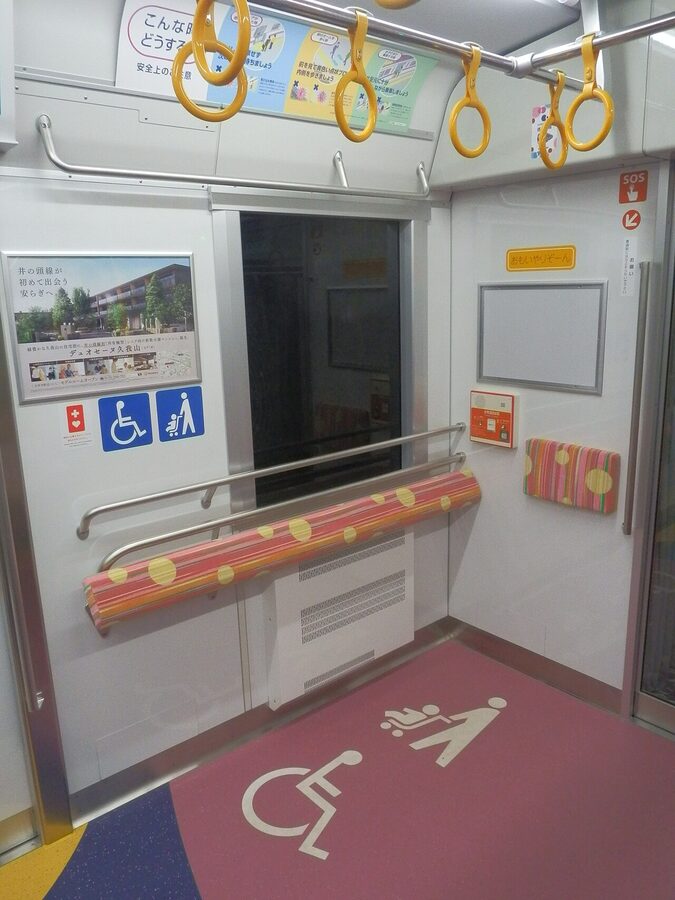
The 1000 series II is the only fleet running on the Inokashira Line. Twenty-nine sets, all five-car, all narrow gauge, all 1,500 V DC. They were built between 1996 and 2009 to replace the original Inokashira 3000 series, which had been on the line since the 1960s. The 1000 II shares no major body components with anything on the Keio Line family, because the gauge constraint forces a different bogie design and the five-car formation forces different traction arithmetic. The fleet is also the only one on the operator that comes in seven different external livery accents (each set wears one of seven pastel side-bands: salmon, light blue, mint, light green, peach, lavender, and the older “Inokashira ivory”). It is the most photogenic fleet on the network, whether or not you care about commuter trains.
The 2018 mid-life refurbishment added LCD information screens, LED interior lighting, and improved suspension, but the underlying platform is now nearly thirty years old. Keio has not yet announced a replacement programme for the Inokashira, and there is no obvious pressure to start one. The 1000 II is well-maintained, the line speed is moderate, and the line itself is sufficiently detached from the rest of the network that a one-off custom replacement order would be hard to justify.
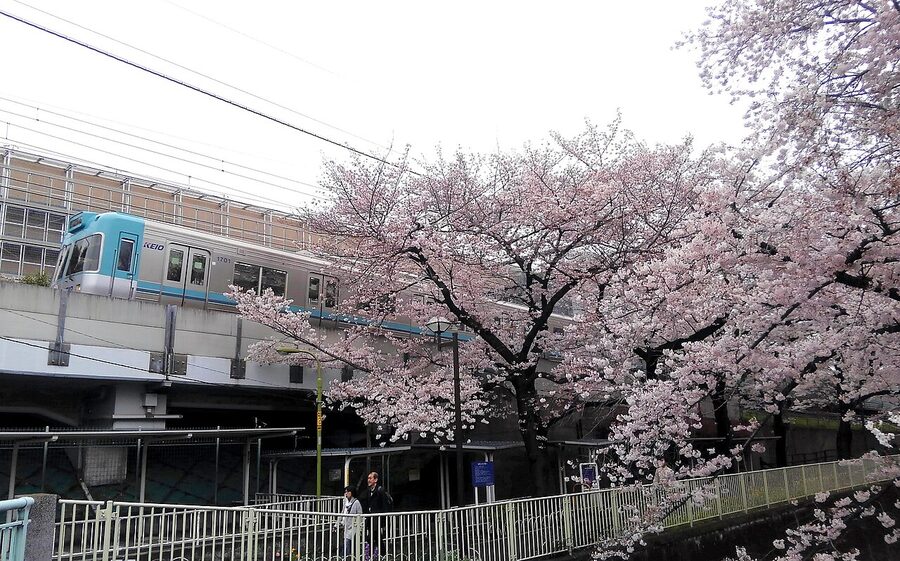
The line itself is a 12.7 km commuter route. It is also the fastest way from Shibuya to Kichijoji at 18 minutes for ¥200 IC, beating the JR Chuo Rapid via Shinjuku by a noticeable margin. If you are in Shibuya and want to be in Kichijoji, the Inokashira is the answer; nobody who lives in this catchment uses the JR option.
Riding the Keio Liner today
The Liner now runs to three destinations: Keio-Hachioji on the Keio Line, Hashimoto on the Sagamihara Line, and Takaosanguchi (as a separate “Mt TAKAO” branded service) on the Takao Line. The headline product is the Hachioji and Hashimoto down-direction evening commute, which is what the seats were designed for. The Mt TAKAO weekend service is a tourist add-on. None of them through-run to Toei.
Down-direction service: Shinjuku to the suburbs
From Keio Line Shinjuku platform 1 (weekdays) or 2 (weekends), the Liner departs every hour at xx:00 minutes past the hour for Keio-Hachioji from 17:00, and twice an hour for Hashimoto from 16:40 to roughly 23:00 weekdays. The Hachioji service takes 34 to 43 minutes depending on the schedule slot. The Hashimoto service takes 24 minutes to Keio-Tama-Center and onward 33 minutes to Hashimoto. Stopping pattern is sparse: Shinjuku, Meidaimae, Fuchu, then express stops to the destination. You can board at Shinjuku or Meidaimae only; alighting begins at Fuchu (Hachioji-bound) or Keio-Nagayama (Hashimoto-bound).
Up-direction service: the morning commute
The morning Liner runs are smaller in number and serve a different demographic: commuters going from the Hachioji and Hashimoto outer ends to a seat in for Shinjuku. Seven up-direction Liners from Keio-Hachioji on weekdays, seven from Hashimoto, all between 06:30 and 09:00 roughly. The product is identical to the evening down-runs in terms of seat, fare, and equipment. Reservations are mandatory, alighting is restricted to Meidaimae and Shinjuku, and there is no longer a Mt TAKAO up-service in the morning slot (it was rebranded as a regular Liner from 15 March 2025).
Fares, reservations, the app
The Liner supplement is ¥410 flat, adult or child. You also pay the regular Keio fare on top: ¥380 IC Shinjuku to Keio-Hachioji, ¥360 IC Shinjuku to Hashimoto, ¥420 IC Shinjuku to Takaosanguchi. So the all-in for a Liner from Shinjuku to Hachioji is ¥790 IC. Compare to the Chuo Line green car at the same kind of run from Tokyo Station, which is ¥780 supplement on top of the JR fare; the Keio Liner is competitive on price and beats the green car on seat dedicated-ness (you have a numbered reservation; the green car is open seating).
You buy the reservation through “Keio Ticketless Service”, which is the operator’s web reservation site, accessible from any browser at ticket.keio.co.jp. Tickets open seven days in advance from 07:00. The ticketless system started credit-card-only and added PayPay support in January 2024. Seat selection runs up to five minutes before departure. There is no English app per se; the Ticketless site has a working English mode. If you board without a reservation the on-board fare is ¥700 and you may not get a seat.
One quirk: from the down direction, if you board at Fuchu or further out, the seat reservation is no longer required and you can take any empty seat. The Liner becomes effectively a fast express past Fuchu, with the cross-bay seating still in place. This is a free upgrade if you were planning to take a stopping service from Fuchu inward and the Liner happens to come through.
The Mt TAKAO weekend service
Mt TAKAO is a separate branded service that uses the same 5000 II fleet on weekends and holidays. Three down-direction trips from Shinjuku to Takaosanguchi mid-morning, three up-direction trips back in the afternoon. Same ¥410 supplement, same Ticketless reservation. The product is aimed at hikers and day-trippers heading for the Mt Takao funicular and the Yakuoin Temple complex. The cabin is in cross-bay configuration the whole trip, which is welcome if you have hiking poles and a daypack.
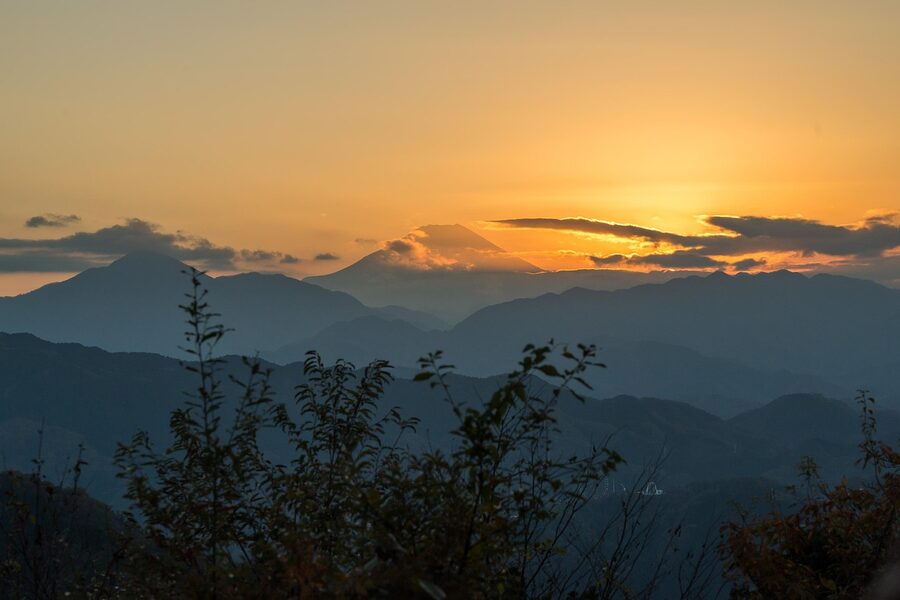
The Mt TAKAO is also a chance to see the 5000 II in cross-bay mode for an entire round-trip, which is otherwise tricky because the down-direction Liner at Shinjuku starts already in cross-bay, but the same set will return to Shinjuku in commuter format and you would have to ride it back to see the format change. The Mt TAKAO weekend pattern lets you sit in Liner mode both ways without doing the empty positioning-move.
Retired and preserved fleets at Keio Rail-Land
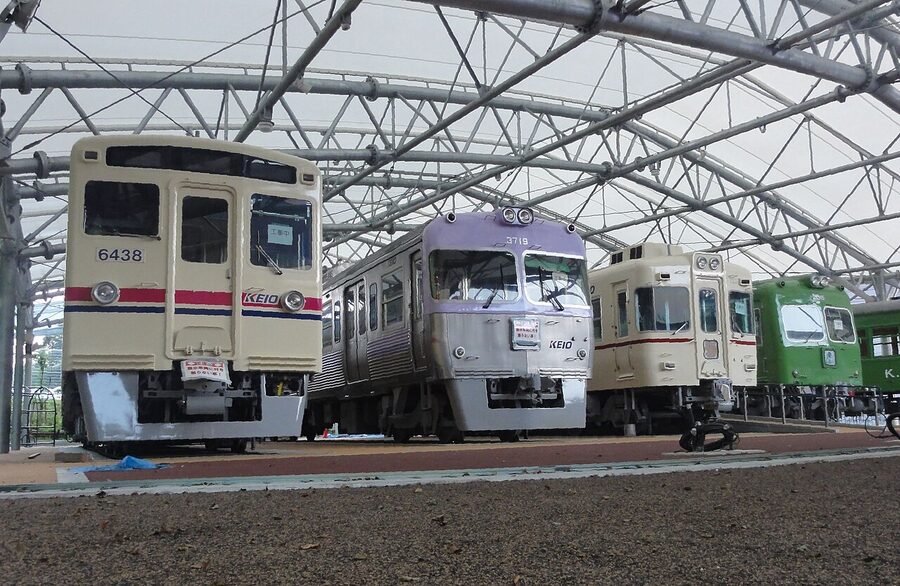
If you care about the history of the Keio fleet at all, the place to go is Keio Rail-Land, the operator’s small museum on the Dobutsuen Line at Tama Doubutsukoen Station, beside the Tama Zoo. Five complete cars are preserved outdoors, plus a driving simulator and a working signal cabin mock-up. Entry is ¥310. Open 09:30 to 17:30, closed Wednesdays. It is the cheapest railway museum in Tokyo and the one most worth spending an afternoon at if you have read this far.
The original 5000 series
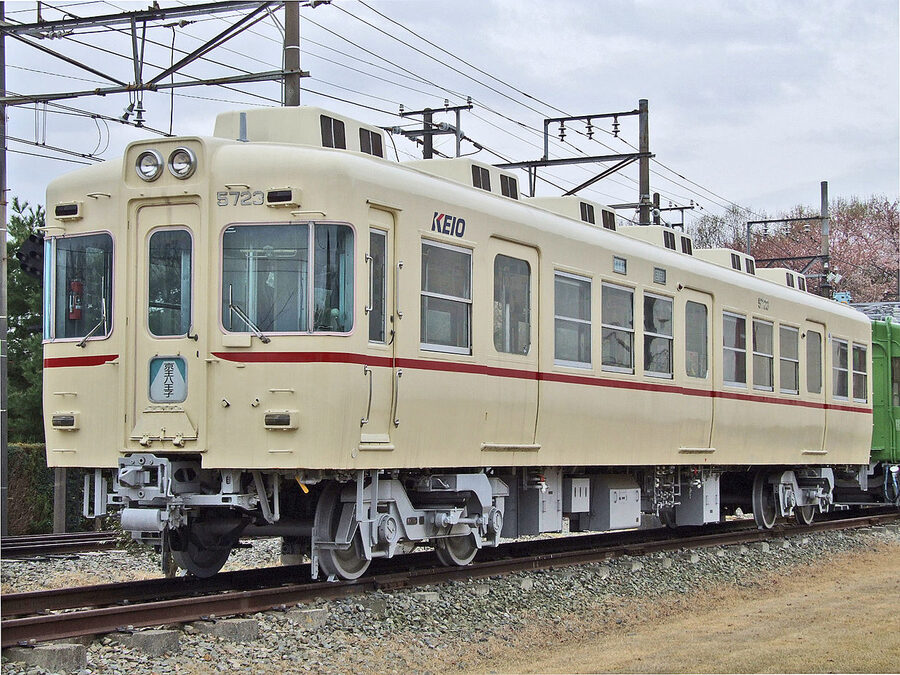
The first-generation 5000 series, no relation to the modern dual-seat 5000 II, ran on the Keio Line from 1963 to 1996. It was built for the 1,500 V DC voltage upgrade and was the operator’s first all-aluminium-bodied fleet. The cream-and-salmon livery is the look most Tokyo Showa-era residents associate with Keio. The number reuse for the 2017 dual-seat fleet was a deliberate corporate gesture: the original 5000 was a leap forward in 1963; the 5000 II was supposed to be the same in 2017. Some cars from the original fleet went on to second careers on regional private operators around Japan after retirement, the most notable being Iyo Railway, which ran ex-Keio 5000 stock until the late 2010s.
The pre-war stock
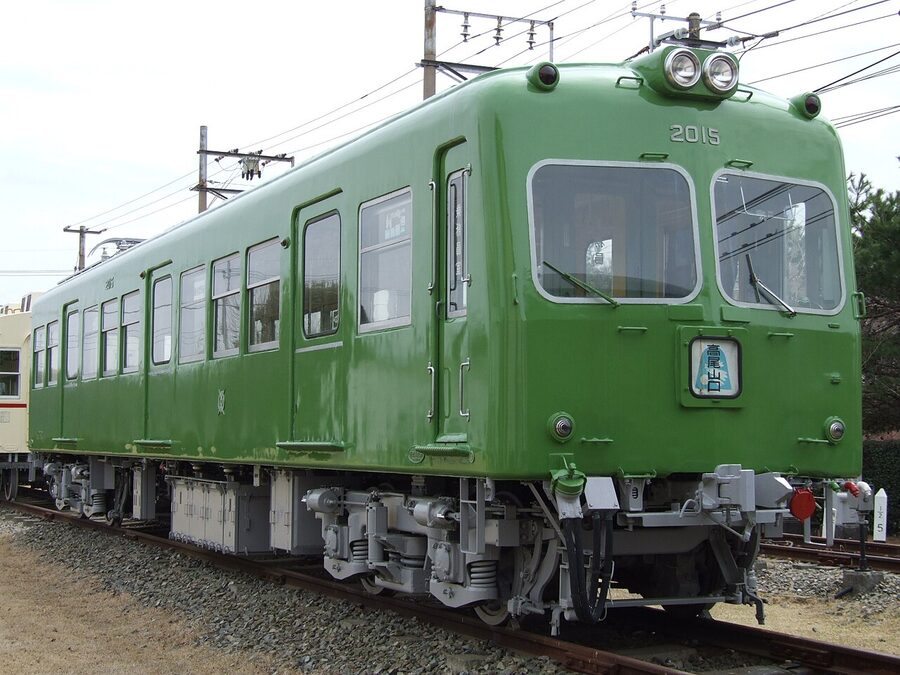
The pre-war 2000 series (no relation to the 2026 fleet) is also at Rail-Land. It ran on 600 V DC, on the same 1,372 mm gauge that survives today, but the bodies are 16 m wood-framed-and-steel-clad, an obvious step shorter than modern 20 m stock. The contrast is the most useful thing at Rail-Land if you have just ridden a 2000 II in to Tama Doubutsukoen. You can stand a 1930s Keio body next to a 2026 Keio body and read the change in commuter-train design language across ninety years without leaving the platform.
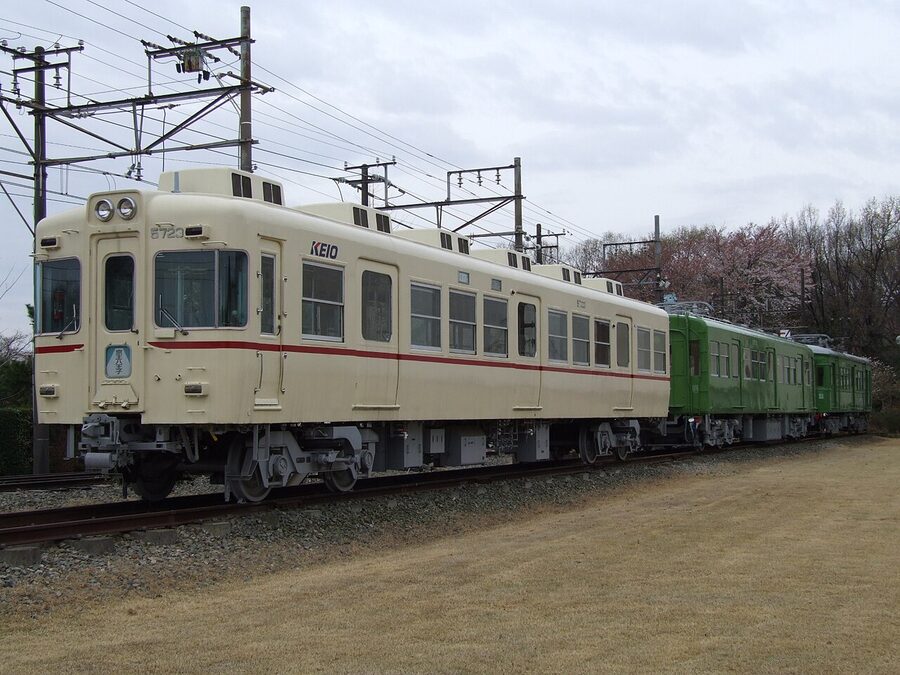
The Dewa 5000 work train
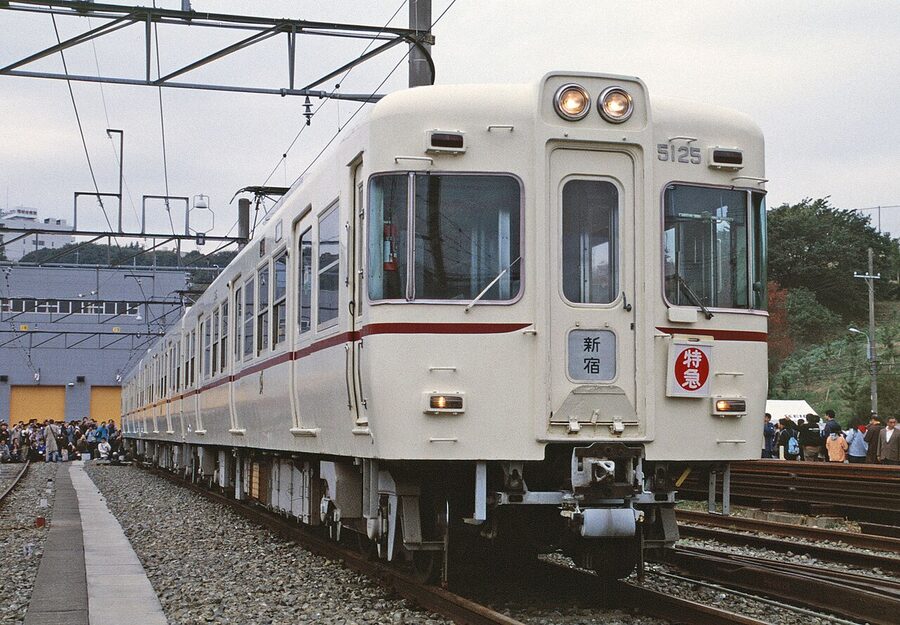
The Dewa 5000 is the only currently-active piece of converted-from-passenger work stock on the network. Built from a retired original 5000 series cab car, it is registered as an engineering vehicle and runs ballast and maintenance services overnight or pre-dawn on weekends. You will not see one on a normal day, but if you are at Takaosanguchi or Hashimoto on a Saturday morning before 09:00, look for the matt-yellow nose on the headstock and the absence of passenger doors.
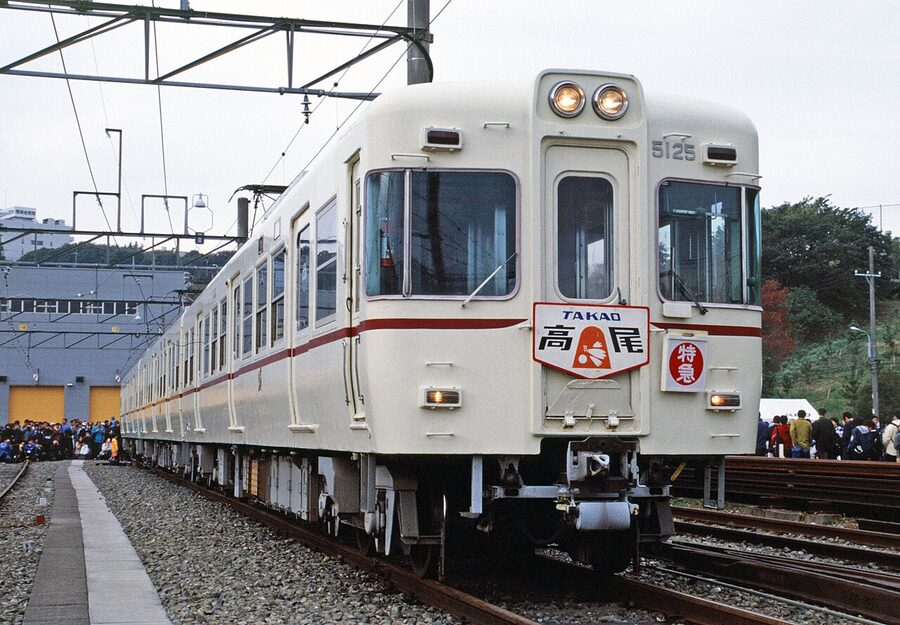
The branch lines and what runs on them
Three short branches off the main Keio Line carry their own personality, even though the rolling stock is shared with the rest of the network. The Takao Line runs to Takaosanguchi for Mt Takao access. The Sagamihara Line runs through the Tama New Town development to Hashimoto. The Dobutsuen and Keibajo lines are two-station shuttle stubs that exist for very specific civic destinations.
The Takao Line
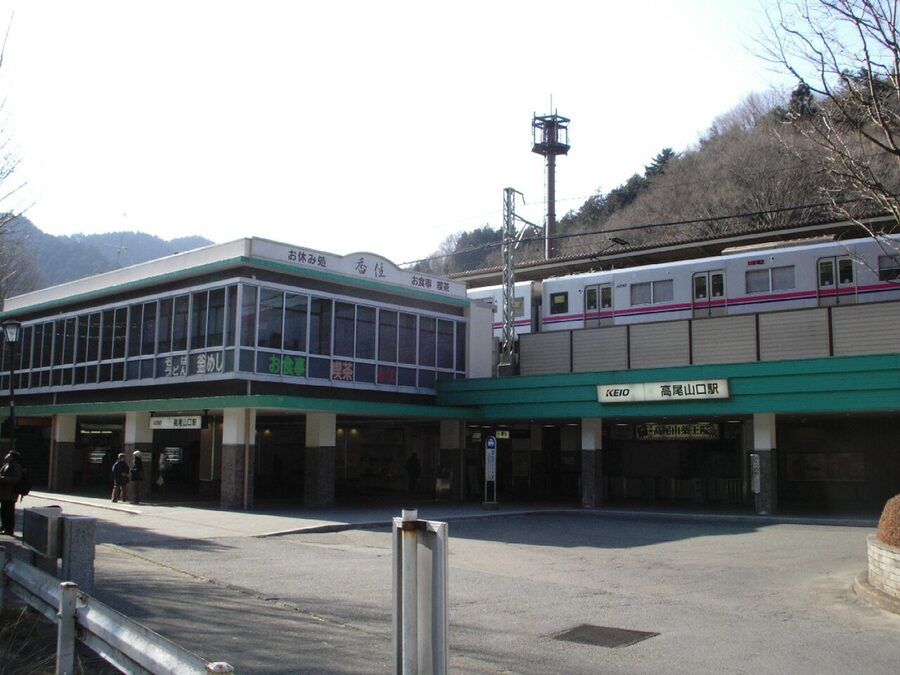
The Takao Line runs 8.6 km from Kitano to Takaosanguchi. The line opened in 1967 and the gradient profile is the steepest on the Keio system, with sustained 25 per mille climbs out of the Tama valley. The Takao Line is the only Keio Line route where the 8000 series visibly works harder than on flat track, and you can hear the difference in the motor note from the platform at Hazama or Yamada. The Mt TAKAO weekend Liner service is the only paid-seat product that runs to Takaosanguchi.
The Sagamihara Line
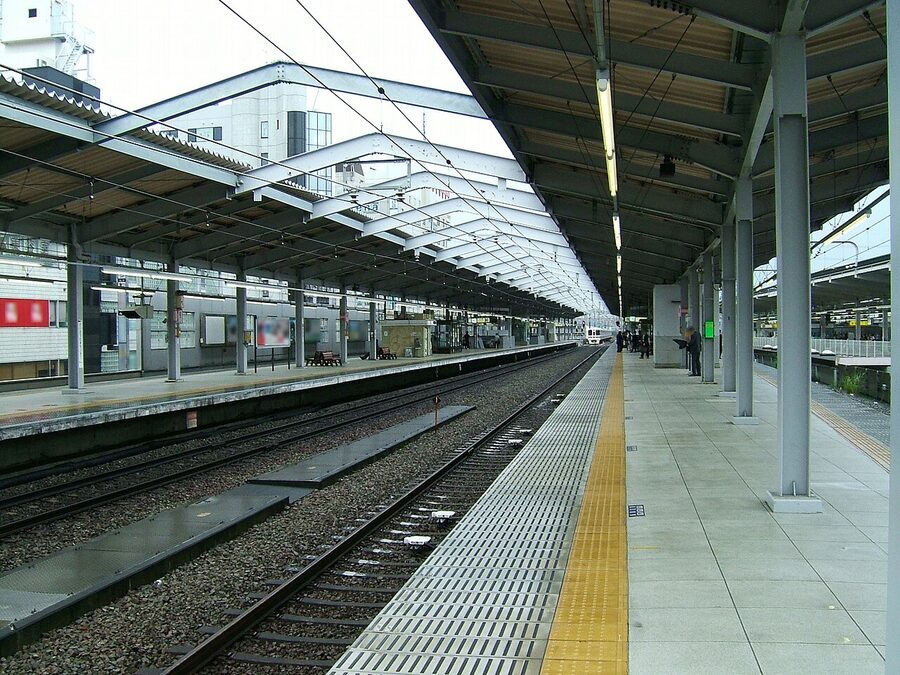
The Sagamihara Line runs 22.6 km from Chofu to Hashimoto, opened in stages between 1971 and 1990, and was built specifically to serve the Tama New Town housing development that the Japan Housing Corporation was building south of the Tama River. The line shares the Toei Shinjuku through-services and is the only Keio route where you will see Toei 10-300 sets in regular service. Hashimoto, the western terminus, is also a JR Yokohama Line and JR Sagami Line interchange, which makes the Liner from Shinjuku to Hashimoto a useful commute for residents of inner Sagamihara who work in central Tokyo. The line is the natural Liner-hour twin to the Keio-Hachioji service.
The Dobutsuen and Keibajo branches
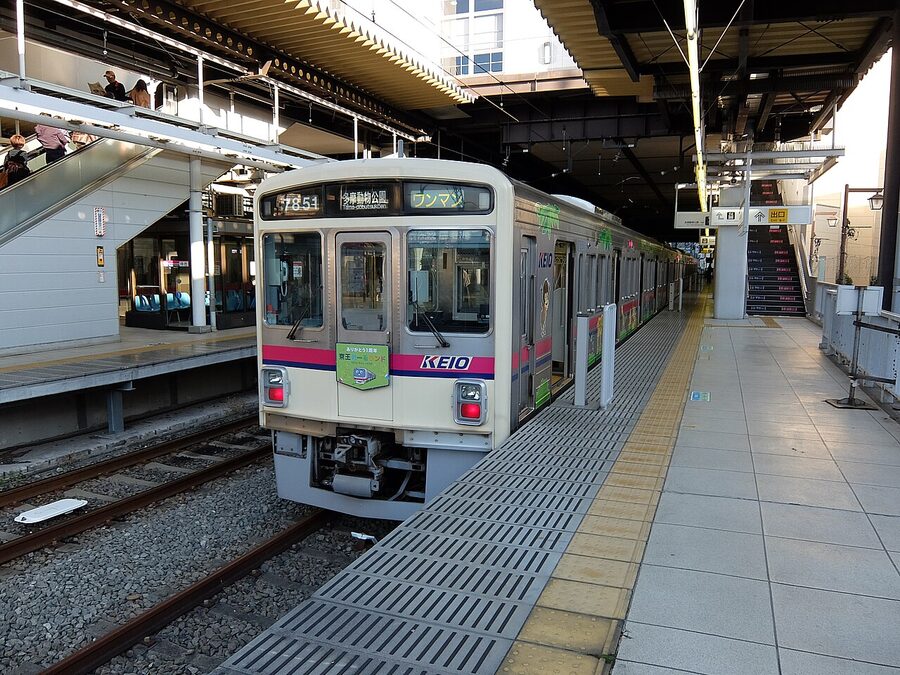
The Dobutsuen Line is two stations and 2.0 km of single track between Takahatafudo and Tama-Doubutsukoen, opened in 1964 to serve the Tama Zoo and (since 2001) Keio Rail-Land. The line runs almost entirely as a 7000 series shuttle. Through-services from Shinjuku exist on weekends but are rare. The line is the easiest place on the network to ride a 7000 in 2026.
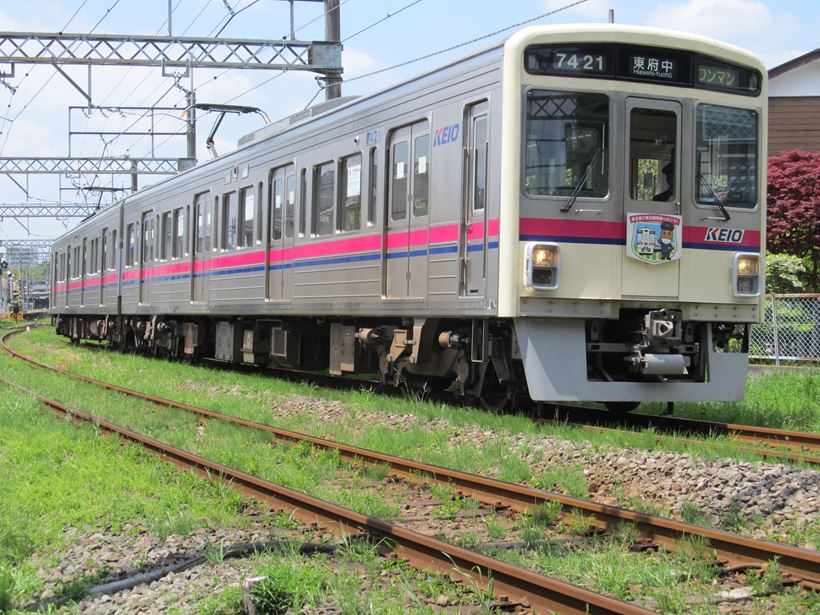
The Keibajo Line is even shorter: two stations, 0.9 km, between Higashi-Fuchu and Fuchu-Keiba-Seimon-Mae. It exists to serve Tokyo Racecourse on race days, and on most non-race weekends it is a 7000 series single-car shuttle running an empty service to keep the schedule integrity. On race days, Keio sends through-Expresses direct from Shinjuku, and the line briefly operates like a proper through-service rather than the underused branch it normally is.
The Inokashira Line is its own world
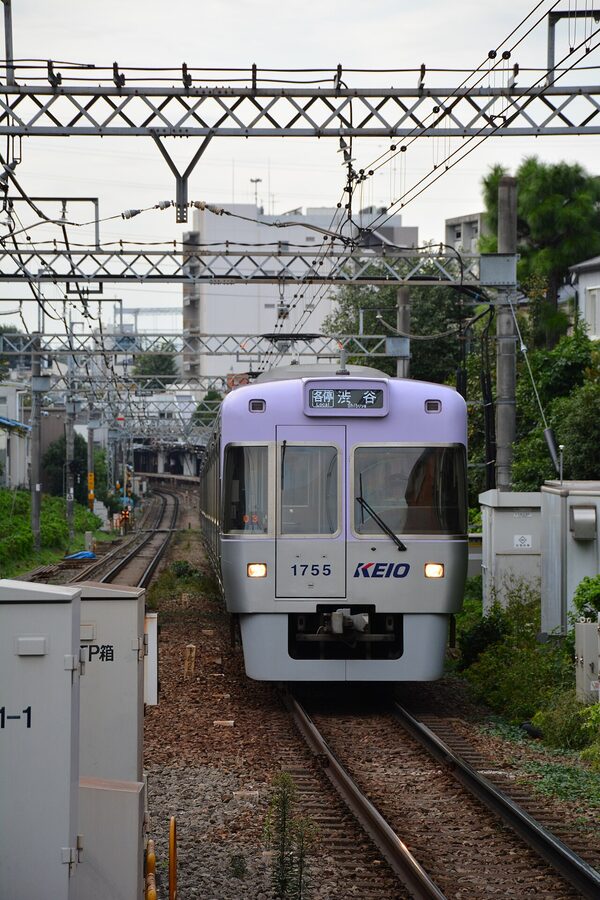
The Inokashira Line is short, only 12.7 km, but it runs through some of the densest residential Tokyo on the network. Shibuya at the east end, Shimokitazawa one stop in (interchange with the Odakyu Odawara Line on the level below), then the line climbs westward through Komaba-Todaimae, Eifukucho, Meidaimae (the Keio Line interchange), Kugayama, Inokashira-koen, and Kichijoji at the western end. Total run time is 28 minutes Express, 33 minutes Local, with Express services every 8 to 10 minutes through the day.
The 1000 II’s seven liveries
The 1000 II’s seven pastel side-band liveries are the most distinctive corporate-livery decision Keio currently makes. Each set wears one of the seven, and the colour assignment is fixed (set 1701 wears salmon, 1702 wears light blue, and so on). The liveries are pulled from the original 1962 Inokashira 1000 (first-gen) cars, which had a similar seven-band rotation, and the choice to carry them forward is one of the few visible legacy gestures Keio makes to the Teito-era inheritance of the line. Each livery has a small fanbase. The salmon and the lavender are the two hardest to spot in revenue service because of slightly fewer scheduled paths.
Why the line is faster than JR for Shibuya-Kichijoji
The honest reason to know the Inokashira exists, if you are not a railfan, is that it is the fastest route from Shibuya to Kichijoji. The JR Chuo Rapid via Shinjuku takes 21 minutes (Shibuya to Shinjuku on the Yamanote, then Shinjuku to Kichijoji on the Chuo Rapid), plus a 5-minute Shinjuku transfer that on a bad day is closer to 10. The Inokashira Local from Shibuya to Kichijoji is 33 minutes; the Express is 19. So the Inokashira Express beats JR by about 7 minutes door-to-door, and beats the JR Local by 12. The fare is ¥200 IC vs ¥220 IC on JR. If you live or work in either city and you have not switched, you should.
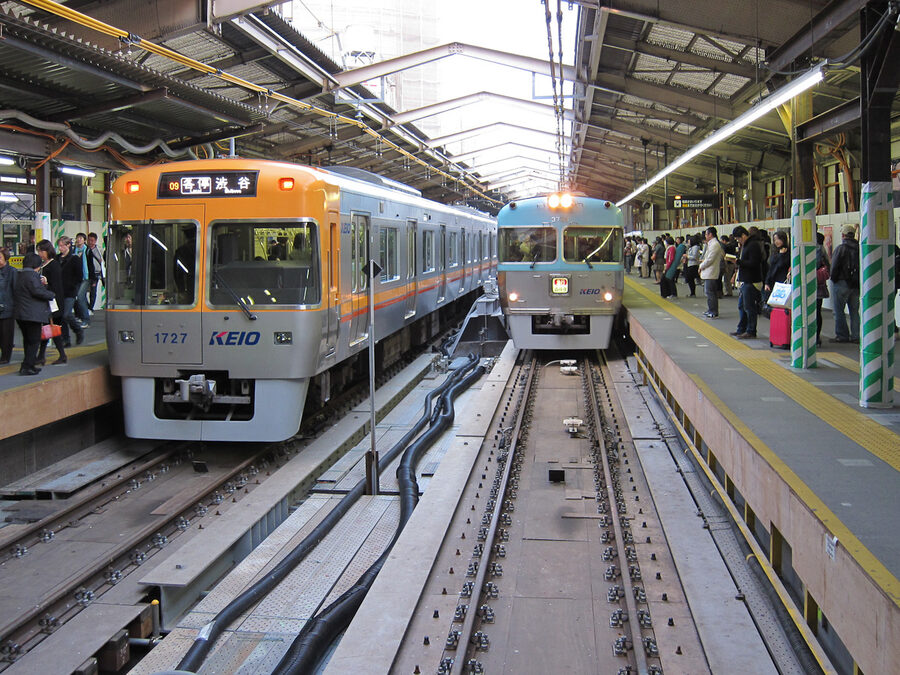
If you have read the Tobu Railway fleet piece, the comparison with the Inokashira Line is inverse. Tobu’s value is its scale: the operator runs 463 km of track and a dozen rolling-stock series across that. Keio’s Inokashira value is its compactness: 12.7 km, one fleet, one livery scheme, doing one thing extremely well. The two operators are hardly comparable on any other axis. They both happen to be Tokyo private railways and they both happen to have decent rolling stock; the resemblance ends at the corporate boundary.
Practical questions, briefly
Is there an English app for Keio?
Not really. The “Keio Ticketless Service” reservation site has English mode and works for Liner reservations. The “Keio Navi” route-search app is Japanese-only. For trip planning, Google Maps and the JR-East “Norikae Annai” app both index Keio services accurately and give the platform-level detail you need. The Liner is reservable through the Ticketless site without an account if you pay by credit card; the PayPay route requires a Japanese-resident PayPay account, which is not useful for visitors.
Can I use a JR Pass on Keio?
No. Keio is a private operator. JR Pass does not cover any Keio service. If you are travelling on a JR Pass and want Mt Takao, you take the JR Chuo Line to Takao Station, then walk or change to the Keio Takao Line for the one stop to Takaosanguchi (paid Keio fare); or you skip Keio entirely and walk from JR Takao to the funicular base, which is a 30-minute walk and not really worth it. The cheapest tourist day-pass for Keio is the Keio Mt Takao 1-Day Free Pass at ¥1,420 from Shinjuku, which covers the round trip plus the cable car; this is an excellent deal if you are doing Mt Takao as a day trip from central Tokyo.
Which Keio service is fastest to Hachioji?
The Keio Liner. 34 minutes Shinjuku to Keio-Hachioji, ¥790 IC all-in. The fastest Tokkyu (Special Express) is 39 minutes for ¥380 IC. The Liner is faster, more comfortable, and ¥410 more. Whether the supplement is worth it is your call; on a packed evening rush I always pay the ¥410, and on a quiet Sunday afternoon I never bother. JR Chuo Rapid from Shinjuku to JR Hachioji takes 38 to 45 minutes for ¥490 IC, and the destination is the JR side of Hachioji rather than the Keio side, which is a 4-minute walk apart but matters if you have a JR onward connection.
Which is the most scenic line?
The Inokashira in spring (cherry blossoms at Inokashira Park, visible from the train two minutes before Kichijoji), and the Takao Line in autumn (gradient up to Takaosanguchi runs through hillsides that turn properly in late October). The Sagamihara Line through Tama New Town is interesting in a 1970s planned-housing way, especially if you have read about Japanese new-town design, but it is not what most readers mean by scenic. The Keibajo Line has the world’s shortest commercial railway view of a horse-racing track on the right-hand side as the train pulls in to Fuchu-Keiba-Seimon-Mae. None of the Keio Line is dramatic in the way the Hakone Tozan or the Tokyo Sakaisuji is dramatic. It is private commuter Tokyo, with the occasional good view.
How early does the first train run?
Keio Line first westbound from Shinjuku is 04:42 on weekdays, 04:53 on weekends, to Keio-Hachioji. Inokashira Line first eastbound from Kichijoji is 05:04 daily, to Shibuya. Last trains: Keio Line eastbound to Shinjuku, 24:33 from Sasazuka local; Liner finishes earlier, with the last down-direction Liner from Shinjuku at around 23:00 on weekdays.
What to ride and what to skip if you only have one day
If you have a single day in Tokyo and you have never ridden Keio: take the Mt TAKAO weekend Liner (¥820 IC all-in) from Shinjuku to Takaosanguchi at the morning departure, do the Mt Takao funicular and the Yakuoin temple loop, eat tororo soba at the foot of the cable car, and ride the up-direction Liner back to Shinjuku in the afternoon. You will see a 5000 II in cross-bay mode for the entire round trip, you will see the Takao Line at maximum gradient with a fully-loaded ten-car set, and you will get a temple, a mountain, and a Mt Fuji view across the day. Total cost in fares is ¥1,640 for two Liner supplements plus the regular Keio fare; add ¥1,000 for the cable car round trip if you take it. This is the single best day Keio offers, and it does not exist Monday to Friday.
If you have an evening rather than a day: take the regular weekday-evening Keio Liner from Shinjuku to Keio-Tama-Center on the Sagamihara Line (24 minutes, ¥770 IC all-in), get off, walk fifteen minutes to the planned-town pedestrian boulevard, and ride the next available Liner back. You will see the 5000 II in evening commuter Liner mode rather than weekend Mt TAKAO mode, which is a different cabin atmosphere (warm-amber lighting, dimmable LCD), and the round trip is 90 minutes including the walk. Skip the Keibajo and Dobutsuen branches unless you specifically want a 7000 ride or you are visiting Keio Rail-Land. Skip the Takao Line if you have already done Mt Takao on another visit. The Inokashira Line is worth riding once for its own sake, especially if you live or stay near Shibuya, but it is a workaday line and there is nothing to see from a window that isn’t ordinary.
If you have a single trip on the Liner and you want to know what to look for: ask for car 5 or car 6, which sit nearest the lithium battery pack and where the regenerative-power flow is most audible if you are listening for it; book a window seat on the right-hand side leaving Shinjuku for the views over the Tama River around Kasai and the Mt Takao approach; and notice the seat moquette, which is woven in the Tama-ori pattern derived from the Hachioji silk-weaving tradition that the line itself was originally built to serve. The fleet is not a Romancecar. It is not pretending to be one. It is a commuter train with one of its compromise corners ground down to deliver a 43-minute seat for ¥410. That is the entire pitch, and it works.
Back to platform 1, Shinjuku
That first 17:00 Liner from platform 1 on 22 February 2018 ran with one car observably less full than the rest, the rear end. Keio had under-priced the inaugural day deliberately, and the rear cars filled last because the platform photographers were clustered up front. The KH-39 set is still in service in 2026, working a regular roster, with no special headboard and no commemorative livery. It is the single most consequential piece of rolling stock Keio has bought this century, but it is not preserved or marketed as such. It just goes back and forth, eight years on, ¥410 a head, the seats swinging through 90 degrees in the early evening on the way to Hachioji and back to longitudinal-bench by 23:00. If you have a Tuesday evening in Tokyo and a passing interest in how a fleet decision actually plays out in service, ride it. The Liner is at platform 1 weekdays, platform 2 weekends, and the seats start cross-bay before you board.


%E9%9B%BB%E8%BB%8A.jpg)


_at_Kichijoji_Station.jpg)


_interior_(30540028932).jpg)
