Keikyu: the Tokyo railway that won Haneda
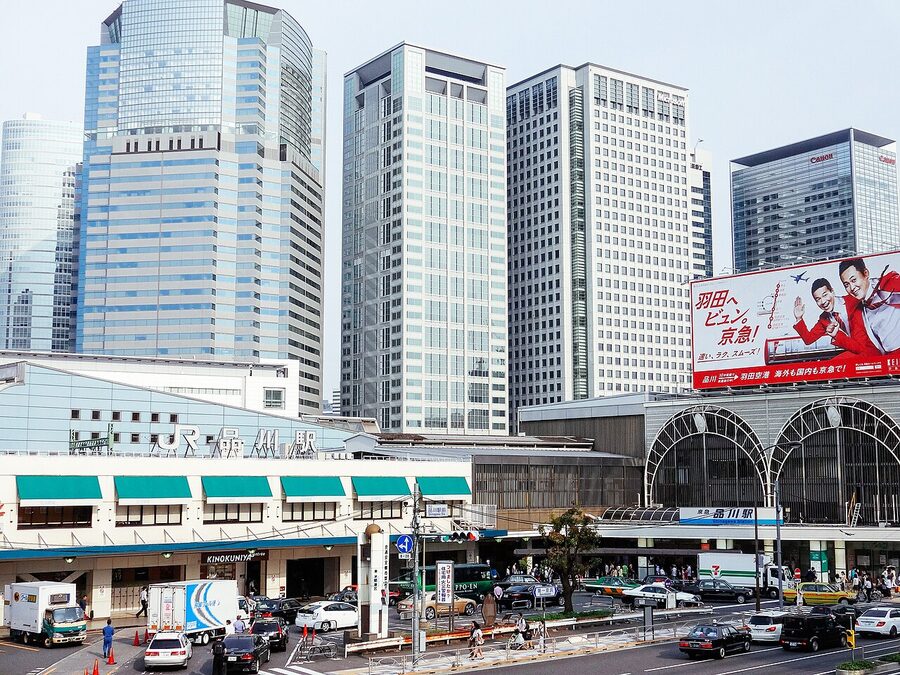
The story I keep coming back to with Keikyu is the one about the night of 31 March 1933 and the third rail at Takanawa. By the early 1930s, the company that had begun life as the Daishi Electric Tramway had a problem most railways would have envied. It ran the only direct interurban between central Tokyo and Yokohama outside the state-run Tokaido Main Line. Trains were full. The dividends were reliable. But the Tokyo end of the line stopped at a hilltop terminus called Takanawa, half a mile short of where you actually wanted to be, and the only way to bridge that gap had been to share track with the Tokyo city tramway. To share with the trams, the company had quietly regauged the entire main line down from 1,435 mm to 1,372 mm in 1904. Now, with the Ministry of Railways finally agreeing to a direct entry into Shinagawa Station, Keihin Electric Railway had to put it back. Engineers spent the night of 31 March 1933 prising every running rail outward by 63 mm, station by station, depot by depot, between Yokohama and Shinagawa. By dawn the gauge was back to standard. By the morning rush, the trains were running through Shinagawa for the first time. And every twist of Keikyu’s history since, the wartime absorption, the 1948 break-up, the airport line, the 2010 international terminal, follows from that night of crowbars on the Tokaido side of Shinagawa.
In This Article
- Why Keikyu reads differently from every other Tokyo private railway
- The temple-traffic founding, 21 January 1899
- Why a temple-pilgrim line ran on standard gauge
- The Kawasaki power station and the side businesses
- 1905 to 1933: the slow path into central Tokyo
- The 1925 Takanawa Building: the proto-station-mall
- The 1933 Shinagawa direct entry, and the regauging
- The Shonan Electric Railway merger, 1941
- The Daitokyu years: 1942 to 1948
- Why the merger never quite stuck
- The 1 June 1948 separation
- The Haneda gambit: 1956 to 2010
- The Tokyo Monorail problem, 1964
- The 1998 New Haneda Airport extension
- The 2010 international terminal opening
- What riding the network feels like today
- The Main Line: Shinagawa to Uraga
- The Airport Line: Keikyu Kamata to Haneda
- The Daishi Line, the original 1899 alignment
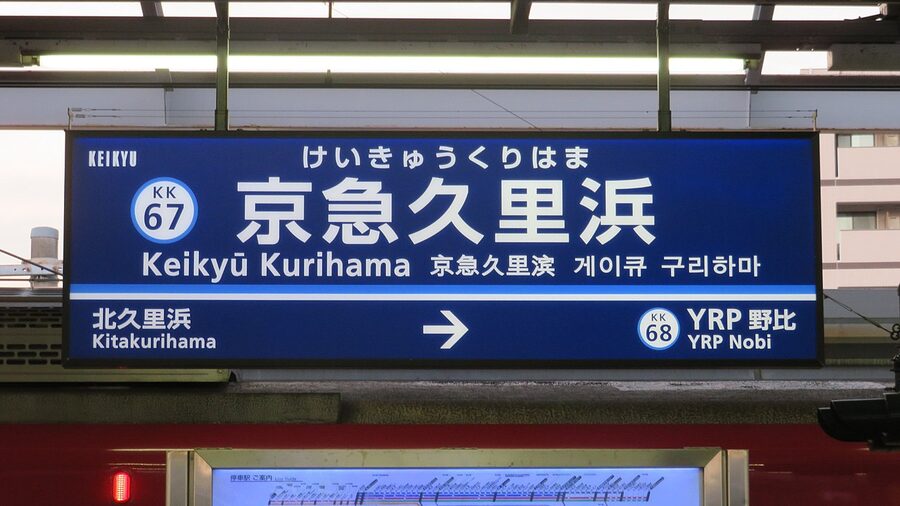
- The Zushi and Kurihama branches
- The fleet, briefly
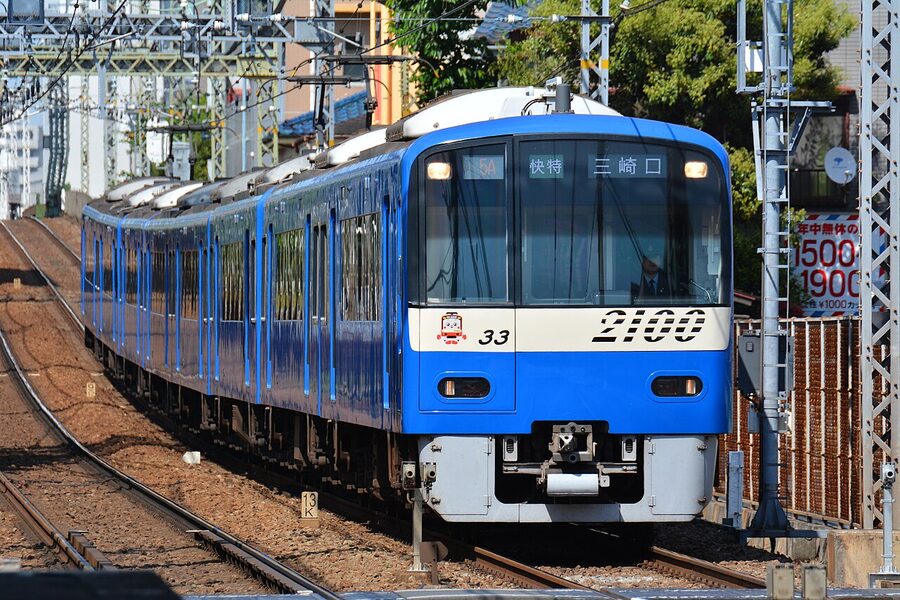
- The 2100 form: the centenary statement
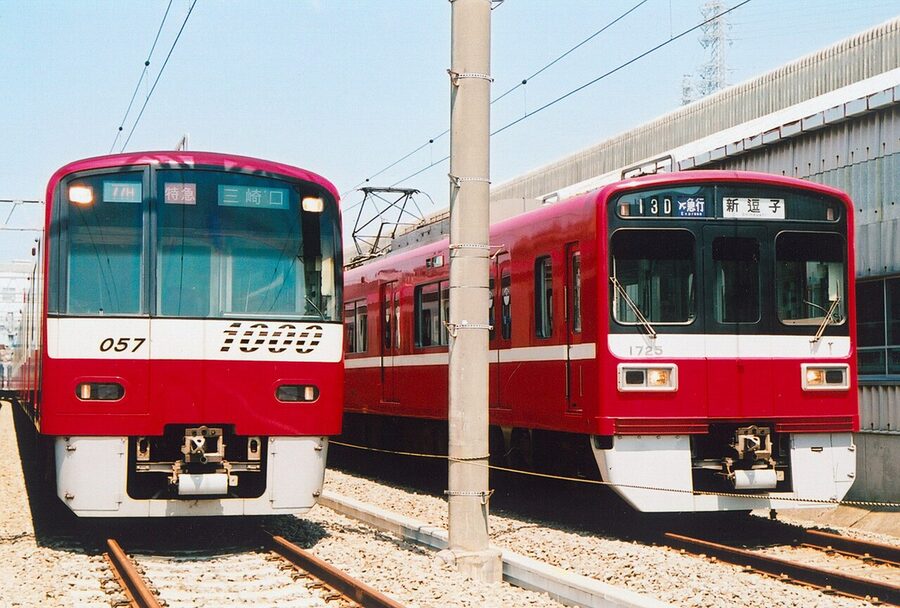
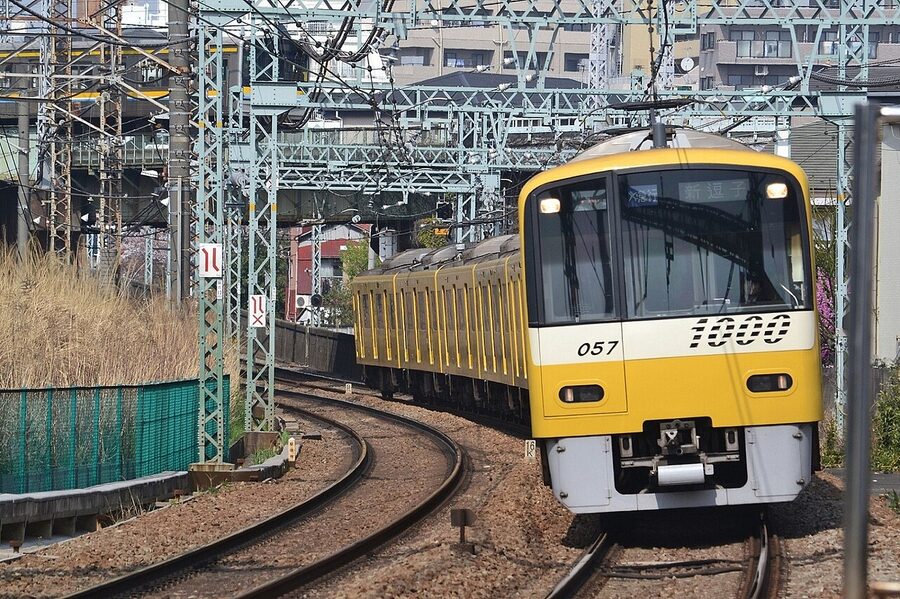
- The N1000 form: the workhorse
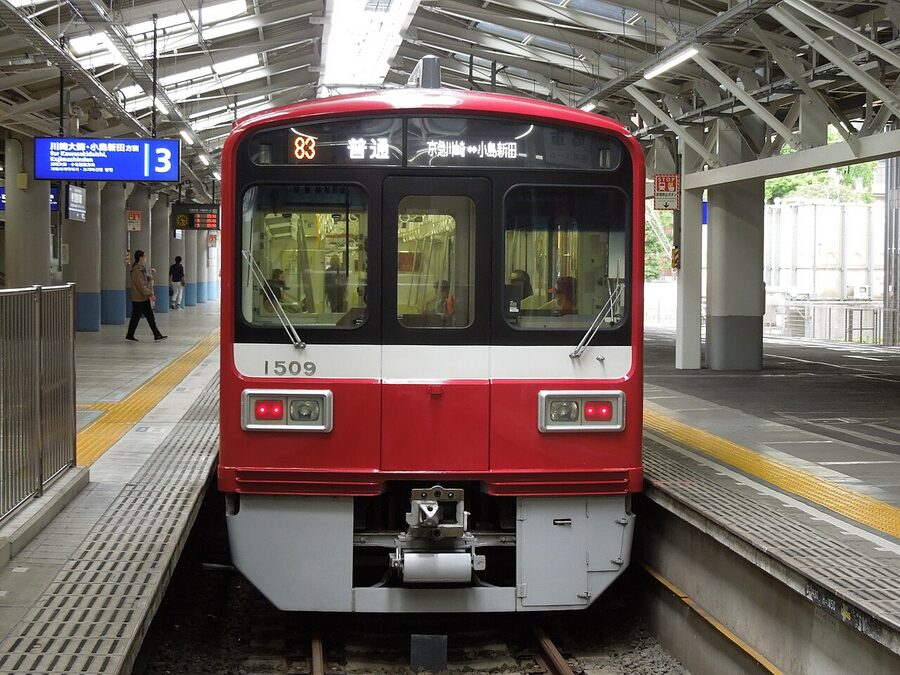
- The 600 and 1500 forms
- How Keikyu compares to the network around it
- The 2019 Kanagawa-Shinmachi crash and what it proved
- Riding it now: the practical moves
- For airport access from central Tokyo
- For the Shinagawa-Yokohama commute
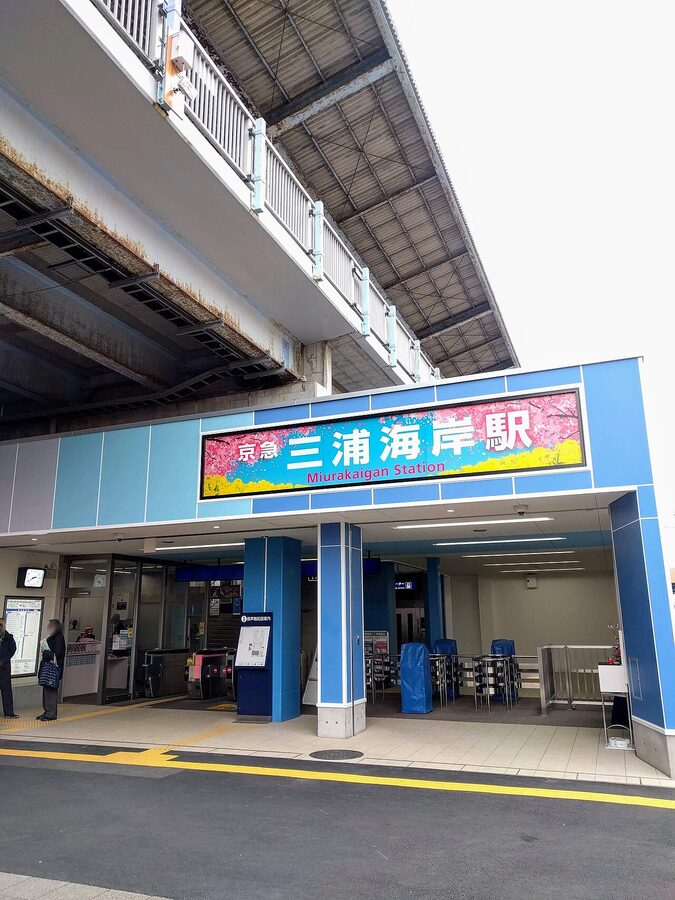
- For the Miura day-trip
- The corporate move that was never about trains
- The things Keikyu does not do
- Where the network is heading
- The opening, again
I tell that story because Keikyu is the operator that almost everyone on the Tokyo network underestimates. JR East is the elephant. Tokyo Metro is the lattice. Tokyu is the property empire with eight train lines on the side. Keikyu, by contrast, runs 87 km of track, owns about ¥280.6 billion of group revenue, and has a single corporate defining feature: it is the railway that won Haneda. The Tokyo Monorail beat it to the airport by 34 years. The Airport Limousine bus beat it on door-to-door convenience for two decades. JR East’s Haneda Access Line, due in 2031, will threaten it again. None of that has dislodged Keikyu from owning the Shinagawa-Haneda corridor, because every operator that tried to copy the line ran straight into the gauge problem, the property problem, or both. This article is about how that happened.
Why Keikyu reads differently from every other Tokyo private railway
Open the corporate history pages on the Keikyu website and the company tells you, on its own terms, the thing that distinguishes it. It is the only major private railway in Tokyo that ended up on 1,435 mm standard gauge. Every other Kanto operator, Tobu, Odakyu, Keio, Seibu, Tokyu, sits on 1,067 mm narrow gauge along with most of the JR network. Keikyu is on the same gauge as the Shinkansen. That single fact, set in 1898 by a former Toyokawa Electric Railway engineer named Tachikawa Yujiro, dictated the operating speed (120 km/h on the Main Line, faster than any private operator north of Yokohama), the depot infrastructure, the rolling-stock supplier base, and crucially, which subway lines Keikyu could ever physically through-run with. It also dictated who Keikyu’s competitive peers became: not the other private operators on the JR-aligned narrow gauge, but the Toei Asakusa Line and Keisei on the Narita side, which both adopted standard gauge precisely so they could through-run with each other.
The other thing the corporate history tells you, and that every major article on Keikyu seems to skip past, is that the company sits inside the Fuyo Group, the postwar lending and shareholder cluster around Mizuho Bank that descends from the old Yasuda zaibatsu. That is unusual among the Tokyo private operators. Tokyu controls itself. Tobu has the Nezu family. Odakyu was bankrolled by the prewar Kihara group. Keikyu is the only major Tokyo-area operator inside a former financial keiretsu, which is part of why it spent the 1990s and 2000s pursuing a property-and-retail portfolio (the Keikyu Department Store at Kamiooka, the Yokohama group headquarters, the Shinagawa redevelopments) that looks more financial-engineering than railway-operator. The trains are profitable. The retail and the property are where the long-term planning happens.
The temple-traffic founding, 21 January 1899
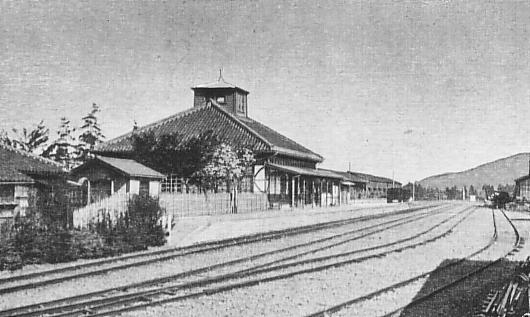
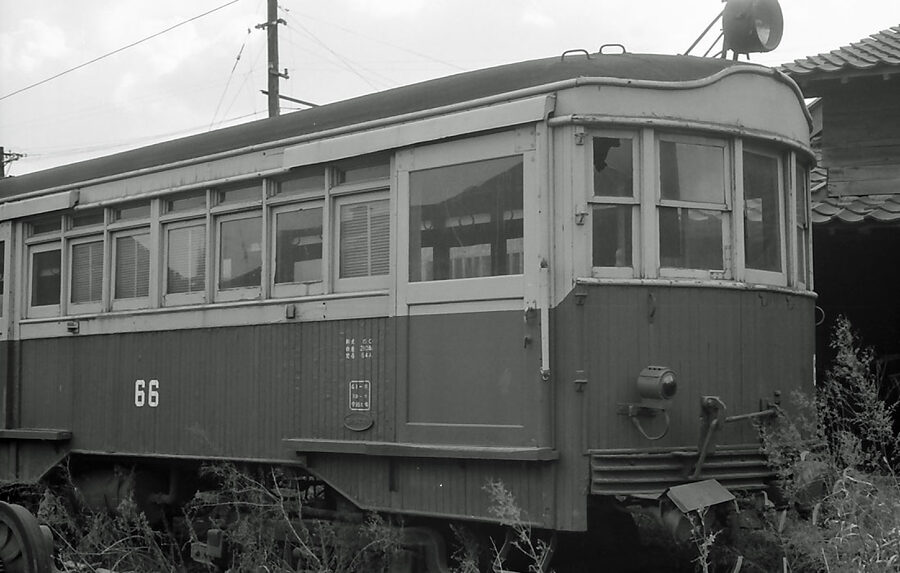
The opening day was a Saturday. Tachikawa had registered the Daishi Electric Tramway on 25 February 1898 in a Ginza townhouse, with paid-in capital of ¥98,000, five rolling-stock cars, seventeen employees split across four departments, and a single 2 km of single-track standard-gauge line between Rokugobashi, on the south bank of the Tama River, and the temple gate at Kawasaki Daishi. The line had no other purpose. Kawasaki Daishi (Heiken-ji) is the most-visited Buddhist temple in Kanto outside the Sensoji complex at Asakusa, and the New Year pilgrim traffic to it had been running into the millions since the late Edo period. Tachikawa’s only customer was the pilgrim. His only operating challenge was getting them home before the line was overwhelmed.
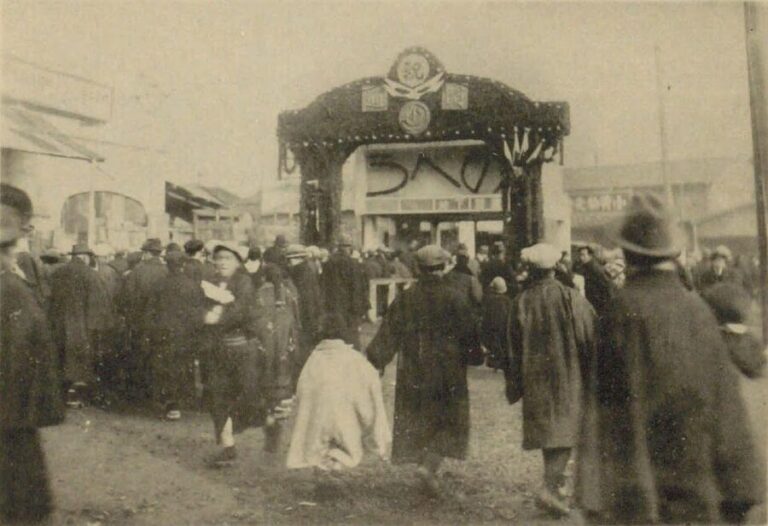
On the day of the opening, 21 January 1899, the temple was holding its monthly ennichi festival and the Kawasaki Police precinct sent dozens of officers to manage the crowd. The first car left Rokugobashi at ten in the morning, carrying a full standing load. By mid-afternoon the line was running shuttles every fifteen minutes. Sources variously give the number of opening-day passengers as 1,200 or just over 2,000; the Keikyu corporate history settles for “a complete success.” What matters is the gauge. Tachikawa had specified 1,435 mm, the same as the European standard and what would later become the Shinkansen gauge, because he wanted larger, faster, more powerful trams than the competition. The competition, on Japan’s then-standard 1,067 mm, hated him for it for the next two decades.
Why a temple-pilgrim line ran on standard gauge
The decision was practical, not ideological. Tachikawa had studied the Kobe-Osaka interurbans, where the early Hanshin Electric Railway was already proving that wider-gauge trams could run heavy bogies at 60 km/h while the Tokyo city trams crawled around corners at 20. He wanted the Tokyo-Yokohama route, which the Daishi line was a stepping stone toward, to run as fast as the Tokaido Main Line steam trains, not as slowly as the streetcars Edo had inherited from the late Tokugawa. Standard gauge gave him the bogies, the curve speed, and the future option of long ten-car trains that narrow gauge would have made structurally awkward.
The first commercial revenue ran on 21 January 1899. Three months later, on 25 April, the company changed its name to Keihin Electric Railway, the “Keihin” being the contraction of the kanji for Tokyo (京) and Yokohama (浜) that the company would carry, in some form, for the next 111 years. The opening capital had been ¥98,000 in 1898 yen. By 1905, when the line reached Kanagawa and the Tokyo-Yokohama through service finally opened, the capitalisation had multiplied tenfold and Tachikawa was operating under a new, larger corporate skin.
The Kawasaki power station and the side businesses
One quirk that explains a lot about how Keihin Electric Railway behaved over the next thirty years is that, like most early electric tramways, it had to generate its own power. The Kawasaki thermal generating plant came online in 1899 to feed the line. Within five years it was selling surplus electricity to the surrounding area, which is how the Keihin Industrial Belt began. The company opened residential subdivisions at Namamugi (the first private-railway-developed suburb in Kanto, 1914) and built the Kawasaki Canal to attract factory tenants. None of this was the railway business. All of it was railway-strategy, designed to fill the trains with both commuters and freight payers. The model is the same Hankyu-Tokyu rail-and-property model that became the Tokyo private-operator template, but Keikyu’s predecessor was already running it before Hankyu had laid its first kilometre of track outside Osaka.
1905 to 1933: the slow path into central Tokyo
The Tokyo end of the route was the part that took thirty-five years to fix. The line reached Shinagawa, or rather Yatsuyamabashi, just south of where the JR Shinagawa platforms now stand, in May 1904. From there the only way into central Tokyo was to share track with the Tokyo city trams, which ran on the older 1,372 mm Tokyo gauge (also called Scottish gauge, originally adopted by the Edinburgh and Dublin tramways and inherited by the Tokyo system via Shinjuku Tramway). Keihin Electric Railway regauged the entire main line from 1,435 mm down to 1,372 mm in 1904 to allow this through-running. From the railway-operations perspective it was a regression. From the marketing perspective it gave Keihin Electric Railway access to the central-Tokyo street trams and, through them, to Asakusa and Ueno on a single ride.
The line filled in across the next twenty years. The Yokohama side connected to Kanagawa Station on 24 December 1905, completing the Tokyo-Yokohama through service. By the late 1920s the company had bought out the small Anamori Line at Haneda (a tramway that had served the Anamori Inari shrine on what is now the airport site), and had begun planning the Shinagawa direct entry that would, eventually, let it leave the trams behind.
The 1925 Takanawa Building: the proto-station-mall
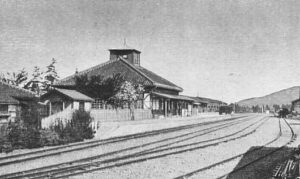
The interim solution was Takanawa Building, opened in September 1925 as the company’s Tokyo terminus on Takanawa hill. It was a four-storey concrete block with a tram terminus on the ground floor, twenty-odd shops on a mezzanine and second floor, and offices above. The Keikyu corporate history calls it “the forerunner of the station building,” and they are not exaggerating: this was Japan’s first integrated rail-and-retail terminal in Kanto, beating Tokyu’s Toyoko Department Store at Shibuya by nine years and roughly contemporary with Hankyu’s pioneering Umeda Hankyu Store in Osaka. The building was demolished in 1933 when the company finally closed the Takanawa shuttle and ran trains directly into Shinagawa Station, but the model, retail under the platform, the ticket gate as a shopping-arcade entrance, became the Keikyu signature for the next century.
The 1933 Shinagawa direct entry, and the regauging
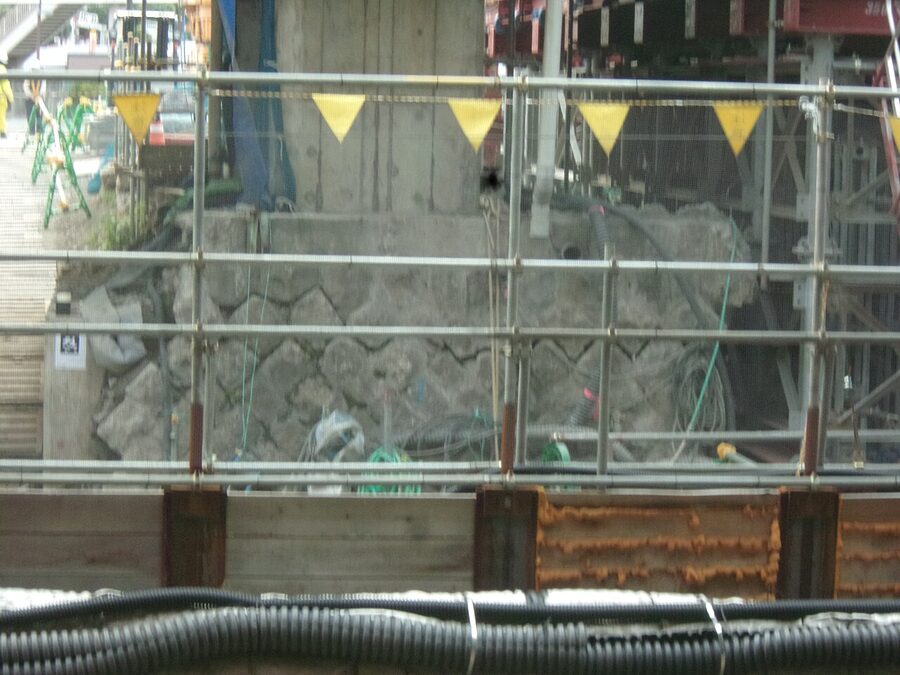
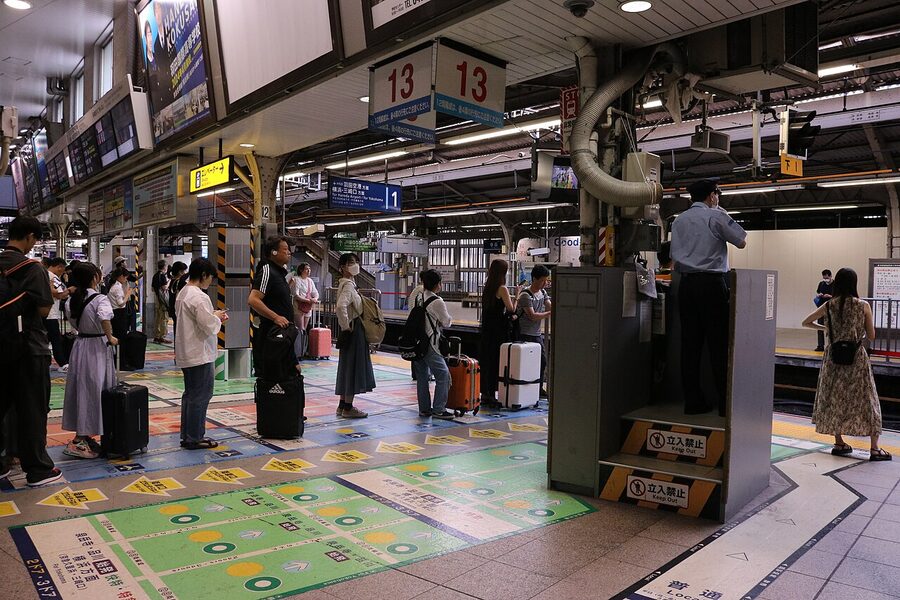
By 1928 the Ministry of Railways had agreed in principle to allow private operators to terminate at Shinagawa under specified conditions, including using the JR-side tracks. Keihin Electric Railway took five years to organise the regauging. The work was done in stages, with the final overnight conversion of Yokohama-Shinagawa happening on the night of 31 March 1933. From 1 April 1933, trains ran directly from Yokohama to Shinagawa on standard gauge, entering the Japanese Government Railways Shinagawa precinct at platforms which today carry numbers 1 and 2 in the Keikyu section. Takanawa shut. The Tokyo trams stopped using Keikyu track. The whole network reverted to the gauge Tachikawa had originally specified in 1898.
The 1933 regauging is the moment Keikyu becomes recognisably modern. From that day onward the Main Line was operationally identical to a JR commuter line in everything but ownership. Heavy bogies, four-car sets, 90 km/h running, an interurban speed regime that would carry through every subsequent rolling-stock generation up to the current 120 km/h Kaitoku service.
The Shonan Electric Railway merger, 1941
The Yokohama end of the line ran into a different problem in the 1920s, which was that it stopped at central Yokohama and did not reach the Miura Peninsula or the Imperial Naval Arsenal at Yokosuka. A separate company, Shonan Electric Railway, had been chartered in 1926 to run from Hemi (just north of Yokosuka) south to Uraga and the Miura coast, on standard gauge, with the explicit intention of through-running with Keihin Electric Railway when the gauge alignment allowed. Shonan Electric Railway opened the Hemi-Uraga section on 1 April 1930 and the Yokohama-Hemi section on 14 December 1930, with limited express services starting essentially the day the track was complete.
For most of the 1930s the two companies operated as a back-to-back pair with shared rolling stock and joint timetables but separate corporate identities. The 1941 merger, ratified on 1 November 1941 under the wartime National Land Transport Coordination Council, folded Shonan Electric Railway into Keihin Electric Railway and gave the combined operator the modern Main Line as it now runs from Shinagawa to Uraga. The Kurihama Line, the one that runs to Misakiguchi at the southern tip of the Miura Peninsula, came later (the Yokosuka-Kurihama section opened in 1942, the Misakiguchi extension in 1975).
The Daitokyu years: 1942 to 1948
The wartime cabinet under Tojo Hideki, looking at the patchwork of small private rail operators around Tokyo and a war economy that needed every rolling-stock kilometre to count, ordered the consolidation of the Tokyo-area private railways under the National Land Transport Coordination Law. The man who executed the order on the ground was Goto Keita, the founder-managing-director of Tokyo-Yokohama Electric Railway (Tokyu), who had spent the 1930s buying every distressed private operator in Kanto. By cabinet directive in February 1943, Tokyu absorbed Odakyu, then in 1944 absorbed Keio Teito Electric Railway, and most importantly for this article had absorbed Keihin Electric Railway already on 1 November 1942.
The combined operator was called Tokyo Express Electric Railway (東京急行電鉄), known then and now as Daitokyu, “Great Tokyu.” Goto became its chairman. Within months he was Minister of Transport and Communications in the Tojo cabinet, signing wartime rail-consolidation orders that he had effectively written for himself. From 1942 to 1948, Keihin Electric Railway did not exist as an independent corporate entity. The trains kept the Keihin liveries. The Yokohama depot kept the Keihin operating culture. The signage, the timetables, the staff uniforms, the union, all said Tokyu.
Why the merger never quite stuck
The Daitokyu years are the most interesting piece of Keikyu history precisely because the absorption was operationally peculiar. Goto’s premise had been that consolidated rail would be more useful to the war than competing private operators. In practice, the four absorbed networks (Tokyu’s original Toyoko-Mekama core, plus Odakyu, Keihin, and Keio) ran on three different gauges (1,067 mm Odakyu and Tokyu, 1,372 mm Keio, 1,435 mm Keihin), and through-running between them was physically impossible without regauging the lot. Odakyu and Tokyu shared depots. Keihin did not. Keio did not. The result was that Daitokyu never integrated its operations the way Goto had assumed it could, and through the 1944 and 1945 air raids, with the Toyoko viaduct sections destroyed at Shibuya and Yokohama and the Keihin depot at Kanagawa-shimmachi gutted, the combined operator burnt cash on parallel rebuilds rather than coordinated ones.
The other reason it never stuck was political. Goto was on the postwar occupation’s purge list almost immediately. The Economic Decentralization Law of December 1947 was the legal hook the occupation used to break up the prewar zaibatsu, and Daitokyu, with 220 subsidiaries spanning rail, real estate, hotels, retail, advertising, manufacturing and a film studio, looked enough like a zaibatsu to qualify. Goto was purged from public life in early 1948.
The 1 June 1948 separation
The breakup happened on 1 June 1948. Three pieces detached and resumed independent corporate existence as the operators they had been before 1942: Odakyu Electric Railway, Keio Teito Electric Railway, and Keihin Electric Railway, the new corporate name being shortened from “Keihin Electric Railway” to Keihin Kyuko Dentetsu (京浜急行電鉄, “Keihin Electric Express Railway”) to make clear that this was a re-establishment of the line, not a continuation of the wartime combine. The legal entity that had been incorporated on 25 February 1898 as Daishi Electric Tramway, and renamed Keihin Electric Railway on 25 April 1899, had now been re-established under a third name. In English the new company traded as Keihin Electric Express Railway Co., Ltd. Sources occasionally still refer to the post-1948 company as “Keikyu,” the contraction of Keihin Kyuko which was in unofficial use as a nickname from the early 1950s, and the company adopted that as its formal English brand on 21 October 2010. The 1948 separation date, 1 June, is the one Keikyu prints on its corporate-history page as the founding of the modern company.
The Haneda gambit: 1956 to 2010
The thing that made Keikyu’s modern fortune, the Tokyo-International-Airport monopoly, was not a 1948 decision. It was a sequence of small territorial moves between 1956 and 2010 that, taken together, locked the company into the only direct rail corridor between central Tokyo and Haneda. The starting position was bad. The Anamori Line, which Keihin Electric Railway had bought out in 1924 and which terminated near the eastern edge of what was then the Anamori Inari shrine grounds, had been requisitioned by the US occupation in 1945, with the entire Haneda area becoming the Haneda Air Base. The Anamori Line was abandoned. When the airport was returned to civilian Japanese government control in 1952 as Tokyo International Airport, the only rail access was a short Haneda Airport extension Keikyu hastily restored to a temporary station called Haneda Airport Station, which opened in 1956.
The Tokyo Monorail problem, 1964
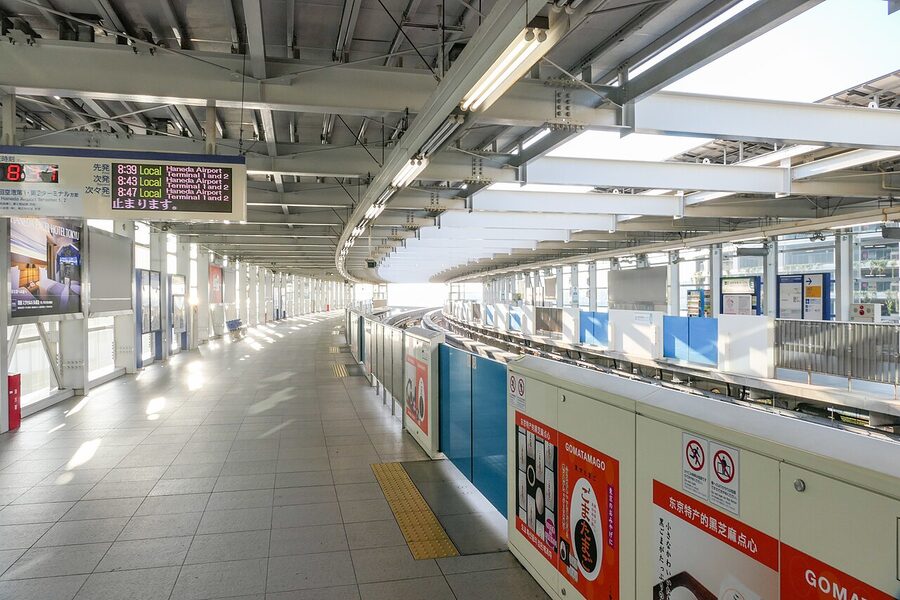
The Tokyo Olympics of 1964 then handed the airport rail business to a different operator. The Tokyo Monorail, conceived as a showcase for the games, opened on 17 September 1964 between Hamamatsucho (on the Yamanote Line) and the airport, with the explicit backing of the Ministry of Transport. The monorail was faster than the Keikyu-bus combination Keikyu was running at the time, and for the next thirty years it had effectively a monopoly on rail-borne airport access. Keikyu’s Airport Line, what it had, did not actually reach the new terminal complex on the reclaimed island where the airport now operated. It stopped at an inconvenient older terminus a kilometre east, requiring a transfer bus. By the late 1980s Keikyu was carrying maybe one tenth of Haneda’s rail-borne traffic, with the monorail carrying the rest.
The 1998 New Haneda Airport extension
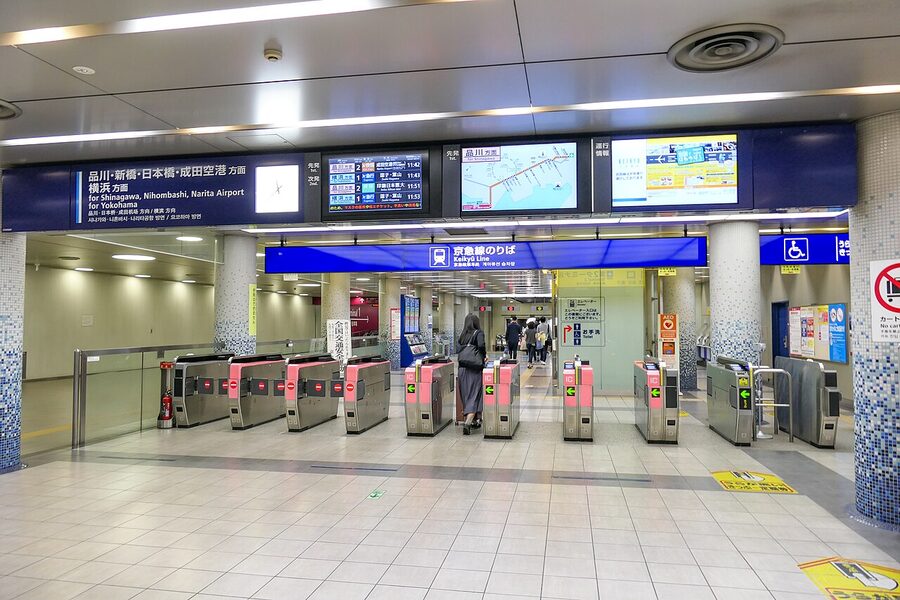
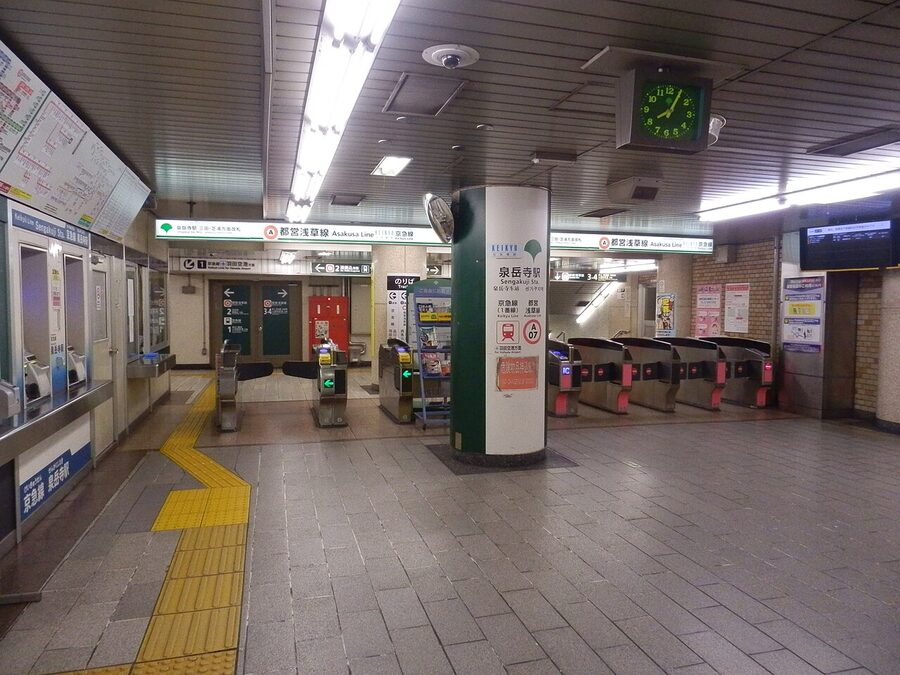
Keikyu spent the 1990s building the answer. The Airport Line was progressively extended through Tenkubashi in 1993 and finally reached the new domestic terminal building, the one passengers actually used, on 18 November 1998. The new line ran in a tunnel under the runway approach, emerging directly into a basement station beneath the terminal. The journey from Shinagawa to Haneda Airport Domestic Terminal Station became 14 minutes on the Airport Limited Express, with through-running back into central Tokyo via the Toei Asakusa Line. The Tokyo Monorail’s market share started declining the day the Keikyu service opened.
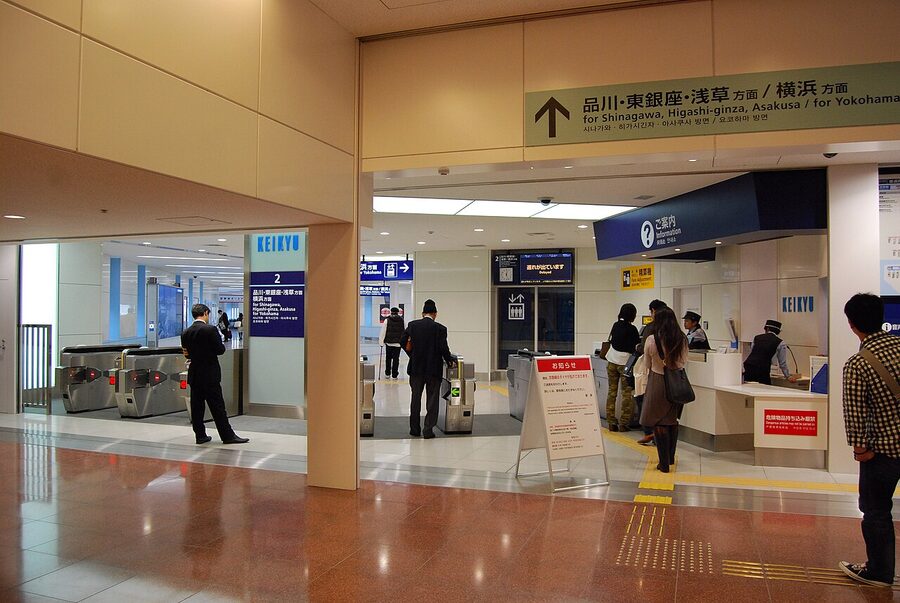
The reason Keikyu won this round, and the reason JR East’s Haneda Access Line scheduled for 2031 may not unwin it, is the through-running. The 1998 Airport Line connects, at Sengakuji, into the Toei Asakusa Line, which in turn connects to Keisei. From any platform on the Toei Asakusa Line, or from anywhere on the Keisei system as far north as Narita Airport, you can board a single train to Haneda. JR’s monorail required a transfer at Hamamatsucho, then a Yamanote Line ride. Keikyu’s Airport Express trains from Narita Airport to Haneda Airport, via Asakusabashi and Sengakuji, became the through-service that nobody else could match.
The 2010 international terminal opening
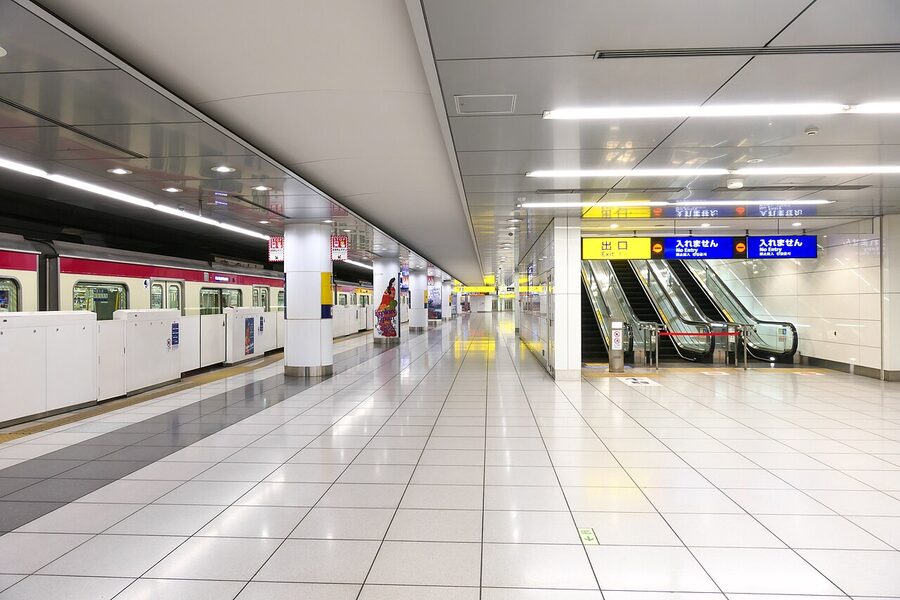
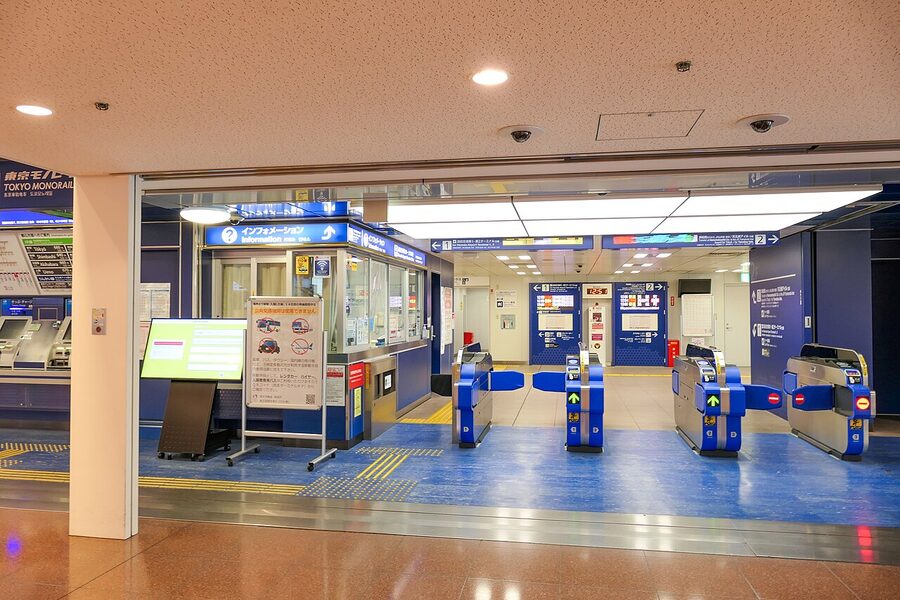
The corporate inflection point was 21 October 2010. On that day Haneda’s new International Terminal opened (the airport had been domestic-only since the 1978 opening of Narita Airport handled all international flights), and Keikyu opened the Haneda Airport International Terminal Station the same morning, in the basement under the new building. International flights from Tokyo, especially the lucrative night-time slots that Narita could not handle, returned to Haneda for the first time in 32 years. The Keikyu Airport Limited Express now ran direct from Yokohama Station, via the Main Line and the Airport Line, to the international terminal, in 26 minutes for ¥520 IC. The London-Tokyo overnight from Heathrow, which had once required a Narita Express transfer at Tokyo, became a single 14-minute Keikyu ride from the terminal to Shinagawa.
The same day, 21 October 2010, the company changed its English corporate name from Keihin Electric Express Railway Co., Ltd. to Keikyu Corporation. Sixty-two years of formal English branding ended on the day the international terminal opened. The Keikyu nickname, in use unofficially since the 1950s, became the legal trading identity. The 1948 founding name had finally been retired.
What riding the network feels like today
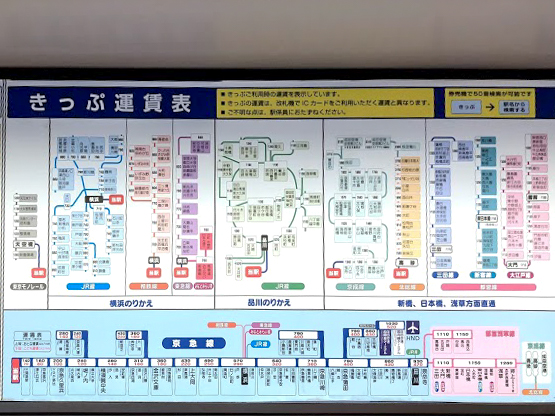
The 87 km of Keikyu network, five lines, 73 unique stations, sits awkwardly between two operating cultures. North of Yokohama, the Main Line runs at 120 km/h with the heavy lead-car policy that has, in two recorded mainline incidents, kept first-car derailments from rolling. South of Yokohama, the Main Line slows to 110 km/h through tighter curves and older signal sections, and the operating feel becomes more interurban. The Kurihama and Zushi branches off the southern Main Line feel deliberately rural by Tokyo standards, single-track in places, four-car trains, station gardens.
The Main Line: Shinagawa to Uraga
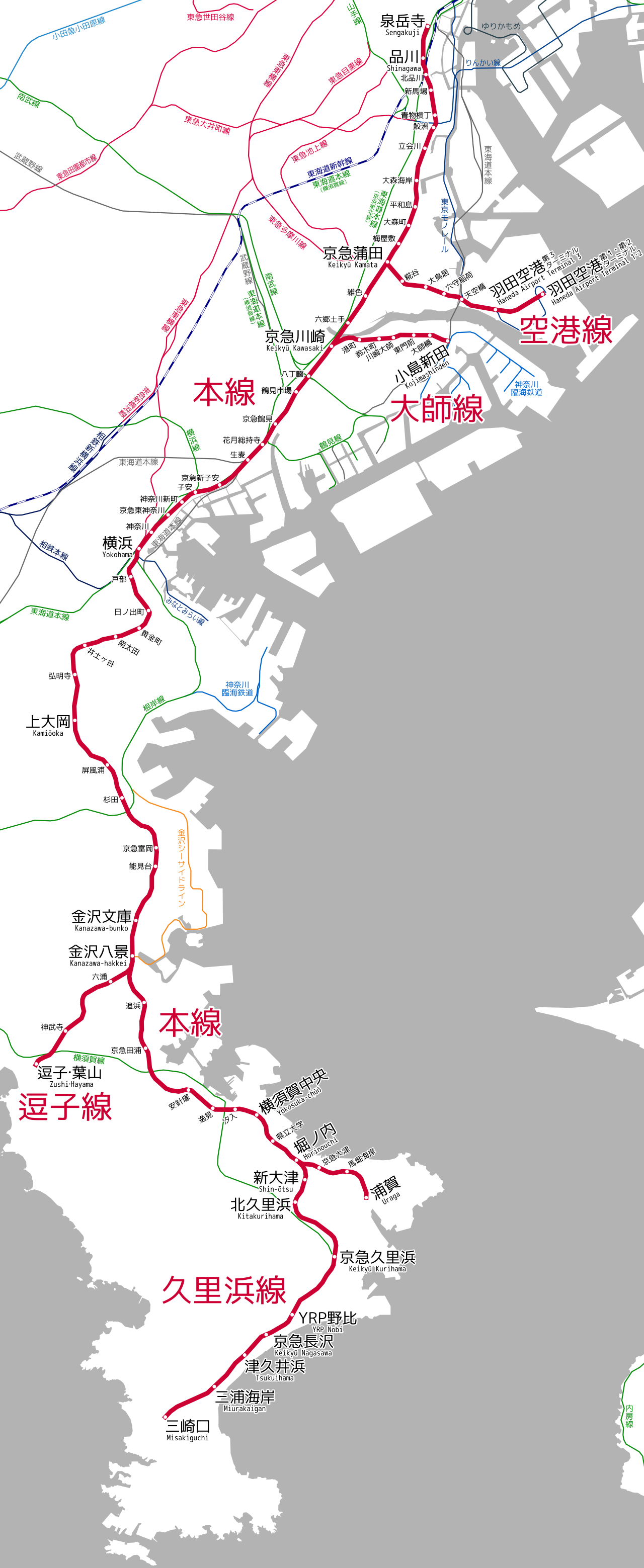
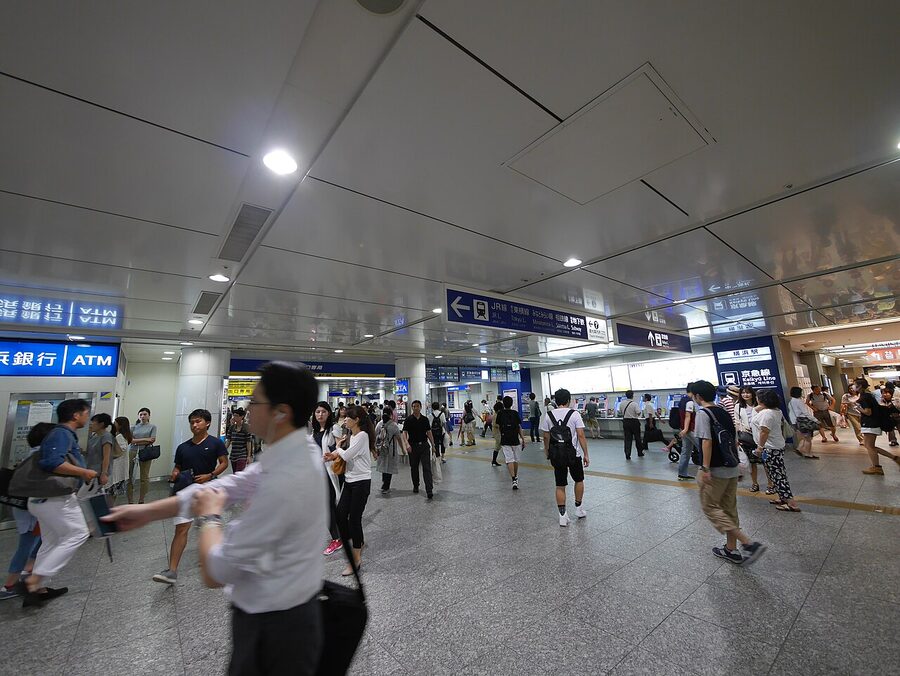
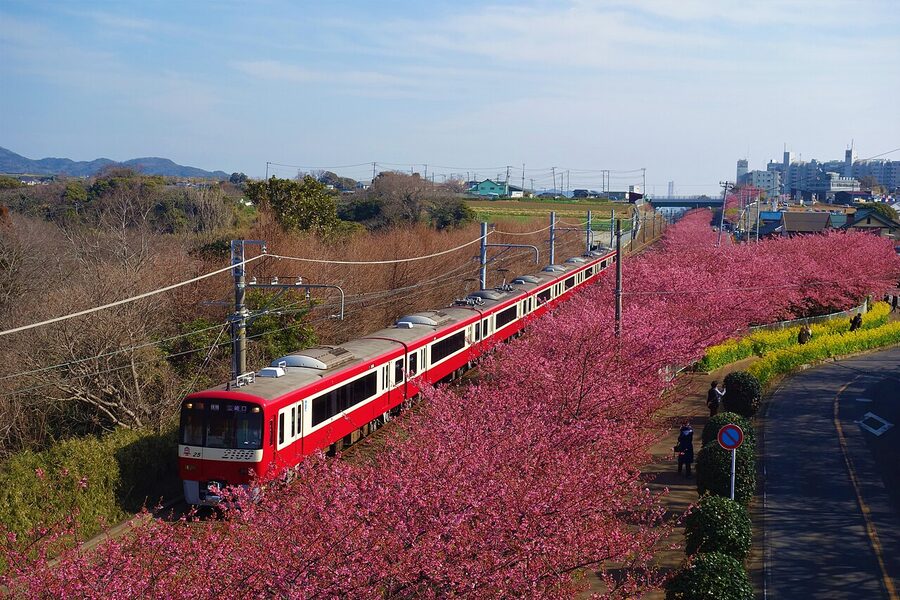
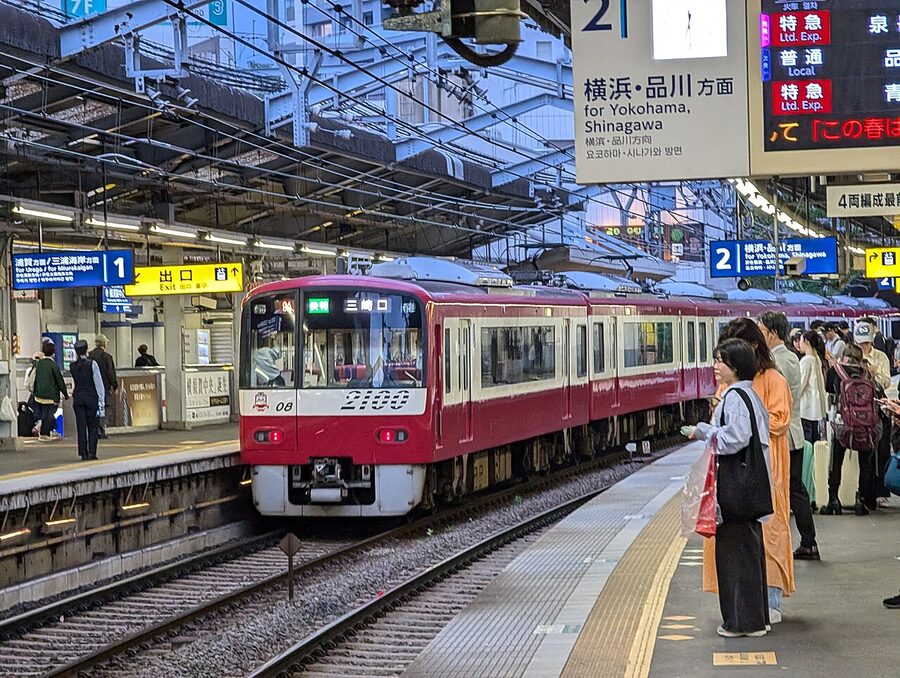
The 56.7 km Main Line is the spine. Shinagawa platforms 1 and 2, both in the Keikyu section directly north of the Tokaido Shinkansen platforms, see a Kaitoku limited-stop service every six minutes during the day, plus Tokkyu and Airport limited expresses through-running into Toei Asakusa. The Kaitoku from Shinagawa to Yokohama takes 17 minutes for ¥320 IC, against 24 minutes on the parallel JR Yokosuka Line for ¥380 and 18 minutes on the JR Tokaido Main Line for the same fare. Keikyu wins on price, ties on time with the Tokaido, and beats the Yokosuka by nearly seven minutes. If you have a JR Pass the calculation flips. Otherwise, the Keikyu Kaitoku is the right call.
South of Yokohama, the Main Line wraps around to Yokosuka and beyond. The Kaitoku continues, more or less, but the limited-stop service degrades to a Tokkyu pattern that calls at most major stations. Yokohama to Yokosuka-chuo takes 28 minutes on the Tokkyu, ¥390 IC. Then the line ends at Uraga, which is a small fishing-port station on the Pacific side of the peninsula and is the original 1930 Shonan Electric Railway terminus. Most through-passengers change at Horinouchi for the Kurihama Line and Misakiguchi.
The Airport Line: Keikyu Kamata to Haneda
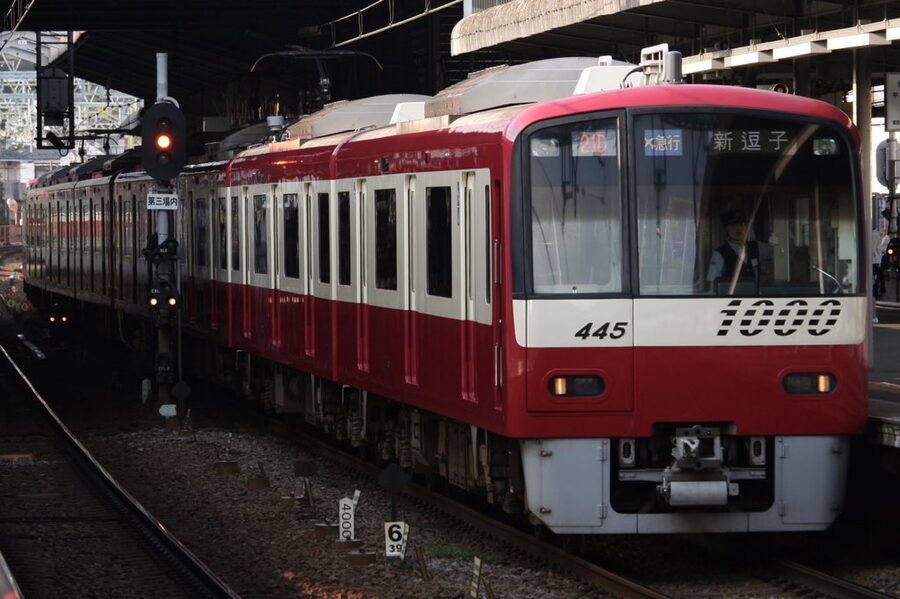
The 6.5 km Airport Line is the most-used branch in Tokyo private-operator service relative to its length. It runs from Keikyu Kamata, where it joins the Main Line, to the new Haneda Airport Terminal 1 and 2 Station and Haneda Airport Terminal 3 Station (the international terminal, renamed in March 2020 to align with airport branding). Trains run as Airport Limited Express from Shinagawa, with through-running both up the Main Line to Yokohama and through Sengakuji onto the Toei Asakusa Line, and via Asakusabashi onto the Keisei system as far north as Narita Airport. The Airport Limited Express from Shinagawa to Haneda Airport Terminal 1 and 2 Station takes 14 minutes for ¥330 IC. From Yokohama, 26 minutes for ¥520. Both fares assume the IC card; paper tickets are ¥1 to ¥3 more depending on segment.
The Daishi Line, the original 1899 alignment
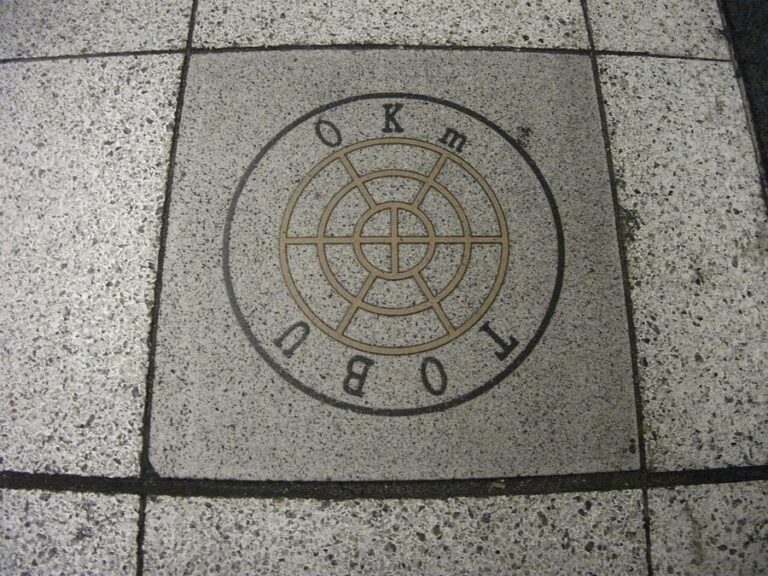
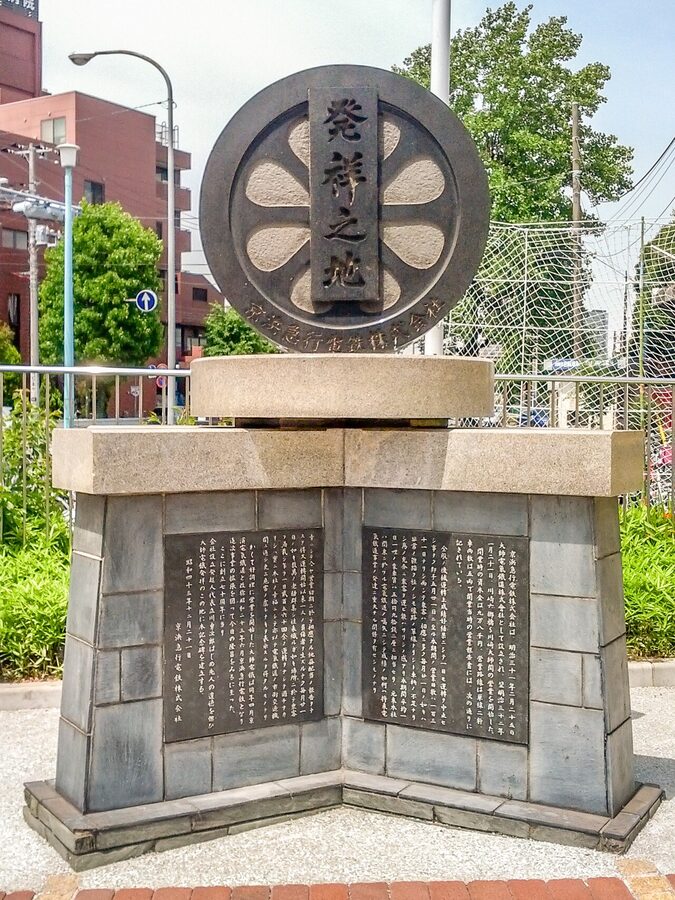
The 4.5 km Daishi Line still runs from Keikyu Kawasaki to Kojimashinden, and the section from Keikyu Kawasaki to Kawasaki-Daishi covers most of the original 1899 alignment, although the line has been quadruple-rebuilt in stages and the original wooden Rokugobashi crossing is long gone. Trains are 4-car 1500 series sets running every 12 minutes, top speed 60 km/h, ¥160 to ¥180 IC for the run. The Kawasaki-Daishi station is a five-minute walk from the Heiken-ji temple gates, and the temple is worth the visit even if you have no interest in railway history. If you do, the Keikyu corporate marker stone outside the station, marking the company’s birthplace, is the part that carries the weight.
The Zushi and Kurihama branches
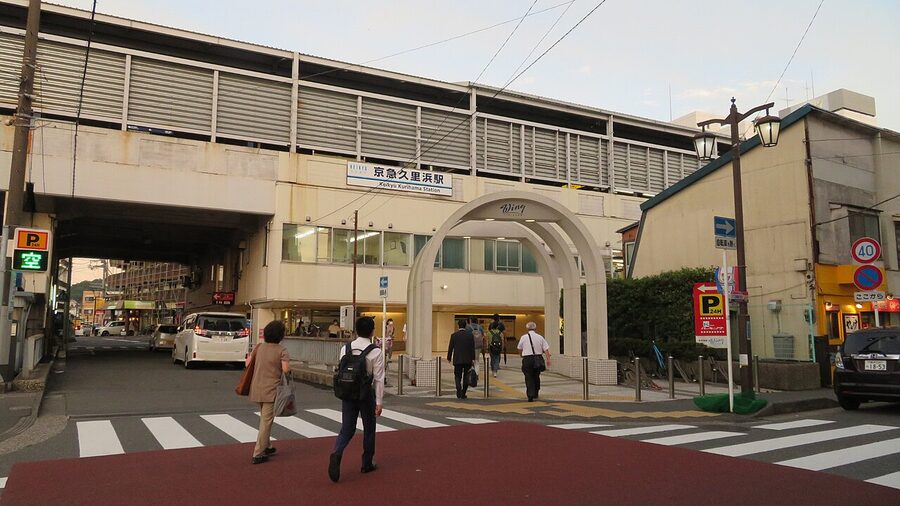
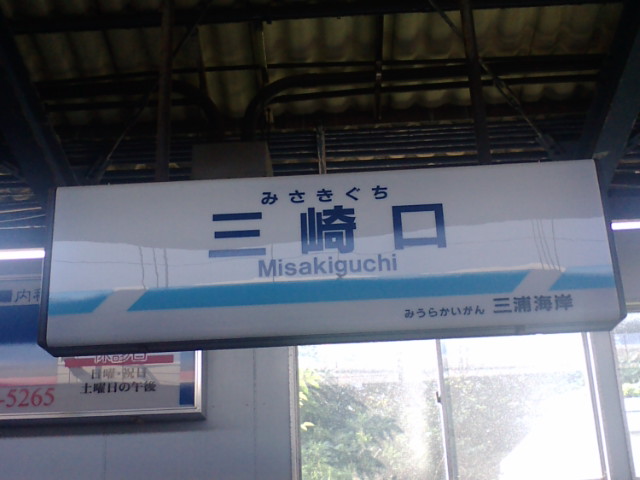
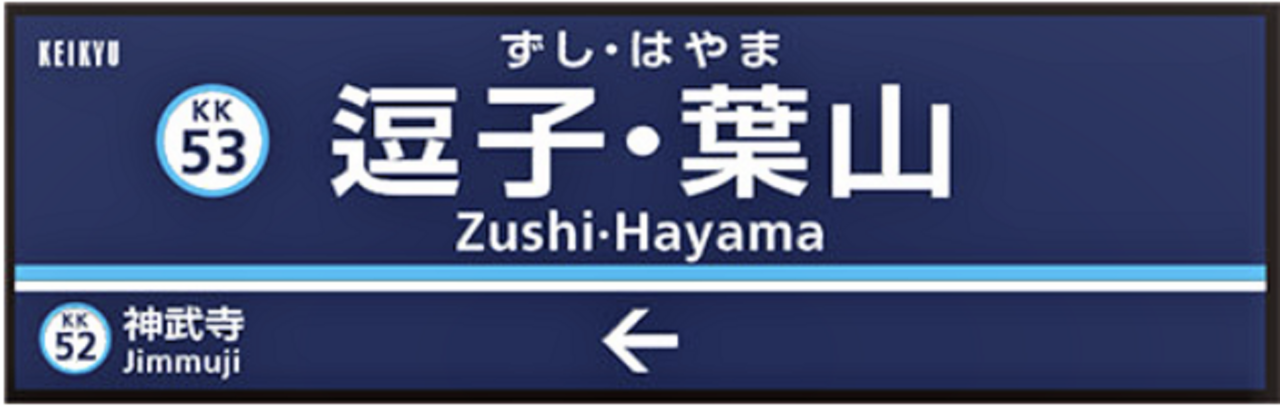
The 5.9 km Zushi Line and the 13.4 km Kurihama Line are the country branches. Zushi runs from Kanazawa-hakkei (a junction on the Main Line just south of Yokohama Bay) to Zushi-Hayama, on the Sagami Bay side of the Miura Peninsula. The line was opened in 1930 by Shonan Electric Railway as a beach-resort service for Tokyo day-trippers, and that is still mostly what it does. Trains are 4-car 1500 sets, top speed 80 km/h, ¥220 IC end to end. Kurihama runs south from Horinouchi to Misakiguchi, the southernmost Keikyu station on the Miura coast, with limited-stop services that connect at Horinouchi onto the Yokohama-bound Kaitoku. The Misakiguchi terminus is 70 km from Shinagawa, and the Misaki Maguro Day Trip Ticket is the deal that turns the Miura branch into a tourist line in its own right: ¥3,750 to ¥4,250 from Shinagawa for unlimited rides plus a tuna meal voucher and an attraction ticket.
The fleet, briefly
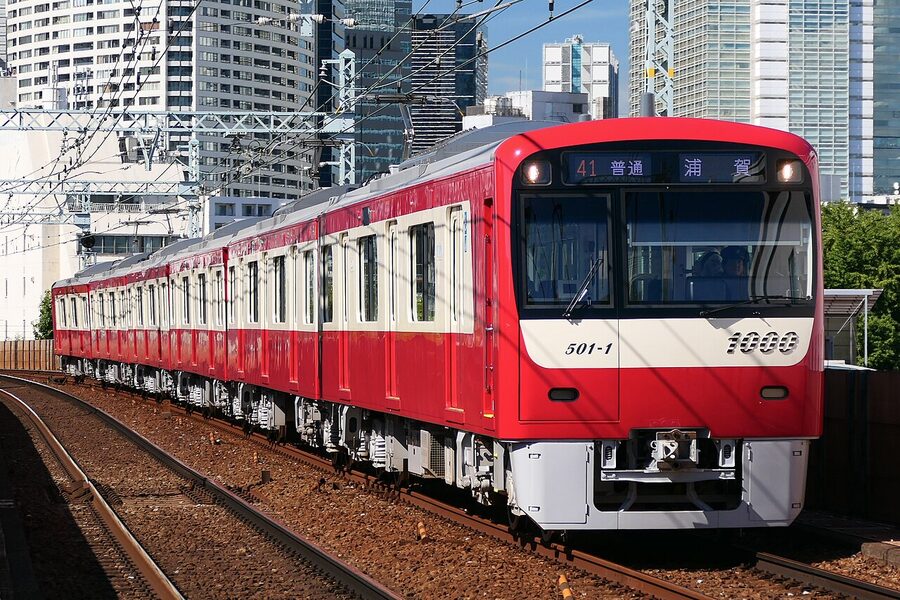
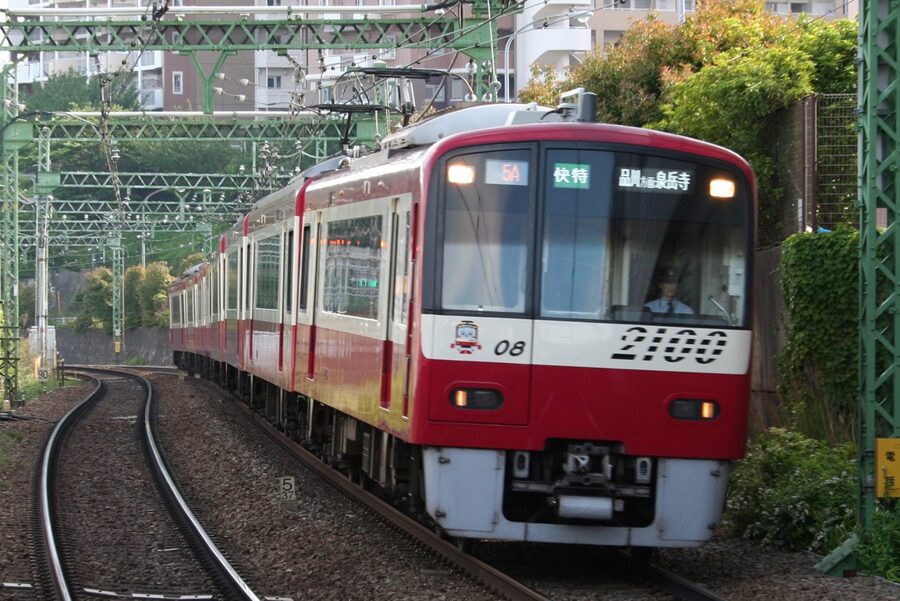
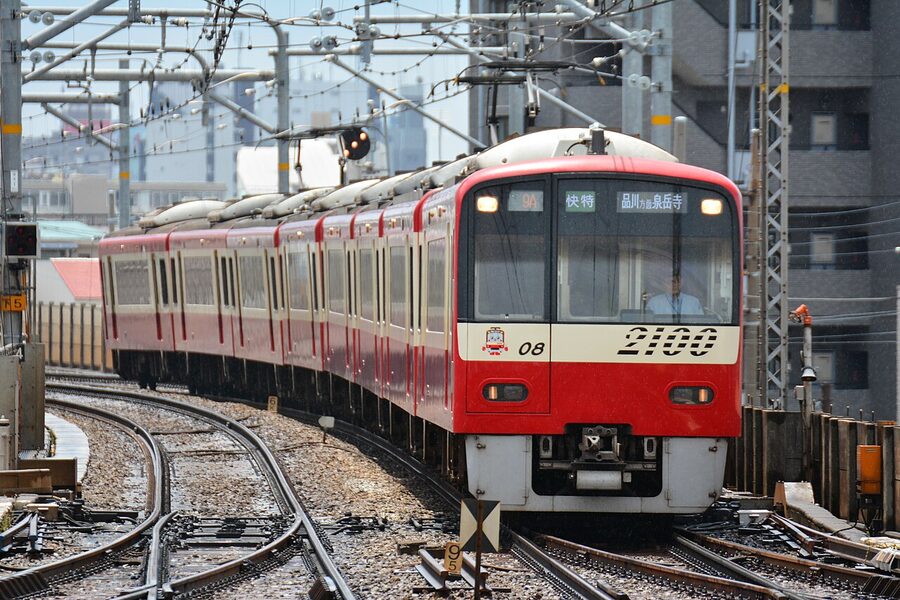
The rolling stock catalogue is what binds the corporate story together. Keikyu has built its own trains, in-house at the Kurihama Works, since the 1950s. The continuity is striking: stainless or aluminium body, three-car or four-car formations for the branches, eight-car formations for the Main Line, longitudinal seating across most classes, and a livery palette that has run from the bright red of the 1950s 600 series through the cream-and-red of the 1990s to the current red-and-white the 2100 form pioneered in 1998. For the full rolling-stock walkthrough see the Keikyu trains piece.
The 2100 form: the centenary statement
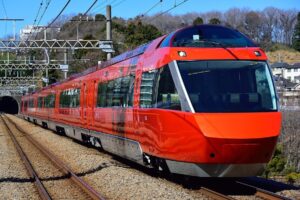
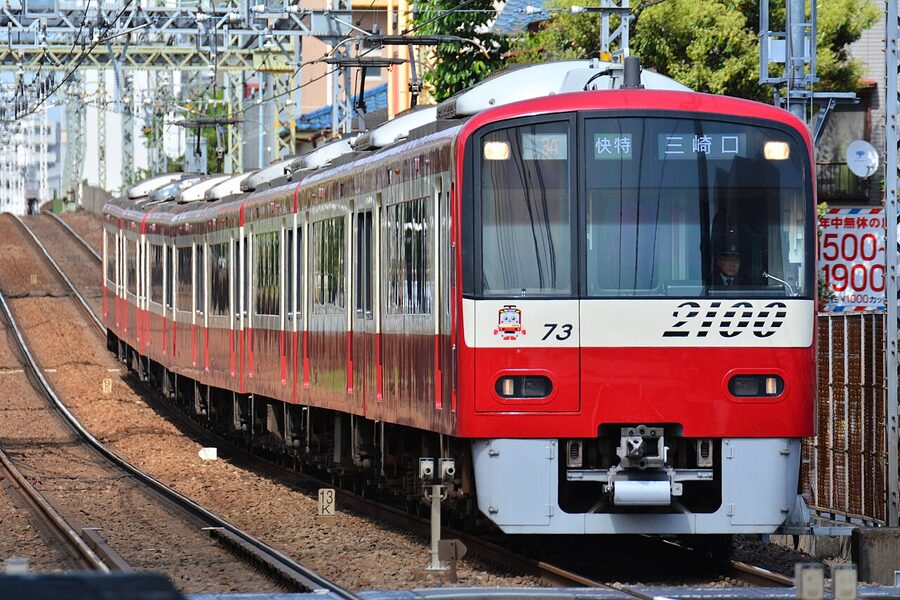
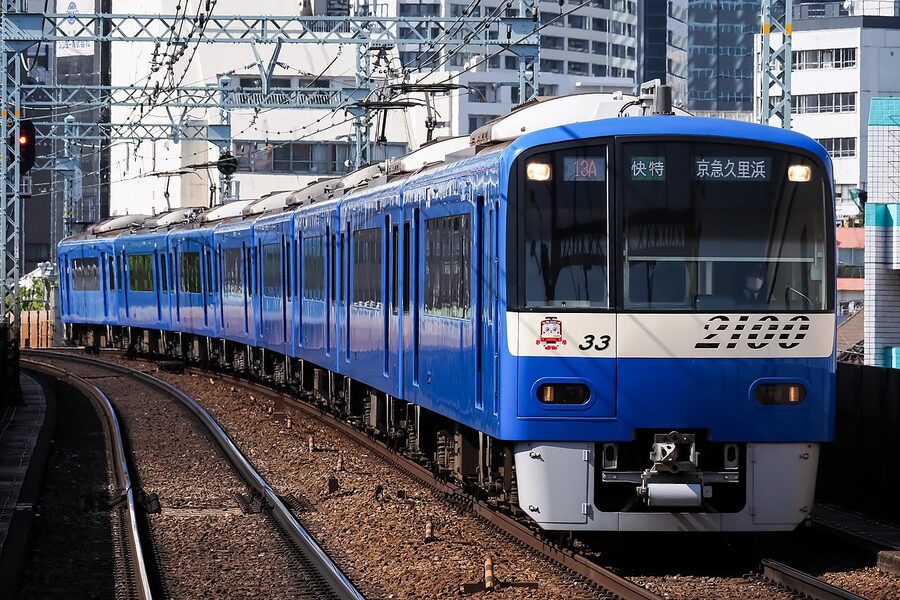
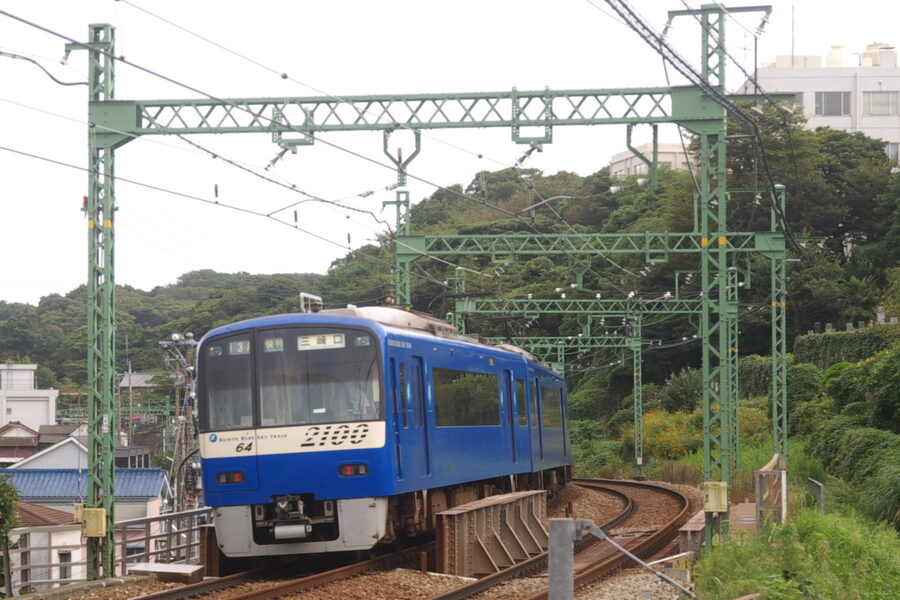
The 2100 form, introduced 1998 to mark the company’s centennial, is the train Keikyu uses for the Kaitoku limited-stop service. Eight-car aluminium-body sets, top speed 120 km/h, with German-supplied Siemens GTO chopper drives that produce the famous “singing” rising-pitch acceleration sound from Shinagawa departures. The 2100 is the only Keikyu series with cross-seating (rotated 2+2 seats that face the direction of travel) instead of longitudinal benches, and the only series the Wing limited-express services use as a reservable seat product. The 2100 was the company’s first stock built specifically for through-running into Toei Asakusa, and remains the most distinctive train on the Tokyo private-operator network.
The N1000 form: the workhorse
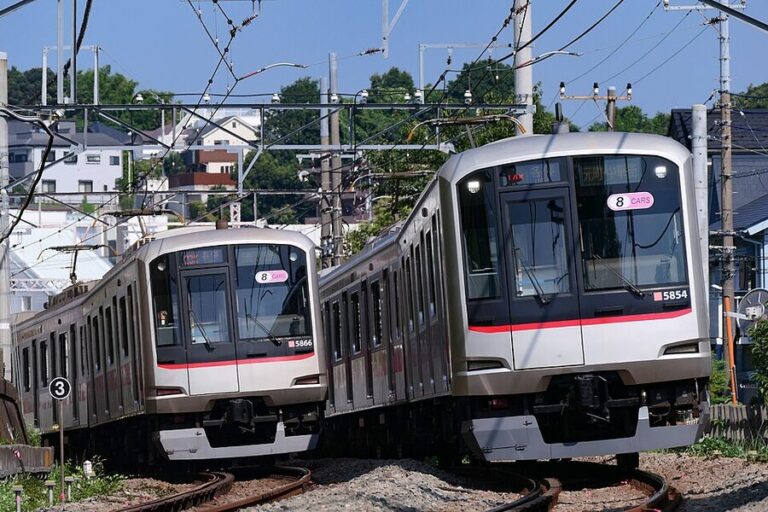
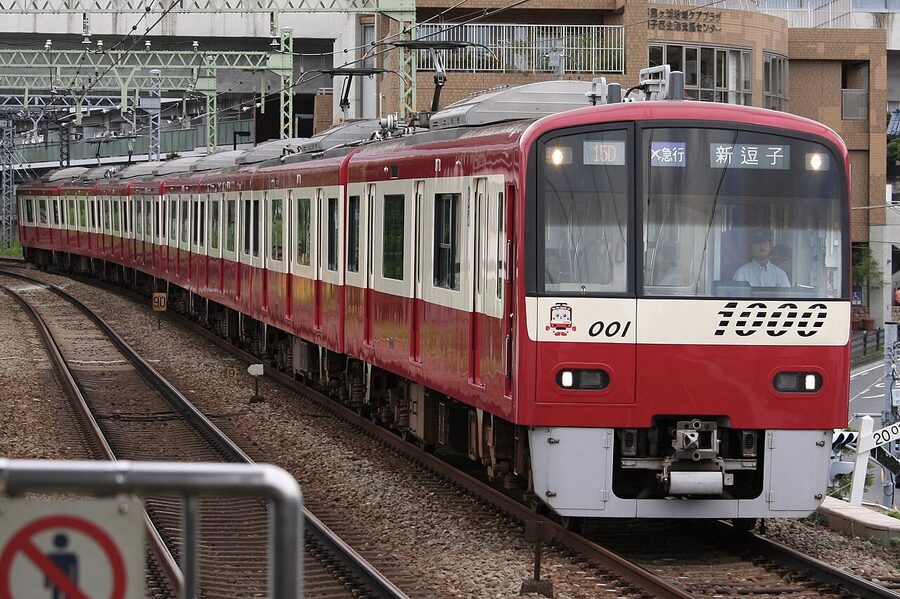
The N1000 form, introduced 2002 and still in production, is what runs most of the rest of the timetable. Stainless-body sets in the early production runs, aluminium-body in the post-2014 builds, with the entire fleet of about 480 cars carrying the through-running gear that lets them operate from Misakiguchi all the way through to Narita Airport on the Keisei side without changing carriages. The N1000 is the Keikyu workhorse. If you ride a Keikyu train at any random moment it is statistically likely to be an N1000.
The 600 and 1500 forms
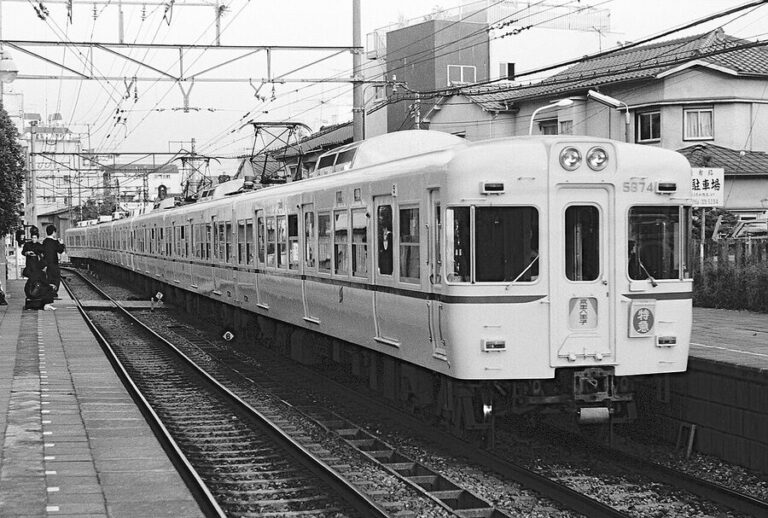
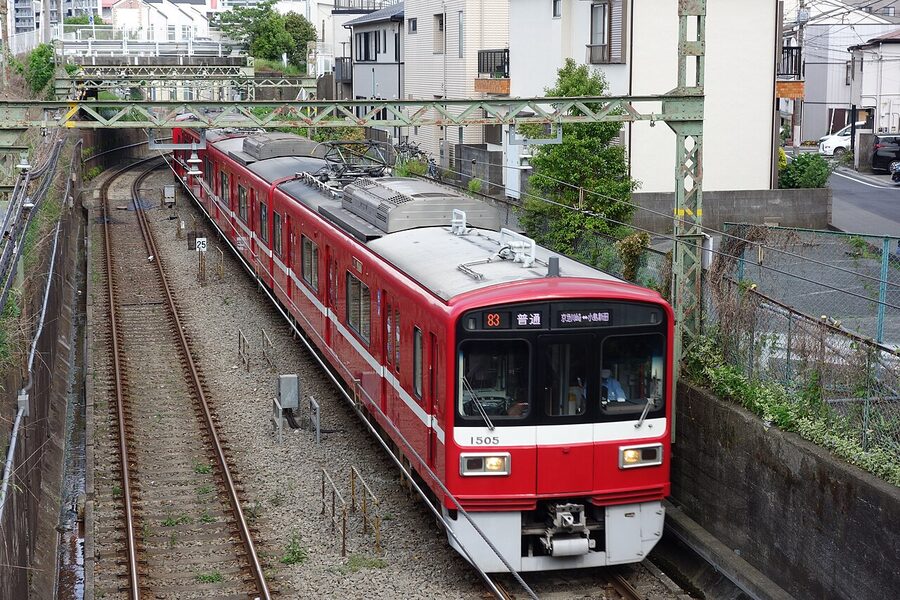
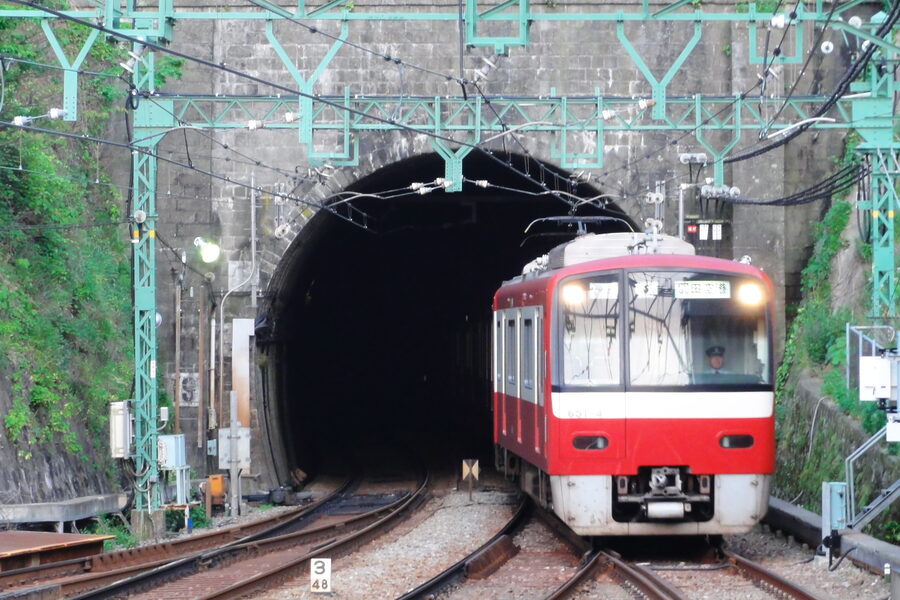
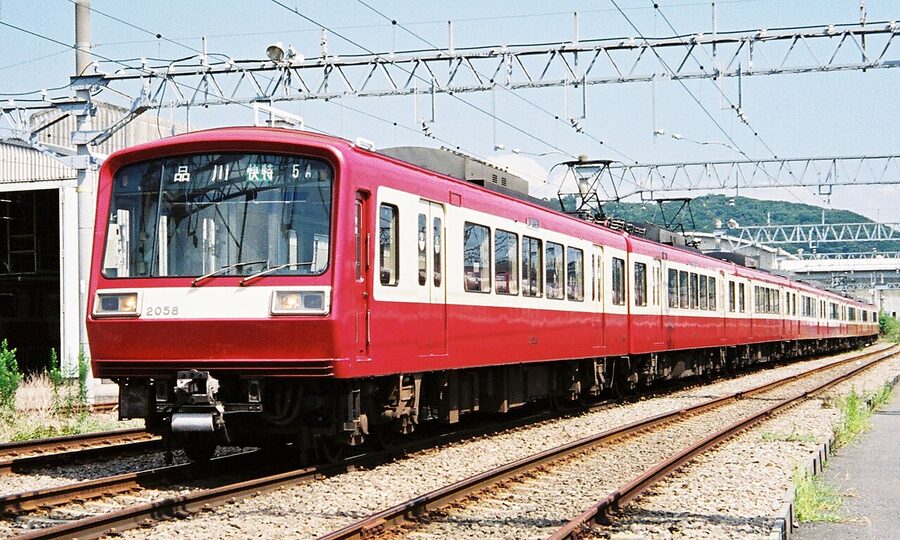
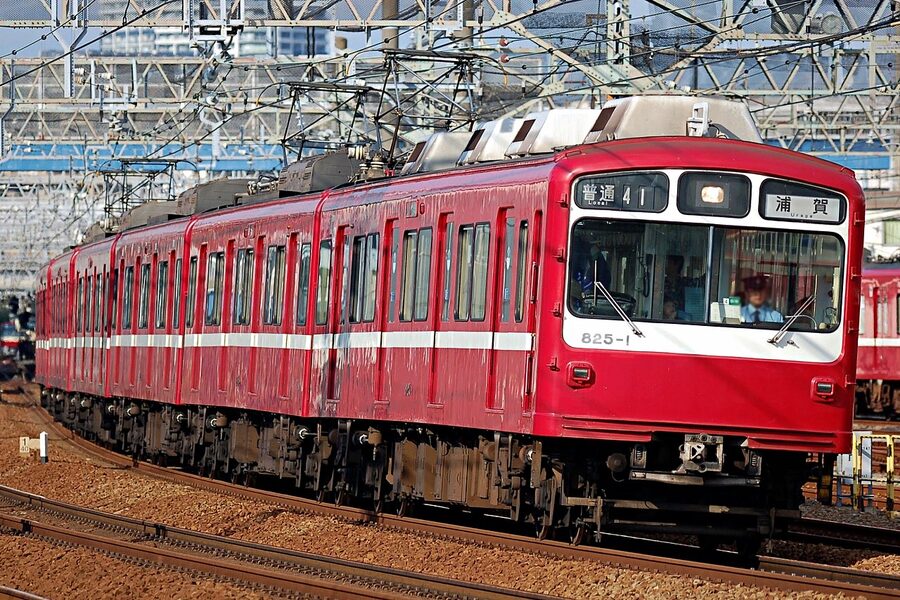
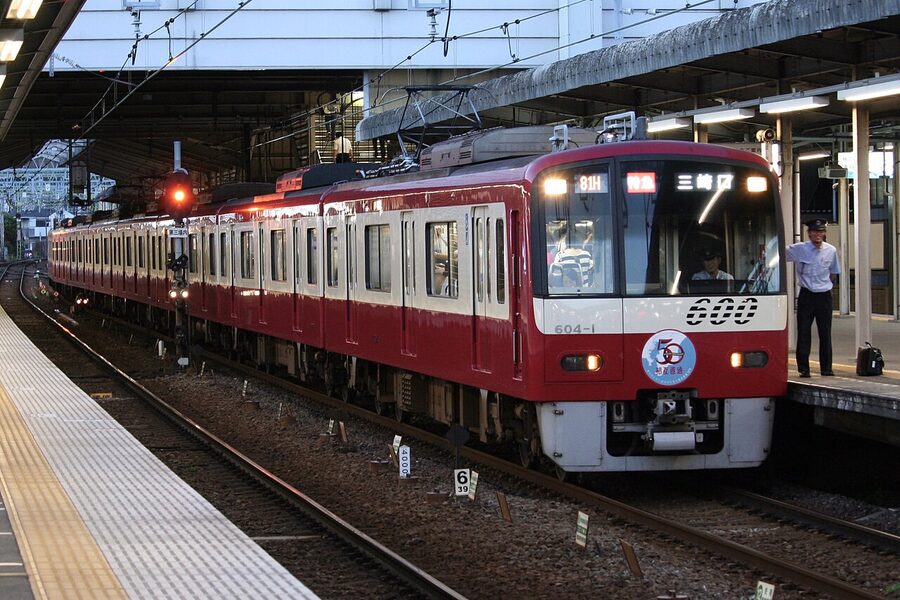
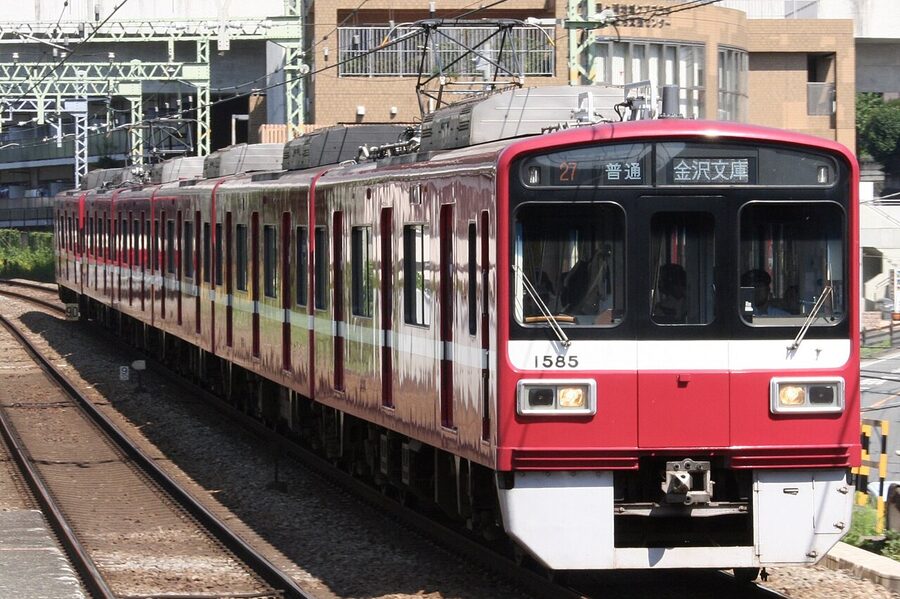
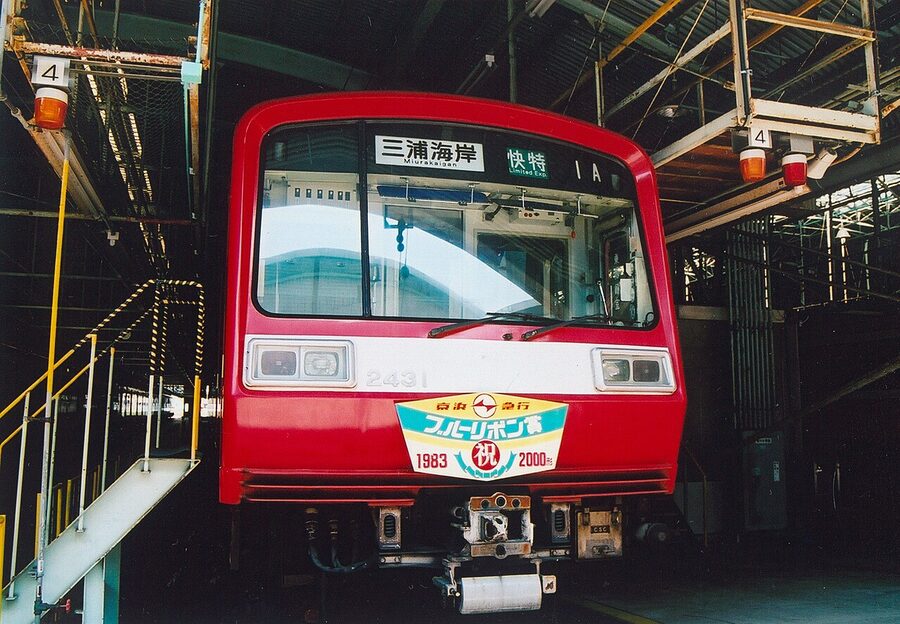
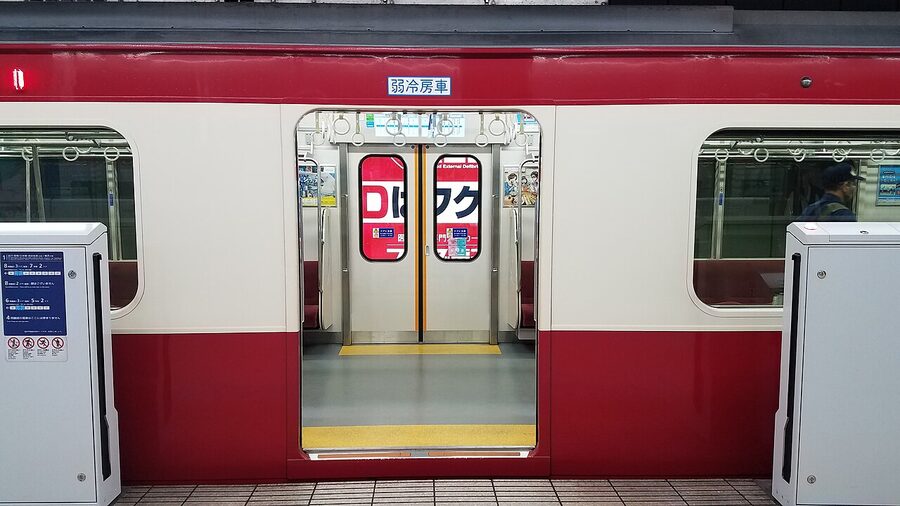
The 600 form, introduced 1994 in its current third-generation specification (the original 600 and second-generation 600 ran from 1956 and 1966 respectively), and the 1500 form, introduced 1985, are the older Main Line and branch fleet. The 600 carries a bright-red livery that looks closer to the 1950s scheme than the modern white-and-red 2100; the 1500 series runs the four-car branches and the Daishi shuttles. Both share the longitudinal seat plan, the heavy motorised lead car, and the standardised stainless body that has defined Keikyu builds since the 1980s.
How Keikyu compares to the network around it
The cleanest way to read Keikyu is against the operators it competes with. JR East’s Tokaido Main and Yokosuka lines run parallel along the same Tokyo Bay corridor; the speed and price differential keeps Keikyu commercially viable on the route. Keisei is the gauge twin (also 1,435 mm standard) and the through-running partner via Toei Asakusa. Toei, specifically the Asakusa Line, is the central-Tokyo subway link that turned the 1968 connection into the strategic asset it remains. The other private operators sit on different gauges and never touch the Keikyu network operationally.
The contrast with Tobu and Odakyu is what makes Keikyu read distinctly. Tobu became a tourism-empire railway anchored on Nikko and Tokyo Skytree. Odakyu is a Hakone-tourism operator with a famous Romancecar and a commuter network on the side. Keikyu does not run a famous limited express. It does not have a flagship tourist destination. What it has is the airport, the Yokohama-Shinagawa corridor at the highest legal speed any private operator runs in Tokyo, and the standard-gauge through-running network that lets it physically interconnect with Keisei and Toei in ways no other Kanto private operator can match. That is the entire competitive position. It is also, in 2026, the most defensible position any Tokyo private operator holds.
The 2019 Kanagawa-Shinmachi crash and what it proved
On 5 September 2019 at 11:40, a Keikyu Tokkyu limited express collided with a 12-tonne fruit truck that had stalled across the Kanagawa-Shinmachi level crossing immediately south of the station. The first car derailed and rolled. Two carriages tilted but did not separate. The truck driver was killed; 33 passengers and crew were injured. No passenger died. The reason no passenger died is that the lead carriage of the train was a heavy motorised car (33 tonnes Deha 1000), and Keikyu has, since the 1997 Taura mudslide, made it operating policy that the leading carriage on every formation must be a motor car rather than a trailer. The trailer cars on the same train weighed 23 to 27 tonnes. If the lead car had been a 23-tonne trailer it would almost certainly have broken loose. The Tokkyu train policy of motorised lead cars, combined with the 1,435 mm standard gauge giving the carriages a wider, lower-centre-of-gravity bogie footprint than the JR 1,067 mm equivalent, prevented a 100-passenger fatality scenario. The incident was the most direct vindication of two operating decisions the company had made in the 1900s and reaffirmed in the 1990s.
Riding it now: the practical moves
Three takes on Keikyu, in order of how often you would actually do them.
For airport access from central Tokyo
The Keikyu Airport Limited Express from Shinagawa Station, platforms 1 or 2 in the Keikyu section, is ¥330 IC and 14 minutes to Haneda Airport Terminal 1 and 2 Station, or ¥330 and 16 minutes to Terminal 3 (the international terminal). It runs every 5 to 8 minutes during the day, every 10 to 15 in the early morning before the first overseas departures. From Shinjuku or Ikebukuro, change at Shinagawa via the Yamanote Line; the total trip is around 35 to 40 minutes. From Tokyo Station, change at Shinagawa via the Tokaido or Yokosuka Line; allow 25 to 30 minutes. The Airport Limousine bus is ¥1,200 to ¥1,400 from most Tokyo hotels and takes 50 to 80 minutes depending on traffic. The monorail from Hamamatsucho is ¥500 and 18 minutes, but the Hamamatsucho transfer is the catch.
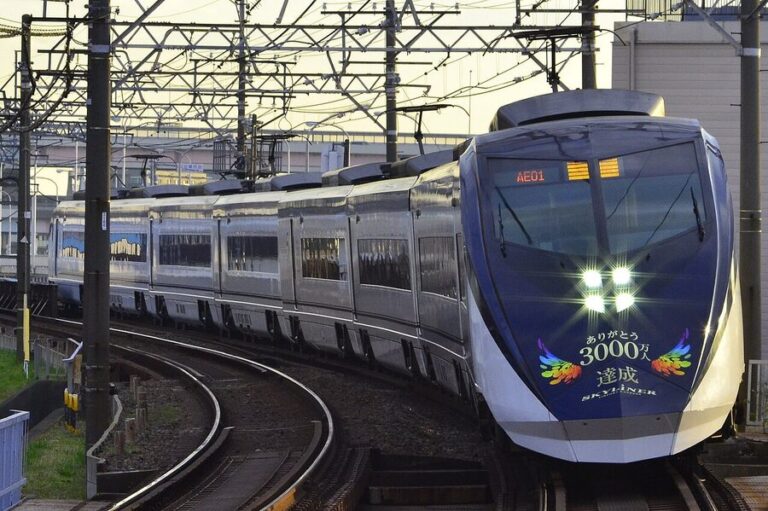
From Narita Airport, the Keikyu through-service via Keisei and Toei Asakusa is the move that almost no traveller knows about. The Airport Limited Express runs direct from Narita Airport Terminal 1 to Haneda Airport Terminal 1 and 2 Station, via Aoto, Sengakuji, and Shinagawa, in 1h 40m for ¥1,800 IC. No transfer. No bag lift. Worth knowing if your itinerary involves arriving at Narita and connecting to Haneda, which the Skyliner and JR routes turn into a two-transfer ordeal.
For the Shinagawa-Yokohama commute
The Kaitoku from Shinagawa platform 1 or 2 to Yokohama is the cheapest fast route. 17 to 19 minutes, ¥320 IC, every six to eight minutes during the day. The IC fare is ¥1 cheaper than the paper fare. JR Pass holders should take the Tokaido Main Line for free, but if you are paying out of pocket the Keikyu wins. Sit on the right-hand side leaving Shinagawa for the Tokyo Bay views past Heiwajima.
For the Miura day-trip
The Misaki Maguro Day Trip Ticket from Shinagawa is ¥3,750 to ¥4,250 depending on whether you buy paper or digital. It covers the Shinagawa-Misakiguchi run on the Tokkyu, plus the Keikyu buses around the southern Miura, plus a tuna-meal voucher at any of about 24 participating restaurants in Misakiguchi or along the Jogashima coast, plus an attraction-admission token. From Shinagawa, the Tokkyu to Misakiguchi takes 1h 18m. The deal is the kind of regional product Tobu pioneered for Nikko and that Keikyu has copied and improved on for Miura. If you are spending a day on the southern Miura coast, the maguro ticket pays for itself before lunch.
The corporate move that was never about trains
Open Keikyu’s annual report and the railway operation accounts for ¥116 billion of the ¥280 billion consolidated revenue. The other ¥164 billion is the property arm, the retail arm (the Keikyu Department Stores at Shinagawa, Kamiooka, and Kawasaki), the Yokohama redevelopment around the new corporate headquarters at Minato Mirai, the Keihin Kyuko Bus subsidiary, the Keikyu Tourist Bureau, the Misaki Maguro food operation, and the asset-management work that comes with sitting inside the Fuyo Group’s lending cluster. The trains are roughly two-fifths of the revenue. The land along the line is the rest.
This is the same property-and-rail model Hankyu pioneered in Osaka and that Tokyu industrialised in Tokyo. Keikyu is on it but quieter about it. The Yokohama group headquarters, opened on 17 September 2019 in the Minato Mirai 21 redevelopment district, consolidates eleven Keikyu group companies into a single twenty-five-storey building immediately adjacent to the Yokohama Minatomirai Line’s Shin-Takashima Station. The Shinagawa Station West Exit redevelopment, a 2.7 hectare project around the old Keikyu corporate headquarters, broke ground in 2020 and is due for staged completion through 2031. By then JR East’s Haneda Access Line will have opened. The Keikyu rail-traffic share of Haneda will fall. The Keikyu property holdings around Shinagawa will be valued, on most analyst scenarios, at multiples of the trade-pricing today. The trains will still pay for themselves. The land will pay for the next century of trains.
The things Keikyu does not do
One way to read the company is by what it has chosen not to be. Keikyu does not run a famous limited express. The Kaitoku and the Wing services are commuter speed, not tourist romance. There is no Romancecar equivalent. There is no Kintetsu 80000 series with reclining seats and a viewing-window front cab. The fastest commercial service runs at 120 km/h and the only special-seat product is the Wing reservation, which costs an extra ¥300 and books out fast on weekday evenings. Keikyu also does not run scenic excursions. There is no Oedo-style steam-locomotive day. No retro train. No ski-train in winter. The Miura Peninsula coast does not get romanticised the way Hakone or Nikko do, and the company has decided, deliberately, not to romanticise it.
The trade-off is that Keikyu’s ridership is genuinely commute-driven, not tourism-augmented, which insulates the operation from cherry-blossom seasonality and inbound-tourism shock in a way Odakyu’s Hakone arm or Tobu’s Nikko arm never quite achieve. The 2020 to 2022 pandemic, which devastated Odakyu’s tourism revenue, hit Keikyu less hard. The Haneda international traffic collapsed for sixteen months but the Yokohama commute kept paying. By 2024 the Haneda traffic was back at 91% of pre-2020 levels. By 2026 the network is operating at full pre-pandemic frequency. The boring railway, in this case, was the right one to own.
Where the network is heading
Three things on the horizon will matter for Keikyu over the next ten years. The first is the JR East Haneda Access Line, opening in 2031, which will give JR a direct rail route from Tokyo Station and Shinjuku to Haneda Airport via the Keiyo Line corridor. Whether it eats into the Keikyu Airport Line share is the question every railway analyst is now modelling. The most plausible scenario is that JR takes the Tokyo-Yamanote-Shinjuku flow and Keikyu keeps the Shinagawa-and-onward-to-Yokohama-and-onward-to-Narita flow. The Keikyu through-running advantage is the moat.
The second is the Shinagawa Station West Exit redevelopment, which will deliver a new high-rise complex over the old Keikyu corporate site and connect into the Linear Chuo Shinkansen terminus when that finally opens. By 2027 Shinagawa will be the southern Tokyo Linear hub. Keikyu owns the immediate land. The capital implications are substantial.
The third is the Yokohama Sakuragicho Line, a long-discussed Keikyu-built link from the existing Yokohama main line into central Yokohama, which is now being modelled in earnest as the Minato Mirai property holdings demand a faster commute connection. Whether it ever gets built is uncertain. Whether the company has the capital structure to consider it is not.
The opening, again
The night of 31 March 1933 ended around 5am with the last running rail driven home at Yokohama, the new gauge confirmed across all 35 km of converted track, and the morning rush running on standard gauge for the first time since 1904. The Takanawa Building was already half-empty. The trams were already on different metals. The line into Shinagawa was already open. Tachikawa Yujiro, who had founded the company as a 2 km temple-pilgrim shuttle 35 years earlier, had been dead for nine years. The decisions he had made in 1898, the gauge, the route, the integrated rail-and-property model, were now the foundation of a network that would, within a decade, be absorbed and re-emerge, and within seventy years, win the airport. The night-shift crew packed up their wrenches and walked home along the new track. The first Kaitoku of the morning came through twenty minutes later. The line they were riding on was, for the first time in twenty-nine years, exactly the line Tachikawa had originally drawn.