
Toei Trains: Four Gauges, Four Through-Run Stories
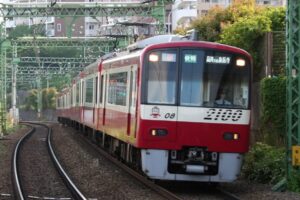
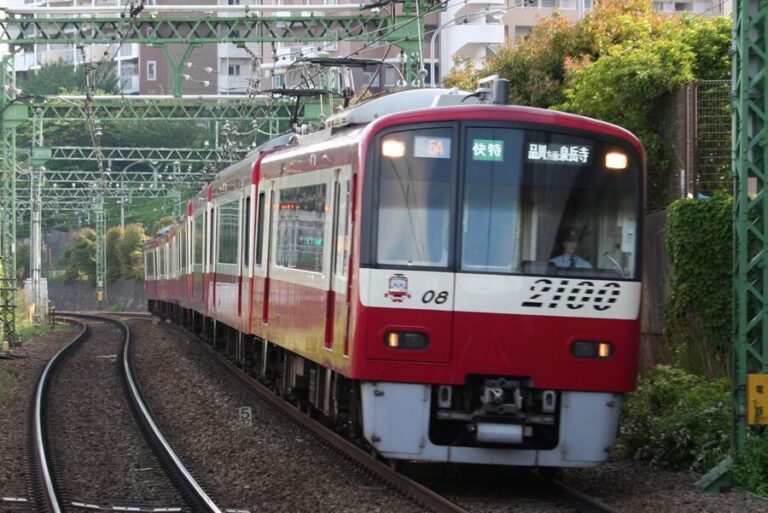
06:18 at Sengakuji on a Tuesday morning. The train pulling in from the south is a Keikyu 1000 series in red, eight cars, running fast off the Main Line. It does not stop in the way most trains stop. The driver swaps out, the front display blinks from “京急” to “浅草”, the route number changes, and the same physical train rolls on through the cross-platform tunnel as a Toei Asakusa Line service. By the time it reaches Asakusabashi the woman next to me is asleep against the window. She has not registered the change of operator. There has not been one to register. The track is a single seamless run from Sengakuji to Oshiage, and from Oshiage onwards it can keep going as a Keisei service all the way to Narita.
In This Article
- Why Toei exists at all (and why it is not Tokyo Metro)
- The Asakusa Line: standard gauge by force of partnership
- The first three letters of subway history
- 5000 series (1960–1995): the first generation
- 5300 series (1991–2023): the long middle
- 5500 series (2018–): the kabuki face
- The Magome depot and the through-running fleet view
- Higashi-Ginza, Asakusabashi, Sengakuji: the line in three stations
- The Mita Line: the Tobu plan that became a Tokyu line
- 6000 series (1968–1999): three decades of waiting
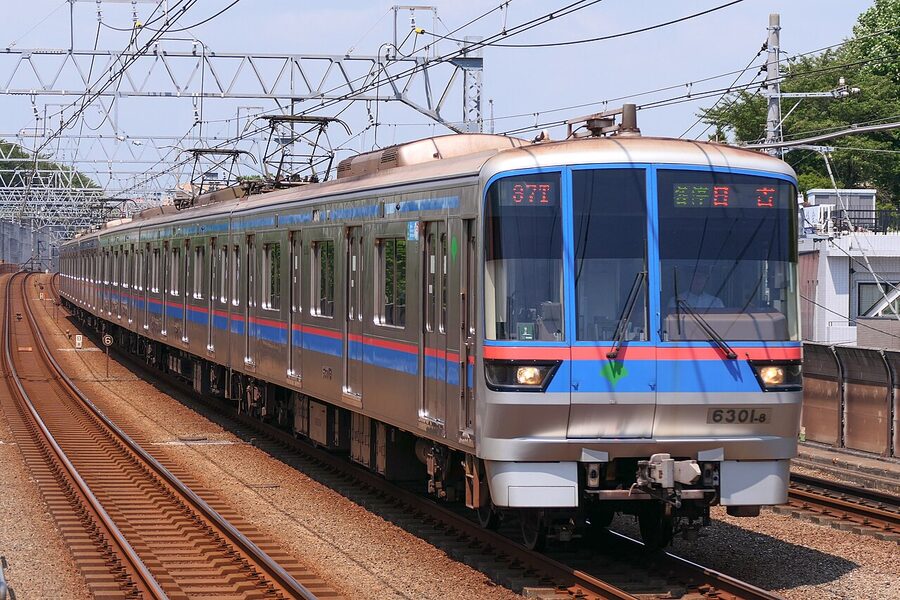
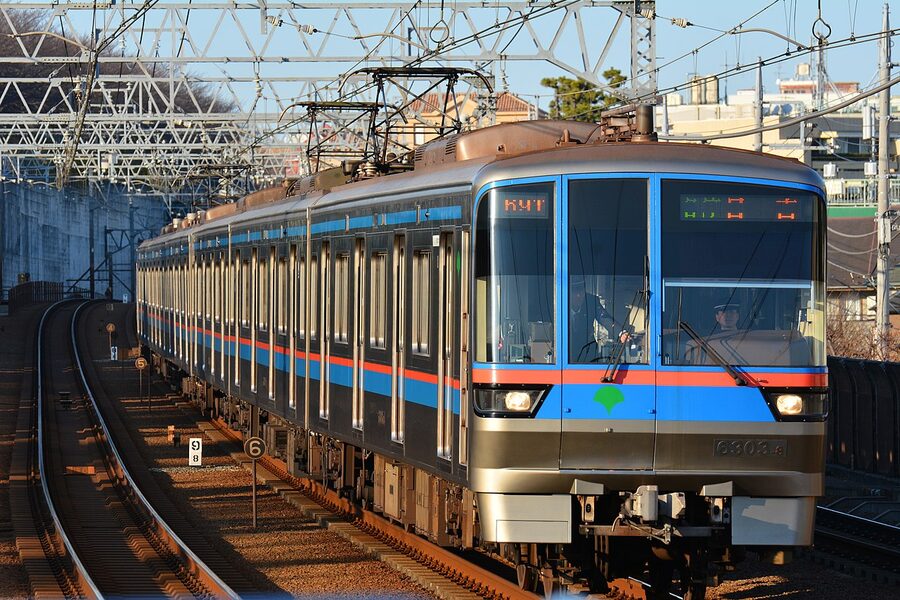
- 6300 series (1993–): three batches, one division of labour
- 6500 series (2022–): the Sotetsu eight-car answer
- The Shinjuku Line: 1,372 mm because Keio said no
- 10-000 series (1971–2018): the prototype that ran for 47 years
- 10-300 series (2005–): three batches, one length
- The Oedo Line: the small tunnel and the linear motor
- The world-first claim, examined honestly
- Why LIM, and what it costs the rider
- 12-000 series (1991–): four batches across nine years
- 12-600 series (2012–): the modern Oedo train
- The E5000 electric locomotives: the freight train Toei pretends doesn’t exist
- Riding it: practicalities, fares, day passes
- Where to start if you have one ride
- Connecting to JR and to other operators
- The Toden Arakawa Line: Tokyo’s last surviving tram
- Reading the four lines as one operator
- Back at Sengakuji
The Tokyo Metropolitan Bureau of Transportation, branded Toei (都営), runs four subway lines plus one surviving tram, and the four lines are not really one network. They are four separate decisions, each one taken under a different political wind, each one ending up on a different track gauge, each one through-running with a different operator, and each one carrying rolling stock that exists for one reason: it has to fit the through-run partner’s tunnels, signals, and platform doors. If you ride the Asakusa Line, you are riding a Keikyu-Keisei standard-gauge corridor that happens to dip underground for the central Tokyo bit. If you ride the Mita Line you are on what was supposed to be a Tobu through-route, ended up as a Tokyu Meguro one, and as of 2023 has Sotetsu trains in the mix as well. The Shinjuku Line runs on a gauge no other Japanese subway uses because Keio refused to convert. The Oedo Line uses a propulsion system you cannot find in any other Tokyo tunnel, picked specifically so the tunnel could be drilled smaller and cheaper. The trains are how you read the history.
Why Toei exists at all (and why it is not Tokyo Metro)
The two-operator situation in Tokyo is the first thing that confuses anyone arriving with an IC card and an itinerary. There are nine Tokyo Metro lines and four Toei lines, and the price you pay to cross between them is a separate fare each time unless you bought a combined day pass. The reason is that the two networks were built by different bodies under different financial models. Tokyo Metro grew out of the prewar Teito Rapid Transit Authority and was, until 2004, a special public corporation jointly owned by the national and metropolitan governments. Toei has always been the city’s own subway, run directly by the Tokyo Metropolitan Bureau of Transportation. One is a corporation that became a company; the other is a department of city hall.
That distinction matters because it explains why Toei has always built where Metro would not, and chosen the gauges and propulsion systems that Metro wouldn’t. The Asakusa Line was the city’s first subway, opened on 4 December 1960 specifically as a through-running corridor for the standard-gauge private railways the national network couldn’t reach. The Mita Line was meant to fill the central gap that the existing network had left. The Shinjuku Line was forced to match Keio’s gauge because Keio refused to convert, and the city had to take that deal because the suburbs needed the link. The Oedo Line is the cheapest big-ring subway anyone has ever tried to build in Tokyo, and it cost as much as it did anyway.
The Asakusa Line: standard gauge by force of partnership
The Asakusa Line is the line I would put first on any rail-nerd’s day-out itinerary. It is the through-running line, the standard-gauge line, the one that runs Haneda-to-Narita without changing trains, and the only line where the trains are deliberately dressed up as a piece of theatre. None of that was an accident. All of it follows from one decision in the late 1950s: that the new line would be built to 1,435 mm gauge so that Keikyu coming up from the south and Keisei coming in from the east could run through it without a transfer. Keikyu was already on standard gauge. Keisei converted from 1,372 mm to 1,435 mm in 1959 specifically to join. The city built the tunnel; the private operators reached up to meet it.
The first three letters of subway history
Sources differ on exactly when the Asakusa Line counts as Japan’s first through-running subway. The Japanese Wikipedia gives the title to the Oshiage–Asakusabashi opening of 4 December 1960, when through-services with Keisei started immediately. The English Wikipedia is more cautious and dates the proper through-running to 1968, when Keikyu joined at Sengakuji and the line was complete end-to-end. Either way, this was the model. Every operator-pair pattern that Odakyu works with the Tokyo Metro Chiyoda Line, that Tobu works with the Hibiya, that Keio works with the Toei Shinjuku Line, all follows from this one tunnel.
5000 series (1960–1995): the first generation
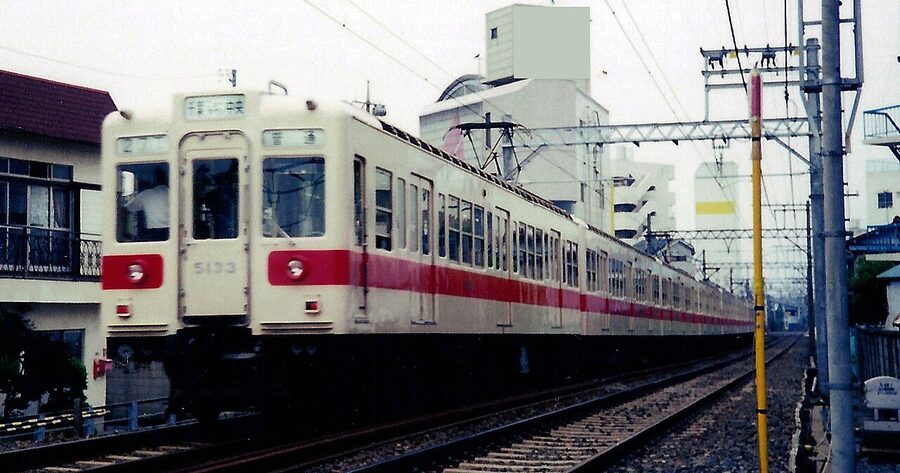
The 5000 series opened the line and ran on it for thirty-five years. They were a four-car formation at first, then six, then occasionally eight; built in batches by Kawasaki and Nippon Sharyo as the line extended. The detail you can’t see in the surviving photos is that they had to be light enough to manage the tight Asakusa-side curves and grip-strong enough to run at 80 km/h in Keikyu territory south of Sengakuji. They retired progressively through the 1990s, with the final memorial run in July 1995 on Keikyu’s track at Shimbamba.
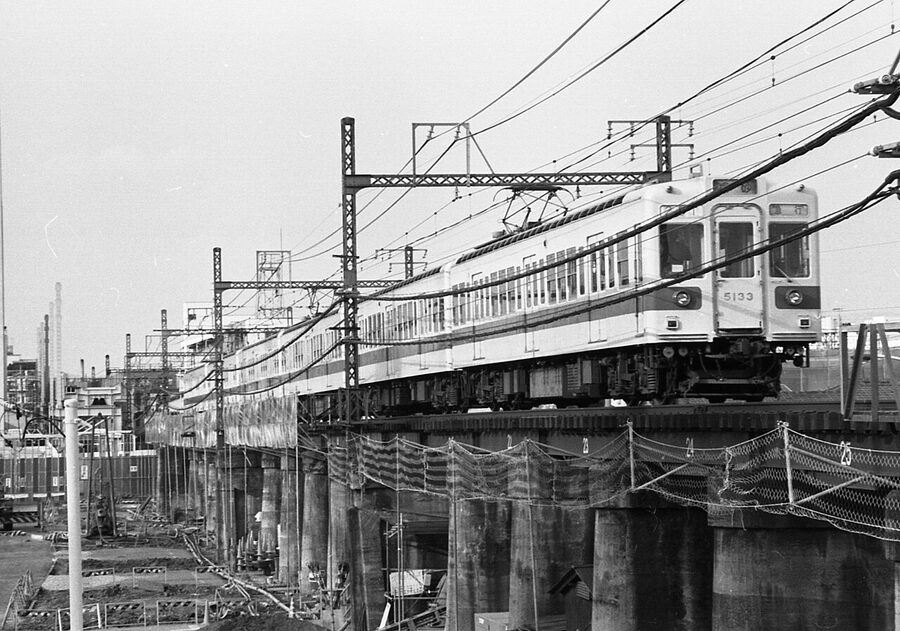
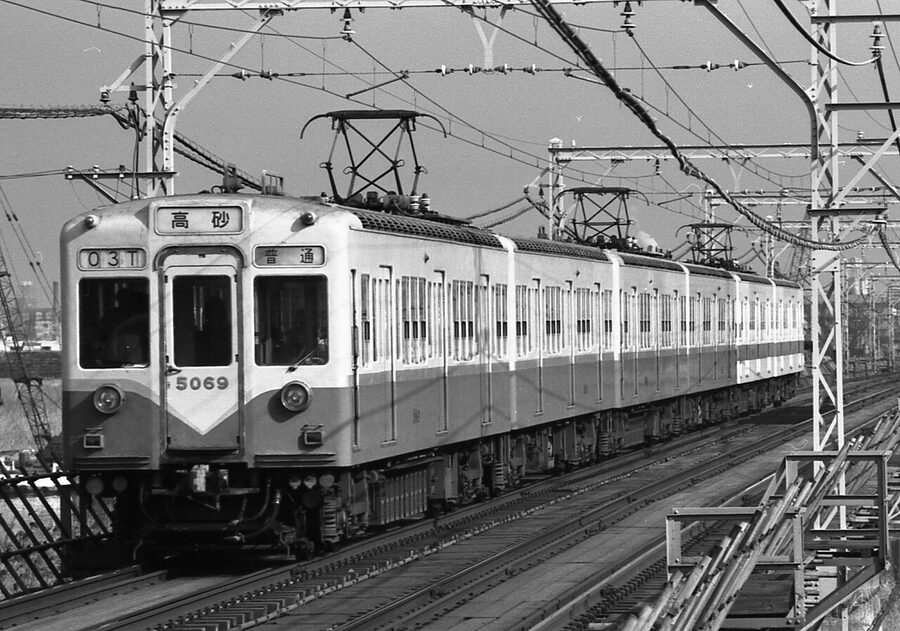
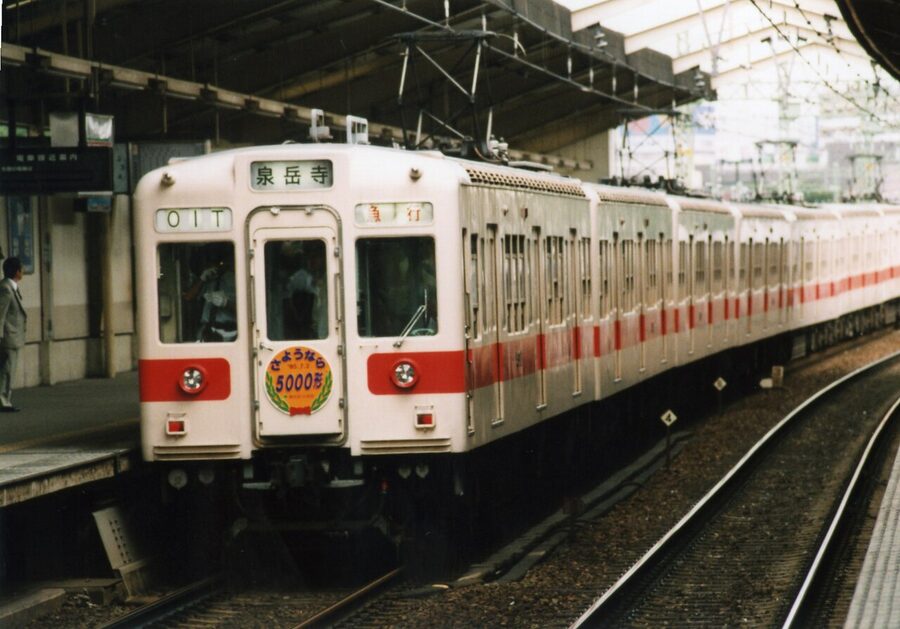
5300 series (1991–2023): the long middle
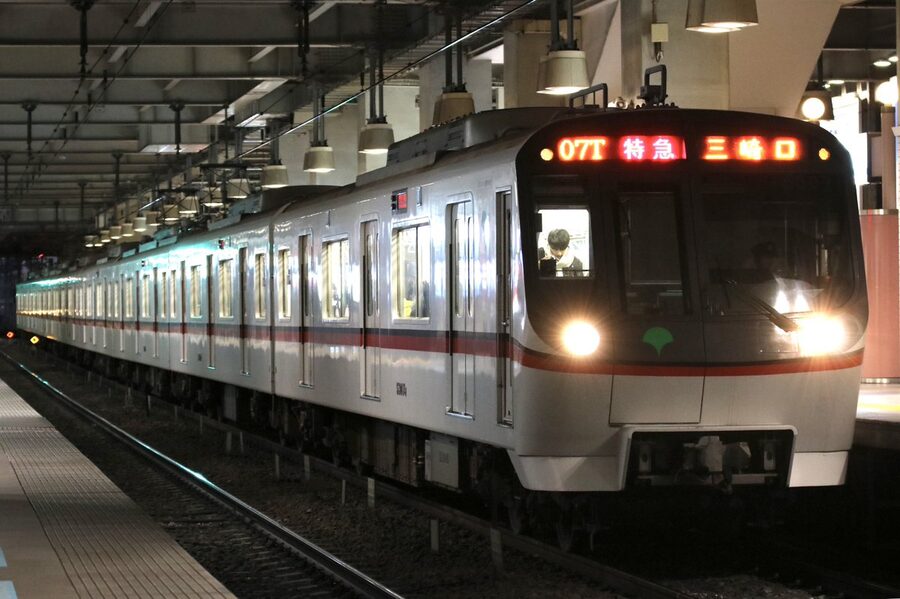
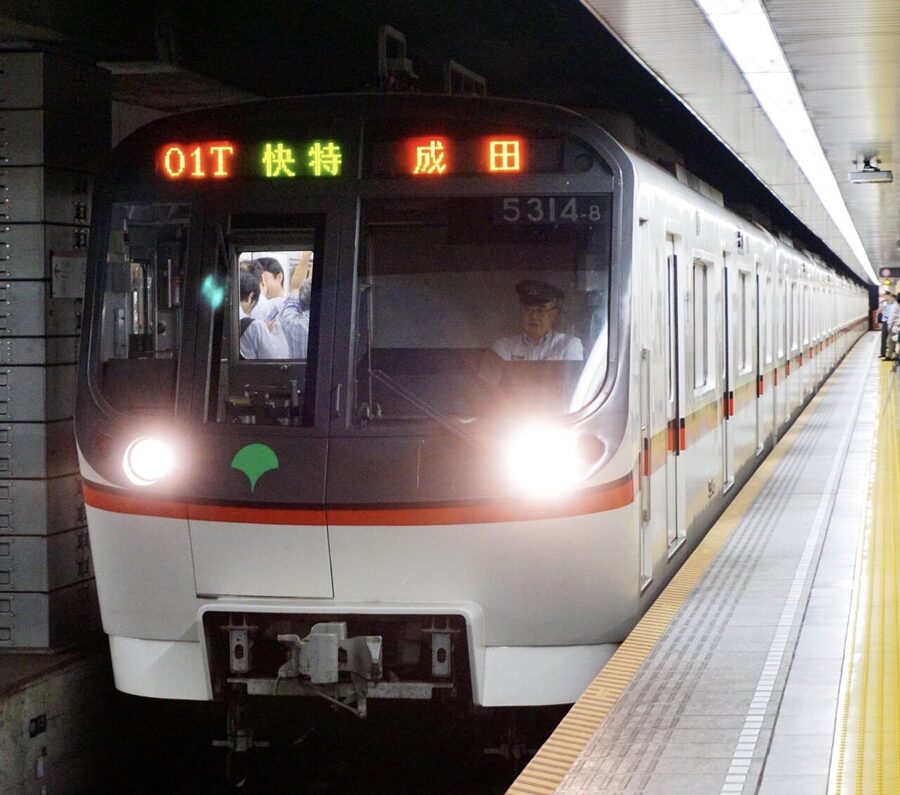
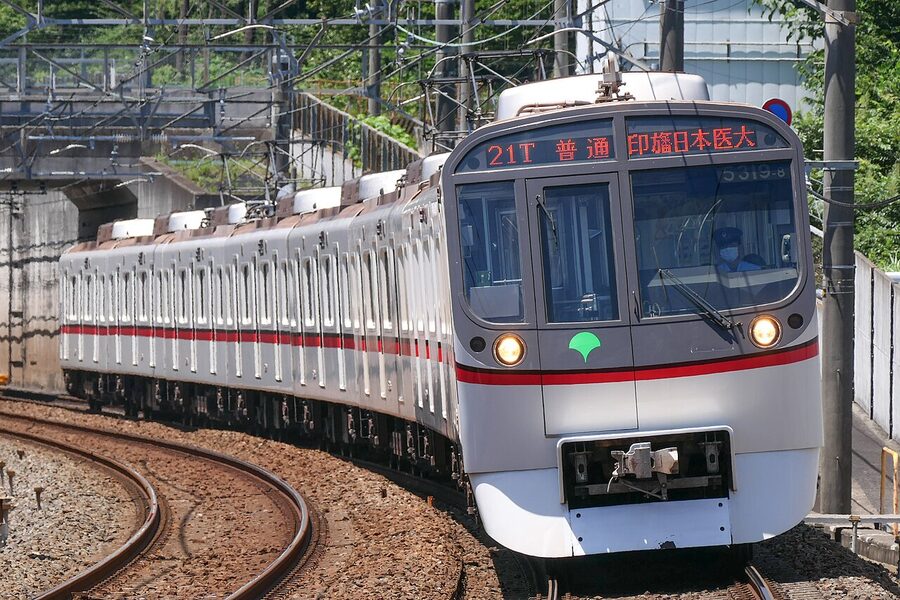
The 5300 took over from the 5000 progressively from 1991, and ran the line for thirty-two years. Twenty-seven eight-car sets, all VVVF-controlled, all built to the standard Asakusa-Line spec: 120 km/h capability for Keikyu’s high-speed Limited Express services. They were the workhorse generation. If you flew into Narita any time between the late 1990s and the early 2020s and took the through-running Sky Access service, the train you sat in was almost certainly a 5300, looking exactly the same on the Keisei side as it did under Asakusabashi.
5500 series (2018–): the kabuki face
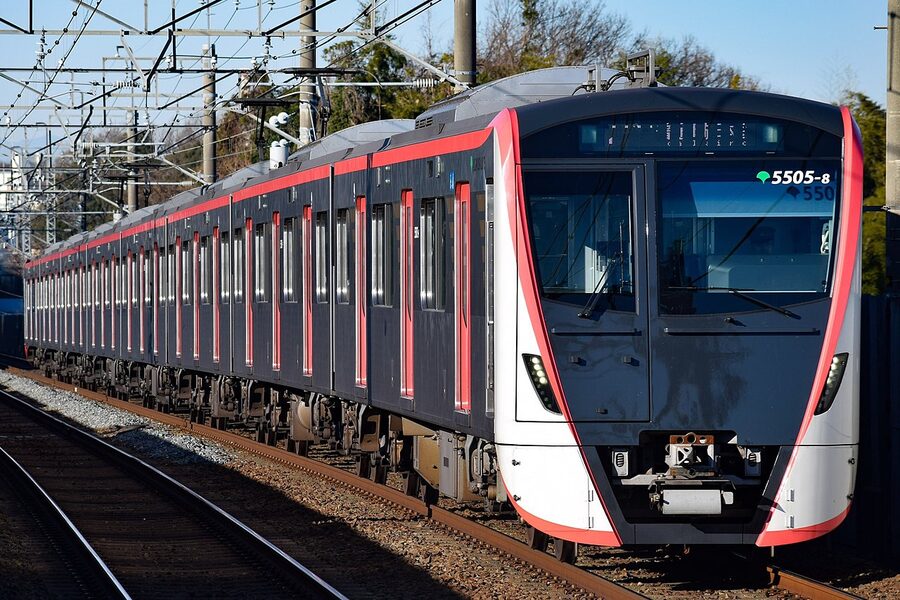
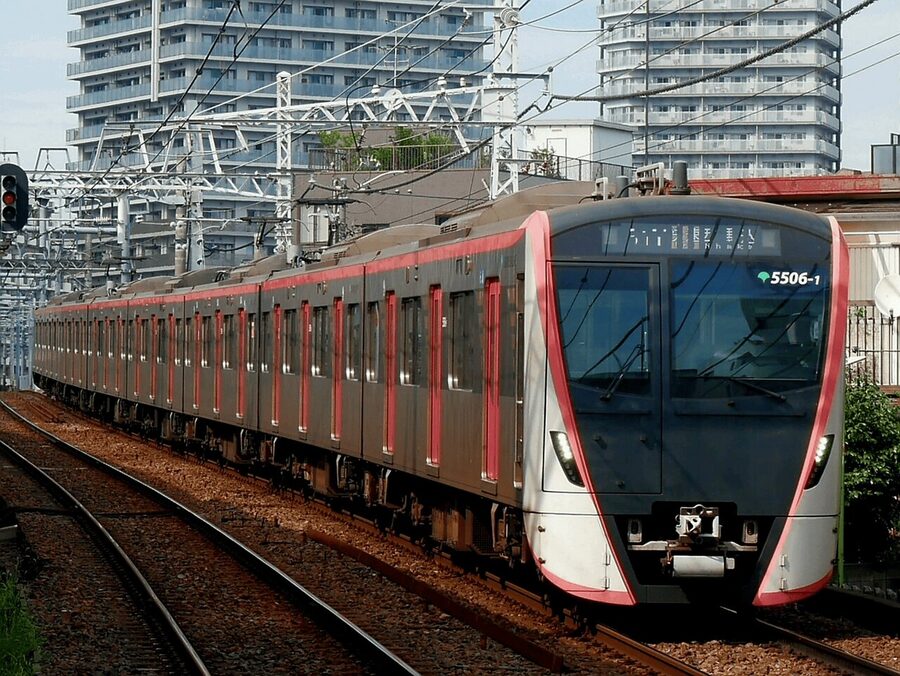
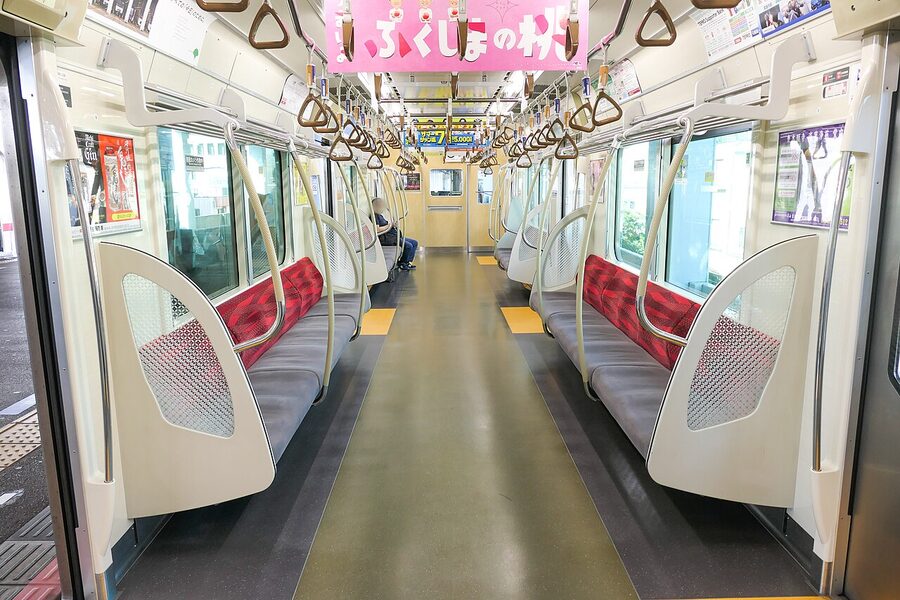
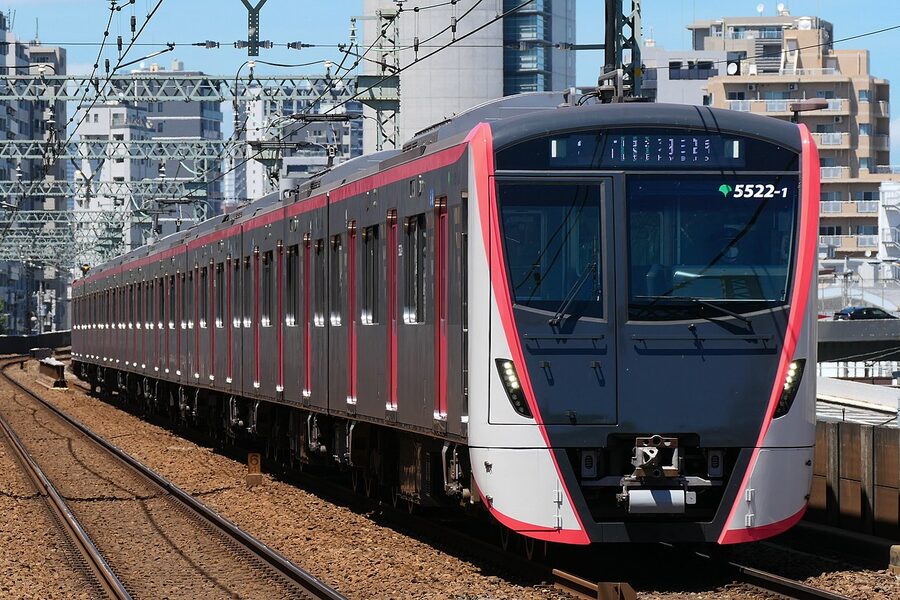
The 5500 entered service on 30 June 2018 and is the headline of the Asakusa Line in 2026. Twenty-seven eight-car sets, built between 2017 and 2021 by Kawasaki, with full silicon-carbide VVVF inverters, 120 km/h top speed, and 1,046 passenger capacity. The technical work is solid, but the marketing decision is what makes the train. The face is matt black with a rose-pink chevron stripe, modelled on kumadori, the painted face style of kabuki actors. The line passes Higashi-Ginza, where the Kabuki-za sits. The interior carries hand-printed-style washi panels and gold accents on the door surrounds. None of this changes how the train rides, but it is the first time since the 5000 retired that anyone could call a Toei subway train good-looking.
The Magome depot and the through-running fleet view
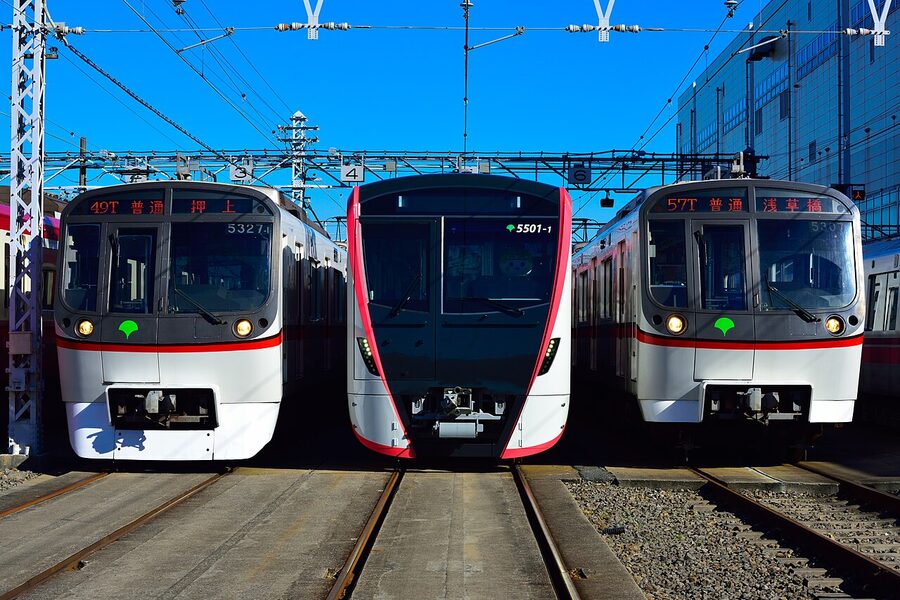
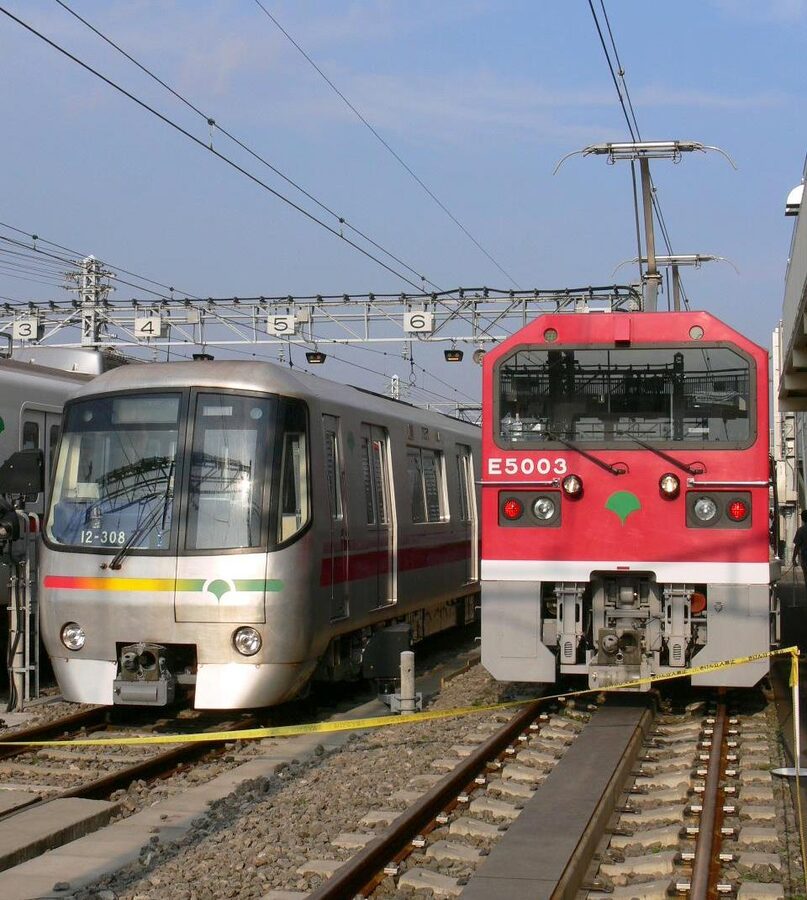
If you want to see the whole fleet at once, the Toei Festa open day at Magome Depot, held annually in December, lets you walk between the rolling stock. It is the only event where the Asakusa Line and the Oedo Line share a parking lot, because Magome is the joint depot for both, with the heavy-rail E5000 electric locomotives that haul Oedo trains across the gauge break for inspection. More on that in the Oedo section.
Higashi-Ginza, Asakusabashi, Sengakuji: the line in three stations
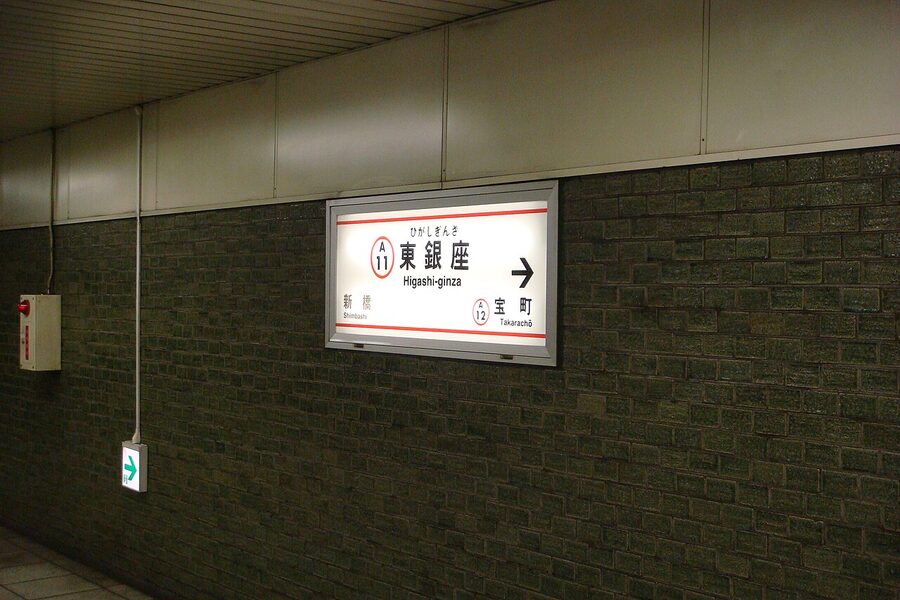
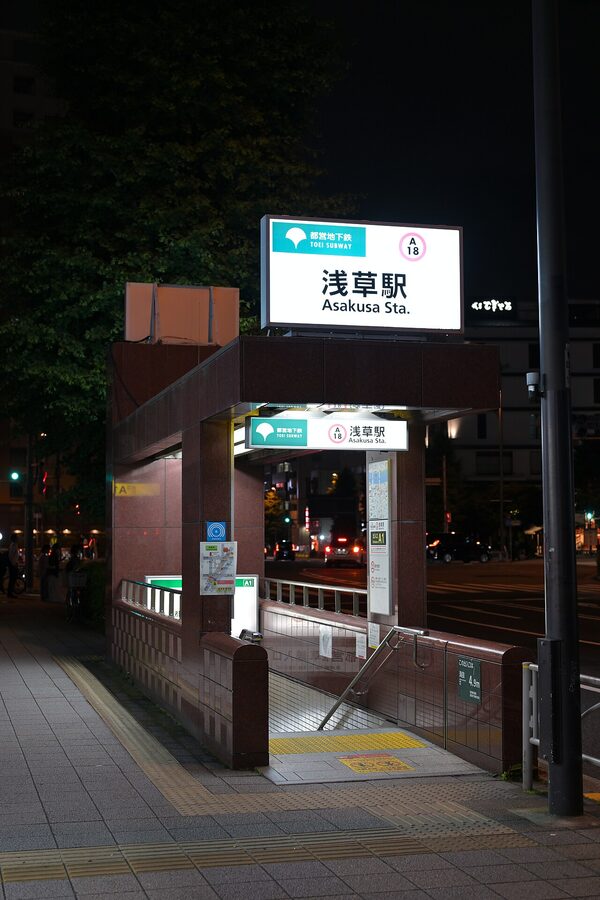
If you have one stop on the Asakusa Line to actually get off at, make it Higashi-Ginza. The Kabuki-za is up the escalator with Toei’s own integrated passageway. Sengakuji is the operational seam to Keikyu and worth visiting only if the trains are the point. Asakusabashi is where the line opened in 1960 and where the through-running history started. Asakusa itself, the line’s namesake, is the Senso-ji station that everyone uses, but the Tokyo Metro Ginza Line shares the name and the surface above with no underground link, so check which line you actually need before you commit to an exit.
The Mita Line: the Tobu plan that became a Tokyu line
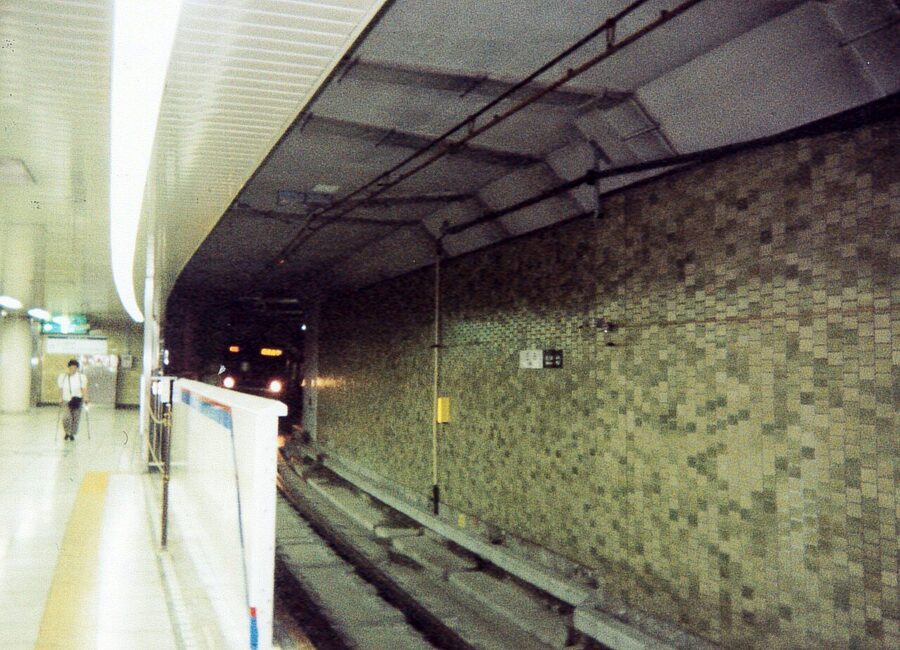
The Mita Line is a story of a plan that fell apart and a line that survived anyway. It opened in 1968 as Toei’s second subway, on 1,067 mm narrow gauge, designed for through-running with Tobu Tojo Line at the north end and Tokyu’s Ikegami Line at the south. By 1965 both private operators had pulled out of the deal: Tobu redirected its through-running ambitions to the Hibiya Line, Tokyu decided the economics didn’t work. Toei built the line anyway, terminating at Mita in the south for thirty-two years while the original through-running plan sat unrealised. The northern end at Takashimadaira opened in 1976; the southern extension to Meguro and the Tokyu Meguro Line through-running finally opened on 26 September 2000. In March 2023 the line gained a second through-running partner with Sotetsu, via the new Tokyu Shin-Yokohama Line.
6000 series (1968–1999): three decades of waiting
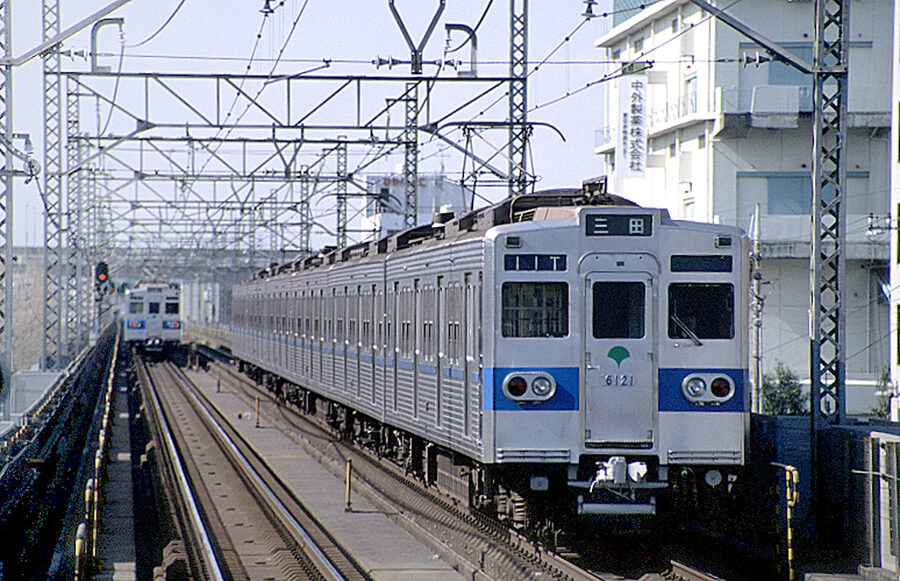
The 6000 series was Toei’s first home-grown subway design, a stainless-steel six-car set with the Mita Line’s distinctive blue stripe. They ran for thirty-one years, longer than they were probably designed for, because the line had no through-running pressure to force a renewal. When the Mita Line finally got its Tokyu connection in 2000, the 6000 had already been retired the year before; the 6300 took the new traffic.
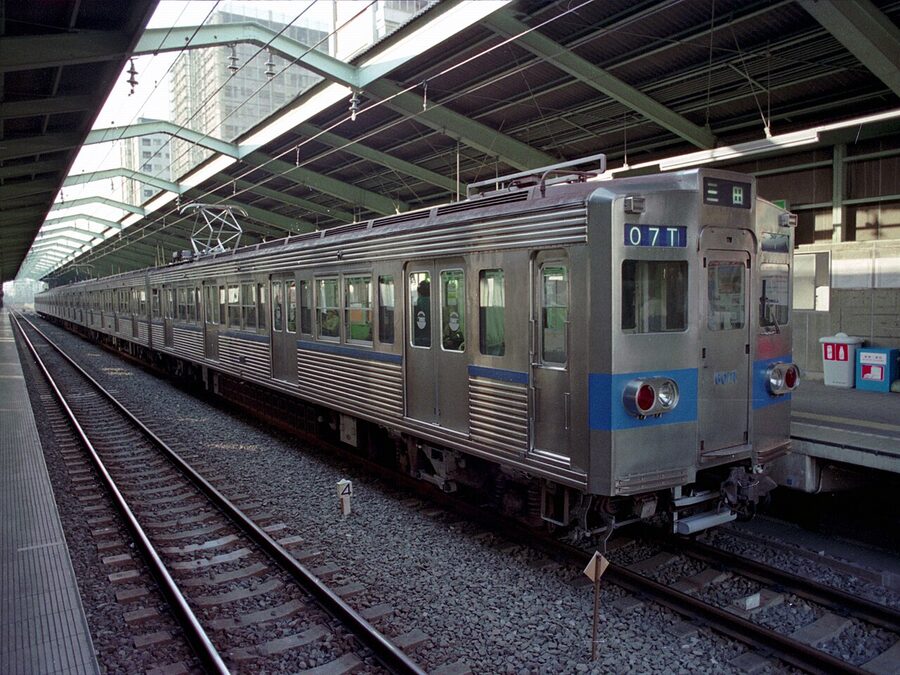
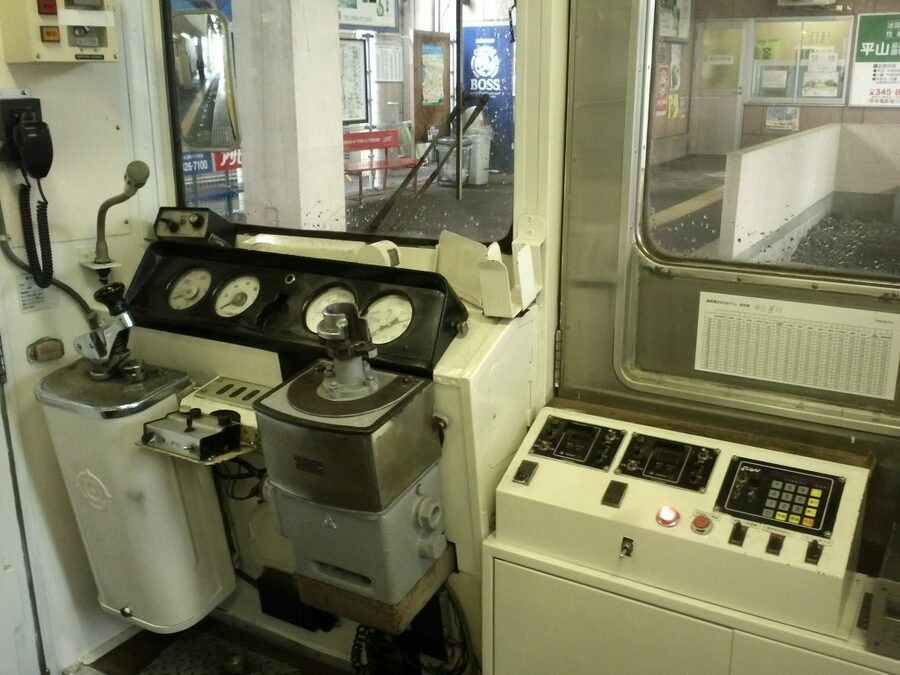
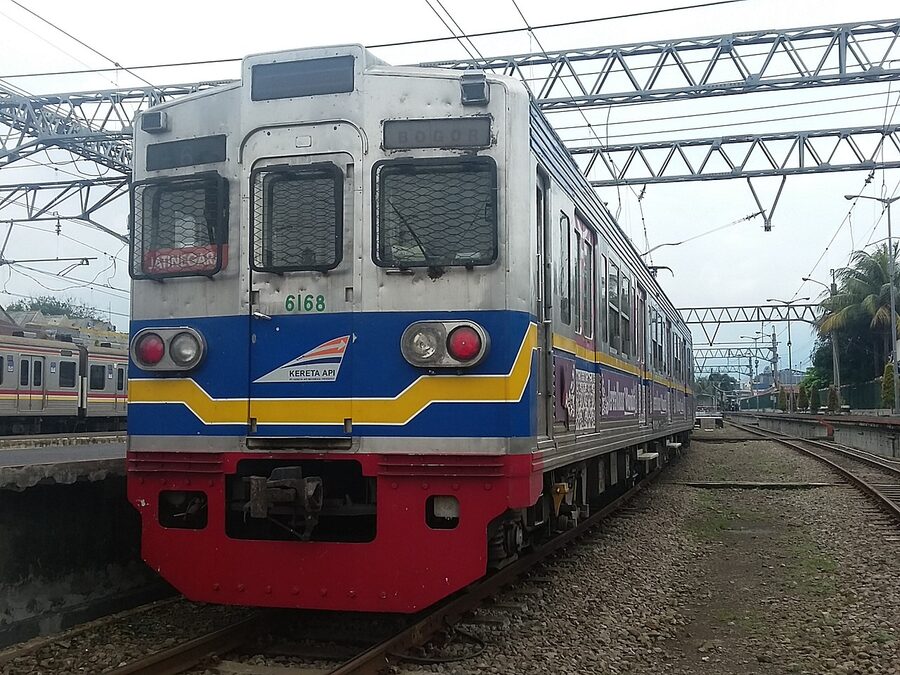
6300 series (1993–): three batches, one division of labour
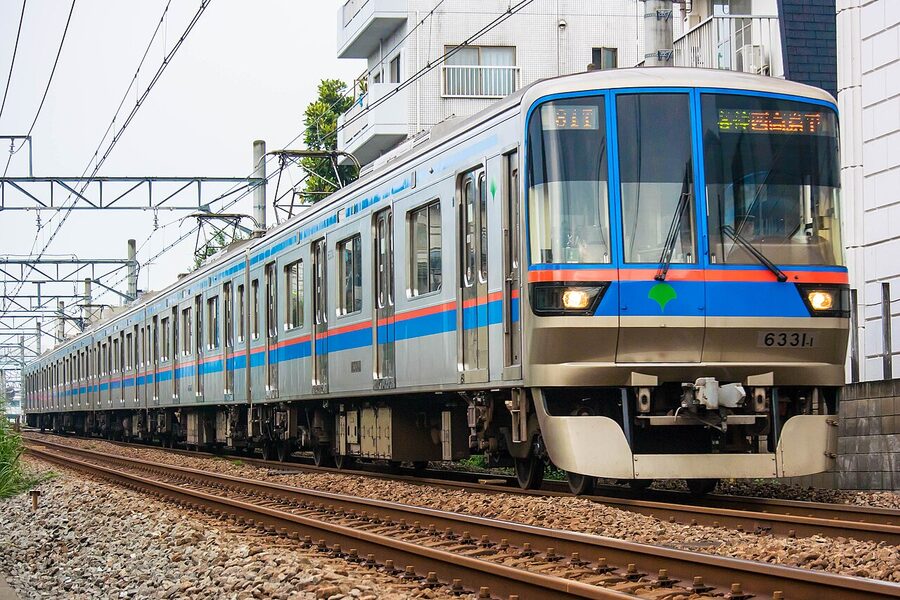
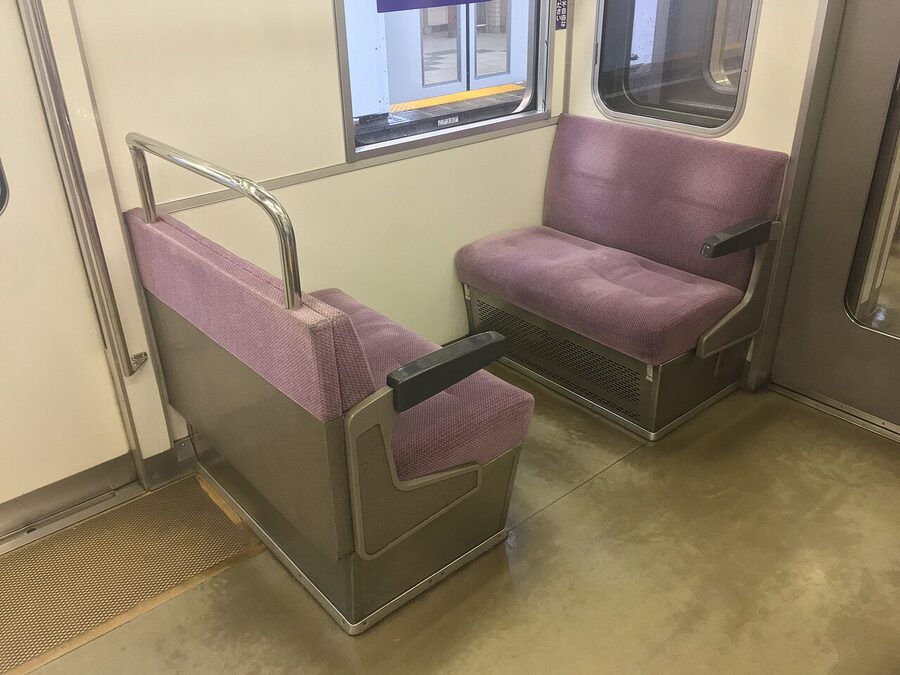
The 6300 came in three batches. Batches 1 and 2, built 1993–1994, were the line’s pre-through-running stock; six-car sets, designed for self-contained Mita Line operations. Batch 3, built 1999–2000, were the through-running specification: longer-life equipment, cab signalling for Tokyu Meguro Line, and on the third-batch interior a section of cross-seat (transverse) seating that no other Toei subway has.
6500 series (2022–): the Sotetsu eight-car answer
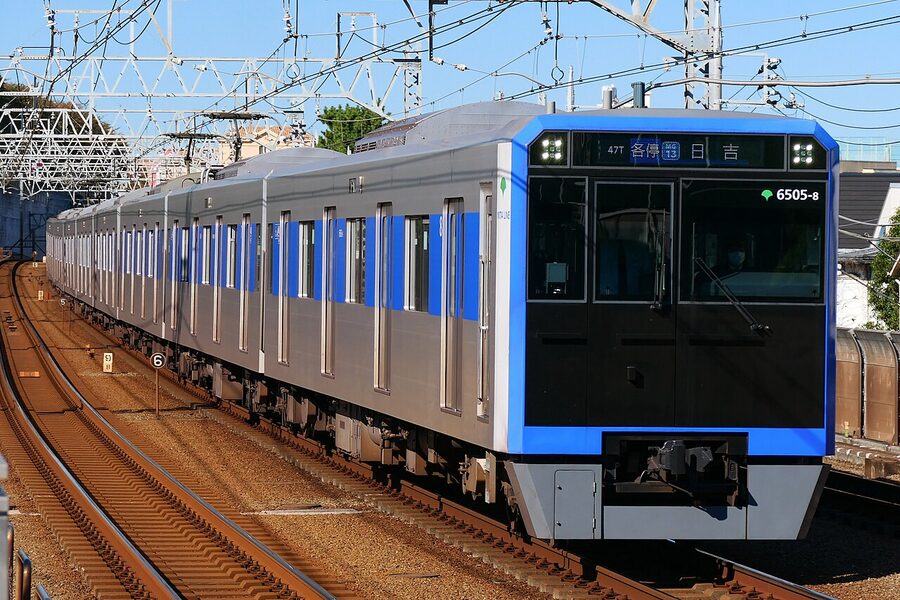
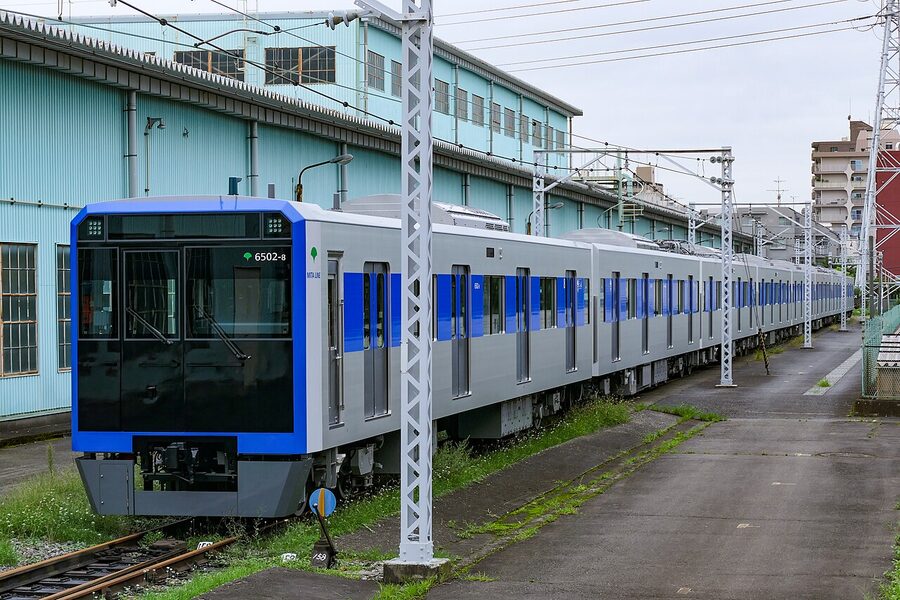
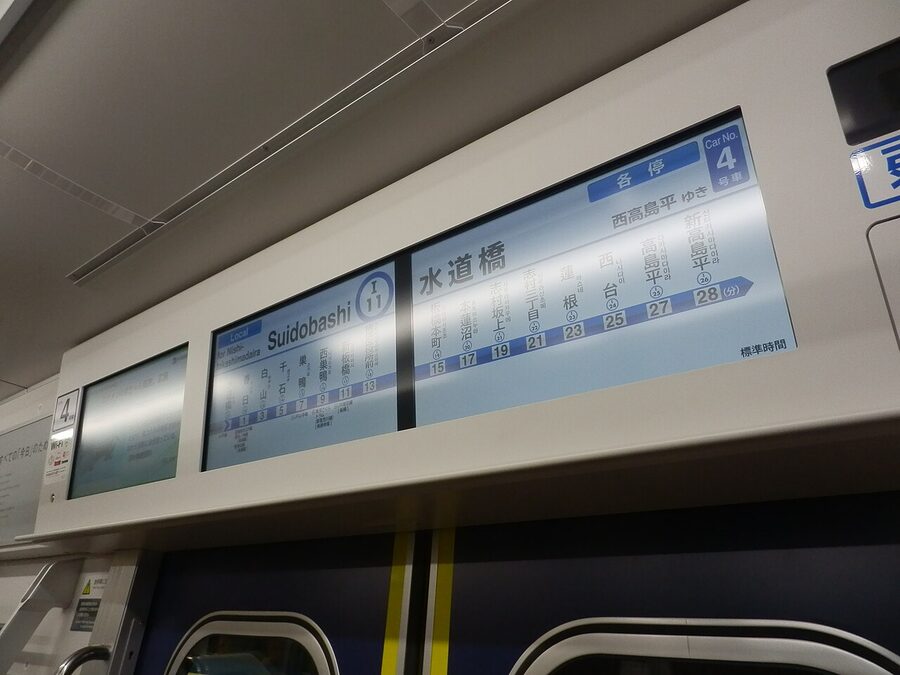
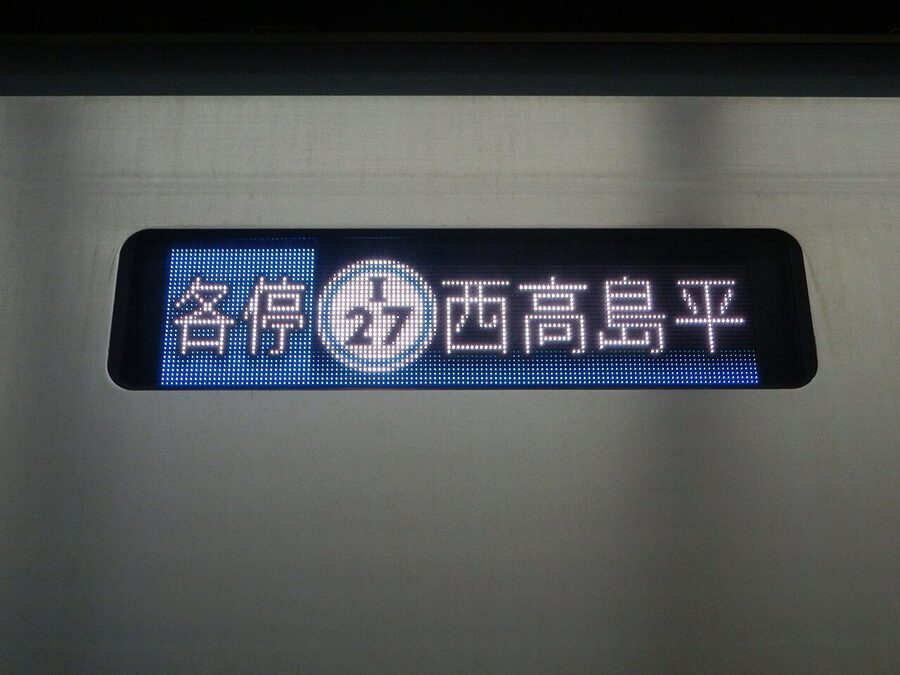
The 6500 entered service on 14 May 2022. Built by Kinki Sharyo in Osaka, eight-car sets, full SiC-VVVF, 110 km/h operating speed and 120 km/h design ceiling. Thirteen sets were ordered, fleet numbers 6501–6513. They exist for one reason: the new Tokyu Shin-Yokohama Line through-running to Sotetsu, opened 18 March 2023, demanded eight-car operation, and the 6300 batches 1 and 2 only ran as six. The first-batch 6300s have been retired since 2024 because they couldn’t be lengthened economically. Batch 3 stays, partly because of the cross-seats, partly because the third batch’s electrical hardware was already through-running-spec.
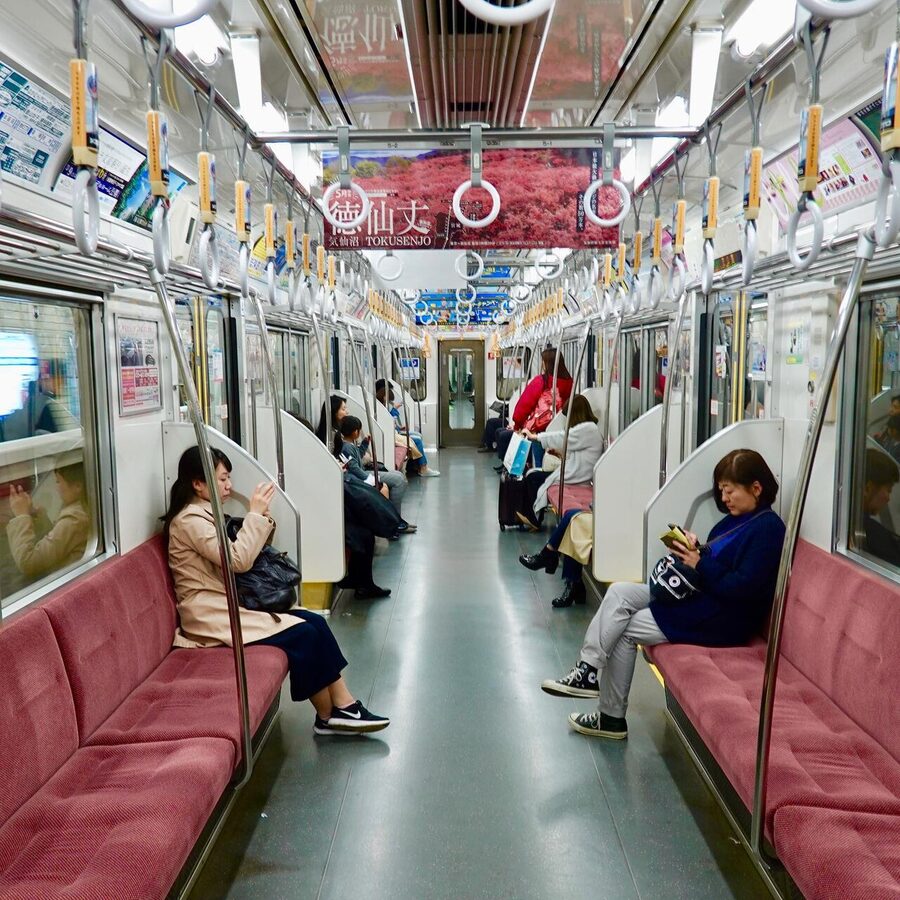
The Shinjuku Line: 1,372 mm because Keio said no
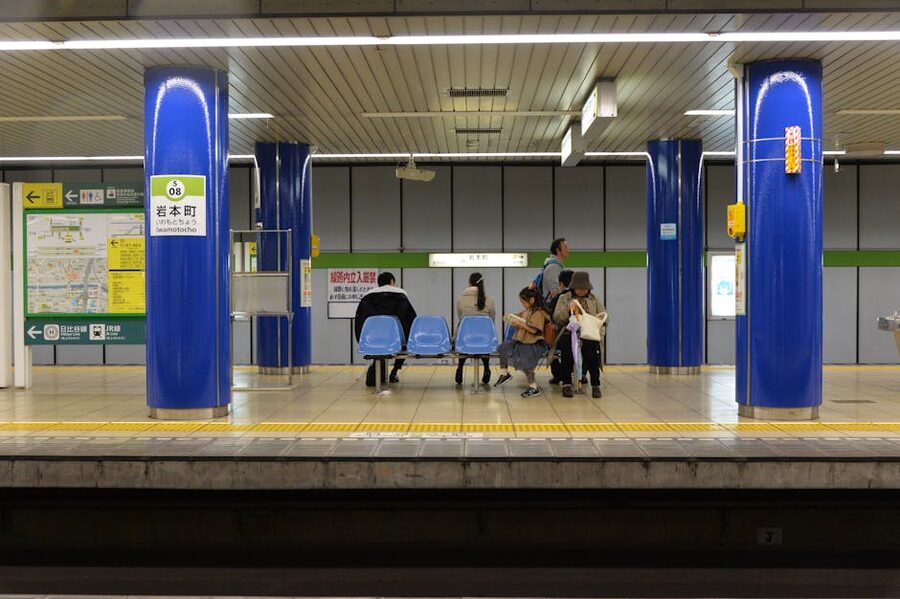
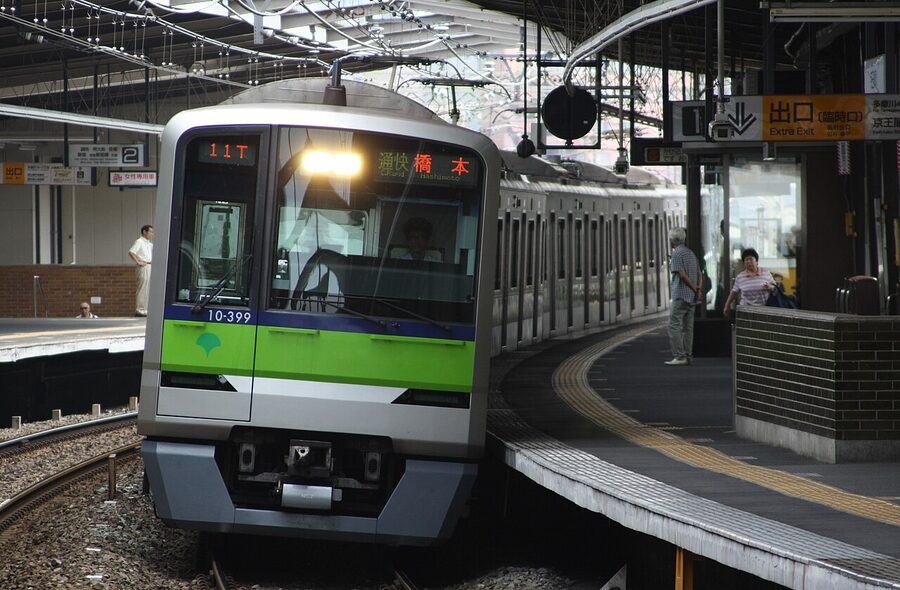
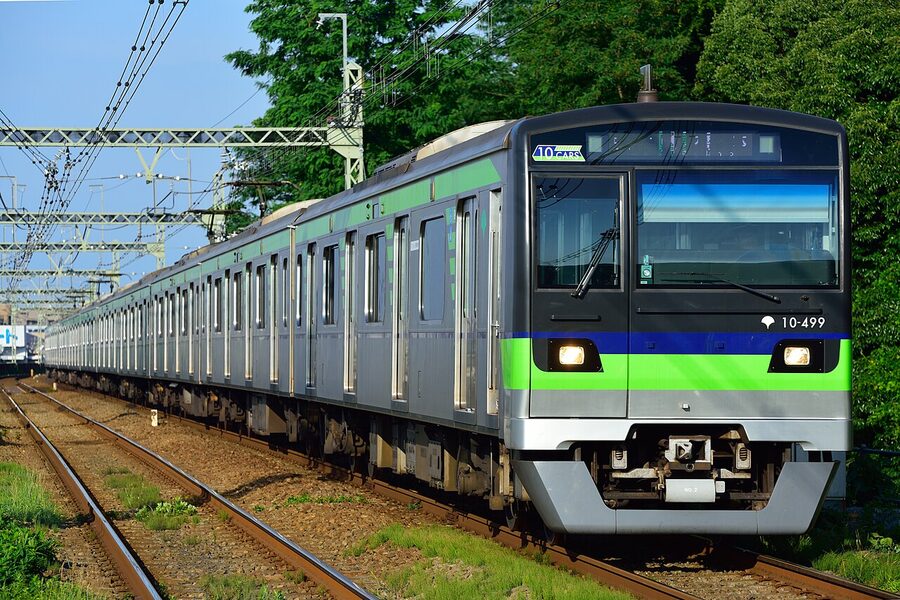
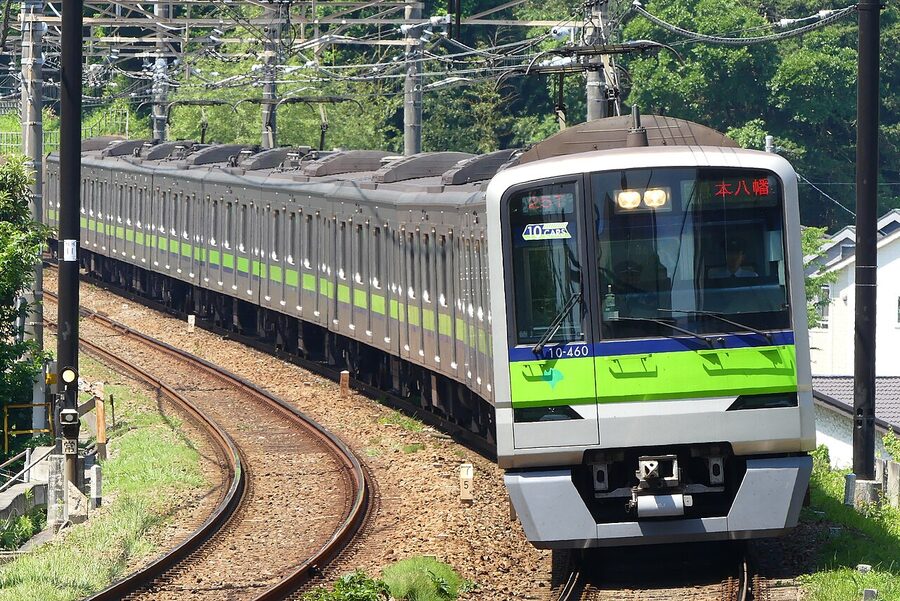
The Shinjuku Line is the strangest of the four because of one technical fact: it runs on 1,372 mm gauge, which is no other operator’s gauge in Japan apart from Keio and the Toden tram. The reason is straightforward and slightly ridiculous. When the city planned a subway out to the western suburbs in the 1970s, the natural through-running partner was Keio, which already ran the relevant corridor on the surface. Toei wanted standard gauge to match the Asakusa Line; Keio refused to convert the entire western network for one tunnel. Toei conceded. The result is a subway that physically cannot share rolling stock with any other Toei line, on a gauge with a folkloric origin: the 1,372 mm dimension is called 馬車軌間 (basha kido), “horse-carriage gauge”, inherited from the 1882 Tokyo Horse-car Railway, which Keio’s predecessors picked up from a tram operator and never let go.
The line opened on 21 December 1978 from Iwamotocho to Higashi-Ojima, reached Shinjuku on 16 March 1980, and finally extended out to Motoyawata in Chiba in 1989. It is 23.5 km long, 21 stations, almost entirely underground except for a 2.5 km elevated stretch in eastern Tokyo near the Arakawa River. It through-runs with Keio Line, Keio Sagamihara Line, and the Keio New Line at Shinjuku, with services as far out as Hashimoto and Takaosanguchi, neither of which is in central Tokyo at all.
10-000 series (1971–2018): the prototype that ran for 47 years
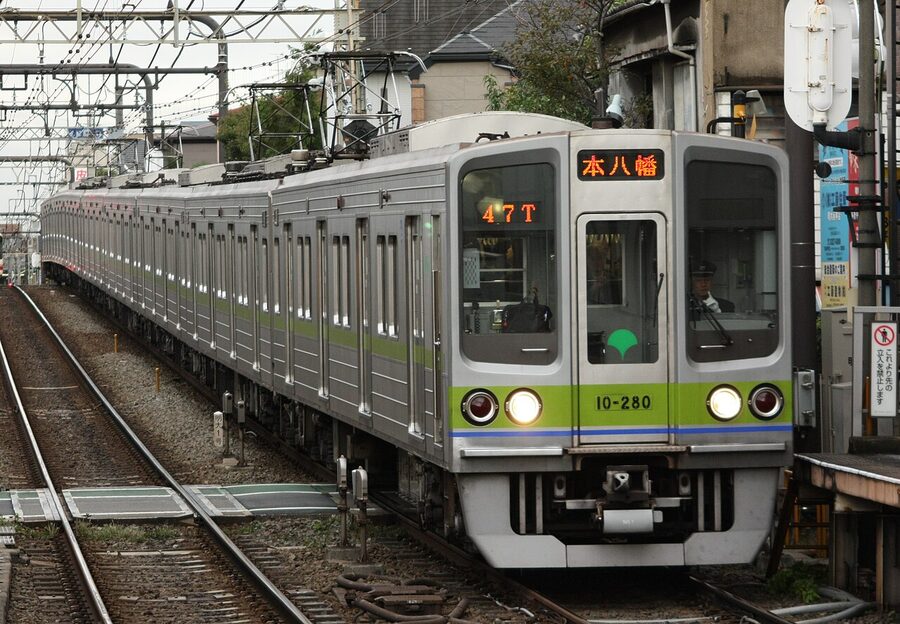
The 10-000 had a prototype career before it had a service career. The first set was built in 1971, seven years before the line opened, specifically to test propulsion and braking on the unusual gauge. The production run started in 1978 and ran in batches through to the 1990s. Eight-car formations all the way through, until the line was extended to ten cars in the early 2010s and the 10-000 was relegated to off-peak duties. The last sets retired in 2018, a 47-year career counting the prototype.
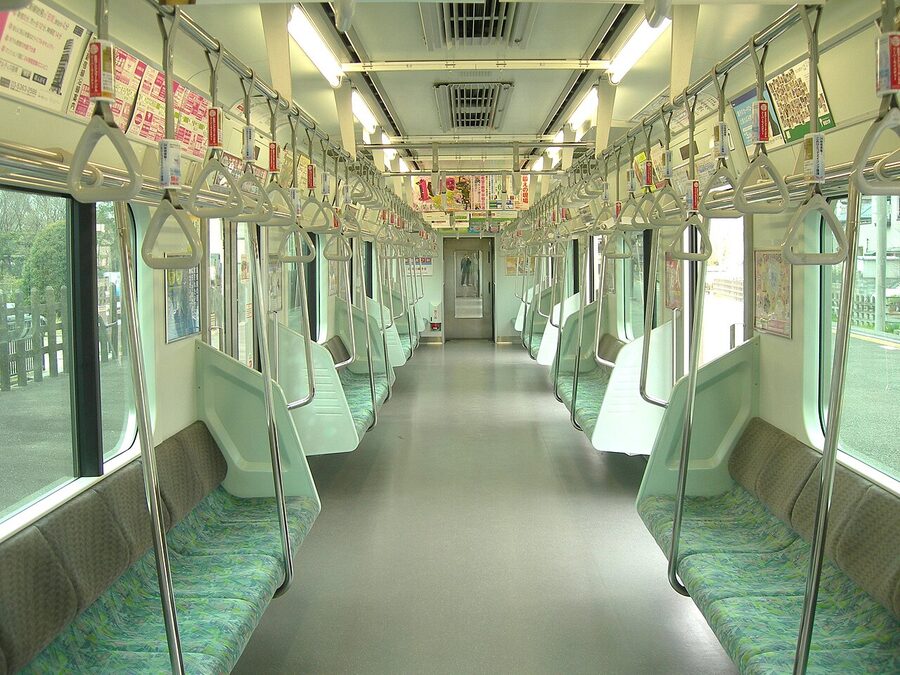
10-300 series (2005–): three batches, one length
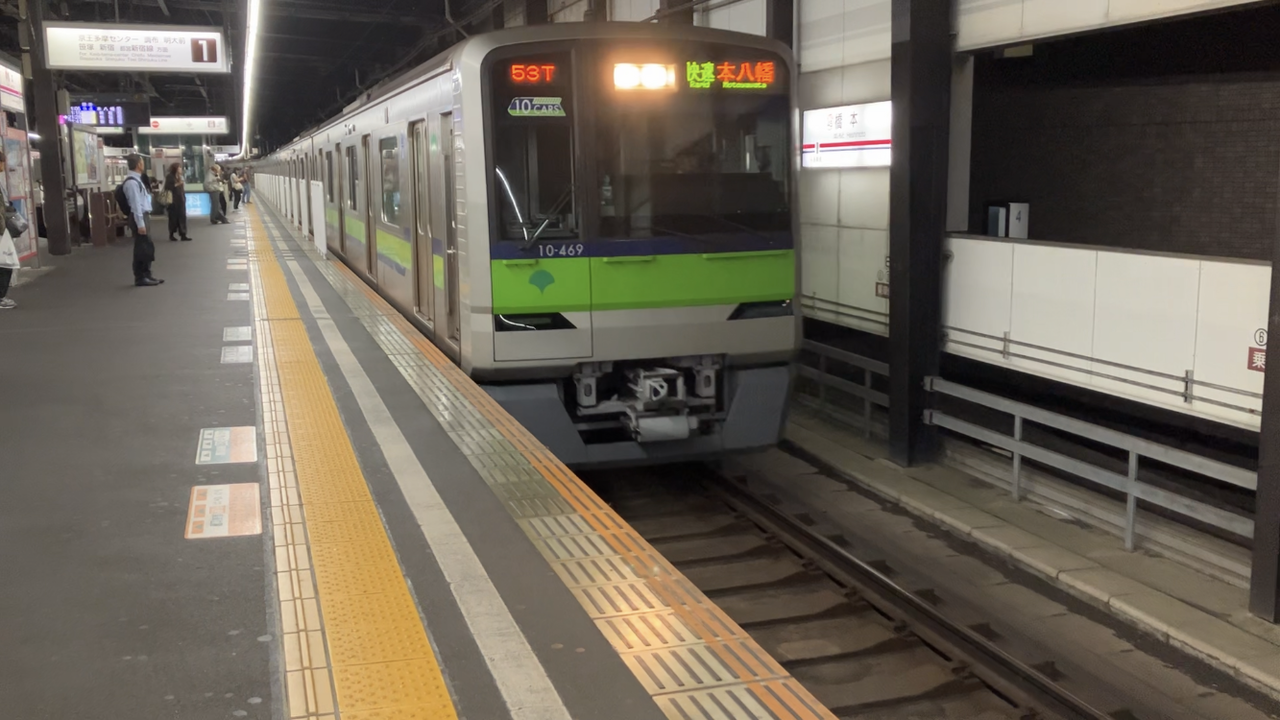
The 10-300 came in three batches: 2005, 2010, and 2017–2022. The first batch ran as eight cars; the second and third batches arrived as ten, and the older batch sets were extended too as the platforms allowed it. Since August 2022, every Shinjuku Line service runs as ten cars. The line is now operationally homogeneous: one rolling-stock type, one length, one schedule logic.
The Oedo Line: the small tunnel and the linear motor
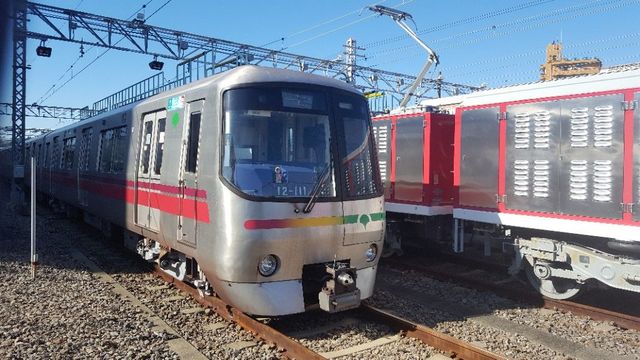
The Oedo Line is the one I find hardest to recommend on a single ride, partly because it goes everywhere and nowhere, and partly because the trains are deliberately small. It is shaped like a numeral six on its side: a near-loop through Iidabashi, Roppongi, Shinjuku, Tochomae and back, with a tail extension out to Hikarigaoka in the north-west. It is 40.7 km long, has 38 stations (more than any other single Tokyo subway line), and goes deeper than any other line in Tokyo: Roppongi Station’s inner-loop platform sits 42 metres below ground, which is the system record. The reason it could be built that deep, and could go where there was already a dense subway grid above, is the same reason its trains look small: linear induction motor propulsion.
The world-first claim, examined honestly
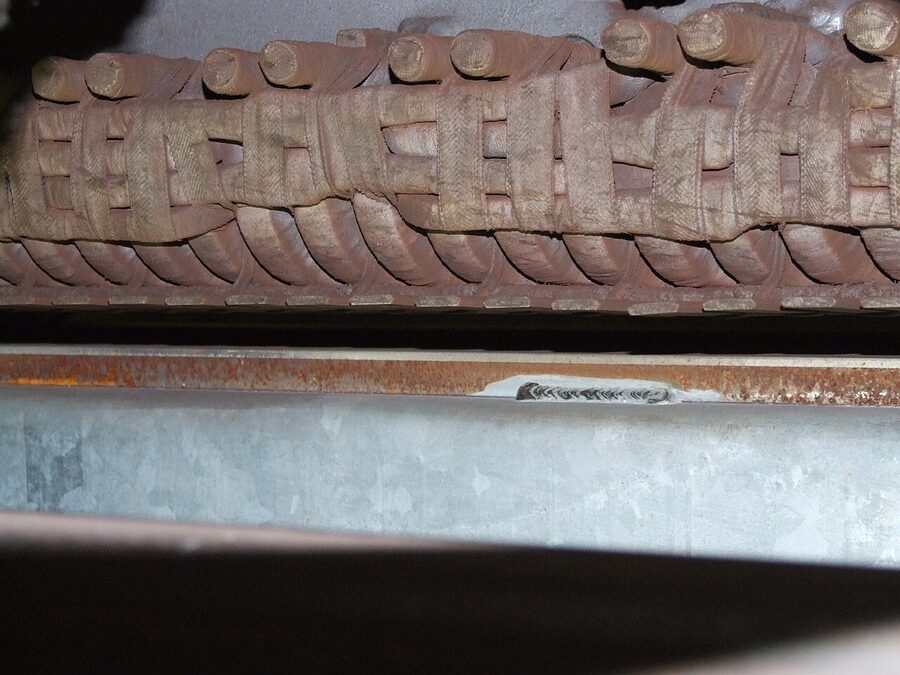
You will sometimes see the Oedo Line described as the world’s first linear-induction-motor subway. It isn’t, and the claim is worth correcting because the actual achievement is interesting enough on its own. The Toronto Scarborough RT and Vancouver SkyTrain both opened with linear-motor heavy rail in 1985 and 1986. Osaka’s Nagahori Tsurumi-ryokuchi Line, which used the same iron-wheel-with-LIM design Tokyo eventually adopted, opened on 31 March 1990, more than a year before the Oedo’s first segment. The Oedo Line, opened 10 December 1991 between Hikarigaoka and Nerima, is properly the second linear-induction-motor subway in Japan and (depending on how you count) the third or fourth in the world. What makes it interesting is that it is by far the longest such system in the country, with the loop-with-tail geometry that LIM made financially possible in the most expensive land in Tokyo.
Why LIM, and what it costs the rider
The propulsion choice has consequences the rider feels. The trains accelerate harder than a conventional subway because the linear motor delivers full torque from a stop. They can climb steeper grades, which is why the line dives into and out of stations like Roppongi rather than hugging a horizontal alignment. They top out at 70 km/h, lower than any other Toei line, because the LIM efficiency curve falls off above that. The cars are narrower (about 2.5 metres wide instead of the 2.8 of the Asakusa Line), which the operator presents as compact and the rider experiences as cramped at peak hour. The seats are short. The standing space between them is short. The line carries close to a million riders a day, the highest of any single Toei route, in cars that are physically the smallest. It is a triumph of cost engineering and a rough ride at 08:30 on a weekday.
12-000 series (1991–): four batches across nine years
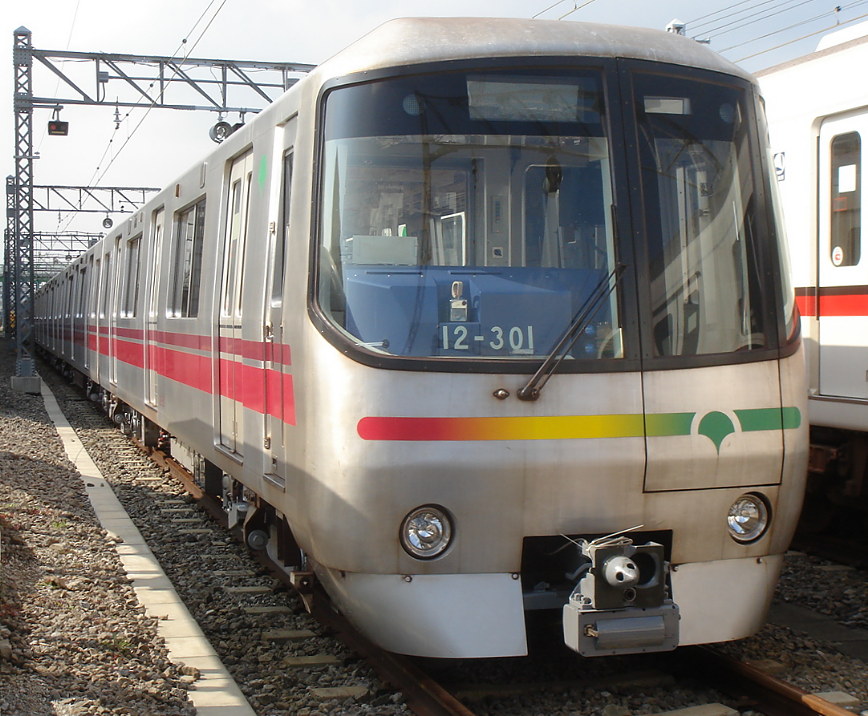
Production of the 12-000 ran from 1990 to 2000, in four batches that mirrored the line’s extension in segments. The first batch (1990–91) opened the Hikarigaoka–Nerima section; the second (1996) went on the line as it reached Shinjuku; the third (1997) covered the Shinjuku terminus; the fourth (2000) for the loop closure to Roppongi and back. Fifty-three eight-car sets in total, all built across Tokyu Car Corporation, Nippon Sharyo and Hitachi Rail. The first-batch sets retired in 2016, the last one running its final service on 30 June. Two prototype cars (12-001 and 12-002) sit preserved at Chihaya Flower Park in Toshima, a small piece of LIM history with a children’s playground around it.
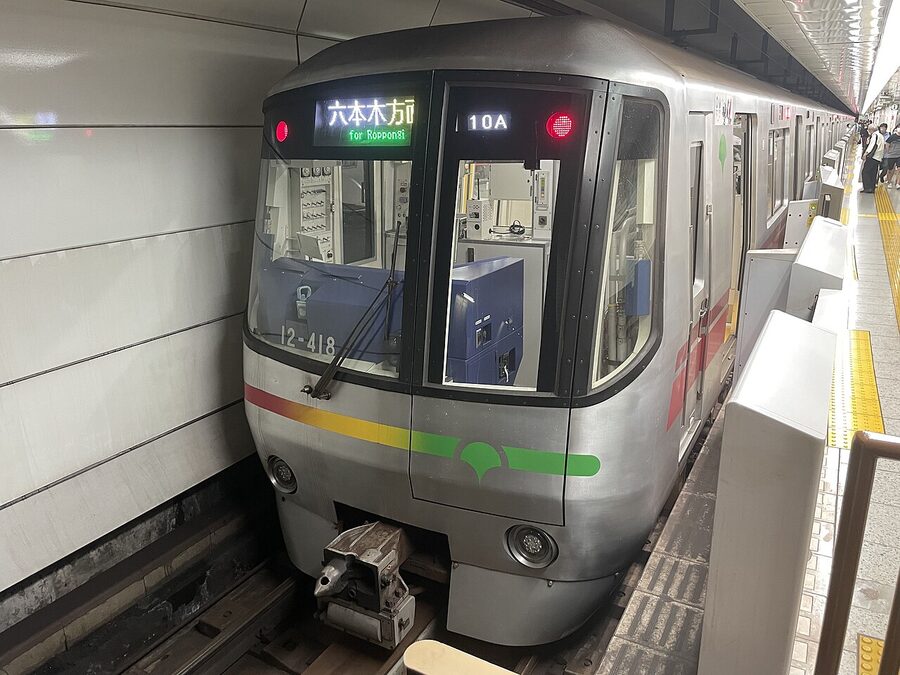
12-600 series (2012–): the modern Oedo train
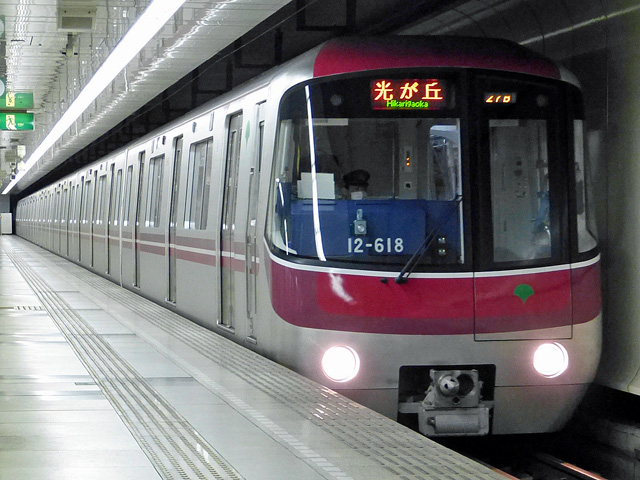
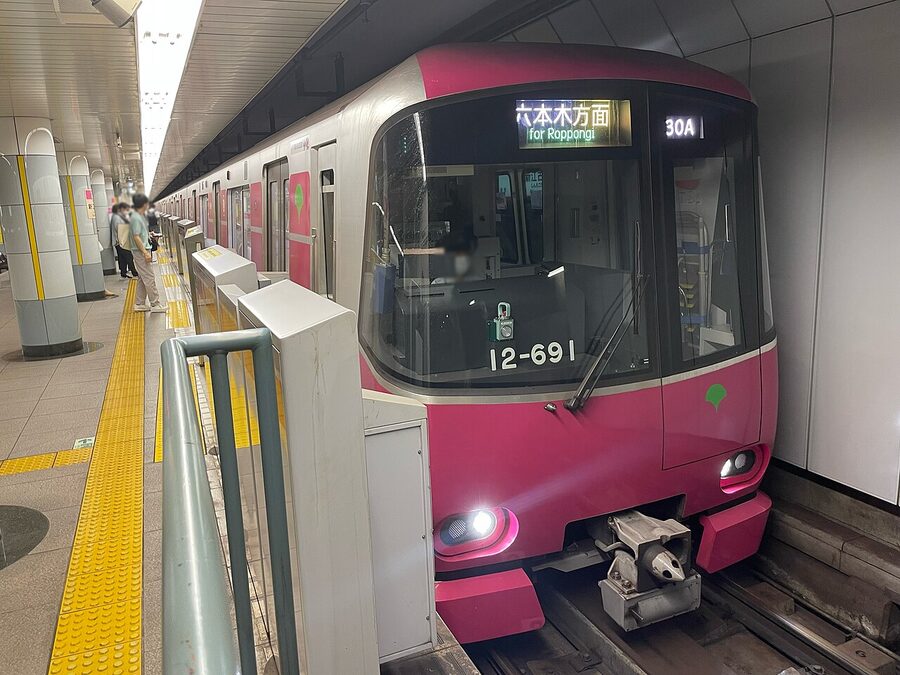
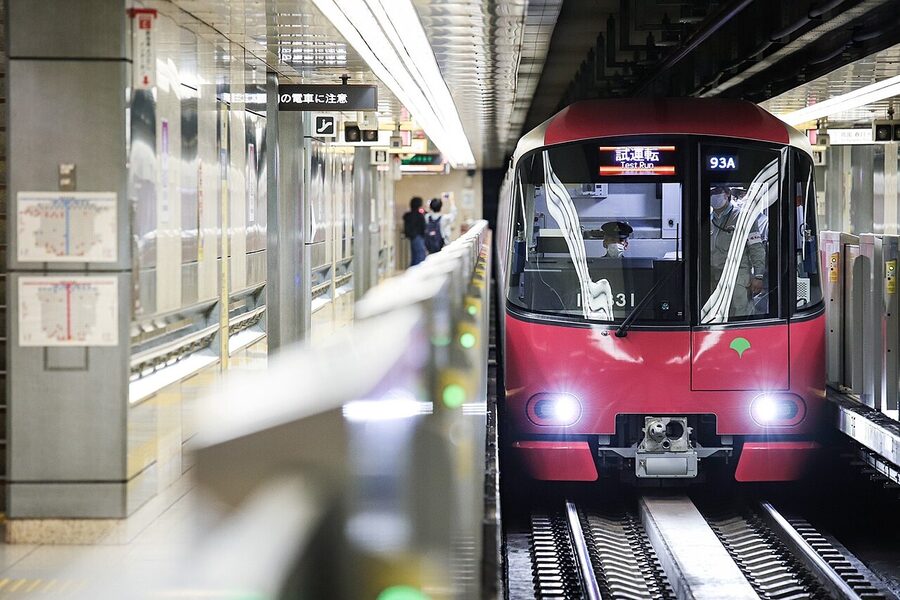
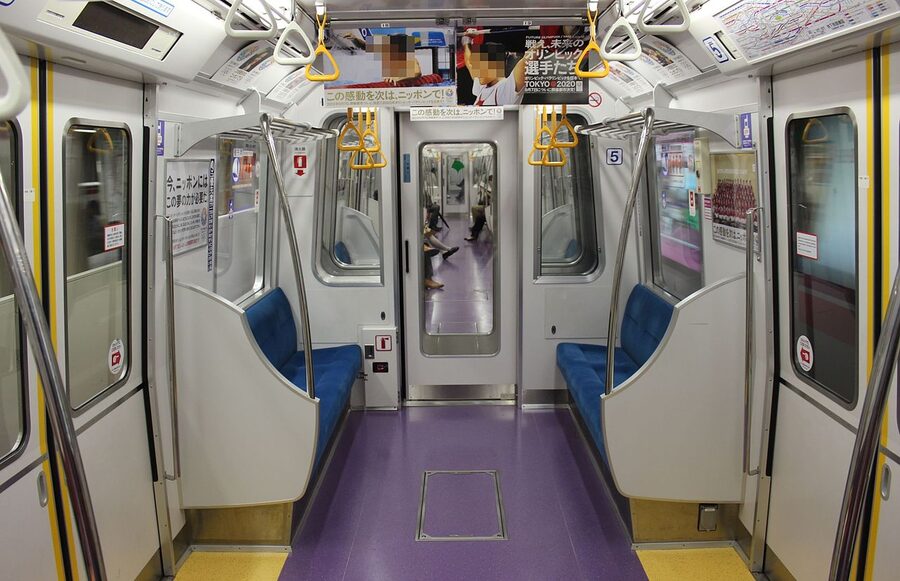
The 12-600 is the answer to the 12-000’s first-batch retirement, in service from 23 February 2012. The face is rounder, the headlights are LED, the propulsion has been converted to SiC-VVVF in the third batch. As of 2026 the fleet is being expanded toward 58 sets in total, with the third batch (built 2021–2023) replacing the remaining late-1990s 12-000 sets.
The E5000 electric locomotives: the freight train Toei pretends doesn’t exist
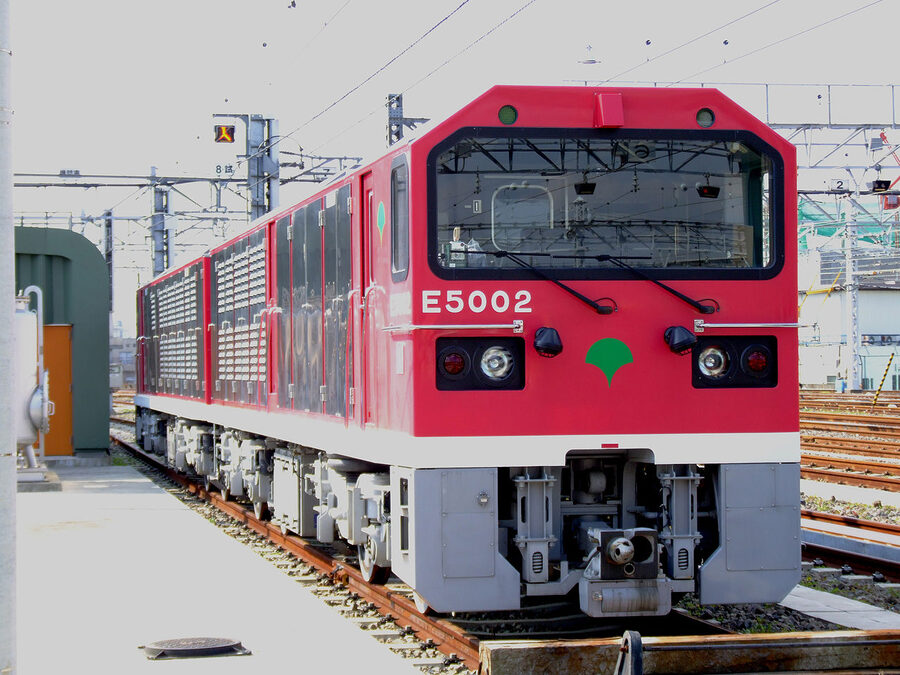
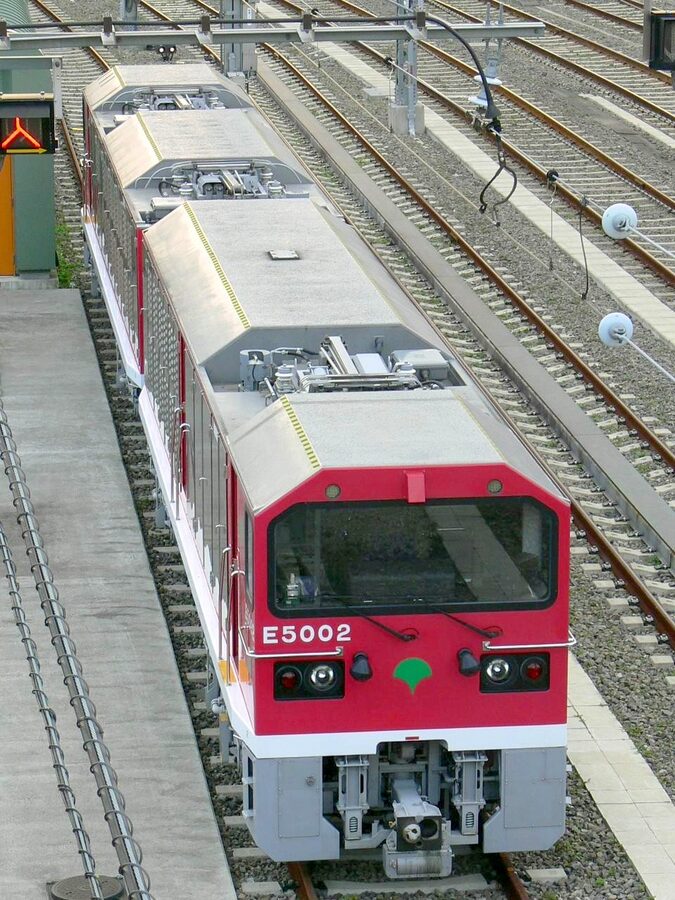
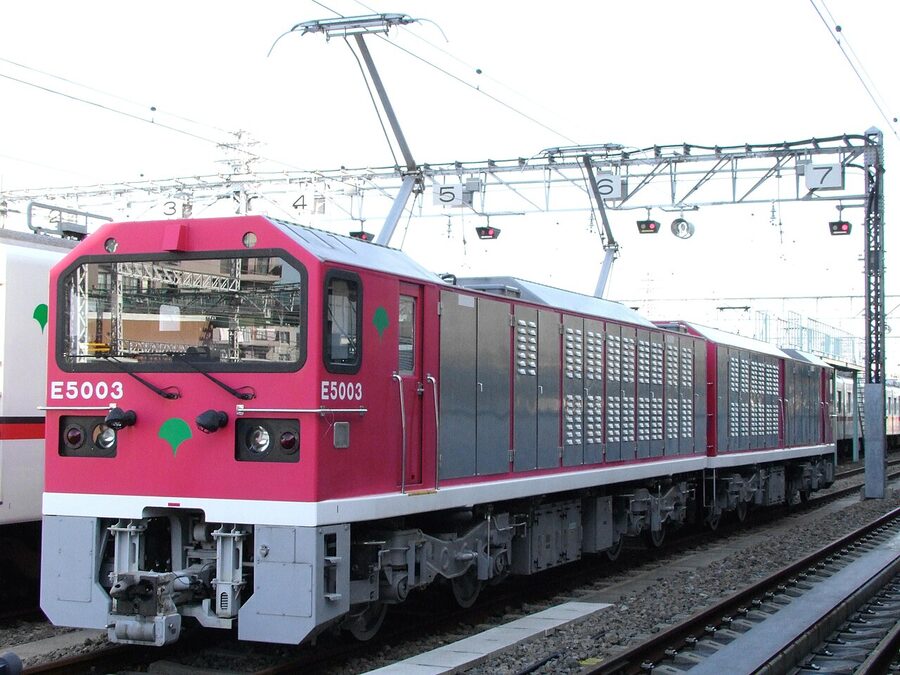
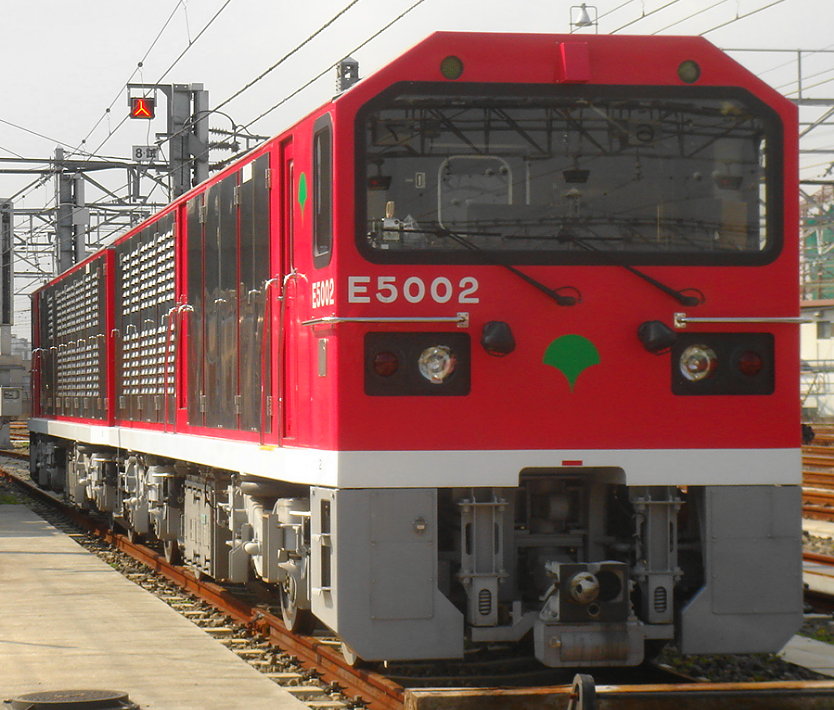
One operational quirk of the four-line system that almost no English source mentions: the Oedo Line’s inspection works are not at the Oedo depot at Kiba. Heavy overhaul happens at the Asakusa Line’s Magome depot, on different track gauge, with no through-running. To get an Oedo Line train from its home depot to Magome, Toei runs a small fleet of E5000 series electric locomotives that drag the powerless 12-000 or 12-600 set across the gauge break and through the Asakusa Line tunnel for the work, then drag it back. There are two of them, E5001 and E5002 (with E5003 a later third), and they are not in passenger service. They are the only Toei rolling stock that exists purely to move other Toei rolling stock.
Riding it: practicalities, fares, day passes
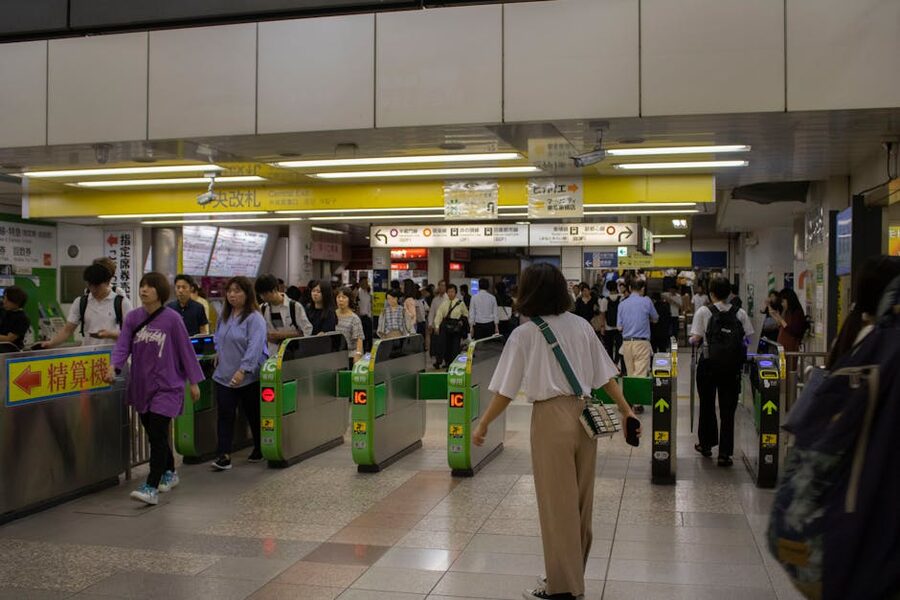
Single-ride Toei subway fares start at ¥180 IC and rise to ¥430 by distance. That is roughly 5–15 yen cheaper than the equivalent Tokyo Metro ride, which Toei is happy to point out. If you are doing more than two Toei rides in a day, the ¥700 Toei One-Day Economy Pass pays for itself; for the central Tokyo loop the Toei + Tokyo Metro Common One-Day Pass at ¥900 is usually the better deal. Tourists arriving at Haneda or Narita can buy the Tokyo Subway Ticket at the airport pass desks: ¥800 for 24 hours, ¥1,200 for 48 hours, ¥1,500 for 72 hours, all of which cover both Toei and Tokyo Metro lines without limit. The 72-hour pass at ¥1,500 is, on a per-day basis, the cheapest unlimited subway access in Tokyo.
Where to start if you have one ride
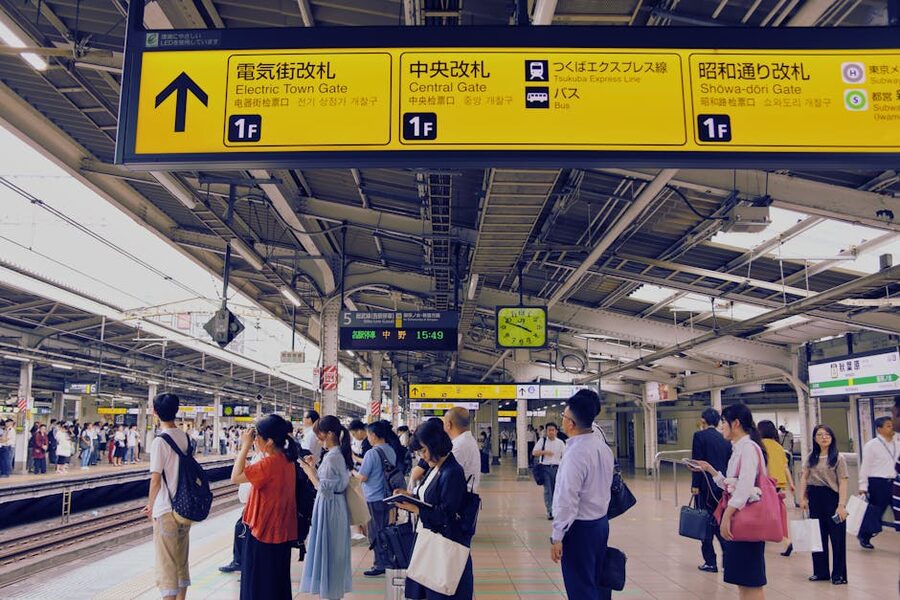
The Asakusa Line at Higashi-Ginza or Asakusa, riding south to Sengakuji and watching the operator change without a stop, is the trip I would recommend if you want to see what makes Toei interesting in twenty minutes. The Mita Line at Otemachi or Hibiya is a working commute, not a sight-see. The Shinjuku Line is the one to take if you are heading out west, where it through-runs into Keio territory and the suburbs you cannot reach via JR. The Oedo Line at Roppongi is worth riding once just to feel the depth, and the linear motor’s hard initial acceleration; once is enough.
Connecting to JR and to other operators
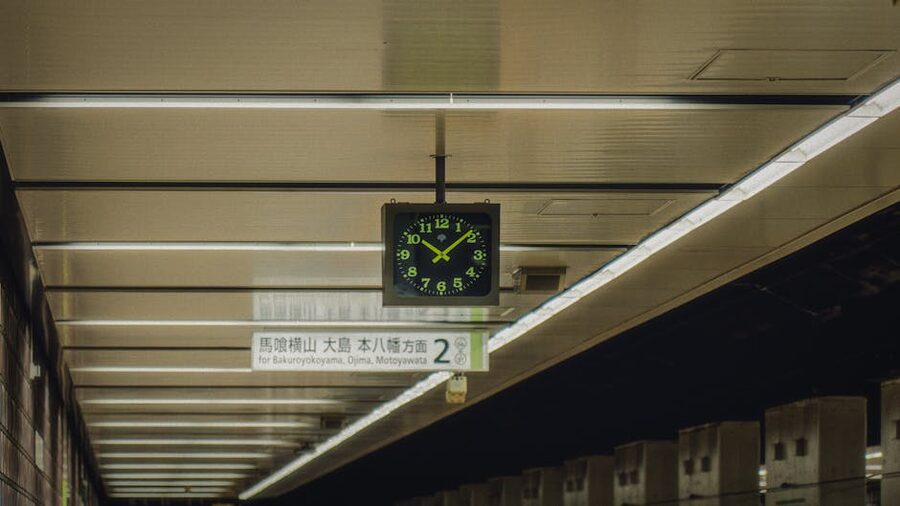
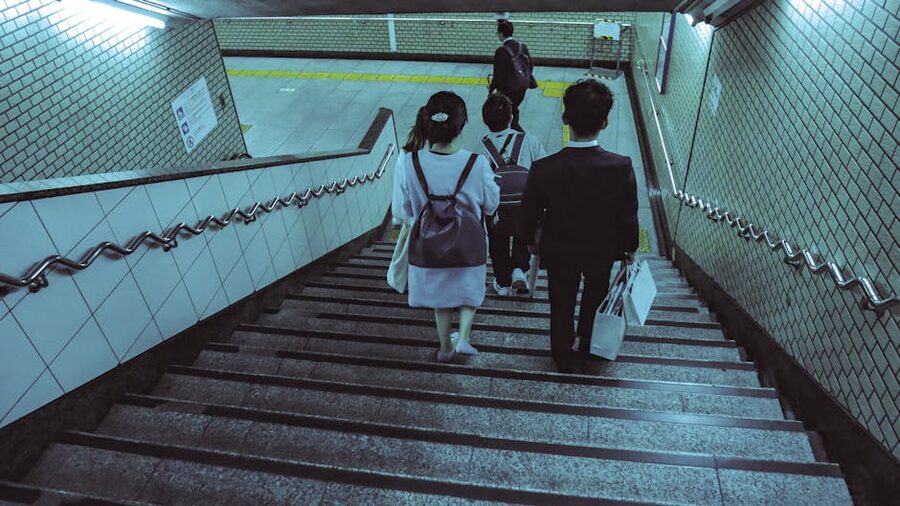
The line codes are A (Asakusa), I (Mita, the holdover I from the romanisation Mita with an Italian-style notation), S (Shinjuku), and E (Oedo). Toden Arakawa Line uses SA. Toei stations are coded with an underscore-style number behind the line letter; the same station on Tokyo Metro carries a different prefix and number. Look for the line letter on the platform sign before the number. Connections to JR East are easiest at Hibiya (JR Yurakucho on Yamanote), Otemachi (JR Tokyo three minutes’ walk), and Shinjuku (JR Shinjuku, on the JR Chuo and Yamanote line proper). Connections to Tokyo Metro are deeper than you’d want at most stations; the Hibiya/Hibiya/Hibiya combination of Toei Mita, Tokyo Metro Hibiya, and JR Yurakucho is the one underground transfer in Tokyo where the walking distance is genuinely a problem.
The Toden Arakawa Line: Tokyo’s last surviving tram
One sentence on the tram, since it shares the operator. The Toden Arakawa Line, branded Tokyo Sakura Tram since 2017, is the only surviving fragment of what was a 213 km municipal tramway network in 1962. It runs 12.2 km from Minowabashi in Arakawa to Waseda in Shinjuku, with 30 stations, on 1,372 mm gauge (the same gauge as the Shinjuku Line and Keio, which is no coincidence; Tokyo’s surface tram system is what gave Keio its gauge in the first place). The current rolling stock is a mix of 7700, 8500, 8800, 8900, and 9000 series single-car units, all single-deck, all 600 V DC overhead. A single ride is ¥170, the all-day pass is ¥400, and it survived the 1960s closures because the residents along Senkawa-dori specifically refused to let it die. The 9000 series, introduced 2007, deliberately styled to look like a 1950s tram, runs in the heritage rotation and is photographed by the local population most spring afternoons during the cherry blossom run between Asukayama and Oji.
Reading the four lines as one operator
The four Toei lines are not, in any practical sense, one network. The trains can’t share track. The depots can’t share rolling stock. The Magome electric locomotive operation is the closest the system comes to an internal connection, and that is once-a-month inspection traffic. What unites them, instead, is the operator’s institutional habit: each line was built to solve a specific piece of the city’s transport problem, and each line accepted a structural compromise in order to get built at all. Asakusa Line: standard gauge to share with Keikyu and Keisei. Mita Line: narrow gauge for a Tobu plan that died. Shinjuku Line: 1,372 mm because Keio refused to convert. Oedo Line: linear-induction motor because the city couldn’t afford the conventional cross-section twice in central Tokyo.
If you read the rolling stock as the record of those compromises, you can almost reconstruct the history without the operator’s official account. The 5500 in kabuki paint is a mature line celebrating its 60th anniversary by being good-looking. The 6500 in eight-car format is a Mita Line forced into a longer train by a Sotetsu through-running deal that closed in 2023. The 10-300 ten-car ten-batch fleet is a Shinjuku Line operating in lockstep with Keio because there is no other practical way to run a four-operator gauge anomaly. The 12-600 third batch is a 1990s mini-subway being incrementally re-equipped with 2020s electronics, on a tunnel that goes deeper than anything else under Tokyo because it was the only way to fit the line in.
For the operator’s longer history, including the prewar municipal-tram era and the postwar political fight that carved out Toei’s territory between Tokyo Metro and the JR network, see the Tokyo Metropolitan Transportation Bureau history piece. For a comparison with Tokyo’s other subway operator, the rolling-stock-led Tokyo Metro Trains piece covers the nine Metro lines and the same through-running dynamics from the other side of the operator boundary. For the surface-rail through-running partners on the Asakusa Line side, the Keio, Odakyu, and Tobu rolling-stock pages have the suburban-side detail.
Back at Sengakuji
06:24, six minutes after the Keikyu 1000 came in. The next train through Sengakuji is a Toei 5500 in kabuki paint, eight cars, running in the opposite direction, having started as a Keisei service somewhere out near Aoto and now bound for Misakiguchi at the Keikyu south end. Same physical platform, same physical track, three operators in twelve minutes, and not a single passenger has had to change train. If you understand why that train is on this track and what gauge it runs, you have read most of what makes Toei what it is. The kabuki face is the punchline. The 1,435 mm under it is the joke.


.jpg)


.jpg)


.jpg)

_69F.jpg)


