
Keisei Electric Railway: A Pilgrim Line to Narita
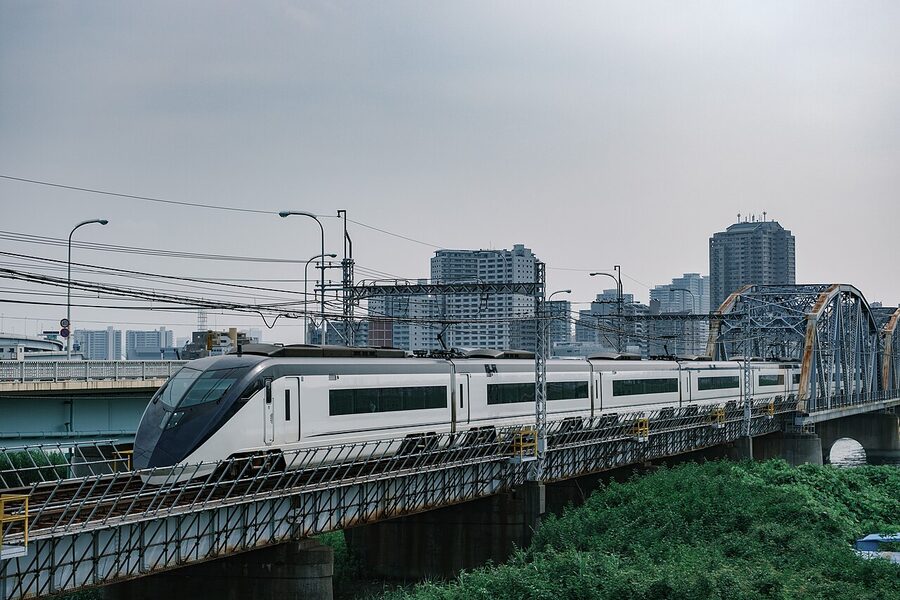
The Skyliner pulls out of Keisei Ueno on the hour and the half hour, and somewhere between Aoto and Higashi-Matsudo it crosses 130 km/h, then 140, and on the cleanest stretches between Inba-Nihon-Idai and the airport it touches 160. That last figure is the fastest a train runs anywhere in Japan outside the Shinkansen, and it has been the fastest since 17 July 2010, the day the Narita Sky Access opened. Keisei sells you the speed because Keisei needs you to choose its train and not the JR Narita Express, and the company has been making that argument, in one form or another, since 1978. The funny part is that none of this was the original plan. Keisei was built to take pilgrims to a temple.
In This Article
- Why this railway is the one airport story worth reading
- The pilgrimage railway: 1909 to 1930
- The temple that mattered
- First trains, in the wrong order
- Reaching the city: Ueno, 1933, and the bribery scandal
- The Asakusa scheme that killed itself
- The detour through Tsukuba
- The interwar diversification, and the war
- The wartime losses
- The gauge wars: 1372 mm, then 1435 mm in 50 days
- Why the gauge mattered
- 50 days, 11 phases, 13 sections
- 1973 to 1978: the Skyliner that had nowhere to go
- The first Skyliner, 1973
- Six years on hold
- The dark decade, 1980 to 1990
- What saved the company
- The AE100, 1990 to 2010: the second-generation Skyliner
- The Cityliner role
- The Sky Access gambit, 1990 to 2010
- The new high-speed bypass
- Four operators, one line
- The 160 km/h section
- What 160 km/h gets you
- Inside the AE
- The commuter fleet underneath the headline
- 3000 series, the workhorse since 2003
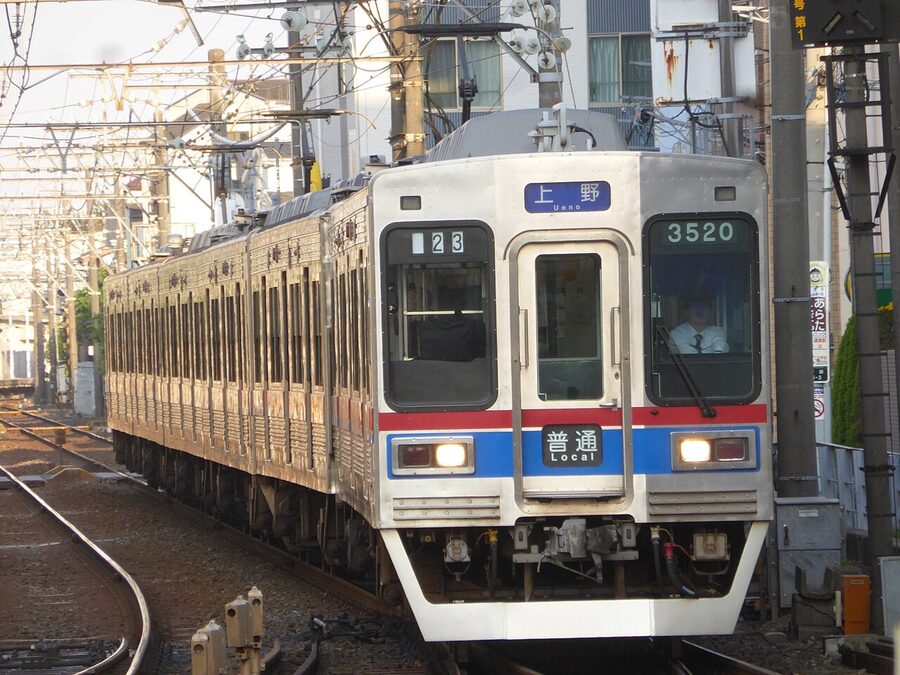
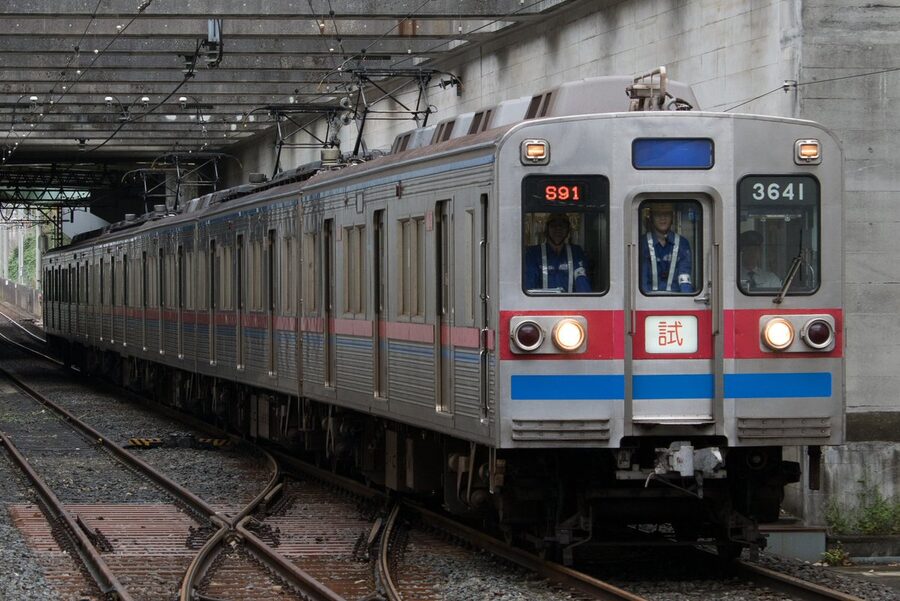
- 3500 and 3600: the post-regauging legacy
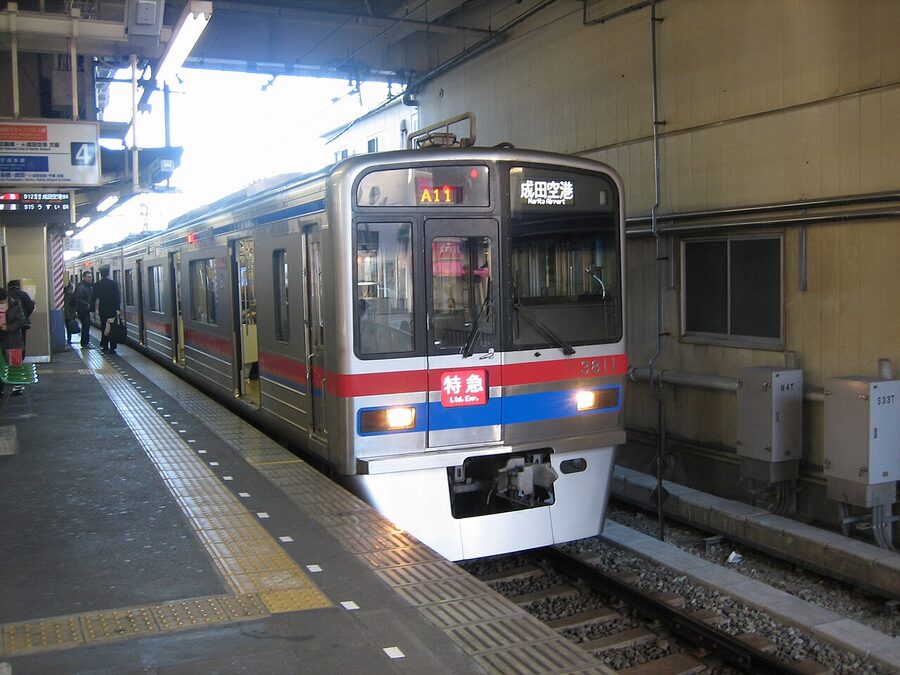
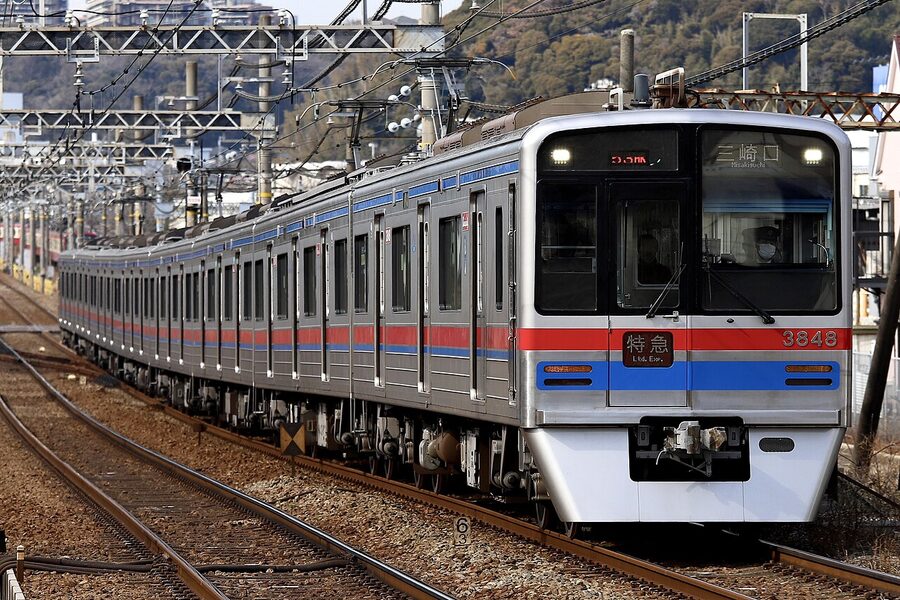
- 3700 and 3050: the international-standard era
- Riding Keisei today
- From the airport
- To the airport
- Outside the airport flow
- Funabashi: the network you don’t notice
- The Shin-Keisei absorption, 2025: closing a wartime loop
- What Keisei is, in 2026
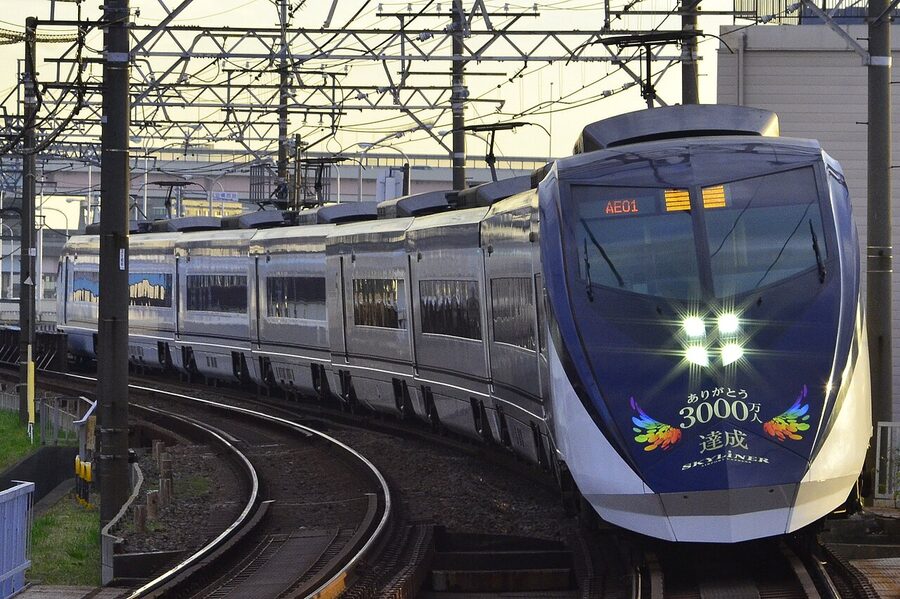
That is the long arc of the Keisei Electric Railway in one paragraph: a regional pilgrimage line that survived two world wars, the largest re-gauging in Japanese rail history, an oil shock that nearly killed it, and ended up as one of two operators that move travellers between Tokyo and the country’s main international airport. The other is JR East. Keisei has been winning the matchup, slowly, for fifteen years. This is the story of how it got there, and what it cost.
Why this railway is the one airport story worth reading
If you read about Tokyo’s private railways at all you read about the big six: Tokyu, Tobu, Seibu, Odakyu, Keio, Keisei. Keisei is the one usually mentioned last. It is the smallest of them by route length (179 km after the Shin-Keisei absorption in 2025), it has only one prefecture mostly to itself (Chiba), and unlike the others its “decisive era” was not laying track or building department stores in the 1920s. Keisei’s decisive era began on 21 May 1978, the day Narita Airport opened to scheduled traffic, and a railway founded to serve a temple suddenly found itself with a different reason to exist.
That pivot is what makes Keisei’s history readable. Tobu and Tokyu and Odakyu are operator stories about commuter sprawl. Keisei is an operator story about a corridor: Tokyo, Funabashi, Narita. One corridor, three reasons to ride. The temple. The airport. And after 2010, the choice between the two routes Keisei runs to that airport. If you have read the Tokyu piece, the comparison is striking; Tokyu makes most of its money from real estate around its commuter stations and the trains are an asset class for a property company, and Keisei makes most of its money from a single 51 km bypass line built to shave 15 minutes off an airport journey.
The pilgrimage railway: 1909 to 1930
Japanese railways founded around the turn of the twentieth century were almost all built to take pilgrims somewhere. Keio was originally Tamagawa River day-trippers from Shinjuku. Hankyu was Takarazuka. Odakyu was Enoshima. The Keisei founders looked at the Narita Railway, a JNR-run steam line that had been running since 1897 and brought pilgrims to Naritasan Shinshoji from Sakura, and decided there was a better business in connecting Tokyo direct to Naritasan with electric trains.
The temple that mattered
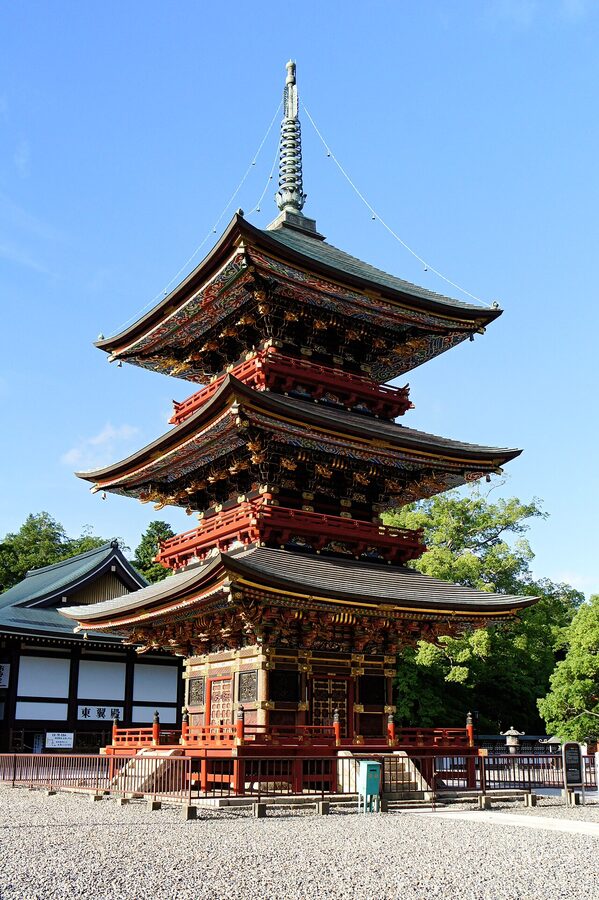
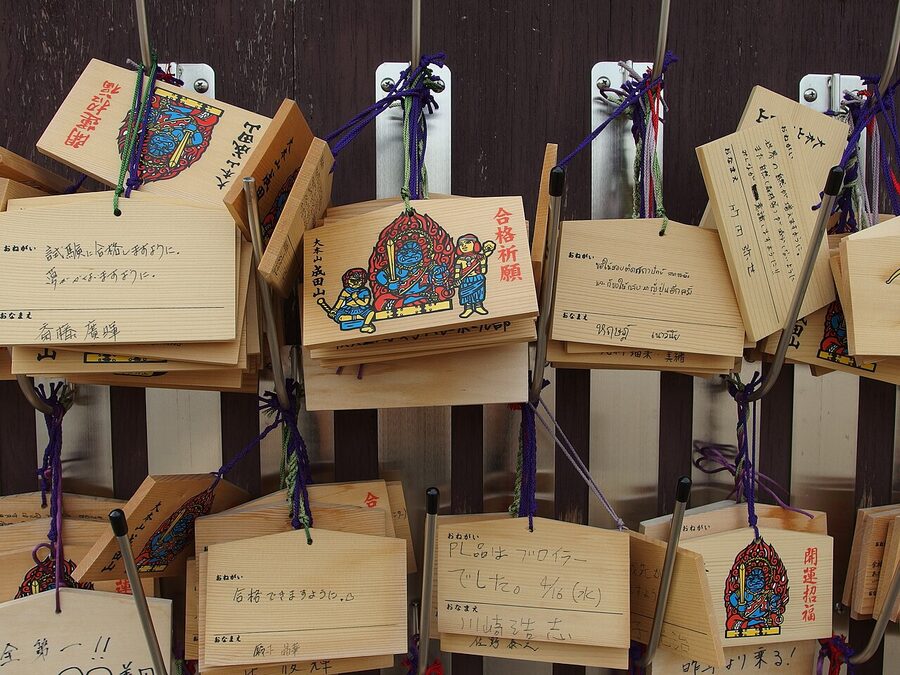
Naritasan Shinshoji is not on the average traveller’s radar today, but for most of the Edo period it was one of the half-dozen largest pilgrim destinations in eastern Japan. It is a Shingon Buddhist temple founded, by tradition, in 940; the principal image is a Fudo Myo-O statue carved by Kobo Daishi himself, or so the temple says. By the 1880s the journey from central Edo took the better part of a day; by 1909, when three competing groups applied for licences to build an electric line direct from Tokyo to Narita, the temple drew over a million pilgrims a year. Three becoming one, the consortium that emerged registered as Keisei Electric Tramway (“Keisei Denki Kido”) on 30 June 1909. The name combined the kyo of Tokyo with the nari of Narita, read in their classical forms.
First trains, in the wrong order
The first construction phase opened on 3 November 1912, between Oshiage and Ichikawa (with a Sumida-River ferry crossing for the first year while the bridge was finished) and the short branch from Magarikane (now Keisei Takasago) to Shibamata. Capital had been hard to raise after the Russo-Japanese War recession; the company spent its first decade extending the line eastward toward Funabashi (1916), then Chiba (1921), then finally Narita (1926). Notice the order. The line that was supposed to take pilgrims to Naritasan opened the Naritasan end last. The 14 years between licence and Narita arrival are the company’s first formative period: a regional Chiba operator that funded itself by carrying ordinary commuters east while it pulled together the capital to finish its actual purpose.
The 14 years also taught the company a lesson it never forgot: in this business, infrastructure is fixed and slow, traffic is variable and fast, and you build for the long-term destination even when the short-term is not paying for it. That instinct will reappear in 1968, when Keisei applies for a Narita Airport licence ten years before the airport opens, and again in 1990, when it begins planning the Sky Access bypass twenty years before the line carries a paying passenger.
Reaching the city: Ueno, 1933, and the bribery scandal
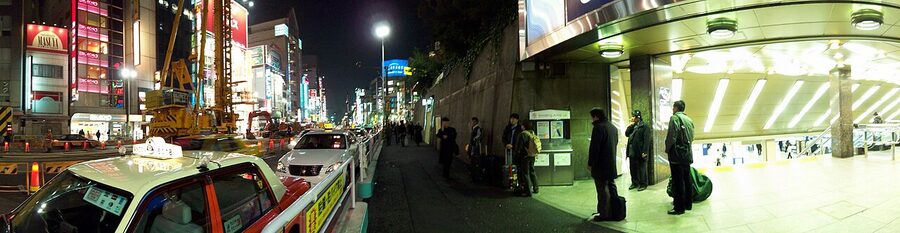
Reaching Naritasan in 1930 was the long objective. The harder problem, and one Keisei was clumsier about, was reaching central Tokyo. The original Tokyo terminus at Oshiage required a tram transfer to get into the central wards. Keisei wanted Asakusa.
The Asakusa scheme that killed itself
So did Tobu, with whom Keisei had been competing for the Asakusa terminus since the late 1920s. In September 1928 Keisei’s lobbying of Tokyo City Council members to grease the line extension turned into the “Keisei Train Bribery Affair” (Keisei Densha Gigoku Jiken). The president, the executive director, and several senior staff were arrested. The Asakusa plan died with the case. Tobu took the prize, opened its line into Asakusa in 1931 (covered in the Tobu Railway history), and Keisei spent the next five years scrambling for an alternative.
The detour through Tsukuba
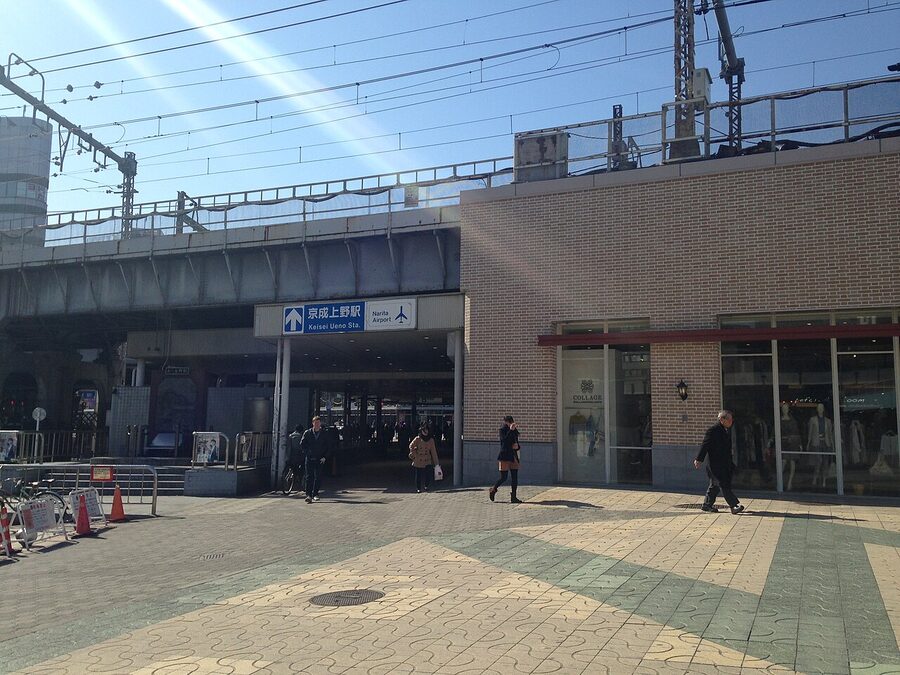
The alternative came from absorbing a smaller railway. The Tsukuba High-Speed Electric Railway held a licence for a Nippori–Tsukuba line that had never been built. Keisei swallowed the Tsukuba company in October 1930 and used its licence to build a new section: Aoto to Nippori (December 1931), then Nippori to Ueno-koen, the present Keisei Ueno (10 December 1933). The Nippori–Ueno stretch was an underground tunnel beneath Ueno Park, the first time a Tokyo private railway had run a suburban service through the city in a tunnel of its own. It was an awkward solution. Keisei Ueno is across the JR concourse from Ueno proper, with the Yamanote Line nominally connecting; in practice you walk under the park. The reach into the central wards was finally there, but it was less convenient than the Asakusa approach Keisei had failed to win, and it stayed less convenient until 1960.
The interwar diversification, and the war
Two things to note about Keisei in the 1930s. The first is that the bribery scandal sent the management cautious; the second is that, like every other Tokyo-area operator, the company became something more than a railway. Keisei opened a meat-processing factory at Makuhari in 1936 (the “Keisei Ham” brand survived into the 1960s), built a department store, ran the original Yatsu amusement park (predecessor of the Tokyo Disneyland subsidiary it would later acquire), and became the largest shareholder of the Tokyo Yomiuri Giants baseball club. Bus services proliferated. By 1942, when the Land Transport Coordination Law forced the consolidation of competing operators, Keisei was the designated core operator south of the Joban Line for bus and tramway integration.
The wartime losses
The same law cost Keisei its Sobu Railway (second instance) subsidiary, which was absorbed by Tobu, and its Joto Electric Tramway, which went to Tokyo City Tram. The loss of the second Sobu Railway is the reason, after the war, Keisei moved aggressively to get its own line back into the same corridor; that line is the Shin-Keisei (now Matsudo Line) which the company finally absorbed back in April 2025. In a stranger episode, the Imperial Navy and the Railway Ministry ordered Keisei to build and operate a 77 km railway on Sulawesi (then called Celebes) and a 42 km line on Borneo, both for the occupation administration. Keisei’s Sulawesi subsidiary built 8.6 km before the war ended; the Borneo project laid 10 km. Both were abandoned in August 1945. There is no plaque, no memorial, nothing visible at any Keisei station today; this is not a story the company tells about itself, but the JA Wikipedia entry preserves the records.
The gauge wars: 1372 mm, then 1435 mm in 50 days
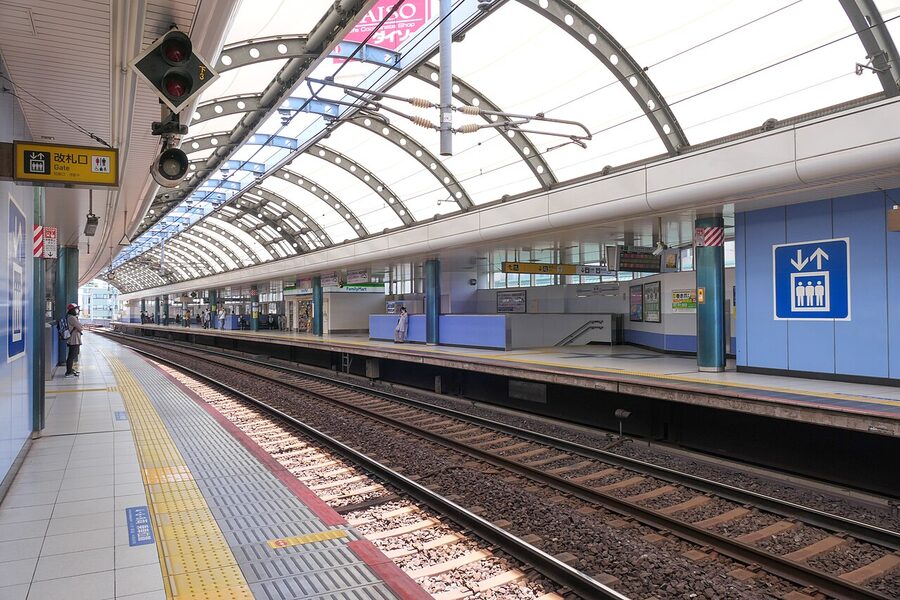
This is the part of Keisei’s history that rail-history people quote most often, and it deserves the attention. In June 1957 the Ministry of Transport made a decision that determined the next thirty years of suburban Tokyo: the central Tokyo subway lines would be built and run by the Eidan (later Tokyo Metro) and the Tokyo Metropolitan Government’s Bureau of Transportation (Toei), and the suburban operators would through-run their trains onto the subway from the outer ends. The first such pairing was Toei’s Line 1, the Asakusa Line. Keio, Odakyu, and the others would follow on later subways. Keisei was paired with the line that became the Toei Asakusa Line, and the southern partner on that pairing was Keikyu. Through-running with Keikyu meant a Keisei train would board a Keikyu rail somewhere south of Asakusa.
Why the gauge mattered
The two operators’ track gauges did not match. Keisei ran on 1,372 mm, the “Scotch gauge” or “Tokyo gauge”, originally adopted because it allowed running through Tokyo’s tram network. Keio ran 1,372 mm too and still does today. Toei’s Asakusa Line is 1,435 mm, the international standard, because that is what Keikyu had used since its founding in 1899 (the Daishi Electric Tramway opened on 1,435 mm; the line that became the Keikyu Main Line has stayed there ever since). Toei built its line to Keikyu’s gauge. Keisei, the only one out of step, had to switch.
50 days, 11 phases, 13 sections
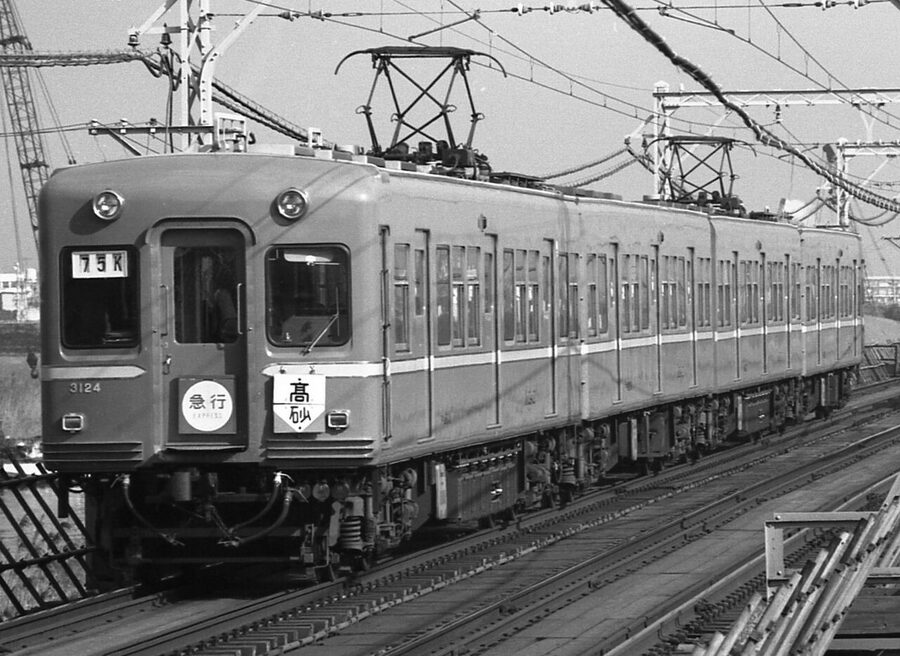
Keisei did the conversion in 50 days while continuing service. The work ran from the night of 9 October 1959 to the morning of 1 December 1959. Engineers divided the network into 13 construction sections, scheduled in 11 phases, each phase converting one or two sections in a tightly choreographed sequence so that no part of the line was offline for more than 48 hours and the connecting traffic could be diverted via the surviving narrow-gauge segments. The fleet was converted concurrently: bogies swapped overnight at Sogo and Tsudanuma depots, in some cases reusing a stock of 1,435 mm bogies the company had been quietly accumulating for two years. By the standards of Japanese railway history this remains the largest re-gauging ever attempted on a working line. JR group records (which include the long history of Imperial Government Railway gauge debates of the late nineteenth century) do not produce an equivalent.
The first through-running with the subway began on 4 December 1960, three days late but with the gauge done. The pattern Keisei established here is now the standard for almost every Tokyo suburban operator: trains start at Keisei Narita or Narita Airport Terminal 1, run via the Oshiage Line onto the Toei Asakusa Line, then switch onto the Keikyu Main Line south of Sengakuji, and end at Misakiguchi or Keikyu Kurihama, 200 km from where they started. A train number that doesn’t change. A driver swap at Oshiage. Three operators, one ticket, no transfer.
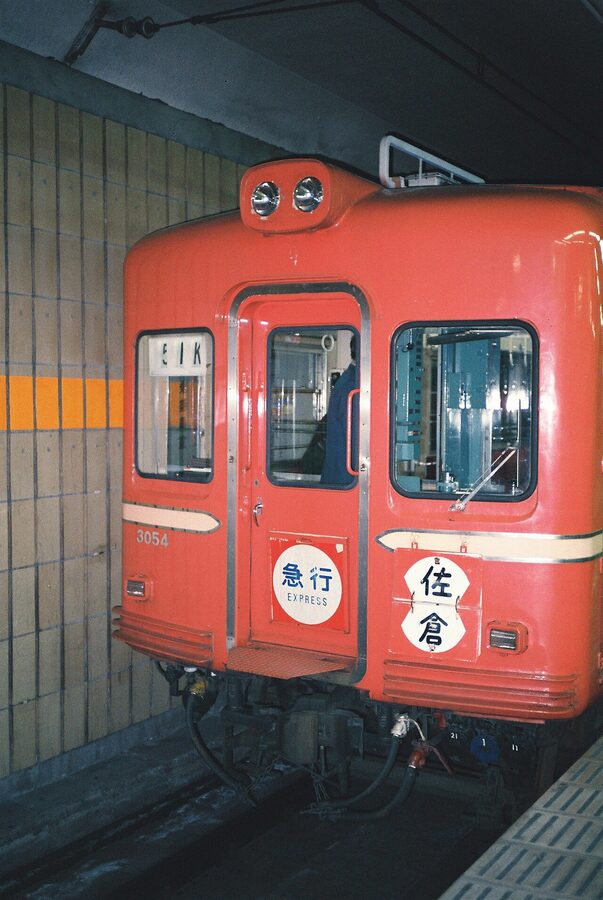
1973 to 1978: the Skyliner that had nowhere to go
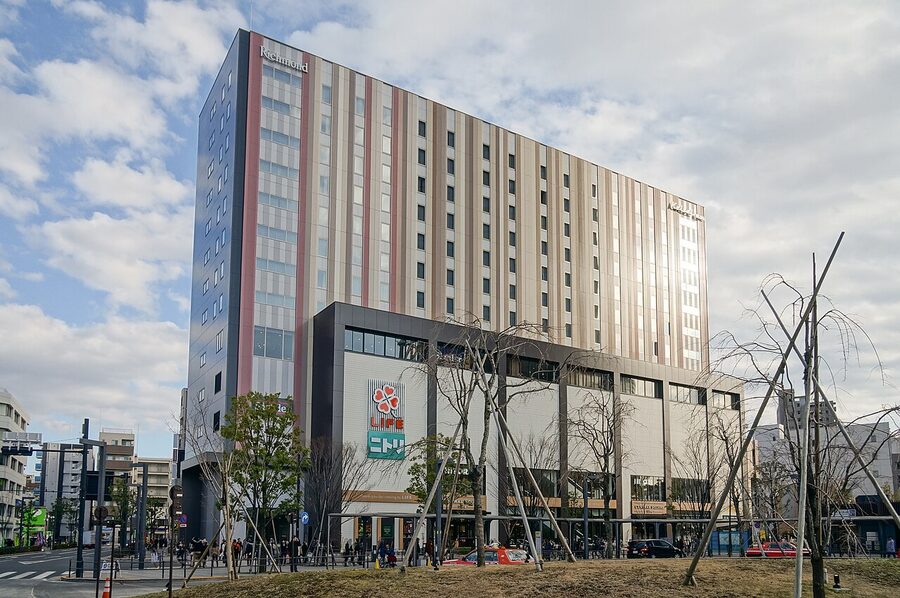
By the late 1960s the Japanese government had committed to a new international airport for Tokyo. The site was Sanrizuka, north of the existing Keisei main line at Narita; the project was the Narita International Airport (now Narita New Tokyo International Airport, currently Narita International Airport). Keisei filed in December 1968 for a licence to build a connecting line from its Narita branch to the airport. Construction began in November 1970, finished in November 1972, and was ready to go.
The first Skyliner, 1973
The original AE series was delivered in 1972 and entered service on 31 December 1973 as the Skyliner. The branding was a deliberate echo of the JNR Hikari Shinkansen marketing of the 1960s: a flagship, premium-fare, reserved-only train, designed to feel like the airport was the destination it was being run for. The line opened from Keisei Ueno to Keisei Narita and an interim turnback at the new Narita Airport Station (today’s Higashi-Narita Station, three minutes’ walk from no airport at all).
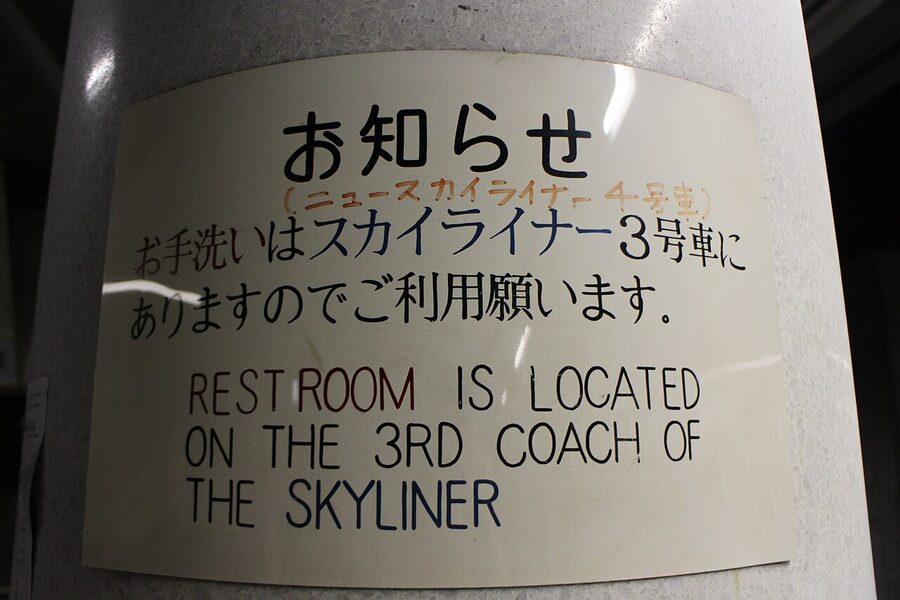
Six years on hold
The airport itself did not open. The Sanrizuka Struggle (the prolonged farmer-and-leftist opposition to land seizures, which delayed Narita’s opening to 1978) meant Keisei’s new airport line had nowhere to take its passengers. The AE series sat in storage at Sogo depot for most of 1973 to 1978. The crews ran familiarisation drills with empty trains. The fleet aged before earning a yen. When Narita finally opened on 21 May 1978, after the watchtower siege of the same year, Keisei’s airport service began the same day, with five years of paid AE depreciation already booked.
This is the financial story behind everything that follows. Keisei lost so much money on the airport line during the delay, on capital invested but unearned, that it carried the loss on its balance sheet through the late 1970s and into the early 1980s. Combined with the 1973 oil shock, then with aggressive land speculation in northern Honshu and Hokkaido (a diversification strategy meant to reduce dependence on the railway), the company entered the 1980s deeply impaired. The 1977 fiscal year was the first dividend-suspension year. By 1983 cumulative losses had reached ¥28.1 billion. Among the major postwar private railways, Keisei is the only one that ever lost a decade.
The dark decade, 1980 to 1990
You cannot understand the company that built Sky Access in 2010 without understanding the company that nearly went bankrupt in 1983. The recovery plan announced in October 1980 included a 25 percent staff cut, the closure of the Keisei Department Store chain, the disposal of the Yatsu amusement park land for housing, and the sale of the Tsudanuma rolling-stock works to a third party. Keisei withdrew from the Japan Private Railway Association in March 1980 and conducted its own wage negotiations outside the spring offensive. Strikes followed. Service degraded. Through the 1980s Keisei was the cautionary tale of postwar private railways.
What saved the company
Two things, working together. The first was a 22 percent stake in a Chiba real-estate subsidiary called the Oriental Land Company, which Keisei had taken in 1960 as part of a Chiba-prefecture coastal-development venture. Oriental Land won the bid to license Disney content for a Tokyo theme park; Tokyo Disneyland opened on 15 April 1983. The cash flow from the Oriental Land dividend, after Disneyland scaled, lifted Keisei’s consolidated accounts even when the railway alone was still bleeding. By 1988 Keisei booked its first ordinary profit in twelve years; by the second half of 1989 the cumulative deficit was cleared.
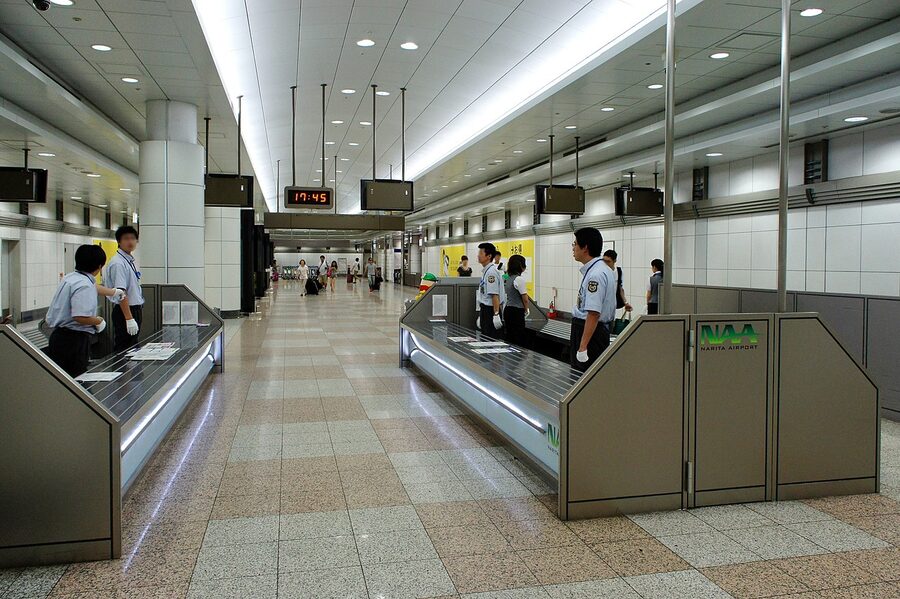
The second thing was the airport line itself, which slowly turned profitable as Narita traffic grew. The original Skyliner termination at Higashi-Narita (a kilometre from the terminals, requiring a transfer to a courtesy bus) was replaced on 19 March 1991, when JR East and Keisei jointly opened a new underground Narita Airport Station directly under Terminal 1. The old terminus became Higashi-Narita and continues to handle the Shibayama Railway shuttle. Terminal 2 followed in 1992 with its own underground station. From 1991 Keisei could quote “direct to the airport, no transfer” against JR’s Narita Express in honest comparison.
The AE100, 1990 to 2010: the second-generation Skyliner
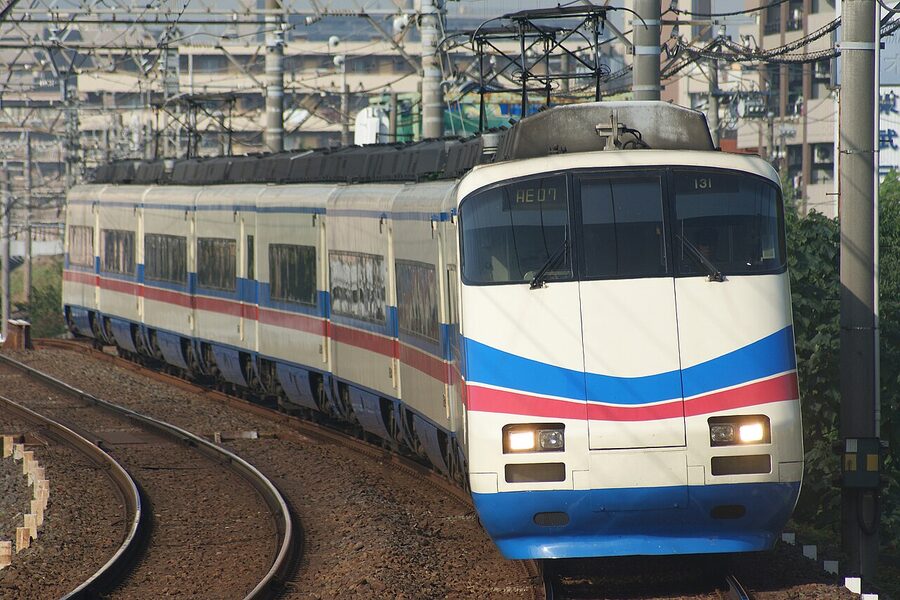
The original AE was retired in 1993, replaced by the AE100 series introduced in June 1990. The AE100 was the train that ran the “new” Narita Airport Skyliner from the day Terminal 1 service began. It was a six-car set, 110 km/h top speed, with reclining seats, a wash basin in every car, a wheelchair area, and a checked-luggage rack. It was also, by global airport-rail standards, slow. The Skyliner from Ueno to Narita Airport via the Keisei Main Line was a 60 to 65-minute trip. The Narita Express, JR’s competing service from Tokyo, ran 53 to 60 minutes. The Skyliner cost less but did not win on time, and JR through the 1990s ran an aggressive marketing campaign on the comparison.
The Cityliner role
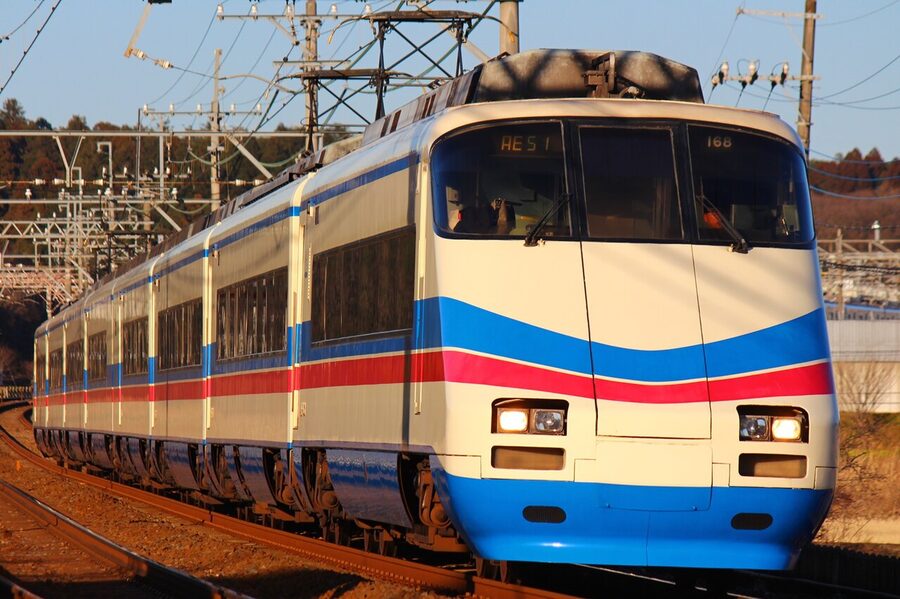
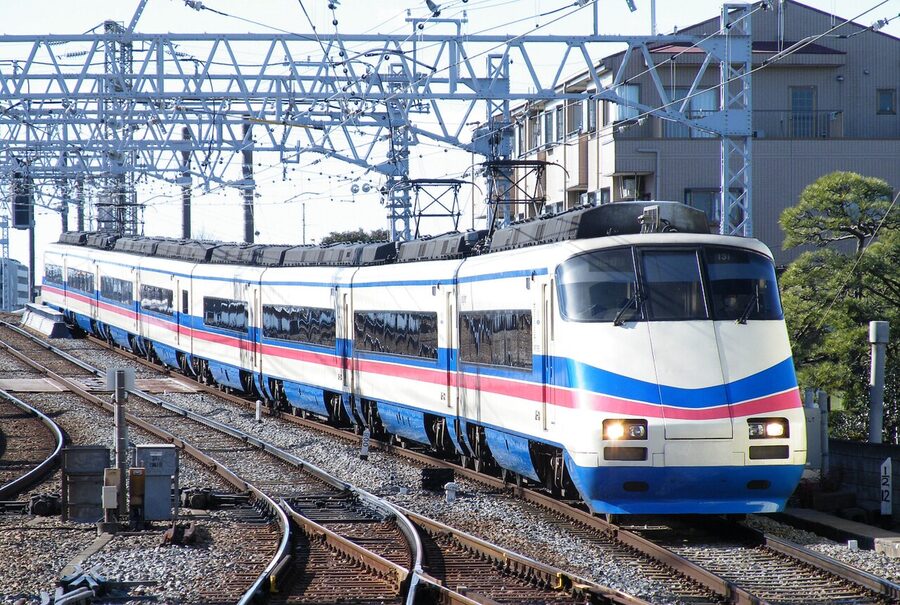
When the new AE took over the Skyliner role on the Sky Access in July 2010, the AE100 fleet did not retire; it slid into the Cityliner role on the older Keisei Main Line, calling at Nippori, Aoto, and Keisei Funabashi en route to Keisei Narita. That role lasted six more years; the AE100 was finally retired in 2016. Even today the AE100 has a quieter following than the original AE among Japanese rail enthusiasts, partly because the run sheet was a workmanlike one (the airport job, then the Cityliner job, then retirement) without a defining moment. It is the train of the dark-decade-recovery years rather than the train of any specific triumph.
The Sky Access gambit, 1990 to 2010
The Cityliner reassignment is the marker for what changed. From 1990 onward, the airport-line corridor was a problem Keisei could not solve with rolling stock alone. The Main Line winds north out of Tokyo, hits Funabashi, swings southeast through Yachiyo, then east to Narita. The route is pretty, the route is full of paying commuters, and the route is too long. The Narita Express took a more direct line via the Sobu Main Line and the Narita Line, and a 60-minute Skyliner could not match it.
The new high-speed bypass
The plan that became the Narita Sky Access (officially: Keisei Narita Airport Line) was approved by the Ministry of Land, Infrastructure, Transport and Tourism in October 2003. The line would branch off the Keisei Main Line at Keisei Takasago, run north and east through the Hokuso Railway’s line as far as Inba-Nihon-Idai, then continue on a newly built section to a new Narita-Yukawa Station, on a new alignment, joining the existing Narita Airport line just outside the airport perimeter. Total length: 51.4 km, of which only the Inba-Nihon-Idai to Narita-Yukawa section was actually built fresh. The trick was using existing Hokuso track for most of the route, a four-operator infrastructure deal that took most of the 2000s to negotiate.
Four operators, one line
The track ownership of the Sky Access is unusual: Hokuso Railway owns the Keisei Takasago to Komuro section, Chiba New Town Railway owns Komuro to Inba-Nihon-Idai, Narita Rapid Railway owns Inba-Nihon-Idai to a junction near the airport, and Narita Airport Rapid Railway owns the airport approach. Keisei is the operating company on the entire 51.4 km, paying track-access charges to all four owners under a Type 2 railway operator licence. The arrangement ensures Keisei runs the trains without owning all the infrastructure, which was the only way to assemble the route inside Japan’s railway-business law without nationalising or buying out the existing Hokuso passenger operations.
The 160 km/h section
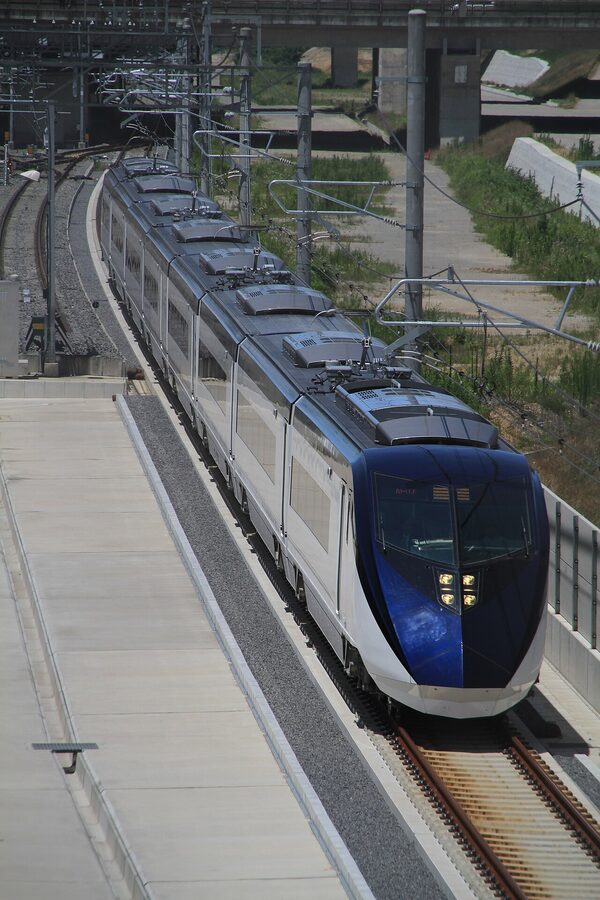
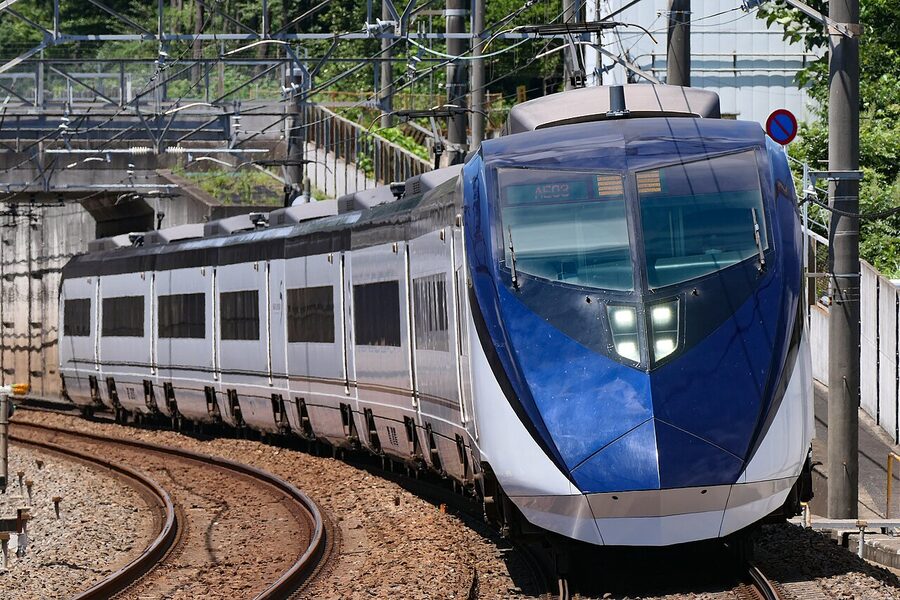
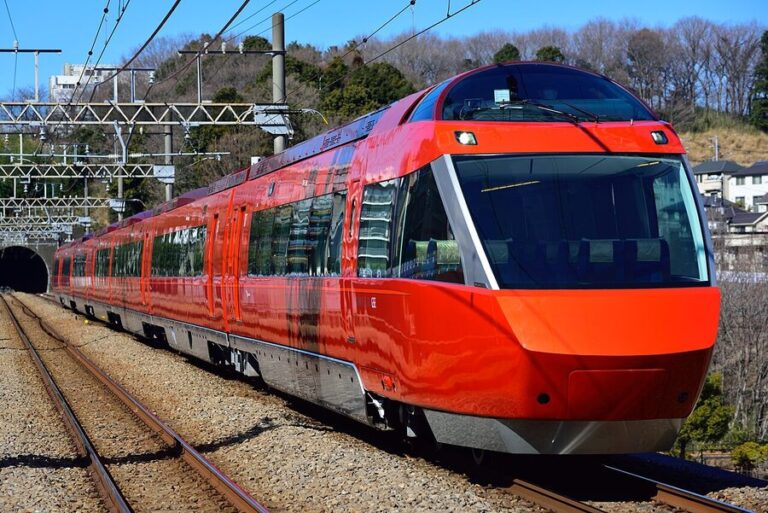
The new section between Inba-Nihon-Idai and Airport Terminal 2·3, 33 km of newly laid alignment, was designed for a 160 km/h running speed. That figure is a deliberate choice. It was the highest speed the Ministry would licence on a non-Shinkansen line; it was the speed JR East was running on its own Tsugaru Strait crossing; it was the speed at which Keisei could comfortably drop the Tokyo–Narita time below 40 minutes and beat the Narita Express on the timetable for the first time in two decades. The new AE series, designed by the fashion designer Kansai Yamamoto and built jointly by Nippon Sharyo and Tokyu Sharyo between 2009 and 2010, went into service on the opening day, 17 July 2010.
What 160 km/h gets you
The end-to-end time from Keisei Ueno to Narita Airport Terminal 1 dropped from 56 minutes (best time on the Main Line) to 41 minutes via Sky Access. From Nippori, where most travellers actually board because Nippori has direct JR Yamanote Line connection, the time is 36 minutes. Reserved-seat fare on the Skyliner is ¥2,580 (regular base fare ¥1,270 plus ¥1,310 limited-express surcharge); Narita Express to Tokyo Station is ¥3,070 reserved. Skyliner wins on price and on time, and from Nippori it wins comprehensively. The Narita Express still has the Tokyo Station catchment, the JR Pass and the JR East Pass, and the through-running into Yokohama, Omiya, and Ofuna; for those journeys it stays competitive. For everyone else, since 2010, the Skyliner is the answer.
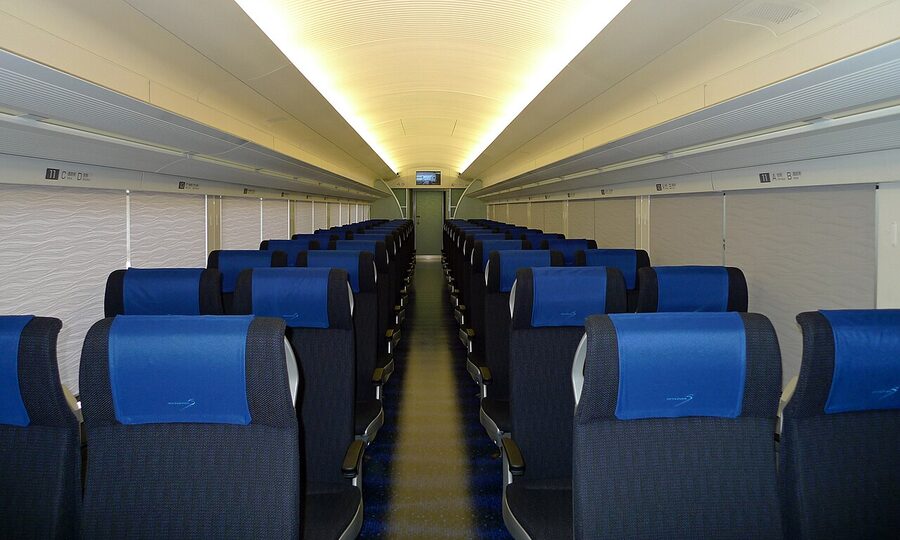
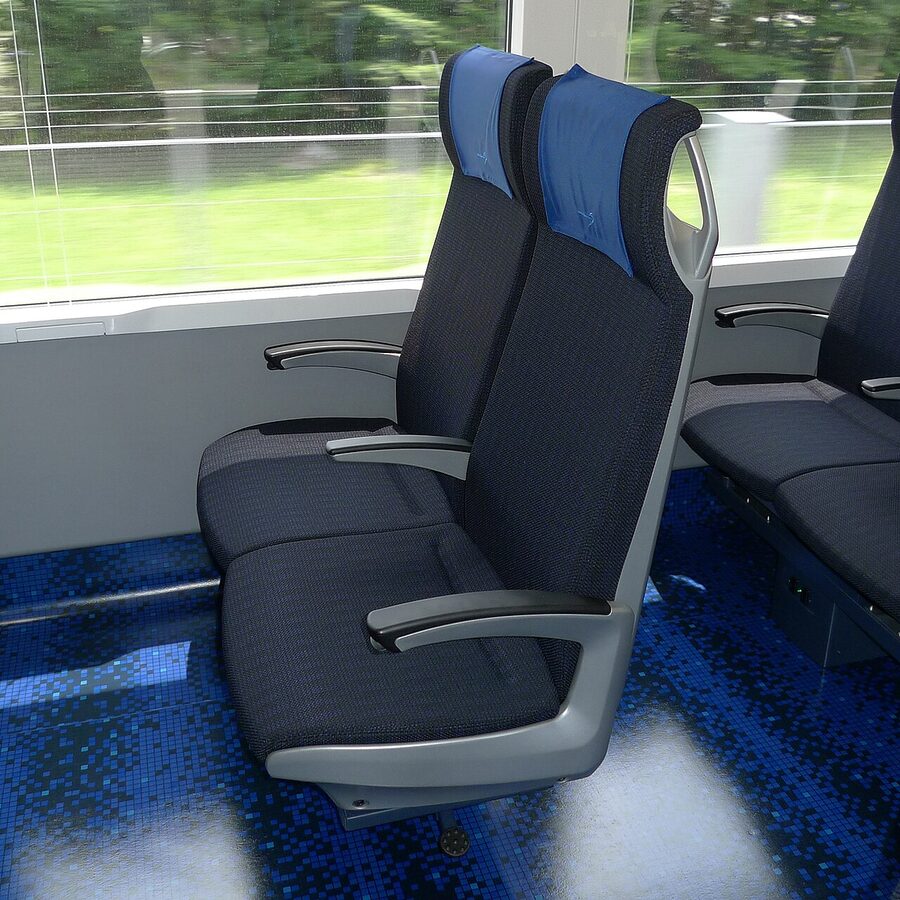
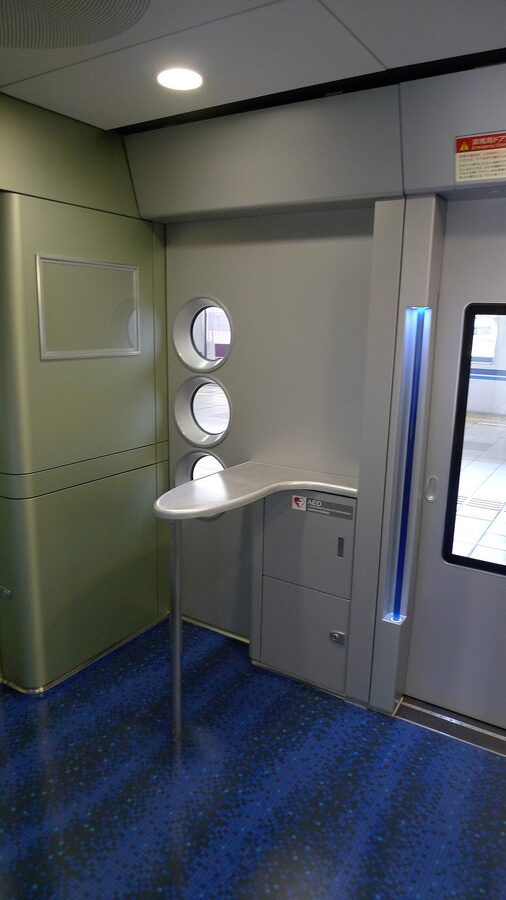
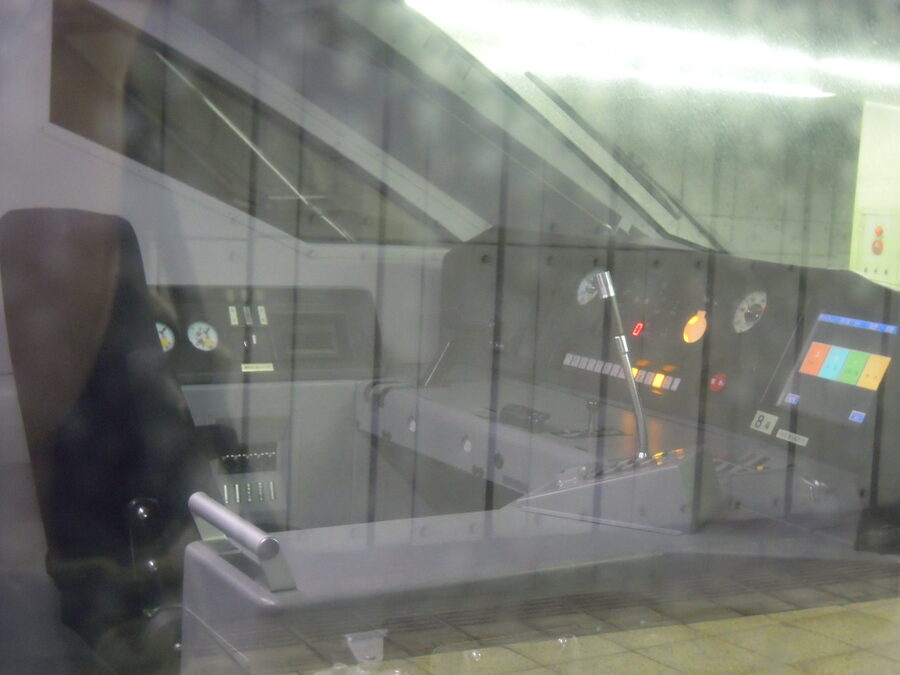
Inside the AE
The commuter fleet underneath the headline
The Skyliner is the train Keisei sells. It is not the train most riders are on. The Main Line and the Oshiage Line and the four branch lines run a commuter fleet of nine series, six of which are still in revenue service in 2026, and the through-running pattern with Keikyu via the Toei Asakusa Line is the network’s daily reality. If you are a Tokyo-resident reader rather than an airport-bound visitor, this is the layer you actually meet.
3000 series, the workhorse since 2003
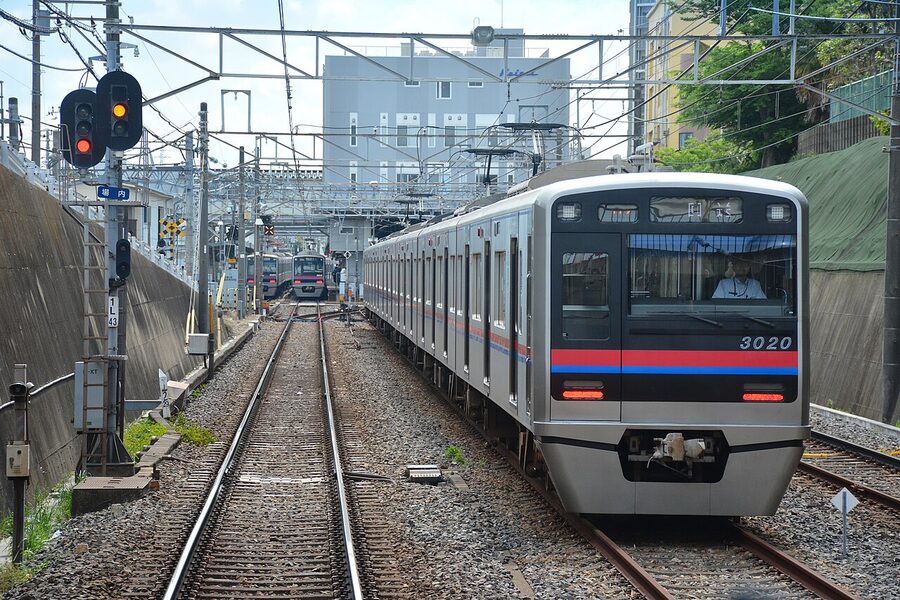
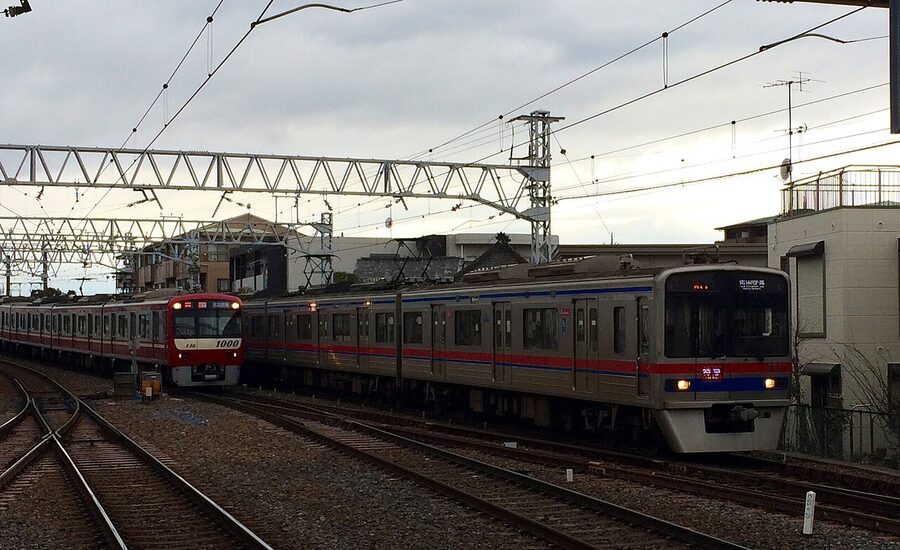
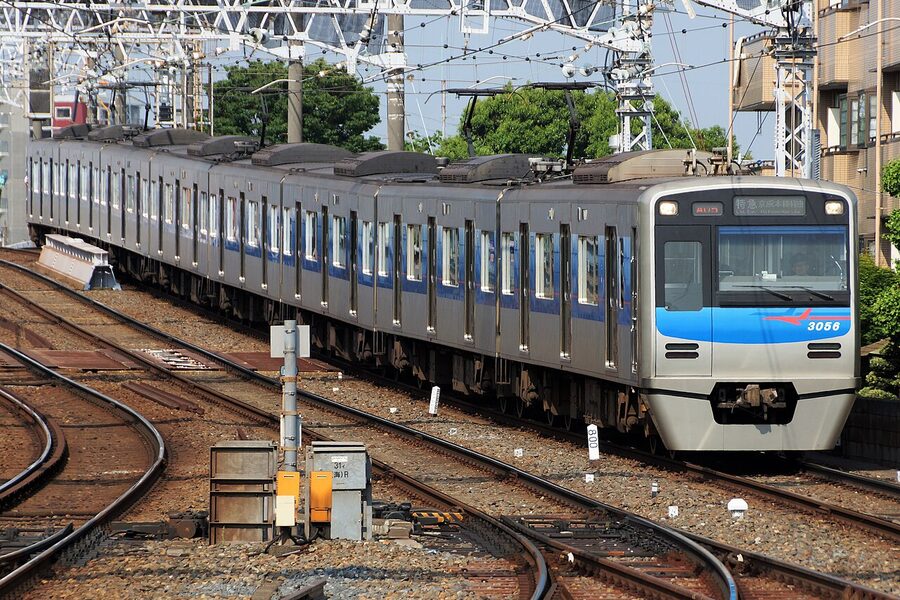
The current 3000 series, in service from 2003, is Keisei’s default workhorse. Eight-car formations as standard. VVVF inverter control, regenerative braking, full through-running spec for Keikyu Misakiguchi runs. Six pairs of doors per car (the standard for through-running with the 1,435 mm Toei trunk). The 3000 was a replacement for the 3500 series and a partial replacement for the 3600.
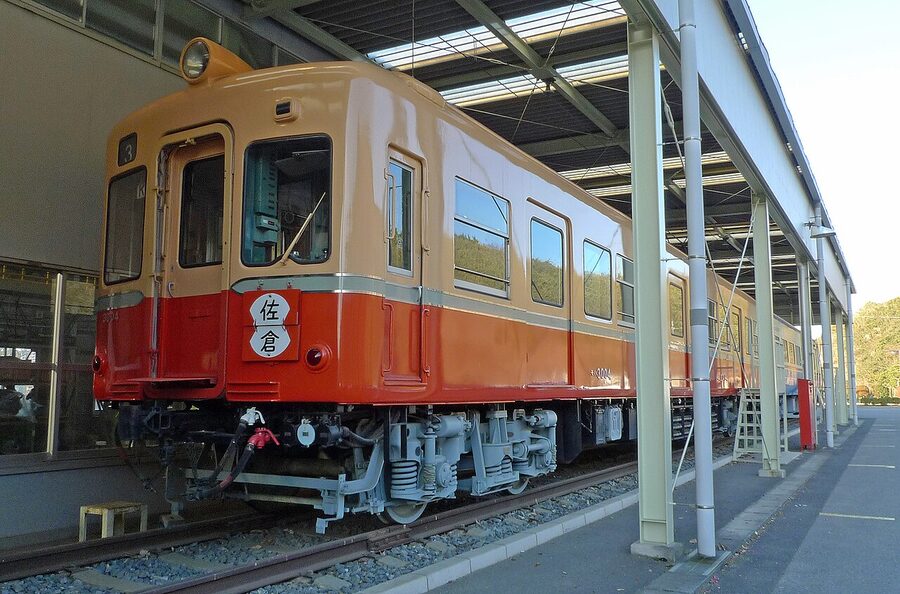
3500 and 3600: the post-regauging legacy
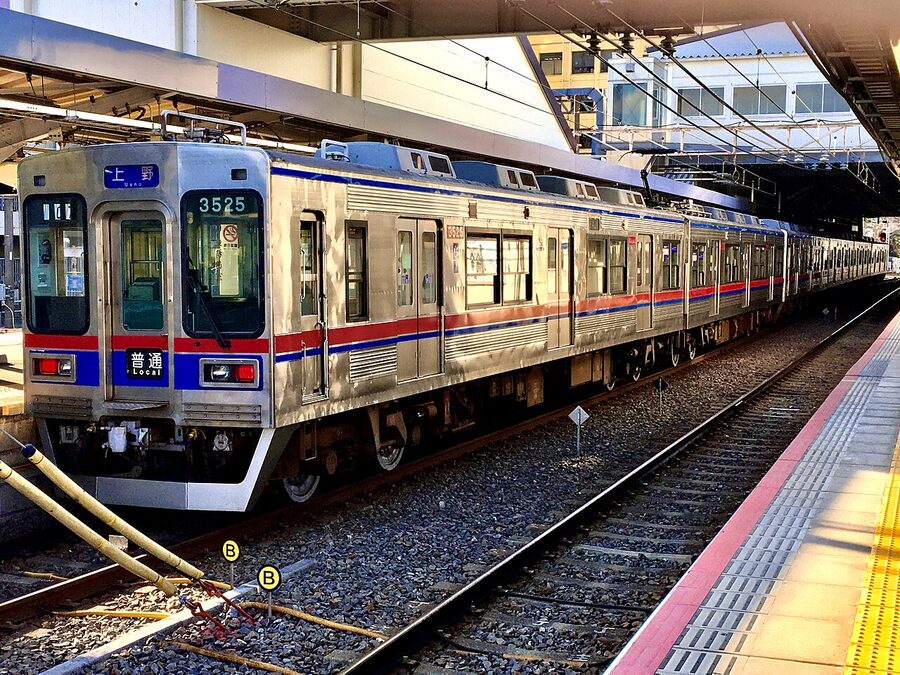
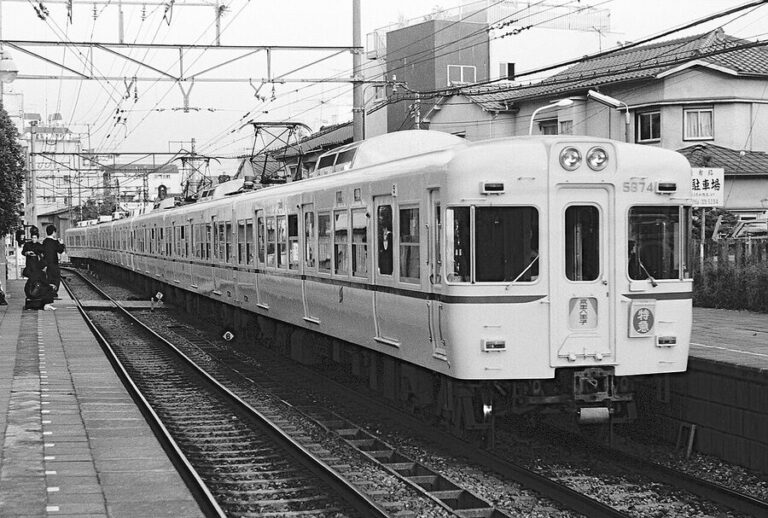
The 3500 series, in service from 1972, was the first Keisei stock built for a fully-through-running 1,435 mm operation from delivery (the older converted stock had been re-bogied in 1959, a different proposition from new construction). It carried the airport line through the 1980s recovery years and into the AE100 era. Even today, fifty-three years on, a handful of 3500 sets still run the Chiba Line shuttles between Keisei Tsudanuma and Chiba Chuo.
3700 and 3050: the international-standard era
Riding Keisei today
From the airport
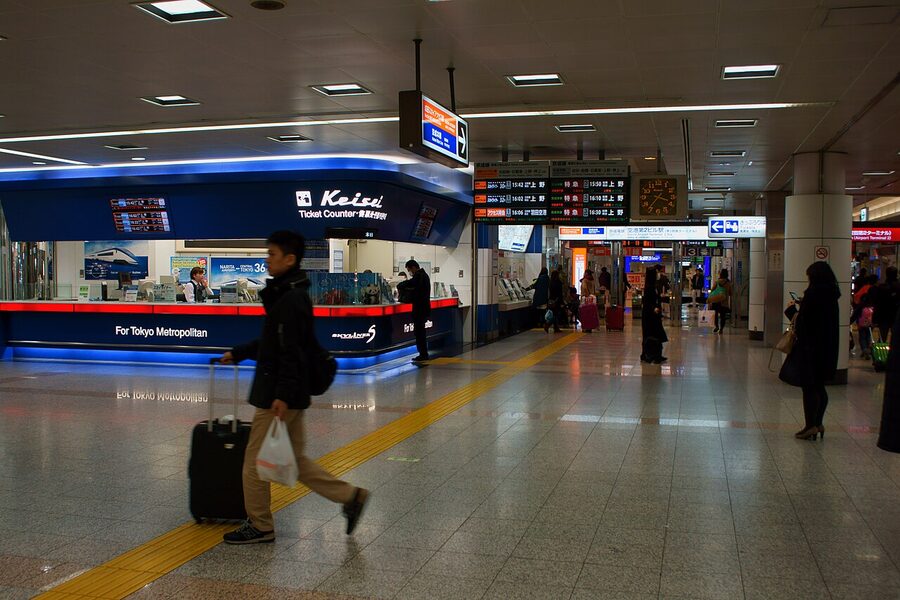
You have three Keisei choices and two competitors. The Skyliner from Narita Airport Terminal 1 to Nippori is the headline service: 36 minutes, ¥2,580 reserved (you can book online or buy on arrival from the dedicated Skyliner counter at both airport stations). Departures every 20 minutes peak, every 40 minutes off-peak. From Nippori the Yamanote Line gets you to anywhere on the central loop in 30 minutes or less.
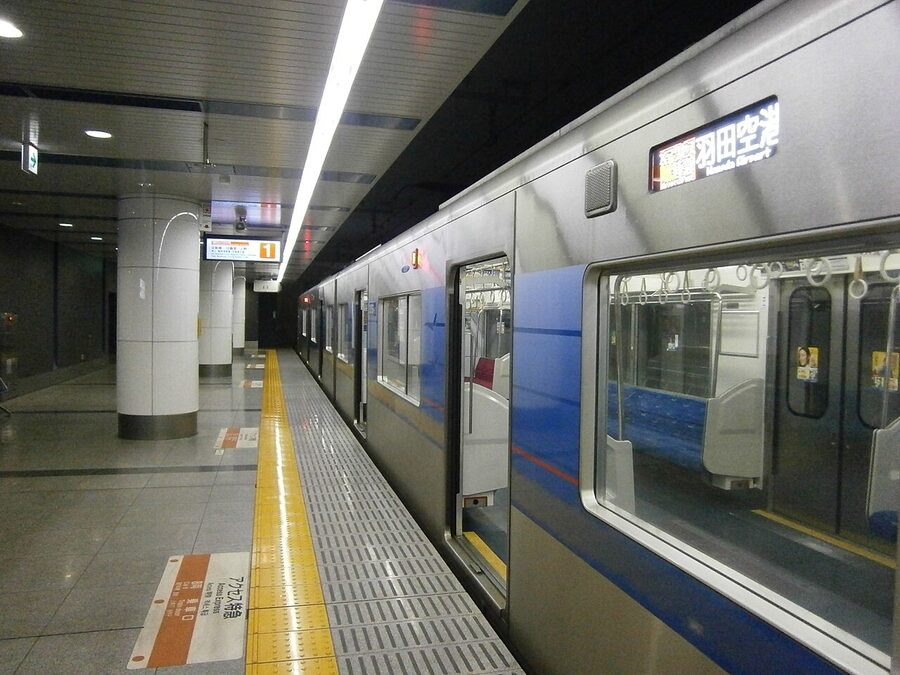
The Access Express, also via Sky Access, runs every 40 minutes and stops at intermediate Hokuso stations between Inba-Nihon-Idai and Aoto. Time to Keisei Ueno: 60 to 70 minutes. Fare without surcharge: ¥1,270 IC. If you have time and want to avoid the Skyliner cost, this is the option. The 3050 series is the train.
The third option is the Limited Express via the older Keisei Main Line, calling at Funabashi and Tsudanuma. 80 minutes, ¥1,050 IC, no reserved seats, runs every 20 minutes. This is the journey for travellers heading to Funabashi, Yotsukaido, or anywhere along the Main Line; for central Tokyo it is the slowest of the three by a significant margin.
The competitors are the JR Narita Express (Tokyo, Yokohama, Shinjuku, Omiya) and the airport limousine bus. The Narita Express is ¥3,070 reserved to Tokyo Station, slightly longer than Skyliner-via-Nippori, but it is the only direct rail service to Tokyo Station and to Yokohama; if your hotel is on the south or west side of the Yamanote loop, it remains the right call. The bus is ¥3,200 to most central hotels and gives door-to-door service; it is the right call if you have heavy luggage and your destination is not a train station.
To the airport
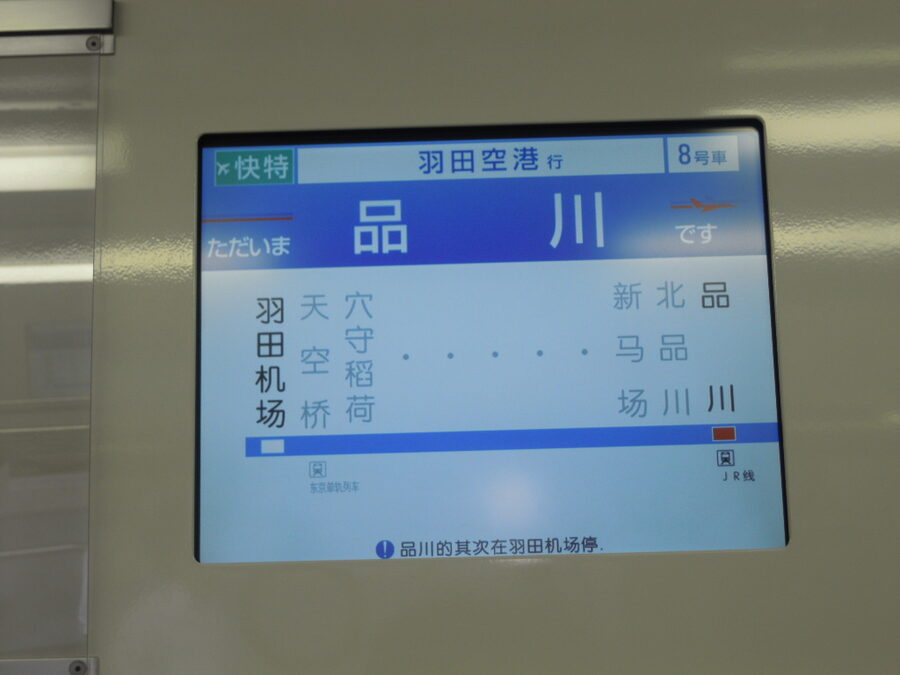
From Nippori, board on platform 1 (Skyliner) or platform 2 (Access Express). From Keisei Ueno, the Skyliner platforms are 1 and 2; signage is bilingual and the boarding gate is to the right as you face the platforms. Buy the Skyliner ticket from the dedicated machine on the concourse before boarding; the regular ticket gate does not accept the Skyliner ticket as the only fare medium (you also need a basic-fare ticket which the Skyliner machine includes in the same purchase). Suica and Pasmo are accepted for the basic fare on Access Express and Limited Express services but not on the Skyliner.
Outside the airport flow
Most Tokyo readers will use Keisei for one or two of the same set of journeys: Skyliner to Narita Airport, Access Express on the Sky Access for the Hokuso commute, Main Line east to Funabashi, Tsudanuma, or Sakura. The branch network (Kanamachi Line, Chihara Line, Higashi-Narita Line, the new Matsudo Line) is regional service for Chiba prefecture residents and not really part of the visitor map. The exception is the Kanamachi Line shuttle, which serves Shibamata, the setting for the Tora-san film series and a worthwhile half-day on its own; the Kanamachi Line ride is the closest thing Keisei offers to a leisure-rail experience inside the network.
Funabashi: the network you don’t notice
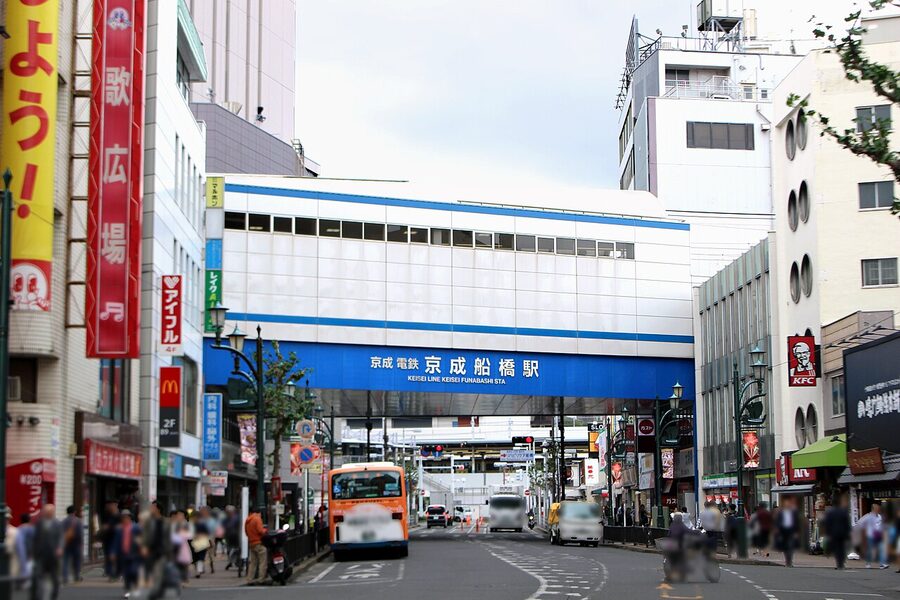
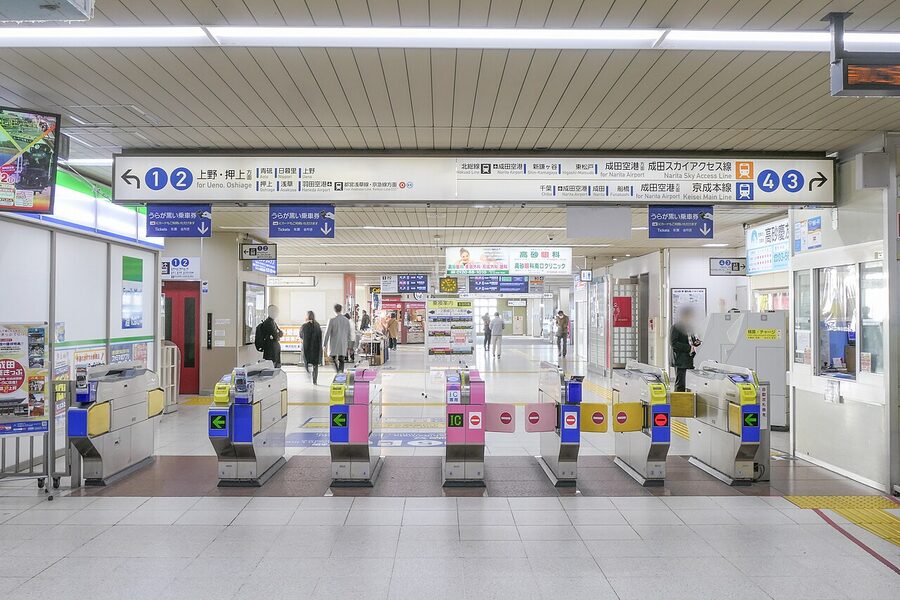
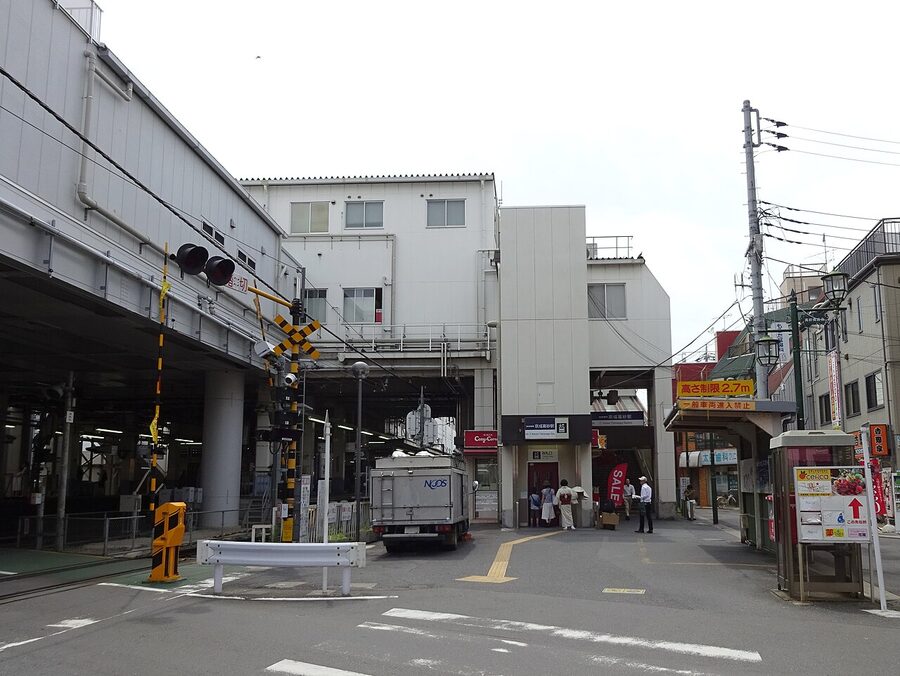
Most of Keisei’s daily ridership is at stations like this one, not on the Skyliner. Keisei Funabashi handles roughly 100,000 daily passengers; Aoto, Takasago, and Tsudanuma each handle slightly less. The Limited Express serves Funabashi every 20 minutes. The cross-platform transfer to JR’s Sobu Line takes 30 seconds. Most of the operator’s revenue, prior to the Sky Access opening, came from this kind of trip rather than the airport. After 2010 the airport corridor caught up. By 2024 the Sky Access carries roughly the same daily train-kilometres as the Main Line itself, and Skyliner revenue alone is now the single biggest contributor to the railway-business segment.
The Shin-Keisei absorption, 2025: closing a wartime loop
One last note about the company that exists in 2026. On 31 October 2023, Keisei announced it would acquire its remaining shares in Shin-Keisei Electric Railway, a 26.5 km Chiba commuter line that had been a Keisei subsidiary since 1947. The acquisition completed on 1 April 2025. The Shin-Keisei Line was renamed the Matsudo Line and absorbed into the Keisei network. The 8800 series, 8900 series, N800 series, and 80000 series Shin-Keisei stock all became Keisei rolling stock overnight.
The line itself has an unusual lineage. Most of it was originally built by the Imperial Japanese Army Railway Regiment for training exercises before and during the Second World War; the regiment laid tracks in deliberately unnatural curves to give engineers practice with difficult alignments. After the war the land and the awkward curves both passed to Keisei. When Shin-Keisei opened to public traffic in 1947 the engineers tried to straighten what they could, but even today the Matsudo Line covers 26.5 km on what would be a 16 km straight line. The regimen ghosts are still visible on the route map.
The acquisition closed a loop that had been open since 1942. Before the war Keisei’s second-instance Sobu Railway subsidiary served the Matsudo to Tsudanuma corridor; the Land Transport Coordination Law gave it to Tobu. Shin-Keisei was Keisei’s postwar replacement, and now the parent has its corridor back. The Matsudo Line trains are not standard-gauge and do not through-run with Toei or Keikyu; the absorption is an operational consolidation, not a fleet integration. But the corporate signal is clear. Keisei in 2026 is positioned for what it has been positioned for since the 1959 regauging: the Tokyo–Narita corridor, the through-running network, and a handful of regional Chiba lines to provide commuter density on top of the airport business.
What Keisei is, in 2026
It is the smallest of the Tokyo big-six private railways by route length, the only one that lost a decade in the 1980s, and the only one whose corporate identity is fundamentally tied to a single airport. Its largest subsidiary by revenue is the Oriental Land Company, which runs Tokyo Disney Resort; that fact alone tells you that Keisei is two operating companies in one balance sheet. The railway runs 179.3 km of track and the theme park runs five hotels and two parks, and the parent company stitches the cash flows together.
If you have read the Odakyu, Tobu, Keio, Toei, and Tokyu pieces, the comparative position is interesting. None of those operators bet on a single corridor the way Keisei did with Narita. None lost a decade the way Keisei did during 1980 to 1990. None made the corridor pay the way Keisei did with Sky Access. Keisei is the operator most exposed to one piece of national infrastructure (the airport) and the operator that has built the most efficient piece of rail-based airport access in the country to support it. The 160 km/h cap, the 36-minute Tokyo-to-airport time, the four-operator track-ownership puzzle, the Yamamoto-designed AE: these are not luxury features. They are the only way the airport business pays for itself, and the company knows it.
The other answer to “what is Keisei?” is shorter. It is a railway that was founded in 1909 to take pilgrims to a temple, and somewhere between Aoto and Higashi-Matsudo, on a Wednesday afternoon, it does 160 km/h to take you to a flight. The rest is what it took to get here.
Sit on the right-hand side leaving Keisei Ueno on a Wednesday afternoon. The Skyliner crosses the Horikiri Bridge over the Arakawa about ten minutes after departure. After that the speedometer climbs through 100, 130, 140. Hold the timer on your phone and clock the elapsed time at the moment the announcement says “Inba-Nihon-Idai”. From there to Narita Airport Terminal 2·3 is 18 minutes. The whole arc of the company you have just read is in those 18 minutes. The temple is somewhere off to the south. You won’t see it.


.jpg)


.jpg)


_cabin.jpg)
_seat.jpg)
_deck.jpg)
_Cockpit.JPG)
.jpg)
_at_Sougo-sandou_Rail_yard.jpg)


