
Toei: Tokyo’s Operator That Tries Things
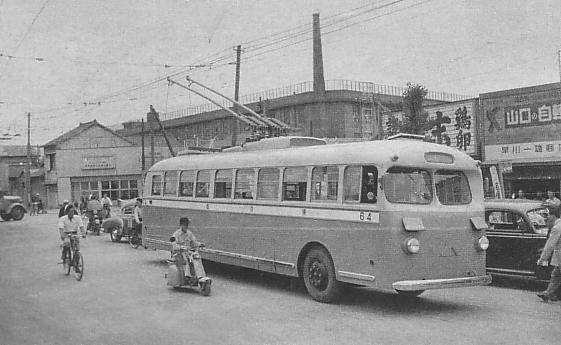
Twenty trolleybuses arrived in Tokyo in early 1952 with the wrong-side doors. They had been built for Tianjin, in northern China, where traffic drives on the right and bus passengers board from the kerb on the opposite side from a Japanese vehicle. The Korean War had broken out the summer before. Western governments, including the Japanese government under occupation policy, banned the export of electrical equipment to communist countries that summer, and the Tianjin order was stranded in a Tokyo workshop. The Tokyo Metropolitan Bureau of Transportation took the lot, swapped the doors and the driver’s seat to the other side, and rolled the rebuilt fleet onto Route 101 between Imai and Ueno on 20 May 1952. That is how Tokyo got its trolleybus network. It is also a fairly representative story about Toei.
In This Article
- Why all the strange jobs land here
- The streetcar bureau that also sold electricity
- Why “electric” and not “transport”
- The 213-kilometre tram peak
- The earthquake that produced the bus
- How an emergency measure became permanent
- 1942 and the wartime consolidation
- The trolleybus that lasted sixteen years
- The 1912 prototype that never ran
- What ran, and where it ran
- Why the trolleybus did not survive the 1960s
- The 332-metre monorail
- What “experimental” meant in this case
- The closure that took five years
- Four subway lines, three gauges, seven through-running partners
- Asakusa Line, 1960: the through-running gambit
- Mita Line, 1968: narrow gauge for the never-built Tobu link
- Shinjuku Line, 1978: the 1,372 mm horse-tram gauge
- The Oedo Line and the linear-motor leap
- Why the line ended up linear
- What you give up to get linear motor
- The naming row
- Nippori-Toneri Liner and the rubber-tyred replacement
- Why this corridor took so long
- Toei Bus, fuel cells, and the 100-year-old emergency response
- The fuel-cell programme
- Accessibility and the white-glove tradition
- The Toden Arakawa Line, sole survivor
- The 2017 cherry-blossom rebrand
- The rolling stock generations
- Riding Toei today: the Marugoto Kippu and the credit-card pilot
- The day pass that pays for itself fast
- IC cards and the credit-card pilot
- The hydroelectric afterlife
- What the bureau looks like in the mid-2020s
- Why Toei still exists separately from Tokyo Metro
- Cross-references for context
- Why all this matters to your trip
- One last thread
The bureau is the public-transport agency Tokyo uses to try things. Some of those things become the city’s permanent skeleton, like the four subway lines and the bus network with 127 routes. Others run for sixteen years and then disappear, like the trolleybus. Others run for sixty-six years and then disappear, like the Ueno Zoo Monorail. Toei has operated streetcars, buses, trolleybuses, a suspended monorail, four subway lines on three different gauges, an automated guideway, and three Tama-river hydroelectric plants. It is the only public-sector transport agency in Japan currently running four passenger modes in parallel. It is also the only one that retired two of them within living memory because the experiments did not pay off. The article below walks the timeline. The companion piece on Toei trains and rolling stock picks up where this one stops, with the current fleet line by line.
Why all the strange jobs land here
Tokyo Metro, the larger and better-known operator, runs nine subway lines and only subway lines. JR East, the largest operator in the country, runs commuter rail, Shinkansen, and a handful of niche services, but every one of them is a steel-wheel train on conventional track. The private railways, Odakyu and Tobu and Keio and the rest, each stick to their own corridor and their own engineering choices, with rolling stock and track gauge that have been stable for decades. Toei is the operator that ends up with everything else.
The reason is that Toei is not a private railway. It is a metropolitan-government bureau, ranked alongside the water bureau and the sewerage bureau, with the same legal status as a tax office. The other operators answer to shareholders or to a national-government holding structure. The bureau answers to the Tokyo Metropolitan Government, which means that when the city decides Tokyo needs an experimental monorail to study new transit ideas, or a trolleybus network to substitute for trams it cannot afford to rebuild, or a fourth subway line that demonstrates linear-induction motors in a dense urban tunnel, the bureau gets the assignment by default. No other operator is set up to take it. The corollary, which is the less-flattering half of the same fact, is that when an experiment does not earn its keep, the bureau is the one that has to live with running it until the city decides to close it down.
You see this pattern again and again across the bureau’s history. The streetcars, which were the original mission, contracted from 213 km to 12.2 km inside two decades because the city decided buses were cheaper. The trolleybuses, opened with great expectations in 1952, were closed in 1968 because diesel buses had improved faster. The Ueno Monorail, opened in 1957 to test technology Tokyo planners had read about in 1950s German engineering papers, ran for sixty-six years and never expanded beyond its 332-metre demonstration loop, then closed when the rolling stock got too old and the cost of new bespoke cars made no sense for a single short line. None of those experiments was a failure exactly. They were tests. The job of running them was the bureau’s, and so was the job of shutting them down when the test was over.
The streetcar bureau that also sold electricity
The agency was set up on 1 August 1911, when Tokyo City bought out the privately owned Tokyo Railway Company and folded the whole operation into a new municipal body called the Tokyo Municipal Electric Bureau (東京市電気局, Tokyo-shi Denki Kyoku). The first chairman was Matsuki Kan’ichirō, an electrical engineer who had run earlier municipal electrification projects in the Kansai region. His brief was simple in writing and complicated in practice: take the three competing private streetcar networks that had grown up in central Tokyo since 1903, unify them into one operator, and bring fares down for the wards that had been left behind.
Why “electric” and not “transport”
The 1911 name is a clue most readers miss. The bureau was set up to run trams, but its statutory authority covered the broader category of “electric undertaking”, which let it generate and sell electric current as well. Excess capacity from the tram network was sold to factories and households across the central wards. For thirty-one years, until wartime consolidation forced the power business out in 1942, Tokyo’s streetcars and Tokyo’s lightbulbs were the same agency’s responsibility. That detail is not a curiosity. It is the structural reason the bureau ended up a generalist transport operator rather than a railway. The same legal authority that let it sell electricity in 1911 is what now lets it run three Tama-river hydroelectric plants in the Okutama mountains. They are still on the books. More on those at the end.
The 213-kilometre tram peak
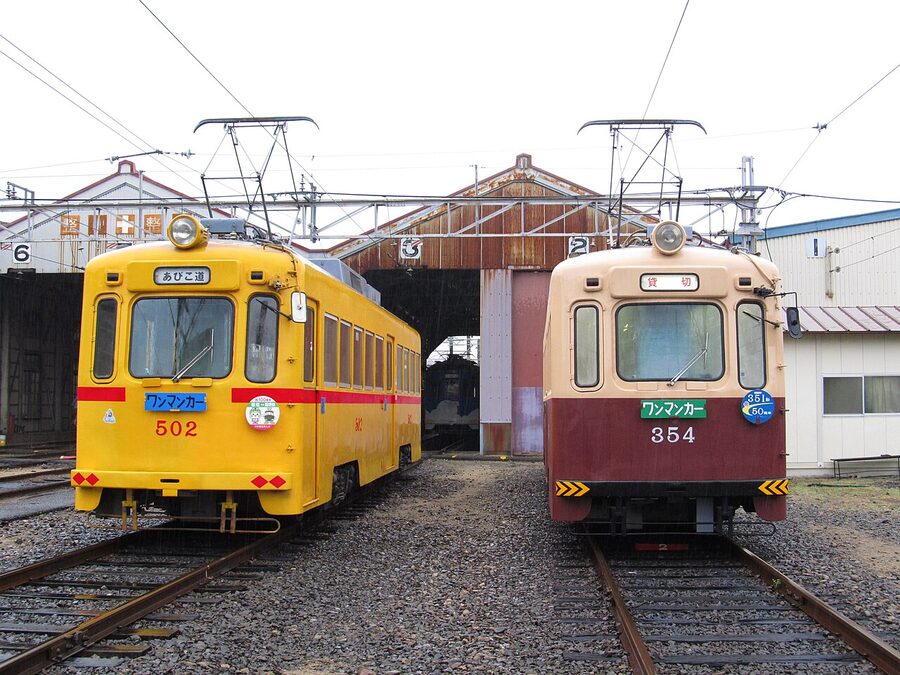
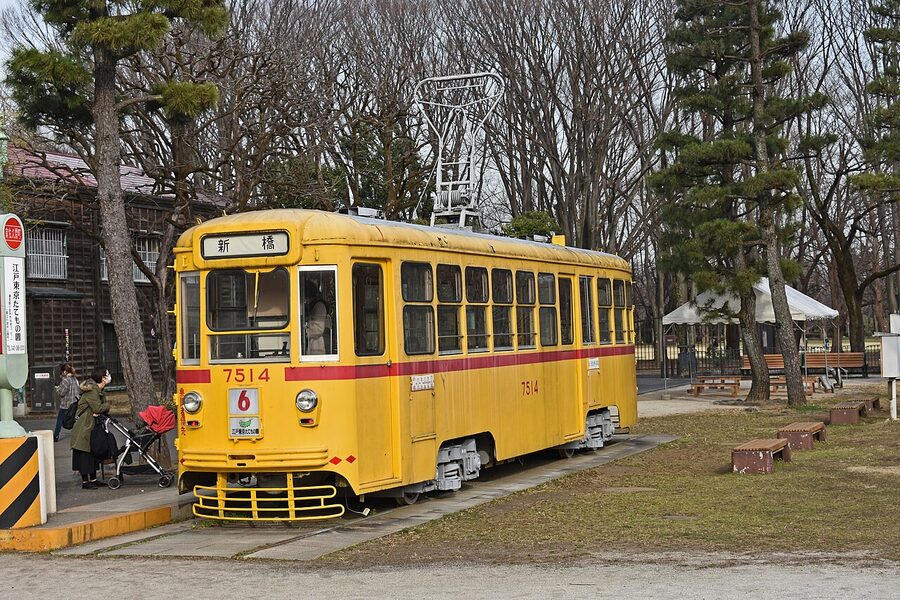
By the early 1950s the streetcar network ran 213 km of track across forty-one numbered routes inside the central twenty-three wards, carrying about 1.93 million passengers a day. Toden (都電, “metropolitan electric”) was the brand. The cars were small two-axle four-wheelers in the early decades, then larger bogie cars from the 500-series of the 1920s onward, then the 7000-series steel cars of the early 1950s that still defined the look of the network when it began to shrink. Track was laid in road margins or on shared road space; the lines competed with cars and trucks for the same intersections; service intervals were five to ten minutes on the busy radial corridors.
The earthquake that produced the bus
The Great Kanto earthquake of 1 September 1923 is the moment the bureau’s portfolio diversified. Most of the central tram network was destroyed: rails buckled or buried, depots burned, rolling stock written off in numbers nobody had time to count. Hundreds of thousands of commuters had no way to cross the city for weeks. The bureau scrambled. Replacing all that track with new rail would take years. Buses, by contrast, could be bought, fuelled, and on the road within months.
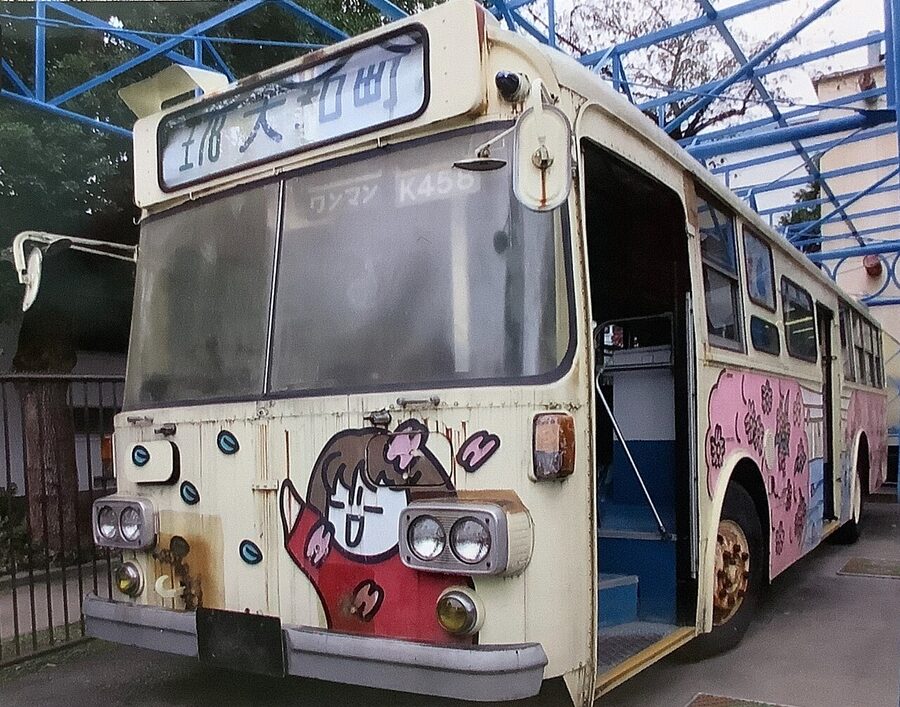
So on 18 January 1924, four months and seventeen days after the earthquake, the Tokyo Municipal Electric Bureau put eleven scheduled buses on the road as an emergency replacement service. The fleet was a tiny stopgap. It was also the start of every bus operation that has run in Tokyo’s central wards for the last hundred and one years. The bureau’s bus arm celebrated its centenary in January 2024, with units across the network repainted in the heritage liveries the operator has worn since. The most recognised among Tokyo residents over fifty is the green-and-cream “knuckle” pattern from 1982. Most cabs running today still wear a variant of it.
How an emergency measure became permanent
The bus fleet was meant to bridge the gap until the trams were rebuilt. It did not work out that way. By the late 1930s buses were carrying more passenger-hours than the trams. The earthquake had given the bureau a parallel network it had never planned to build, and the parallel network kept growing because it was cheaper to extend a road than to lay new track. After the war Toei Bus carried as many as 1.3 million passengers a day at its peak, before the steady opening of subway lines through the 1970s and 1980s pulled the rider numbers down to around 550,000. Today the figure has clawed back to about 610,000 daily, on 127 routes from 23 depots. Half a century of subway expansion has not killed the bus. That is a very Toei outcome.
1942 and the wartime consolidation
The Pacific War rewrote the city’s transport map again. In February 1942 the national government invoked the Land Transport Business Adjustment Act (陸上交通事業調整法) and forced a sweeping merger of private bus and tram operations into the municipal bureau. The targeted operators were not small: the bus arms of the Tokyo Underground Railway, of Keio, of Tokyo Yokohama Electric (today’s Tokyu), of the Oji Electric Tramway, and of the Joto and Eastern City circular bus operators all lost their road operations to the city. The Oji absorption brought something the bureau did not yet have: the rail line that today survives as the Toden Arakawa Line. Oji had been running interurban trams between Akabane and Asukayama since the 1910s. Under the 1942 order the entire Oji rail and bus operation was transferred to the bureau, where the Akabane-Asukayama route was renumbered into the city tram network.
Two months later the bureau’s electric-power business was hived off to Kanto Haiden, the corporate predecessor of today’s TEPCO, under separate wartime legislation. In July 1943 Tokyo City itself was abolished and replaced with the prefectural-city hybrid Tokyo-to that still exists today. The agency was renamed the Tokyo Metropolitan Bureau of Transportation (東京都交通局, Tokyo-to Kotsu-kyoku) and given the brand it still uses: Toei (都営), meaning “operated by the metropolis”. By the end of the war the bureau ran the largest single urban transport network in Japan, even before it added the subway, the trolleybus, the monorail, and the guideway.
The trolleybus that lasted sixteen years
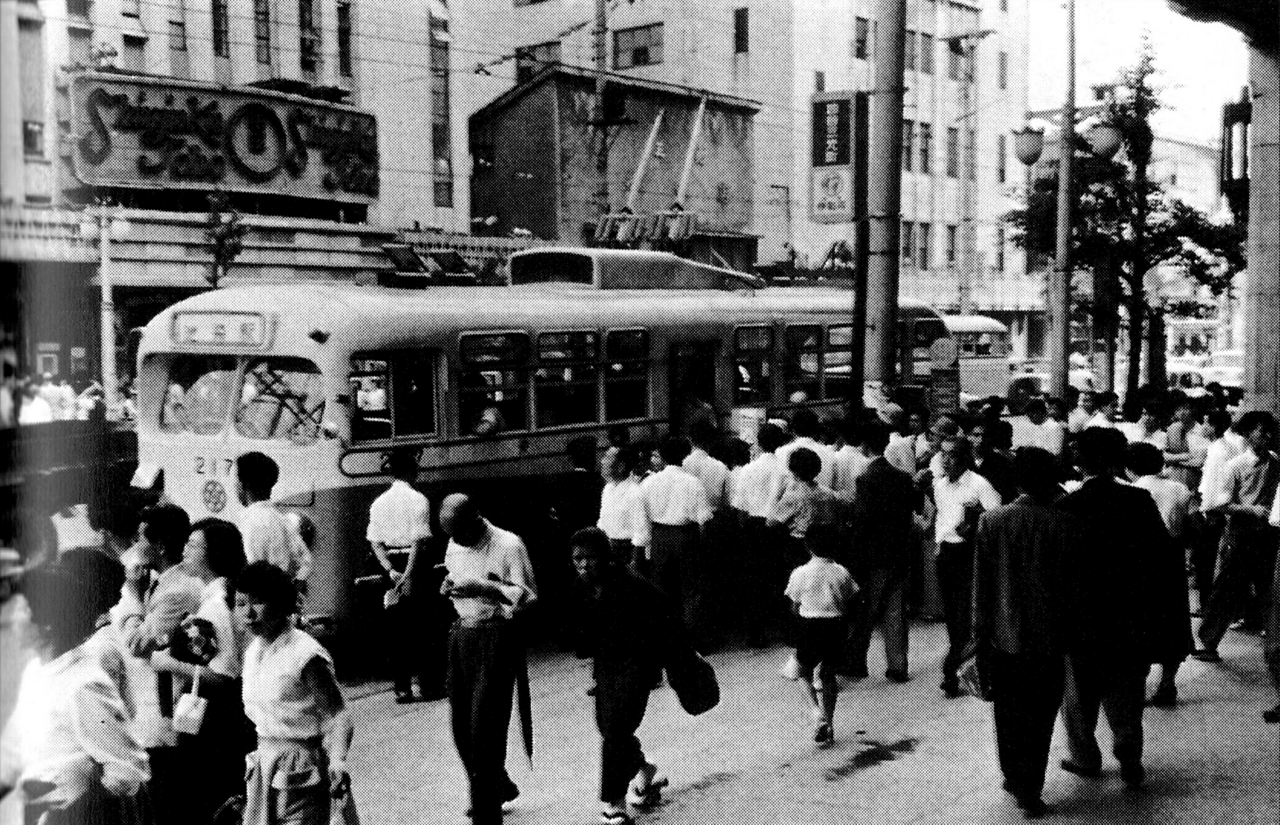
The post-war network had a problem. Petrol was scarce and expensive in 1949. New tram track required engineering capacity the bureau did not have. The Imperial subway operator, the Teito Rapid Transit Authority (predecessor of today’s Tokyo Metro), was building the Marunouchi Line and could not move fast enough on the corridors the bureau wanted. So the bureau proposed a third option, a trolleybus, drawing electric current from overhead wires the way the trams did but running on rubber tyres on ordinary road surfaces with no track required.
The 1912 prototype that never ran
The trolleybus was not actually new to the bureau. In 1912, the year after the Tokyo Municipal Electric Bureau was founded, the Hamamatsucho works built a prototype. The Tokyo Asahi Shimbun ran a photograph on 14 April 1912: a converted automobile with no roof, a wooden bay framed over the driver’s seat, two trolley poles bolted to the bay, and a working test run from Hamamatsucho to the Sukiyabashi tram depot. The result was technically successful and commercially indefensible. The vehicle could not be licensed for paying passengers in 1912 Japan because no statute covered it. The bureau planned a second attempt in 1922 between Aoyama Rokuchome and the Meiji Shrine entrance, then cancelled when the 1923 earthquake destroyed the budget. A third application in the late 1920s for a six-kilometre line in Koto failed regulatory review. By the time the post-war proposal landed in 1949, the bureau had been thinking about trolleybuses for thirty-seven years.
What ran, and where it ran
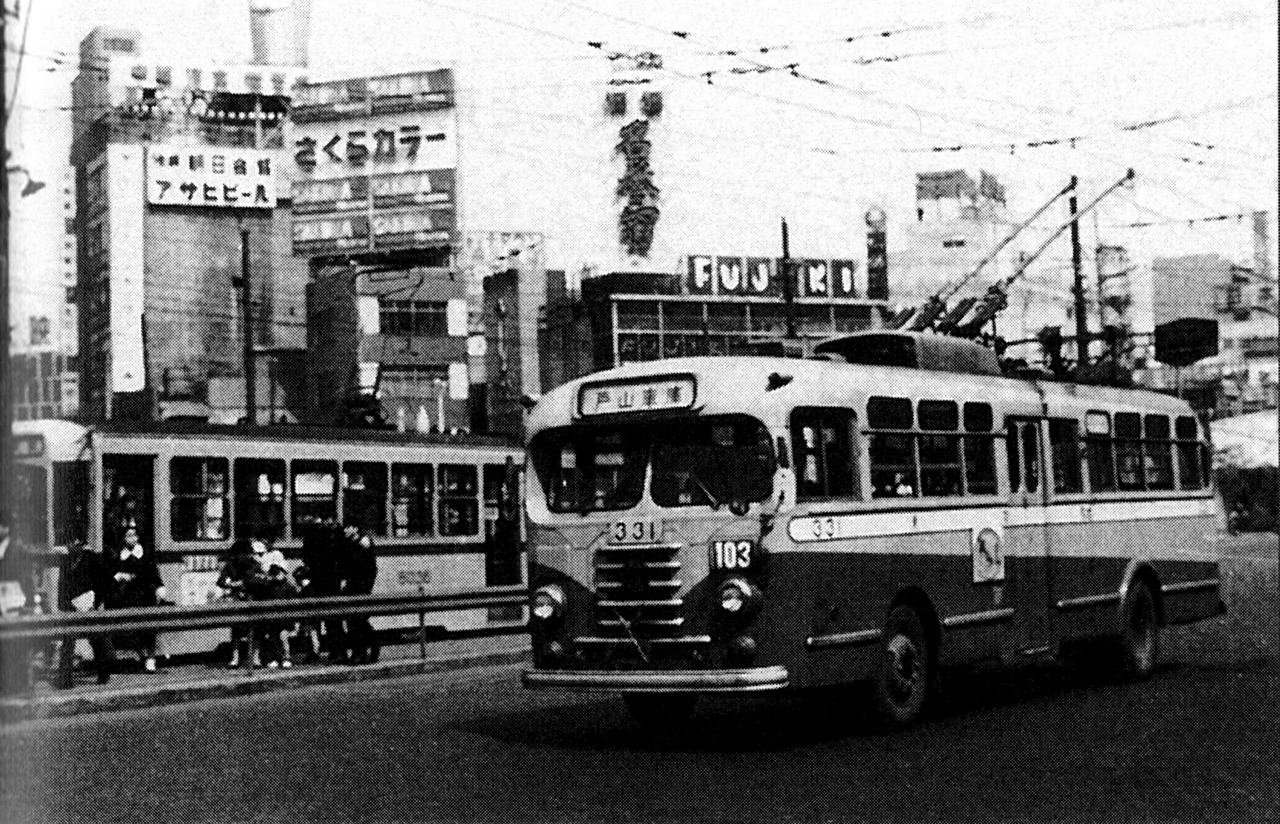
The Ministry of Transport approved three of the bureau’s five proposed corridors in October 1950. Construction on the first, Imai to Ueno via Asakusa, started in February 1952 and opened on 20 May the same year. By 1958 the network had reached its planned extent: route 101 from Imai to Ueno, route 102 from Ikebukuro to Shinagawa via Shibuya, route 103 from Ikebukuro through Oji and Asakusa to Kameido, and route 104 from Ikebukuro to Asakusa-Kaminarimon. All four ran on overhead wires drawn at 600 V DC. Total fleet: 121 vehicles in six body styles. The 50-shiki cars were the Tianjin order. The 200-shiki and 250-shiki were standard urban specification. The 300-shiki and 350-shiki carried small auxiliary diesel engines so they could pass through level crossings where the overhead wire could not be electrified, because national-rail and private-railway lines used 1,500 V and the transit authority would not approve a wire-crossing scheme.
Why the trolleybus did not survive the 1960s
The honest answer is the weather. Heavy rain caused arcing on the overhead supply, which knocked sections out of service. Snow forced tyre chains, and tyre chains broke the conductive earth path at the trolley shoes. Trolleybuses could not reverse without lifting the poles down by hand, which made depot manoeuvres slow. The 1956 plan to extend the Shinagawa-Shibuya leg ran into national-rail and Tokyu opposition over the level-crossing issue, and the alternative diesel-equipped cars were heavier and more expensive than anyone had wanted.
The structural answer is that the diesel bus got better faster than anyone in 1949 had predicted. By the mid-1960s a Hino or Isuzu chassis with a thirty-thousand-mile-overhaul engine and air-suspended seating was carrying as many passengers as a trolleybus, with none of the wire infrastructure and none of the level-crossing constraints. The trolleybus could not match the marginal cost. The bureau formally entered Financial Rebuild Authority status on 1 January 1967, and the rebuild plan submitted that August scheduled the trolleybus closures across 1967 and 1968. The last trolleybus ran on Route 101, from Imai to Ueno-Koen, on 30 September 1968. The system had lasted sixteen years and four months. The replacement bus routes (601 to 604, later renumbered) are still operating today.
The 332-metre monorail
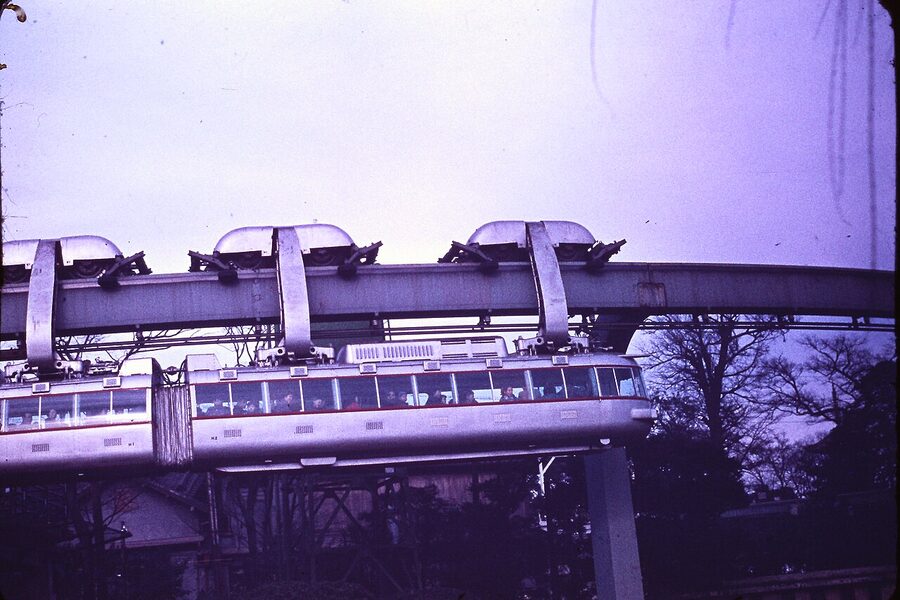
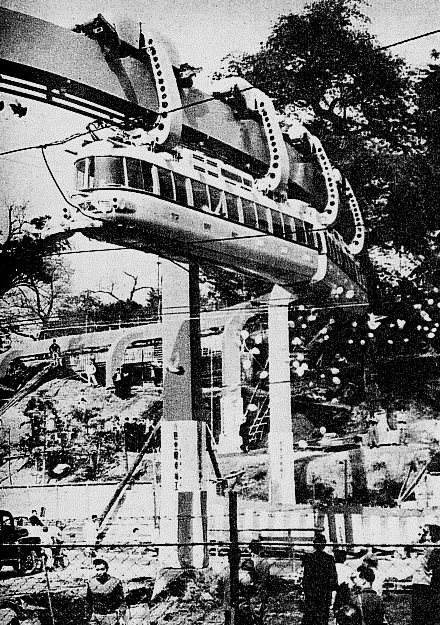
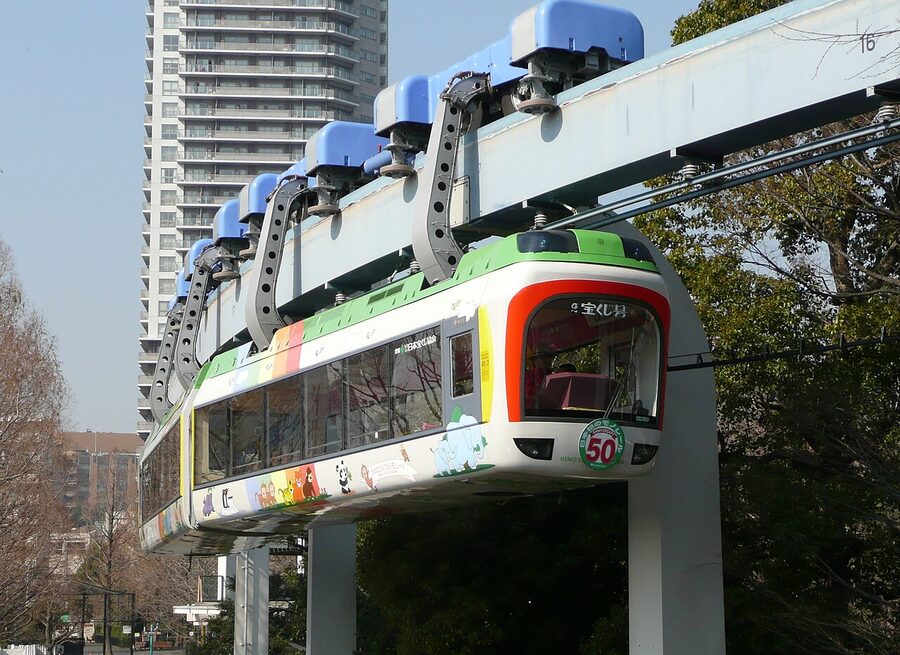
The other long experiment was the Ueno Zoo Monorail. It opened on 17 December 1957 inside the imperial zoo grounds, ran 332 metres between two stations, and was closed for good on 27 December 2023. Sixty-six years and ten days. The one-way journey took 90 seconds. The fare was ¥150. About 1.4 million riders a year used it at its peak, including, on 20 March 1962, Emperor Showa and Empress Kojun on a state visit to mark the zoo’s eightieth anniversary.
What “experimental” meant in this case
The line was deliberately built as a test. The Tokyo cabinet decision of 3 July 1956 wrote it into the budget on the explicit grounds that the city wanted operating data on a suspended monorail before it committed to anything larger. The model was the Wuppertal Schwebebahn, the 1901 German suspended railway whose Langen-system bogies hung from an overhead beam. The bureau’s engineers, working with Nippon Sharyo and the predecessor of Toshiba, modified the design to use rubber tyres rather than steel wheels and called the result “Ueno-shiki” (上野式), the Ueno type. They never built another. By the time the bureau returned to above-ground transit, in the 1990s, the chosen design was an automated guideway transit on rubber tyres on a concrete deck, not a suspended monorail at all. The Ueno line had served its research purpose by about 1970. It kept running for another fifty-three years anyway, because it was popular with families and because the zoo still wanted it.
The closure that took five years
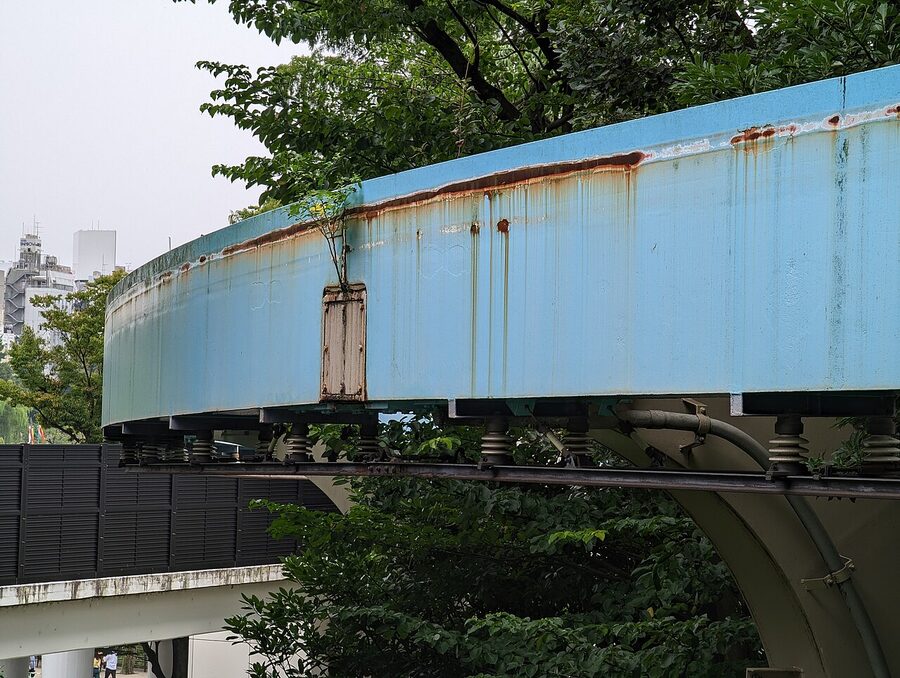
Service was suspended on 1 November 2019 because the fourth-generation 40-shiki cars (introduced 31 May 2001) were past their economic life and the bureau could not justify the bespoke replacement-fleet cost. The closure was initially temporary. Anyone walking the zoo grounds between the East Garden and West Garden during the suspension caught a small CNG shuttle bus instead, replaced from July 2020 by a Chinese-built BYD J6 electric microbus. The bureau filed the formal abolition notice on 21 July 2023, with a target abolition date of 21 July 2024. Public consultation came back faster than expected. The notice was amended on 13 November 2023 to bring the abolition forward, and the line was formally closed on 27 December 2023.
What replaces it is interesting in its own right. The metropolitan government ran a public tender in 2023 for a new short-distance ride to fill the same purpose. The winner, announced 29 March 2024, was a coaster-derived design from amusement-park manufacturer Senyo Kogyo, branded Eco-Ride: a roller-coaster track and chassis modified to run on electric motors uphill and on stored gravitational energy downhill. Construction was scheduled to start in 2026, with details to be released in March of that year. After sixty-six years of running an experimental rail technology inside a zoo, Toei is letting an amusement-park firm run the next experiment instead.
Four subway lines, three gauges, seven through-running partners
For the first half of the twentieth century the city’s underground was someone else’s job. The Tokyo Underground Railway opened the country’s first subway between Asakusa and Ueno on 30 December 1927, and the Teito Rapid Transit Authority (TRTA) inherited it in 1941. The bureau, despite running everything else, was kept out of subway construction. That changed on 4 June 1957, when the Urban Transport Council ruled that TRTA’s pace alone could not keep up with Tokyo’s growth and a second subway operator was needed. The licence for what was then called Line 1, the present-day Asakusa Line, was transferred from TRTA to a partnership between the metropolitan government and the Keihin Electric Express Railway. Toei was finally in the underground business. For the full structural picture of how the two-operator subway works today, the history of the Tokyo subway system covers the Metro side and the negotiation between the two operators in detail.
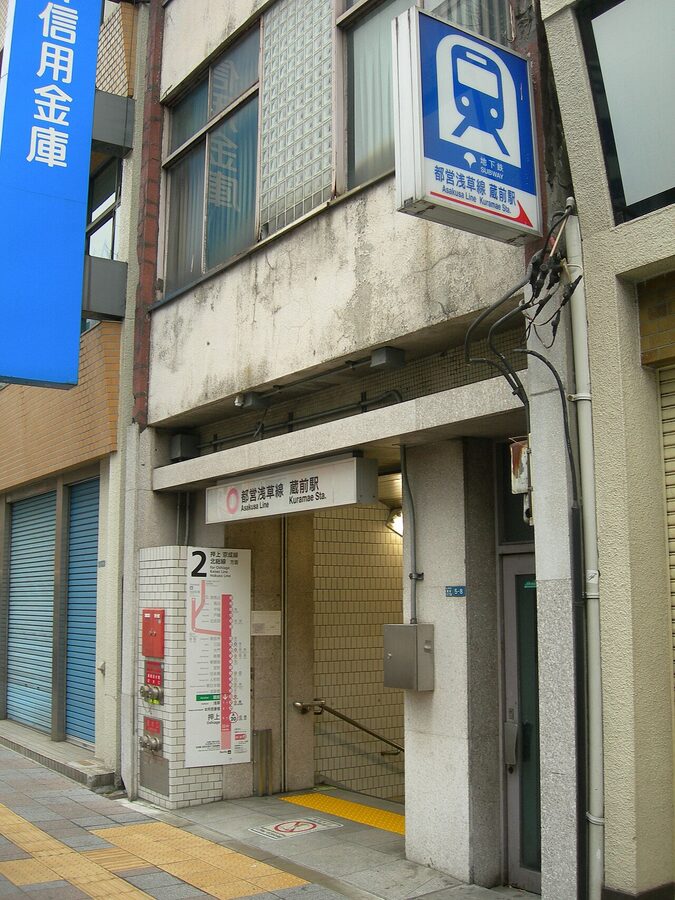
Asakusa Line, 1960: the through-running gambit
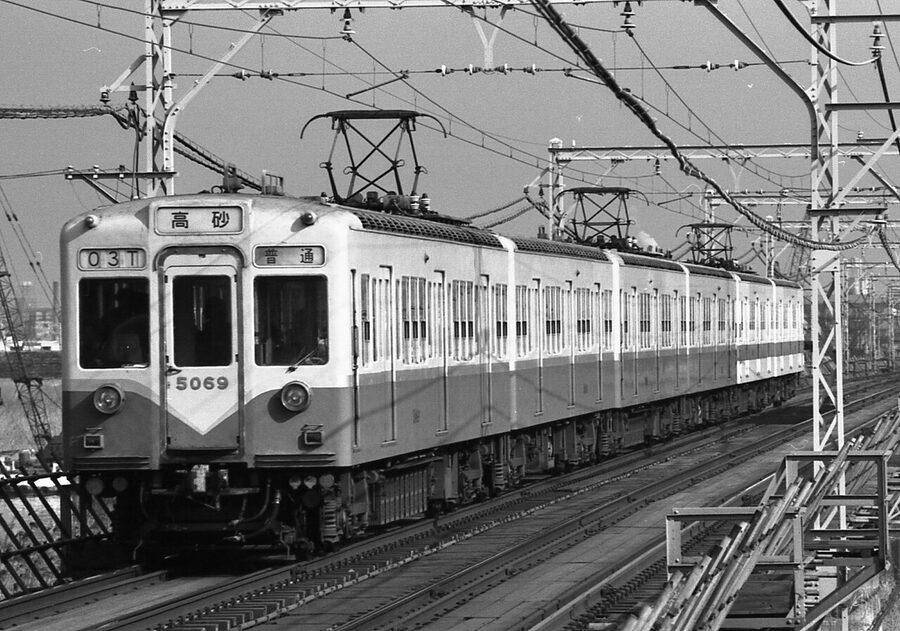
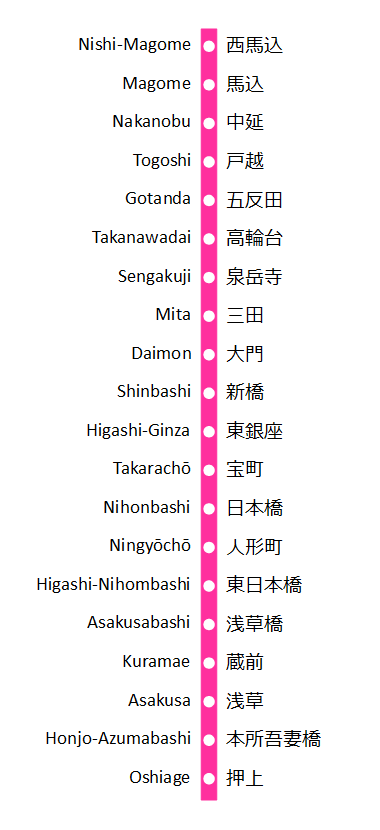
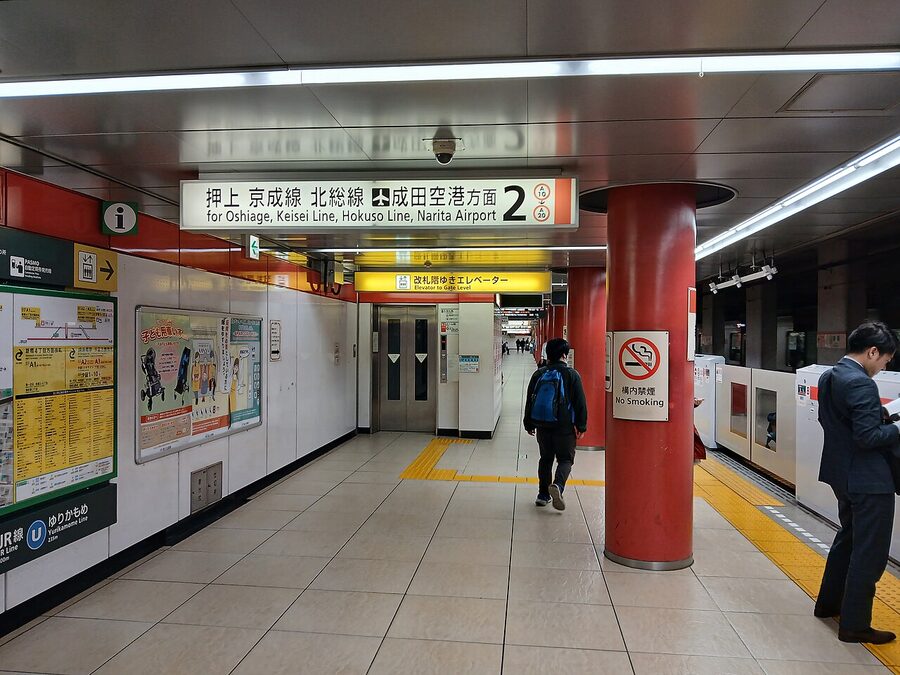
The bureau’s first subway line opened on 4 December 1960 between Asakusa-bashi and Oshiage, and the day it opened it did something no Japanese subway had ever done. Toei trains crossed onto the Keisei Electric Railway tracks beyond Oshiage and ran directly to Narita without their passengers changing trains. Two months earlier the bureau had committed to the same arrangement on the southern end with Keihin Electric Express, which was extending its line through Sengakuji to share the Asakusa tunnel northbound. From a passenger’s point of view, you boarded a train at Sengakuji and got off at Narita seventy minutes later, without ever changing carriages or operators. From an engineering point of view, this required the Asakusa Line to be built on the standard 1,435 mm gauge that both Keisei and Keihin used. Tokyo subway lines before 1960 had all been narrow gauge.
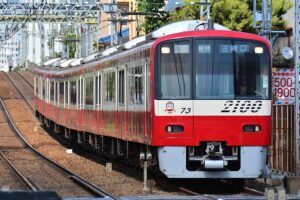
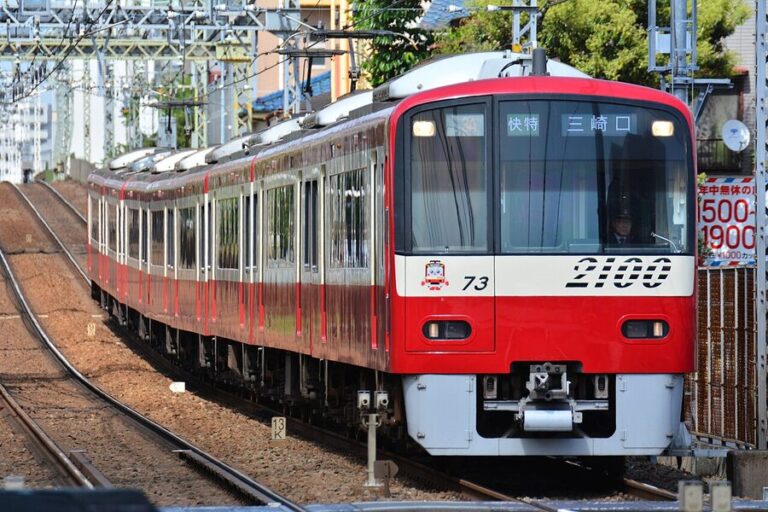
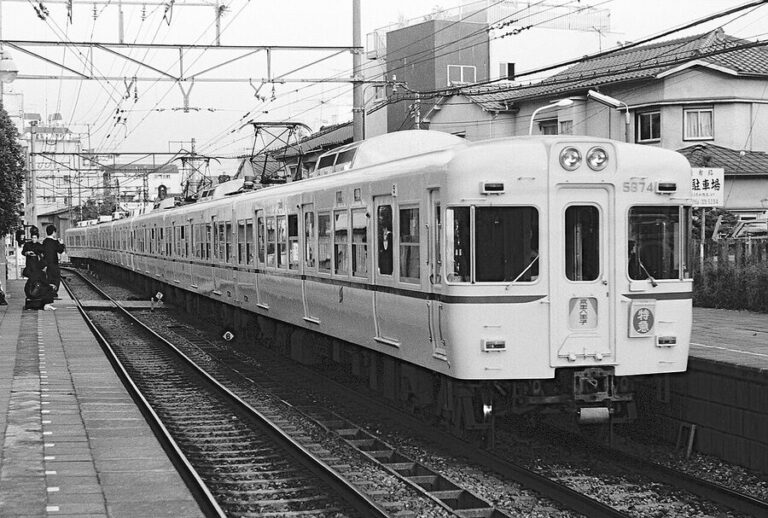
The Asakusa Line still runs through-services to four private operators today: Keisei to the north, Keihin Express to the south, plus the Hokuso and Shibayama Tetsudo lines that branch off Keisei. Hop on at Hashimoto-cho on a weekday morning and you might pull out of the platform on a Toei 5500-series, exchange running rights at Sengakuji onto a Keikyu 1000-series, and finish the day on a Keisei 3000-series at Narita Airport. The fares are stitched together at the gates rather than at the carriage. None of this was easy to negotiate in 1960. It is the original feat of the Toei subway, and it is the reason the Asakusa Line is the most underrated piece of railway in central Tokyo.
Mita Line, 1968: narrow gauge for the never-built Tobu link
The next line to open was the Mita Line, in stages between 1968 and 2000. It uses 1,067 mm narrow gauge, which is the same gauge as the JR commuter network and most of Tokyo’s private railways. The plan in 1965 had been for the Mita Line to through-run northbound onto the Tobu Tojo Line and southbound onto the Tokyu Meguro Line. The Tobu link never happened. The Tokyu link did, with services beginning in September 2000 when the Mita finally extended south from Mita Station to Meguro. In 2023 the line gained a second southern through-route via the new Tokyu Shin-Yokohama Line into the Sotetsu network, putting passengers boarding at Yokohama prefecture on the same train as a Mita Line commuter from Sugamo.
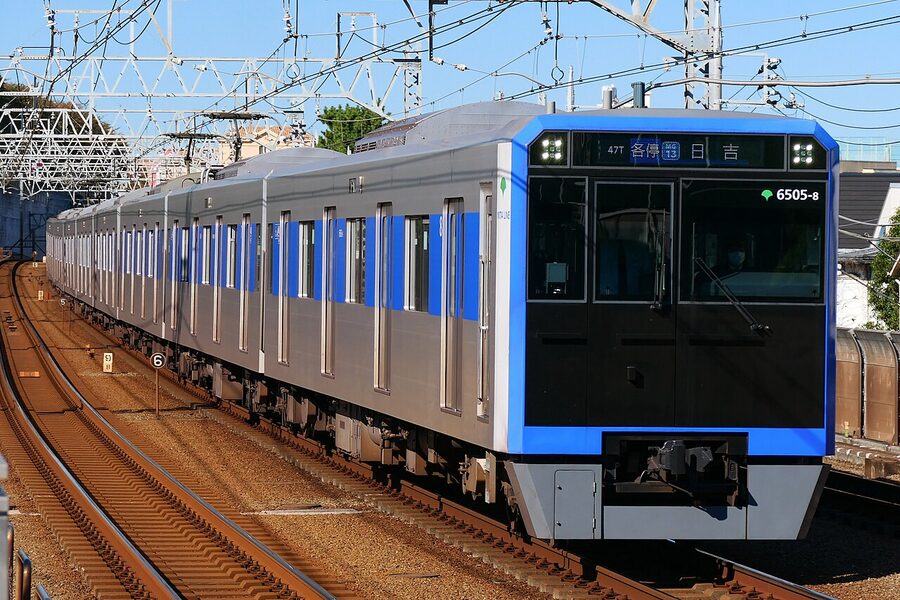
Shinjuku Line, 1978: the 1,372 mm horse-tram gauge
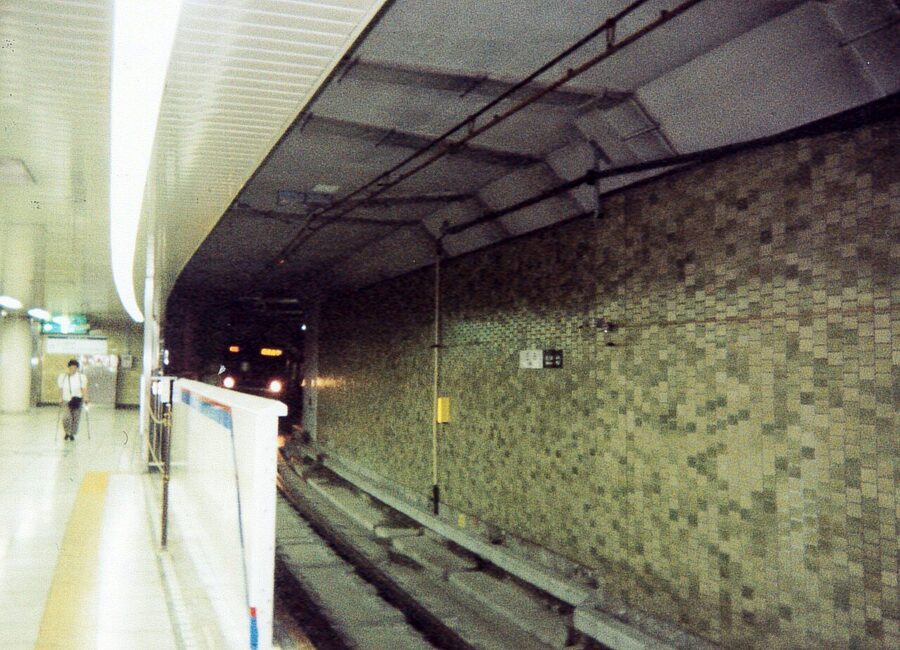
The Shinjuku Line is the bureau’s anomaly. It runs on 1,372 mm gauge, an inheritance from the horse-tram-era Keio network it through-runs with, and it is the only one of Tokyo’s thirteen subway lines built on that gauge. The line opened in stages between Iwamotocho and Higashi-Ojima in December 1978, extended west to Shinjuku in March 1980, and reached Motoyawata in Chiba prefecture in March 1989. The Motoyawata extension makes the Shinjuku the only Toei subway that actually crosses out of Tokyo proper as part of its scheduled service rather than only via through-running. The Keio side of the relationship is detailed in the history of Keio Electric Railway; the gauge oddity is what the two operators have in common.
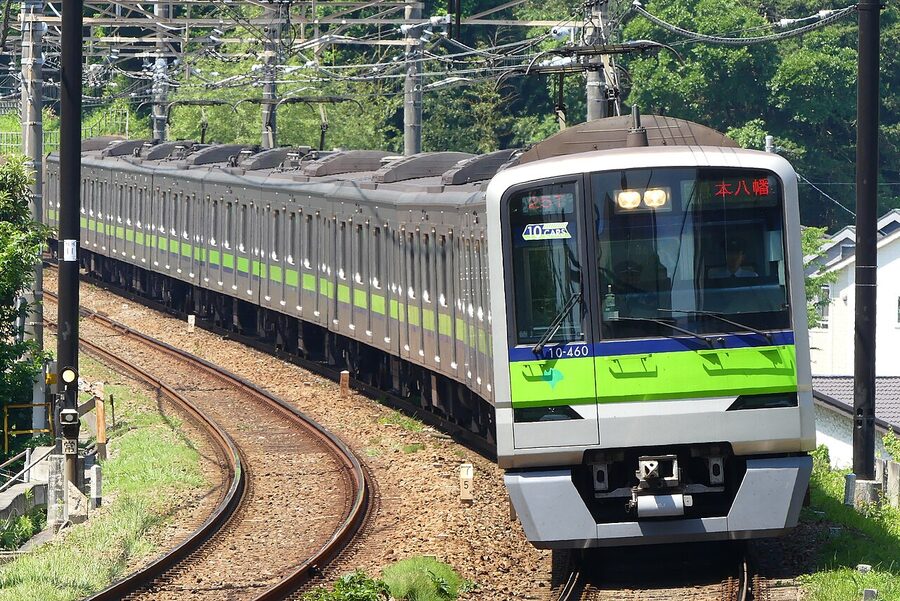
What you end up with, after all of this, is four subway lines from one operator running on three different track gauges, through-running to seven different private operators, with rolling-stock fleets that are not interchangeable between any pair of lines. This is not because the bureau is sloppy. It is because each line was negotiated separately, with whichever private partner the city wanted to connect, and Toei accepted the gauge match because the alternative was no through-running at all. There is no other subway system in the world built like this. The history of why is the history of Tokyo’s transport network in microcosm.
The Oedo Line and the linear-motor leap
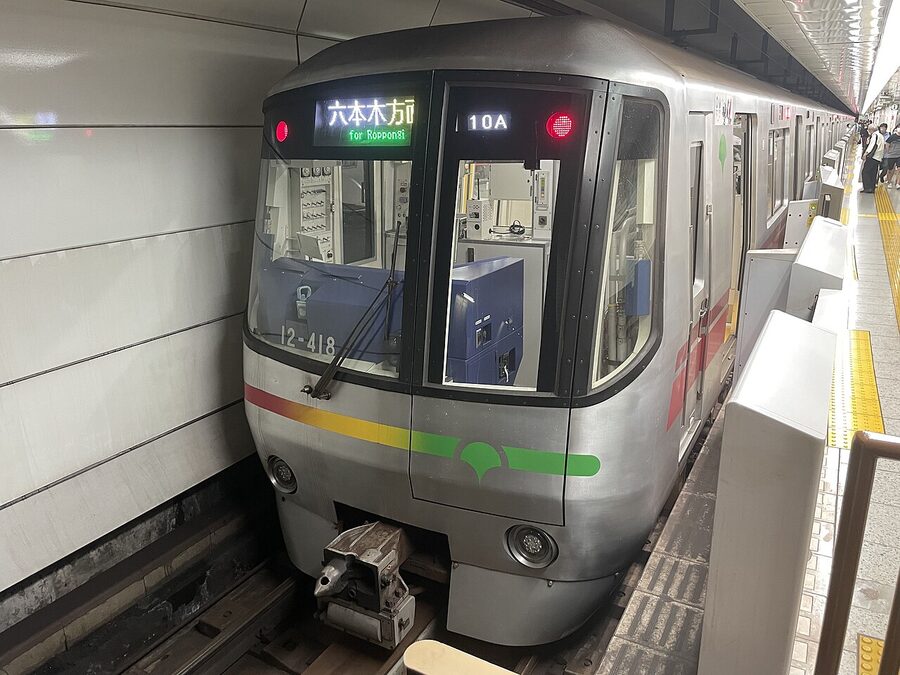
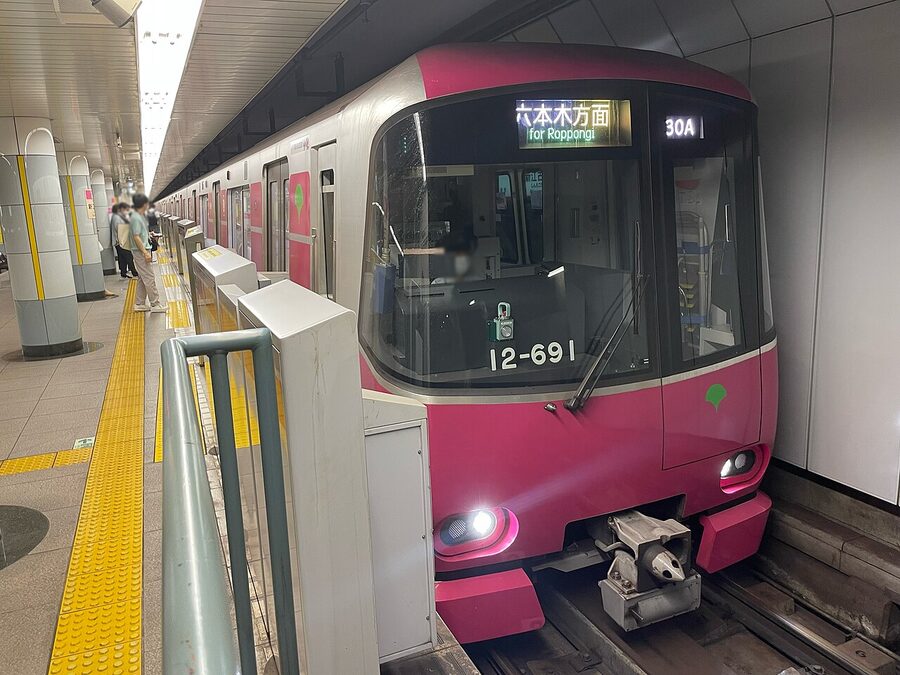
The fourth subway is the most technologically distinctive thing the bureau runs. The Oedo Line was a 1962 plan, then a 1968 plan, then a 1972 plan, then frozen in 1976 because the oil crisis broke the budget. Construction finally started in 1986 with a prototype 12-000 series test train at Magome depot. The western radial section between Hikarigaoka and Shinjuku opened in 1991 and 1997, and the eastern circular section opened on 12 December 2000. The closing date was chosen because the line’s official designation, before the public-naming process, had been “Number 12 Line”. The first revenue train left Tochomae at 12:12 on 12/12.
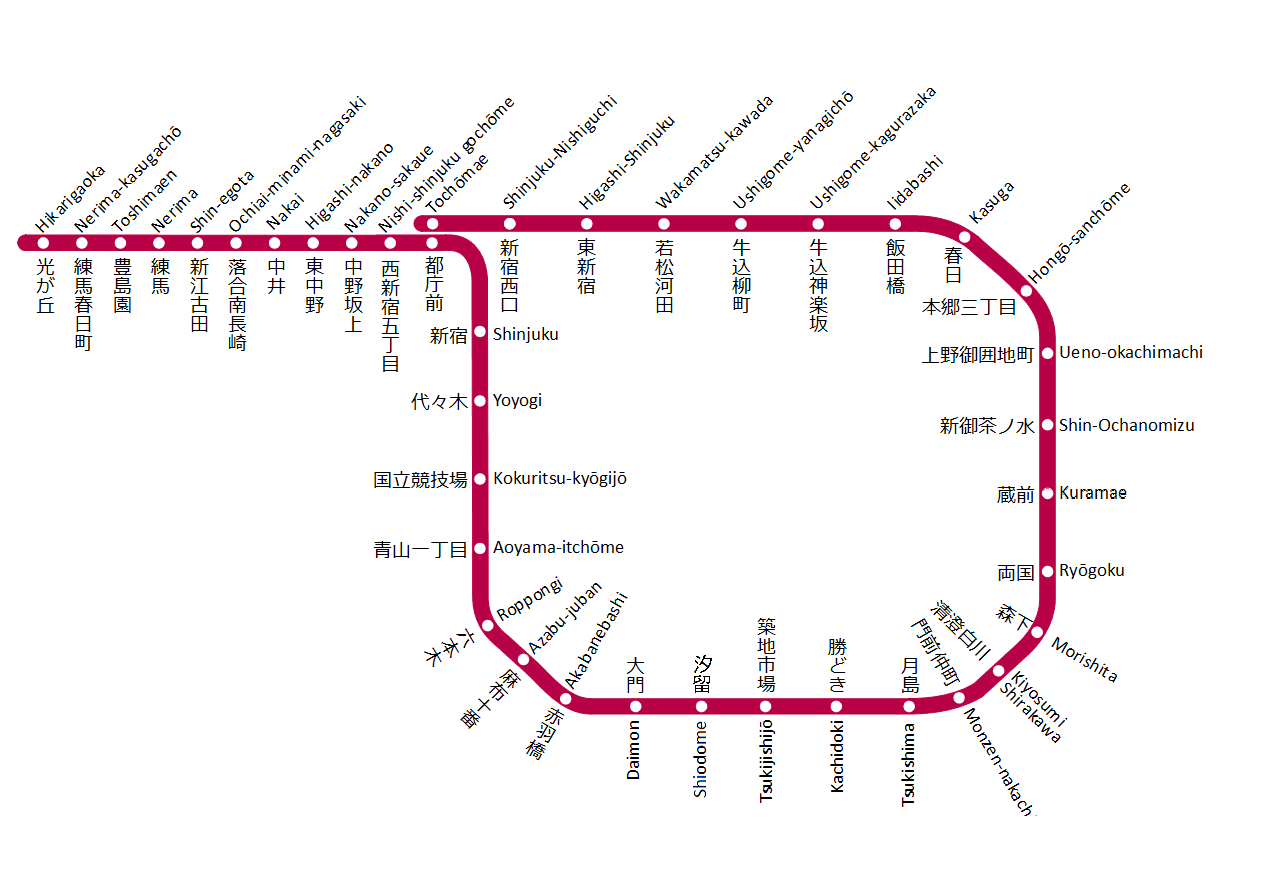
Why the line ended up linear
The original 1974 design was a conventional 20-metre, ten-car train on standard gauge with 6,628 billion yen budget. After the oil-crisis freeze, the bureau revisited the plan in the early 1980s with a smaller specification: 16.5-metre cars in eight-car sets, a smaller tunnel cross-section, smaller stations. In April 1986 the prototype 12-000-series first car was rolled out and tested at Magome on conventional rotary motors. In 1987, after watching Osaka’s Nagahori Tsurumi-ryokuchi Line tests on linear-induction technology, the bureau modified the prototype with a linear motor and ran a test programme through 1988. On 21 December 1988 the bureau formally adopted linear-induction propulsion for the Oedo Line.
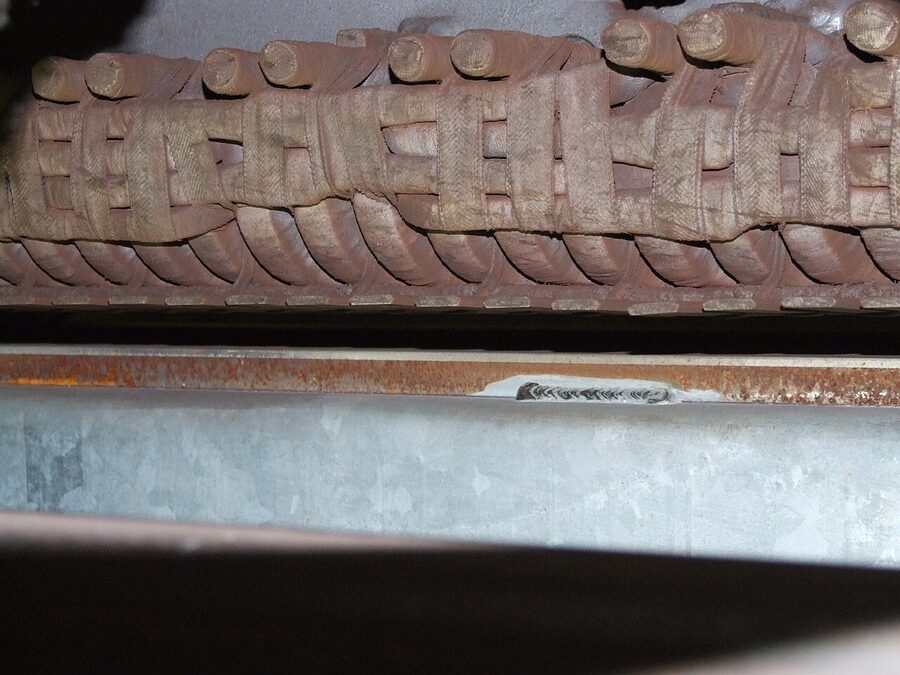
The benefit was geometry. A linear-motor car has no traction motor, no transformer, no gearbox; the motor is the underbody. That made the carbody about 60 cm shorter than conventional subway stock and let the bureau cut the tunnel cross-section, the station depth, the curve radius. For a line that had to thread under every existing subway, sewer, and utility tunnel in central Tokyo, those margins were decisive. Linear motor stock can also climb steeper grades and turn tighter corners than wheel-driven stock, and the bureau used both freedoms to drop the line lower and curve it around obstructions.
What you give up to get linear motor
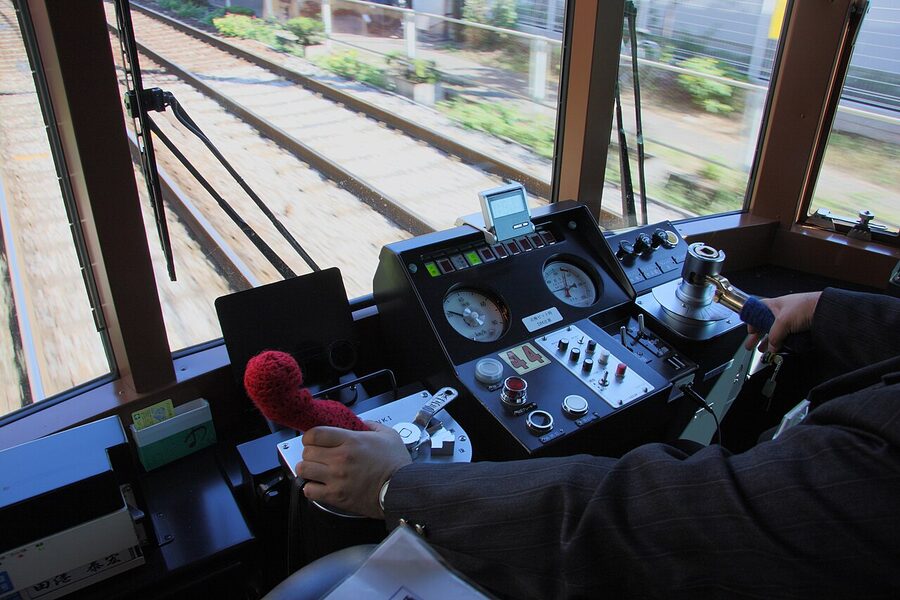
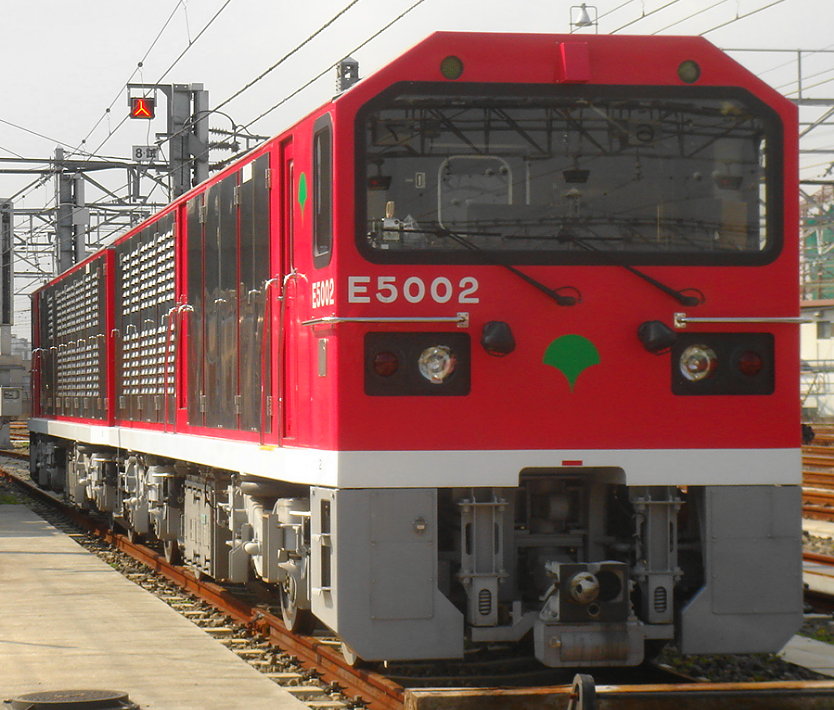
Two things, mostly. First, the Oedo Line cannot through-run with anything. Linear-motor cars do not work on conventional track and conventional cars do not work on a linear-induction reaction plate. So the line is sealed off from the rest of the Tokyo network. The depot at Hikarigaoka is the only one. When stock needs to move to Magome for heavy maintenance, it goes by a dedicated electric locomotive (the E5000-series, two units in service) on the Asakusa Line via a Shiodome connection link, which is the only place the two systems’ tracks meet.
The second cost is depth. The Oedo runs under everything else, and the result is the deepest subway in Japan. Roppongi’s lower platform is 42 metres below street level. Shinjuku’s Oedo platform is 36 metres deep. Iidabashi is 35 metres. Long escalators are part of the line’s identity at this point. Allow eight to ten minutes for an interchange at Roppongi or Shinjuku if your connecting line is shallow.
The naming row
The line was operated as “Number 12 Line” from its 1991 partial opening through to 1999, when the bureau ran a public competition to choose the permanent name. The most popular submission was “Tochō Line”, a flat administrative reference to the metropolitan-government building near Shinjuku. The selection committee shortlisted “Tokyo Loop Line” with the marketing nickname “Yume-mogura” (dream mole). Governor Ishihara Shintaro vetoed both, in person, in a single meeting, with the words “why is this called a loop line?” and announced that his preferred name was “Oedo”, an Edo-period historical evocation of the city. The committee, at a follow-up meeting on 15 December 1999, accepted his choice. There is a counterargument that Shinjuku and the western Oedo radial sit outside the historical Edo boundary and so cannot be “great Edo”. The committee accepted the bureau’s reframe that the line ran around the historic city and the prefix “great” expressed cultural extension. This is how Tokyo subway lines get named.
Total construction cost for the Oedo Line: ¥1.3574 trillion. Comparable, the bureau noted with some pride at the opening ceremony, to the Tokyo Bay Aqua-Line bridge tunnel or to Kansai International Airport. Per kilometre, the radial section cost ¥28.6 billion and the circular section ¥32.3 billion. There are no plans for a fifth Toei subway. The Oedo extension to Oizumi-Gakuen was finally announced in October 2025, and the Yurakucho Line extension into the same area is being built by Tokyo Metro from the IPO proceeds, but neither will involve the bureau adding a line in the way 1960 to 2000 did. The four-line subway is probably the operator’s permanent shape.
Nippori-Toneri Liner and the rubber-tyred replacement
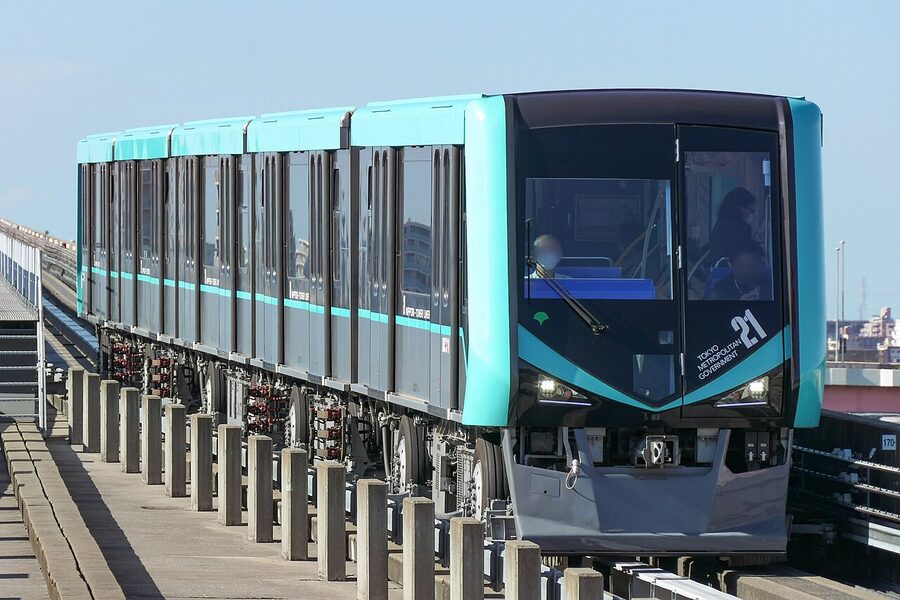
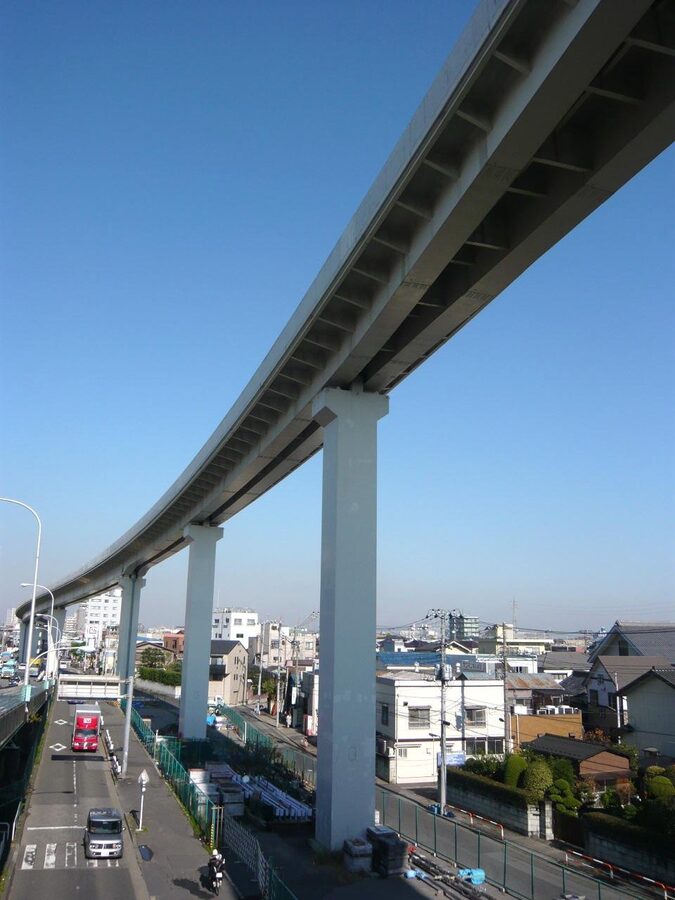
The bureau’s newest service is its second since the trolleybuses closed in 1968. The Nippori-Toneri Liner opened on 30 March 2008, running 9.7 km between Nippori on the JR Yamanote and Joban lines and Minumadai-Shinsuikoen on Tokyo’s northern edge. Thirteen stations, no driver, rubber tyres on a concrete deck, side-mounted lateral guide wheels: the system is technically called “automated guideway transit” (AGT) and is shared with the Yurikamome and Saitama New Shuttle. The bureau’s choice of AGT over a suspended monorail at this point was significant. The Ueno Monorail had been the bureau’s prototype experiment in above-ground transit, and the Nippori-Toneri designers concluded that the suspended monorail concept was the wrong answer for serving an unbuilt Adachi-ward corridor with high-density housing.
Why this corridor took so long
Adachi ward had two of the highest residential population densities of any Tokyo ward without nearby rail access. The corridor had been on the planning maps since the late 1980s. Funding kept slipping; land acquisition stalled. Construction finally started in 2002 and the line opened six years later. Total cost ¥220 billion. The five-car Type 300 (later Type 320) automated stock was supplied by Mitsubishi Heavy Industries and built at Mihara works in Hiroshima. Each car has rubber-tyred running wheels carrying the load and four side-mounted lateral guide wheels per truck holding the train against the U-shaped guideway profile. The driverless control system uses block-occupancy detection rather than moving-block; the timetable is set at 3.5-minute headways at peak, lengthening to 7 minutes off-peak.
Toei Bus, fuel cells, and the 100-year-old emergency response
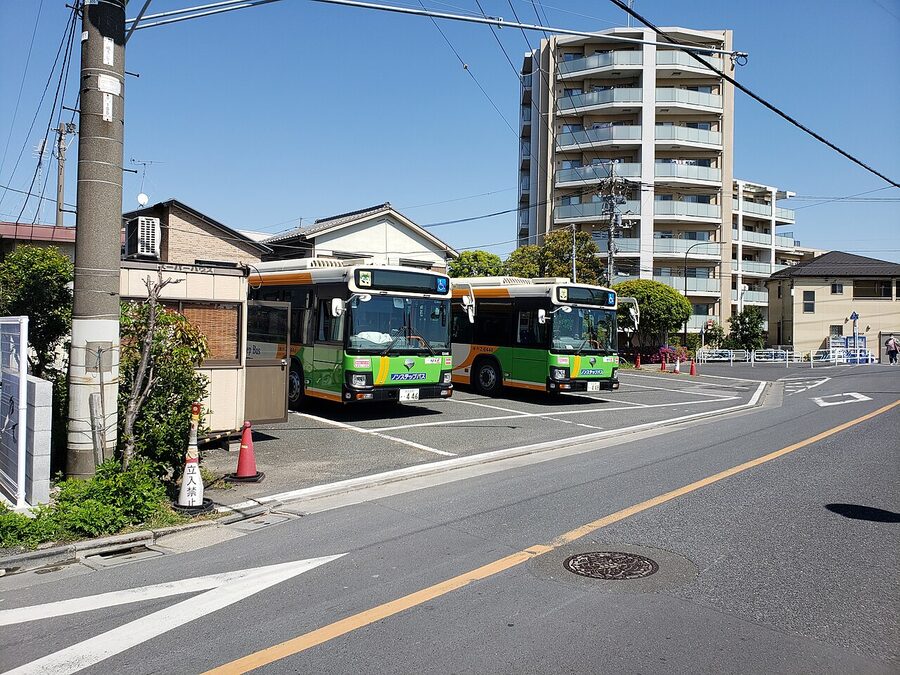
The bus operation is the bureau’s largest single business by route count and by depot footprint. 127 routes from 23 garages and sub-depots, an active fleet of about 1,500 vehicles, and a daily ridership around 610,000. The route designations follow a kanji-prefix-plus-number convention dating to the 1950s: a single character indicating the principal terminus, then a two-digit route number. Shibu-66 (渋66) starts at Shibuya. To-88 (都88) is one of the cross-town lines, with the “to” character meaning “metropolitan”. Get used to reading the kanji prefix; the destination boards on the front of the bus are bilingual but the route boards are not.
The fuel-cell programme
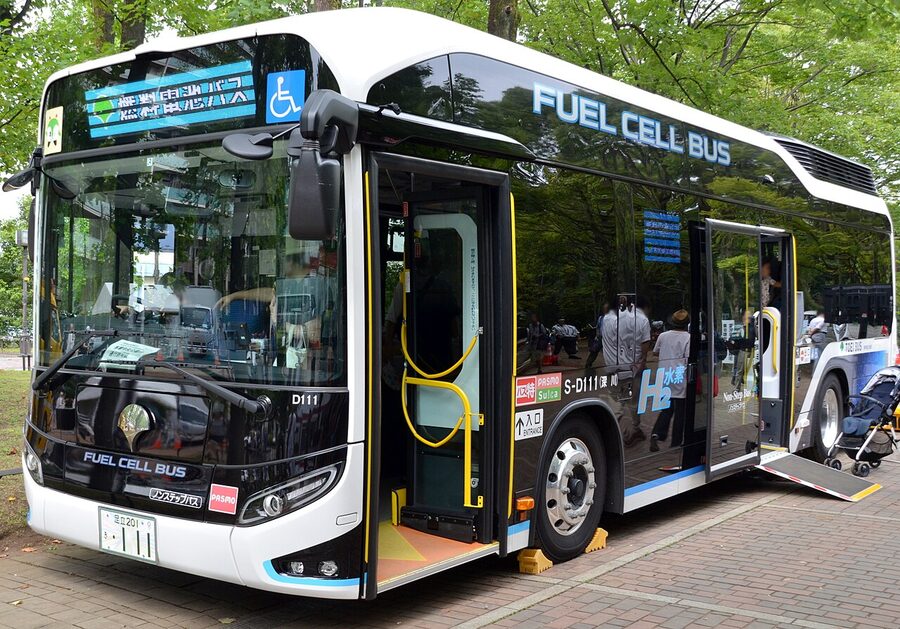
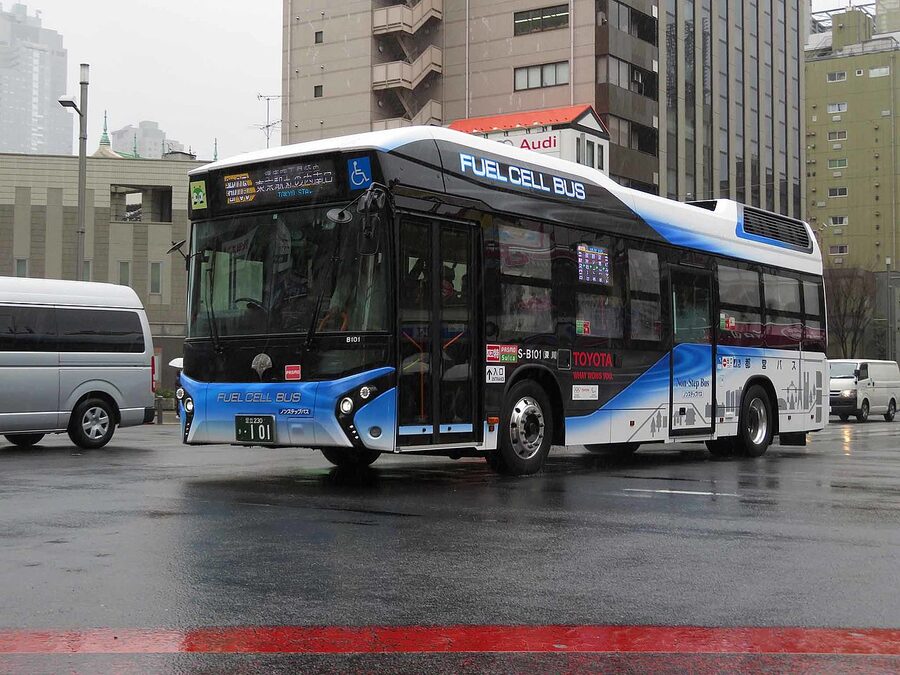
Toei Bus introduced the first hydrogen fuel-cell buses in scheduled service anywhere in Japan in March 2017. The first generation were five Toyota FCV prototype buses; the production model that succeeded them was the Toyota Sora, ordered in batches from 2018. By March 2024 the bureau ran 73 fuel-cell buses, the largest single fuel-cell bus operation of any Japanese city. The buses use the same fuel-cell stacks and high-pressure hydrogen tanks as the Toyota Mirai sedan. Tank-mounted on the roof, refuelling time about ten minutes at one of two dedicated H2 refilling depots in the central wards, range about 200 km on a single fill. They emit only water vapour. The bureau plans to expand the fuel-cell fleet through 2030 in step with the Tokyo Metropolitan Government’s broader hydrogen-society programme.
Accessibility and the white-glove tradition
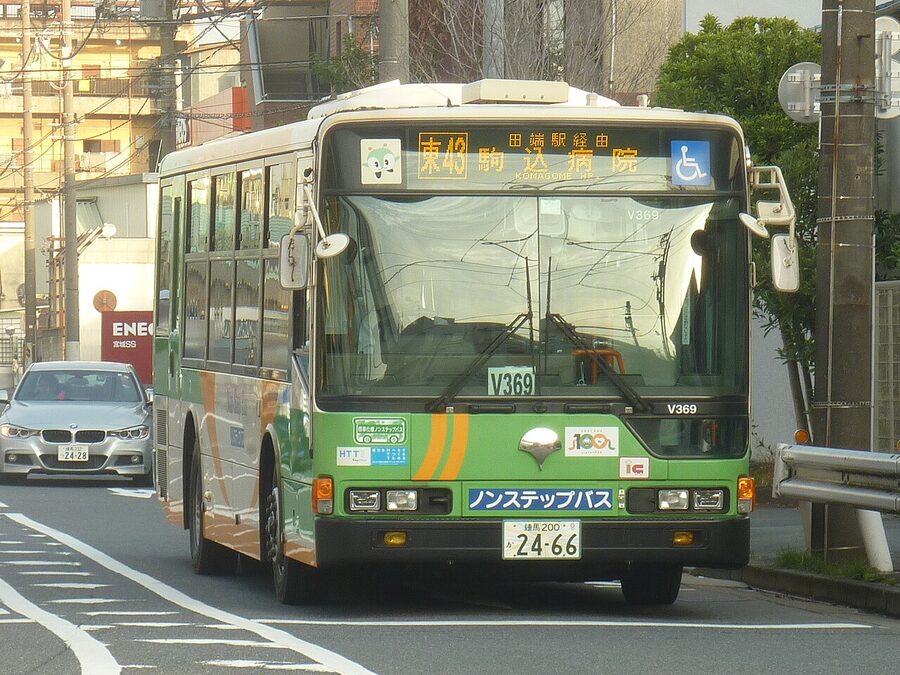
The fleet completed conversion to step-less low-floor buses in 2013, the first major Japanese bus operator to do so. Since 2018 the bureau has been adding fully flat-floor units, with no steps anywhere in the cabin including the rear, designed for wheelchair, pushchair, and mobility-aid use. Twenty-nine flat-floor buses were running by 2024, with more on order. Drivers still wear white gloves. This is not a regulatory requirement and has not been since the 1970s; the practice is older than that and has stayed because the operator likes the marker of professional courtesy. You will notice it on the Tokyo Metro buses too, but not on private-operator urban routes.
The Toden Arakawa Line, sole survivor
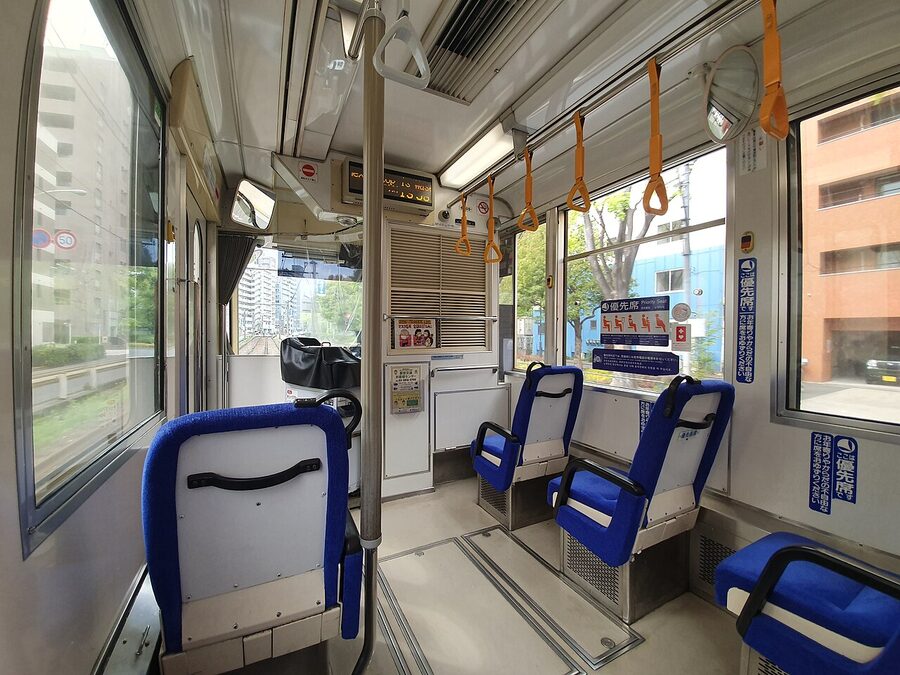
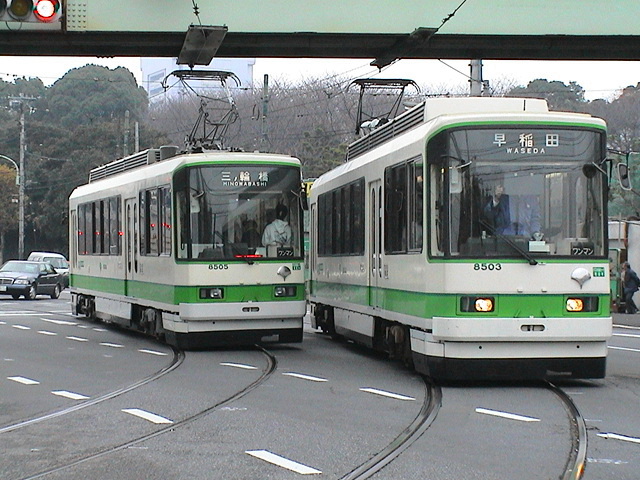
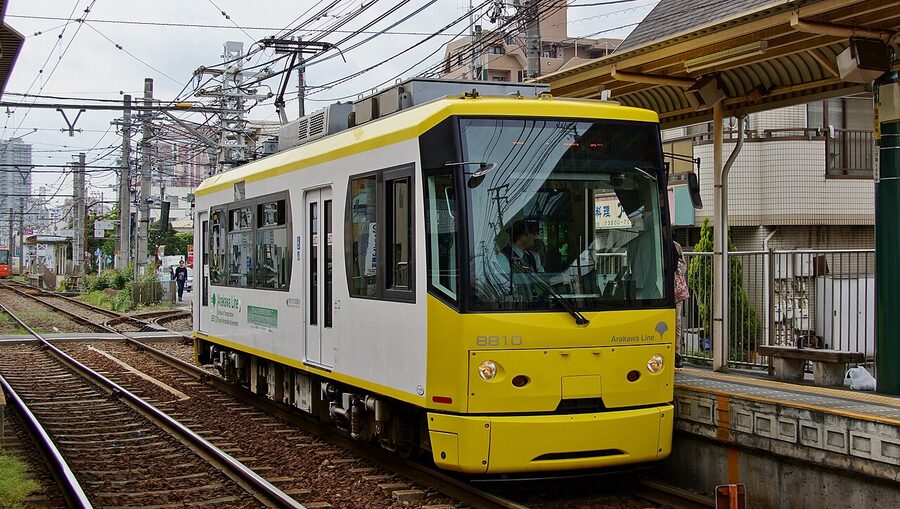
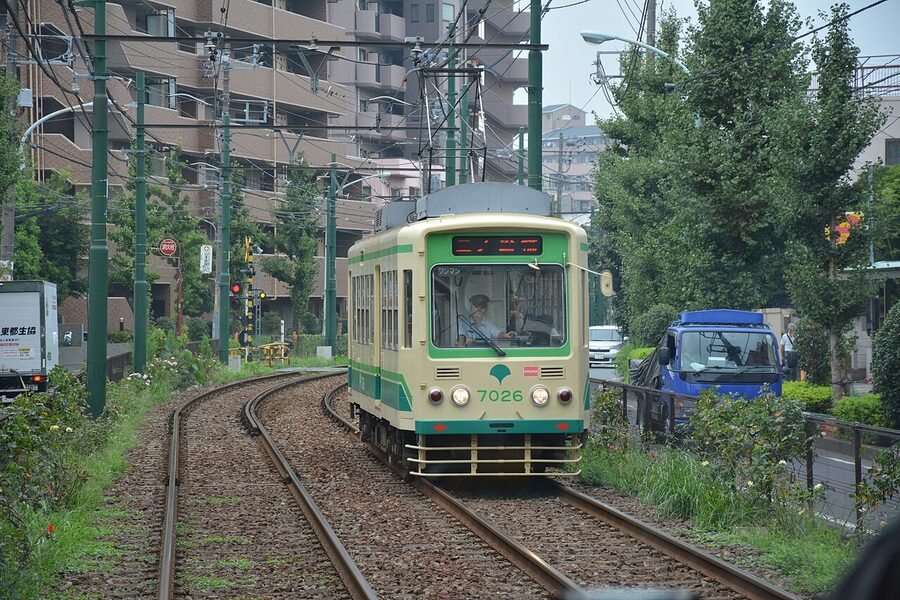
The streetcar story I started this article with did not end at zero. Closures across the central wards began in 1967 and accelerated. By 12 November 1972 every Toden route had been abolished except one: the Arakawa Line, the former Oji Electric Tramway operation absorbed in 1942. The Arakawa was kept because it ran almost entirely on its own reservation rather than on shared road space, which made it cheaper to operate and structurally awkward to redirect into a road-bus replacement. Today it runs 12.2 km between Minowabashi and Waseda with thirty stops. Single-ride fare: ¥170, paid at the front when you board, no zonal calculation, no IC discount.
The 2017 cherry-blossom rebrand
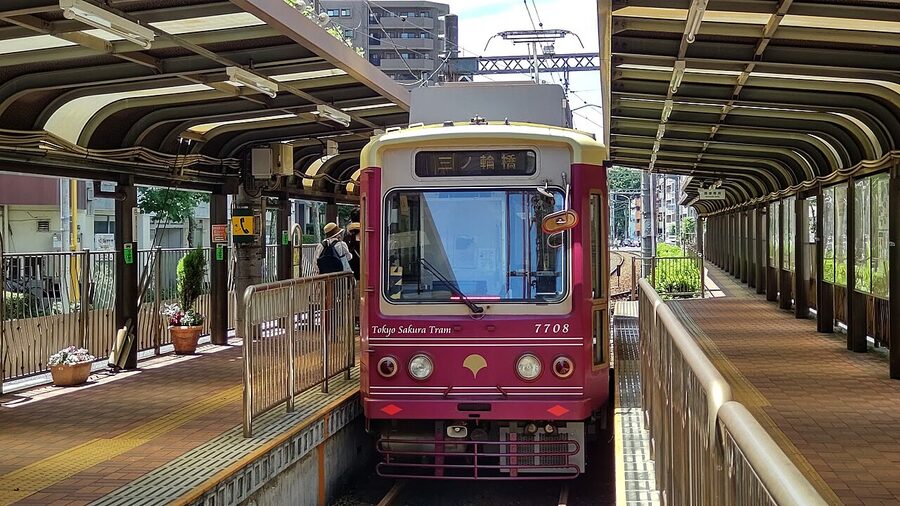
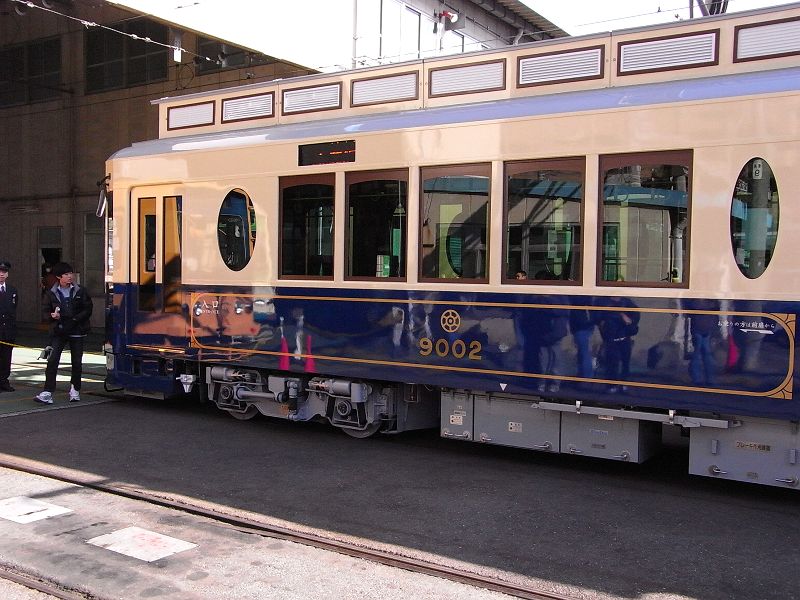
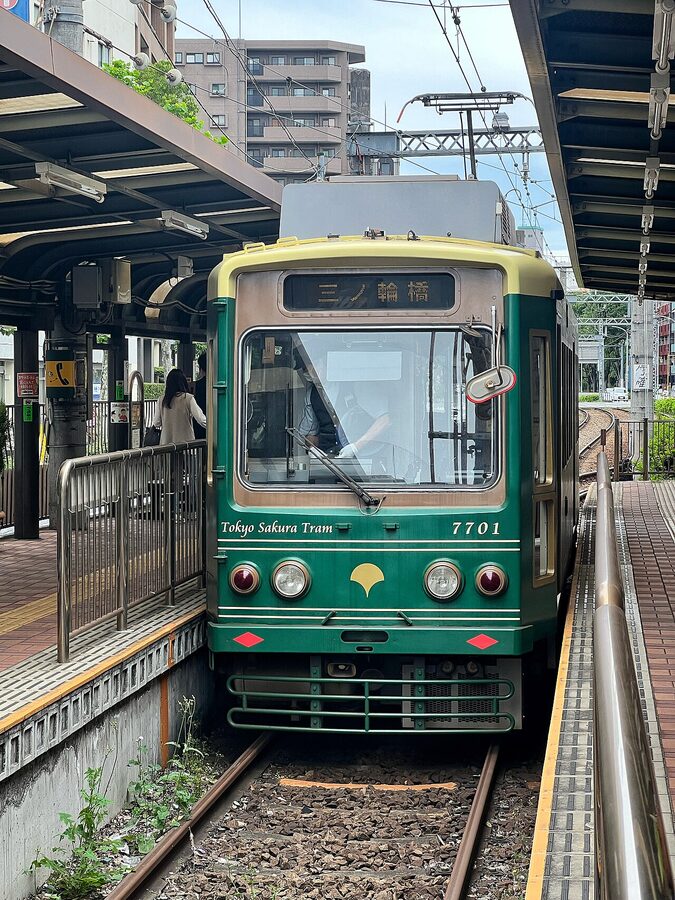
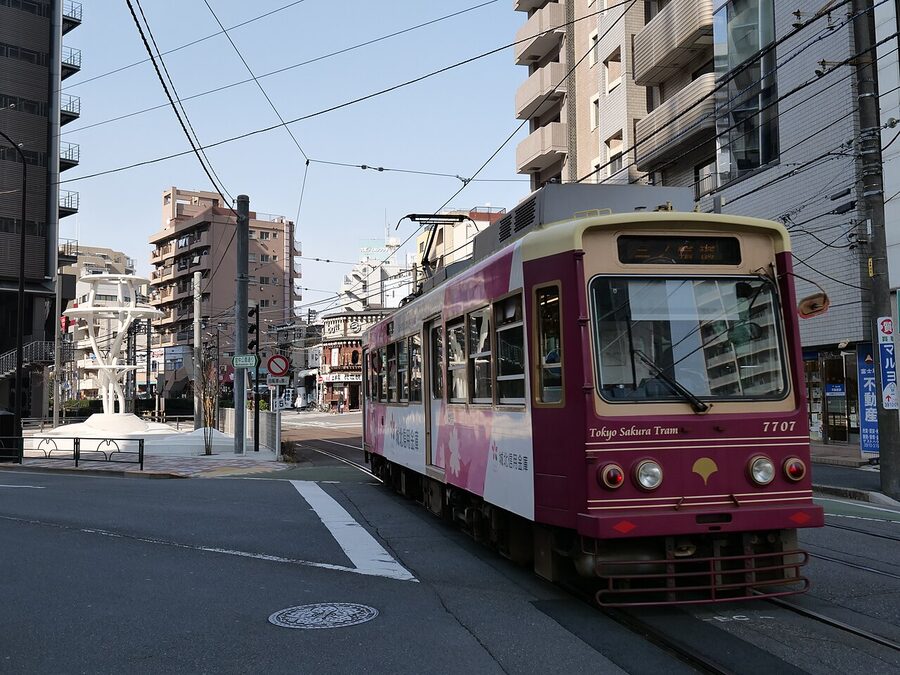
The bureau renamed the Arakawa as the Tokyo Sakura Tram in April 2017 to push the cherry-blossom branding, because the line passes Asukayama Park, one of the city’s older hanami spots, with about 600 trees on the slope opposite the tram bay. The depot signs at Arakawa-shakomae were updated to the new branding. The destination boards on the cars use both names. Most locals still call it the Toden Arakawa or simply the Toden. The depot opens to the public twice a year for a depot day, where the 9000-series chocolate-brown heritage car comes out alongside the working 8800s and 7700s.
The rolling stock generations
The line has run a tidy procession of rolling stock generations. The 7000-series of the early 1950s, rebuilt into the 7700-series in 2016. The 8800-series from 2009 in four colour variants (red, orange, yellow, green) on a five-car order. The 9000-series from 2007: a deliberately retro design, two cars only, rounded front, chocolate-brown paint, that has become the bureau’s heritage marketing symbol. The 9000s are used on advertising and merchandise in preference to the working stock. The depot at Arakawa-shakomae rotates them through scheduled service rather than reserving them for special operations, so it is reasonable to ride one if you turn up enough times.
Riding Toei today: the Marugoto Kippu and the credit-card pilot
The bureau runs a unified fare structure that crosses every mode it operates. The subway fare ladder is ¥180 to ¥430 IC card across 1 to 46 km, last revised on 1 October 2019, with the lowest paper-ticket fare set ten yen above the IC equivalent. The bus is ¥210 flat for adults inside the 23 wards. The Sakura Tram is ¥170 flat. The Nippori-Toneri Liner uses its own zonal table starting at ¥170. Children pay half. Elderly Tokyo residents with a Silver Pass ride free.
The day pass that pays for itself fast
The Toei Marugoto Kippu costs ¥700 for an adult, ¥350 for a child, and buys you a full day on every Toei mode: subway, bus including the geographically separated Ome service, Sakura Tram, and Nippori-Toneri Liner. As a yardstick: a single bus and subway round trip already costs ¥780 if you buy individual tickets. The Marugoto pays for itself on any day where you plan more than one mode. The combined Toei plus Tokyo Metro day pass is ¥900 if you need unrestricted Tokyo subway coverage. The Tokyo Subway 24-hour visitor ticket is ¥800 if you have a passport and bought it abroad before arrival. For most travellers the ¥900 combined pass is the right purchase. For Toei-only days, the Marugoto wins.
IC cards and the credit-card pilot
PASMO went live across the Toei network on 18 March 2007, with full mutual interoperability against JR East’s Suica from day one. Six years later, on 23 March 2013, all ten of Japan’s regional IC card systems became mutually accepted nationwide: Suica, PASMO, ICOCA, PiTaPa, TOICA, Manaca, Kitaca, SUGOCA, nimoca, and Hayakaken. Any one of them works on Toei. The cards are the simplest way to pay if you are in Tokyo for more than a day.
From 23 December 2025 onward, all Toei subway stations also accept contactless credit-card tap-to-pay, joining a multi-operator pilot that started with Keihin Electric Express in late 2024. Visa, Mastercard, JCB, American Express, Diners Club, Discover, and UnionPay all work. There is no through-fare discount on tap-to-pay, and the child fare cannot be applied. For most travellers the IC card is still the better option. The credit-card path is genuinely useful only if you have arrived in Tokyo without a Suica or PASMO and you do not want the queue at the IC card machine.
The hydroelectric afterlife
One thread of the 1911 charter never went away. The bureau’s electric-power business was wound up in 1942 and transferred to Kanto Haiden, but the generation plant on the upper Tama river was kept. Three small hydroelectric stations are still on the books today: Tamagawa Daiichi, Tamagawa Daisan, and Shiramaru. Combined output about 36 MW. Output is small relative to Tokyo’s demand and the stations sell into the regional grid through TEPCO, but the licence and the operating revenue are the bureau’s. The Shiramaru dam has a fish-pass viewing room. The bureau opens the visitor area twice a year, normally in late spring and early autumn. It is the most unusual line item on a metropolitan-government balance sheet, and a working thread that runs unbroken back to the founding act of 1911.
What the bureau looks like in the mid-2020s
As of 2024 the Tokyo Metropolitan Bureau of Transportation employs about 6,715 people across all four operating divisions. The four-line subway network covers 109 km with 106 stations and carries about 2.24 million passengers a day on average. The bus network runs 127 routes with about 610,000 daily passengers. The Sakura Tram carries about 50,000 daily on its 12.2 km. The Nippori-Toneri Liner adds about 70,000. The hydroelectric stations sell about 36 MW into the grid. None of those numbers, individually, is the largest in Japan. Combined, they make Toei the only operator in the country running this many modes in parallel, and they are the durable core of what is left after a hundred and fourteen years of experiments.
Why Toei still exists separately from Tokyo Metro
The unification question has been live since 2010, when a tripartite council of national-government, metropolitan-government, and Tokyo Metro representatives was set up to consider whether the two operators should merge. The arguments in favour are obvious: one operator means one ticket gate, simpler ticketing, easier tariff harmonisation, and no duplicate engineering on overlapping corridors. The arguments against are political. Tokyo Metro is a partly listed corporation: half its shares were floated on the Tokyo Stock Exchange in October 2024 (the largest IPO in Japan that year), and the other half remain in metropolitan-government and national-government hands. Toei is a metropolitan-government bureau reporting directly to the city government. Merging them would require either selling Toei into the corporation or partly de-nationalising Tokyo Metro further. Neither option has political support.
The 2024 listing deliberately preserved the dual structure. The metropolitan-government share of the IPO proceeds is being earmarked for the Tokyo Metro Yurakucho Line extension to Toyosu and the Sumida-area redevelopment. The Toei structure has been politically locked in for at least another decade. For practical purposes that means the dual day-pass at ¥900 is the right purchase if you intend to ride freely between the two systems. The single Toei pass at ¥700 is right if you stay on Toei modes.
Cross-references for context
For the wider transport context: the Tokyo Metro side of the two-operator subway is covered in the history of the Tokyo subway system, including the 1927 Asakusa-Ueno opening that the bureau watched from outside for thirty-three years. The current Toei rolling-stock catalogue, with every 5500-series and 6500-series and 12-600-series spec sheet, is in the companion piece on Tokyo Metropolitan Transportation Bureau trains. The two private operators most relevant to the Asakusa Line through-running are Keihin Electric Express and Keisei. The two relevant to the Mita Line are Tokyu and Sotetsu, where the wartime forced merger story sits inside the history of the Tokyu Corporation. The Keio relationship that gave the Shinjuku Line its 1,372 mm gauge sits in the history of Keio Electric Railway.
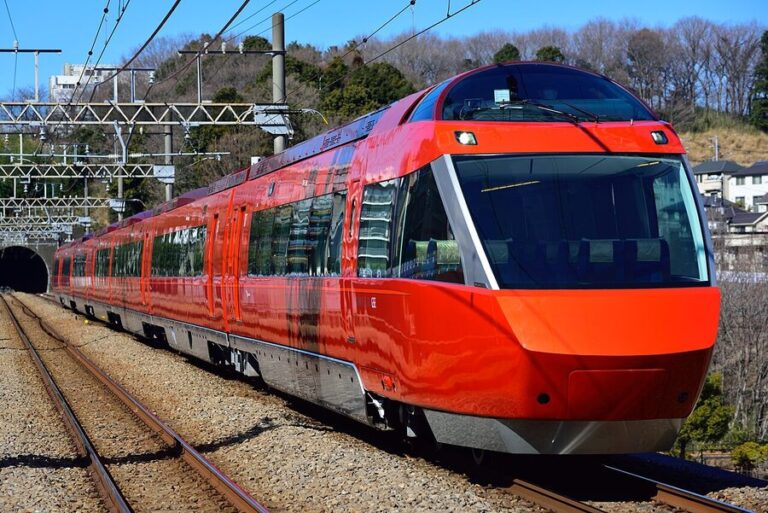
And, for the operators that stayed clear of bureau through-running entirely: the history of the Odakyu Line and the Odakyu Romancecar fleet show what Tokyo’s western corridor looks like when the operator never let go of any of its rolling-stock or routing decisions. The contrast with how Toei was forced to share is what makes the bureau’s history distinctive.
Why all this matters to your trip
The shorthand version: Tokyo’s underground is two systems, not one. Tokyo Metro is privately operated, slick, and runs nine lines that mostly through-run with private suburban operators. Toei is publicly operated, less consistent in look and feel, and runs four lines that through-run on three different track gauges with seven private operators between them. Buy the day pass that matches the system you plan to ride. If you are doing both, buy the ¥900 combined ticket. If you are exclusively on Toei, the Marugoto at ¥700 is the right buy. If you are riding two stops to a meeting and want to walk back, the IC card single-ride is cheaper than any pass.
If you have any interest in transport history, ride the Sakura Tram. It is the surviving twelve kilometres of what was once a 213 km streetcar network and the oldest continuous service the bureau still operates. It is also the cheapest fifty-minute history lesson in the city. The line connects to the JR Yamanote at Otsuka and to Tokyo Metro at Higashi-Ikebukuro and Waseda. Ride it both directions on a Sunday afternoon when the cherry trees at Asukayama are in flower, and you will see the version of Tokyo that the bureau ran for sixty years before the subway began.
One last thread
The twenty trolleybuses with the wrong-side doors lasted until 30 September 1968. Route 101 closed that day, the depot at Imai shut, and the buses themselves were broken up at Magome over the following months. There were 121 of them by the end. None survived in operating condition. A Type 200 body shell sits at Adachi Traffic Park; a Type 300 sits at Johoku in Itabashi, with its auxiliary diesel engine still in place but the wiring long since pulled. The route they ran is now Toei Bus 101 and the southern half of Toei Bus 26, run from the Hatobus depots they handed off to. The catenary is gone, the wires have been gone for fifty-six years, and the corridor itself is unchanged in both directions: Imai to Asakusa to Ueno on the same alignment the trolleybuses took in 1952.
Six modes have run under the bureau’s flag in 113 years. The trams went, the trolleybuses went, the monorail went. The four subway lines, the bus, the tram fragment, and the guideway stayed. You can ride the survivors today on a single ¥700 day pass. Catch a Toden 9000 from Minowabashi, transfer to the Mita Line at Sugamo, ride one stop to Otemachi, change to the Asakusa Line, get off at Asakusa-bashi, walk the corridor where Route 101 ran, take the Asakusa Line back south, and exit at Sengakuji onto a Keikyu through-service for the airport. Five modes in an afternoon. The trolleybus is the missing piece, and the corridor is still there if you know where to look.


.jpg)


.jpg)


_69F.jpg)
