
JR East: the trains that move 1.6 billion riders
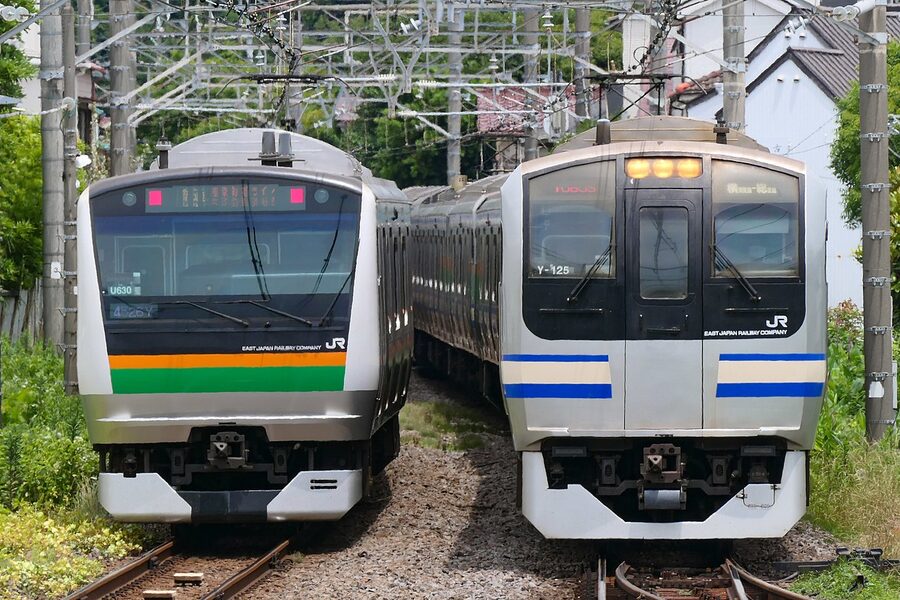
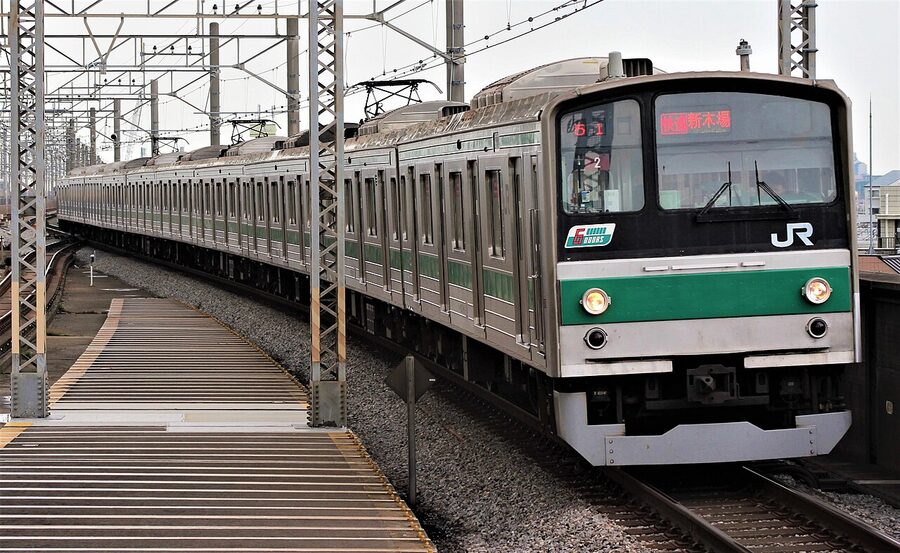
06:42 at Yokosuka, on the platform for the Tokyo direction. The train arriving is an E217 series, fifteen cars of stainless steel and 1990s plastic, the white-and-blue livery scuffed at the corners and the destination indicators showing red LEDs against a black field. The train behind it, two minutes later on the next departure, is an E235-1000, also fifteen cars, also white-and-blue, but the front cab is taller, the destination indicators are full-colour, and the interior is laid out for crush loads in a way the older train never was. Same line, same stopping pattern, same fare. Two generations of rolling stock at the same platform, on consecutive trains, in October 2025. The E217 is being retired one set at a time. The E235-1000 is what comes next. If you ride the Yokosuka Line into the city in the next eighteen months, this is the moment you are catching it in.
In This Article
- The two trains that do most of the work
- E235 series: the flagship, where it shows up
- E233 series: the workhorse the brochure does not flatter
- The E231 series and what it tells you about JR East priorities
- The line by line
- The Yamanote Line and what it taught JR East
- The Keihin-Tohoku and Negishi Lines
- The Chuo Rapid and Chuo-Sobu Local: same name, different trains
- The Yokosuka and Sobu Rapid Lines
- The Joban Line and the speed war with Tsukuba Express
- The Saikyo, Yokohama, Joban Local, Nambu, Musashino, and Keiyo Lines
- The limited expresses and what they cost
- E657 series: the Hitachi and Tokiwa
- E353 series: the Azusa and Kaiji
- E259 series: the Narita Express and Marine Express Odoriko
- E261 series: the Saphir Odoriko
- The Shinkansen fleet, in order
- E5 series: the Tohoku and Hokkaido flagship
- E6 series: the Akita Shinkansen
- E7 series: the Hokuriku and Joetsu
- E2 series and what is left of the older Shinkansen fleet
- Where to actually catch them: practical notes
- Tokyo Station: the four-platform calculus
- Shinjuku and the JR East commuter rush
- Suica, IC cards, and the limited-express ticketing trap
- Comparing JR East across the operator network
- The JR East passes, briefly
- What the next ten years probably look like
- The verdict
This is a guide to what runs on East Japan Railway Company (JR East) lines. It is rolling-stock-led, because everything else flows from the rolling stock: how the line feels, how often it runs, what the surcharge gets you, whether the seats are right for a Saturday outing or only for getting through Monday morning. JR East operates 7,302.2 km of route across 70-plus lines in eastern Honshu, and it has somewhere over 12,000 cars in revenue service at any one moment. But the answer to “which train will I be on” reduces, in 2026, to about a dozen series numbers. This article is the dozen, in order of how often you are going to see them.
The two trains that do most of the work
If you ride a JR East commuter train in central Tokyo on a weekday morning, statistically you are on either an E235 series or an E233 series. The two between them cover the Yamanote Line, the Chuo Rapid Line, the Keihin-Tohoku Line, the Yokohama Line, the Saikyo Line, the Joban Local Line, the Tokaido Line, the Takasaki Line, the Utsunomiya Line, the Keiyo Line, the Nambu Line, the Musashino Line, the Yokosuka and Sobu Rapid Lines, the Chuo and Sobu Local lines (the yellow trains), and a few outliers. Everything else is detail.
E235 series: the flagship, where it shows up

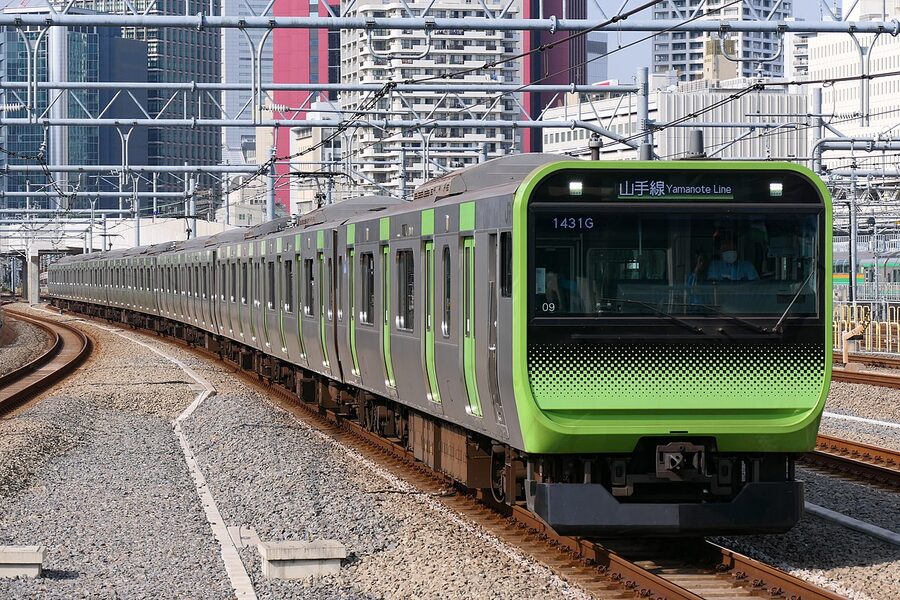
The E235 series entered revenue service on 30 November 2015. The first set replaced an E231-500 on the Yamanote Line; full Yamanote replacement took until early 2020. From 21 December 2020, a longer 15-car variant designated the E235-1000 began running on the Yokosuka and Sobu Rapid Lines, where it is now displacing the 1994-vintage E217 series at the rate of a few sets a month. Those two assignments, the Yamanote loop and the Yokosuka/Sobu Rapid through-running pair, are the only places you will board an E235 in 2026. JR East has been clear in its public statements that no further deployment is planned: this is the train for the high-visibility lines, not the workhorse.
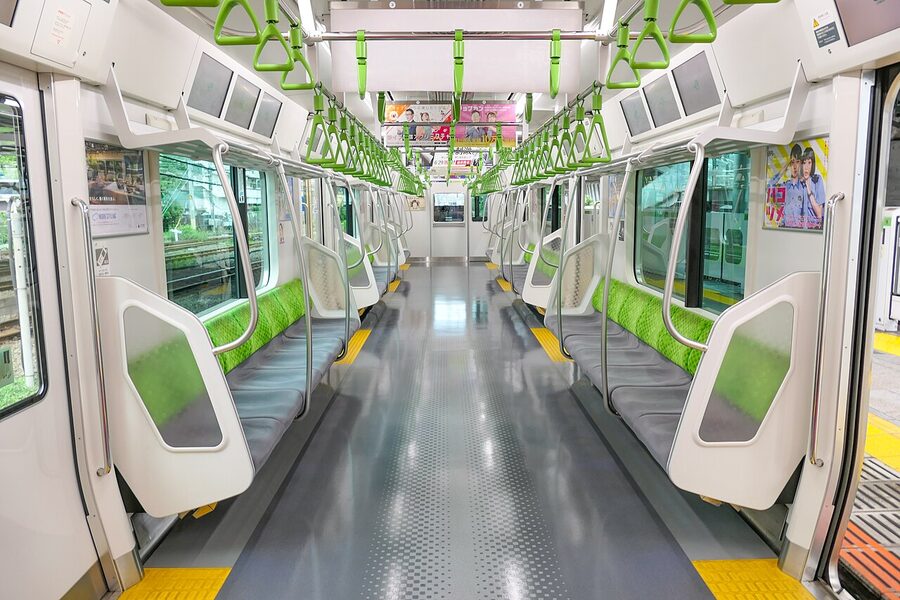
What makes the E235 different, beyond the design language, is the train management system. Where the E233 ran on TIMS, the E235 runs on INTEROS, which lets the driver and the operations centre see the train as a single networked vehicle: car-by-car loading from weight sensors, real-time fault flags, predictive HVAC that pre-cools the next carriage based on the boarding rate at the previous one. JR East does not advertise this much, because none of it is the kind of thing you can put on a poster, but it is why the train was built. The Yamanote, with about 1.1 million daily riders and a 64.5 km loop that runs every 2-4 minutes at peak, is the line where shaving 30 seconds off a station dwell time is worth the capital outlay. The Yokosuka and Sobu Rapid pair, which feed the Marunouchi business district from both sides via the Tokyo underground tunnel, is the second.
E233 series: the workhorse the brochure does not flatter
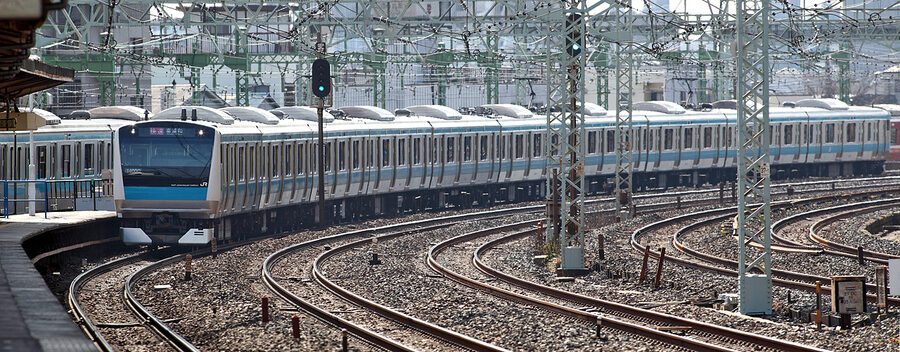
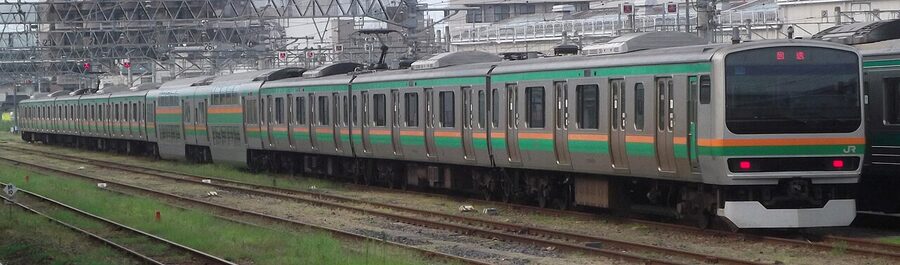
Where the E235 is the flagship, the E233 is everything else. JR East has built more than 3,000 cars of the type since 2006, the largest single fleet in the JR group, and runs them across 22 lines. By sub-series: the 0 series on the Chuo Rapid and the Ome and Itsukaichi branches, the 1000 on the Keihin-Tohoku and Negishi Lines, the 2000 on the Joban Local Line (and through-running into Tokyo Metro Chiyoda Line), the 3000 on the Tokaido Main, Takasaki, and Utsunomiya Lines, the 5000 on the Keiyo, the 6000 on the Yokohama, the 7000 on the Saikyo (and through to the Rinkai Line and Tokyo Waterfront Area Rapid Transit), the 8000 on the Nambu, and the 8500 (rebuilt cars) topping up Nambu service. If you have ridden a green-and-orange or green-and-yellow EMU into Tokyo from the suburbs in the last decade, you have been on an E233.
The E233 won the 2007 Laurel Prize from Japan’s Railfan Club, which was the rail-industry equivalent of getting a quiet thumbs-up from the people who ride the trains for fun rather than commute on them. What it represented was a complete redesign around redundancy: the E233 has duplicated traction motors and brakes, paralleled control systems, and a body shell rebuilt with reinforced ring-frame structure after the lessons of the JR West Fukuchiyama Line derailment in April 2005. The point of the E233 is not features. The point is that it does not break down on you.
The E231 series and what it tells you about JR East priorities
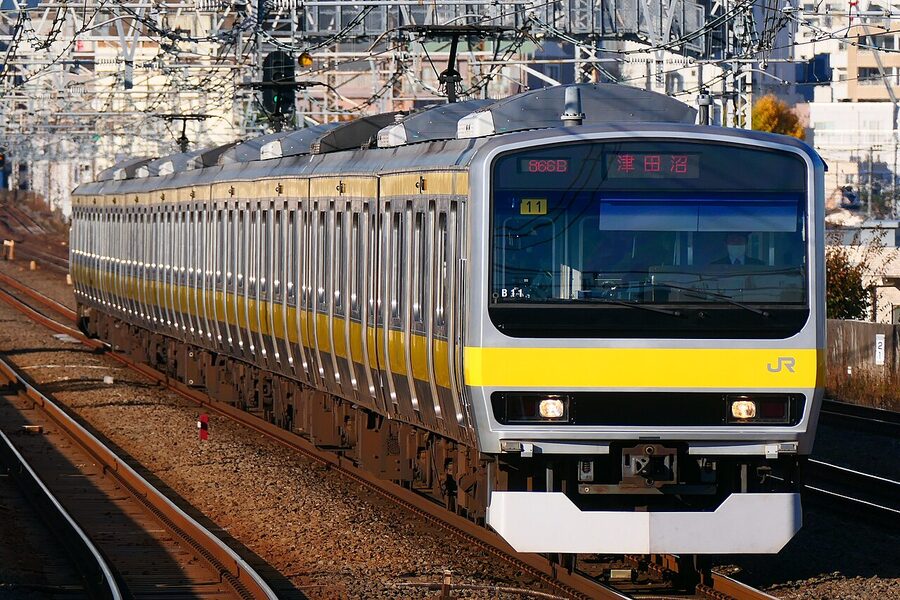
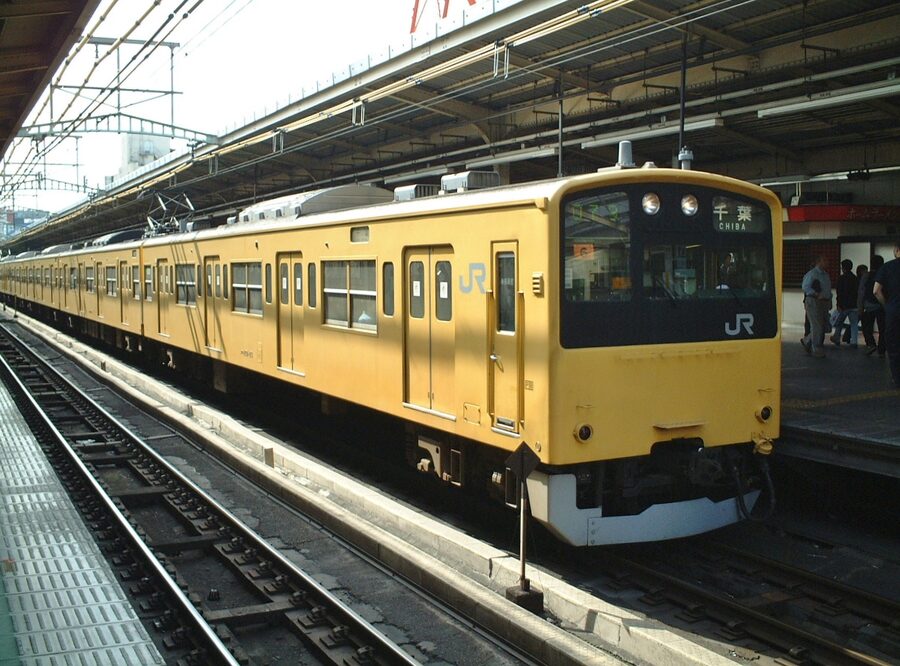
Before the E235 and the E233 there was the E231. JR East built the E231 from 1998 onwards as the standard commuter train of the early 2000s, and it is still on the Chuo-Sobu Local Line (the yellow trains running between Mitaka and Chiba), on parts of the Joban Local Line, on the Tokaido and Joban Lines as the E231-1000 with green-car double-decker insertions, and on Tohoku and Takasaki Line through-services. It has not been retired. It has not even started to be retired in any visible volume. In 2026 you board an E231 about as often as you board an E235.
The reason the E231 hangs on is that JR East is unsentimental about asset replacement: a train gets retired when its maintenance cost crosses the curve, not when it stops looking modern. The E231-500 (the original Yamanote variant) lasted exactly long enough to be displaced one-for-one by the E235; the E231-0 and E231-1000 stay because they are still cheaper to keep than to replace. The Chuo-Sobu Local trains may finally start coming off the books from 2027 onwards, but the timetable is internal and JR East has not committed to it publicly. If you want to ride one before it goes, it is the line of yellow EMUs running on the elevated tracks above Tsudanuma. They are not pretty. They work.
The line by line
The point of having a dozen series numbers is being able to read the platform indicator and know what is coming. Here is the line-by-line breakdown for what runs in central Tokyo and the Kanto suburbs in 2026, in roughly the order you will encounter the lines if you arrive at Tokyo Station and start exploring outward.
The Yamanote Line and what it taught JR East
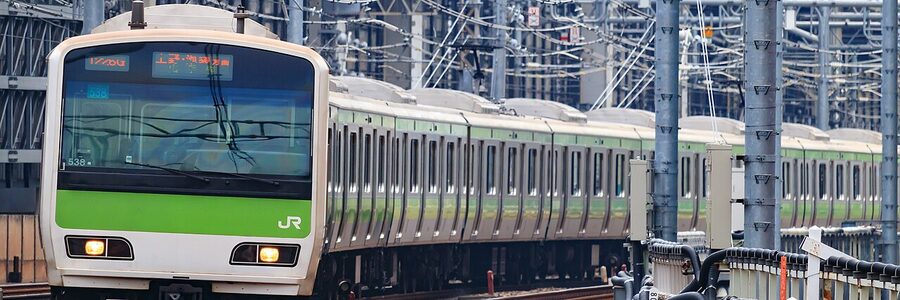
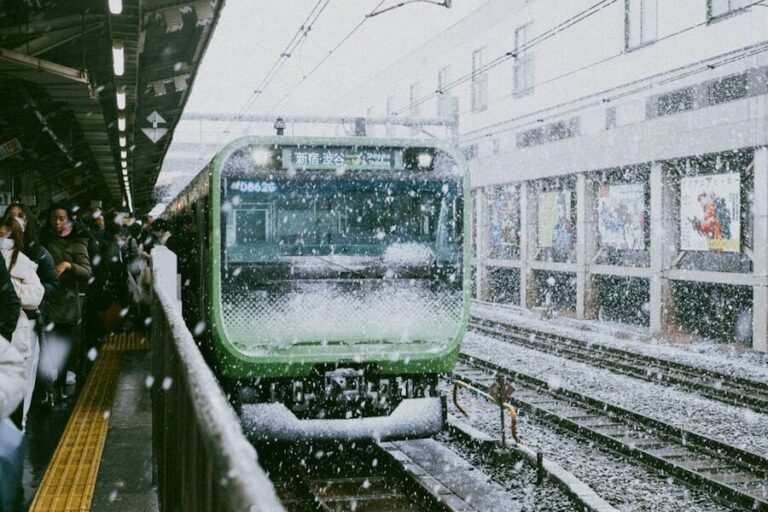
The Yamanote is the loop. 34.5 km of double-tracked elevated and surface line connecting Tokyo, Shinagawa, Shibuya, Shinjuku, Ikebukuro, Ueno, and back to Tokyo. Service interval at peak is 2 minutes; off-peak it relaxes to 4. Every train is an E235-0 in 11-car formation, all-green band on white. The loop runs in two directions, called outer (sotomawari, clockwise) and inner (uchimawari, anticlockwise) on the timetable. JR East replaced the E231-500 fleet between November 2015 and January 2020; the last E231 ran out of regular Yamanote service on 20 January 2020. The replacement was complete enough that you can ride the loop today and not see anything else.

What the Yamanote taught JR East is that the loop is the laboratory. Every major commuter EMU since the 205 series has had its first volume deployment on the Yamanote: the 205 in 1985, the E231-500 in 2002, the E235-0 in 2015. New rolling stock gets shaken down on the loop because the loop’s volume and visibility are the most punishing combination in the network: a fault halts a million riders, and the platforms are full of railfans with cameras. Get the Yamanote right and you can deploy elsewhere with confidence. Get it wrong and the photographs are everywhere by lunchtime.
The Keihin-Tohoku and Negishi Lines
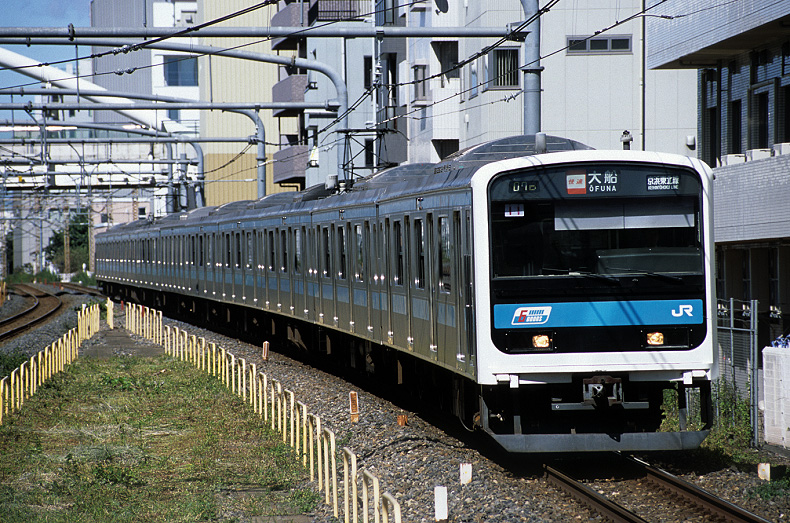
The Keihin-Tohoku and Negishi Lines run together as a single 81 km service from Omiya in northern Saitama, through central Tokyo, down to Yokohama and on to Ofuna. Sky-blue band; E233-1000 in 10-car formation. Off-peak interval 4-6 minutes; peak interval down to 2-3. The line shares track with the Yamanote between Tamachi and Tabata in central Tokyo, which is why a Yamanote ticket and a Keihin-Tohoku ticket cost the same and the platforms are arranged for cross-platform interchange.
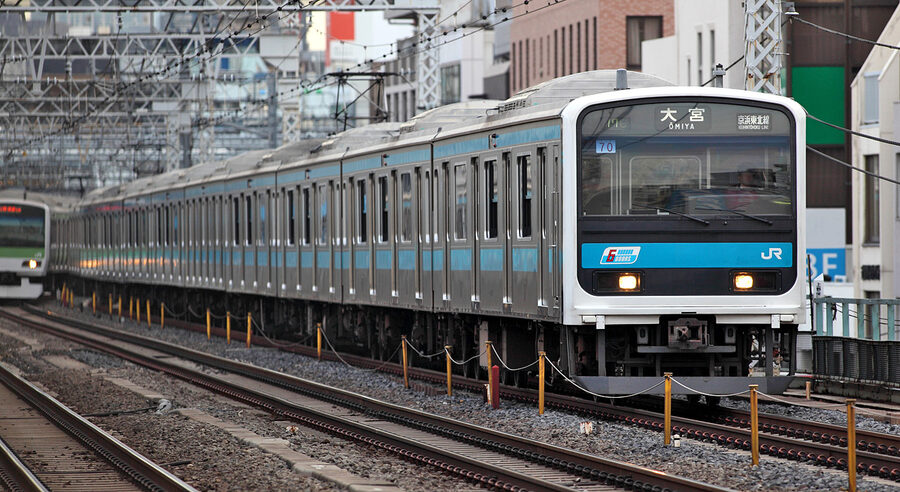
From Tokyo down to Yokohama, the Keihin-Tohoku is the operationally easiest way to make the trip. It is also slower than the Tokaido Line on the parallel track, which is what you take if you have a real journey south of Yokohama. The trade-off is that the Keihin-Tohoku stops at all 36 stations and the Tokaido skips most of them. For a tourist heading from Akihabara to Yokohama Chinatown for the day, the Keihin-Tohoku in mid-morning, in a quieter carriage at the back, is the easier ride.
The Chuo Rapid and Chuo-Sobu Local: same name, different trains
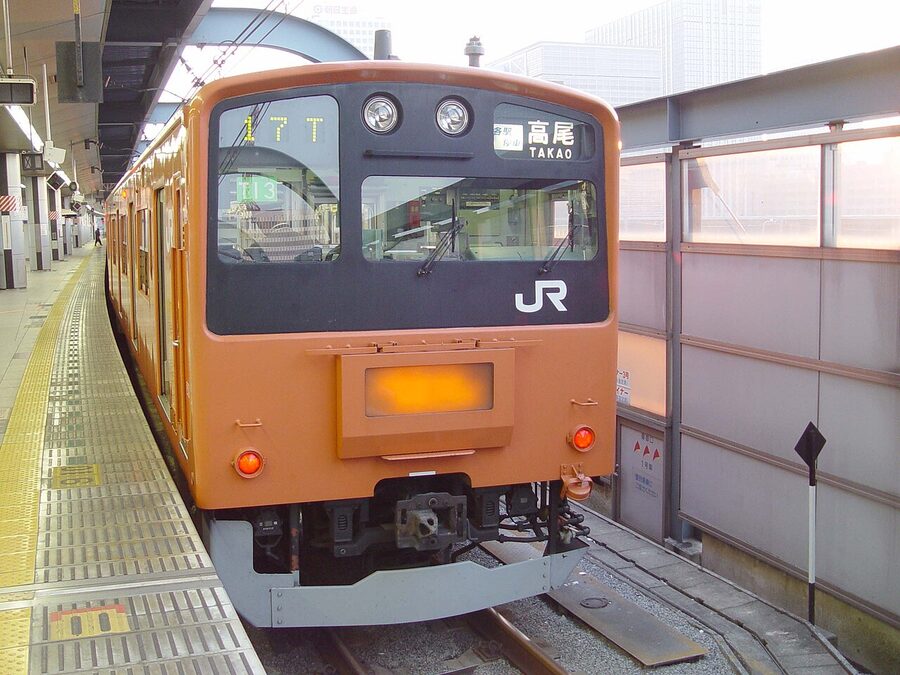
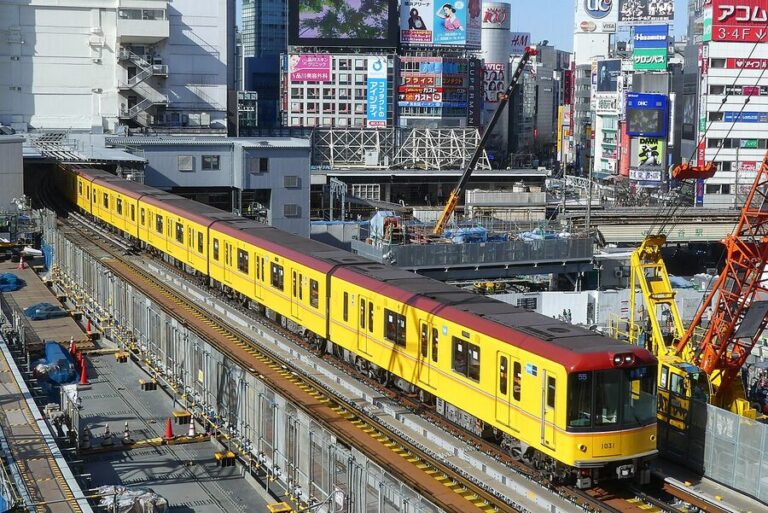
The Chuo Line through central Tokyo is two operations stacked on top of each other. The Chuo Rapid (orange band) runs the express stopping pattern from Tokyo Station to Mitaka and on to Takao, with E233-0 series in 10-car formation; the Chuo-Sobu Local (yellow band) runs all stops between Mitaka and Chiba, with E231-0 in 10-car. They use different platforms at major stations and they have different timetables. From Shinjuku to Tokyo Station, the Chuo Rapid takes 13-14 minutes and stops at one intermediate station (Yotsuya); the Chuo-Sobu Local takes 18-20 minutes and stops at every station including Yotsuya, Ochanomizu, and Akihabara before bending south to Tokyo at Suidobashi.
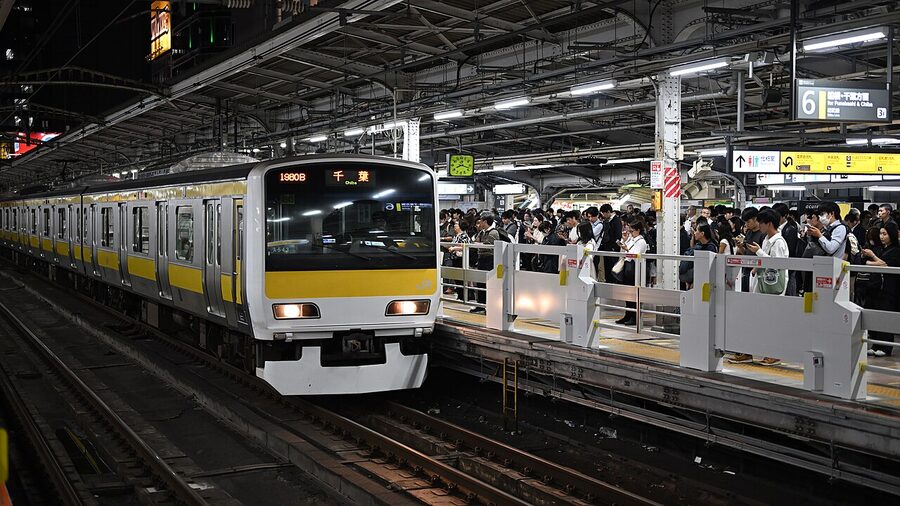
The Chuo Rapid is the line you ride to Mitaka for the Ghibli Museum, to Kichijoji for Inokashira Park, to Tachikawa to change for the Ome Line, and out to Otsuki to change for the Fuji Excursion service. The Chuo-Sobu Local is the line you ride between intermediate central-Tokyo stations when you cannot use the Yamanote. Old Tokyo hands learn to use the local for any trip across the centre that is not on the loop. The trains are slower, but they go places the loop does not, and on a wet evening at Mitsukoshimae the option of a yellow-banded EMU back to your hotel via Akihabara is worth knowing about.
The Yokosuka and Sobu Rapid Lines
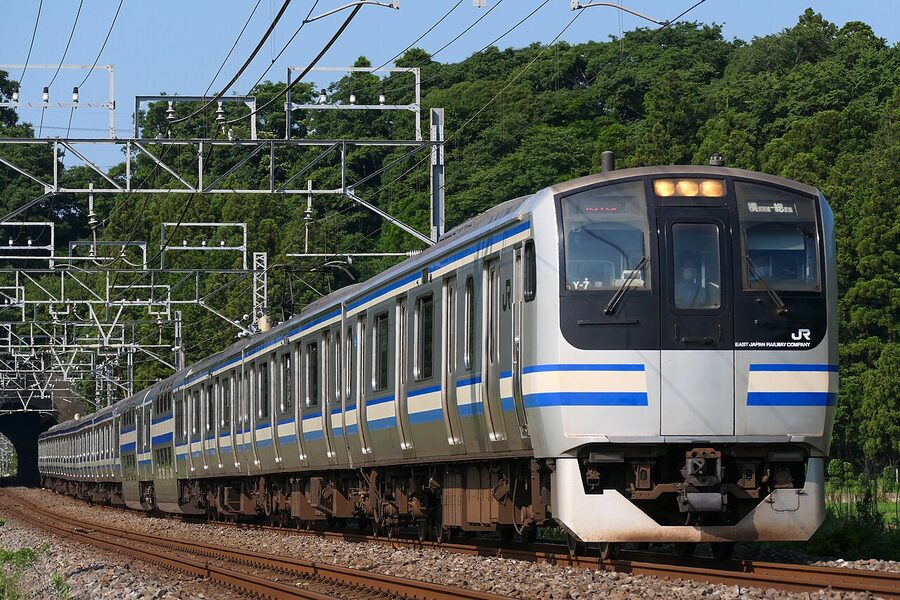
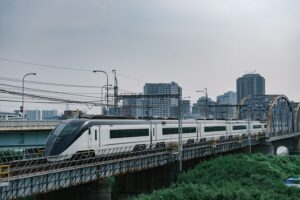
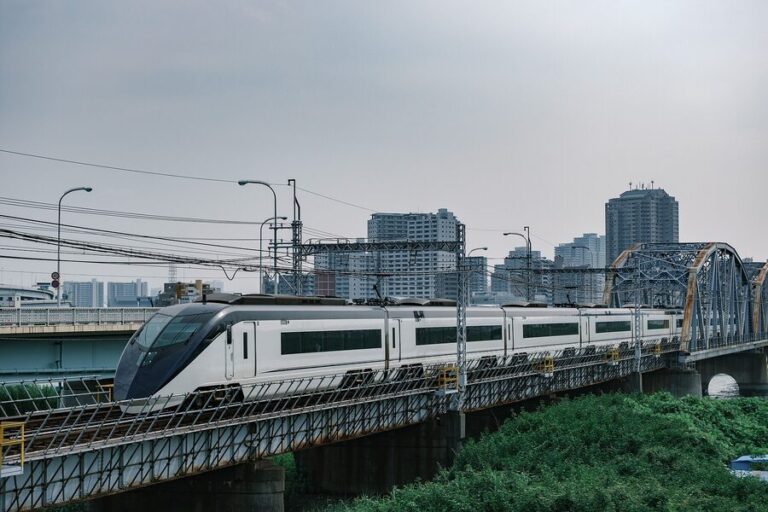
The Yokosuka and Sobu Rapid Lines through-run as a single 113 km service from Kurihama on the Miura Peninsula, up through Yokohama, into central Tokyo via the underground tunnel between Tokyo Station and Shinagawa Station, and out east to Chiba and Narita Airport. The line runs E217 series and E235-1000, in 15-car formation (basic 11-car plus 4-car booster). The E217 dates from December 1994: it was the first new-generation commuter EMU built for the Yokosuka and Sobu Rapid pair, replacing the 113 series in stages until 4 December 1999. JR East built 745 cars of the type in five years.
The replacement is the E235-1000, in service since 21 December 2020. As of late 2025, JR East had delivered enough E235-1000s to displace about three-quarters of the E217 fleet, with the rest tracked for retirement by the end of 2028. If you ride the Yokosuka in the next two years you will catch both. The most reliable way to get an E235-1000 specifically is the morning Sobu Rapid runs from Tokyo Station outbound, where the new sets are concentrated; the older E217s tend to work the Yokosuka direction in the off-peak.
The Joban Line and the speed war with Tsukuba Express
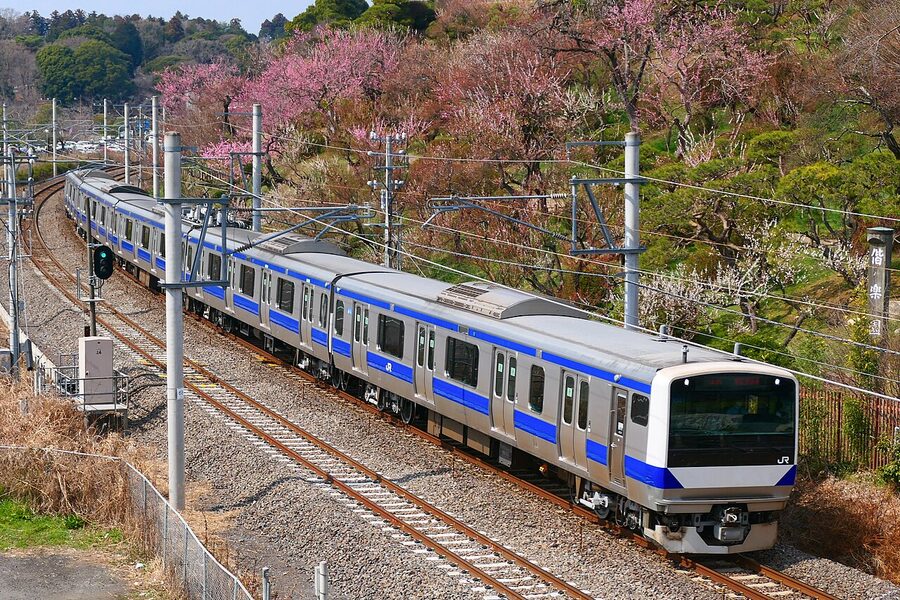
The Joban Line splits into two services at Toride. South of Toride and including the underground stretch through Tokyo Metro Chiyoda Line trackage, you have the Joban Local, with E233-2000 series stock and a 10-minute interval into central Tokyo via Otemachi. North of Toride, the Joban Medium-Distance and the Limited Express services run E531 series and E657 series respectively. The split is geographic, mechanical, and political: 30 km north of Tokyo the catenary changes from DC 1,500 V to AC 20 kV at the Fujishiro substation, and only AC/DC dual-voltage trains can run all the way through. The E531 is one of those trains. It is the reason the Joban Line works as one network rather than two.
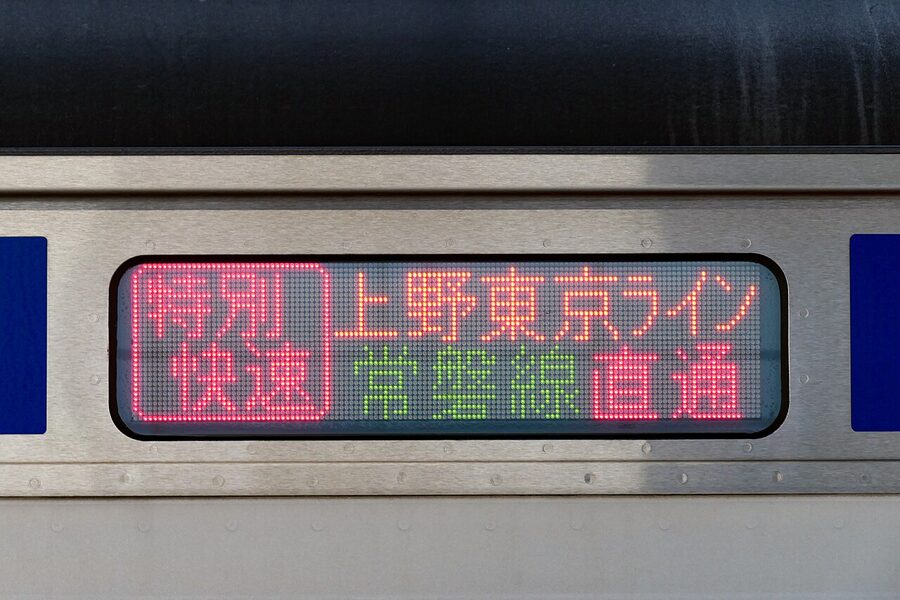
The E531 was developed for one specific reason: in August 2005 the Tsukuba Express opened, parallel to the Joban Line at a higher operating speed. The Joban needed a 130 km/h-capable train or it would lose riders. The E531 entered service in July 2005, two weeks before Tsukuba Express did, with a top speed of exactly 130 km/h, dual-voltage capability, and a wider body shell than the standard 209-series-derived stock. JR East does not always race private operators on speed, but when it does, the train arrives on time. Most of the technology in the E531 was rolled into the E233 a year later, which is why the E233 feels like a more refined train than the older E231: it inherited the Joban speed work.
The Saikyo, Yokohama, Joban Local, Nambu, Musashino, and Keiyo Lines
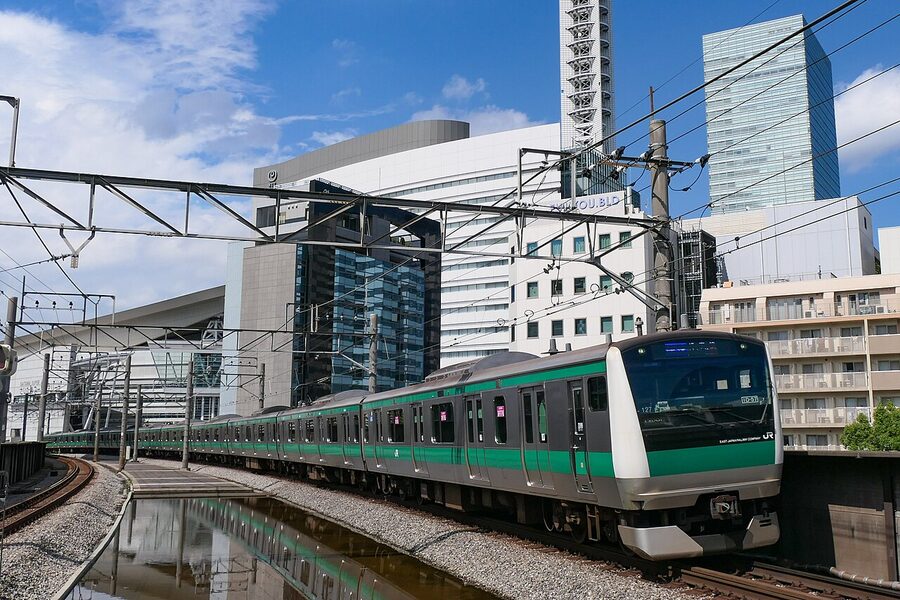
These six lines share the same baseline rolling stock (E233 in the appropriate sub-series) but each has small differences worth knowing. Saikyo is the cross-Tokyo north-south express that links Omiya, Ikebukuro, Shinjuku, Shibuya, and Osaki, with through-running south to the Rinkai Line into the Tokyo Waterfront. E233-7000 in 10-car. The Saikyo connects to the Tohoku Shinkansen at Omiya, which is why the line has more luggage racks than the average commuter EMU.
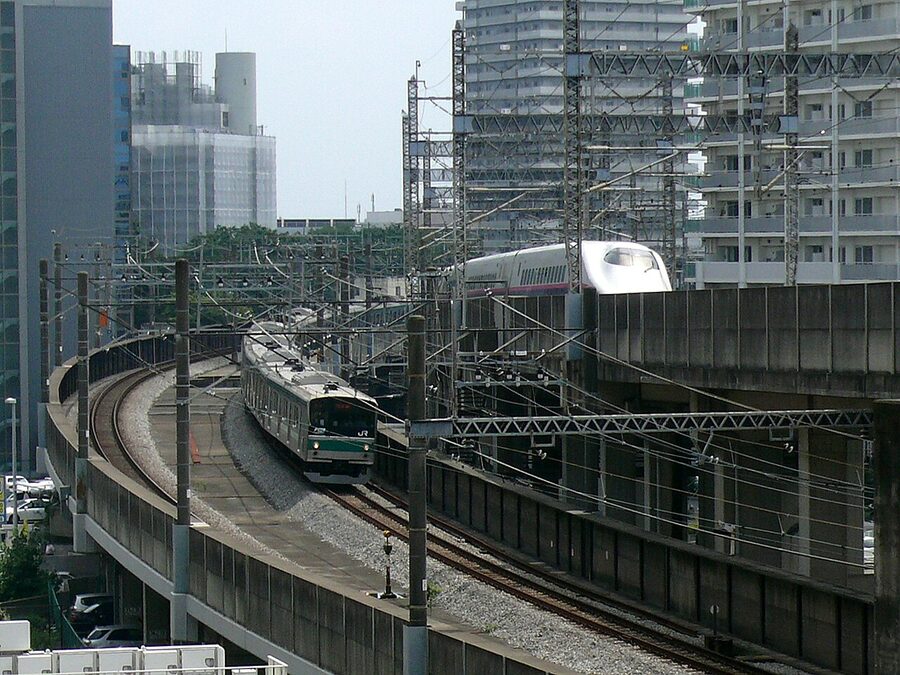
The Yokohama Line connects Higashi-Kanagawa (on the Keihin-Tohoku) westward through Shin-Yokohama, Machida, and Sagamihara to Hachioji, with E233-6000 series in 8-car. Service interval 6-8 minutes, dropping to 3-4 at peak. It is the suburban cross-route that ties the Tokaido corridor to the Chuo Rapid corridor without going through central Tokyo. If you are heading to Hakone via the Tokaido Shinkansen, the Yokohama Line is how you reach Shin-Yokohama from Hachioji.
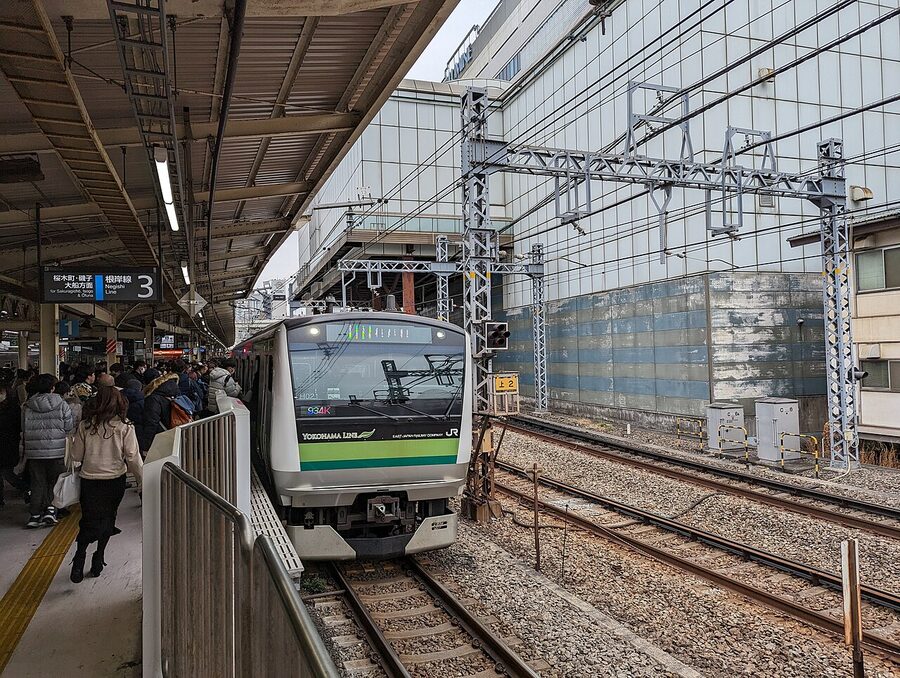
The Joban Local Line uses E233-2000 in 10-car, with through-running into Tokyo Metro Chiyoda Line at Ayase. The same train that picked you up at Kashiwa runs through Otemachi, Hibiya, Akasaka, and Omotesando without changing crew or rolling stock. The Tokyo Metro 16000 series and the Odakyu 4000 also run on this trackage on the reciprocal arrangement, which is a longer story you can read in the network notes on the Tokyo Metro fleet.
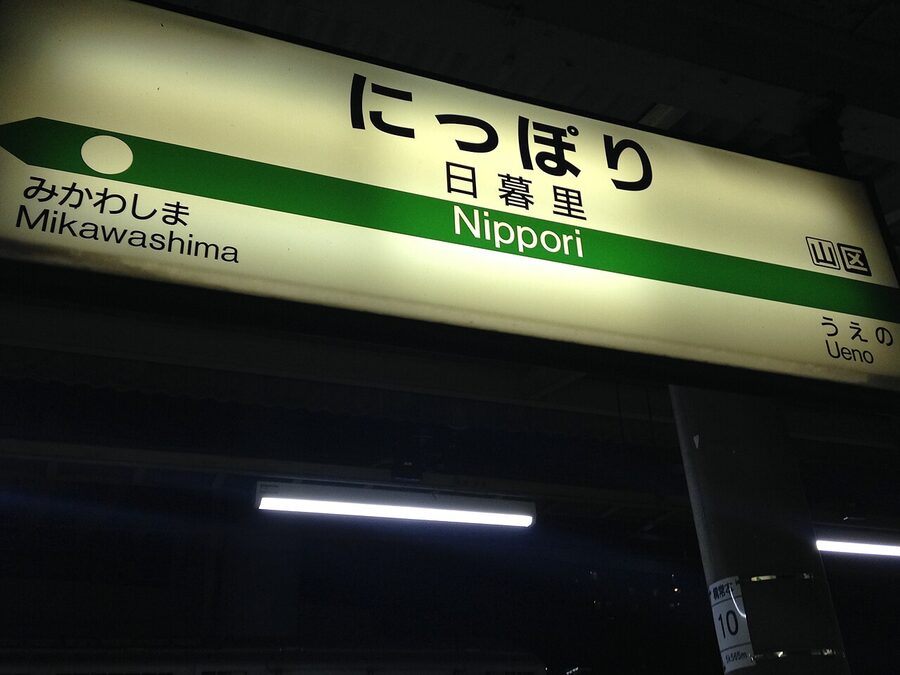
The Nambu Line (E233-8000 and E233-8500), the Musashino Line (209-500 and E231 mixed, in process of replacement by E233 series), and the Keiyo Line (E233-5000) are the suburban orbital and radial routes that close the network around Tokyo. The Nambu in particular runs an interesting suburb-to-suburb pattern from Kawasaki to Tachikawa, parallel to the Tama River, and is the line you take if you are traversing the southwest of the metropolitan area without going through the centre.
The limited expresses and what they cost
JR East runs limited express services on top of its commuter network: trains with reserved seats, surcharges, and dedicated rolling stock. Five fleets matter, with one more in service that gets specialised use.
E657 series: the Hitachi and Tokiwa
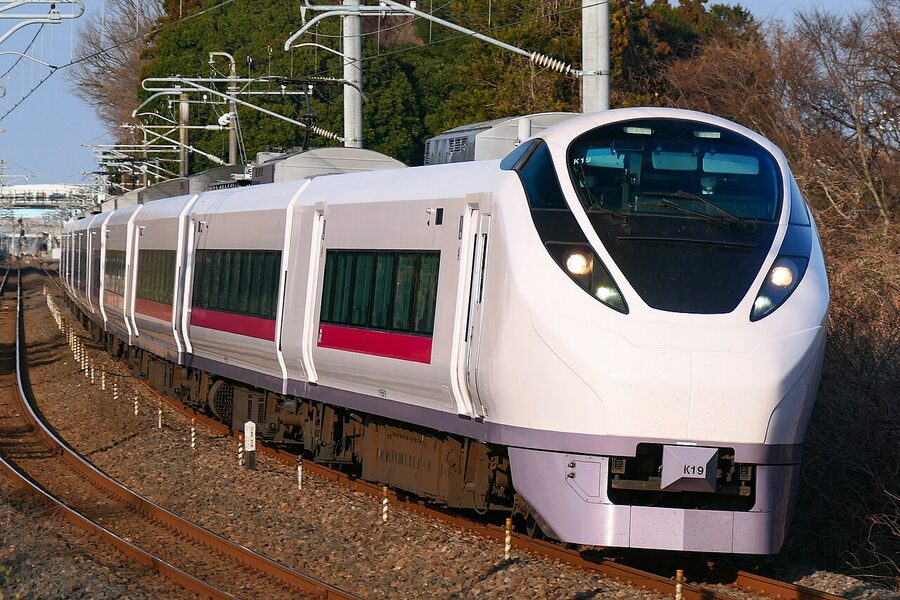
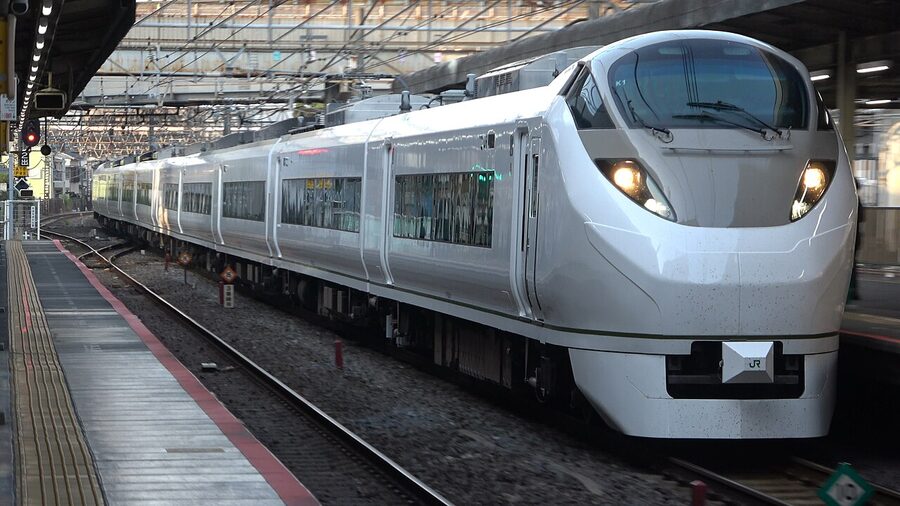
The E657 series replaced the older 651 series and 657-predecessor E653 on the Joban Line limited express services from March 2012 onwards. It runs the Hitachi (the longer-distance, Iwaki-bound service) and the Tokiwa (the shorter Joban runs to Mito, Katsuta, and Takahagi). 10-car formation, all-reserved on Hitachi, all-reserved with cheaper unreserved-equivalent pricing on Tokiwa. The reservation system is unusual: there are no traditional reserved/non-reserved cars; instead, an LED indicator above each seat shows green if a passenger has booked it ahead and red if it is currently sold. You can sit anywhere with a green light. The system catches first-time riders out, but it works.
E353 series: the Azusa and Kaiji
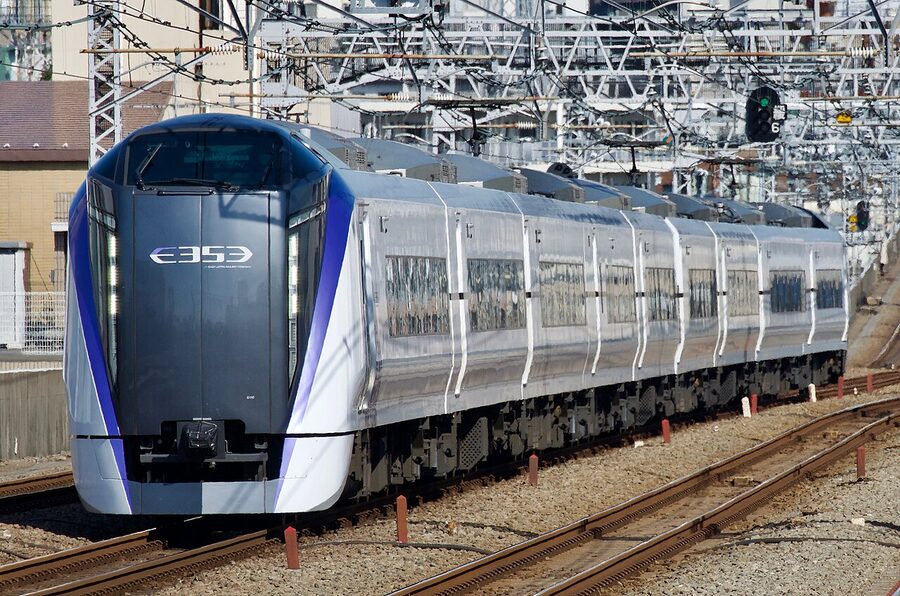
The E353 entered service on 23 December 2017, replacing the older E257 (which has since redeployed to the Odoriko services and shorter Hokuriku-area runs). 12-car basic and 9-car short formations; air-suspension tilt mechanism for the curved sections of the Chuo Main Line through the Yamanashi prefecture mountains. The full Shinjuku to Matsumoto Azusa is 2h 35m; the Kaiji to Kofu is 1h 25m. Reserved-seat fare for either is the same as the limited-express base, plus the journey-distance fare. JR Pass covered.
E259 series: the Narita Express and Marine Express Odoriko
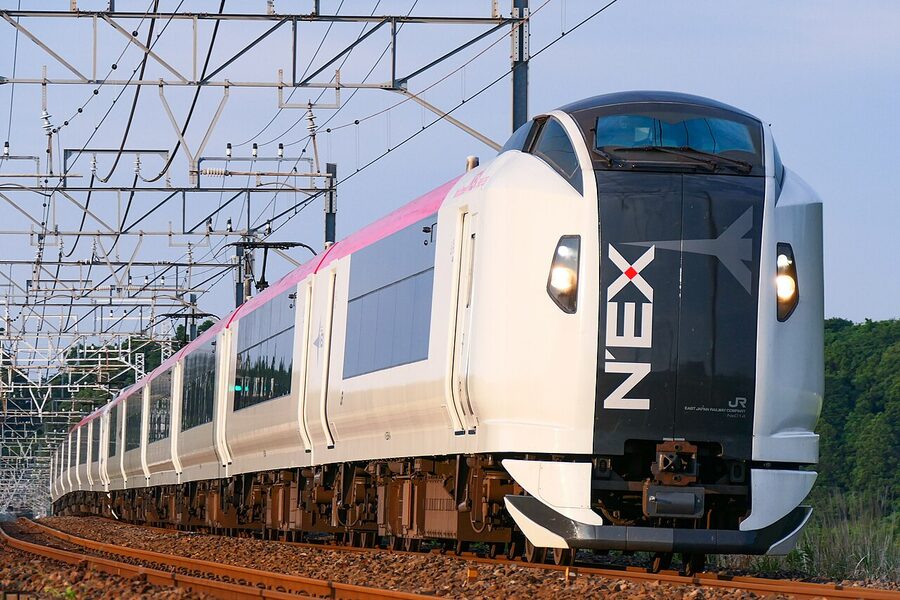
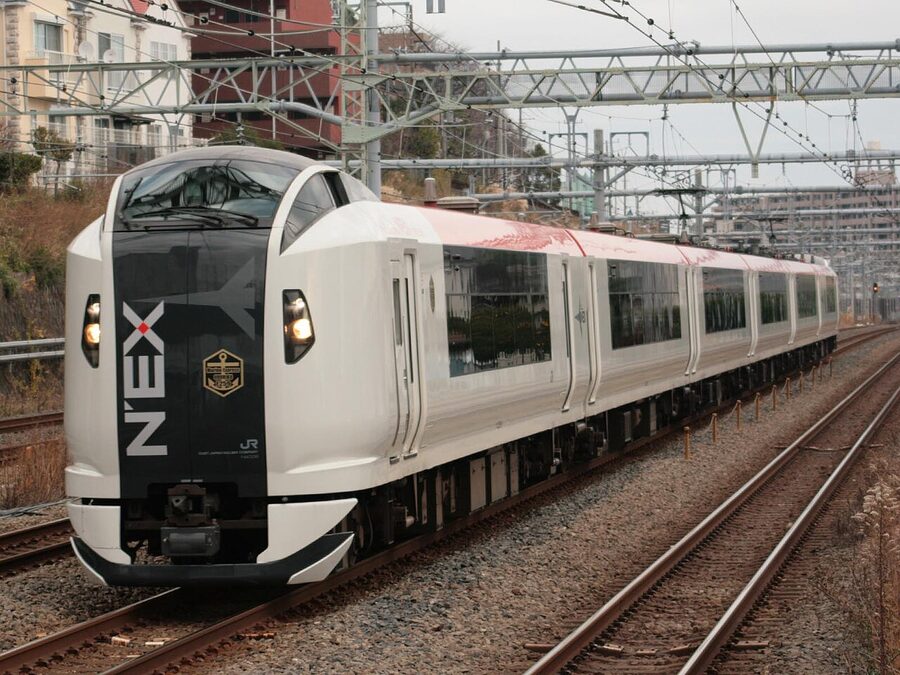
The E259 has run Narita Express since June 2009, replacing the original 253 series. From the airport it goes either to Tokyo and on to Shinjuku and Yokohama, or to Tokyo and on to Omiya, depending on the schedule. 6-car formation in the basic Narita Express service, paired up to 12-car at peak. The Narita Express is the official airport rail link for terminals 2 and 3 plus the older terminal 1, and JR runs it in 30-minute intervals during the day. The unromantic comparison: the Keisei Skyliner is faster (36 minutes versus 53 to Tokyo Station), cheaper (¥2,580 versus ¥3,070), and goes to a station that is slightly less central. Most travellers still take the Narita Express because it is the train the JR Pass covers and the through-running to Yokohama matters if your hotel is south of Tokyo Station.
E261 series: the Saphir Odoriko
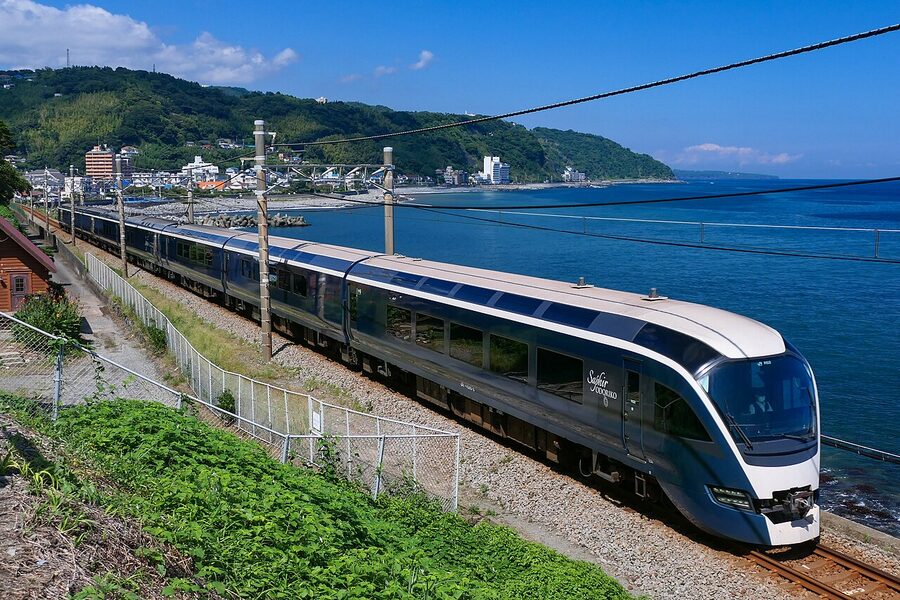
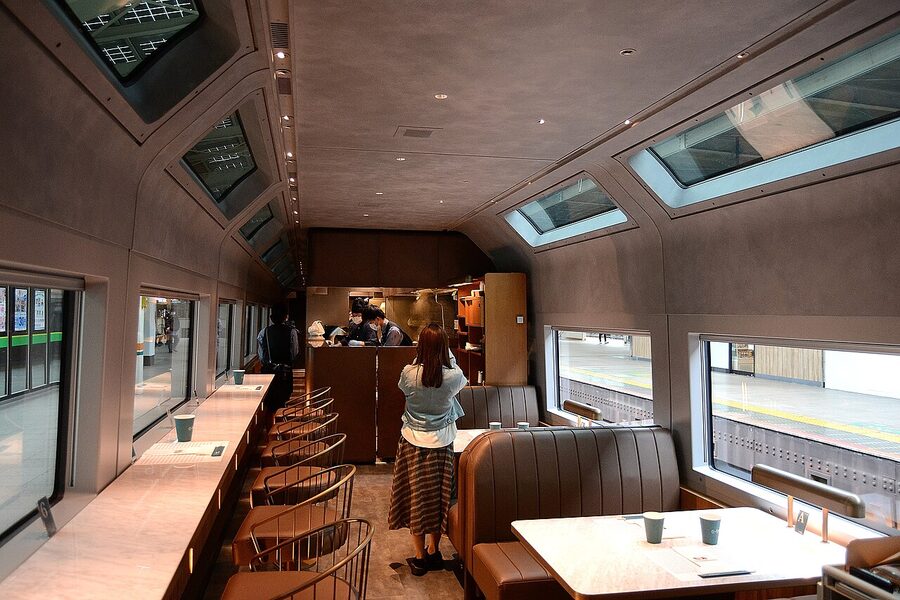
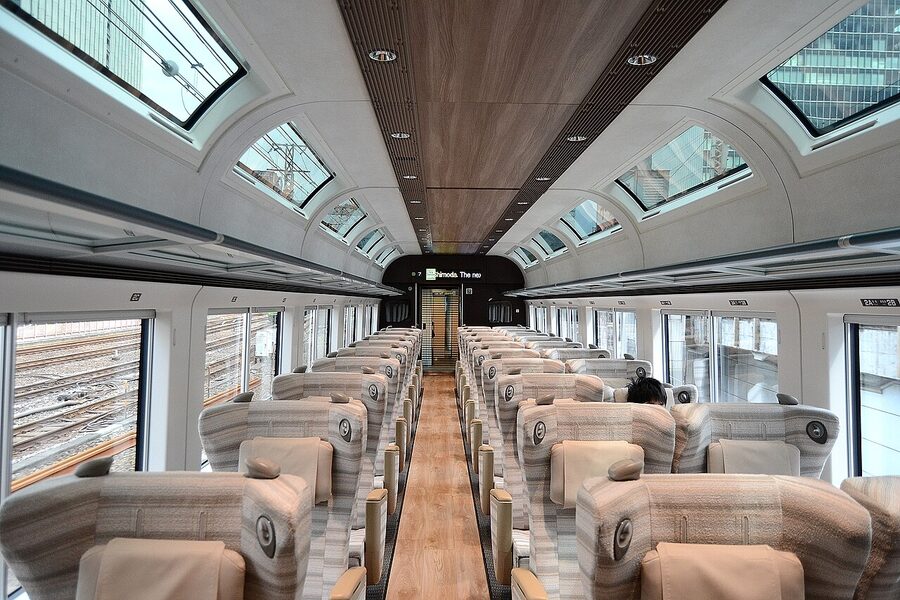
The E261 entered service on 14 March 2020 and is JR East’s deliberate experiment in a premium leisure-rail product. All-green-car formation: no standard cars, no unreserved seats. The Saphir Odoriko runs once or twice daily Tokyo to Izukyu-Shimoda via the Izu Peninsula, with a cafeteria car (cars 4) that serves Izu-area sushi and local craft beer at fixed seating with reservations made through the EkiNet app. It is more expensive than the regular Odoriko, but if you have read the Tobu Railway fleet piece on the Spacia X, the Saphir Odoriko is in the same product category: a luxury limited express on a tourist line, where the train itself is the destination for the morning of the trip.
The Shinkansen fleet, in order
JR East operates four Shinkansen lines from Tokyo Station and Ueno: the Tohoku, the Joetsu, the Hokuriku (jointly with JR West past Joetsumyoko), and the Yamagata and Akita mini-Shinkansen which run on the Tohoku trunk and branch off onto regauged conventional track. The fleet is, in 2026, four series.
E5 series: the Tohoku and Hokkaido flagship
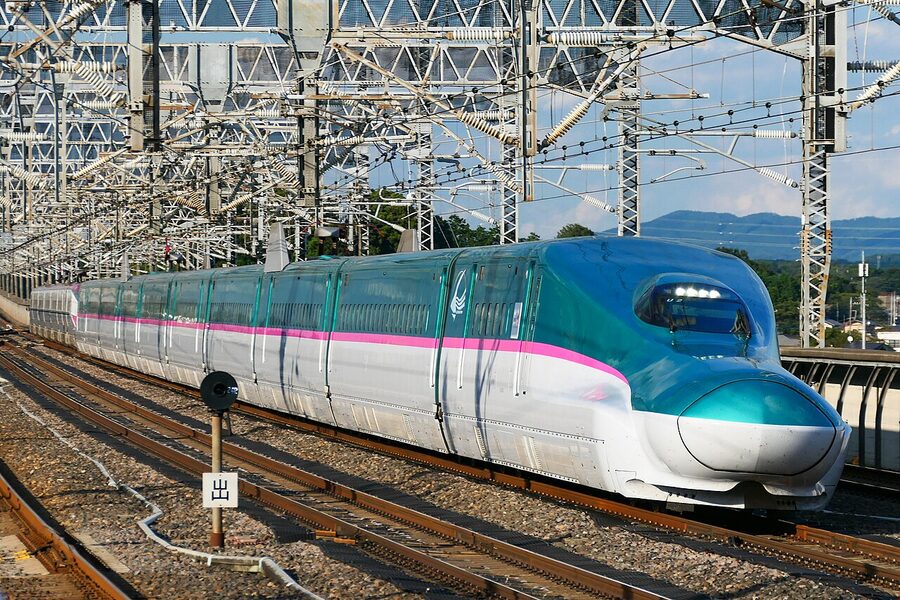
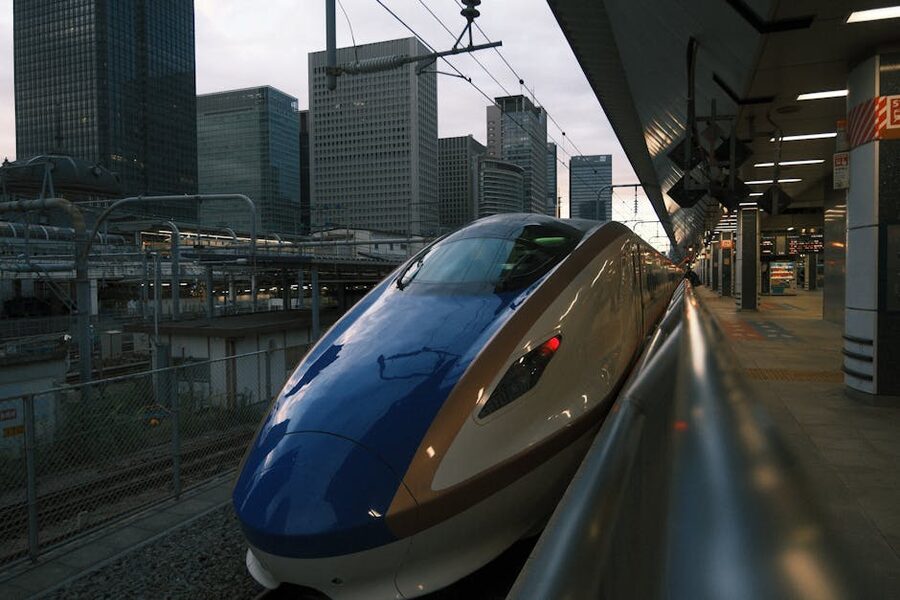
The E5 entered service on 5 March 2011, four days before the Tohoku earthquake (which suspended operations for several weeks while the line was repaired). It runs the Hayabusa (the express tier, Tokyo to Shin-Aomori, paired with an E6 at Morioka and continuing to Akita), the Hayate (slower Tohoku service), the Yamabiko (intermediate Tohoku stops), and the Nasuno (commuter Shinkansen). The 10-car standard formation is the basic E5; pair it with an E6 6-car for the Akita Shinkansen segment and you get a 16-car train south of Morioka.
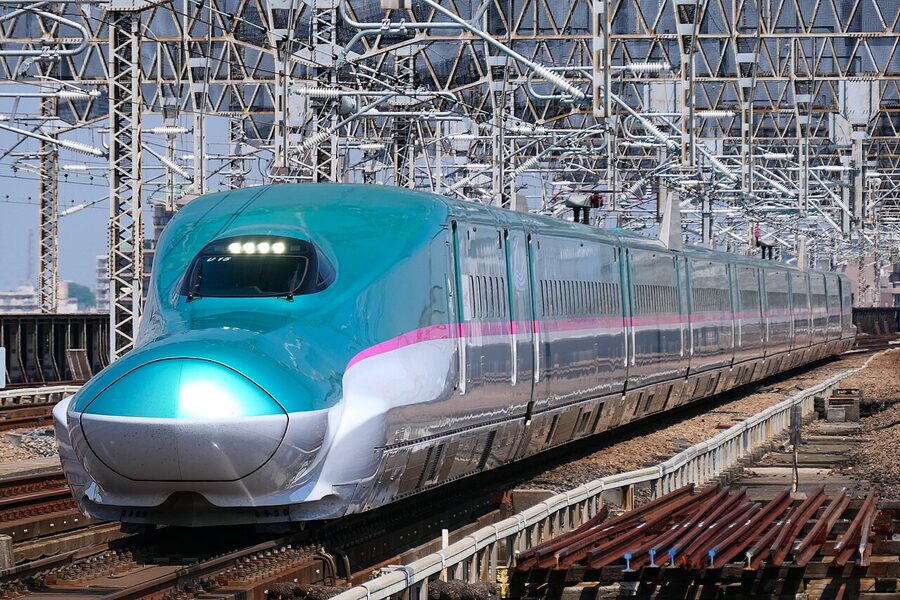
The E5 also runs the Hayabusa through the Seikan Tunnel under the Tsugaru Strait to Shin-Hakodate-Hokuto, the southern terminus of the Hokkaido Shinkansen. JR Hokkaido operates the H5 series in parallel on this run, which is mechanically identical to the E5 with a different livery. From 2031, when the Sapporo extension opens, the same E5/H5 combination will run all the way to Sapporo. From Tokyo to Sapporo today is a connecting trip: the Hokkaido Shinkansen ends at Shin-Hakodate-Hokuto, and you change to the Hokuto limited express for the final 3h 30m to Sapporo.
E6 series: the Akita Shinkansen
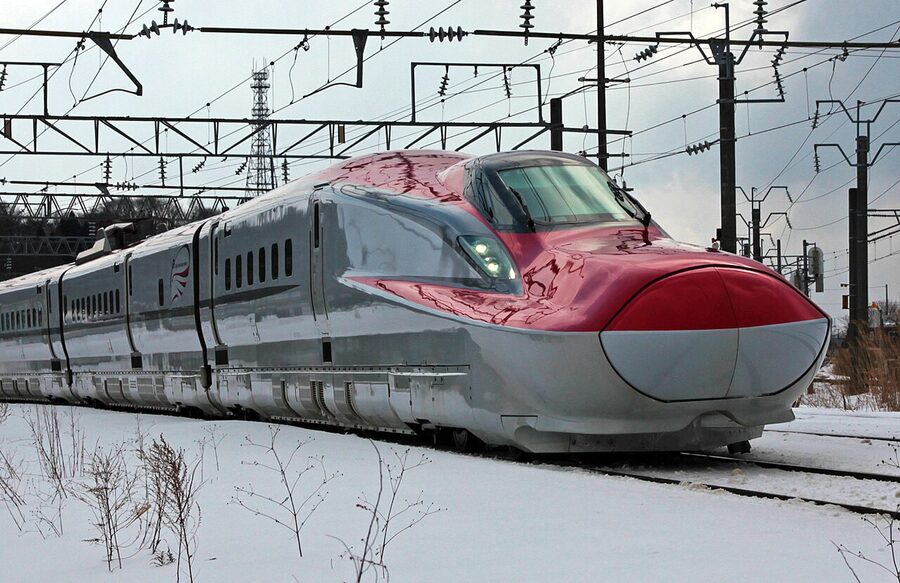
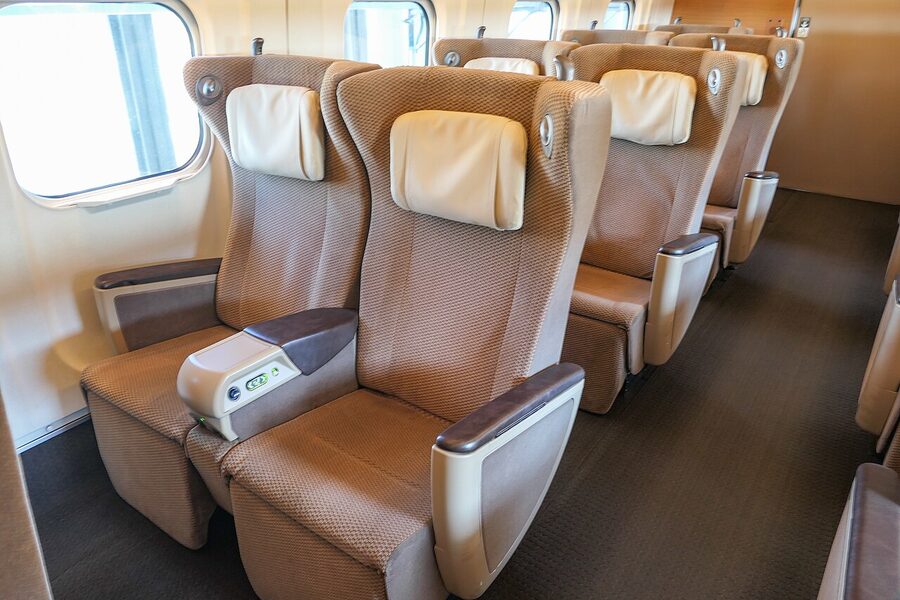
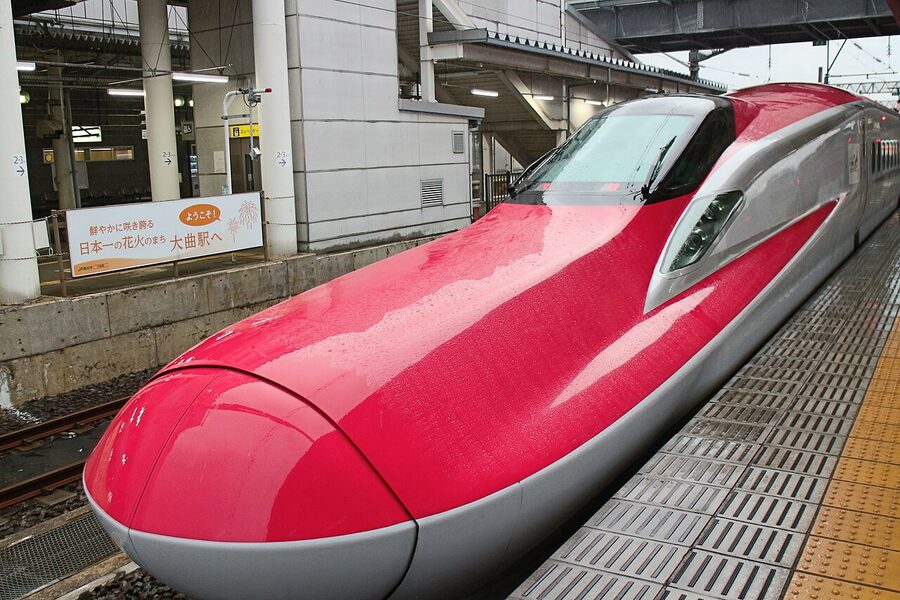
The E6 has run the Akita Shinkansen Komachi service since March 2013. 6-car formation, paired with the E5 between Tokyo and Morioka. The mechanical compromise is that the E6 is narrower than a full Shinkansen (so it can run on the regauged conventional track to Akita) but built for full-Shinkansen speed. South of Morioka it runs at 320 km/h paired with the E5; north of Morioka it slows to 130 km/h on the single-track conventional infrastructure. Tokyo to Akita: 3h 50m on the Komachi.
E7 series: the Hokuriku and Joetsu
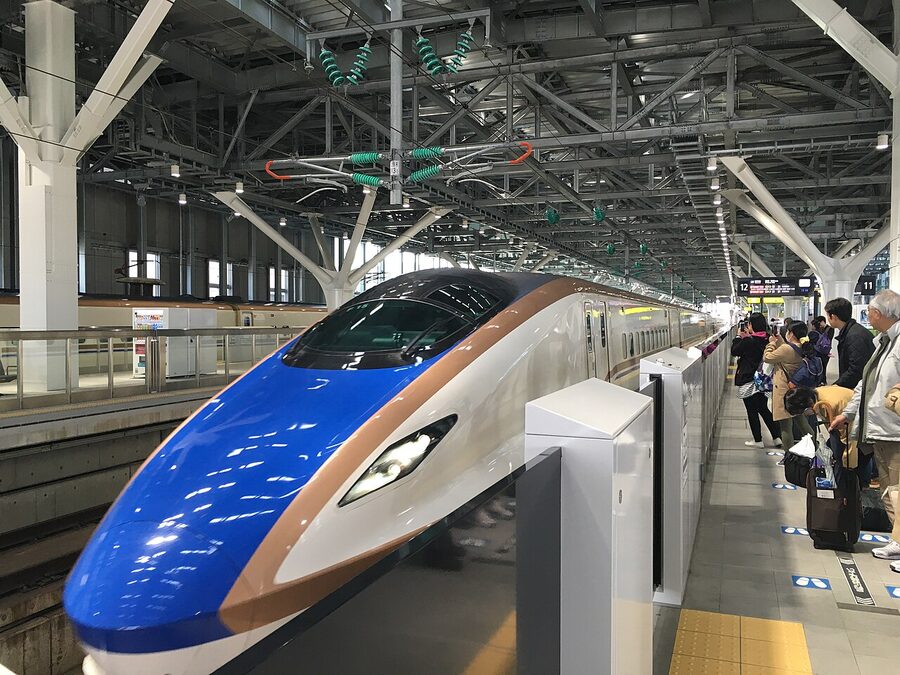
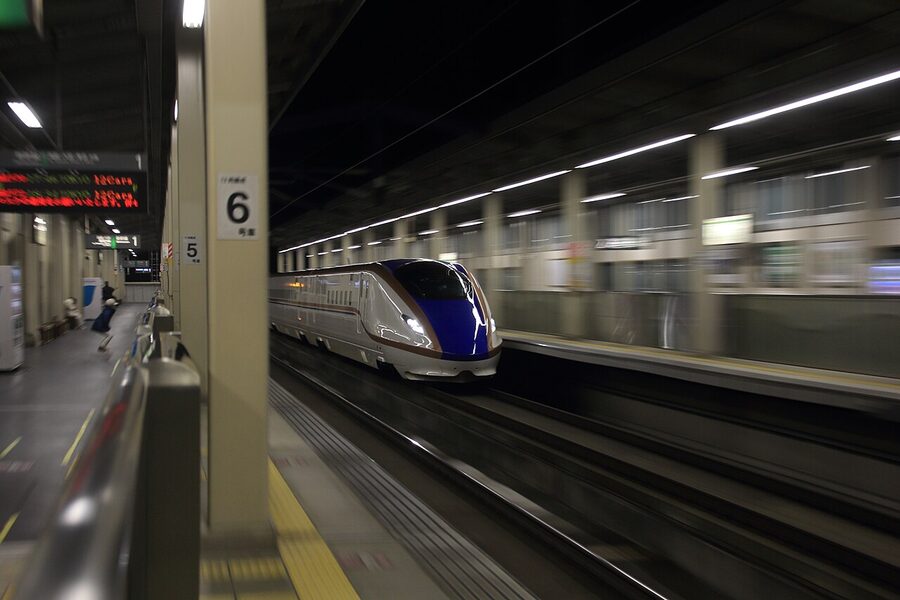
The E7 entered service on 15 March 2014 for the Hokuriku Shinkansen extension from Nagano to Kanazawa, and from March 2024 it now runs through to Tsuruga in Fukui prefecture. JR West runs the same train as the W7 series on the western half of the Hokuriku run. JR East also runs the E7 on the Joetsu Shinkansen (Tokyo to Niigata) since March 2014, where it replaced the older E2-1000. 12-car formation, with a Gran Class car at one end. Top speed on the Hokuriku is 260 km/h between Takasaki and Joetsumyoko; the Joetsu can run at 275 km/h on the long straight stretches into Niigata.
E2 series and what is left of the older Shinkansen fleet
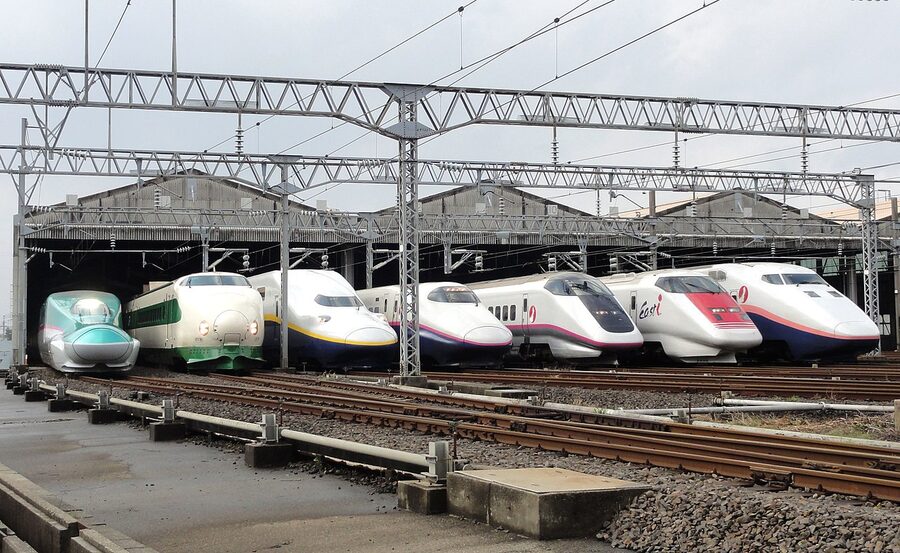
The E2-1000 still runs some Tohoku Shinkansen services (mostly Yamabiko and Nasuno commuter Shinkansen) although deployment shrinks year-over-year. JR East’s stated plan is to replace the remaining E2 sets with new E5 deliveries by the end of 2027. The E3 series still runs the Yamagata Shinkansen Tsubasa service, paired with an E2 or E5 between Tokyo and Fukushima where the Tsubasa branches off the Tohoku trunk to take the regauged Yamagata route. The E3 will be replaced by the new E8 series, which entered service in March 2024 and is in active rollout: the full Tsubasa fleet should be E8 by mid-2027.
Where to actually catch them: practical notes
Knowing which series runs which line is a starting point. The harder thing is being on the right platform, in the right carriage, at the right time. A few specifics that come up.
Tokyo Station: the four-platform calculus
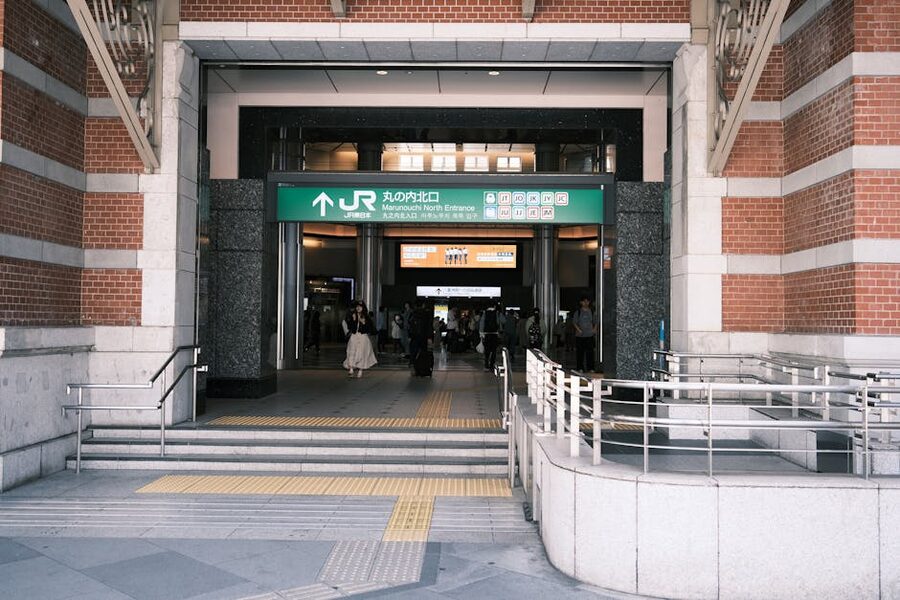
Tokyo Station handles four operationally separate Shinkansen networks at one terminal: the JR Central Tokaido on the Yaesu side, the JR East Tohoku/Joetsu/Hokuriku/Yamagata/Akita on the Marunouchi side, and the conventional JR East lines (Yamanote, Keihin-Tohoku, Chuo Rapid, Yokosuka/Sobu Rapid, Tokaido, Joban) at platforms 1 to 13. The ticket gates are different. Carry your reservation ticket and your IC card together: the Shinkansen gates need both.
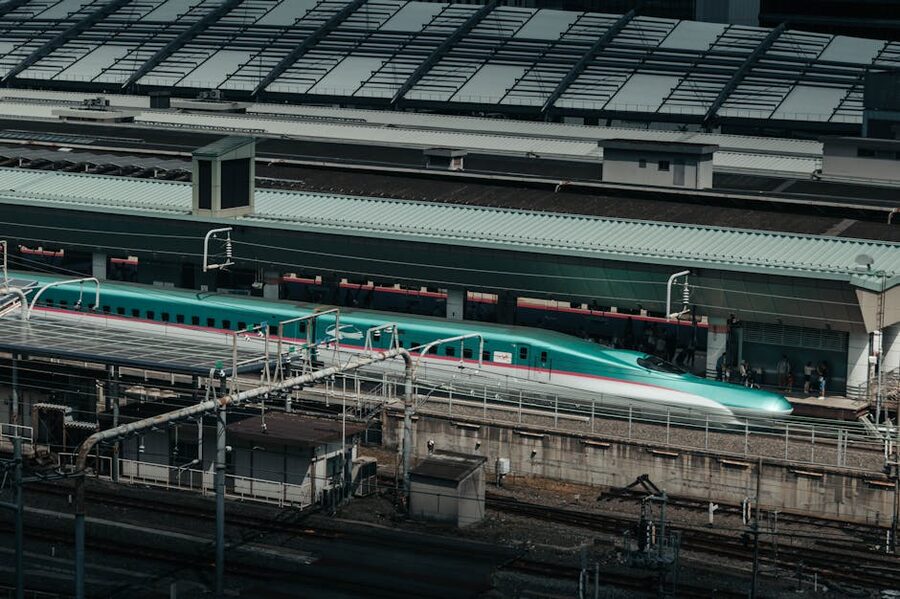
The Yamanote outer-loop platforms at Tokyo Station are 4 (clockwise) and 5 (anticlockwise). The Keihin-Tohoku occupies platforms 3 and 6, on the same level. The Chuo Rapid uses 1 and 2 on the upper level. The Yokosuka and Sobu Rapid use the underground platforms 1 to 4 (different numbering, accessed via separate tickets gates near the Yaesu south exit). The Tokaido and Ueno-Tokyo Lines occupy 7, 8, 9, and 10. If you remember nothing else: the lower the number, the closer to the centre of the station; the underground Yokosuka platforms are signed separately and you cannot walk to them through the main concourse.
Shinjuku and the JR East commuter rush
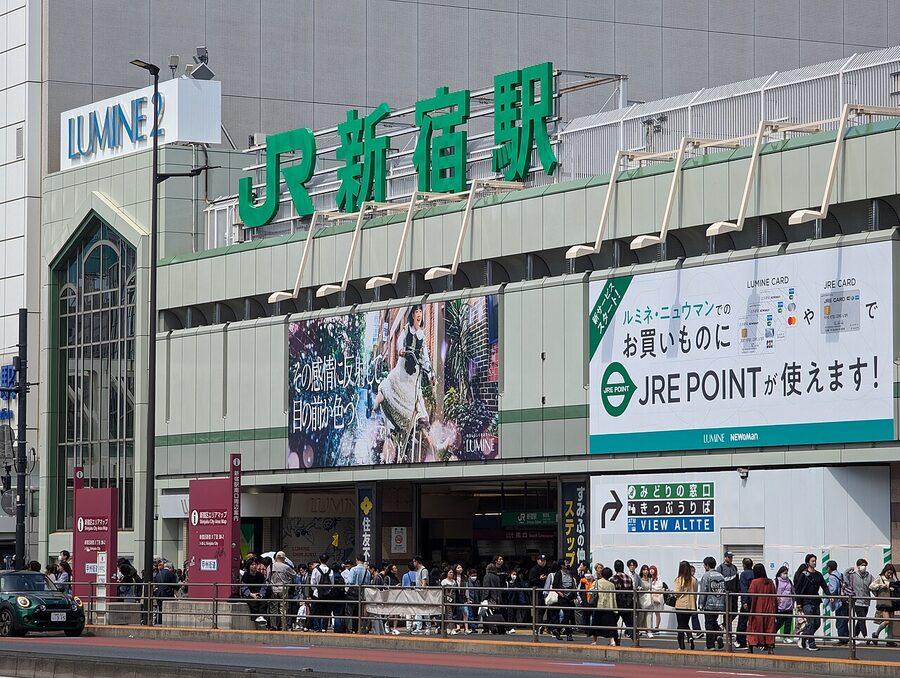
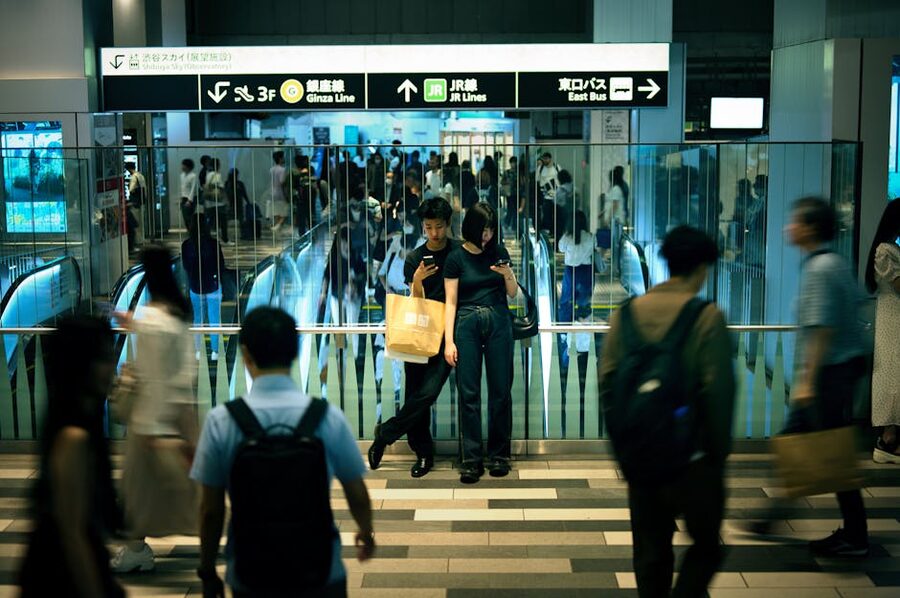
Shinjuku is where the JR East passenger volume is the densest. The Yamanote inner and outer loops use platforms 14 and 15; the Chuo Rapid uses 7, 8, 11, and 12 (a four-platform configuration that lets the line run 30 trains per hour at peak); the Saikyo and Shonan-Shinjuku share platforms 1 to 4 in a complex through-running pattern that you do not learn from one signage glance. If you are catching the Azusa or Kaiji limited express to Matsumoto or Kofu, the platform is 9 or 10 on the Chuo Rapid level, signed separately as a limited-express boarding zone. The Narita Express uses platforms 5 and 6.
Suica, IC cards, and the limited-express ticketing trap
Suica and the other IC cards (Pasmo, Icoca, Toica, Manaca, Kitaca, Sugoca, Pitapa, Nimoca) all work for the conventional JR East commuter lines: tap in, tap out, the system handles the fare. For the Shinkansen and the limited expresses you need a separate paper or digital ticket on top of the IC tap. EkiNet (JR East’s online booking site) lets you reserve and pay in one transaction; the resulting ticket is a barcode on your phone, which works at the limited-express gates from 2024 onwards but not at all of them. Carry the printed copy as backup if you are not staying in central Tokyo or Sendai. The Yokohama and Niigata regional gates are still paper-mostly.
For the Narita Express specifically: the IC tap and the ticket together get you on. The Tokyo Wide Pass (3 days, ¥15,000) and the JR East Pass cover the Narita Express; if you are heading from the airport in to Tokyo and then immediately onto a Shinkansen, the Pass is generally worth the up-front cost.
Comparing JR East across the operator network
JR East does not operate in isolation. Most of the Tokyo private operators run trains that either connect at JR East stations or share track with JR East services through reciprocal arrangements. If you have read the Odakyu fleet piece, the through-running on the Joban Local from JR East E233-2000 to Tokyo Metro 16000 to Odakyu 4000 is the operational backbone of north-Tokyo commuter service. The same applies on the Tobu side: the Tobu Skytree Line through-runs into Tokyo Metro Hibiya Line and surfaces in the central business district, where JR East operates the parallel Yamanote and Keihin-Tohoku.
The Tokyu, Keio, and Keikyu operators run their own commuter networks that intersect JR East at major suburban interchanges. From the Tokyu fleet piece you can compare the Tokyu 2020 series with the E233 commuter EMU directly: they were designed in the same studio, on the same chassis platform, with similar interior layouts. The visual difference is the livery; the operational difference is that Tokyu operates a property-led commuter business and JR East operates a transport-led one. Both are valid, both are profitable, and the trains themselves are about as similar as the underlying business models permit.
The Toei and Tokyo Metro subway networks (the Toei fleet and the Tokyo Metro fleet) hand off to JR East at Otemachi, Akihabara, Iidabashi, Shinjuku-sanchome, and the rest of the major Yamanote-loop interchanges. The reciprocal rule of thumb: if you are on JR East going north or south through the centre, you are using the loop and the radials; if you are crossing the centre east-west and want to go faster, you switch to a subway. The historical division between JR (the spine and the radials) and the metro (the cross-centre infill) goes back to the 1964 city planning around the Olympics, which you can read in the subway history piece.
And the smaller operators have their own niches. The Keio network connects the western suburbs at Shinjuku; the Chichibu Railway hands cement and sightseeing trains over from JR East at Kumagaya and the Saikyo terminus at Omiya. None of these routes are direct competitors to JR East; they are the connecting capillaries that make the JR East spine useful. The clearest historical document of the spine itself is the history of the Japan Railway Company, the 1881 private company that built the original Tokyo to Aomori line that JR East now runs as the Tohoku Main Line.
The JR East passes, briefly
JR East sells two pass products that the average traveller actually uses. The Tokyo Wide Pass covers the JR East network within roughly the Tokyo metropolitan area plus the Tohoku Shinkansen as far as Nasushiobara, the Joetsu as far as Echigo-Yuzawa, the Hokuriku as far as Karuizawa, the Narita Express, and the conventional regional lines (Yamanote, Chuo, Tokaido as far as Atami, etc.). Three days, ¥15,000. Worth it if you are doing a Tokyo round-trip with a couple of day-out runs to Nikko or Karuizawa.
The JR East Pass (Tohoku, Niigata, Nagano area) is the wider product: covers the JR East network in the Tohoku, Niigata, Nagano regions, valid for 5 consecutive days at ¥30,000 standard or ¥40,000 green car. If you are doing a north-Honshu trip with two or three Shinkansen rides plus regional travel, this pays for itself easily. Limited-express coverage extends to all JR East services, including the Hitachi, Tokiwa, Azusa, Kaiji, Saphir Odoriko, and Resort Shirakami, as well as the Joetsu and Hokuriku Shinkansen.
The national JR Pass (¥50,000 standard / ¥70,000 green car for 7 days) is the older universal product. It does not cover Nozomi or Mizuho services on the Tokaido and Sanyo Shinkansen but it does cover Hikari and Kodama, plus all JR East services without restriction. For a Tokyo to Tohoku round-trip with a side run to Kyoto, the maths works in favour of the national pass over the regional one. For Tohoku-only or Tohoku plus Hokuriku, the JR East regional pass is cheaper.
What the next ten years probably look like
The E235-1000 rollout will continue on the Yokosuka and Sobu Rapid Lines until 2028, by which point the E217 should be fully retired. JR East has prototyped the next-generation Shinkansen successor (sometimes referred to in trade press as the E5-replacement project, more formally the ALFA-X experimental train) which is targeting 360 km/h commercial service from 2030. The E2 retirement on the Tohoku Shinkansen will probably finish in 2027. The E3 to E8 transition on the Yamagata Shinkansen will finish about the same time.
The bigger structural shift is that JR East has stated a policy of standardising all new commuter rolling stock around the E235 platform from 2027 onwards. That would mean the next generation of replacements (after the E231-0 and after the long-tail of E233 fleets reach 25 years of service) all run on the INTEROS architecture. This is a 2035-and-beyond timetable, not a near-term one, but it is the direction of travel: JR East stops building separate platforms for separate lines and converges on a single fleet architecture across 22 commuter lines. The result, in fifteen years, is likely to be a JR East commuter network where you cannot tell which line you are on by looking at the train, only by reading the destination panel.
The verdict
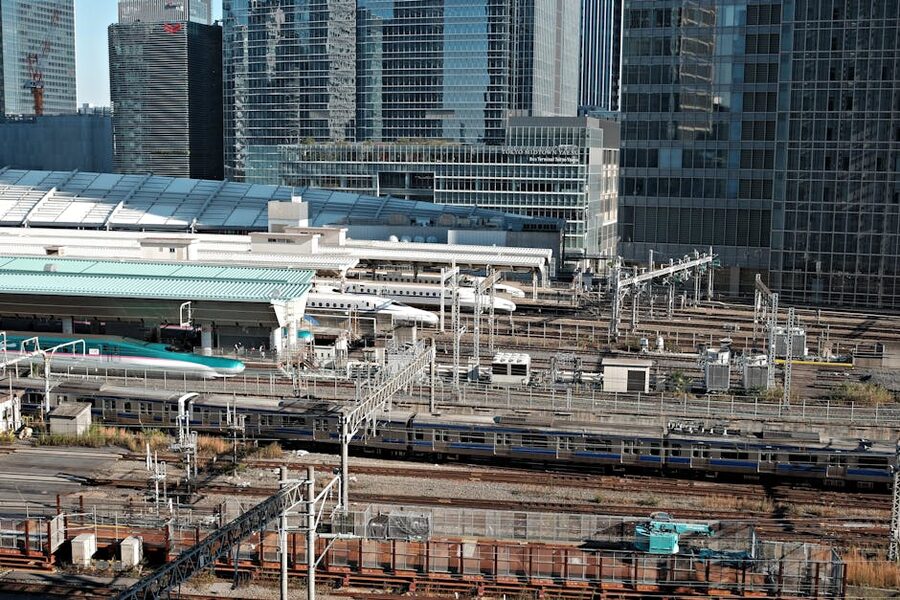
JR East is the largest rail operator in Japan and one of the largest in the world, with 7,302.2 km of route, 1.6 billion passenger-trips per year, 44,790 staff, and a fleet structure that has converged on six or seven commuter and limited-express series in the last decade. What you ride on it depends on which line you board, but the structural answer is that for any Tokyo commuter line you are most likely on an E233 or an E235; for any limited express you are on an E353, E657, E259, or E261; and for any Shinkansen out of Tokyo Station’s Marunouchi platforms, you are on an E5, E6, or E7 if you are going north, or on an E2 or E8 if you are going to Yamagata or Niigata.
The thing that surprised me, after a decade of riding this network, is that the rolling stock keeps getting more boring. The early-2000s E231 had a personality (the rivalled Chuo-Sobu yellow band, the rough acceleration off Chiba); the late-2000s E233 was deliberately chosen for reliability over distinctiveness; the E235 is approaching what JR East calls “platform standardisation” and what the rest of us call “every train looks the same”. This is not a complaint. JR East has decided that the network’s job is to be invisible, the trains’ job is not to break, and the journey’s job is to deliver you there on time without you having thought about it once. By that standard, the E235 and the E233 are the most successful commuter EMUs in Japanese history. They turn up. They run. You forget you were on one.
06:42 at Yokosuka, the next E217 set has gone north, and the E235-1000 behind it will follow in two minutes. Stand on the platform long enough and you watch JR East replace its own past at the rate of a few cars a week. You will not notice when the last E217 leaves. That is the whole point of the operation.


.jpg)


_20170330.jpg)


