
Tobu Railway Trains: Spacia X to 8000 Series
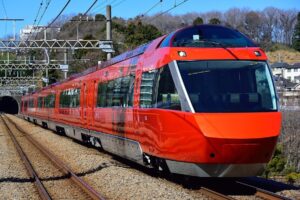
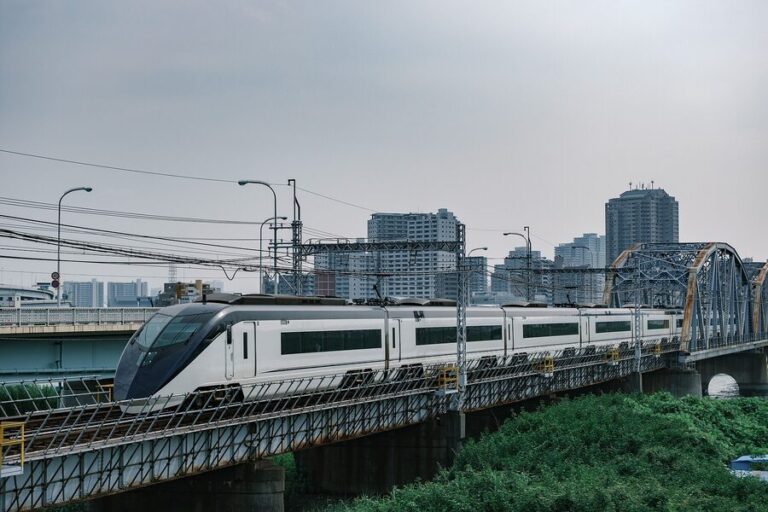
06:18 at Asakusa. The Spacia X on platform 4 is a six-car all-aluminium Hitachi A-train painted in the off-white of the Yomeimon gate at Toshogu, with hexagonal end-car windows that pick up the kumiko woodworking pattern from the same shrine. It cost about ¥3,500 to ride to Nikko and a six-car set won the 2024 Blue Ribbon. On platform 5, an 8000 series in commuter livery is loading for Kita-Senju. It was built in 1963, has been in continuous service for sixty-three years, and 712 of these things were made. Tobu Railway runs both of them out of the same nine-track terminus, ten minutes apart, and the second one is the company. The first one is the marketing.
In This Article
- Why a Nikko sightseeing operator also runs the longest private commuter spine in Japan
- The two route groups, and why it matters which terminus you start from
- The N100 Spacia X: what Tobu built when it stopped pretending the 100 series was still flagship
- Six classes of seat in one train
- What the N100 actually replaces
- The 100 Spacia, the 500 Revaty, and the 200 Ryomo: the working sightseeing fleet
- The 500 Revaty, the train you actually take to Aizu
- The 200 series Ryomo, the Asakusa-to-Akagi commuter limited express
- The 634 Skytree Train, the one you cannot just walk on
- The SL Taiju, because somebody at Tobu read the depreciation tables and built a steam railway
- The locomotives, all three of them, all from elsewhere
- What it costs and whether to ride it
- The 8000 series, in continuous service since 1963, and the company’s actual identity
- What still runs and where
- Why it is still running
- The 9000s, the 10000s, and the slow-rolling refresh
- The 20400 and the Nikko Line refresh
- The 50000 family: the most-used commuter design Tobu has, in four flavours
- The 60000 on the Urban Park Line
- The 70000 series and the Hibiya Line through-running
- The newest: 80000 series, 2025
- Through-running, and why half the trains on Tobu metals belong to somebody else
- Hibiya Line: from 1962, the original
- Hanzomon Line: from 2003, with Tokyu beyond
- Yurakucho and Fukutoshin: the Tojo Line side
- JR East: the Shinjuku-to-Nikko sleeper service
- Skytree Line, Asakusa, and the Skytree access angle
- Asakusa, the platform that does not quite fit
- Tobu Nikko, the destination, and why the station is what it is
- Buying the ticket: how it actually works
- How to reserve
- Don’t bother: the Asakusa-Nikko Free Pass without the Spacia
- Where this all sits in the Tokyo private-rail map
- The verdict on the Tobu fleet
- Which trains to ride
- The 06:18 again
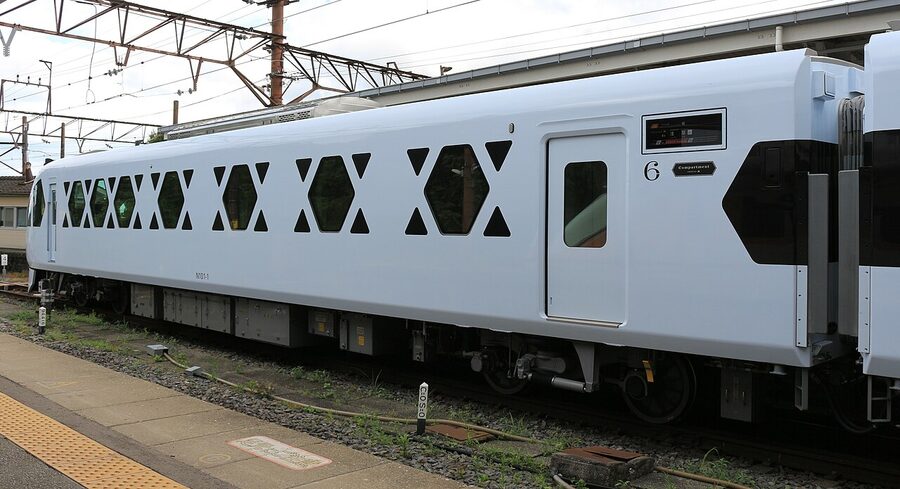
I have ridden a lot of Tobu in the last decade, and I keep coming back to the same observation: this is not one railway, it is two coupled railways that happen to share metals. The sightseeing limited expresses to Nikko and Kinugawa Onsen are a deliberate, designed-from-scratch luxury product. The commuter fleet, which is most of what you actually see if you live anywhere on the network, is a 712-vehicle museum of Showa-era engineering kept running by a maintenance regime that the rest of the major private railways gave up on twenty years ago. Both work. Neither makes sense without the other. This piece is about the trains and how they fit together.
Why a Nikko sightseeing operator also runs the longest private commuter spine in Japan
The geography forces it. Tobu is the oldest still-operating major private railway in Japan, founded in November 1897, and its first revenue line opened in August 1899 between Kita-Senju and Kuki, on what is now the Isesaki Line. By the time the Nikko Line opened all the way through in 1929, the company already had a commuter spine running north out of the city across the Saitama plain, and that 114.5 km of Isesaki Line track is now the longest single private-railway line in Japan. The Tojo Line, originally a separate company called Tojo Railway, came into the fold by an equal-share merger in 1920 and is the operationally-distinct western branch out of Ikebukuro. Adding the Nikko Line, the rural branches to Aizu, the Kinugawa onsen line, and the various commuter offshoots, you get to 463.3 km of Tobu metals across five prefectures. After the Japan Railways group, only Kintetsu in the Kansai operates more.
The point is that the Nikko luxury product sits at the far end of a long commuter network. There is no way to operate just the limited expresses without also operating the local, sub-suburban, and through-Tokyo-Metro commuter trains that share the line. The fleet bifurcates accordingly. Eleven distinct passenger series in active service, give or take, and most of them you will never see if you only ever board at Asakusa for the Spacia X.
The two route groups, and why it matters which terminus you start from
The fleet splits down the same line as the network does. The “main lines” group, or honsen, runs out of Asakusa, Oshiage, and Kita-Senju and covers the Skytree Line (the modern branding for the southern Isesaki Line plus the Oshiage spur), the Isesaki Line proper, the Nikko Line, the Kinugawa Line, the Noda Line (now branded as the Tobu Urban Park Line), the Sano, Koizumi, and Kiryu branches, and the Utsunomiya Line. The Tojo Line group runs separately out of Ikebukuro and includes the Ogose branch. They do not interconnect within Tokyo. If you board at Ikebukuro you are on a different fleet rotation from the trains that leave Asakusa, and the depot allocations reflect this: the Tojo Line trains are based at Morinjimae, the main-line fleet at Minami-Kurihashi.
For the same reason, the limited-express product is concentrated on the main-line group. Spacia X, 100 series Spacia, 500 Revaty, and 200 Ryomo all run from Asakusa or Kita-Senju up the Isesaki, Nikko, and Kinugawa Lines. The Tojo Line has no tokkyu equivalent at all; what it has instead is the seat-reservation TJ Liner, which is structurally a different thing and uses the 50090 series commuter set with the unusual sliding-seat conversion. More on that further down.
The N100 Spacia X: what Tobu built when it stopped pretending the 100 series was still flagship
The N100 series was announced on 11 November 2021 and the first two sets, N101 and N102, were delivered from Hitachi’s Kasado plant on 5 March 2023. Public service began on 15 July 2023. There are four six-car sets in total, the last two delivered in February 2024, and the entire fleet won the 2024 Blue Ribbon Award (rail-fan vote, the most prestigious of the Japanese rolling-stock prizes), the 2023 Good Design Award, and the 2025 Red Dot Product Design Award. The exterior white is calibrated to match the Yomeimon gate at Toshogu, and the head-end LED panel houses 39 individually addressable lamps. Tobu would like you to notice all of this; they paid for it specifically.
Six classes of seat in one train
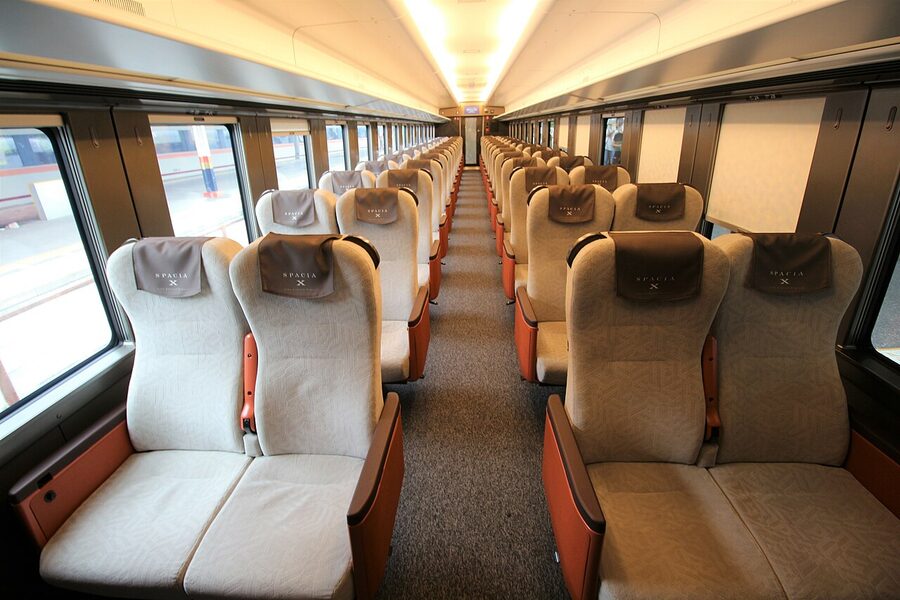
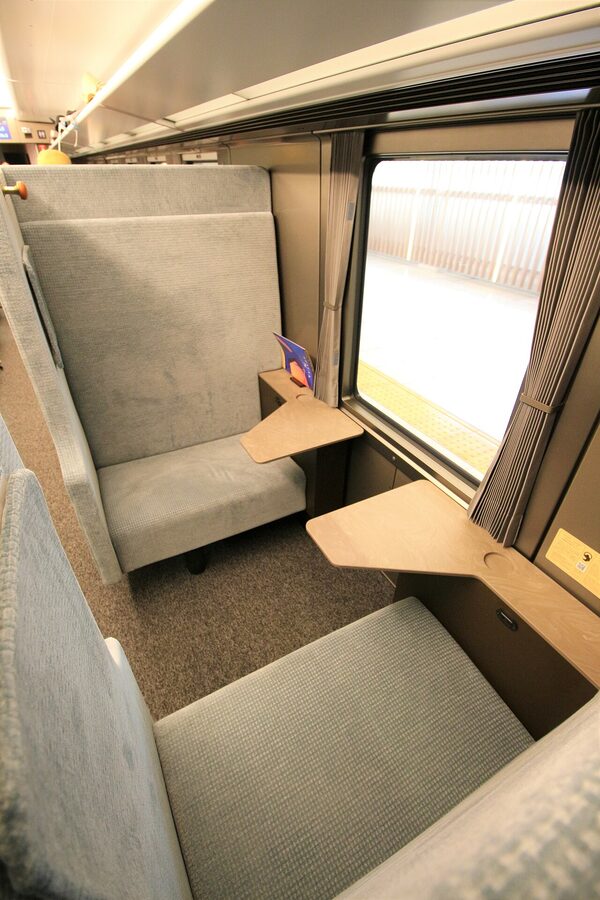
The standout design choice on the Spacia X is that it has six different cabin types in a single six-car set. Cars one and four are standard reserved seating. Cars two and three are box-and-pair compartments and a “premium” car. Car five is a bar and lounge area, the cafe car, with hot drinks, beer, and Tochigi-region snacks. Car six contains the four-person private compartments, three of them, with a sliding door and a door staff member who brings the welcome drink, costing around ¥15,000 on top of the standard fare.
The schedule pattern is two or three Spacia X round-trips per day, alongside the standard Spacia (100 series) and Revaty (500 series) departures. If you specifically want the Spacia X you have to time your trip to it; if you just want to get to Nikko quickly, any of the three series will do. The carbody differences are real but the journey time is identical: about 1h 50m Asakusa to Tobu-Nikko, slightly faster on the Spacia X because of the higher rated 130 km/h compared to the 200 Ryomo’s 110 km/h, but the trade-off is mostly a livery and seat decision.
What the N100 actually replaces
It does not replace the 100 series Spacia. That is the surprise. The 100 was built in 1990, has been in service for thirty-six years, and is still in active limited-express rotation. It will get progressively retired as the four N100 sets prove themselves and as Tobu accepts that its tourist-train demand has not grown as fast as the marketing implied, but at the time of writing all seven 100-series sets remain in active service, including the heritage liveries. There is a mismatch here that EN sources tend to gloss: the N100 is a small fleet bolted on top of the existing limited-express operation, not a wholesale replacement. The 100 series is going to be on the Asakusa departure board for several more years.
The 100 Spacia, the 500 Revaty, and the 200 Ryomo: the working sightseeing fleet
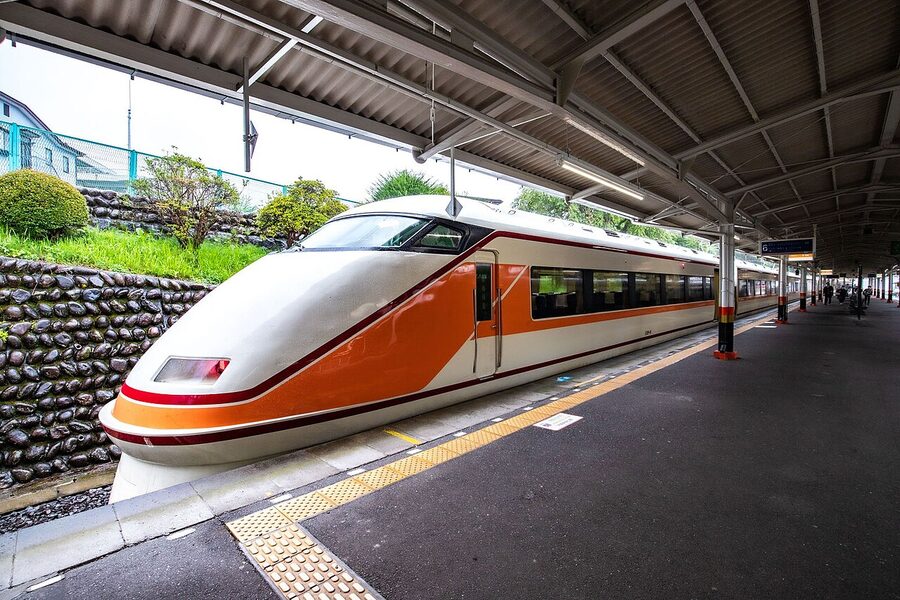
The 100 series replaced the 1720 series Deluxe Romance Car (DRC) in 1990, when Tobu was in a price war with JNR-then-JR for the Tokyo-to-Nikko sightseeing market. Six-car aluminium-body sets, six of them, with rotating reclining seats at 1,100 mm pitch (wide for a Japanese limited express), private compartments at the rear of car six, and 130 km/h. They won the Blue Ribbon in 1991 and remain the visual icon of the Tobu Nikko Line. Three of the seven sets carry the JR-direct gear that lets them run the Tobu-JR through service from Shinjuku via Kurihashi to Tobu-Nikko. The other four work the Asakusa-only schedule.
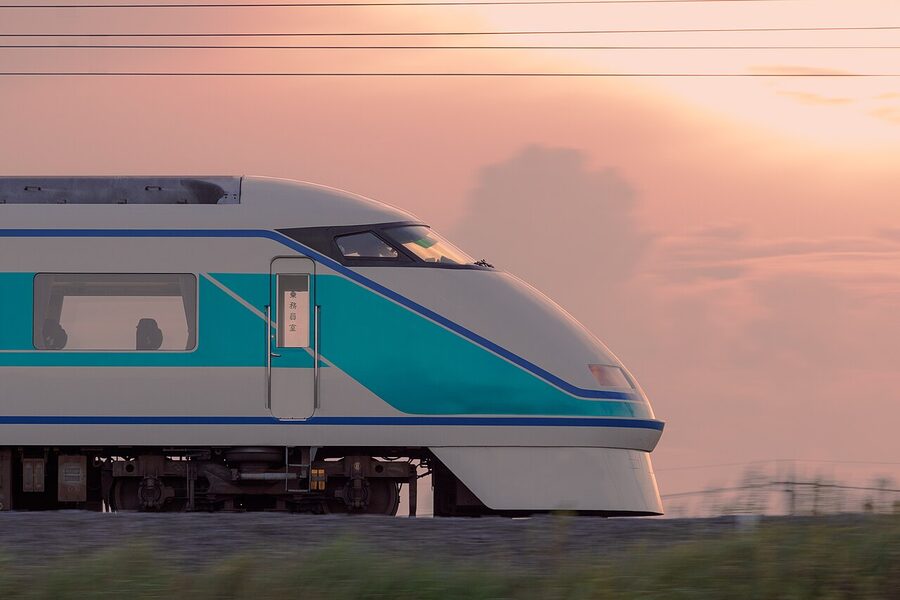
The 100s were rebuilt internally in 2011 (interior refurbishment, new seat fabrics, USB ports added later) and again partially in 2020. If you board a 100 today, the carbody is 1990 but the cabin feels late-2010s. There is a mild ride difference between a 100 and an N100: the 100 sits lower and rolls more in the curves through Imaichi, while the N100 has the body-tilt damping that smooths out the same stretch. Neither matters at limited-express speeds; both work.
The 500 Revaty, the train you actually take to Aizu
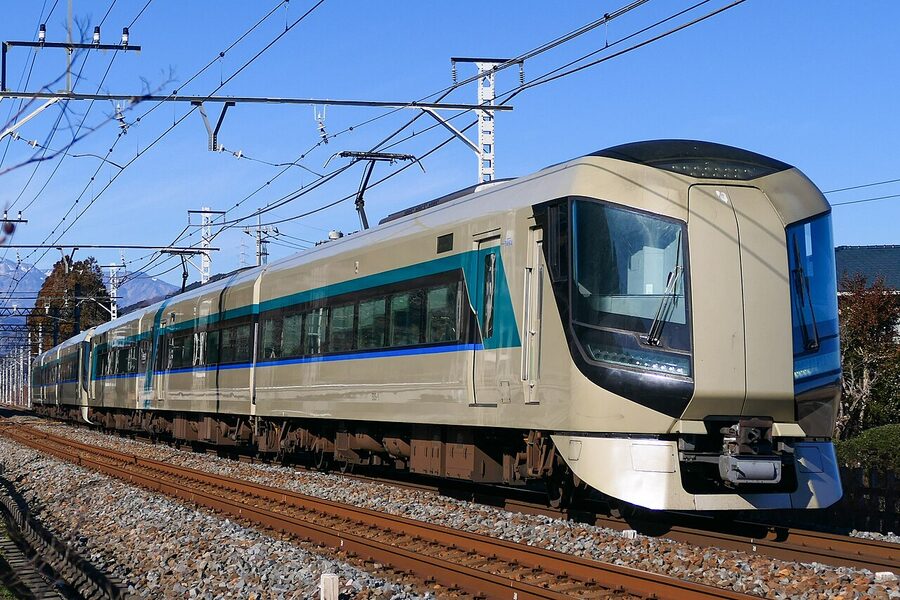
The 500 series Revaty entered service on 21 April 2017, manufactured by Kawasaki Heavy Industries. The name is a portmanteau of Variety and Liberty, which is faintly embarrassing but the engineering it describes is real: three-car sets that can run independently or in any pair, with through couplers that allow split-and-join operations at intermediate stations. In practice this means a six-car train leaves Asakusa, runs north to Shimo-Imaichi, splits in two, with the front three cars continuing as the Revaty Kegon to Tobu-Nikko while the rear three cars detach as the Revaty Aizu and run east on the Kinugawa Line, then onto the Yagan Aizu-Kinugawa Line, then onto the Aizu Railway Aizu Line, all the way to Aizu-Tajima in Fukushima Prefecture. One ticket, one train, three operating companies.
The Revaty is the limited express I would pick if I were going to Aizu. It is also the train that handles the Asakusa-Noda Line through-services (the 6h00 to 9h00 commuter limited-expresses to Tochigi via Kasukabe), and the late-evening 23:55 Snow Pal seasonal service from Asakusa to Aizu-Kogen-Ozeguchi for the winter ski season. The 500 won the 2018 Laurel Prize, the rail-fan technical award, the first time a Tobu train had ever won that. Permanent magnet synchronous motors, full electric command brakes, body anti-yaw control: by 2017 standards, current.
The 200 series Ryomo, the Asakusa-to-Akagi commuter limited express
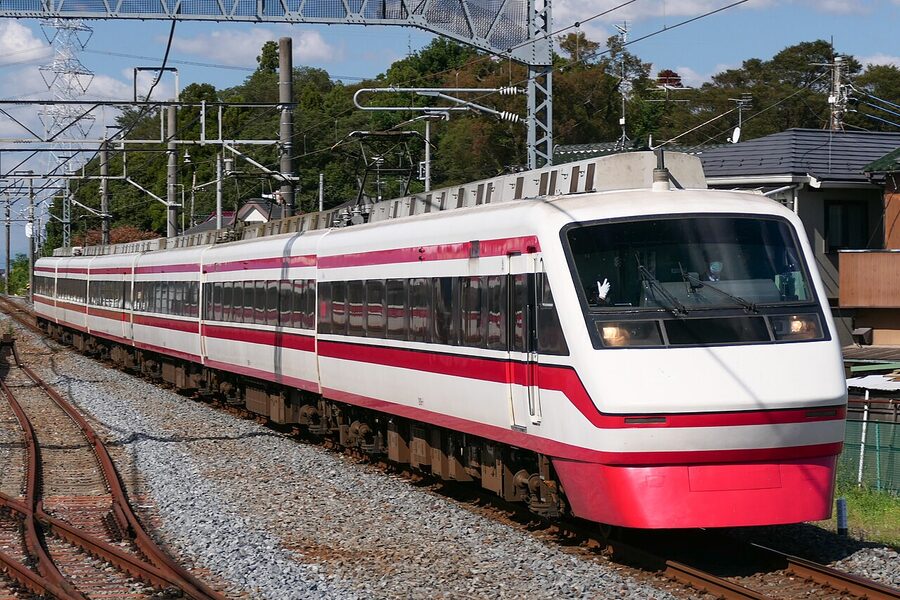
The 200 series went into service in February 1991 as the replacement for the 1800 series express. Six sets, six cars each, rebuilt several times over the last three decades. It runs as the Ryomo limited express from Asakusa to Akagi (with a few peak-hour extensions to Kuzu and Aka), serving the Watarase Valley and the Kiryu and Ashikaga commuter belt north of the Tone River. The Ryomo is unfussy and there is nothing photogenic about it. What it does well: connect Asakusa to a part of the Tobu network that no Spacia goes near.
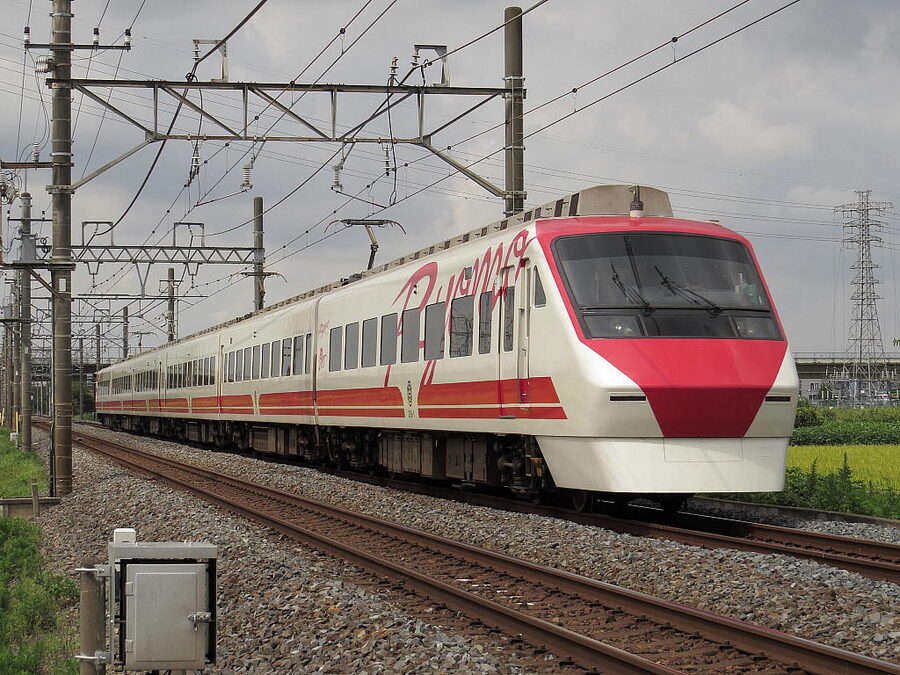
The 200’s 110 km/h max speed gives away its origins: it was an upgraded express, not a purpose-built limited express. The 500 Revaty has progressively replaced parts of its running pattern, but the Ryomo remains the dedicated Asakusa-Akagi service. There is also a 600 series, a near-identical small fleet for the Kuzu run, but as a rider you cannot tell them apart and the schedule treats them interchangeably.
The 634 Skytree Train, the one you cannot just walk on
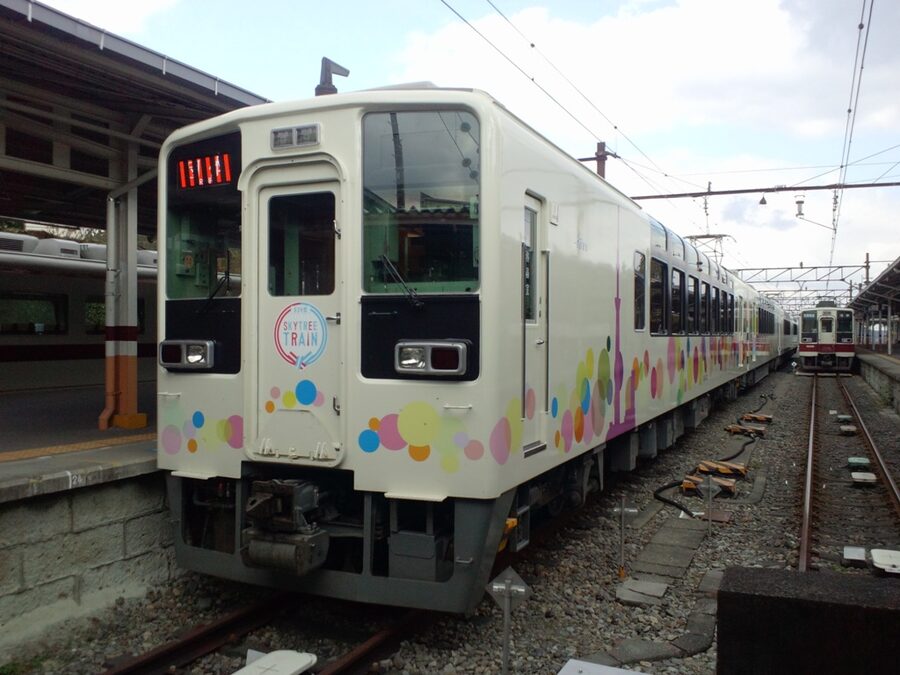
The 634 series is the curiosity of the Tobu fleet. Two two-car sets converted from 6050-series commuter EMUs in October 2012, given high-floor mixed seating (pair-suite, single, twin) and large picture windows for sightseeing, and named after the height of the Tokyo Skytree (634 metres). It runs only on event days and charter packages, not the regular timetable. If you want to ride it, the Tobu Top Tours website has the seasonal schedule. If you do not, you can still photograph it at Tobu-Nikko, where one of the two sets typically lays over.
The SL Taiju, because somebody at Tobu read the depreciation tables and built a steam railway
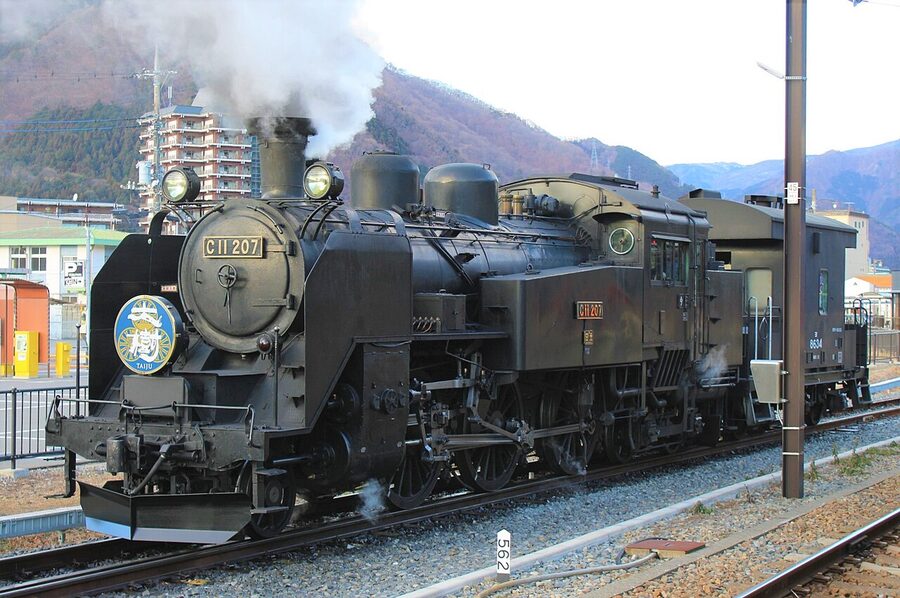
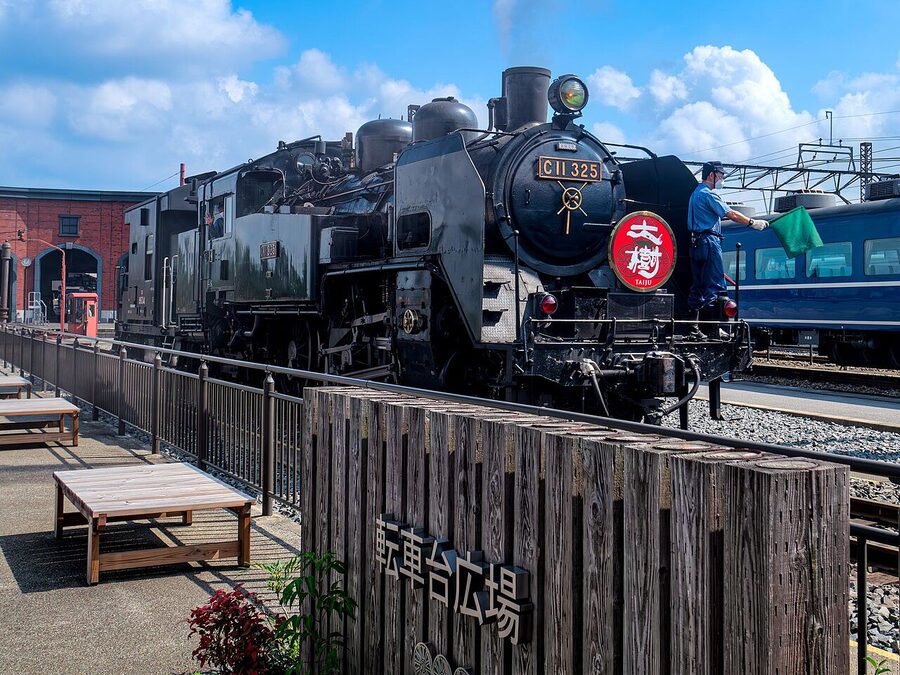
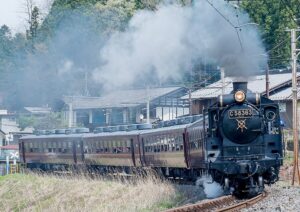
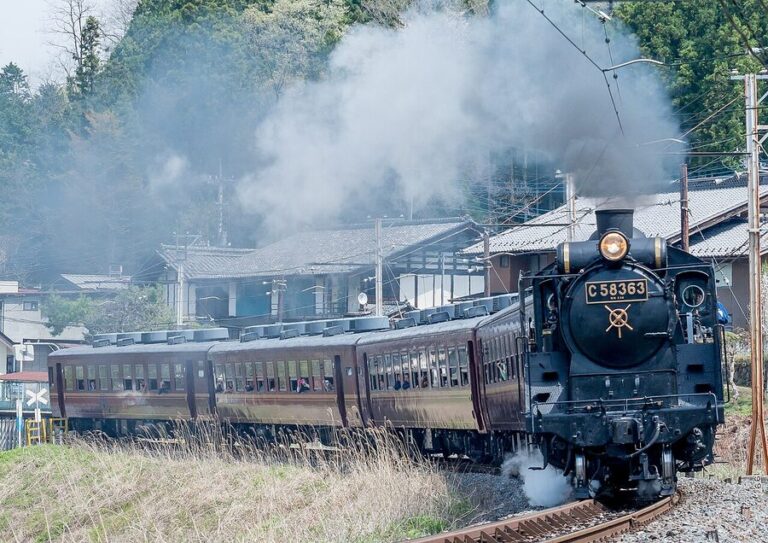
I would skip this section if SL Taiju were the kind of thing every major operator does. It is not. Tobu is the only major private railway in Japan to run scheduled steam haulage, and the operation is a deliberate commercial bet, not a heritage hobby. The SL Taiju runs the 12.4 km Kinugawa Line between Shimo-Imaichi and Kinugawa-Onsen, with one intermediate stop at Tobu World Square, three round-trips on most operating days. Service began on 10 August 2017, the first steam on a Tobu line in fifty-one years.
The locomotives, all three of them, all from elsewhere
Tobu does not own its first SL outright. C11 207 is on long-term loan from JR Hokkaido, where it had been the heritage-train locomotive on the Hakodate Main Line tourist services. It arrived at Tobu on 19 August 2016, and Tobu paid for the cost of its overhaul and certification on the Kinugawa Line. C11 325 was bought outright at public auction from Mooka Railway on 25 March 2019 for ¥125 million; it entered Tobu service on 26 December 2020. C11 123 was a static-display locomotive in Hokkaido, originally a Kojo Railway machine, and was rebuilt to running order over four years (2018–2022). It started in service on 18 July 2022.
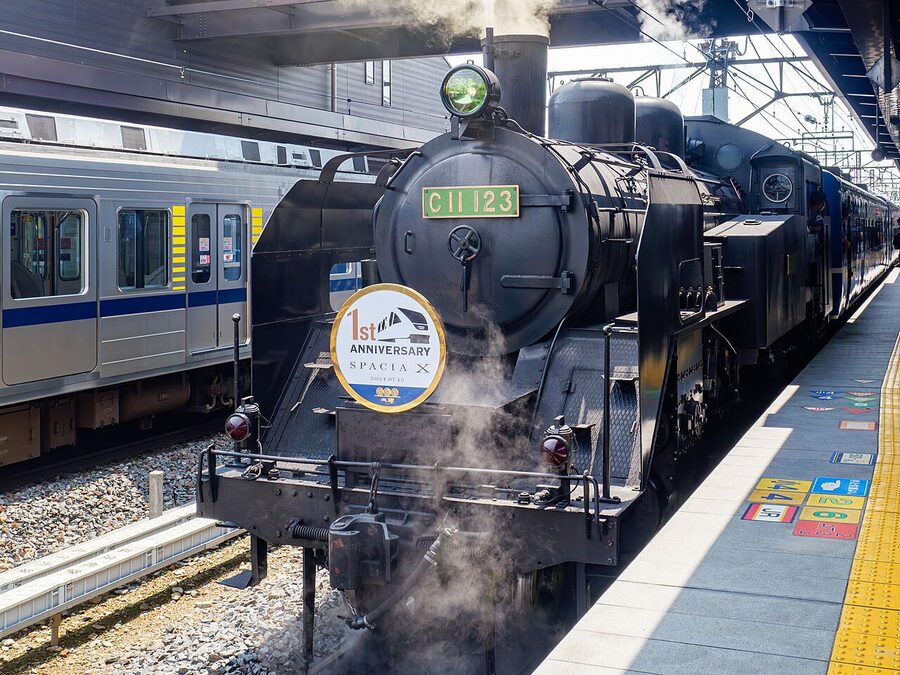
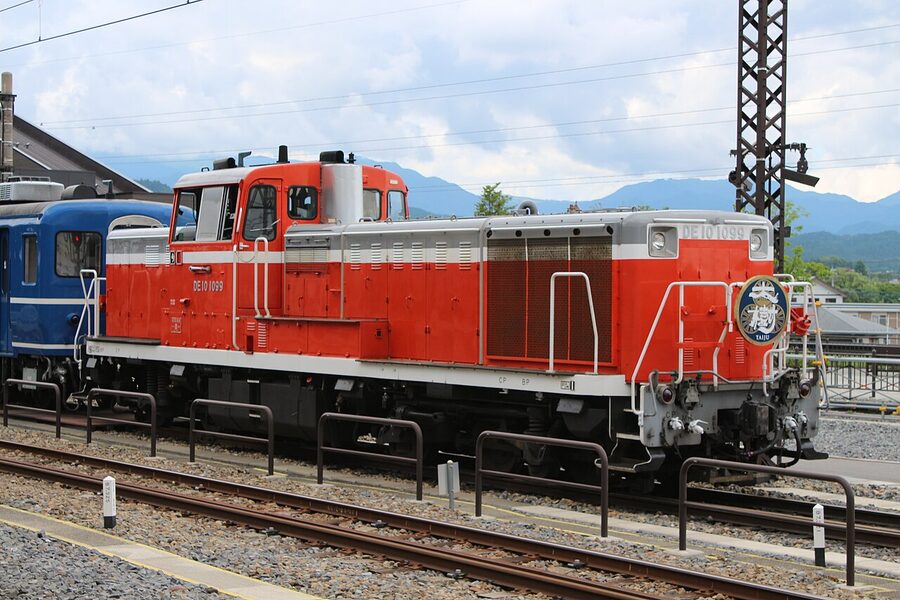
The supporting fleet is also borrowed or bought-second-hand. Two ex-JR DE10 diesels (DE10 1099 and DE10 1109) handle the rear-banking duties on the up grades and the dead-weekday DL Taiju runs. The carriages are 14 series JR-Shikoku and JR-Hokkaido cast-offs, including ex-Hamanasu Dream Cars rebuilt with Green Car-spec seats. Two of the carriages are 12 series ex-JR Shikoku Oro stock, fitted with observation windows and used on the SL Taiju Futara excursion to Tobu-Nikko station.
What it costs and whether to ride it
The SL Taiju surcharge is ¥1,000 reserved seat for the under-17 km segments and ¥1,150 for 18–20 km, on top of the standard fare. The DL Taiju, on the days the locomotive is in shop and a diesel covers the run, drops to ¥750. Children pay ¥300 either way. You buy the surcharge ticket online via the Tobu Top Tours portal, at any Tobu ticket window from a week ahead, or at the Shimo-Imaichi or Kinugawa-Onsen station on the day if seats remain. They mostly do.
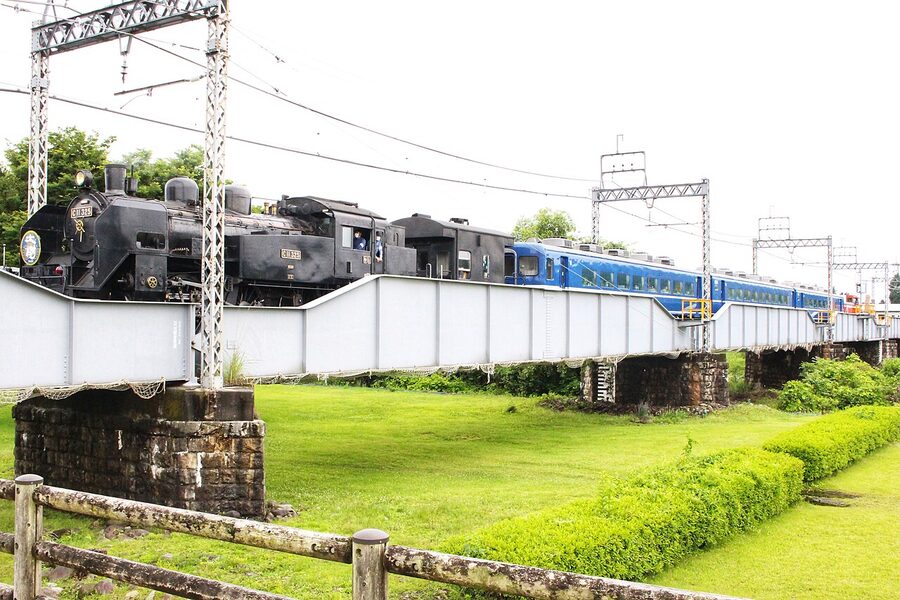
Worth riding once. The Kinugawa Line scenery is fine but not extraordinary, and the run is short (35 minutes); what you are paying for is the experience of being pulled by a working steam locomotive, and the chance to see the Shimo-Imaichi roundhouse, and the unusual position of riding the only major-private-rail SL service in the country. If you are doing Nikko anyway, build the SL Taiju into the day. If you are not, do not detour for it.
The 8000 series, in continuous service since 1963, and the company’s actual identity
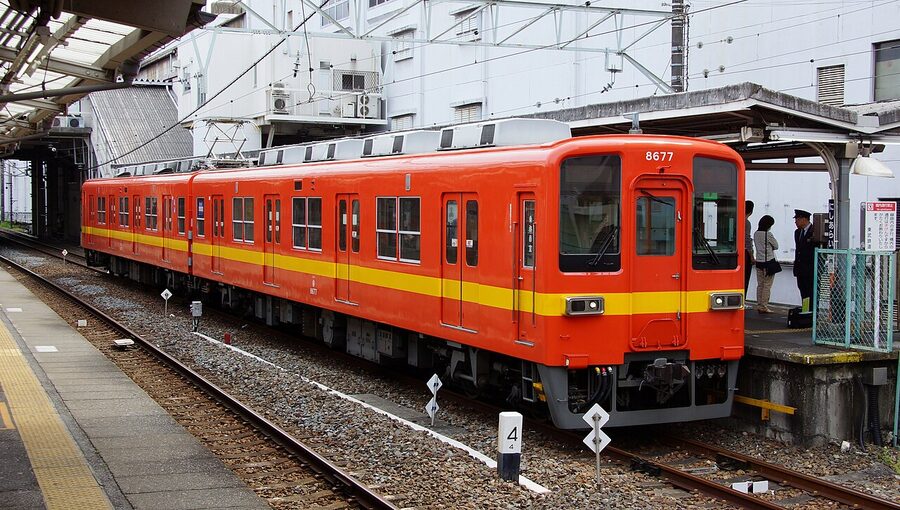
I have a soft spot for the 8000 series, and so does every Japanese rail enthusiast over thirty. It was built between 1963 and 1983 by five different manufacturers (Alna, Nippon Sharyo, Kisha Seizo, Fuji Heavy Industries, and Tokyu Sharyo), in batches that incorporated detail changes year-to-year. 712 vehicles in total, the largest single EMU type ever built for any private railway in Japan, and a number that no operator has matched since. The 8000 was the train Tobu used to absorb the post-war commuter explosion on the Isesaki and Tojo Lines. By 1983, when the last one rolled out, the 8000 was the working majority of the Tobu fleet.
What still runs and where
The number is now 142 vehicles in active service (plus the 800/850-type derived three-car sets, see below). They are concentrated on the rural-branch lines: Sano, Kiryu, Koizumi, Kameido, Daishi, and the Tatebayashi-area shuttle services. The Utsunomiya Line lost its 8000 service in 2019 when newer 20400 series displaced them. On the Tojo Line, the 8000 has been gone for years; the Skytree Line and Isesaki main service likewise. If you want to ride one in 2026, board at Tatebayashi for the local up to Akagi, or take the Sano Line shuttle from Tatebayashi to Sano-shi.
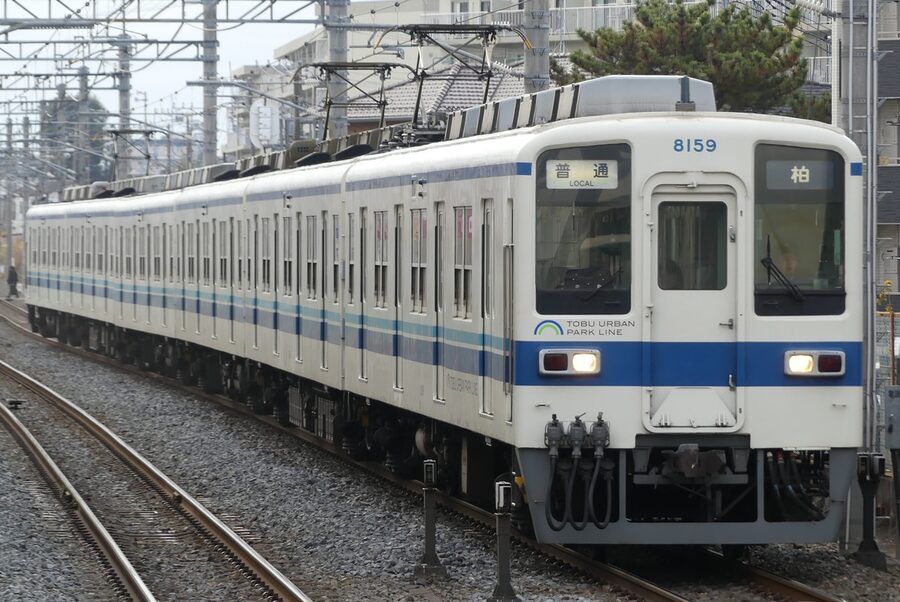
The 800 and 850 type are 8000-series sets that had two of their middle cars removed, leaving a three-car driver-only-operation configuration for the rural branch lines. The Asakusa-end three cars become 800 series, the Isesaki-end three cars become 850 series, and they work the Sano, Koizumi, and Kiryu shuttles. Mechanically and visually they are still 8000s. Administratively they are different.
Why it is still running
Two reasons. First, Tobu’s branch-line traffic is sparse and the 8000 was over-engineered: 110 km/h capable, 712 of them, parts compatibility across the fleet, and a maintenance regime that the company has had sixty years to perfect. Replacing them with a new vehicle would cost more than rebuilding the 8000s every fifteen years has, which is roughly what Tobu has been doing. Second, the rural branches do not justify the capital outlay for new stock; the trains move four-figure ridership, not five, and the fares are set on a metric that assumes depreciated capex.
If you want to see what the rest of Japanese commuter rail looked like in 1983, the easiest place is a Tobu branch line in 2026.
The 9000s, the 10000s, and the slow-rolling refresh
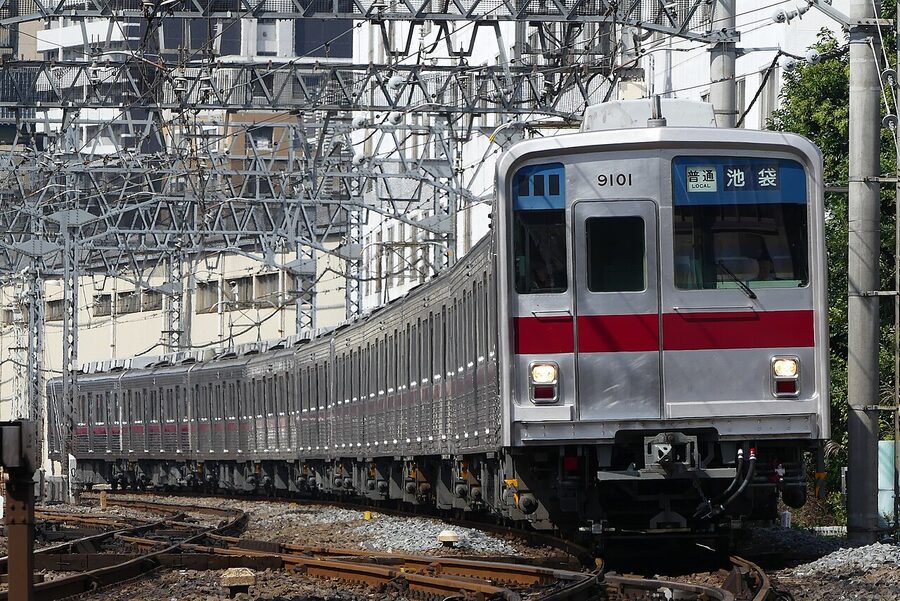
The 9000 series, introduced in November 1981, was the train that took the 8000’s position on the modern Tojo Line. Built for the through-running with the Eidan (now Tokyo Metro) Yurakucho Line, ten-car sets, stainless body, asymmetric front, chopper control with regenerative brakes. From 2006, seven of the eight sets were rebuilt for through-running with the Tokyo Metro Fukutoshin Line, which opened in 2008, and that fleet now reaches Yokohama via the Tokyu Toyoko Line and the Minato Mirai Line, a full 90 km off Tobu metals. The 9050 sub-type, four sets built in 1994 to the same body shell but with VVVF drives, runs the same circuit. Seventy 9000-series vehicles remain.
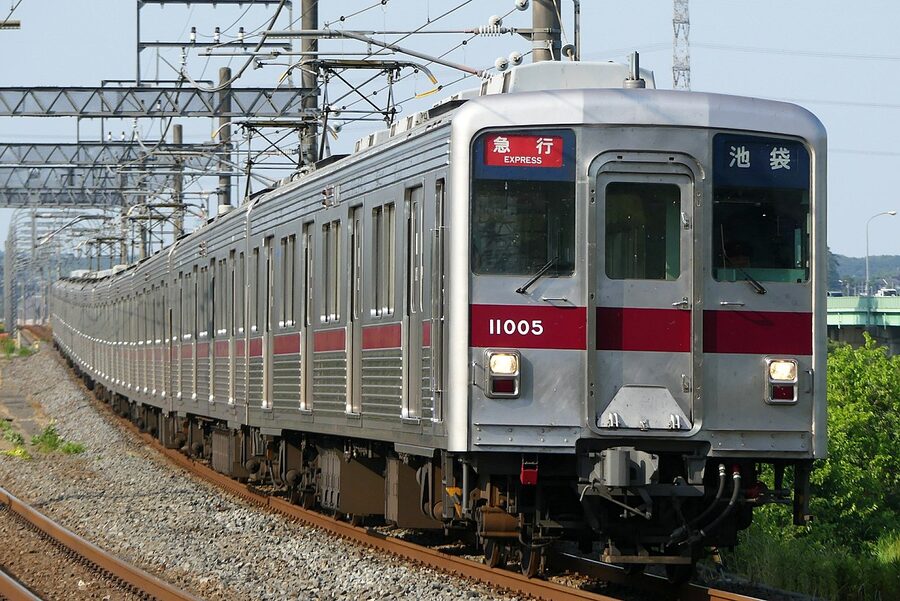
The 10000 series and its 10030 minor-refresh sibling form the bulk of the modern Skytree Line and Isesaki Line working fleet, with 96 vehicles of 10000 and 332 of 10030 in service. The 10030 was the second-batch upgrade from 1988, with FRP front-end fairing, slightly wider seats, and accessibility provisions; the post-2010 Urban Park Line transfer included a livery change to the bright green and Future Blue side stripes. If you board a Skytree Line local at Asakusa for Kita-Senju and you are not on an N100 or a 100, you are most likely on a 10030.
The 20400 and the Nikko Line refresh
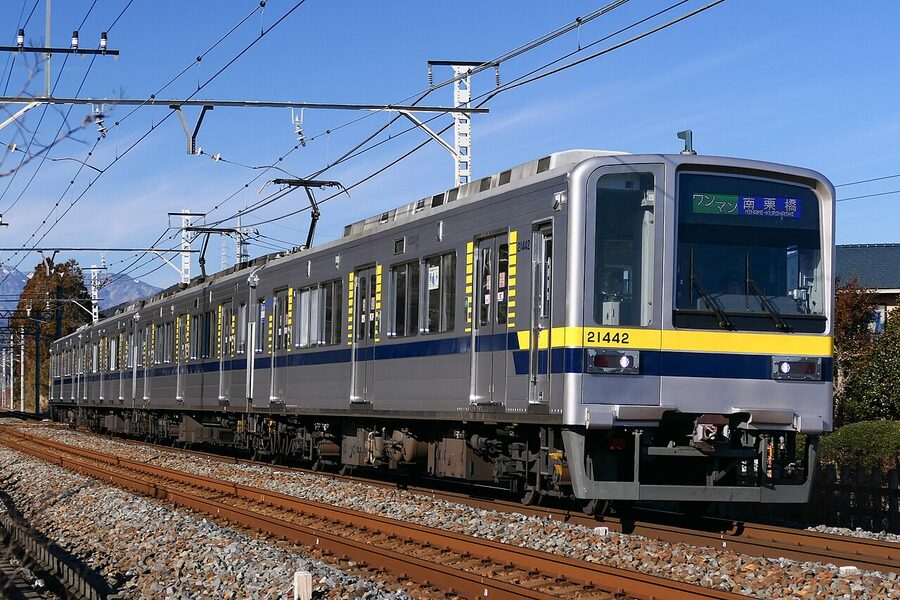
The 20400 series has a complicated origin. It is a converted 20000-series set, originally built in 1988 for through-running with the Tokyo Metro Hibiya Line, that was bumped from that role when the 70000 series came in (more on that in a moment). Tobu rebuilt the 20000 sets to four-car driver-only-operation configuration, gave them the 20400 designation, and put them on the rural Nikko Line locals (Tobu-Nikko to Minami-Kurihashi shuttles) and the Utsunomiya Line. Forty-four vehicles total, distributed across eleven four-car sets.
The 30000 series was the through-runner Tobu built for the Hanzomon Line in 2003. Six four-car and ten six-car sets, total 60 vehicles, capable of 110 km/h. It was supposed to be the modern Tobu standard for Hanzomon-Line direct services, but the through-running operation eventually moved to the 50050 family (because Tokyo Metro Hanzomon trains are ten cars and Tobu had to match), and the 30000 was reassigned to the Tojo Line where it now works the Ikebukuro locals.
The 50000 family: the most-used commuter design Tobu has, in four flavours
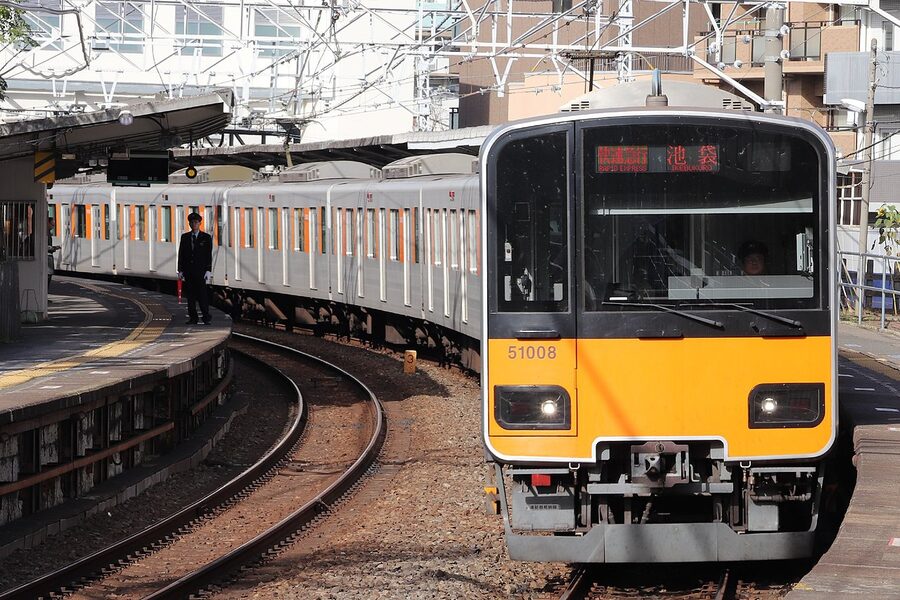
The 50000 series went into service on 16 March 2005, the first Tobu commuter to use an aluminium body, and was built by Hitachi (the first Hitachi-built Tobu vehicle since the 7860 series in 1959, a forty-six-year gap). The “50000” designator covers four operationally different sub-types that share the same body shell:
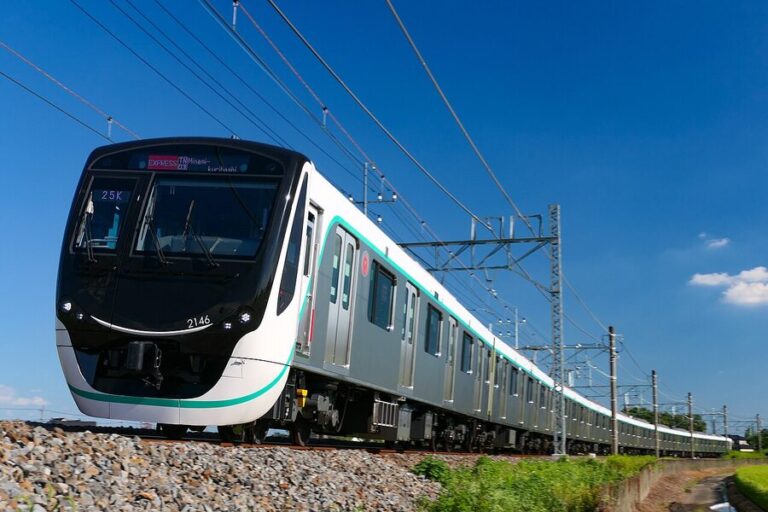
The base 50000 type runs the Tojo Line. The 50050 type works the Skytree Line through-services with the Tokyo Metro Hanzomon Line and beyond to the Tokyu Den-en-toshi Line, which means a Tobu set on a 50050 schedule will leave Minami-Kurihashi, run south to Oshiage, switch to the Hanzomon Line, run through Tokyo to Shibuya, switch to the Tokyu Den-en-toshi Line, and terminate at Chuo-Rinkan, eighty-plus kilometres away from where it started. The 50070 type is the Tojo Line’s equivalent and runs the Fukutoshin Line direct service to Yokohama. The 50090 type is the TJ Liner reservation-seat set with rotating-and-locking seats that face the direction of travel during morning peak and rotate sideways for off-peak local service.
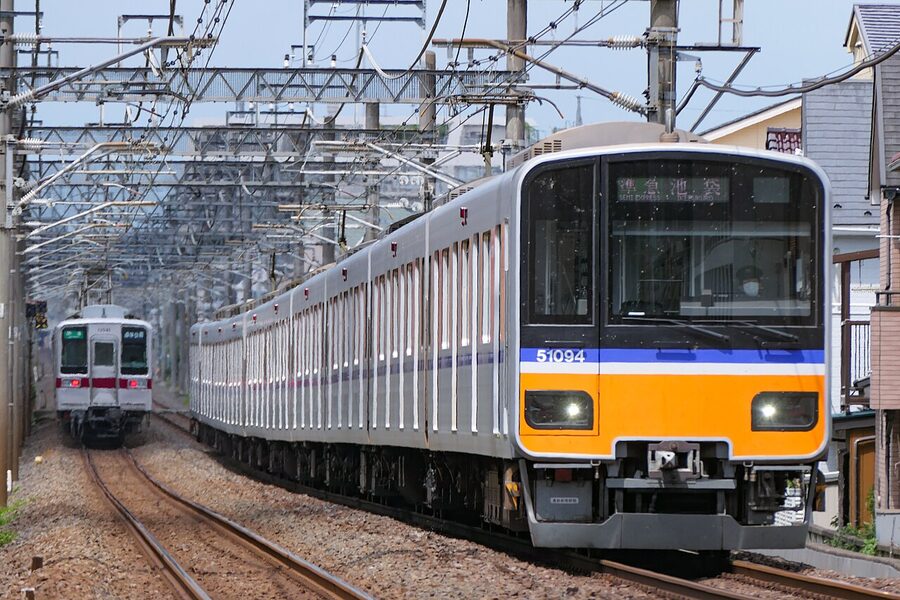
The 60000 on the Urban Park Line
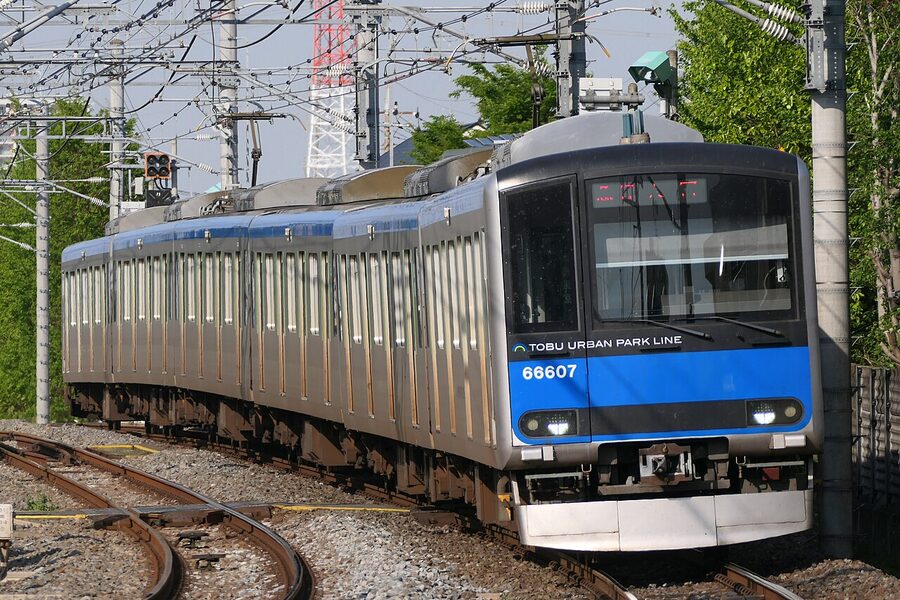
The 60000 series is a 50000-derivative for the Tobu Urban Park Line (Noda Line). Six-car sets, 110 km/h, all-aluminium body. Eighteen six-car sets in service, the line’s primary modern fleet alongside the 8000-series and 10030-series legacies that still cover off-peak workings.
The 70000 series and the Hibiya Line through-running
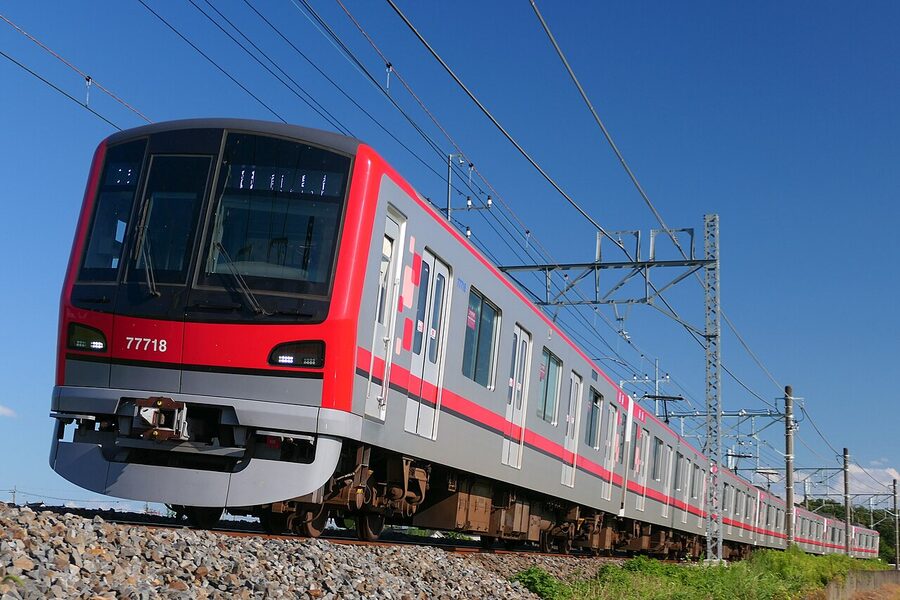
The 70000 series went into service on 7 July 2017, replacing the 20000 family on Hibiya Line through-services. Twenty-two seven-car sets. Functionally identical to the Tokyo Metro 13000 series; both were built by Kinki Sharyo to a shared specification, the first Kinki Sharyo trains ever ordered by Tobu, and the success of the 70000 led directly to Kinki Sharyo winning the entire 80000-series order. The 70000 was awarded the 2017 Good Design Award.
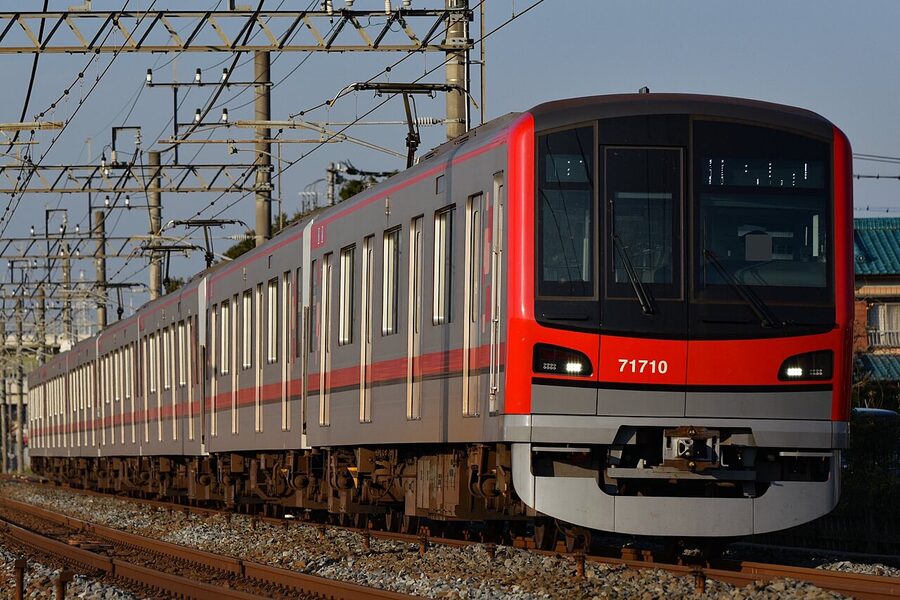
The 70090 sub-type, four sets in service from March 2020, has multi-position seats (longitudinal-to-transverse like the 50090) and runs the THライナー (TH Liner) reservation-seat service from Kuki to Kasumigaseki. It is the Hibiya-Line equivalent of the Tojo Line’s TJ Liner. Same business model: pay extra for a guaranteed seat on the morning peak, the seats rotate to face forward during the reservation service, and rotate back for the off-peak local working.
The newest: 80000 series, 2025
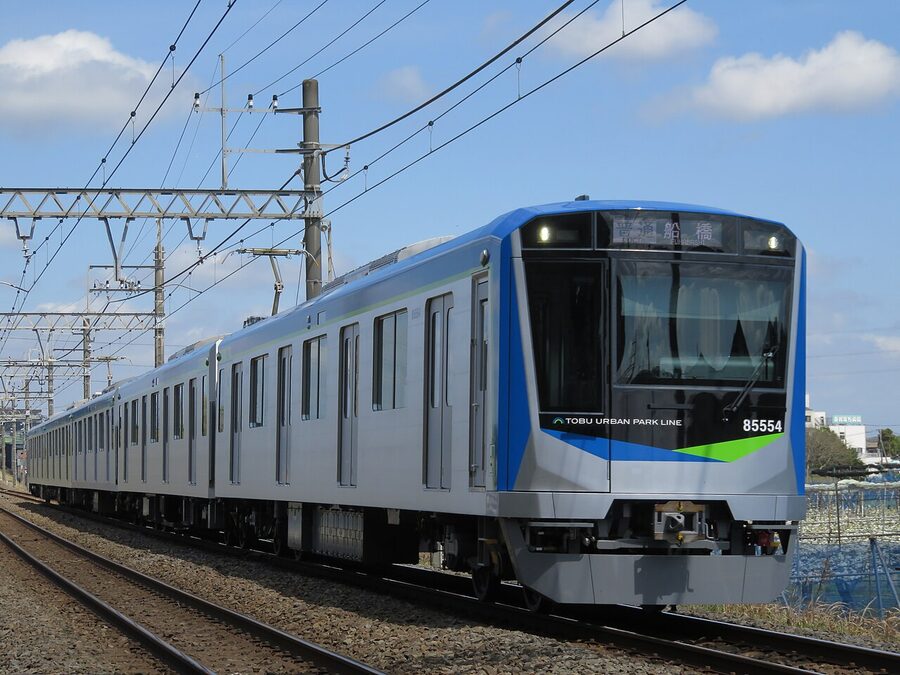
The 80000 series, in service from 2025, is the Urban Park Line’s modern replacement for the older fleet. Notably, it uses five-car sets rather than the six-car standard, partly because the Noda Line stations have shorter platforms in their older sections, and partly because the line’s traffic does not justify six-car running outside peak. One of the third cars in each set is an ex-60000 trailer recycled into the new build, which is a Tobu signature: capital reuse where the rest of the industry would have ordered new.
Through-running, and why half the trains on Tobu metals belong to somebody else
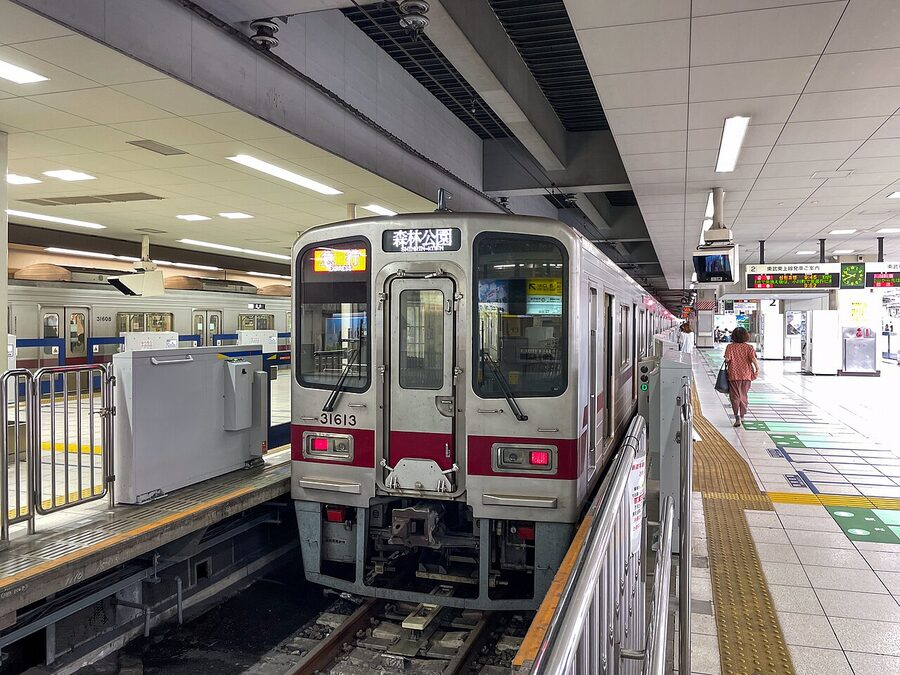
This is the structural part of the Tobu fleet that EN sources gloss most consistently and that you cannot understand the operator without. Tobu has four bilateral through-running agreements, and they shape what runs on the line.
Hibiya Line: from 1962, the original
The Tobu Skytree Line (the southern Isesaki Line) connects to the Tokyo Metro Hibiya Line at Kita-Senju, and trains run through in both directions. Started 31 May 1962, on the day the Hibiya Line opened. Originally Tobu used dedicated 18-metre 2000 series trains because the Hibiya Line had tight curve radii (some sub-200 metres) that 20-metre stock could not navigate. After Tokyo Metro re-measured the curves and confirmed 20-metre stock would clear, Tobu went to the 70000 series in 2017. Tokyo Metro reciprocates with 13000 series sets running north into Tobu territory.
If you board a Hibiya Line train at Naka-Meguro at 06:24 and stay on it, you will end up somewhere on the Tobu Skytree Line, possibly as far as Tobu-Dobutsu-Koen on the morning rush extensions. The driver swaps at Kita-Senju; the train and the rolling stock remain consistent through the operator change. From a passenger’s perspective there is no transition. The same rule covers the cluster of slugs from Tokyo Metro and JR East that share metals with Tobu, and the through-running pattern is one of the things that makes the Tokyo network feel bigger than it is.
Hanzomon Line: from 2003, with Tokyu beyond
The Hanzomon through-running started 19 March 2003. Tobu sets join the Hanzomon Line at Oshiage and run to Shibuya, where the Hanzomon hands over to the Tokyu Den-en-toshi Line and the trains continue to Chuo-Rinkan. Tokyu reciprocates with sets running north out of Den-en-toshi to Tobu-Dobutsu-Koen and beyond on the Nikko Line. This is the longest single through-running operation in the Greater Tokyo network: a continuous service across three operators, no interchange. The 50050 series is the Tobu side of it; the Tokyu 5000 and 2020 series cover the Tokyu side; Tokyo Metro 8000 and 18000 cover the Hanzomon Line.
Yurakucho and Fukutoshin: the Tojo Line side
From the Tojo Line, Tobu trains join the Tokyo Metro Yurakucho Line at Wakoshi (started 25 August 1987 with Tokyo Metro 7000 reciprocation) and from June 2008 the Fukutoshin Line opened with through-running added on top, eventually extending to the Tokyu Toyoko Line and the Yokohama Minato Mirai Railway. From Wakoshi, a Tobu 9000 or 50070 can keep going to Yokohama-Chinatown without changing trains. Five operators, one through-service. The four bilateral agreements between Tobu, Tokyo Metro, Tokyu, Yokohama Minato Mirai Railway, and Seibu (which also through-runs onto the Fukutoshin) make this the most operationally complex through-running operation in Japan. The Tobu portion is run by 9000, 9050, and 50070 sets.
JR East: the Shinjuku-to-Nikko sleeper service
The JR-Tobu through-service launched 18 March 2006, an arrangement where JR East E257 sets and Tobu 100 series sets run from Shinjuku via the Tohoku Main Line, through a connecting line at Kurihashi, then onto the Tobu Nikko Line. Branded “Spacia Nikko” or “Spacia Kinugawa” depending on destination. Tobu 100s wear the JR-Tobu through-running gear; JR East E257s and 253s have the equivalent Tobu interface fitted. The most marketed Tokyo-to-Nikko service for international visitors. Worth knowing: the Shinjuku departure is 09:00 and 10:00 most days; the Asakusa Spacia X is faster from central Tokyo, but the JR direct is more convenient if you start your day on the JR network.
Skytree Line, Asakusa, and the Skytree access angle
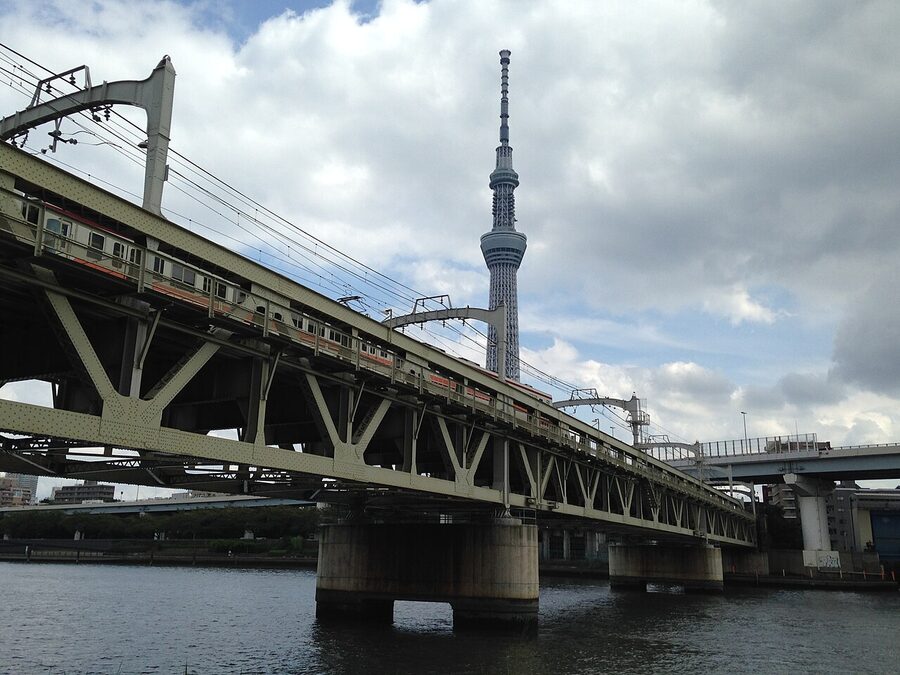
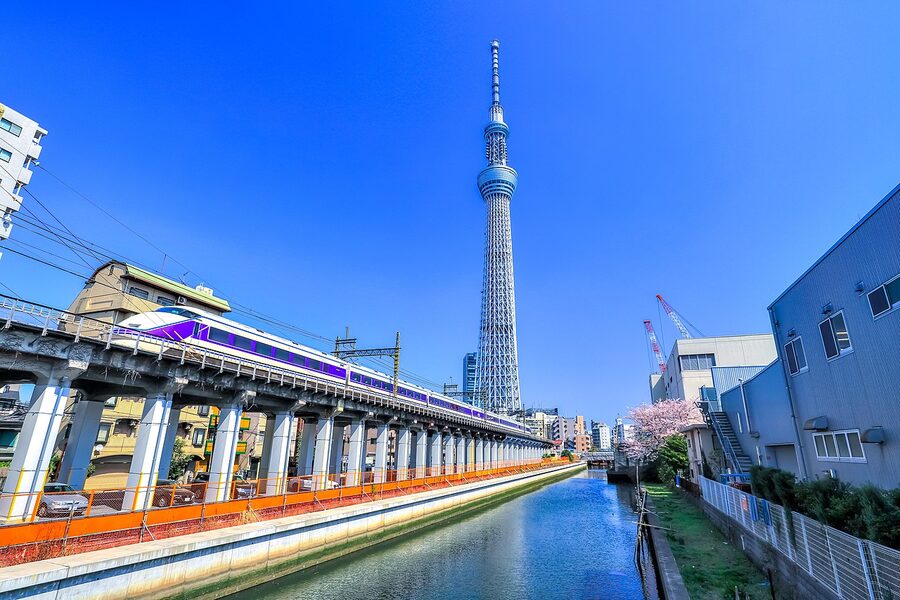
The Tobu Skytree Line is the marketing name applied in 2012 to the southern Isesaki Line plus the Oshiage spur, in the run-up to the Skytree’s opening. The line itself dates from 1899; the rebrand was a corporate exercise to align the line name with the new tower the company part-owns. Tokyo Skytree itself sits on the freight-yard land formerly used by Narihirabashi Station (now Tokyo Skytree Station), which Tobu owned outright and developed.
For getting to the Skytree, the relevant fact is that you arrive at Tokyo Skytree Station, which is one stop from Asakusa on the Tobu Skytree Line and connects directly into the tower’s lower lobby. From Oshiage, the Hanzomon Line / Toei Asakusa Line side, the same building is connected via the underground concourse. If you have through-ticketed onto the Tobu network from anywhere on the Hanzomon system, you can get off at Oshiage rather than crossing Asakusa.
Asakusa, the platform that does not quite fit
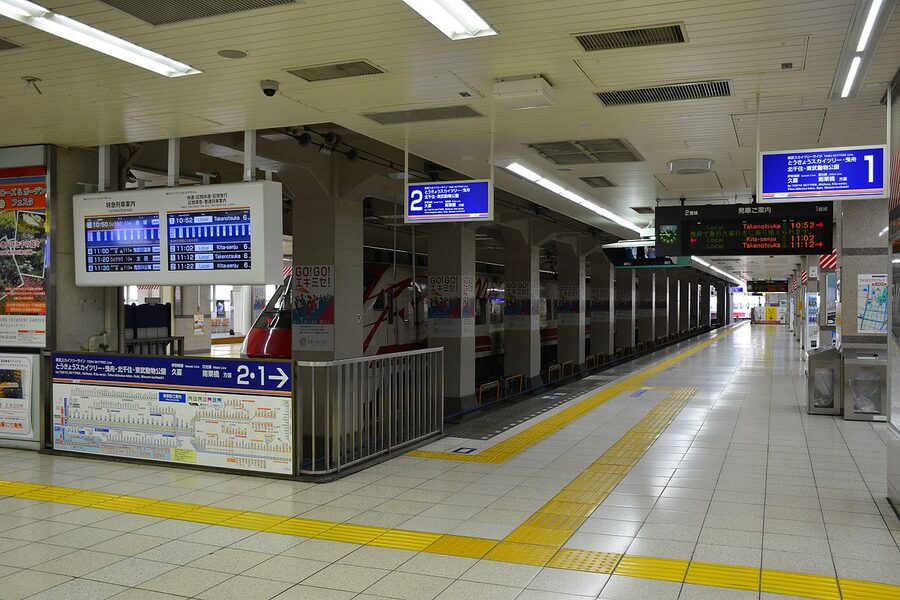
Tobu Asakusa was opened on 25 May 1931, and from day one the platforms were too short for the trains the company already wanted to run. The geography forced it: the line drops down to the Sumida from Mukojima at a sharp curve, and the bend continues into the platforms, which means the platform is not a straight line and the back of the train doors are several centimetres further from the platform edge than the front. This is why Spacia X sets stop with the cab right at the buffer stops, why the rear-car door is the one that always has staff stationed at it during boarding, and why the limited-express sets only use platforms 1, 2, 3, and 4 (the longest of the five). Platforms 5 to 9 are for the local commuter sets, which are shorter and more forgiving of the curve.
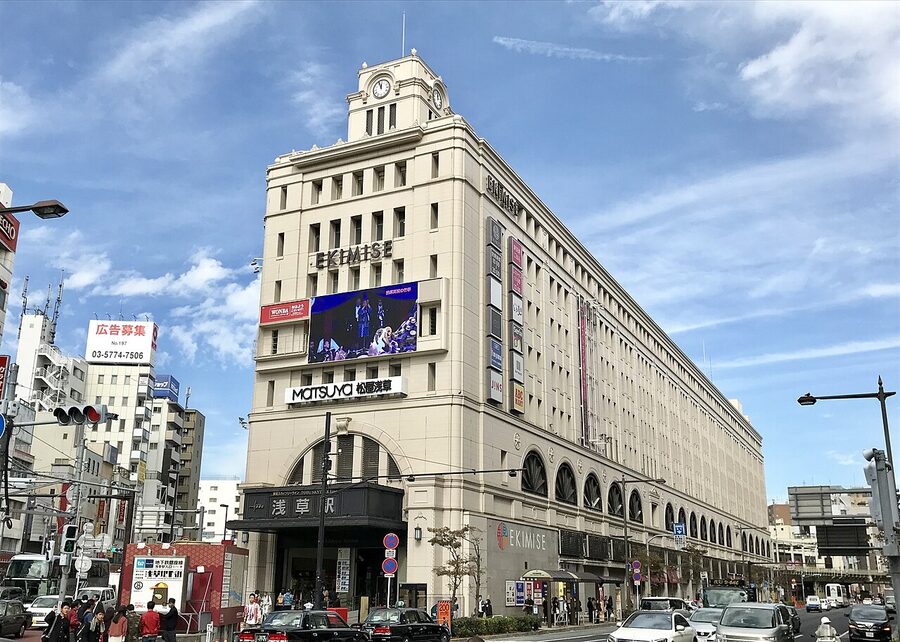
If you are catching a Spacia X from Asakusa, the practical detail is: aim for the front of the train. The reserved-seat compartments in cars one to four are easier to board if you arrive on the matched ticket-gate side. The Matsuya department store sits directly above the station; the ground-floor entrance to Tobu Asakusa is at the river end of the building, on the Sumida side. You walk through the Matsuya ground floor to reach the gate.
Tobu Nikko, the destination, and why the station is what it is
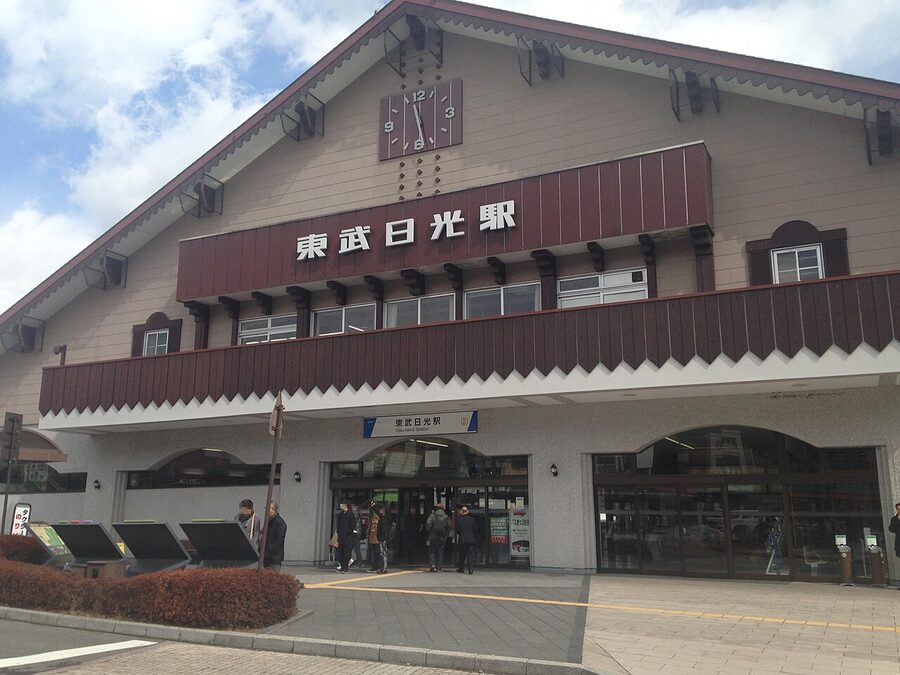
The Tobu Nikko Line opened all the way through to Tobu-Nikko on 1 October 1929, the first time any private railway in Japan ran electric trains over a 100 km distance. The line is 94.5 km from the Isesaki Line junction at Tobu-Dobutsu-Koen. From Asakusa, you cover the Skytree Line as far as Tobu-Dobutsu-Koen, then switch to the Nikko Line proper, then climb gently for the next 80 km to Tobu-Nikko. The line is Tobu-orange in the line-colour scheme; the station nameboards mix orange and dark red.
Buying the ticket: how it actually works
For Asakusa to Tobu-Nikko on a limited express, the standard fare comes to about ¥3,500 in 2026: roughly ¥1,360 base fare plus the ¥1,650 limited-express surcharge, paid as one ticket. The Spacia X fare adds nothing beyond the standard limited-express price for the standard-seat sections; the box and private compartments cost more (¥15,000 for the four-person compartment as a flat rate on top, divided by the number in your party).
How to reserve
The Tobu Top Tours portal (the company’s reservation system, branded “Tobutic” / トブチケ) handles the limited-express reservations online, in English on the international site. You can book up to one month ahead, and the Spacia X box compartments fill up two to three weeks in advance for weekends in cherry-blossom season and autumn-colour season. For ordinary standard-seat departures, same-day booking is fine outside peak. JR-Tobu through-services to Shinjuku must be booked through JR East’s reservation channels, including the JR East online site.
The Nikko All Area Pass, which Tobu sells from Asakusa, packages the Asakusa-Tobu-Nikko round-trip with the Nikko bus network and the Akechidaira ropeway for ¥4,800 (low season) to ¥5,200 (peak). It does not cover the Spacia X surcharge; that is bought separately. If you are doing a one-day Nikko visit including the lakes, the pass is the obvious choice. If you are skipping the lakes and just doing the shrines, the basic round-trip ticket is fine.
Don’t bother: the Asakusa-Nikko Free Pass without the Spacia
The cheaper “Tobu Free Pass” (without the limited-express surcharge bundled) saves about ¥800 over a standard return, and you board the Kaisoku rapid-train service rather than the Spacia. The Kaisoku takes 2h 20m versus the Spacia’s 1h 50m, and the seats are commuter-spec. Worth it only if the limited expresses are sold out, which happens occasionally on autumn-colour weekends.
Where this all sits in the Tokyo private-rail map
If you have read the Odakyu line piece, the comparison is illuminating. Odakyu’s Romancecar fleet (the GSE 70000 and the older sets) is structurally similar to Tobu’s Spacia/Spacia-X: a bespoke limited-express product on a single line, supported by a much larger commuter fleet. The two operators chose different approaches to through-running. Odakyu pushed its commuter trains onto the Tokyo Metro Chiyoda Line and out the other side onto the JR Joban Line (a five-operator agreement). Tobu pushed onto Hibiya, Hanzomon, Yurakucho, Fukutoshin, and JR East individually, more bilateral arrangements rather than a single large one.
For the broader operator history, the Tobu corporate history piece covers the Nezu family ownership, the prewar consolidation under chairman Nezu Kaichiro Sr., the postwar electrification, and the Skytree pivot in the 2010s. The current chairman, Nezu Yoshizumi, is the great-grandson of the founder; the company is one of the few major Japanese railways still controlled by its founding family.
For the Tojo Line specifically, which is operationally a separate railway under one corporate brand, the 50090 TJ Liner overlap with the Tokyo Metro Yurakucho operations connects to the patterns described in the Tokyo Metro fleet piece. And for the Hibiya Line through-running detail, which I have skipped over in this piece because the Tokyo Metro side is more complex, the Tokyo subway history covers the institutional arrangement that lets a 70000-series Tobu set show up at Naka-Meguro under Hibiya Line branding.
The verdict on the Tobu fleet
Eleven series in regular passenger service, four limited expresses, six commuter, and the SL Taiju steam workings. The fleet skews older than the rest of the major Tokyo privates because Tobu has been more aggressive about life-extension rebuilds than its rivals. It is also the most varied: I cannot think of another Japanese major operator that runs all of the following on a regular timetable, in the same week, on the same metals: a 1963 commuter, a 1990 limited express, a 1981 stainless-steel through-runner, a 2017 Hibiya-Line direct, a 2023 Hitachi A-train flagship, and a 1947-built C11 steam locomotive on a heritage line. The Spacia X is real and very pretty. The 8000 series is the company.
Which trains to ride
If you have one limited-express ride on Tobu, take the Spacia X to Tobu-Nikko on the morning departure. If you have two, do the SL Taiju as the second. If you have three, ride the 500 Revaty to Aizu-Tajima and split the train at Shimo-Imaichi (a once-a-trip experience: standing on the platform watching three cars peel off northward while you continue west). The 200 Ryomo is for completists; it gets you to a corner of Gunma that does not reward the journey unless you have a specific reason for going to Akagi.
For the commuter side, the most interesting ride is the Hanzomon-Den-en-toshi through-service: board a 50050 at Tobu-Dobutsu-Koen at 07:30, sit through the change at Oshiage where the platform displays switch from Tobu green to Tokyo Metro purple but the train does not change, ride past Shibuya, and watch the line markers transition again to Tokyu pink as you continue south. Eighty kilometres, three operators, one carriage. The driver swap is at Oshiage; you will not notice.
The 06:18 again
06:18 at Asakusa, the morning the Spacia X enters service in the new schedule, and an 8000 series across the platform on its way out to a Tatebayashi local. The N100 is six cars of Hitachi A-train aluminium with kumiko-pattern windows. The 8000 has been working that platform since John F. Kennedy’s first year. They departed within ninety seconds of each other, on the same set of metals, north out of Tokyo, the marketing on platform 4 and the company on platform 5. Most of the people boarding the Spacia X did not look at the 8000 once. The next time you take Tobu, ride both on the same trip. The first one is for the photo. The second one is the railway.


.jpg)

