
Tokyo Metro Trains: 9 Lines, 7 Through-Runs
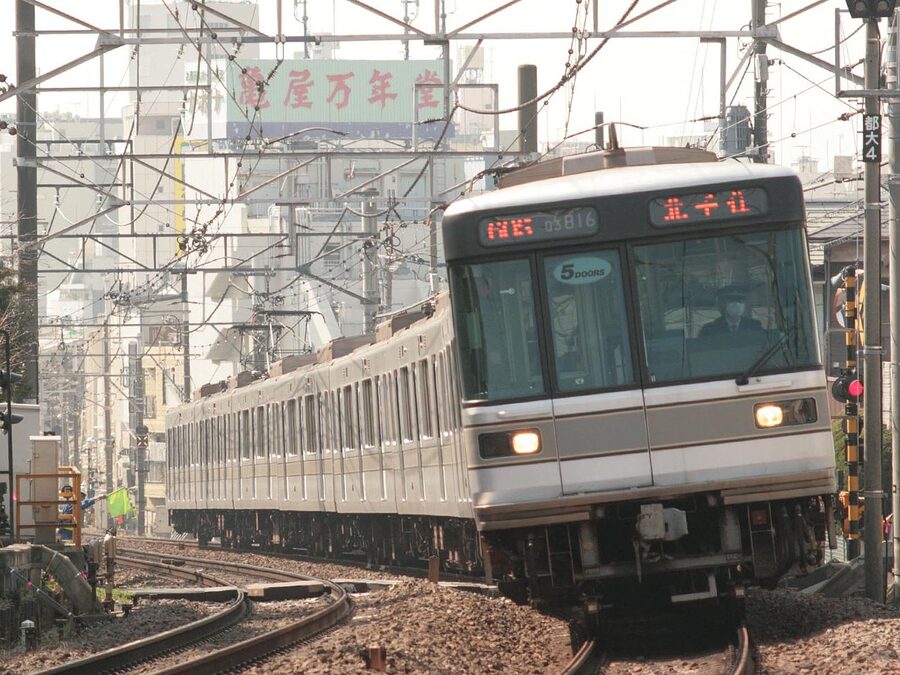
06:24 at Naka-Meguro on the Hibiya Line. The 13000 series eased onto the southbound platform, doors hissed once, and the platform staff waved a school party towards the wider doors near the back. I stepped aboard a near-empty four-door car bound for Kita-Senju, watched the LED panel above the door flick from Hibiya silver to Tobu Skytree blue as the train crossed the through-running boundary at Kita-Senju, and ended up in Kasukabe an hour later without changing trains. The driver had changed at Kita-Senju. The train had not.
In This Article
- The line that explains the rest of the network
- What the 13000 actually is
- Why a Naka-Meguro train ends up in Kasukabe
- The Hibiya inside Tokyo
- The two trains that never leave their lines
- The Ginza Line and its 1000 series
- The Marunouchi and its 2000 series
- The Tozai: longest line, busiest line, three generations of stock
- The 05 series, the workhorse
- The 07 series, the orphan
- The 15000 series, the rush-hour answer
- The Chiyoda, where Romancecars run on Metro tracks
- The 16000 and the 2011 Laurel Prize
- The 6000 series and the line that built it
- Omotesando: the cross-platform interchange the network does once
- The Yurakucho and Fukutoshin: one shared fleet, four through-running partners
- The 10000 series
- The 17000 series and the 7000 it replaced
- The Hanzomon and the Tokyu connection
- The 8000 series, retired in 2024
- The 08 series: six sets, one specific job
- The 18000 series: 2021 to today
- The Namboku and the four-operator south
- The 9000 series, the original automation pioneer
- The 9000-5000 conversion and the Shinagawa branch
- Riding the Tokyo Metro: fares, tickets, the bits that catch you out
- The Tokyo Subway Ticket: the only pass that matters
- Headways and the trains you should and shouldn’t board
- Three things to look for on a journey
- Where the network actually starts
- The other operators you will end up riding
- What still gets built
- Coming back to Naka-Meguro
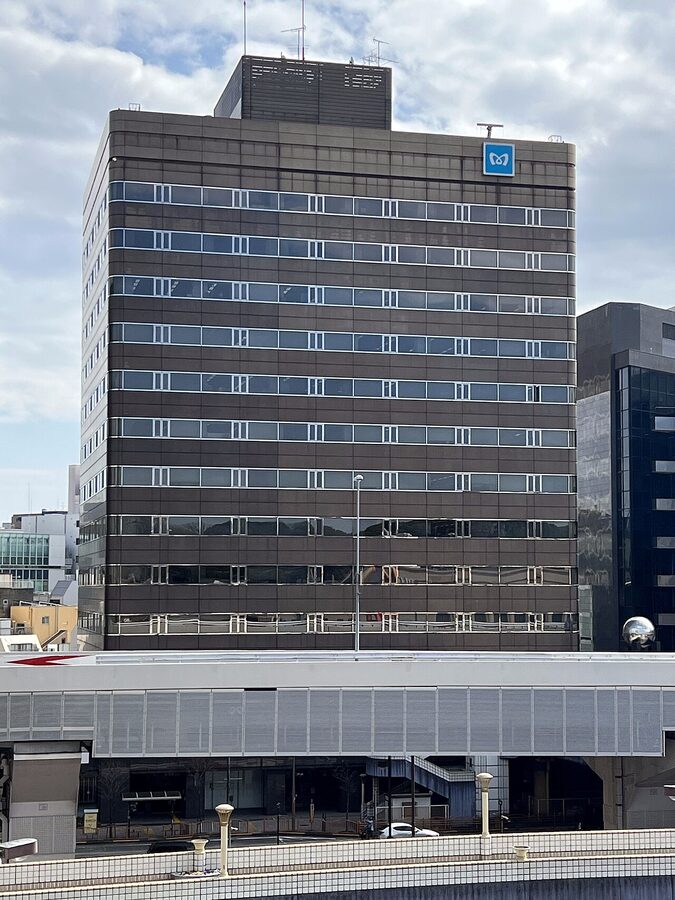
That single 20.3 km Hibiya Line ride, jointly run with Tobu Railway, is the easiest way to understand what the Tokyo Metro actually is. Nine subway lines on paper. Eleven physical routes once you count the through-services. And a fleet that spends a meaningful slice of its day stitched into other operators’ networks rather than running purely under its own. If you want the corporate side and the founding dates, the long-form companion piece on the Tokyo subway system covers it. What follows is the rolling-stock-and-lines piece: which series runs which line, what each train replaced, where it through-runs to, and the bits that catch a first-time rider out at Yoyogi-Uehara when the Romancecar limited express slides past on a Chiyoda Line platform.
The line that explains the rest of the network
Start with the Hibiya, because the Hibiya is the network in microcosm. It is the third-oldest line, opened 1961, and the first one Eidan built on standard mainline 1,067 mm Cape gauge with 1,500 V overhead catenary instead of the 600 V third-rail tram-style electrification the Ginza and Marunouchi inherited from the 1920s. That single decision, made when the Ginza Line was already thirty-four years old, is why through-running with private operators became possible at all. Build a subway to mainline spec and you can interlink it with the railways above ground. Build it to a closed-loop spec and you cannot.
What the 13000 actually is
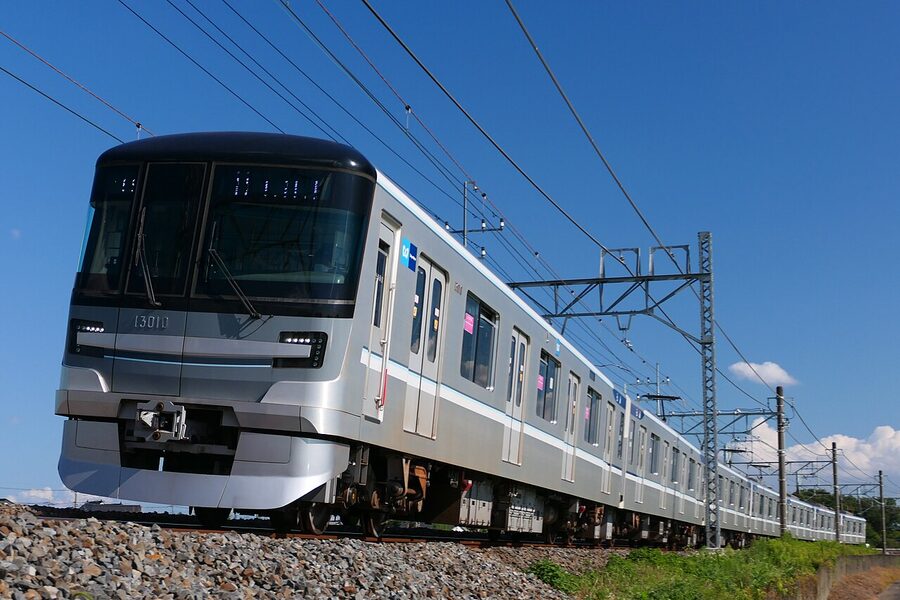
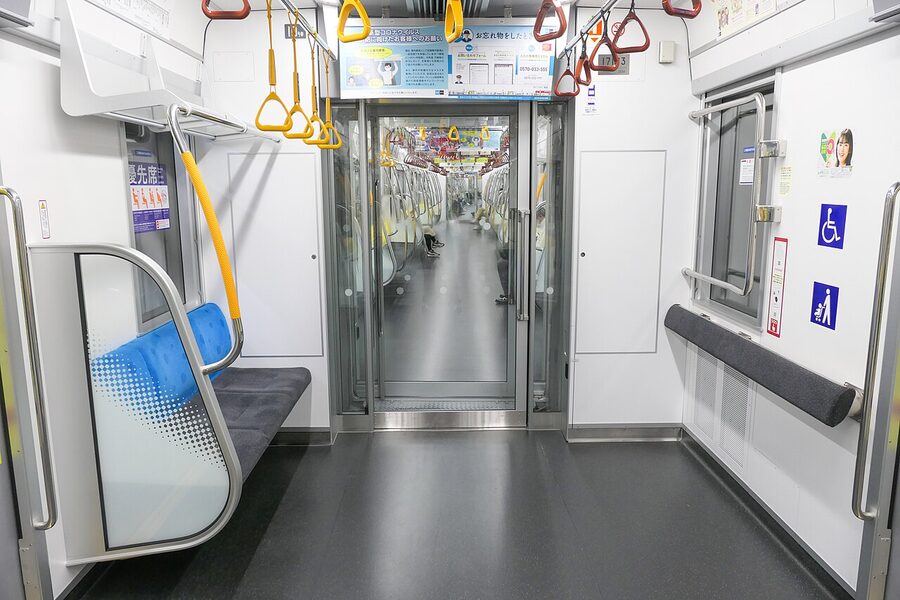
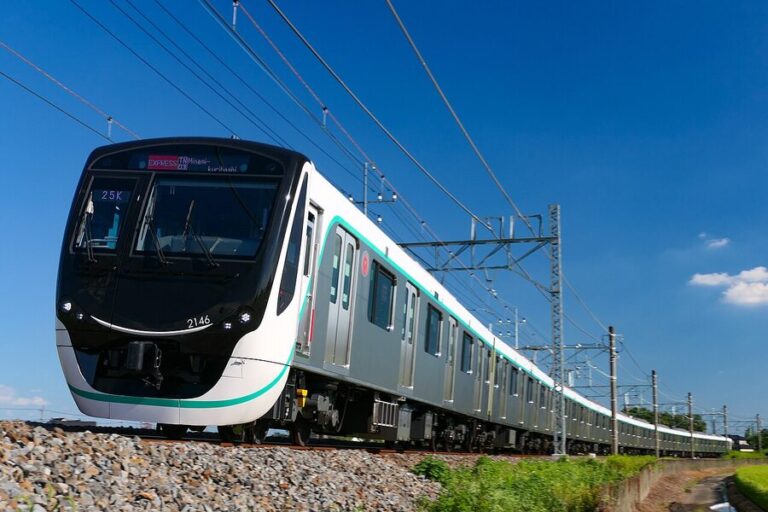
The 13000 series entered Hibiya Line service on 25 March 2017 in 44 seven-car sets, all built by Kinki Sharyo. Four doors per side per car (the previous 03 had three), 20 m car length, designed to standardise door positions with Tobu’s contemporaneous 70000 series so that platform screen doors could be installed across the entire line. That standardisation finished in 2020. Every Hibiya platform now has full-height PSDs, and the wider four-door spacing makes peak-hour boarding noticeably faster than the 03 ever managed.
Why a Naka-Meguro train ends up in Kasukabe
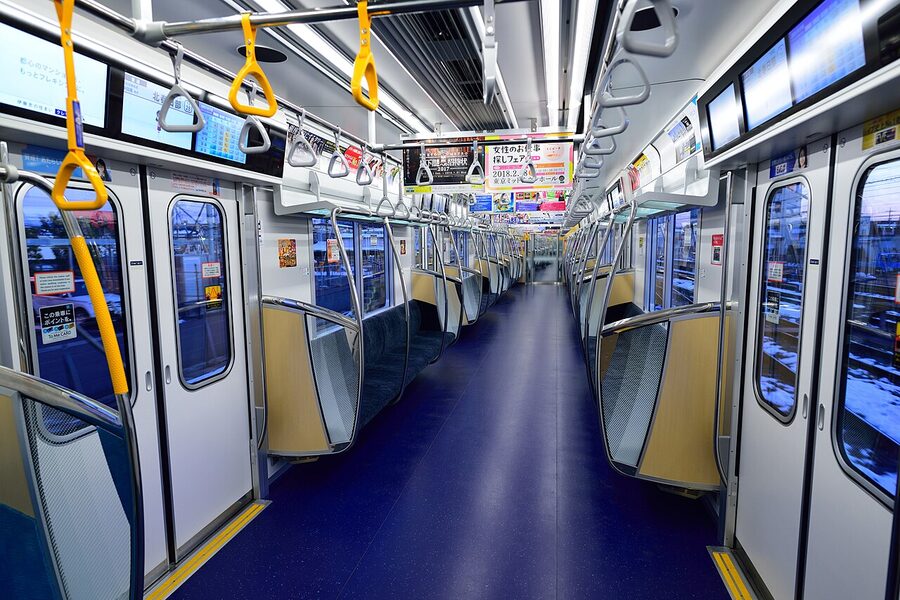
The Hibiya through-runs at both ends. Northwards from Kita-Senju the line continues onto the Tobu Skytree Line as far as Minami-Kurihashi and Tobu-Dobutsu-Koen, and onto the Tobu Nikko Line for short-distance services. Southwards the Hibiya used to through-run to the Tokyu Toyoko Line at Naka-Meguro until 2013, when that role was handed to the Fukutoshin and the Hibiya became Naka-Meguro-terminating. The 13000 ride I started this article with does the northern through-run: a single train from Naka-Meguro all the way into Tobu’s commuter belt, no transfer, no separate fare gate, the integrated through fare quoted at the Tokyo Metro origin.
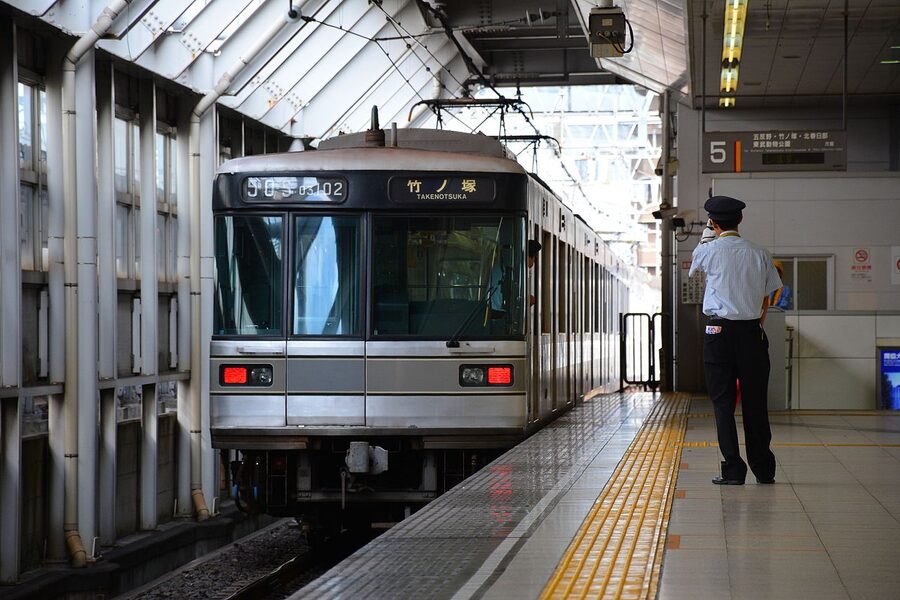
The Hibiya inside Tokyo
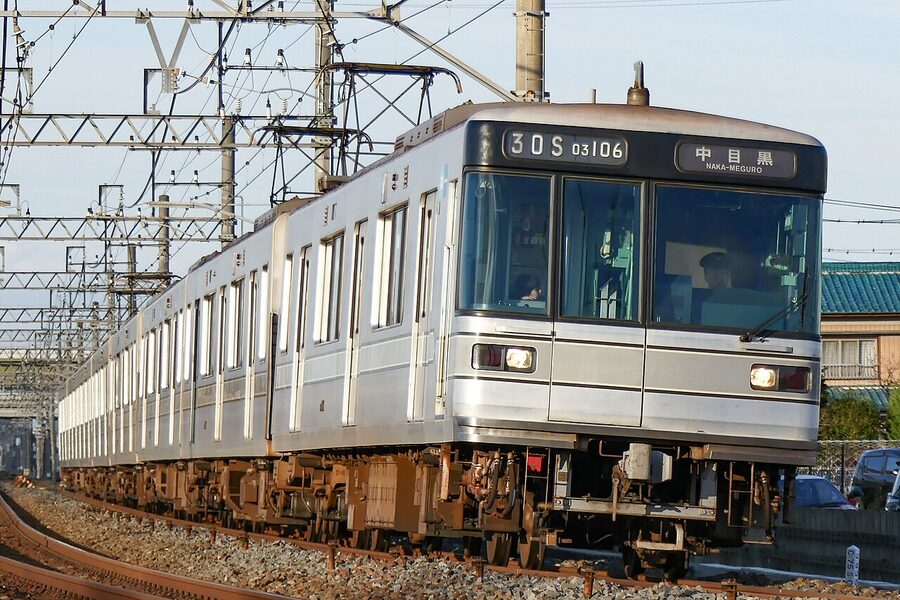
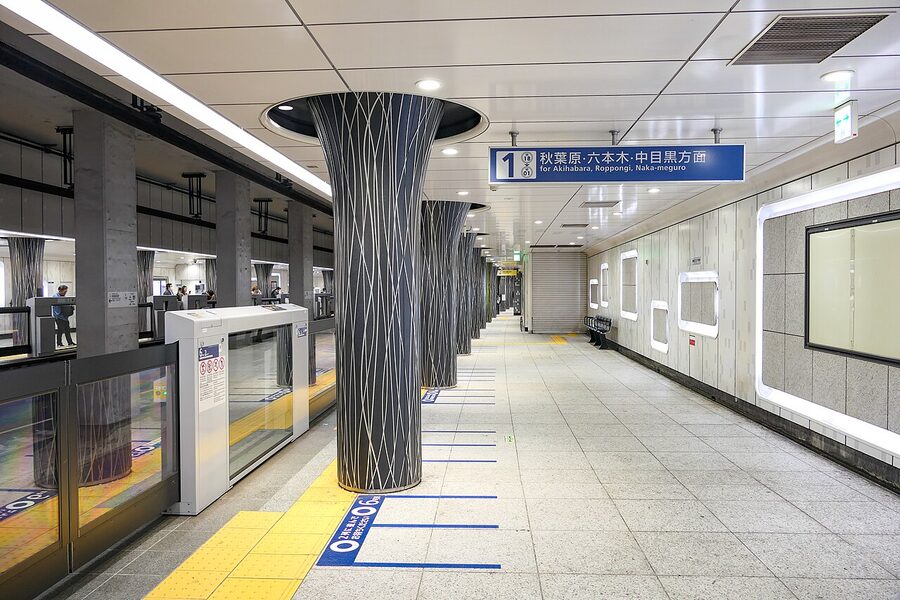
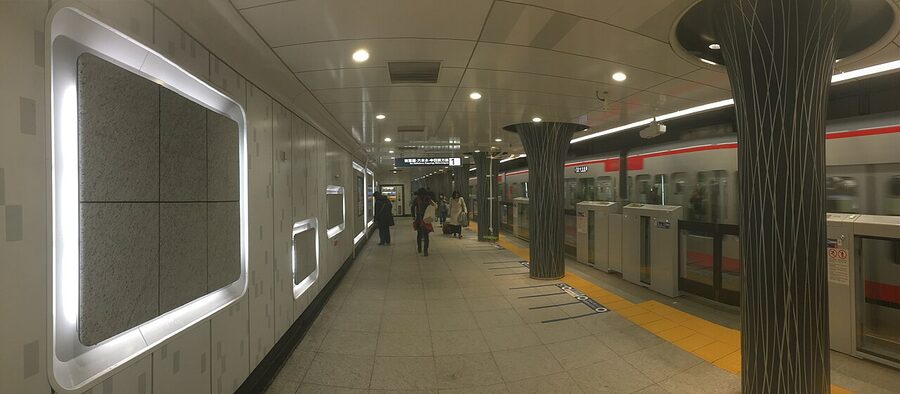
Naka-Meguro (H01) is the southern terminus and a transfer to Tokyu Toyoko. Roppongi (H04) is the line’s nightlife heavy hitter and one of the deepest stations on the network. Akihabara (H16) drops you straight onto Chuo-dori. Kita-Senju (H21) is where Tokyo Metro stops and Tobu starts, on the same physical track. The line is twenty-two stations and 20.3 km; with off-peak headways around five minutes, the end-to-end run is around thirty-six minutes inside the Metro plus another forty if you keep going to Kasukabe.
The two trains that never leave their lines
The Ginza and the Marunouchi are the closed loops. They run on 1,435 mm standard gauge and a 600 V third rail, the spec that made sense in the 1920s and 1950s when the lines were being designed and Tokyo’s surface trams ran on the same electrification. Every other Tokyo Metro line, the Hibiya included, runs on 1,067 mm Cape gauge with 1,500 V overhead catenary. Two systems, one operator, no shared rolling stock. A 1000 series will not, by physical fit or voltage, ever run on a Hibiya track. A 13000 will not run on the Ginza. Most riders never realise this; the colour-coded line maps and the through-fare gates do the smoothing.
The Ginza Line and its 1000 series
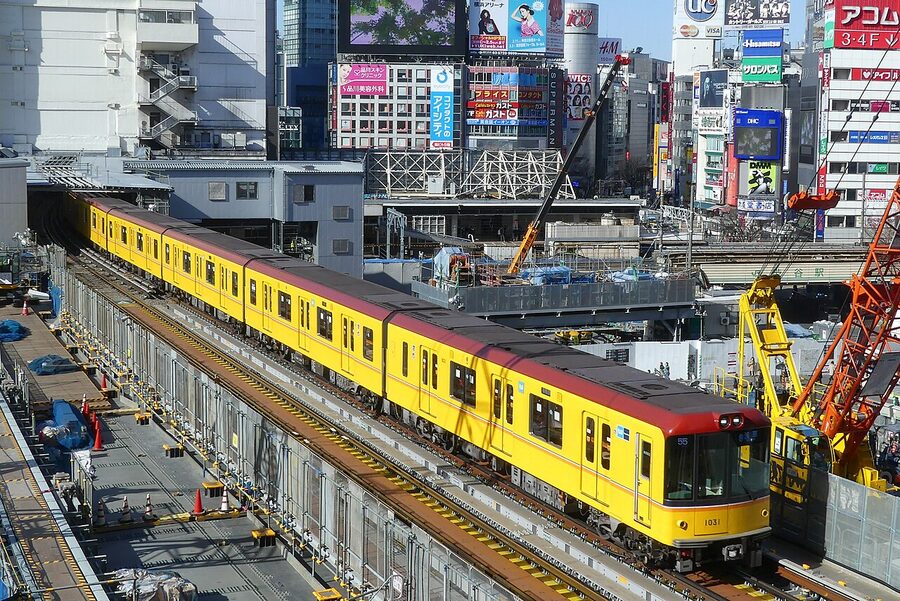
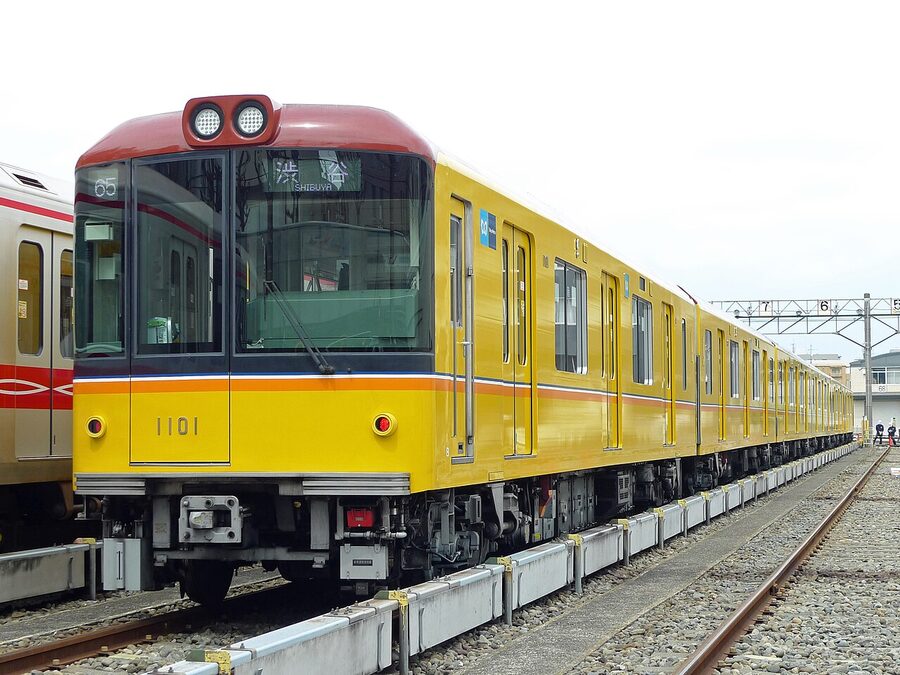
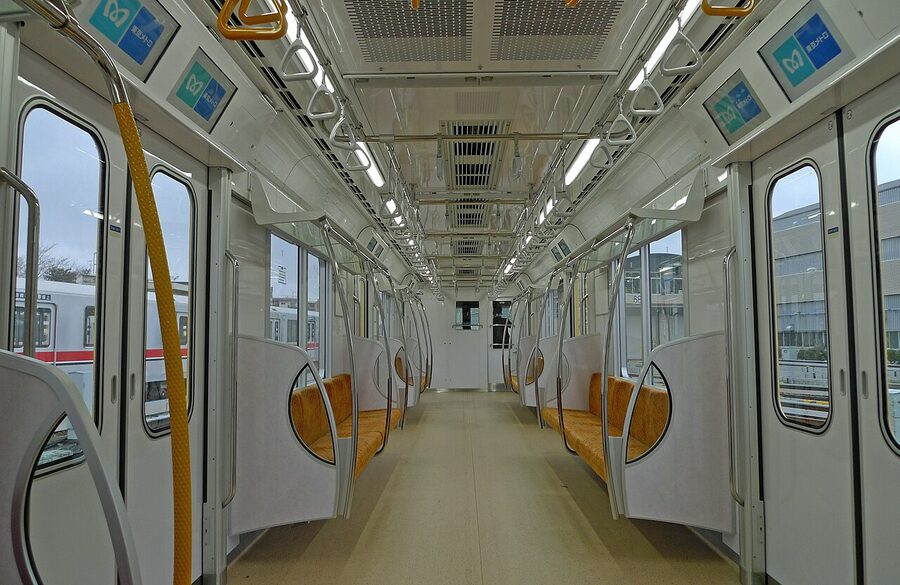
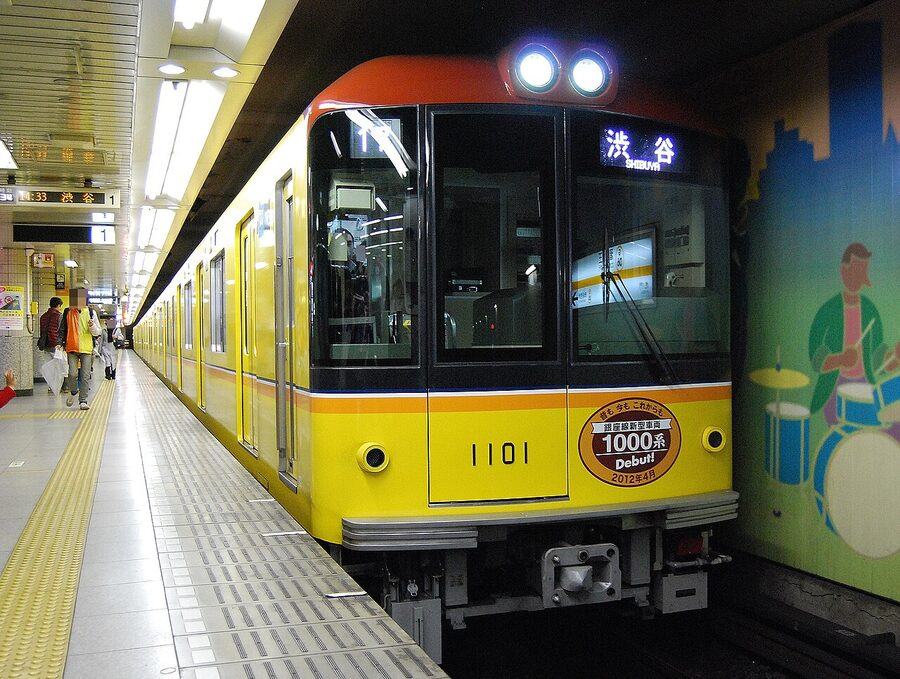
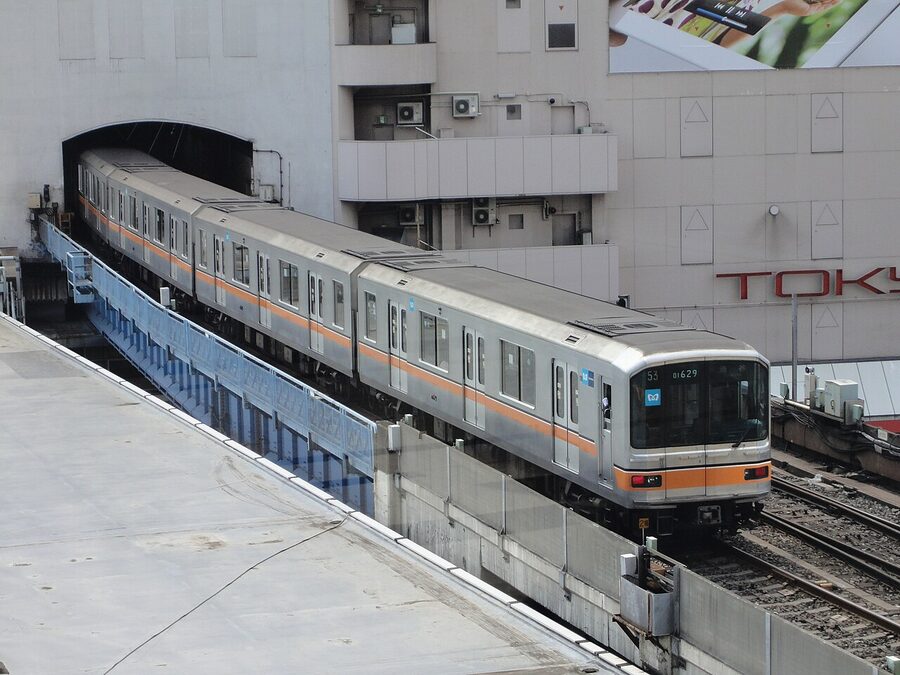
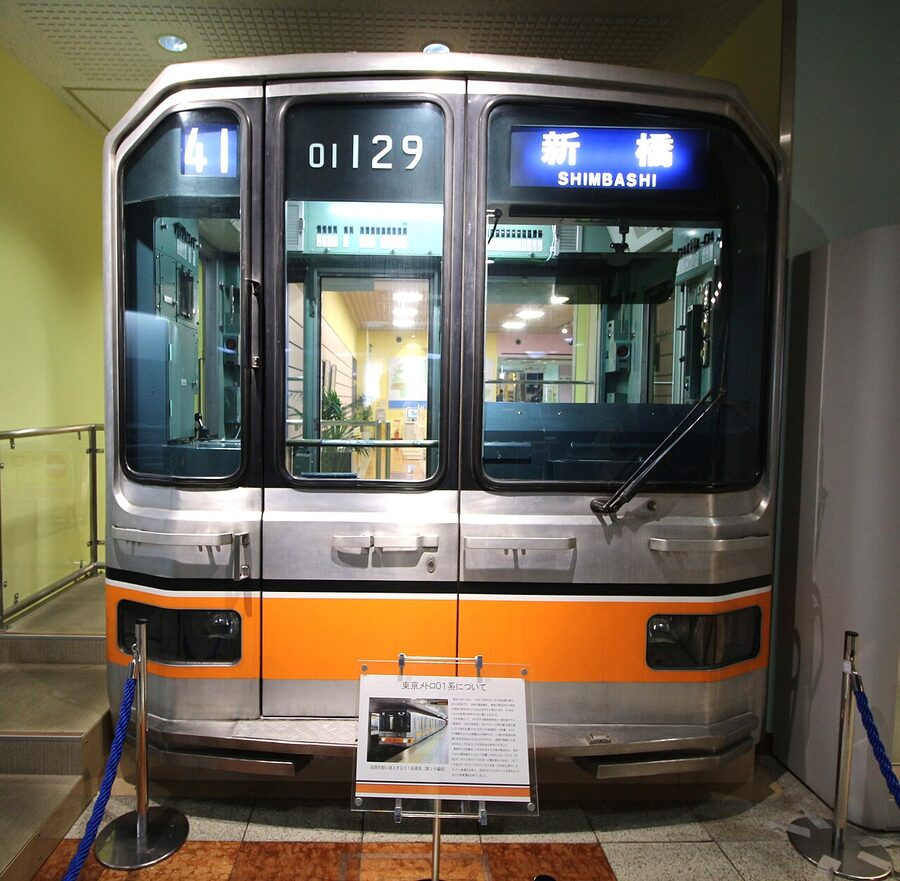
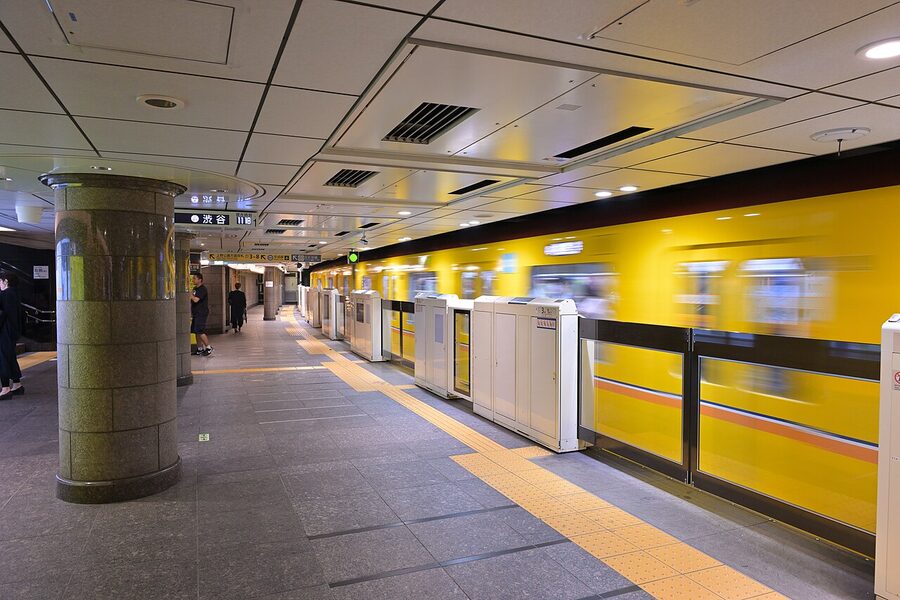
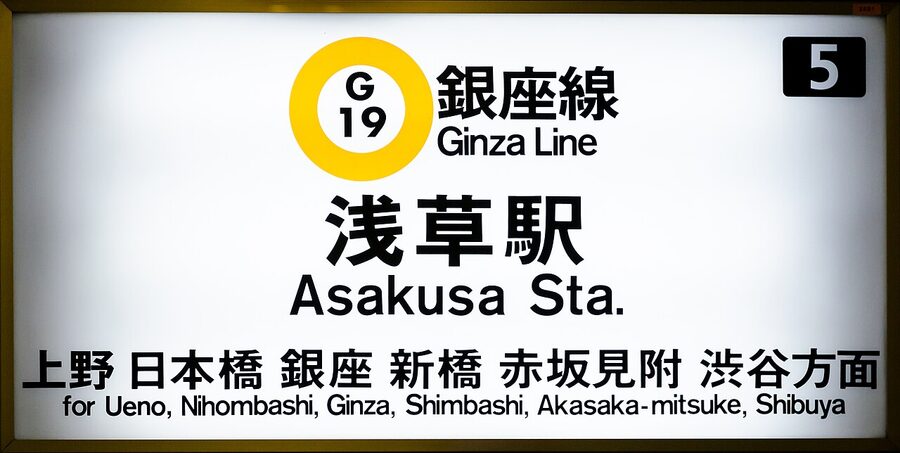
The Ginza Line is the closest thing the network has to a museum piece still earning its keep. Fourteen kilometres from Shibuya through Akasaka, Ginza and Nihombashi up to Asakusa. Twelve minutes Asakusa to Shibuya at peak frequency, three-minute headways during the morning rush. The current fleet is the 1000 series: forty six-car sets built between 2011 and 2017 by Nippon Sharyo and Kinki Sharyo, replacing the 01 series that had run since 1984. The 1000 is a 16 m car with three doors per side, narrower and shorter than every other train on the network because the Ginza tunnels were built to early-1920s clearances. Capacity is around 720 per six-car set.
The Marunouchi and its 2000 series
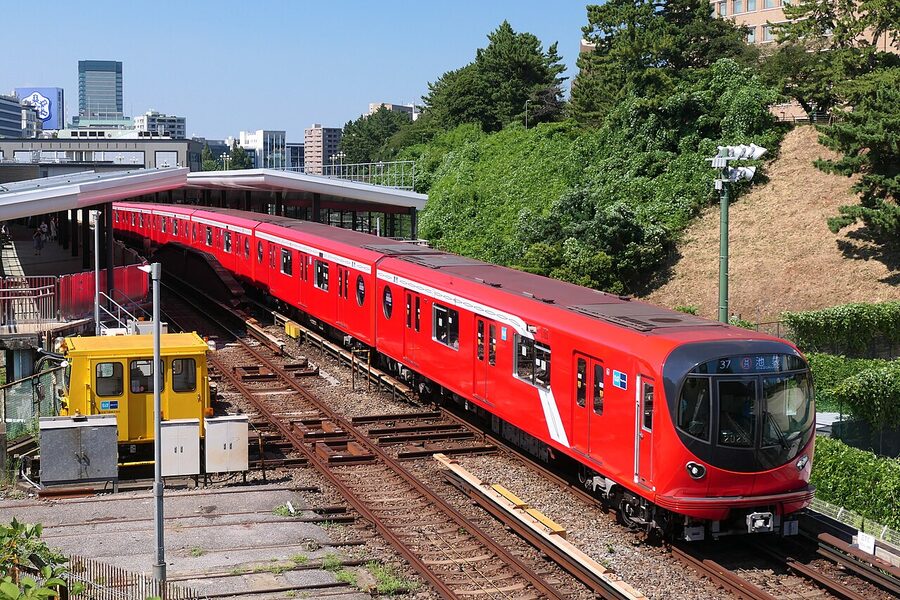
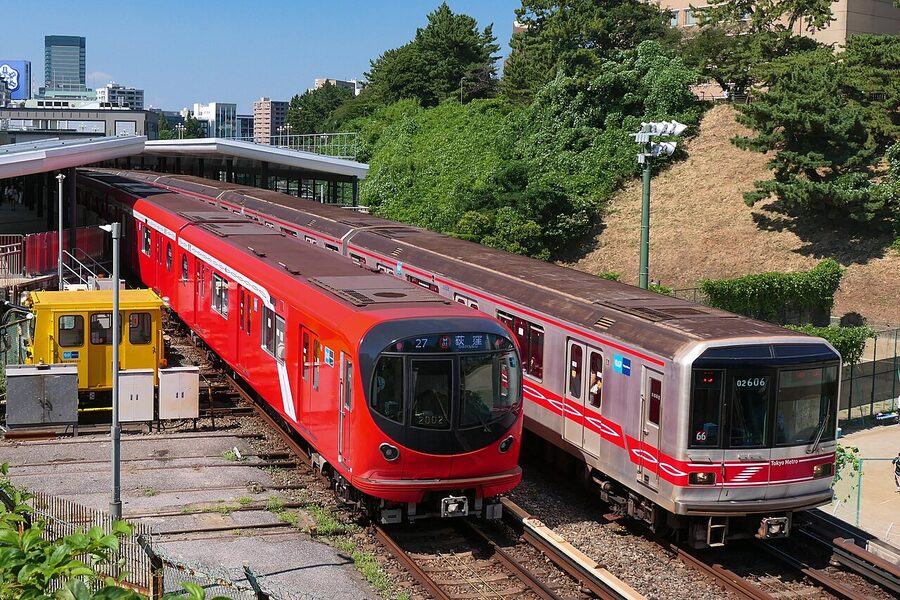
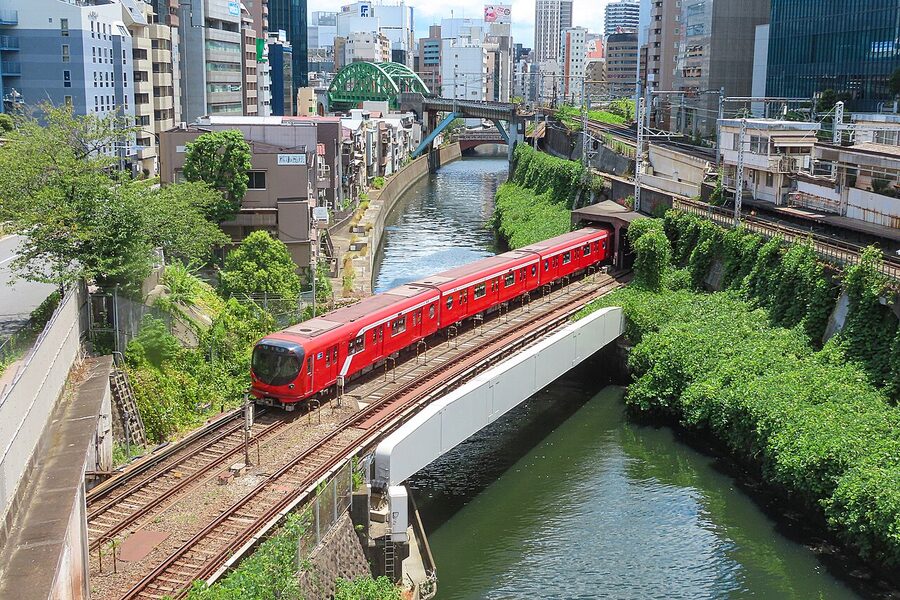
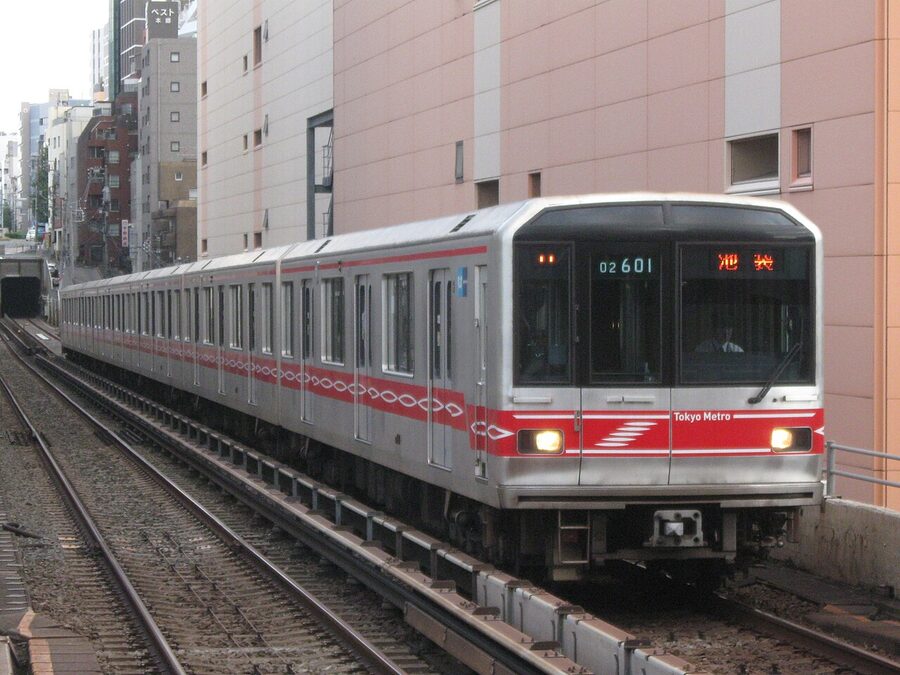
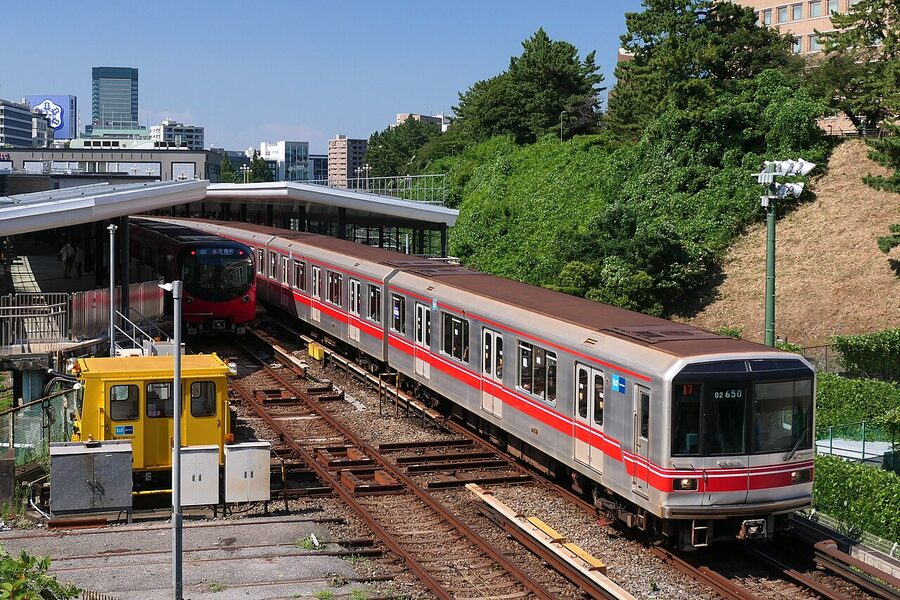
The Marunouchi is the closed-loop sibling. It opened in 1954 between Ikebukuro and Ochanomizu, completed to Shinjuku in 1959, runs the same 1,435 mm gauge and 600 V third rail as the Ginza, and shares the depot facilities at Nakano. Twenty-four kilometres of main line plus a 3.2 km branch from Nakano-Sakaue to Honancho. Twenty-nine stations. About 2.52 million riders a day, the most of any Tokyo Metro line by a small margin. The 2000 series began revenue service on 23 February 2019 in 53 six-car sets, replacing the 02 across both the main line and the branch.
The Tozai: longest line, busiest line, three generations of stock
The Tozai is where the through-running thesis hits the road. It is the network’s longest line at 30.8 km between Nakano and Nishi-Funabashi, and the busiest by raw passenger numbers (2.61 million daily, FY2024). It is also the most physically punishing line to ride at peak. The segment between Kiba and Monzen-Nakacho hit a 199% congestion ratio pre-pandemic, the highest measured anywhere in the Tokyo network. That number means you are pressed against a stranger and breathing the same air as the stranger pressed against them. Avoid it if you have a choice.
The line through-runs westbound onto the JR East Chuo-Sobu Line as far as Mitaka, eastbound onto the Toyo Rapid Railway (a private third-sector operator built specifically to extend the Tozai into Chiba) as far as Toyo-Katsutadai, and onto the JR Sobu Line at Nishi-Funabashi for short-distance services to Tsudanuma. Three through-runs on the same line, two of them onto JR metals. Three different fleets share the work.
The 05 series, the workhorse
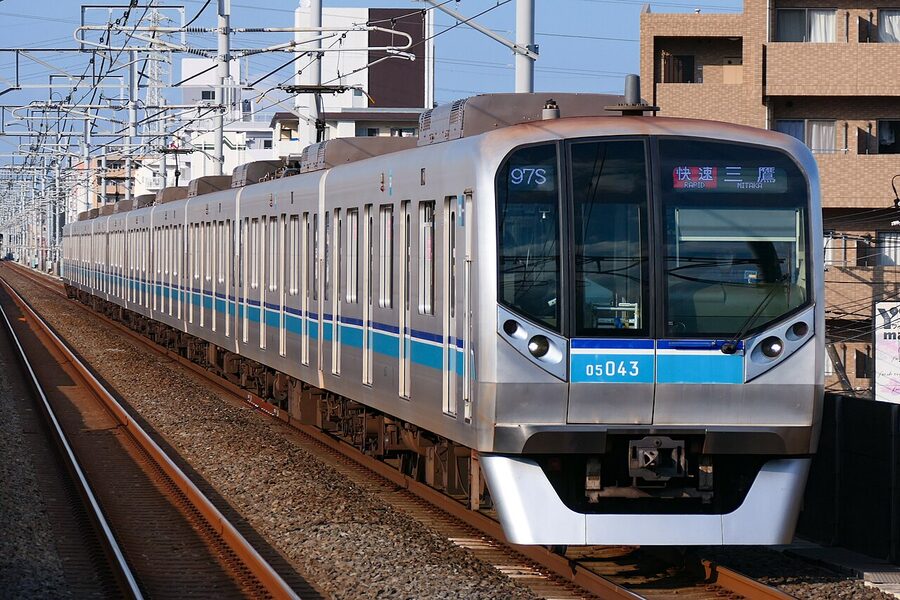
The 05 began service in 1988, replacing the original 5000. Forty-two ten-car sets across multiple production batches by Kawasaki and Kinki Sharyo. From the eighth batch onward (1992) the cars used VVVF inverter control rather than chopper control. From the 14th batch (1999) the body widened slightly to give 1.8 m doors instead of 1.3 m, which helps with peak loading; these wider-door sets are sometimes called “05N” or “wide-door” 05s. Earlier narrow-door 05 sets have either been retired or reassigned to the Chiyoda Line’s Kita-Ayase branch as three-car shuttles.
The 07 series, the orphan
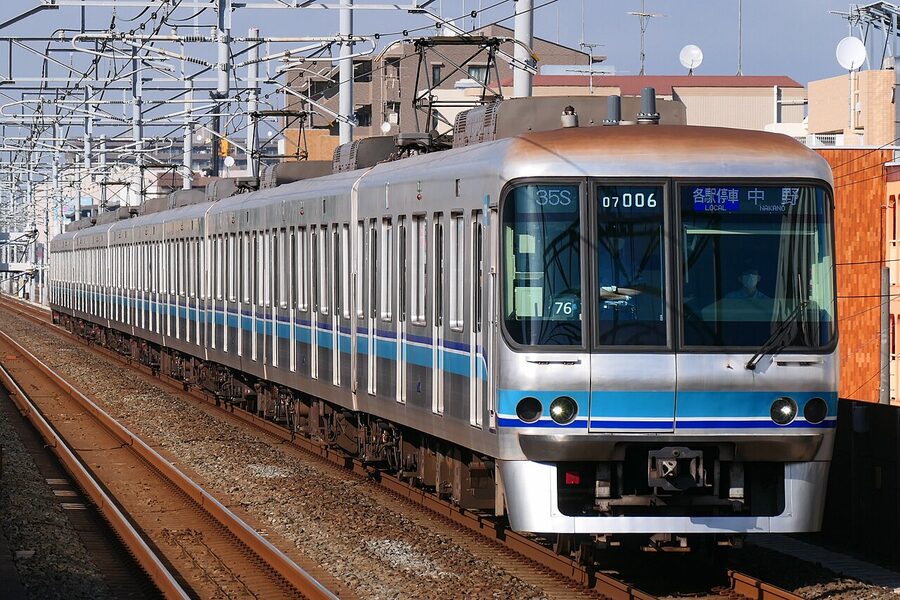
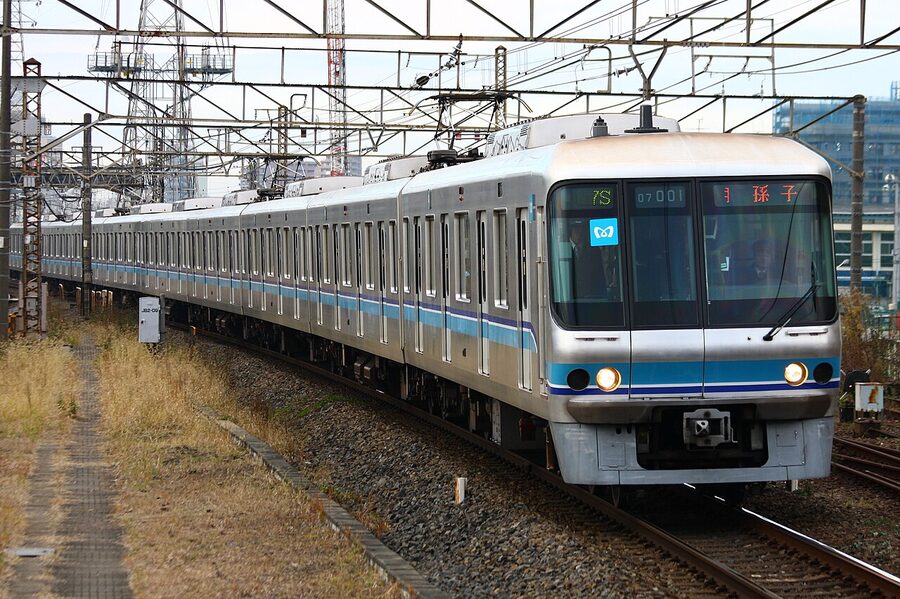
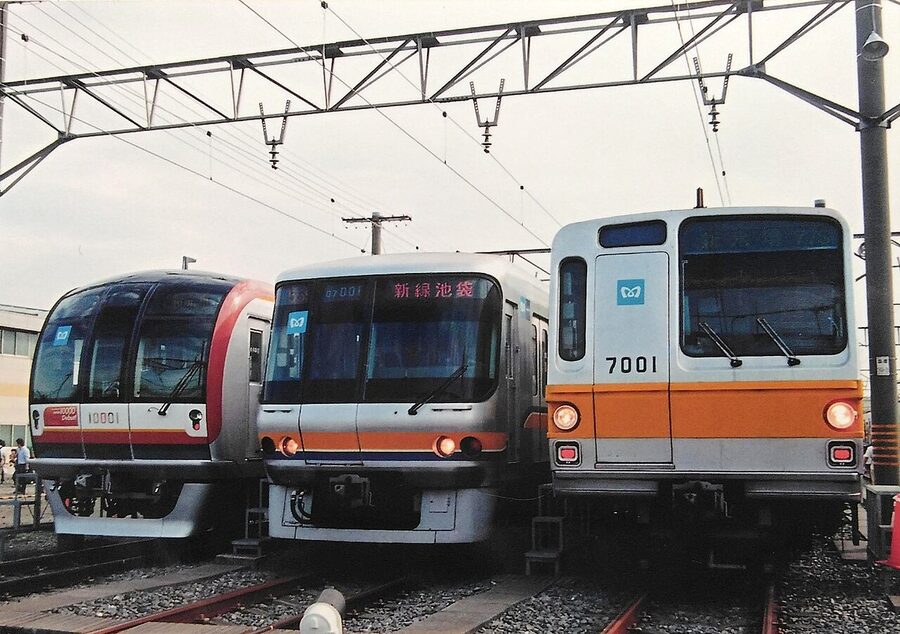
The 07 series was originally built in 1993 for the Yurakucho Line, in six ten-car sets. When the Fukutoshin opened in 2008 and standardised platform-door spacing across the Yurakucho fleet, the 07s no longer fit and were reassigned to the Tozai. The 07 has been on the Tozai ever since. It is the smallest fleet on the line by some way and worth spotting because the front-end profile is rounder than the 05 or 15000.
The 15000 series, the rush-hour answer
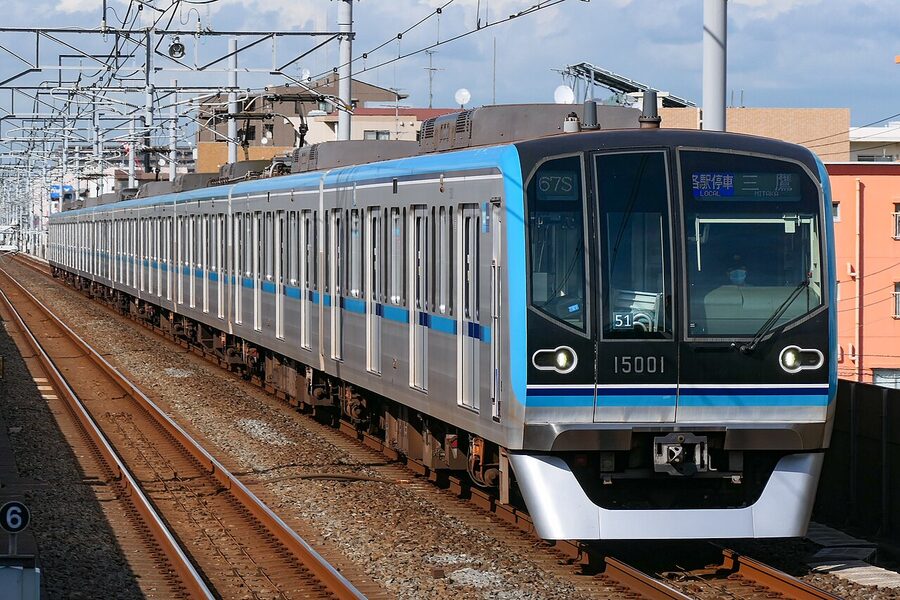
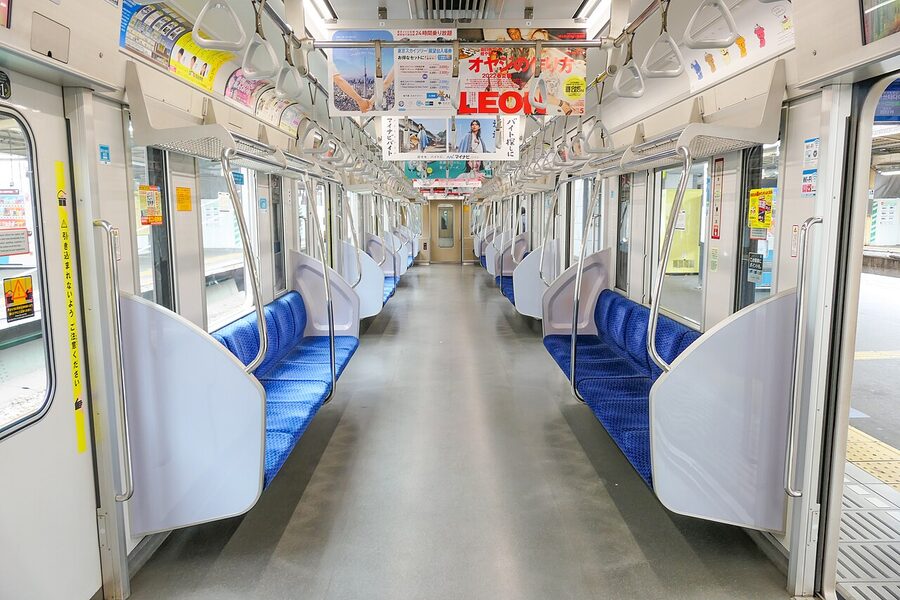
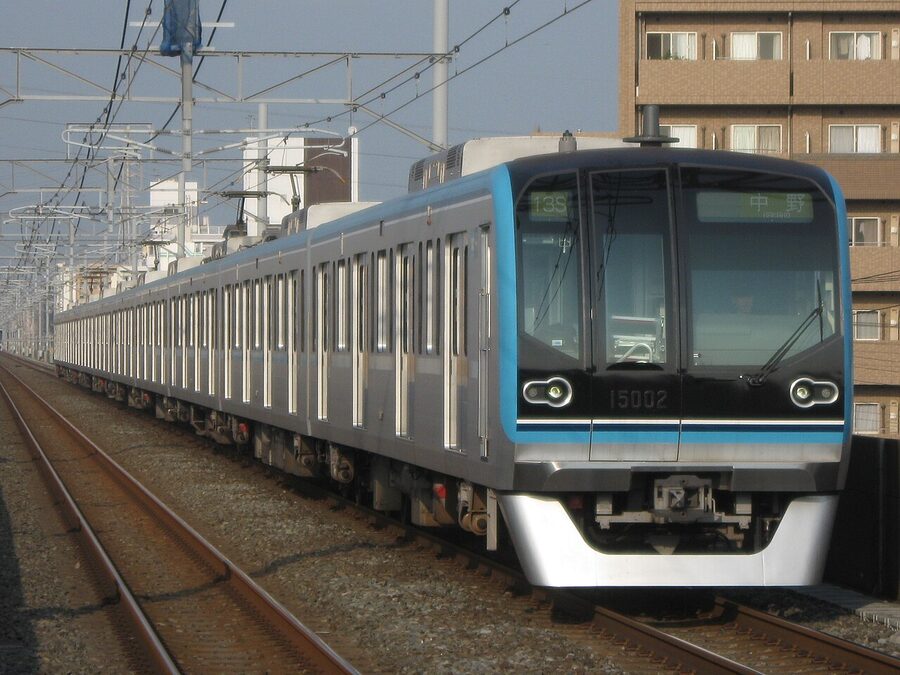
The 15000 began service on 7 May 2010 in 13 ten-car sets, all built by Hitachi as A-train aluminium-bodied stock. It was specifically designed to address Tozai overcrowding: the doors are 1.8 m wide (the same as the late 05N batches), the cab roof is set back to widen passenger area, and the energy-efficient SiC inverter control reduces depot turnaround. The 15000 is the newest train on the line and the most commonly seen on rush-hour Tsudanuma services.
The Chiyoda, where Romancecars run on Metro tracks
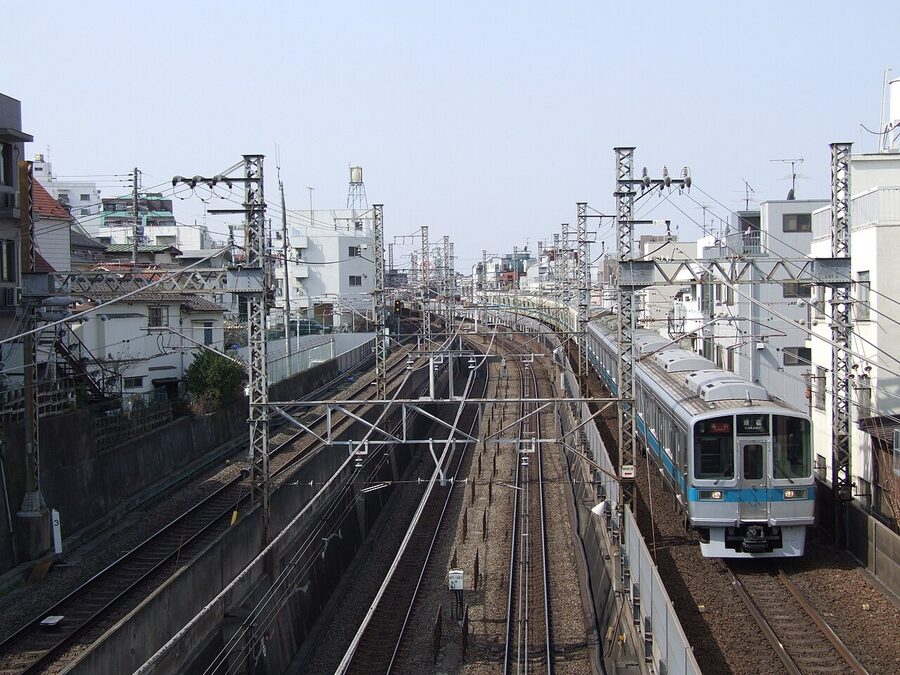
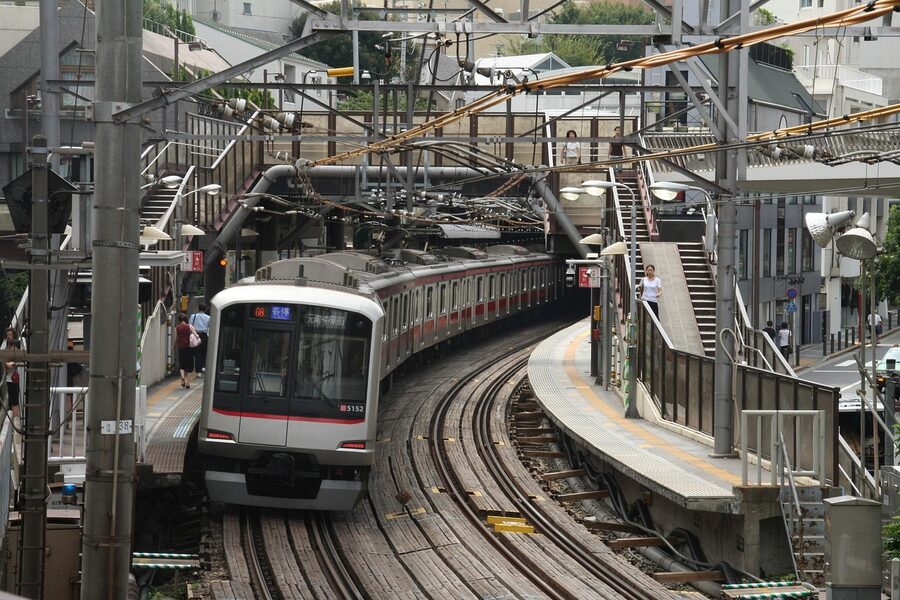
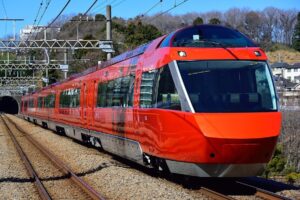
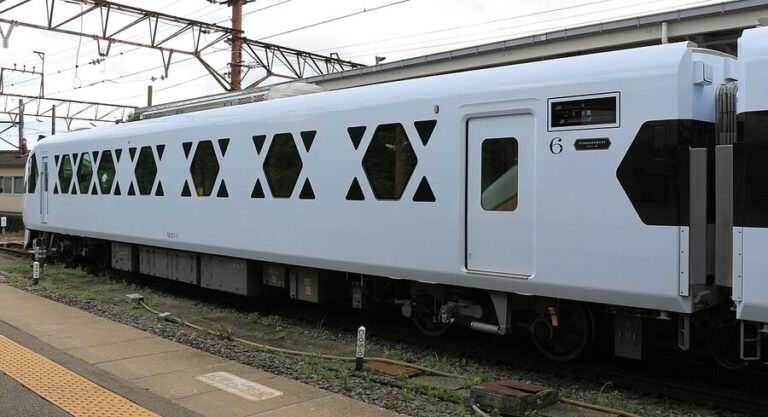
The Chiyoda opened in 1969 and now runs 24 km from Yoyogi-Uehara to Ayase, with a short 2.6 km branch from Ayase to Kita-Ayase. South at Yoyogi-Uehara it through-runs onto the Odakyu Odawara Line as far as Karakida and Hon-Atsugi. Crucially, that through-running includes Odakyu Romancecar limited expresses since March 2008. From a Tokyo Metro Otemachi platform you can board a Romancecar 60000 MSE in commuter livery and ride straight through to Hakone-Yumoto without changing trains. The Otemachi-to-Hakone Romancecar run is the most direct illustration of why through-running matters: the limited express that climbs into the mountain hot springs starts on a subway concourse two minutes from the Imperial Palace.
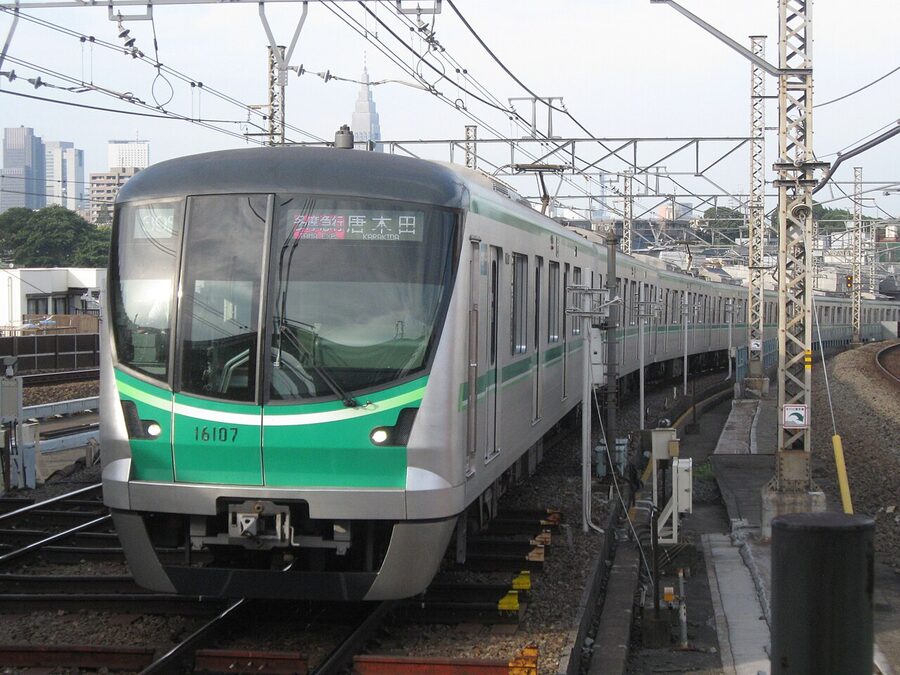
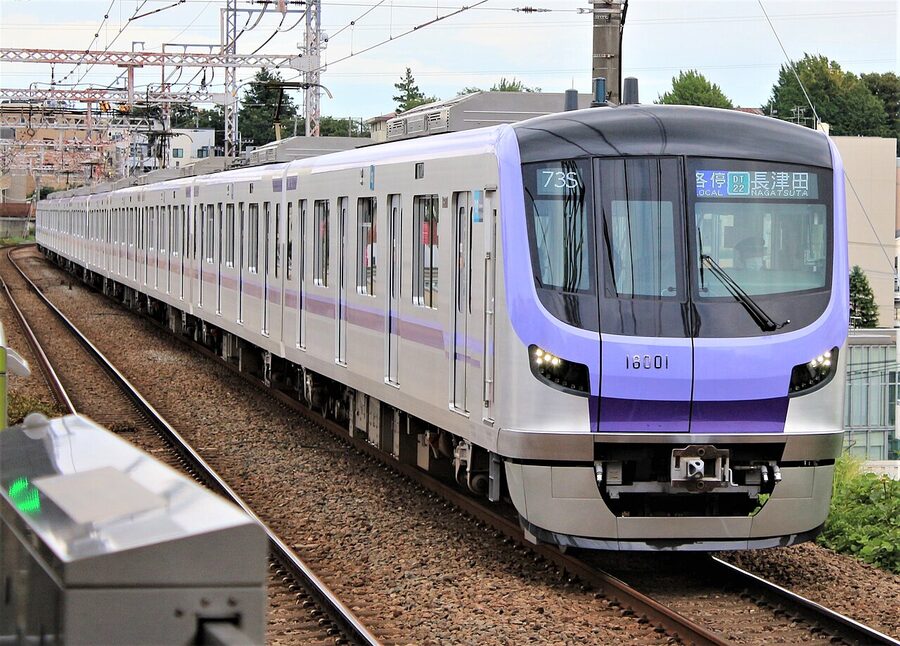
North at Ayase the Chiyoda through-runs onto the JR East Joban Line as far as Toride. The 16000 fleet has to carry both Tokyo Metro and JR signalling kit (CS-ATC plus ATS-P) to make that work, which is why the cab front is asymmetric.
The 16000 and the 2011 Laurel Prize
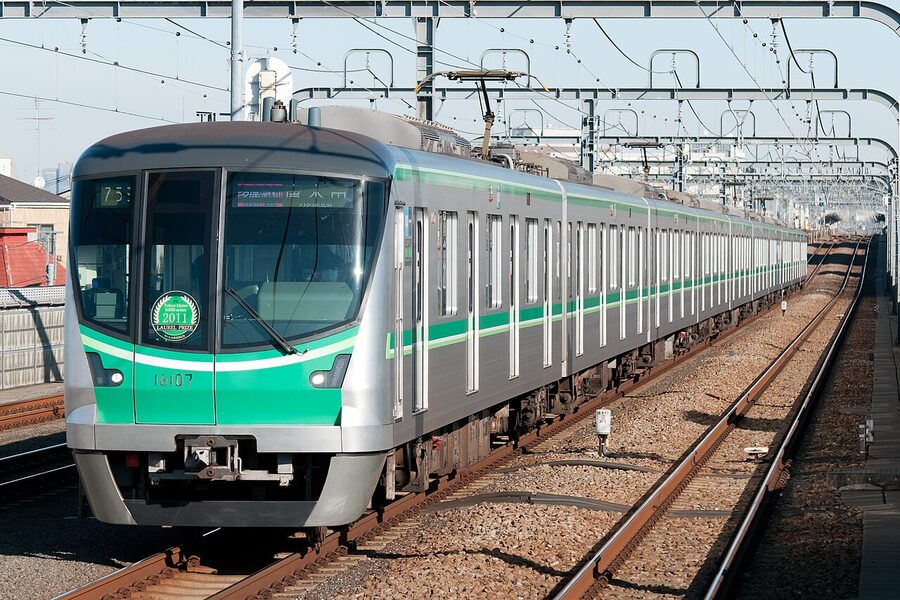
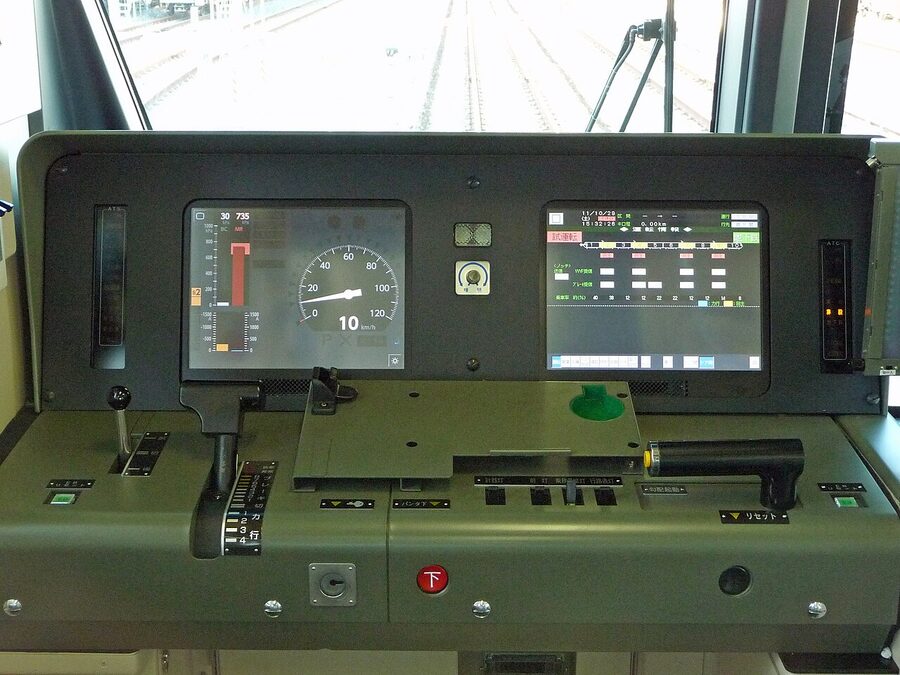
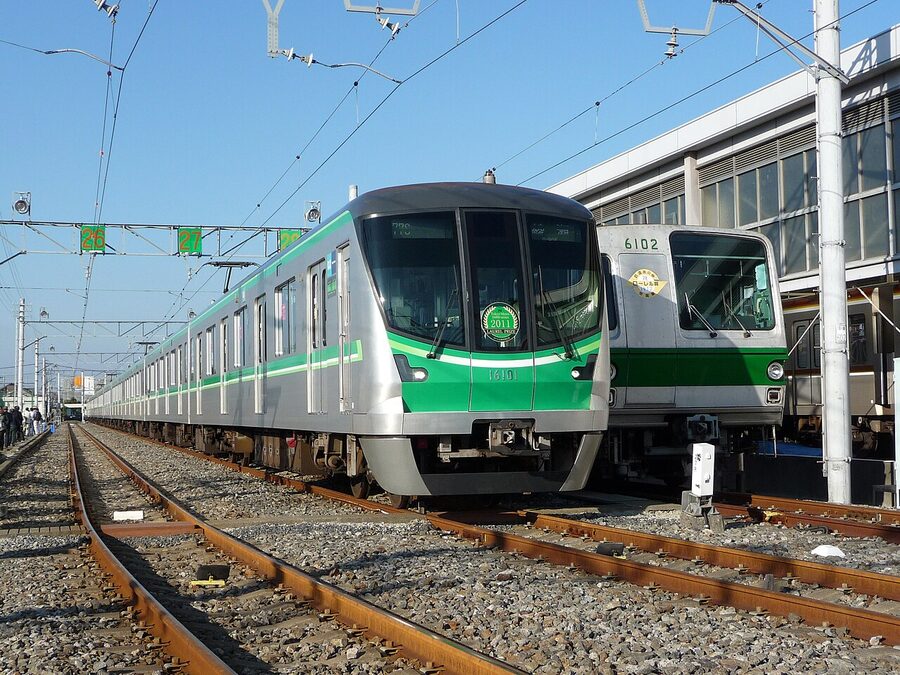
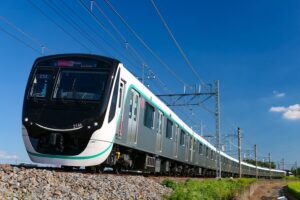
The 16000 series began service in 2010 in 37 ten-car sets, built by Kawasaki and Hitachi to A-train spec. Aluminium body, full LED head and tail lamps, three 17-inch LCD displays per car, and the green corporate stripe wrapped around the front nose. The 16000 won the Japan Railfan Club’s 2011 Laurel Prize for excellence in rolling stock design, beating among other contenders the JR East E5 Hayabusa Shinkansen, which gives a sense of how seriously the rail community took it.
The 6000 series and the line that built it
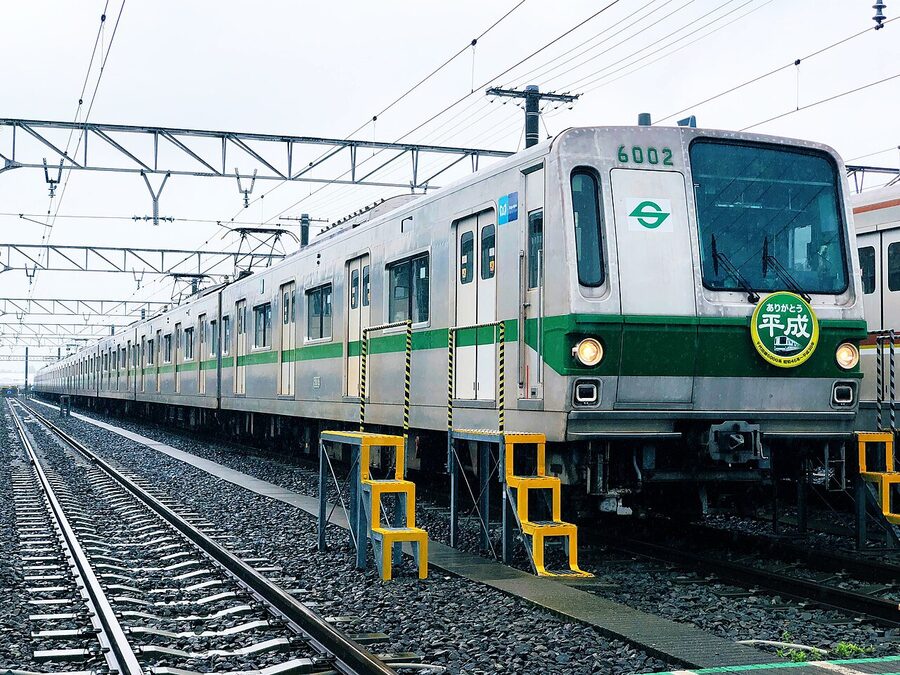
Before the 16000 came the 6000 series, which ran from 1968 to 2018, and the single 06 series prototype (built 1993, retired 2015). The 6000 is the more historically important of the two. It pioneered chopper control on Japanese subways, won the 1972 Laurel Prize, and several sets were resold to PT Kereta Commuter Indonesia in Jakarta where they still run on the KRL Commuterline today. Six-car preserved sets sit at the Ayase Depot for occasional public running. If you only see one preserved Tokyo Metro train on a trip to Japan, the 6000 is the one to find.
Omotesando: the cross-platform interchange the network does once
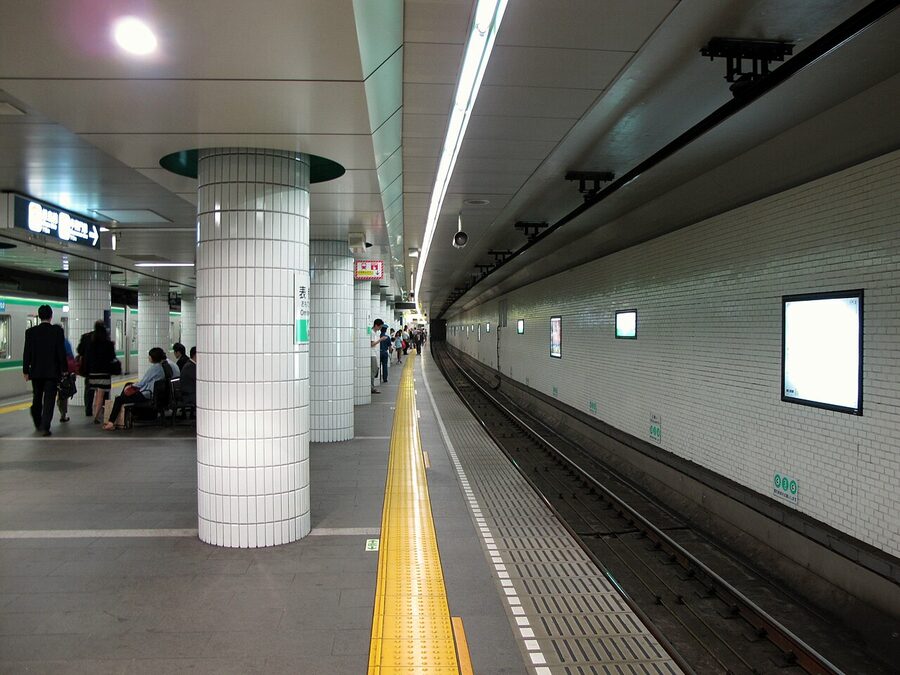
Omotesando (C04) is where the Chiyoda crosses the Ginza and Hanzomon. It is also where the network’s best across-the-platform interchange happens. Chiyoda and Hanzomon share the same island platform: Chiyoda inbound and Hanzomon outbound on one face, vice versa on the other. A Chiyoda-to-Hanzomon transfer is literally one step. There is no other interchange like it in the Tokyo Metro network, and it is one of the small details that makes this system feel designed rather than accreted.
The Yurakucho and Fukutoshin: one shared fleet, four through-running partners
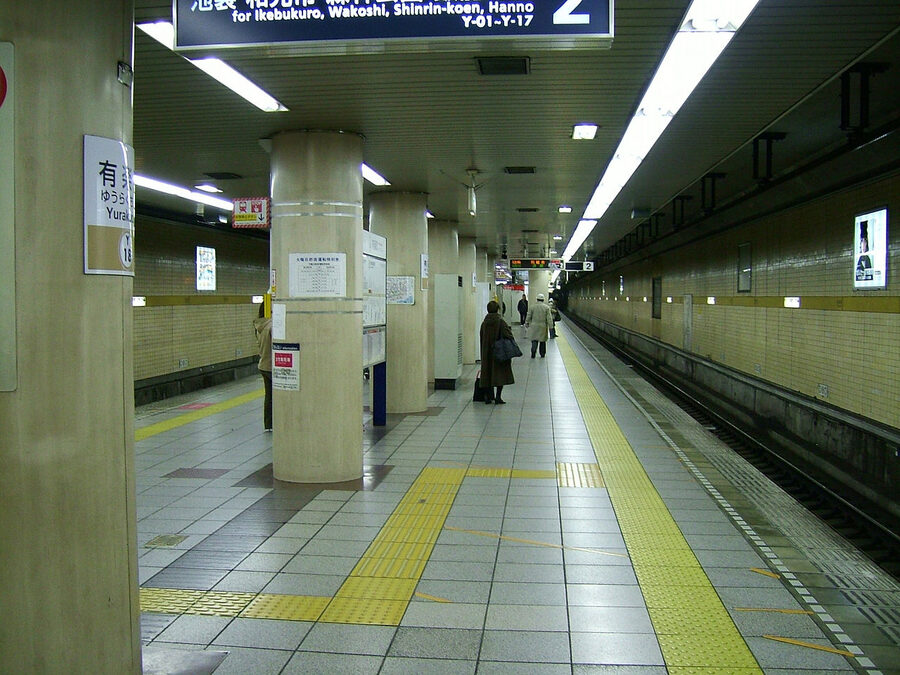
The Yurakucho opened in 1974 between Ikebukuro and Ginza-itchome and reached its current 28.3 km Wakoshi to Shin-Kiba route across multiple extensions to 1988. The Fukutoshin is the network’s youngest line: the first section between Wakoshi and Ikebukuro opened in 1994 as the “Yurakucho Line New Line”, and was incorporated into the Fukutoshin when the southern extension to Shibuya opened on 14 June 2008. The two lines share the section between Wakoshi and Kotake-Mukaihara, with separate station numbering on the same physical platform. They also share rolling stock, the 10000 and 17000 series, because the through-running partners are the same on both ends.
From Wakoshi at the northern end, both lines through-run onto the Tobu Tojo Line as far as Ogawamachi, and onto the Seibu Ikebukuro Line via the Seibu Yurakucho Line as far as Hanno. From Shibuya at the southern end, the Fukutoshin through-runs onto the Tokyu Toyoko Line as far as Yokohama, and then onto the Minatomirai 21 Line as far as Motomachi-Chukagai. When the Toyoko-through began in March 2013, it became Japan’s first interconnection involving five separate railway companies on a single train route.
The 10000 series
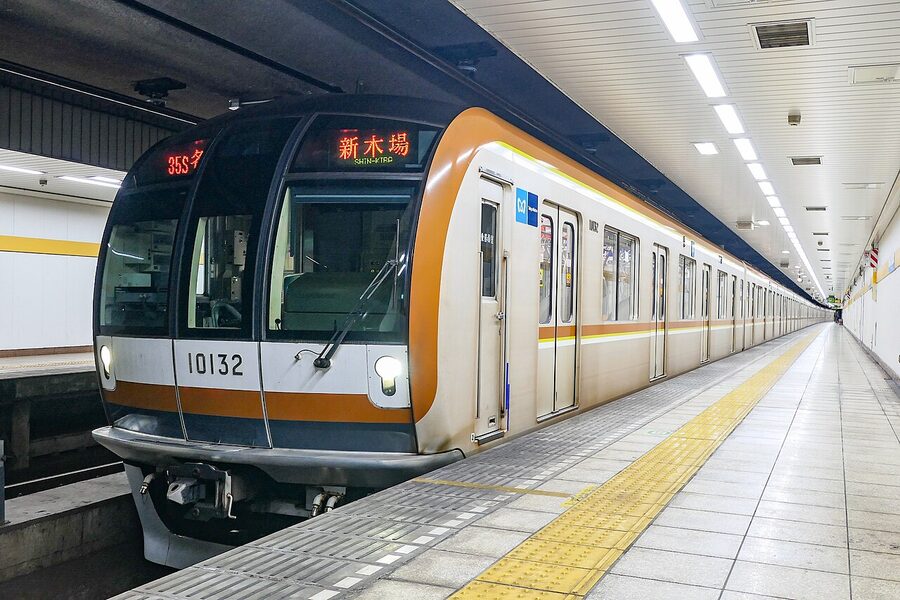
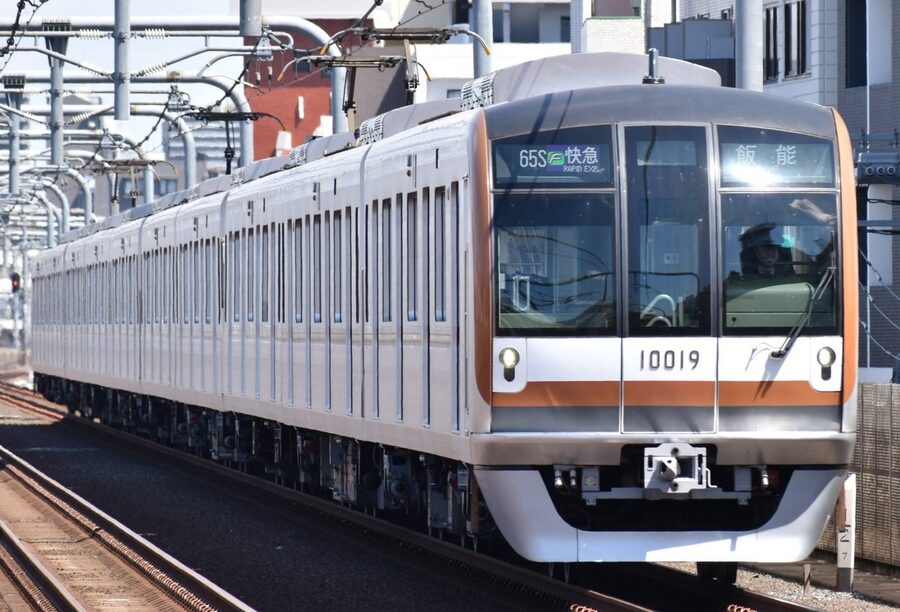
The 10000 began revenue service on 1 September 2006, in advance of the Fukutoshin opening. Thirty-six ten-car sets, all built by Hitachi as A-train aluminium stock. Five 17-inch LCD information panels per car, full one-person operation capability for the Fukutoshin Shibuya-to-Kotake-Mukaihara segment, and the brown-on-gold front nose stripe that distinguishes it from the 17000. The 10000 carries the F-liner Rapid Express service from Hanno (Seibu) through to Motomachi-Chukagai (Minatomirai Line in Yokohama), a 90-minute through-trip on a single train across five operators. The “F” is for Fukutoshin, but the train spends most of the journey off Tokyo Metro tracks.
The 17000 series and the 7000 it replaced
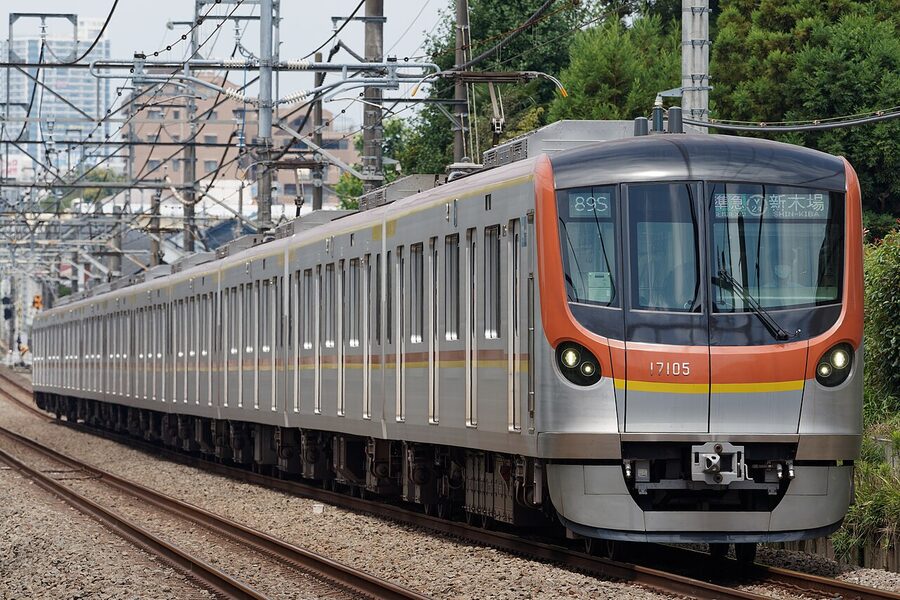
The 17000 began revenue service on 21 February 2021, replacing the 7000 series that had run the line since 1974. Fifteen sets across two formations: six ten-car main-line sets (17000-100) and nine eight-car sets (17000-80). The 17000 won the 2022 Laurel Prize jointly with the 18000 (its Hanzomon Line sibling), built on the same A-train aluminium platform with permanent-magnet synchronous traction motors and full SiC-MOSFET inverter control. Top speed 110 km/h, designed top 120 km/h. The body shell is shared with the 18000; only the cab front and the line-stripe colour differ between the two.
The Hanzomon and the Tokyu connection
The Hanzomon is the third-newest line on the network. First section Shibuya to Aoyama-itchome opened on 1 August 1978; through-running south to Tokyu’s Den-en-toshi Line as far as Chuo-Rinkan came in stages from 1978 onward; through-running north to Tobu’s Skytree, Nikko and Isesaki lines as far as Minami-Kurihashi opened with the Suitengumae-to-Oshiage extension in 2003. Sixteen kilometres, fourteen stations, about 1.95 million daily riders. The line shares the Saginuma Depot with Tokyu rolling stock for through-running maintenance. A Tokyu 5000 series and a Tokyo Metro 18000 will sit on adjacent service pits at Saginuma, getting their pantograph carbons replaced on the same day.
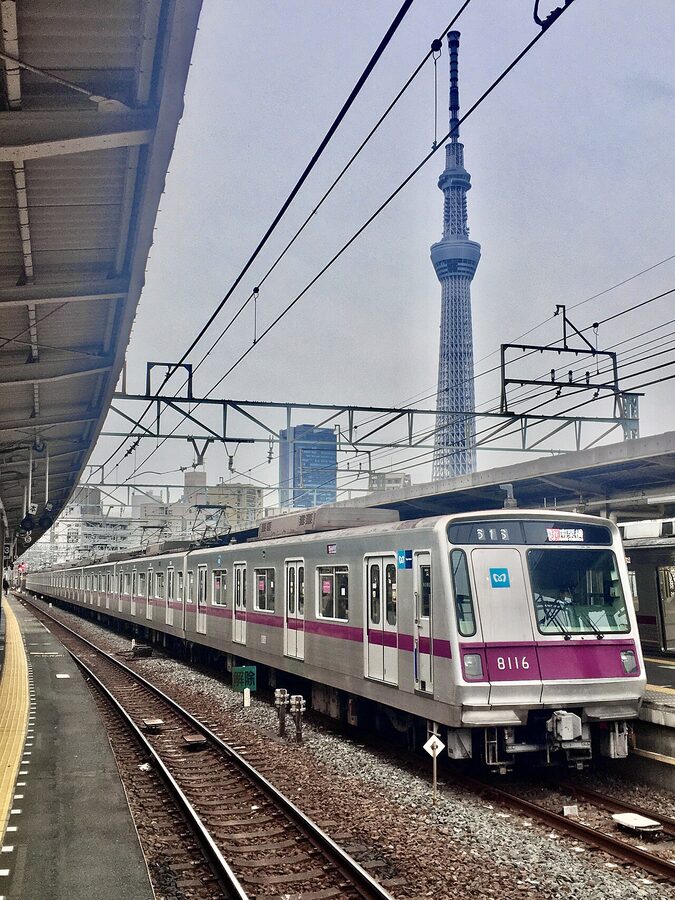
The 8000 series, retired in 2024
The 8000 began revenue service on 1 April 1981 in 19 ten-car sets, the original Hanzomon fleet. It was the first Japanese subway train to use bolsterless bogies as standard, which became the template for almost every subsequent Eidan and Tokyo Metro design. The 8000 stayed in service for forty-three years; its withdrawal began in 2021 with the arrival of the 18000, and the last set ran on the Hanzomon in early 2024. If you photographed the line in 2023 there was still an 8000 in the consist mix; by 2025 there is not.
The 08 series: six sets, one specific job
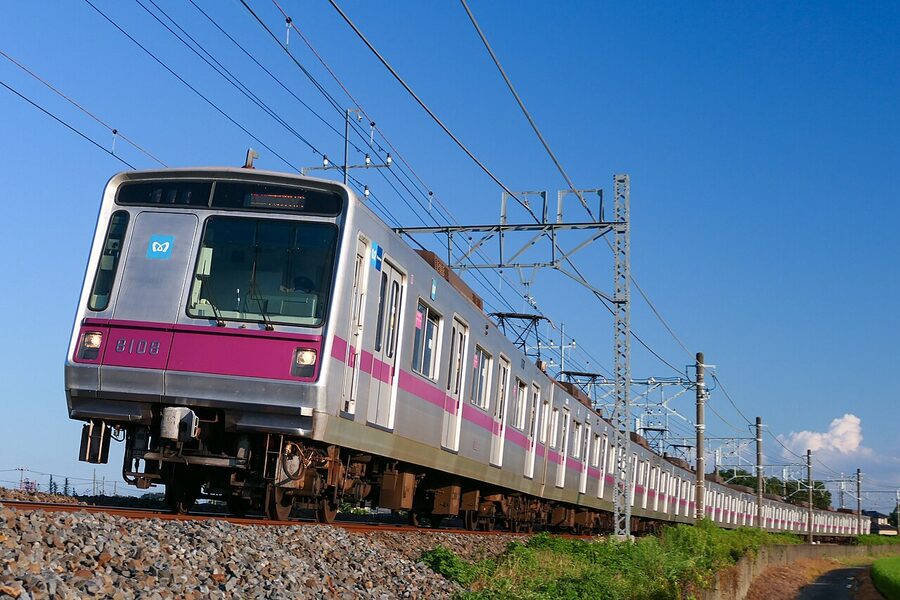
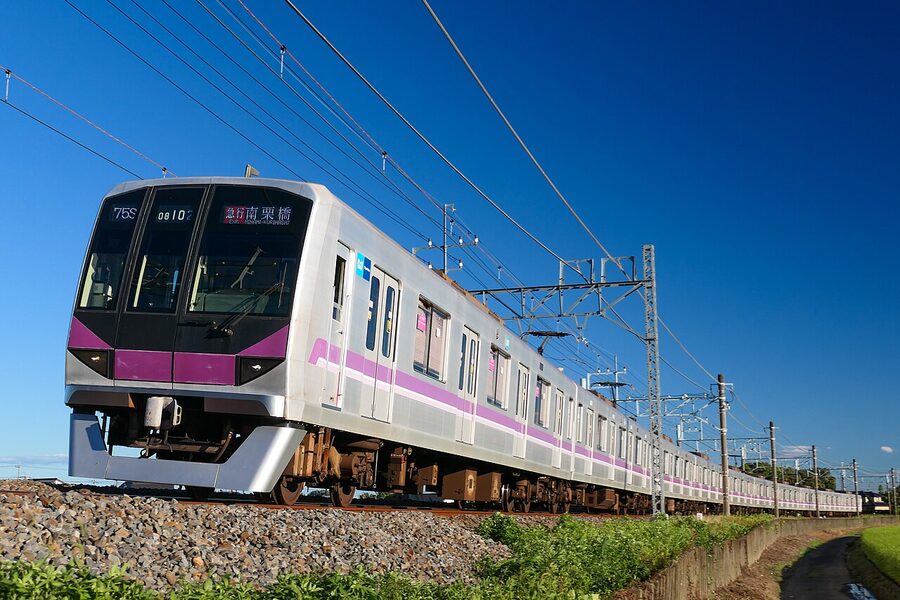
The 08 series began service in 2003 to support the Hanzomon’s eastern extension to Oshiage and the new through-running to Tobu. Six ten-car sets, all built by Tokyu Car Corporation as the first Hanzomon-spec aluminium A-train derivatives. The 08 introduced semi-double-skin construction (a step short of the full double-skin used on the 18000) and were the first Tokyo Metro fleet to ship with full LCD passenger information panels rather than LED scrolls. Six sets is small, so spotting one in regular service requires a bit of timing.
The 18000 series: 2021 to today
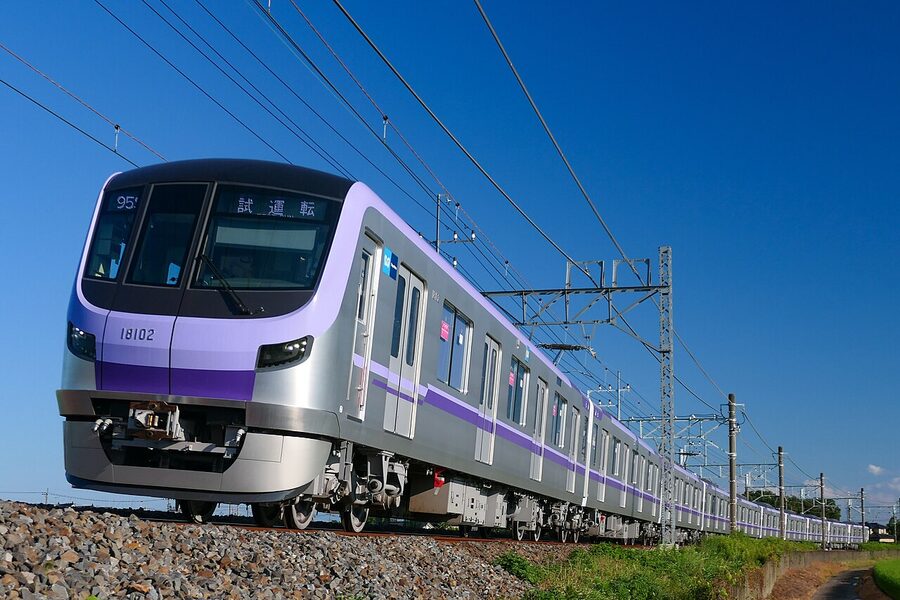
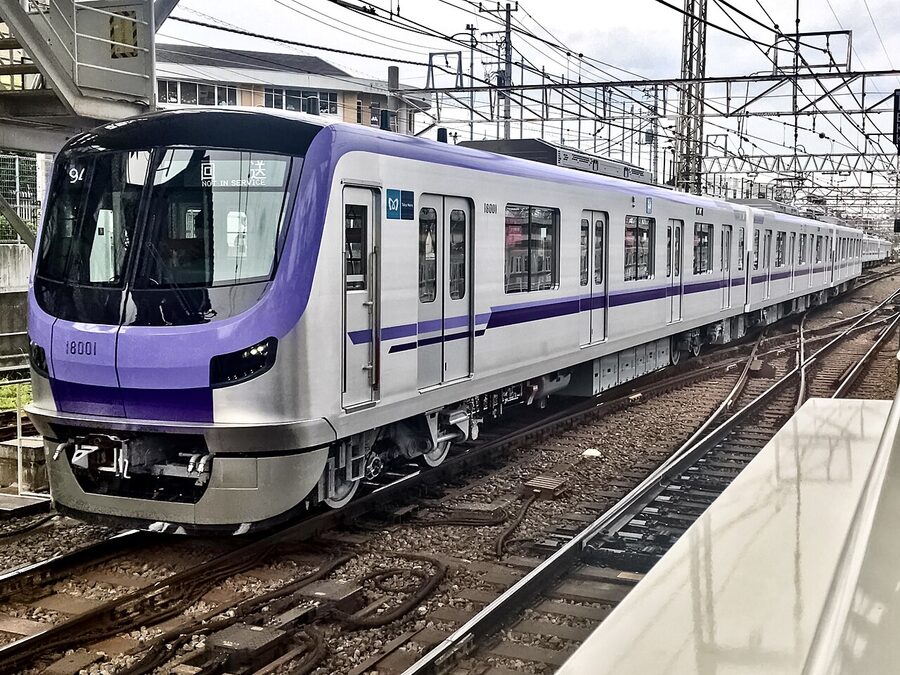
The 18000 began revenue service on 7 August 2021, replacing the 8000 fleet on a one-for-one basis. Built by Hitachi at the Kasado plant. Nineteen ten-car sets ordered, full delivery completed in fiscal 2025. A-train aluminium double-skin body, full SiC-MOSFET inverter control feeding 205 kW permanent-magnet synchronous traction motors (sixteen motors per set), bolster bogies (FS-781), top speed 110 km/h. CBTC-ready radio train control. Won the 2022 Laurel Prize jointly with the 17000.
The Namboku and the four-operator south
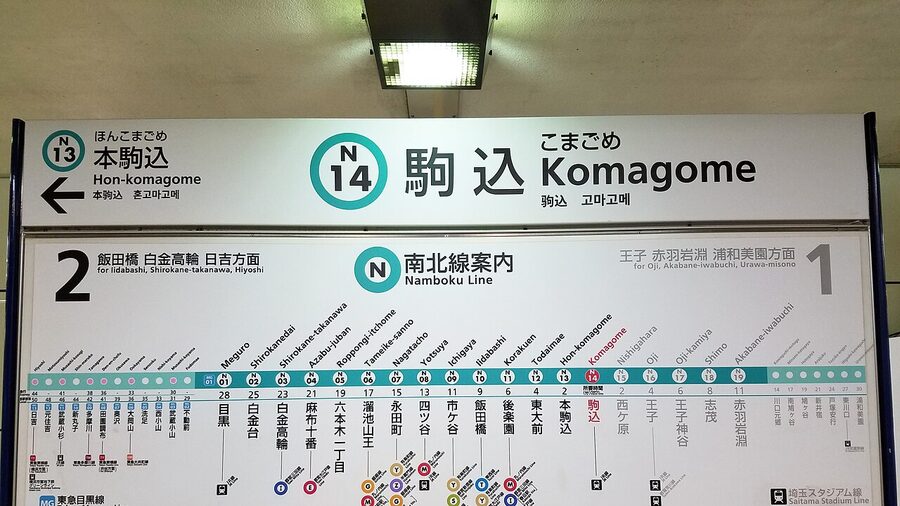
The Namboku opened in stages from 29 November 1991 between Komagome and Akabane-Iwabuchi, completed to its current 21.3 km Meguro to Akabane-Iwabuchi route in September 2000. Through-running south onto the Tokyu Meguro Line as far as Hiyoshi, then through onto the Tokyu Shin-Yokohama Line and the Sotetsu Shin-Yokohama Line (a route opened on 18 March 2023) as far as Ebina or Shonandai. Through-running north onto the Saitama Rapid Railway as far as Urawa-Misono. About 1.04 million daily riders, the lowest of the nine lines and likely to remain so even after the Shinagawa extension.
The 9000 series, the original automation pioneer
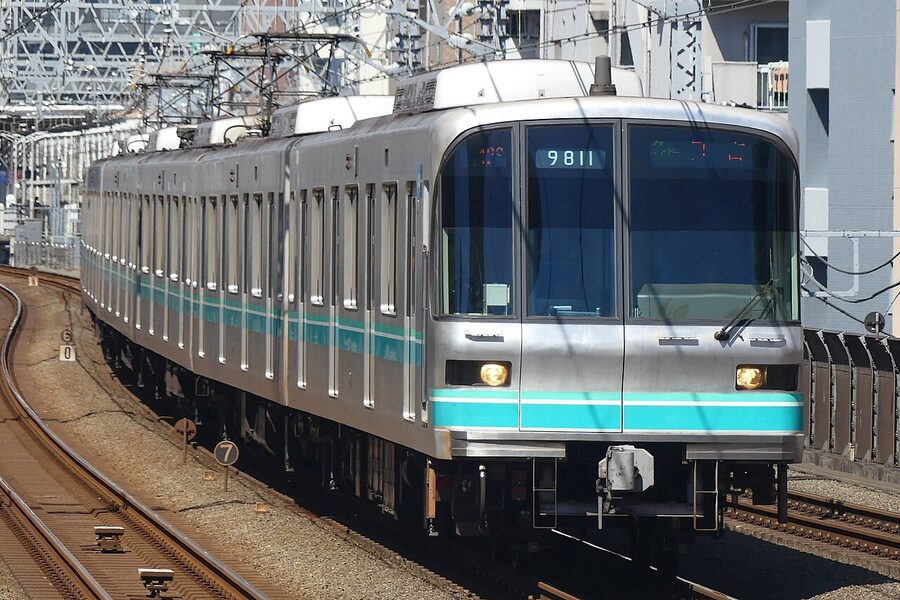
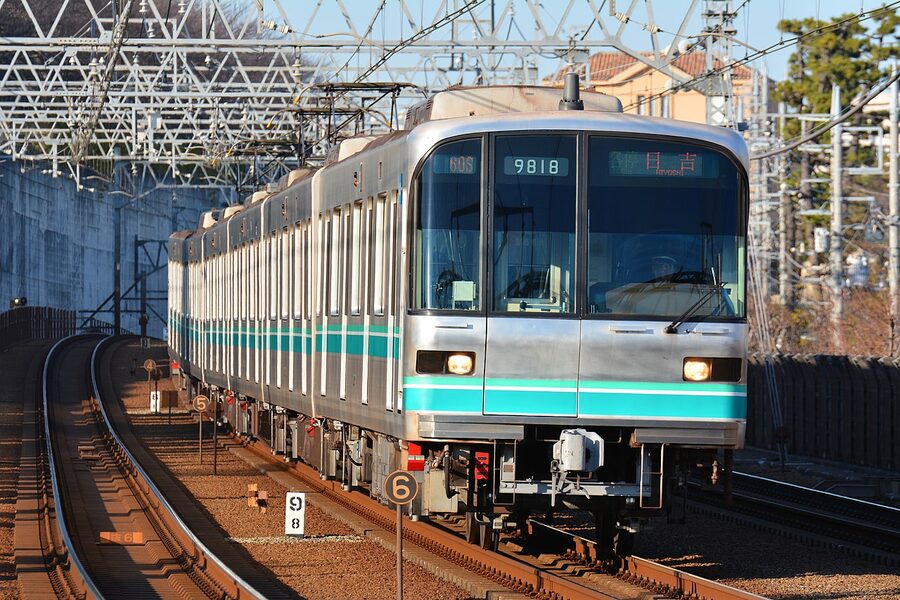
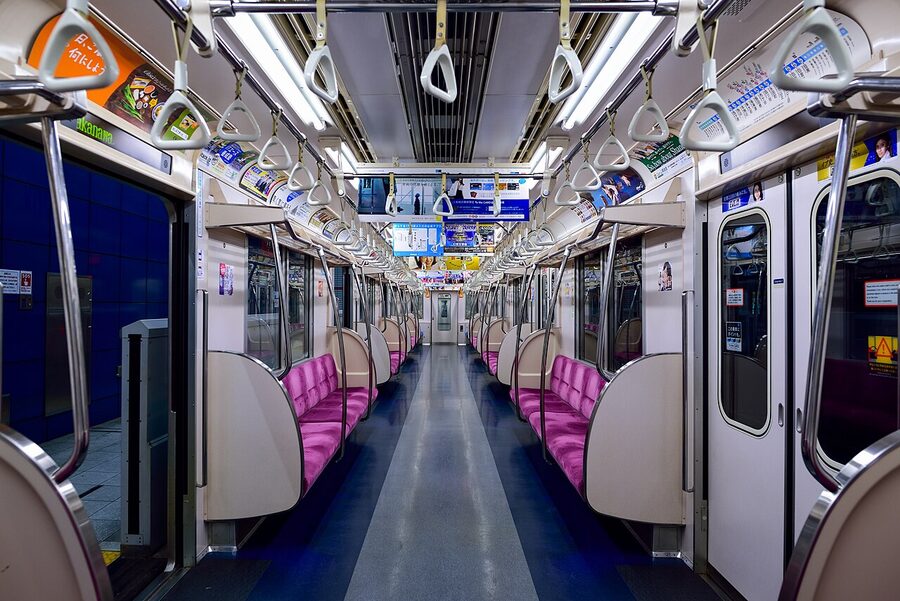
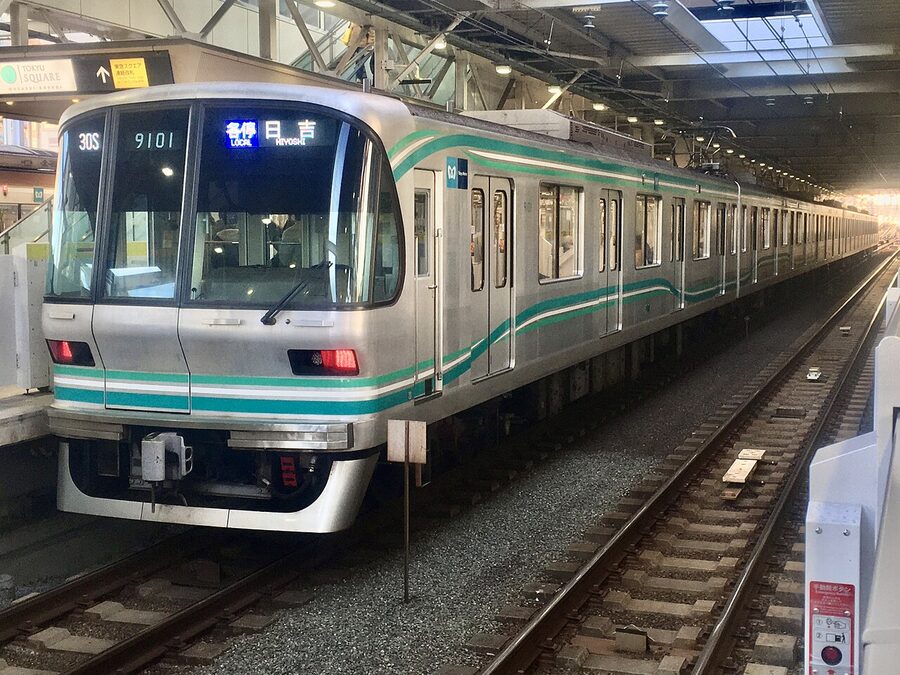
The 9000 began service in 1991 with the line’s opening, in 23 six-car sets. It was Japan’s first subway train fitted from delivery for fully automatic train operation (ATO), with computer-assisted braking control: the driver presses the start button at each station and the train accelerates, runs at line speed and stops at the next platform without further input. That was a 1991 first. Today the same approach is used on every Tokyo Metro line with platform doors, and ATO is taken for granted; the Namboku was the proving ground.
The 9000-5000 conversion and the Shinagawa branch
Refurbishment of the 9000 fleet to a “9000-5000” subseries began in fiscal 2025. The conversion improves acceleration to better match the line’s intensive through-running schedules, replaces the existing IGBT inverter control with SiC-MOSFET equivalents, and updates the interior to the same trim used on the 17000 and 18000. Twenty-three sets are scheduled for conversion through fiscal 2028. The line will also receive a 2.5 km branch from Shirokane-Takanawa to Shinagawa, scheduled to open in the mid-2030s. That branch will give the Namboku a direct connection to the Tokaido Shinkansen and the under-construction Chuo Shinkansen Linear Maglev at Shinagawa, which is the kind of structural shift that has tended, on this network, to push ridership in long-term ways.
Riding the Tokyo Metro: fares, tickets, the bits that catch you out
Tokyo Metro uses a distance-based fare structure. With an IC card (Suica, Pasmo or any of the ten nationally interoperable cards), adult fares range from ¥178 for one or two stations to ¥324 for the longest single-line trip. Paper-ticket fares are slightly higher, ¥180 to ¥330, because of the ¥10 barrier-free surcharge applied to single tickets. Children aged 6 to 11 pay roughly half. Through-running onto a partner railway adds the partner’s fare on top, calculated as a continuous distance fare with the join point as the inflection.
The Tokyo Subway Ticket: the only pass that matters
For visitors the Tokyo Subway Ticket is the practical choice. ¥800 for 24 hours, ¥1,200 for 48 hours, ¥1,500 for 72 hours, valid on every Tokyo Metro line plus all four Toei subway lines. Buy at Narita or Haneda airports, at Bic Camera, at the Tokyo Metro Pass Office in major stations, or pre-buy as a QR-code ticket. Validity starts at first use, so you can buy days ahead. There is a separate transfer discount of ¥70 between Tokyo Metro and Toei within 120 minutes at designated interchanges, applied automatically to IC card touches; no transfer discount exists between Tokyo Metro and JR East or any private operator.
Headways and the trains you should and shouldn’t board
Off-peak headways at midday range from three minutes (Tozai, Marunouchi) to about six minutes (Namboku, Hibiya in the off-peak window). Last trains run between 23:30 and 00:30 across the network depending on the line; first trains start around 05:00. The peak congestion numbers I quoted earlier (199% on the Tozai, 163% on the Hibiya) are real and you should plan around them: the Tozai’s worst section, Kiba to Monzen-Nakacho, is best avoided between 07:50 and 08:30; the Hibiya’s worst, Minowa to Iriya, peaks around 08:30. If you are riding for sightseeing rather than commuting, all of this is irrelevant; you will be on the network from 10:00 onwards, when every line is comfortable.
Three things to look for on a journey
First, watch the LED line stripe in the door. On the 13000, 17000 and 18000 the side stripes carry the line letter (H, Y, F, Z) embedded in the design as a deliberate brand cue. On older trains the line colour alone is the cue; on the newer fleets the letter shows up if you look for it.
Second, watch the through-running announcements. As a Hanzomon train approaches Oshiage at the eastern terminus, the recorded announcement switches mid-phrase from “Tokyo Metro Hanzomon Line” to “Tobu Skytree Line”, with no actual stop or change of train. The visible LCD also flips line ID. This is the most direct illustration of how through-running works: nothing physically changes, only the operator the train is being charged to.
Third, watch the Marunouchi at Ochanomizu. The line surfaces here for about 200 metres to cross the Kanda River alongside the JR Chuo Line. If you happen to be riding a Marunouchi train through Ochanomizu at peak, look out the right-hand window westbound (or left eastbound): a JR Chuo train will almost always be running parallel on the bridge next to you, sometimes within ten metres. It is the only place on the Tokyo Metro network where two operators run parallel on visible track at the same level.
Where the network actually starts
You can put the through-running in numbers if you want: the integrated commuter network across the nine Metro lines and the seven through-running partners covers around 1,000 km of inter-operator track inside Greater Tokyo, of which the Metro itself owns about 195 km. Roughly half of all weekday Tokyo Metro train movements happen on track that is not Tokyo Metro track. The longest scheduled through-trip, the F-liner, runs Hanno (Seibu) to Motomachi-Chukagai (Minatomirai 21) in 90 minutes across five operators on a single train; the Den-en-toshi-Hanzomon-Tobu Skytree axis runs roughly 100 km from Chuo-Rinkan to Minami-Kurihashi without a transfer, on Hanzomon 18000 stock part of the way and Tobu 50050 stock the other.
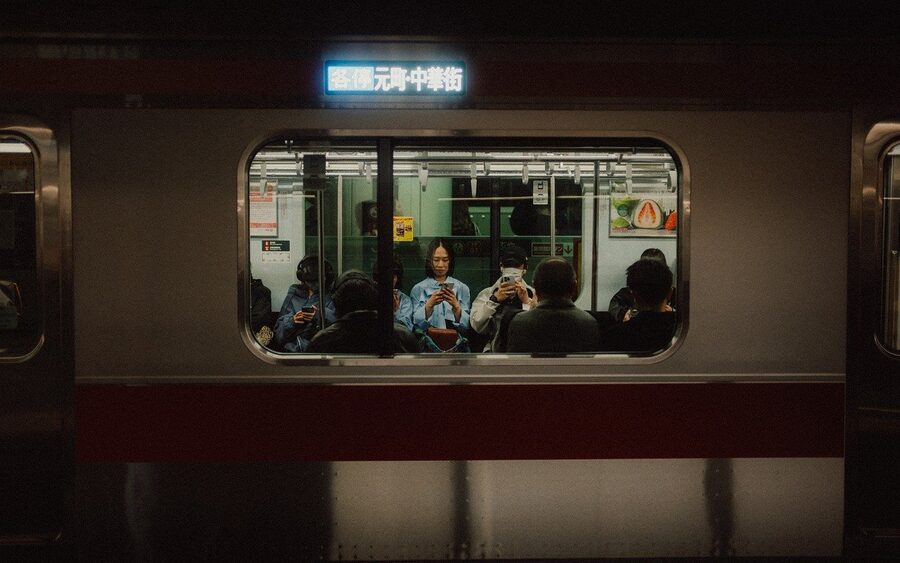
None of which means anything in particular until you put a 13000 in front of you at Naka-Meguro, watch the LED panel turn from silver to Tobu blue, and try to put your finger on what changed. Nothing changed. The driver changed at Kita-Senju. The fare gate counted you through to a Tobu station forty minutes later as if you had bought a ticket from the machine on the wall. That is what the Tokyo Metro is. It is a railway company by the strict legal sense, but it is a participant in something larger than itself most days of the year.
The other operators you will end up riding
If you are using the Tokyo Metro at all, you will end up on its sister networks. The four Toei subway lines are the natural complement: the Tokyo Subway Ticket combines them, the ¥70 transfer discount combines them, and many station signs treat the two operators as one for wayfinding purposes. The Odakyu Odawara Line is the most useful Chiyoda Line through-running partner, taking you to Hakone on the Romancecar from a Tokyo Metro Otemachi platform without changing trains. The Tobu Skytree Line, via the Hanzomon and the Hibiya, puts Asakusa, the Skytree and Nikko all on direct Tokyo Metro rolling stock. The Keio Line does not through-run with Tokyo Metro, but it does through-run with the Toei Shinjuku Line, which is a useful Tokyo Metro alternative for getting out to the Tama hills. And the Tokyu network connects on no fewer than three Tokyo Metro lines (Hibiya at Naka-Meguro, Hanzomon and Fukutoshin at Shibuya, Namboku at Meguro), making it the most-interlinked private operator in central Tokyo.
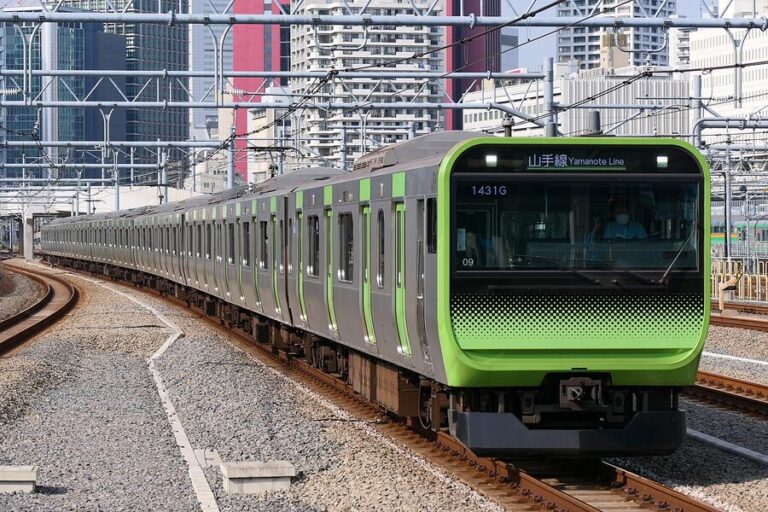
If you want the JR equivalents, the JR East commuter fleet covers the Yamanote, Chuo, Sobu, Joban, and the rest of what runs above and around the subway. The Joban interchange at Ayase is the JR side of the Chiyoda through-run; the Chuo-Sobu at Mitaka is the JR side of the Tozai. The history of how those interconnections came to exist is in the Japan Railway Company piece, which traces JR back through the 1987 break-up to the Nippon Railway origins in 1881.
What still gets built
Tokyo Metro received approval in March 2022 to add two new short branches. The Yurakucho will receive a 5.2 km Toyosumi branch from Toyosu Station to Sumiyoshi Station, three new stops including a Tozai transfer at Toyocho, opening in the mid-2030s and serving the Toyosu redevelopment zone. The Namboku gets the 2.5 km Shirokane-Takanawa to Shinagawa branch noted earlier. Both lines are funded in part from the IPO proceeds of the Tokyo Stock Exchange Prime Market listing on 23 October 2024, the largest Japanese IPO since 2018. Beyond those two, Tokyo Metro stated at IPO that it will not pursue further line construction; the Hanzomon, Yurakucho and Fukutoshin all have potential extensions in their long-range plans, but none are funded. The Toyosumi branch and the Namboku-Shinagawa extension are the company’s only confirmed builds for the 2030s.
Coming back to Naka-Meguro
Most days the Hibiya 13000 I started this article on is not particularly noteworthy. It pulls into Naka-Meguro at 06:24, sits with its doors open for thirty-eight seconds, and leaves. Two passengers boarding, eleven on the platform, the school party at the wider doors. The driver checks the dispatch indicator and releases the brake. The train moves north, and somewhere between Kita-Senju and Tobu-Dobutsu-Koen it crosses an invisible boundary that doubles its operator from one to two and adds an hour to the journey for anyone going through. None of which the train itself notices, or needs to.
That is what it is to ride the Tokyo Metro. The system you are using is bigger than the system you have bought a ticket from, the train you have boarded will end up on tracks that are technically not the Tokyo Metro’s tracks at all, and the only way you will know you have crossed over is if you watch the LED panel above the door. Most riders never look up. The fare gate at Kasukabe will work either way.


.jpg)


.jpg)


.jpg)


