
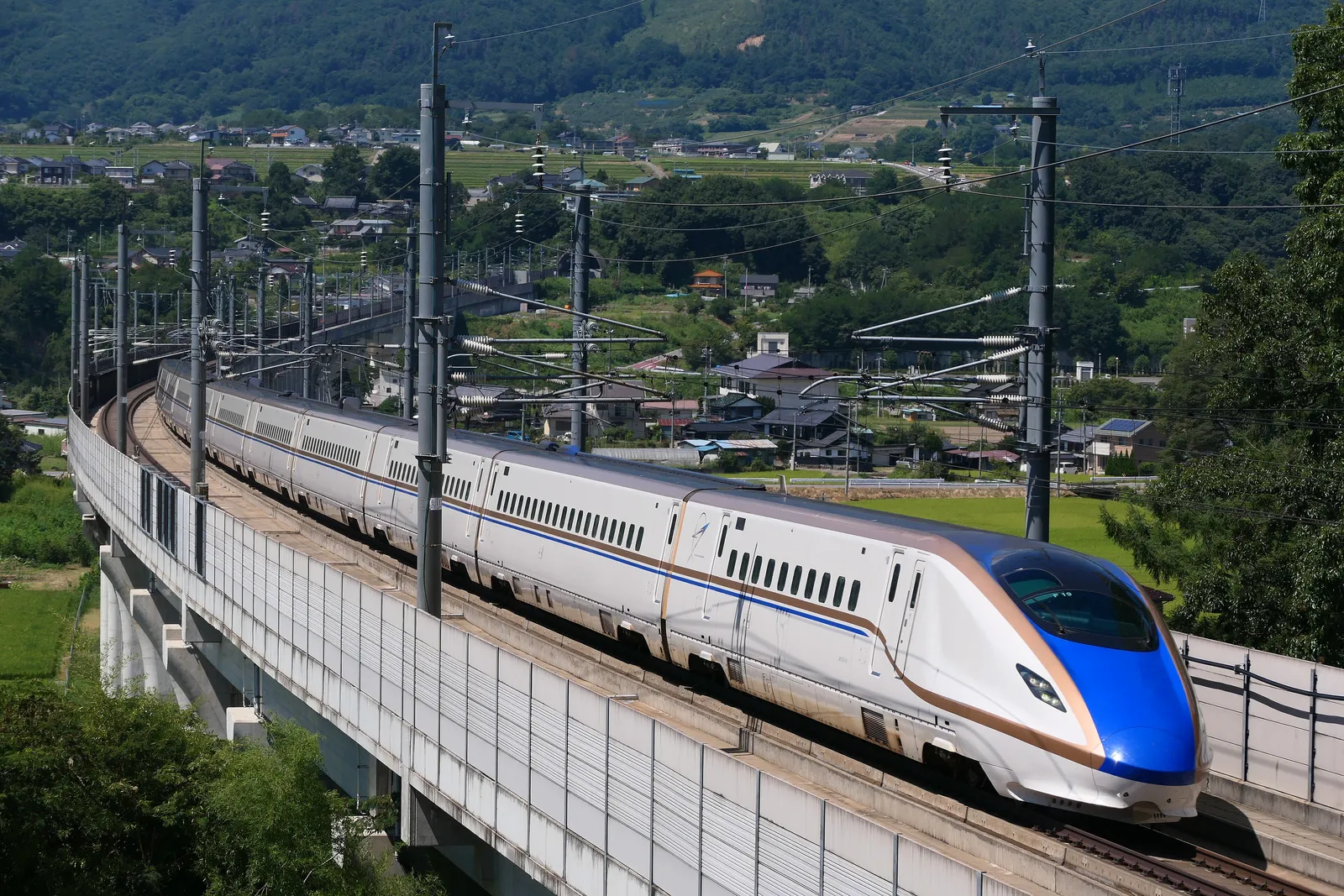

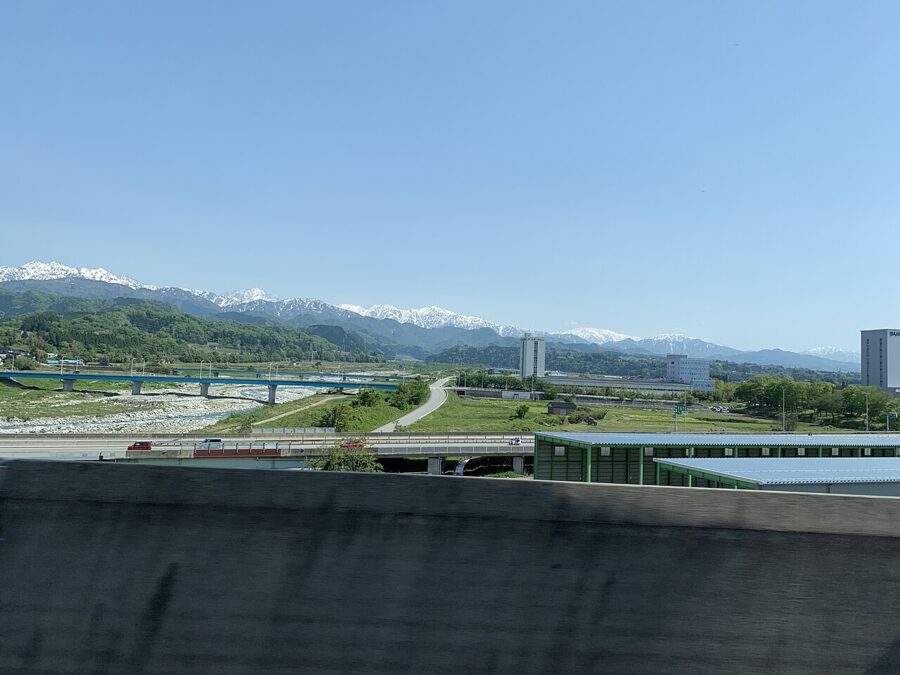
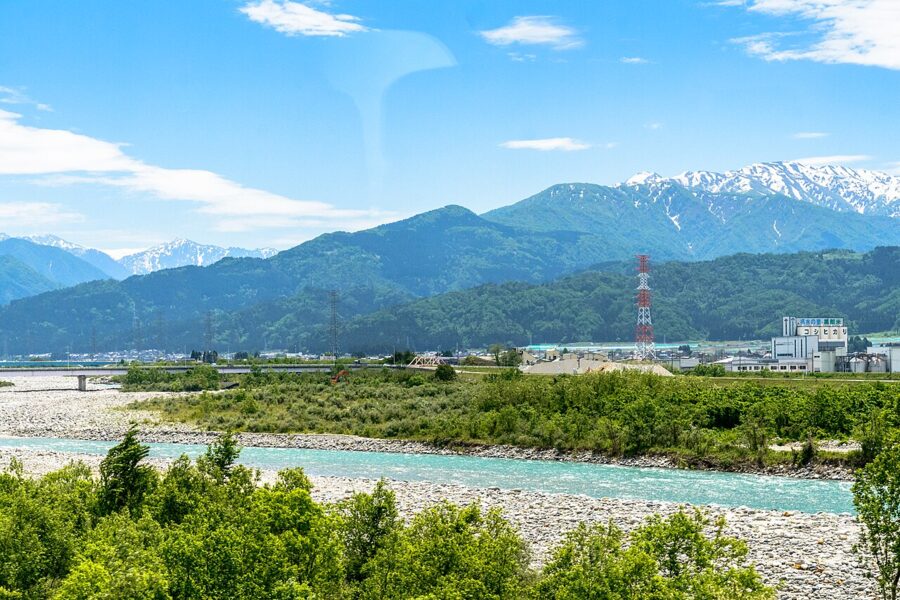
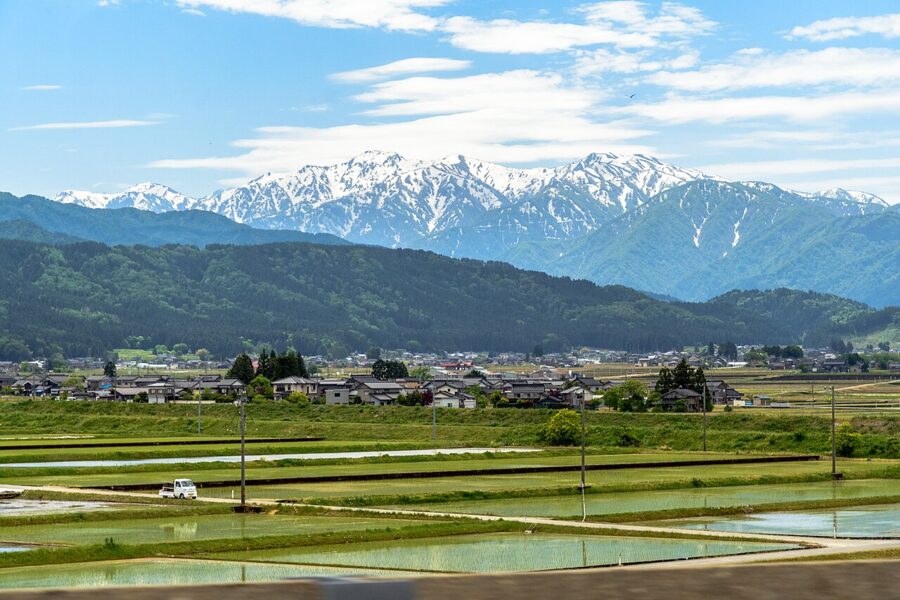
A little under two hours out of Tokyo, a westbound Kagayaki passes Kurobe-Unazukionsen without stopping, and the left-hand windows fill with a wall of snow-covered mountains that seems far too close to the sea. That is the Tateyama range, part of the Northern Alps, and the best of it lasts about four minutes, between the Hayatsuki and Joganji rivers. Then the train slows for Toyama.
In seat A you get the backs of houses and, far off, Toyama Bay. The single most useful thing to know about the Hokuriku Shinkansen is that the E seats, on the left as you head west, face the mountains, and the A seats face the sea. The second most useful is that the line no longer ends at Kanazawa. Since 16 March 2024 it has run on through Fukui to Tsuruga, where you change for Kyoto and Osaka.
Everything else follows from those two facts and from the train you pick. The fastest trains reach Nagano in 1 hour 17 minutes, Toyama in 2 hours 4, Kanazawa in 2 hours 24 and Tsuruga in 3 hours 6, as of the November 2026 timetable. The rest is which train to take, what it costs, how the change at Tsuruga works and where to get off on the way.

The Hokuriku Shinkansen (北陸新幹線) is one of the lines of the Shinkansen from Tokyo that JR East runs north, and the only one that ends on the far side of Japan, on the Sea of Japan coast and then south to Fukui.

The line, the trains and the stops
The line leaves the Joetsu Shinkansen at Takasaki and climbs through Karuizawa to Nagano, then crosses the mountains to Joetsu-Myoko, reaches the Sea of Japan coast at Itoigawa and runs west along it through Toyama and Kanazawa. It opened in stages: to Nagano on 1 October 1997, to Kanazawa on 14 March 2015, and to Tsuruga in Fukui Prefecture on 16 March 2024. JR East runs it as far as Joetsu-Myoko and JR West beyond, but the trains run through and you never notice the join.
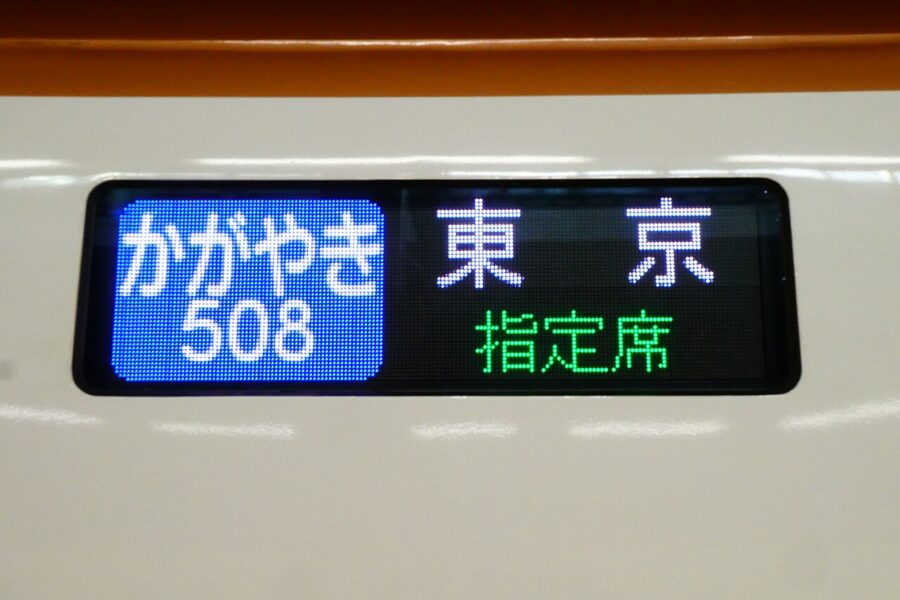
Four trains run on it. The Kagayaki (かがやき) is the express: all seats reserved, and stopping only at Omiya, Nagano, Toyama and Kanazawa, plus Ueno on most trains; beyond Kanazawa every Kagayaki stops at Fukui and some at the smaller stations too. The Hakutaka (はくたか) covers the same route with most of the intermediate stops and keeps non-reserved cars.
The Asama (あさま) runs Tokyo to Nagano only, and the Tsurugi (つるぎ) is a shuttle between Toyama, Kanazawa and Tsuruga that meets the limited expresses from Osaka and Nagoya.
| Train | Runs | Stops | Fastest from Tokyo (as of November 2026) |
|---|---|---|---|
| Kagayaki | Tokyo to Kanazawa or Tsuruga | Ueno (most), Omiya, Nagano, Toyama, Kanazawa, Fukui, Tsuruga; some also Komatsu, Kaga-Onsen, Awara-Onsen, Echizen-Takefu | Nagano 1h17, Toyama 2h04, Kanazawa 2h24, Fukui 2h49, Tsuruga 3h06 |
| Hakutaka | Tokyo to Kanazawa or Tsuruga | Most stations, though not every train stops at Karuizawa, Sakudaira, Ueda or Iiyama | Nagano 1h25, Toyama 2h30, Kanazawa 2h53 |
| Asama | Tokyo to Nagano | Ueno, Omiya, then most stations to Nagano | Karuizawa about 1h, Nagano 1h32 |
| Tsurugi | Toyama or Kanazawa to Tsuruga | Fast trains Shin-Takaoka, Kanazawa and Fukui; others every station | Kanazawa to Tsuruga 41 to 57 min |
On a weekday in late November 2026, fourteen Kagayaki and fourteen Hakutaka left Tokyo for Kanazawa, ten of the Kagayaki carrying on to Tsuruga, and nineteen Asama ran to Nagano. The first Kagayaki, number 501, leaves Tokyo at 06:16; the last train you can take for Kanazawa is Kagayaki 519 at 21:04, and the last Asama for Nagano goes at 22:08.
The fastest run of the day is Kagayaki 503: Tokyo 07:20 from track 22, Omiya 07:42, Nagano 08:37, Toyama 09:24, Kanazawa 09:44, Fukui 10:09, and into Tsuruga at 10:26, with Ueno passed at speed. Getting to track 22 from the Narita Express or the Yamanote Line takes longer than you would think, so leave time for the walk through Tokyo Station.

The E7 and the W7
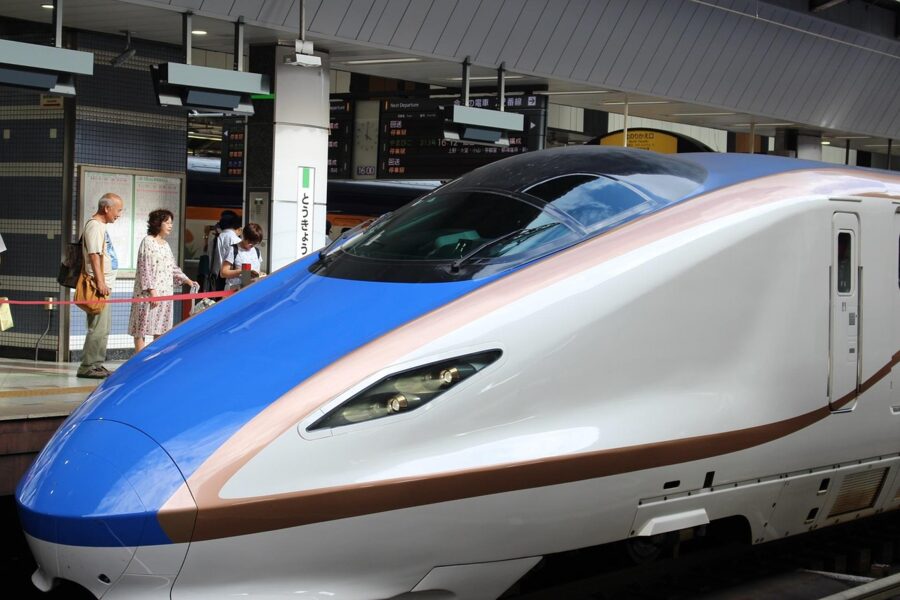
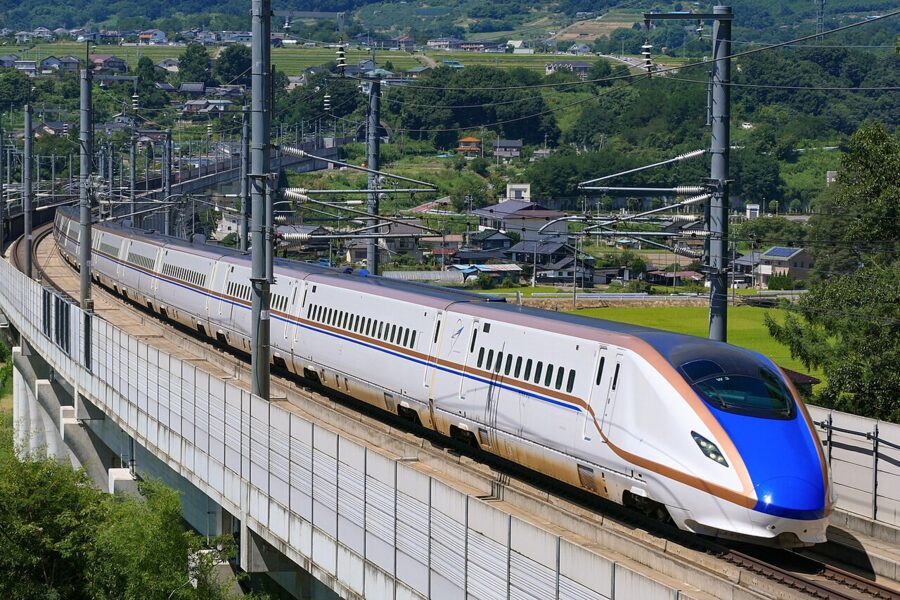
Every train on the line is a twelve-car E7 (JR East’s) or W7 (JR West’s), and nothing else can run on it: the line switches between 50 Hz and 60 Hz power along the way, and these are the only Shinkansen built for both. Cars 1 to 10 are ordinary class, car 11 is the Green Car and car 12, at the Kanazawa end, is Gran Class. On weekdays car 9 is the TRAIN DESK car, reserved seats set aside for people working on laptops.
Ordinary seats are three across on the A side (A, B, C) and two on the E side (D, E). Top speed is 260 km/h, against 320 km/h for the Hayabusa on the Tohoku line. Among JR East’s trains, the E7 also works the Joetsu Shinkansen to Niigata.
Choosing is simple. Take the Kagayaki if you are going to Toyama, Kanazawa or beyond, because the Hakutaka adds half an hour to Kanazawa. Take the Hakutaka or the Asama for Karuizawa or Ueda, and the Hakutaka for Iiyama or the coast stations, all of which the Kagayaki passes. The Hakutaka is also the train with non-reserved cars.
Fares, Gran Class and the passes
A Shinkansen ticket is two tickets in one: the basic fare for the distance plus a limited express charge for the train. There is no cheaper IC fare of the kind a Suica or PASMO card gets you on Tokyo’s commuter lines. JR East raised its fares on 14 March 2026, the day after the JR group stopped selling return tickets and ended the return discount, so any fare table printed before then is out of date.
For a reserved ordinary seat on an ordinary day, as of November 2026, Tokyo to Nagano costs ¥8,450 (about US$53), Toyama ¥13,180 (about US$83), Kanazawa ¥14,600 (about US$92) and Tsuruga ¥16,580 (about US$104). A non-reserved seat on the Hakutaka to Kanazawa is ¥14,070 (about US$88). On quiet weekdays in the off-peak periods the reserved price is ¥200 (about US$1) lower; at peak times it is ¥200 higher, and in the busiest weeks, New Year, Golden Week and Obon, ¥400 (about US$3) higher.
Those busiest weeks are also the answer to when to avoid the line if you can: you pay the most and the Kagayaki, with no non-reserved cars, is the first to fill. Reserved seats go on sale at 10:00 one month before the day of travel, on JR East’s Eki-net and JR West’s online booking sites as well as at the stations.

Green Car or Gran Class
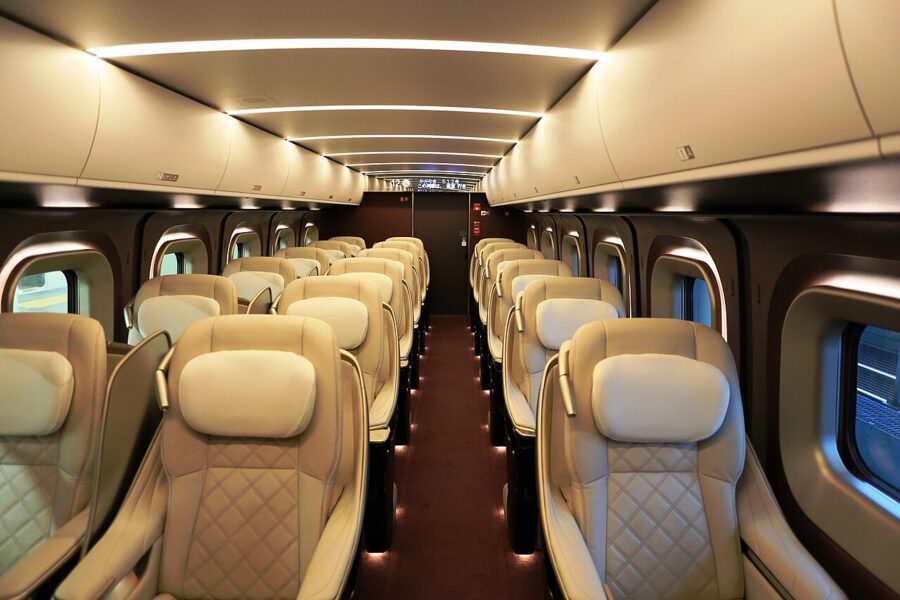
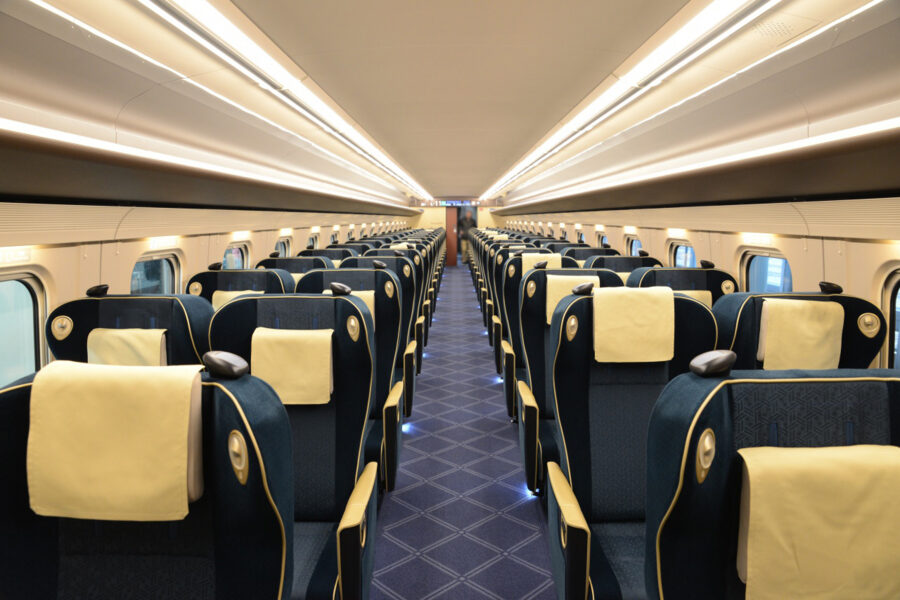
The Green Car, car 11, has wider seats two and two across and is the sensible upgrade: Tokyo to Tsuruga is ¥24,430 (about US$154) against ¥16,580 in ordinary class. Gran Class is something else. Car 12 has eighteen deep leather seats in rows of two and one, and from Tokyo to Tsuruga on a Kagayaki it costs ¥35,430 (about US$223).
Only the Kagayaki carries a Gran Class attendant, with drinks and a light meal; JR East and JR West stopped the service on the Hakutaka in October 2022, and the Asama does not have it either. Without the service it is simply a big seat. From Tokyo to Kanazawa, Gran Class costs about ¥32,000 (about US$201) on a Kagayaki and about ¥25,000 (about US$157) on a Hakutaka, and if you are paying for it at all, pay for the Kagayaki.

The Japan Rail Pass
The national Japan Rail Pass covers the whole line, Kagayaki included, and the Thunderbird and Shirasagi beyond Tsuruga. A seven-day ordinary pass costs ¥50,000 (about US$314) on the official online site; from 1 October 2026 the JR group raised the price through overseas agents to ¥53,000 (about US$333), and the online price is frozen only until the railways announce otherwise.
A return from Tokyo to Kanazawa comes to ¥29,200 (about US$184) on tickets, so the line alone will not pay for the pass. Gran Class is not included either: pass holders pay the express and Gran Class charges, about ¥24,000 (about US$151) on a Kagayaki from Tokyo to Kanazawa.
The Hokuriku Arch Pass
JR West’s Hokuriku Arch Pass is built for this route. It costs ¥35,000 (about US$220) for seven consecutive days, up from ¥30,000 before 14 March 2026, and covers reserved seats on the Hokuriku Shinkansen between Tokyo and Tsuruga, the Thunderbird to Kyoto and Osaka, the Haruka to Kansai Airport, the Tokyo Monorail and local JR trains in the area. Only foreign passport holders entering Japan as temporary visitors can buy it.
It does not cover the Tokaido Shinkansen, the Green Car without extra tickets, or Gran Class. One way from Tokyo to Kanazawa and on to Shin-Osaka costs about ¥23,800 (about US$150) on tickets, so the pass pays only if you do the arc and something more: the Haruka to the airport, a day trip to Toyama or Fukui, or the return the same way.
The change at Tsuruga
Until March 2024 the Thunderbird ran from Osaka all the way to Kanazawa. Now it stops at Tsuruga, and so does the Shirasagi from Nagoya, and everyone going between Hokuriku and Kyoto, Osaka or Nagoya changes trains there. JR West sets eight minutes as the standard time for the change, and the connections in the timetable are built on it.
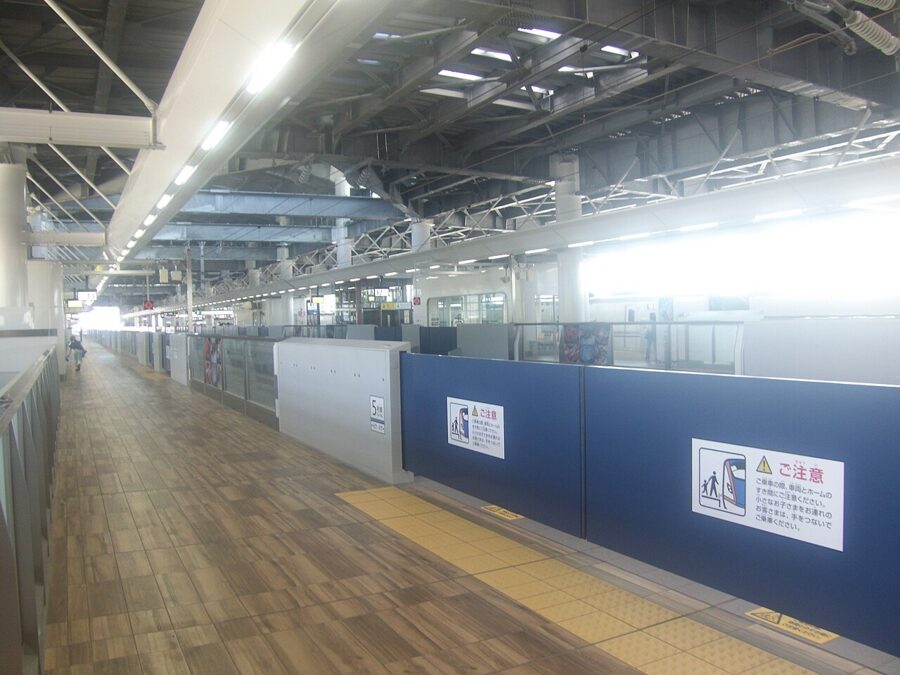
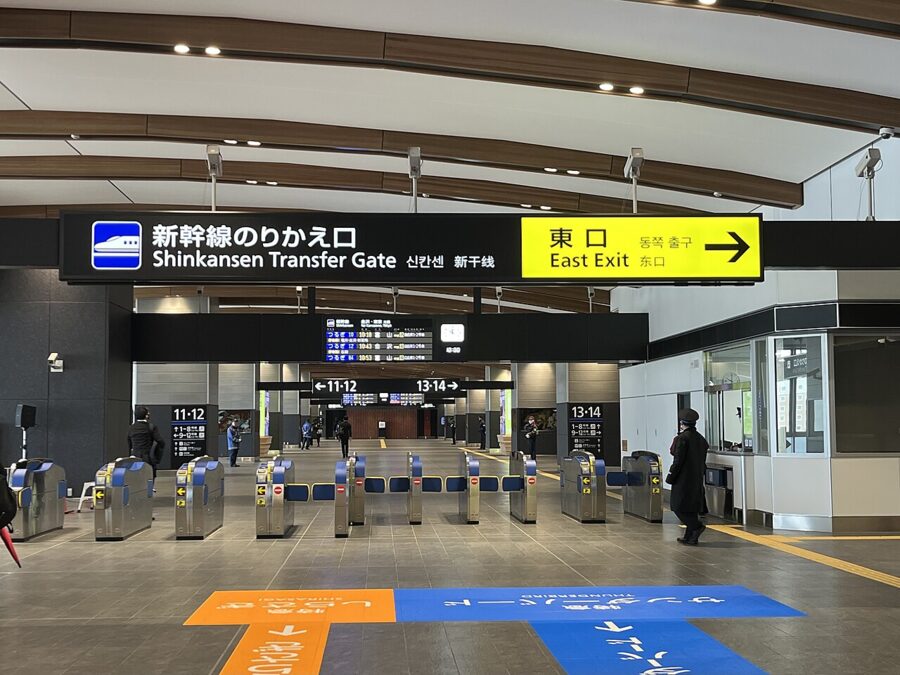
The station is stacked. The Shinkansen platforms are on the third floor, the transfer gates and concourse on the second, and the Thunderbird and Shirasagi leave from their own platforms, 31 to 34, on the ground floor. Coming off a Shinkansen, go down one level, put both tickets into the Shinkansen transfer gate together, and follow the arrows on the floor to the platform number on your limited express ticket.
Eight minutes is enough if you know where you are going and are not carrying much. In a January 2024 rehearsal, before the line opened, the change took about thirteen minutes, which JR West called the worst case. If you are travelling with heavy bags, or with children, book a later Thunderbird rather than the connecting one.
The Thunderbird and the Shirasagi
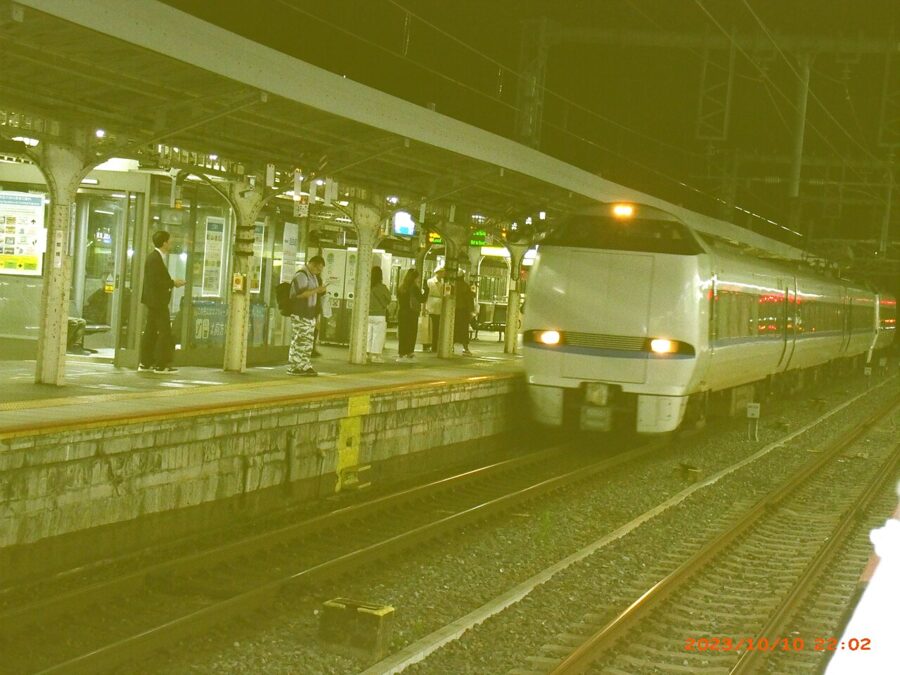
The Thunderbird runs from Tsuruga to Kyoto in 55 minutes and to Osaka in about 1 hour 22. Thunderbird 26, for example, leaves Tsuruga at 15:14 from platform 33, reaches Kyoto at 16:09, Shin-Osaka at 16:32 and Osaka at 16:36. All its ordinary cars are reserved, so book the seat when you book the Shinkansen.
The Shirasagi goes the other way round Lake Biwa, to Maibara and Nagoya. Shirasagi 10 leaves Tsuruga at 15:10 from platform 34, reaches Maibara at 15:43, where you can change to the Tokaido Shinkansen, and Nagoya at 16:49. Its ordinary cars are all reserved too.

From Kanazawa the whole trip to Shin-Osaka, Tsurugi or Kagayaki plus Thunderbird, takes about 2 hours 15 minutes and costs about ¥9,200 (about US$58). One thing not to do is use this route from Tokyo to Kyoto or Osaka. Via Tsuruga the fastest connection takes a little over four hours to Kyoto and about four and a half to Osaka; the Nozomi on the Tokaido gets to Kyoto in about two and a quarter, which makes Tokyo to Kyoto by bullet train the only sensible way.
Where to stop on the way
The line is made for breaking. Every stop below is within three hours of Tokyo, and with luggage forwarded ahead or left in station lockers you can see one of them and still be in Kanazawa for dinner.
Karuizawa
Karuizawa is about an hour from Tokyo on the Hakutaka or the Asama; the Kagayaki does not stop. It is the old summer resort below Mount Asama, and the easiest stop on the line to fit into a day out of Tokyo. Leaving Karuizawa westbound, look out of the A side: Mount Asama comes into view on the right almost as soon as the train is out of the station.

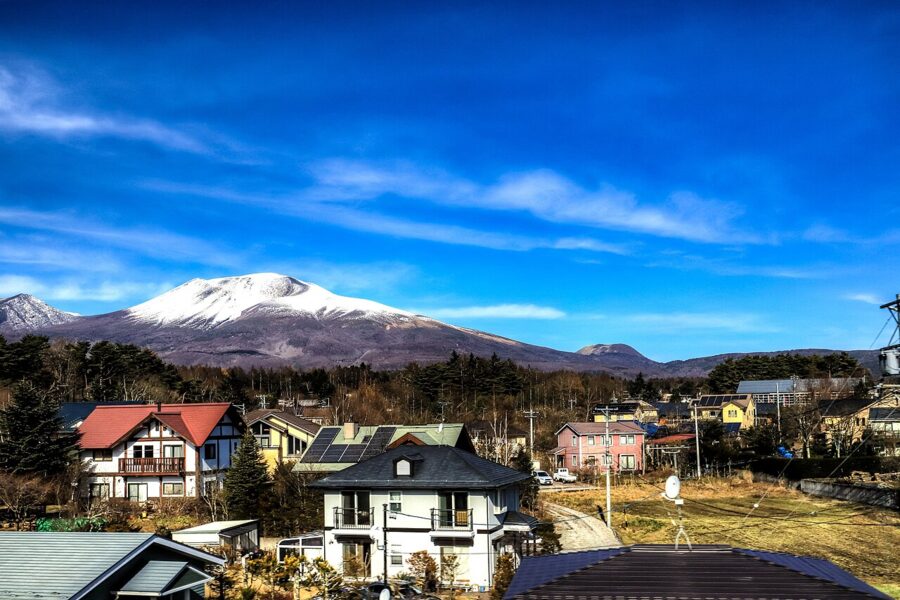

Nagano: Zenkoji and the snow monkeys
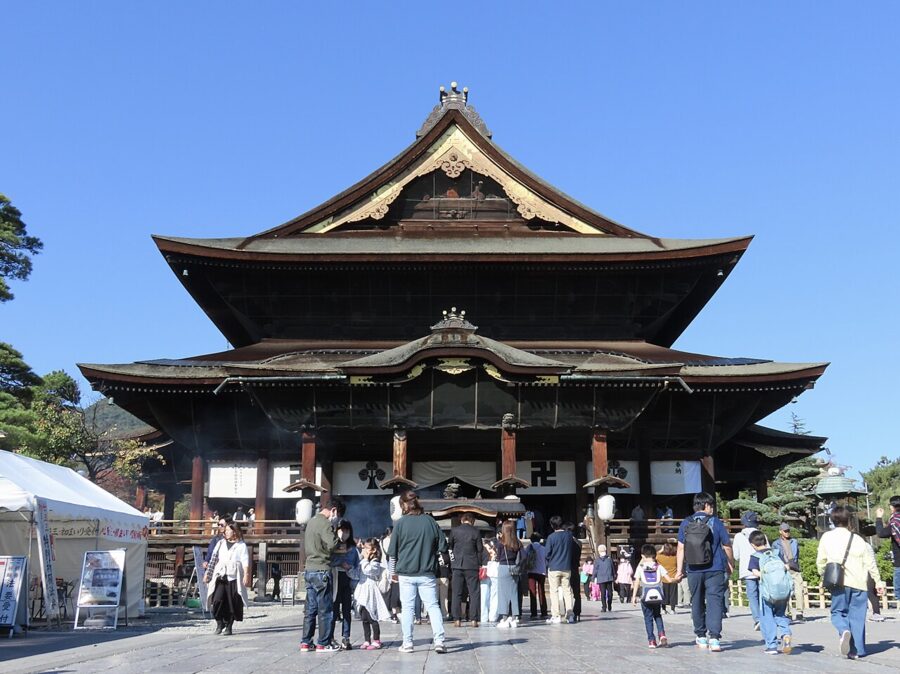
Nagano is the line’s first big city and the start of two good day trips. Zenkoji is at the top of the main street north of the station. The grounds are free; the ticket for the inner sanctuary and the Okaidan, the pitch-dark passage under the main hall where you feel along the wall for a key, was ¥600 (about US$4) for 2026.

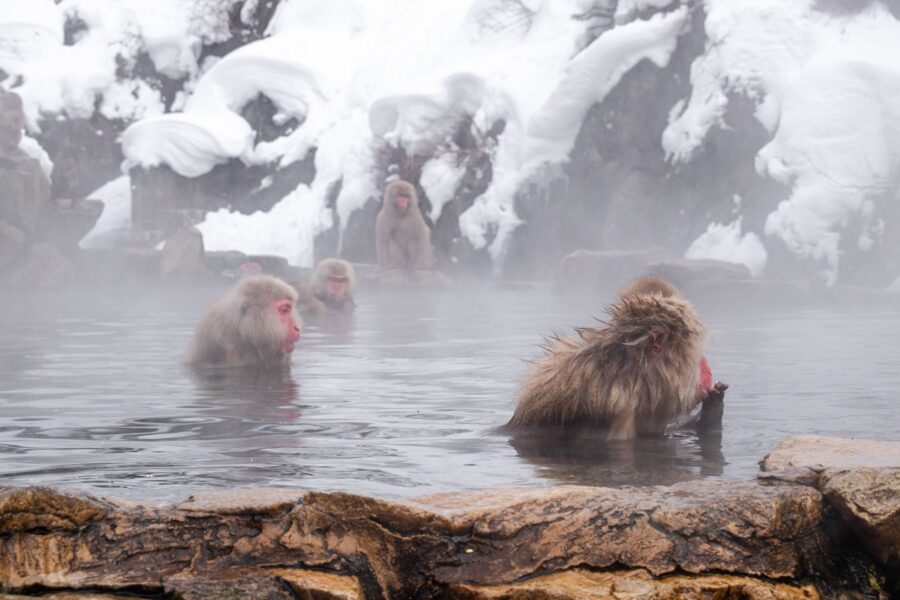
The snow monkeys at Jigokudani Yaen-koen take half a day. Take the Nagano Electric Railway express from Nagano to Yudanaka (about 38 minutes) and a bus to the Snow Monkey Park stop (about 15 minutes), or the express bus for Shiga Kogen direct to the same stop (about 41 minutes). From there it is a 35-minute walk along a forest path, unpaved, mostly level but with slopes and steps; wear proper shoes.
Entry is ¥800 (about US$5) for adults until 30 November 2026, and the park has announced a price change from 1 December 2026. From December to April, holders of web tickets bought on its site get priority entry, and I would buy one before leaving Nagano. The park opens 09:00 to 16:00 from November to March and 08:30 to 17:00 from April to October, and asks you to arrive at least 30 minutes before closing.
Toyama: the Tateyama Kurobe Alpine Route
Toyama is the gateway to the Tateyama Kurobe Alpine Route, the chain of train, cable car, buses and ropeway that crosses the Northern Alps from Dentetsu-Toyama, beside the JR station, by way of Tateyama, Bijodaira and Murodo to Kurobe Dam and down to Shinano-Omachi. Its 2026 season runs from 15 April to 30 November; after that it closes for the winter and reopens in spring.
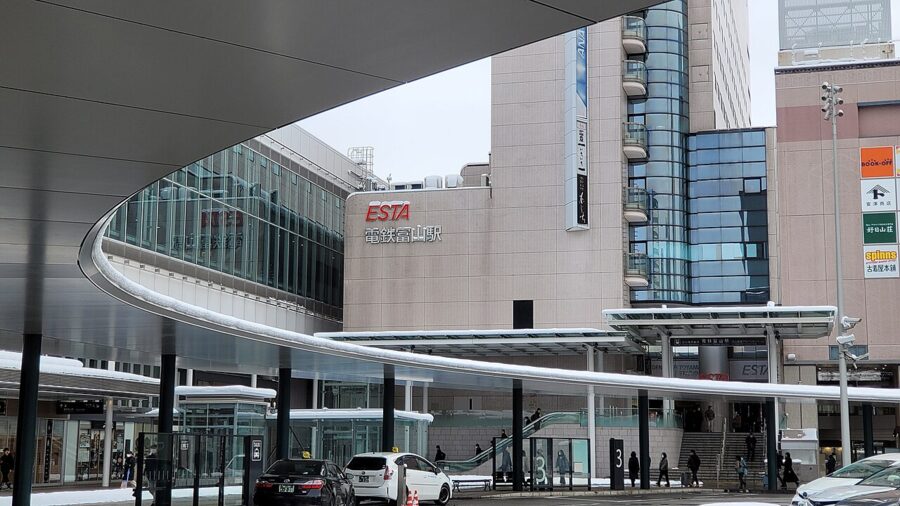
Done in full it takes a day, and you come out on the Nagano side at Shinano-Omachi, on the JR Oito Line. Going only as far as Murodo and back to Toyama is the shorter day, and in spring Murodo is where the snow walls are.
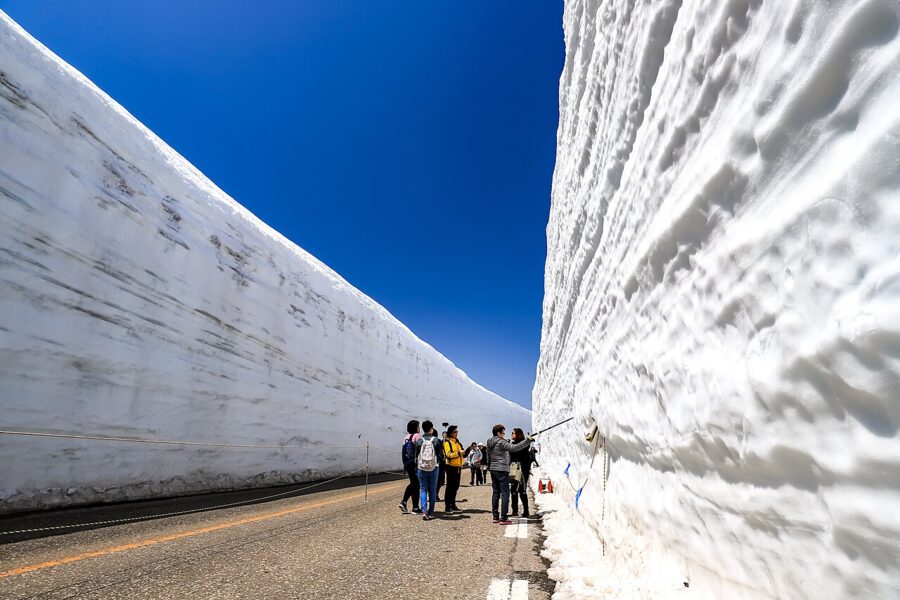

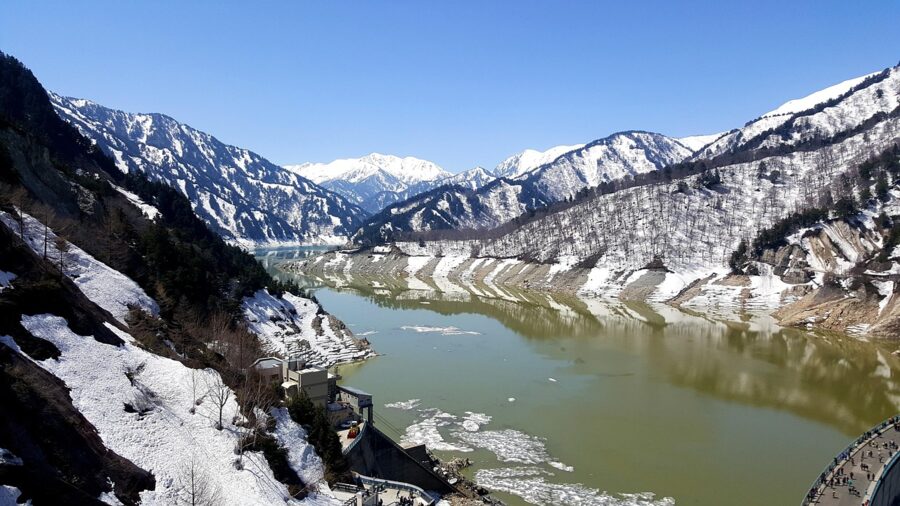
Kanazawa
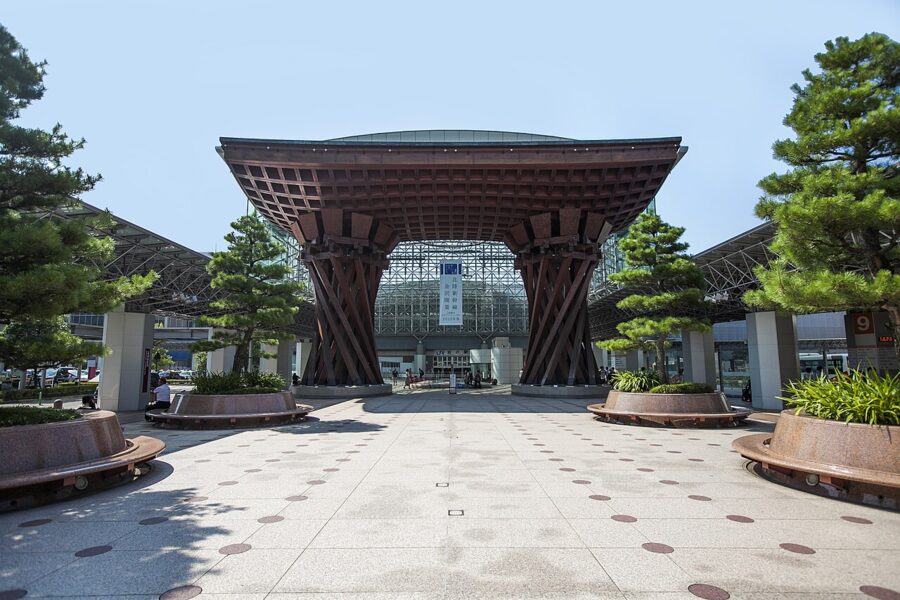
Kanazawa was the end of the line for nine years, and it is still where most people get off. The Tsuzumi-mon, the wooden gate in front of the east exit, is the first thing you see; the old town, the castle park and the garden are a short bus ride away.

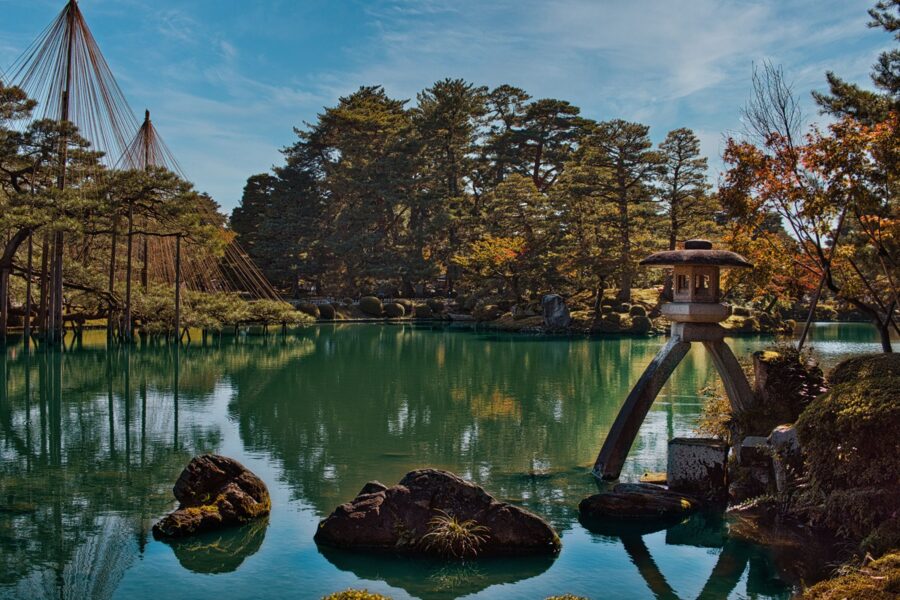
Kenrokuen costs ¥320 (about US$2) and opens 08:00 to 17:00 from 16 October to the end of February and 07:00 to 18:00 from March to mid-October. Before those hours it is free, from 06:00 in winter and as early as 04:00 in summer, through the Hasuike-mon and Zuijinzaka gates only. Kagayaki 501, the 06:16 from Tokyo, reaches Kanazawa at 08:43, which leaves a full day for the garden and the old town.
Fukui and the dinosaurs
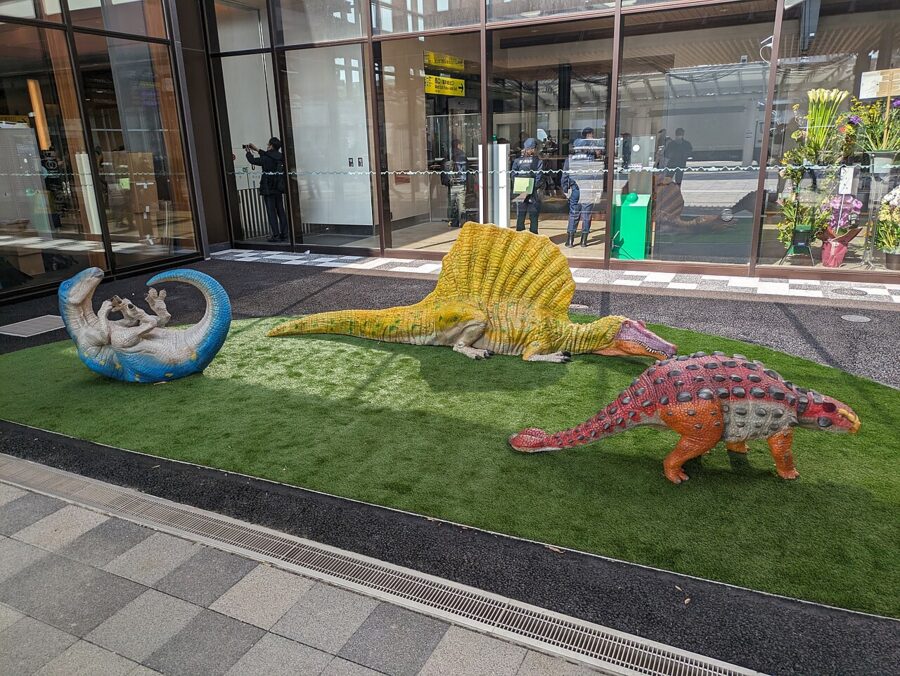
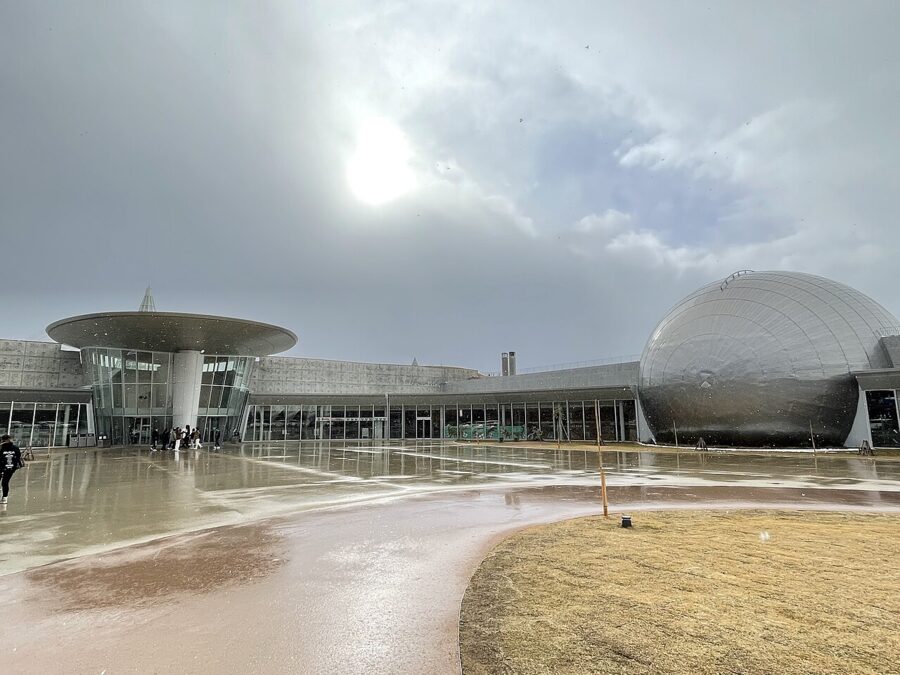
Fukui, new on the line in 2024, makes no secret of its main attraction: there are dinosaurs on the station forecourt and beside the Echizen Railway platforms. The real thing is the Fukui Prefectural Dinosaur Museum at Katsuyama, extended in 2023.

To get there, take the Echizen Railway Katsuyama Eiheiji Line from Fukui to the end at Katsuyama and then a bus or taxi, or one of the direct buses from Fukui Station; the dinosaur bus runs on weekends, holidays and in peak seasons until 31 March 2027. Admission is ¥1,000 (about US$6) for adults, and entry is by advance reservation. The museum opens 09:00 to 17:00 and closes on the second and fourth Wednesdays, except in the summer holidays.

Snow, seats and the extension
Snow and reliability
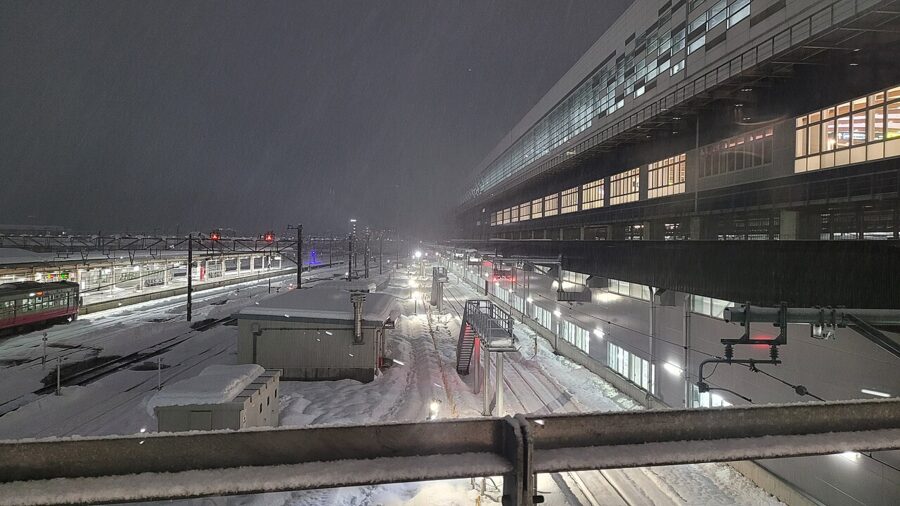
The line was built for snow. Between Itoigawa and Kurobe-Unazukionsen the viaducts carry the rails on a raised strip, so that snow piles up on either side rather than on the track, and work trains clear the deepest of it after the last service. It does fail occasionally: in January 2021 it was stopped by snow for the first time since opening, when the snowfall in Toyama and Niigata passed the limits it was designed for.
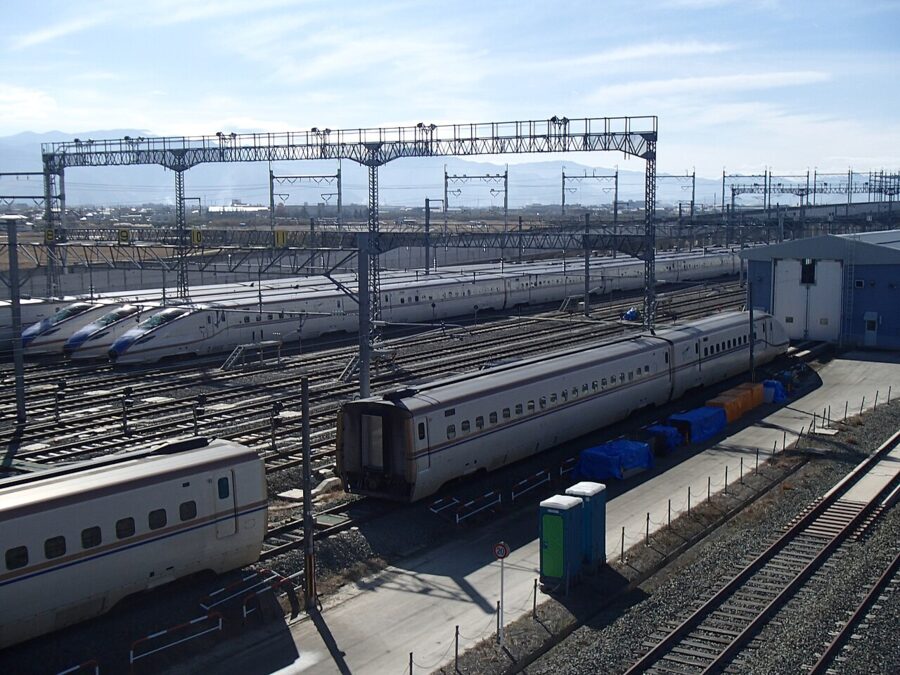
The worst day in the line’s history had nothing to do with snow. In October 2019 Typhoon Hagibis flooded JR East’s depot at Nagano, and ten of the line’s thirty trains, eight E7s and two W7s, stood in the water, and all ten were scrapped. Delays now are more ordinary: on 3 June 2026 a power fault between Shin-Takaoka and Kanazawa stopped trains between Nagano and Kanazawa for about an hour and a half, and JR West’s report on the fault counted nine cancellations.

Which side to sit
Heading west from Tokyo, sit on the E side, which is on the left. The Northern Alps appear between Itoigawa and Kurobe-Unazukionsen, and the Tateyama range between Kurobe-Unazukionsen and Toyama, at its best for about four minutes between the Hayatsuki and Joganji rivers. The view looks into the sun, so an afternoon train in spring (April and May) or autumn (October and November) gives the clearest mountains.

The A side, on the right, has Mount Asama just after Karuizawa, the Sea of Japan over the rooftops around Itoigawa, and Toyama Bay in the distance before Toyama. The sea is the lesser view. Coming back to Tokyo, reverse all of it, and book seat A.

The Osaka extension
The line is meant to run on from Tsuruga to Shin-Osaka, and the route has been argued over for a decade. In December 2016 the ruling parties chose the Obama-Kyoto route, about 140 km from Tsuruga to Shin-Osaka by way of Obama and Kyoto. In 2025 Kyoto business leaders and Osaka’s governor reopened the question, and in December 2025 the new LDP and Ishin coalition set up a committee to look again at eight options, including a short line to Maibara on the Tokaido.
On 15 July 2026 the coalition settled on the Katsuragawa plan, a version of the Obama-Kyoto route. Its Kyoto station would not be at Kyoto Station but at a new site near JR Katsuragawa, south-west of Kyoto Station, about 19 minutes from Kyoto Station by conventional line. The 2026 estimates put the cost at about ¥3.9 trillion (about US$25 billion) and the building time at about 26 years.
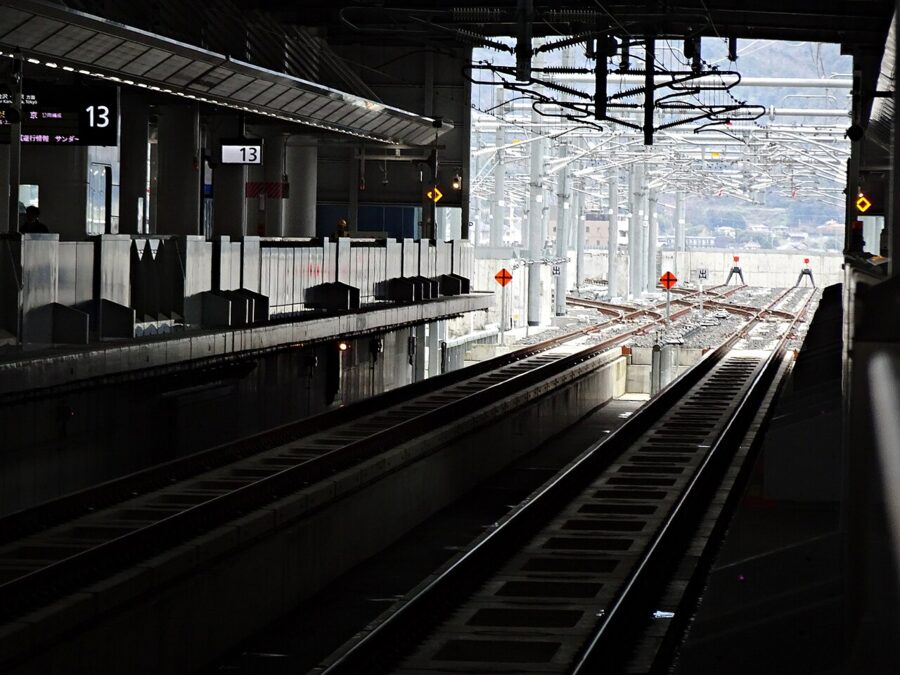

Construction has not started. Five conditions have to be met first, among them secured funding and answers to Kyoto’s worries about the groundwater under the city, and on 24 November 2026 the governors along the line were still petitioning the government to hurry. On any realistic reckoning the change at Tsuruga is here for a generation.
So until then: book a Kagayaki, take an E seat, and choose an afternoon train for the light past Kurobe. At Tsuruga go down one floor, put both tickets in the gate together, and the Thunderbird to Kyoto is waiting on the ground floor below.