
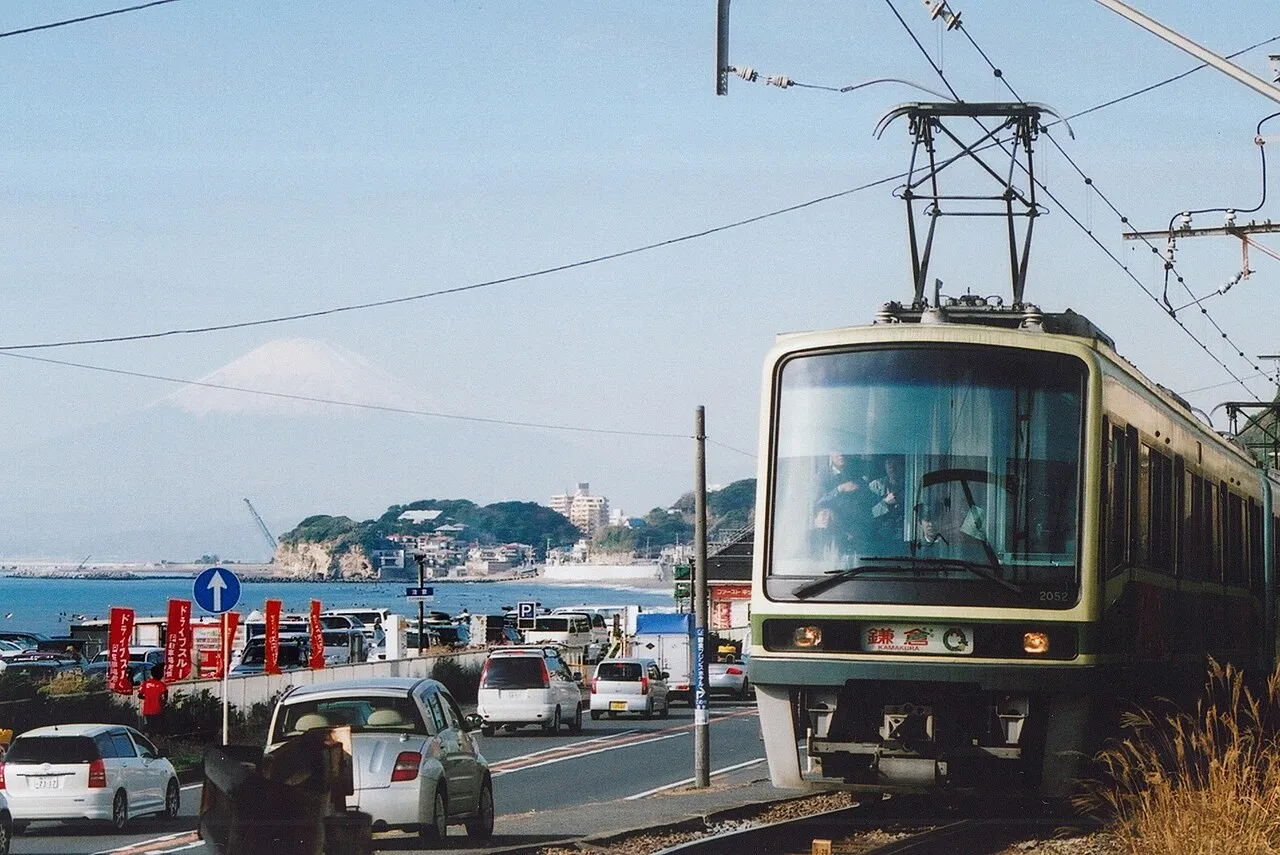

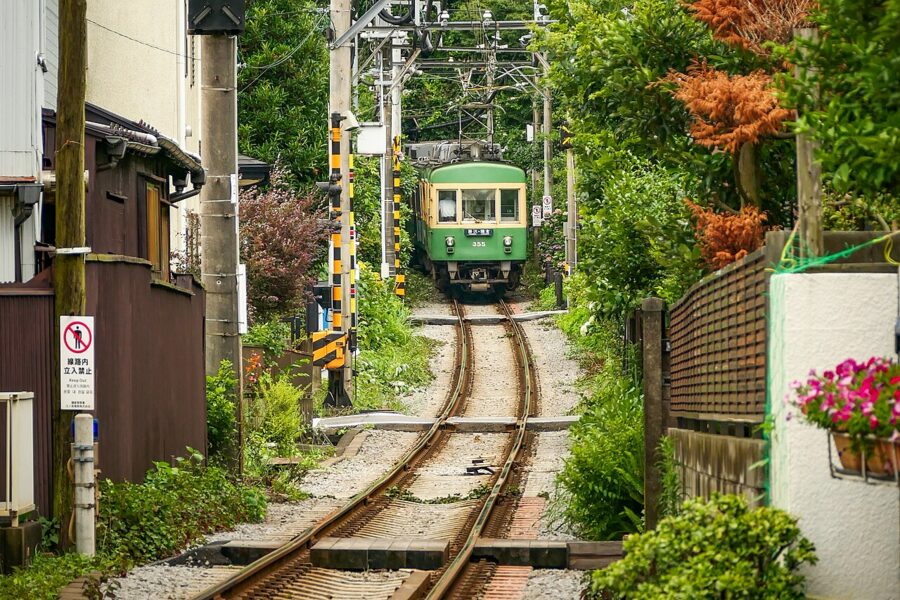
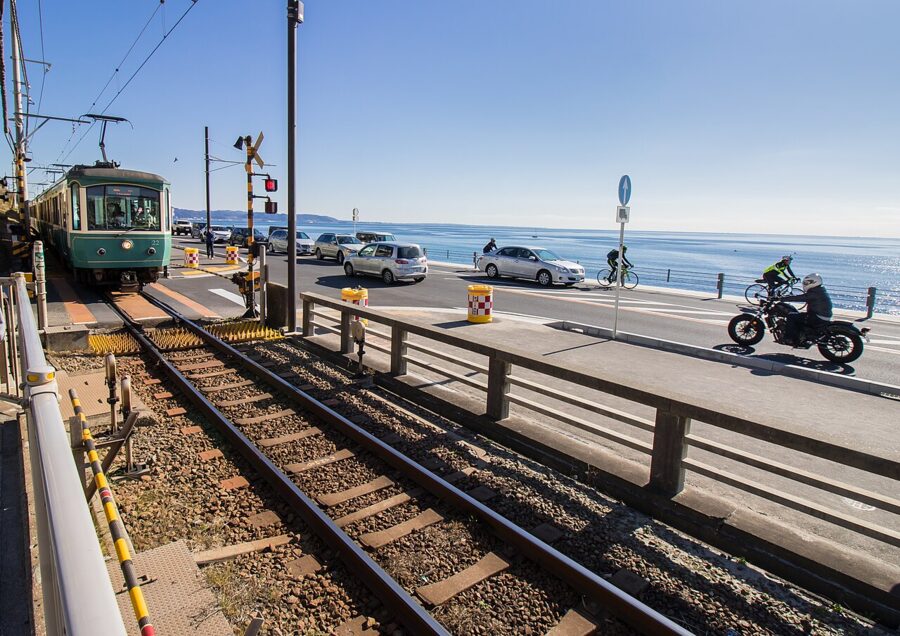
Between Hase and Gokurakuji the Enoden runs so close to the houses that you could pass a cup of tea through the window. Front gates open straight onto the rails, potted plants sit on the ballast edge, and the short green train brushes past them slowly. A dozen minutes later the same train comes out of the trees at Kamakurakokomae and the whole of Sagami Bay opens up on the left, with Enoshima sitting on the horizon.
That is the reason to make this day trip by rail. The Enoshima Electric Railway, the Enoden to everyone, is 10 km of mostly single track between Fujisawa and Kamakura, and it threads the two places you came for: the temples of Kamakura at one end, the island of Enoshima near the other, and the coast in between.
The decisions are small but they add up. Which train out of Tokyo, which end of the Enoden to start from, whether a one-day pass pays, and which station to be at before the queues build. Get those right and the day runs to time. Get them wrong and you spend forty minutes on the platform at Kamakura looking at the back of someone else’s rucksack.



Getting there from Tokyo
There are two ways in, and they decide which end of the Enoden you start from. JR runs to Kamakura, the eastern terminus; Odakyu runs to Katase-Enoshima, a short walk from the island and from Enoden Enoshima station.
| From | Train | To | Time | Ticket / IC fare (as of 2026) | Pass that covers it |
|---|---|---|---|---|---|
| Tokyo | JR Yokosuka Line, direct | Kamakura | about 55 min | ¥1,040 / ¥1,034 | Japan Rail Pass |
| Shinagawa | JR Yokosuka Line, direct | Kamakura | about 52 min | ¥810 / ¥803 | Japan Rail Pass |
| Shinjuku | JR Shonan-Shinjuku Line rapid | Kamakura | about 59 min | ¥1,040 / ¥1,034 | Japan Rail Pass |
| Shibuya | JR Shonan-Shinjuku Line | Kamakura | about 55 min | ¥1,040 | Japan Rail Pass |
| Shinjuku | Odakyu rapid express, change at Fujisawa | Katase-Enoshima | about 65–70 min | ¥650 / ¥649 | Enoshima-Kamakura Freepass |
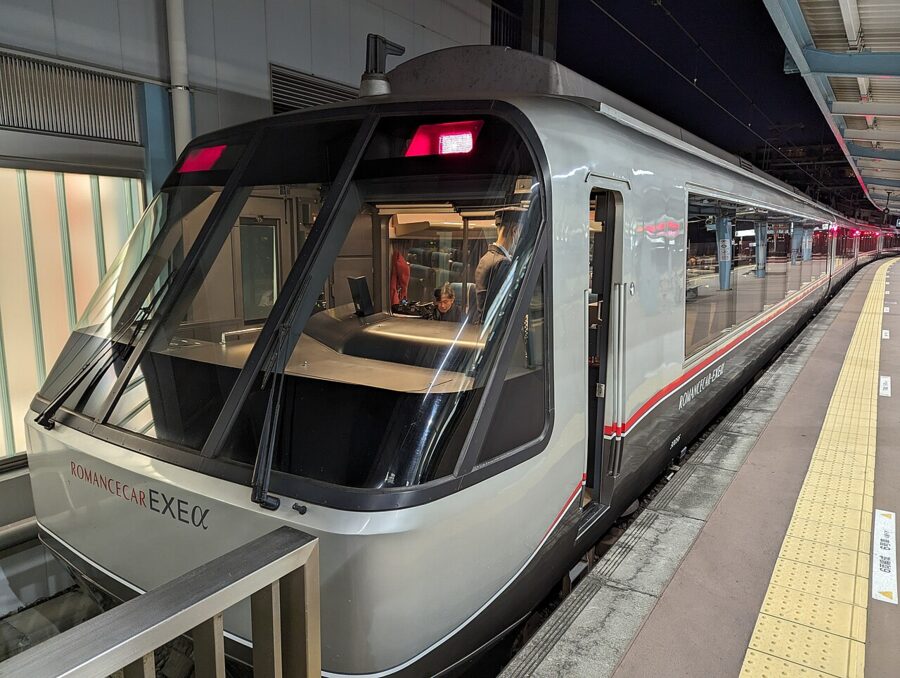
| Shinjuku | Odakyu Romancecar (weekends) | Katase-Enoshima | about 61–69 min | ¥650 plus ¥750 limited express ticket | Freepass plus the ¥750 ticket |
JR from Tokyo or Shinagawa: the Yokosuka Line
From Tokyo Station the Yokosuka Line leaves from the Sobu underground platforms, numbered 1 to 4, deep below the Marunouchi side. Allow fifteen minutes to get down there from the Shinkansen. The direct train takes about 55 minutes to Kamakura for ¥1,040 (about US$7) as a paper ticket or ¥1,034 on an IC card, fares that rose when JR East revised its fares on 14 March 2026 and dropped the old cheaper Yokosuka Line rate.
The trains are the fifteen-car E235-1000 sets that have been replacing the E217s since 2020, part of JR East’s commuter fleet. Some of them start back at Narita Airport, so if you have just landed you can ride one seat all the way from the Narita airport platforms to Kamakura. Shinagawa saves a few minutes and ¥230 if you are staying on that side of the city: 52 minutes, ¥810 by ticket or ¥803 by IC.
Get off one stop early at Kita-Kamakura (北鎌倉) if you want the Zen temples first; Engakuji’s gate is a minute from the platform. Otherwise ride to Kamakura (鎌倉), where the Enoden platforms are on the west side of the JR station. There is a transfer gate between the two inside the station, so with an IC card you tap straight through without going out to the street.
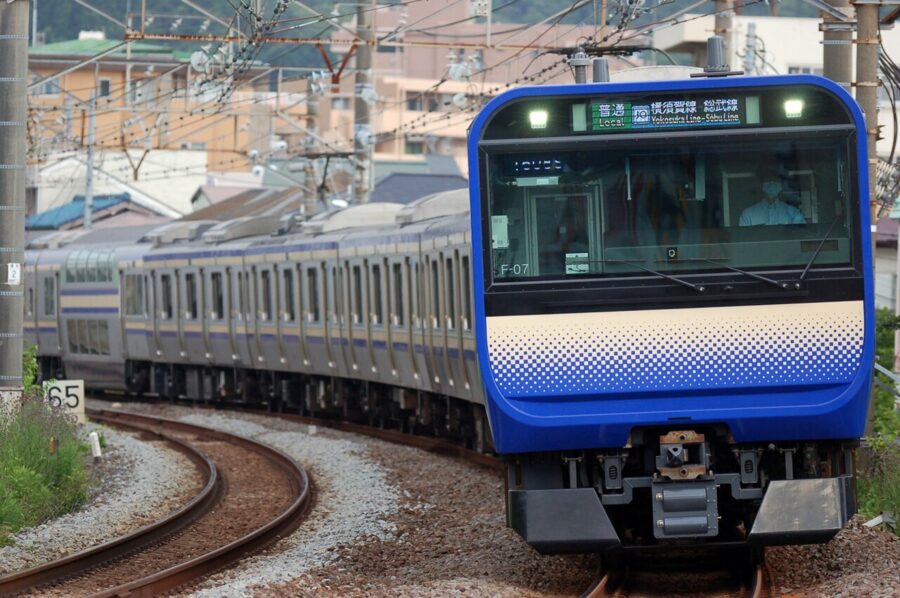

The Shonan-Shinjuku Line from Shinjuku and Shibuya
From the west side of the city there is no need to cross to Tokyo Station. At Shinjuku Station the southbound Shonan-Shinjuku Line uses platforms 1 and 2, and the rapid service runs through onto the Yokosuka Line to Kamakura in about 59 minutes for the same ¥1,040 (¥1,034 IC). From Shibuya Station it is about 55 minutes and the same fare.
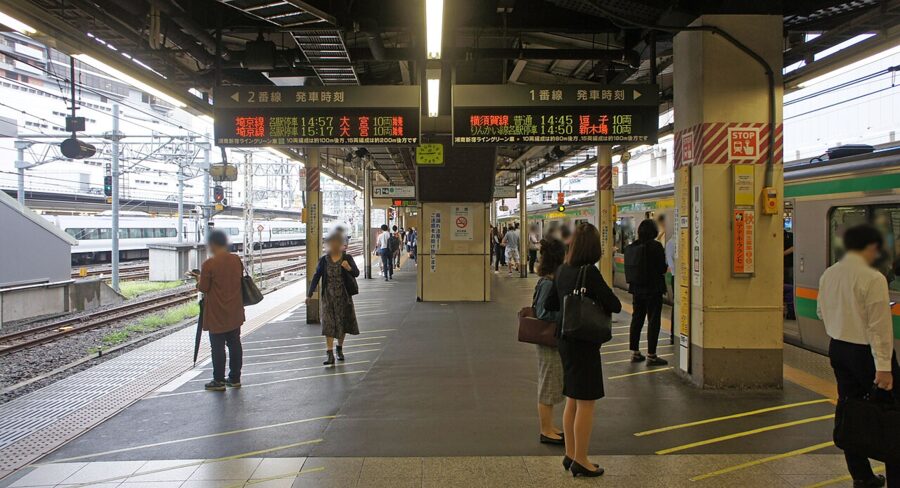

Check the destination before you board. Trains signed for the Yokosuka Line run straight to Kamakura; trains signed for the Tokaido Line (Odawara direction) take you to Ofuna, where you change for the one-stop hop to Kamakura. Either way the fare is the same.
Odakyu to Katase-Enoshima
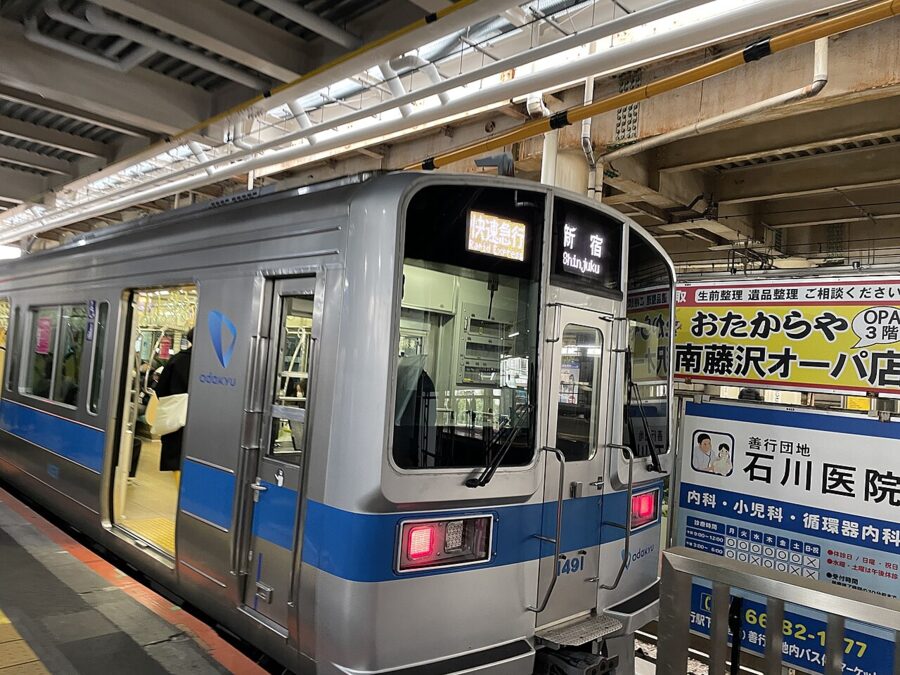
The Odakyu route is the cheaper one and it lands you at the island end. Rapid expresses leave Shinjuku for Fujisawa, where the Enoshima Line reverses direction, and the last few minutes to Katase-Enoshima are often on a connecting local. Allow 65 to 70 minutes; the fare is ¥650 (about US$4), or ¥649 by IC.

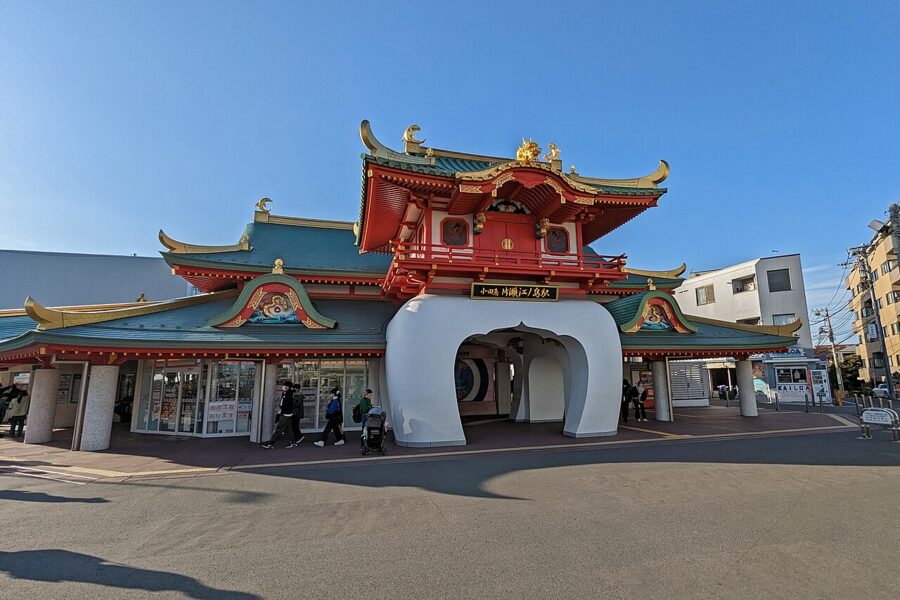
Katase-Enoshima (片瀬江ノ島) is worth a look. The old station was pulled down in 2019, and its 2020 replacement is a full dragon palace with a gold dolphin on the roof, a carved dragon over the concourse and a jellyfish tank by the gates.

The Romancecar to Enoshima
The Romancecar is the comfortable way, but on Enoshima it is mainly a weekend train. On the timetable in force since 14 March 2026, weekends and holidays have six morning and afternoon departures from Shinjuku that run through to Katase-Enoshima, at 07:20, 08:20, 10:20, 12:20, 14:20 and 15:20, arriving 61 to 69 minutes later. On weekdays the only daytime train that gets all the way there leaves Shinjuku at 16:20, which is no use for a day out.
Coming back is better served. Weekend Romancecars leave Katase-Enoshima at 12:43, 14:21, 16:17, 17:16, 19:17 and 20:03; weekday ones at 17:46, 18:38 and 19:39. The limited express ticket from Shinjuku is ¥750 on top of the fare or the pass, ¥50 less if you buy it online through Odakyu’s EMot site. Seats go on sale at 10:00 one month ahead, and an evening train after a day on the island is the one I would book first.
The Enoden: 10 km and fifteen stations
The line opened between Fujisawa and Katase (today’s Enoshima) on 1 September 1902, the sixth electric railway in Japan, and reached Kamakura in 1910. Its fifteen stations run from EN01 at Fujisawa to EN15 at Kamakura. On the current timetable trains leave Kamakura every 14 minutes through the day, from 05:20 until late evening.
The fares come in four steps, ¥200, ¥220, ¥260 and ¥310 for adults. Kamakura to Hase is ¥200 and four minutes; Kamakura to Enoshima ¥260 and 24 minutes; the full run to Fujisawa ¥310 and about 37 minutes. Suica and PASMO work everywhere, and at the unstaffed stations you tap a small upright reader on the platform, green to get on and yellow to get off. If you have no IC card, Enoden also takes contactless bank cards (Visa, Mastercard, JCB, American Express and others) at every station, one adult per card.
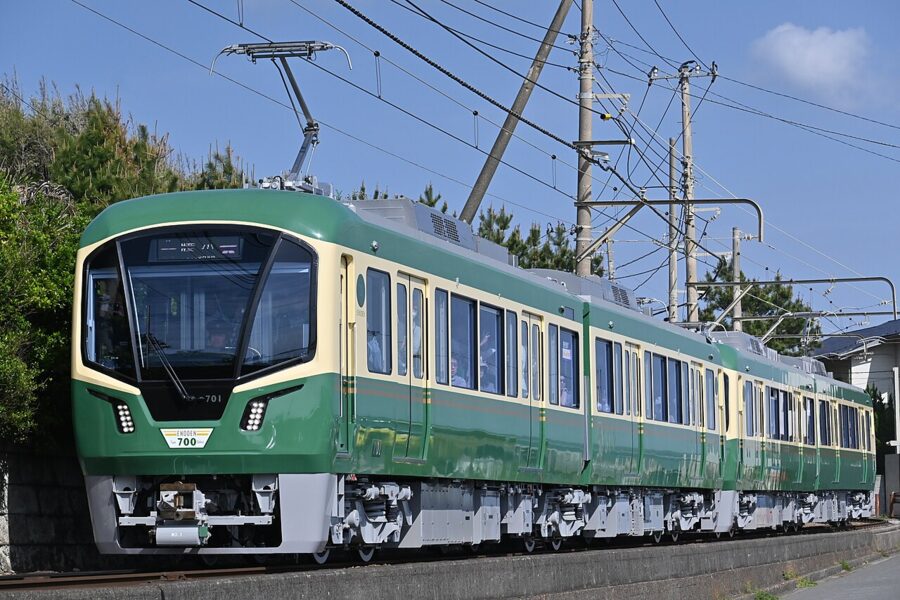
The fleet is changing this year. The 700 type, the first new design in twenty years, entered service on 19 April 2026, and three more sets are due by the end of the 2026 financial year in two new colours, Enoshima blue and Kamakura stone grey. Inside, the seats are angled towards the sea and the sea side has cross seats, with no luggage racks over them to block the view. At the other end of the story, the 1000 type set 1002-1052 makes its last runs in January 2027.
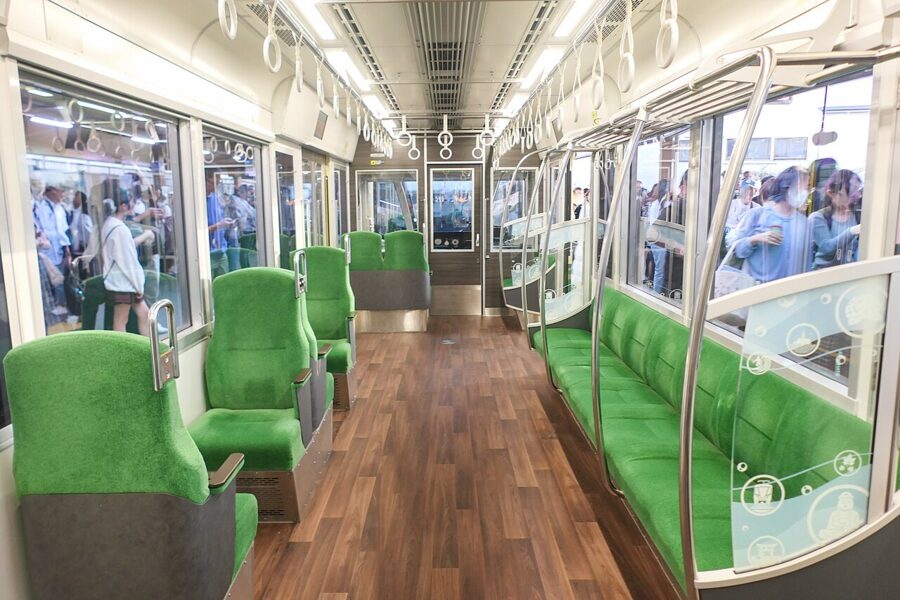
Luggage is the one thing the Enoden is not built for. The rules allow two pieces per person, each no more than 2.5 m in length, width and height added together and 30 kg, and staff can refuse large items when the train is full. Leave a suitcase in the coin lockers at Fujisawa, Enoshima, Hase or Kamakura rather than wheel it down a packed car.
The crowds and the queue at Kamakura
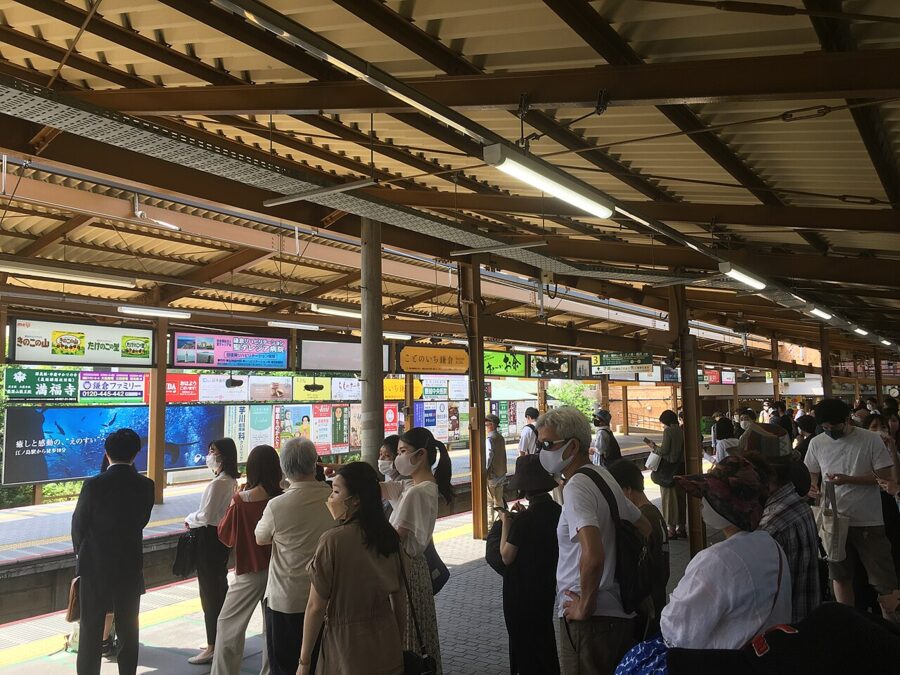
Kamakura is where the Enoden gets difficult. Everyone arriving by JR wants a train for Hase at the same time, the trains are short, and on a fine weekend the queue fills the platform and the concourse. In past years the line has formed outside the station in the spring holidays, which is why Kamakura City has run a priority-entry scheme for local residents on Golden Week afternoons.
The good news is in the city’s 2026 report: neither in 2025 nor in 2026 did the station have to restrict entry, and no queue formed outside. That was with Golden Week passenger numbers at Enoden Kamakura up by close to a fifth in 2025. Queues inside the station still happen, though, and the cure is timing. Board at Kamakura before about 10:00, or start your Enoden ride from the Fujisawa end and work east.

The stops that matter
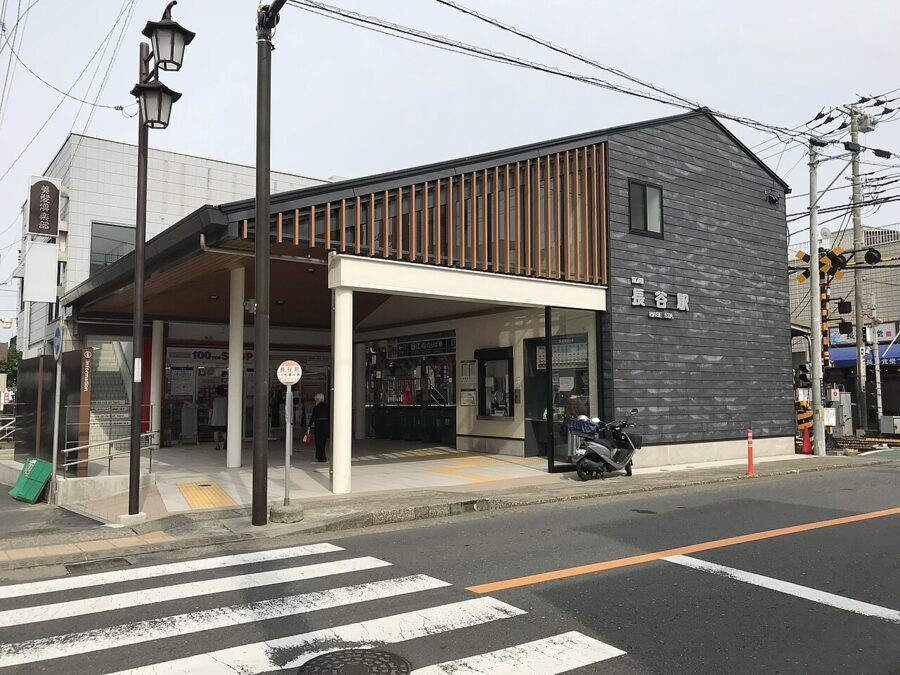
Hase (長谷, EN12). Four minutes from Kamakura and the busiest stop on the line, for the Great Buddha (seven minutes’ walk) and Hasedera (five). It is staffed all day and has coin lockers. If you only get off once, get off here.

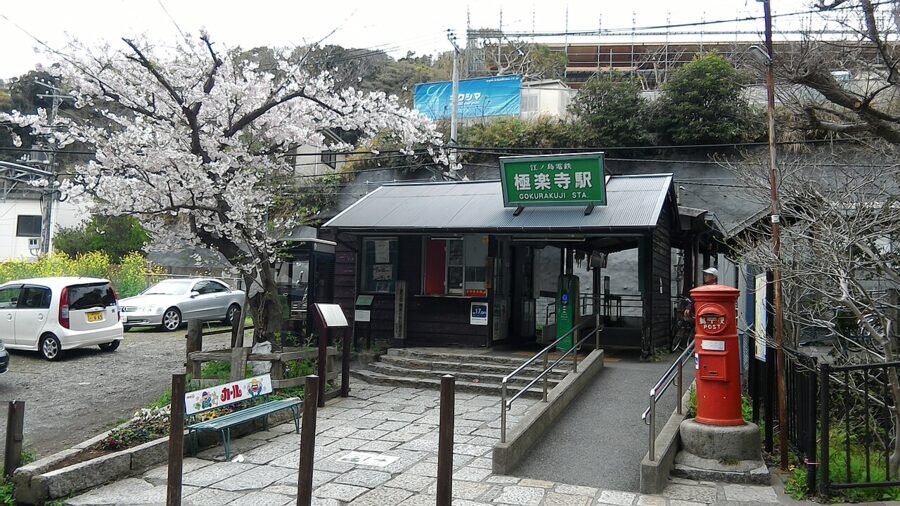
Gokurakuji (極楽寺, EN11). One stop further, a single platform and a small wooden station building by a tunnel mouth, the tunnel that was being dug from this side in 1906. Nothing much to do, which is the appeal, and it is an easy walk back to Hase. This is the stretch with the house fronts.

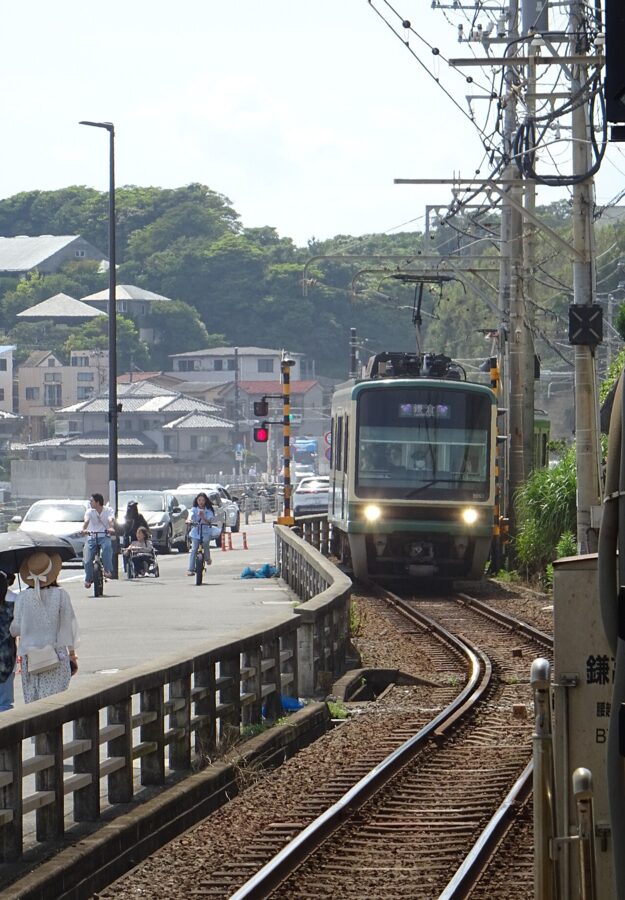
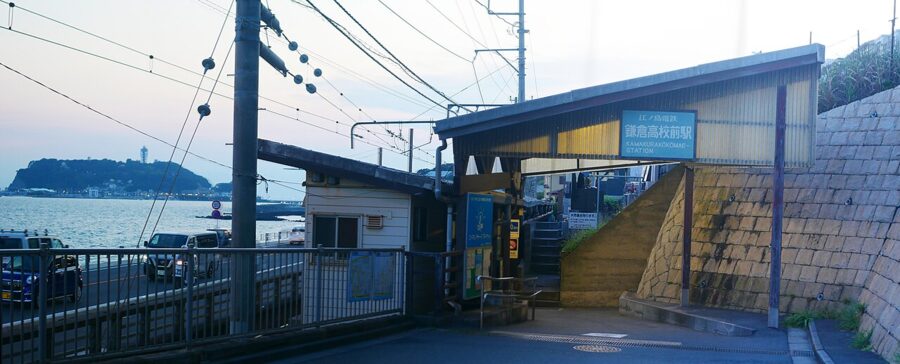
Kamakurakokomae (鎌倉高校前, EN08). An unstaffed platform practically on the beach, with Enoshima straight ahead across the water. The level crossing just east of it is the one in the opening titles of the anime Slam Dunk, and Kamakura City counted 9,490 people using its trial photo area there over four days in September 2025.
The crowds spilled onto a busy coast road and onto private land, so the city brought in guides from 1 October 2025, on duty from 10:00 to 18:00, to steer photographers into a fenced photo area in Koshigoe Rakko Park beside the crossing. The published scheme ran to the end of March 2026, but the rules hold whoever is there.
Take your picture from the park, never from the road or the crossing itself, and stay off private land. No flash at trains, no tripods or stepladders, and Enoden asks people not to pose at its crossings in cosplay.
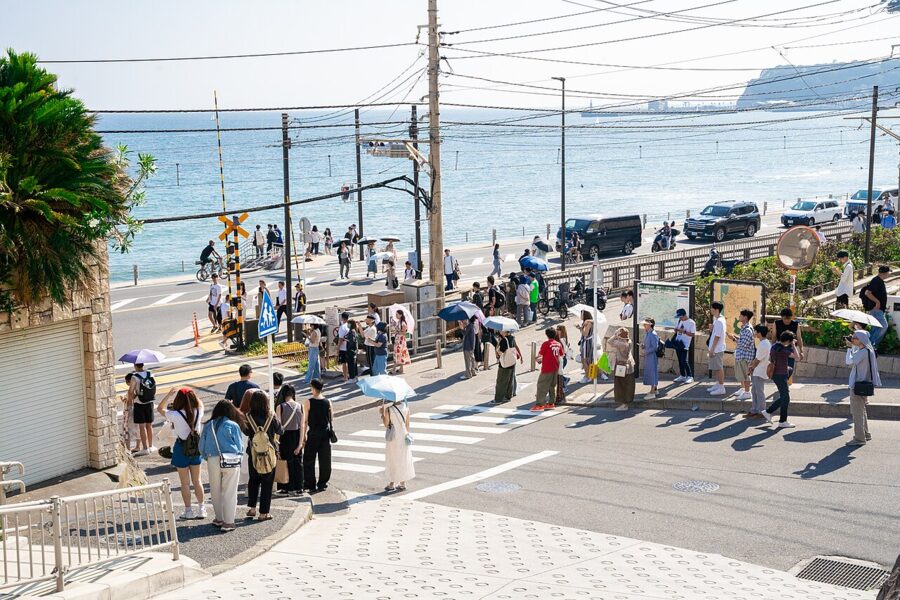

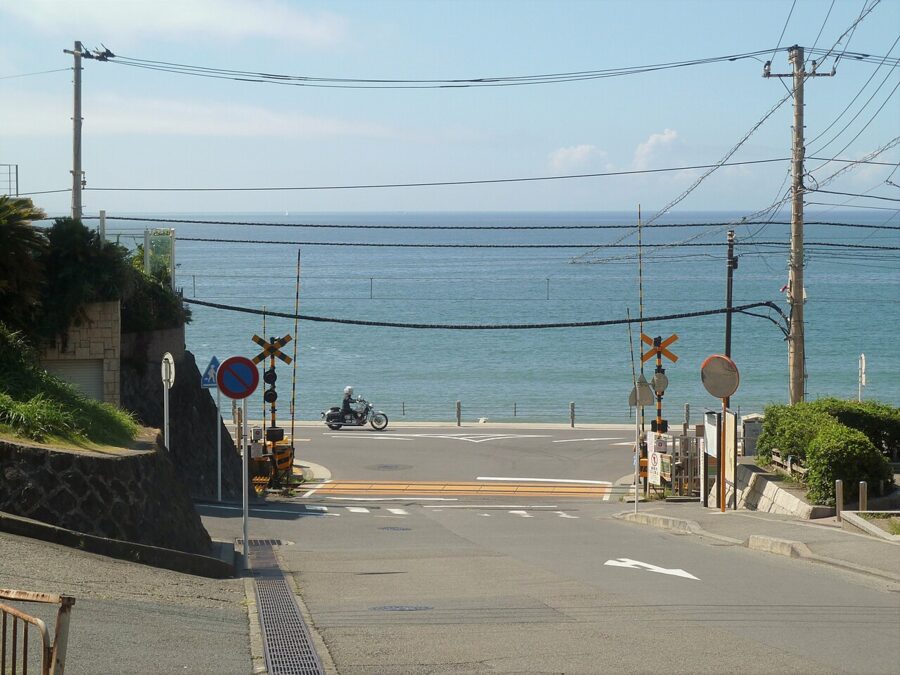
To my eye the sea view is better from the platform at Kamakurakokomae or from the beach at Shichirigahama, one stop east, than from the crossing. Get off, walk down to the sand, and let the trains come to you.

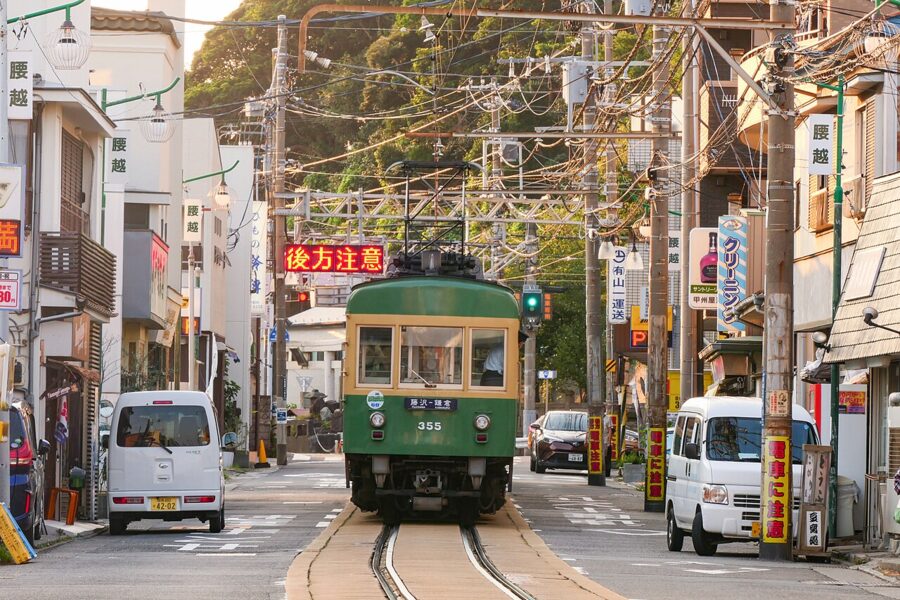
Koshigoe and Enoshima (腰越 EN07, 江ノ島 EN06). Between these two the train runs down the middle of the shopping street, the only street-running section on the line, so ride it rather than walk it. From Enoshima station the island’s shrine is about 20 minutes on foot over the bridge.

Kamakura: the Buddha, Hasedera and Hachimangu
Kamakura was the seat of Japan’s first shogunate from the late twelfth century, and you will not see all its temples in a day. Pick Hase for the Buddha and Hasedera, then either Tsurugaoka Hachimangu near the station or the Zen temples at Kita-Kamakura, and leave the rest.
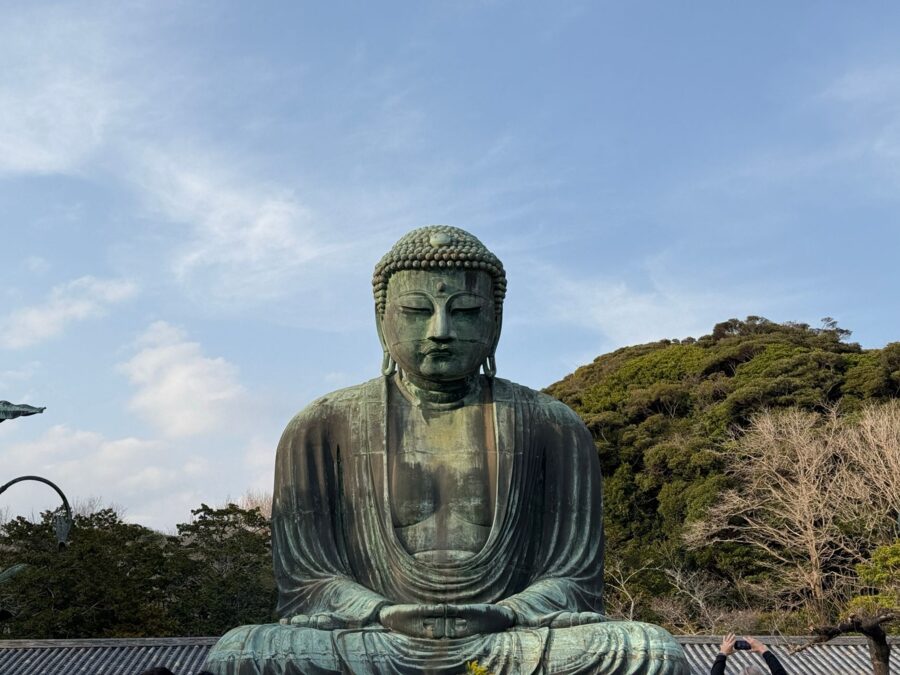
The Great Buddha at Kotoku-in
The bronze Amida Buddha at Kotoku-in (高徳院) was begun in 1252 and has sat in the open since the hall around it was lost to storms and a tsunami; by the end of the Muromachi period, in the sixteenth century, it was outdoors for good. It is 11.3 m tall, 13.35 m with the pedestal, and weighs about 121 tonnes. It is a national treasure, and it is the one thing on this list that justifies a crowd.
Admission is ¥300 (about US$2) for adults. The gates open at 08:00 and close at 17:30 from April to September and at 17:00 from October to March, with last entry fifteen minutes before. For ¥50 more you can climb inside the statue from 08:00 to 16:30. Eating and drinking are not allowed in the grounds, so finish the taiyaki in the street outside.
Hasedera
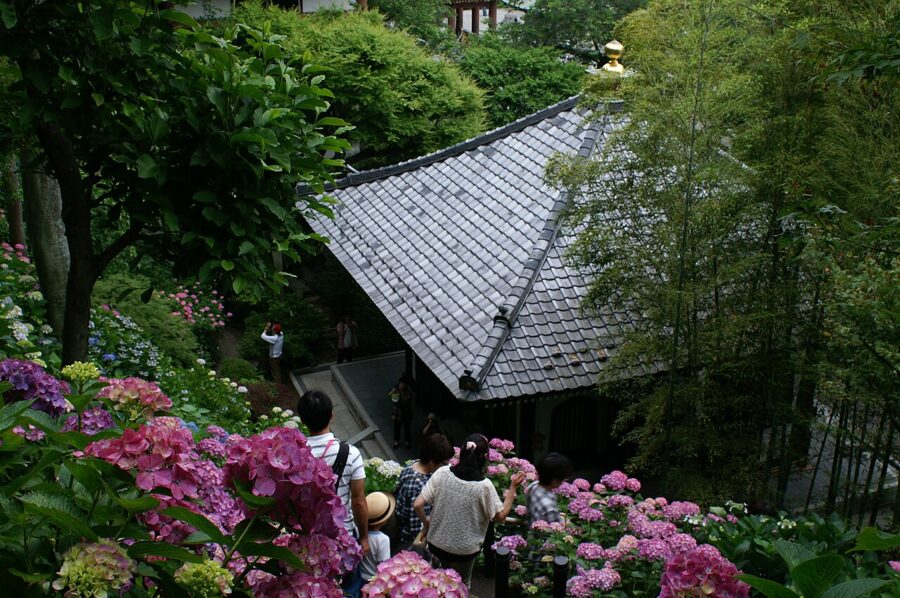
Hasedera (長谷寺) is five minutes from Hase station, on a hillside with a terrace that looks out over Yuigahama beach and the bay. Entry is ¥400; tickets are sold from 08:00 to 16:30 (to 17:00 from April to June), and the grounds close half an hour after that. The cave of carved figures and the rows of small Jizo statues are the parts most people remember.
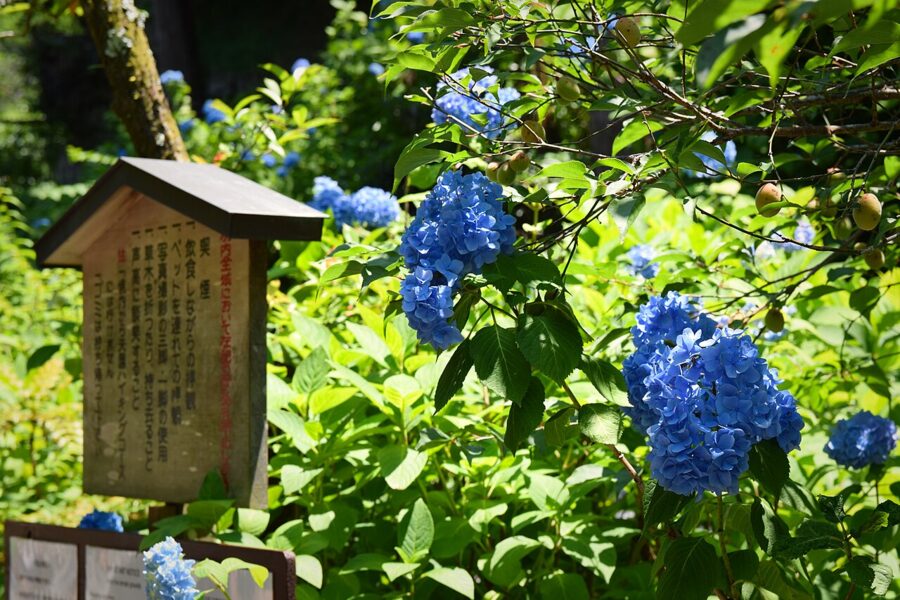
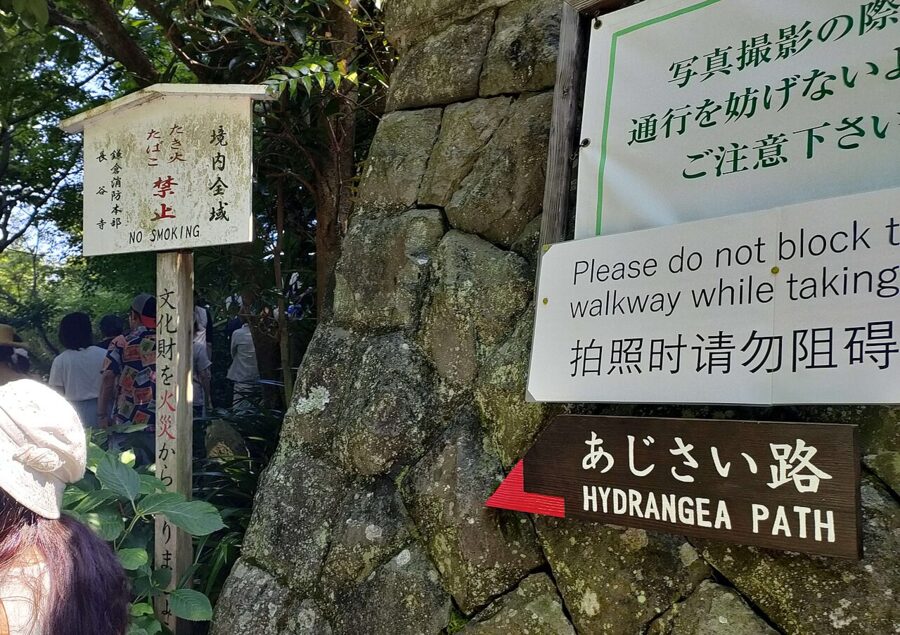
In June the temple’s hydrangea path draws the biggest crowds of the year, and once the flowers are half open it needs a separate timed ticket on top of the entry fee, sold online through the temple’s site. In late November and early December 2026 the temple also opens in the evening for the autumn leaves, from 21 November to 6 December, sunset to 19:00, at the normal ¥400.

Tsurugaoka Hachimangu and Kita-Kamakura
Tsurugaoka Hachimangu (鶴岡八幡宮), the shrine at the head of Kamakura’s main avenue, is ten minutes’ walk from the east exit of JR Kamakura and free to enter. The grounds open from 06:00 to 20:00 all year, which makes it the one major sight you can do before the trains fill up. Walk up the raised avenue, climb the steps to the main hall, look back down the line of the town to the sea, and the round trip from the station takes well under an hour.
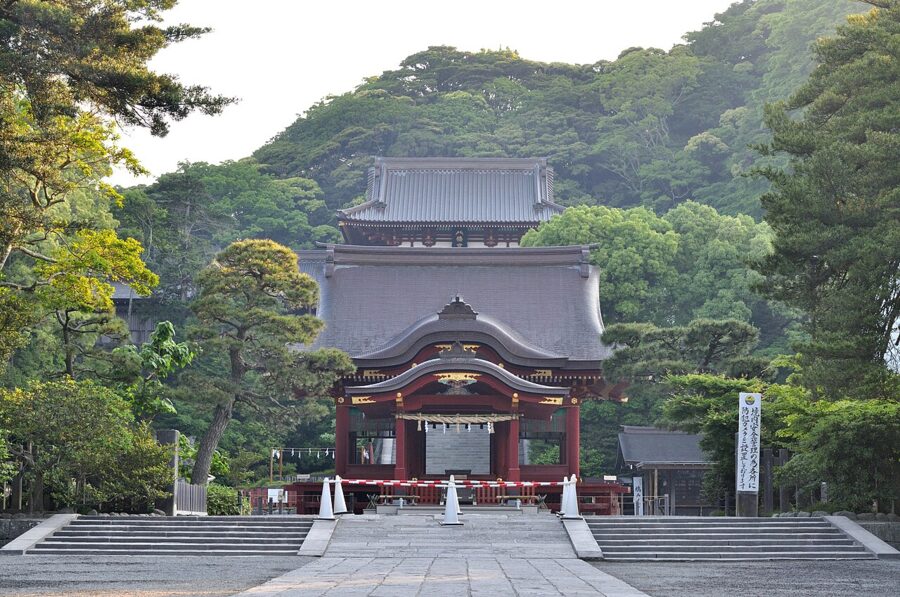
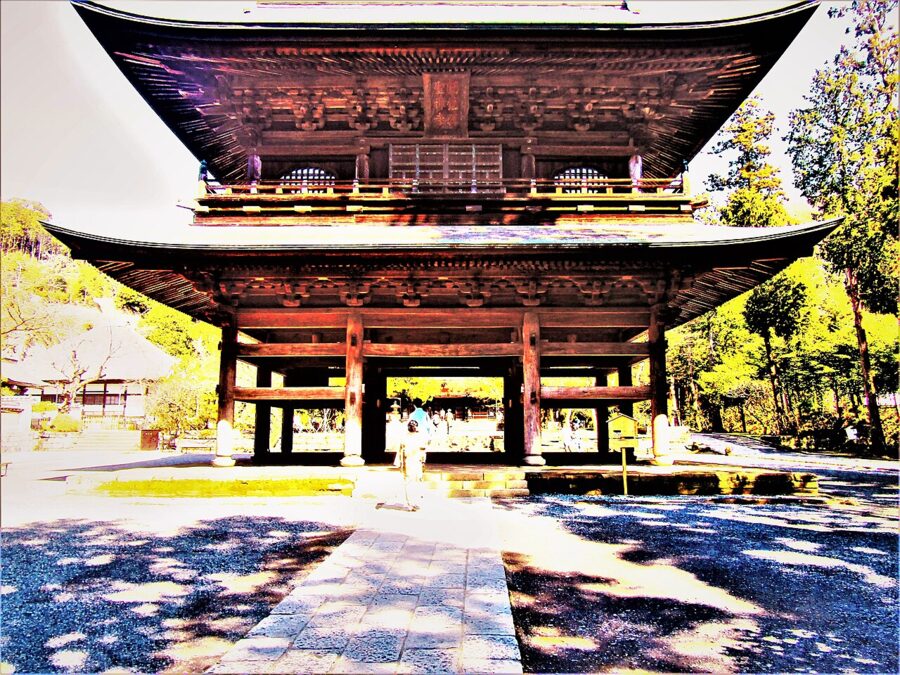
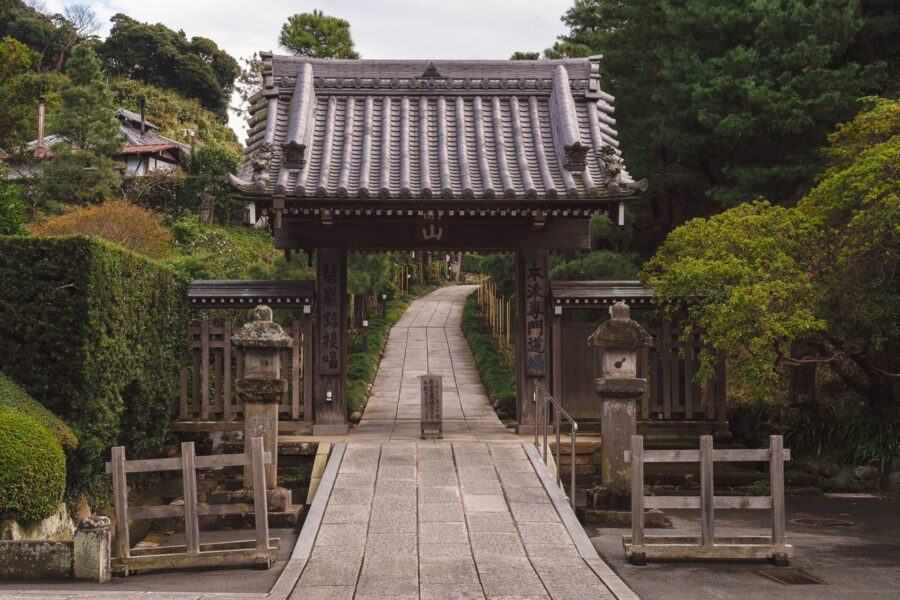
Kita-Kamakura is the quieter alternative, one stop before Kamakura on the Yokosuka Line. Engakuji (円覚寺) is a minute from the platform: ¥500, open 08:30 to 16:30 from March to November and to 16:00 from December to February. Kenchoji (建長寺) is about 15 minutes’ walk on along the road towards Kamakura, also ¥500, open 08:30 to 16:30 and cash only. From Kenchoji the road carries on to Hachimangu and the station, so you can walk the whole set in a morning and pick up the Enoden at Kamakura.

Enoshima island
Enoshima is a small, steep island joined to the shore at Katase by a long road bridge and, beside it, the Benten Bridge for people on foot. Coming from Enoden Enoshima station you walk down a short shopping street, cross the river mouth and the bridge, and pass under a bronze torii into the Benzaiten Nakamise, the island’s one street of food stalls and souvenir shops, which climbs to the shrine. Allow 20 minutes from the Enoden station to Enoshima Shrine and 15 from Odakyu’s Katase-Enoshima.
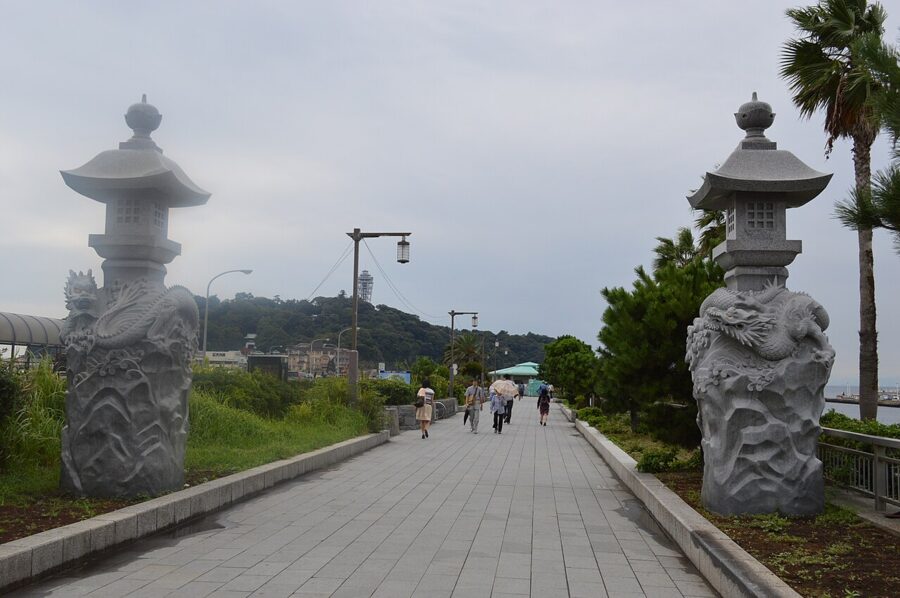

Enoshima Shrine is three shrines spread over the island, Hetsunomiya, Nakatsunomiya and Okutsunomiya, and the stairs between them are steep. The Enoshima Escar, a set of outdoor escalators in three sections, takes the climb out for ¥500 for all three, running from 09:00 to 19:05. Take it up and walk down.
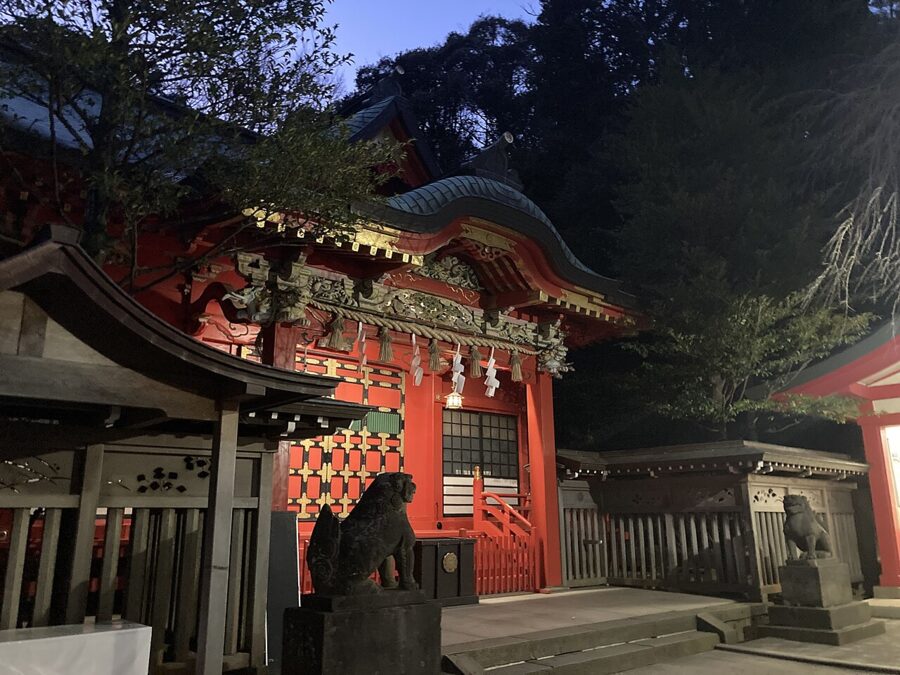

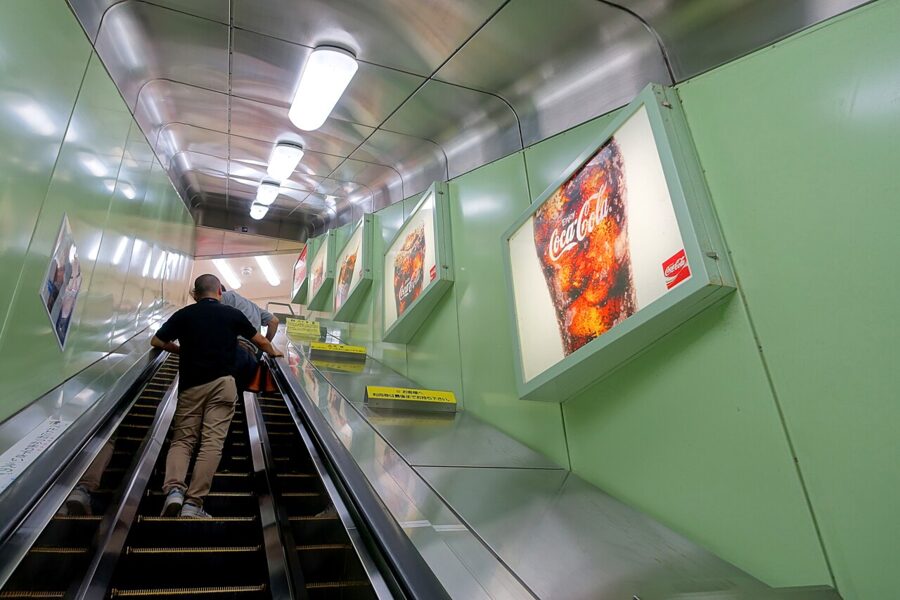
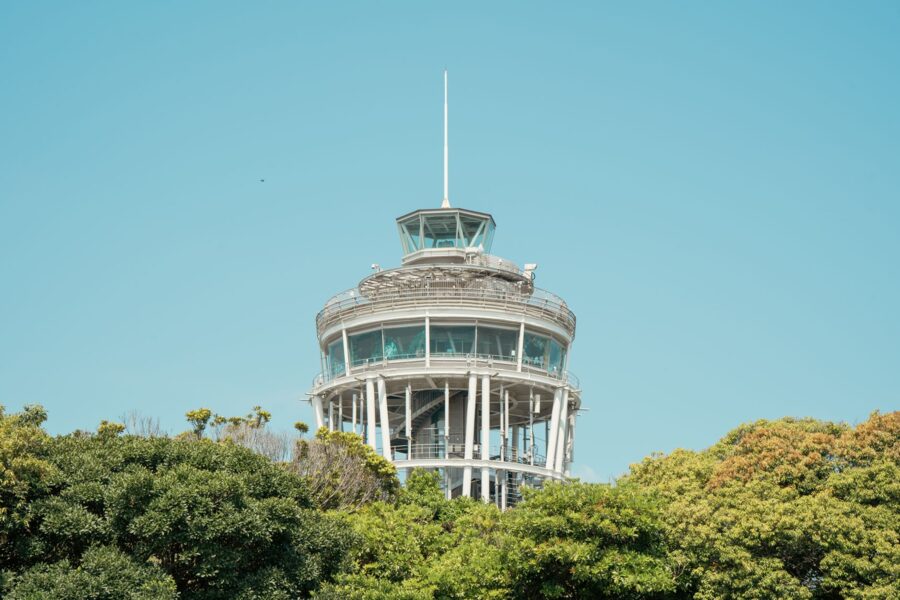
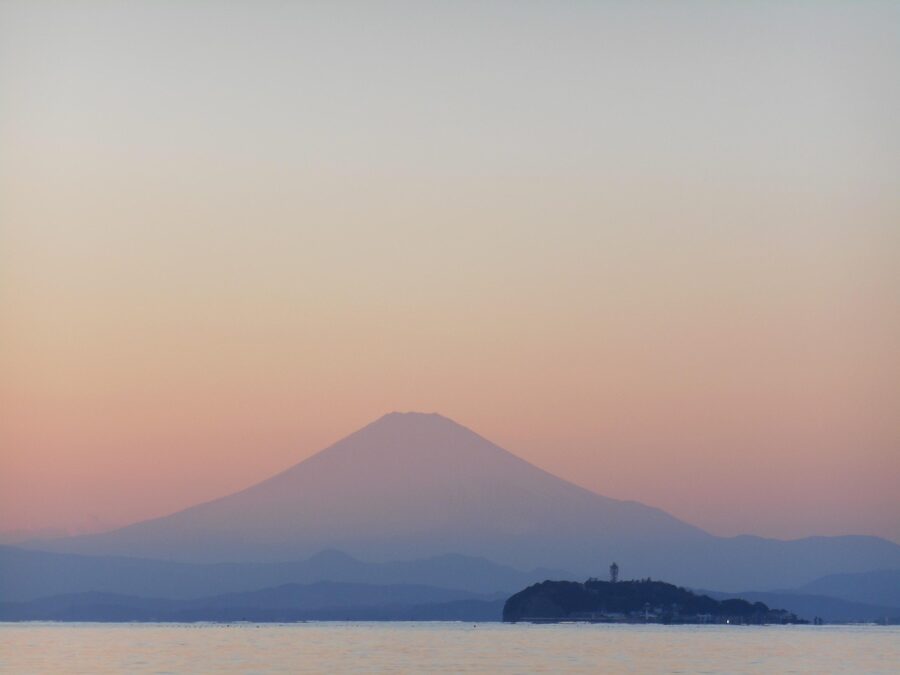
At the top, the Samuel Cocking Garden is free from 09:00 to 17:00 on days without events. The Sea Candle, the observation tower and lighthouse inside it, costs ¥800 for adults, a price set in October 2025, and is open from 09:00 to 20:00 with last entry at 19:30. On a clear day the view runs along the whole bay, with Fuji to the west.
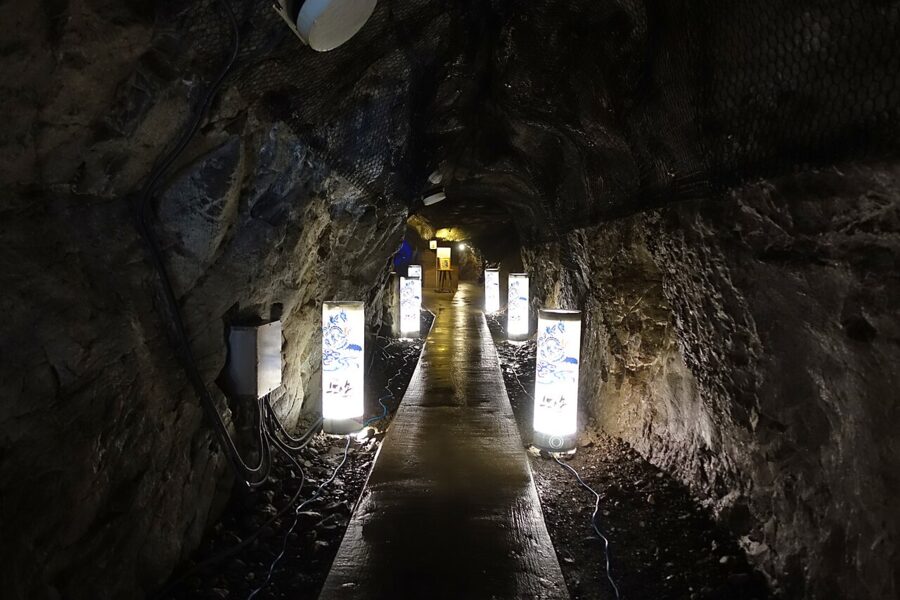
Beyond the top of the island the path drops down the far side to Chigogafuchi, a rock shelf facing the open sea, and the Iwaya caves (岩屋). These are two sea caves, 152 m and 56 m deep, cut by the waves and used for religious training for centuries; you walk them by candlelight past stone figures. Entry is ¥500 and opening is 09:00 to 17:00, varying with the season. It is about 40 minutes on foot from the Enoden station, most of it steps.
The climb back from the caves is the worst part of the island. The answer is the Bentenmaru, a small boat that runs from beside Chigogafuchi back to the foot of the Benten Bridge in about six minutes, for ¥500 in cash. It sails on weekends and holidays, and on weekdays except in winter, but it is cancelled in rough seas and the day’s sailings are only confirmed at around 10:30, so treat it as a bonus rather than a plan.
Give the island half a day for shrine, garden, caves and sunset, or two hours for the Sea Candle alone. Fuji is visible from Enoshima on clear days, most reliably on cold, dry winter mornings and evenings.
Passes: which one pays
There are two passes worth knowing, and whether either pays depends on how you arrive and how often you get off the Enoden.
Enoden 1-day pass, Noriorikun (のりおりくん). Noriorikun costs ¥800 (about US$5), ¥400 for children, for unlimited Enoden rides on the day of issue; every station’s machines sell it, and EMot sells a smartphone version. It pays from the fourth ride: Kamakura to Hase (¥200), on to Kamakurakokomae (¥220), Enoshima (¥200) and Fujisawa (¥220) comes to ¥840. With two or three rides, pay as you go on your IC card.
Enoshima-Kamakura Freepass. Odakyu’s Freepass costs ¥1,640 (about US$11) from Shinjuku: a return trip to Fujisawa, unlimited rides between Fujisawa and Katase-Enoshima, and the whole Enoden for the day. Bought separately, Odakyu to Katase-Enoshima and back is ¥1,300 and one Enoden round trip from Enoshima to Hase adds ¥520, so the pass saves a little on the simplest day and more the more you hop.
It does not cover JR, so it is no use if you go out on the Yokosuka Line, and the Romancecar still needs its ¥750 ticket.
The Japan Rail Pass covers JR to Kamakura but not the Enoden or Odakyu. With one already active, ride JR out, pay the Enoden by IC card or Noriorikun, and come back by JR from Fujisawa or Kamakura.
Hydrangeas, autumn and the crowds
June is hydrangea season and the busiest month of the year on this line. Hasedera and Meigetsuin at Kita-Kamakura bloom at once, it rains, and the Kamakura platform queue is at its longest. Go on a weekday, start before 09:00 and do the temples first.

The other peaks are Golden Week in early May, summer weekends on the beaches, and late November into early December for the maples. Winter, December to February, is quiet and the best for Fuji views.
A day in order
This is the order I would use from central Tokyo, out by JR and back by Odakyu. It beats the Kamakura queue and ends on the island at sunset, a short walk from a train home.
- 08:00 or earlier: Yokosuka Line from Tokyo or Shinagawa, or the Shonan-Shinjuku Line from Shinjuku. You reach Kamakura around 09:00.
- 09:00: Tsurugaoka Hachimangu, ten minutes’ walk from the east exit. Back at the station by 09:45.
- 09:50: Enoden to Hase. Buy a Noriorikun at the machine if you plan four or more rides.
- 10:00 to 12:00: the Great Buddha, then Hasedera. Lunch in Hase.
- 12:30: Enoden west. Get off at Kamakurakokomae for the view and the beach at Shichirigahama, using the photo area if you want the crossing.
- 14:00: Enoden on to Enoshima, through the street section at Koshigoe. Walk to the island.
- 14:30 to sunset: the shrine, the Escar, the Sea Candle, and the caves if your legs allow. Take the Bentenmaru back if it is running.
- Evening: walk to Katase-Enoshima for Odakyu home, or a booked Romancecar at weekends (17:16, 19:17 or 20:03).
Reverse it if you come by Odakyu with the Freepass: Enoshima in the morning while the island is quiet, the Enoden east in the early afternoon, Hase, then back along the line to Katase-Enoshima for the train home. Either way, take the left side of the Enoden heading towards Fujisawa. That is the side where the house fronts slide past at Gokurakuji and, soon after, the sea arrives.