
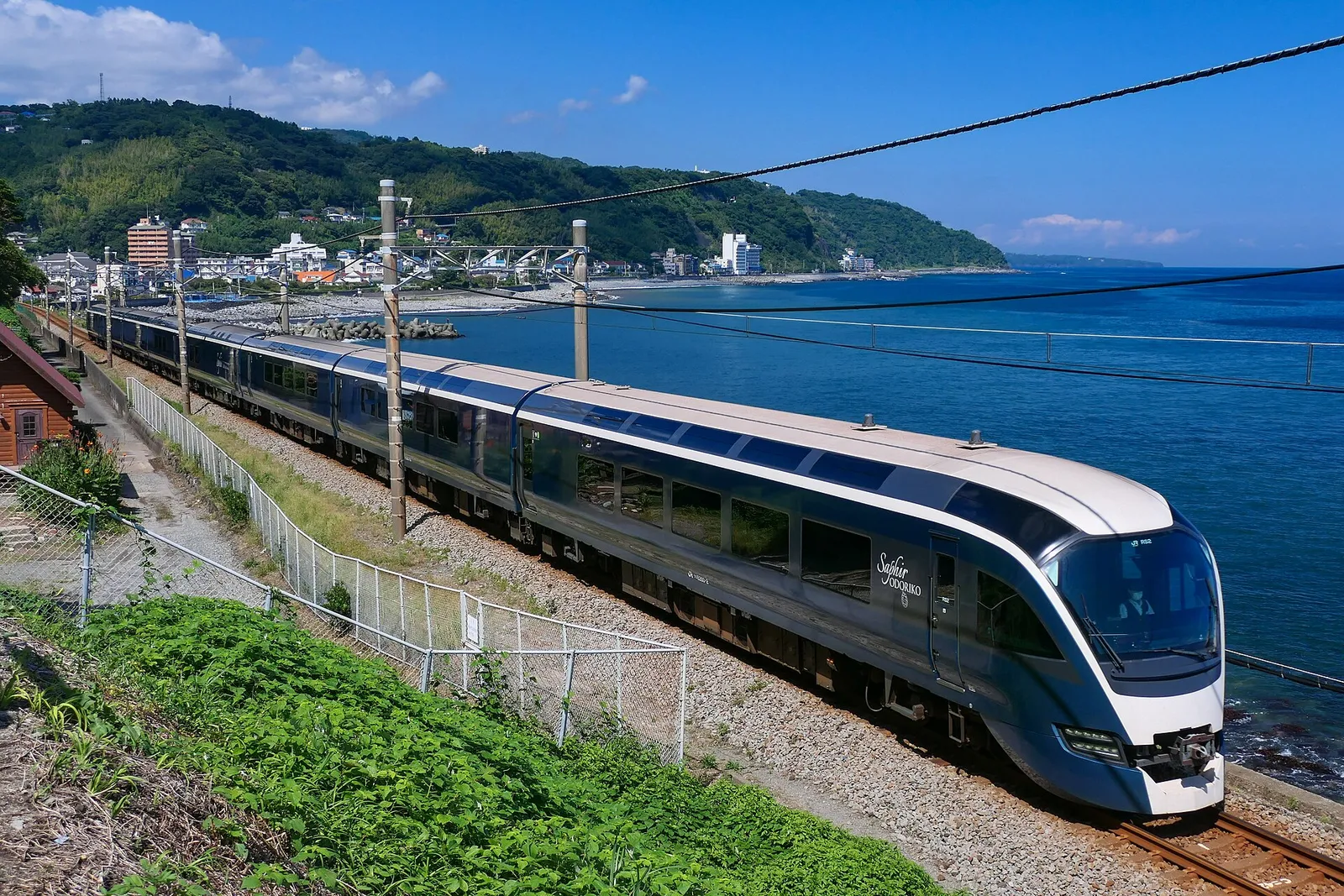

For the first eighty minutes out of Tokyo the Odoriko is a commuter train with better seats. It runs past the backs of Kawasaki and Yokohama, stops at Ofuna and at Odawara, the station for Hakone, and catches only glimpses of the sea between the towns. Then it leaves Atami, dives into the first of the Ito Line tunnels, and comes out with Sagami Bay filling every window on the left-hand side, the island of Izu Oshima sitting on the horizon.
That is the moment you pay for, and how you pay for it is the decision this trip turns on. The Saphir Odoriko does it in eight Green cars with skylights and a cafeteria, for 60 to 80 per cent more than the ordinary Odoriko on the same rails. The Shinkansen does the dull part in 46 minutes and leaves you to find a local train at Atami. All three end up on the same single-track line down the east coast of the peninsula, where the Izukyu company’s own sea-facing Resort 21 trains run as plain locals at no extra charge.
The train’s name comes from a story. Yasunari Kawabata’s “The Dancing Girl of Izu” (Izu no Odoriko) first appeared in 1926, so 2026 is its centenary, and its student hero walks the road from Shuzenji over the Amagi pass to Shimoda. You can do the same journey in an afternoon now. Here is how, with fares and times as of November 2026.

Saphir Odoriko, Odoriko or Shinkansen
The short version: take the ordinary Odoriko if you want the coast without changing trains, the Saphir Odoriko if the train is the treat, and the Shinkansen if you are going to Atami or are coming back in the evening. The table compares them from Tokyo Station.
| As of November 2026, adult, regular season | Saphir Odoriko | Odoriko | Shinkansen + local train |
|---|---|---|---|
| Departures from Tokyo | 11:00 daily; also 12:30 on Mondays, Thursdays and Fridays when it runs | 09:00, 10:00, 12:00 and 13:00 daily, plus extras on busy days | Kodama about twice an hour, then a local from Atami |
| Tokyo to Atami | 1 hr 17 min | 1 hr 20 min | 46 min (Kodama), 37 min (the few Hikari that stop) |
| Tokyo to Ito | 1 hr 36 min | 1 hr 43 min | About 1 hr 20 min with a good connection |
| Tokyo to Izukyu-Shimoda | 2 hr 29 min | 2 hr 39 min | About 2 hr 40 min to 3 hr |
| Fare to Atami | Check when booking; the sample fares start at Ito | ¥3,670 (about US$24) | ¥3,740 non-reserved (about US$25) |
| Fare to Ito | ¥7,080 Green, ¥8,580 Premium Green | ¥4,000 | ¥3,740 to Atami plus the local fare onward |
| Fare to Izukyu-Shimoda | ¥10,540 Green, ¥12,940 Premium Green | ¥6,660 | ¥3,740 to Atami plus ¥2,210 from Atami |
| Classes | Green, Premium Green and Green private rooms only | Ordinary reserved or seat-unspecified, one Green car | Ordinary non-reserved, reserved, Green |
| Suica for the fare | Yes, with a ticketless express ticket | Yes, with a ticketless express ticket | Shinkansen ticket from a machine or online; Suica on the local |
Fares are the ticket price plus the express charge. Since JR East and Izukyu both raised fares on 14 March 2026, the Odoriko to Ito costs the ¥2,420 fare (the same on Suica) plus a ¥1,580 limited express charge, and to Izukyu-Shimoda the ¥4,280 fare (¥4,276 on Suica) plus ¥2,380. The Izukyu express charge table sets out the breakdown section by section.
The Saphir Odoriko: eight Green cars and a cafeteria
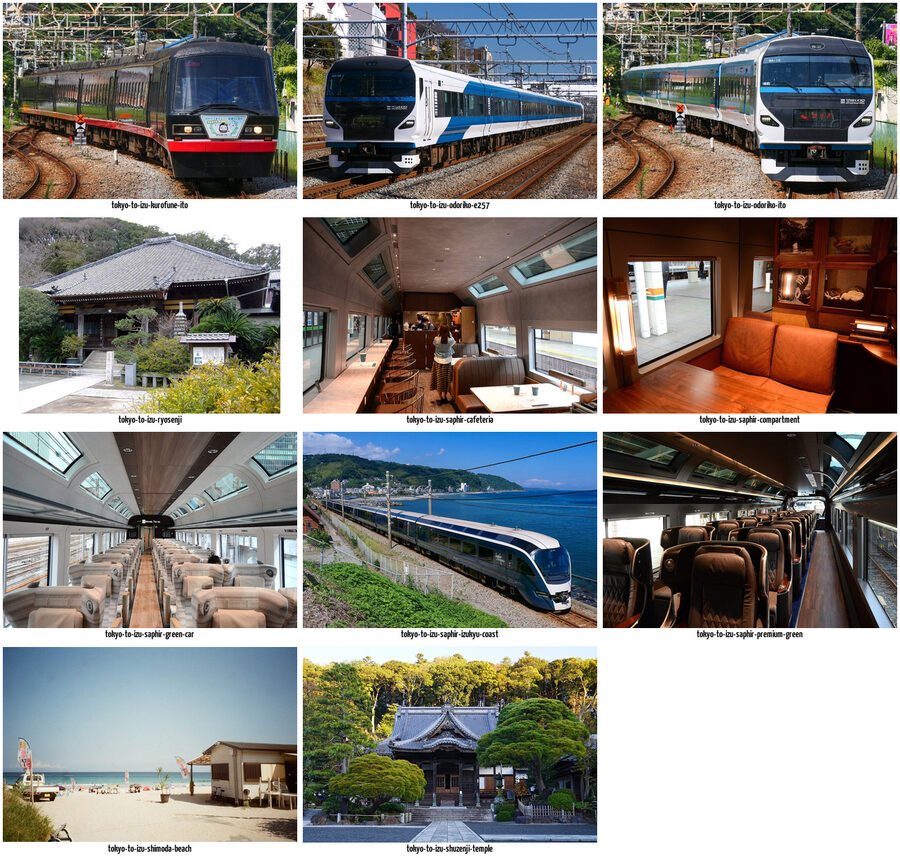
The Saphir Odoriko (サフィール踊り子) replaced the Super View Odoriko in March 2020. JR East built two eight-car E261 sets for it, designed by Ken Okuyama, and every seat on them is Green class, which sets the E261 apart from the rest of JR East’s limited express fleet.
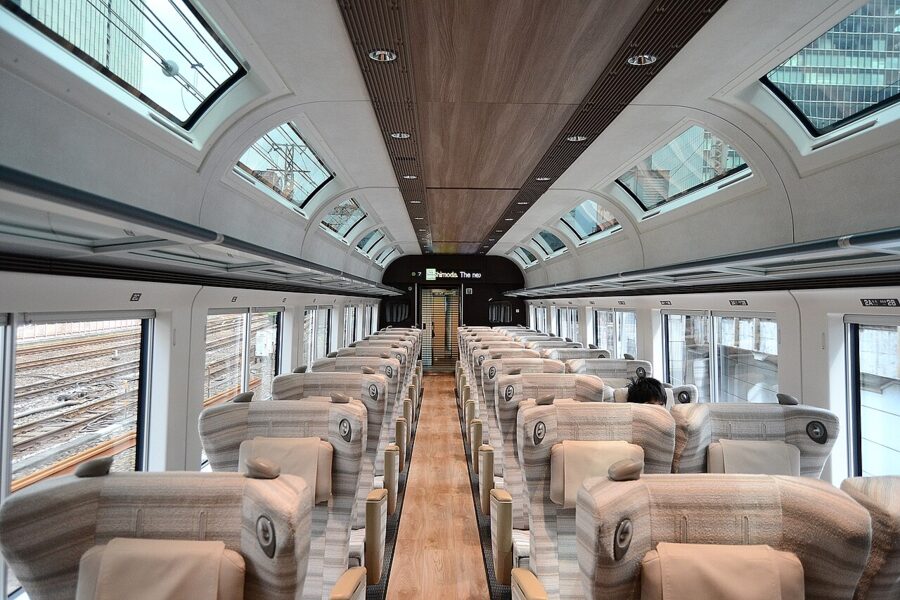

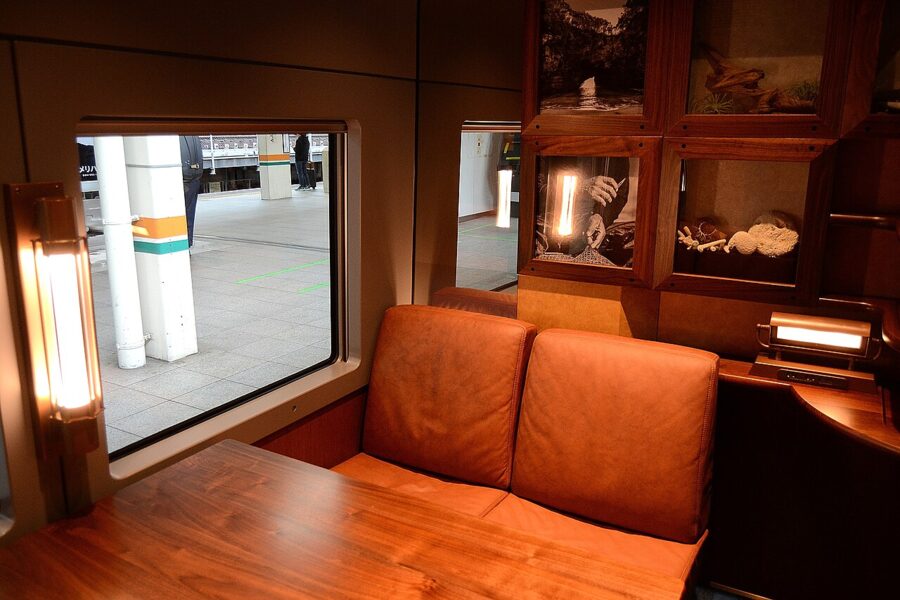
The layout is the same on both sets. Car 1 is the Premium Green car, twenty single seats in rows of one and one, at the Izukyu-Shimoda end of the train. Cars 2 and 3 hold the Green private rooms, in two sizes: one for one to four people and one for one to six. Car 4 is the cafeteria, and cars 5 to 8 are ordinary Green cars with two-and-one seating.
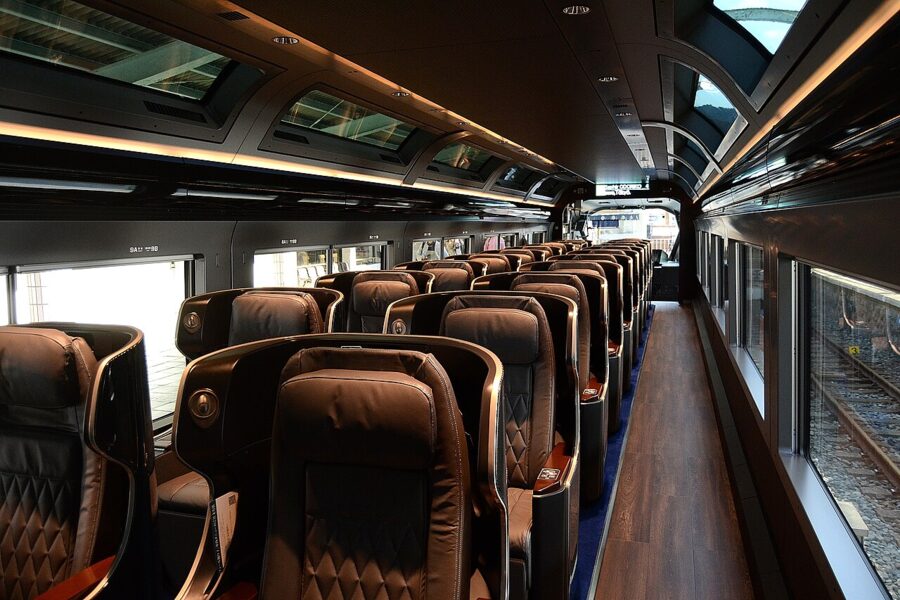

Prices on the Saphir Odoriko fare page are for the regular season. The Saphir carries a seasonal charge on top: ¥400 more per adult in the busiest periods, ¥200 more in busy ones and ¥200 less in quiet ones. A private room is sold as a room, so you pay each traveller’s fare and express charge plus a room charge; four people in a four-person room from Tokyo to Izukyu-Shimoda pay ¥42,160 between them (about US$281), and six in the six-person room pay ¥63,240.

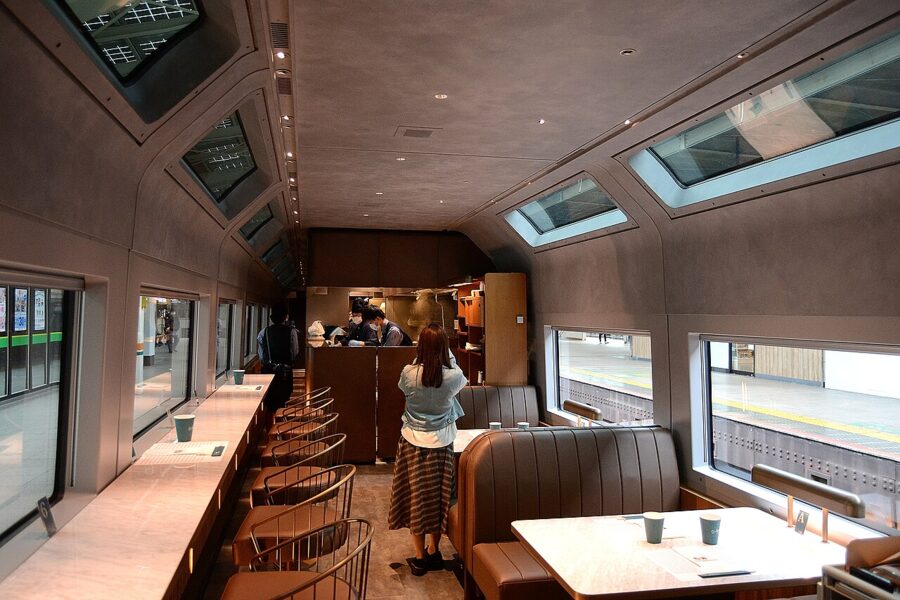
The cafeteria serves light meals, sweets and drinks. Since 1 October 2026 the menu has been overseen by Junichi Ito, the chef-owner of the French restaurant Herlequin Bis in Tokyo, and you can pre-order through the Saphir Pay mobile service before you board. The train also has its own beer, Saphir Brew, on sale on board since January 2026.

The Saphir timetable is short. Saphir Odoriko 1 leaves Tokyo daily at 11:00 and reaches Atami at 12:17, Ito at 12:36 and Izukyu-Shimoda at 13:29; Saphir Odoriko 2 leaves Shimoda at 14:18 and gets back to Tokyo at 16:49. On the days they run, Saphir Odoriko 3 leaves Tokyo at 12:30 on Mondays, Thursdays and Fridays, Saphir Odoriko 5 leaves Shinjuku at 12:25 at weekends and on holidays, and Saphir Odoriko 4 comes back from Shimoda at 16:39, into Tokyo at 19:20.
Is it worth the extra? For a first trip, once, I think yes, one way. Take the 11:00 down, eat lunch over Sagami Bay, and come back on something cheaper. It saves only ten minutes over the Odoriko to Shimoda, and it never goes to Shuzenji.
The Odoriko: the sensible train
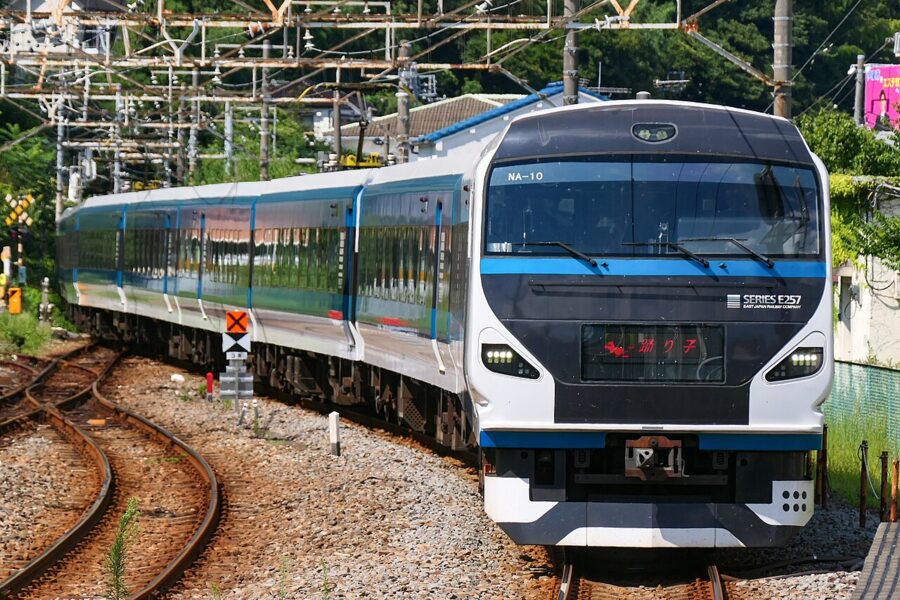
The ordinary Odoriko runs E257 sets, refitted for Izu from 2020 and painted a deep “peninsula blue” taken from Izu’s sea and sky. Trains to Izukyu-Shimoda use a nine-car E257-2000 set; some departures couple a five-car E257-2500 set to the back for Shuzenji, and the two halves split at Atami. Both carry the same train name, so check the car number on your ticket and the destination on the side of the car before you board: cars 1 to 9 go to Shimoda, cars 10 to 14 to Shuzenji.
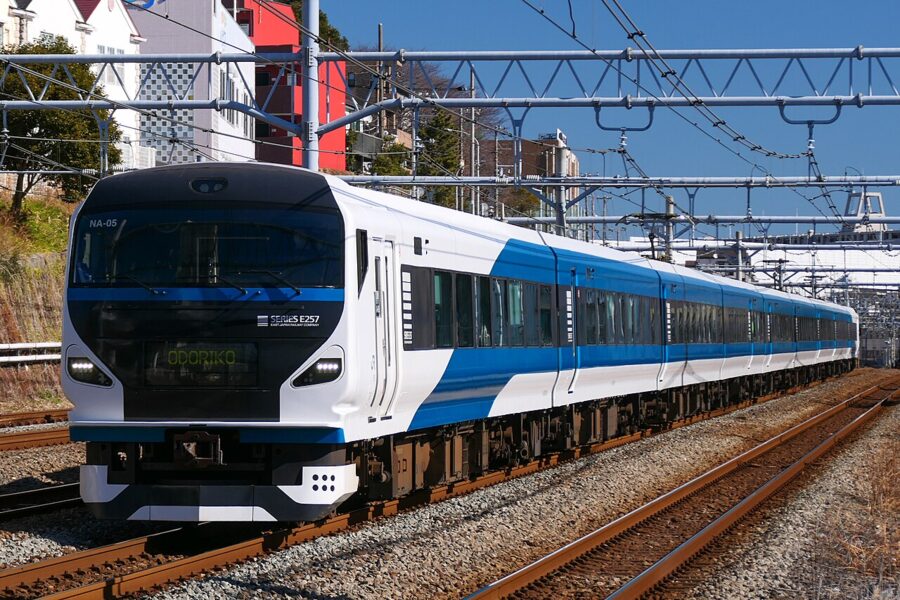

Four regular Odoriko leave Tokyo every day, all from the Tokaido Line platforms 9 and 10 at Tokyo Station. Odoriko 1 at 09:00 reaches Atami at 10:20, Ito at 10:43 and Izukyu-Shimoda at 11:39, with its Shuzenji half arriving at 11:08. Odoriko 5 at 10:00 is Shimoda-only (12:39), Odoriko 9 at 12:00 has a Shuzenji portion again (Shimoda 14:42, Shuzenji 14:06), and the 13:00 runs to Shimoda. On busy days, extra trains fill the half hours between.
The Odoriko has no unreserved cars. You can buy a reserved seat, or a seat-unspecified ticket at the same price that lets you sit in any seat whose lamp shows it is unsold. Buy before boarding: an express ticket bought on the train costs ¥260 more on the JR section. The one Green car is car 4.
Coming back, the last regular Odoriko leaves Izukyu-Shimoda at 15:08 and Shuzenji at 15:39, joins up at Atami and reaches Tokyo at 17:48. Earlier ones leave Shimoda at 10:09, 12:06 and 13:02. Extras run later on busy days, but a normal weekday has nothing after mid-afternoon, which is the single biggest constraint on a day trip.
The Shinkansen to Atami: the fast start and the late finish
The Tokaido Shinkansen reaches Atami in 46 minutes on a Kodama, 37 on the few Hikari that stop there. The fare is ¥1,980 plus a ¥1,760 non-reserved express charge, ¥3,740 in all, or ¥4,270 with a reserved seat. That is ¥70 more than the Odoriko to Atami and over half an hour quicker, so for Atami itself the Shinkansen wins.
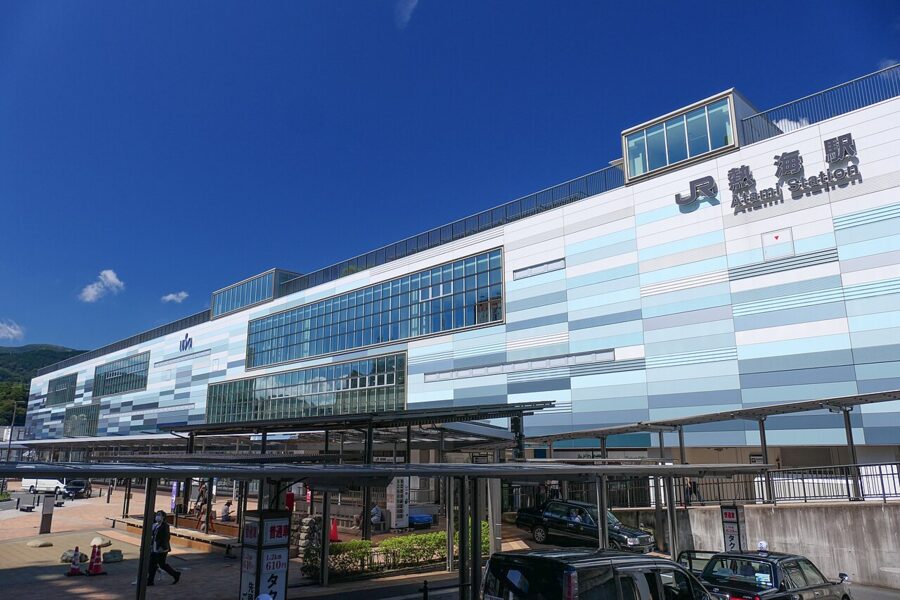

For anywhere further south, the Shinkansen saves less than it looks. Local trains on the Ito Line take about 26 minutes from Atami to Ito, and many run straight through onto the Izukyu line: a local leaving Atami at 10:10 is in Izukyu-Shimoda at 11:57. Atami to Izukyu-Shimoda on a local costs ¥2,210 (¥2,197 on Suica); Atami to Ito is ¥350.
Where the Shinkansen really earns its place is the return. Kodama leave Atami for Tokyo at about :02 and :32 past the hour until 22:41, long after the last Odoriko has gone. Since 14 March 2026 a ticket routed over the Shinkansen between Tokyo and Atami is not valid on the parallel Tokaido Line, so decide the route before you buy. Luggage over 160 cm in total dimensions needs a reserved oversized-baggage seat on the Shinkansen.
Tickets and Suica
Odoriko and Saphir seats go on sale one month ahead at 10:00, through JR East’s online booking service, ticket machines and ticket offices. Since April 2025 the Saphir’s Premium Green and Green seats can be booked as ticketless express tickets, which you pair with a Suica or PASMO card for the fare; the private rooms still need a paper ticket from a machine or ticket office. The Saphir sells no tickets on board.
Suica works all the way from Tokyo to Izukyu-Shimoda. Izukyu accepts Suica and PASMO at all sixteen of its stations, and the cards take the fare across the JR and Izukyu boundary at Ito without fuss. The one gap is the line to Shuzenji, covered below.
The Izukyu line and its Resort 21 trains
The Izu Kyuko line (伊豆急行線) runs 45.7 km from Ito to Izukyu-Shimoda, single track for most of the way, and opened on 10 December 1961; its 65th anniversary falls this December. It is a private railway, which matters for passes. It is also the best part of the trip, because the line runs along the cliffs above the sea for long stretches south of Izu-Kogen.

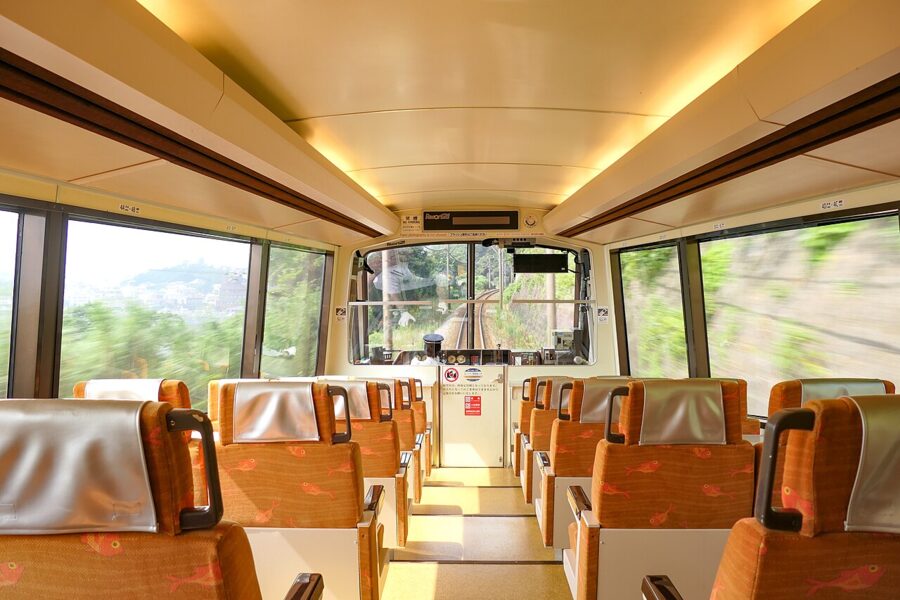
Izukyu’s own trains are the reason to take at least one local. The 2100 series, branded Resort 21, first ran in 1985 and won the Railway Friends’ Association Blue Ribbon award in 1986. The idea was simple and still unusual: put a glass observation area behind the driver, make the two sides of the car different, and turn the seats on the sea side to face the water.

Two sets are left. The Kinme train is the 1988 third batch, a seven-car set painted red for the kinmedai. The Kurofune or Black Ship train is the 1990 fourth batch, painted black for Commodore Perry’s ships, with posters of Shimoda’s history inside. Both run as ordinary local trains with every seat unreserved and no supplement, and both can be swapped for other stock without notice.
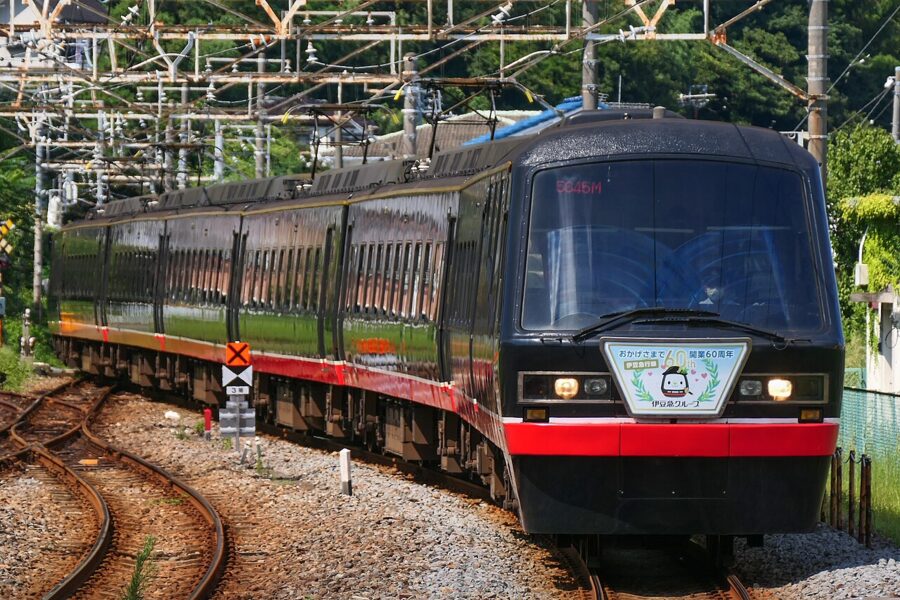

Izukyu posts the Resort 21 timetable a month at a time, as PDFs in Japanese; look for 下り (towards Shimoda) and the train’s departure from Ito or Atami. The rest of the local fleet is ex-Tokyu 8000 series cars from the Toyoko Line, which also have box seats on the sea side, and two 3000 series sets painted as the “Aloha” train. Locals from Ito to Izukyu-Shimoda take a little over an hour.
The Izuhakone line to Shuzenji
Shuzenji is the other branch of the Odoriko and a different kind of trip: inland, up the Kano valley, with no sea at all. The line from Mishima to Shuzenji is the Izuhakone Railway’s Sunzu line (駿豆線), 19.8 km and 34 to 38 minutes by local train, and the Odoriko runs over it on through workings from Tokyo.
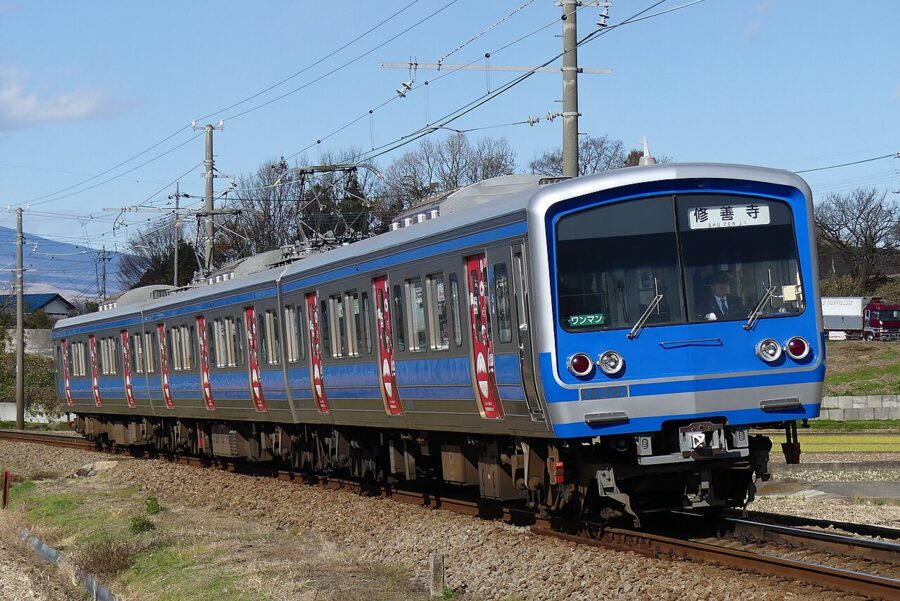

Two things catch people out. First, Suica and other IC cards do not work on the Sunzu line: buy a paper ticket, or since December 2024 tap in and out with a contactless credit or debit card at any Sunzu line station. Mishima to Shuzenji is ¥550 (about US$4), and Izuhakone applied in October 2026 to raise it. Second, the Odoriko’s Shuzenji portion cannot be reserved for a journey only within the Izuhakone section; use a seat-unspecified ticket.
The quickest way to Shuzenji is not the Odoriko but the Shinkansen to Mishima and the Sunzu line from there. The Odoriko is simpler, because it saves the change, and it runs only twice a day each way on regular days. Coming back, Odoriko 4 leaves Shuzenji at 12:35 and Odoriko 10 at 15:39.
Where to get off
Atami and Ito are easy day trips; Jogasaki is a half day from Ito; Kawazu is a February trip; Shimoda and Shuzenji each want a night.
Atami
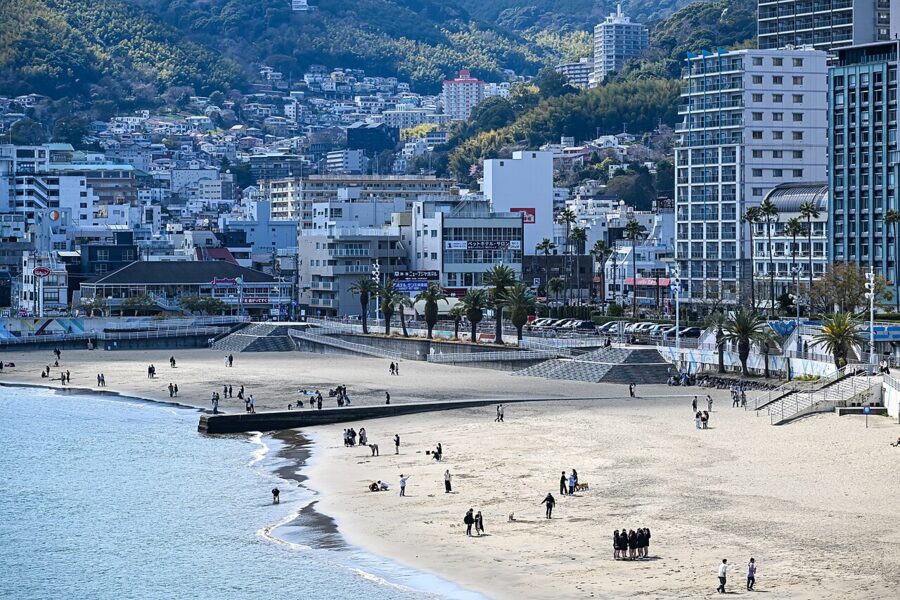
Atami (熱海) is a hillside of hotels above a curved bay, the nearest big hot-spring resort to Tokyo. Steam rises from vents along the streets. The covered shopping streets by the station sell dried fish and onsen buns, and the beach is a walk downhill.

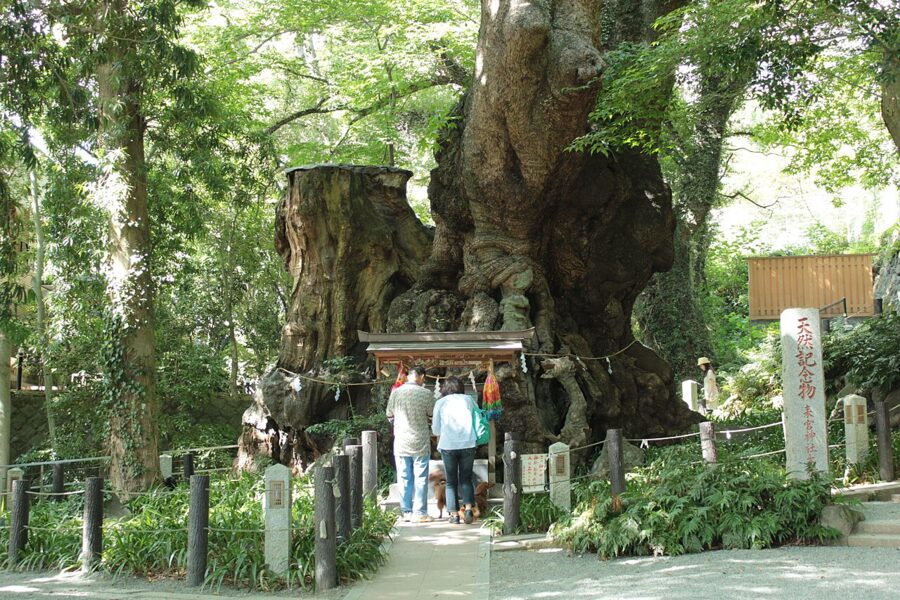
One stop down the Ito Line, Kinomiya Shrine (来宮神社) sits around an enormous camphor tree, a short walk from Kinomiya station. The city also lets off fireworks over the bay on set evenings through the year. If Atami is the whole plan, go by Shinkansen and save the Odoriko for further south.
Ito
Ito (伊東) is where JR ends and Izukyu begins, and a spa town in its own right. The best of it is along the Matsukawa river, a short walk from the station, where the Tokaikan stands on the bank: a three-storey wooden inn of 1928 that closed in 1997 and is now kept by the city as a cultural property you can walk through.

Ito works well as a base. It has the most frequent trains on the coast, with locals in both directions every hour, and it is the place to buy the Izukyu day pass described below.
Jogasaki coast
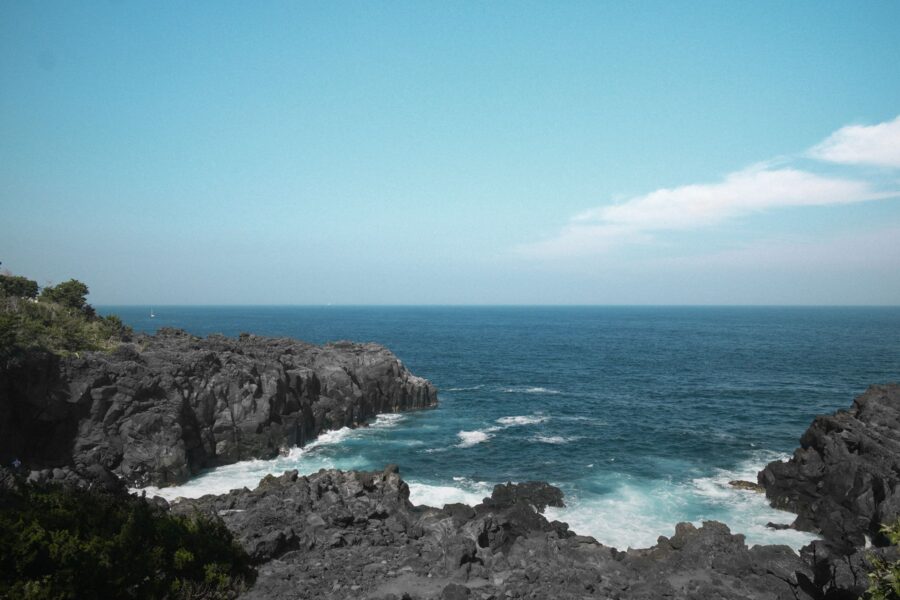
The Jogasaki coast (城ヶ崎海岸) is lava from Mount Omuro’s eruption some four thousand years ago, cut into cliffs and inlets by the sea. Get off at Jogasaki-Kaigan, a local-only station ¥650 from Ito on the Izukyu fare table (¥646 on Suica), and walk about twenty minutes downhill to the Kadowaki suspension bridge, 48 m long and 23 m above the water.
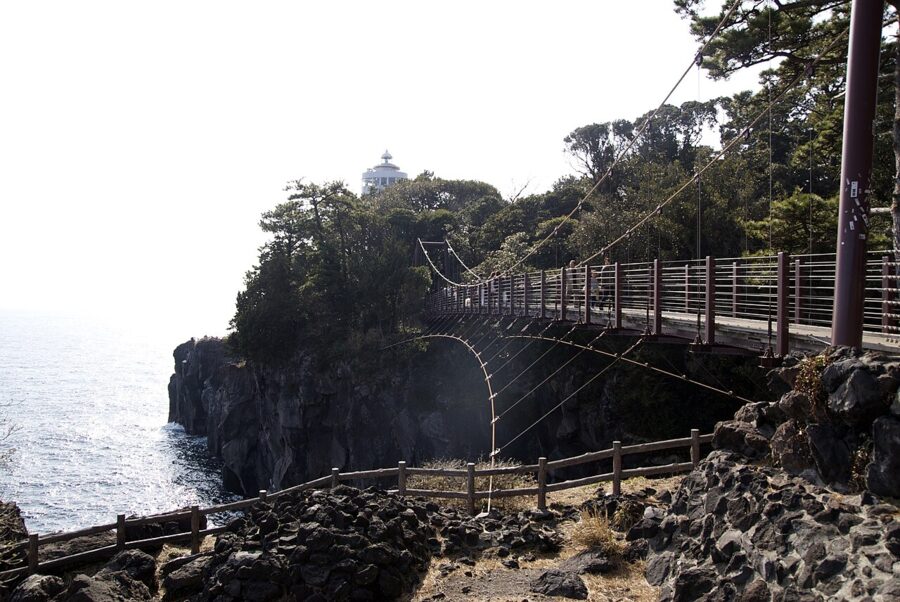

Wear proper shoes: the rock is sharp and uneven. Go back by train from Jogasaki-Kaigan, or ride one stop south to Izu-Kogen, which has the Odoriko.
Kawazu and the February cherries
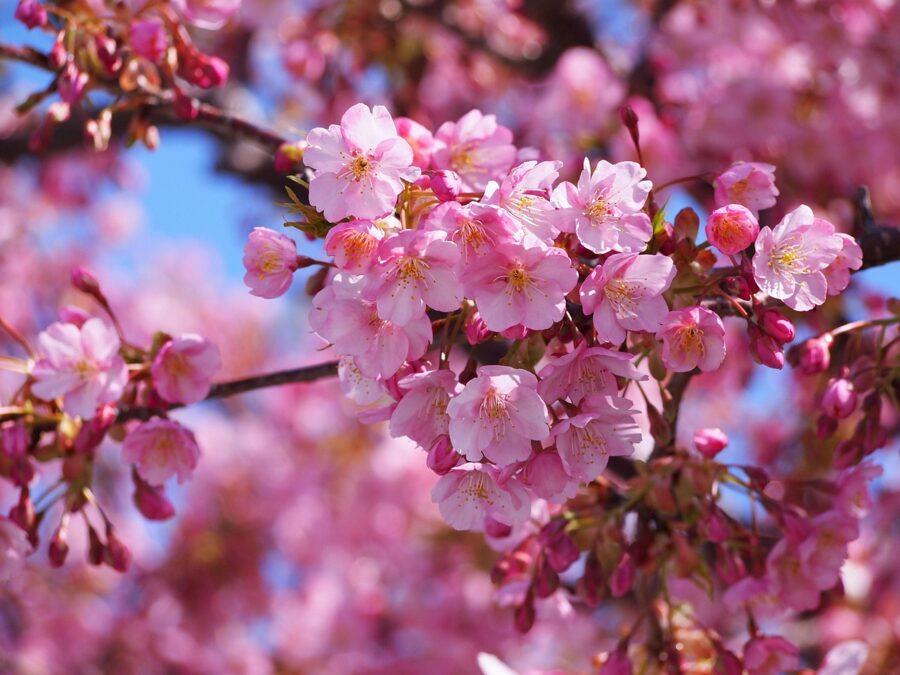
Kawazu (河津) gives its name to a cherry, the Kawazu-zakura, a deep pink variety found in the town in 1955 that flowers from early February, weeks before the Somei-yoshino in Tokyo. About 850 trees line the Kawazu river, and the avenue starts three minutes’ walk from Kawazu station.
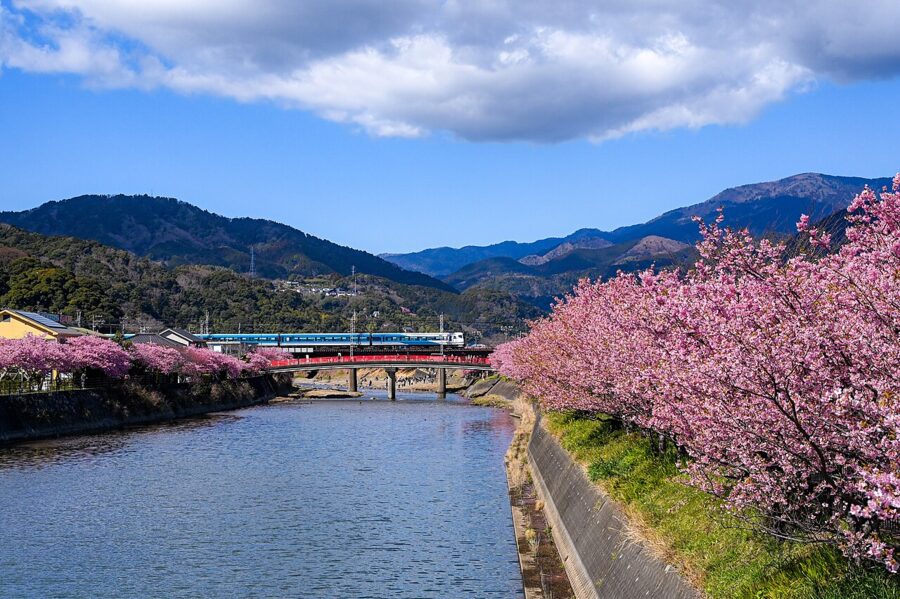

The 37th Kawazu cherry festival is planned for 6 February to 7 March 2027, with stalls along the river and night lighting. The trees usually peak around mid-February. Every train is full on festival weekends, so book the Odoriko the day seats go on sale, or go midweek.

Shimoda
Shimoda (下田) is the end of the line and the end of a chapter of Japanese history. Commodore Matthew Perry’s squadron came here in 1854 after the treaty at Kanagawa, which opened Shimoda to American ships, and Japan’s first American consulate followed in 1856. The town has never stopped telling the story.

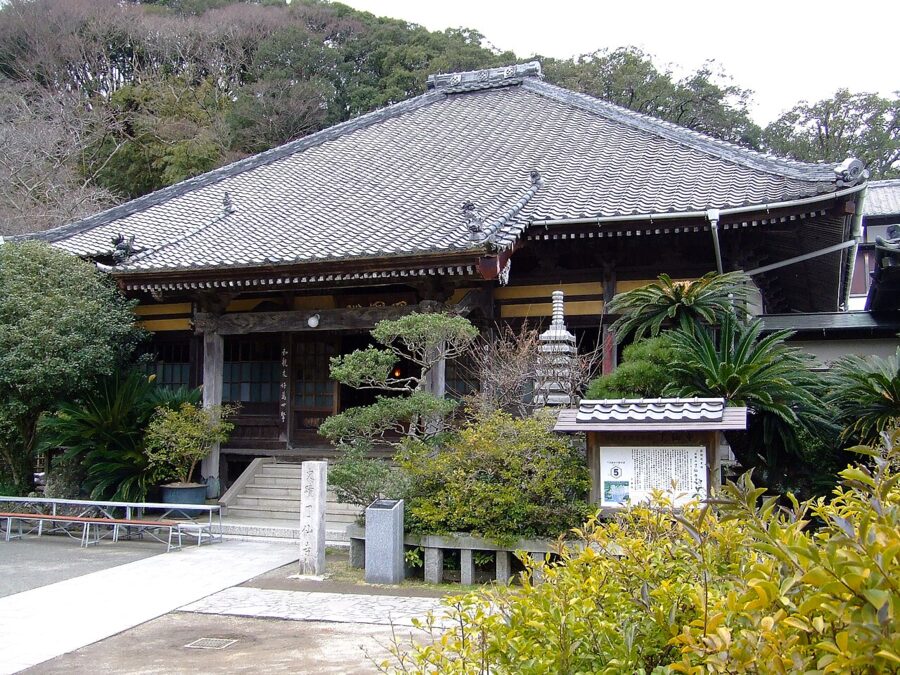
Walk south from the station through the old town to Ryosenji, the temple where the Shimoda treaty, the supplementary articles to the Kanagawa treaty, was signed in June 1854. Perry Road, a short lane of old houses along a canal, leads from there towards the harbour. Allow two hours for the whole loop on foot.

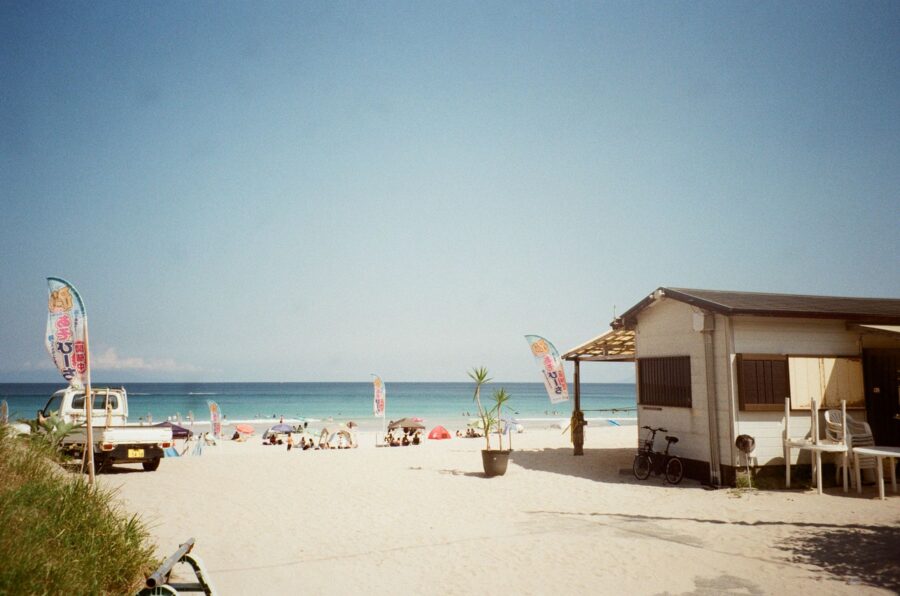
Shimoda’s other draw is the sea. The town lands more kinmedai than anywhere else in Japan, and the restaurants by the harbour serve it simmered in soy and sugar, the local way. The white-sand beaches north and south of the town, Shirahama above all, are a short bus ride from the station and fill up from July.
Shuzenji Onsen
Shuzenji (修善寺) is Izu’s oldest hot-spring town. The temple that gave it its name, Shuzenji, is said to have been founded by the monk Kukai in 807, and the second Kamakura shogun, Minamoto no Yoriie, was confined and killed here in 1204. The town sits in a narrow valley along the Katsura river.
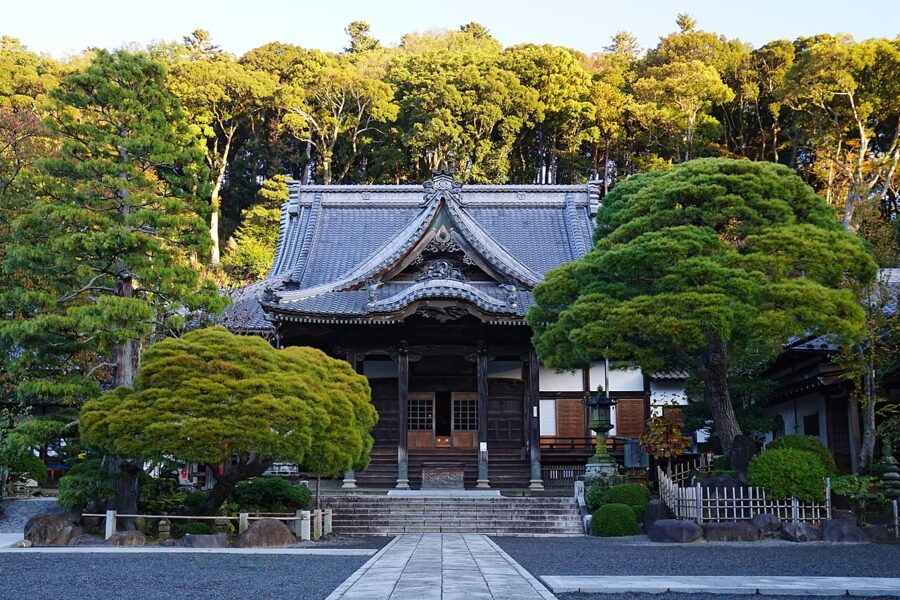

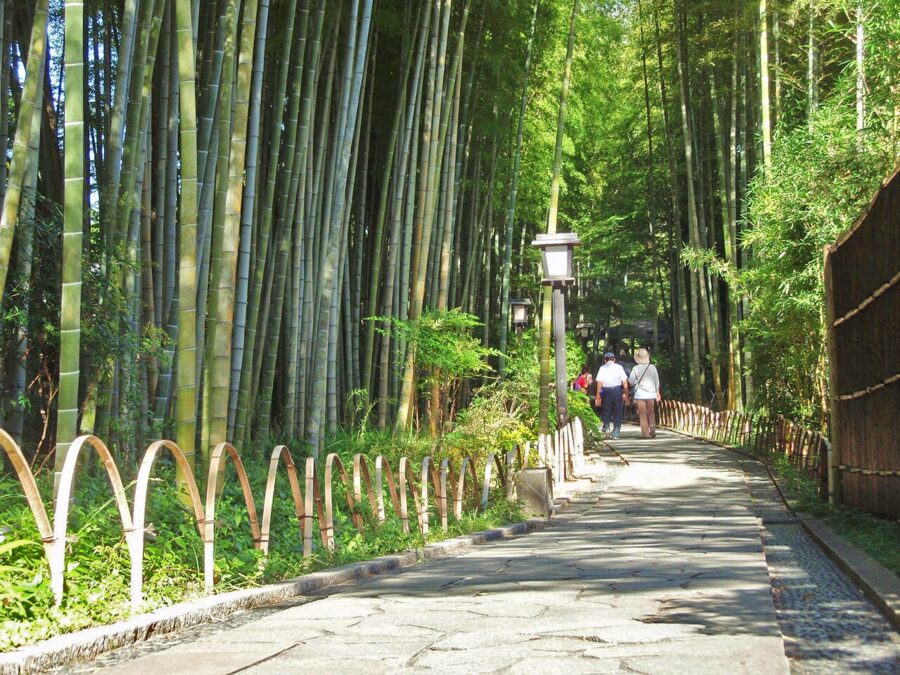
The onsen town is not at the station. Buses run from Shuzenji station to the Shuzenji Onsen stop in about eight minutes, and from there everything is on foot: the temple, the Tokko-no-yu spring in the riverbed, where legend says Kukai struck the rock, and the bamboo path beyond it.
Passes and the JR Pass boundary
Three railways share this trip, and every pass stops at one of their borders. JR East runs Tokyo to Atami and the Ito Line to Ito. JR Central runs the Shinkansen and the Tokaido line from Atami to Mishima. Izukyu runs Ito to Shimoda, and Izuhakone runs Mishima to Shuzenji.
The Japan Rail Pass (¥50,000, about US$333, for seven days in ordinary class when bought online) covers the Odoriko only as far as Ito. Beyond Ito you pay the Izukyu fare and, on an Odoriko, Izukyu’s ¥800 express charge, so ¥2,660 more each way to Shimoda.
On the Saphir the pass covers less, because every seat is Green and the Green charges are yours. To Shuzenji, the pass gets you to Mishima on the Shinkansen and the Sunzu line is ¥550 extra. Current JR Pass prices are on the official site.
The JR Tokyo Wide Pass (¥16,000, about US$107, for three days) is the one pass that covers the Izukyu line, including reserved ordinary seats on the Odoriko all the way to Shimoda. It does not cover the Tokaido Shinkansen, the Atami to Shuzenji route, or Green seats. A return Odoriko to Shimoda costs ¥13,320, so the pass pays only if you add another day out, such as Nikko.
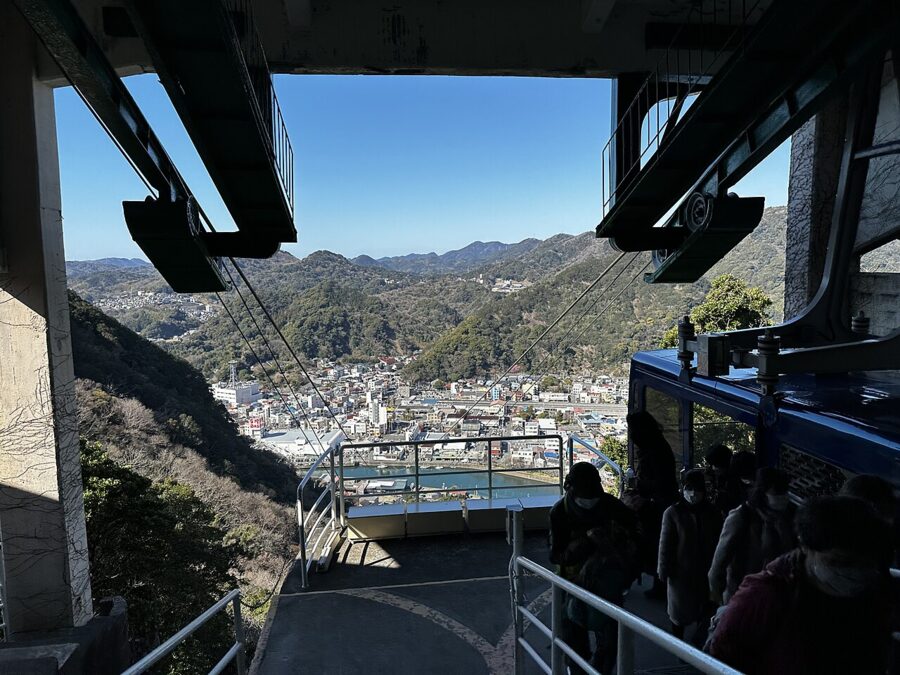
For the coast itself, Izukyu’s Izu Mankitsu 1-Day Pass (¥3,000, about US$20) gives a day of unlimited travel between Ito and Izukyu-Shimoda, including any unsold ordinary seat on the Odoriko, and half-price tickets on the Shimoda ropeway. It is valid until 31 January 2027, cash only, and sold at the Ito City tourist information centre outside the gates at Ito station, or as a same-day ticket from the machines there. A return from Ito to Shimoda on the Odoriko costs ¥5,320, so it pays for itself on that alone. Izukyu’s day pass for overseas visitors, the Izukyu Discovery Pass, stopped selling on 31 March 2026.

A day or a night
As a day trip, Izu works for Atami, Ito with Jogasaki, and Kawazu in February. For Shimoda the timetable is tight. The best plan is Odoriko 1 at 09:00, into Izukyu-Shimoda at 11:39, and Odoriko 10 back at 15:08, which gives you three and a half hours; the Saphir both ways leaves you only 49 minutes in Shimoda. For a longer day, go down on the Saphir at 11:00, come back by local to Atami, and finish on a Kodama in the evening.
A sample Ito day: Odoriko 1 to Ito (10:43), a local to Jogasaki-Kaigan and the walk to the bridge, back to Ito for lunch and the Tokaikan, then the Odoriko or a local to Atami and a Kodama home. You can stay into the evening: Kodama leave Atami for Tokyo until after 22:00.
Shimoda and Shuzenji are better with a night. Stay in Shimoda, take the Saphir home the next day at 14:18, and you have a full morning for the old town and the harbour. In Shuzenji, an onsen inn is the point of going, and the bamboo path is at its quietest after the day visitors have gone.
The season
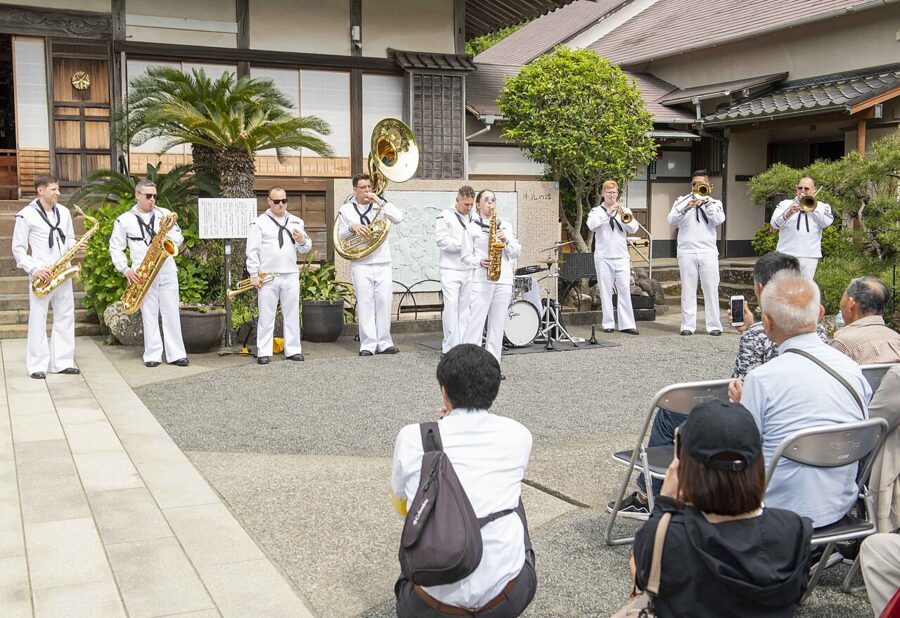
February belongs to Kawazu: the 37th festival runs from 6 February to 7 March 2027, and every train down the coast fills up. In May, Shimoda holds its Black Ship Festival; the 87th was on 15 to 17 May 2026, with fireworks over the harbour, a parade and a re-enactment of the treaty signing.
Summer means beaches, and the Odoriko and Saphir sell out on August weekends; the Saphir’s peak-season charge applies too. Golden Week and the New Year are the same. The quietest and cheapest time is a weekday outside the holidays, when the Saphir’s off-peak price is ¥200 lower; on a clear day you see Izu Oshima from the train.
Book the 11:00 Saphir down for the view, or the 09:00 Odoriko if you want the day; sit on the left, wait for the tunnels after Atami, and come home on the Kodama.