
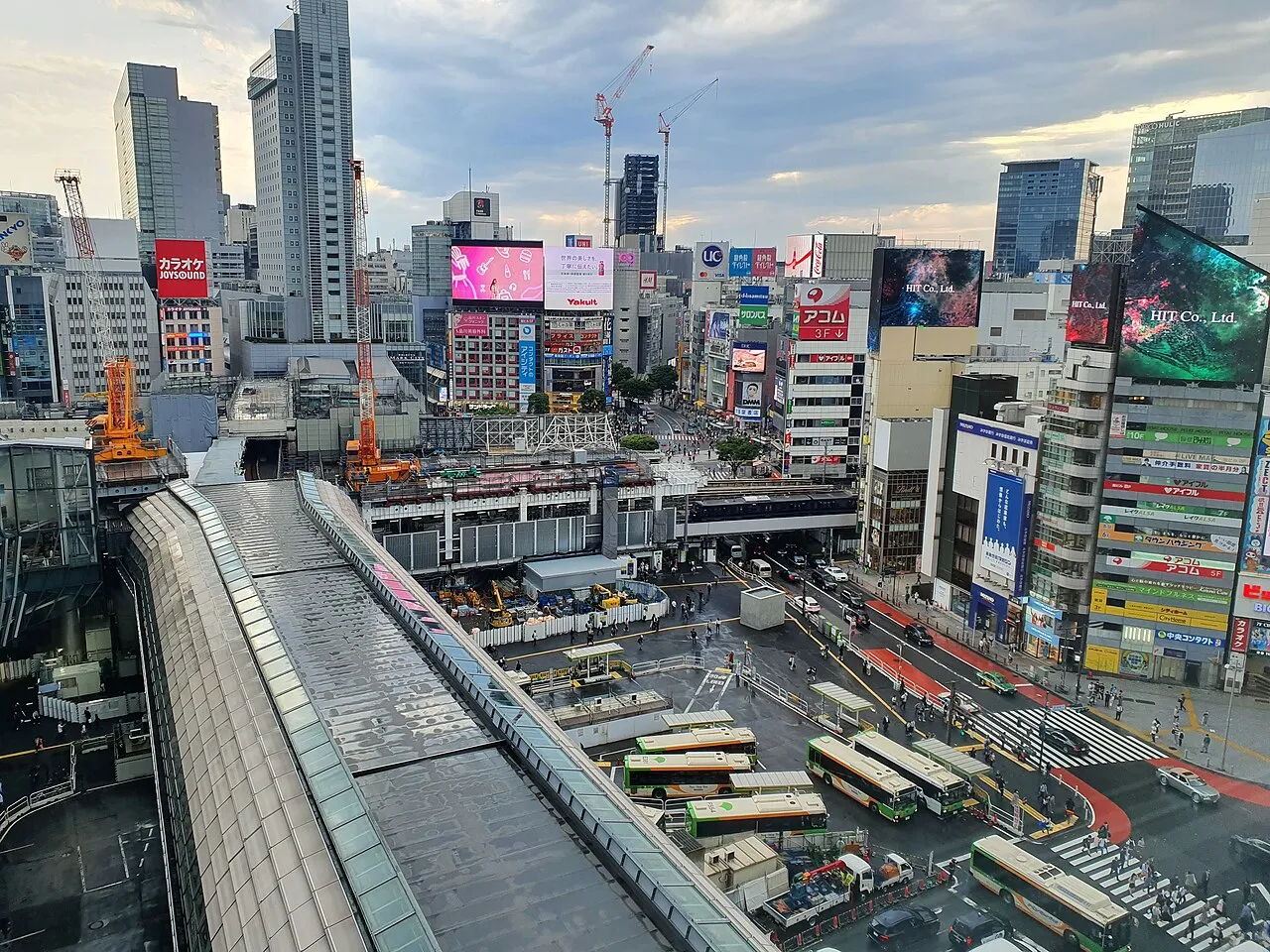
Change at Shibuya from the Toyoko Line to the Ginza Line and you arrive five floors below the street and leave from three floors above it. In between come escalators that never quite line up: ride one, cross a concourse, look for the next, and somewhere around street level you begin to wonder whether you are still in the station. You are.
The reason is the ground and the order things were built. Shibuya sits in a valley, so the Ginza Line, which runs under the hills of Aoyama, comes out into the open here on a viaduct. The JR tracks run along the valley floor. Tokyu and Tokyo Metro dug their newer lines deep underneath, and Keio built its terminus off to one side, in what is now Shibuya Mark City.
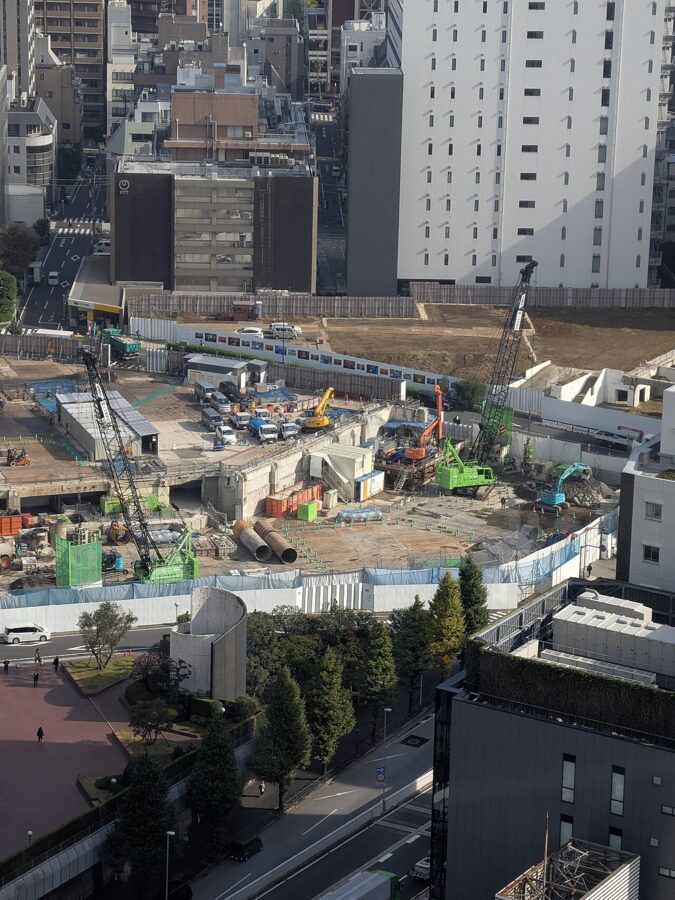
And the whole thing is being rebuilt with some three million people a day still walking through it. Platforms have moved, gates have moved, the passage to the Hachiko gate was rerouted again in March 2026, and the official finishing date is 2034. A map that was right two years ago may now walk you into a hoarding.

Four companies, nine lines
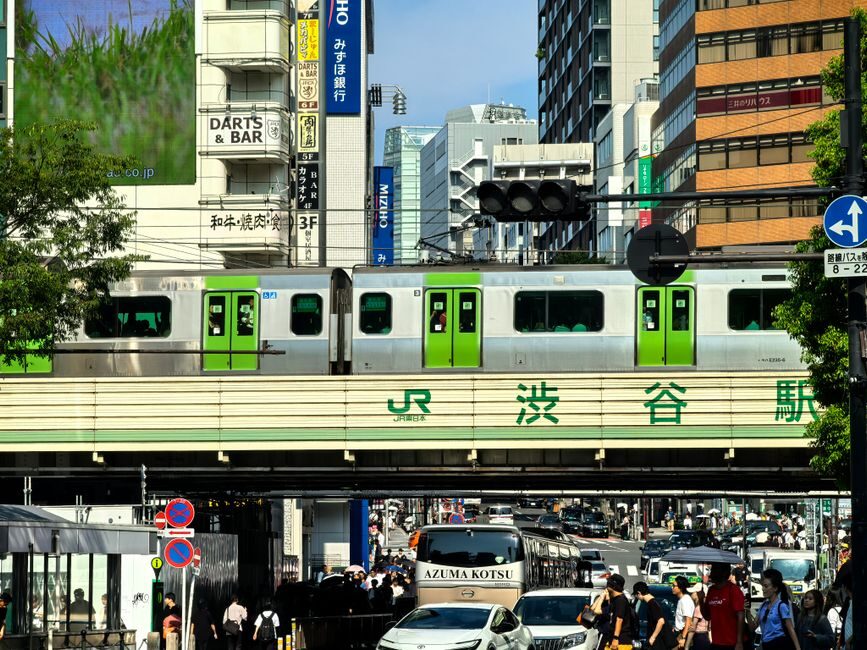
JR East runs the main station at street level, and Tokyo Metro has three lines: the Ginza up on its viaduct, the Hanzomon and Fukutoshin deep underground. Tokyu runs the Toyoko Line to Yokohama and the Den-en-toshi Line to the south-western suburbs, from platforms it shares with the subway. Keio runs the Inokashira Line to Kichijoji from the west side. Only the JR lines are covered by the Japan Rail Pass; the subway, Tokyu and Keio charge their own fares.
On the Tokyo subway the thing to know at Shibuya is through-running: the Hanzomon and Den-en-toshi lines are one route with a change of company here, and so are the Fukutoshin and Toyoko lines. Levels below are the ones the operators print on their floor plans (as of 2026); station numbers are the codes on the platform signs.
| Line | Operator | Station number | Where in the station | Level |
|---|---|---|---|---|
| Yamanote Line | JR East | JY 20 | Main JR station, platforms 1 and 2 | 2F |
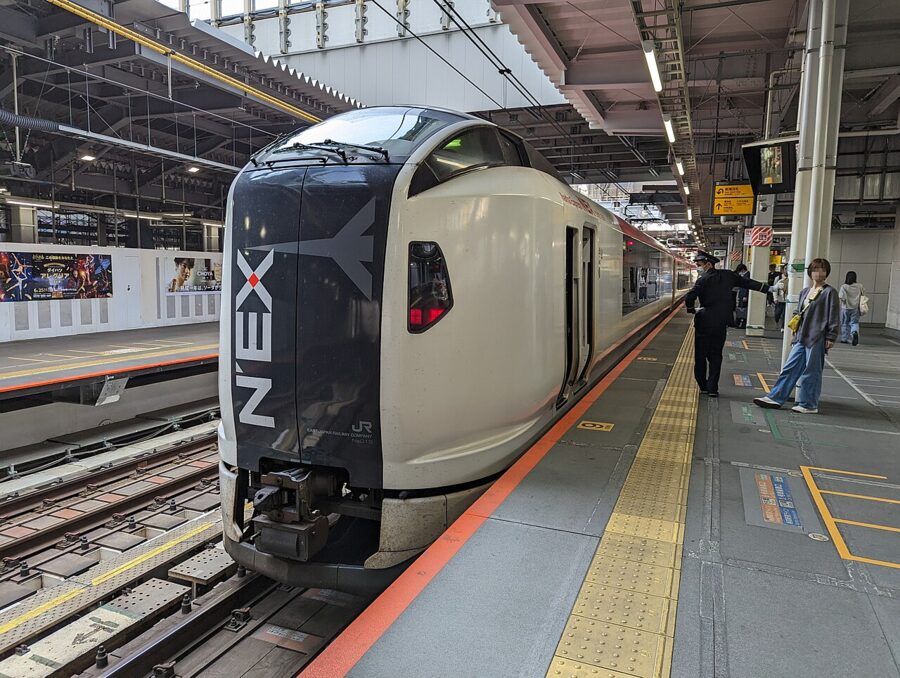
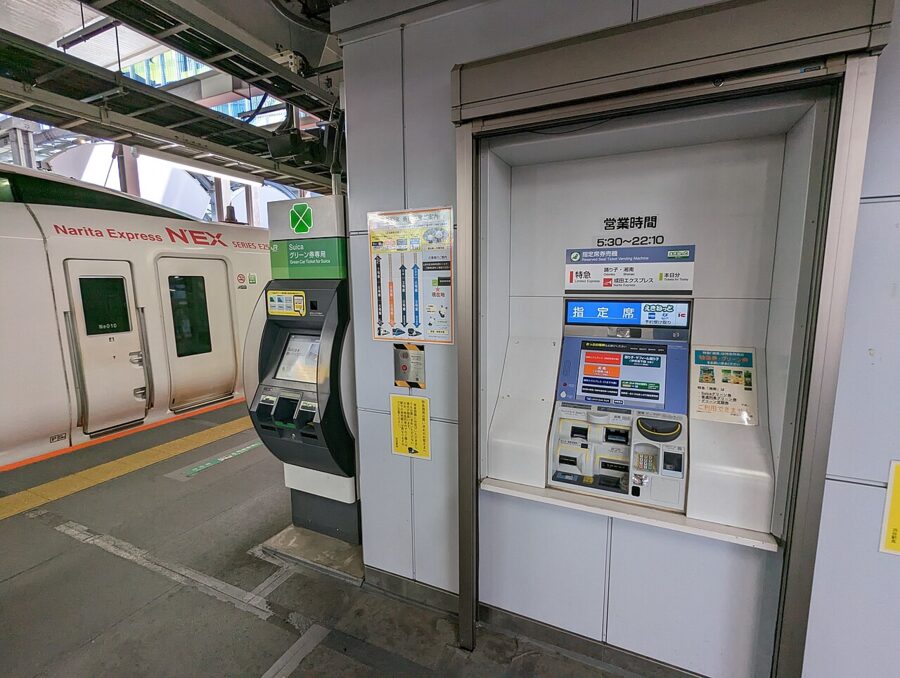
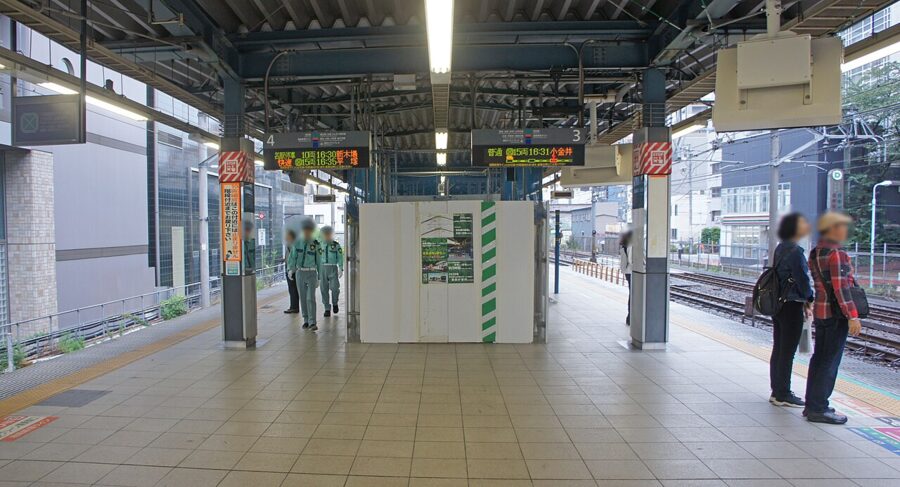
| Saikyo Line, Shonan-Shinjuku Line, Narita Express | JR East | JA 10, JS 19 | Main JR station, the island beside the Yamanote (platforms 3 and 4) | 2F |
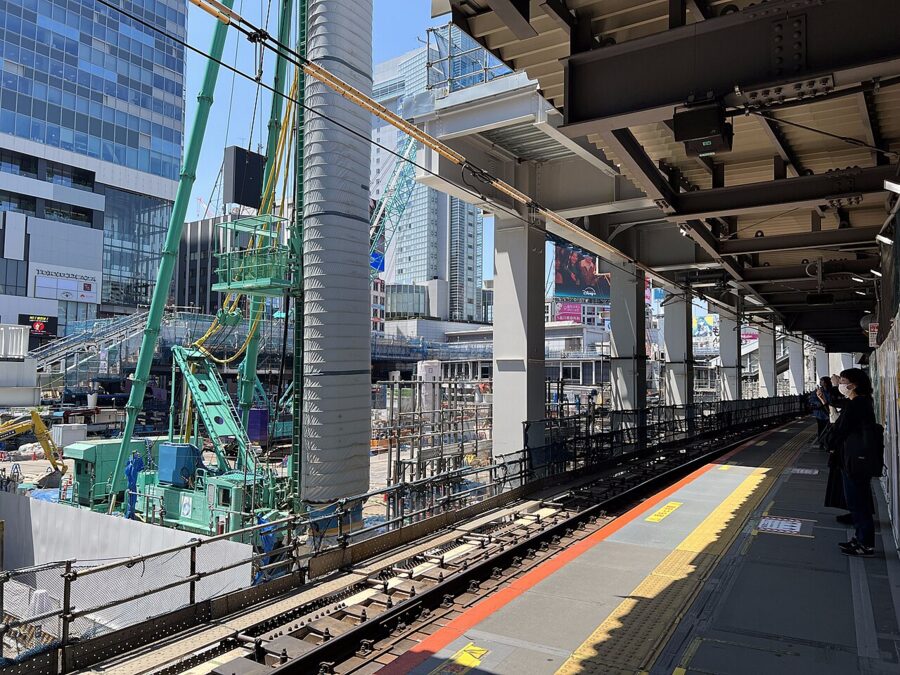
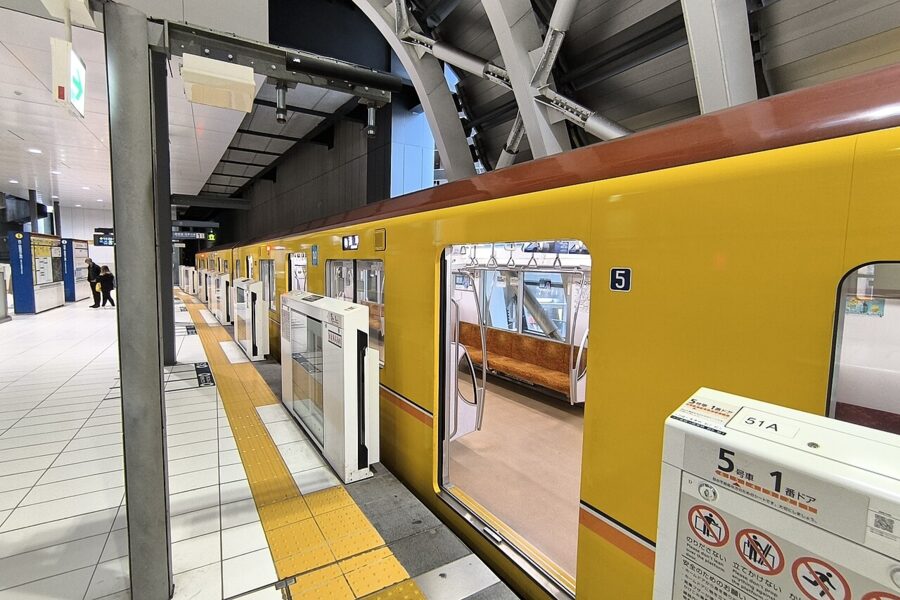
| Ginza Line | Tokyo Metro | G 01 | East of JR, on the viaduct over Meiji-dori, beside Scramble Square | 3F |
| Hanzomon Line and Den-en-toshi Line | Tokyo Metro and Tokyu | Z 01, DT 01 | Underground, running east to west beneath Hachiko Square (platforms 1 and 2) | B3F |
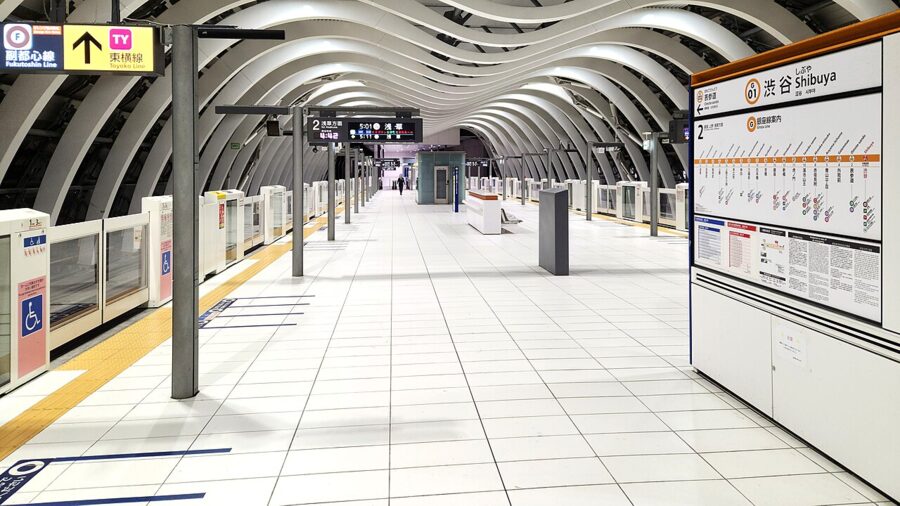
| Fukutoshin Line and Toyoko Line | Tokyo Metro and Tokyu | F 16, TY 01 | Underground on the east side, towards Shibuya Hikarie (platforms 3 to 6) | B5F |
| Inokashira Line | Keio | IN 01 | West of JR, inside Shibuya Mark City | 2F |
JR East: two islands side by side
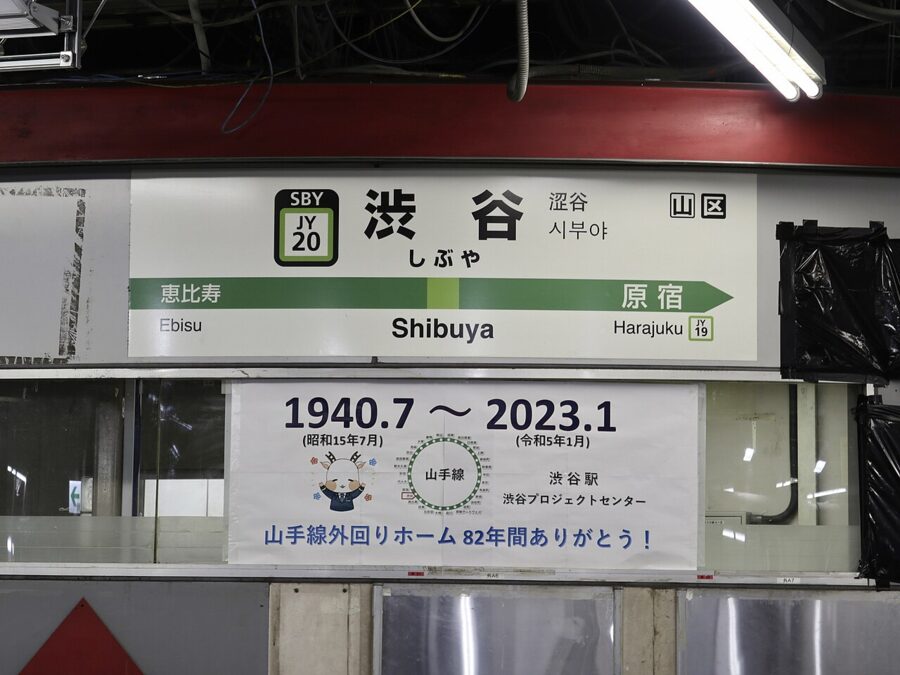
Since January 2023 the Yamanote Line has used a single island platform: platform 1 for Shinjuku and Ikebukuro, platform 2 for Shinagawa and Tokyo. Right beside it, platforms 3 and 4 serve the Saikyo and Shonan-Shinjuku lines. Platform 3 is northbound, for Shinjuku and Omiya. Platform 4 is southbound, for Osaki and the Rinkai Line to Odaiba, the Sotetsu Line to Ebina, and Yokohama and Ofuna.
That southbound group includes the Shonan-Shinjuku trains down the Yokosuka Line, the one-seat ride to Kamakura. Narita Express trains running via Shinjuku or Ofuna stop on the same island. Until May 2020 the Saikyo platform sat about 350 metres to the south; now it is a few steps from the Yamanote, which makes the Saikyo, one stop to Shinjuku, a useful escape when the Yamanote is packed.
Tokyo Metro Ginza Line: the line in the air
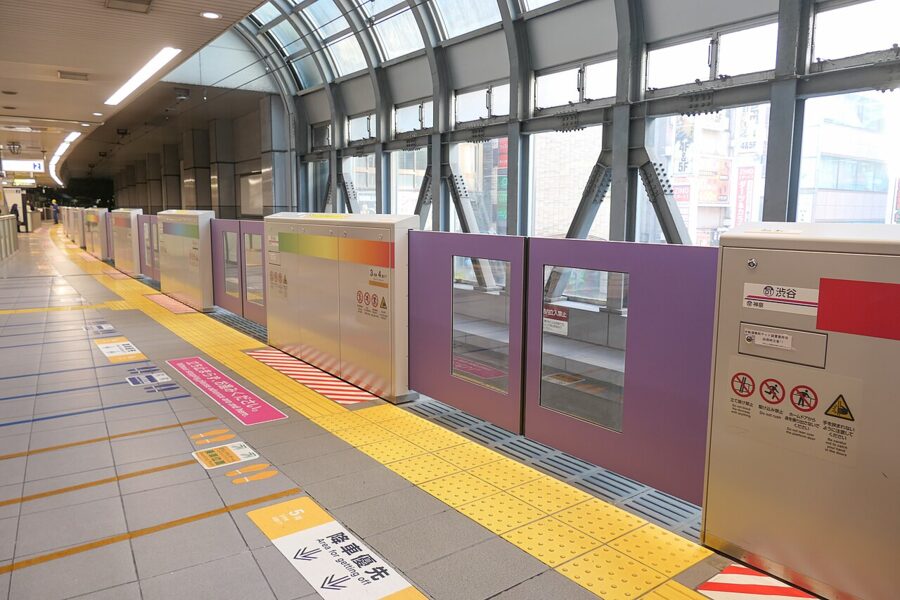
The Ginza Line is the oldest subway in Asia, and Shibuya is its western terminus. Since 3 January 2020 its platform has stood on the viaduct over Meiji-dori, east of the JR station, beside Shibuya Scramble Square. Before that it spent eighty-one years on the third floor of the Tokyu department store on the west side. The new platform is a single wide island, step-free, where the old one was narrow and reached mostly by stairs.
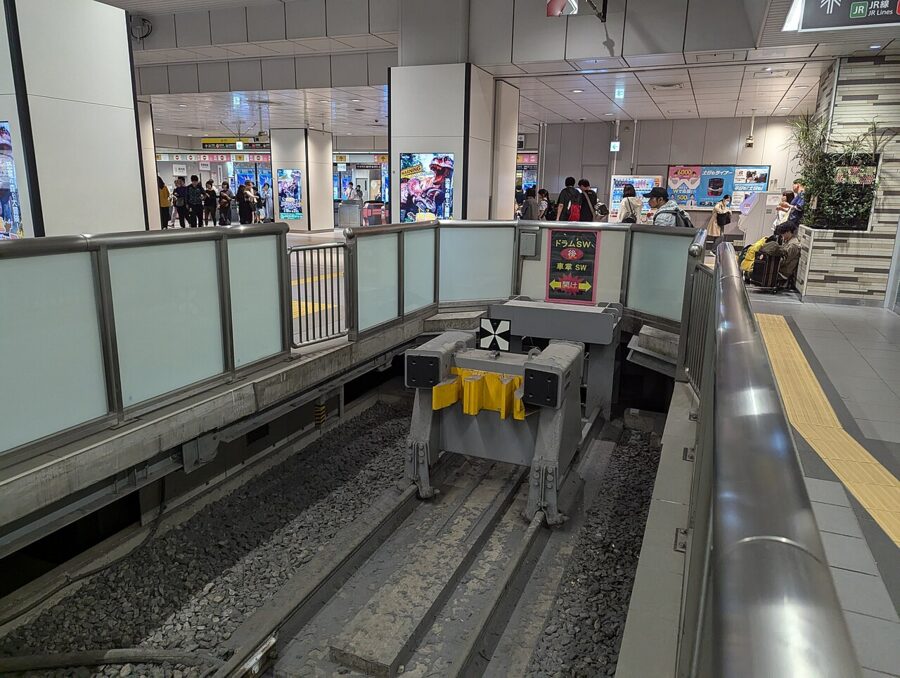
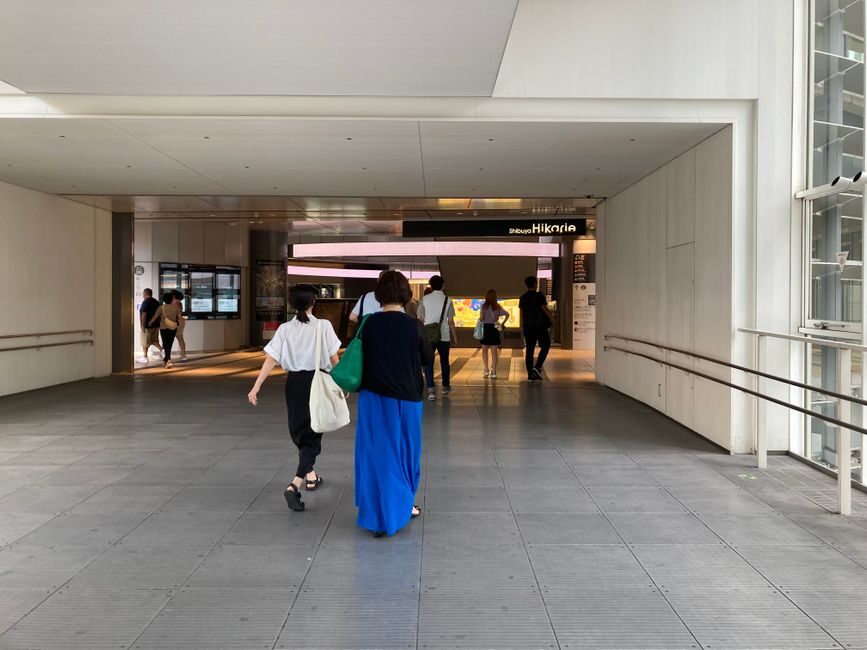
Two gates matter: the Scramble Square-side gate, close to the JR Central gate, and the Meiji-dori-side gate, which faces Shibuya Hikarie and is the way down to the Fukutoshin and Toyoko lines. Trains leave every few minutes for Omote-sando, Akasaka-mitsuke, Ginza, Ueno and Asakusa. The 2020 move also left a reversing track running west into Mark City.

Tokyu and the deep subway
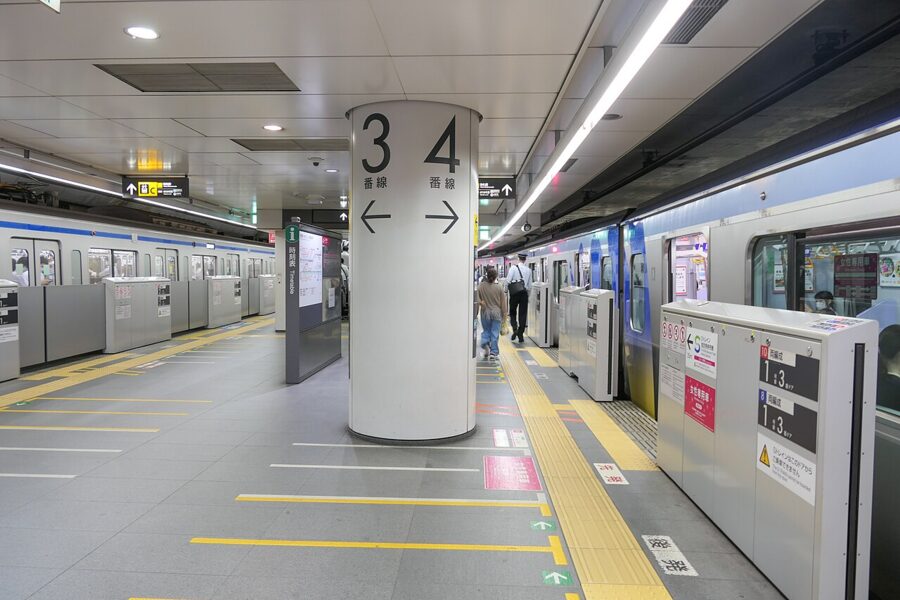
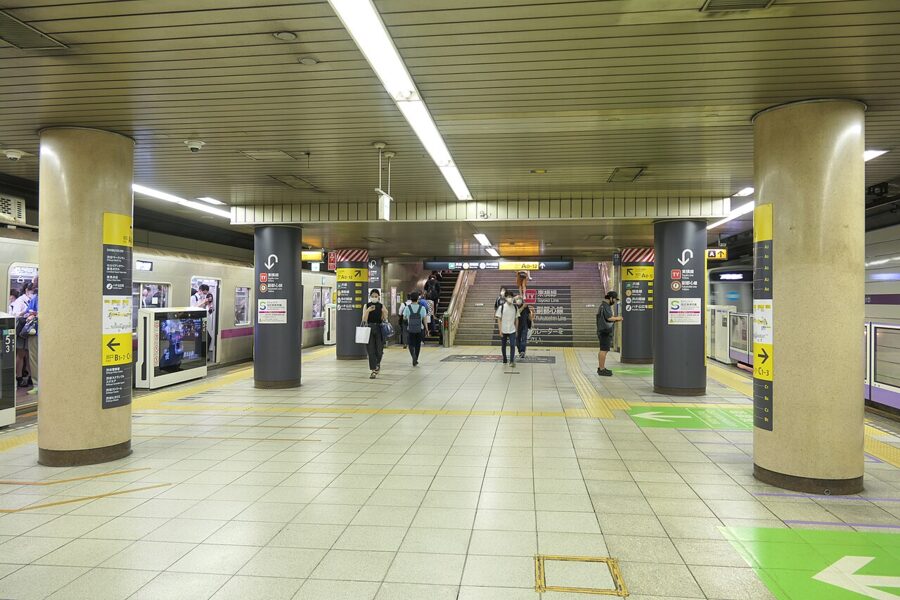
Two Tokyo Metro lines and two of Tokyu’s share one underground station, managed by Tokyu. On B3F, platforms 1 and 2 serve the Den-en-toshi Line towards Futako-tamagawa and Chuo-rinkan and the Hanzomon Line towards Otemachi and Oshiage; most trains carry straight on from one line into the other. Two floors down, on B5F, platforms 3 and 4 are the Toyoko Line towards Yokohama and Motomachi-Chukagai, and 5 and 6 the Fukutoshin Line towards Shinjuku-sanchome, Ikebukuro and Wakoshi. You change between the two levels without passing a ticket gate.
The gate names tell you where you will surface: Hachiko and Dogenzaka on the west side, Miyamasuzaka Central and Miyamasuzaka East further east, Shibuya Hikarie 1 and 2 under the Hikarie tower. Tokyu’s floor plans, dated August 2026, are the clearest map of the lot and worth a screenshot before you go.

Keio Inokashira Line: off to the side
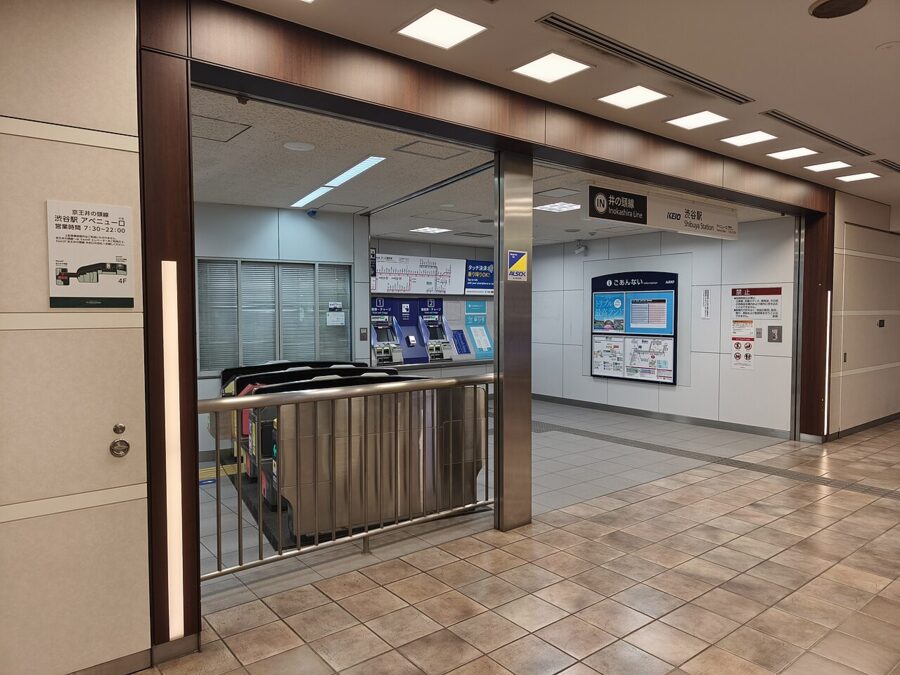
The Inokashira Line is Keio’s narrow-gauge line to Shimokitazawa and Kichijoji, and its two tracks end at buffer stops on the second floor of Shibuya Mark City. Keio’s station page shows three gates: the Central gate on 2F, for JR and the subway; the Avenue gate on 4F, open 07:30 to 22:00, in Mark City’s shopping street; and the West gate at street level.
The rebuild: what has moved, and what is still a building site
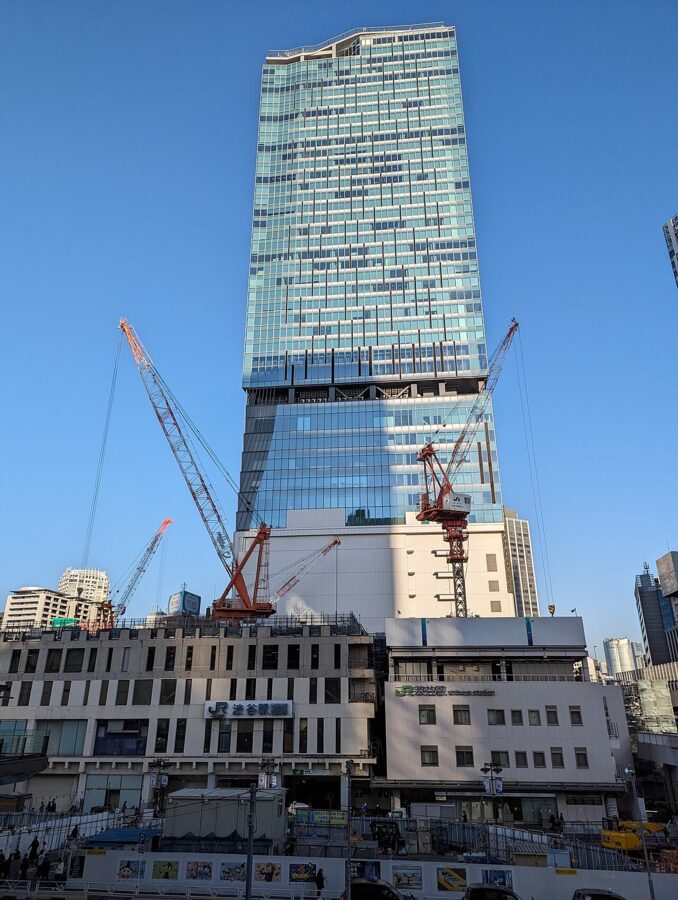
Tokyu, JR East and Tokyo Metro call it a once-in-a-century redevelopment, and the phrase is not much of a stretch. Work on the JR station began in earnest in 2015, but the changes that matter to a passenger started in 2013 and have not stopped.
| When | What changed | What it means for you |
|---|---|---|
| March 2013 | The Toyoko Line moved underground and began running through to the Fukutoshin Line | The Toyoko is now on B5F, a long way from JR |
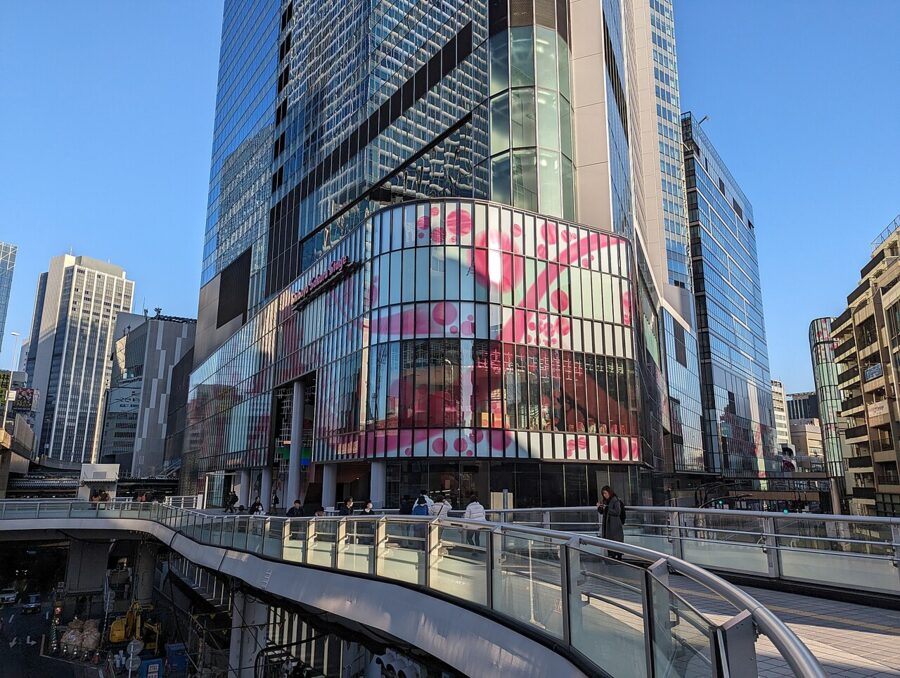
| November 2019 | Shibuya Scramble Square (east tower) opened, 230 metres tall, with Shibuya Sky on the roof | A new way into the station on the east side |
| January 2020 | The Ginza Line platform moved east, onto the viaduct over Meiji-dori | Ginza Line trains leave from beside Scramble Square |
| March 2020 | The Tokyu department store over the station closed | The short cut through it from Keio to the Ginza Line has gone |
| June 2020 | The Saikyo and Shonan-Shinjuku platforms moved about 350 metres north, next to the Yamanote | The long walk south is over |
| January 2023 | The two Yamanote platforms became one island | Both directions leave from the same platform |
| November 2023 | The walkways of Shibuya Sakura Stage opened at the south end | A route over the tracks to Sakuragaoka |
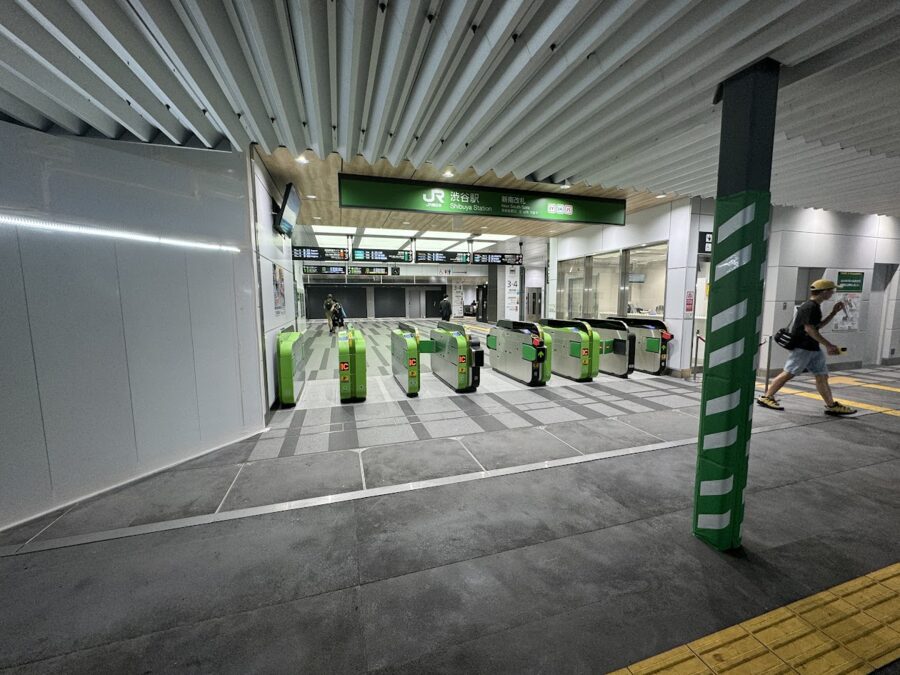
| July 2024 | The New South gate moved some 200 to 250 metres north into a new building over the tracks | Direct access to both JR islands from the south |
| December 2024 | New stairs, an escalator and a lift between the Yamanote platform and the Hachiko gate | A step-free route on the Hachiko side |
| January 2025 | The Hachiko gate moved away from Hachiko Square; its stairs down to Shibuchika closed | The gate named after the square no longer faces it |
| March 2026 | The Hachiko passage moved again, and a temporary staircase to the Yamanote replaced the old one | Keep left, and follow the signs rather than memory |
| Autumn 2026 | Keio replaced a staircase at its West gate with a lift (work scheduled to end in September 2026) | Step-free from the street into the Inokashira Line |
The New South gate shows the scale of it. The old one, opened in 2001, was about 400 metres from the Central gate and led only to the old Saikyo platform. Its July 2024 replacement is on the third floor of a new building over the tracks, on the walkway joining Shibuya Stream to Shibuya Sakura Stage, and leads to both JR islands.
It opened with only an escalator down to the Yamanote platform, so check the signs if you need a lift. Shops opened there in June 2026; JR East expects the building to be finished in the 2026 financial year.



Still to come
The final phase, announced in May 2025, runs well past this decade. That month work began on the central and west towers of Shibuya Scramble Square, on the site of the old department store. By the 2030 financial year the companies expect decks and passages linking all four sides of the station, the JR gates and concourses broadly complete, and an east-west free passage more than 20 metres wide. The new towers are due in the 2031 financial year, and the whole scheme, including a rebuilt Hachiko Square, in the 2034 financial year.
Until then, expect hoardings, temporary stairs and passages that switch sides overnight, usually announced on posters a week or two ahead. The station stays open throughout; only the routes change.
The exits: Hachiko, the crossing and the rest
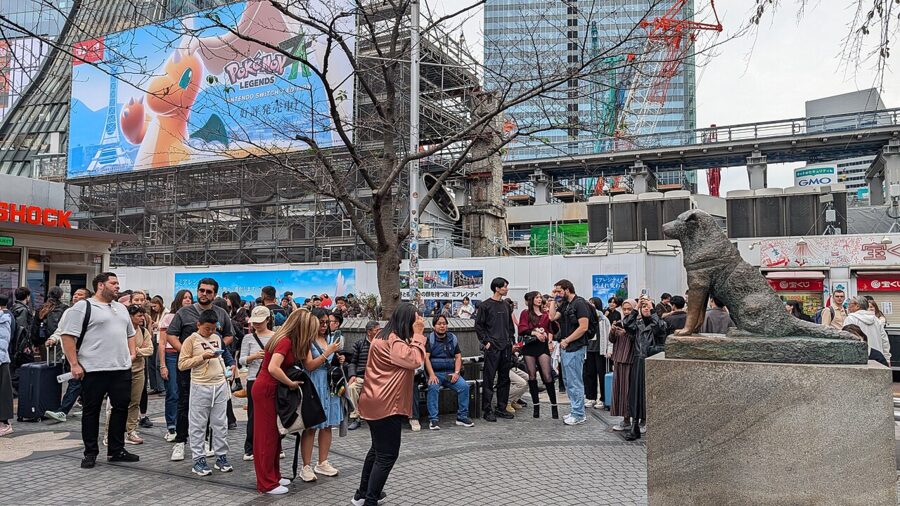
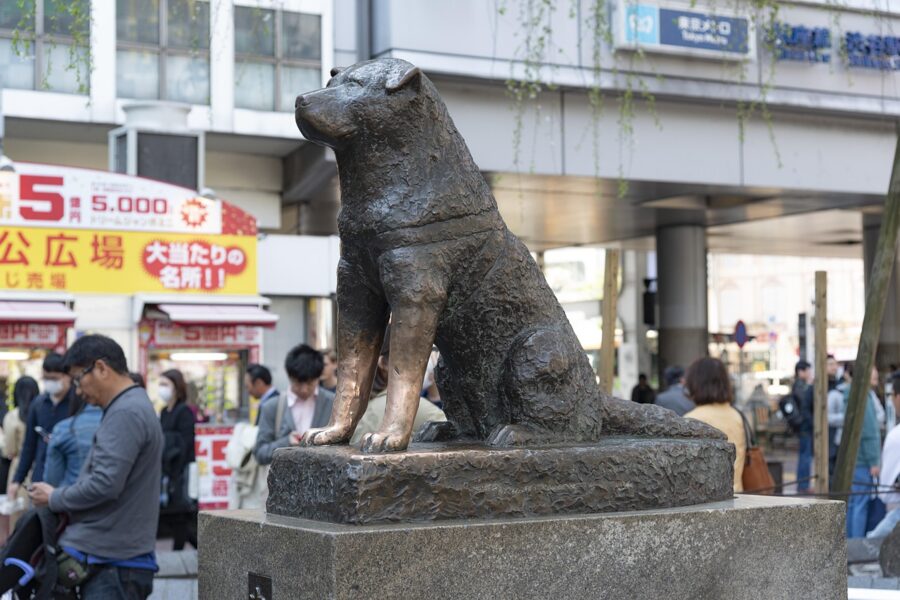
For most visitors one exit matters: the one by the statue of Hachiko and the Scramble crossing. The statue is why the station is famous. Hachiko, an Akita, kept coming to meet his master’s train for years after Professor Hidesaburo Ueno died in 1925. The bronze in the square is the 1948 replacement, by the sculptor’s son, for a 1934 original melted down for metal in the war.

The Hachiko gate since 2025
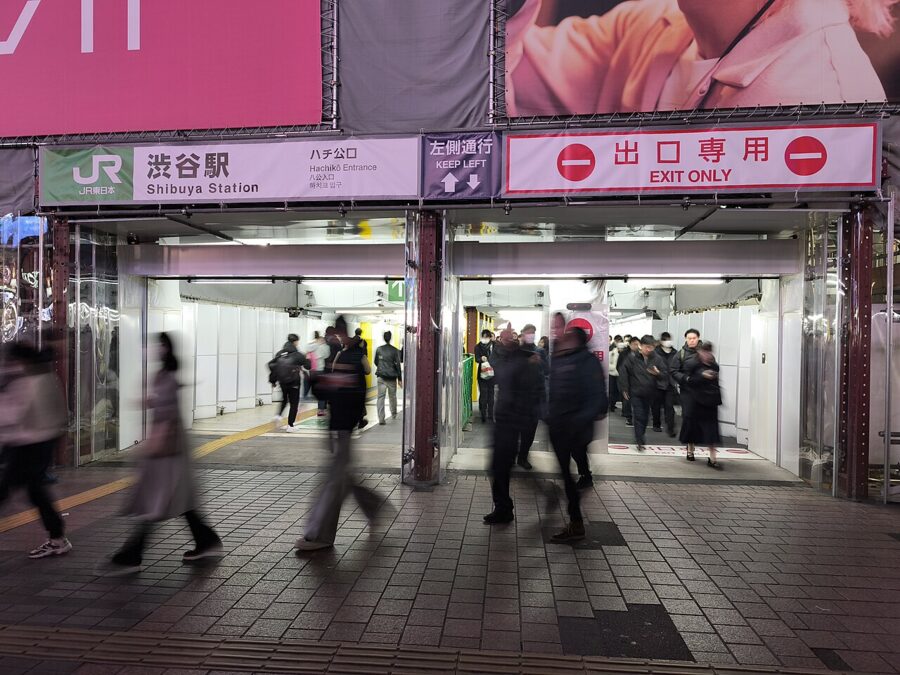
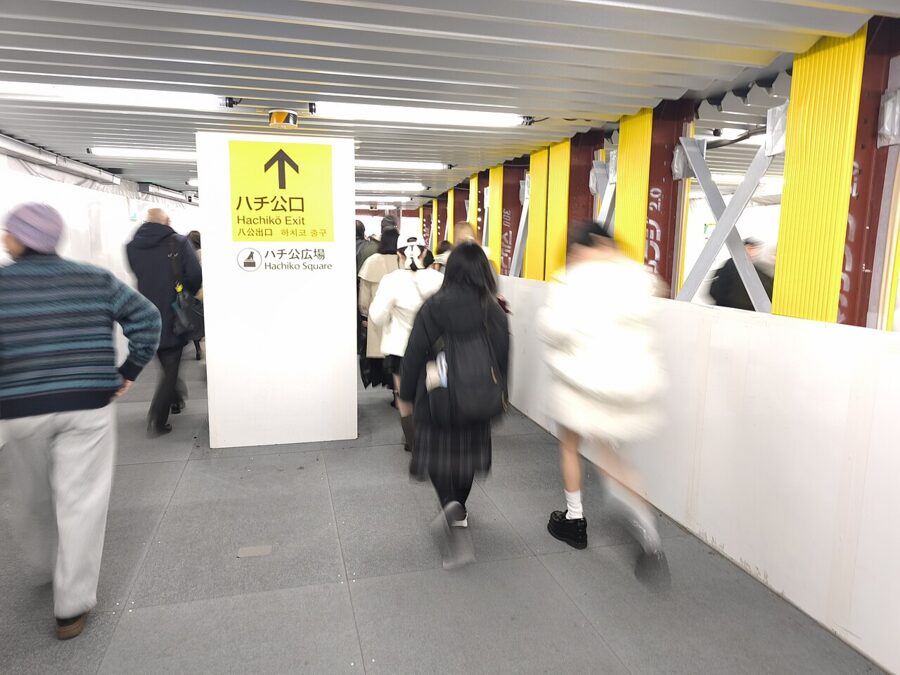
This is the change most guides have missed. In January 2025 JR closed the gates facing Hachiko Square and opened a single Hachiko gate further north, on the free passage through the station towards the Miyamasuzaka side. In March 2026 that passage moved again, into part of the building site. It is split down the middle and runs keep-left, with staff on hand at busy times.
The practical result, as Shibuya Keizai Shimbun reported: coming from Hachiko Square, you walk along the left side to the Miyamasuzaka end and come back along the other side to reach the gate. Allow a few minutes more than the map suggests, and meet people at the statue, not the gate.


The crossing and the underground exits
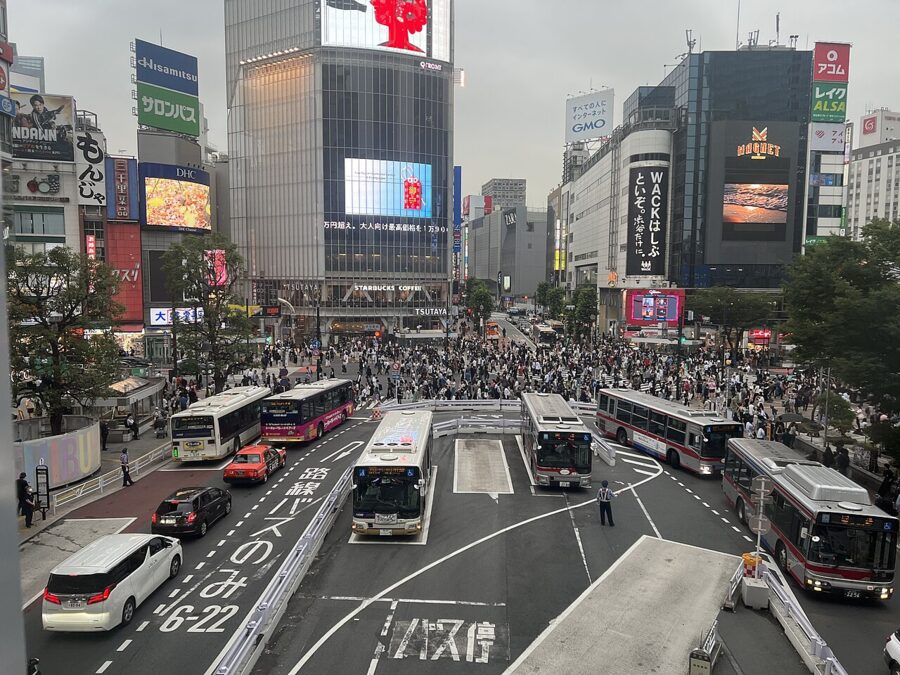
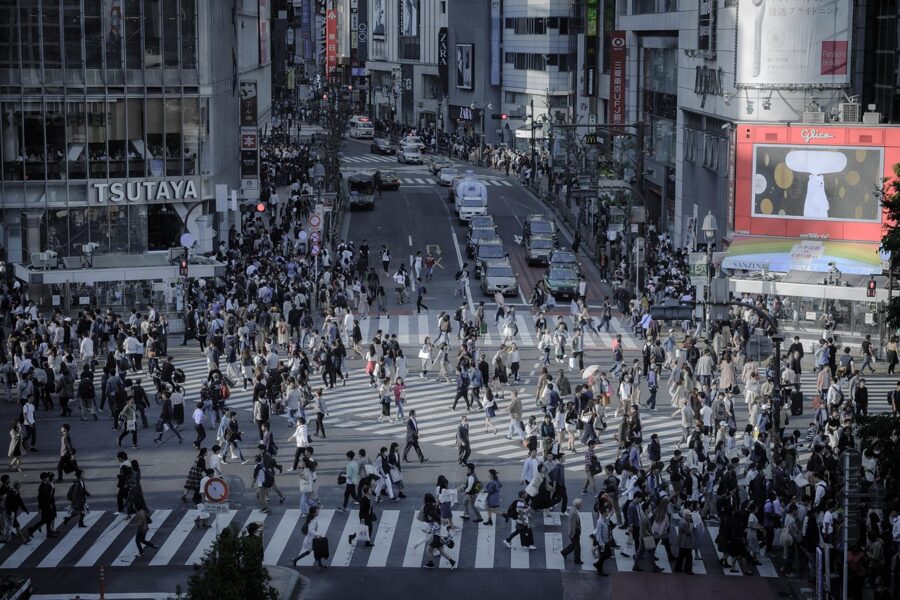
The Scramble crossing is the junction in front of Hachiko Square where every light turns red at once and people cross in all directions. It is best seen from above: from the Mark City walkway, from the shops facing it, or from Shibuya Sky.
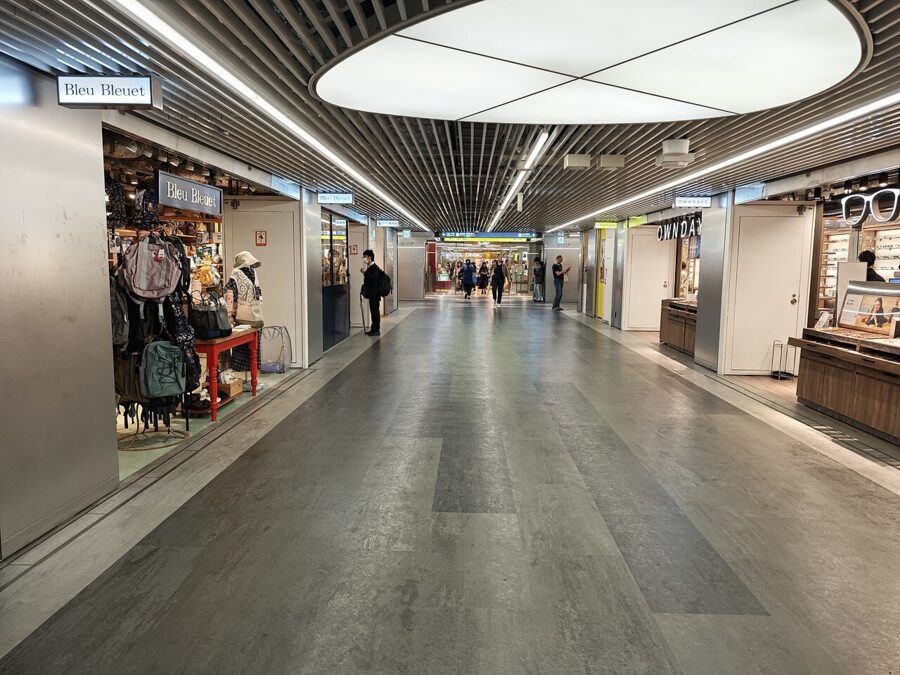
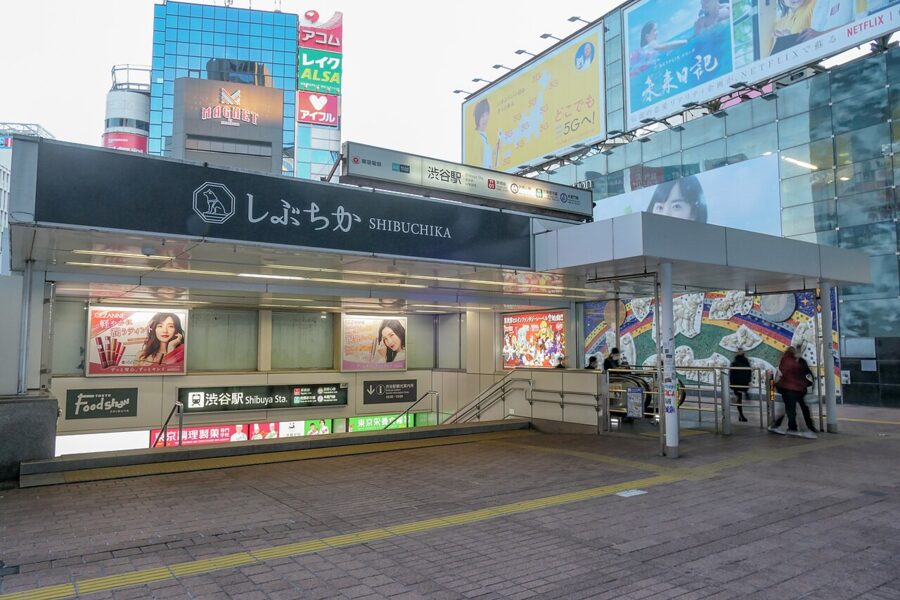
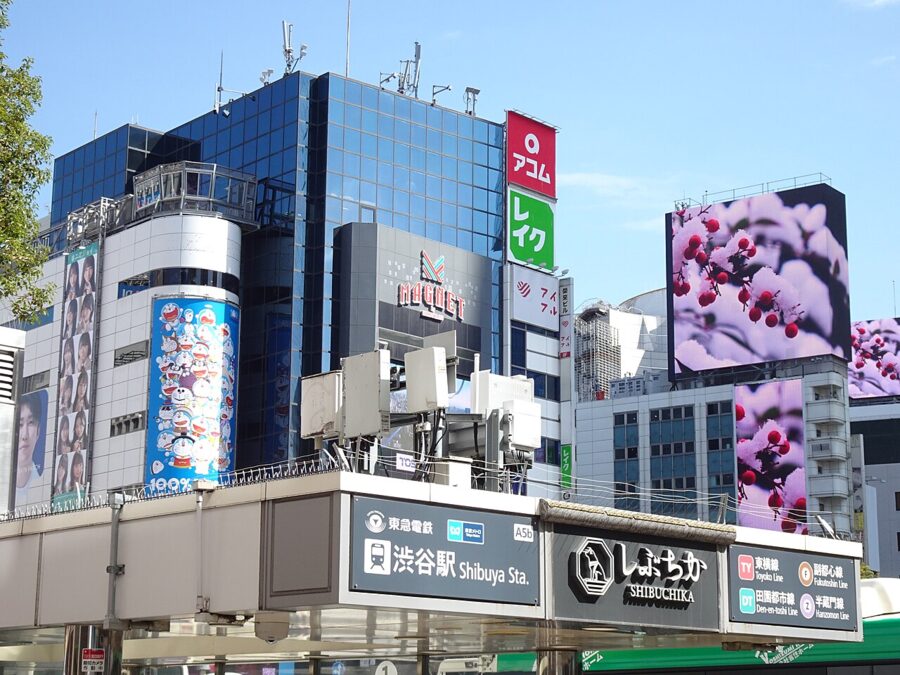
Underground, the Tokyu and Tokyo Metro exits are lettered by side. A0 to A2 come up on the Dogenzaka side towards SHIBUYA109; A4 to A8 and A12 on the Hachiko side, A8 being the broad staircase in the square; B1 to B7 and C1 to C3 on the Miyamasuzaka and Hikarie side. The Shibuchika shopping street under the square links several of them, and exit B6 is the one for Scramble Square.




Miyamasuzaka, the east side and the south
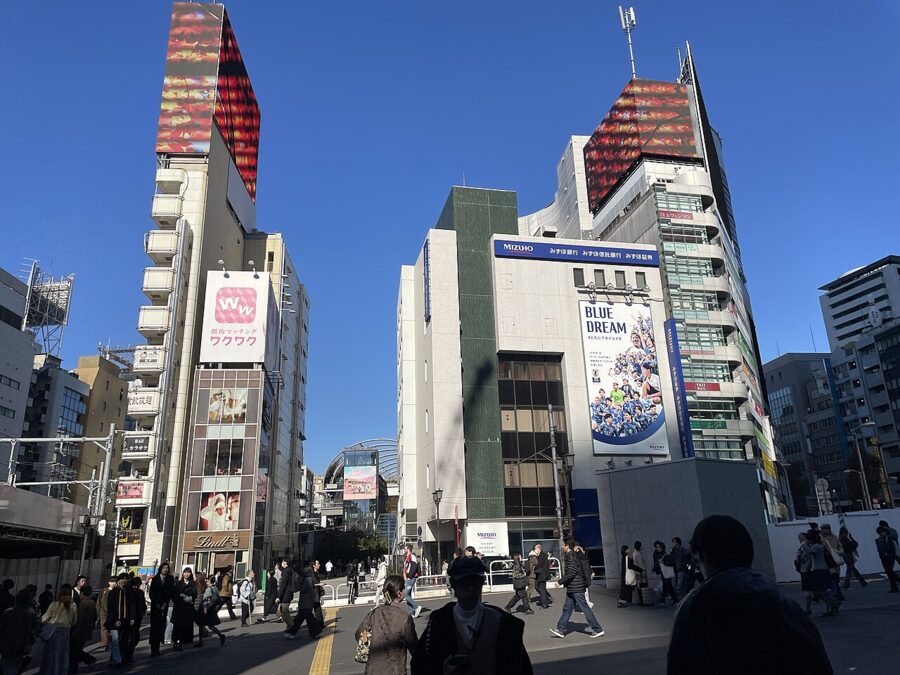
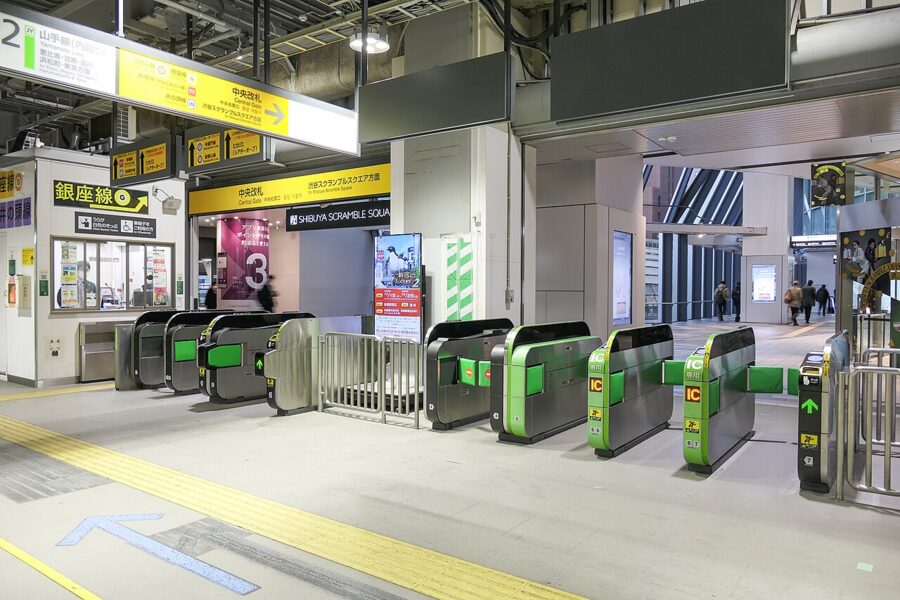
The Miyamasuzaka exit is on the east side, at the foot of the slope up towards Aoyama, with Shibuya Hikarie and Scramble Square either side. The JR Central gate is on the third floor, level with the Ginza Line, and is the gate for that line and for Scramble Square.
The South gate opens onto the passage between the east and west exits, the west side being where the bus stands and Shibuya Fukuras are. The New South gate leads to Shibuya Stream and Sakura Stage. JR East’s station plan labels them all.


Transfers, and how long to allow
Journey planners assume you know the way and nobody is in front of you. The times below are what I allow with a small bag outside the rush hour. Add half as much again between about 08:00 and 09:30 on weekdays.
| From | To | Route | What I allow |
|---|---|---|---|
| JR | Ginza Line | Up to the Central gate on 3F, then the Scramble Square-side gate | 5 minutes |
| JR | Inokashira Line | Along the Mark City walkway to the Keio Central gate on 2F | 7 minutes |
| JR | Hanzomon or Den-en-toshi Line | Hachiko gate, then down exit A8 in the square or the B7 stairs on the east side | 10 minutes |
| JR | Fukutoshin or Toyoko Line | East side, down to the Hikarie gates and on to B5F | 12 minutes |
| Ginza Line | Fukutoshin or Toyoko Line | Meiji-dori-side gate, down through Shibuya Hikarie to the Hikarie 1 gate | 10 minutes |
| Ginza Line | Hanzomon Line | Do not change here: change at Omote-sando, one stop east | 1 minute at Omote-sando |
| Fukutoshin or Toyoko Line | Hanzomon or Den-en-toshi Line | Inside the gates, B5F up to B3F | 5 minutes |
| Inokashira Line | Ginza Line | Mark City walkway, then round by the south passage | 8 minutes |
The Ginza Line to the Hanzomon is the change people get wrong. At Shibuya the two are far apart, one on a viaduct and the other three floors underground. At Omote-sando, the next stop, they share platforms, and Tokyo Metro announces the change there for that reason.
Between the Ginza Line and the Fukutoshin you leave one set of gates and enter another, but under Tokyo Metro’s transfer rule it counts as one journey if you are back inside within 60 minutes. A paper ticket goes through an orange gate on the way out; with an IC card any gate will do. Suica and Pasmo make the whole station easier.
The change from JR to the Hanzomon and Den-en-toshi got longer in January 2025, when the staircase from the old Hachiko gate straight down to the subway closed. Now you either cross the square to the wide stairs at exit A8, which bring you to the middle of the platform, or turn the other way to the B7 stairs and escalators on the east side, which bring you to the Miyamasuzaka gate at the Omote-sando end. Both take about as long.

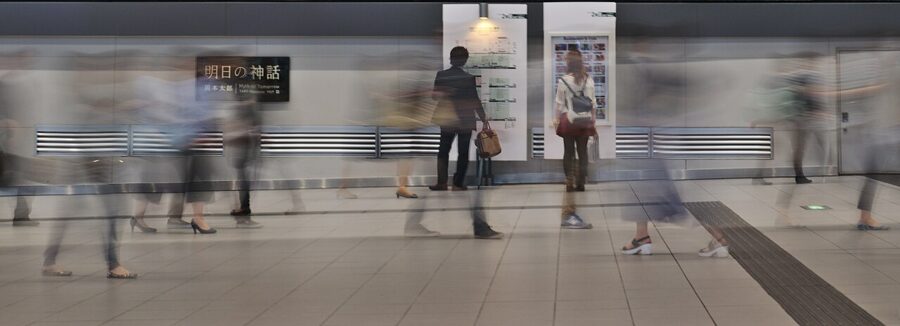
Keio to the Ginza Line used to be a short walk through the department store; now the Mark City walkway sends you round by the south side. On the way you pass Taro Okamoto’s Myth of Tomorrow (明日の神話), a mural 30 metres long about the atomic bomb, which has hung in the passage between JR and Keio since 2008. Most people walk past it at speed. Don’t.


Shibuya Sky, lockers, buses and step-free routes
Shibuya Sky
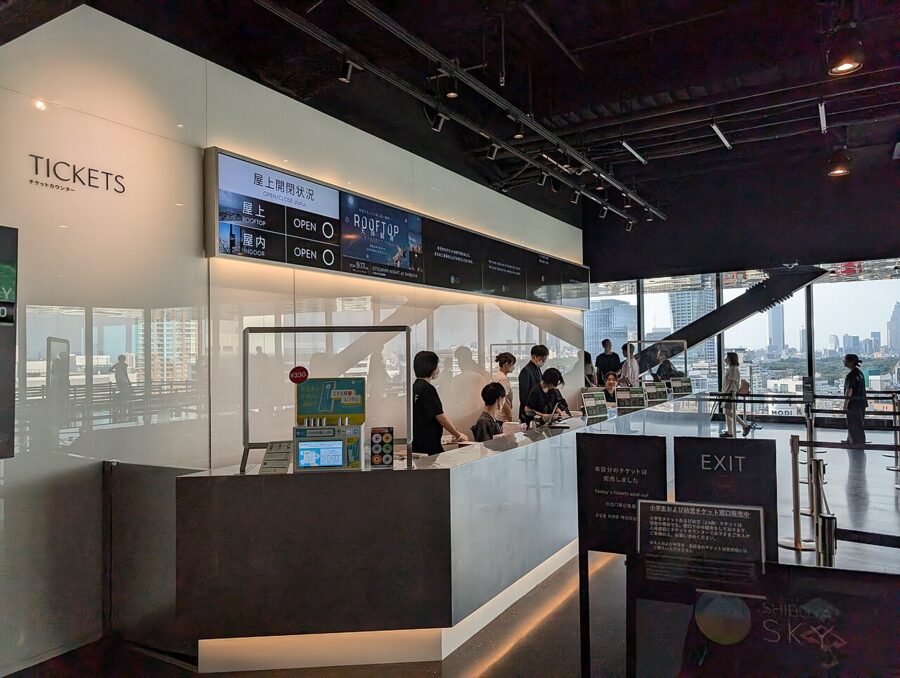
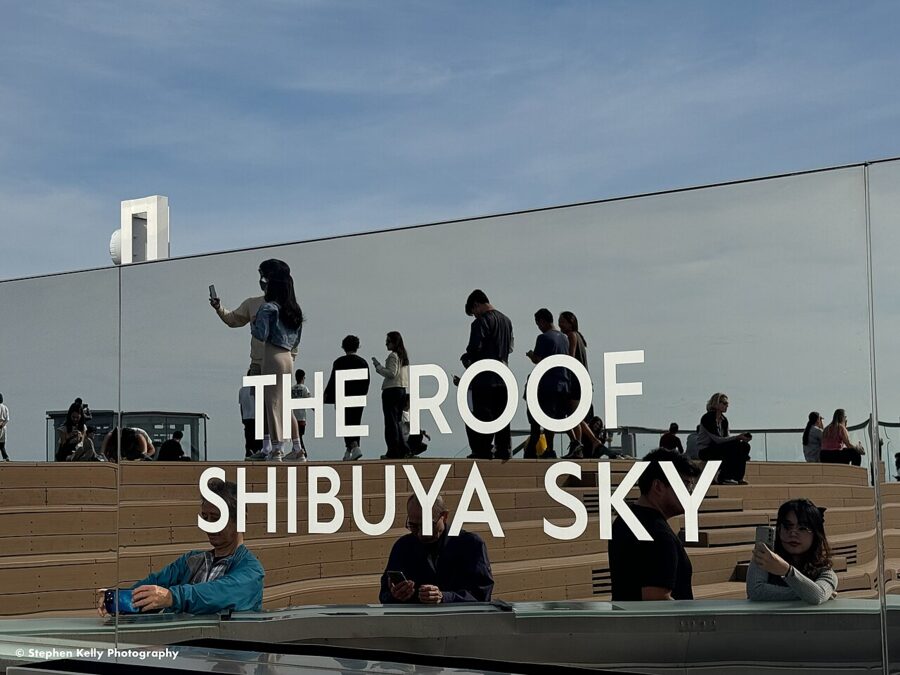
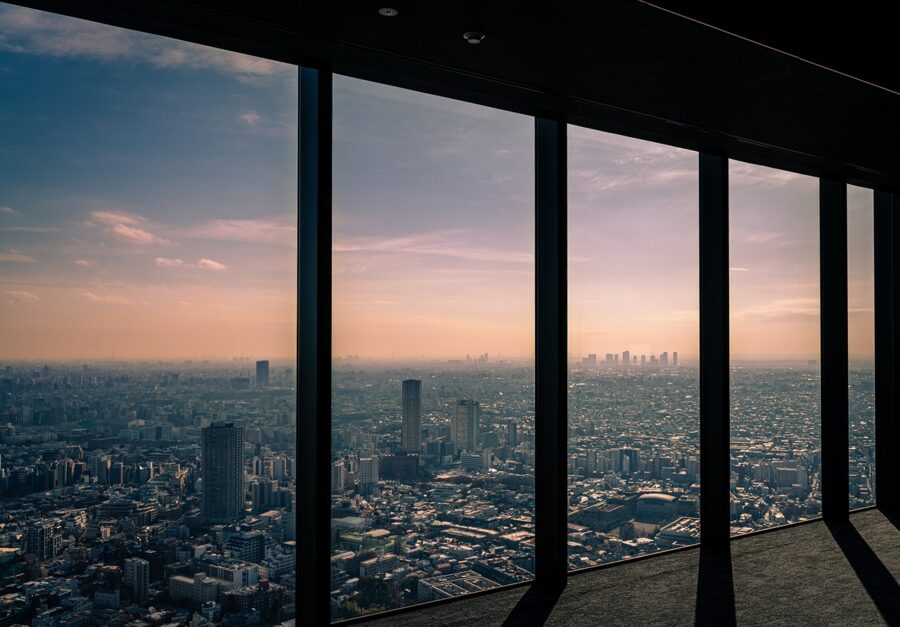
Shibuya Sky is the open-air deck on the roof of Shibuya Scramble Square, 229 metres up, directly over the station. The entrance and ticket counter are on the 14th floor, reached by the lift from the outside of the building on 1F. From JR, head from the Central or South gate towards the East exit; from the Ginza Line, turn left out of the Scramble Square-side gate; from the Fukutoshin and Toyoko lines, use either Hikarie gate; from the Hanzomon and Den-en-toshi, the Miyamasuzaka Central gate. Underground, exit B6 comes up at the building.
Do not go to the Sky Lobby on the 11th floor of Shibuya Hikarie across the road. It is a different place, and the operators warn that people go there by mistake all the time. Prices, from the official ticket page (as of November 2026):
| Ticket | Entry until 14:59 | Entry from 15:00 |
|---|---|---|
| Adult (12 and over, except primary school pupils), online | ¥2,700 (about US$17) | ¥3,400 (about US$21) |
| Adult, at the counter | ¥3,000 | ¥3,700 |
| Child (primary school pupils), counter only, on the day | ¥1,200 (about US$8) | |
| Children below school age | Free | |
Online tickets go on sale two weeks ahead, and when they sell out the counter is sold out too. The deck is open 10:00 to 22:30, last entry 21:20. Sunset slots go first; I book the one starting about forty minutes before sunset, for daylight, dusk and the lights. The roof closes in strong wind, rain, snow or when lightning is near; the official site shows the status of the roof and the indoor floors on the day.
Suitcases and large bags are not allowed in at all, so leave them in a station locker. On the roof you may take only a phone and a camera or binoculars small enough for a pocket or a neck strap; bags, hats, tripods, selfie sticks, food and drink go into lockers on the 46th floor.

Lockers and luggage
Coin lockers are spread through the JR concourses, the Tokyu levels and the Keio station, and the big ones go first. Shibuya Sky’s ticket page links to a live search of locker availability around the station, which saves a lap of the concourse with a suitcase. In the Shibuya Chikamichi passage underground, Tokyu’s floor plan shows a staffed baggage counter open 10:00 to 19:00. If you can, take big luggage straight to the hotel: the Hachiko passage, with its keep-left rule and U-turn, is no place for a large case in the evening rush.
Airport and long-distance buses
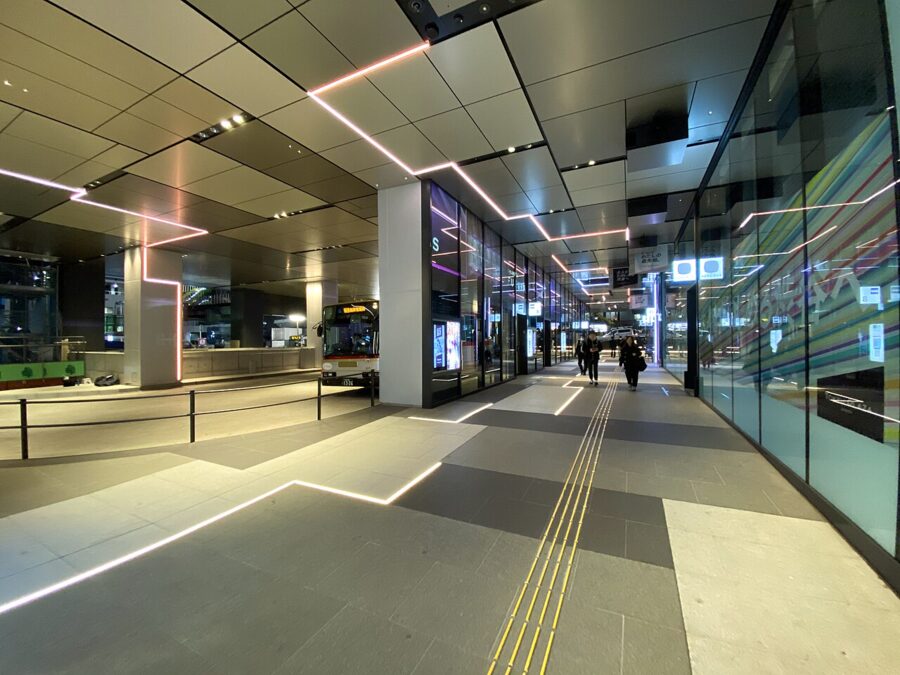
The ground-floor bus terminal in Shibuya Fukuras, on the south-west side of the station, opened in 2019 for airport buses to Haneda and Narita. Haneda buses also call at Shibuya Mark City and the Cerulean Tower Tokyu Hotel. Check the fare with the bus company before you queue; the train to Haneda Airport avoids the traffic.
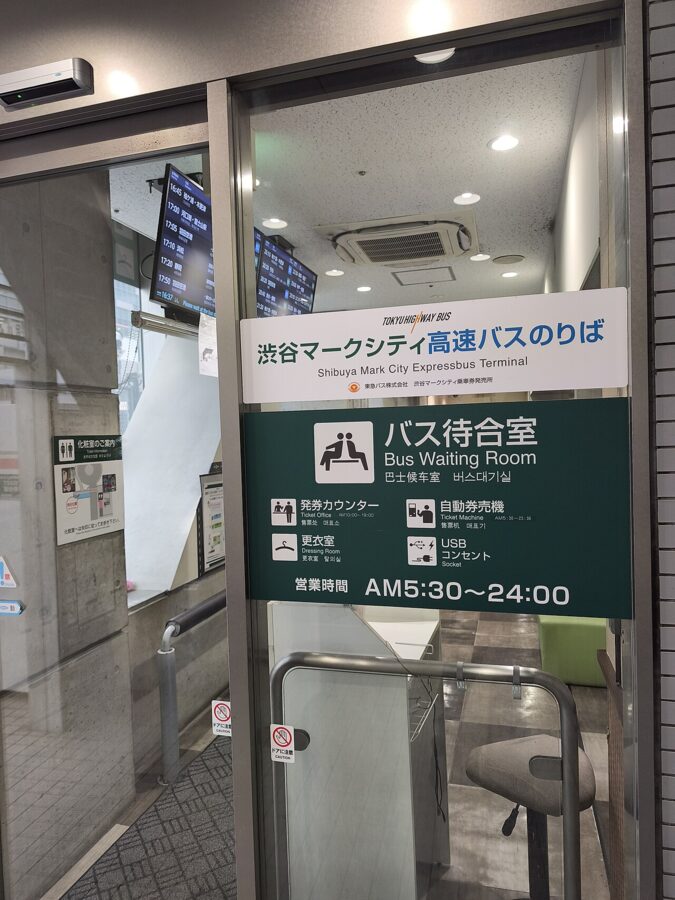
Long-distance coaches use the Shibuya Expressway Bus Terminal on the fifth floor of Mark City, up the stairs beside Keio’s Avenue gate. Keio’s coaches run from here to Kawaguchiko and Fuji-Q Highland, Karuizawa and Kusatsu, and seasonally to Kamikochi. For Kawaguchiko the coach is a real rival to the train to Mount Fuji.


Step-free routes
Every operator has a lift route to its platforms, but the routes are long and, on the JR side, change with the building work. JR added a lift between the Yamanote platform and the Hachiko gate in December 2024; at the New South gate, use another gate if you need a lift to the Yamanote. The Ginza Line’s 2020 platform is step-free.
On the deep levels Tokyu lists lifts inside the gates near the Dogenzaka gate, the Miyamasuzaka East gate and below the Hikarie 1 gate, and runs a booking service for passengers who want staff help. It also notes that no doorway on the Toyoko Line platforms meets its target of a step of 3 cm or less and a gap of 7 cm or less, so ask for a ramp. Keio’s new West gate lift replaces a staircase, with work scheduled to finish in September 2026.

Mistakes worth not making
- Trusting an old map. Anything from before 2020 puts the Ginza Line on the west side and the Saikyo platform far to the south; anything from before 2025 puts the Hachiko gate facing the square.
- Changing from the Ginza Line to the Hanzomon at Shibuya. Do it at Omote-sando.
- Meeting “at the Hachiko gate”. Meet at the statue, and say which side.
- Taking a suitcase to Shibuya Sky. It will not get in.
- Going to Hikarie for the view. Shibuya Sky is in Scramble Square, entrance on the 14th floor.
- Walking against the flow in the Hachiko passage. It is keep-left, and staff are there to keep it so.
- Leaving the Toyoko Line with two minutes to spare. From B5F to anything at street level or above takes ten minutes at least.
If you have learned Shinjuku Station, forget the habit of thinking sideways. Shinjuku sprawls; Shibuya stacks its lines on top of one another, and keeps moving them.
So, back to that change from the Toyoko Line. Take the Hikarie 1 gate, ride up through Shibuya Hikarie to the Meiji-dori-side gate of the Ginza Line, and let the escalators do the climbing. Allow ten minutes, keep your IC card in your hand, and the next train for Asakusa will be waiting on the viaduct.