
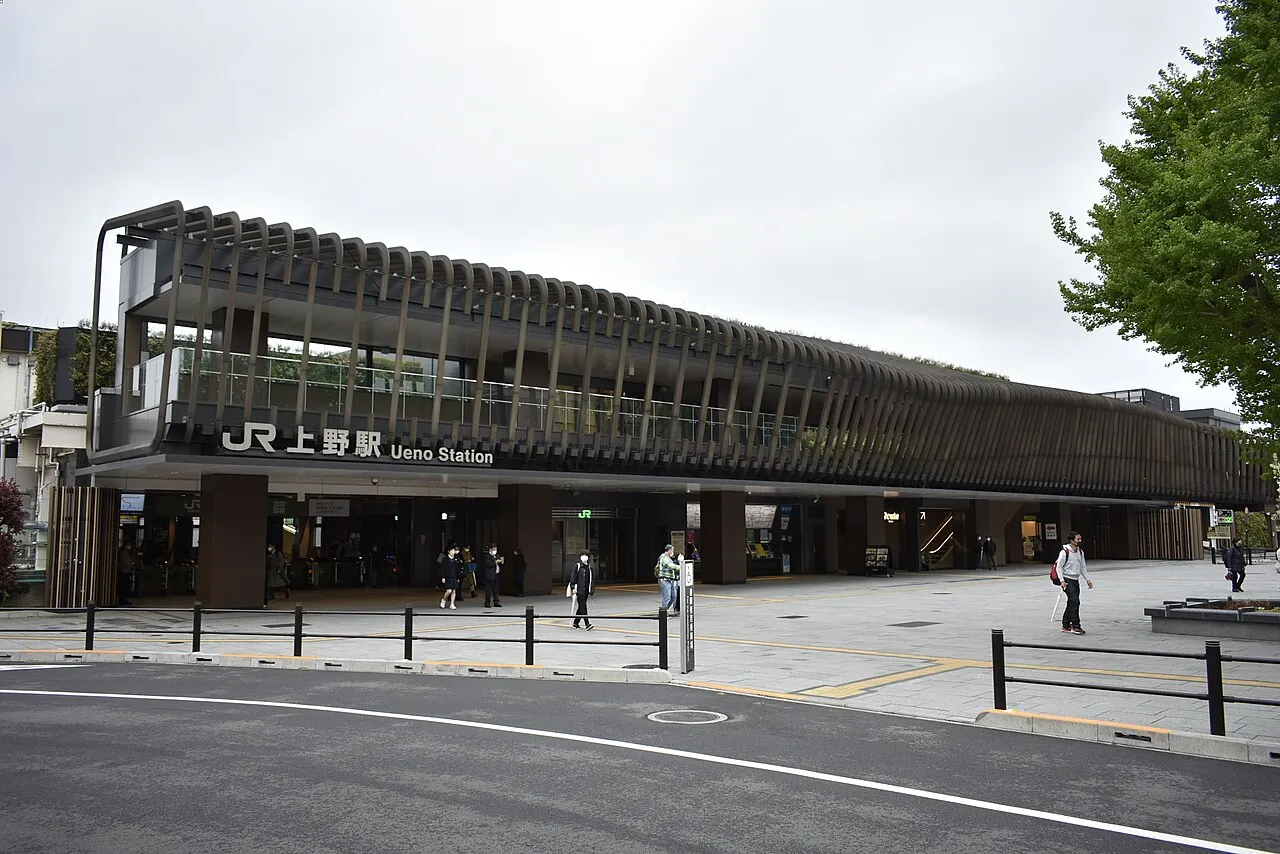

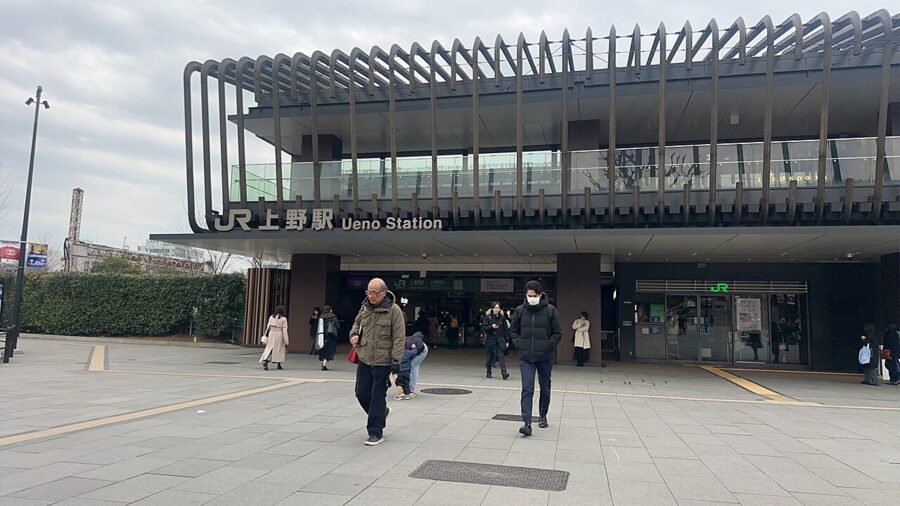
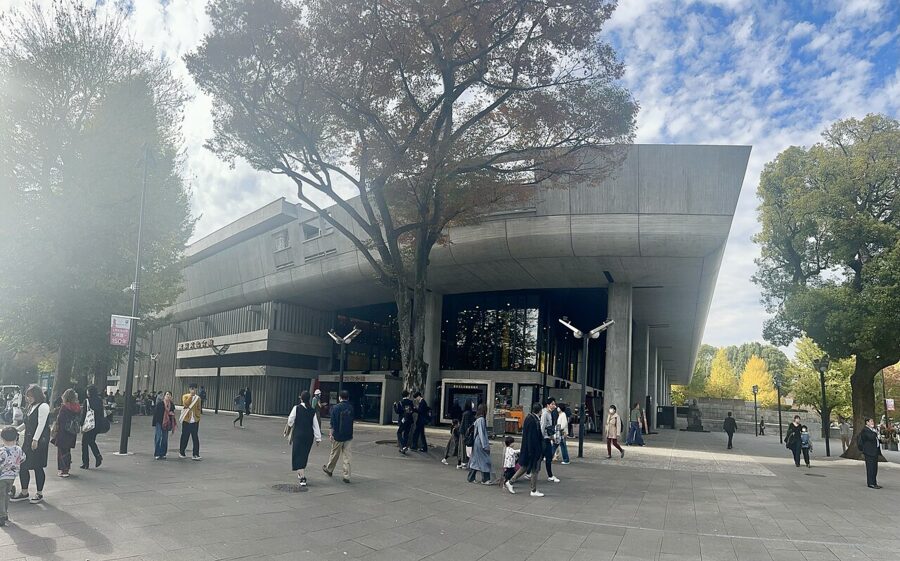
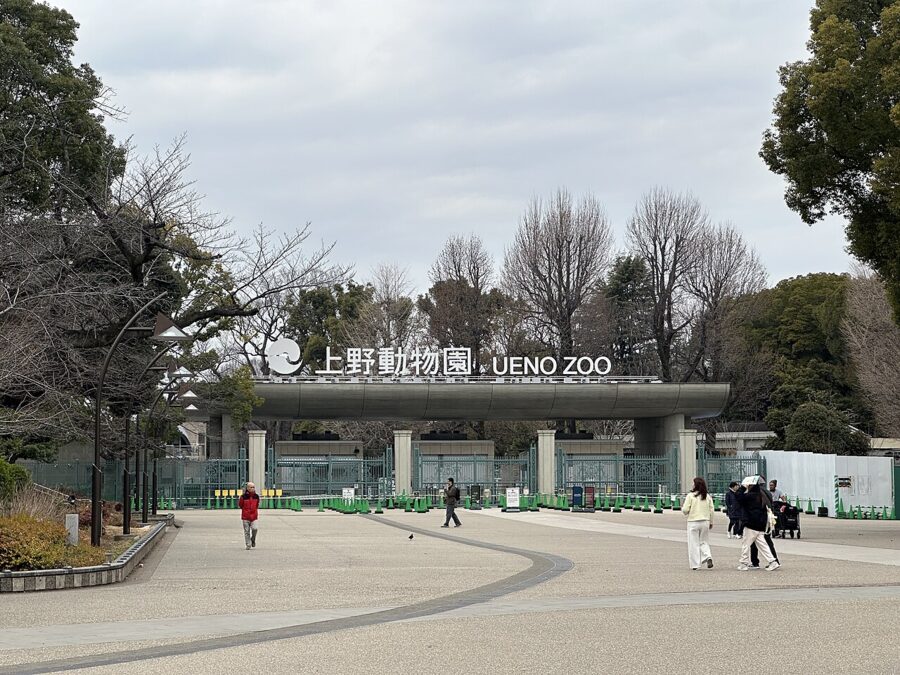
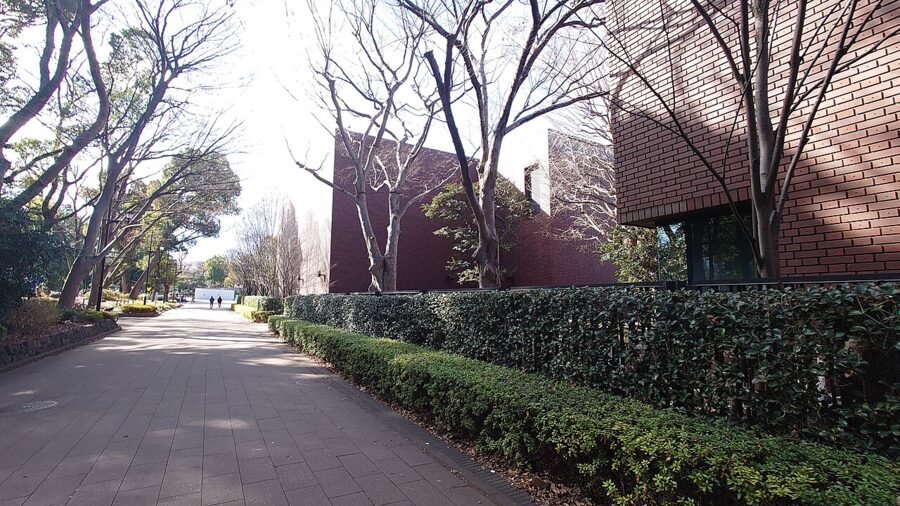
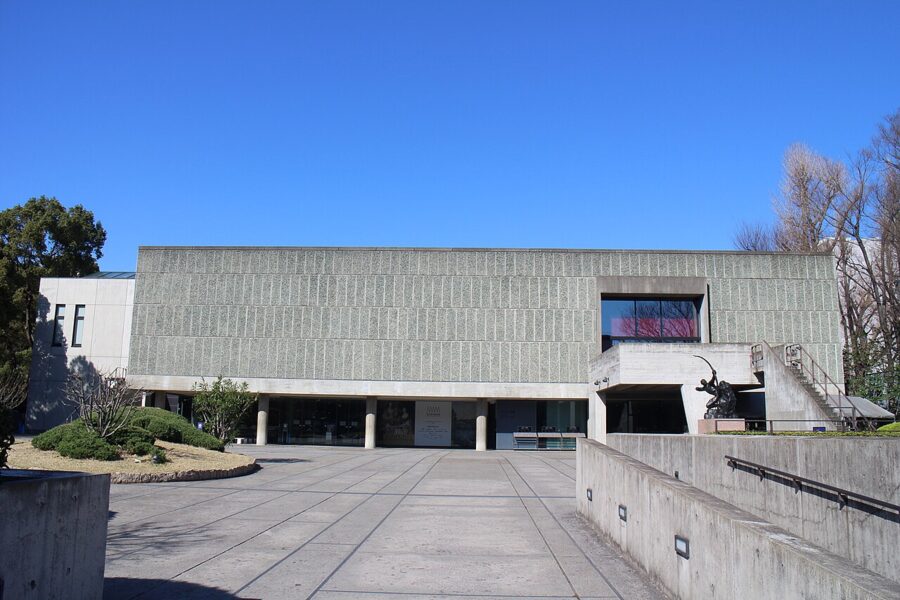
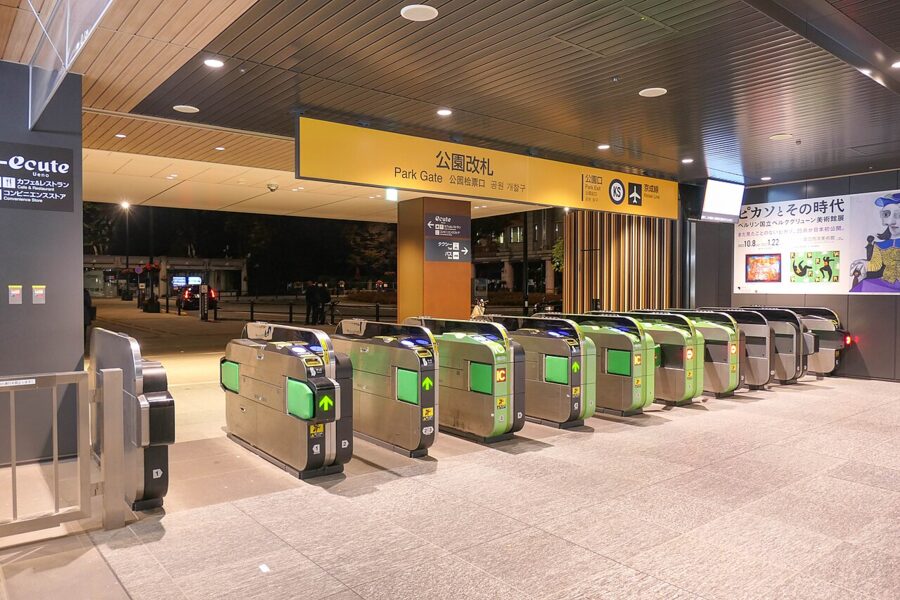
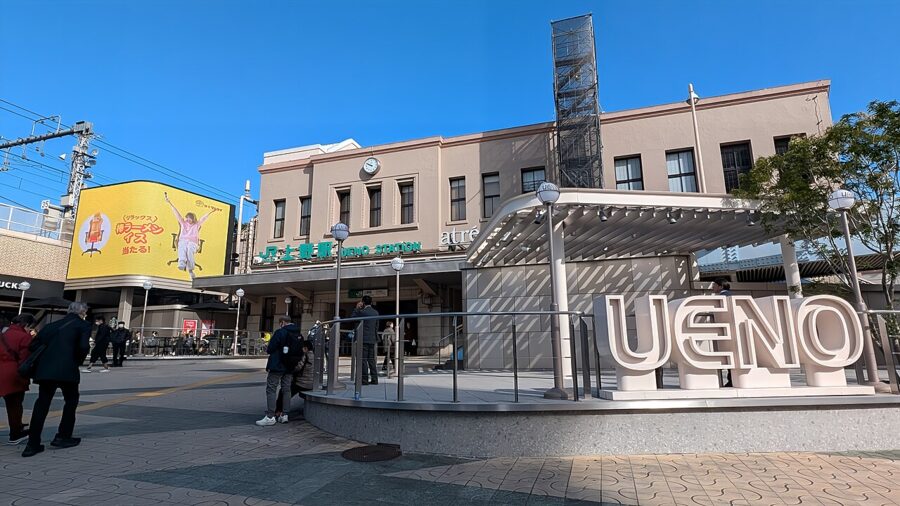
Come out of the Park gate at Ueno and the station is behind you before you have put your card away. There is no road to cross any more. Since March 2020 the gate has stood further north, opening straight onto a paved plaza in Ueno Park, with the concrete eaves of the Tokyo Bunka Kaikan concert hall on your left, Le Corbusier’s National Museum of Western Art on your right and the path to the zoo running ahead under the trees.
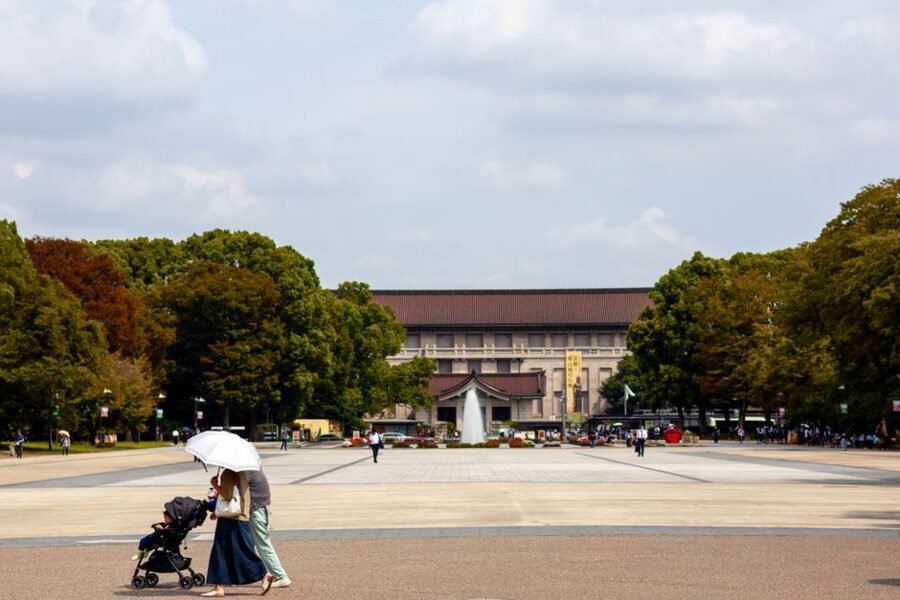
Most people come to Ueno for what is in front of them now: the Tokyo National Museum ten minutes’ walk away, the Western Art museum in two, the zoo, the pond and the temples. For them the Park gate is the only one that matters.
Everyone else should look back at the building. Under and around it are four floors of railway: the Yamanote Line and the commuter lines on a viaduct, the old terminal tracks at street level, the Shinkansen for the north and Hokkaido four levels underground, two subway lines and, across the road, the separate Keisei station where the Skyliner leaves for Narita. Ueno is easier to use than its size suggests, as long as you know which of its gates you want before you go through one.


The park side, before the trains
If you are here for the park, the facts worth having are the opening days. The National Museum of Western Art opens 09:30–17:30, to 20:00 on Fridays and Saturdays, and closes on Mondays; its permanent collection is ¥500 (about US$3). The Tokyo National Museum opens 09:30–17:00, later on Fridays and Saturdays, and its collection galleries cost ¥1,000 (about US$6) as of November 2026. Bags have been screened at the main gate since September 2026, and the ticket queue can pass half an hour, so buy online.
The Tokyo Metropolitan Art Museum, seven minutes from the Park gate, turned a hundred in 2026 and closes on the first and third Monday of each month, or every Monday while a special exhibition is on. Ueno Zoo opens 09:30–17:00 and closes on Mondays. It has had no giant pandas since the twins Xiao Xiao and Lei Lei were returned to China on 27 January 2026, leaving Japan without a panda for the first time since 1972, though the station has kept every panda it owns.


The lines and where they are
JR East runs the main station (上野, Ueno), and Tokyo Metro runs the subway station under the square in front of it. Keisei Ueno (京成上野) is a different station belonging to a different company, a few minutes’ walk away under the edge of the park. The table follows JR East’s own platform list for Ueno.
| Line | Platforms | Level | Where it takes you |
|---|---|---|---|
| Keihin-Tohoku Line (JK) | 1 north, 4 south | High level | 1: Akabane, Urawa, Omiya. 4: Akihabara, Tokyo, Shinagawa, Yokohama |
| Yamanote Line (JY05) | 2 inner loop, 3 outer loop | High level | 2: Nippori, Ikebukuro, Shinjuku. 3: Akihabara, Tokyo, Shinagawa |
| Utsunomiya and Takasaki lines (JU02) | 5, 6, 13–16 | High and low level | Omiya, Utsunomiya, Takasaki |
| Ueno-Tokyo Line | 7, 8, 9 | High level | Through Tokyo to Shinagawa, Yokohama and the Tokaido line |
| Joban Line (JJ01) and its limited expresses | 6, 8–12, 16, 17 | High and low level | Kashiwa, Toride, Mito; the Hitachi and Tokiwa from 8, 16 and 17 |
| Tohoku, Hokkaido, Yamagata, Akita, Joetsu and Hokuriku Shinkansen | 19–22 | Fourth basement level | Sendai, Morioka, Aomori, Shin-Hakodate-Hokuto, Yamagata, Akita, Niigata, Nagano, Kanazawa, Tsuruga |
| Ginza Line (G16), Tokyo Metro | Own platforms | Underground | Asakusa three stops north; Ginza and Shibuya south |
| Hibiya Line (H18), Tokyo Metro | Own platforms | Underground | Kita-Senju north; Akihabara, Ginza and Roppongi south |
| Keisei Line (KS01) | Keisei Ueno station | Underground, across the road | The Skyliner and slower trains to Nippori and Narita Airport |
Two things in that table save the most time. Platforms 2 and 3 are the Yamanote Line, and 3 is the one you want for Akihabara and Tokyo Station; in the middle of the day the Keihin-Tohoku Line’s rapid trains on 4 cover the same ground with fewer stops. And platform 18 is missing because it no longer exists: the old terminal track was closed in 1999, which is why the Shinkansen numbers jump from 17 to 19.

A terminal built in layers
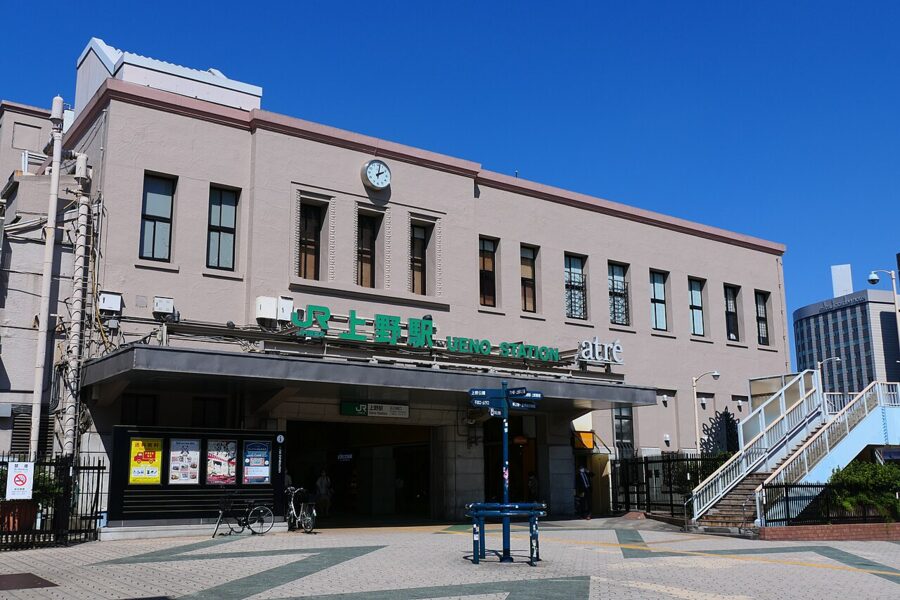
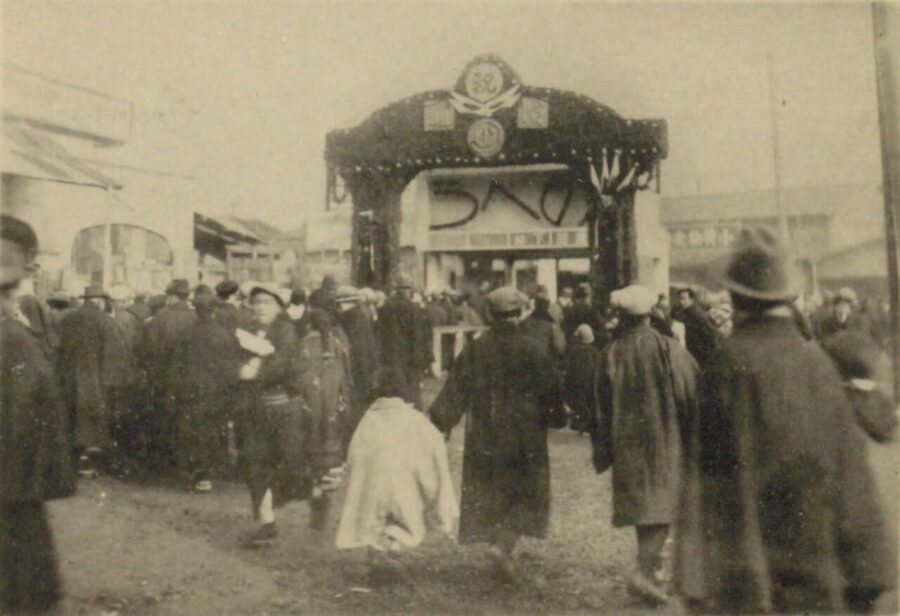
Ueno is older than Tokyo Station by thirty years. The private Japan Railway Company opened its line from here to Kumagaya on 28 July 1883, on land below the Ueno hill where sub-temples of the Tokugawa family temple Kan’ei-ji had stood, and for half a century Ueno was where the trains for the north began and ended. The brick station of 1885 burned in the 1923 earthquake, and the building you see now was finished in 1932: a long, plain, cream front with the departure hall and the arrivals exit placed one above the other, to suit the slope of the ground.
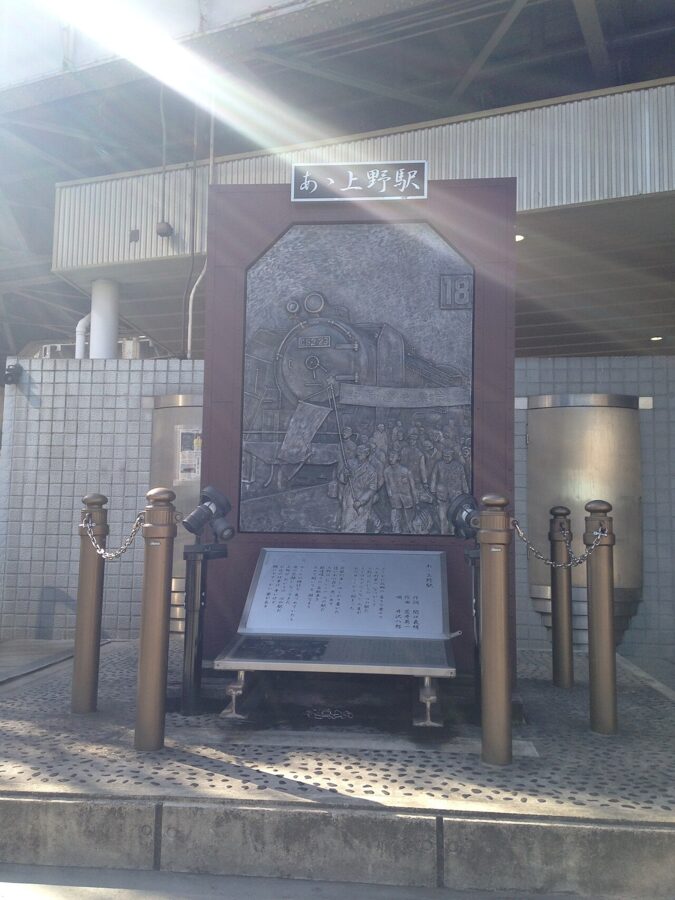
That is still the key to the station’s plan. Through tracks 1 to 12 run on the high level, at the height of the park, while the terminal tracks 13 to 17 end at street level under the concourse, the way the long-distance trains always did. The low-level platforms once ran to 20; 19 and 20 were given up to build the Shinkansen station underneath, and 18, the platform where special trains from the north set down young workers in the 1950s and 1960s, saw its last train in September 1999.
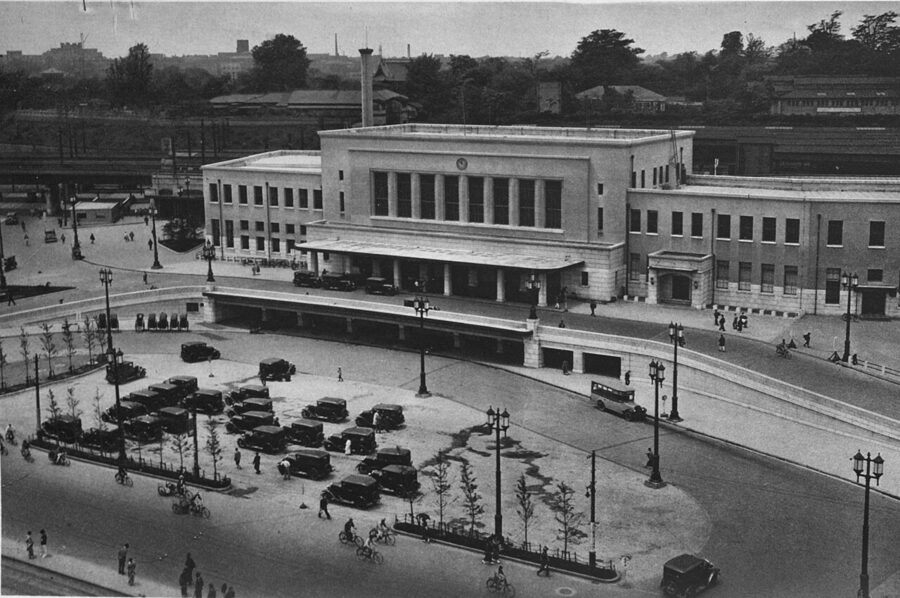
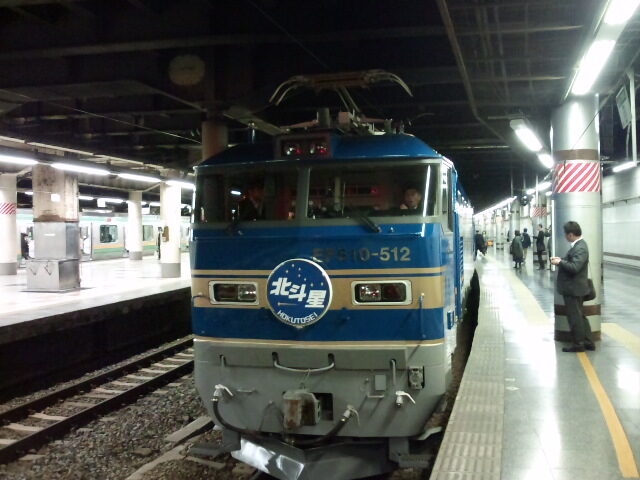
From 1925 a viaduct through Kanda joined Ueno to Tokyo, and the Yamanote Line began to run as a loop, but the trains for the north kept starting here for another ninety years. The first subway in Japan opened from Ueno to Asakusa in 1927, the Shinkansen arrived in 1985, and the last sleepers to Sapporo, the Hokutosei and the Cassiopeia, went in 2015 and 2016. In March 2015 the Ueno-Tokyo Line linked the northern lines to Tokyo and the Tokaido line, and Ueno stopped being the end of the line for most of them, though the low-level tracks still see trains terminate.
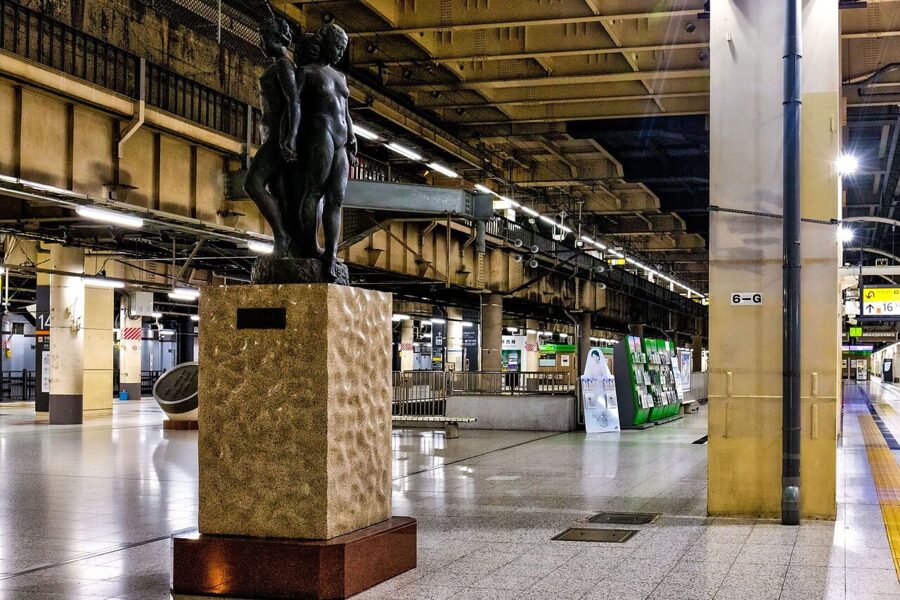


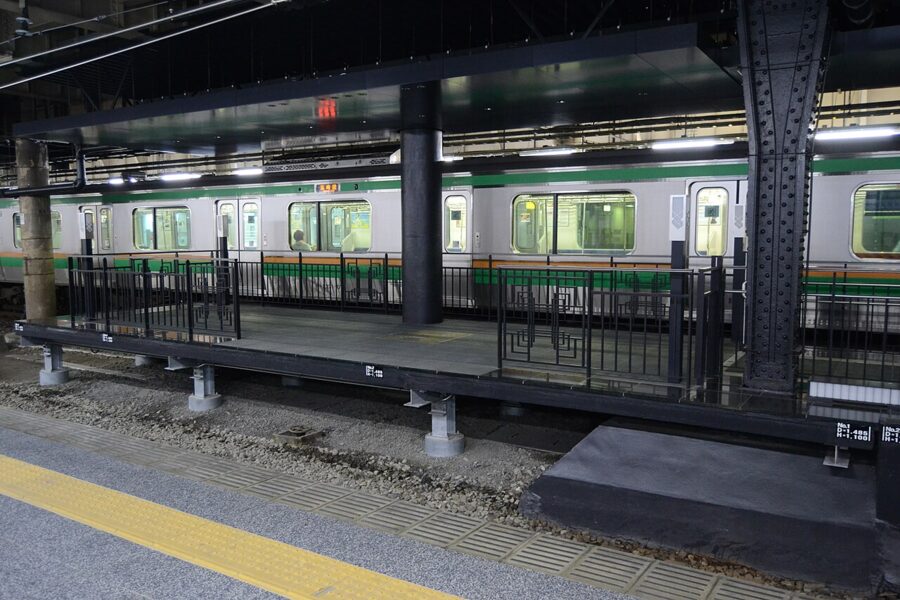
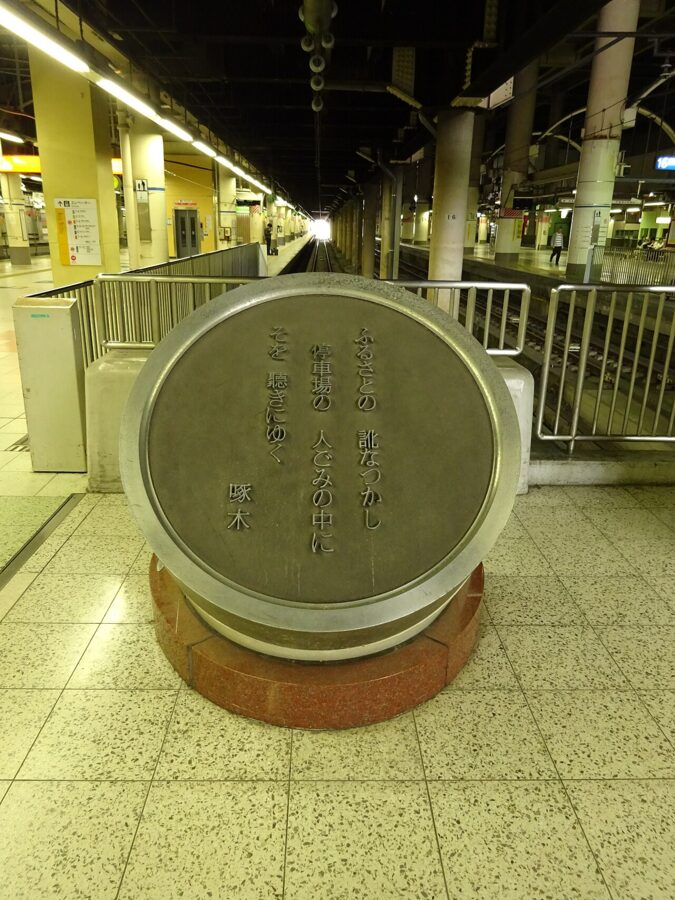
Track 13 still has a train worth seeing, if not catching. JR East’s cruise train, the Train Suite Shiki-shima, begins its tours here, and its passengers board from a private platform 13.5 squeezed between tracks 13 and 14, which leads straight to the lounge car. At the head of track 15 a round stone carries a tanka by the poet Ishikawa Takuboku, published in 1910, about going into the crowd at the station to hear the accent of home. It is the best short history of Ueno there is.


The gates and the exits, and what each is for
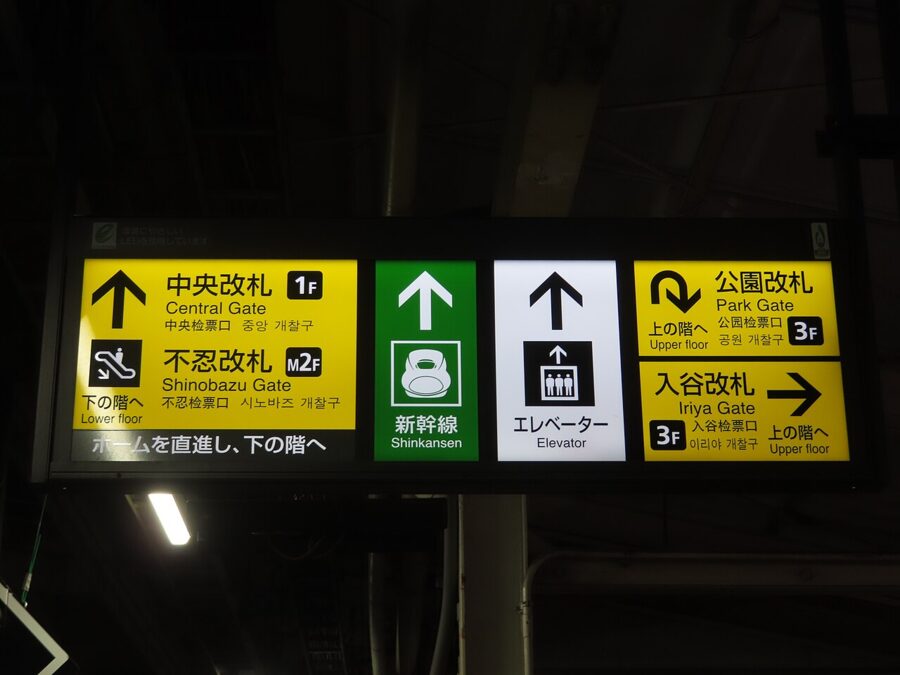
JR Ueno has four ticket gates, and their names are not the same as the exits outside them, which is the one genuinely confusing thing about the station. Pick the gate first. JR East staffs all four from the first train to the last, according to its station page, and the Shinobazu and Park gates switch to a video call to an operator for part of the early morning and, at the Park gate, after 20:00.
| Gate (改札) | Floor | Exits beyond it | Use it for |
|---|---|---|---|
| Park (公園改札) | 3F, high level | Park exit (公園口) | The museums, the zoo, the concert hall, Ueno Park |
| Central (中央改札) | 1F, low level | Main entrance (正面玄関口), Hirokoji (広小路口), the subway | The Ginza and Hibiya lines, Ameyoko, the bus and taxi ranks, Showa-dori |
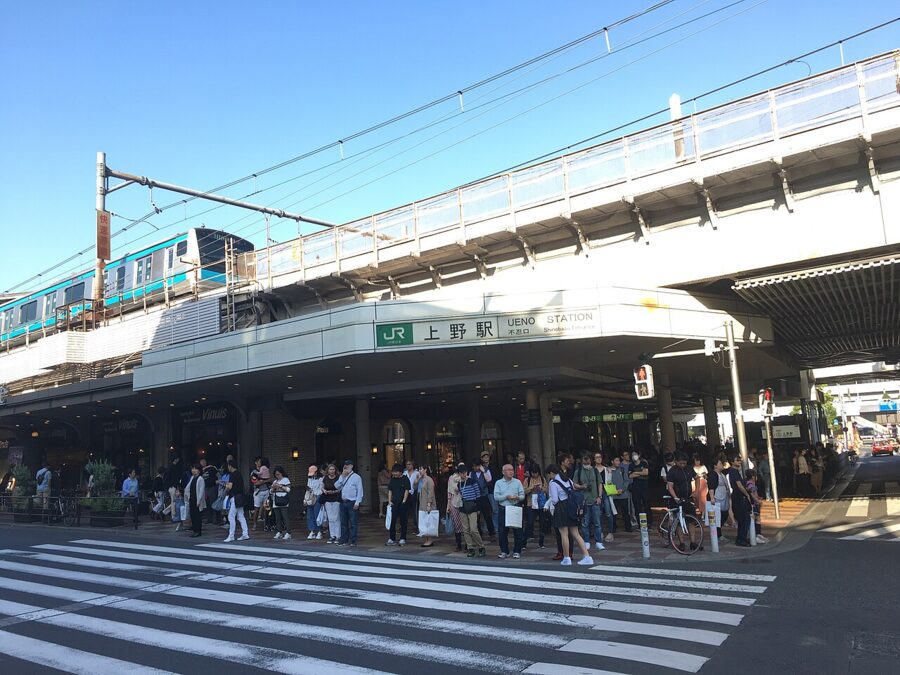
| Shinobazu (不忍改札) | 1F and M2F | Shinobazu exit (不忍口) | Keisei Ueno, Ameyoko, Shinobazu Pond |
| Iriya (入谷改札) | 3F, high level | Panda Bridge exit (パンダ橋口), Iriya exit (入谷口) | Higashi-Ueno, the quiet way across the tracks to the park |
Park gate
The Park gate sits on the high level, so from the Yamanote and Keihin-Tohoku platforms it is a short climb rather than a descent. The new building, which moved the gate about 100 metres north, opened with ten automatic gates where the old one had seven, and the ticket machines beside it run 07:00–20:00. The station’s biggest single bank of lockers is just inside it (more below), which matters now that the national museum turns suitcases away.

Central gate and the Hirokoji exit
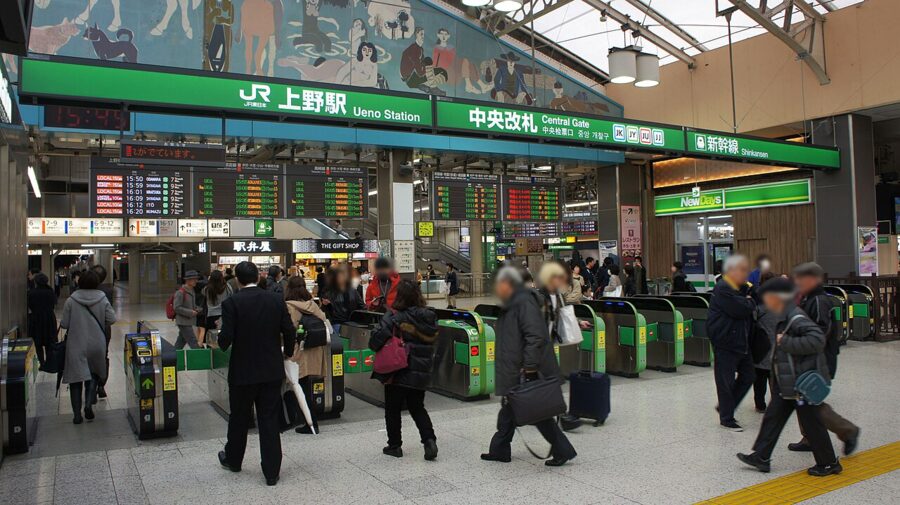
The Central gate opens into the grand concourse of the 1932 building, under a mural about 26 metres long. It is Freedom (自由), painted by Genichiro Inokuma in 1951 in house paint and oil on plywood, and restored for the third time in 2025 with graduates of the Tokyo University of the Arts on the scaffolding. Over the ticket machines, Ikuo Hirayama’s stained glass made for the Shinkansen’s arrival in 1985 was taken down for repair, with its return planned for the 2026 financial year, while JR East rebuilds the ticket office and visitor counters around the concourse.

Beyond the gate, the Main entrance leads out to the forecourt and Showa-dori, and the Hirokoji exit, at the south end of the building, comes out by the railway bridge on the Ueno-Hirokoji side; it is one of the two exits for Ameyoko. The relief beside it commemorates “Aa Ueno-eki”, the 1964 song for the teenagers who came south in groups to work in Tokyo factories and shops, and it carries the sign for platform 18, where their trains came in.


Shinobazu gate
Shinobazu is the gate for Keisei Ueno: out through the exit and across Chuo-dori, where the Keisei entrance is set into the slope of the park. It is also the gate with the largest lockers (LL size) just outside, and the one gate with no step-free route to the platforms, so anyone with a wheelchair, a pram or a heavy case should use the Central gate instead.

Iriya gate and the Panda Bridge
The Iriya gate, on the high level, is where the station’s panda lives: a large model in a glass case facing the gates. The exit beyond is named after the Panda Bridge (パンダ橋), a footbridge across the whole width of the tracks that joins Higashi-Ueno on the east side to the park on the west. Crossing it is the quietest walk between the two halves of Ueno, and few people take it.
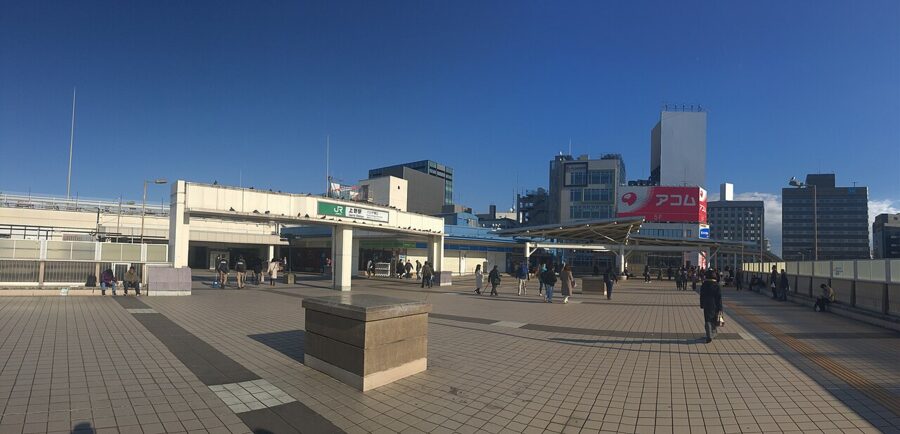

On the east side, the Asakusa exit (浅草口) is the one to use if you are walking to Asakusa, and beside it Tokyo University of the Arts and JR East run a small gallery, CREATIVE HUB UENO “es”.
The Ginza and Hibiya lines
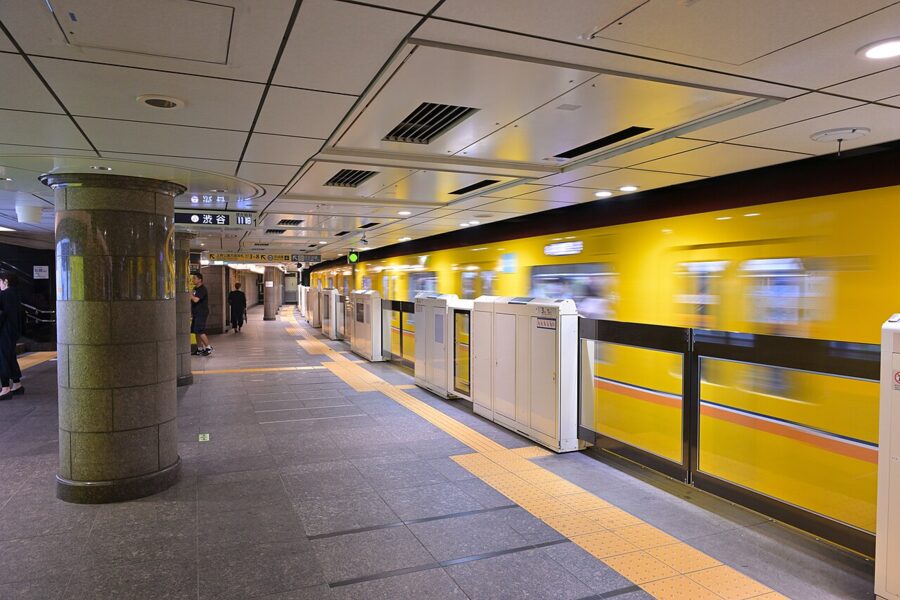
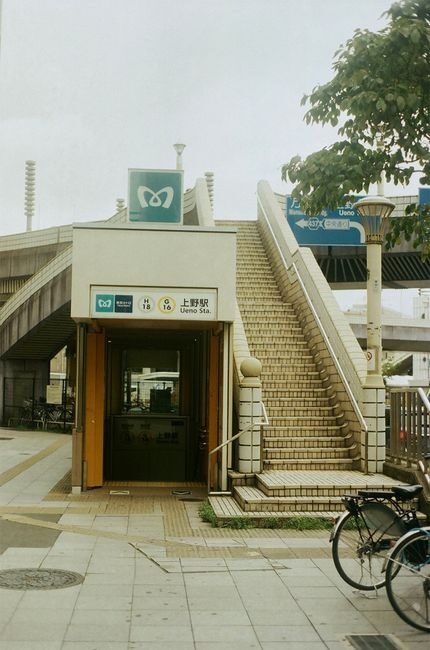
Ueno is where the Tokyo subway began. The Tokyo Underground Railway opened its first stretch, Ueno to Asakusa, on 30 December 1927, and that line is now the orange Ginza Line (G16). Asakusa is three stops away for ¥180 (about US$1.10) by ticket or ¥178 by IC card, and the same line runs south through Kanda, Nihombashi and Ginza to Shibuya.
The grey Hibiya Line (H18) runs a little further east, under Showa-dori: north to Kita-Senju, south to Akihabara, Ginza, Roppongi and Naka-Meguro. Tokyo Metro counts about 192,000 people a day through its two lines here (2025 average), the tenth busiest of its 130 stations. From JR, follow the signs from the Central gate; an escalator drops from the JR concourse straight into the subway concourse, and the Ginza Line’s lift runs from that gate to the Asakusa end of its platform.

Keisei Ueno and the Skyliner
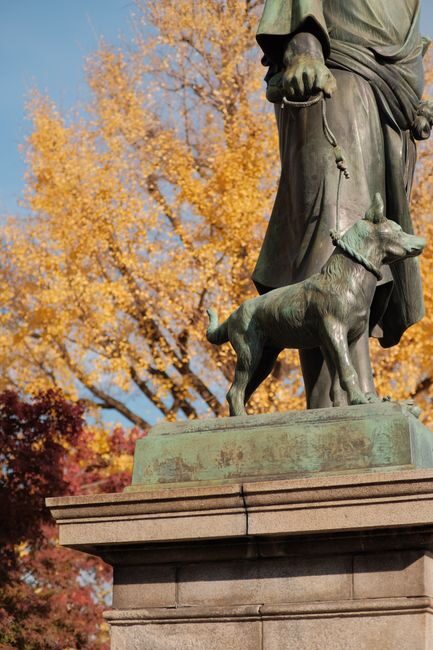
The Skyliner does not stop at Ueno Station. It starts at Keisei Ueno, a separate terminus opened in 1933 directly under Ueno Park, whose main entrance is set into the hillside below the park’s southern entrance and the Saigo Takamori statue, across Chuo-dori from JR’s Shinobazu exit. It is about three minutes on foot. In the rain there is a way underground too: Keisei’s lift and stairs connect to the passage that runs to the Tokyo Metro concourse.
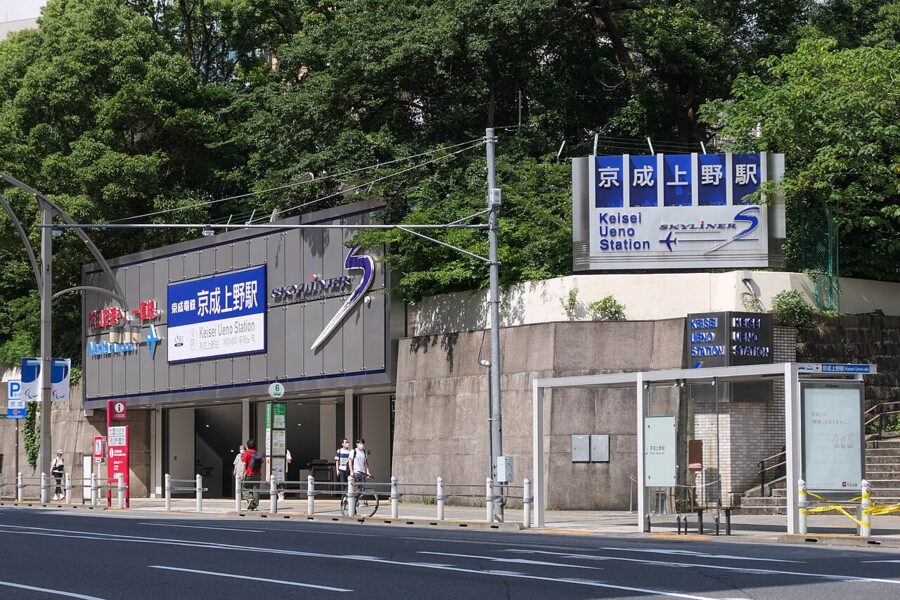

The Keisei Skyliner runs three times an hour and reaches Narita Airport Terminal 2·3 in 41 minutes from Keisei Ueno, stopping only at Nippori. The fare is ¥2,580 (about US$16) as of November 2026, made up of a ¥1,280 ticket fare and a ¥1,300 Skyliner seat ticket, and every seat is reserved. Keisei sells the same one-way trip for ¥2,310 online, or ¥4,500 return against ¥5,160 at the counter.
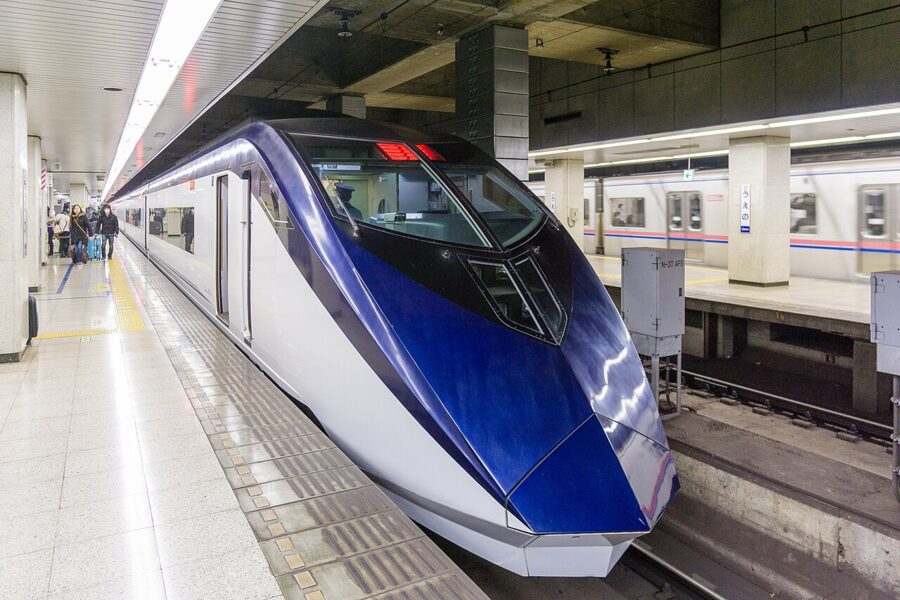

Prices are going up. Keisei applied on 6 November 2026 to raise the Skyliner seat ticket by ¥200 on 13 March 2027, taking the trip to ¥2,780, and then the fare itself in March 2028, which would make it ¥3,000; neither step had been approved as of late November 2026. Even then it would stay cheaper than the Narita Express from Tokyo Station, ¥3,140 for a reserved seat.
Should you go to Keisei Ueno or change at Nippori? If you are coming on JR from anywhere else, change at Nippori, where Keisei and JR share a building and the transfer is a short walk without the street. If you are staying near the park, Ameyoko or Inaricho, or arriving on the Ginza or Hibiya Line, Keisei Ueno is closer and you get on first. The slower trains leave from here too: the Access Express takes about an hour for ¥1,280 with no seat ticket, and the main-line limited expresses about seventy-five minutes for ¥1,050; the rest of the choices from Narita Airport to Tokyo run from Nippori, Tokyo Station and the bus stops.
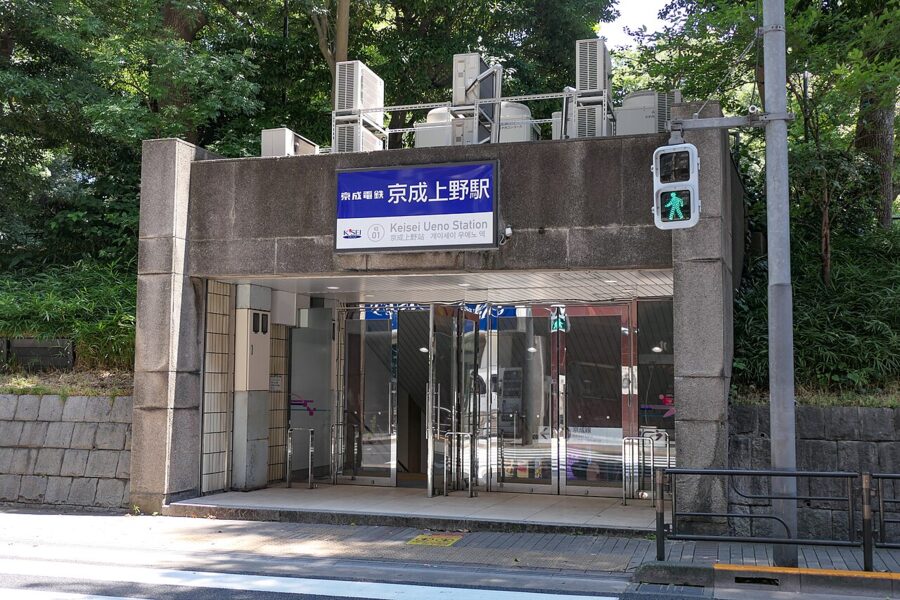

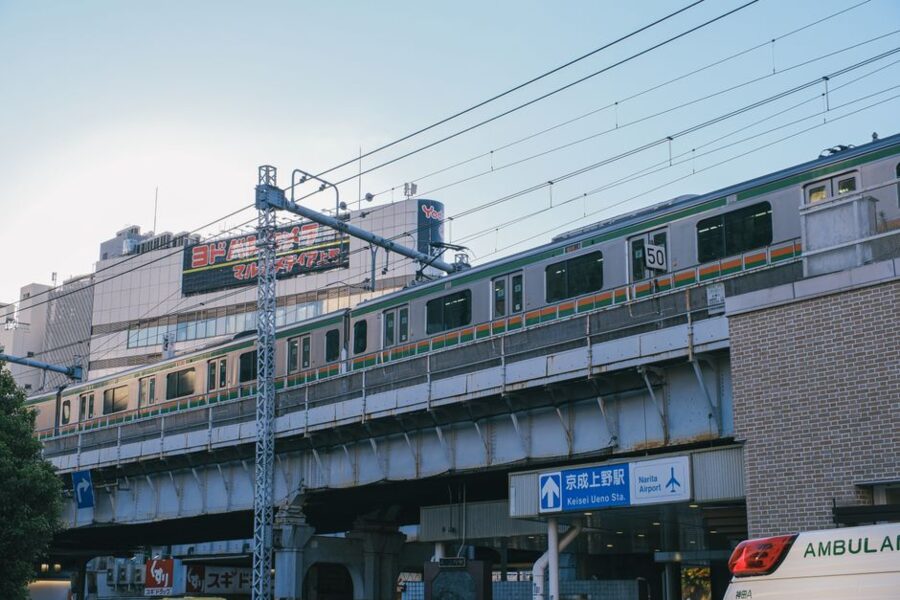
Inside the Keisei gate there is a Tokyo Tourist Information Center (09:30–18:30 daily), and the ticket counter turns Skyliner vouchers into seat reservations. One trap: a round-trip Skyliner voucher can only be exchanged at the airport stations, never at Ueno or Nippori.
The Shinkansen at Ueno
The Shinkansen station is four floors down, on two island platforms serving tracks 19 to 22, and it opened on 14 March 1985, six years before the line reached Tokyo. Every JR East Shinkansen line uses it: the Tohoku Shinkansen to Sendai, Morioka and Shin-Aomori, the Hokkaido Shinkansen to Shin-Hakodate-Hokuto, the Yamagata and Akita trains coupled to them, the Joetsu to Niigata and the Hokuriku to Nagano, Kanazawa and Tsuruga. It is Tokyo Station five or six minutes later, for anyone who lives, sleeps or sightsees on this side of the city.
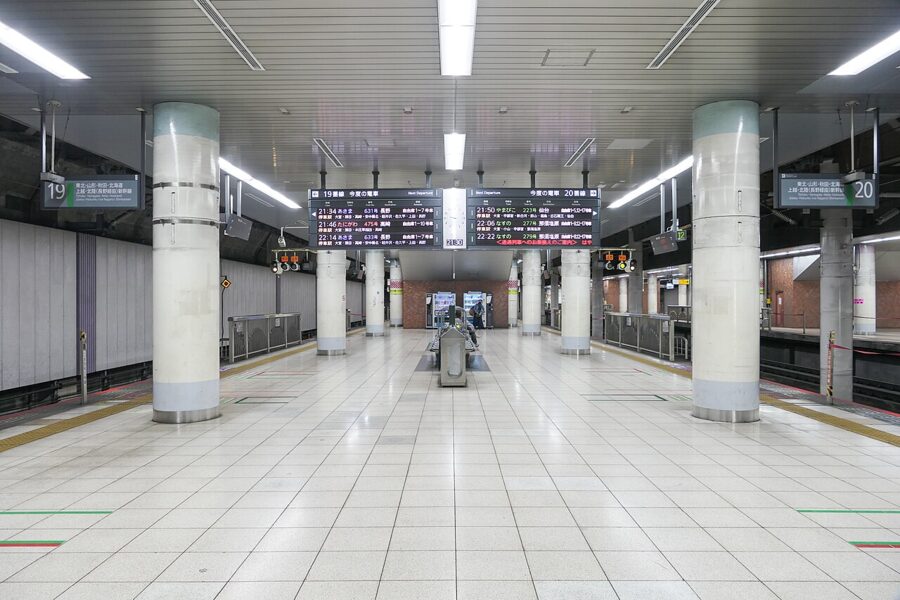
Nearly every train stops, but not quite all. In the December 2026 JR East timetable a handful of weekday trains run from Tokyo to Omiya without calling here, among them the 08:18 and 09:36 Hayabusa from Tokyo to Shin-Hakodate-Hokuto, the 09:12 Toki to Niigata and the 07:20 Kagayaki to Tsuruga. Check that your train shows a Ueno time before you plan around it. In the other direction, a few extra Hayabusa start here on busy days, a reminder that the old terminal still takes the overflow.
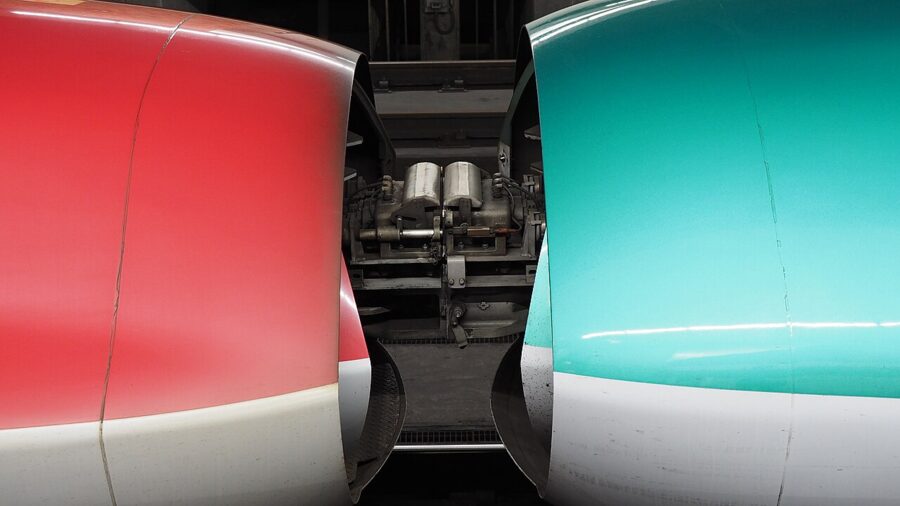

Allow more time than you think for the change. JR East’s own planning figure is 17 minutes from the Yamanote, Keihin-Tohoku or terminal platforms to the Shinkansen, and 22 minutes from the subway, because the route goes down four levels and through the Shinkansen transfer gate. The ticket office at that gate opens 05:30–23:00 for same-day tickets only, and the Central gate office 05:30–22:00.
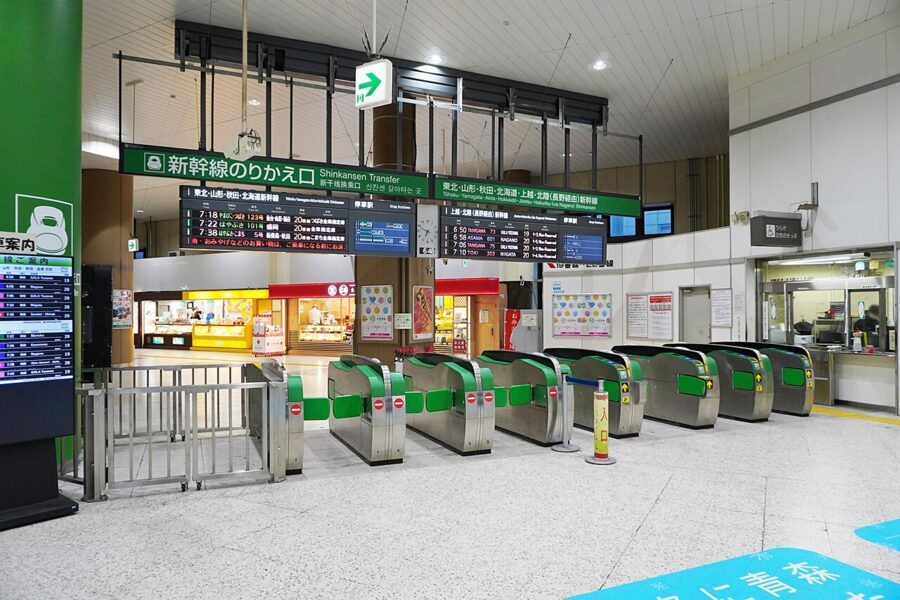

Starting from Ueno also costs a little less. The fare is the same as from Tokyo, because both are in the Tokyo ward zone, but the Shinkansen charge is about ¥210 lower; a reserved seat on the Hayabusa from Tokyo to Sendai is ¥11,630 (about US$73) as of 2026, so from Ueno it comes to about ¥11,420, as fare guides calculate it. The one advantage of Tokyo is the empty train: unreserved seats on a Yamabiko that starts there are often gone by Ueno.
For the Japan Rail Pass, Ueno has a JR EAST Travel Service Center that exchanges vouchers and hands over passes bought online, and reserved-seat ticket machines with passport readers (first train to 23:50) that issue online passes too, so you can collect a pass and book the first Hayabusa without going to Tokyo Station at all.
Lockers, shops and the practical things
Lockers
Ueno has lockers in 21 places, 13 of them JR’s, 5 Tokyo Metro’s and 3 Keisei’s, according to JR East’s own count in October 2026. Most JR banks take IC cards and other cashless payment only, and only a few still take coins, so have a Suica or PASMO ready. Prices depend on size and are shown on each locker.
- Inside the Park gate: turn right after the gates into the north-south passage for the largest single group, 188 lockers including 100 large ones. The obvious choice for the museums.
- Inside the Shinobazu gate: 273 lockers along the passage from the platforms, the most in the station.
- Outside the Shinobazu gate: turn right; this is where the 20 extra-large (LL) lockers are, the ones that take a big case with a bag on top.
- By track 17 and the Shinkansen gate: about 185 lockers for people changing trains.
- Outside the Iriya gate: small groups, one beside the panda statue.
JR East’s Multi Ekicube lockers can be reserved online, and the JR East app shows which banks have space. At Keisei Ueno the three locker groups are between the gate and the car park.
ecute and the shops inside the gates
Ueno is good at feeding people who have not left the station. ecute Ueno has 67 shops, most of them on 3F inside the gates beside the Park gate, open roughly 09:00–21:00 (to 22:00 on Fridays) and the restaurants 10:00–22:00. The pick of them, as of November 2026: Taimeiken for an omelette rice that has been a Tokyo standard for more than ninety years, the stand-up sushi counter of Sado Benkei, Onyanma for udon from 07:00, Asakusa Imahan’s sukiyaki bento and Maisen’s tonkatsu for the train, and Hanagataya for Tokyo sweets and bento if you need a present in a hurry.
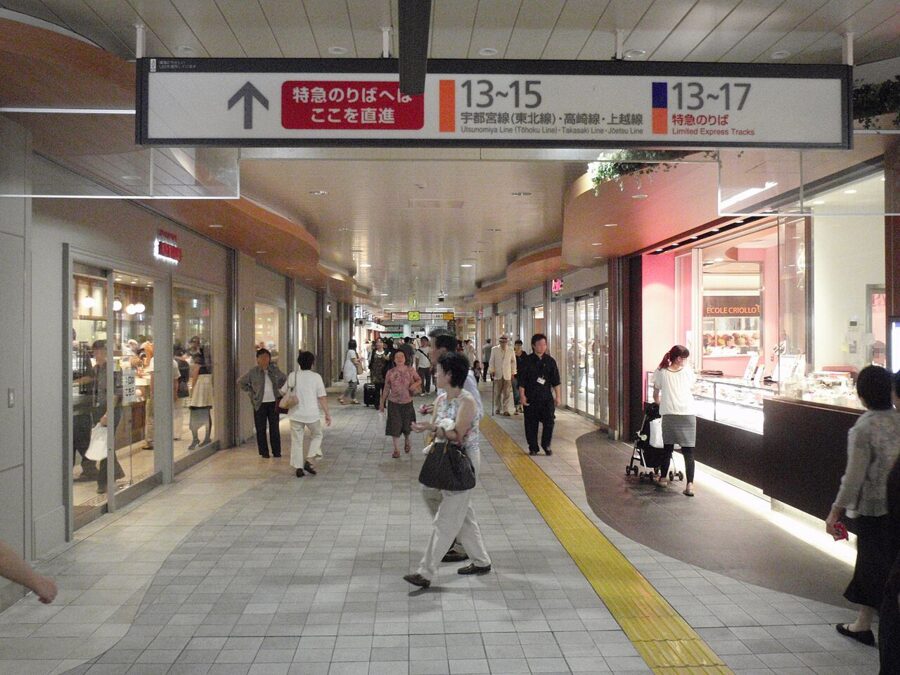
Inside the gates there is also a Kinokuniya supermarket, a bookshop open from 07:00 and a Uniqlo, and the NewDays on the main transfer bridge opens 05:50–24:10, first train to last.
Ameyoko
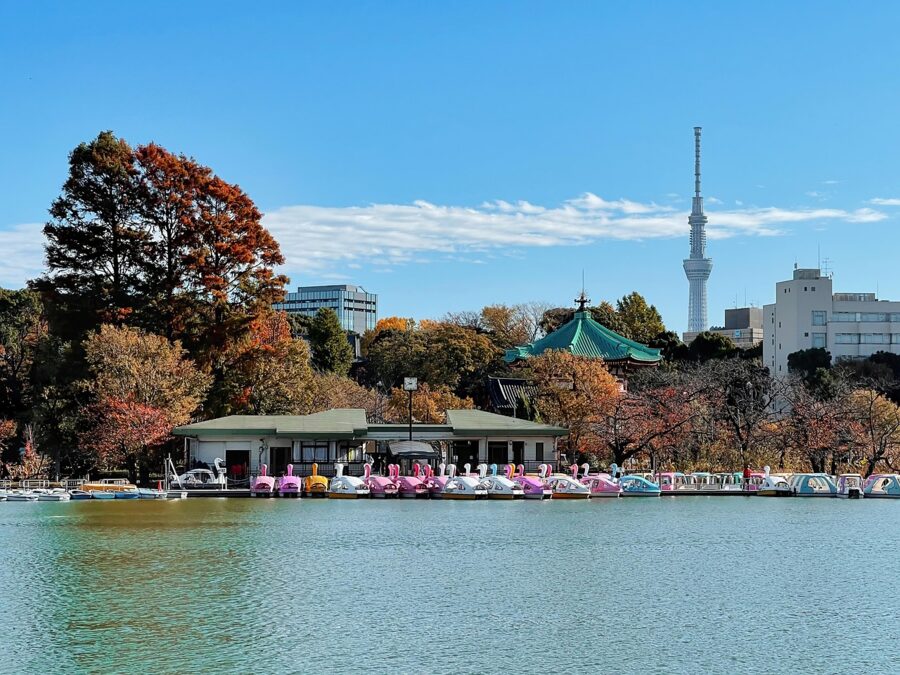
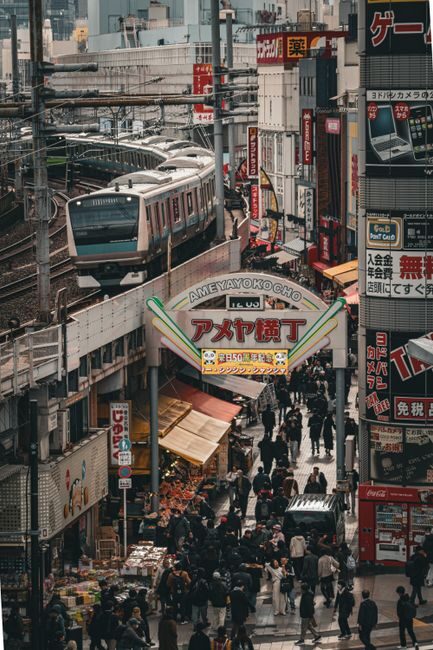
Out of the Shinobazu or Hirokoji exit and across the road, Ameyoko (アメ横) runs south beside and under the JR viaduct to Okachimachi. It began as a black market after the war, named for the sweets (ame) its stalls sold, and it is now dried fish, cut fruit on sticks, trainers, cosmetics and standing bars, busiest at the end of the year when Tokyo buys its New Year seafood here. Walk it one way and take the Yamanote back from Okachimachi.
Step-free routes
From street level, use the lifts on the main forecourt or in front of the Marui store on Chuo-dori to reach the gate floor. The Central, Park and Iriya gates all have step-free routes to every platform, the Shinkansen included; the Shinobazu gate does not. Platform doors are fitted only on the Yamanote and Keihin-Tohoku platforms, 1 to 4.
Tokyo Metro has a lift from exit 5a to the Ginza Line’s park-side gate and another from its JR-side gate down to the platform; its barrier-free page lists any lift out of service. Keisei Ueno has lifts at its main entrance and on the subway passage, and asks wheelchair users to call ahead if they can.
Ueno or Tokyo Station as a base
The question most people bring to Ueno is whether to stay near it. For the north and for Narita, it is a better base than Tokyo Station; for the Tokaido Shinkansen to Kyoto and Osaka, and for Haneda, Tokyo wins, though Tokyo is under ten minutes away on the Yamanote, Keihin-Tohoku or Ueno-Tokyo Line. It is also far easier to find your way around than Shinjuku.
| Going to | From Ueno | From Tokyo Station |
|---|---|---|
| Sendai, Aomori, Hokkaido, Niigata, Kanazawa | Almost every Shinkansen stops, 5–6 minutes after Tokyo; the Shinkansen charge is about ¥210 less | The trains start here: first choice of unreserved seats |
| Kyoto, Osaka (Tokaido Shinkansen) | Change at Tokyo; under ten minutes by JR | Direct |
| Narita Airport | Skyliner from Keisei Ueno: 41 minutes, ¥2,580, three an hour | Narita Express: ¥3,140 reserved; or the ¥1,500 bus |
| Haneda Airport | Change at Hamamatsucho or Shinagawa | The same changes, a few stops nearer |
So the decision comes down to the train you take on the first and last day. If it is the Skyliner in and a Hayabusa north, Ueno is the base; if it is a Nozomi to Kyoto, sleep near Tokyo Station and visit Ueno for a day. Either way, the museums open at 09:30, the Park gate is the one you want, and the lockers just inside it will take the case the museum will not.