
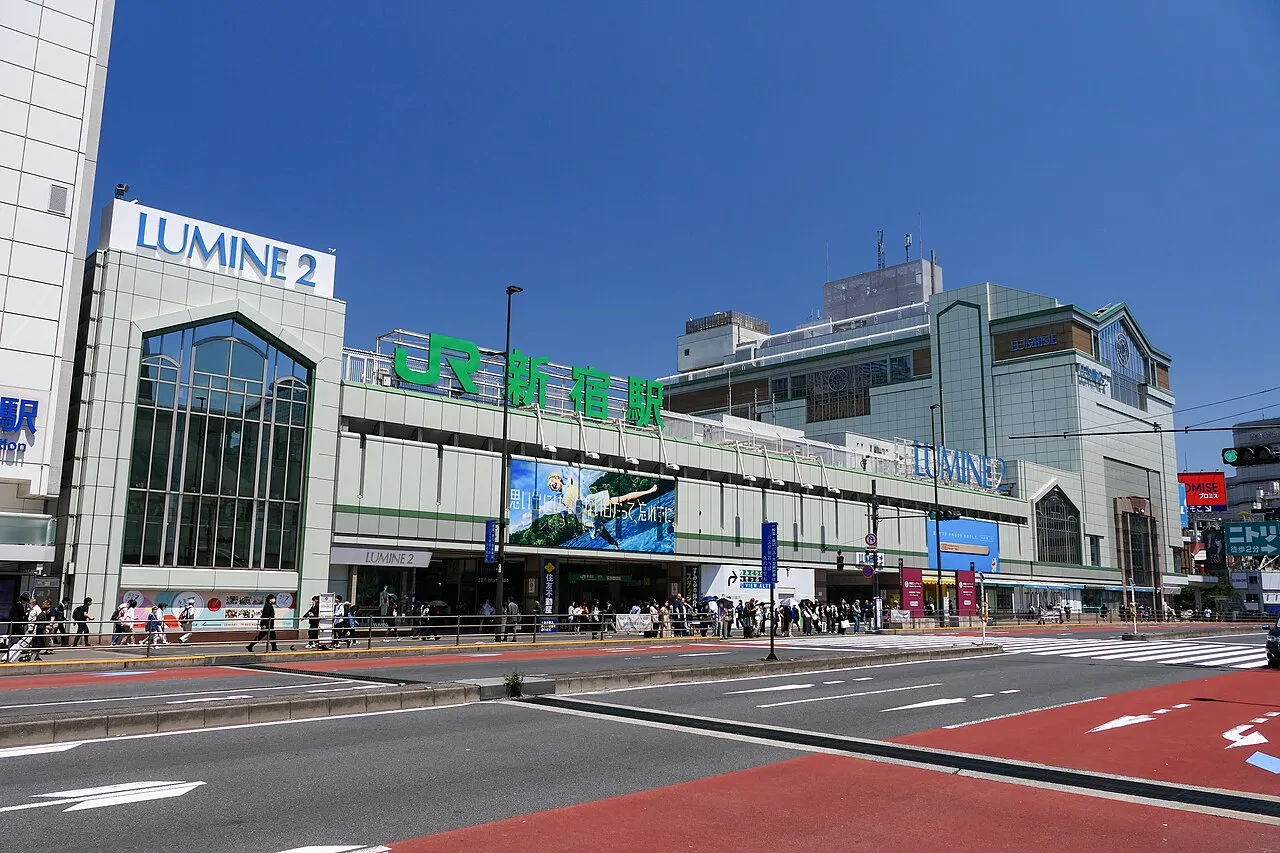

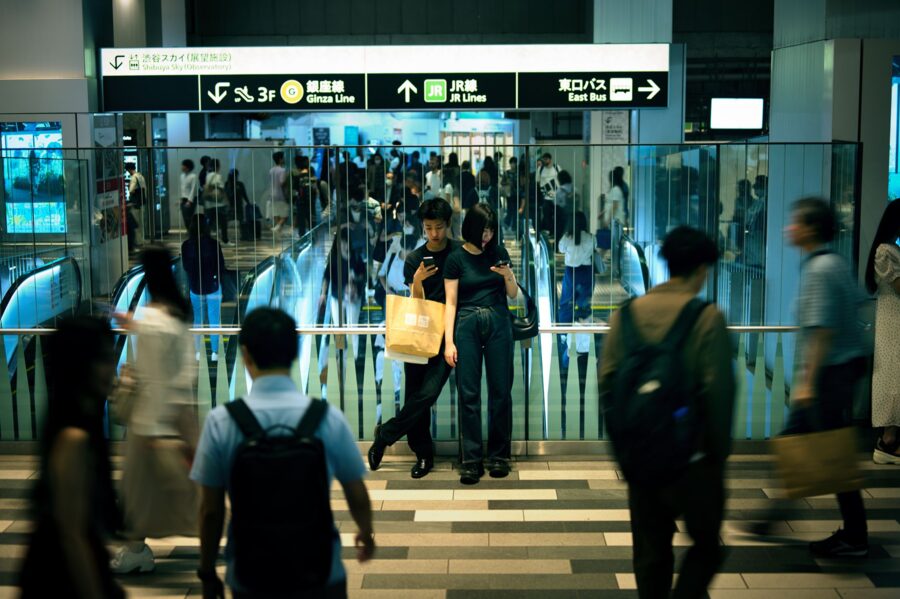
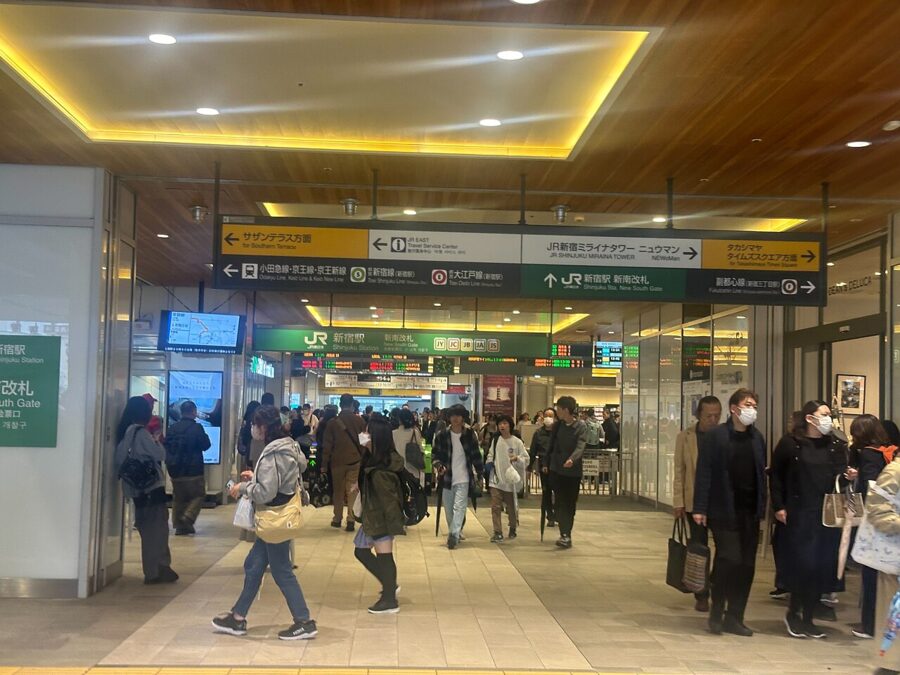
Shinjuku Station has more than two hundred ways out, and you need exactly one of them. The trouble is that the sign above your head says East, West, South, New South, Southeast, Koshu Kaido and Miraina Tower, and at least three of them would technically get you there. Pick the wrong one and you surface on the far side of eight island platforms and Koshu Kaido, ten minutes from where you meant to be.
The station is not one station. It is four railway companies and the Tokyo government’s subway sharing one name, with more stations joined to it underground and a bus terminal on its roof. JR East runs the middle, Odakyu and Keio run terminals on its west side, three subway lines lie under the streets around it, and Seibu has its own terminus a few minutes’ walk to the north.
目次Contents11
- The busiest station in the world, and what that means for you
- The operators and the lines
- The exits, and which one to use
- Transfers, and how long to allow
- The west side rebuild: what is closed or moved now
- Limited expresses: Azusa, Fuji Excursion, Narita Express and Romancecar
- Busta Shinjuku and the highway buses
- Lockers and luggage
- Getting round step-free
- Rush hour and the last-train crush
- Mistakes people make
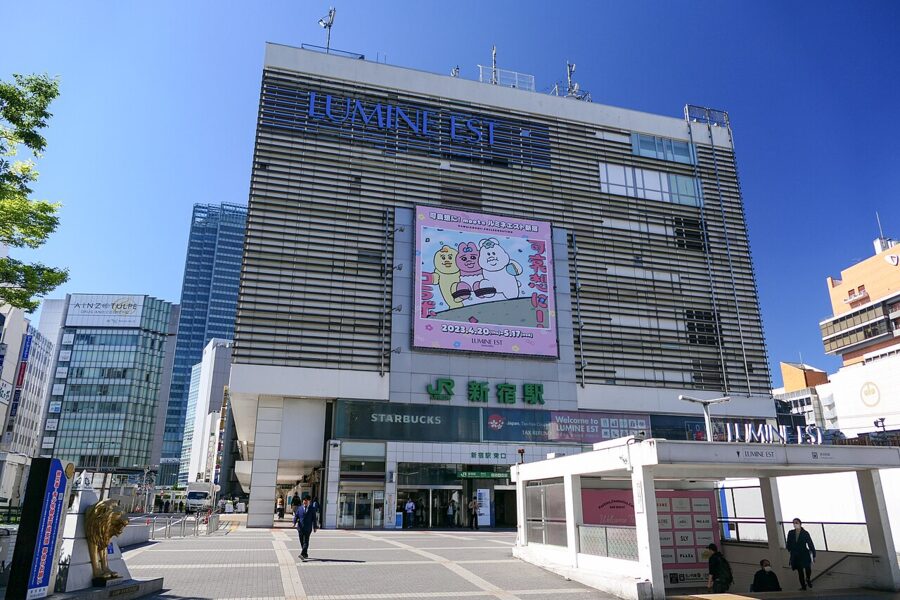

Treat it as a cluster rather than a building and it gets simpler: JR in the middle, the private railways to the west, the subways underneath, Busta Shinjuku above the tracks at the south end. Each piece is easy; the joins are where the minutes go.
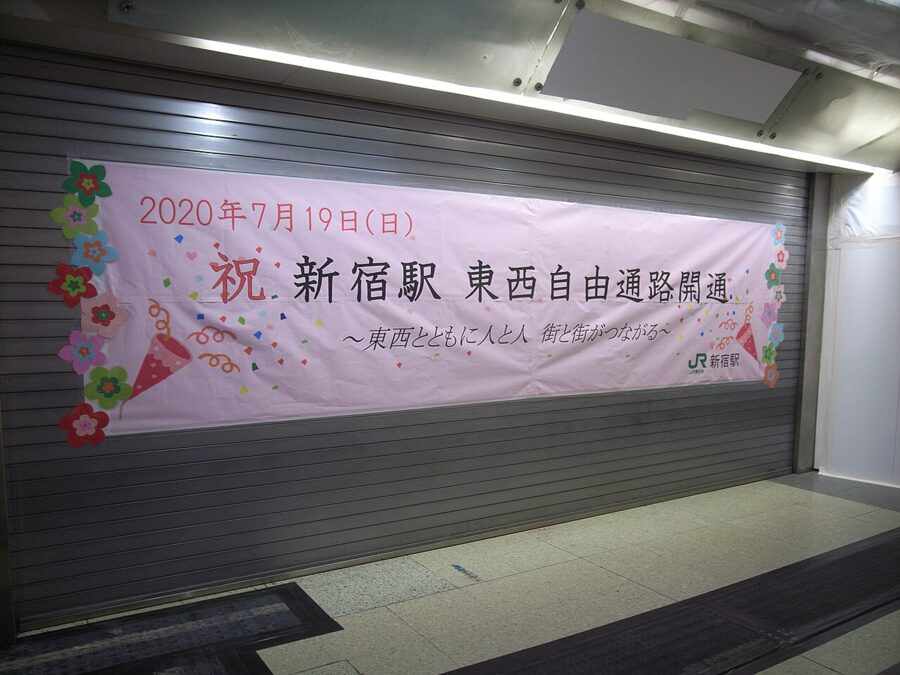
The change that made the place easier came in July 2020, when JR opened its east-west free passage. Before that, crossing the station without a ticket meant a long walk round.

The busiest station in the world, and what that means for you
Guinness World Records lists Shinjuku as the busiest railway station on earth, with an average daily throughput of 2,704,703 passengers in 2022, when travel was still down about a fifth on pre-pandemic levels. Odakyu alone handled 450,952 passengers a day in the 2024 financial year.
The reason is geography. Shinjuku is where the lines from the western suburbs meet the lines into central Tokyo, so commuters from Hachioji, Machida or Tachikawa change here twice a day. The station opened in 1885 as a quiet stop on what is now the Yamanote Line, and each railway that arrived built its own terminal beside the others rather than sharing one.
For a visitor it means crowds, and routes that are shorter on the map than on foot, because the stairs to each platform sit at fixed points along the concourses.
The operators and the lines
Station numbers are the ones printed on the platform signs.
| Operator | Lines | Station number | Where in the station |
|---|---|---|---|
| JR East | Yamanote, Chuo Rapid, Chuo-Sobu local, Saikyo, Shonan-Shinjuku; Narita Express, Azusa, Kaiji, Fuji Excursion, Nikko and Kinugawa limited expresses | JY 17, JC 05, JB 10, JA 11, JS 20 | The middle: sixteen tracks at ground level, gates underground (east, central east, west, central west), on the south bridge (south, southeast) and on the Busta deck (New South, Koshu Kaido, Miraina Tower) |
| Odakyu | Odawara Line, Romancecar limited expresses | OH 01 | West side, two levels: ground-level and underground platforms |
| Keio | Keio Line | KO 01 | West side, underground, beside Odakyu |
| Keio and Toei | Keio New Line and Toei Shinjuku Line (through trains) | KO 01, S 01 | Deep under Koshu Kaido, south-west of JR |
| Toei | Oedo Line | E 27 | Seven levels down, south-west of the Keio New Line |
| Tokyo Metro | Marunouchi Line | M 08 | Under the north side of the station, between the east and west exits |
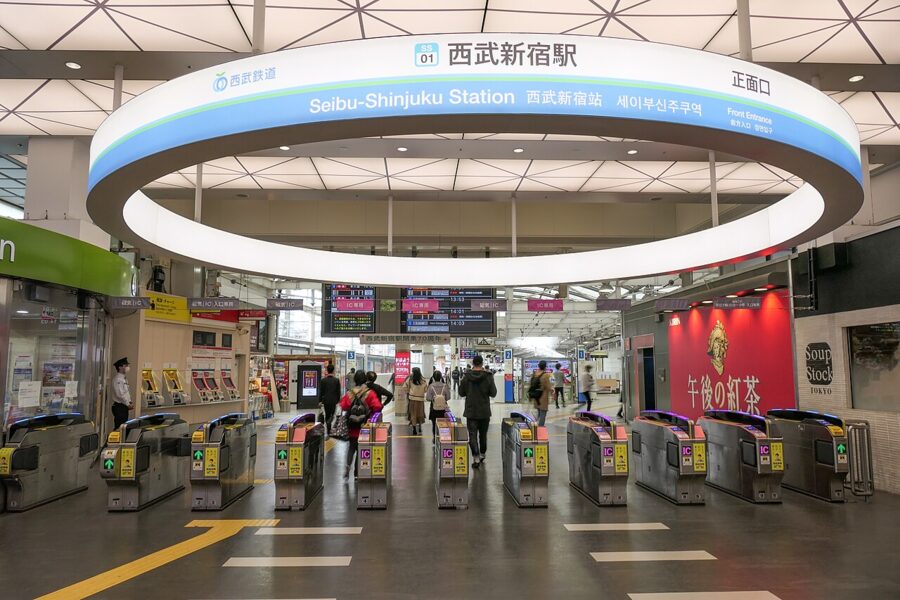
| Seibu | Seibu Shinjuku Line, from Seibu-Shinjuku station | SS 01 | A separate station north of the east exit, 7-8 minutes’ walk |
JR East: sixteen tracks, eight platforms
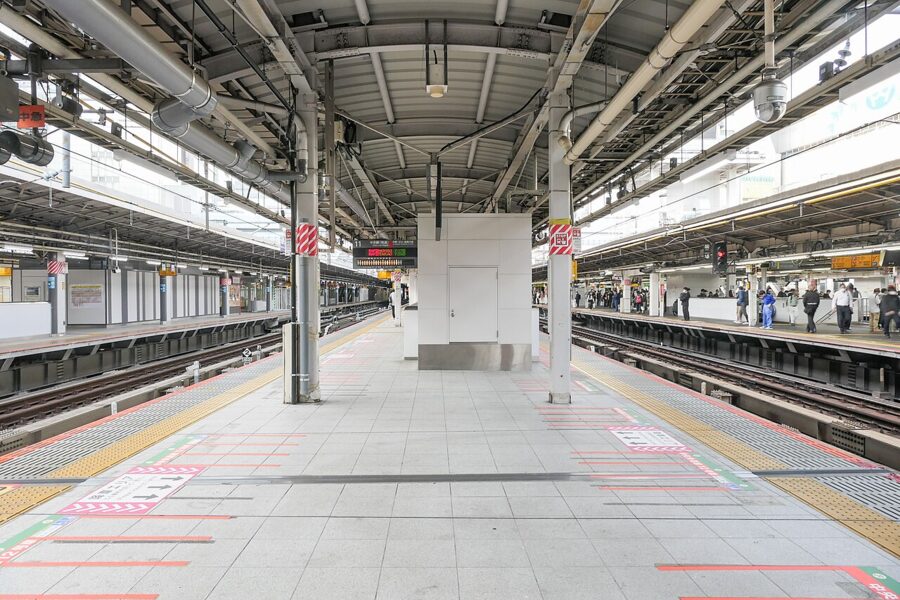
JR’s half of the station is eight island platforms laid north to south, numbered 1 to 16 from the east. The JR East trains you will use most are the green Yamanote Line, the orange Chuo Rapid and the yellow Chuo-Sobu local, and they share one useful trick: the platforms are paired by direction. Platform 14 (Yamanote to Shibuya and Shinagawa) faces platform 13 (Chuo-Sobu local to Yotsuya, Akihabara and Chiba), and platform 15 (Yamanote to Ikebukuro and Ueno) faces platform 16 (Chuo-Sobu local to Nakano and Mitaka), so changing between them is a walk across the platform.
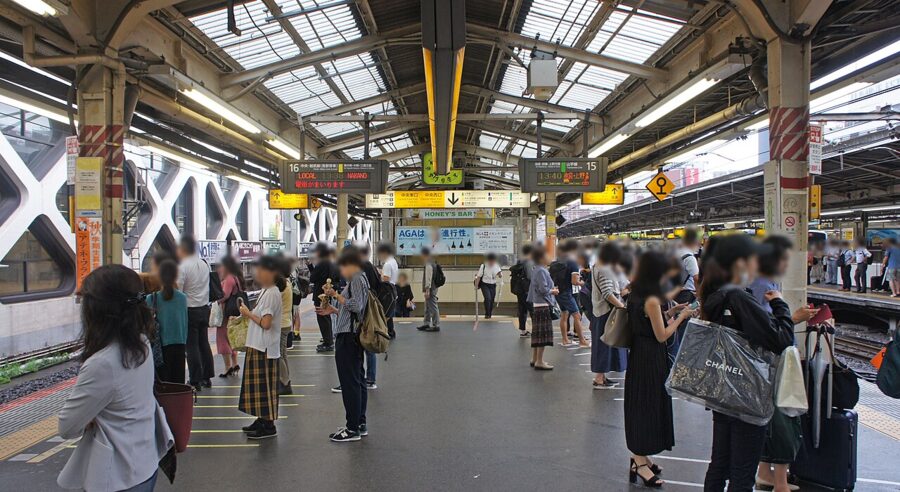

| Platforms | Trains |
|---|---|
| 1, 2 | Saikyo Line and Shonan-Shinjuku Line southbound (Shibuya, Osaki, Yokohama, Ofuna, Odawara); Sotetsu through trains |
| 3, 4 | Saikyo Line and Shonan-Shinjuku Line northbound (Ikebukuro, Omiya, Utsunomiya, Takasaki) |
| 5, 6 | Narita Express |
| 7, 8 | Chuo Rapid to Yotsuya, Ochanomizu and Tokyo |
| 9, 10 | Azusa, Kaiji and Fuji Excursion limited expresses west |
| 11, 12 | Chuo Rapid west to Nakano, Tachikawa and Takao |
| 13, 14 | Chuo-Sobu local east; Yamanote to Shibuya and Shinagawa |
| 15, 16 | Yamanote to Ikebukuro and Ueno; Chuo-Sobu local west |
The Yamanote Line is the one most visitors want, and the orange Chuo Rapid is the one they should want more often: it reaches Tokyo Station in about a quarter of an hour, against nearly half an hour round the loop. Platforms 1 to 6 sit further south than the rest, towards Koshu Kaido, and 5 and 6 are a long walk from the north end of the station.
Odakyu and Keio, side by side on the west
The two private railways run terminals next to each other on the west side. Odakyu, whose trains run south-west to Odawara, Hakone and Enoshima, has five tracks on two levels: Romancecars, rapid expresses and expresses leave from ground level, the stopping trains from the level below.
Keio’s terminus is underground beside it: three tracks, with the Keio trains for Chofu, Hachioji, Takao and Hashimoto.
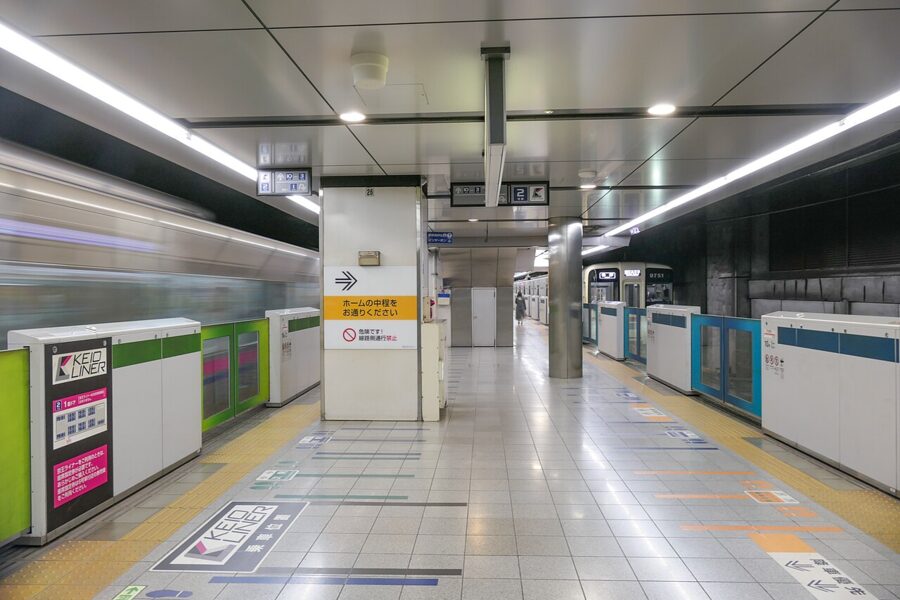

The Keio New Line is the trap. It shares Keio’s station number but has its own platforms, deep under Koshu Kaido and a separate walk from the Keio Line, and its trains run through as the Toei Shinjuku Line to Ichigaya, Jimbocho and Motoyawata. The stations of Hatsudai and Hatagaya are served only from here.
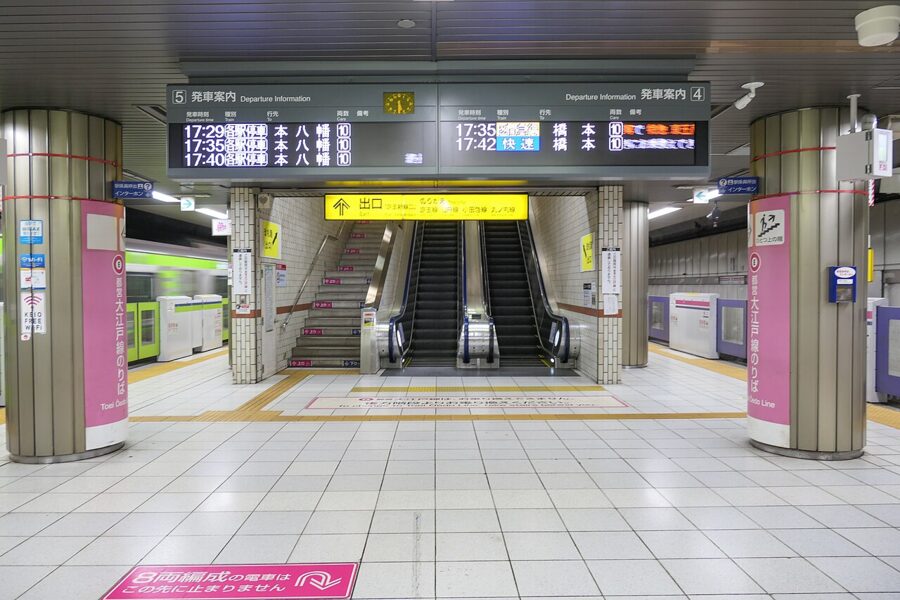

The subways: Marunouchi, Toei Shinjuku, Oedo
Tokyo Metro’s Marunouchi Line runs under the north side of the station, east to west, with gates at each end of its platform. It is the simplest way from Shinjuku to Tokyo Station with heavy bags, and it carries on to Ginza, Otemachi and Ikebukuro. The Toei lines, run by the Tokyo Metropolitan Transportation Bureau, are further south: the Shinjuku Line on the Keio New Line platforms and the Oedo Line below that.
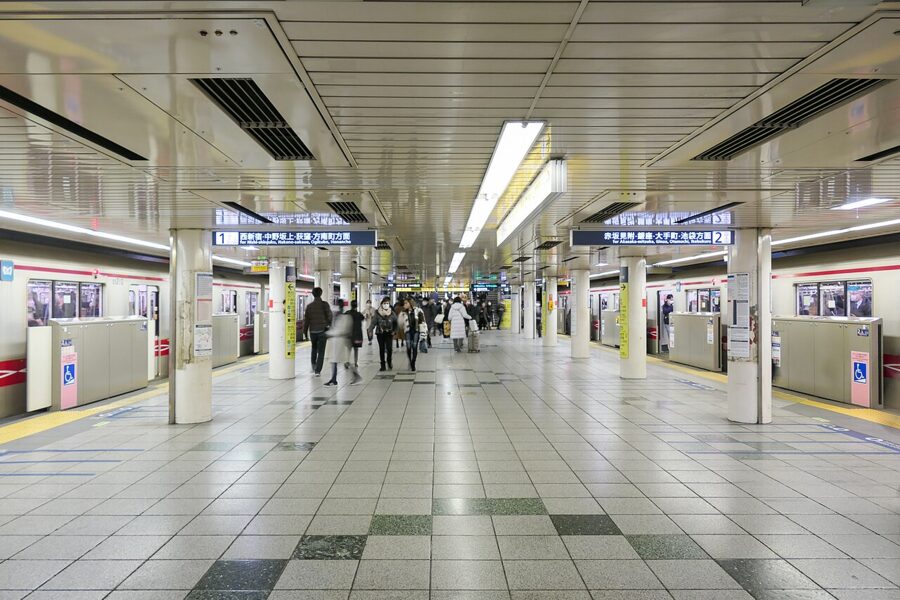

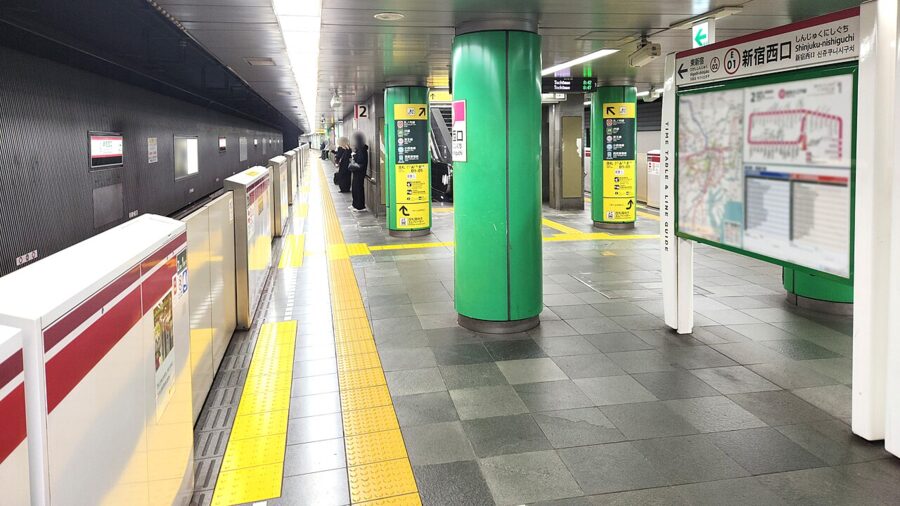
The Oedo Line platform is seven levels below the street, and it is not the only Oedo station with Shinjuku in the name. Shinjuku-nishiguchi (E 01), a separate station north of the west exit, is the better one for the loop towards Iidabashi and Ueno, and Tochomae is the one for the government towers. Check which you need before you go down. The rest of the Tokyo subway connects from all three.
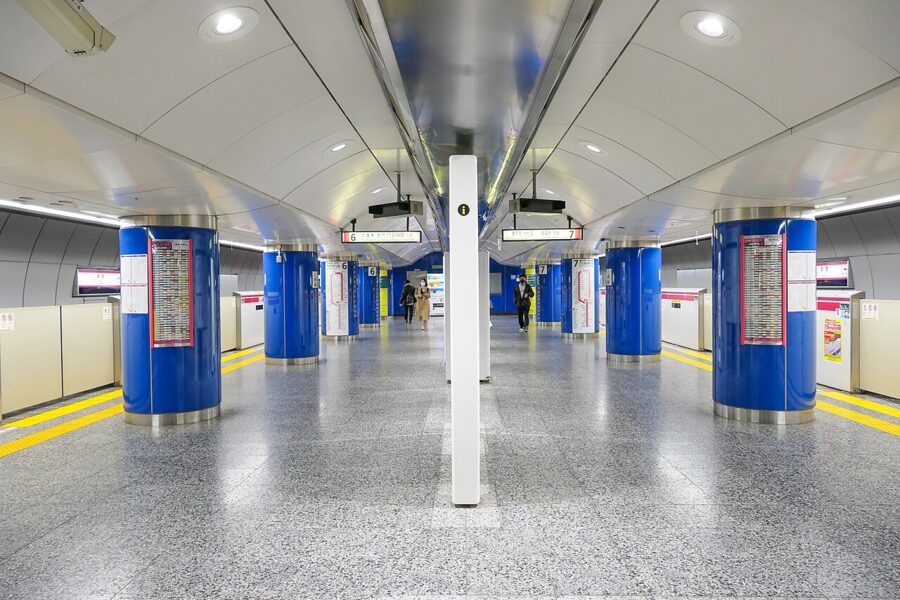

Seibu-Shinjuku and Shinjuku-sanchome, the stations next door
Seibu Shinjuku Line trains for Takadanobaba, Tokorozawa and Hon-Kawagoe do not use Shinjuku Station at all. They start from Seibu-Shinjuku, a separate terminus on the north side of Yasukuni-dori next to Kabukicho, which JR puts at 7 to 8 minutes’ walk from its own station and more than ten at busy times. On a rainy day you can get there underground through the Subnade arcade.

Shinjuku-sanchome, to the east, is the station for the Fukutoshin Line to Ikebukuro and Shibuya and for Isetan. It is joined to Shinjuku by long underground passages, and often the quicker arrival if your hotel is east of the station.
The exits, and which one to use
JR’s exits come in three layers. Underground, the east, central east, west and central west gates open into the arcades and the free passage. The south and southeast gates are on the bridge above the tracks, on Koshu Kaido, and the New South, Koshu Kaido and Miraina Tower gates are on the deck under Busta Shinjuku.
The JR East station page gives each gate’s staffed hours: the main ones from the first train to the last, the New South and Koshu Kaido gates from 05:45 to 24:00, and the Miraina Tower gate none at all, only an intercom.
| Going to | Use | Then |
|---|---|---|
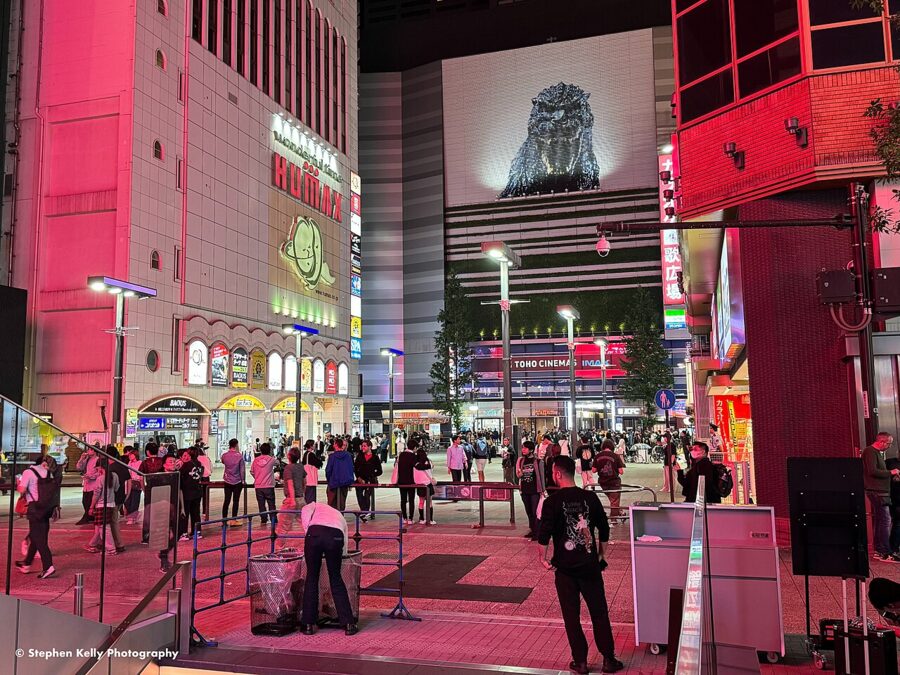
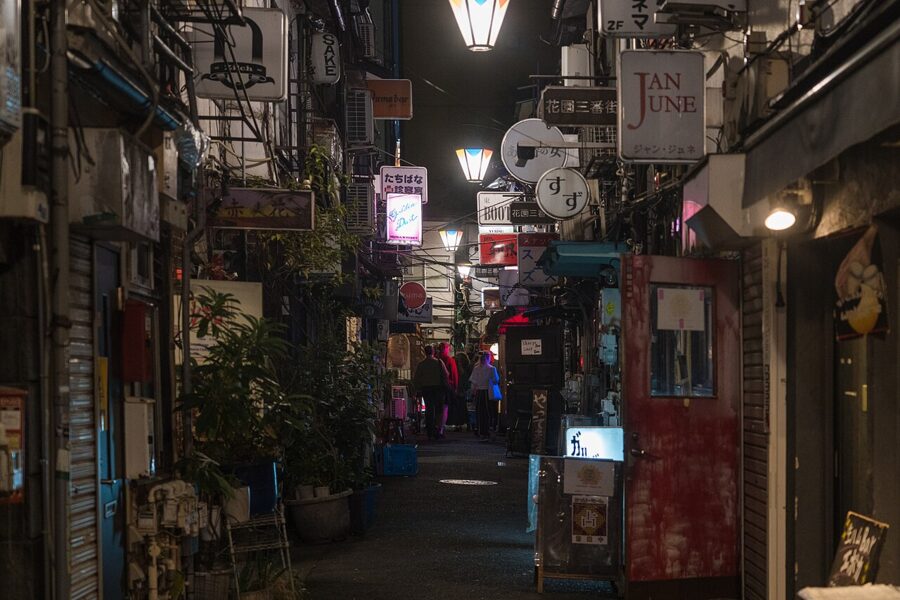
| Kabukicho, the Godzilla head, Golden Gai | East exit (or the Marunouchi Line’s east gate) | North across Yasukuni-dori; Golden Gai is the alleys at the east edge of Kabukicho |
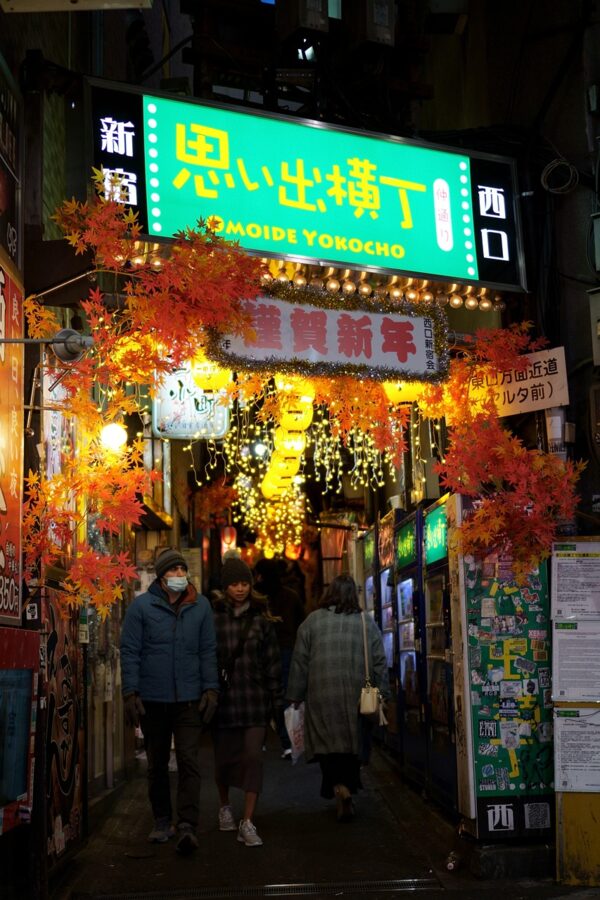
| Omoide Yokocho | West exit | North along the tracks, 2-3 minutes |
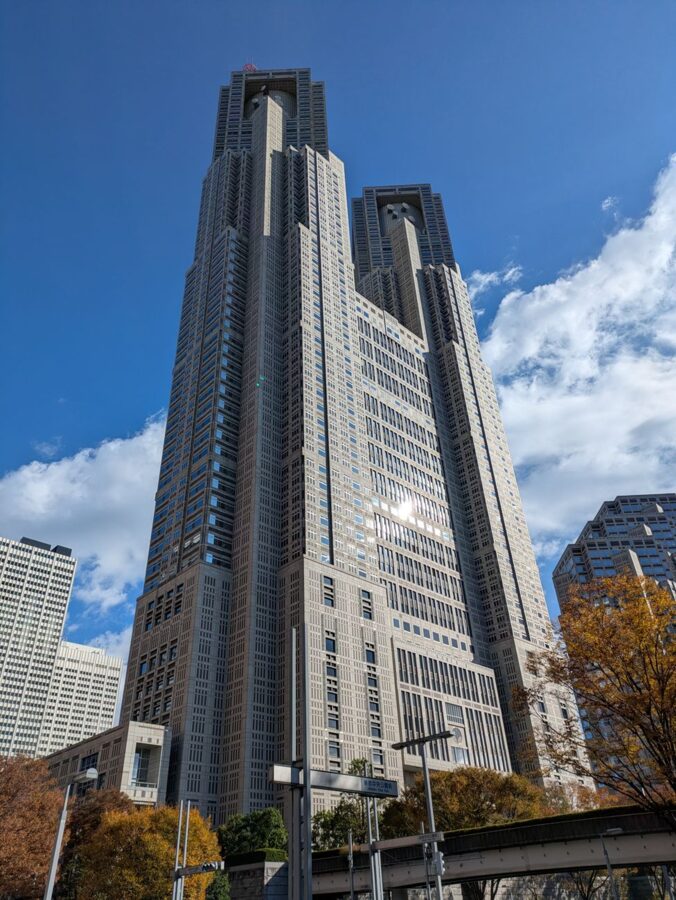
| Tokyo Metropolitan Government Building | West exit | West through the underground walkways, about 10 minutes, or the Oedo Line to Tochomae |
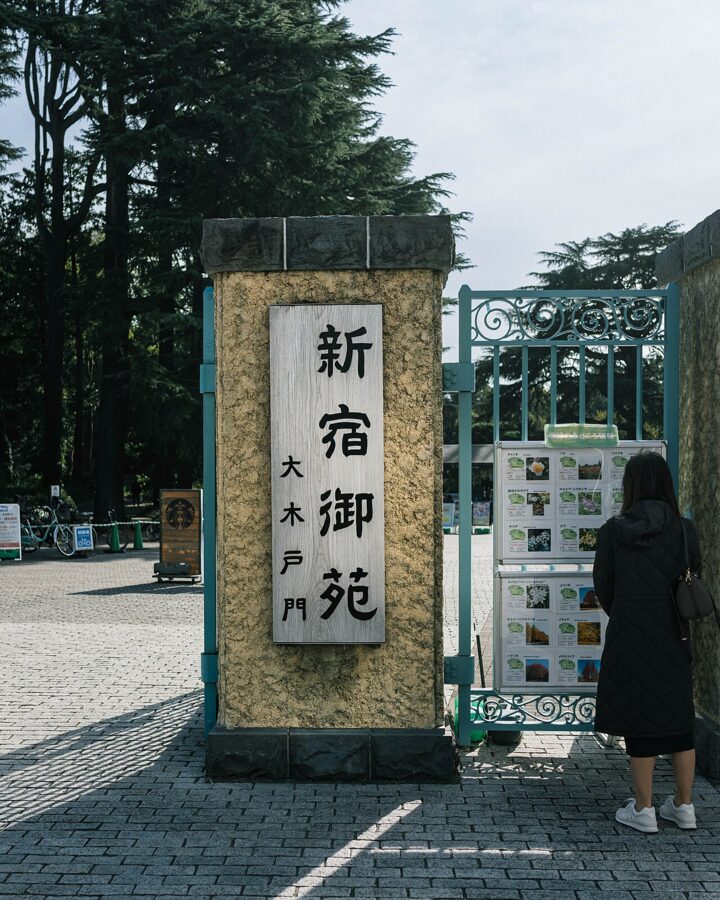
| Shinjuku Gyoen | South, southeast or New South exit | East to the Shinjuku Gate, about 10 minutes |
| Busta Shinjuku (highway and airport buses) | New South gate | Escalators straight up from the gate |
| Takashimaya Times Square, Southern Terrace | New South gate | Across the Suica penguin plaza |
| Isetan, Shinjuku-sanchome | East or central east exit | East along Shinjuku-dori, or under it through the Metro Promenade |
| West Shinjuku hotels and skyscrapers | West exit | Underground walkways west; expect diversions (see below) |
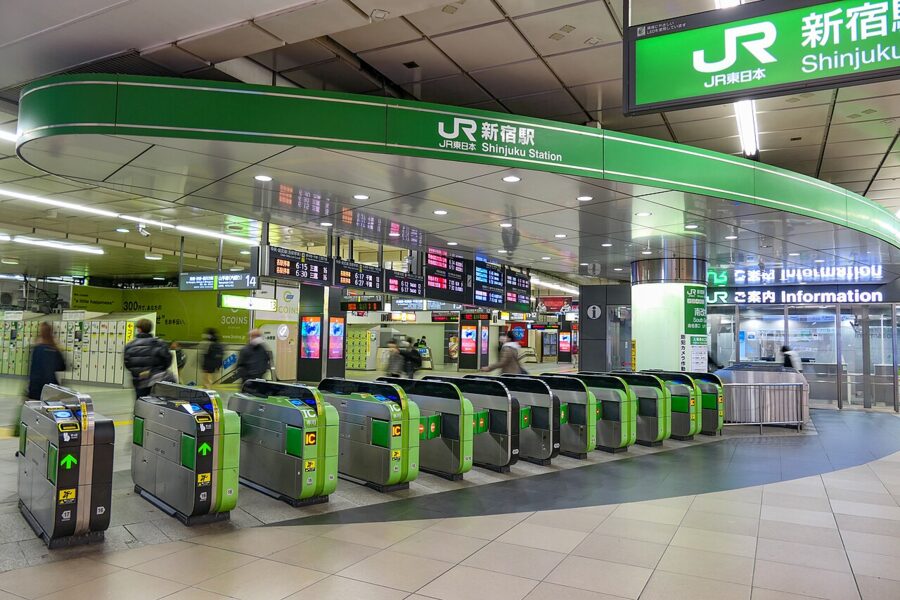

East: Kabukicho, Golden Gai, Shinjuku-dori
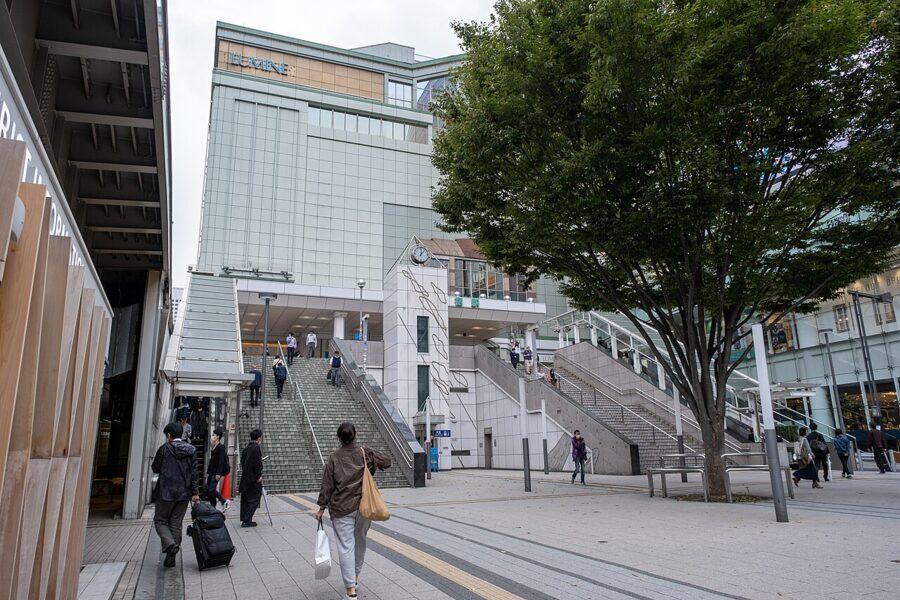
The east exit comes up on the square in front of Lumine Est, with Shinjuku-dori running east towards Isetan and Kabukicho across Yasukuni-dori to the north. Golden Gai, a few blocks of tiny bars at the eastern edge of Kabukicho, is about ten minutes’ walk.


West: Omoide Yokocho, the government towers, the skyscrapers
The west exit leads to the old bus plaza and the skyscraper district beyond it, which is where the construction is. Omoide Yokocho, the yakitori alleys squeezed against the tracks, is just north of the exit. The Tokyo Metropolitan Government Building, whose observation decks are free, is about ten minutes west through the underground walkways.
South, southeast and New South: buses, Shinjuku Gyoen, the department stores
The south side was rebuilt most recently and is the easiest to use. The New South gate opens straight into the Busta Shinjuku building, with the JR EAST Travel Service Center on your right as you come out. The southeast exit leads down to the side streets towards Shinjuku-sanchome, and from the south side of the station Shinjuku Gyoen’s Shinjuku Gate is about ten minutes’ walk east.

Shinjuku Gyoen charges ¥500 (about US$3) for adults and closes on Mondays, except during the cherry-blossom season from 25 March to 24 April and the chrysanthemum show from 1 to 15 November.

The free passage and the underground arcades
The east-west free passage runs under the north end of the platforms from Lumine Est to the west exit, with JR’s east and west gates set along its south side. You do not need a ticket to use it. The arcades around the station take you further: the Metro Promenade under Shinjuku-dori runs east to Shinjuku-sanchome, Subnade runs north towards Kabukicho and Seibu-Shinjuku, and the west exit walkways lead out to the skyscrapers.

Transfers, and how long to allow
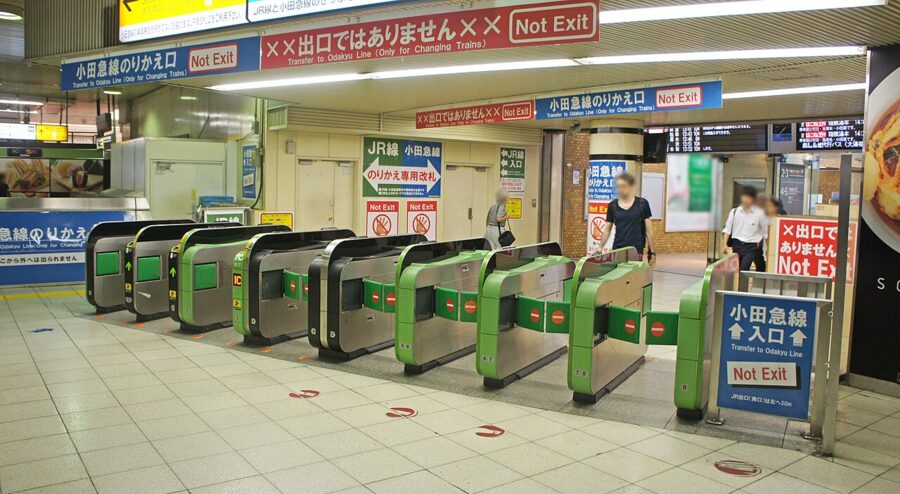
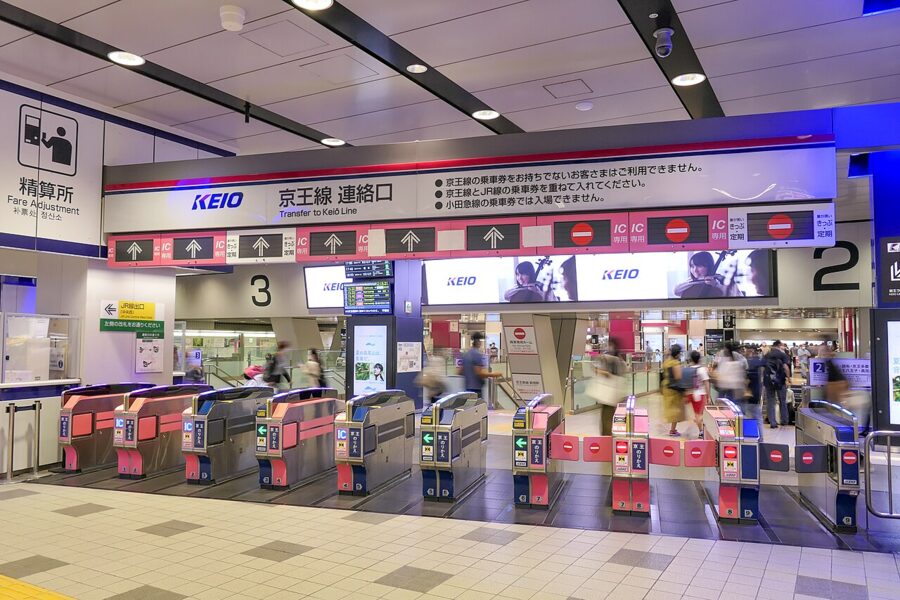
Every operator here is a separate company, so a change means leaving one set of gates and entering another. With a Suica or PASMO card you simply tap out and in, and the dedicated transfer gates between JR and Odakyu and between JR and Keio do both in one go. With paper tickets you need a ticket for each railway.
The times below are what I would allow on a first visit with a bag. Double them in the rush hour.
| From JR to | Route | Allow |
|---|---|---|
| Another JR line | Through the concourse; cross-platform for Yamanote and Chuo-Sobu in the same direction | 1-8 minutes |
| Odakyu | Odakyu transfer gates at the south end or in the central passage | 5-10 minutes |
| Keio Line | JR-Keio transfer gate off the central west passage | 5-10 minutes |
| Keio New Line, Toei Shinjuku Line | South gate, then down through Lumine 1 to the Keio New Line gate | 10 minutes |
| Oedo Line | As for the Keio New Line, then further down | 10-15 minutes |
| Marunouchi Line | East or west gate, then into the Metro gates under the north side | 5-10 minutes |
| Seibu Shinjuku Line | East exit, then north across Yasukuni-dori (or Subnade) | 10-15 minutes |
| Fukutoshin Line at Shinjuku-sanchome | Southeast exit and the passage under Koshu Kaido | 10 minutes |
| Busta Shinjuku | New South gate | 2-5 minutes |

Two transfers are worse than they look. The Oedo Line is a long way down, and its transfer discount with the Marunouchi Line works through Shinjuku-nishiguchi, not here. And Seibu-Shinjuku means a road crossing and, at night, the Kabukicho crowds.

The west side rebuild: what is closed or moved now
The west side of the station is a building site, and will be for years. The Odakyu department store’s main building closed on 2 October 2022 and the store moved next door into the Halc building. On the old site Odakyu, Tokyo Metro and Tokyu Land are building a tower about 260 metres tall, 48 floors above ground, with a lower block for Odakyu’s station beside it, both due in the 2029 financial year, according to a June 2026 report. This year’s work is on the buildings directly above the Odakyu platforms.
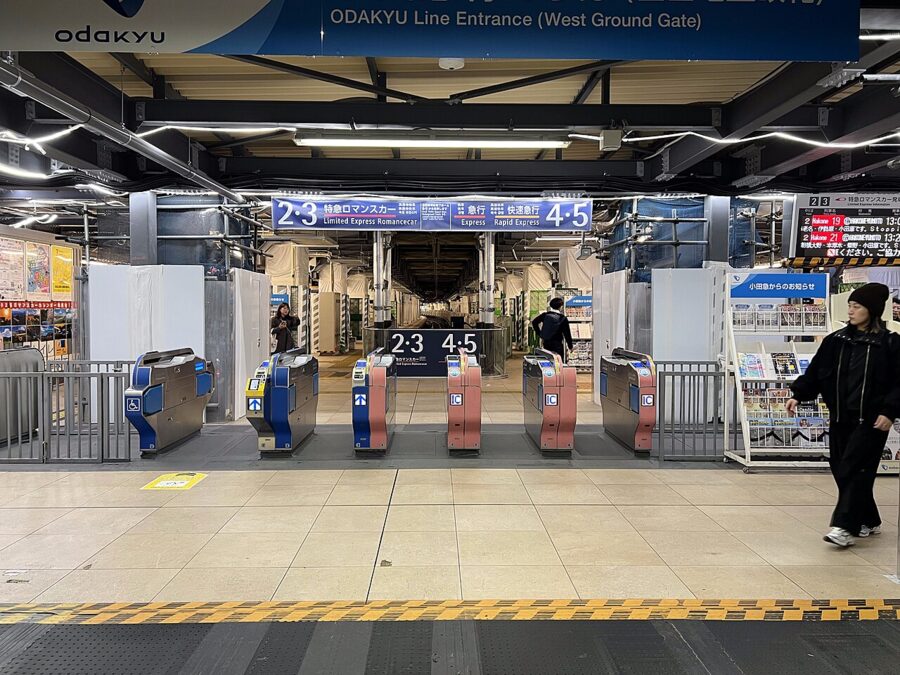
Around the plaza itself the Tokyo government is rebuilding the road layout, and the construction portal lists every change. As of November 2026:
- Since 27 September 2025 vehicles and pedestrians in the west exit plaza follow new routes, and the bus stops have moved with them.
- The underground taxi rank on the Keio side closed in April 2025, and the JR-side rank moved towards Shinjuku Central Park in May 2025.
- The underground rotary was cut back in August 2025, and Toei buses on the C and H01 routes moved stops.
- Further changes to the ground-level routes came in February and June 2026, and road works on the plaza began in October 2026.
- From 19 December 2026 some of the underground walkways on the west side change again.
The south side has its own plan. Keio and JR East agreed in 2022 to rebuild the block around the Keio department store together, but in March 2025 Keio changed the completion date for the first, southern tower to undecided, after failing to agree terms with a builder. For now the Keio department store and the Keio gates under it are where they have always been.
None of this closes a railway. It changes the walking: a west-side route that worked on your last trip may end at a hoarding. The east, south and New South sides are unaffected.
Limited expresses: Azusa, Fuji Excursion, Narita Express and Romancecar
The times below are from JR’s weekday Shinjuku timetables for December 2026.
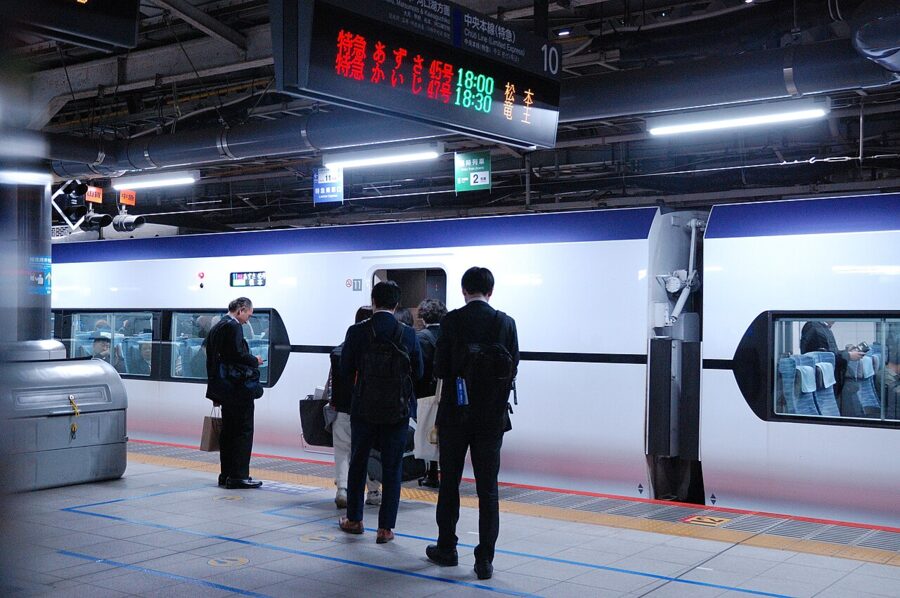
The Azusa to Matsumoto leaves platform 9 or 10 about once an hour from 07:00 to 21:00, mostly on the hour, and the Kaiji to Kofu on most half hours, with the last two at 22:00 and 23:00. Both are worked by the E353 series and every seat is reserved, so book before you board. The Fuji Excursion to Kawaguchiko leaves in the morning, at 07:30, 08:30, 09:30, 10:30 and, on some days, 11:34, the first four coupled to an Azusa or Kaiji as far as Otsuki.

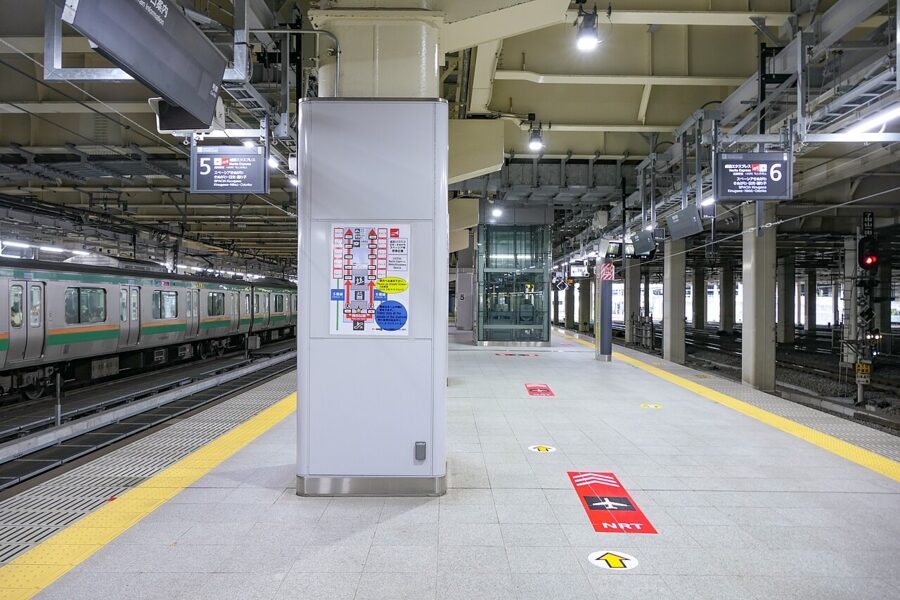
The Narita Express leaves platforms 5 and 6, generally at 08 and 38 minutes past the hour through the middle of the day, with the first at 05:55 and the last at 19:39 on weekdays. Later in the evening the airport buses from Busta Shinjuku are the simple alternative. For hotels in the east of the city, the Skyliner from Ueno is often the quicker way to Narita. The Nikko and Kinugawa expresses through to the Tobu line also start at Shinjuku.

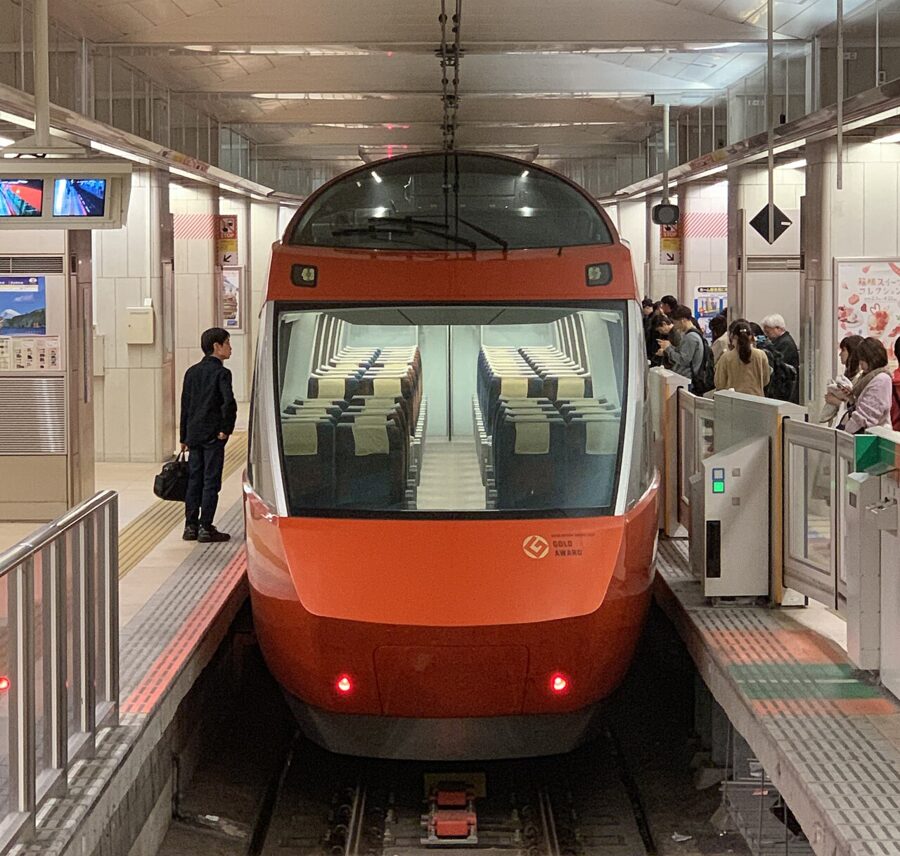
The Romancecar is Odakyu’s, from the ground-level platforms on the west side. It takes about 80 minutes to Hakone-Yumoto, every seat is reserved, and the limited express charge is ¥1,200 (about US$8) on top of the fare, ¥50 less if you buy online. The Hakone Freepass covers the fare but never the charge.

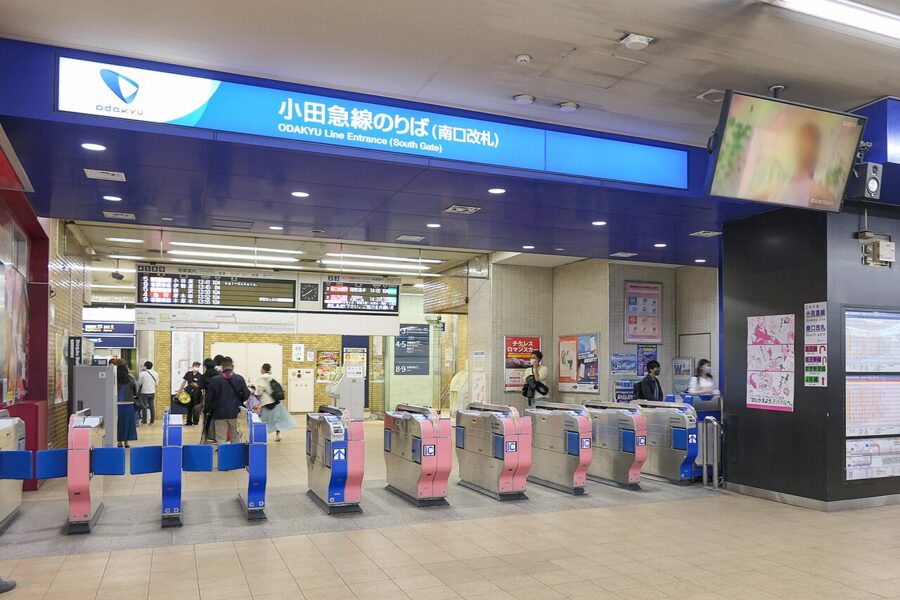

Odakyu’s Sightseeing Service Center at the west underground exit sells Romancecar tickets and the Hakone Freepass from 08:00 to 16:00 every day; otherwise use the machines or the EMot app.
Busta Shinjuku and the highway buses
Busta Shinjuku is built over the tracks at the south end of the station, and almost every long-distance bus from Shinjuku leaves from it, along with the limousine buses for Haneda and Narita. Departures are on the fourth floor, arrivals on the third, and the second floor is the station deck with the JR gates.
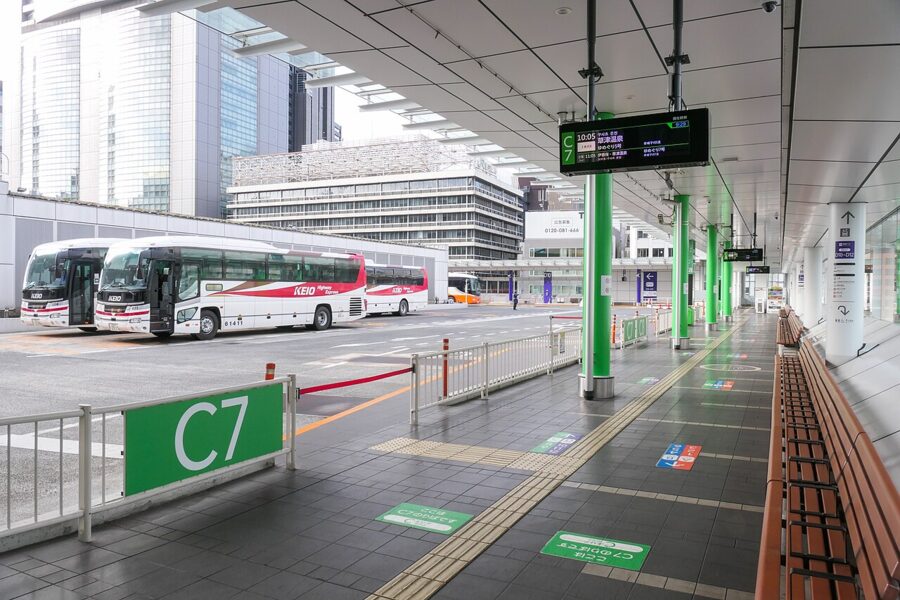

Come up through the New South gate and take the escalators in front of you: two minutes, by the terminal’s own reckoning. The gate is open from 05:45 to 24:00; outside those hours use the South gate, four minutes away. From the Keio or Toei lines allow five minutes.
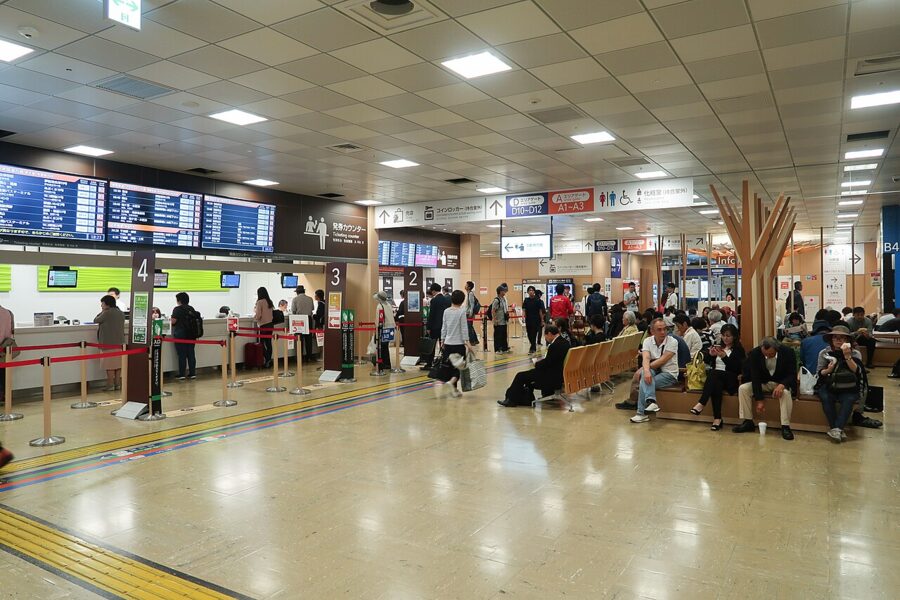
The waiting room is open from 03:30 to 25:00, the information counter from 07:00 to 23:00, and the terminal asks you to be at your stand about ten minutes before departure. The machines and ticket office handle Highwaybus.com, Kousokubus.net and Hassha Orai Net bookings and the airport limousines, and no others. The Tokyo Tourist Information Center is on the third floor.

Lockers and luggage
There are plenty of lockers and not enough big ones. JR East says the suitcase-sized lockers are often all taken by late morning. Its own rates, as of September 2025, run from ¥300 (about US$2) for the smallest box to ¥1,000 (about US$6) for a large one, and ¥700 to ¥900 for the medium and large boxes in its Multi Ekicube lockers, which you can see and book online up to a month ahead for a ¥500 booking fee.
- Inside the gates, B1, on the passage to platforms 5 and 6: JR’s own tip for a free box, with 42 large lockers; follow the red Narita Express line from the east gate.
- Inside the South gate: about 250 boxes close to the gates and the Odakyu transfer.
- East exit, ground floor, outside the gates: about 200 boxes, the most outside the gates.
- New South gate, by the Suica penguin plaza: for Busta passengers.
- Busta Shinjuku, fourth floor: touch-panel lockers paid by the hour, ¥100 for the first 30 to 60 minutes and ¥900 per six hours for a large one, for up to 72 hours. Keep the receipt; its QR code opens the door.
If the lockers are full, Odakyu’s baggage service takes bags of up to 160 cm and 25 kg at its Shinjuku West counter (08:00 to 16:00, collection until 19:00) and Shinjuku South counter (08:00 to 18:30), for up to three days. Two of JR’s east-side locker banks also offer same-day delivery to hotels in the 23 wards and Urayasu.
Getting round step-free
JR’s lifts are not on every concourse. The south bridge has lifts and escalators to every platform except 5 and 6, so the South gate is the best way in with a wheelchair, a pushchair or a heavy case. Platforms 9 to 16 also have lifts down to the underground concourse at the free passage end. For 5 and 6, the Narita Express platforms, ask at the gate for the step-free route.
On the other railways: Odakyu has lifts from its south gate to every platform; Keio’s lifts run from the West and department store gates to the boarding platforms, but not from the Lumine gate; the Oedo Line has lifts from its platform to the Mines Tower gate; and the Marunouchi Line’s lift is at its east end. JR’s accessible toilets in the central passage are kept locked; press the intercom by the door.
If you need a boarding ramp, ask at a staffed gate rather than on the platform, and give yourself fifteen minutes. JR is fitting platform doors to the Chuo-Sobu local tracks, 13 and 16, in the 2026 financial year; the Yamanote tracks have none yet, so stand back behind the yellow line.
Rush hour and the last-train crush
The morning peak, roughly 07:30 to 09:30 on weekdays, is commuters pouring off the Chuo, Odakyu and Keio lines; the evening peak runs the other way from about 17:30. Move your luggage outside both.
The last trains are the other crush. On weekdays the last JR trains leave between midnight and about 00:50 (as of the December 2026 timetable), and most of the latest ones run only part of the way: the last westbound Chuo Rapid at 00:21 goes no further than Musashi-Koganei, and the final Yamanote trains stop at Ikebukuro, Osaki or Shinagawa. On Friday nights the westbound Chuo Rapid platforms, 11 and 12, are the narrowest in the station and the fullest. Aim for a train before midnight.
Mistakes people make
- Following the wrong “Shinjuku”. Shinjuku-sanchome, Shinjuku-nishiguchi, Seibu-Shinjuku, Minami-Shinjuku and Nishi-Shinjuku are all different stations.
- Treating Central East as East. They are a few minutes apart underground and come up in different places.
- Looking for the Shinkansen. There is none at Shinjuku. Take the Chuo Rapid to Tokyo Station or the Yamanote to Shinagawa for the Shinkansen.
- Taking the Keio New Line for the Keio Line. Same company, same number, different platforms a long walk apart.
- Leaving the Narita Express to the last minute. Platforms 5 and 6 are at the far south-east of the station.
- Arriving at 08:30 with two suitcases. Arrive at 10:00 instead, and use the South gate lifts.

Back to that sign with seven exits on it. Pick yours from the table before you arrive and follow its name, not a direction: east for Kabukicho, west for Omoide Yokocho and the towers, New South for Busta and the garden. Tap out at the New South gate, take the escalators ahead, and the buses leave from the floor above.