

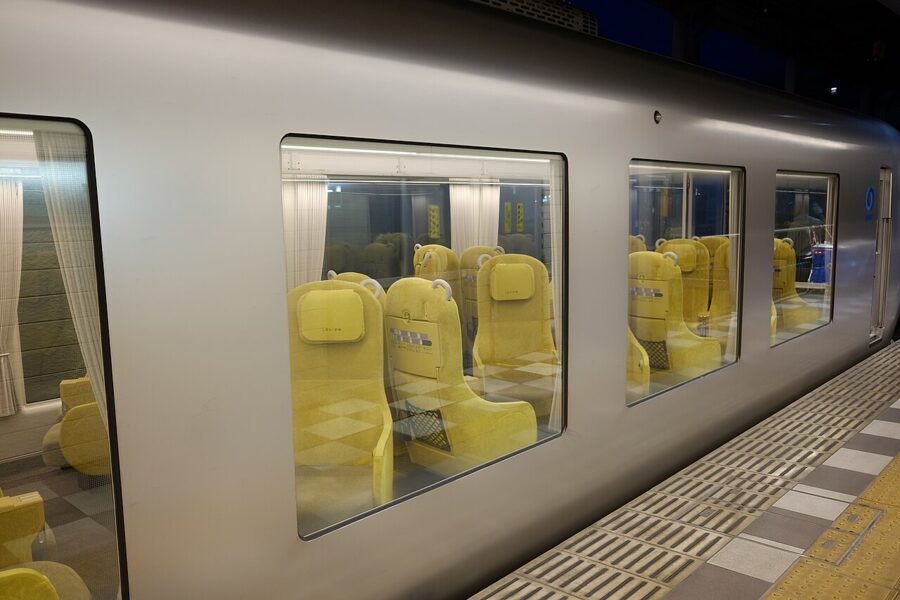
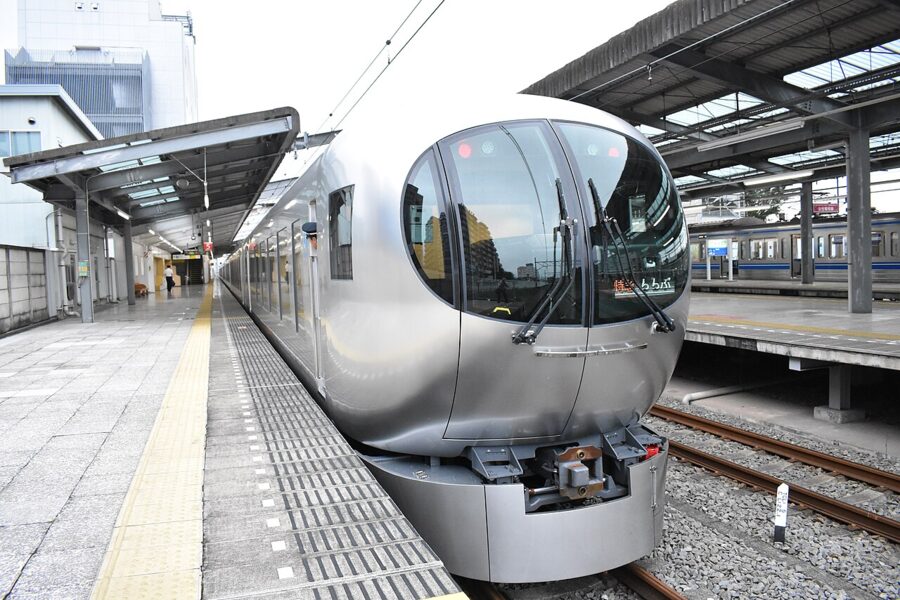
The Laview’s side windows are 1,350 millimetres tall and 1,580 wide, and for the first half-hour out of Ikebukuro (池袋) they frame nothing grander than the backs of houses in Nerima. Then the train reverses at Hannō (飯能), the suburbs run out, and it climbs into wooded valleys where the glass stops looking like a design flourish and starts doing its job. Seventy-seven minutes after leaving Tokyo, at best, it stops at the end of the line in Seibu-Chichibu (西武秩父).
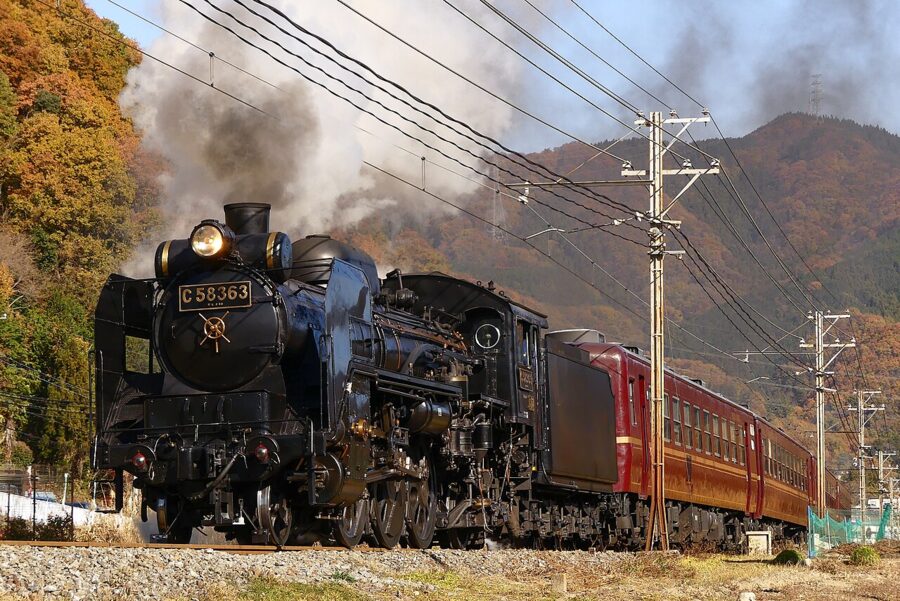
The choice is about money and time more than scenery. The Laview costs a ¥900 (about US$6) limited express charge on top of the ¥800 (about US$5) fare. Keep the ¥900 and you can make the same journey on ordinary trains with a change at Hannō in a little under two hours. Or go the long way round by JR to Kumagaya (熊谷) and ride into the valley behind a steam locomotive built in 1944, on the days it runs.
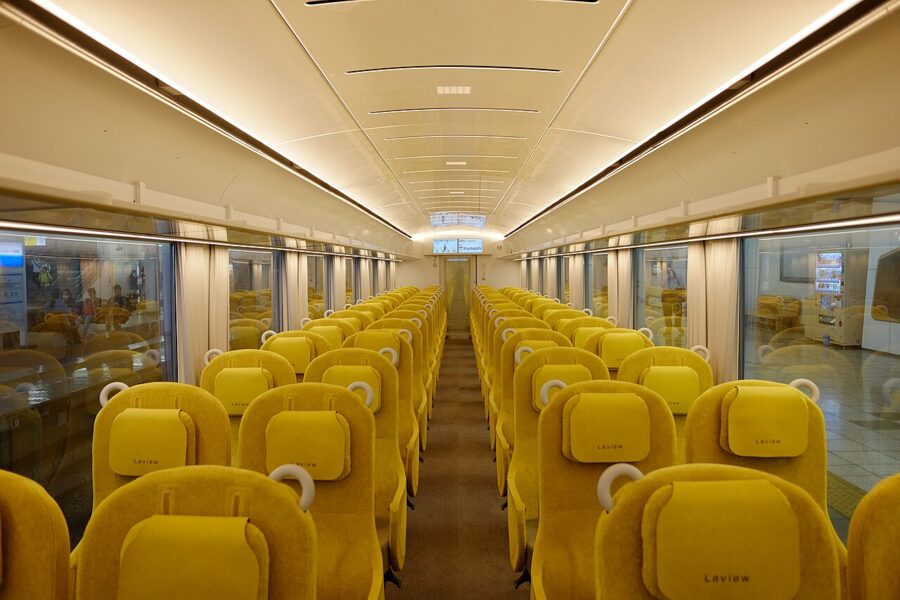
I would take the Laview out, because the seats are good and the windows are the point, and decide about the way back once I knew how the day had gone. Chichibu repays the trip in any season: a shrine whose December festival draws more than 200,000 people, a gorge at Nagatoro with wooden boats on the river, a hillside of moss phlox in April and walls of ice in January.



The trains to Chichibu, compared (as of 2026)
Three routes are worth knowing, and a fourth exists for people with the right pass. On Seibu the IC card fare for this journey is the same as the paper ticket; on JR it is a few yen less.
| Route | Trains | Time | Adult fare, one way | Notes |
|---|---|---|---|---|
| Ikebukuro to Seibu-Chichibu, direct | Seibu Laview limited express Chichibu | 77 to 80 minutes | ¥800 fare + ¥900 limited express = ¥1,700 (about US$11) | All seats reserved; roughly hourly |
| Ikebukuro to Seibu-Chichibu, change at Hannō | Seibu express or rapid to Hannō, then a local | About 1 hour 50 minutes to 2 hours | ¥800 | Unreserved commuter trains |
| Ikebukuro to Kumagaya, then the steam train | JR Shonan-Shinjuku or Takasaki Line, then the SL Paleo Express | About 1 hour to Kumagaya; 2 hours 39 minutes on the SL to Mitsumineguchi | JR ¥1,040 (about US$7; IC ¥1,034) + Chichibu Railway ¥1,050 (about US$7) + SL seat ¥1,000 (about US$7) | SL mainly at weekends and holidays, March to early December |
| Ikebukuro to Ohanabatake via Yorii | Tobu Tojo Line, then the Chichibu Railway | About 2 hours 20 minutes | ¥1,670 (about US$11) | Two changes; worth it only with the SAITAMA Platinum Route ticket |
The Laview from Ikebukuro
Seibu’s Ikebukuro terminal is on the east side of the station complex, under the Seibu department store, while Tobu’s is on the west, the reverse of what the two names (west and east) suggest. The Laview Chichibu services use their own limited express platform, and on a weekend most of the day’s departures leave at half past the hour, from early morning into the evening. They stop at Tokorozawa, Irumashi, Hannō and Yokoze before Seibu-Chichibu (SI36).
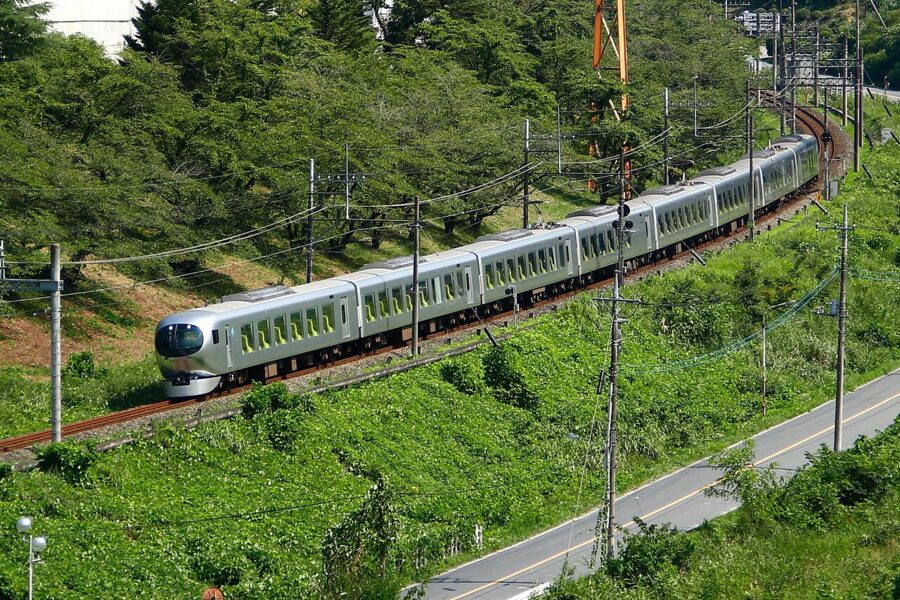
The 001 series, which Seibu named Laview, was developed under the supervision of the Pritzker Prize-winning architect Kazuyo Sejima and entered service on 16 March 2019. The nose is a large piece of three-dimensionally curved glass, a first in Japan. In 2020 it won the Japan Railfan Club’s Blue Ribbon Prize, Seibu’s first since the original Red Arrow fifty years before.
The limited express ticket is separate from the fare. Buy it at a Seibu station counter or machine from 07:00 one month before travel, or online through Seibu’s Smooz ticketless service; board without one and you pay the charge plus ¥200 (about US$1). The ¥800 fare goes through the gate on a paper ticket or a Suica or PASMO card. The Japan Rail Pass is no use on Seibu, a private railway.
At Hannō the train reverses. Car 1 leads out of Ikebukuro and car 8 leads from Hannō to Chichibu, so the seat that faced forward for the first forty minutes faces backwards for the last forty. The seats turn, and you will see some passengers swing them round and others not bother. The 23-inch screens in each car show a camera view from the front on some sections, which is the nearest you get to a driver’s view.

The slow way, with a change at Hannō
Without the limited express, take any express (急行) or rapid towards Hannō from Ikebukuro, change there, and continue on a local to Seibu-Chichibu. On a Saturday morning the journey takes between about 1 hour 50 minutes and just over two hours, for the same ¥800 fare. The local beyond Hannō runs on the same track through the same valleys at a gentler pace, and it saves ¥1,800 on a return trip.
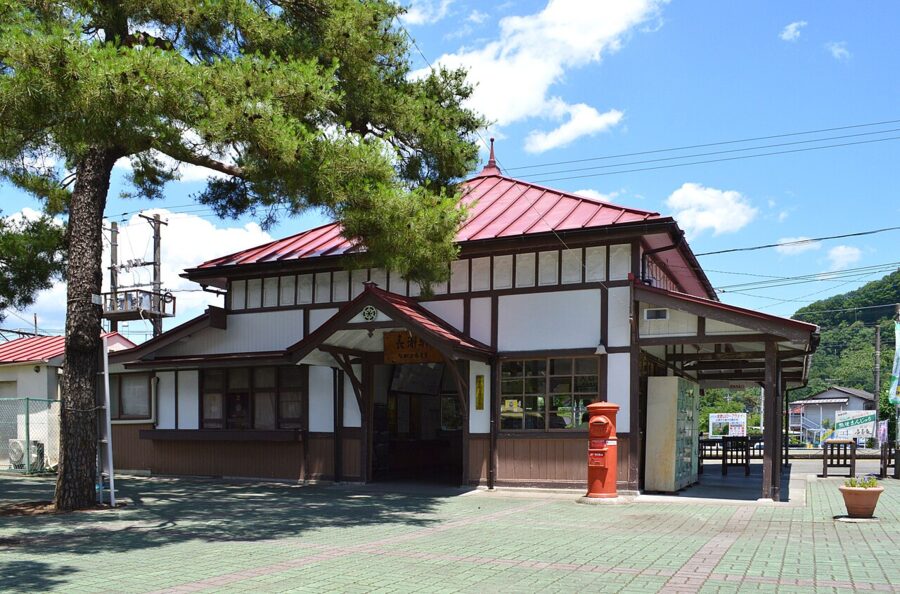
It is also the fallback on a festival day when the Laviews are sold out. A few Hannō locals run straight through onto the Chichibu Railway to Nagatoro or Mitsumineguchi, and they are marked on Seibu’s Hannō timetable; everything else ends at Seibu-Chichibu, five to ten minutes’ walk from the Chichibu Railway at Ohanabatake (御花畑).
The SL Paleo Express from Kumagaya
The other way in starts on JR East. From Ikebukuro the Shonan-Shinjuku and Takasaki lines reach Kumagaya in about an hour for ¥1,040; from Tokyo Station the Takasaki Line takes about 70 minutes for ¥1,230 (about US$8; IC ¥1,221). The Joetsu and Hokuriku Shinkansen stop at Kumagaya too, if you would rather pay for speed. The Chichibu Railway’s platforms are in the same station, five to ten minutes from the JR trains.
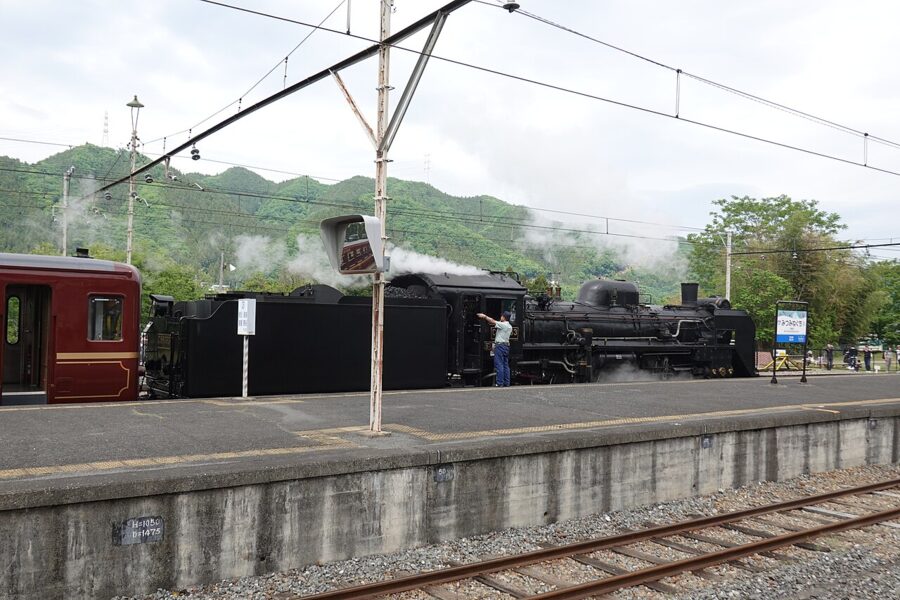
The SL Paleo Express leaves Kumagaya at 10:15 and reaches Mitsumineguchi (三峰口), the end of the line, at 12:54. On the way it calls at Fukaya-Hanazono, Yorii, Nagatoro (arriving 11:33), Minano, Chichibu (12:12) and Ohanabatake (12:22), and it comes back from Mitsumineguchi at 14:05 to reach Kumagaya at 16:20 (timetable as published in April 2026). In 2026 it ran from 20 March to 6 December, mostly at weekends and on public holidays; the 2027 calendar was not out at the end of November 2026.
Every seat is reserved. The SL reserved-seat ticket costs ¥1,000 online through the Chichibu Railway’s own SL booking system, credit card only, or ¥1,100 (about US$7) in cash at the stations that sell it, and you pay the ordinary fare on top. Booking opens at midnight one month before the travel date and closes 30 minutes before departure; a missed train means a void ticket. The railway warns that an electric locomotive can replace the steam engine at short notice, in which case the seat ticket is refunded in full.
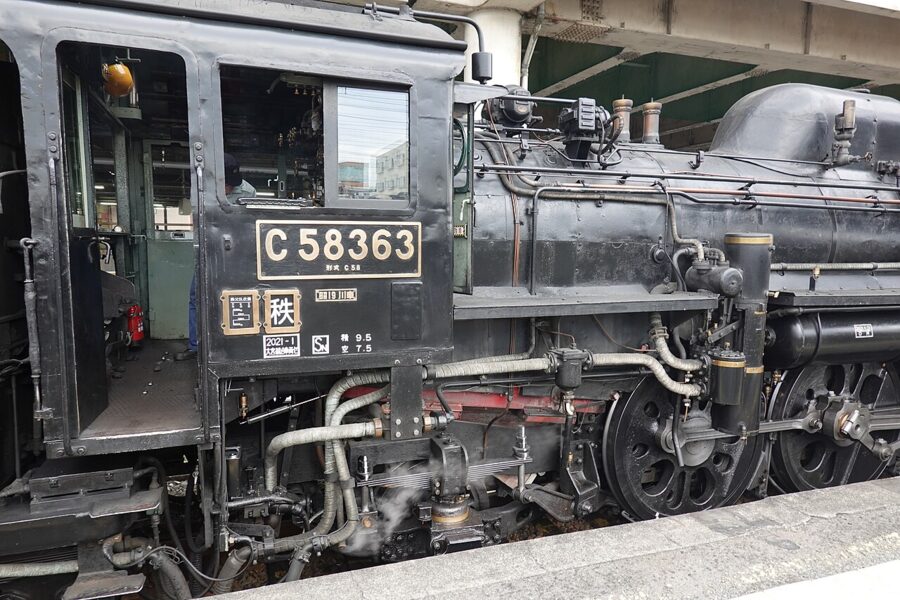

The engine is C58 363, built by Kawasaki in February 1944 and worked on lines across Tohoku until 1972. It then spent fifteen years in a primary school playground in Fukiage before it was restored for the 1988 Saitama Expo, and it has hauled the Paleo Express ever since, with a rake of 12 series coaches since 2000. The name comes from Paleoparadoxia, a marine mammal that lived here about 20 million years ago when the basin was under the sea. The Chichibu Railway still hauls limestone out of the valley behind electric locomotives, the freight that runs through its whole history.

Passes, and which one pays
No pass covers the Laview’s limited express charge, so the sums here are about fares only. Seibu’s two Chichibu tickets bundle a discounted return with free travel at the far end, and its pass for overseas visitors is cheaper still.
| Ticket | Adult price from Ikebukuro | Covers | Valid | Pays if |
|---|---|---|---|---|
| SEIBU 1Day Pass + Nagatoro | ¥2,000 (about US$13) | All Seibu lines except the Tamagawa Line; Chichibu Railway from Nogami and Nagatoro to Mitsumineguchi | One day | You hold a non-Japanese passport and go to Nagatoro |
| SEIBU 1Day Pass | ¥1,500 (about US$10) | All Seibu lines except the Tamagawa Line | One day | Non-Japanese passport, Chichibu town only (saves ¥100) |
| Chichibu Free Ticket (秩父フリーきっぷ) | ¥2,540 (about US$17) | Return to Seibu-Chichibu; unlimited Ashigakubo to Seibu-Chichibu and Chichibu Railway Nogami/Nagatoro to Mitsumineguchi | Two days | You go on to Nagatoro or Mitsumineguchi, or stay a night |
| Chichibu Manyu Ticket (秩父漫遊きっぷ) | ¥2,380 (about US$16) | Return to Seibu-Chichibu; unlimited Koma to Seibu-Chichibu; one coupon | Two days | You would use the coupon (see below) |
| Chichibuji Yuyu Free Kippu, digital (秩父路遊々フリーきっぷ) | ¥1,700 (about US$11), Chichibu Railway only | The whole Chichibu Railway | One day | You ride from Kumagaya to Mitsumineguchi and back (¥2,100 in single fares) |
| SAITAMA Platinum Route ticket | ¥2,000 (about US$13) | Tobu Tojo Line Ikebukuro to Yorii; Chichibu Railway Fukaya-Hanazono to Mitsumineguchi | One day | You go in by Tobu and come back the same way |
The arithmetic for a day to Chichibu and Nagatoro on single fares: ¥800 each way on Seibu and ¥550 (about US$4) each way between Ohanabatake and Nagatoro, ¥2,700 in all. The visitor’s pass saves ¥700 of that. The Chichibu Free Ticket saves only ¥160 on a day trip, but it lasts two days, which makes it the one to buy if you stay a night.
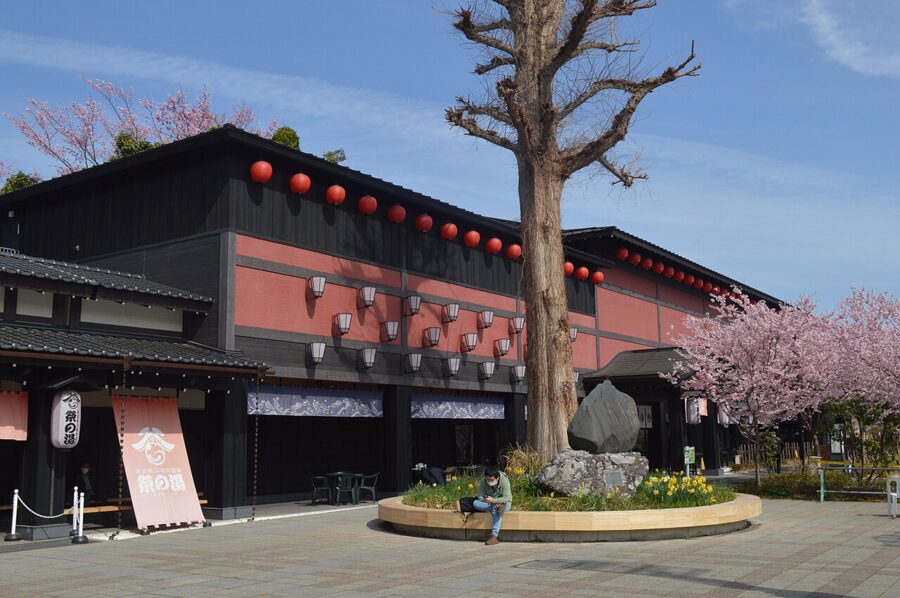
The SEIBU 1Day Pass tickets are for holders of non-Japanese passports only, sold at the Ikebukuro limited express ticket offices or as smartphone tickets. The Chichibu Free Ticket and the Manyu Ticket are sold at Seibu stations but not between Koma and Seibu-Chichibu, so buy before you leave Tokyo. The Manyu coupon buys one of these: entry to the Matsuri no Yu hot spring by Seibu-Chichibu Station, a ¥1,100 meal in its food court, a two-day Chichibu bus pass, or a one-way ride on the express bus to Mitsumine Shrine.
The Chichibu Railway’s day pass is a smartphone ticket on the EMot app, shown at the gate. The SAITAMA Platinum Route ticket is sold at Tobu Tojo Line stations. For the steam train you need the SL seat ticket whatever pass you hold.

Chichibu town and Chichibu Shrine
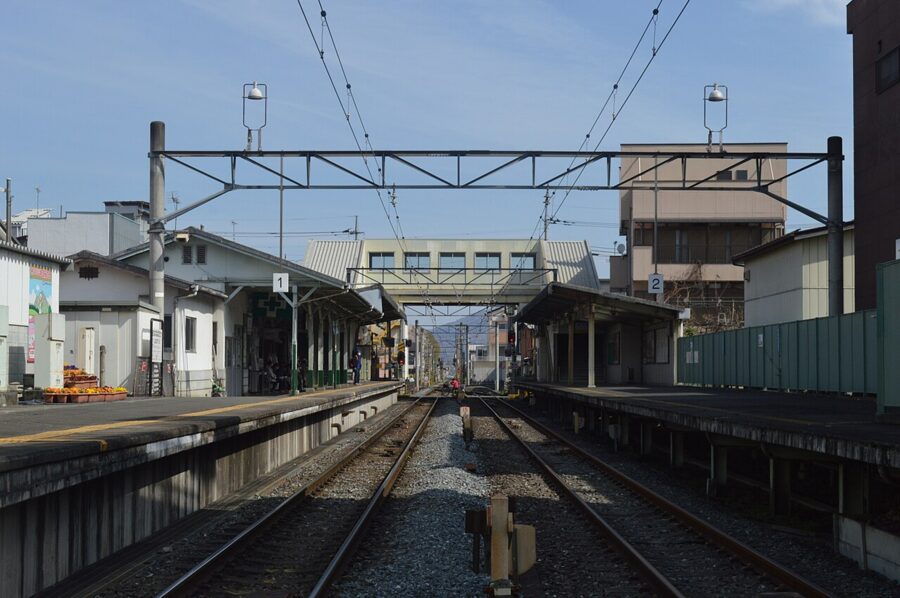
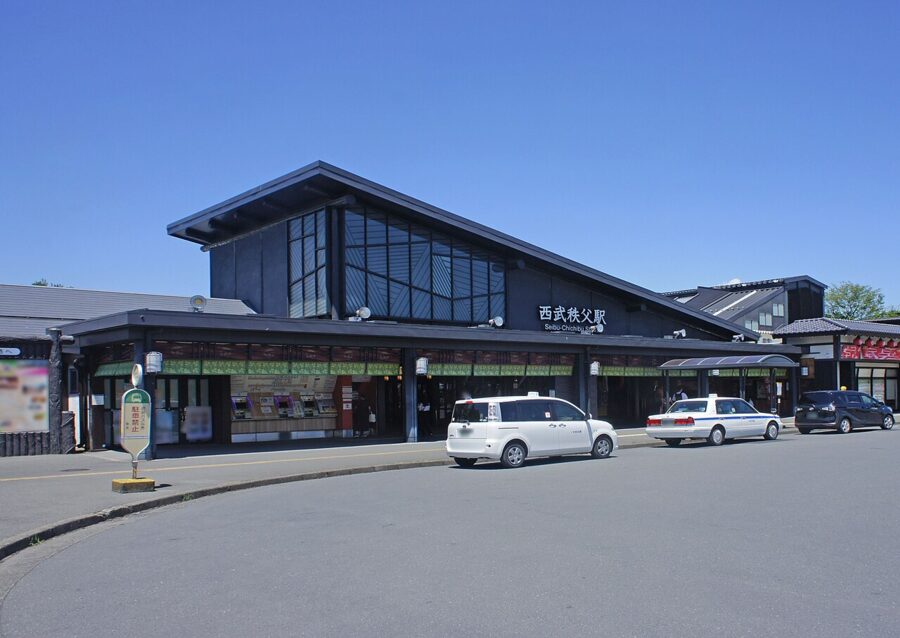
Seibu-Chichibu Station opens onto a bus terminal and, next door, Matsuri no Yu, a hot spring complex that is the obvious place to wait for the train home. Chichibu Shrine (秩父神社) is about fifteen minutes on foot, a little more on festival days, and a few minutes from the Chichibu Railway’s Chichibu Station.

The shrine dates its founding to the reign of the legendary tenth emperor, Sujin, when Chichibuhiko, the first governor of the old land of Chichibu, enshrined his ancestor, and it appears in the Engishiki register of 927. For most of its history it was the Chichibu Myōken shrine, devoted to the Pole Star, and it took back its old name only under the Meiji separation of Shinto and Buddhism. The present main hall was paid for by Tokugawa Ieyasu in 1592, after Takeda Shingen’s invasion had burned the old one in 1569. It is a Saitama Prefecture tangible cultural property, and a restoration begun in 2019 finished in October 2024.
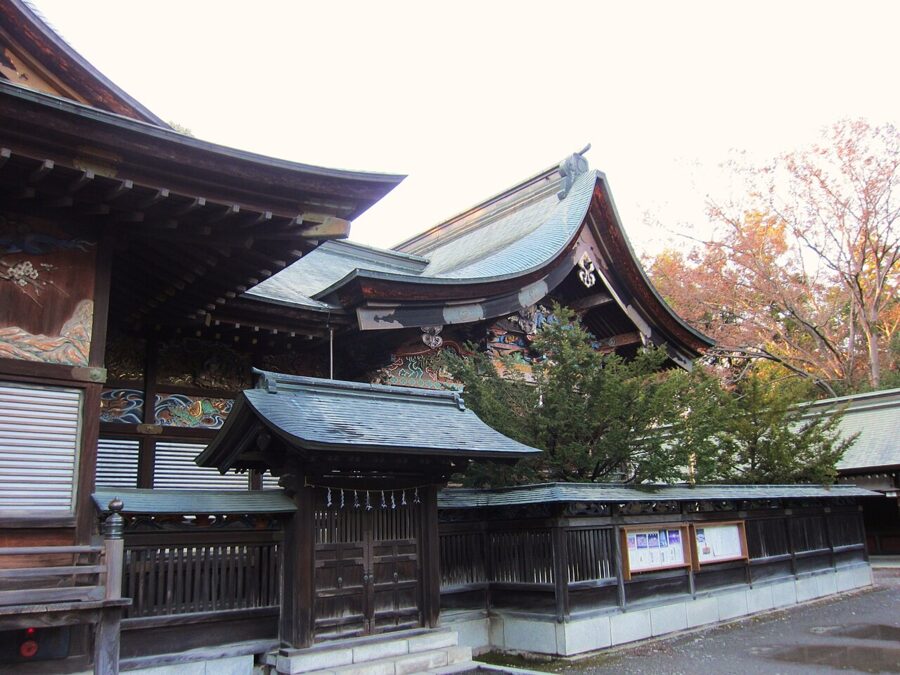
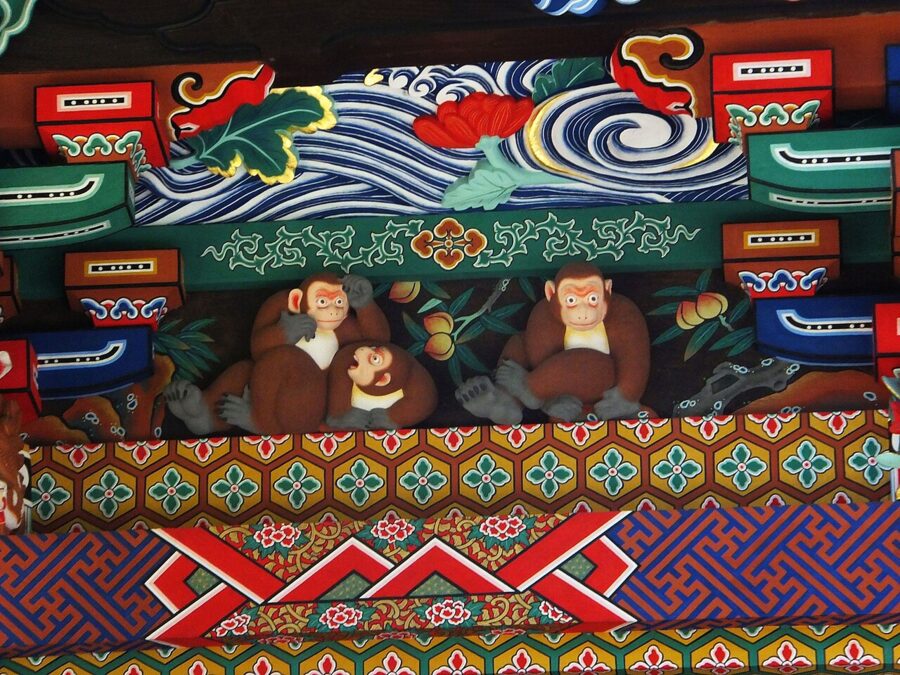
Walk round the main hall rather than stopping at the front. The painted carvings include a tiger with her cub, a chained dragon, the “owl of the Pole Star” and three monkeys, and they are what most people come away talking about.

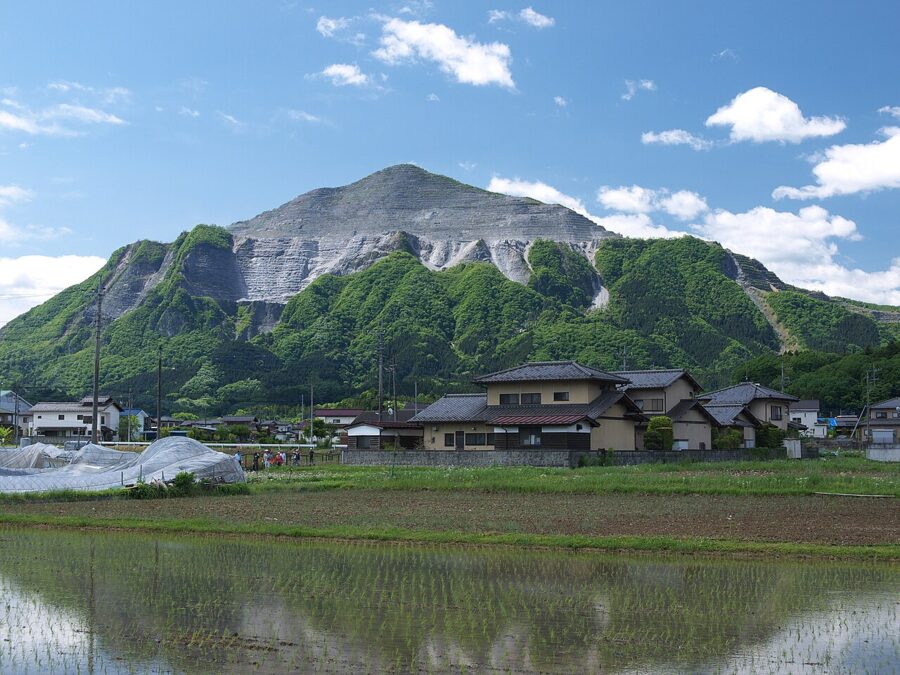
Chichibu eats plainly and well: buckwheat soba, waraji katsu (thin pork cutlets in sauce over rice, named for their likeness to straw sandals) and miso potatoes, fried and glazed with sweet miso, sold from stalls. Above the town to the south stands Mount Buko (武甲山), 1,304 metres, its north face cut into terraces by limestone quarrying. The cement trade is the reason the Chichibu Railway exists at all.

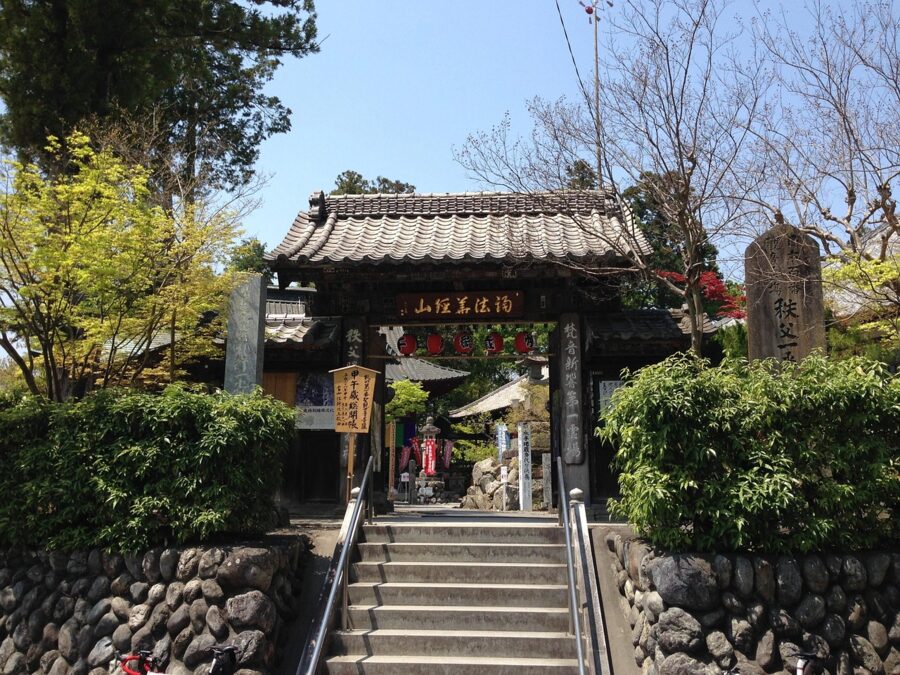
Chichibu is also the home of a 34-temple Kannon pilgrimage, whose hidden images are shown once every twelve years, in a year of the horse; 2026 was one. Temple No. 1 is Shimabu-ji (四萬部寺), and the circuit makes a good second day if you have bought the two-day Chichibu Free Ticket.
Nagatoro and the seasons
Nagatoro: the rocks and the boats
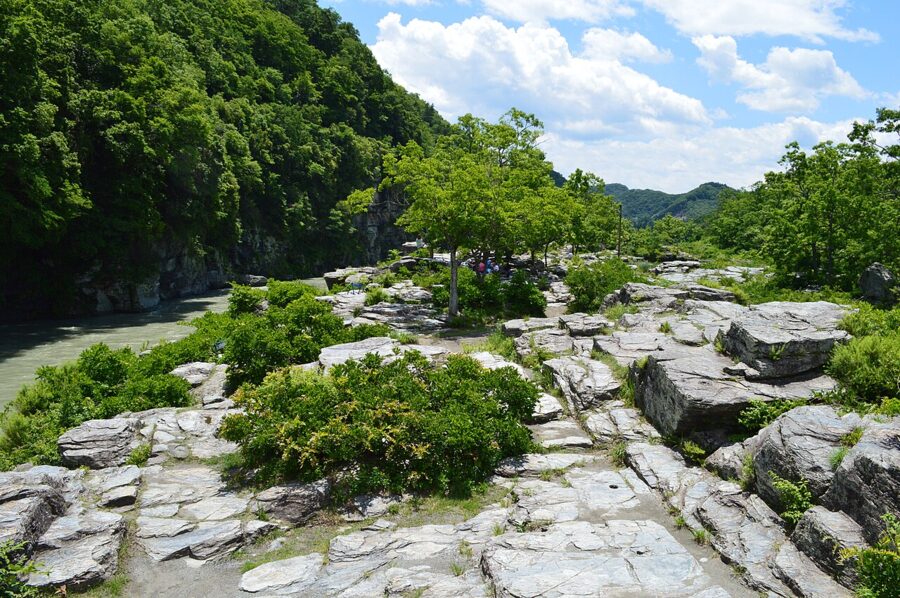
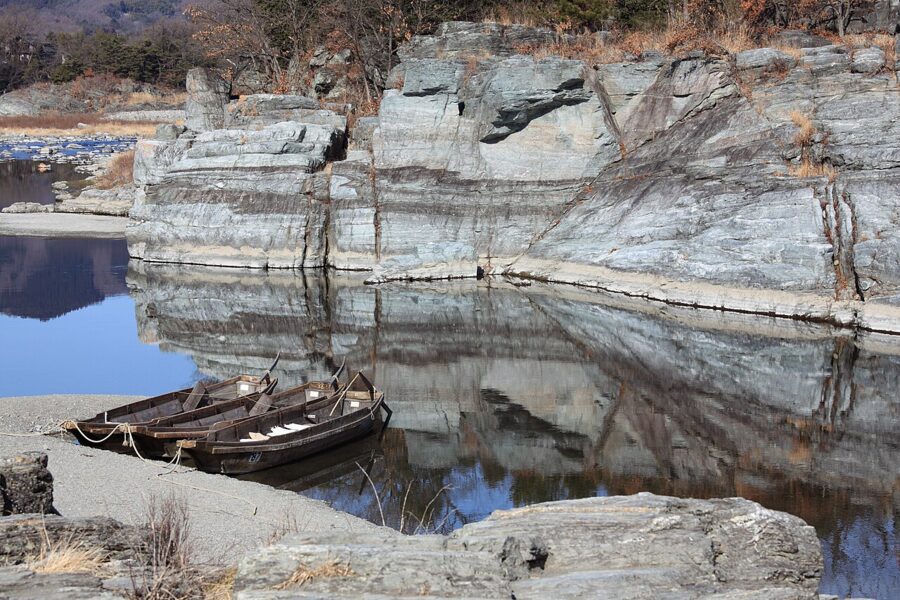
From Ohanabatake the Chichibu Railway reaches Nagatoro (長瀞) in about 21 minutes for ¥550, with trains roughly every 40 minutes around the middle of the day. The river is three minutes’ walk from the station down a street of snack shops. Iwadatami (岩畳), the “rock tatami”, is a long shelf of flat schist beside the Arakawa, and the gorge here is a national Place of Scenic Beauty and Natural Monument.
The Chichibu Railway also runs the Line Kudari (ライン下り) river boats, flat wooden craft with a crew of boatmen. There are two courses, each about three kilometres and twenty minutes, and as of February 2026 a ride costs ¥2,000 (about US$13), or ¥2,200 (about US$15) at peak times such as Golden Week and the autumn leaves. Individuals buy tickets on the day at the office by the station; there is no booking.
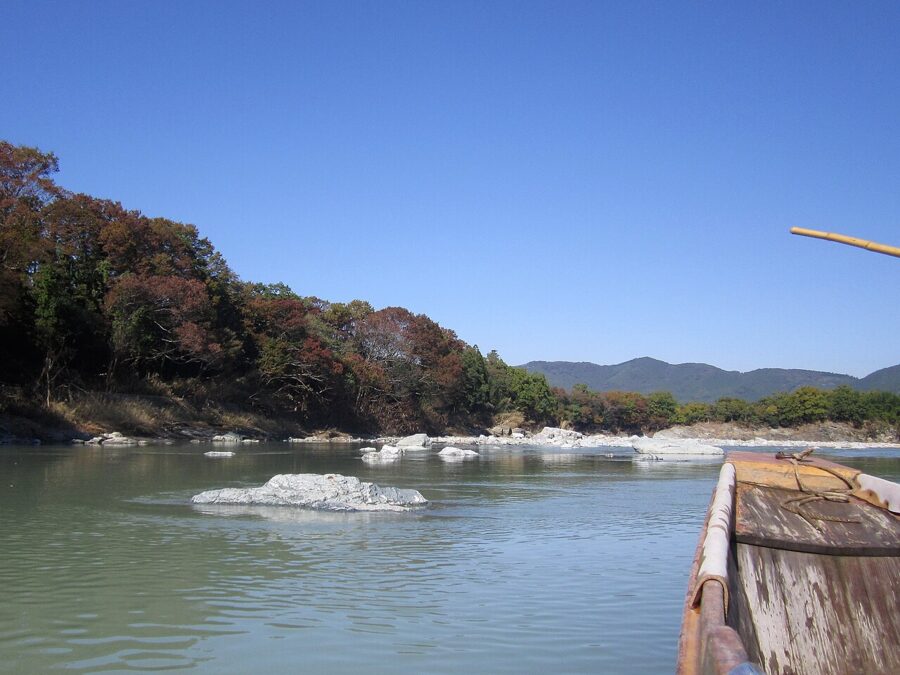

Boats run from 10 March to 4 December, from 09:00 until the day’s tickets are gone at about 16:00, and from 10:00 to 14:30 at the start and end of the season. When the river is too low, as it was on 26 November 2026, the full courses stop and a short loop boat runs at Iwadatami instead. In January and February the kotatsu boats take over: twenty minutes on the still water by the rocks with your legs under a heated table, ¥1,100 for adults, 10:00 to 14:00.

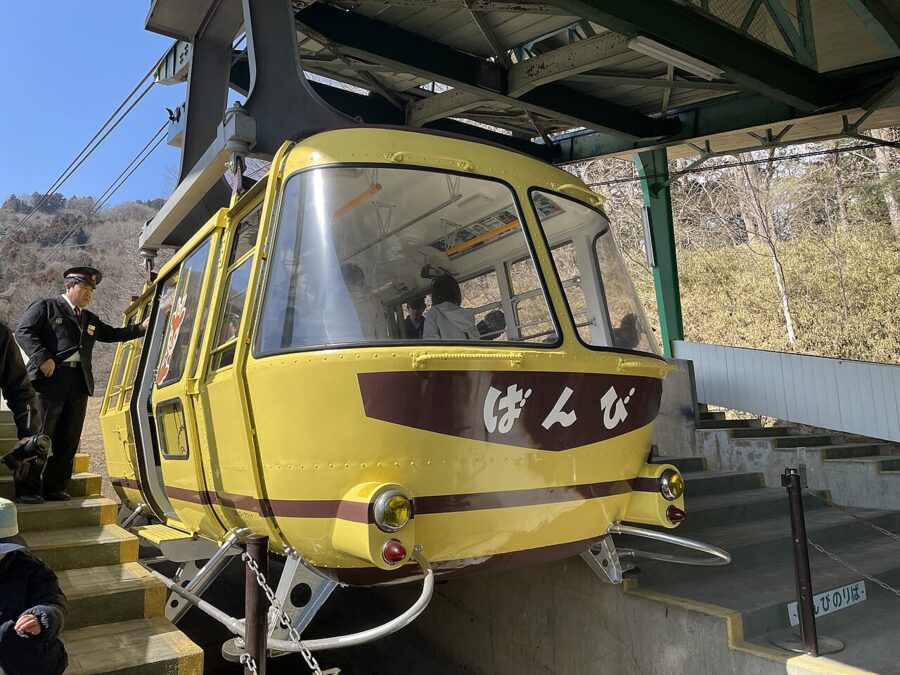
Behind the town the 832-metre Hodosan Ropeway climbs Mount Hodo (497 metres) in about five minutes, ¥700 (about US$5) one way or ¥1,200 (about US$8) return. The lower station is a 20-minute walk from Nagatoro Station, with a free shuttle bus on some days, and Hodosan Shrine sits at the foot of the mountain. In January and February the wintersweet garden at the top, one of the larger in Kanto, is in flower.

Spring: the moss phlox on Hitsujiyama
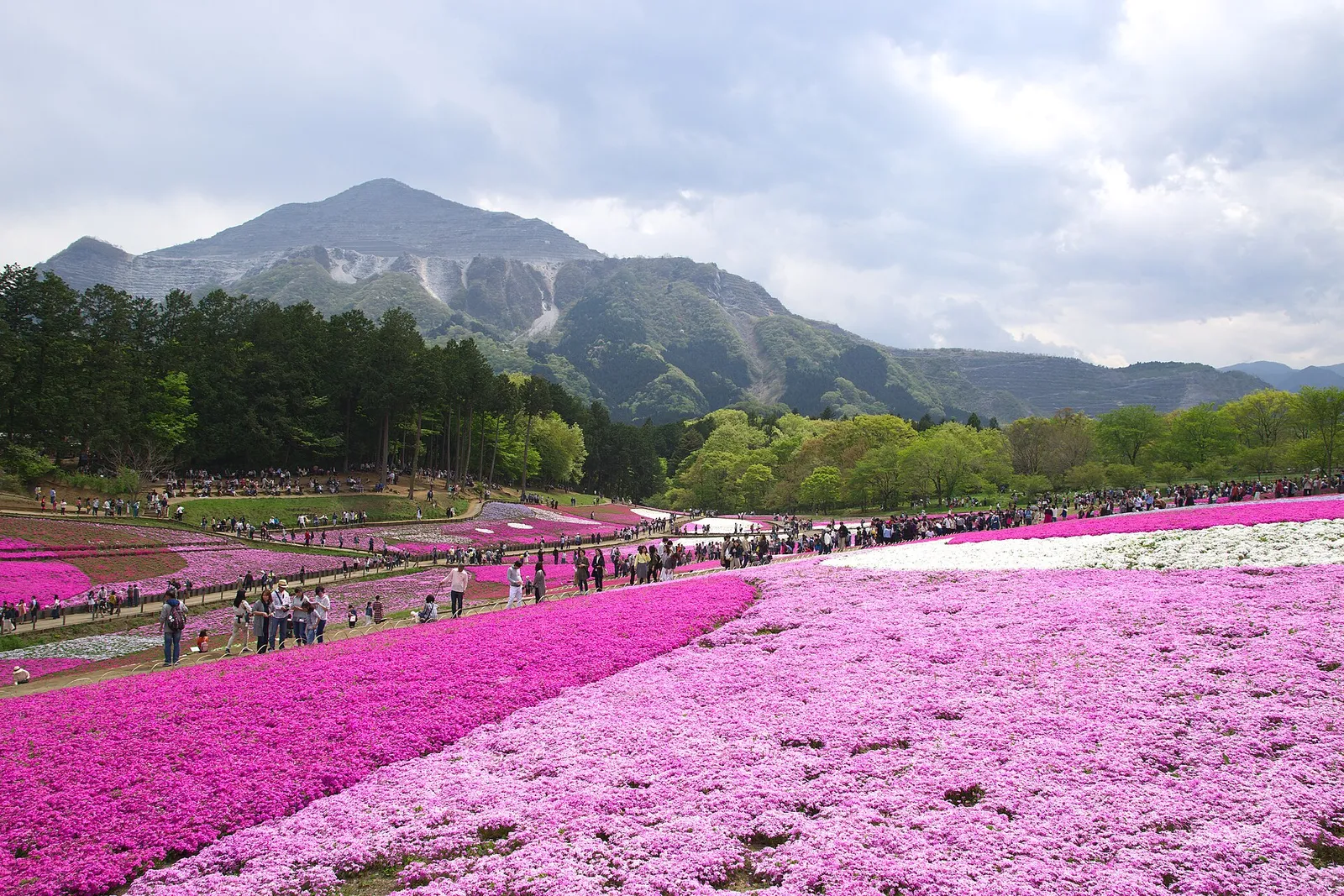
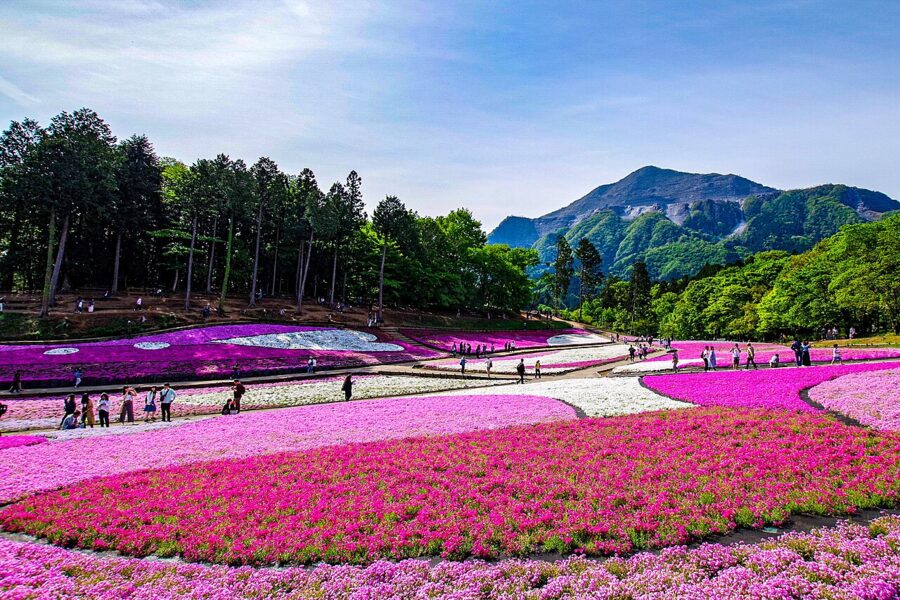
Hitsujiyama Park’s Shibazakura no Oka, the moss phlox hill, covers about 17,600 square metres with more than 400,000 plants of ten varieties, laid out in bands of pink, white and purple under Mount Buko. It flowers from mid-April to early May. In 2026 the festival ran from 3 April to 6 May, with admission charged from 10 to 30 April, 08:00 to 17:00: ¥500 (about US$3) for adults, up from ¥300 the year before, and free for children of junior high school age and under.
The hill is about 20 minutes’ walk from Seibu-Chichibu, steeply uphill. Seibu suggests walking from Yokoze, one stop back down the line, where the climb is gentler, and in spring 2026 it ran some weekend limited expresses further to cope with the crowds. The paid period can end early: in 2026 the flowers went over in late April and entry was free from 1 May.

Winter: the icicles at Misotsuchi and Ashigakubo
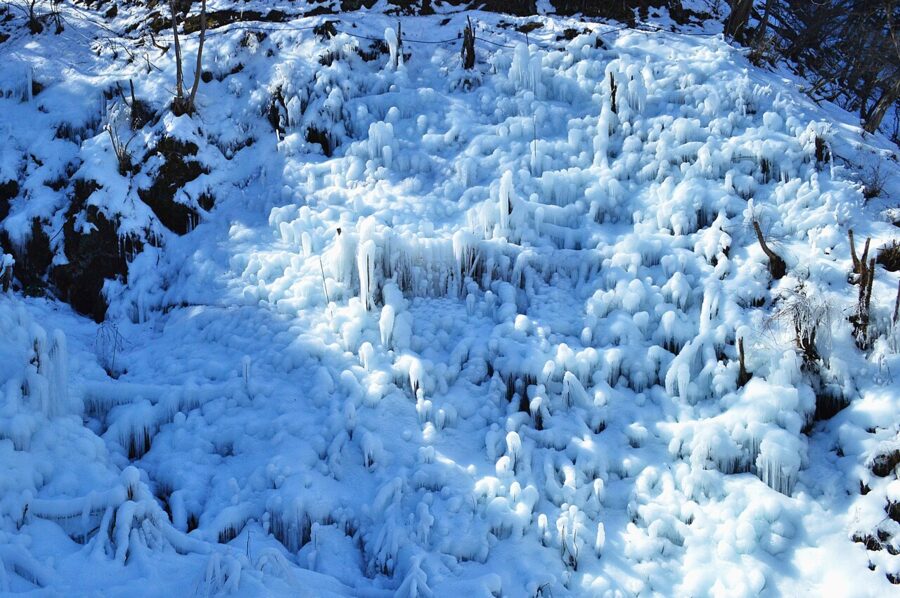
Misotsuchi (三十槌の氷柱) is deep in Okuchichibu on the upper Arakawa, where spring water seeping from a rock face freezes into a curtain of ice about eight metres high and thirty wide. It is at its best from mid-January to mid-February. In 2026 the site was open from 9 January to 23 February, 08:30 to 17:00, and lit after dark from 17:00 to 19:00 on weekdays and to 20:00 at weekends; the 2027 dates had not been announced by late November.
There is no station. The Seibu Kanko Bus from Seibu-Chichibu towards Mitsumine Shrine calls at Mitsumineguchi and then at the Misotsuchi stop on its way up the valley, so check the last bus back before you stay for the lights. Drivers will find only private car parks, at ¥500.
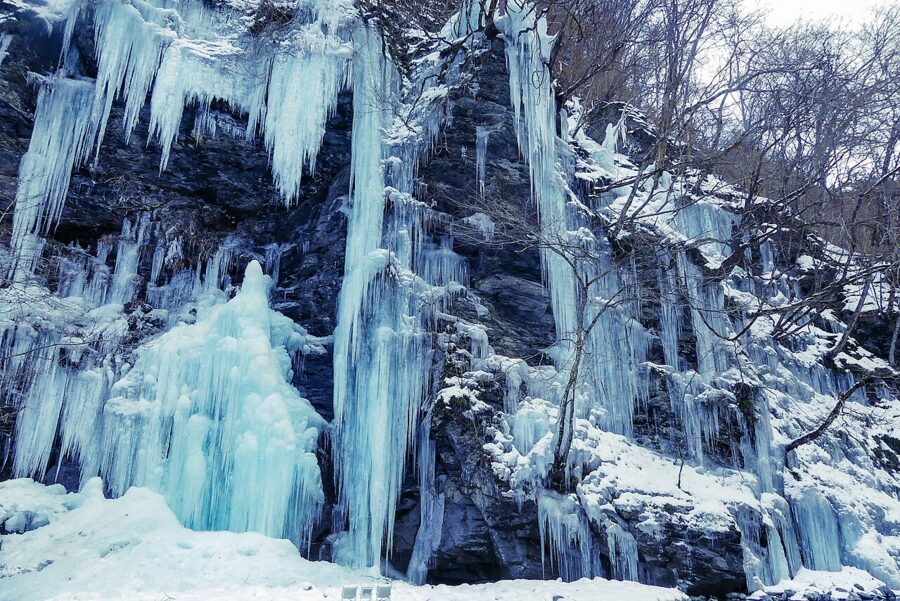

Ashigakubo (あしがくぼの氷柱) is the easy one: a hillside of icicles about ten minutes’ walk from Ashigakubo Station (SI34), two stops short of Seibu-Chichibu, which Seibu describes as 200 metres wide and 30 metres high. For 2027 it opens from 8 January to 23 February, lit on Thursday, Friday and weekend evenings. On lighting days some Laviews make an extra stop at Ashigakubo, this winter for the first time in the weekday daytime as well, and the Chichibu Free Ticket covers the station.
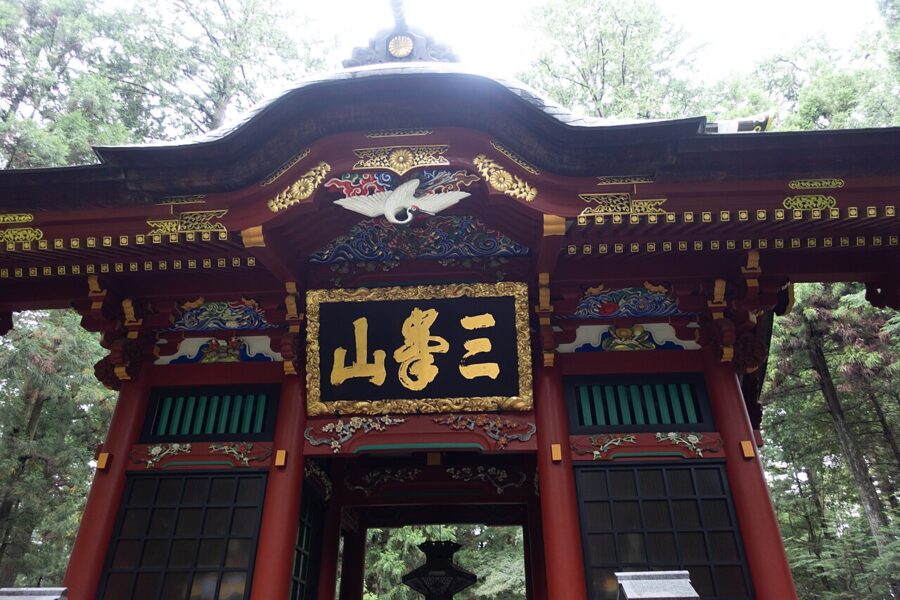
Mitsumine Shrine
Mitsumine Shrine (三峯神社) is the long way up: about an hour and a quarter on the same Seibu Kanko Bus from Seibu-Chichibu, which ends a short walk from the gate. The shrine’s own history credits its founding to Yamato Takeru, guided over the mountains by a wolf, and the wolf stayed. From 1720 the cult of O-inu-sama, the honoured dog, spread far beyond Chichibu, and you will see wolves where other shrines have lion-dogs.
Allow most of a day. The Chichibu Manyu Ticket includes a one-way ride on the express bus. The shrine posted a warning about bear sightings in June 2026, and Route 140 below it was closed for part of January 2026, so read the shrine’s notices before a winter trip.


The Chichibu Night Festival, 2 and 3 December
Chichibu Yomatsuri (秩父夜祭) is the annual festival of Chichibu Shrine. It is counted with Kyoto’s Gion Matsuri and the Takayama festival as one of Japan’s three great float festivals, and it is part of the “Yama, Hoko, Yatai” group inscribed by UNESCO in 2016. Records put it back to the 1660s. Six floats, two kasaboko and four yatai, carved, painted and hung with embroidery, are hauled through the streets by hundreds of people to the beat of drums.
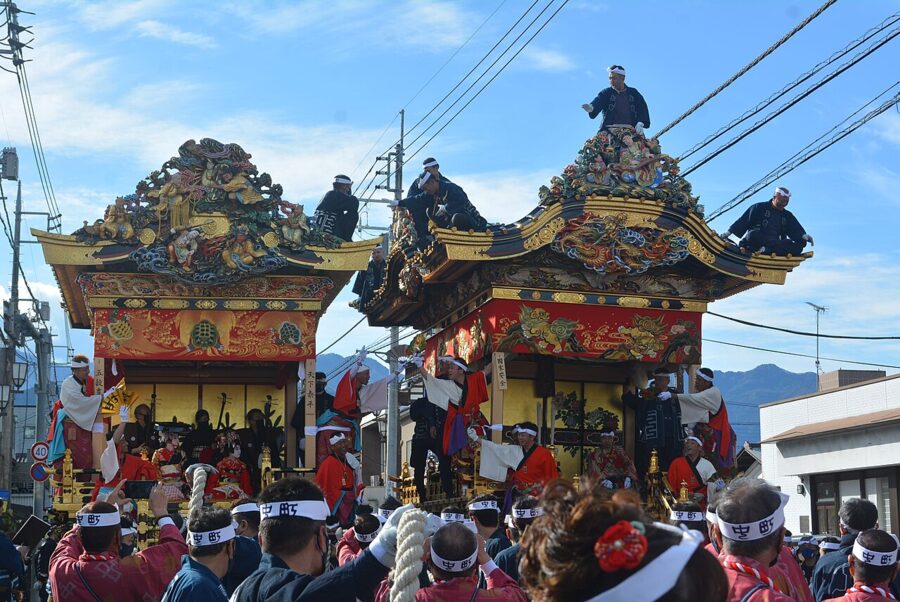

The dates never move: 2 December is the eve and 3 December the main festival, a Wednesday and a Thursday in 2026. On the 2nd the yatai are out from the morning until about 20:00, and the streets are quiet enough to get close. The 3rd is the day: six floats out from early morning into the next, kabuki in the shrine grounds from 12:30, the shrine procession leaving at about 18:00, and the floats hauled up the Dango-zaka slope to the otabisho, the peak of it all, between about 19:00 and 22:00.
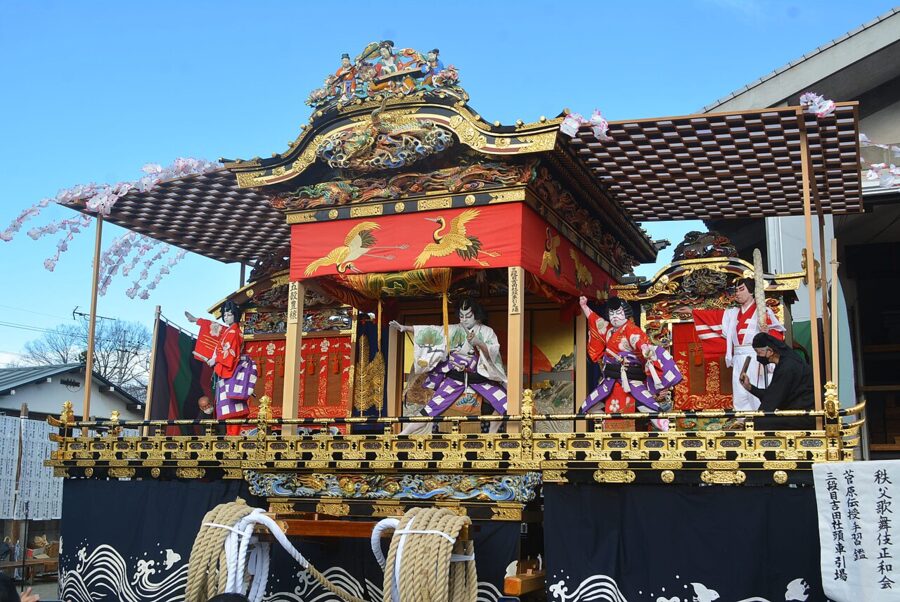

Dango-zaka itself is hard to see without a paid seat in the stands, and the city says so plainly. The fireworks go up from Hitsujiyama Park, and the 2026 programme gives 19:30 to 21:55 for the main display on the 3rd, best seen from the forecourt of Seibu-Chichibu Station or along Route 140 near it. The tourism association’s festival page for 2026 has the float route maps and an English map.
Take the train; the centre of town is closed to traffic. On the 3rd Seibu adds Laviews from Ikebukuro about every half-hour from late morning and runs them back from Seibu-Chichibu until 22:24, arriving at Ikebukuro at 23:44, with a last one at 23:04 that stops at Tokorozawa; extra locals run between Hannō and Seibu-Chichibu. Limited express seats for the 3rd went on sale on 3 November, eight per person on that first day, and the evening returns go quickly.
On the Chichibu Railway, the overhead wires at the level crossing below Dango-zaka, next to Ohanabatake, are disconnected so the floats can cross the line, and no trains run between Chichibu and Kagemori from about 19:30 to 22:30. In 2026 the railway also runs a special steam train, the SL Chichibu Hikiyama Yomatsuri, from Gyōdashi at 15:23 to Chichibu at 17:55, its Kumagaya to Chichibu seats sold through the normal SL booking system.
A sensible day, in order
For an ordinary weekend, with Nagatoro in it:
- 08:30 Laview from Ikebukuro, arriving at Seibu-Chichibu at about 09:47.
- Walk to Chichibu Shrine, fifteen minutes, and give it and the streets around it an hour.
- From Chichibu or Ohanabatake, the Chichibu Railway to Nagatoro, about twenty minutes. Lunch, Iwadatami, the boat in season and the ropeway if the day is clear.
- A mid-afternoon train back to Ohanabatake, a soak at Matsuri no Yu, and a Laview home in the late afternoon or evening, booked that morning.
On a steam day, turn it round. Take JR to Kumagaya for the 10:15 SL, get off at Nagatoro at 11:33 for lunch and the river, continue to Ohanabatake by ordinary train for the shrine, and take the Laview home from Seibu-Chichibu. The Chichibu Railway part costs ¥850 (about US$6) to Nagatoro and ¥550 on to Ohanabatake, ¥1,400 in single fares, so the ¥1,700 day pass does not pay unless you go on to Mitsumineguchi.

Buy the limited express ticket the day before, take the 08:30 from Ikebukuro, and turn your seat round at Hannō.