
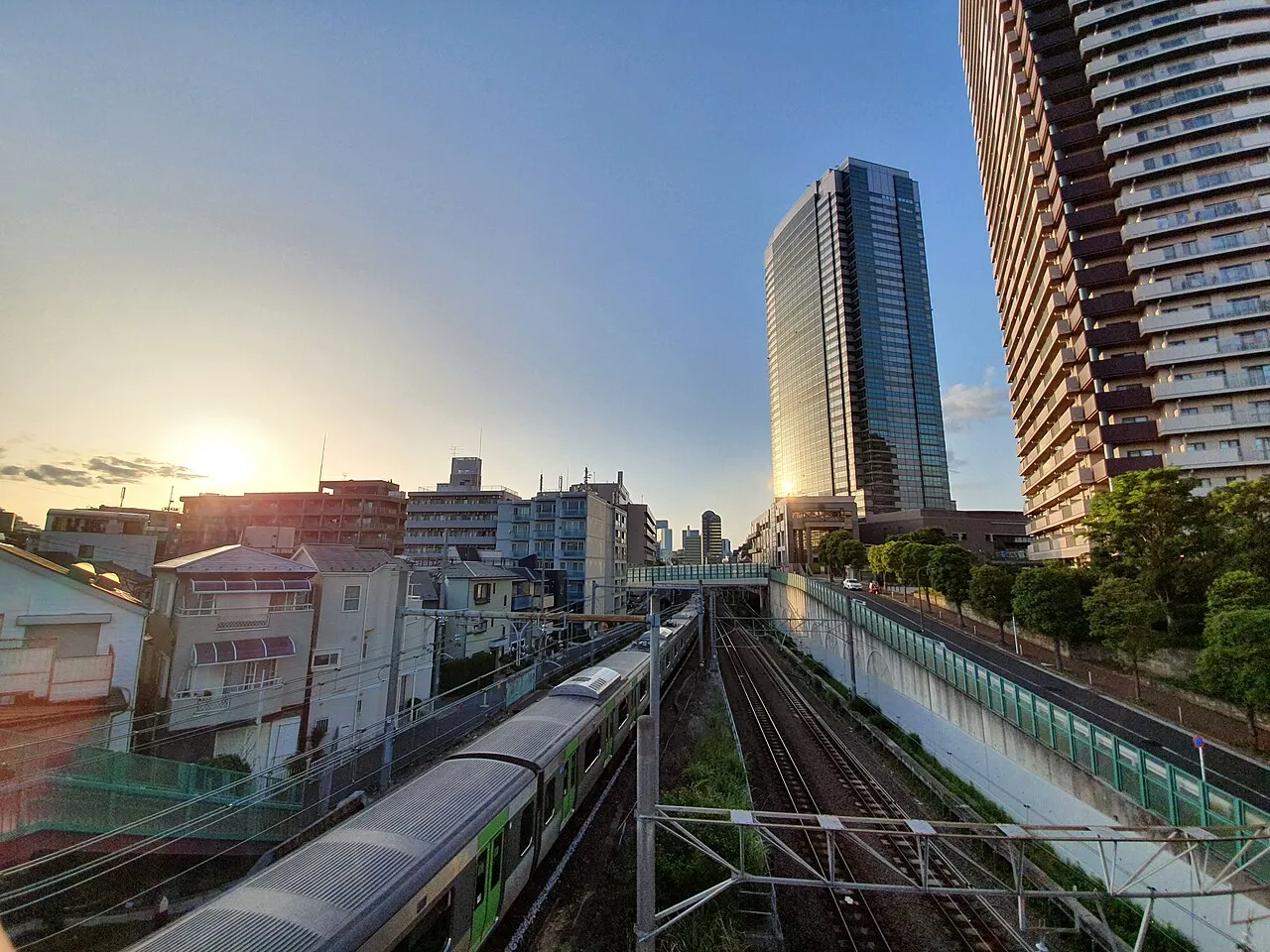
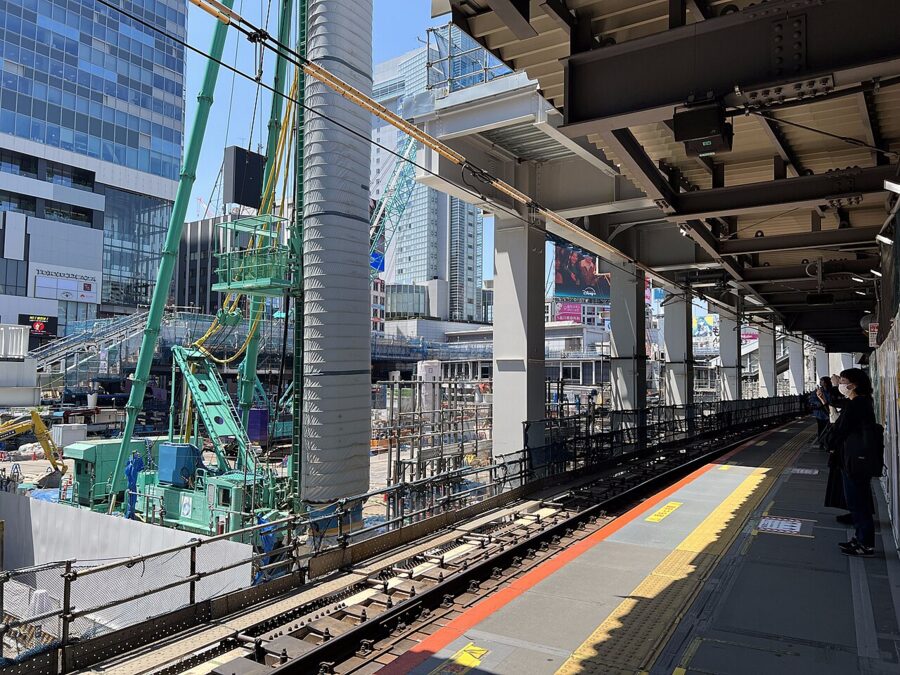
At Shibuya both Yamanote Line tracks have shared a single island platform since January 2023, which makes the first decision quick to make and easy to get wrong. Trains on one face run to Shinjuku and Ikebukuro. Trains on the other run to Ebisu, Shinagawa and Tokyo. Either will get you to Shinagawa in the end, one in thirteen minutes and the other in about fifty.
The signs make sense once you know two words. The outer loop, sotomawari (外回り), runs clockwise on the map; the inner loop, uchimawari (内回り), runs anticlockwise, because trains in Japan keep left and the clockwise track is therefore the outer one. Platform boards and announcements also name the next two of the six big stations in that direction: at Shibuya one side reads “for Shinjuku and Ikebukuro”, the other “for Shinagawa and Tokyo”.
Find your stop in one of those directions and the rest is a matter of standing still. The loop is 34.5 km long with 30 stations, and a train comes back to where it started in a little over an hour. For a visitor it is the most useful line in Tokyo.


How the loop works
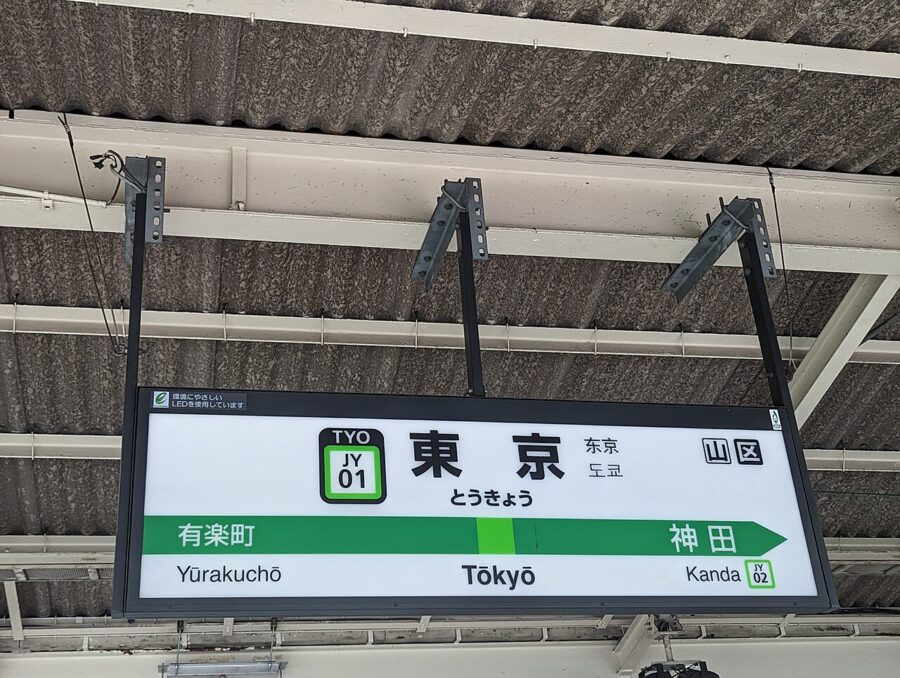
JR East numbers the stations JY01 to JY30, starting at Tokyo (東京) and counting anticlockwise: Kanda JY02, Ueno JY05, Ikebukuro JY13, Shinjuku JY17, Shibuya JY20, Shinagawa JY25 and finally Yurakucho JY30, one stop short of Tokyo again. The numbers rise in the inner-loop direction. If your station’s number is a few higher than the one you are standing at, take the inner loop; a few lower, the outer loop. The right direction never involves more than fifteen stops, and JR East’s own guide offers the same shorthand in Japanese: inner is left-handed, outer right-handed.

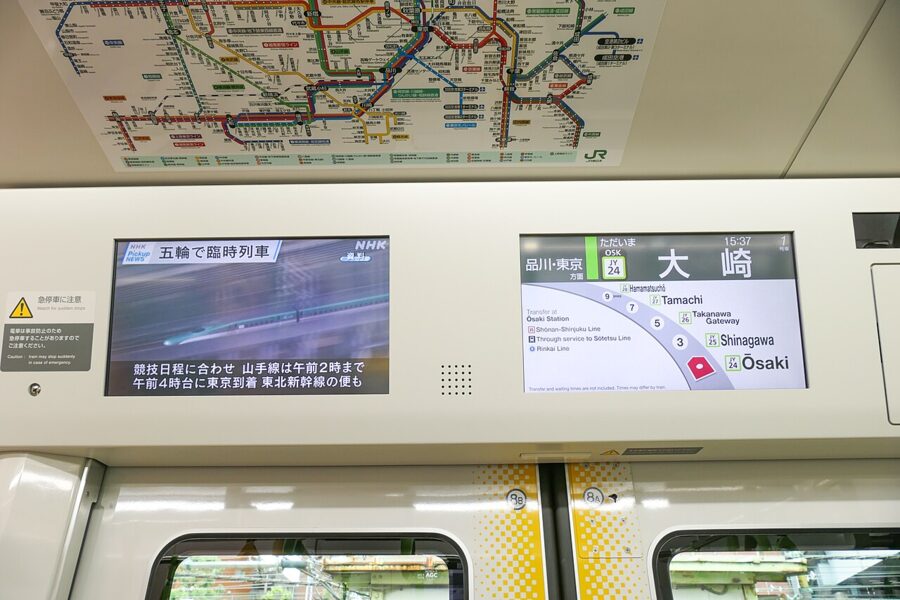
Every train stops at every station, so direction is the only choice you make. The trains are based at Osaki (大崎), where most of them start in the morning and finish at night, and a few late trains run only as far as Osaki or Shinagawa instead of going all the way round, so read the platform board after about 23:00.
First trains leave at around 04:30 and last trains at around 00:30 to 01:00, depending on the station and the direction. On a weekday in December 2026 the last outer-loop train from Harajuku is timetabled at 00:36 and the last inner-loop train at 00:45. Tokyo’s trains do not run all night.
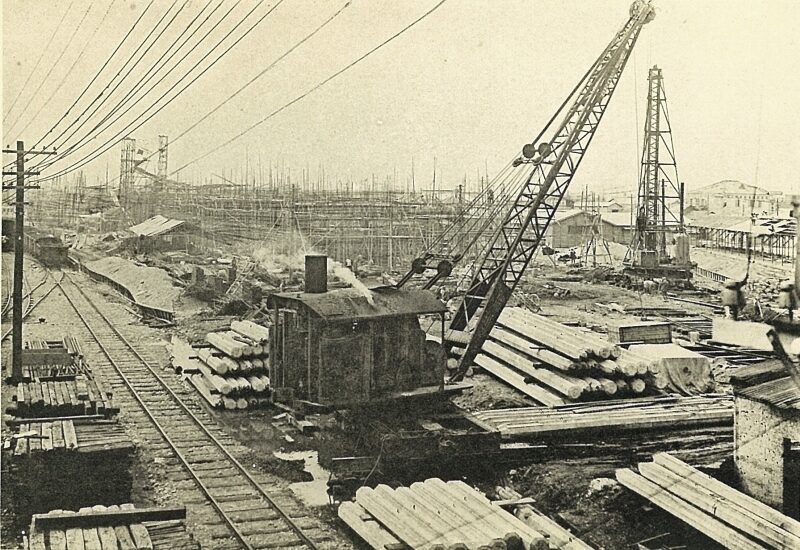
The loop is younger than most of the stations on it. The western arc through Shibuya, Shinjuku and Ikebukuro opened in 1885 as a freight bypass built by Nippon Tetsudo, the Japan Railway Company, and trains first ran all the way round on 1 November 1925, once the line between Kanda and Ueno closed the gap. On JR’s books the Yamanote Line is still only the 20.6 km from Shinagawa to Tabata by way of Shinjuku. The eastern half runs on the Tohoku and Tokaido main lines, which is why the Keihin-Tohoku Line keeps it company from Tabata to Shinagawa.

The stations a visitor uses
The table lists the stations that earn their place. Ridership figures below are JR East’s own daily boardings for the year to March 2025, the latest it has published.
| Station | No. | What is there | Main transfers |
|---|---|---|---|
| Tokyo (東京) | JY01 | Red-brick Marunouchi building, Imperial Palace gardens, Ginza on foot | Shinkansen north and west, Chuo Rapid, Keihin-Tohoku, Marunouchi Line |
| Akihabara (秋葉原) | JY03 | Electronics, games, anime shops | Chuo-Sobu local, Keihin-Tohoku, Hibiya Line, Tsukuba Express |
| Ueno (上野) | JY05 | Ueno Park, Tokyo National Museum, zoo, Ameyoko market | Shinkansen north, Ginza and Hibiya Lines, Keisei Ueno a short walk |
| Nippori (日暮里) | JY07 | Yanaka’s old streets and cemetery | Keisei Skyliner to Narita Airport |
| Ikebukuro (池袋) | JY13 | Department stores, Sunshine City | Saikyo, Shonan-Shinjuku, Tobu Tojo, Seibu Ikebukuro, three subway lines |
| Takadanobaba (高田馬場) | JY15 | Student district near Waseda | Tozai Line, Seibu Shinjuku Line |
| Shinjuku (新宿) | JY17 | Kabukicho, government towers, Shinjuku Gyoen | Chuo Rapid, Saikyo, Shonan-Shinjuku, Odakyu, Keio, Marunouchi and Toei lines |
| Harajuku (原宿) | JY19 | Meiji Jingu, Takeshita-dori, Omotesando | Chiyoda and Fukutoshin Lines at Meiji-jingumae |
| Shibuya (渋谷) | JY20 | Scramble crossing, Hachiko statue | Saikyo, Shonan-Shinjuku, Tokyu, Keio Inokashira, three subway lines |
| Ebisu (恵比寿) | JY21 | Ebisu Garden Place | Saikyo, Shonan-Shinjuku, Hibiya Line |
| Shinagawa (品川) | JY25 | Tokaido Shinkansen, hotels | Tokaido Shinkansen, Keikyu to Haneda, Tokaido and Yokosuka lines |
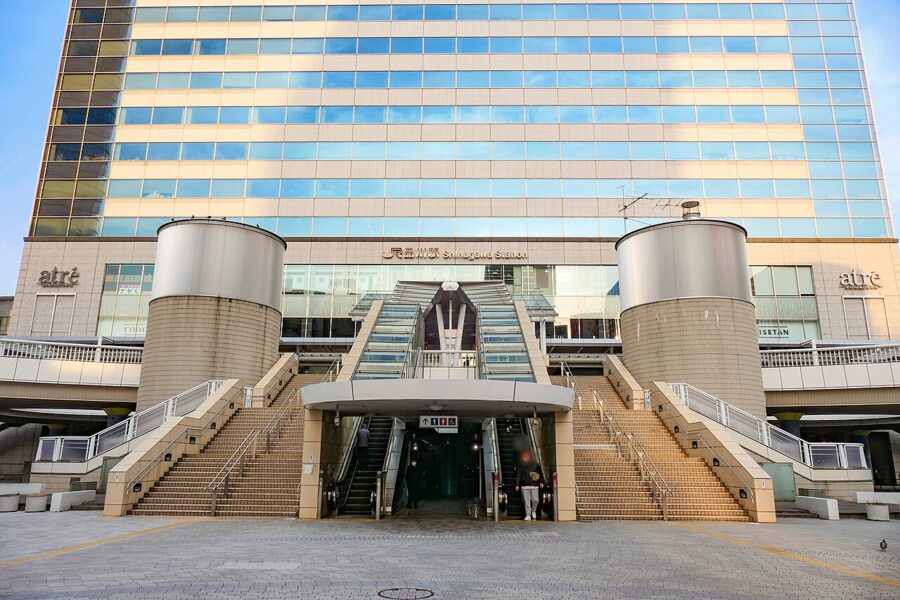
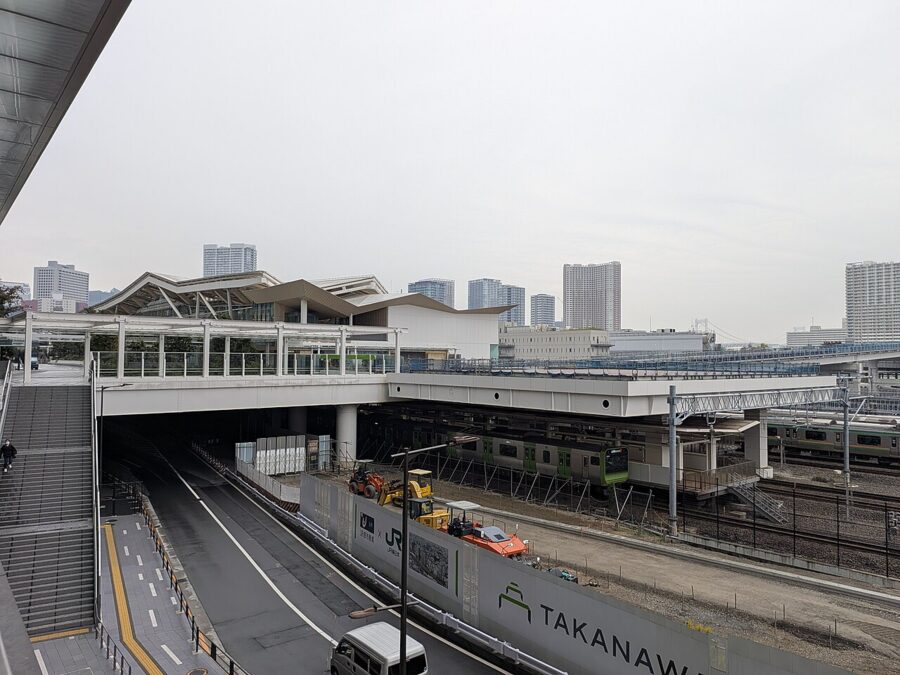
| Takanawa Gateway (高輪ゲートウェイ) | JY26 | Takanawa Gateway City, MoN Takanawa museum | Keihin-Tohoku; Sengakuji (Asakusa Line, Keikyu) on foot |
| Hamamatsucho (浜松町) | JY28 | Shiba Park, Tokyo Tower on foot | Tokyo Monorail to Haneda, Asakusa and Oedo Lines at Daimon |
Tokyo
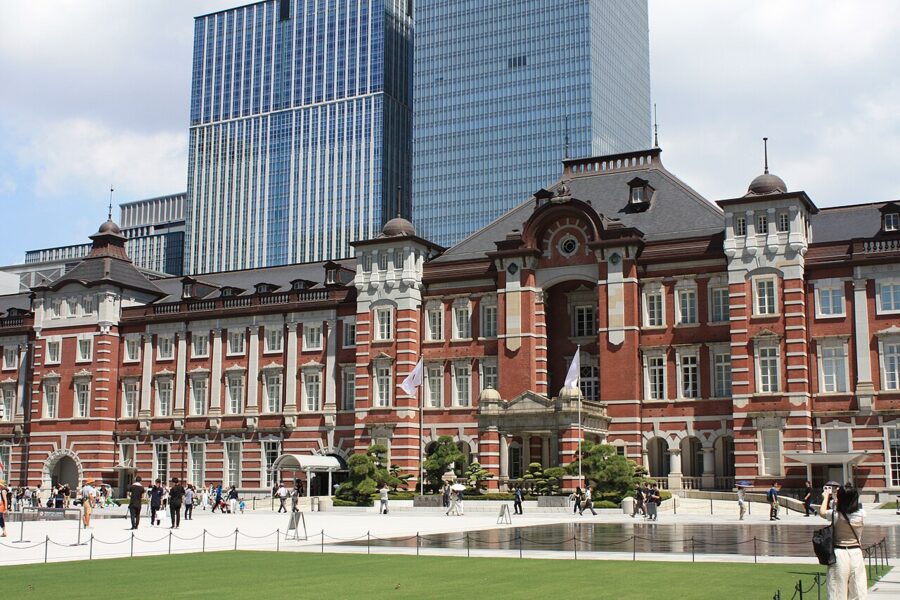
At Tokyo Station the inner loop leaves from platform 4 and the outer loop from platform 5, each sharing an island with the Keihin-Tohoku Line going the same way. With 434,564 daily boardings it is the third busiest station on JR East’s network, and the one where the loop meets the Shinkansen. Take the Marunouchi exits for the brick building and the palace gardens; Yaesu is the side for the Tokaido Shinkansen and the bus terminal.

Akihabara and Ueno
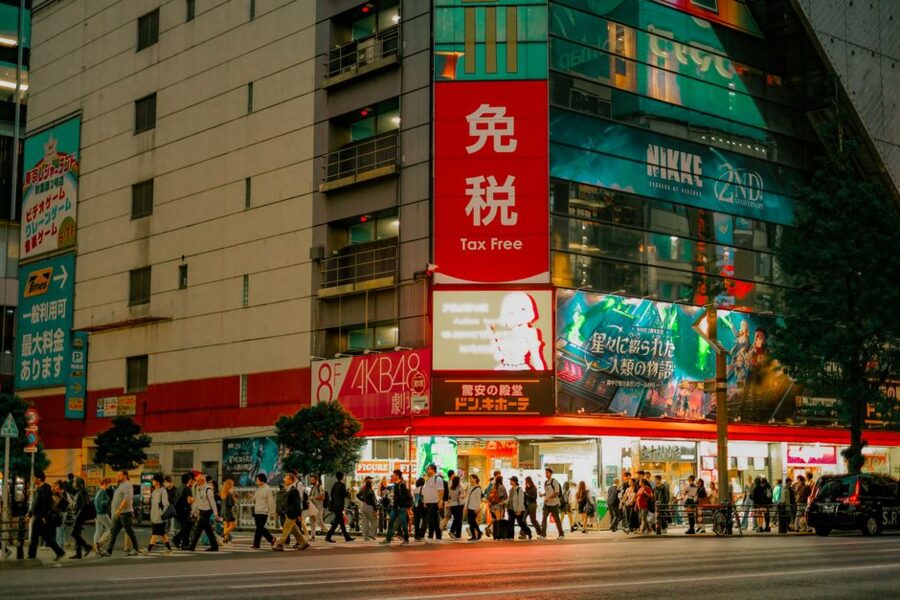
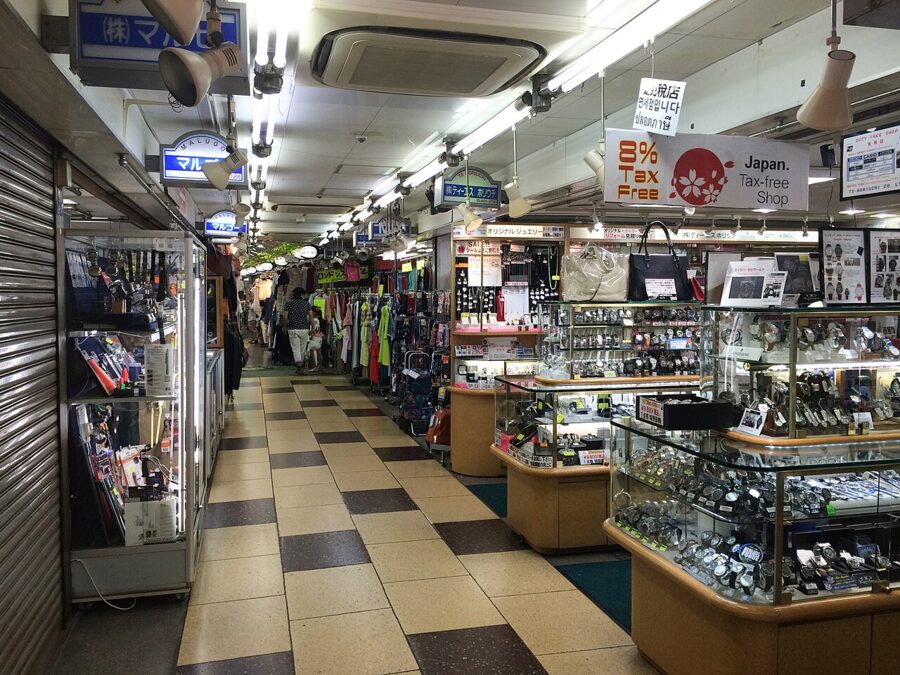
Akihabara’s Electric Town exit drops you straight onto the shopping streets. Two stops north, Ueno’s Park exit comes out opposite the museums and the zoo, while the main exits face Ameyoko, the market that runs south along the tracks and partly underneath them to Okachimachi. Ueno is also one of two stations on the loop for the Keisei Skyliner. Keisei Ueno is a separate station across the road; at Nippori, two stops further on, Keisei and JR share a building and the change is quicker, which matters with luggage on the way to Narita Airport.

Ikebukuro
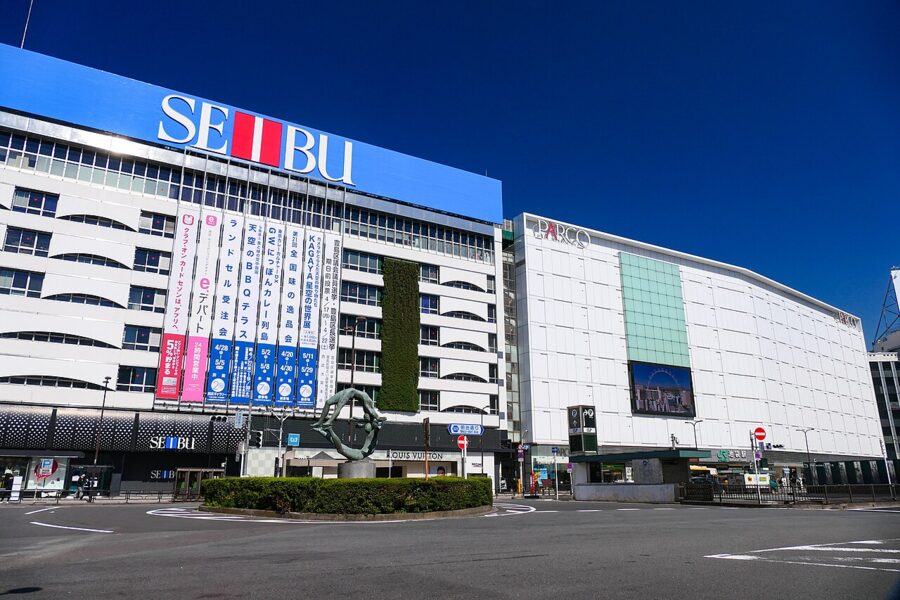
Ikebukuro is the second busiest station on JR East’s network, with 499,128 daily boardings, and the confusing one. The Seibu department store sits over the east exit and the Tobu store over the west exit, the reverse of what the names suggest. Sunshine City is about ten minutes’ walk from the east side. The Saikyo and Shonan-Shinjuku Lines stop here too, along with the Tobu Tojo Line and the Marunouchi, Yurakucho and Fukutoshin subway lines.

Shinjuku
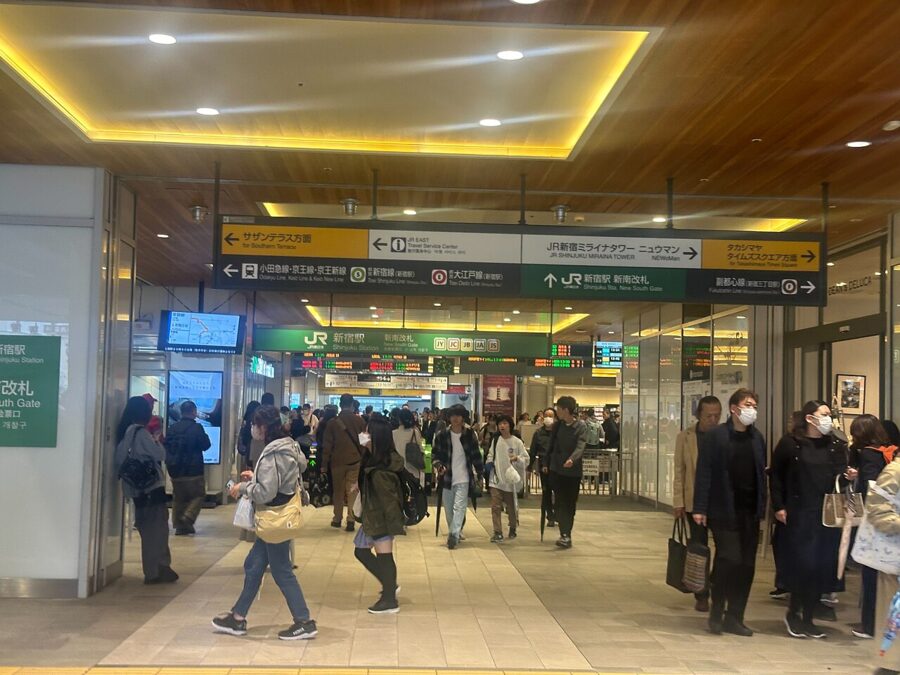
Shinjuku is the busiest station on the JR East network by a distance, with 666,809 daily boardings. At Shinjuku Station what matters is choosing your exit before you leave the platform, because the wrong gate can mean ten minutes of corridors. The Odakyu and Keio terminals for Hakone and the western suburbs are on the west side.

Harajuku
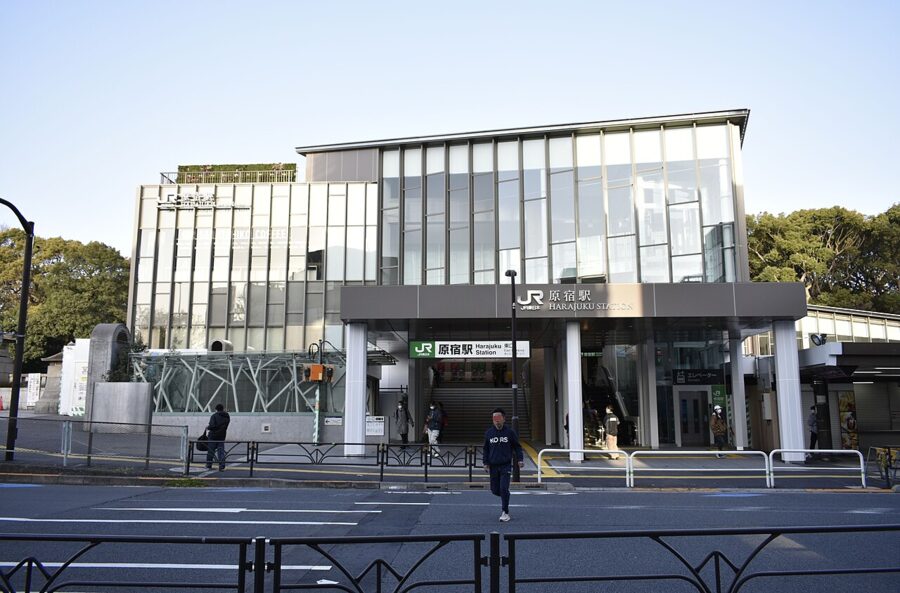
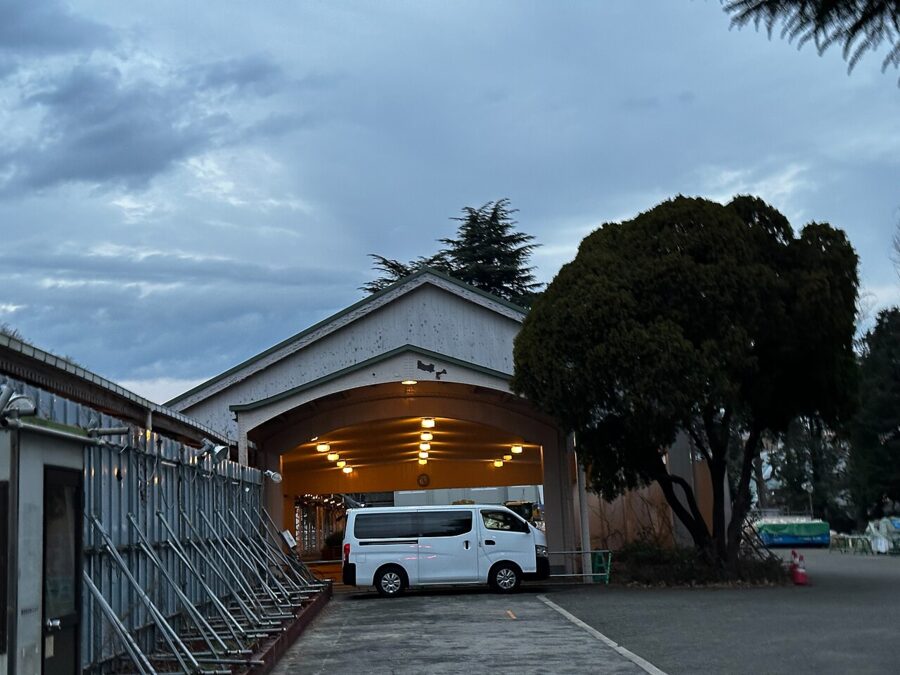
Harajuku has the most tourist-shaped ridership on the loop: of its 67,407 daily boardings, 49,265 are made without a season ticket. The present station building opened on 21 March 2020, when outer-loop trains moved to a new platform on the Meiji Jingu side; the inner loop kept the old island. The wooden 1924 building it replaced was taken down later that year, and JR East is rebuilding a copy of its frontage as part of a small shopping block, due to open in the winter of 2026–27. Just north of the station is the private platform built in 1925 for the imperial train.


Shibuya
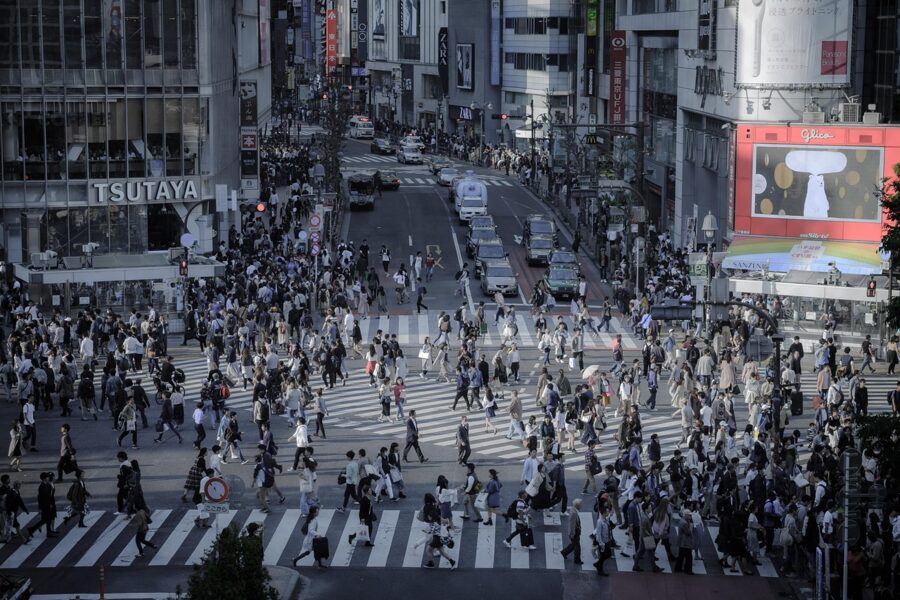
Shibuya’s 324,414 daily boardings make it the fifth busiest JR East station. Use the Hachiko exit for the scramble crossing. The Saikyo and Shonan-Shinjuku platform was moved about 350 m north in 2020 and is now a real walk from the Yamanote, while the Tokyo Metro Ginza Line arrives on the third floor of the station complex. The Tokyu lines to Yokohama and the south-western suburbs are underground.
Shinagawa and Takanawa Gateway
Shinagawa is the loop’s link to the Tokaido Shinkansen and to Haneda Airport by Keikyu. It has 287,939 daily boardings, and it is one of only two stations between Tabata and Shinagawa where the Yamanote and Keihin-Tohoku Lines do not share platforms, so a change here means stairs.
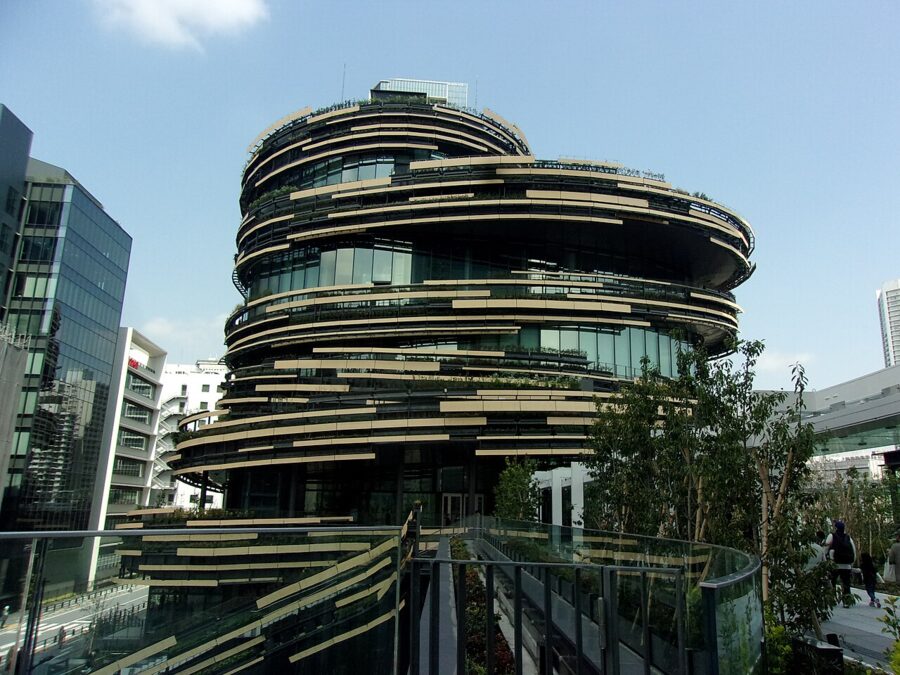
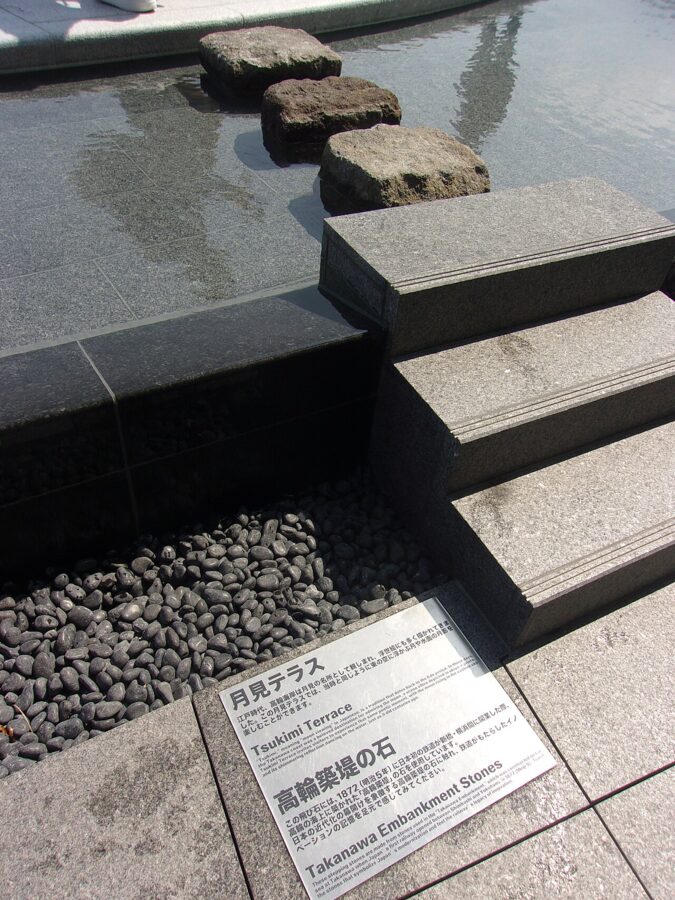
Takanawa Gateway, one stop north, opened as a station in 2020 and as a district on 28 March 2026, when JR East fully opened Takanawa Gateway City, including the MoN Takanawa museum. In JR East’s public naming poll plain “Takanawa” came first with 8,398 entries; “Takanawa Gateway” was 130th with 36. In the year to March 2025 the station had 14,209 daily boardings, the fewest on the loop. During construction the builders uncovered the 1872 embankment that carried Japan’s first railway across the shallows of Tokyo Bay.

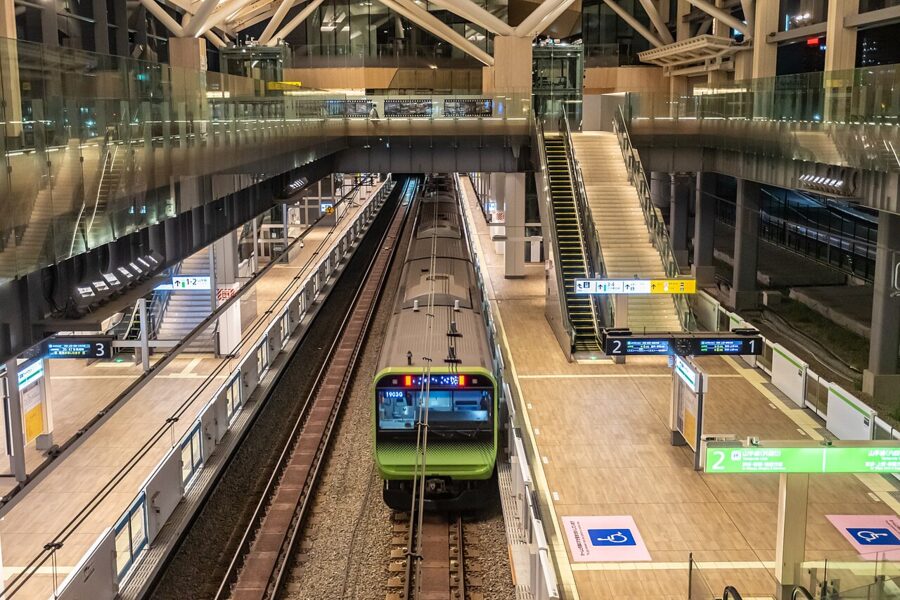
The E235, the screens and the crowds
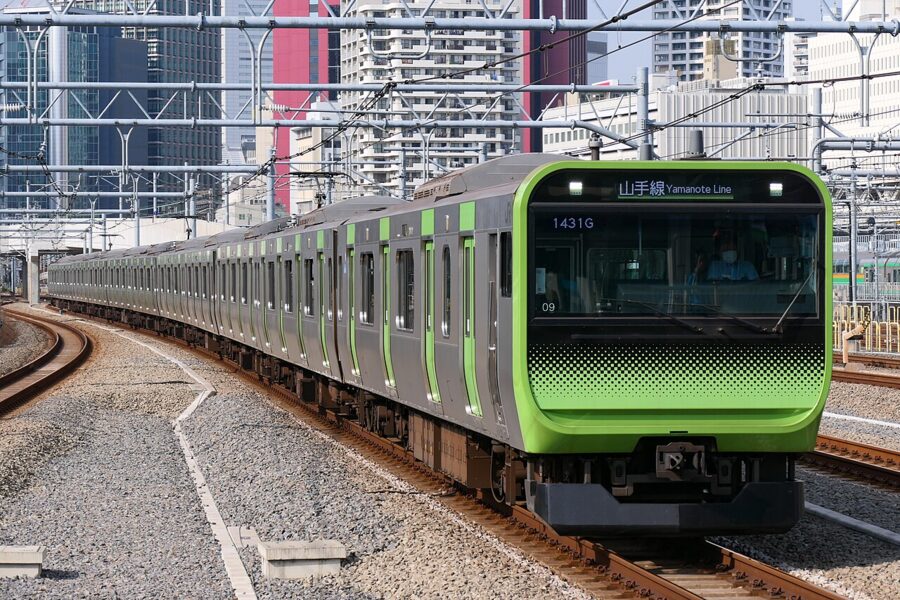
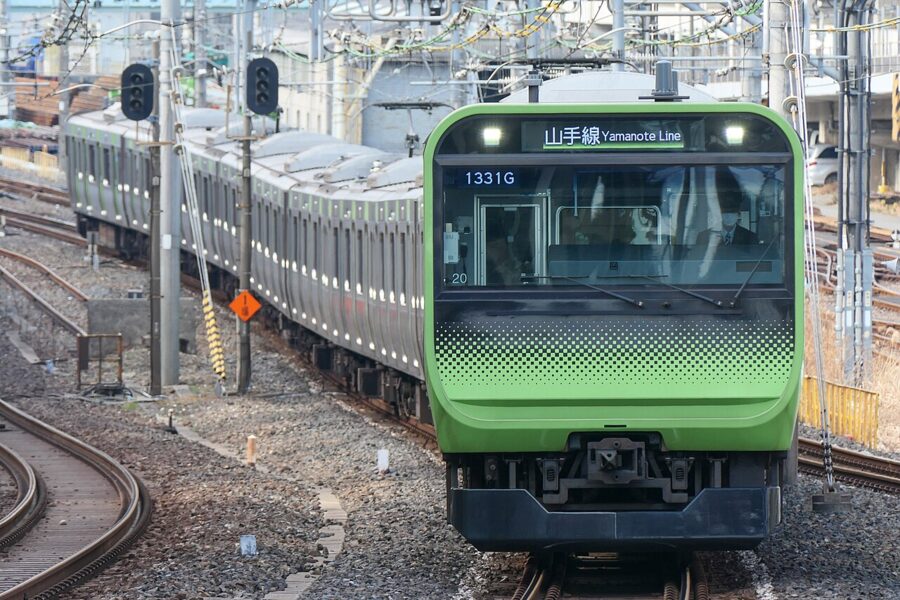
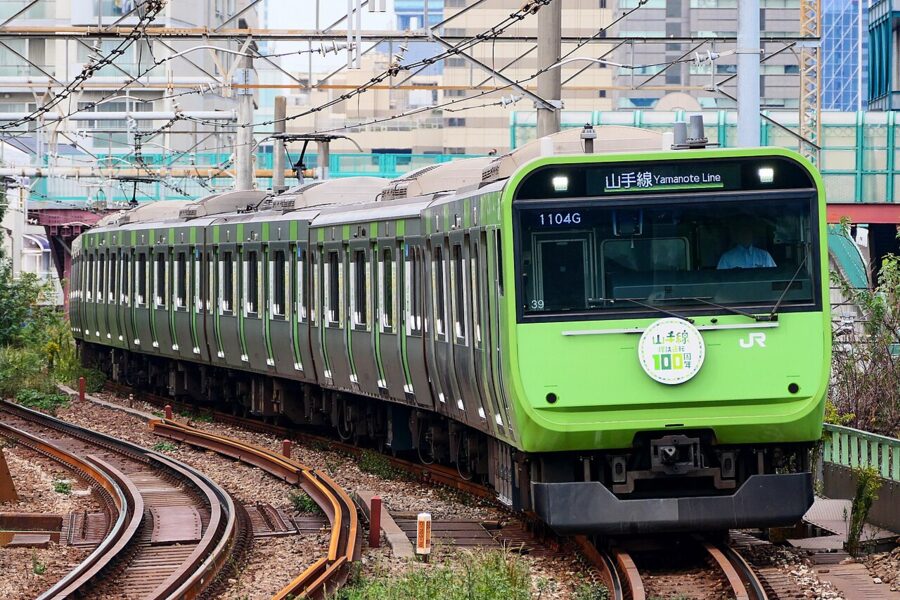
Every Yamanote train is an 11-car E235. The first set entered service on 30 November 2015, mass-production sets followed from 22 May 2017, and the last of the older E231-500 trains ran on 20 January 2020, leaving 50 identical sets. The E235 also works the Yokosuka and Sobu Rapid lines, among JR East’s commuter trains.
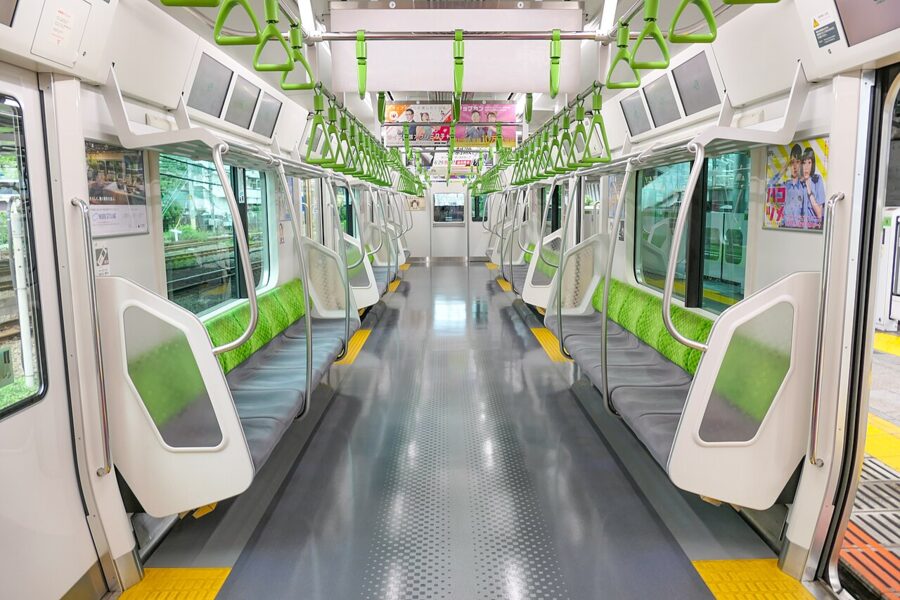
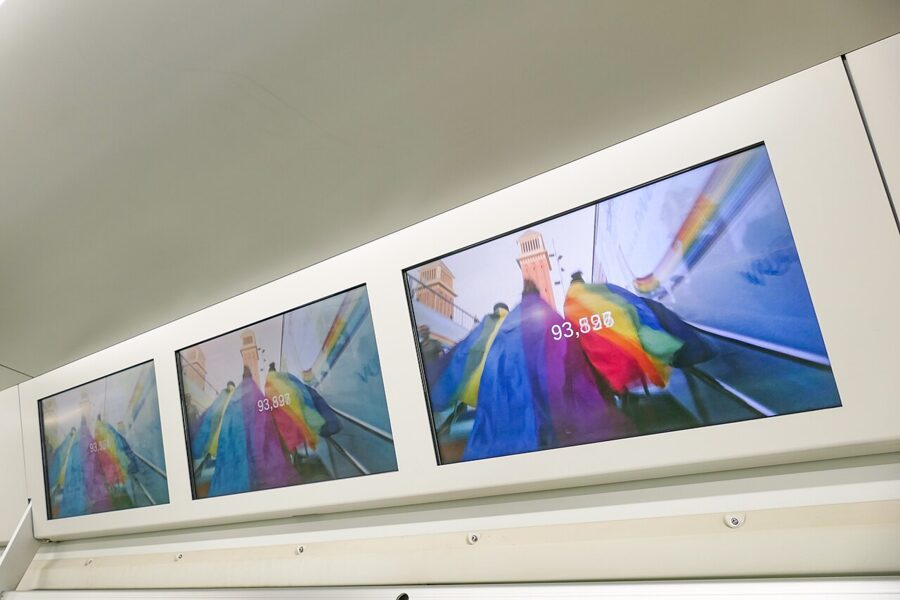
The screens are the useful part. Above each door are two panels: the right-hand one shows the next station, the side the doors will open, the transfers and the minutes to the main stations ahead; the left-hand one runs news and advertising. Three wider screens above the windows and more at the car ends carry advertising, and the announcements are in Japanese and English. Every car has a free space by the doors for wheelchairs and pushchairs, which is also the most comfortable place to stand with a suitcase.
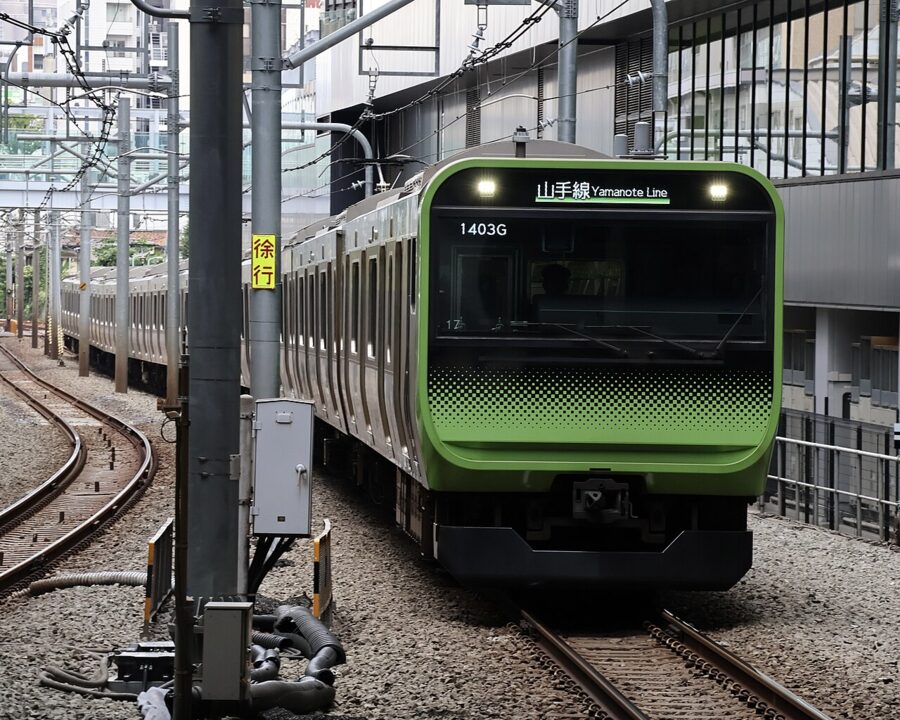



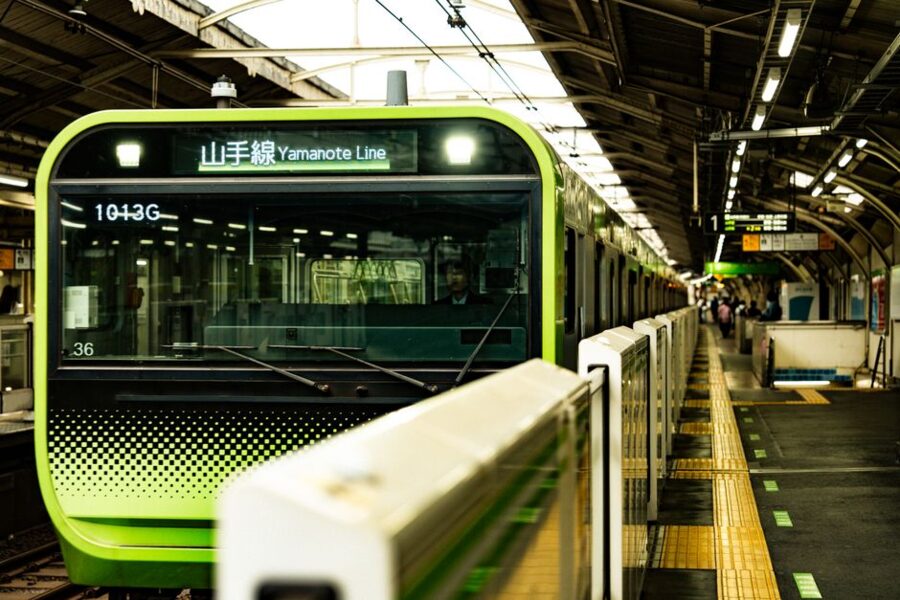
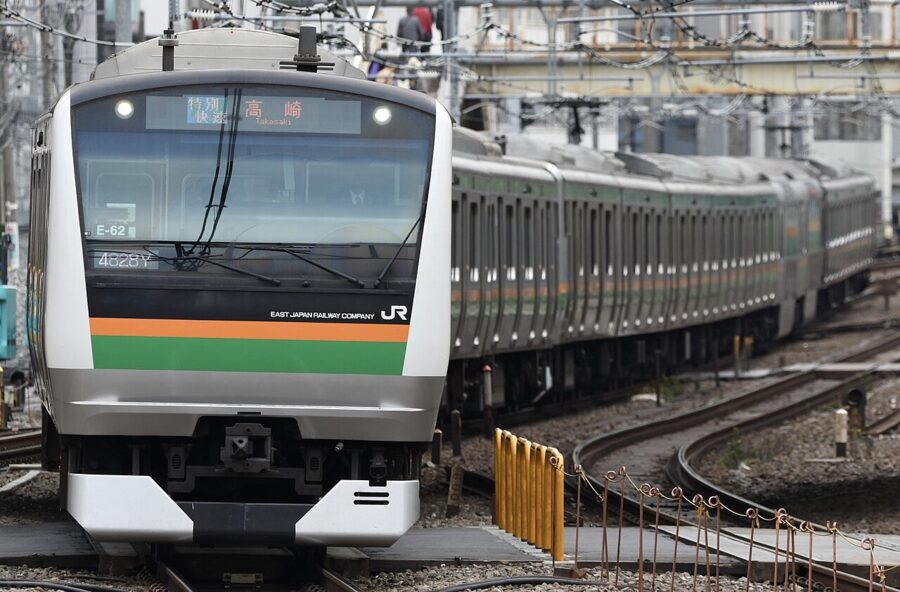
The number in the cab window tells you more than the destination screen. Yamanote train numbers end in G; odd numbers are outer-loop trains and even numbers inner-loop ones, and the leading digits give the hour the train left Osaki. 1013G, below, is an outer-loop train that left Osaki in the 10 o’clock hour.
How often, and when it is crowded
From the timetables, a weekday in December 2026 has a train every five minutes in each direction in the late morning and early afternoon, every three to four minutes in the evening rush, every four minutes or so at 22:00 and further apart after midnight. In the busiest hour of the morning, 21 inner-loop trains pass Shin-Okubo towards Shinjuku and 17 outer-loop trains leave Ueno towards Okachimachi. At weekends the daytime service runs every three to five minutes.
The Yamanote is not the crush it was. In the national congestion survey published on 28 July 2026, covering the year to March 2026, the inner loop from Shin-Okubo to Shinjuku between 07:44 and 08:44 ran at 136% of capacity and the outer loop from Ueno to Okachimachi between 07:55 and 08:55 at 135%. In 1991 both were above 270%. The parallel Saikyo Line, at 167%, was the most crowded railway in the Tokyo area.
136% means every seat taken and most of the standing space filled. It is still no place for a large suitcase. With luggage, avoid roughly 07:30 to 09:30 and 17:30 to 19:30 on weekdays, and expect the stretch from Shinjuku to Shibuya to be busy on weekend afternoons too.
Faster lines alongside the loop
The Yamanote stops everywhere, which is its weakness on a long ride. Several other JR lines share its corridors with fewer stops, and none costs more: within the Tokyo area JR charges by the pair of stations, not the train, so Tokyo to Shinjuku is ¥253 (about US$2) by IC card whichever line you take.
| Journey | Yamanote | Faster line | Faster time | IC fare |
|---|---|---|---|---|
| Tokyo to Shinjuku | about 30 min | Chuo Rapid | 14 min | ¥253 |
| Tokyo to Ueno | 7 min | Ueno-Tokyo Line | 5 min | ¥199 |
| Hamamatsucho to Ueno | 14 min | Keihin-Tohoku rapid | 11 min | ¥209 |
| Ueno to Shinagawa | 20 min | Ueno-Tokyo Line | 13 min | ¥253 |
| Shinjuku to Shibuya | 7 min | Shonan-Shinjuku Line | 4 min | ¥199 |
| Shibuya to Ikebukuro | 15 min | Shonan-Shinjuku Line | 12 min | ¥209 |
| Osaki to Shinjuku | 16 min | Saikyo or Shonan-Shinjuku | 11 min | ¥209 |
Times are weekday daytime timetables for December 2026 and exclude waiting; the Yamanote comes more often than any of the others.
Keihin-Tohoku Line
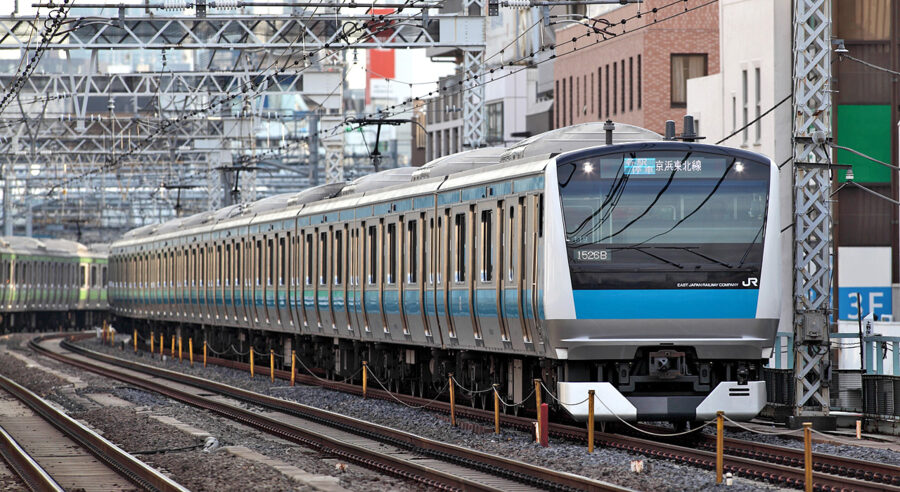
The sky-blue Keihin-Tohoku Line (京浜東北線) runs beside the loop on the east side from Tabata to Shinagawa. From about 10:30 to 15:30 every day it runs as a rapid between Tabata and Tamachi, calling only at Ueno, Akihabara, Kanda, Tokyo and Hamamatsucho in between, with Okachimachi added at weekends and on holidays. That saves about seven minutes from Tabata to Shinagawa. At every shared station except Shinagawa and Takanawa Gateway the two lines stand either side of the same platform, so if a rapid is due, step across.

Chuo Rapid Line
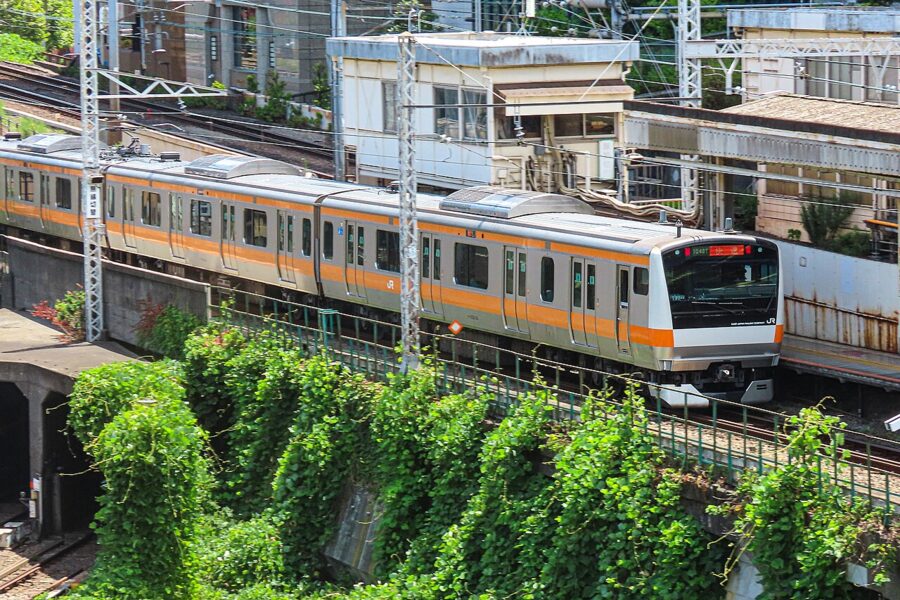
The orange Chuo Rapid Line (中央線快速) cuts straight across the loop from Tokyo to Shinjuku in 14 minutes, calling at Kanda, Ochanomizu and Yotsuya. The Yamanote takes about half an hour either way round. The fare is the same ¥253 by IC card, ¥260 by ticket, so the Yamanote is only the better choice if you are going somewhere on the way.

Saikyo and Shonan-Shinjuku Lines
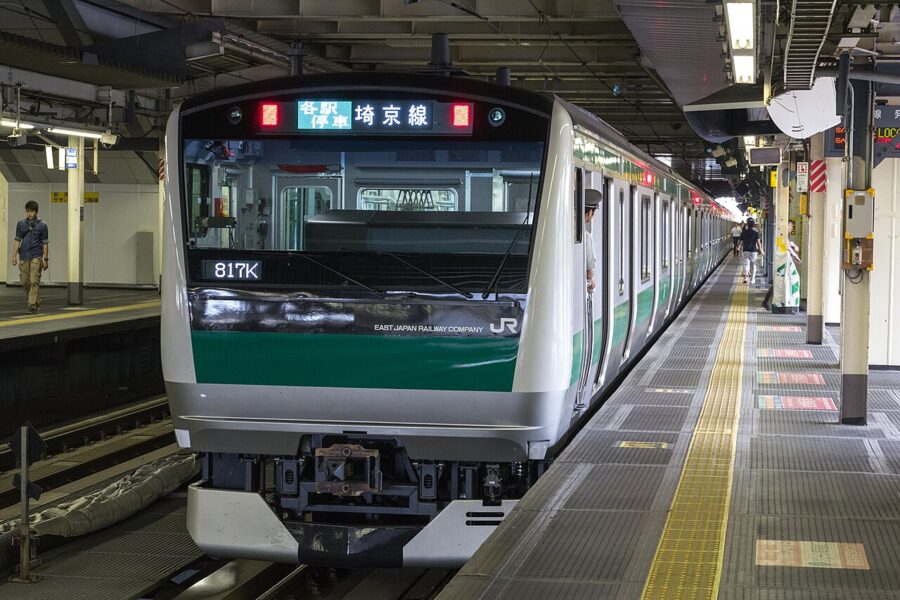
On the west side the Yamanote runs beside a second pair of tracks, built for freight and now used by the Saikyo Line (埼京線) and the Shonan-Shinjuku Line (湘南新宿ライン). Both stop only at Osaki, Ebisu, Shibuya, Shinjuku and Ikebukuro. Shinjuku to Shibuya takes four minutes against the Yamanote’s seven, and Osaki to Shinjuku eleven against sixteen.
The catch is the walk: at Shibuya their platform is well north of the Yamanote’s, which can cancel the saving on a short hop, and they run less often. Use them for the longer west-side runs when one is due.


Fares, IC cards and passes (as of 2026)
On 14 March 2026 JR East raised its fares for the first time since privatisation, apart from tax changes, and folded the cheaper Yamanote and central Tokyo fare bands into its standard scale. Journeys on the loop rose more than most. The shortest ride now costs ¥155 by IC card or ¥160 by paper ticket, and the dearest Yamanote journey, right across the loop, costs ¥341 by IC card or ¥350 by ticket.
| Journey | Shortest route | IC card | Paper ticket |
|---|---|---|---|
| Tokyo to Kanda | 1.3 km | ¥155 | ¥160 |
| Shibuya to Harajuku | 1.2 km | ¥155 | ¥160 |
| Tokyo to Ueno | 3.6 km | ¥199 | ¥200 |
| Shinjuku to Ikebukuro | 4.8 km | ¥199 | ¥200 |
| Shinagawa to Shibuya | 7.2 km | ¥209 | ¥210 |
| Tokyo to Shinjuku | 10.3 km | ¥253 | ¥260 |
| Ikebukuro to Shinagawa | 15.4 km | ¥341 | ¥350 |
Under JR East’s rule for journeys inside its big-city areas, you may take any route as long as you never pass the same station twice and do not leave the gates on the way. That is what makes the whole loop a ¥155 ride: tap in at Tokyo, ride the inner loop all the way round, and tap out at Yurakucho, the station before Tokyo. Coming back out at the station you started from is not covered.
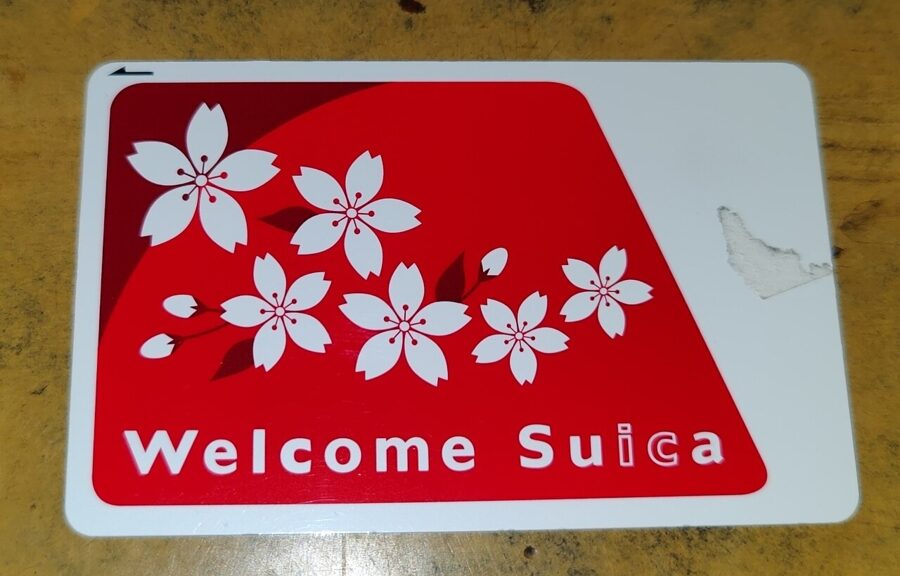
An IC card saves queuing and usually a few yen. Suica and PASMO both work, as does the visitors’ Welcome Suica, sold with ¥1,000 to ¥10,000 loaded at JR East Travel Service Centres at Tokyo, Shinjuku, Shibuya, Ikebukuro, Ueno and Takanawa Gateway. In November 2026 JR East announced walk-through ticket gates, which read a phone’s mobile Suica without a tap, for every Yamanote station from spring 2028, after a trial at 14 stations from April 2027.

The Japan Rail Pass covers the Yamanote, though it is rarely worth buying for Tokyo alone. JR East’s one-day Tokunai Pass, valid on its lines within the 23 wards, rose to ¥870 in March 2026; at typical Yamanote fares it takes five rides to pay for itself.
The melodies, the quiet stretches and the ride as a tour
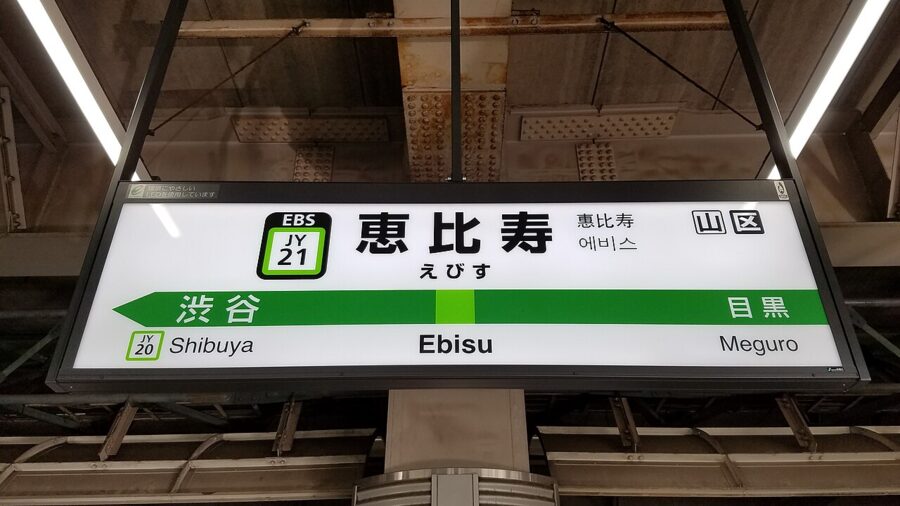
Every departure on the loop is signalled by a few seconds of music rather than a bell. Most stations use JR East’s standard tunes, but a handful have their own. Takadanobaba plays the theme from Astro Boy, whose fictional birthplace and real-life studio, Tezuka Productions, are both in the district. Ebisu plays the theme from The Third Man, borrowed from advertising for Yebisu beer, the brand the station and the district are named after.
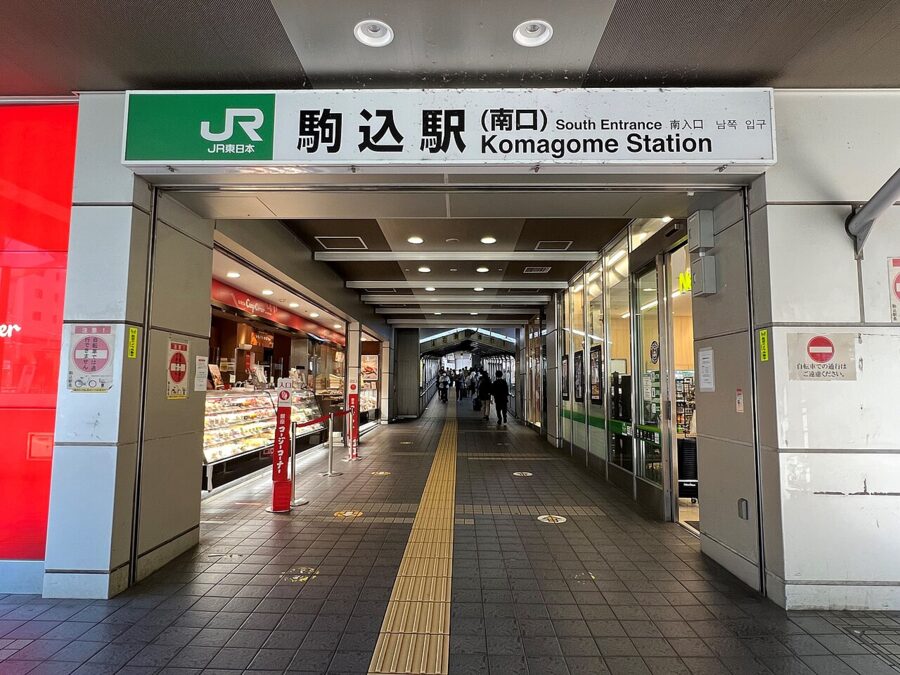
Komagome plays “Sakura Sakura”, because the Somei-Yoshino cherry was bred in the old village of Somei nearby. Kanda has played the jingle from the Mondamin mouthwash advertisements since 2 October 2023, in a five-year deal with Earth Corporation, whose head office is a short walk away. Ikebukuro switched to the Bic Camera theme on 1 March 2024. Takanawa Gateway was given “Glorious Gateway”, Takayuki Hattori’s theme for the new district.

The quiet stretches
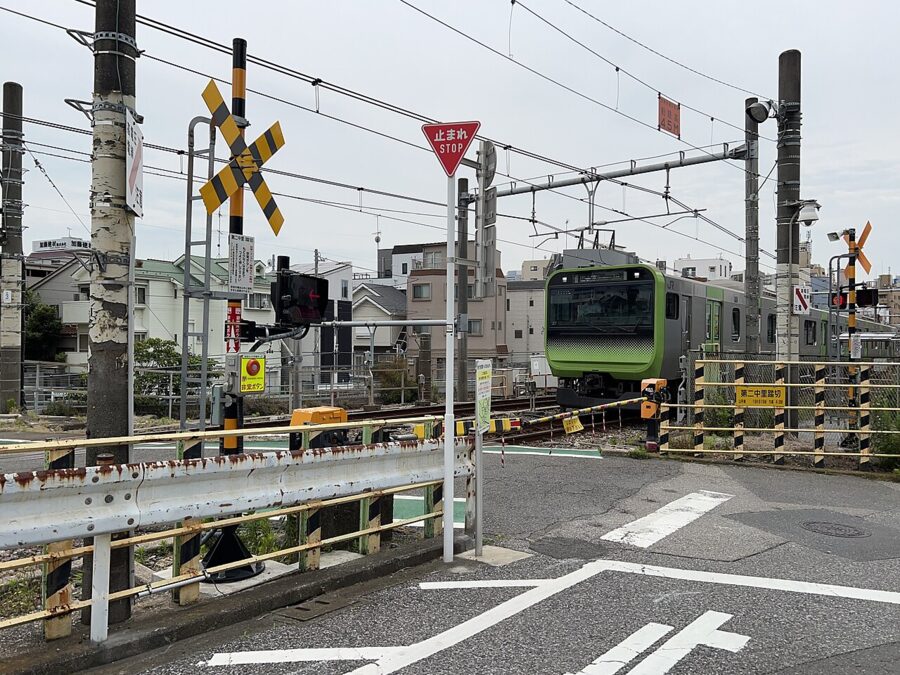
Not all of the loop is city centre. North of Ikebukuro it runs past the low-rise neighbourhoods of Otsuka, Sugamo and Komagome, and between Komagome and Tabata it crosses a road on the level at the Daini Nakazato crossing, the last level crossing on the Yamanote. It is due to close once a new road bridge nearby is finished, which local reports put at around 2029. It is a short walk from Komagome.
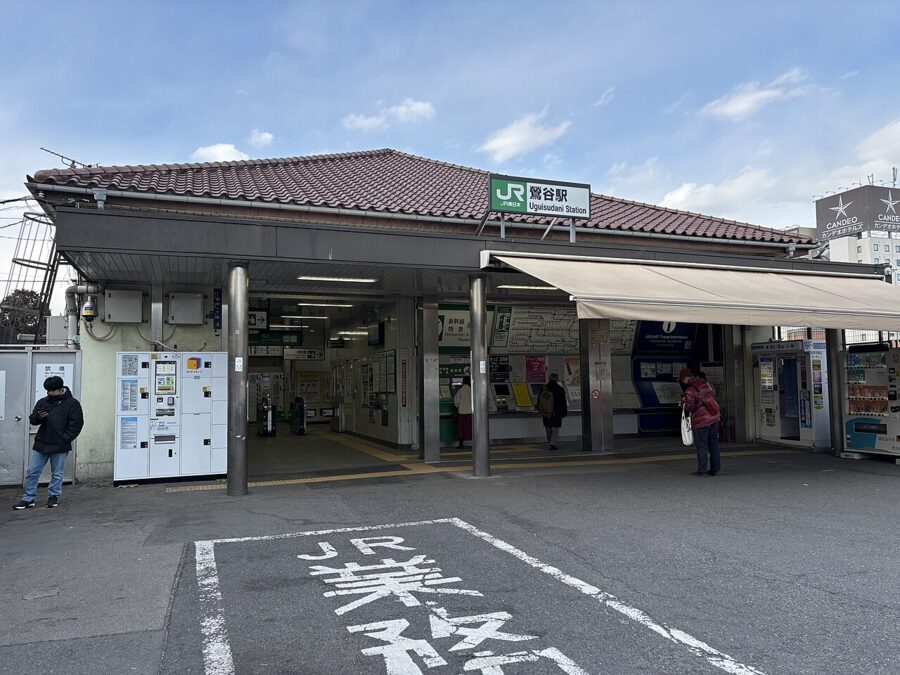
Uguisudani, between Nippori and Ueno, is the loop’s small-town station: 24,460 daily boardings and a low-roofed exit building. On the other side of the city, between Yurakucho and Shimbashi, the line runs on brick arches more than a century old, with bars and restaurants built into them, and the train is level with the office windows.
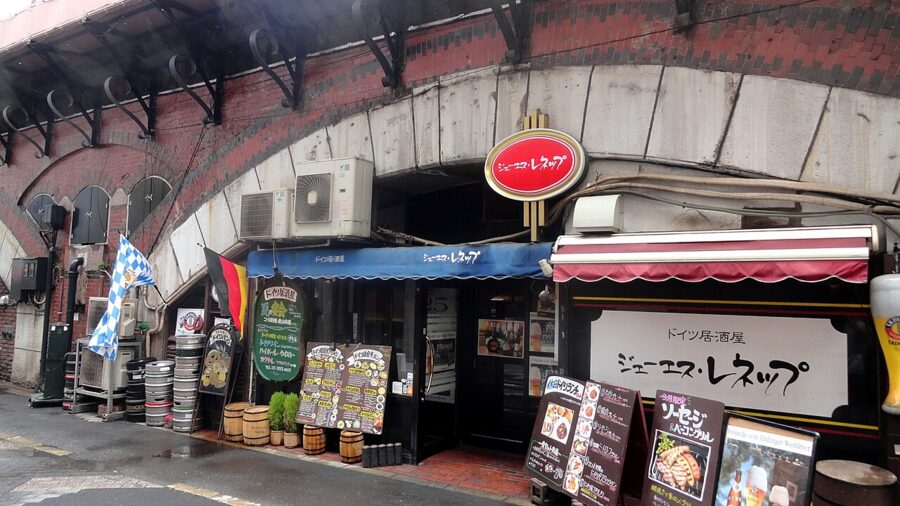

The whole loop for ¥155
As a tour of the city, the full loop is better than it sounds. Ride on a weekday between about 10:00 and 16:00, or on a weekend morning, when the trains are calm and the seats turn over. Take the inner loop from Tokyo, tap out at Yurakucho, and stand by the doors on the inside of the loop, the left-hand side as the train travels. You pass the market under the tracks at Okachimachi, the Shinjuku towers, the Meiji Jingu forest at Harajuku, the Shibuya rebuild and the new towers at Takanawa Gateway in a little over an hour.
For a guided version, JR East runs a chartered train called Tokyo Marutto Yamanote a few times a year, a non-stop lap of about an hour with commentary from Yamanote crew and station staff. The tenth run, from Osaki on 28 November 2026, costs ¥2,500 for adults on the standard plan.
When to take the subway instead
The Yamanote goes round the middle of Tokyo, not through it. Otemachi, Roppongi, Omotesando, Akasaka and Kagurazaka are inside the loop; Ginza, Tsukiji, Asakusa and Kiyosumi are outside it; none has a Yamanote station. For those, and for most cross-loop journeys, Tokyo’s subway is the answer.
The subway also wins on some journeys between Yamanote stations. Tokyo to Ikebukuro is 16 to 17 minutes direct on the Marunouchi Line against about 24 on the Yamanote, for the same ¥209 by IC card. Ueno to Shibuya is 28 minutes end to end on the Ginza Line for ¥209, against 33 minutes and ¥253 on the Yamanote. Tokyo to Shibuya is quicker by subway too, if you do not mind a change at Akasaka-mitsuke.
Mixing the two costs money, because JR and the subway companies charge separately: a journey that changes from the Yamanote to the subway pays two fares. If a day is mostly subway, the Tokyo Metro and Toei one-day ticket covers every subway line for ¥1,100 as of March 2026, but not the Yamanote.
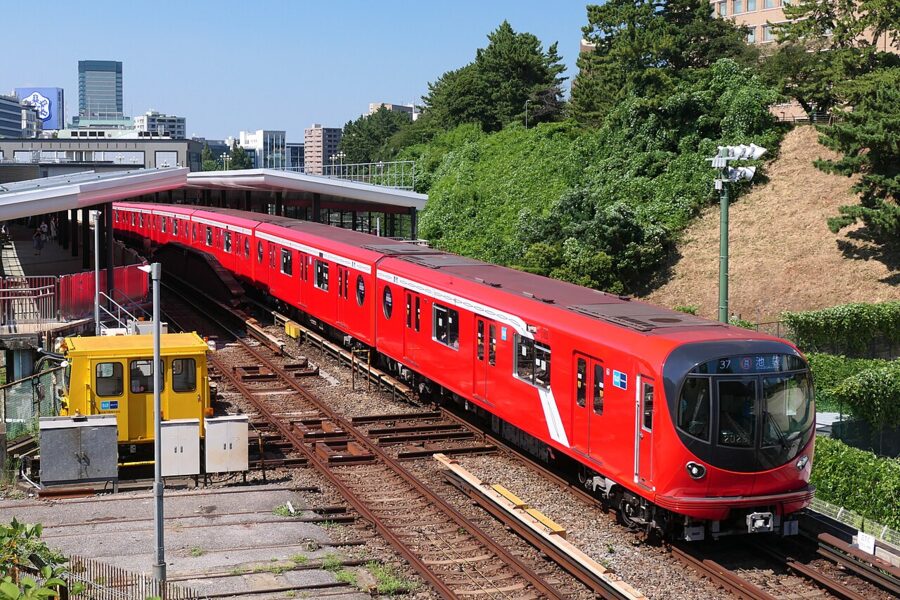

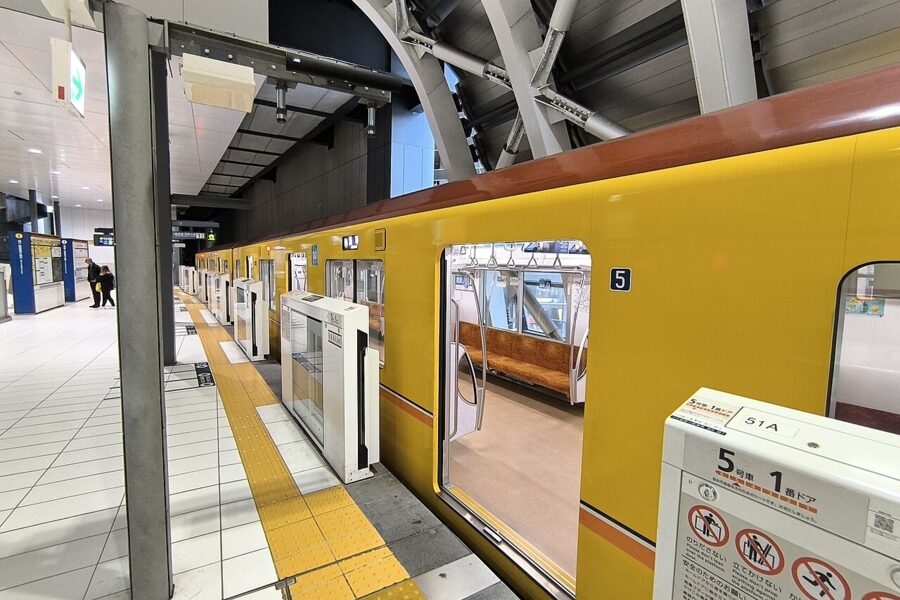

Back on that island at Shibuya, the choice takes a second once you know it. Shinjuku and Ikebukuro on one face, Shinagawa and Tokyo on the other. Tap in, take the side that gets you there in fifteen stops or fewer, and if you have an hour to spare one day, stay on until the station before your own.