

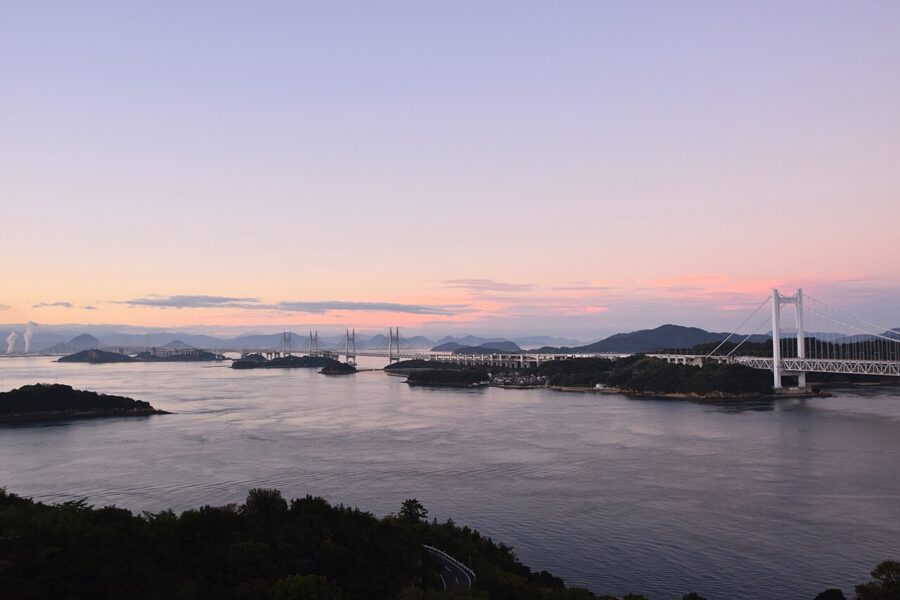
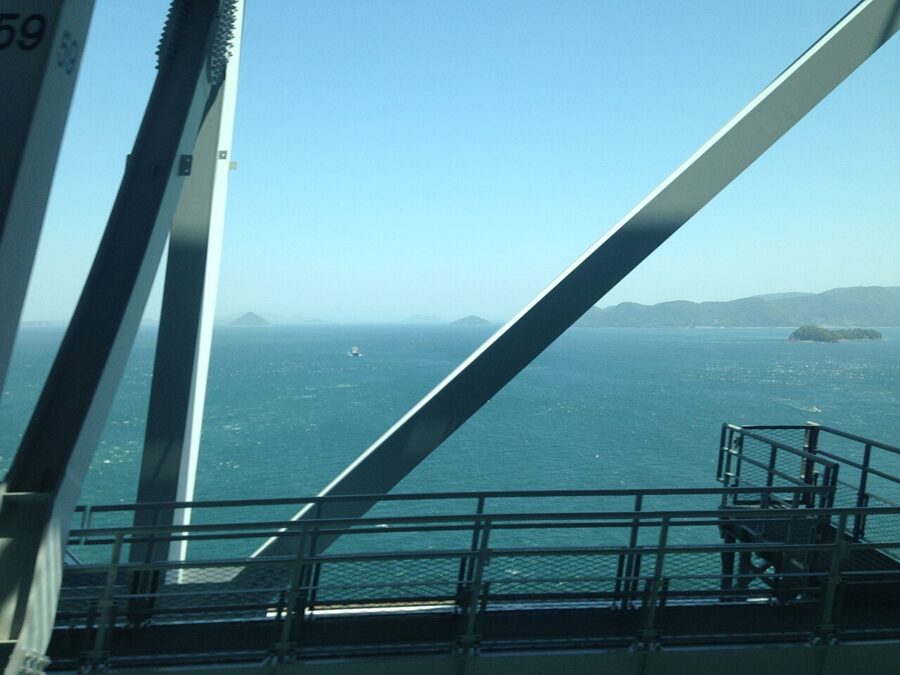
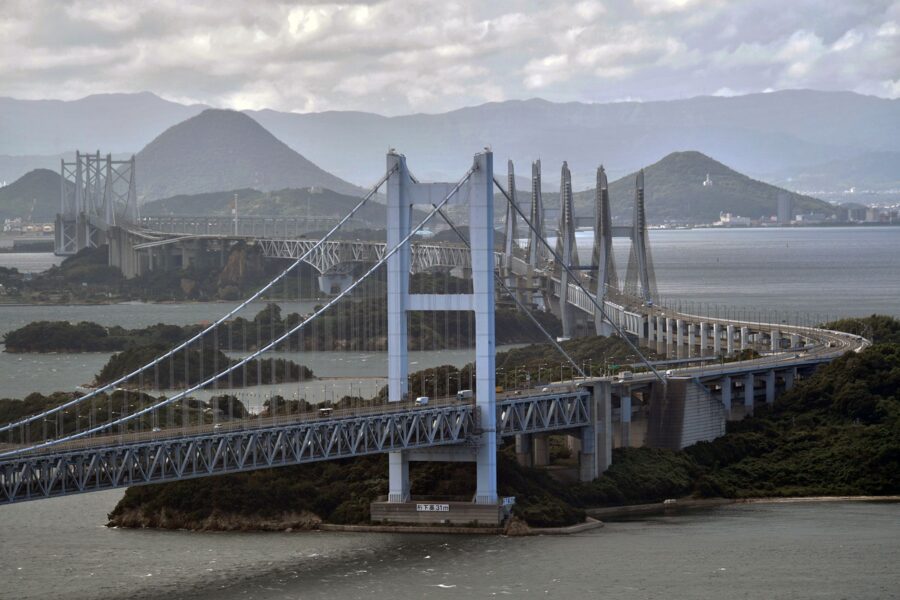
At 06:53 the Sunrise Seto leaves Kojima, and for most of the sixteen minutes to Sakaide the window of an upper-deck Single holds nothing but the Inland Sea. The railway runs on the lower deck of the Seto Ohashi, under the expressway, so you watch the islands go by through a lattice of steel. In January the sun comes up over Okayama at about 07:15, within minutes of the crossing. You are lying in bed with the blind up, on the only sleeper train in Japan that crosses this bridge.
That is what the room charge buys. The Sunrise Izumo (サンライズ出雲) and Sunrise Seto (サンライズ瀬戸) are the last sleeper trains in Japan that run every night to a public timetable: one train leaves Tokyo at 21:26, splits in two at Okayama at dawn, and sends one half over the bridge to Takamatsu and the other up through the mountains to Izumo-shi near the Sea of Japan. The rooms are small, the beds are proper beds, and the best ones sell in seconds.
It is also slower and, room for room, dearer than the day trains. The Shinkansen and a connecting limited express get you to Izumo-shi in about six and a half hours; the Sunrise takes twelve and a half. Whether that is a wasted night or the best night of a trip depends on what you book, and on which side of the carriage your window faces.


Two trains in one: the routes
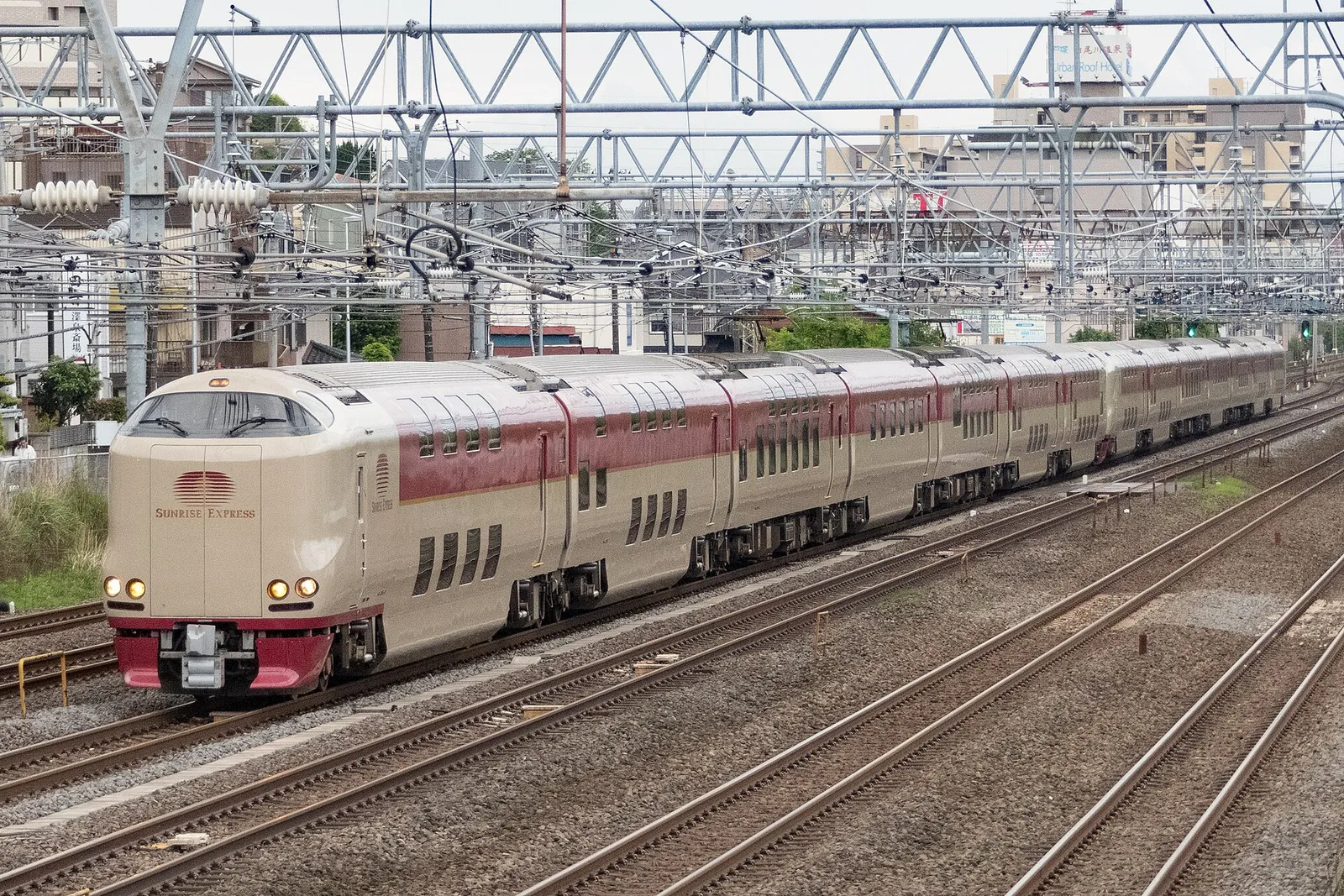
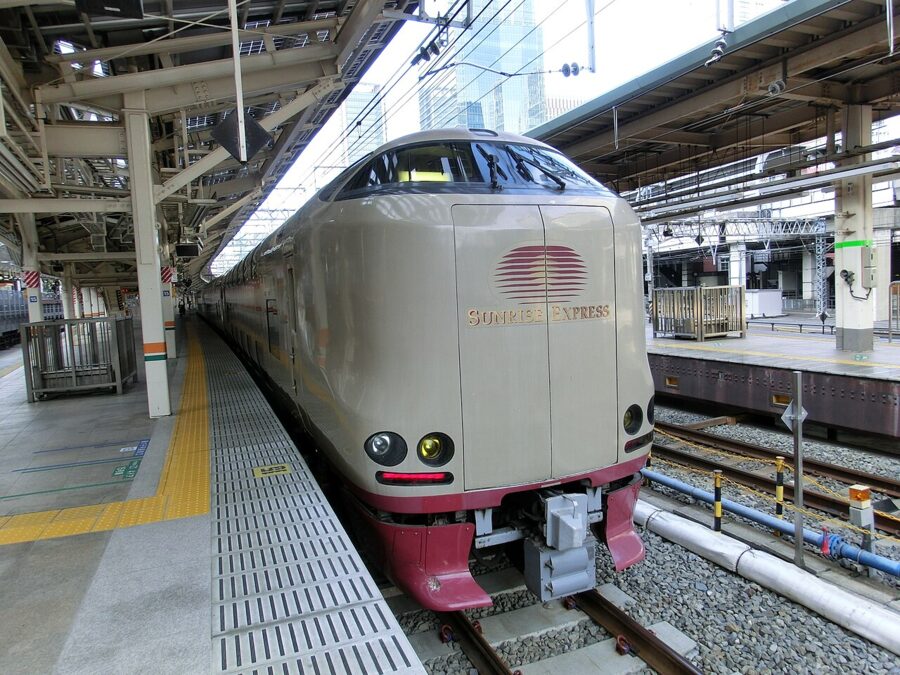
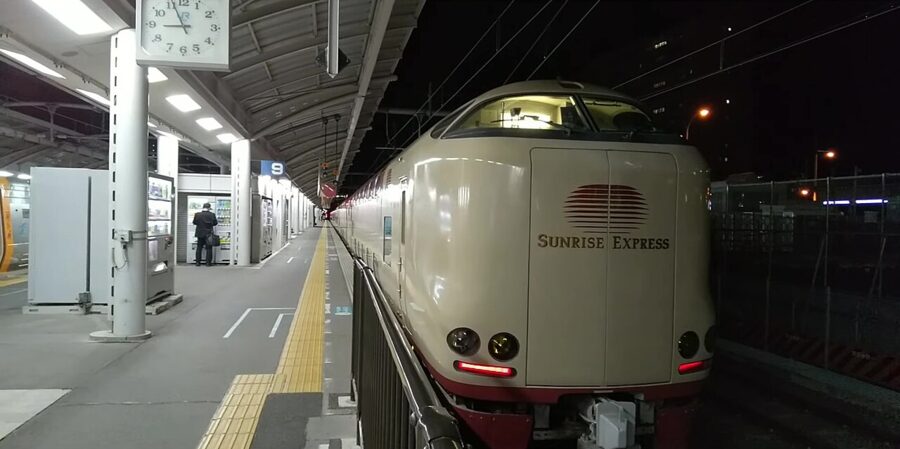
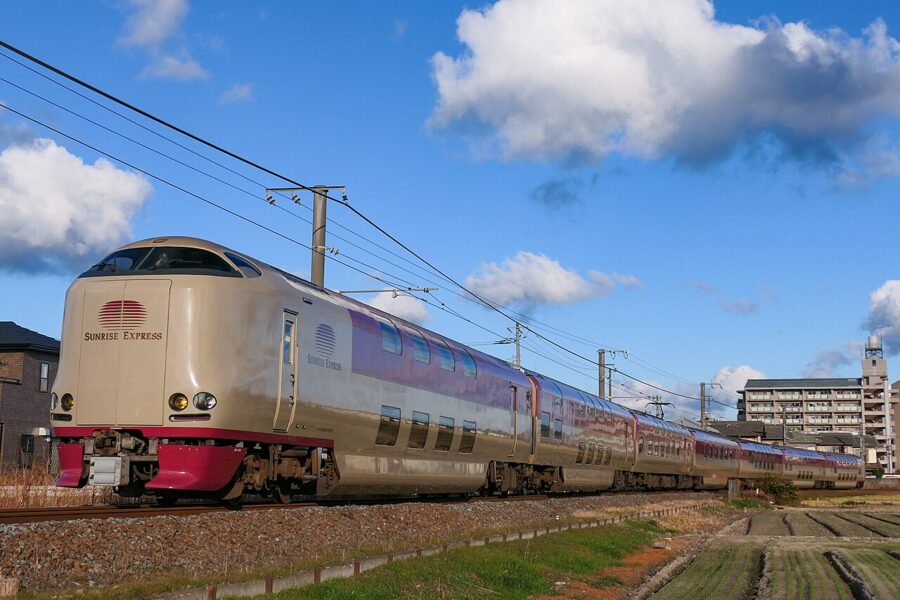
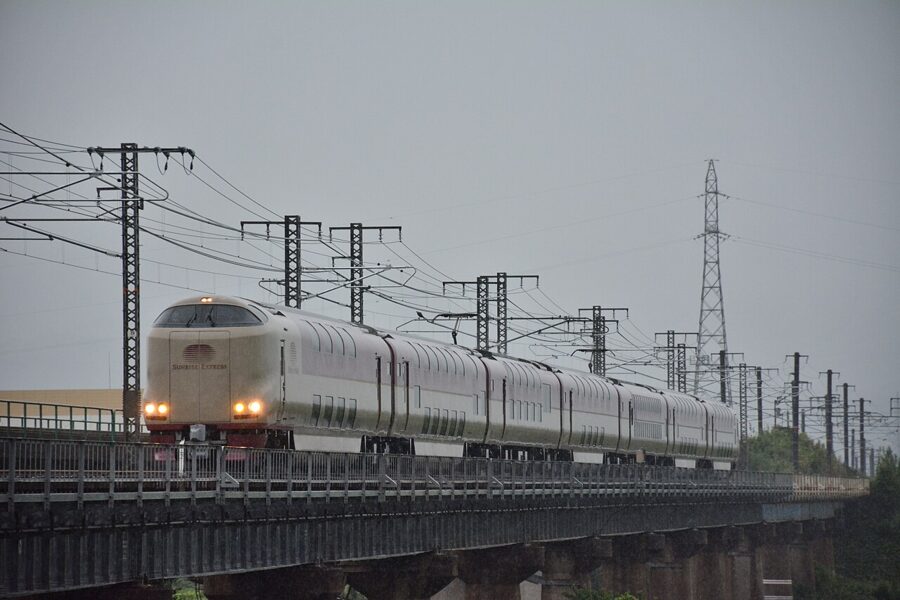
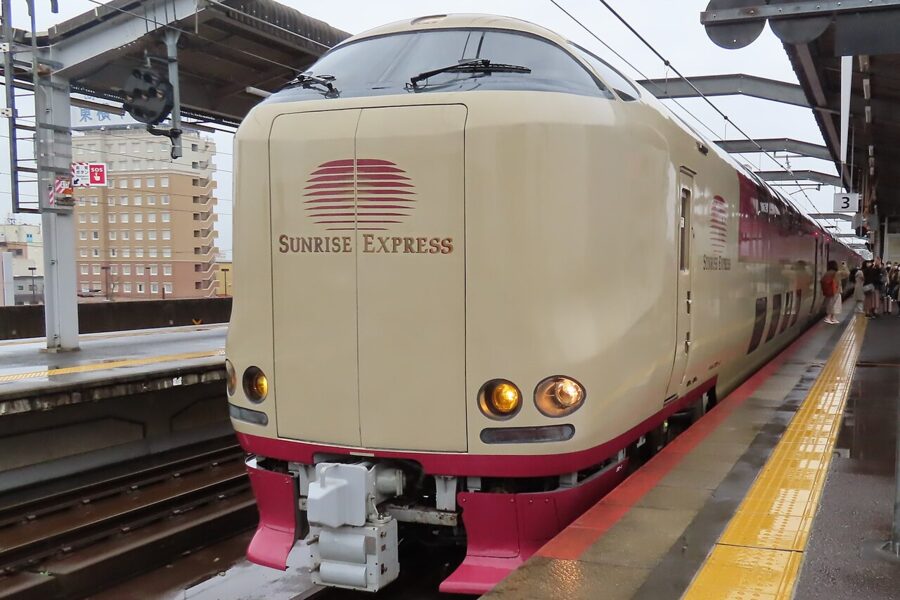
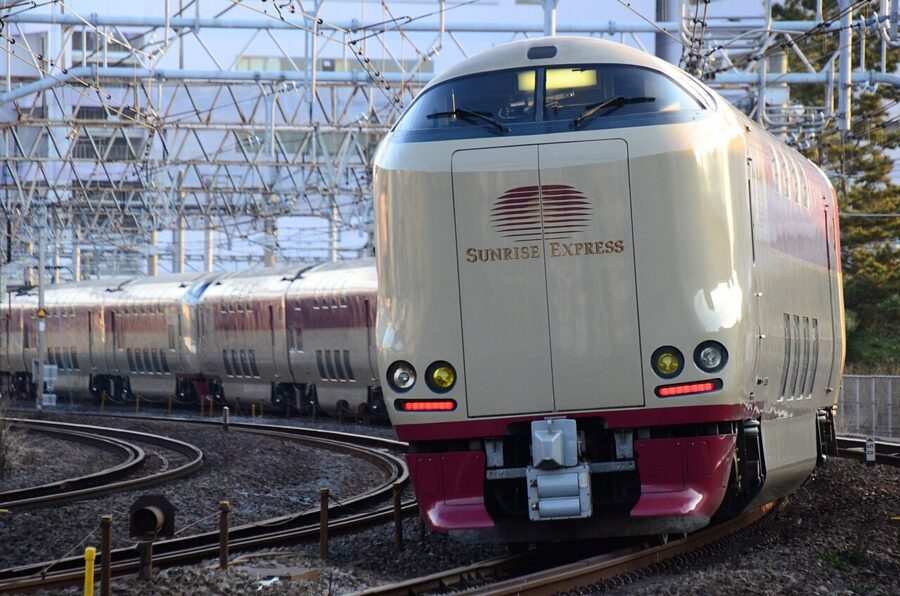
Both trains are drawn from the same five sets of 285 series electric units, built for the service in 1998 and owned by two companies: JR West has three sets and JR Central two. Each set has seven cars. Between Tokyo and Okayama two sets run coupled as a fourteen-car train, one half signed Sunrise Seto and the other Sunrise Izumo, and four JR companies (East, Central, West and Shikoku) run it between them. The names come from the blue-train sleepers Izumo and Seto, which ran from the JNR era until the 285s replaced them.
Westbound from Tokyo the train stops at Yokohama, Atami, Numazu, Fuji, Shizuoka and Hamamatsu, all before 01:00, then runs through the small hours without a stop until Himeji at 05:25. It passes through Osaka and Sannomiya without stopping. Eastbound it is the other way round: Sannomiya at 00:11 and Osaka at 00:33 are the last calls of the night, which makes the up train the late-night way from Kansai to Tokyo.
The Sunrise Seto: Okayama to Takamatsu
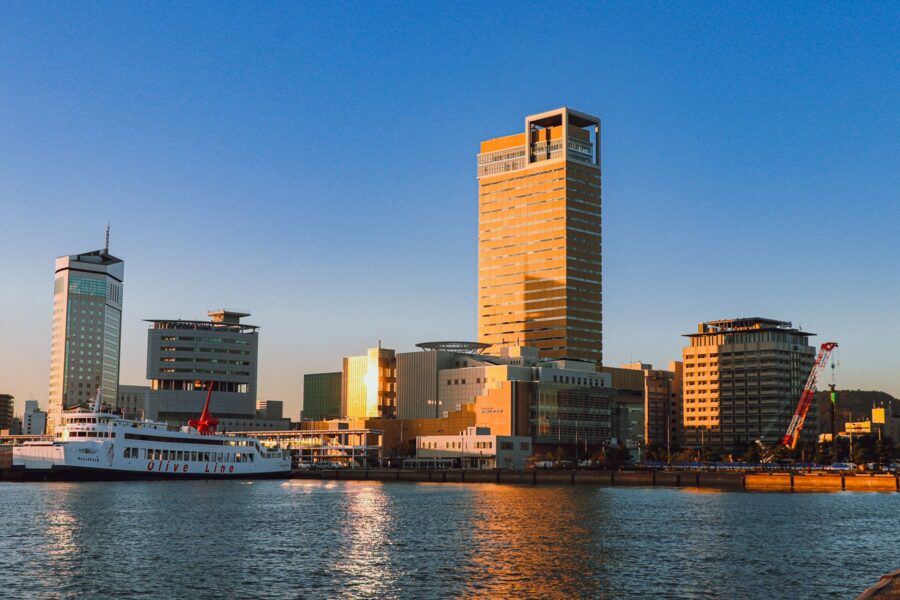
After the split the Seto leaves Okayama at 06:31 on the Seto-Ohashi Line, calls at Kojima at 06:52, crosses the bridge, stops at Sakaide at 07:09 and reaches Takamatsu at 07:27. Takamatsu is the ferry port for the islands of the Inland Sea and the start of most rail trips around Shikoku.


On some days the Seto carries on to Kotohira, for the shrine of Kotohira-gu. On those mornings it waits at Takamatsu, leaves again at 08:02, reverses back along the Yosan Line and reaches Tadotsu at 08:25, Zentsuji at 08:32 and Kotohira at 08:39. In autumn 2026 the Kotohira extension ran on Fridays and Saturdays until 28 November, plus 18–22 September, 9–11 October and 2 and 20–22 November. You cannot buy a ticket for the extension alone; check JR West’s timetable for later dates.

The Sunrise Izumo: Okayama to Izumo-shi
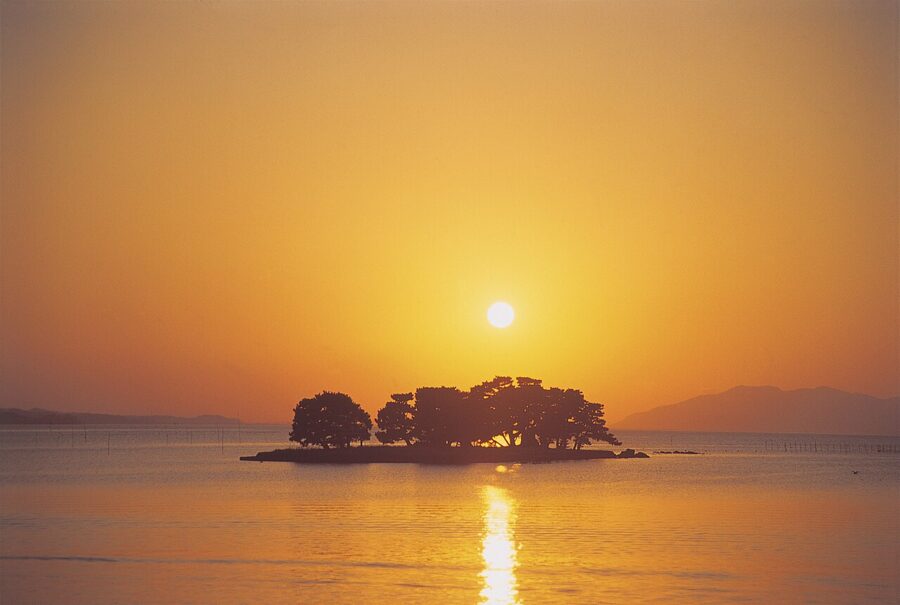
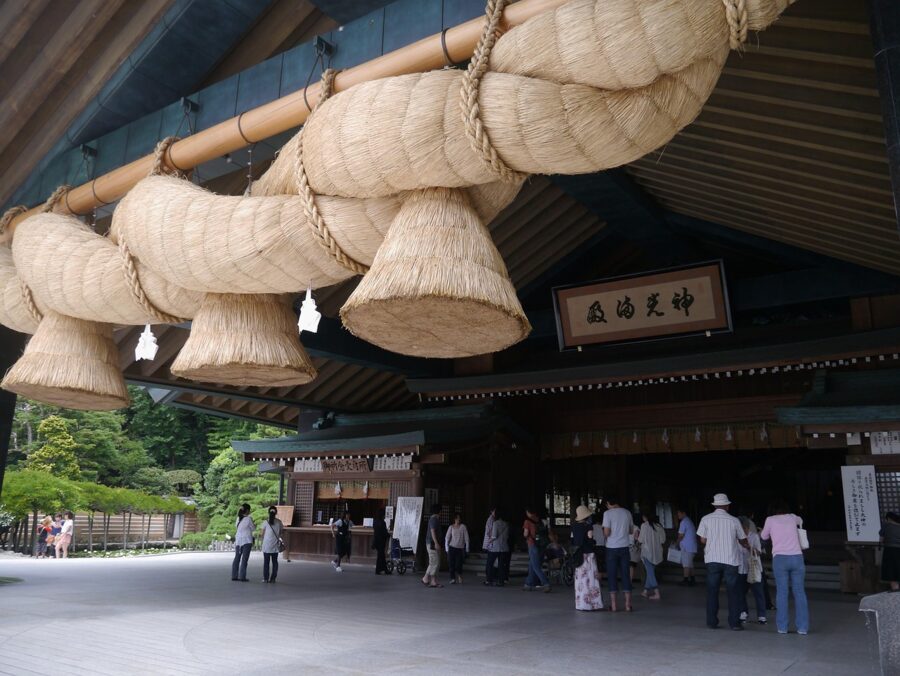
The Izumo leaves Okayama three minutes after the Seto, at 06:34, and calls at Kurashiki at 06:46 before turning north up the Hakubi Line. It follows the Takahashi river through Bitchu-Takahashi (07:14) and Niimi (07:43), crosses the mountains into Tottori prefecture and comes down to Yonago at 09:05. From there it runs west past Yasugi (09:16) and Matsue (09:33), then along the shore of Lake Shinji to Shinji (09:47) and Izumo-shi at 10:00.
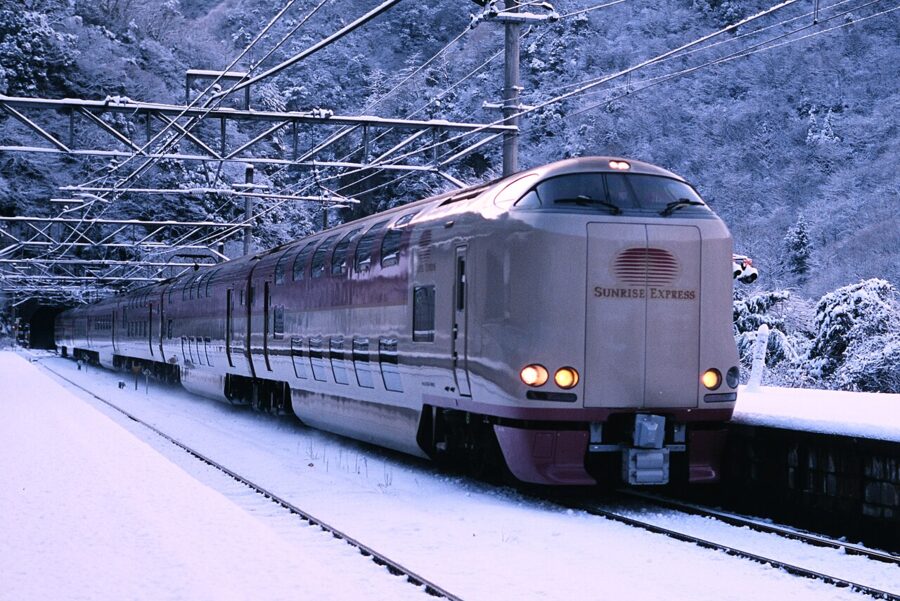

Twelve hours and thirty-four minutes is a long time in a small room. The last three and a half of them, from Okayama on, are in daylight for most of the year, so the Izumo is a sleeper at night and a slow scenic train in the morning. Unless the shrine at Izumo is the point of the trip, I would get off at Matsue and save half an hour.


The 2026 timetable
Since the JR timetable change of 14 March 2026 the westbound train has left Tokyo at 21:26, twenty-four minutes earlier than the 21:50 it kept for years. JR Central moved it to give its track crews a longer night on the Tokaido Line, and the change stops at Hamamatsu: from Himeji onwards the times are as before. The March 2026 timetable change made the Izumo’s run twenty-four minutes longer, so Tokyo to Izumo-shi is now 12 hours 34 minutes.
| Westbound (down) | Time | Eastbound (up) | Time |
|---|---|---|---|
| Tokyo (platform 9) | 21:26 | Izumo-shi (Izumo) | 18:57 |
| Yokohama | 21:52 | Matsue (Izumo) | 19:27 |
| Atami | 22:57 | Yonago (Izumo) | 19:54 |
| Numazu | 23:16 | Niimi (Izumo) | 21:19 |
| Fuji | 23:32 | Takamatsu (Seto) | 21:26 |
| Shizuoka | 23:59 | Okayama (trains join) | 22:34 |
| Hamamatsu | 00:54 | Himeji | 23:33 |
| Himeji | 05:26 | Sannomiya | 00:11 |
| Okayama (trains split) | 06:27 | Osaka | 00:33 |
| Takamatsu (Seto) | 07:27 | Shizuoka | 04:38 |
| Matsue (Izumo) | 09:33 | Yokohama | 06:44 |
| Izumo-shi (Izumo) | 10:00 | Tokyo | 07:08 |
Not every stop is listed: the down train also calls at Kojima and Sakaide on the Seto side and at Kurashiki, Bitchu-Takahashi, Niimi, Yonago, Yasugi and Shinji on the Izumo side, and the up train calls at Fuji, Numazu and Atami between 05:09 and 05:43.
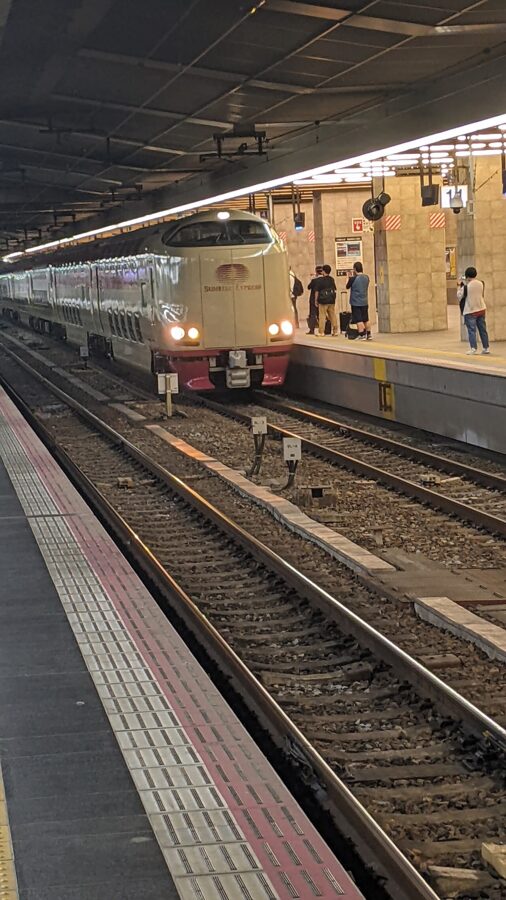

Book from Osaka or Sannomiya under the date the train left Izumo-shi or Takamatsu, not the date on your watch. JR West’s booking form asks you to search those stations at 23:30 on the starting day: a 00:33 departure from Osaka in the first minutes of 2 July is the train of 1 July.
The rooms, and what each costs
Every Sunrise ticket is three parts: the basic fare for the distance, a limited express charge, and for a bed a room charge set by type. The room charges are flat whatever the distance, so a Single costs the same to Okayama as to Izumo-shi. The limited express charge for a room is ¥3,300 (about US$21); for the Nobinobi, which counts as a reserved seat, it is ¥530 (about US$3) more. The basic fare as of 2026 is ¥12,320 (about US$77) from Tokyo to Izumo-shi and ¥11,760 (about US$74) from Tokyo to Takamatsu.
| Space (number per seven-car set) | Beds | Room charge | Tokyo–Izumo-shi total | Tokyo–Takamatsu total |
|---|---|---|---|---|
| Nobinobi carpet berth (28) | 1 floor space | none | ¥16,150 (about US$100) | ¥15,590 (about US$98) |
| Solo (20) | 1 | ¥6,600 (about US$42) | ¥22,220 (about US$140) | ¥21,660 (about US$136) |
| Single (80) | 1 | ¥7,700 (about US$48) | ¥23,320 (about US$147) | ¥22,760 (about US$143) |
| Single Twin (8) | 1, or 2 with the fold-down bunk | ¥9,600 (about US$60), plus ¥5,500 (about US$35) for a second person | ¥25,220 (about US$159) for one | ¥24,660 (about US$155) for one |
| Sunrise Twin (4) | 2 | ¥15,400 (about US$97) per room | ¥46,640 (about US$293) for two | ¥45,520 (about US$286) for two |
| Single Deluxe, A sleeper (6) | 1 | ¥13,980 (about US$88) | ¥29,600 (about US$186) | ¥29,040 (about US$183) |
Totals are one way, adult, regular season, as of 2026. The Nobinobi’s reserved charge moves by a few hundred yen in the busy and quiet seasons; the room charges do not. A child pays half the fare and limited express charge but the same room charge as an adult, and JR West sells no tickets for a small child sharing an adult’s bed in the one-person rooms. The counts are per seven-car set, so each train, Seto or Izumo, has 80 Singles and only four Sunrise Twins.
Single and Solo
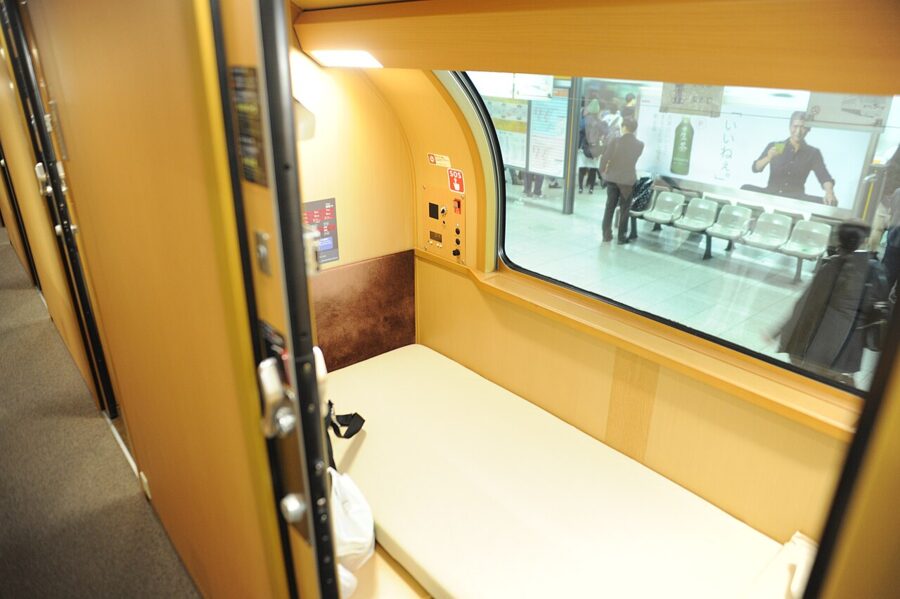
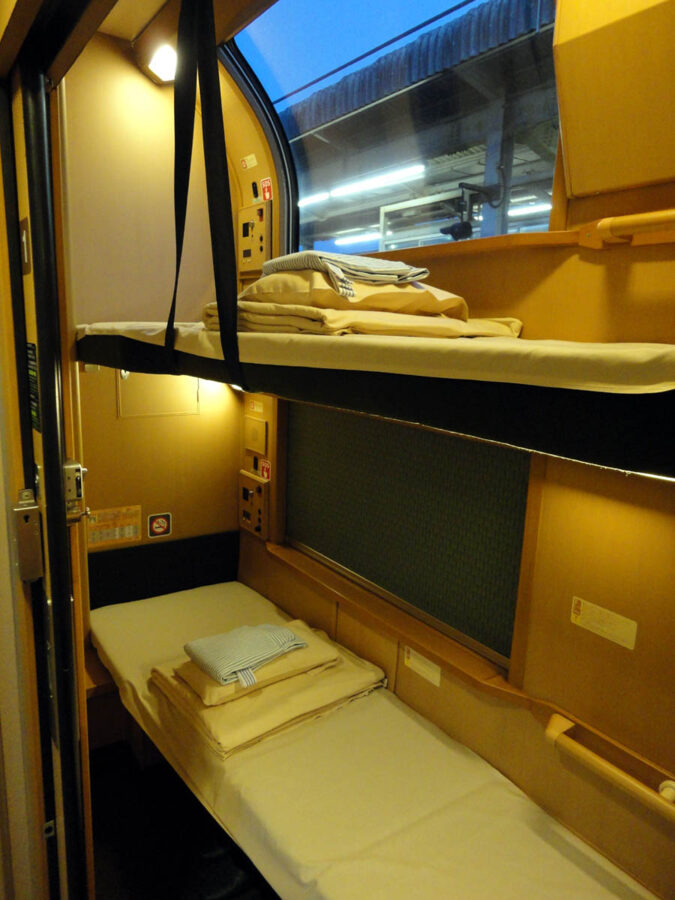
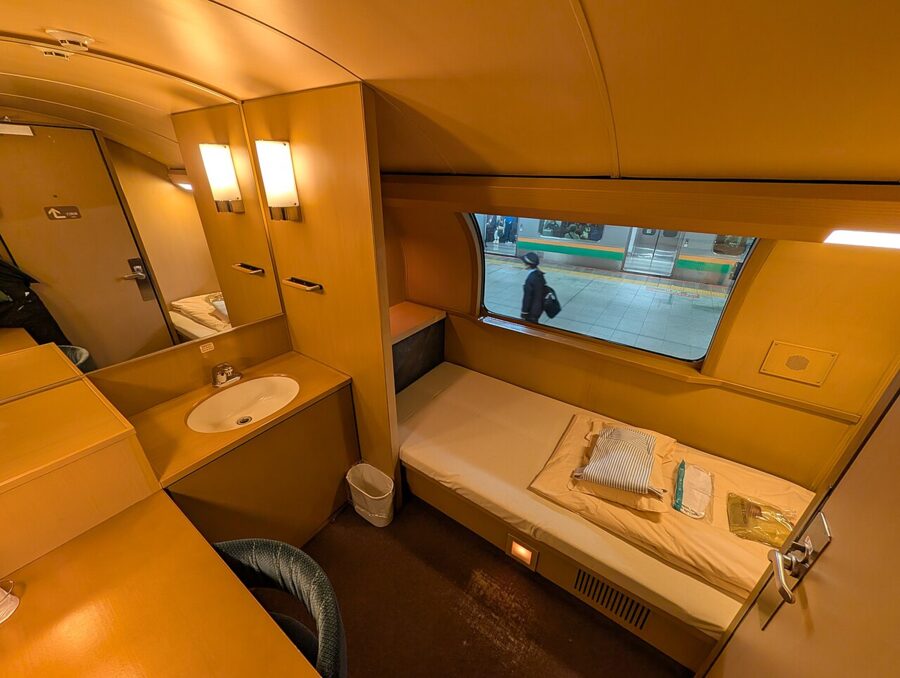
The Single is the Sunrise’s standard room, about two rooms in three: a bed along the window, a narrow strip of floor, and a door you lock with a four-digit code of your own choosing. Most are on two levels, upper-deck rooms with windows that curve into the roof and lower-deck rooms with windows at platform height. I would take an upper one for the view and a lower one only if darkness matters more than scenery. A few Singles are one-storey rooms with more headroom.
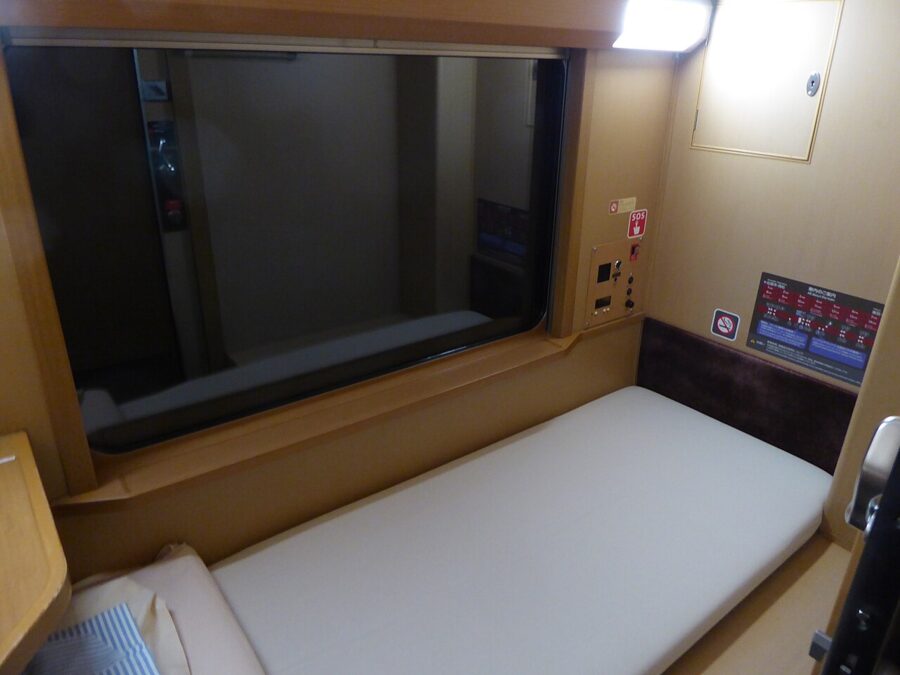

The Solo is the cheapest room by ¥1,100 (about US$7) and the smallest: twenty per set, all in one car, upper and lower. The upper Solo has a curved roof window like an upper Single, but you climb a few steps to a bed with very little air above it. For a tall person or a large suitcase, pay the extra for a Single.
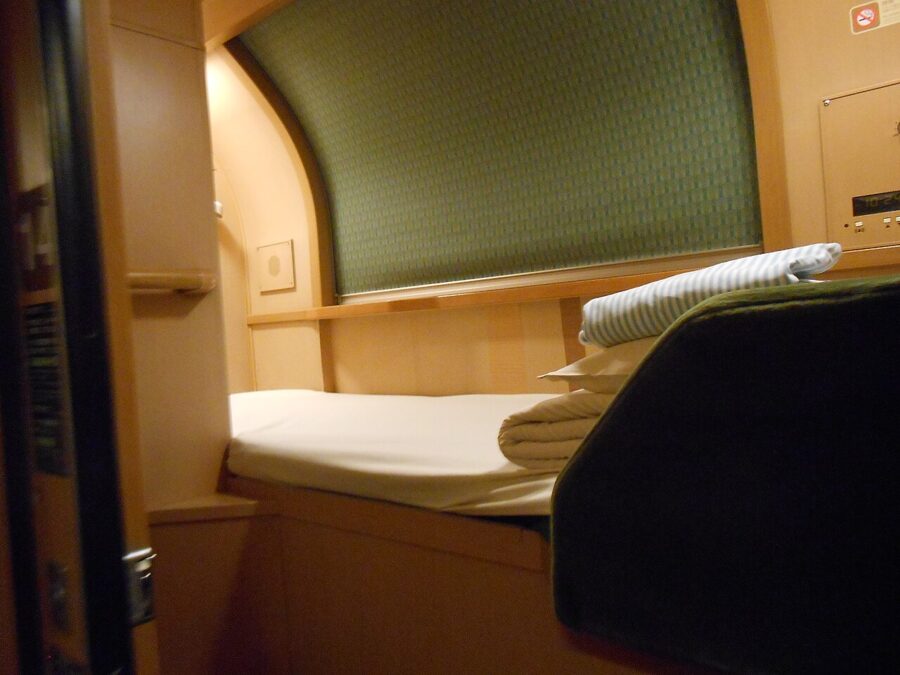

Single Twin and Sunrise Twin
The Single Twin is a Single with a second bunk that folds down from the wall above the bed. One person gets more room to sit for ¥1,900 (about US$12) over a Single; two people pay the room charge, ¥5,500 for the upper bunk, and two fares and limited express charges. There are eight per set, and some are set aside for wheelchair users and not normally sold to others.

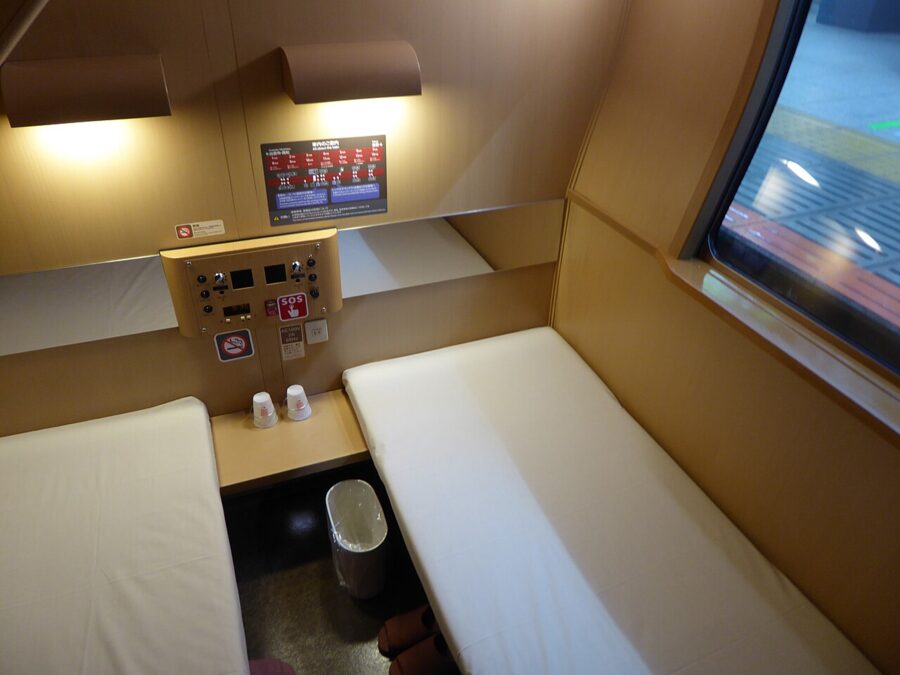
The Sunrise Twin is the only true double: two beds side by side on the lower deck. There are four per set. One person may book it but pays two limited express charges and the whole ¥15,400, so it is a room for couples.

Single Deluxe
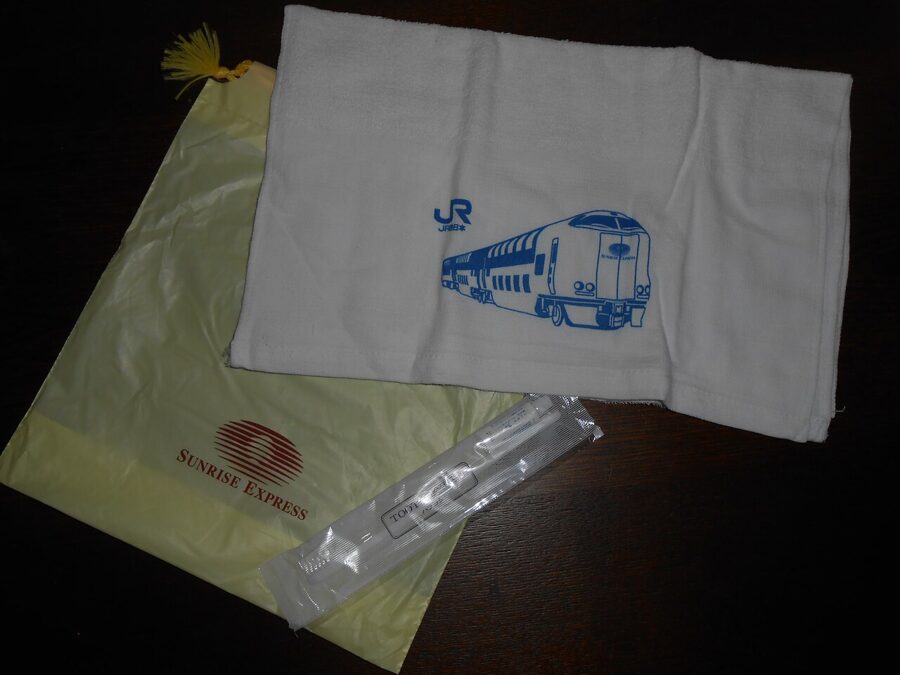
The A-sleeper Single Deluxe is on the upper deck of the car next to the lounge, six per set. You get a bed 85 cm wide, a desk, a washbasin of your own, an amenity set and a shower card, which spares you the queue. JR West takes bookings for one person only, so it is not a room for two.


The Nobinobi
The Nobinobi (ノビノビ座席) is not a room. It is one car per set (cars 5 and 12) laid out like a ferry’s carpeted deck, with numbered bays 208 cm long and 85 cm wide on two levels, divided by low partitions at the window end. You get a blanket and a pillow cover but no pillow, a small window with a blind, a reading light, and a curtain to the aisle; there is none between you and the next bay. Sockets are shared and few.
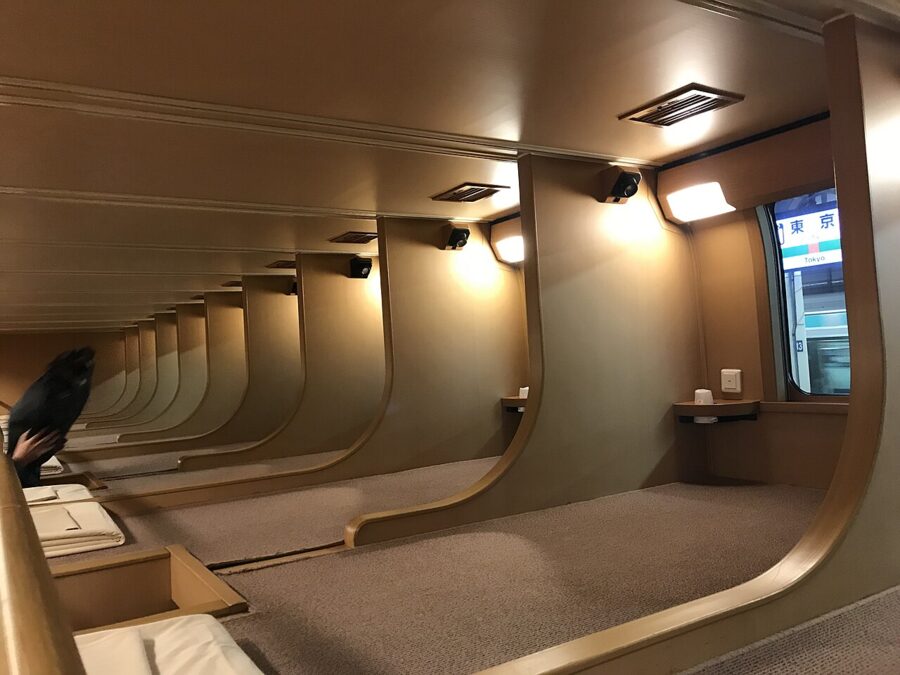

It costs no more than a reserved seat, the Japan Rail Pass covers it, and you can lie flat, so it is the most useful space on the train for most visitors. It is also a public floor with strangers a few centimetres away. Earplugs, an eye mask and a jumper rolled up as a pillow make it a decent night; without them it is a long one.
A few rooms are smoking rooms, which makes the Sunrise the only passenger train in Japan where you can still smoke. Choose non-smoking when you book unless you want a room that smells of the last occupant.
Booking at 10:00, one month ahead
Sunrise tickets go on sale at 10:00 Japan time one month before the day of travel: for a train on 15 March, at 10:00 on 15 February. You can buy them at any JR ticket office or reserved-seat machine, or online with JR West’s e5489 or JR East’s Eki-net. The Sunrise Twins and Single Twins often sell out the moment sale opens, and in holiday weeks so does everything else. The time-honoured method is to be at a JR ticket office before 10:00 on the day of sale and have the staff send your request the moment sales open.
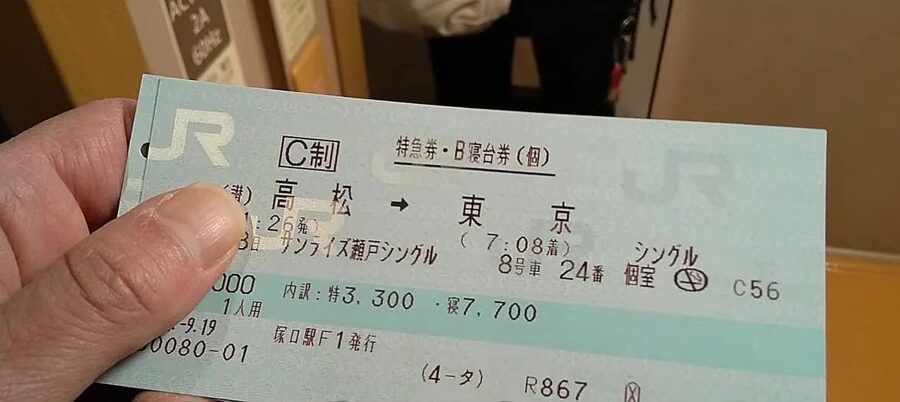

Online, JR West’s e5489 takes advance requests from 05:30 a week before the day of sale and processes them from 10:00, which saves you racing the clock, but only for the Nobinobi; rooms are excluded and must be booked live at 10:00. You can pick your room or bay from the car plans.
An online booking is not yet a ticket. Collect it from a ticket machine or office before you board, and do it early if you are joining late at night: JR West warns that at Osaka, Sannomiya and Himeji the ticket offices close at 22:00 and the machines at 23:00, long before the train calls, and that at Numazu, Fuji, Shizuoka and Hamamatsu the offices also close before it arrives. Board without the paper tickets and you pay for the trip again.
The Japan Rail Pass on the Sunrise
The pass covers ordinary cars on limited express trains, and the Nobinobi is an ordinary car, so with a pass a Nobinobi bay costs nothing; reserve it at a ticket office or machine like any seat. For a room, the pass conditions say you pay the sleeping car charge and the limited express charge on top. A Single comes to ¥3,300 plus ¥7,700, or ¥11,000 (about US$69), and the pass covers only the basic fare. Nor can you move from the Nobinobi into a room on board on the strength of the pass.
The pass itself costs ¥50,000 (about US$314) for seven days in ordinary class bought online, as of 2026. One Sunrise ride from Tokyo to Izumo-shi is worth about a third of that, so the pass pays only if the Sunrise sits inside a week of long trips anyway. On the Japan Rail Pass, the Nobinobi is the one space on the train that costs nothing extra.
On board: showers, food and the split at Okayama
The shower queue
Each seven-car set has a shower room for general use, in car 3 or car 10, and you need a card from the machine beside it. Only twenty cards are sold per set, because the water tank holds twenty showers, and they can be gone before the train leaves Tokyo; the queue forms on the platform before boarding. The card buys six minutes of hot water, with a display counting down, and the clock only runs while the water does. Bring coins: the last reported price, in 2025, was ¥330 (about US$2).
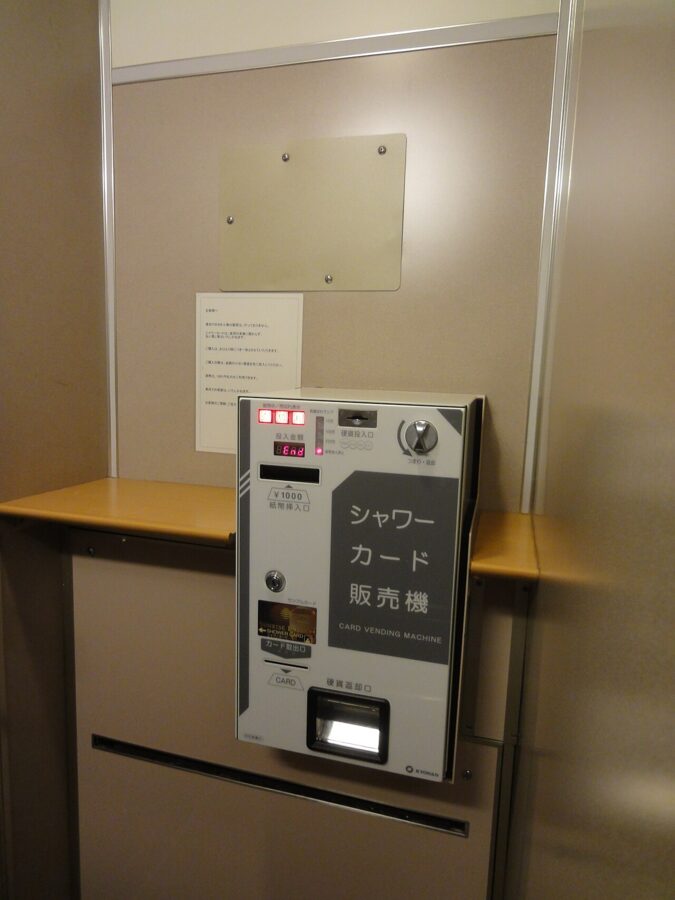

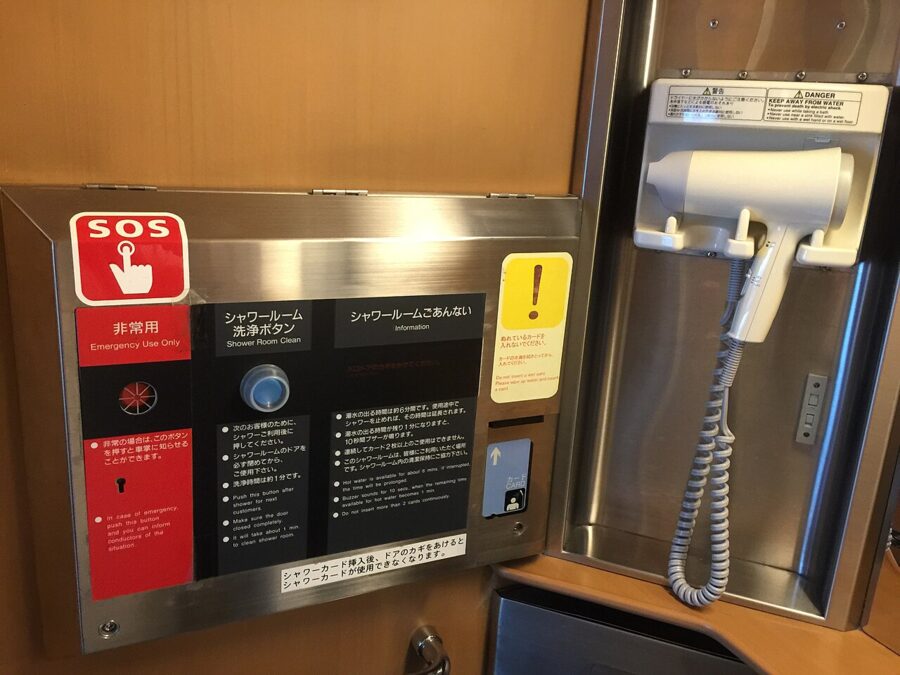

If you miss out, each set has a washroom with basins.
Food: there is no dining car
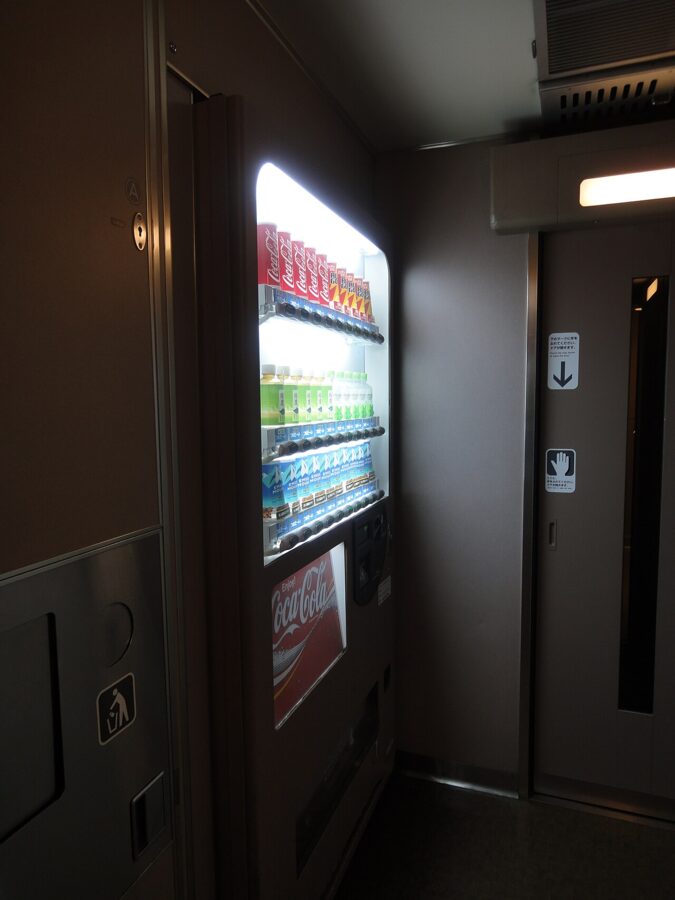
There is no dining car, no trolley and nothing to eat for sale on board. The catering is a drinks vending machine. Buy dinner, breakfast and water before you leave.

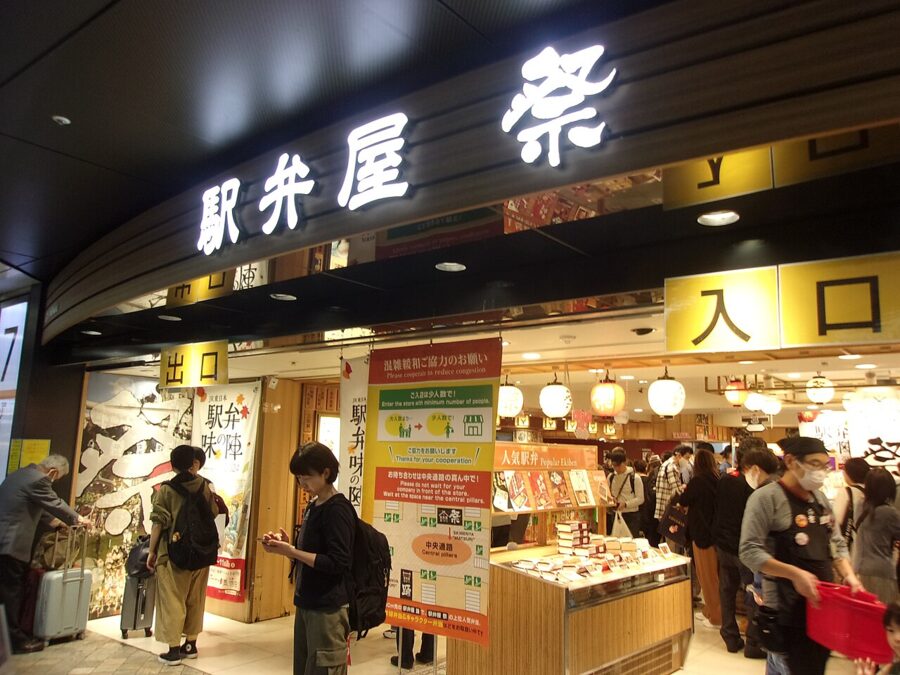
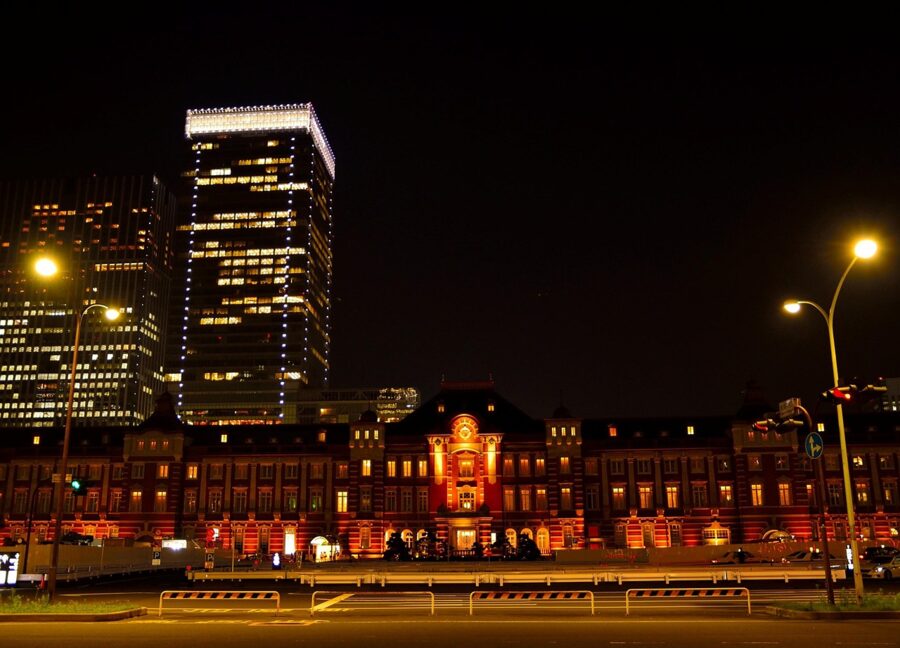
At Tokyo Station the obvious place is Ekibenya Matsuri on the central passage inside the JR East gates, open until 22:00 with around 150 kinds of boxed lunch, the biggest choice of ekiben in the station. Buy before 21:00 and you have time for the walk to platform 9. Add something for breakfast, because the train arrives at Takamatsu at 07:27 and at Izumo-shi at 10:00 with nothing to buy in between.
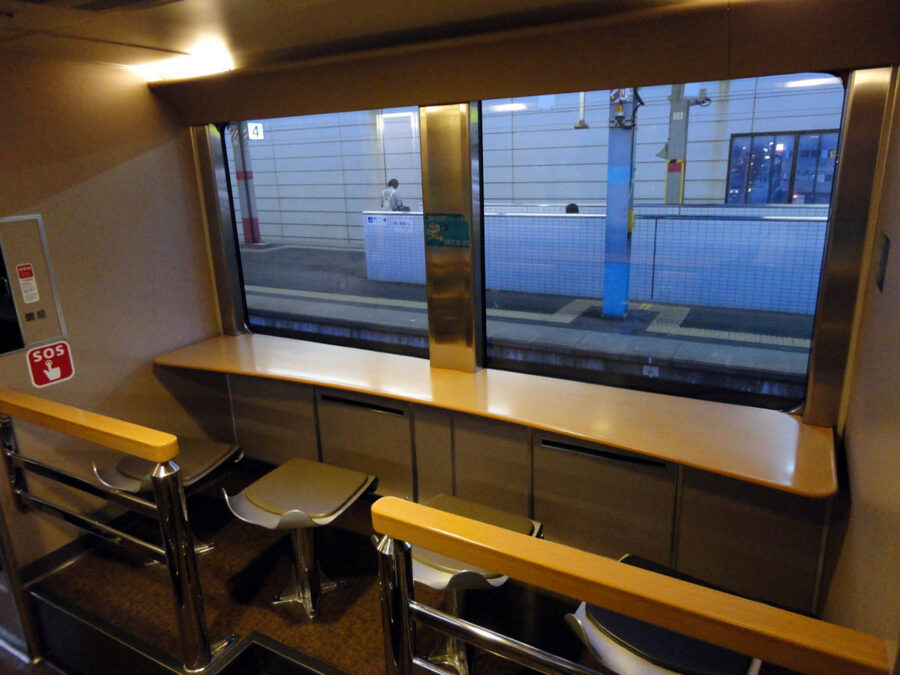
Eat in your room or in the lounge: a counter along big windows with stools, in cars 3 and 10, open to everyone including the Nobinobi.

The split at Okayama
The westbound train reaches Okayama at 06:27 on platform 8 and divides in four minutes. The Seto leaves at 06:31 and the Izumo follows at 06:34. Staff uncouple the two sets on the platform, the gangway between them closes, and the halves pull away in turn while passengers who got off to watch hurry back aboard.
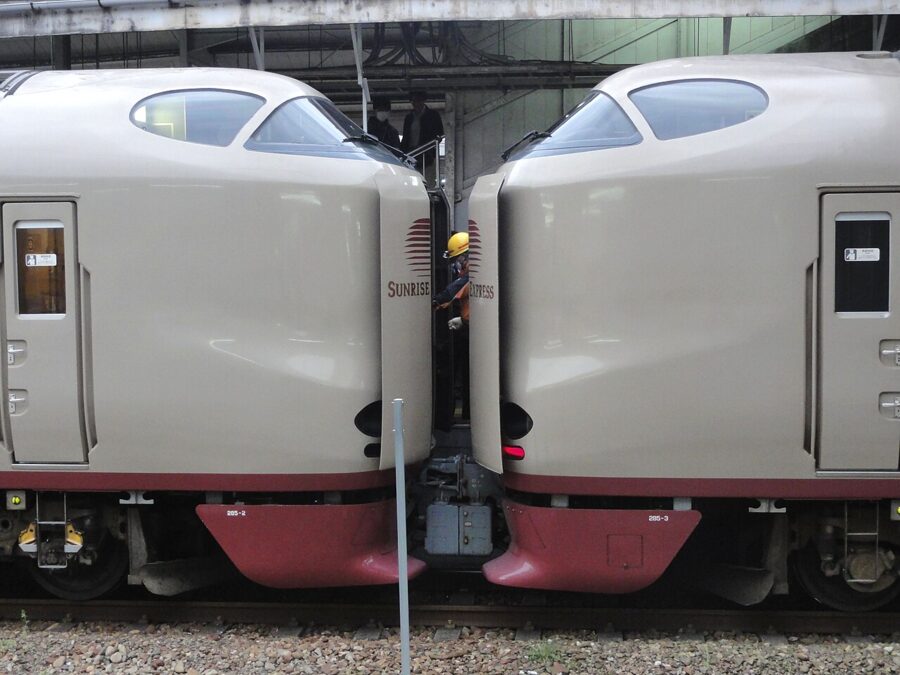

Step off to watch, but stay by your own car: the Seto leaves four minutes after arrival, and if you are on the wrong half you are going to the wrong prefecture. The car number on your ticket tells you which half you are in. Before Okayama you can walk the whole fourteen cars through the gangway; after it you cannot.
Dawn from the window
When it gets light depends on the month. In late June the sun rises at Okayama at about 04:53, so it is full day at Himeji at 05:25; around the turn of the year it rises at about 07:15, so the Seto crosses the bridge at sunrise and the Izumo climbs the Hakubi Line in the first light. In spring and autumn the Inland Sea and the Takahashi valley are both in daylight, and Lake Shinji at 09:40 always is.
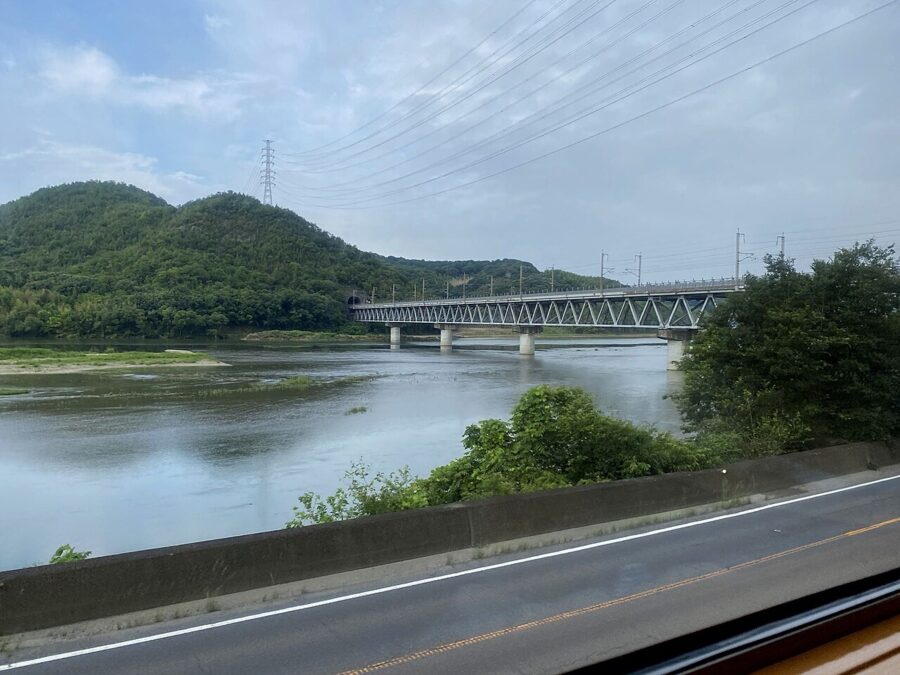

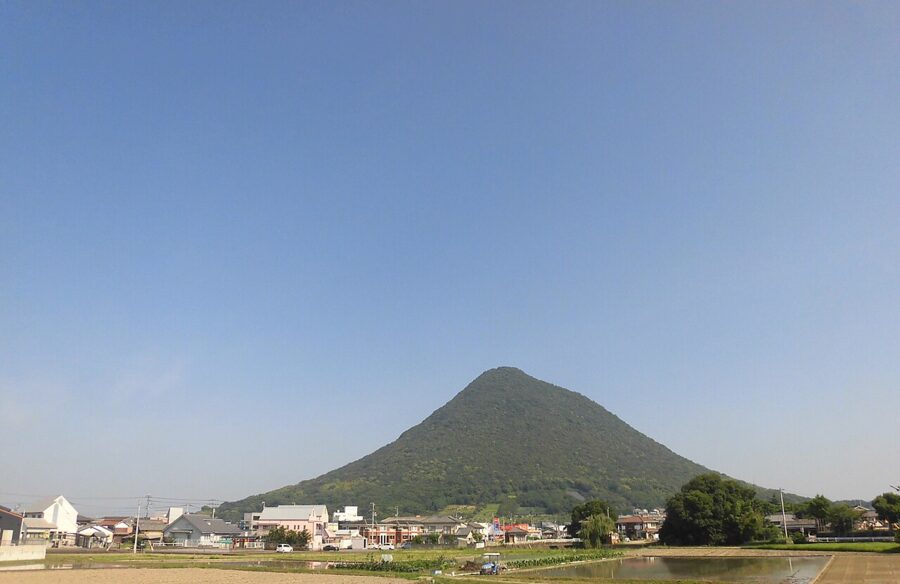
Which side matters. JR West’s car plans for the 285 series mark one side of the train as the side for Mount Fuji, the Inland Sea and Iino-yama (the Sanuki Fuji) on the Seto, and Daisen and Lake Shinji on the Izumo. Book a room on that side if the plan lets you choose. Westbound you pass Fuji at 23:32 in the dark; eastbound you stop at Fuji station at 05:09, and in June, with sunrise at Shizuoka around 04:38, that is your chance to see the mountain from bed.

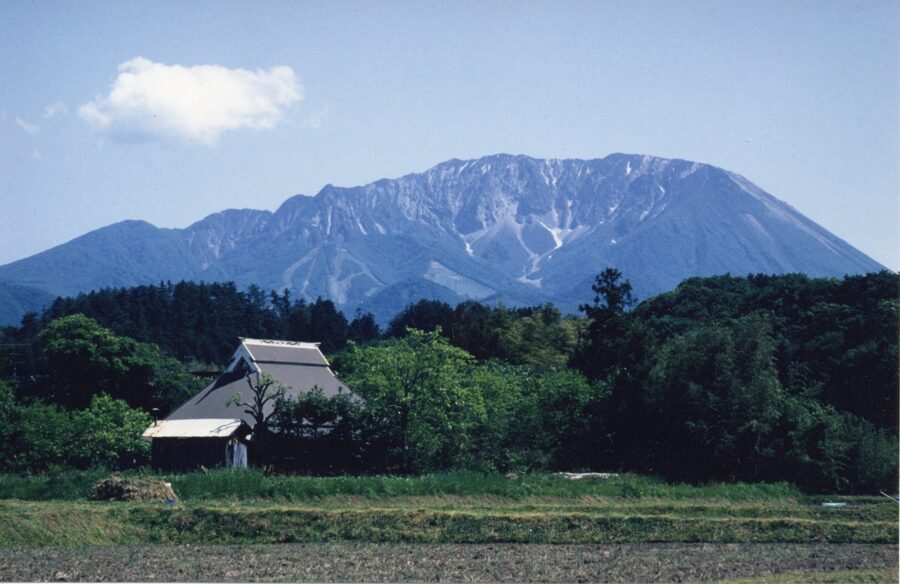
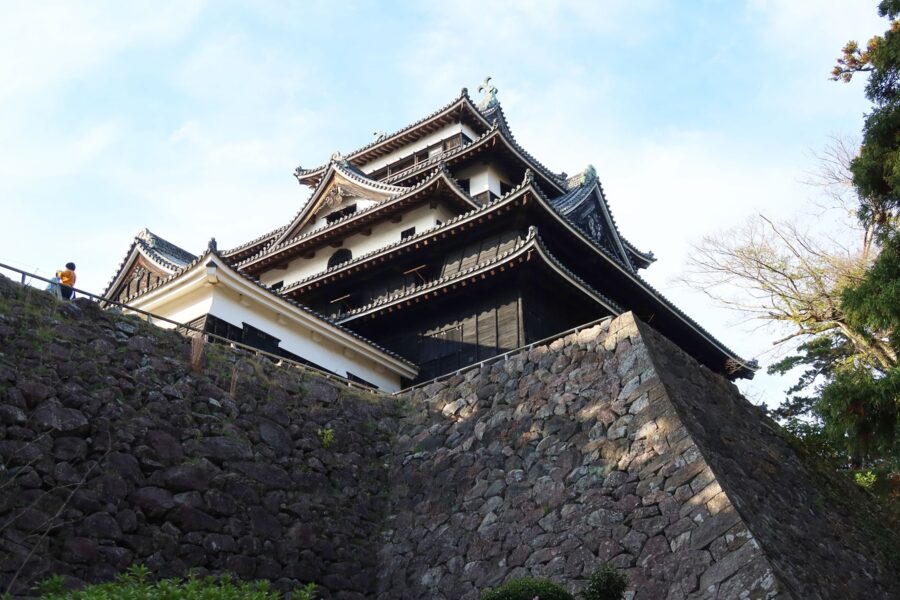
On the Izumo, the best of the morning comes late. Daisen shows up on the approach to Yonago if the cloud allows, and after Matsue at 09:33 the line runs along Lake Shinji for a quarter of an hour. Get off at Matsue for the castle and you have the lake on the way in.


Is it worth it?
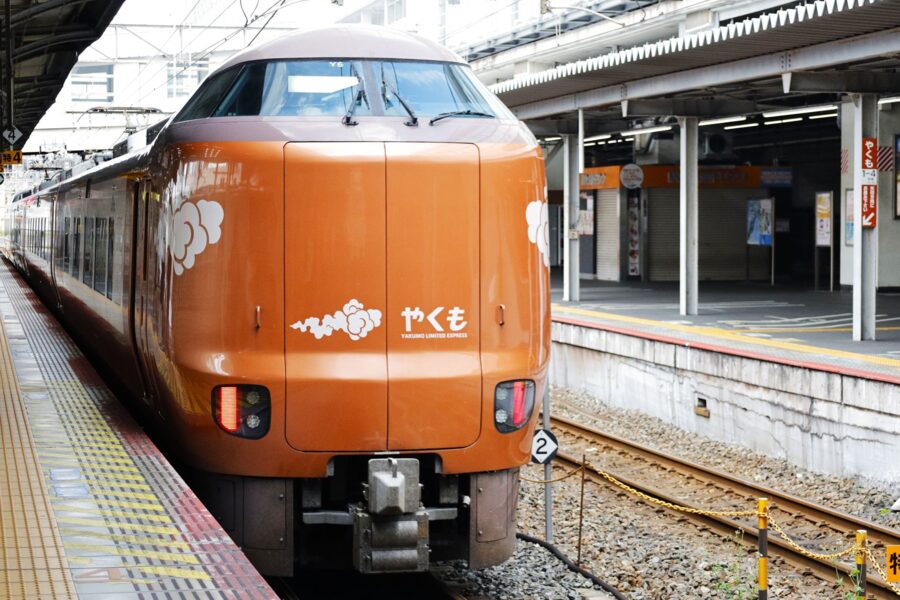
As transport, only sometimes. Tokyo to Izumo-shi by Nozomi to Okayama and the Yakumo limited express takes about six and a half hours and, in a dated August 2026 example, came to ¥21,290 (about US$134) with an unreserved Shinkansen seat. The Nobinobi is about ¥5,000 (US$32) cheaper and a Single about ¥2,000 (US$13) dearer, and either saves a hotel night. If you would rather arrive the same day, the Shinkansen is the fast way west.
As a night, nearly always. Nothing else in Japan sells a bed on a moving train every day of the year, and the Seto at dawn on the bridge is one of the great short rail journeys anywhere. If you would otherwise spend a night in a Tokyo hotel and take an early train west, a Single folds the two into one and you wake up there. Skip it if you sleep badly in motion, if you need to arrive rested for a meeting, or if the only space left is the Nobinobi on a holiday Friday.
Do not leave it too long. The 285s are close to thirty years old. In July 2025 senior JR figures said no successor train was being designed and that about thirty years was the expected life, which points to around 2028; in March 2026 JR West’s president said he wanted to keep the train running as long as possible, which is a hope, not a timetable. The overnight trains to Sapporo stopped in 2015 and 2016, and nothing has been announced to take the Sunrise’s place.
So book the Seto, an upper-deck Single on the sea side, at 10:00 a month ahead. Buy dinner at Ekibenya Matsuri before nine, set an alarm for 06:45, and be awake when the train leaves Kojima.