
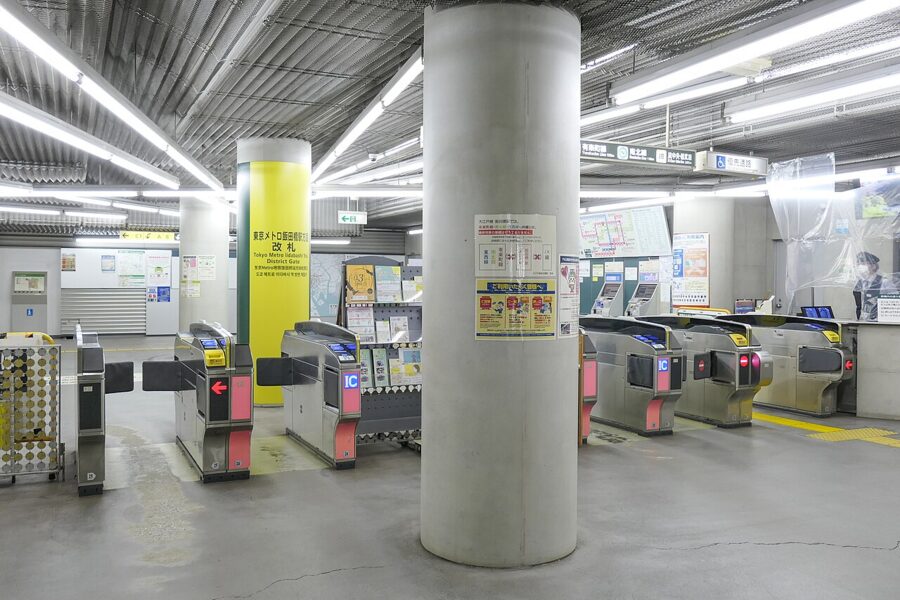
Halfway between the Namboku Line and the Oedo Line at Iidabashi, the corridor runs into a row of ticket gates. Feed in a paper ticket and the gate takes it, reads it and hands it straight back. Touch a Suica and it simply lets you through. You have just walked out of one railway company and into another, and the gate is keeping the books.
That is the Tokyo subway in one corridor. Thirteen lines, two owners: Tokyo Metro runs nine of them, the Tokyo Metropolitan Government’s Toei runs four, and the fares, the day tickets and the gates all follow the join between the two. The trains pay no attention to it, and most of the time neither do you.
The rest of what you need sits on that join: which card or pass covers both companies, how to read the map, why a train boarded in Shibuya can finish on a third company’s tracks, and which transfers that look like a step on the map are ten minutes of corridor. Everything below is as of November 2026.
目次Contents9
- Two companies, thirteen lines
- Reading the map: letters, colours and numbers
- Fares and tickets as of 2026
- Passes for visitors: what they cost and when they pay
- The lines you will use most
- Transfers that look short and are not
- Exits, first and last trains, and rush hour
- Lifts, platform doors and step-free routes
- Maps and apps worth using



Two companies, thirteen lines
Tokyo Metro is the bigger of the two: nine lines (Ginza, Marunouchi, Hibiya, Tozai, Chiyoda, Yurakucho, Hanzomon, Namboku and Fukutoshin), 180 stations and about 195 km of route. Toei has the Asakusa, Mita, Shinjuku and Oedo lines and 106 stations. Between them they serve more than 280 stations, and almost nowhere in central Tokyo is more than a short walk from one.
Why there are two is told in the history of the Tokyo subway system, and the trains line by line in Tokyo Metro’s trains and the Toei lines and their trains. What matters on the platform is narrower. The two companies charge separate fares, sell some separate day tickets, and meet at transfer stations where you sometimes pass a gate and sometimes do not.
The JR lines, the Yamanote loop among them, are a third system again and no subway pass covers them. A Suica or PASMO card covers everything, which is why most people end up using one.
Reading the map: letters, colours and numbers
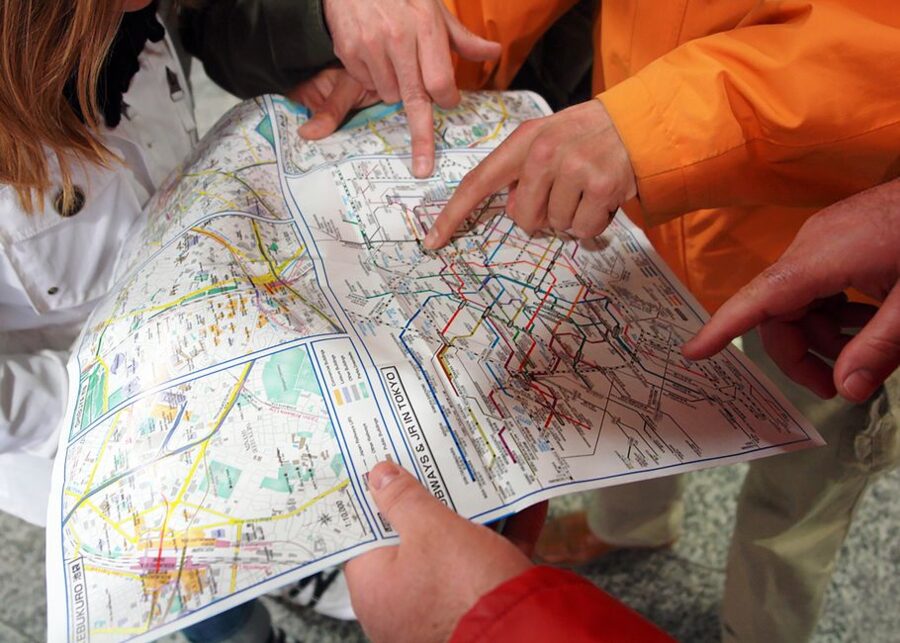
The official map, printed in English and posted in every station, shows all thirteen lines on one sheet whichever company owns them. It looks dense because it is. Ignore everything except your line, your destination and the one change you need, and read the letters and numbers rather than the names.
The line letters and colours
Every line has a letter and a colour, printed on the map, the signs and often the trains. Learn the five or six you will use and the system shrinks to a handful of coloured threads.
| Line | Letter | Colour | Operator |
|---|---|---|---|
| Ginza (銀座線) | G | Orange | Tokyo Metro |
| Marunouchi (丸ノ内線) | M (Mb on the Honancho branch) | Red | Tokyo Metro |
| Hibiya (日比谷線) | H | Silver | Tokyo Metro |
| Tozai (東西線) | T | Sky blue | Tokyo Metro |
| Chiyoda (千代田線) | C | Green | Tokyo Metro |
| Yurakucho (有楽町線) | Y | Gold | Tokyo Metro |
| Hanzomon (半蔵門線) | Z | Purple | Tokyo Metro |
| Namboku (南北線) | N | Emerald | Tokyo Metro |
| Fukutoshin (副都心線) | F | Brown | Tokyo Metro |
| Asakusa (浅草線) | A | Rose | Toei |
| Mita (三田線) | I | Blue | Toei |
| Shinjuku (新宿線) | S | Leaf green | Toei |
| Oedo (大江戸線) | E | Magenta | Toei |
Two letters catch people out. Hanzomon is Z, because the Hibiya Line already had H, and Mita is I, because the Marunouchi had M.
Station numbers
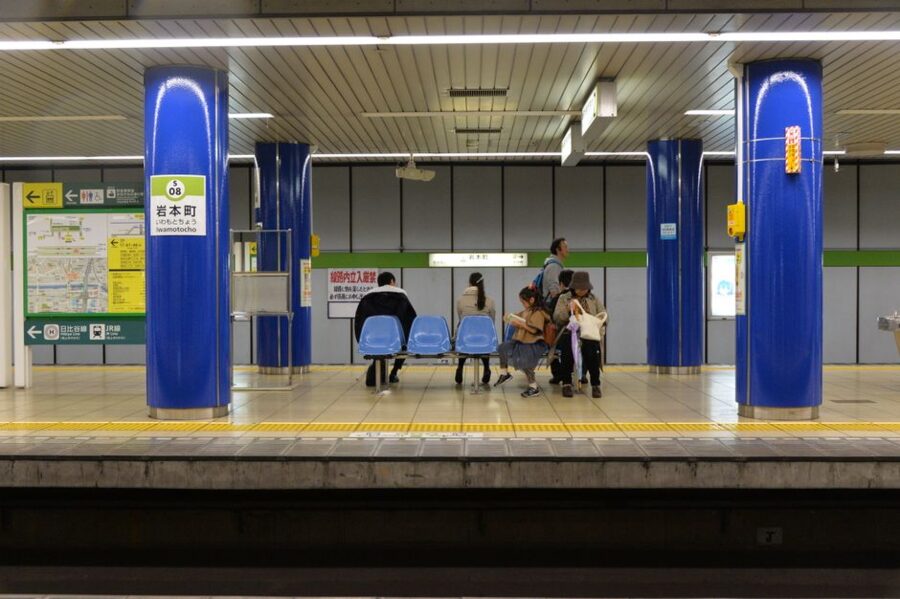
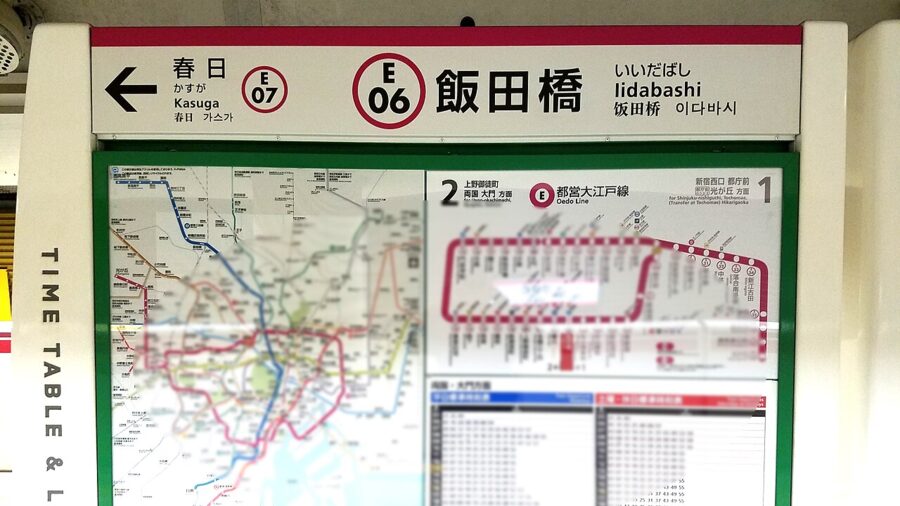
Each station carries its line letter and a two-digit number, circled in the line colour: Ginza is G09 on the Ginza Line. A station on three lines has three numbers, which is why big interchanges wear a row of coloured circles. On the Ginza Line the numbers run from Shibuya G01 to Asakusa G19, so Ginza to Asakusa is ten stops in the direction the numbers rise.
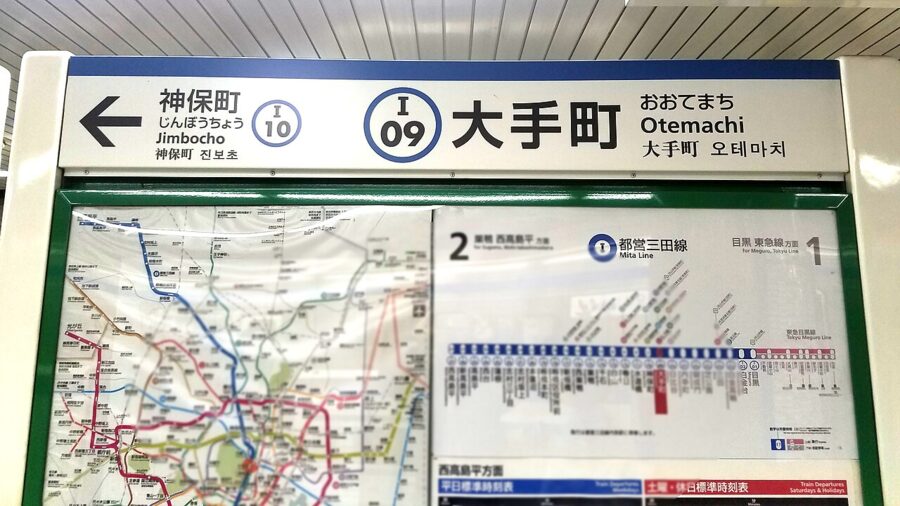

Platform signs name the direction by terminus, which means little if you do not know where Nishi-magome is, but the numbers rise or fall in a way you can check. Tokyo Metro’s English subway map and station-number guide is a PDF worth saving to your phone before you land.

Through-running: why your Hanzomon train becomes a Tokyu train
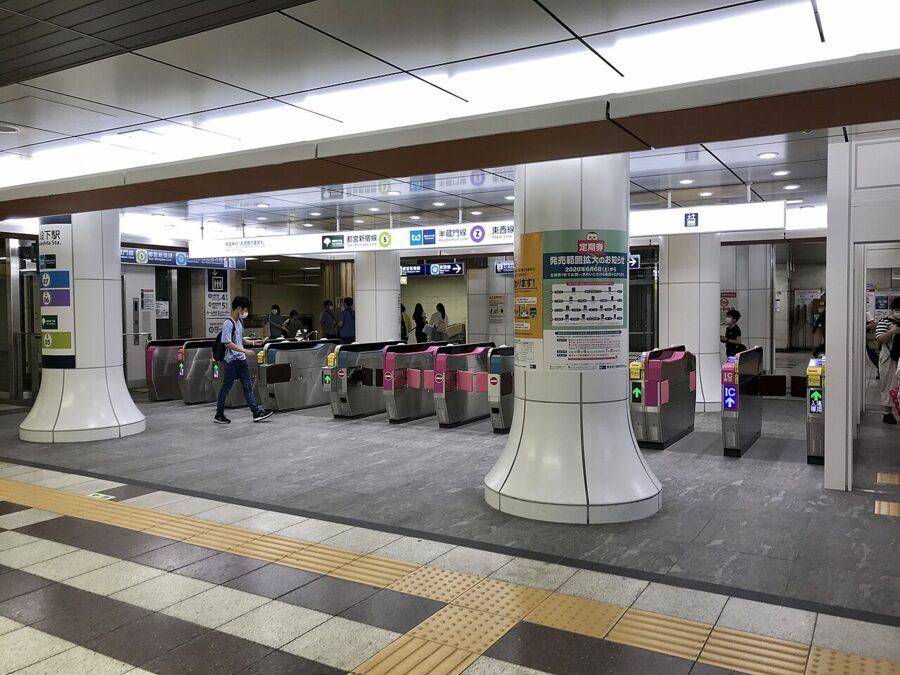
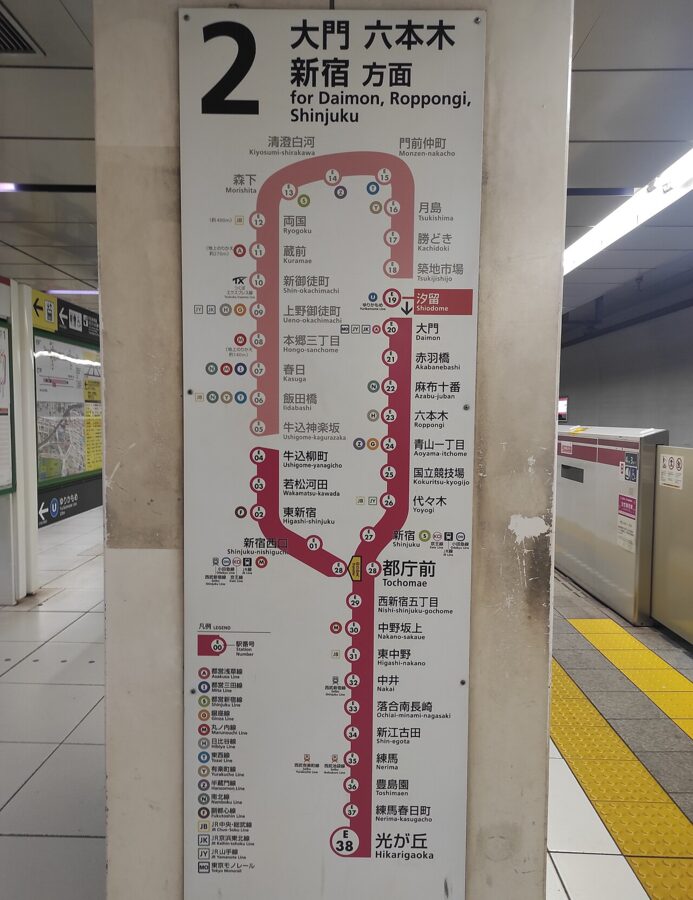
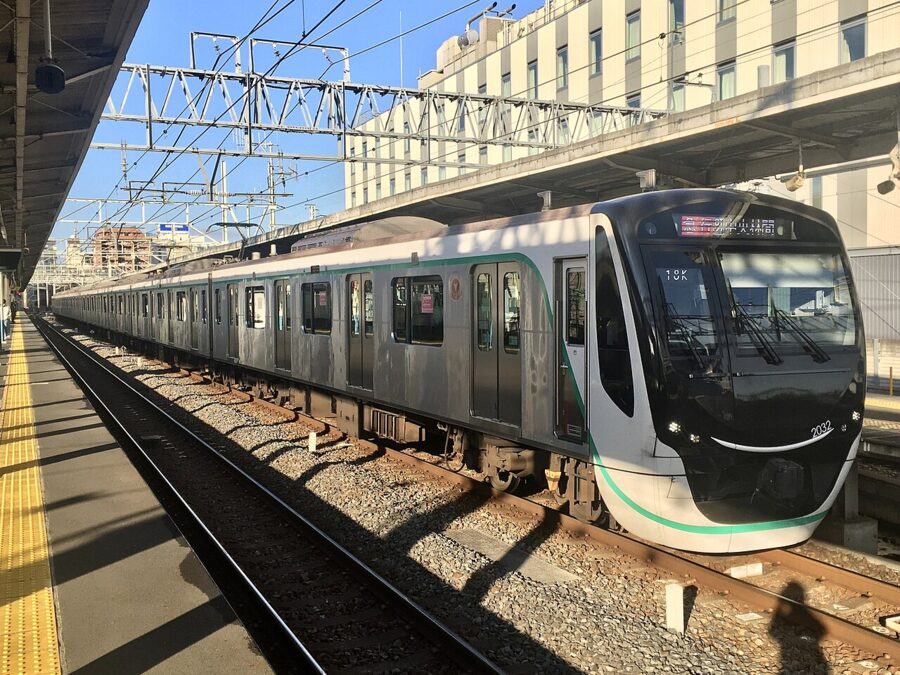
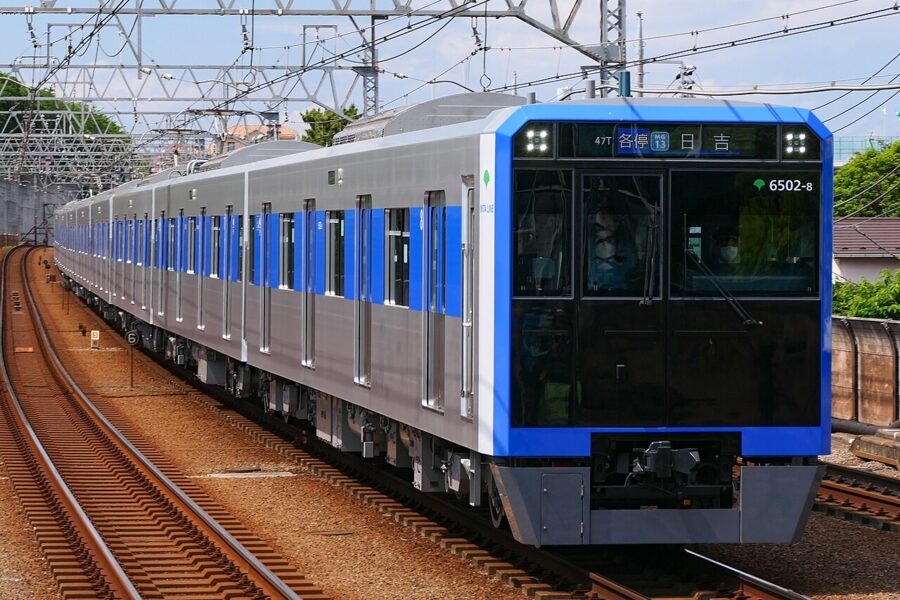
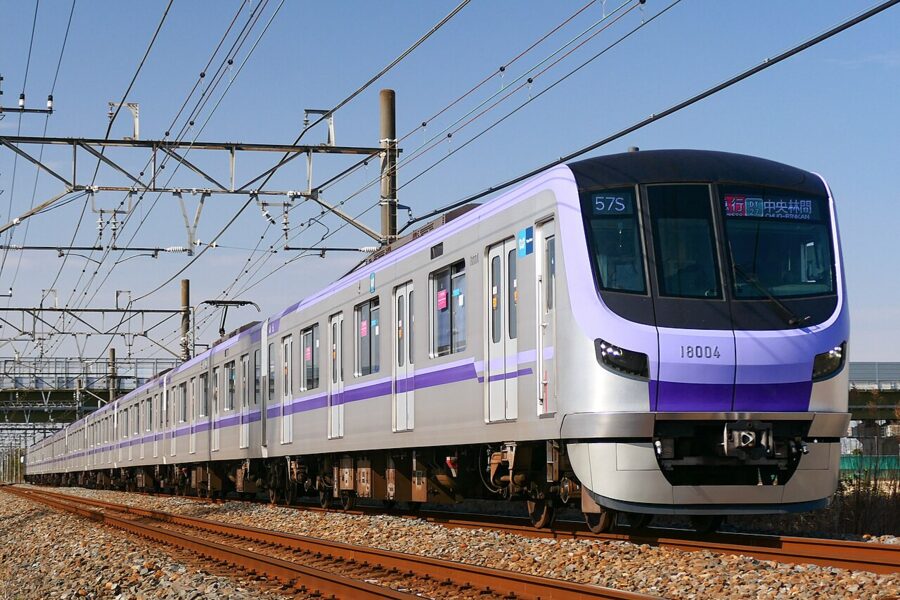
Board a Hanzomon Line train at Kiyosumi-shirakawa and it may belong to Tokyu, not Tokyo Metro, and be going to Chuo-Rinkan in Kanagawa. Most subway lines are joined end to end with suburban railways, and trains run straight through. A Hanzomon train becomes a Tokyu Den-en-toshi Line train at Shibuya and, at the other end, a Tobu Skytree Line train at Oshiage.

| Subway line | Runs through onto | Where the railway changes |
|---|---|---|
| Hanzomon (Z) | Tokyu Den-en-toshi Line; Tobu Skytree Line | Shibuya; Oshiage |
| Hibiya (H) | Tobu Skytree Line | Kita-senju |
| Chiyoda (C) | Odakyu Line; JR Joban Line | Yoyogi-uehara; Ayase |
| Tozai (T) | JR Chuo-Sobu Line; Toyo Rapid Railway | Nakano; Nishi-funabashi |
| Yurakucho (Y) and Fukutoshin (F) | Tobu Tojo Line; Seibu lines; Fukutoshin also Tokyu Toyoko Line | Wakoshi; Kotake-mukaihara; Shibuya |
| Namboku (N) and Mita (I) | Tokyu Meguro Line and on towards Shin-Yokohama; Namboku also Saitama Railway | Meguro; Akabane-iwabuchi |
| Asakusa (A) | Keisei lines towards Narita; Keikyu towards Haneda | Oshiage; Sengakuji |
| Shinjuku (S) | Keio Line | Shinjuku |
| Ginza, Marunouchi, Oedo | None |
Two things follow. The destination on the front may be a suburb you have never heard of, so trust the line colour and direction, not the name. And fares and passes stop at the boundary: a Tokyo Subway Ticket is good to Shibuya on the Hanzomon Line and not a metre beyond, so stay on into Tokyu territory and you owe Tokyu’s fare. The Chiyoda Line’s run onto Odakyu, the railway from Tokyo to Hakone, works the same way.

Fares and tickets as of 2026
Fares on both companies go by distance, and one company’s fare covers any number of changes between its own lines. The cheapest adult ride is ¥180 (about US$1.20) on a paper ticket; the longest Tokyo Metro ride is ¥330 (about US$2.20), and Toei’s tops out at ¥430 (about US$2.80). Children aged 6 to 11 pay half.
IC fare versus paper ticket
An IC card (Suica or PASMO, as a card or on your phone) is charged to the yen; a paper ticket is rounded up to the next 10 yen. Tokyo Metro’s regular fare table as of 2026:
| Distance | Paper ticket | IC card |
|---|---|---|
| 1–6 km | ¥180 | ¥178 |
| 7–11 km | ¥210 | ¥209 |
| 12–19 km | ¥260 | ¥252 |
| 20–27 km | ¥300 | ¥293 |
| 28–40 km | ¥330 | ¥324 |
Every figure includes the ¥10 railway barrier-free charge that pays for lifts and platform doors. Toei starts at the same ¥180 ticket and ¥178 IC fare and climbs further, because its lines are longer. Cards are sold and topped up at the same machines (Suica and PASMO work on every line).
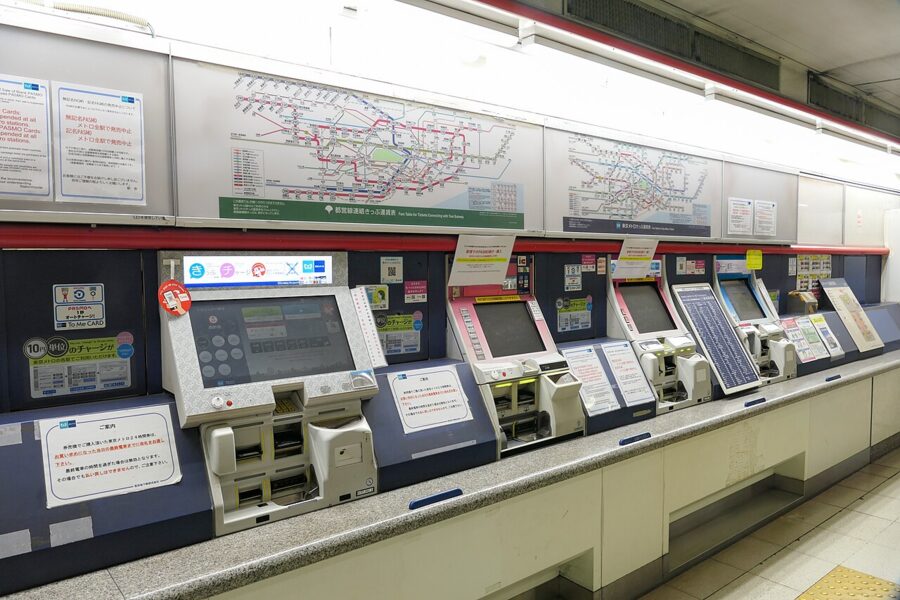

A paper ticket goes into the gate and comes out on the far side; take it, because you need it to leave. Underpay and the fare adjustment machine by the exit takes the difference. Magnetic tickets are on their way out: Tokyo Metro plans QR-coded paper tickets from fiscal 2028 and to stop selling magnetic ones by the end of fiscal 2029.
Tapping in with a credit card
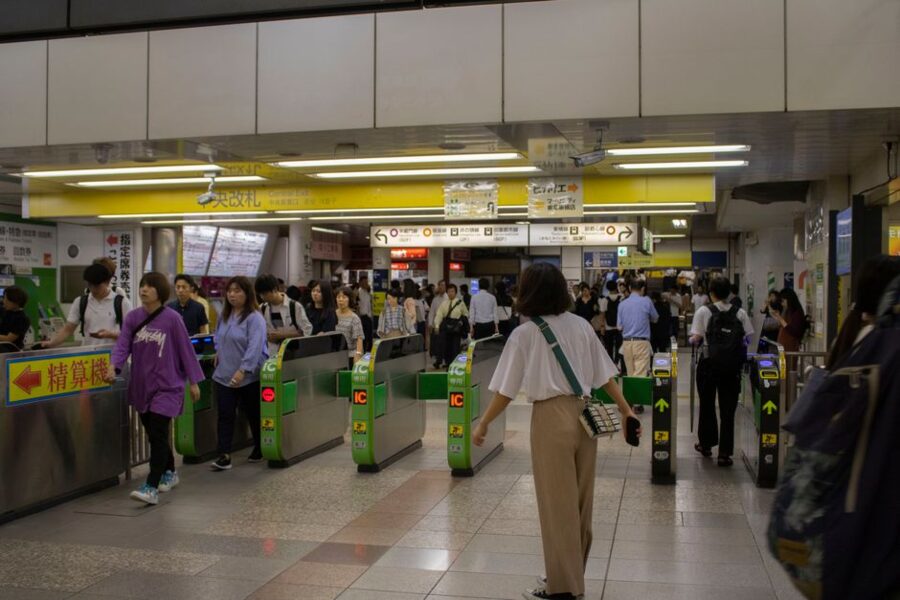
Since 25 March 2026 you can ride both subways by touching a contactless Visa, Mastercard, JCB, American Express, Diners Club, Discover or UnionPay card, or a phone carrying one, on the gate reader. The same card works across eleven Kanto operators, Tokyu, Odakyu, Keio, Keikyu, Seibu, Tobu and Sotetsu among them, with no registration.
Read Tokyo Metro’s Tap to Ride rules before relying on it. You pay the paper-ticket fare, not the IC fare, and adult fares only; you must tap out with the same card or phone you tapped in with; and it does not carry on to JR East. It is a good fallback, and an IC card is still better.
The Metro and Toei transfer, and the orange gates
Change between a Tokyo Metro line and a Toei line and you pay both fares less a transfer discount of ¥70. Two minimum-fare legs on an IC card come to about ¥286 rather than ¥356. On paper you buy one connecting ticket to your final station; on a card the discount is applied when you tap out.
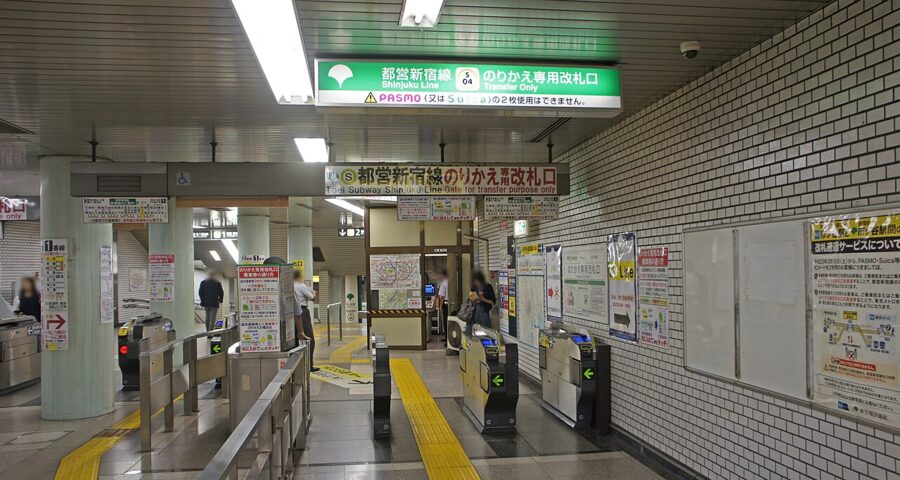

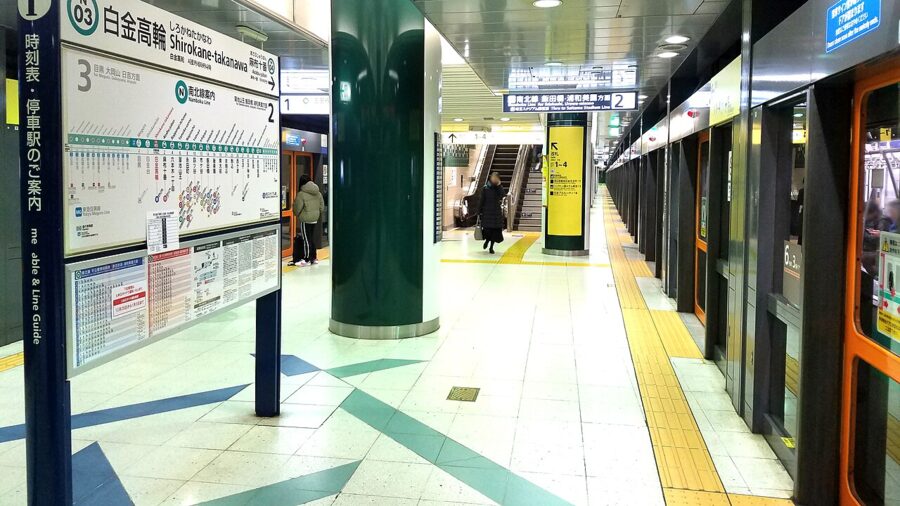
The discount applies only at designated transfer stations. Kudanshita and Shirokane-takanawa are the two where Metro and Toei share the paid area and you change without a gate. Everywhere else you walk through transfer gates, with 60 minutes to do it.

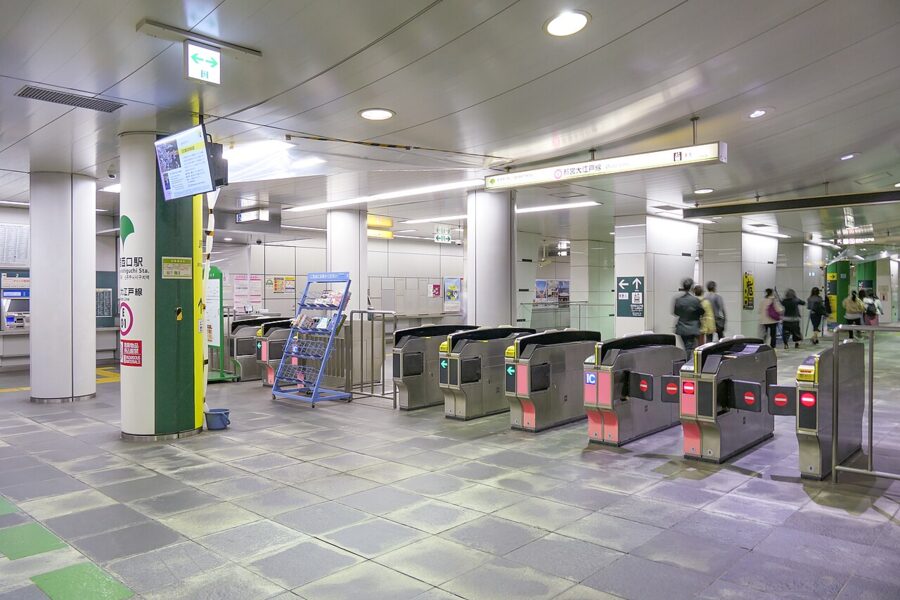
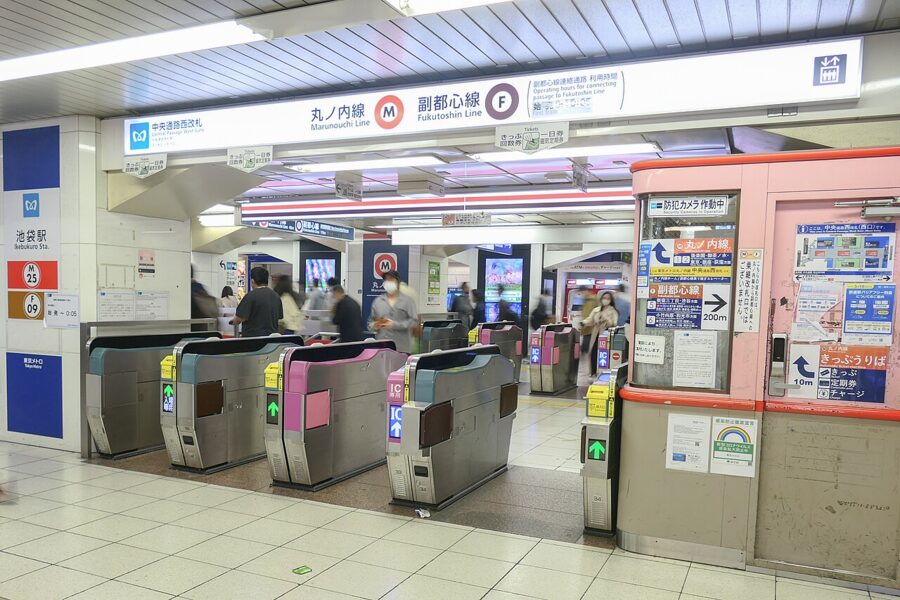
Tokyo Metro does the same between some of its own lines, at stations where you leave one line’s gates to reach another’s. Use the orange transfer gates, not the exit, and the ticket or card keeps the trip whole; leave through an ordinary exit and you start a new fare.
Passes for visitors: what they cost and when they pay
The day tickets went up on 14 March 2026: the fare change notice raised the Tokyo Subway Ticket and the common one-day ticket, and the old prices are still all over the internet. These are the ones that matter, as of 2026.
| Pass | Covers | Adult price | Valid | Who can buy |
|---|---|---|---|---|
| Tokyo Subway Ticket 24-hour | All Tokyo Metro and Toei subway lines | ¥1,000 (about US$6.50) | 24 hours from first use | Overseas visitors; Japan residents from outside Tokyo and seven nearby prefectures |
| Tokyo Subway Ticket 48-hour | Same | ¥1,500 (about US$10) | 48 hours from first use | Same |
| Tokyo Subway Ticket 72-hour | Same | ¥2,000 (about US$13) | 72 hours from first use | Same |
| Tokyo Metro 24-hour Ticket | Tokyo Metro only | ¥700 (about US$4.50) | 24 hours from first use | Anyone |
| Common One-day Ticket, Tokyo Metro and Toei | Both subways | ¥1,100 (about US$7) | First to last train on one day | Anyone |
| Toei 1Day Pass | Toei subway, buses, Sakura Tram, Nippori-Toneri Liner | ¥700 | One day | Anyone |
| Tokyo Combination Ticket | Both subways, Toei buses and tram, JR in the 23 wards | ¥1,720 (about US$11) | One day | Anyone |
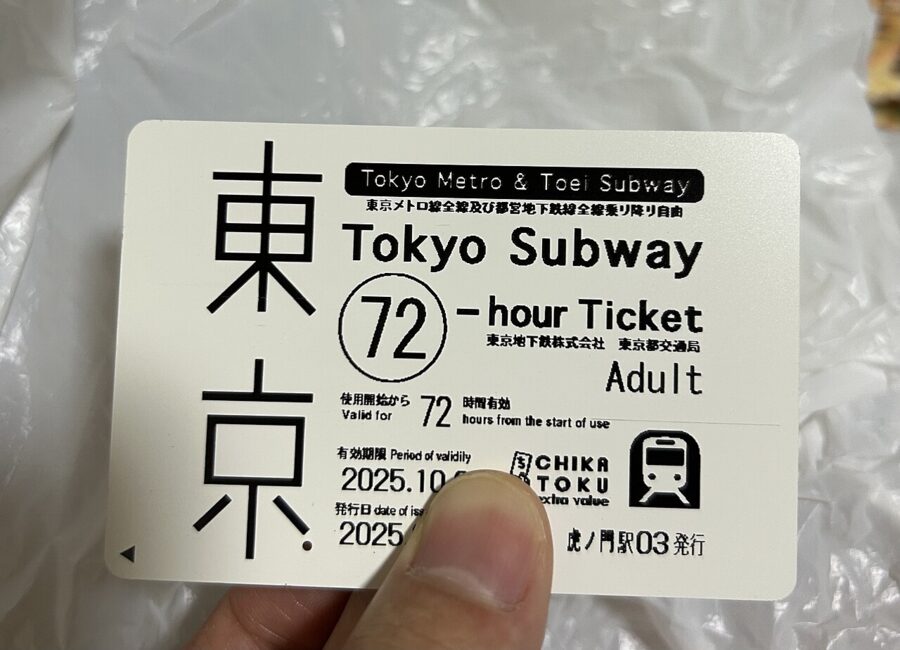

Children pay half on all of them. The Tokyo Metro 24-hour and common one-day tickets also come as IC versions, which load onto a PASMO only, not a Suica. Since 25 March 2026 the Tokyo Subway Ticket and the common one-day ticket also come as QR tickets on your phone, held to the reader on the gate; where a gate cannot read them, show the code to staff.
Until 20 December 2026 Tokyo Metro also sells a weekend 28-hour QR ticket at ¥700 on Saturdays, Sundays and holidays. Start it at Saturday lunchtime and it lasts until Sunday afternoon.
Where the Tokyo Subway Ticket is sold
The paper ticket is sold at the airports (the tourist information counters at Haneda and Narita), at Toei’s tourist information centres in Shimbashi, Shinjuku-nishiguchi and Ueno-okachimachi stations (08:00 to 20:00 daily), at Tokyo Metro pass offices, and at listed hotels, tourist offices and electronics stores. Bring your passport. You can buy as many days as your stay, and no more.

Online, the Tokyo Subway Ticket page sells the QR version, which must be used within 90 days and can be shared to a companion’s phone before first use. The paper ticket’s clock starts at the first gate, the PASMO version’s when it is loaded. Toei lists every sales point and opening hour, and unused tickets are refunded where you bought them for ¥220.
Do they beat a Suica?
Do the sums for the day you plan. A sightseeing day of Asakusa, Ueno, Ginza, Shibuya and back is five or six rides at ¥178 to ¥252 on an IC card, roughly ¥1,000 to ¥1,300, more if a ride crosses between companies. On that day the 24-hour Tokyo Subway Ticket just pays; on a day of two long rides and a walk, it does not.
The 72-hour ticket is the one I would buy. At about ¥667 a day it pays from the fourth ride each day, and it ends every question about which company runs which line. Without it, Tokyo Metro’s ¥700 24-hour ticket pays on the fourth minimum-fare ride if you stay on Metro lines, and Toei’s 1Day Pass suits a day of Toei lines, buses and the Sakura Tram. No subway pass covers the Yamanote Line, the suburban railways beyond the subway or the airport lines, so keep a charged IC card as well.
The lines you will use most
Six lines do most of the work on a first visit. The others matter for particular places: the Chiyoda for Meiji-jingumae and Nezu, the Namboku for the Rikugien garden at Komagome, the Fukutoshin for a quick run between Ikebukuro, Shinjuku-sanchome and Shibuya, and the Mita and Shinjuku lines for the bookshops of Jimbocho.
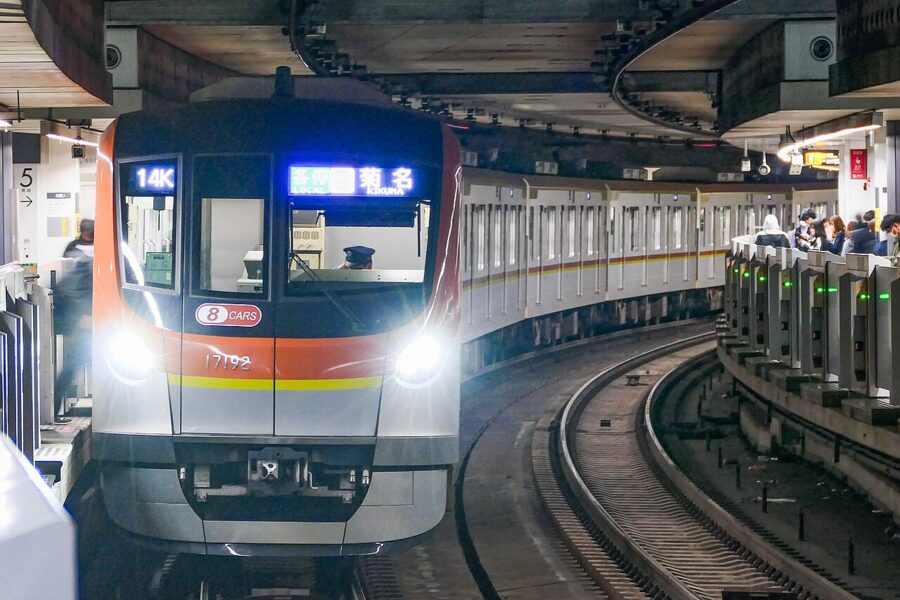
Ginza Line (G, orange): Shibuya to Asakusa
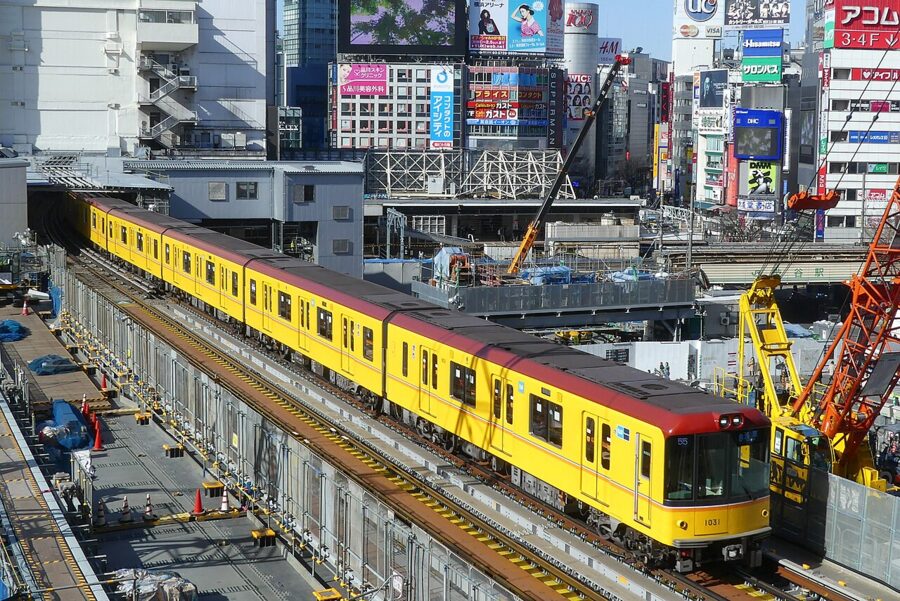
The oldest subway in Asia, opened between Ueno and Asakusa in 1927, and still the most useful line for a visitor. It runs from Shibuya through Omote-sando, Akasaka-mitsuke, Shimbashi, Ginza, Nihombashi, Kanda and Ueno to Asakusa in about half an hour. Since the timetable change of 19 September 2026 trains run every three minutes through the day.
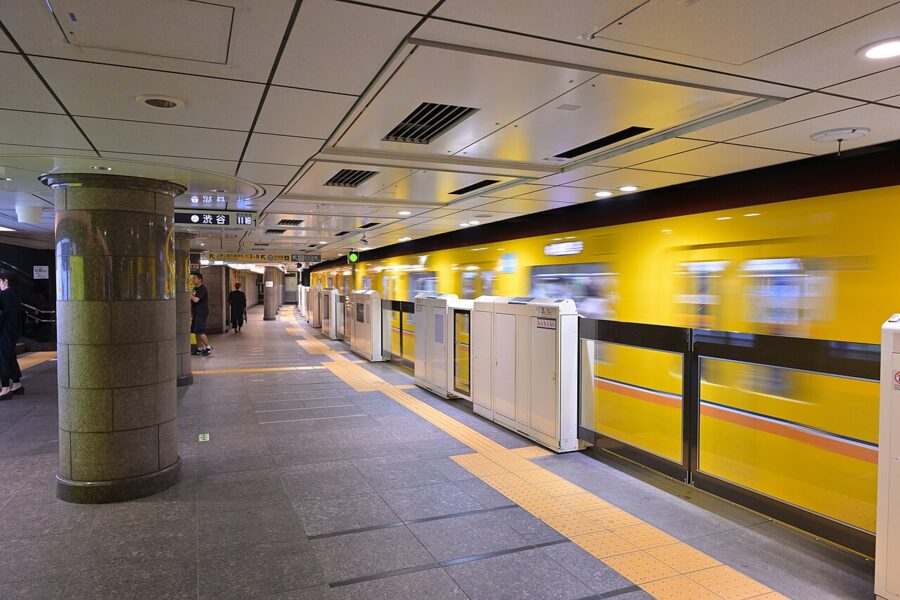

Its trains are short, six cars, and the line is shallow, so the walk from street to platform is the shortest on the network. At Shibuya it comes out into daylight and ends high above the street.
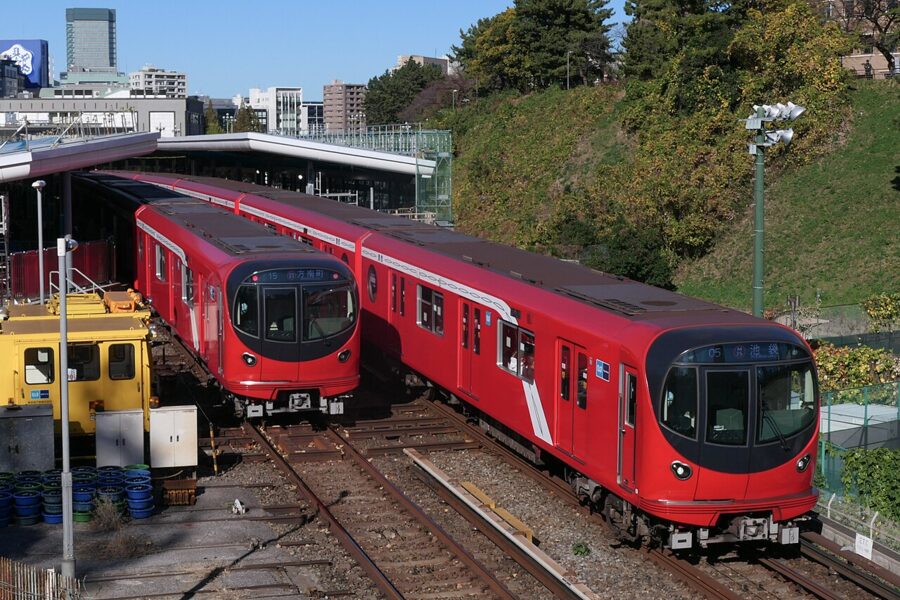
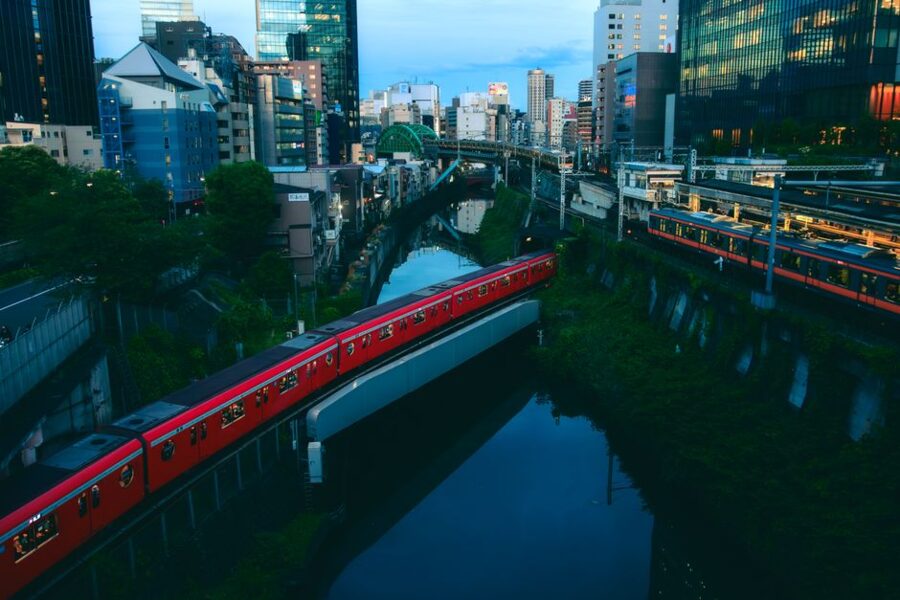
Marunouchi Line (M, red): Ikebukuro to Ogikubo
The Marunouchi makes a U from Ikebukuro through Korakuen, Ochanomizu, Otemachi, Tokyo Station, Ginza, Kasumigaseki, Akasaka-mitsuke and Yotsuya to Shinjuku and Ogikubo. It is the simplest line from Shinjuku to Tokyo Station with luggage, and the change for the Shinkansen. Since September 2026 its trains run every four minutes in the middle of the day.

Hibiya Line (H, silver): Naka-meguro to Kita-senju
The Hibiya Line threads Ebisu, Roppongi, Kasumigaseki, Ginza, Higashi-ginza (for the Kabukiza), Tsukiji (for the outer market), Ningyocho, Akihabara and Ueno. It is the quickest line from Roppongi to Ginza and the best for a day on the east side. At Kita-senju it runs on to Tobu, which is why some trains show destinations deep in Saitama.
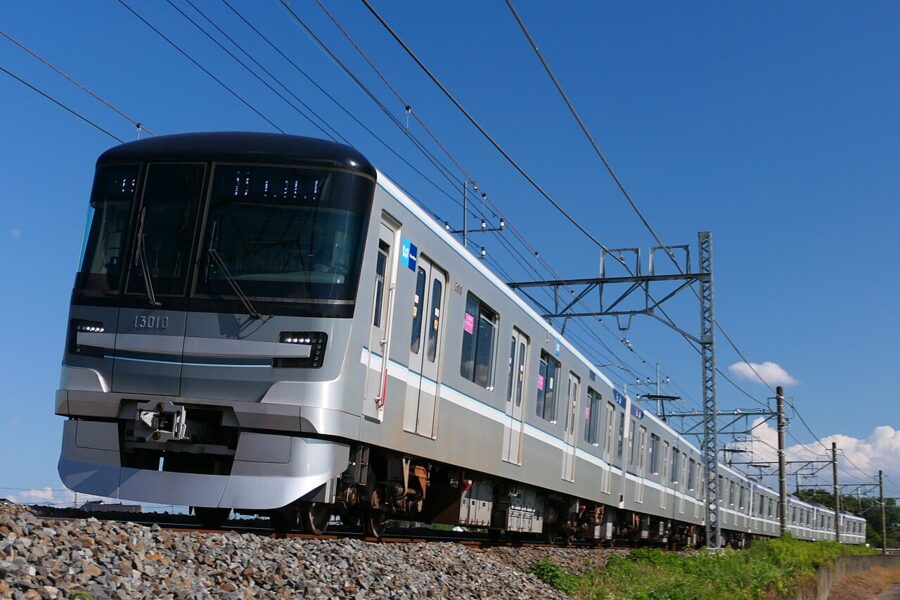

Hanzomon Line (Z, purple): Shibuya to Oshiage
The Hanzomon runs Shibuya, Omote-sando, Nagatacho, Kudanshita, Jimbocho, Otemachi, Mitsukoshimae, Kiyosumi-shirakawa (for the coffee roasters and the Museum of Contemporary Art) and Oshiage, the station for the Tokyo Skytree. Shibuya to the Skytree is about half an hour without a change. Expect Tokyu and Tobu trains as well as Tokyo Metro’s own.

Oedo Line (E, magenta): the loop
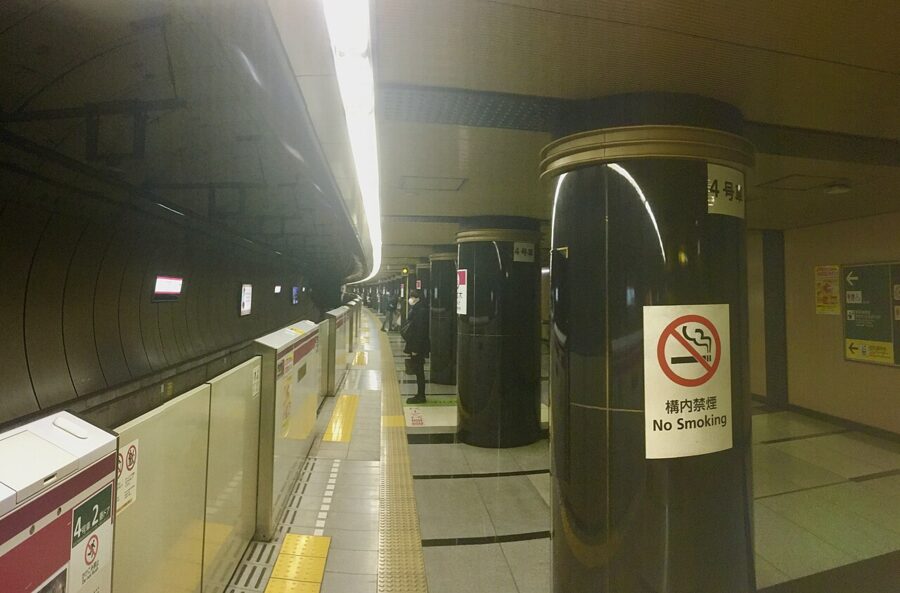
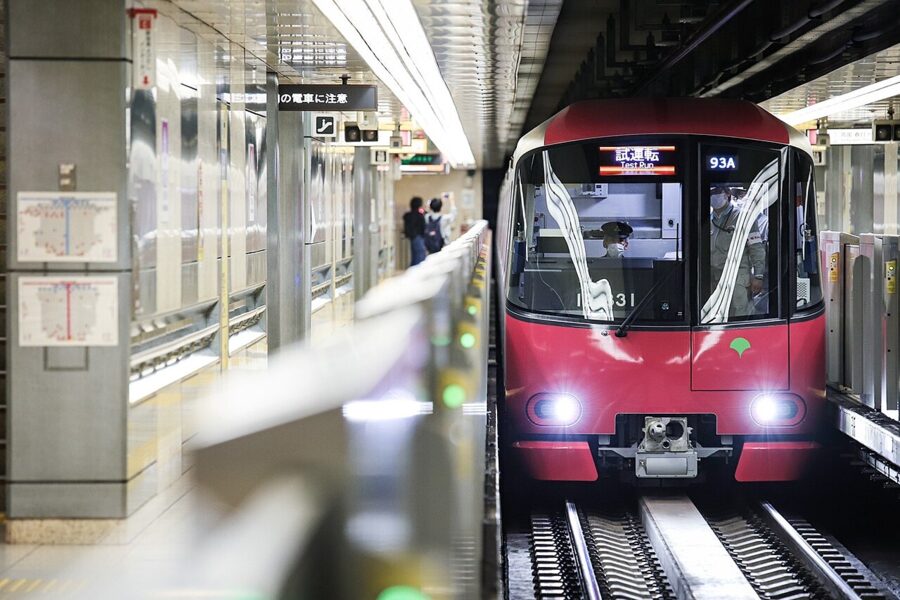
The Oedo loops through Shinjuku, Roppongi, Azabu-juban, Shiodome, Tsukijishijo, Tsukishima, Kiyosumi-shirakawa, Ryogoku, Kuramae, Ueno-okachimachi and Iidabashi, with a spur from Tochomae to Hikarigaoka. It was built last, under everything else, and it is deep: one of its platforms at Roppongi lies about 42 metres down, the deepest in Japan. Budget several minutes of escalators at every Oedo station.

Its trains are small because the tunnels are, and they are driven by linear motors. The line is the one for Ryogoku and the sumo, for monja in Tsukishima, and for cross-town trips no other line makes, such as Roppongi to Shinjuku without going near Shibuya.

Asakusa Line (A, rose): the airport line
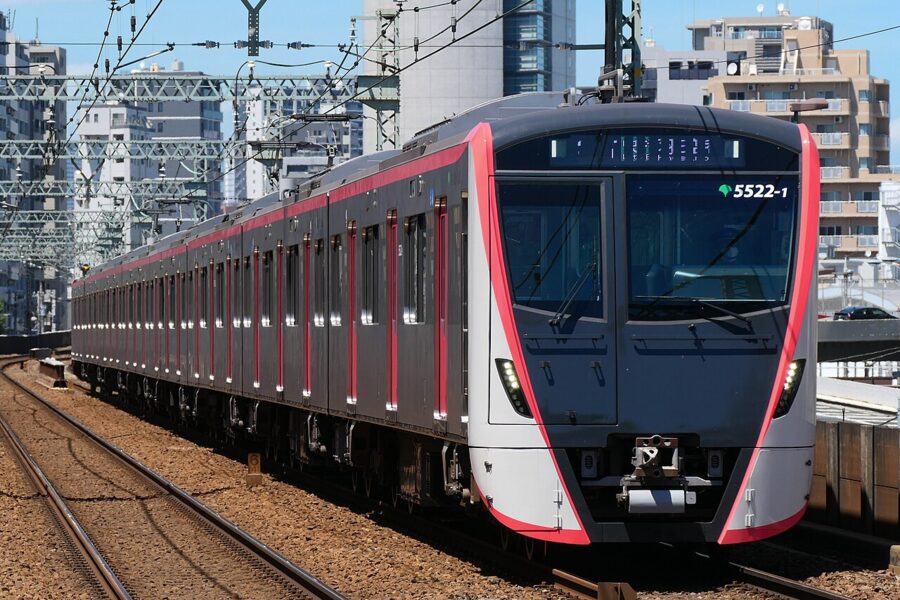
Toei’s Asakusa Line runs from Nishi-magome through Sengakuji, Shimbashi, Higashi-ginza, Nihombashi and Asakusa to Oshiage, and in 1960 it became the first subway line in Japan to run through onto a private railway. At Sengakuji its trains continue onto Keikyu for Haneda Airport, and at Oshiage onto Keisei for Narita. Some trains run from Asakusa or Nihombashi straight to Haneda, so read the destination: the next one may be going to Narita.

Transfers that look short and are not
The map draws every interchange as a tidy dot, and some are a city block of corridor. Journey planners allow for this; the map does not. Three stations account for most of the surprise.
Otemachi
Five lines meet at Otemachi: Tokyo Metro’s Marunouchi, Tozai, Chiyoda and Hanzomon, and Toei’s Mita, each built at a different time under a different street. The platforms are strung out under the office district between Tokyo Station and the Imperial Palace, and some changes, Hanzomon to Marunouchi above all, are long walks with several turns. The Mita Line sits behind its own transfer gates.
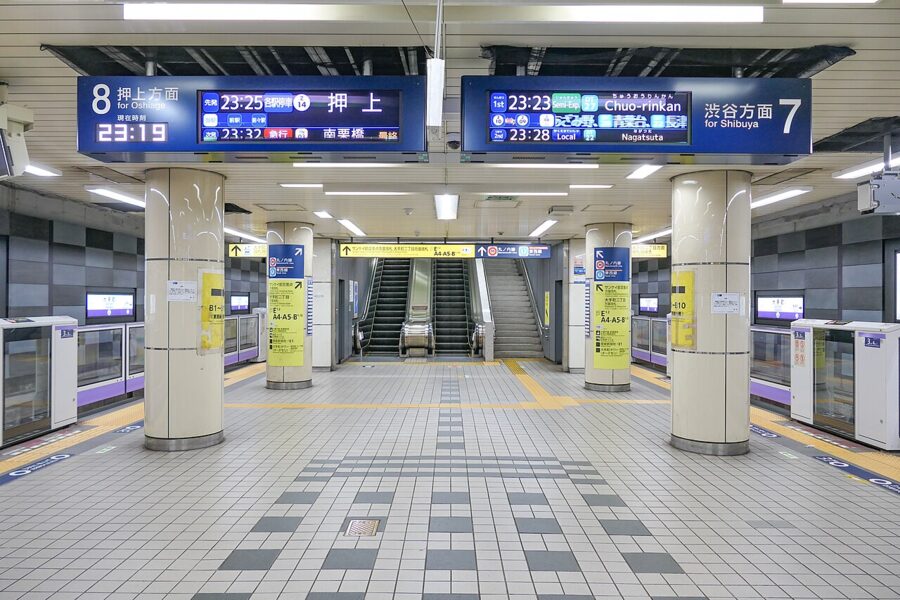

Often the better answer is a route with an easier interchange, or walking the last stretch above ground. A journey planner shows the transfer minutes; trust it over the map.
Iidabashi
Iidabashi joins Tokyo Metro’s Tozai, Yurakucho and Namboku lines with the Oedo Line and JR. The Oedo platforms lie far below the others, so a change from the Namboku to the Oedo means long escalators, the transfer gates that hand your ticket back, and more escalators. For Kagurazaka, use the Oedo Line’s next station, Ushigome-kagurazaka, and walk downhill.

Ikebukuro
Ikebukuro has the Marunouchi, Yurakucho and Fukutoshin lines plus JR East, Seibu and Tobu, and two department stores that get the compass backwards: Tobu is on the west side and Seibu on the east. The Marunouchi platforms and those of the Fukutoshin and Yurakucho lines are some way apart. Follow the line colour on the ceiling signs, not the crowd.

Exits, first and last trains, and rush hour
Exits
Big stations have dozens of exits, numbered with a letter for the area and a number for the stair: A1, B3, C11. The exit matters more than the station, because two exits of one station can surface streets apart. Yellow signs mark them, and a neighbourhood map near the gates shows which is closest to where you are going.
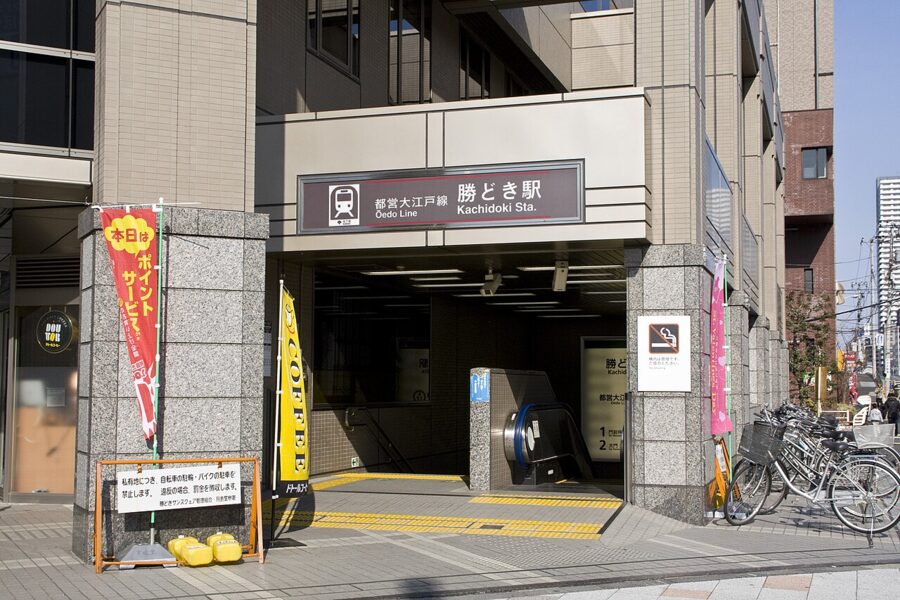

Choose the exit before you get off. Journey planners tell you which car stops nearest the stairs for your exit or transfer, and at Shinjuku or Otemachi that can save five minutes along the platform.
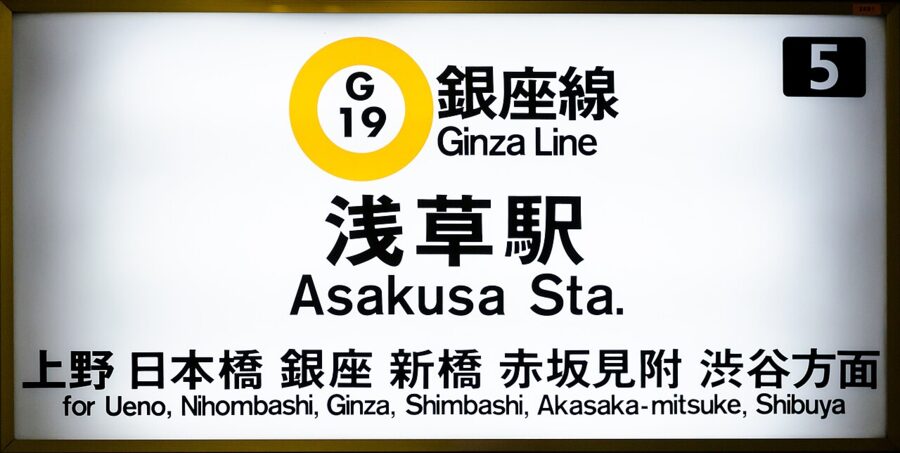

First and last trains
Trains run from about 05:00 until about midnight, the exact times varying by line, station and direction. The last train you need is often not the last on your line but the last connection onto it, which can leave earlier; check the last train (終電) for the whole journey in an app before dinner, not after. Miss it and the choice is a taxi or a wait until 05:00.
Rush hour and the women-only cars
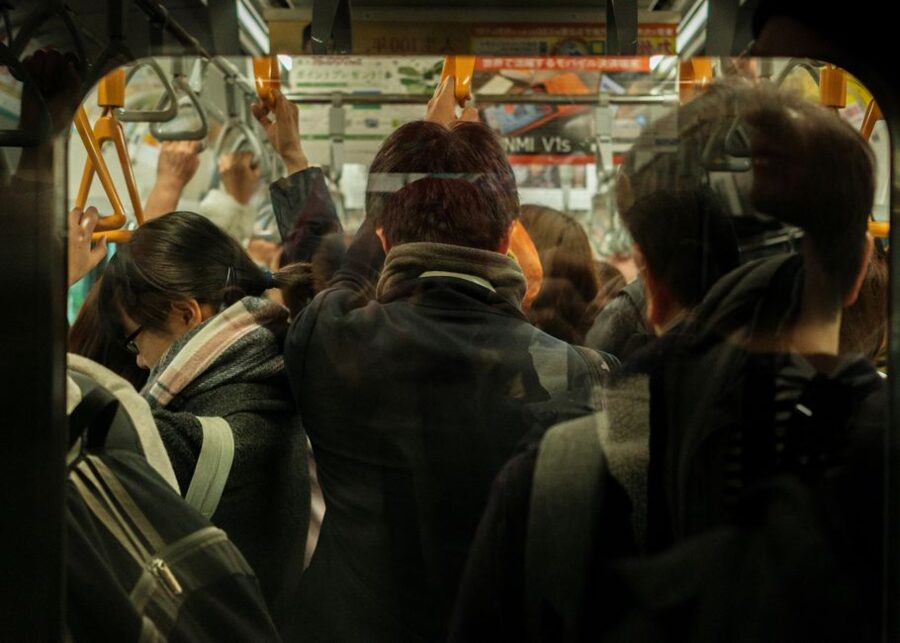
The crush is real between about 07:30 and 09:30 on weekday mornings, and lighter between 17:30 and 19:30. With a suitcase, avoid both; start after 10:00 and the same trains are civilised. The worst are the lines that bring commuters in from the suburbs, the Tozai above all.
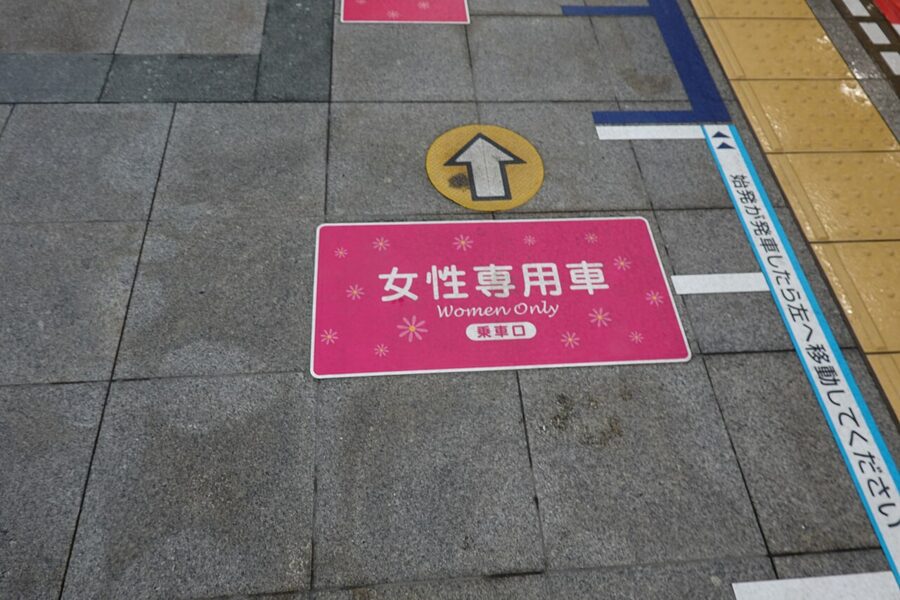
Six Tokyo Metro lines (Hibiya, Tozai, Chiyoda, Yurakucho, Hanzomon and Fukutoshin) keep one car for women on weekday mornings, ending at 09:00 or 09:30 depending on the line, as listed on the women-only car page. Toei does the same on the Shinjuku Line and in car 4 of the Oedo Line. Children of primary-school age and younger, passengers with disabilities and their carers may also use them.

Lifts, platform doors and step-free routes
On 28 March 2026 Tokyo Metro finished fitting platform doors at all 180 of its stations, apart from some tracks at Minami-sunamachi, which is being rebuilt. That makes the platforms calmer for anyone with children, a pushchair or poor sight. Every train has free spaces for wheelchairs and pushchairs beside the priority seats.
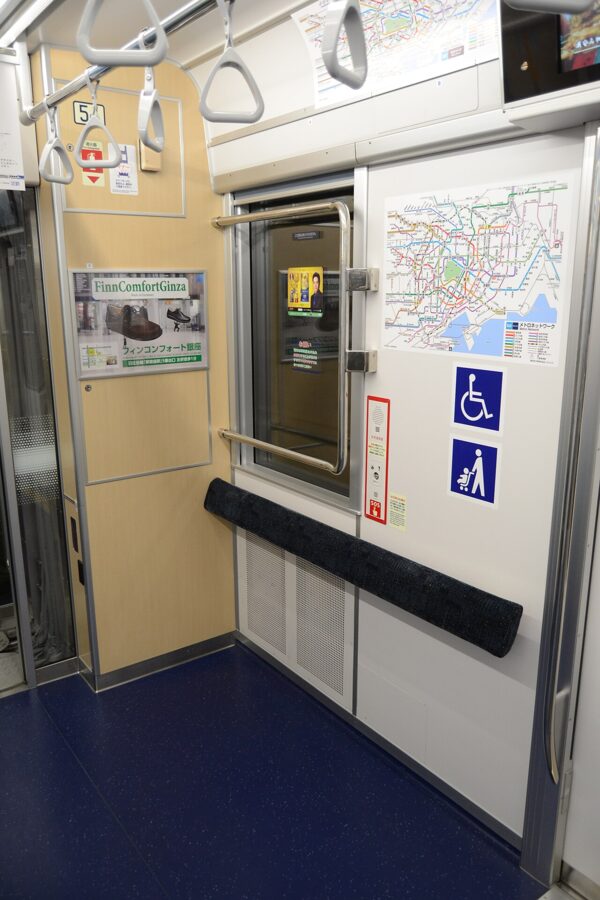

Lifts are the harder part, because they are not always where the stairs are. Both operators publish a floor plan for every station with the lifts and step-free route marked, and Tokyo Metro’s station search filters by barrier-free facility; look yours up before you go, especially on the deep Oedo Line. Station staff will help wheelchair users on and off the train.
For blind and partially sighted passengers, the shikAI app guides you through Tokyo Metro stations from codes on the tactile paving, and in 2026 gained a way to call station staff by scanning a code at the gate.
Maps and apps worth using
A journey planner does the arithmetic: which line, which car, which exit, the IC fare and the last train. Google Maps handles the Tokyo subway well and is the easiest start. NAVITIME’s Japan Travel app goes further on tickets, suggesting the pass that fits a route and adjusting the fare to what you already hold.
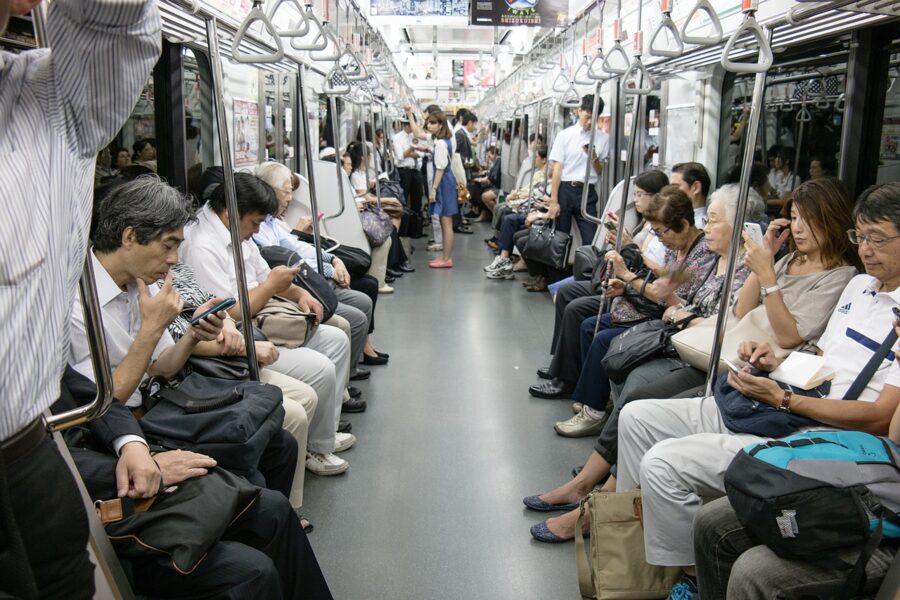
Tokyo Metro’s own app, Tokyo Metro my!, is the one for live information: where each train is and how crowded each car is right now. At rush hour a glance tells you whether to walk to the far end of the platform for an emptier car.
Arriving for a short stay, the TOURIST PASMO, sold at the airport railway stations since May 2026, is a 28-day IC card with no deposit to reclaim, good on every line here and the railways beyond. Load it, load the app, and the gate at Iidabashi becomes what it should be: a beep, and a corridor to the Oedo Line.