
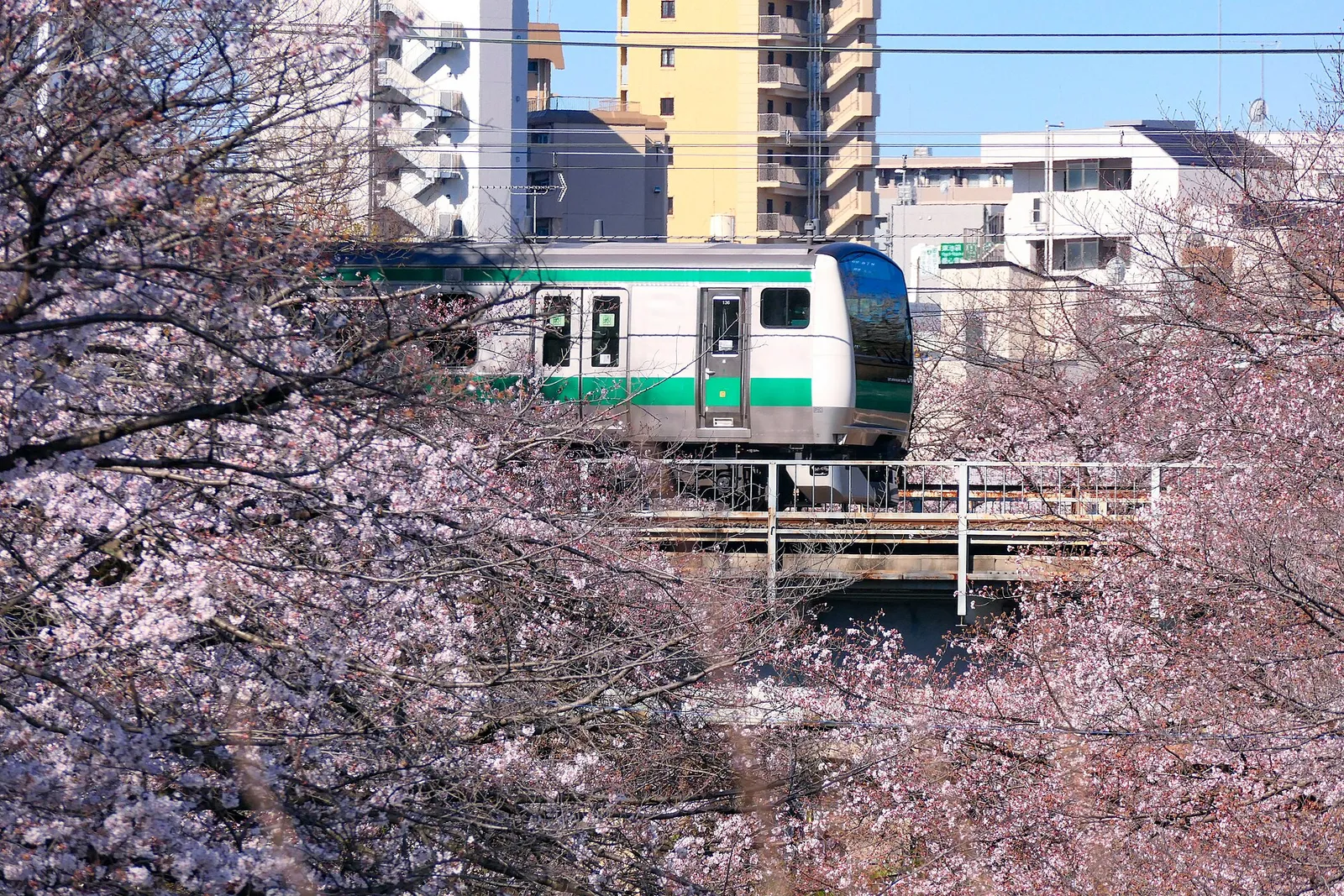

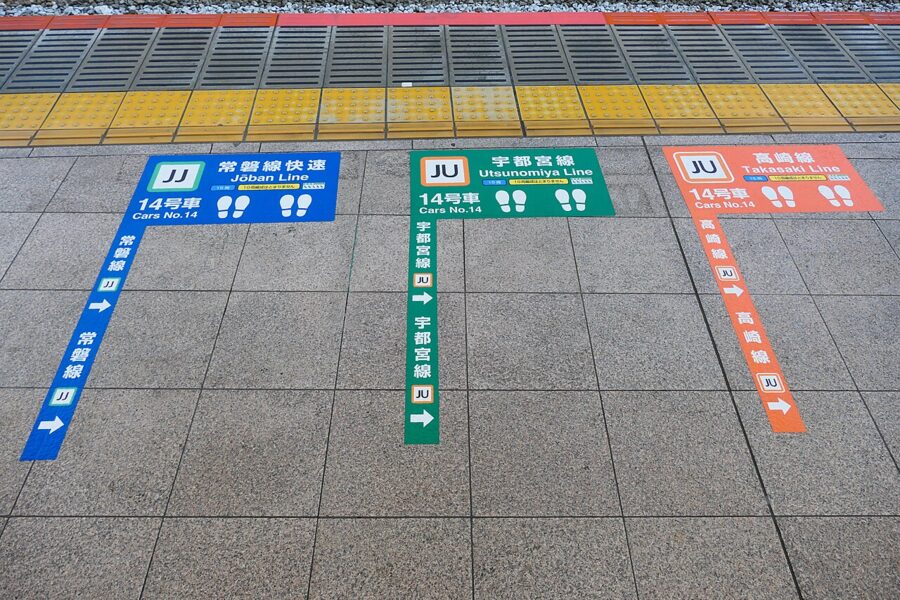
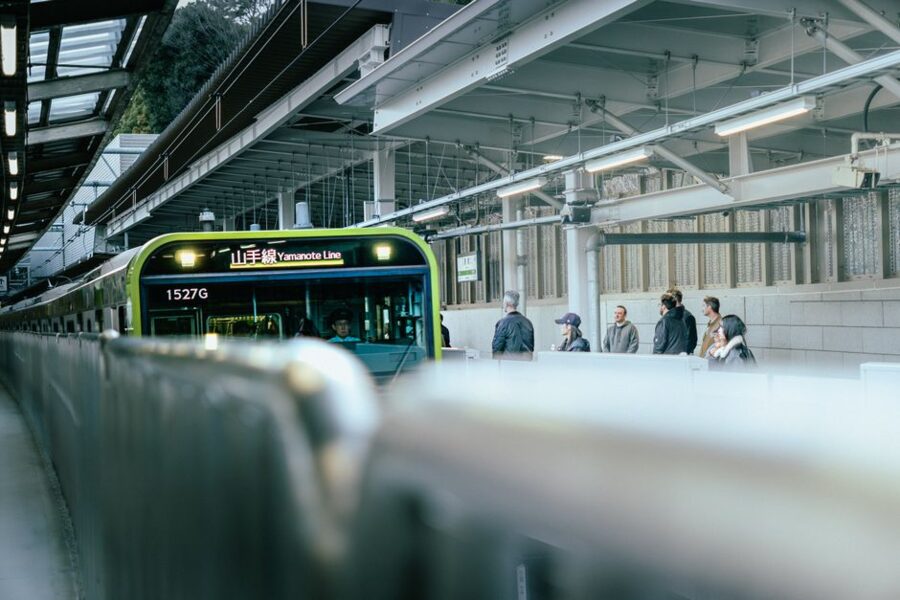
At 08:15 on a weekday the platform tells you where to stand before anyone else does. Painted on the floor at every door position are lanes, arrows and car numbers, sometimes three sets side by side for three different lines, and the people already waiting have sorted themselves into them two or three deep. Nobody stands in front of the door itself, because that is where the people getting off will come out.
The train arrives, the doors open, and the queue parts to either side. Only when the last passenger is off does the first person in each lane step aboard. The doors close, often on the second attempt, and the next train is two or three minutes behind.
Most Tokyo train etiquette is a version of that moment: keep out of the flow, keep quiet, keep your things to yourself. Very little of it is law, and staff rarely enforce any of it. It works because almost everyone does it.



Rush hour: when, where, and how to stay out of it
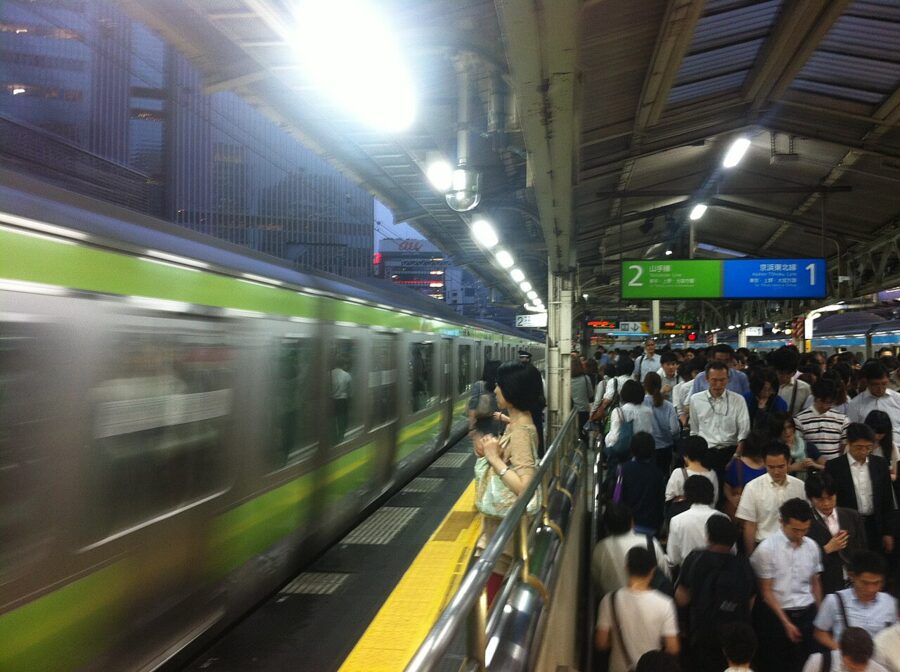
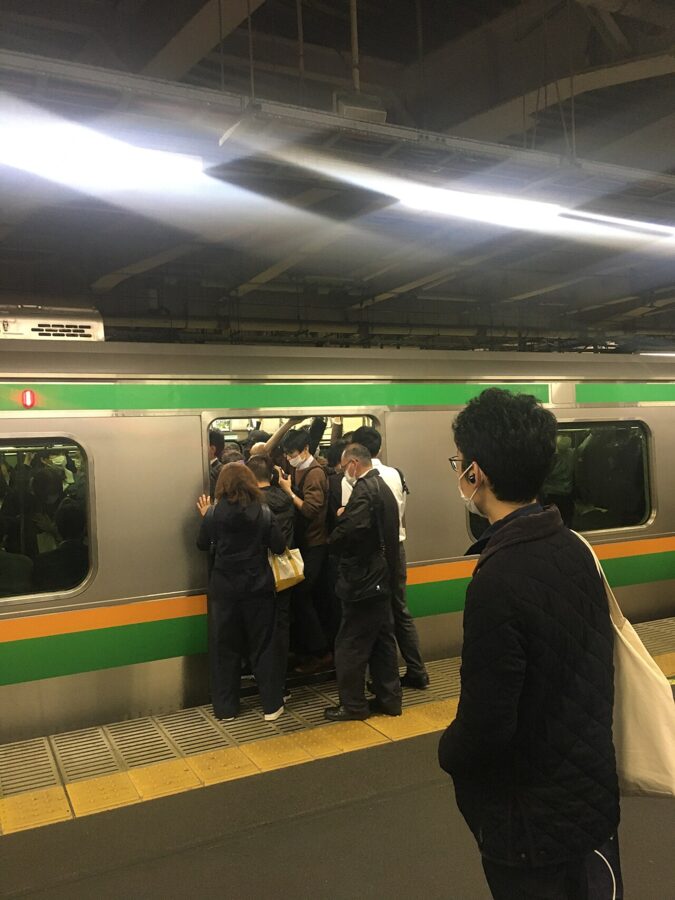
The morning rush is the one that matters. On weekdays trains heading into central Tokyo are full from about 07:00, and the government’s yearly survey measures each line’s busiest single hour, which on most Tokyo lines starts between 07:00 and 08:00. By 09:30 the crush has eased, and by 10:00 most trains have seats. Trains heading out of the centre in the morning are far emptier.
The evening rush is spread thinner. Offices empty from 17:30, but plenty of people work late or eat out first, so some lines stay busy past 21:00. Weekends and public holidays have no commuter rush at all.
The transport ministry publishes the figures each summer. Its congestion survey for fiscal 2025, released on 28 July 2026, put the average peak-hour load on Tokyo’s main lines at 143 per cent, up from 139. A hundred per cent means every seat, strap and door rail taken. On the ministry’s own yardstick, at 150 per cent you can open a newspaper, at 200 you are pressed against your neighbours, and at 250 you cannot move.
| Line | Busiest section (morning, inbound) | Peak hour, FY2025 |
|---|---|---|
| Nippori-Toneri Liner | Akado-shōgakkōmae to Nishi-Nippori | 176% |
| JR Saikyō Line | Itabashi to Ikebukuro | 167% |
| Tokyo Metro Hibiya Line | Minowa to Iriya | 163% |
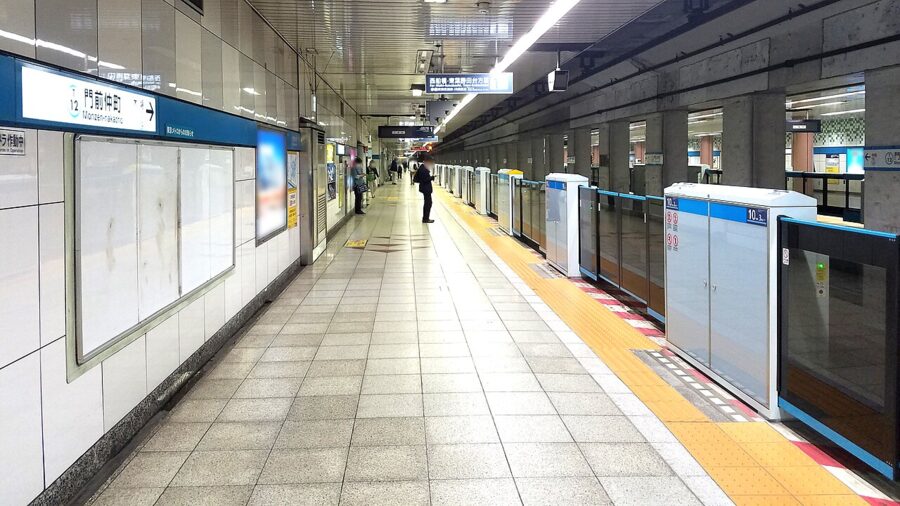
| Tokyo Metro Tōzai Line | Kiba to Monzen-Nakachō | 160% |
| JR Sōbu Line (Rapid) | Shin-Koiwa to Kinshichō | 160% |
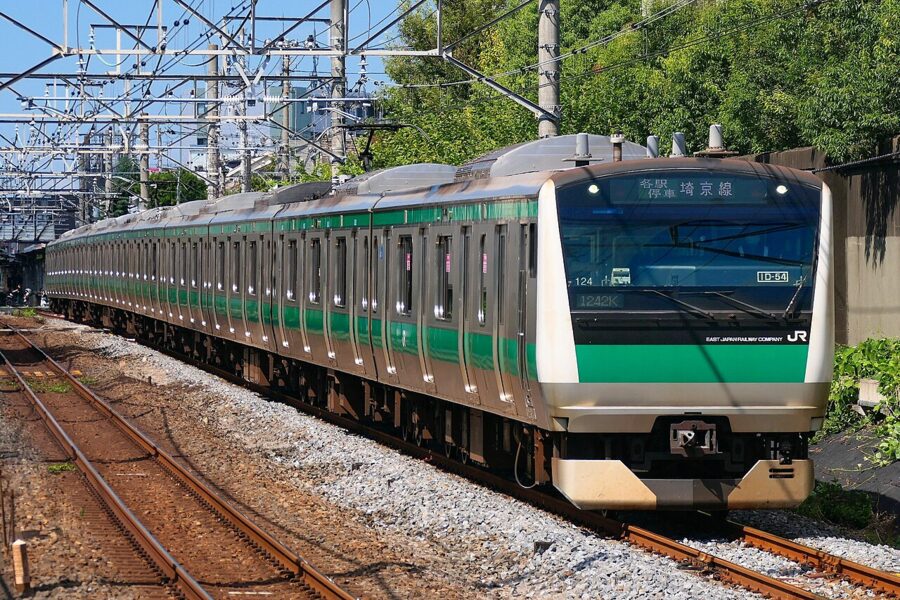
Those are the five most crowded sections in the Tokyo area. The Tōzai Line, which brings commuters from Chiba under eastern Tokyo, was worse before the pandemic: it topped the national table at 199 per cent in the surveys for 2017 and 2018. The Nippori-Toneri Liner is a small automated guideway, which is why it fills so easily.

Avoiding it
Time is the simple answer. Sightseeing rarely needs a train before 09:30, and most museums and shops open at 10:00 anyway. With a suitcase and an early Shinkansen or flight, leave before 07:00 or take a taxi to the station; a full commuter train is no place for a large case.
Direction matters as much. Shinjuku out to Mitaka at 08:00 is comfortable; Mitaka into Shinjuku is not. The Yamanote Line is busy at peak times but no longer among the worst, and on the Tokyo subway the sections in the table are the ones to keep off at 08:00. The cars nearest the stairs at big stations fill first, so walk to the far end of the platform for room.
On the platform: the queue marks and the doors
Every door position on a Tokyo platform is marked on the floor, and where trains of different lengths or lines share a platform there are several sets. Line up in the lane that matches your train. On the Fukutoshin Line, Tokyo Metro warns that the women-only car stops in a different place on ten-car and eight-car trains, so on any line where lengths vary, check the departure board for the number of cars.
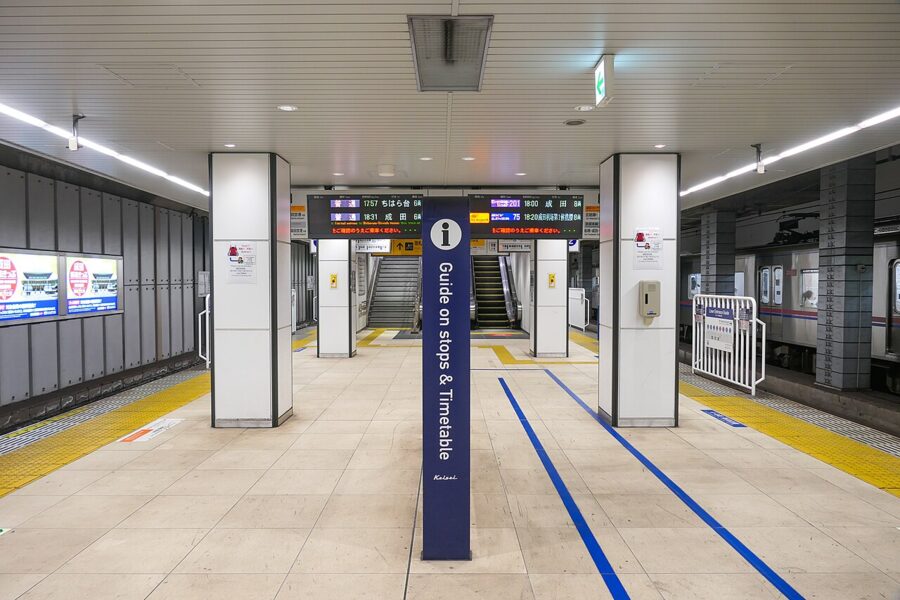

Where trains start their journey, there are often two queues at each door: one for the train in the platform, one for the train after. When the first leaves, the second queue shuffles across. Want a seat? Join the second queue and wait one train.
When the doors open, stand to one side and let everyone off first. Do not run for a closing door, the thing announcements nag about most; the next train is rarely more than a few minutes away. Once aboard, move down the car rather than stopping just inside the doors.
That last point is worth more than it sounds. In the Japan Private Railways Association’s annual survey of what annoys passengers, published on 19 December 2025 from 5,202 responses, standing in the doorway and blocking it came fourth on its first appearance. Commuters call such a person a door jizō, after the stone statues by the roadside. If you are by the door at a station where people need to get off, step out onto the platform, let them pass, and get back on.

On the train
Bags and backpacks
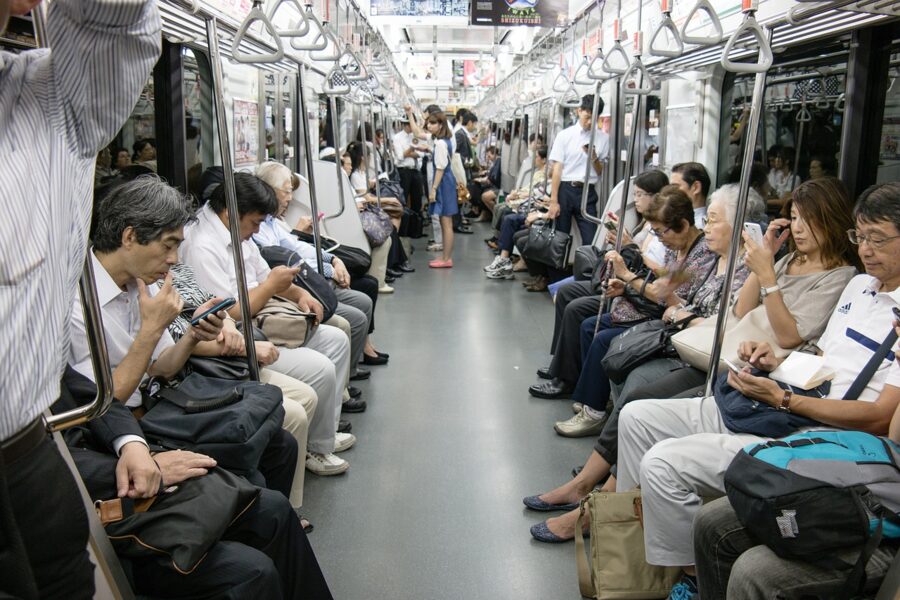
A backpack on your back takes the space of another person and hits whoever is behind you every time the train brakes. In a crowded car, hold it in front of you, low, or put it on the overhead rack. JR East asks passengers to use the rack when trains are crowded, and to keep anything too big for it out of the aisle.
Suitcases are the real problem, because commuter trains have nowhere to put them. Out of the peak, stand with yours at the end of the car and keep a hand on it. In the peak, avoid it if you can: airport trains and the Shinkansen have proper space (and the Shinkansen its own rules for big cases), and hotels will send bags ahead by courier.
Phones and noise
Phones go on silent, which Japanese signs call manner mode (マナーモード). Messages, games and videos with headphones are fine; talking is not. Tokyo Metro’s guidance for passengers asks you to set the phone to silent and not to talk on it, and every line asks the same. If a call cannot wait, get off and ring back from the platform.
Near the priority seats you are also asked to switch the phone off when the train is crowded, for people with pacemakers. The request was relaxed in 2015 from “always” to “when crowded”, and few follow it strictly, but it is still on the stickers. Keep conversation low: friends talking at normal volume are the loudest thing in the car.
Priority seats
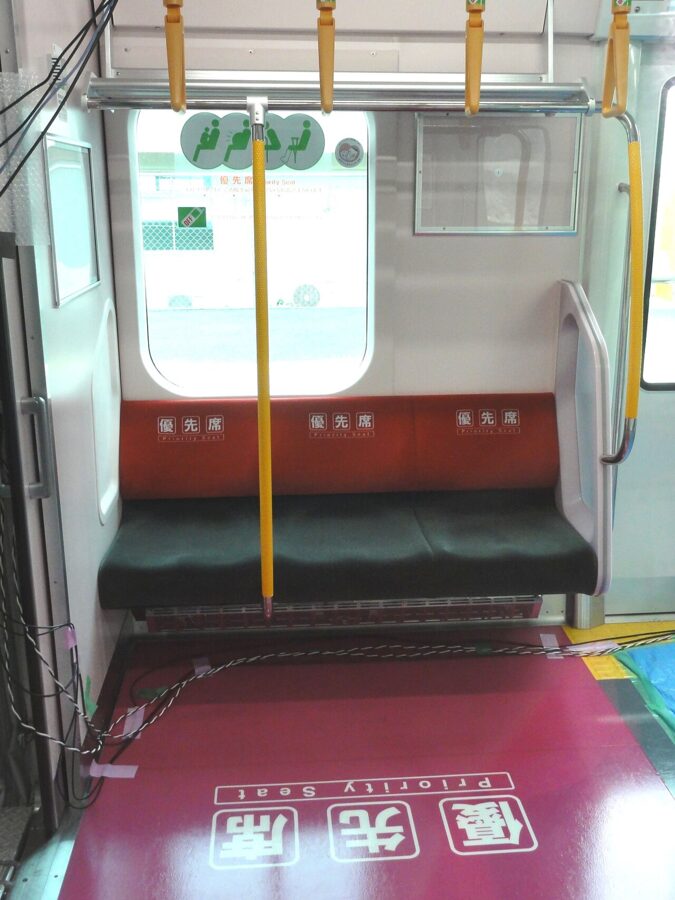
JR East puts priority seats (優先席, yūsenseki) in every car of its ordinary trains, marked with stickers and often with different coloured seats and grab poles. They are for older people, people with disabilities, pregnant women and anyone with a small child. Anybody may sit in them when they are free, but get up as soon as someone who needs one appears.
Two badges help. The Help Mark, a red tag with a white cross and heart, is carried by people whose needs are not visible, and JR East posts Help Mark stickers by its priority seats. The Maternity Mark, a pink keyring, is given free at Tokyo Metro station offices to expectant and nursing mothers. If you see either, offer the seat.

Women-only cars
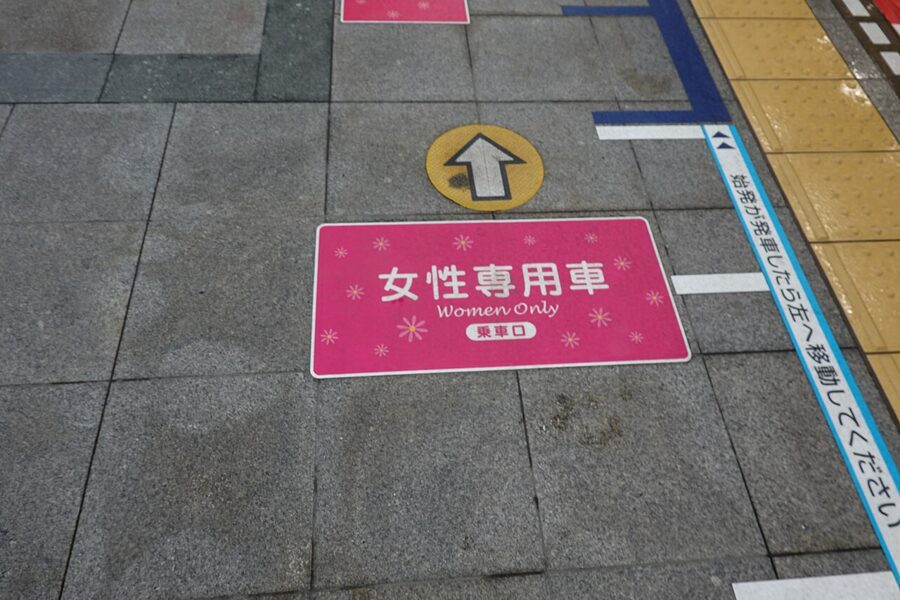
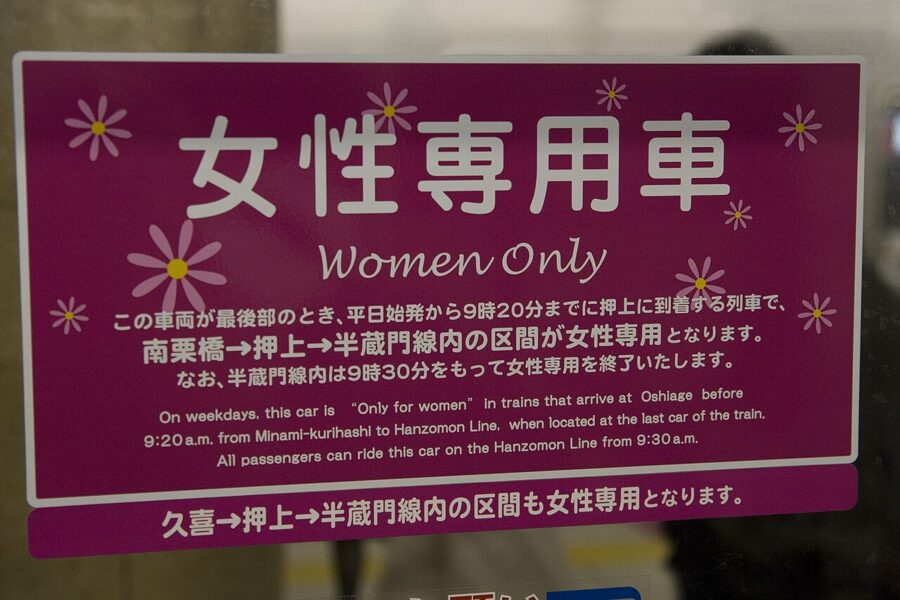
On weekday mornings one car on many lines is set aside for women, a response to groping in the crush. Children of primary school age and younger, passengers with disabilities and their carers may also ride. Pink stickers on the windows and pink signs on the platform mark it, and it becomes an ordinary car at a fixed time. JR East’s wording is a request for cooperation rather than a law, but a man who boards by mistake should move along at the next stop.
According to Tokyo Metro’s women-only car page, six of its nine lines run them (as of November 2026):
- Hibiya Line: trains from Kita-Senju from 07:30, ending at 09:00.
- Tōzai Line: trains from Nishi-Funabashi (and Myōden) from 06:57, ending at 09:00.
- Chiyoda Line: the whole line, both directions, from 07:10 until 09:30.
- Yūrakuchō, Hanzōmon and Fukutoshin lines: from the first train until about 09:30.
On JR East’s list, the Chūō Line (Rapid) uses car 1 on Tokyo-bound trains leaving Shinjuku from 07:30 to 09:30, and the Keihin-Tōhoku Line car 3. The Saikyō Line is the one to know: car 10 is women-only southbound from Shinjuku between 07:30 and 09:40, and northbound from Shinjuku from 23:00 until the last train, JR East’s only late-night women-only car.

Eating and drinking
No rule forbids eating on a commuter train, and Tokyo Metro’s list of prohibited things does not mention it. It is still frowned on, especially anything that smells, crunches or drips. Water or tea from a bottle is fine; a can of beer on the Yamanote Line at 18:00 will be noticed.
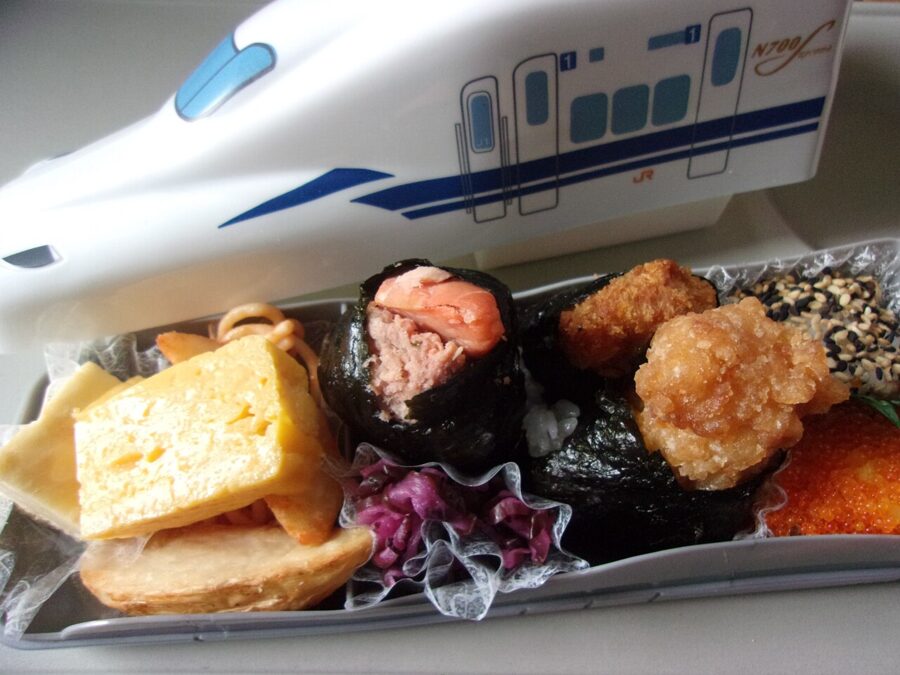
Long-distance trains are the other way round. On the Shinkansen and on reserved-seat limited expresses such as the Romancecar to Hakone, eating is normal, and the station bento (ekiben) is part of the trip. Take your rubbish with you or use the bins at the end of the car.

Coughs, seats and smaller things
Top of that same 2025 survey, for the second year running, was coughing or sneezing without regard for others. Wear a mask if you have a cold; plenty of people do. On the long bench seats, keep your knees together and your bag on your lap, so that seven people fit where seven are meant to.
Escalators: stand on the left, or stand still
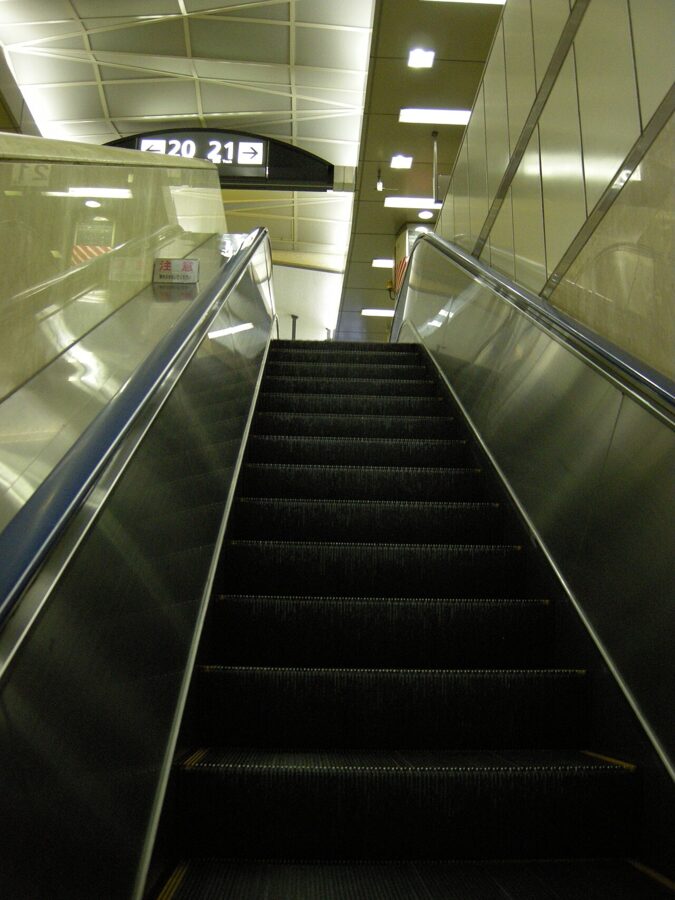
Tokyo stands on the left and walks up the right; Osaka does the opposite. On most station escalators there is a neat line on the left and a gap on the right, and if you stand on the right in the rush someone behind you will sigh.
The railways would rather everyone stood still. Each summer they ask people not to walk on escalators and to hold the handrail; the 2026 campaign, announced by Tokyo Metro with 57 other railway operators, ran from 21 July to 31 August. Their reasons are falls, collisions, and passengers who can only hold one handrail and need the other side.
Neighbouring Saitama Prefecture made standing still an obligation by ordinance in October 2021, and Nagoya followed in October 2023, both without penalties. In Tokyo it remains a request, and the custom has barely moved. Stand on the left, hold the rail, and never walk up the right with a suitcase.

The last train and what happens after
Tokyo’s trains do not run all night. Most lines send their last trains from the centre between about midnight and 01:00, and first trains start from around 04:30 to 05:00. The last train on your own line is not the one that matters: the last connection onto it can leave twenty or thirty minutes earlier. Look up the last train (終電, shūden) for the whole journey in a journey planner before the evening starts.
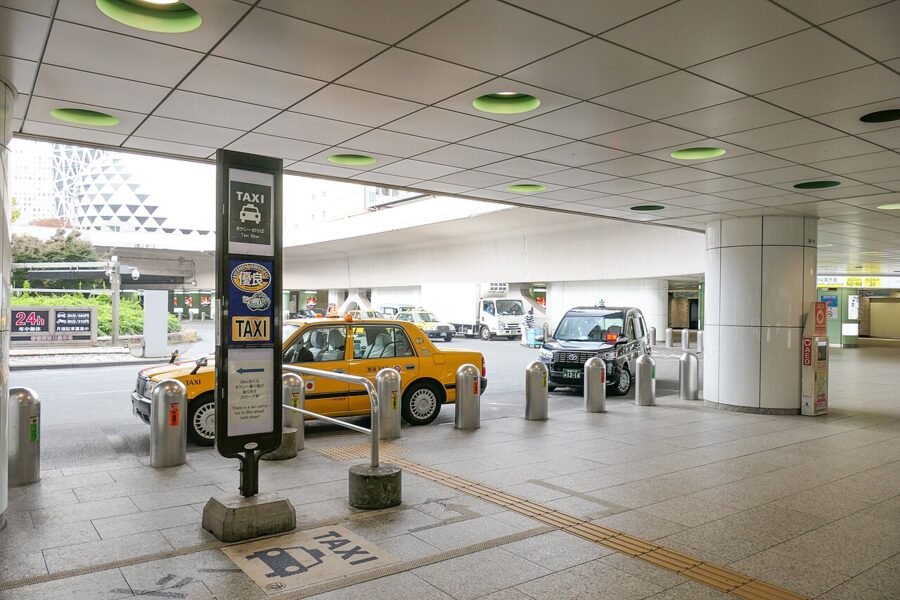
Miss it, and there are three choices. A taxi is the obvious one: from 20 April 2026 the base fare in central Tokyo is ¥500 (about US$3) for the first 1.0 km, with a late-night surcharge between 22:00 and 05:00, so a cross-city ride after midnight runs to several thousand yen. Every big station has a taxi stand, and the queues at Shinjuku and Shibuya after the last train are long.

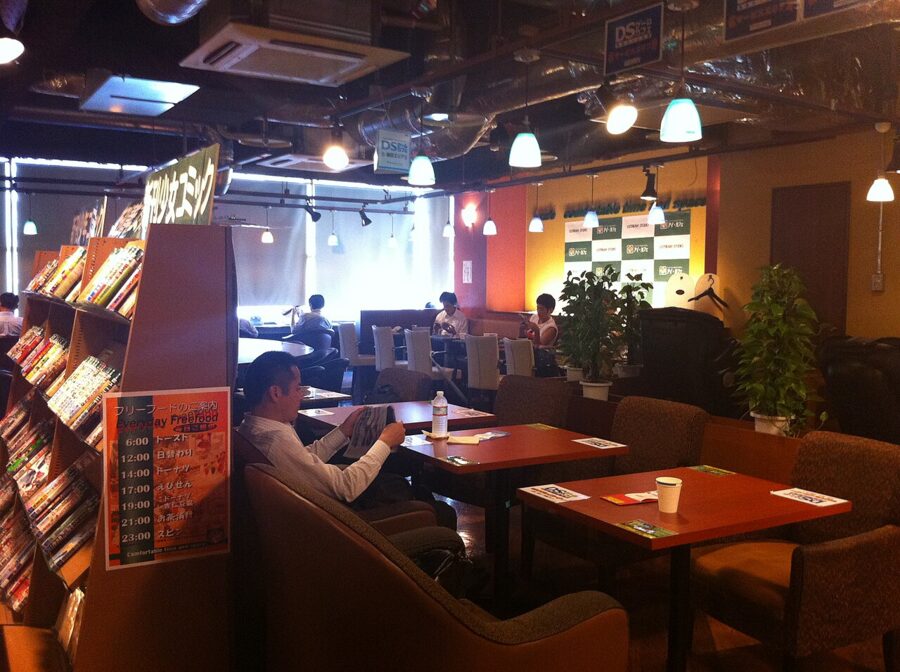
The second is to wait for the first train. Manga and internet cafés near the big stations stay open all night and rent small booths with a reclining chair or a flat mat, by the hour or as a night package. Bring your passport: a Tokyo ordinance requires them to check every customer’s identity, and the Metropolitan Police guidance names the passport for foreign visitors. Karaoke boxes and all-night restaurants are the other places to sit out the hours.

The third is to walk, which in central Tokyo is more practical than it sounds. Shibuya to Shinjuku is under an hour on foot, along lit streets that are safe at 02:00.
Delays, suspensions and the delay certificate
Tokyo trains do run late, usually by a minute or two, sometimes by much more. Strikes are not something Tokyo commuters plan around. Long delays have a short list of causes, and the announcements use the same few words for them.
The hardest is jinshin jiko (人身事故): a person has been hit by a train, very often a suicide, and the line stops for an hour or more. Smaller stoppages come from someone on the tracks, a passenger taken ill or an emergency button. Typhoons bring planned suspensions (計画運休, keikaku unkyū) announced the day before, a few centimetres of snow slows the whole network, and every earthquake stops trains while the track is checked.
When a line stops, operators usually arrange furikae yusō (振替輸送): you may take another company’s line at no extra cost. As Tokyu’s page on alternative transport explains, that covers paper tickets and commuter passes, not trips paid from a Suica or PASMO balance or by credit-card touch, because no fare has yet been charged. With an IC card you leave the stopped line and pay again on the other; taxis are never covered.
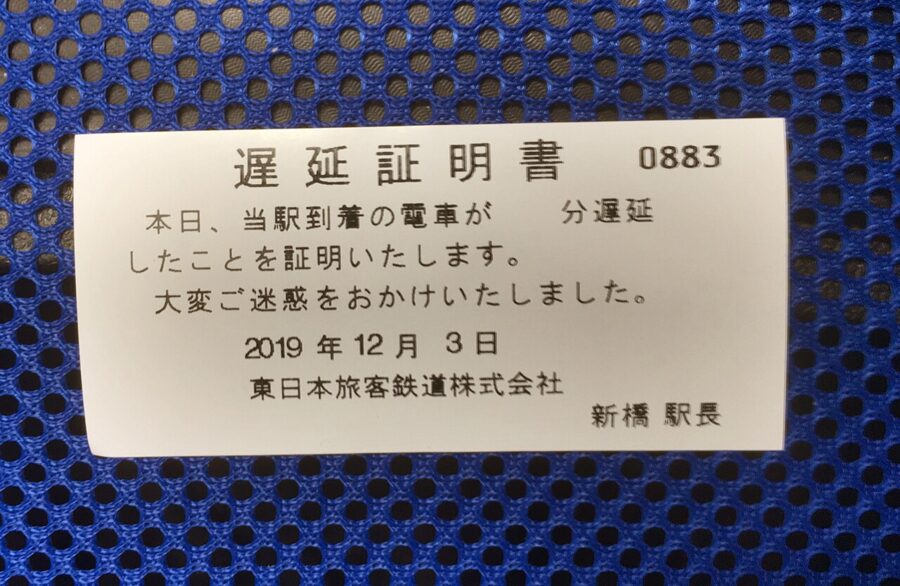
The delay certificate (遅延証明書, chien shōmeisho) is what Japanese commuters show their employer when they arrive late; a visitor might use one with a tour operator or an insurer. Since 1 April 2026 Tokyo Metro issues them only online. Its delay certificate pages cover each line for the past 35 days, in Japanese, listing delays of five minutes or more rounded up to the next ten, in six time bands. JR East publishes its own on its website and app.
Lost property
Things left on Tokyo trains come back more often than you might expect, because almost everything handed in is logged. The trick is finding where it went. Act on the same day, and if the train ran through onto another company’s line, ask that company too.
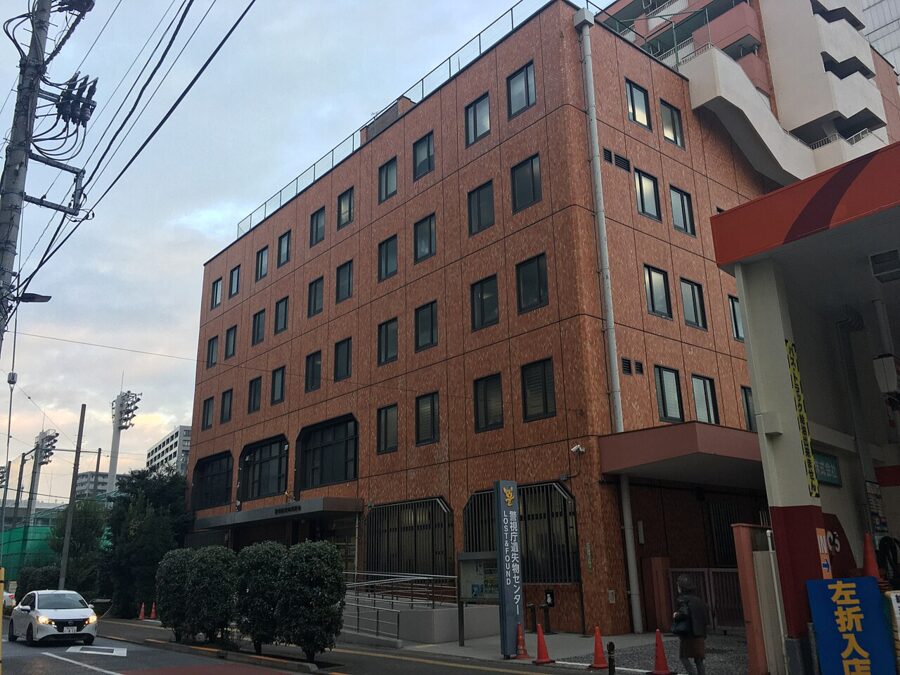
On Tokyo Metro, per its lost property page, an item stays at the station on the day, moves to the lost property office in Iidabashi Station from the next day to the fourth, then goes to the Metropolitan Police Lost and Found Center, which keeps it for three months. A chatbot answers around the clock, or you can phone.
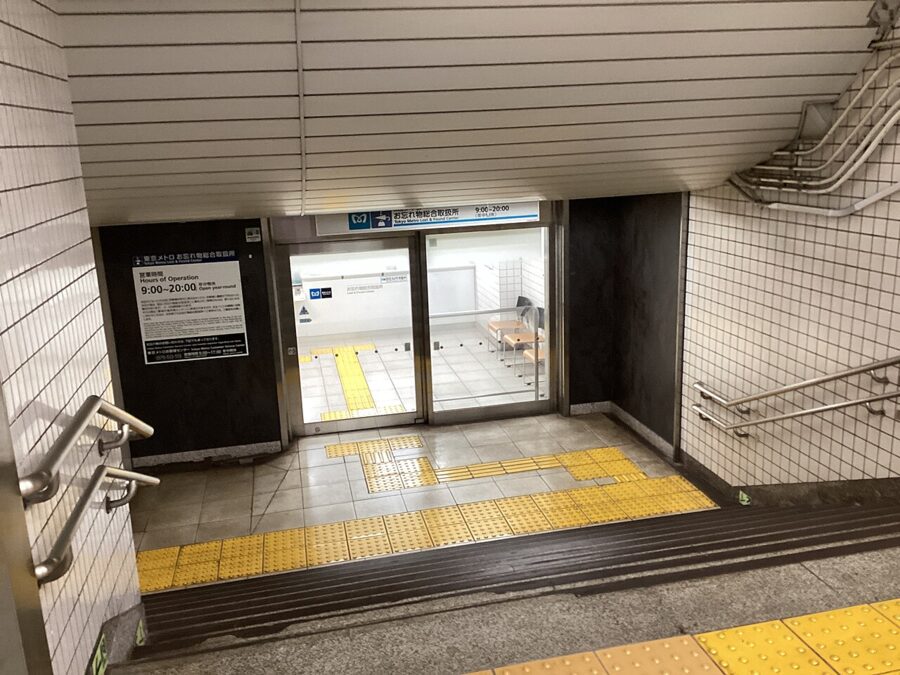
JR East handles enquiries through find chat, an online service it adopted in 2026. You describe the item, ideally with a photo of something similar, and its support centre searches the system; its lost-and-found page says it will only search for things lost within the past three months. Items stay at the station for a period that varies before going to the police.

What the announcements mean
On JR East, Tokyo Metro and Toei trains the recorded announcements come in English as well as Japanese, but platform staff and announcements during a disruption are mostly Japanese only. These are the phrases worth recognising.
| You hear | Japanese | It means |
|---|---|---|
| Kiiroi sen no uchigawa made o-sagari kudasai | 黄色い線の内側までお下がりください | Stand behind the yellow line; a train is coming. |
| Kakekomi jōsha wa o-yame kudasai | 駆け込み乗車はおやめください | Do not run for the train. |
| Tsūka | 通過 | This train does not stop here. |
| Jinshin jiko no eikyō de | 人身事故の影響で | Because a person has been hit by a train. |
| Unten o miawasete orimasu | 運転を見合わせております | Services are suspended. |
| Unten saikai mikomi | 運転再開見込み | Expected time of restart. |
| Furikae yusō o jisshi shite orimasu | 振替輸送を実施しております | Other lines accept tickets for this route. |
| Kyūteisha shimasu | 急停車します | Emergency stop; hold on. |
| Saishū densha | 最終電車 | The last train. |
If an announcement is beyond you, the operators’ apps and websites post the same news in English within minutes, and the departure boards scroll it too.
Back at 08:15, then. Stand in the lane for your train, step aside for the people getting off, take your backpack off and move down the car. Or have another coffee, come back at 09:45, and sit down.