
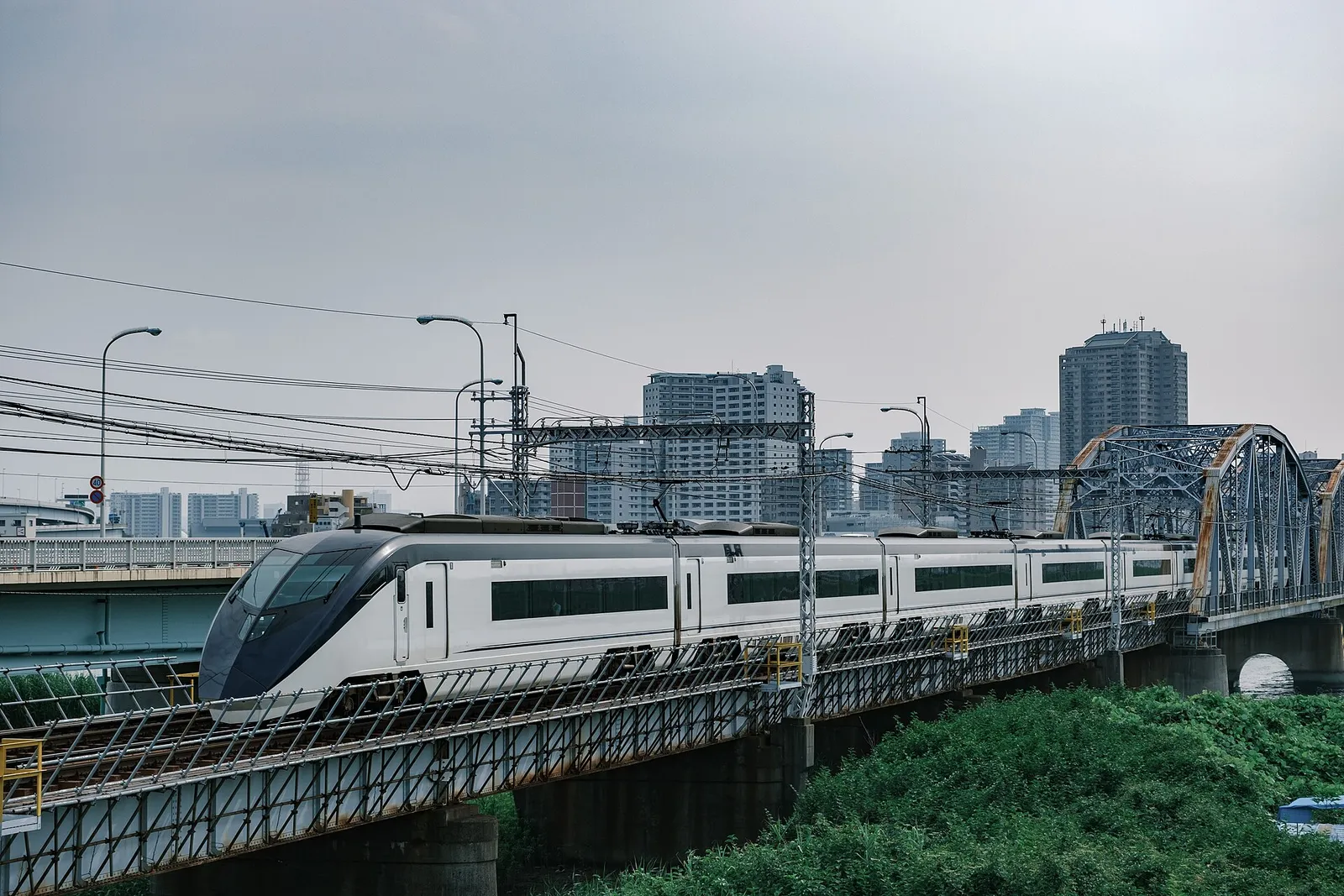

Before you choose a train at Narita, decide which side of Tokyo you are sleeping on. Come out of customs and the signs split almost at once: down to the basement station, where Keisei’s Skyliner and JR’s Narita Express leave from platforms a short walk apart, or out to the kerb, where the buses for Tokyo Station, Ginza and Shinjuku pull in every few minutes.
Answer that and the rest is arithmetic. The Skyliner reaches Nippori in as little as 36 minutes for ¥2,580 (about US$16) and suits Ueno, Asakusa, Akihabara and anywhere on the east side. The Narita Express, the N’EX, charges ¥3,140 (about US$20) to Tokyo Station and a little more to Shinjuku, but it delivers you to the west side without a change. The flat-fare bus does Tokyo Station for ¥1,500 (about US$9) and is often no slower than the cheap trains.
Get it wrong and you spend forty minutes on the Yamanote Line with a suitcase between your knees. Land late and the decision is made for you: on the current timetables the last N’EX leaves Terminal 1 at 21:44, the last Skyliner at 23:00, and after that it is the night bus or a taxi with a five-figure fare.
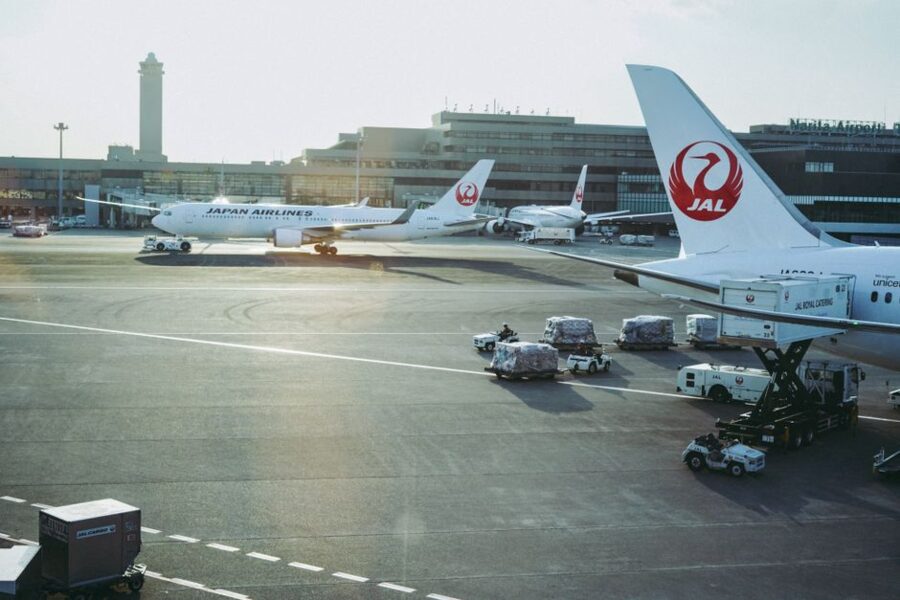
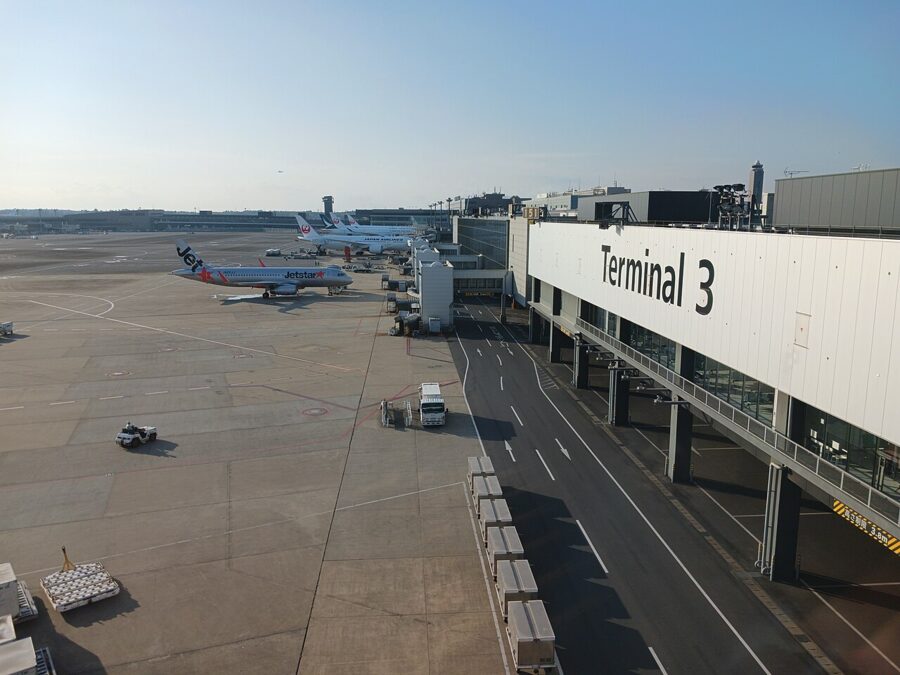
Both railways share two stations. Narita Airport Station (成田空港) sits under Terminal 1, a five-minute walk from arrivals. Terminals 2 and 3 share the second, which JR calls Narita Airport Terminal 2·3 and Keisei calls Airport Terminal 2 (空港第2ビル), five minutes on foot from Terminal 2. Terminal 3, where the low-cost carriers live, has no station of its own: it is a ten-minute walk along the access corridor to Terminal 2, or a short ride on the free terminal shuttle bus.
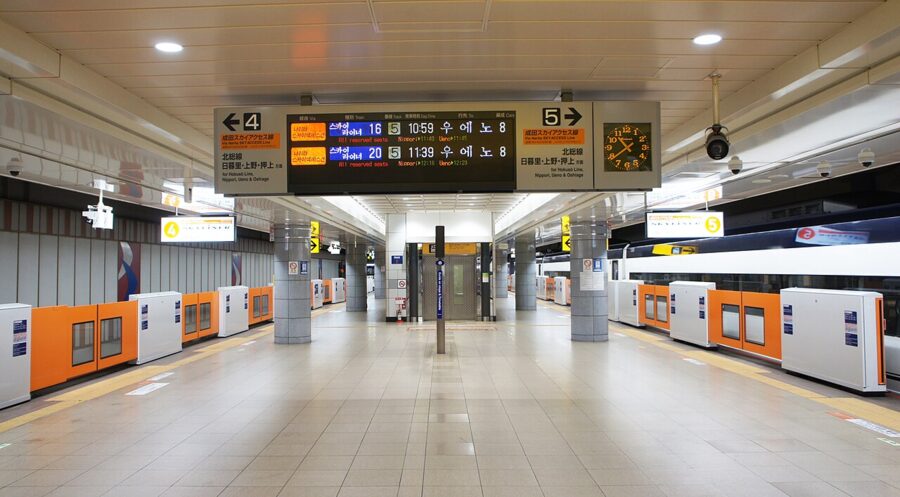

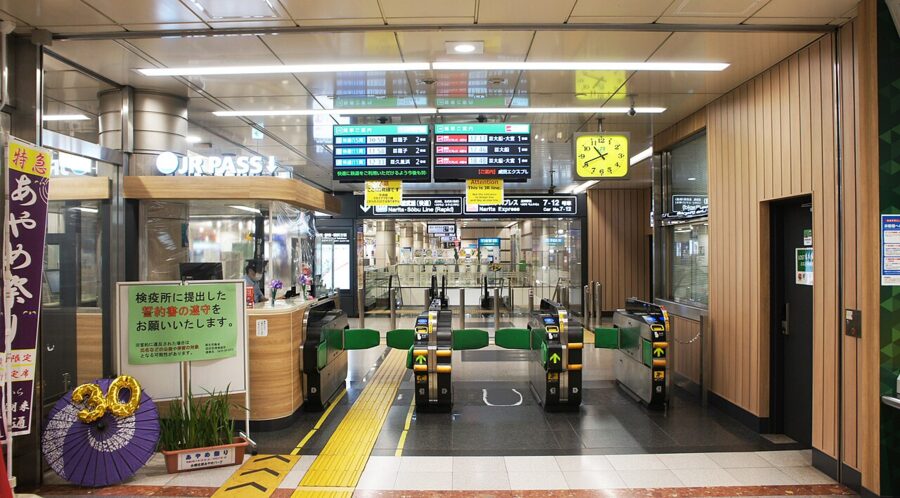
Every train out of Terminal 1 calls at Terminal 2·3 two or three minutes later, so a seat booked from one terminal works from the other. Take yen out on the arrivals floor before you go down: Keisei says its ordinary ticket machines take cash only and that the station level has few cash machines, although Skyliner tickets can go on a card.

The options compared
Fares are adult, one way, from either airport station, as of November 2026. Times are door of the train to door of the train, and the bus times assume ordinary traffic.
| Option | To | Time | Fare | How often |
|---|---|---|---|---|
| Keisei Skyliner | Nippori, Keisei Ueno | 36–53 min | ¥2,580 | About every 20 min |
| JR Narita Express (N’EX) | Tokyo; Shinagawa, Shibuya, Shinjuku; Yokohama | 53 min to Tokyo, 80–100 min to Shinjuku | ¥3,140; ¥3,330; ¥4,480 | Every 30–60 min |
| Keisei Access Express | Nippori, Ueno, or through to Asakusa, Nihombashi, Shimbashi and Haneda | About an hour to Ueno | ¥1,280 to Ueno | About every 40 min |
| Keisei main line limited express | Nippori, Keisei Ueno | About 75 min | ¥1,050 | Frequent, all day |
| JR rapid | Tokyo, then on to Yokohama and Kurihama | About 90 min | ¥1,410 | About hourly |
| Airport Bus TYO-NRT | Tokyo Station, Ginza | 65–90 min | ¥1,500 (¥3,000 after 23:00) | About every 10–20 min |
| Airport Limousine | Shinjuku hotels and stations; Tokyo Station; many more | 80–110 min to Shinjuku | ¥3,600 to Shinjuku; ¥3,100 to Tokyo | About every 20 min to Shinjuku |
| Fixed-fare taxi | Your door | Depends on traffic | ¥29,000–¥31,500 to the central wards, plus tolls | On demand |
Read it by destination, not by speed. The Skyliner usually beats the N’EX by a quarter of an hour, but they end on opposite sides of the city, and the minutes vanish the moment you change trains with a case.
Skyliner or Narita Express
The Skyliner
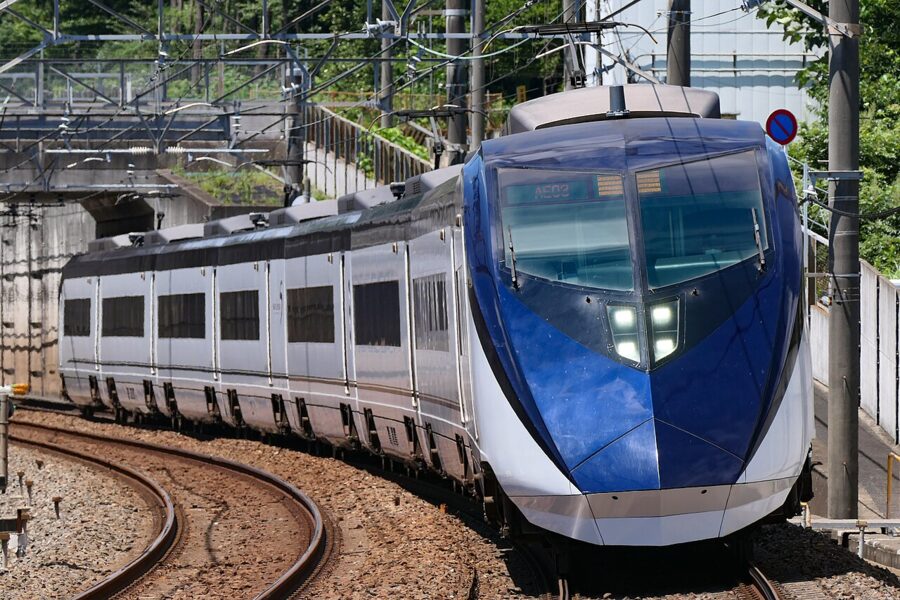

The Keisei Electric Railway runs the Skyliner from both airport stations to Nippori (日暮里) and Keisei Ueno (京成上野), roughly three an hour. The fastest takes 36 minutes from Terminal 2·3 to Nippori and 41 to Ueno; trains that also stop at Aoto and Shin-Kamagaya, and the extra few minutes from Terminal 1, stretch a typical run to about 50 minutes. On a November 2026 weekday the first leaves Terminal 1 at 07:23 and the last at 23:00.
The ¥2,580 is two tickets in one: a ¥1,280 (about US$8) base fare and a ¥1,300 Skyliner seat ticket, as Keisei’s fare page sets out. Tap a Suica or PASMO through the gate and the base fare is a few yen less, but you still buy the seat ticket at the Skyliner counter or machine. Board without one and Keisei adds ¥300 to the seat charge on the train.
That price is about to move. The seat ticket goes up by ¥200 on 13 March 2027, making ¥2,780 (about US$17), and Keisei has applied to raise the base fare in March 2028, which would take the total to ¥3,000, Aviation Wire reported in November; that second step still needs government approval.
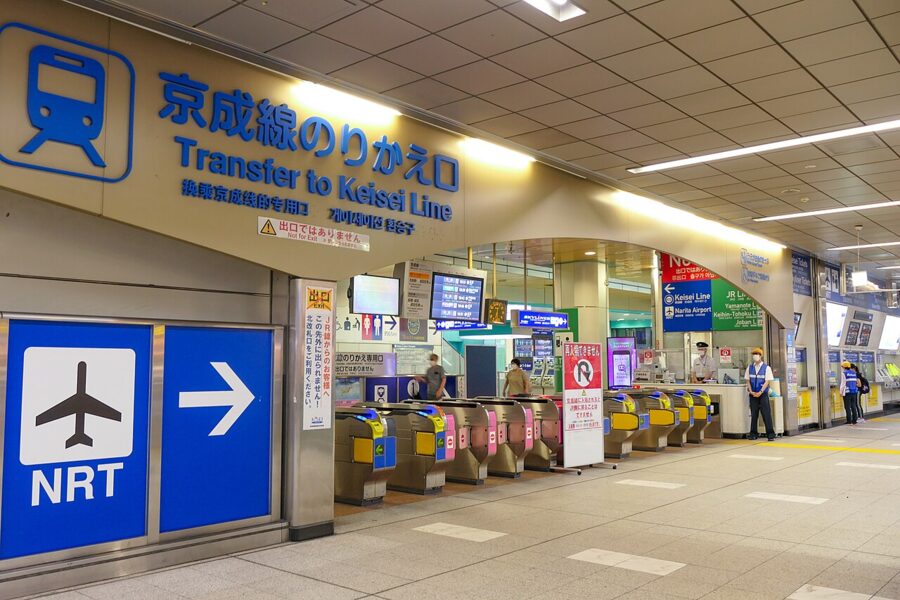

Nippori is the useful stop. Get off there rather than at Ueno if you are changing to JR: the transfer gate is on the floor above the platform and puts you straight onto the Yamanote Line and the Keihin-Tohoku Line. Keisei Ueno, an underground terminus across the road from JR Ueno, suits the hotels around Ueno Park and the Ginza Line, and is a trudge for everything else.
The Narita Express
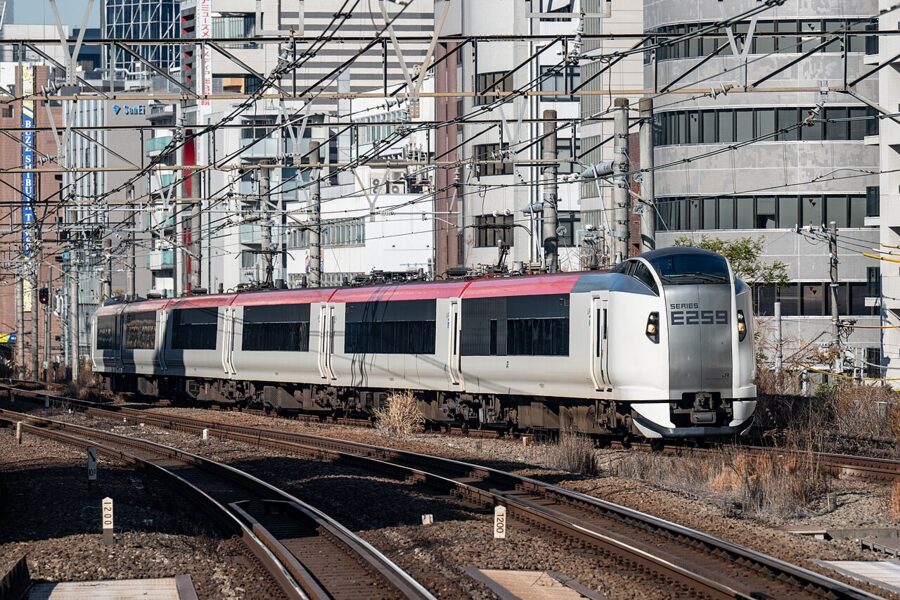

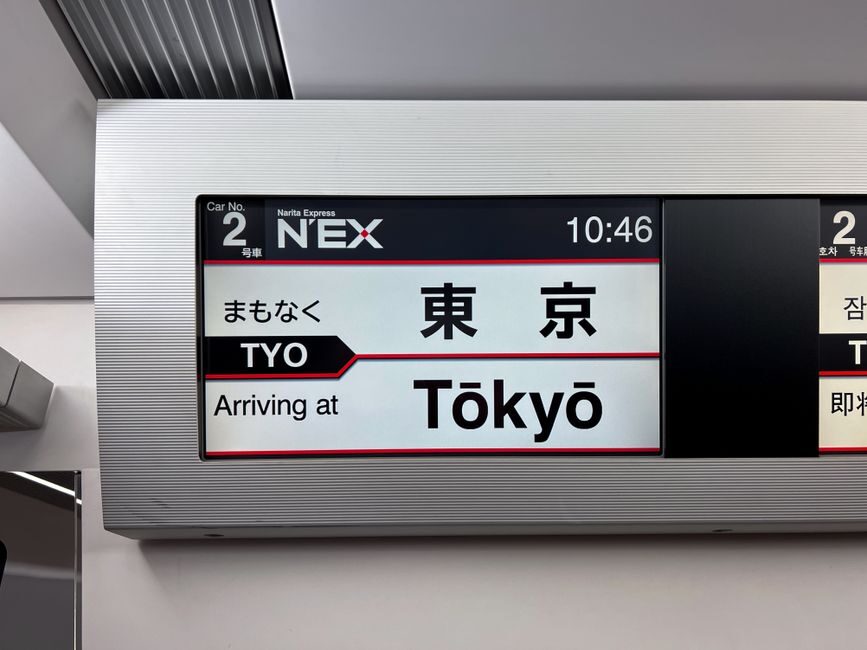
The Narita Express is JR East‘s airport train, worked by E259 series sets. It runs roughly every 30 to 60 minutes, about fifty trains a day counting both directions. The fastest reaches Tokyo Station in 53 minutes, and the trains then go on to Shinagawa, Shibuya and Shinjuku Station, or to Musashi-Kosugi, Yokohama and Ofuna. Shinjuku takes 80 to 100 minutes depending on the train.
The fares went up with JR East’s revision of 14 March 2026. On the N’EX ticket page an ordinary seat costs ¥3,140 to Tokyo, made up of a ¥1,410 base fare and a ¥1,730 limited express ticket, and ¥3,330 (about US$21) to Shinagawa, Shibuya or Shinjuku. Yokohama is ¥4,480 (about US$28). The Green Car, JR’s first class, is ¥3,910 (about US$25) to Tokyo.
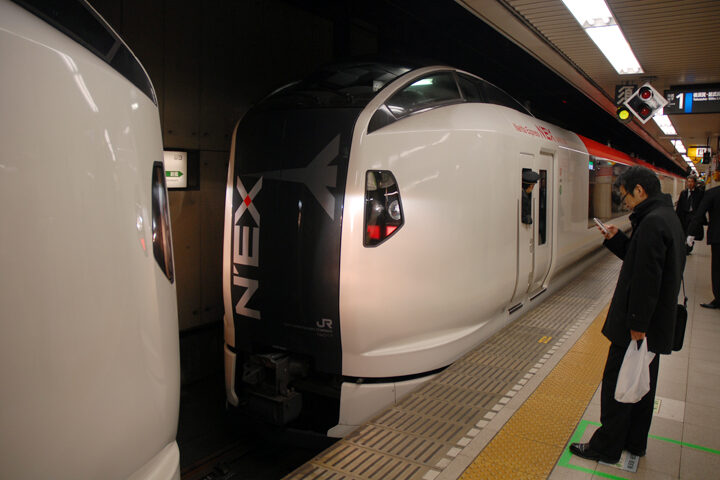

Each car has a luggage area with dial locks, first come, first served; if it is full the case goes at your feet. An unreserved seat ticket costs the same as a reserved one and lets you take any empty ordinary seat. Miss the train you booked because the flight was late and a later N’EX the same day accepts the ticket, without a seat number.
Which one I take
For most of Tokyo the Skyliner wins: cheaper, faster, more frequent and running an hour and a quarter later at night. If your hotel is in Ueno, Asakusa, Yanaka or along the Hibiya or Ginza lines, don’t bother with JR at all.
The N’EX earns its premium in three cases: a hotel in Shinjuku, Shibuya or Yokohama, a Japan Rail Pass that already covers it, or the round-trip ticket below. For Shinjuku the alternative is twenty minutes of Yamanote Line from Nippori with your luggage, and one seat all the way is worth the extra.
The cheap ways
The Access Express
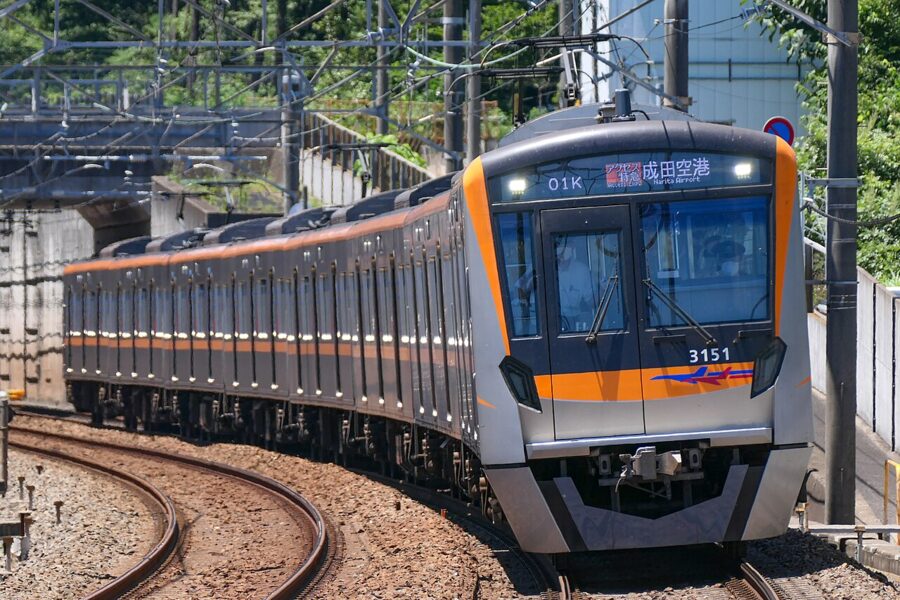

The Access Express (アクセス特急) is the Skyliner’s route without the Skyliner’s seat ticket: ¥1,280 to Nippori or Ueno by paper ticket and a few yen less by IC card, in an ordinary commuter train. It runs about every 40 minutes through the day and takes roughly an hour to Ueno.
Its trick is that many Access Expresses do not go to Ueno at all. At Oshiage they run through onto the Toei Asakusa Line of Tokyo’s subway and call at Asakusa, Nihombashi, Higashi-Ginza and Shimbashi without a change, which makes this the most direct train from Narita to the Ginza end of town. Some continue over Keikyu’s tracks to Haneda Airport, so one train links the two airports; read the destination on the board, because on trains for Nishi-Magome you change at Sengakuji for Shinagawa and beyond.

The Keisei main line and the JR rapid
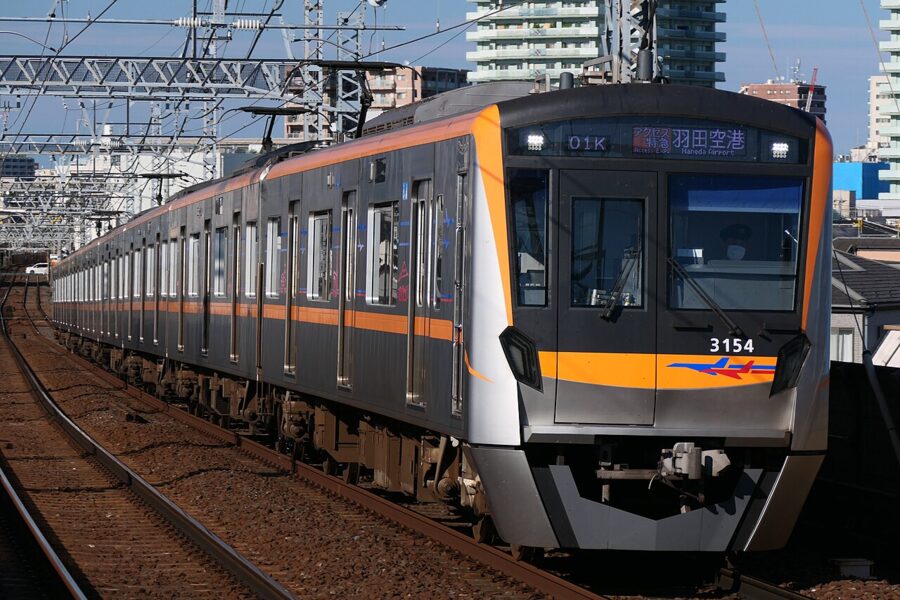
The cheapest train to Ueno is the Keisei main line, the route Keisei built to Narita long before the airport. Its limited expresses (特急) charge ¥1,050 (about US$7) to Nippori or Ueno by ticket, run frequently and take about an hour and a quarter through Funabashi and the Chiba suburbs. Keisei applied in November 2026 to raise that to ¥1,230 from March 2028.
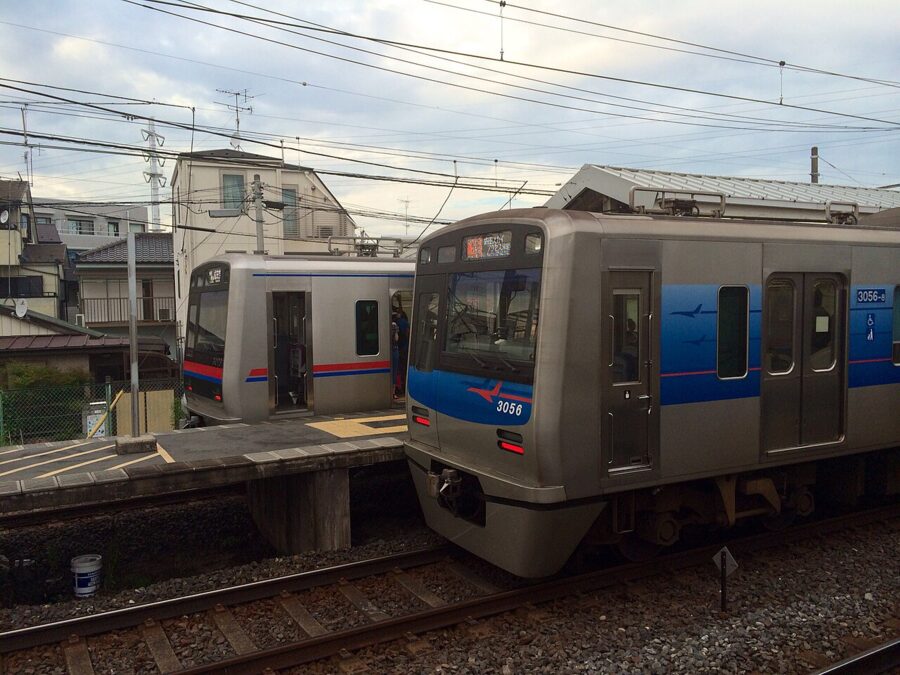

JR’s equivalent is the rapid service on the Sobu and Yokosuka lines, which runs from the airport through Chiba to Tokyo Station and beyond for a ¥1,410 (about US$9) base fare. It takes about an hour and a half. Both are commuter trains: fine at midday with a carry-on, miserable at 08:00 with two cases.
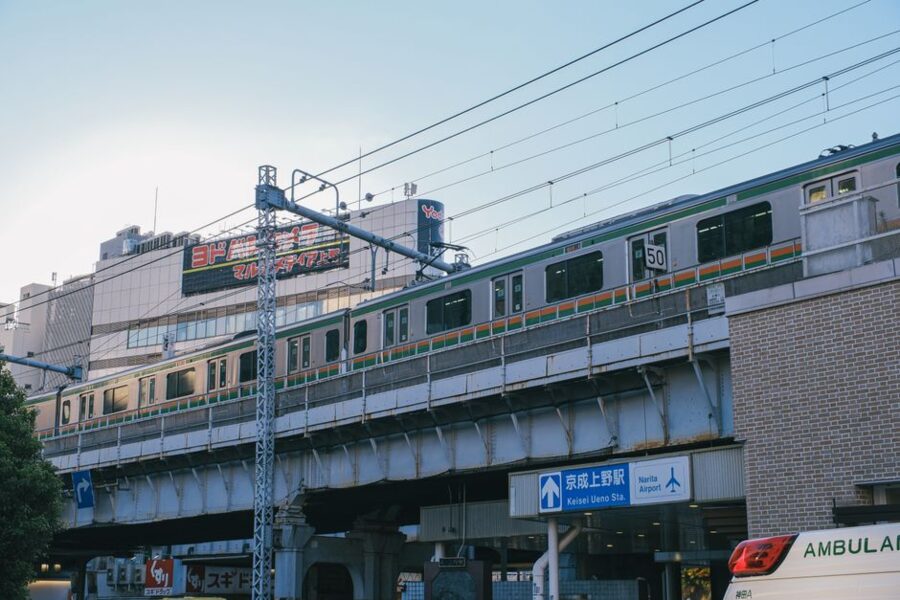
Airport Bus TYO-NRT
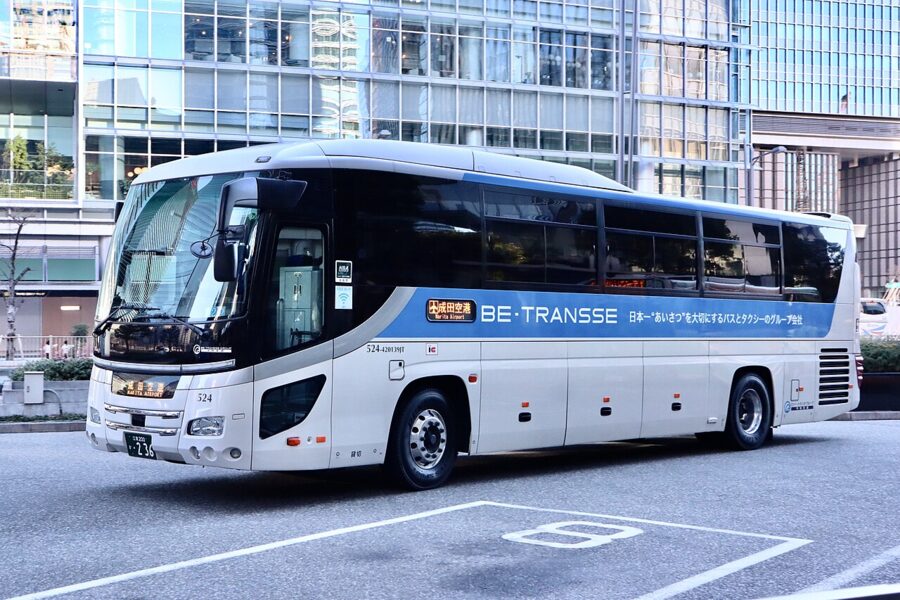

The two cheap buses once sold as THE Access Narita and the Tokyo Shuttle now run as one service, the Airport Bus TYO-NRT (エアポートバス東京・成田), which runs between all three terminals and Tokyo Station, with some buses via Ginza. The adult fare is ¥1,500, child ¥750, and ¥3,000 (about US$19) for buses running between 23:00 and 04:59.
There are no reservations and no seat numbers: at the airport you buy a ticket for a named departure at the low-cost bus counter, by cash, IC card or credit card. Buses from Tokyo leave the JR highway bus stops by the Yaesu South exit and reach Terminal 3 first, timetabled at 62 minutes; on a weekday morning I would allow half an hour more.
Each passenger may put one suitcase in the hold, up to about 158 cm in length, width and depth combined; skis, golf bags and extra cases are not carried. That rule, more than the traffic, is the usual reason to pay for the train.
Airport Limousine
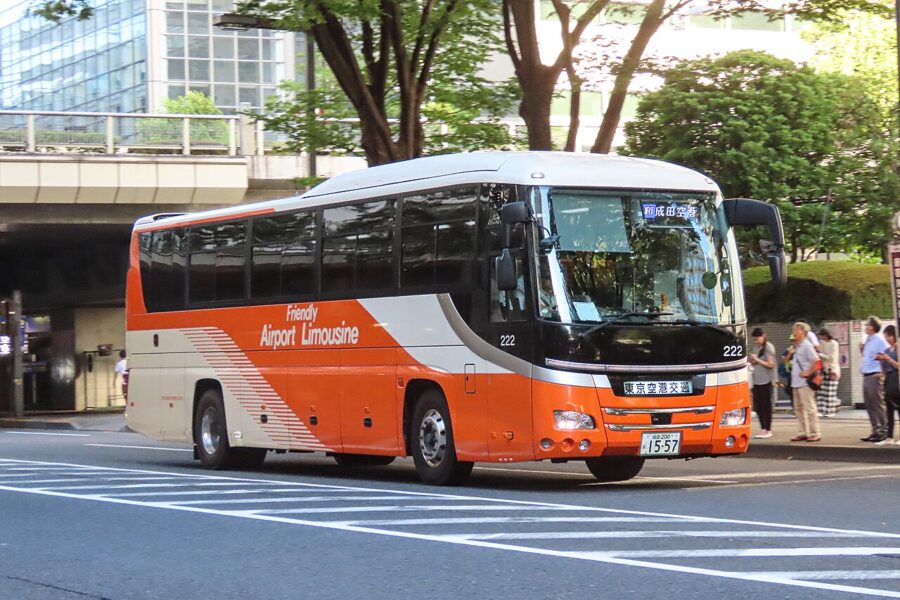

The Airport Limousine is the bus to take when it stops at your hotel. The Shinjuku route costs ¥3,600 (about US$23) and calls at the Shinjuku Expressway Bus Terminal, Shinjuku Station and hotels including the Keio Plaza, Hilton Tokyo, Park Hyatt and Hyatt Regency. The Tokyo Station route is ¥3,100 (about US$20), and seats can be booked online.
Allow nearly two hours to Shinjuku in the morning: the 07:15 from Terminal 1 is timetabled into Shinjuku Station at 09:05. Evenings take about 85 minutes.
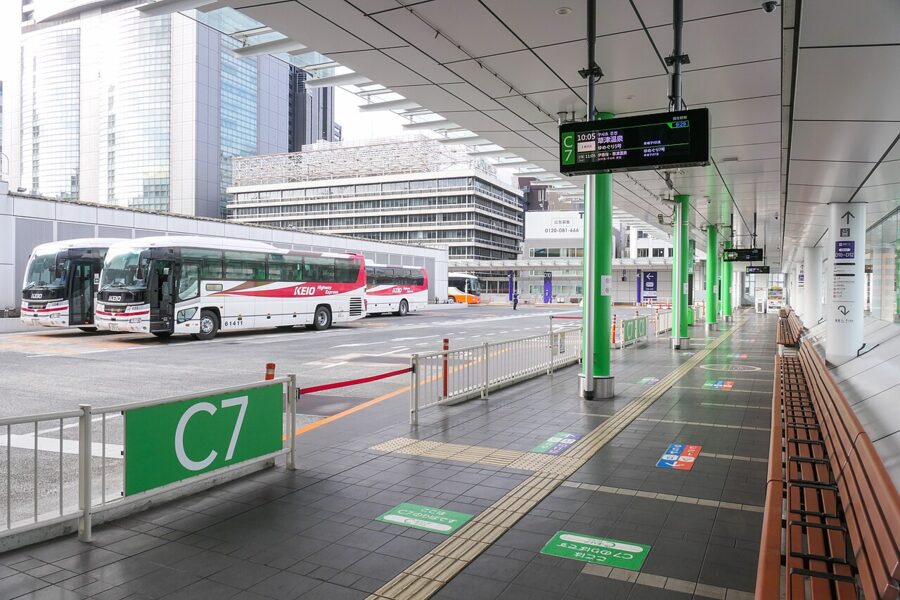

Taxis and their fixed fares
Narita’s fixed-fare taxis charge by zone, with expressway tolls on top. To Chuo, Chiyoda, Taito, Bunkyo and Arakawa wards, which covers Ginza, Tokyo Station, Ueno and Asakusa, the fare is ¥29,000 (about US$180) via the Keiyo Road or ¥31,000 via the Bayshore route. Shinjuku, Shibuya, most of Minato and Ota are ¥31,500 (about US$200) or ¥32,500.
No booking is needed; ask for the fixed fare before you set off, and expect a surcharge between 22:00 and 05:00. For four people with a pile of luggage after the last train it makes sense; for anyone else it is more than ten Skyliner fares for a slower ride.
Tickets for visitors, Suica and the JR Pass
The N’EX Tokyo Round Trip ticket
JR East’s N’EX Tokyo Round Trip ticket is the best deal at Narita if you hold a non-Japanese passport and fly home from Narita. It costs ¥5,200 (about US$33), child ¥2,600, for one N’EX ride into the Tokyo area and one back within 14 days, reserved seats included. The same two rides to Shinjuku cost ¥6,660 bought separately.
The first ride must be from the airport, the two rides need not use the same Tokyo station, and the area runs to Yokohama and Ofuna. You can change from the N’EX to other JR lines inside the area, but once you go out through the gates that ride is finished.
Buy it online or at the airport, and collect it at the Terminal 1 or Terminal 2·3 station with your passport: the JR EAST Travel Service Centers open from 08:30 (to 19:00 at Terminal 1, 20:00 at Terminal 2·3), the ticket offices and passport-reading machines 06:30 to 21:45.
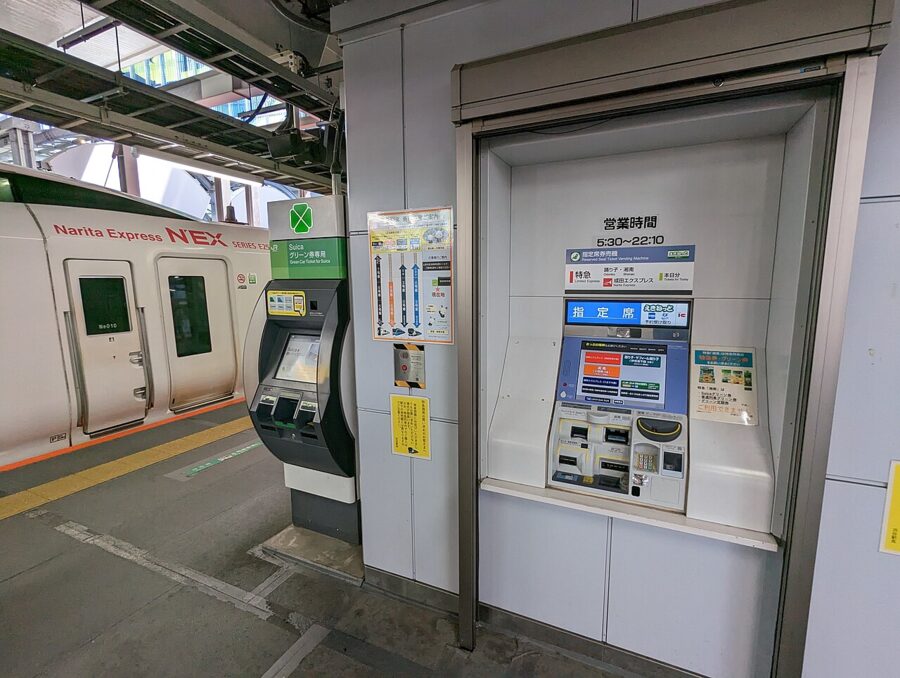
Skyliner discount tickets
Keisei answers with its own: the Skyliner Discount Ticket, bought online or through travel agents, is ¥2,310 (about US$15) one way and ¥4,500 (about US$28) return, against ¥2,580 and ¥5,160 at the counter. Return tickets can only be exchanged at the two airport stations, so collect yours on arrival.
Keisei also bundles the Skyliner with the Tokyo Subway Ticket, 24 to 72 hours of unlimited Tokyo Metro and Toei travel. Worth it if you will ride the subway hard; holders cannot use the Nippori transfer gate and must go on to Ueno.
Suica and PASMO
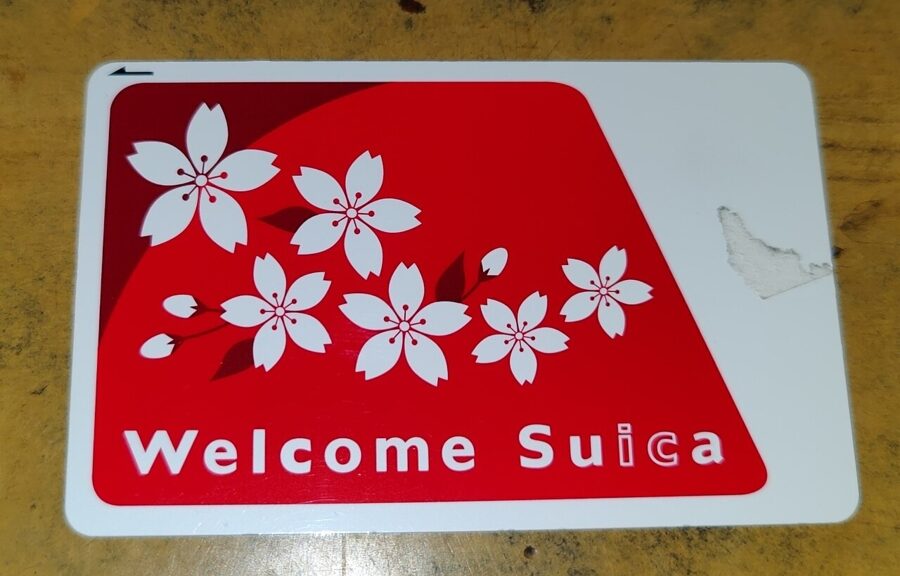
An IC card pays the base fare on all the trains here, and the TYO-NRT fare too. The N’EX and the Skyliner still need their supplements on top. Both airport stations sell the cards, Welcome Suica on the JR side and PASMO on the Keisei side; which of the Suica and PASMO cards suits you depends on your phone and your stay.

The Japan Rail Pass
The Japan Rail Pass covers the N’EX, including a free reserved seat, and the JR rapid service; it does not cover the Skyliner, the Access Express or any Keisei train. On the official price list a seven-day ordinary pass costs ¥50,000 (about US$315) bought on the official site, or ¥53,000 through an overseas agent.
Don’t start it at the airport unless you are about to use it hard. A pass that begins the day you land pays for one ¥3,140 train; for a week in Tokyo and then Kyoto, take the Skyliner or the round-trip ticket now and start the pass the day you board the Shinkansen.
Arriving late
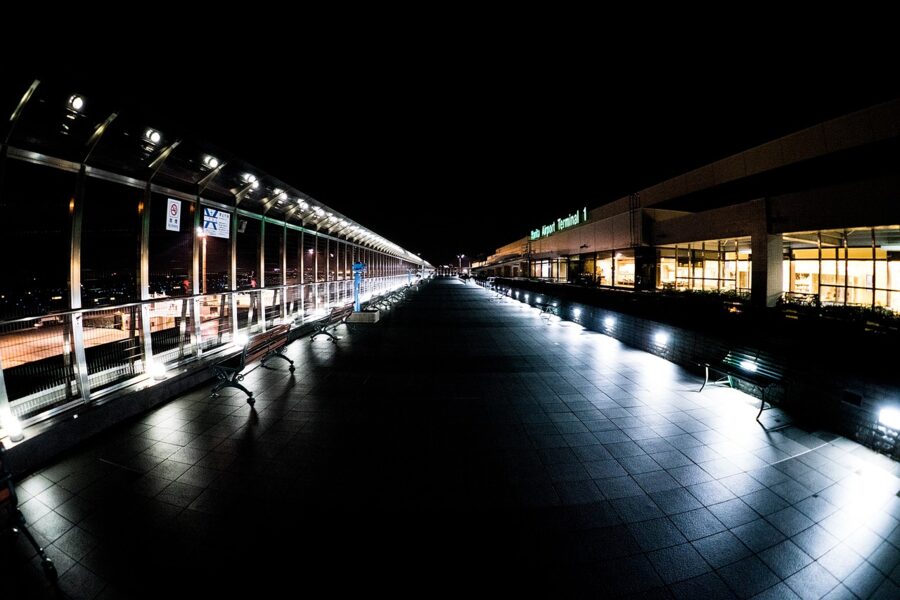
The last departures, on the timetables in force in late 2026:
- Narita Express: 21:44 from Terminal 1, reaching Tokyo at 22:37 and Shinjuku at 23:12.
- Skyliner: 23:00 from Terminal 1, every twenty minutes until then.
- Access Express: 22:04 from Terminal 1 to Ueno; the 23:08 goes only as far as Keisei Takasago.
- Airport Limousine to Shinjuku: 23:05 from Terminal 1.
- Airport Bus TYO-NRT: 23:20 from Terminal 3, 23:25 from Terminal 2 and 23:30 from Terminal 1, reaching Tokyo Station at 00:38, at the ¥3,000 night fare.
Weekend and holiday times differ, and the operators revise them, usually in March, so check the day’s timetable before you land. After 23:00 the night bus is the last public transport, paid on board in cash or by IC card. Miss that and it is a fixed-fare taxi or the capsule hotel and rest rooms on the airport’s night and early-morning page.

Going back to Narita
The return is the same choice in reverse, against a check-in deadline and sometimes the morning rush. I aim to reach the terminal two and a half hours before an international flight, which means leaving central Tokyo about four hours before it by bus and three and a half by train; your airline’s own deadline is the figure that counts.
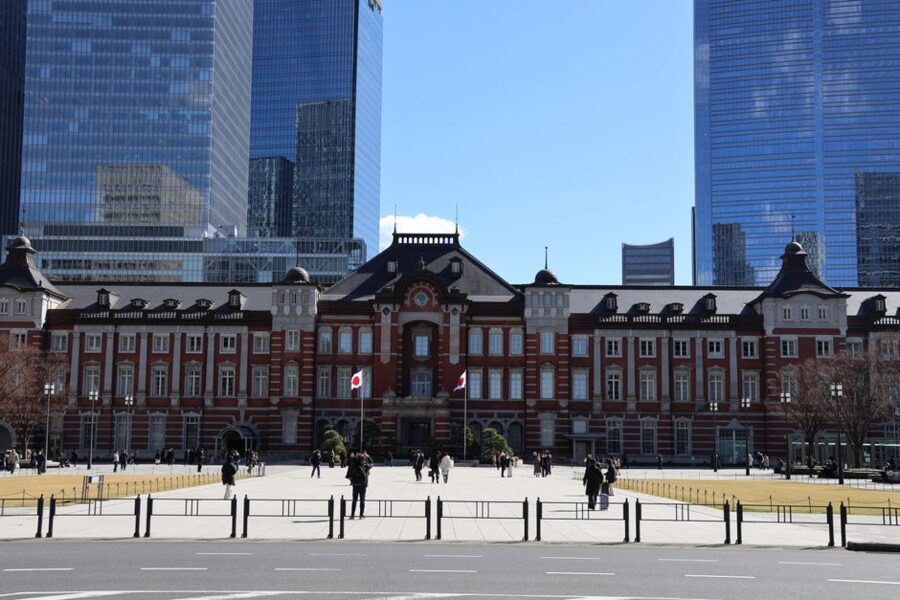
The Skyliner and the N’EX are reserved, so a seat is guaranteed even at 08:00; the hard part is reaching them. From Shinjuku the N’EX spares you the Yamanote Line, and from the east side a Skyliner from Keisei Ueno spares you Nippori’s JR platforms. On a November 2026 weekday the first Skyliner leaves Ueno at 05:20 and the last at 20:20.
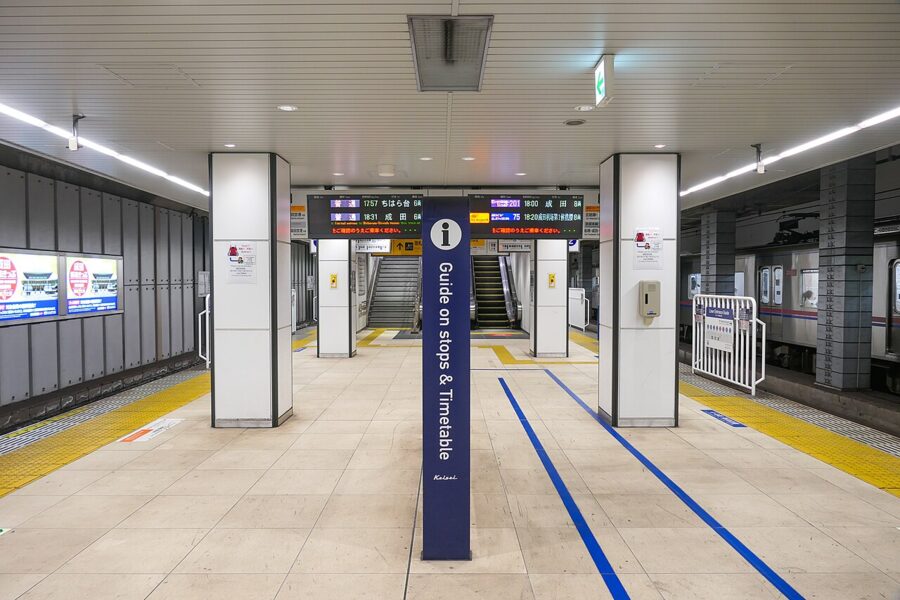

The first TYO-NRT bus leaves Tokyo Station at 05:00 and reaches Terminal 1 at 06:10; the first JR rapid leaves Tokyo at 05:04, the first N’EX at 06:18. For a flight before about 09:00, the bus, the rapid or an early Skyliner from Ueno is the realistic way. Keep luggage off the Access Express, the main line and the JR rapid between about 07:30 and 09:30, or you will be the person with the case in the doorway.
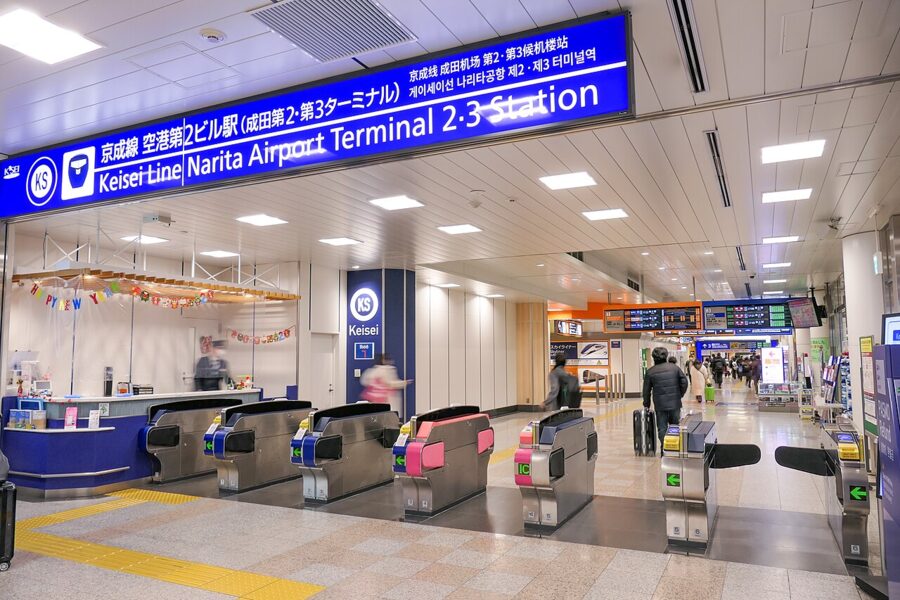

Buy the ticket the day before: both expresses sell seats a month ahead. Then the morning is simple. Skyliner from Ueno if you are east of the Imperial Palace, N’EX from Shinjuku if you are west of it, and the ¥1,500 bus from Tokyo Station if the money matters more than the minutes.