

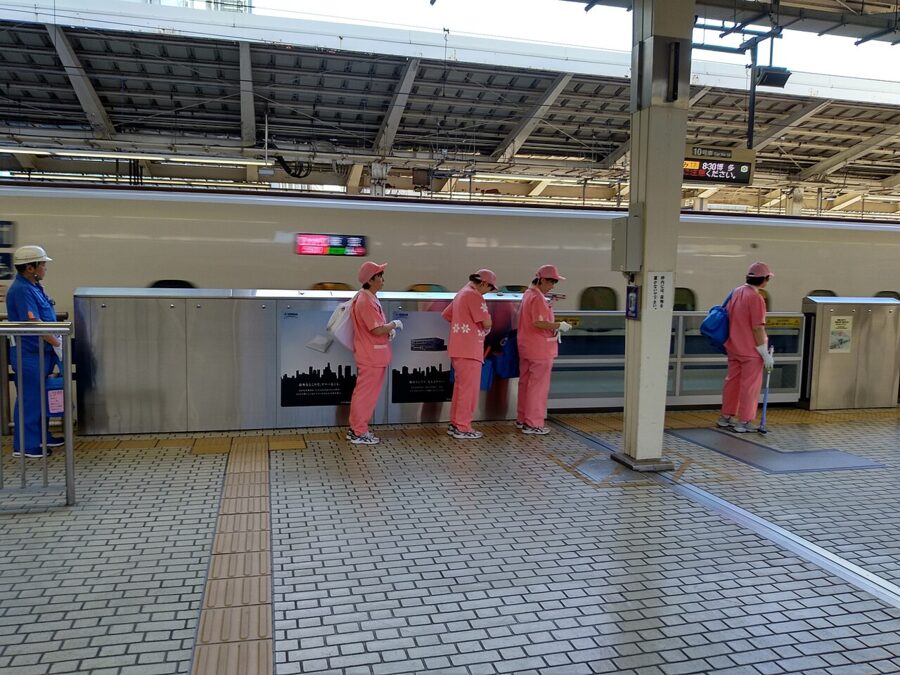
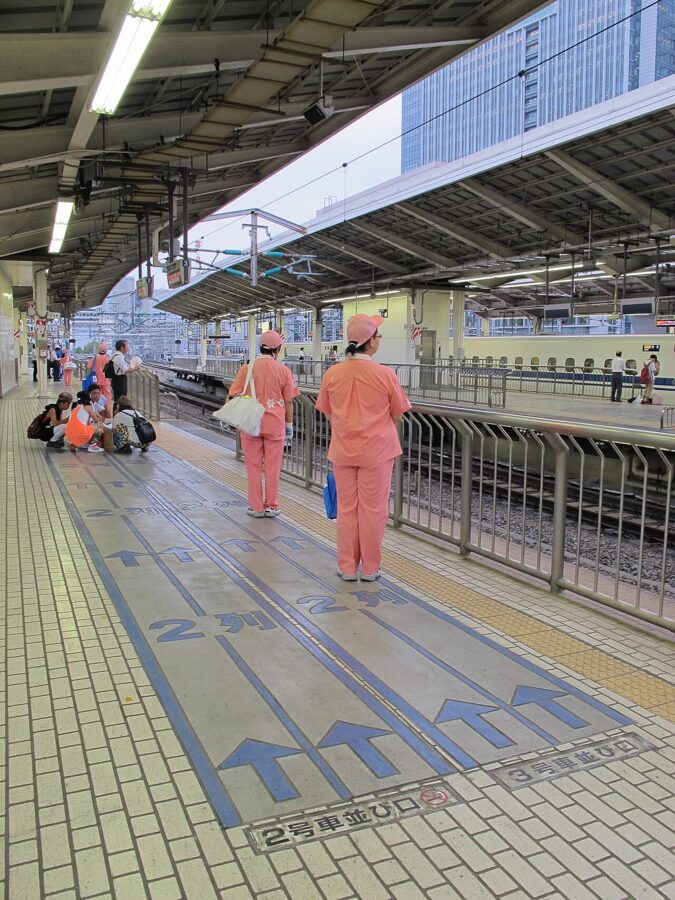
The cleaning crew is on the platform before the train is. A line of them in pink jackets waits at the edge of a Tokaido Shinkansen platform at Tokyo Station, bags of fresh headrest covers at their feet, and as the long white nose of a Nozomi slides in from Shinagawa they bow, together, to a train that has not yet stopped.
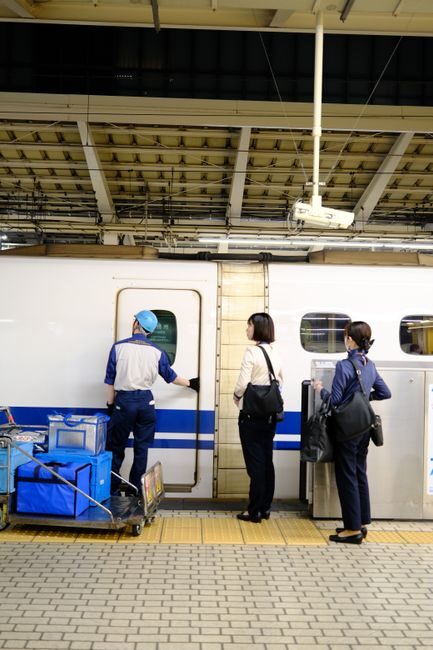
What follows is quick. The passengers from Osaka step off, the crew steps on, every seat is turned to face the other way, the litter goes, the covers are changed, and the doors open again for the queue that has been waiting in painted lanes on the platform. JR Central turns more than a hundred trains a day this way at Tokyo, on the platform, and most of them leave full.
From here and from the JR East platforms next door, six Shinkansen lines run out of Tokyo, and a seventh carries on from the end of one of them: south-west to Osaka and Hakata, north to Aomori and on under the sea to Hokkaido, north-west to Niigata, Kanazawa and Tsuruga, and up two narrower branches to Yamagata and Akita. The trains are simple to use once you know which name stops where, how the ticket is split in two, and which side of the carriage to sit on. That is most of what follows.


The lines that start at Tokyo
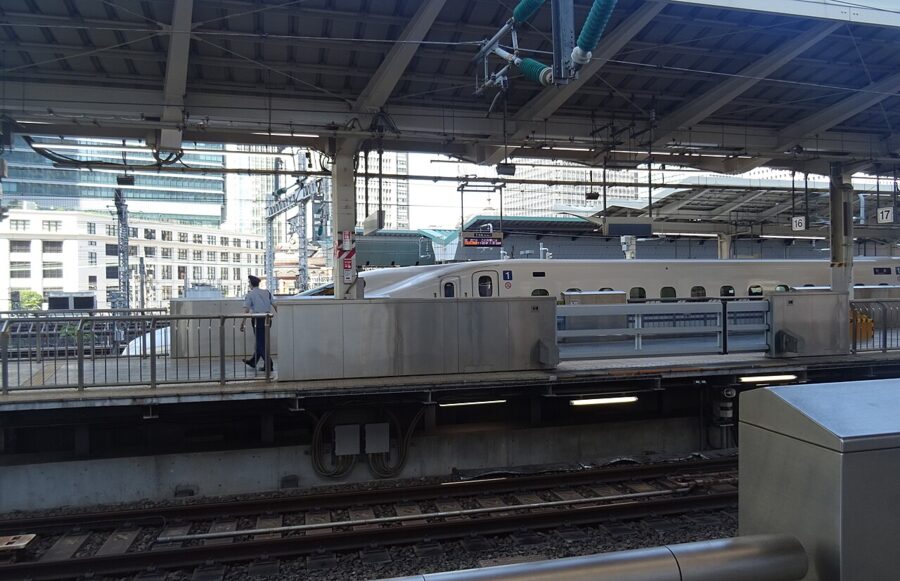
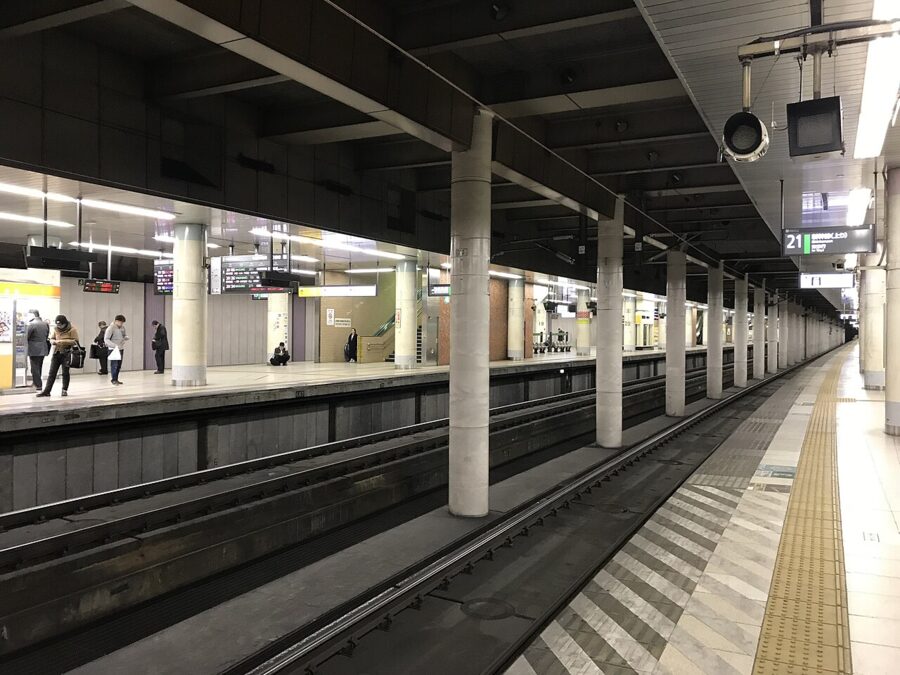
Every Shinkansen out of Tokyo starts at Tokyo Station (東京). The Tokaido line belongs to JR Central and leaves from platforms 14 to 19; everything heading north uses JR East’s platforms 20 to 23, and the Tohoku, Joetsu, Hokuriku, Yamagata and Akita trains all share the same tracks as far as Omiya. Times below are the fastest scheduled runs from Tokyo, taken from the operators’ December 2026 timetables (JR East’s are on its timetable site).
| Line | Operator | Main stops from Tokyo | Fastest from Tokyo |
|---|---|---|---|
| Tokaido (東海道), on as the Sanyo | JR Central, then JR West | Nagoya, Kyoto, Shin-Osaka; Hiroshima, Hakata | Shin-Osaka 2h22; Hakata just under 5 hours |
| Tohoku (東北) | JR East | Sendai, Morioka, Shin-Aomori | Sendai 1h30; Morioka 2h10; Shin-Aomori 2h58 |
| Hokkaido (北海道) | JR Hokkaido | Shin-Hakodate-Hokuto | 3h57 |
| Akita (秋田), mini-Shinkansen | JR East | Morioka, Kakunodate, Akita | Akita 3h37 |
| Yamagata (山形), mini-Shinkansen | JR East | Fukushima, Yonezawa, Yamagata, Shinjo | Yamagata 2h22; Shinjo 3h07 |
| Joetsu (上越) | JR East | Takasaki, Echigo-Yuzawa, Niigata | Niigata 1h29 |
| Hokuriku (北陸) | JR East, then JR West | Karuizawa, Nagano, Toyama, Kanazawa, Fukui, Tsuruga | Nagano 1h17; Kanazawa 2h24; Tsuruga 3h06 |
South-west: the Tokaido
The Tokaido Shinkansen opened on 1 October 1964, the first of them all, and it is still the busiest: 372 trains a day in JR Central’s last full count, at up to 285 km/h, with an average delay of 1.6 minutes. It runs 515 km to Shin-Osaka, where most Nozomi carry straight on along JR West’s Sanyo Shinkansen to Hiroshima and Hakata. A through train from Tokyo to Hakata takes just under five hours, which is about the point where flying starts to win for anyone not on a rail pass.
The line has one quirk that matters this year. Since 14 March 2026 a ticket routed over the Shinkansen between Tokyo and Atami can no longer be used on the old Tokaido Line between the same stations, and the other way round. If you are going to Odawara for Hakone, buy the ticket for the train you mean to ride.

North: the Tohoku, Hokkaido and the two minis
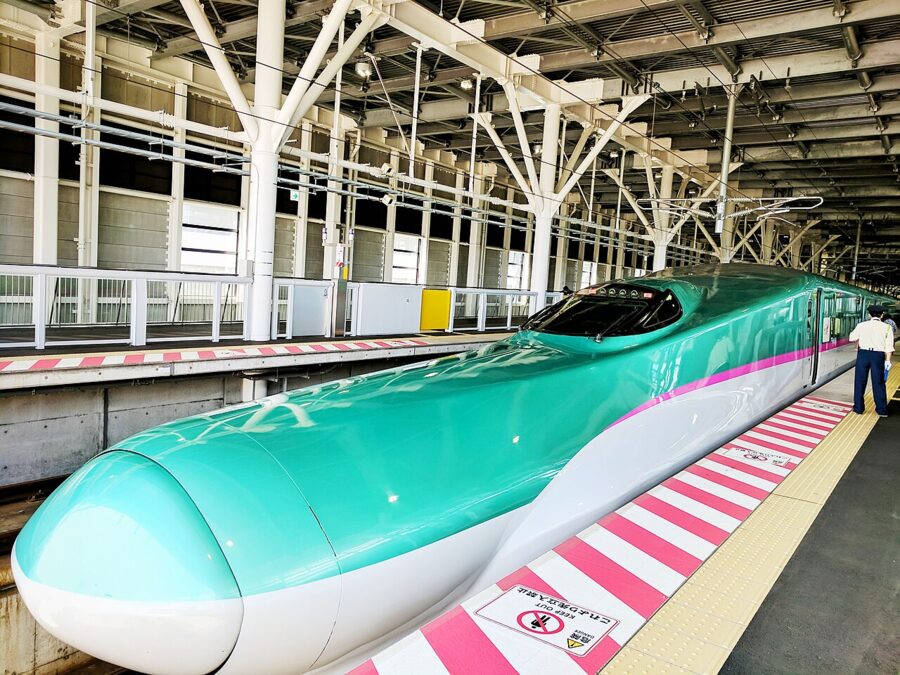
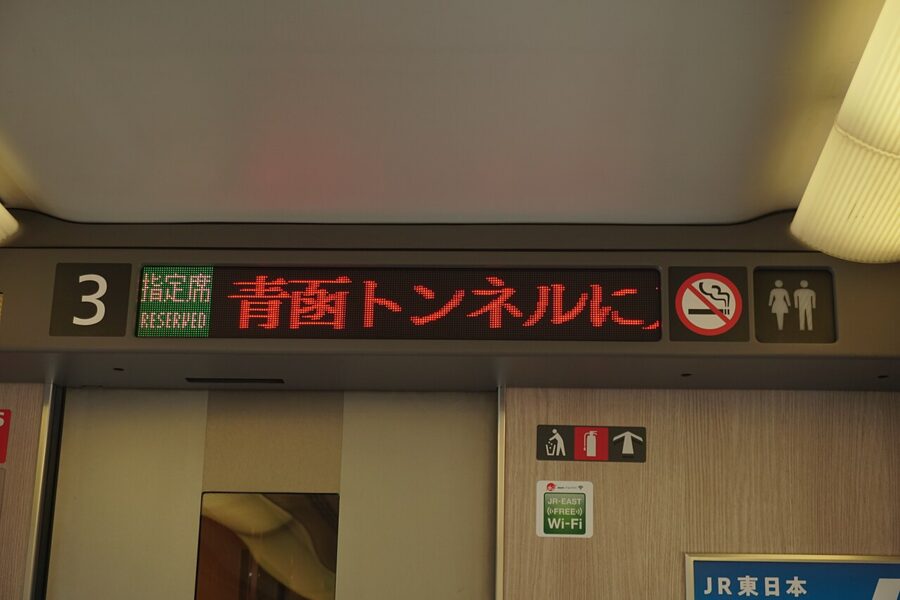
The Tohoku Shinkansen runs from Tokyo through Sendai and Morioka to Shin-Aomori, 674 km, and the Hayabusa does the Utsunomiya to Morioka stretch at 320 km/h, the fastest running in Japan. Beyond Shin-Aomori the line becomes JR Hokkaido’s Hokkaido Shinkansen, through the Seikan Tunnel to Shin-Hakodate-Hokuto. The extension to Sapporo was due in 2030; in March 2025 a government panel moved its likely opening to around the end of fiscal 2038, so for now Sapporo means changing at Shin-Hakodate-Hokuto for a limited express.
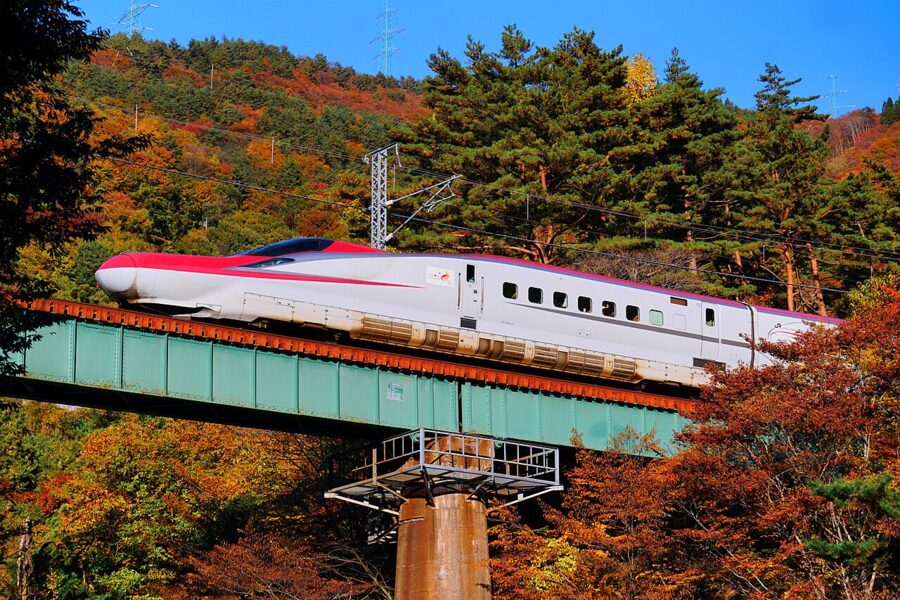
The Akita and Yamagata Shinkansen are a different thing. They are older local lines regauged to take Shinkansen trains, which run coupled to a Hayabusa or Yamabiko as far as Morioka or Fukushima, split off, and then pick their way through the mountains at conventional-line speeds, past level crossings and single-track passing loops. The Komachi (E6) to Akita and the Tsubasa, all E8s since the March 2026 timetable, to Yamagata and Shinjo are both fully reserved.



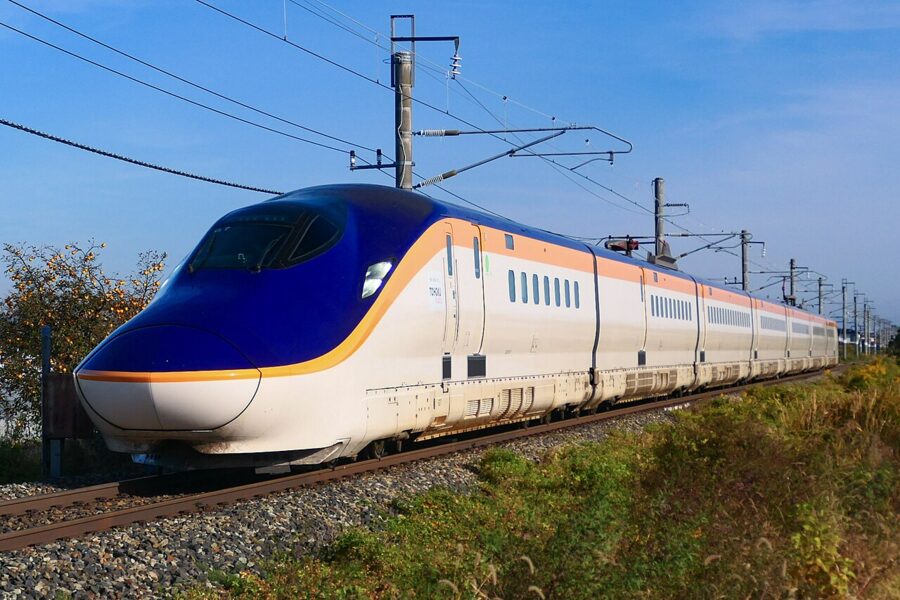
North-west: the Joetsu and the Hokuriku
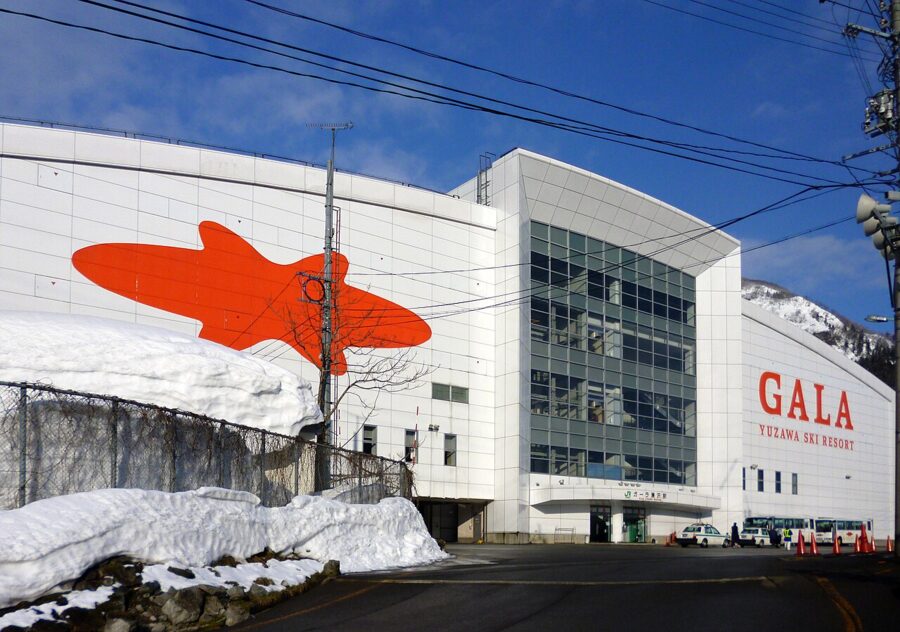
The Joetsu Shinkansen branches off at Omiya for Takasaki, the long tunnels under the mountains to Echigo-Yuzawa, and Niigata on the Sea of Japan coast, 1 hour 29 minutes away on the fastest Toki. The Tanigawa runs only as far as Echigo-Yuzawa, and in the ski season some continue to Gala-Yuzawa, a station built inside a ski resort.
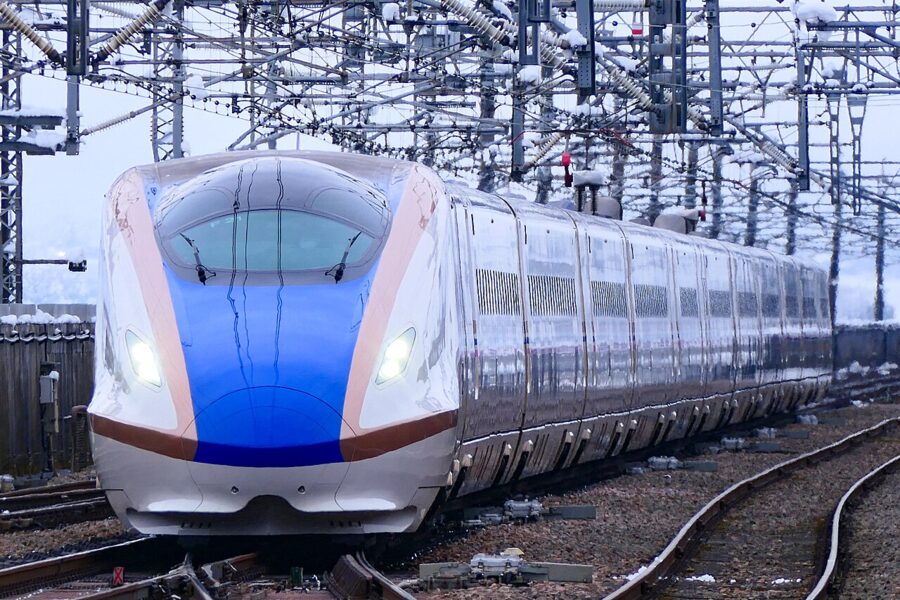
The Hokuriku Shinkansen leaves the Joetsu at Takasaki and runs through Karuizawa and Nagano to Toyama, Kanazawa and, since 16 March 2024, Fukui and Tsuruga. JR East runs it as far as Joetsu-Myoko and JR West beyond, which matters for some IC card services: Touch de Go, for one, stops at the JR East boundary. At Tsuruga you change to the limited expresses for Kyoto and Osaka; the Shinkansen extension to Osaka is not expected before the 2040s.


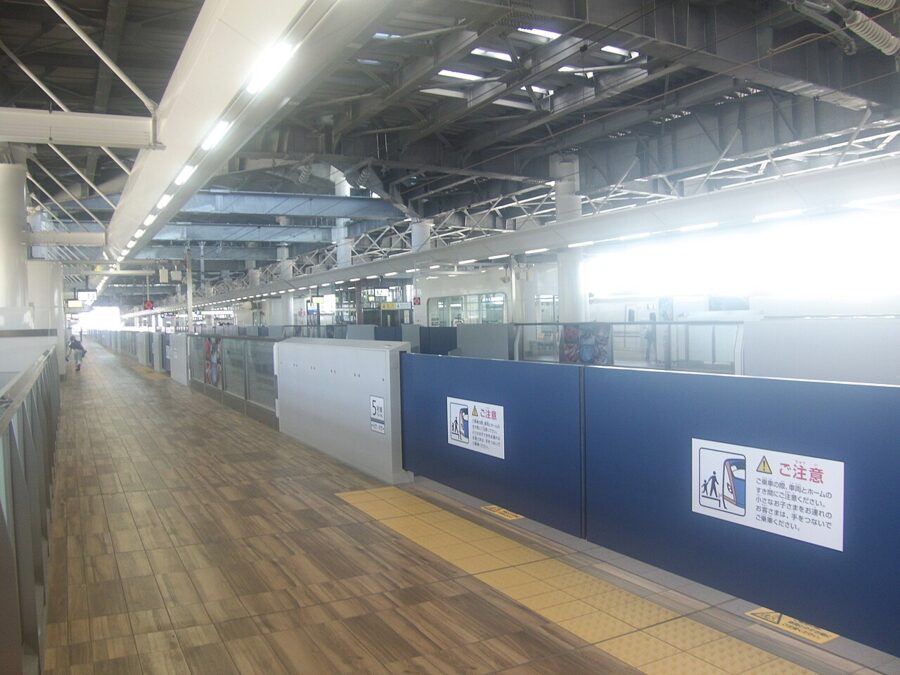
The trains: which name stops where
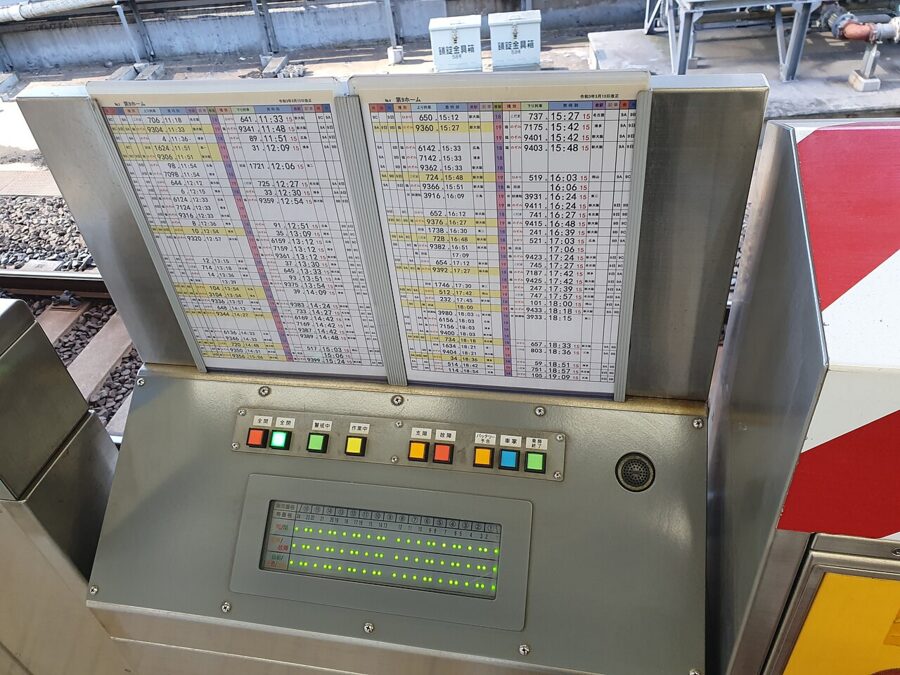
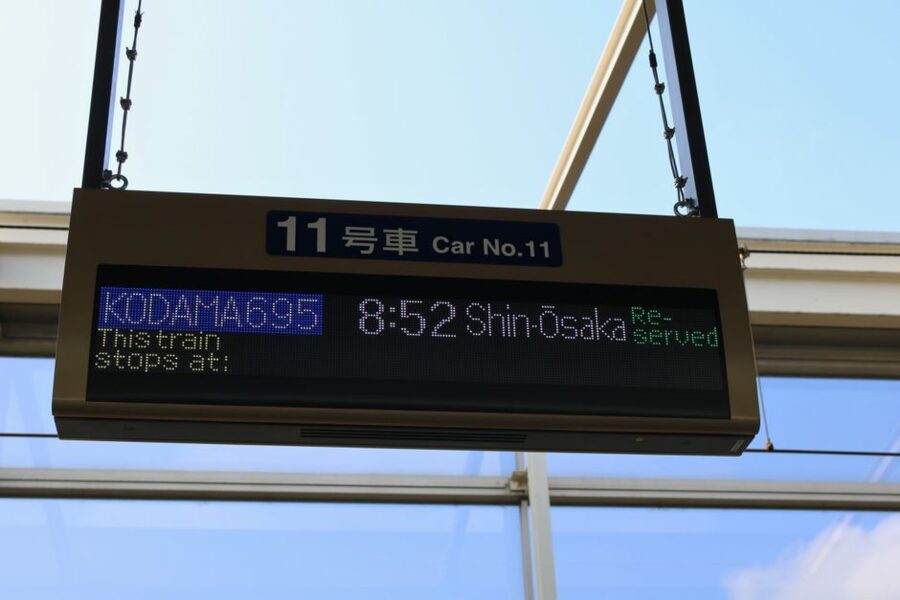
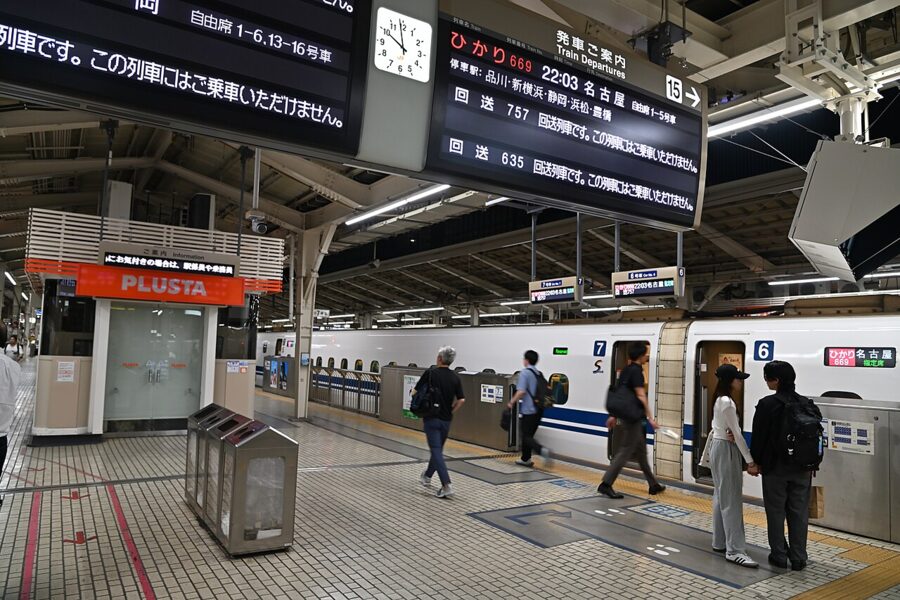
On every line the train’s name tells you how often it stops, and the platform screens show the name before anything else. On the Tokaido the three are the Nozomi (のぞみ), the Hikari (ひかり) and the Kodama (こだま).
- Nozomi: Tokyo, Shinagawa, Shin-Yokohama, Nagoya, Kyoto, Shin-Osaka, and on to Hiroshima or Hakata. Several leave Tokyo every hour, more in the busiest windows. Fastest to Shin-Osaka: 2 hours 22 minutes.
- Hikari: the Nozomi’s stops plus a few more, varying by train (Odawara, Shizuoka, Hamamatsu, Maibara among them). Usually two an hour, roughly three hours to Shin-Osaka, and covered by the JR Pass without a supplement.
- Kodama: every station, nearly four hours to Shin-Osaka. Useful for Odawara, Atami and Mishima, and almost always the one with empty non-reserved seats.
Heading north, the Hayabusa (はやぶさ) is the fast one, all reserved, to Shin-Aomori and Shin-Hakodate-Hokuto, with the Komachi coupled on as far as Morioka. The Yamabiko (やまびこ) stops more often and goes to Sendai or Morioka, often with a Tsubasa attached, and the Nasuno is a commuter train to Koriyama. On the Joetsu it is the Toki (とき) to Niigata and the Tanigawa (たにがわ) to Echigo-Yuzawa.
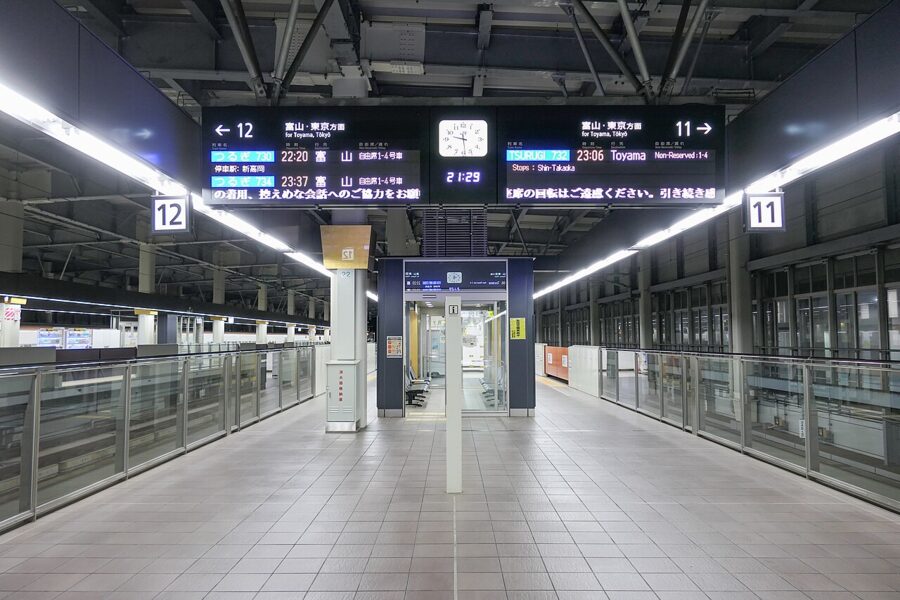
On the Hokuriku the Kagayaki (かがやき) is the express: all reserved, and most stop only at Ueno, Omiya, Nagano, Toyama and Kanazawa before Fukui and Tsuruga, some also calling at Komatsu, Kaga-Onsen, Awara-Onsen and Echizen-Takefu. The Hakutaka (はくたか) takes the same route with more stops and keeps non-reserved cars, the Asama runs Tokyo to Nagano, and the Tsurugi is a shuttle between Toyama, Kanazawa and Tsuruga that you will only meet out there.
The rolling stock, briefly
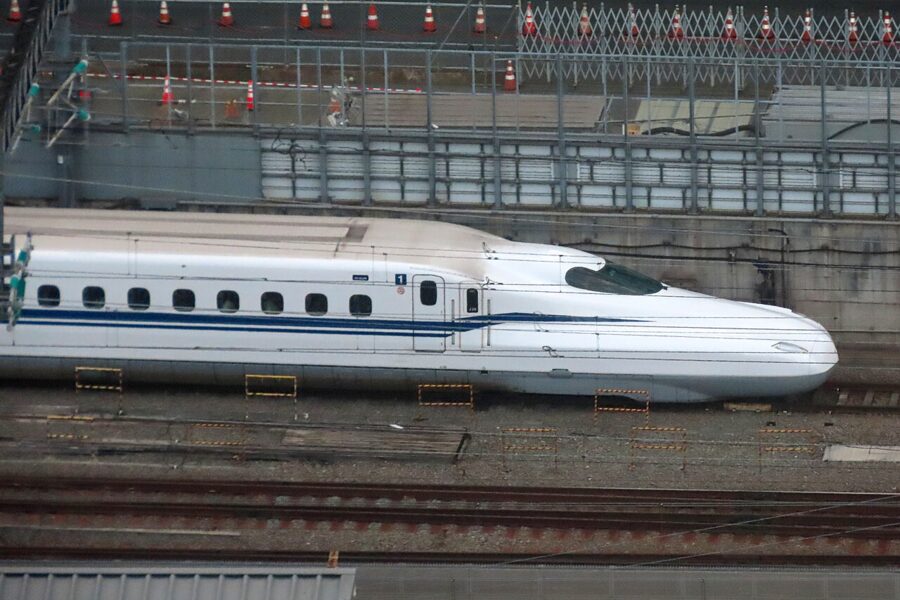
On the Tokaido you will ride an N700S or an N700A, which look nearly identical from the platform. The N700S, in service since July 2020, has a power socket at every seat and a quieter, smoother ride; on the N700A ordinary cars only the window seats and the front and back rows get one. There are no smoking rooms on any Tokaido train now.
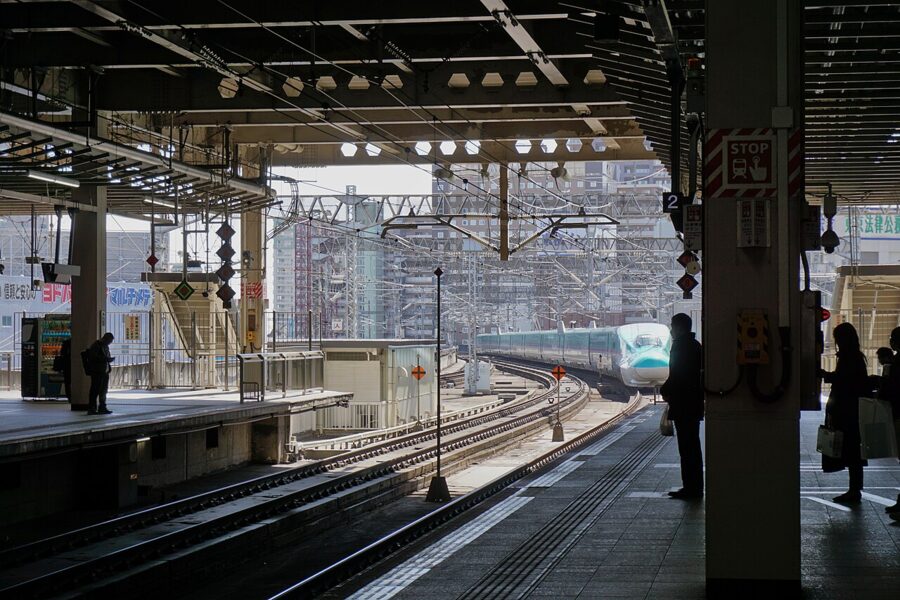
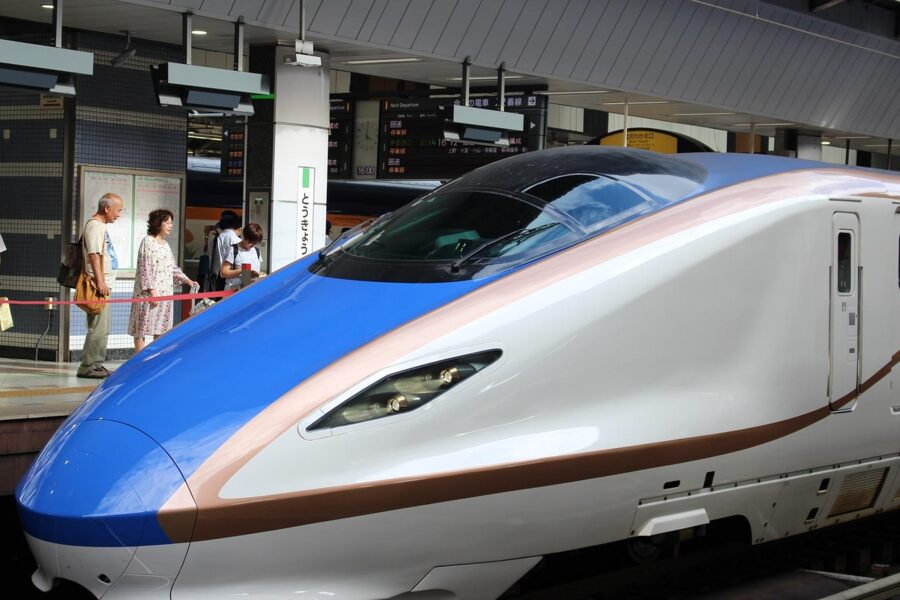
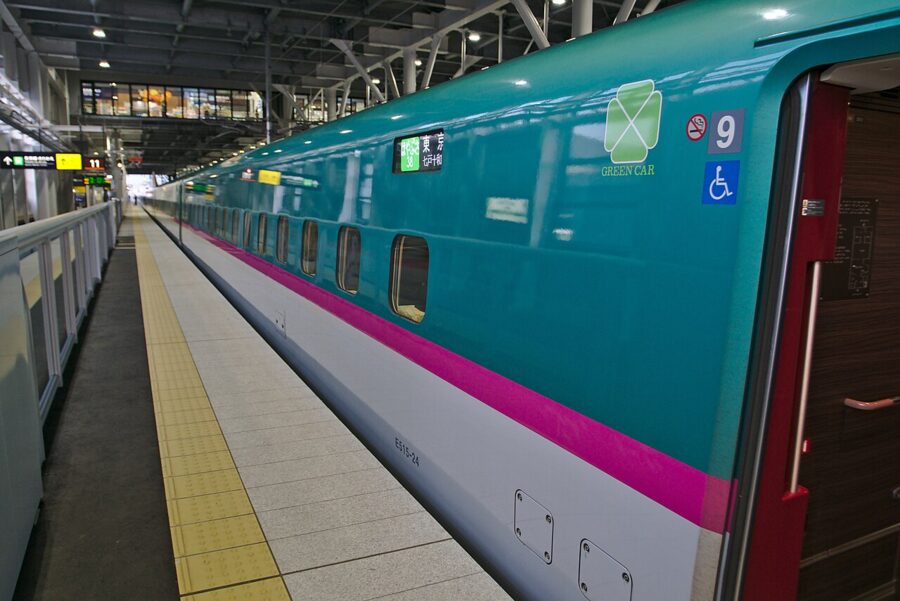
JR East’s fleet is easier to tell apart. The green-and-white E5 (and JR Hokkaido’s near-twin H5) works the Hayabusa, the red E6 the Komachi, the E8 the Tsubasa, and the blue-and-copper E7 (JR West’s W7) both the Hokuriku and the Joetsu. All of them belong to JR East, one of the companies made from the national railway in 1987 (the railway history behind the network).

Tickets: fares, reservations and classes (as of 2026)
A Shinkansen ticket is two charges. The base fare (運賃) is what the same journey would cost on a local train; the limited express charge (特急料金) pays for the Shinkansen and, if you want one, a reserved seat. Machines and websites add them together, but paper tickets still come as two cards, and you feed both into the Shinkansen gate at once.
Fares on the Tokaido did not change in 2026. A reserved seat on a Nozomi from Tokyo to Shin-Osaka costs ¥14,720 (about US$95) one way in the regular season, as of November 2026, and the rest of the table runs like this for an adult:
| Tokyo to | Non-reserved | Hikari or Kodama, reserved | Nozomi, reserved |
|---|---|---|---|
| Nagoya | ¥10,560 | ¥11,090 | ¥11,300 |
| Kyoto | ¥13,320 | ¥13,850 | ¥14,170 |
| Shin-Osaka | ¥13,870 | ¥14,400 | ¥14,720 |
So the whole saving from sitting non-reserved to Shin-Osaka is ¥850. A Green Car seat on the same Nozomi is ¥19,590. Reserved seats cost ¥200 less on off-peak dates and ¥200 or ¥400 more on peak and super-peak dates, which is why the same seat can have four prices across a year.
Two rises are already announced. JR Central and JR West will add ¥700 to a reserved Nozomi or Mizuho seat between Tokyo and Shin-Osaka for tickets bought from 1 July 2027, taking it to ¥15,420, and Green Car charges on every Tokaido and Sanyo train go up for travel from 15 December 2027. The first rise does not touch non-reserved seats or reserved seats on the Hikari and Kodama.
JR East raised its fares on 14 March 2026, by 7.1 per cent on average and for the first time since the company was formed in 1987. The same revision ended the 10 per cent return discount on long journeys. Eki-net shows the current fare for any pair of stations on the Tohoku, Joetsu and Hokuriku lines, and I would check it there rather than trust any table printed before March.
Reserved or non-reserved
Most Tokaido trains carry non-reserved cars (自由席): cars 1 and 2 on a Nozomi, more on the Hikari and Kodama. Northbound, the Hayabusa, Komachi, Tsubasa and Kagayaki are reserved throughout, so a non-reserved ticket means the Yamabiko, Toki, Tanigawa, Hakutaka or Asama. Reserved seats go on sale at 10:00 one month before the travel date.
On a weekday morning the non-reserved cars of a Hikari or Kodama will usually seat you; on a Friday evening the Nozomi’s two will not. My rule is simple: reserve for anything over an hour, or when travelling with someone you want to sit next to. The ¥530 is the cheapest insurance on the railway.
Green Car, Gran Class and Supreme Class
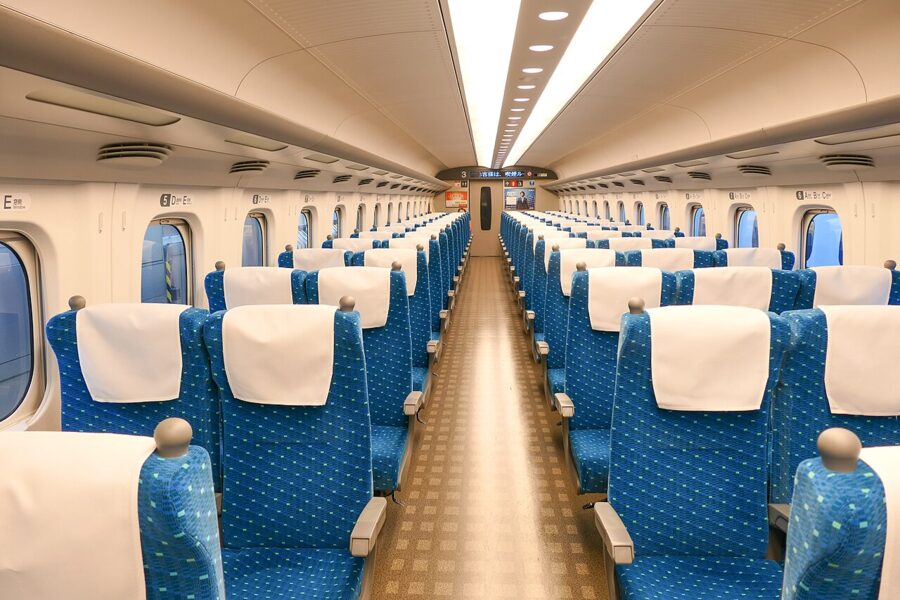
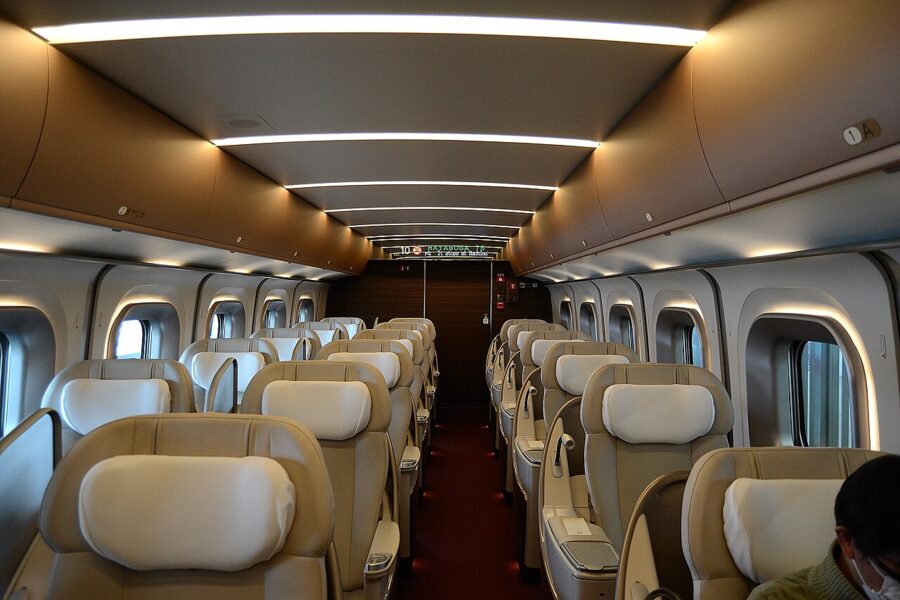
The Green Car (グリーン車) is first class: four seats across instead of five, more legroom, and often a footrest and reading light. On the Tokaido it is cars 8 to 10. It is quieter rather than lavish, and on a two-and-a-half-hour run I think it is worth paying for once.
Gran Class is JR East’s class above that, on the E5, H5 and E7: one car of 18 seats, three across. On most Hayabusa and on the Kagayaki it comes with an attendant, drinks and a light meal; on the Toki, Hakutaka and Yamabiko JR East sells it as a seat only, with no on-board service, so check which before paying for it.
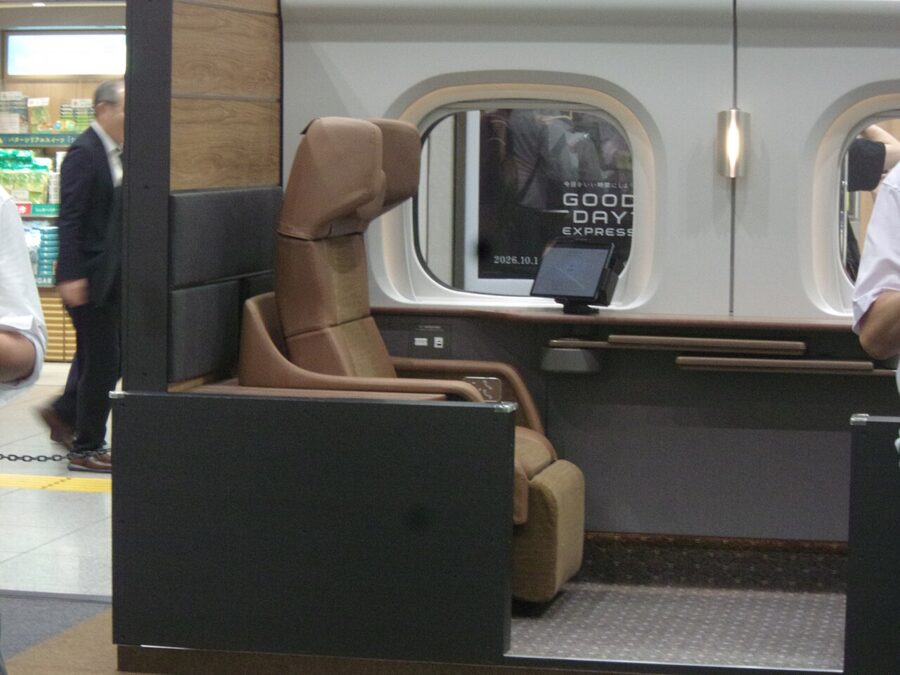
The Tokaido answered on 1 October 2026 with Supreme Class: private cabins on selected Nozomi, a two-person room in car 7 and a one-person room in car 10. Tokyo to Shin-Osaka costs ¥42,390 for the single and ¥60,790 for the double in the regular season, and it can only be booked through smartEX.


How to buy: machines, the ticket office and online
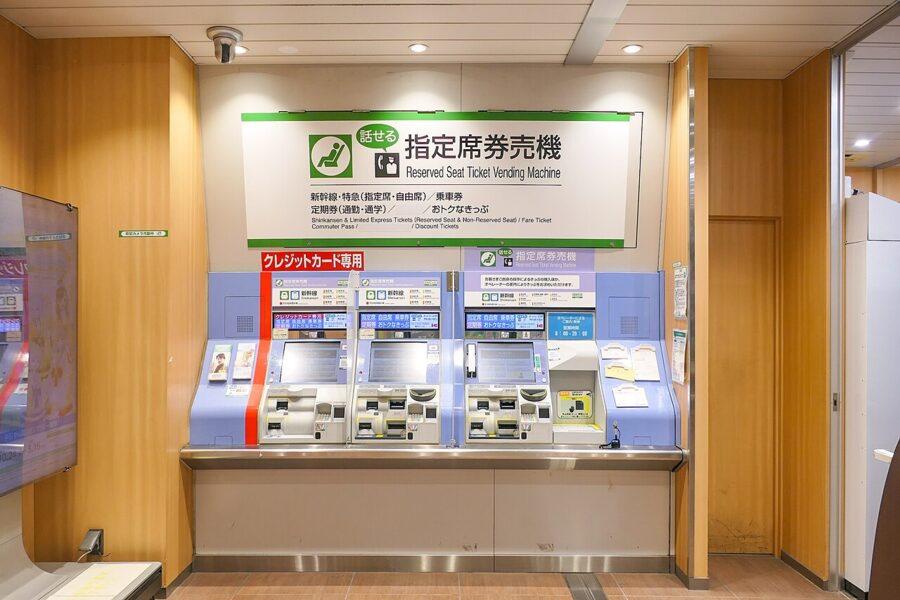
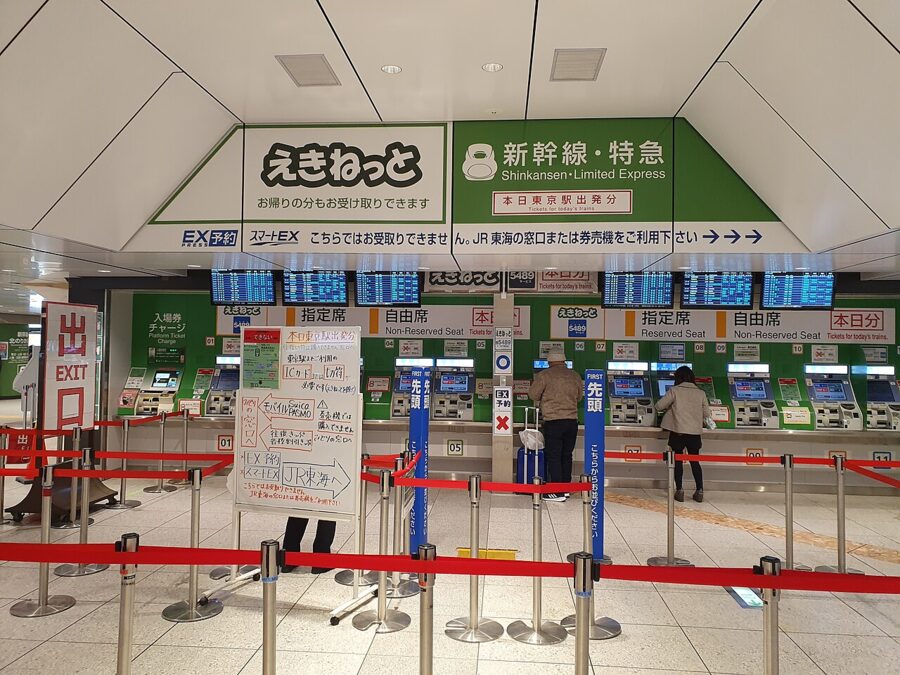
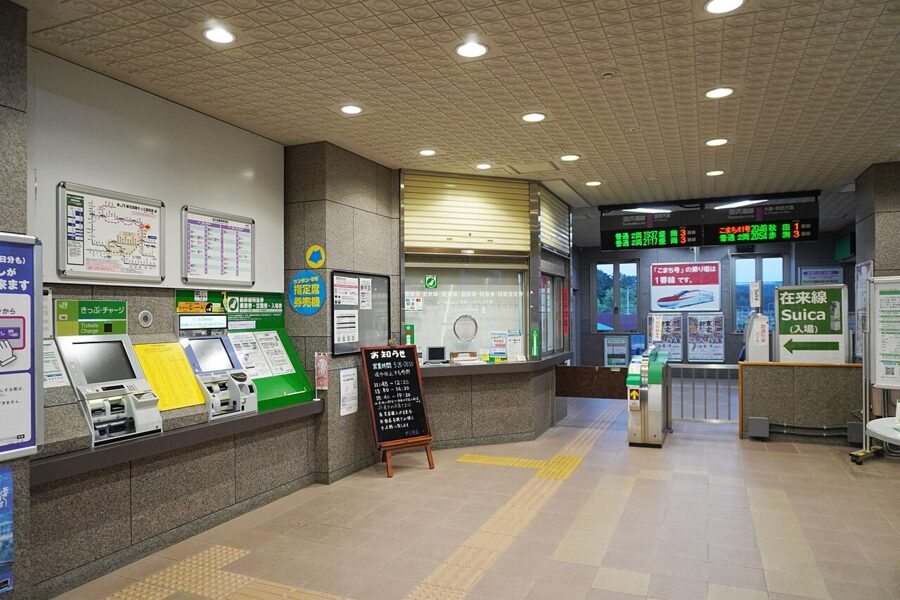
At the station, the reserved-seat ticket machines (指定席券売機) work in English and take credit cards: choose the train, the car type, the seat from a map, pay, and collect your two tickets. The ticket office, the Midori-no-madoguchi (みどりの窓口), still exists at the big stations, though JR East has closed many, and the queues at the big ones get long in the holidays.
Online, the railway is split in two. smartEX, run by JR Central with JR West and JR Kyushu, covers the Tokaido, Sanyo and Kyushu lines: membership is free, there is no service fee, and you board with a QR code on your phone or a registered IC card. Eki-net is JR East’s equivalent for the Tohoku, Hokkaido, Joetsu, Hokuriku, Yamagata and Akita lines; you can collect paper tickets at a JR East machine or link the booking to an IC card and tap through the gate.
For a non-reserved seat on a JR East line you need neither. Touch de Go lets you board with an ordinary Suica or PASMO after a one-time registration, with the fare taken from the card’s balance at the gate, as on the subway. It covers JR East’s own Shinkansen only, not the Tokaido. How the cards themselves work is in Suica and PASMO.

Luggage and the oversized-baggage rule
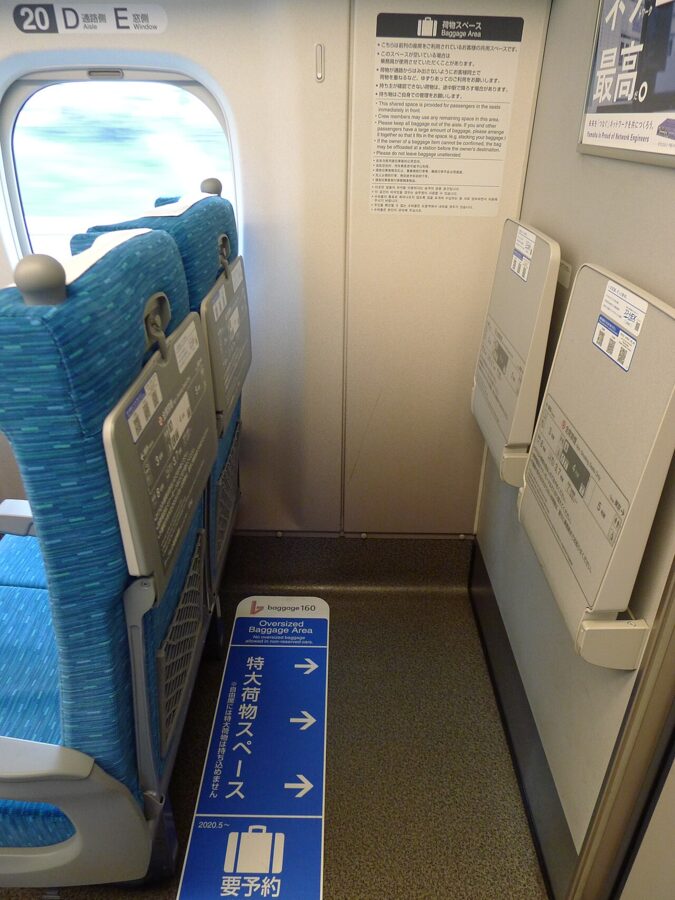
Every passenger may bring two pieces of luggage free, each up to 30 kg and 250 cm in total dimensions (length, width and height added together), plus a handbag and an umbrella. Anything up to 160 cm goes on the overhead rack, at your feet or in the deck storage without fuss; nothing over 250 cm comes aboard at all.
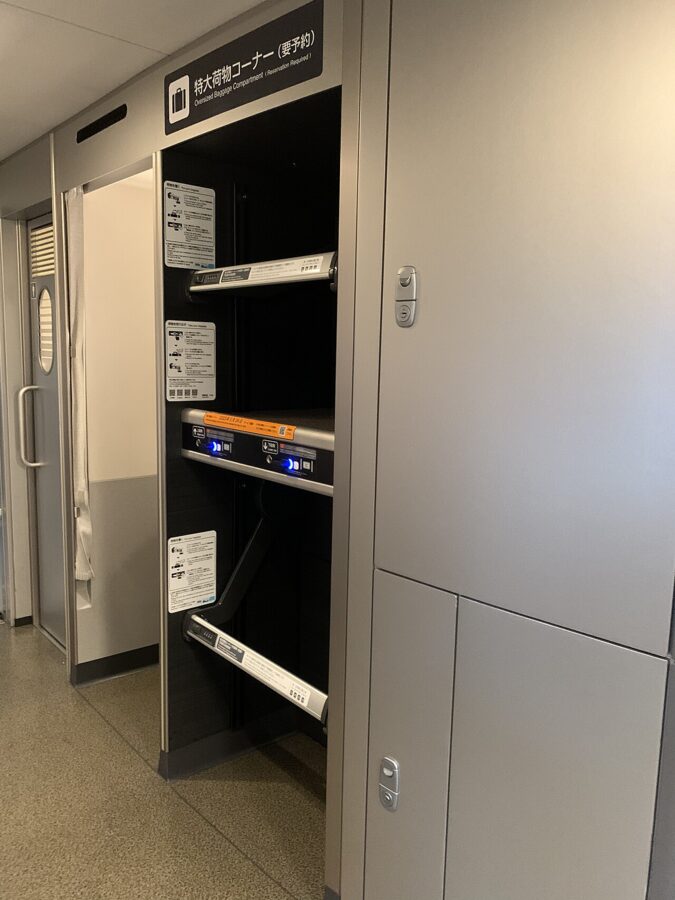
On the Tokaido, Sanyo, Kyushu and Nishi-Kyushu lines, a bag between 160 and 250 cm needs a reservation. You book a seat with an oversized baggage area (特大荷物スペースつき座席), which is a last-row seat with the space behind it set aside for your case, at the same price as any reserved seat. Machines, ticket offices, smartEX and the JR Pass reservation site all sell them. Since July 2025 some Tokaido and Sanyo trains have also trialled oversized-baggage corners in the decks that need no reservation, but they are not on every train, so book the seat if your case depends on it.
Board without one and the conductor will put the bag where there is room, charge ¥1,000 on the spot (the JR Pass does not cover it), and may ask you to take a later train if the train is full. Prams, musical instruments and sports equipment are exempt. Since July 2025 some decks also have a lockable compartment for one large case; JR Central describes it both as an open trial and as part of a reserved seat, so book the seat if you need it.
The JR East lines have no reservation rule, but the same space problem: a large case behind the last row, or nowhere. With more than one big case each, I would send them ahead by luggage forwarding (takkyubin) from the hotel and travel light; it usually arrives the next day.


Seats, food and the busy days
Seats worth choosing
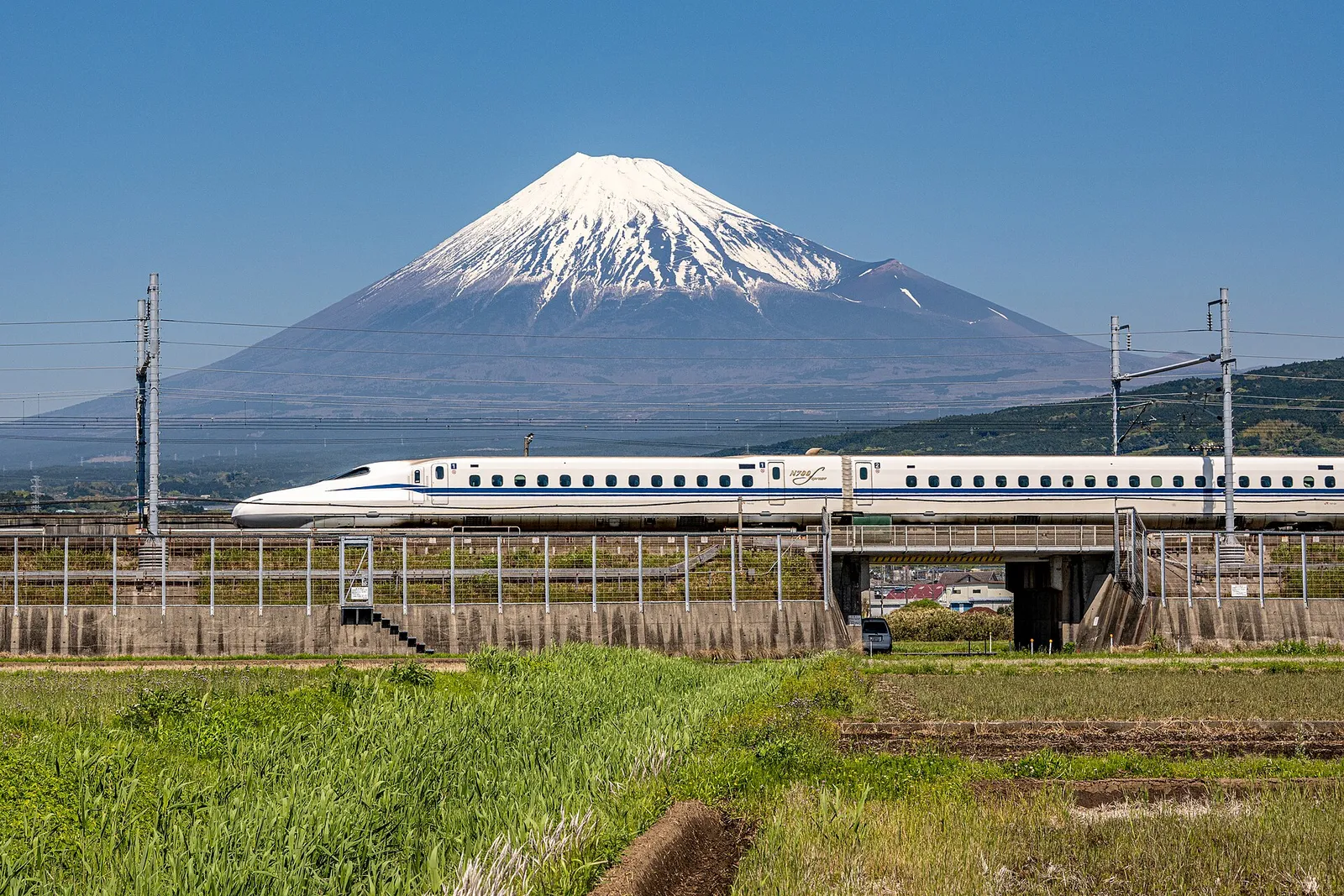
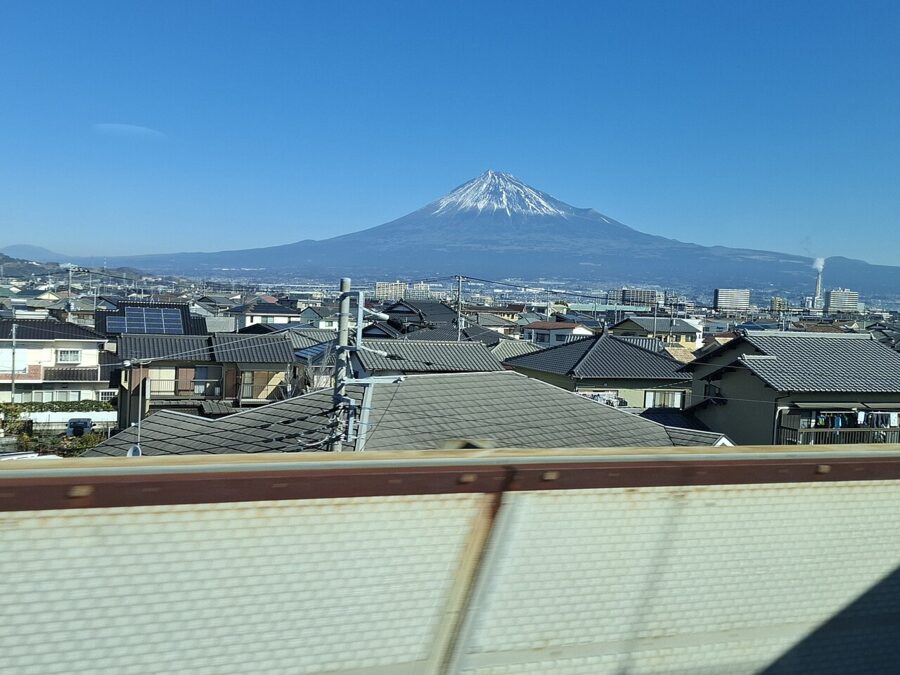
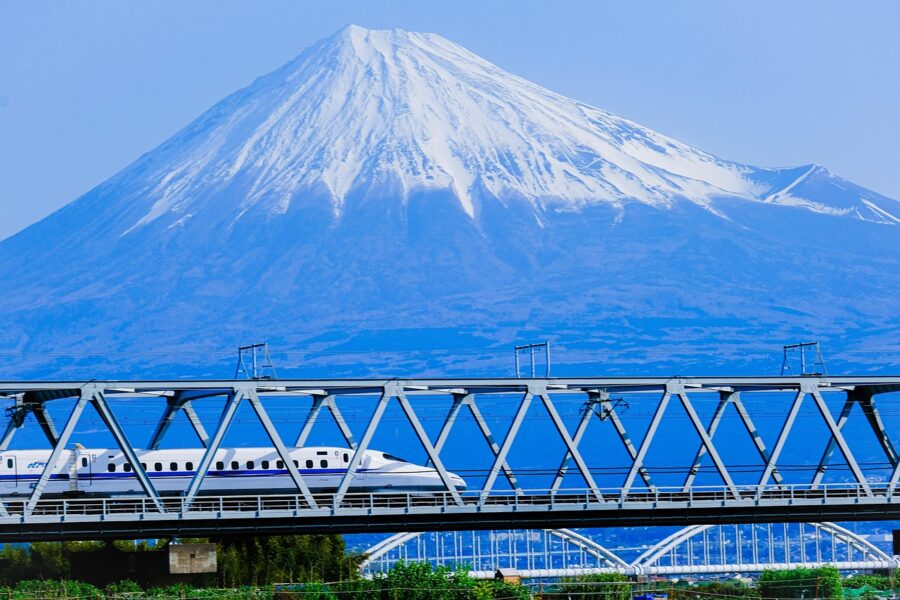
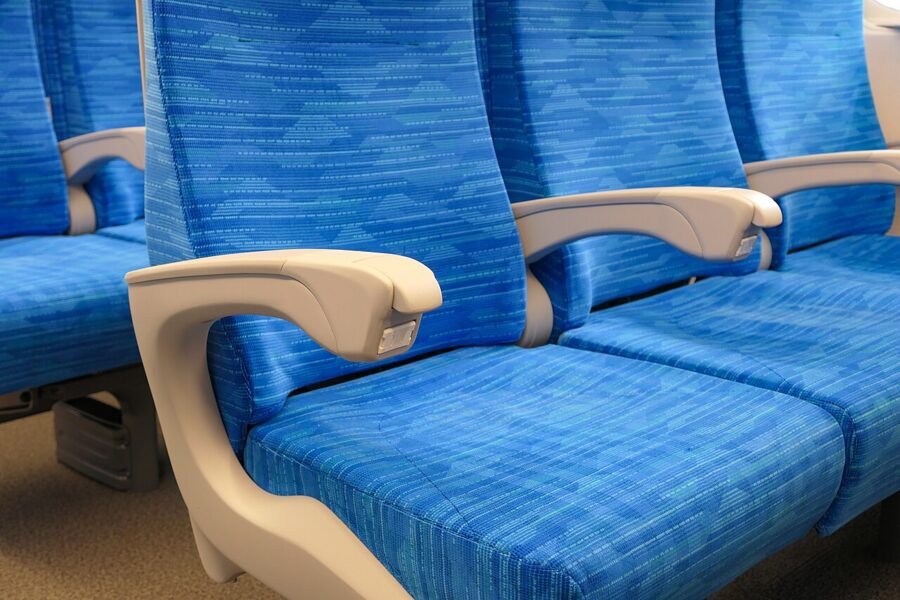
Mount Fuji stands on the north side of the Tokaido line: the right as you head west from Tokyo, the left coming back. In an ordinary car that is seat E, the window on the two-seat side; in the Green Car it is D. The best of it runs from Mishima to just past Shin-Fuji, about 40 minutes out of Tokyo on a Nozomi, where the train crosses the Fuji River with the mountain filling the window. Winter mornings are the clearest; in the June rains you may see nothing at all.
On the Tokaido a seat on an N700S guarantees a power socket; on an N700A take a window seat. Seat B, the middle of three, is the last to sell, so a booking made late on a busy day often lands there. On the two-seat side, D and E, a couple has the row to themselves.

Food on board and ekiben
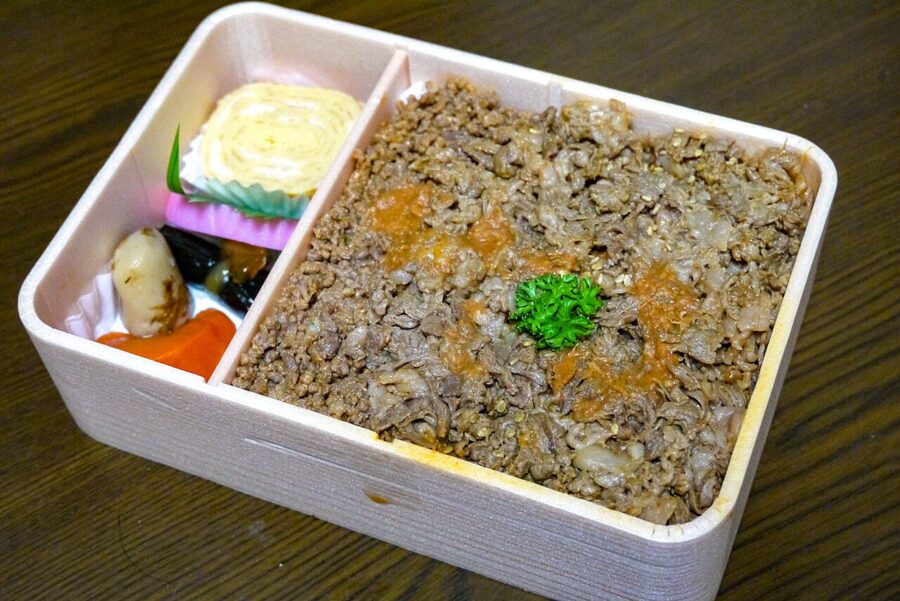
Eating at your seat is normal on the Shinkansen, and the table is built for it. The trolley is another matter: JR Central ended on-board sales on the Tokaido in 2023, leaving only a mobile ordering service for Green Car passengers on the Nozomi and Hikari. Some Hayabusa, Kagayaki and Toki still carry a trolley over part of the route, according to JR East’s timetables, but I would not count on it.
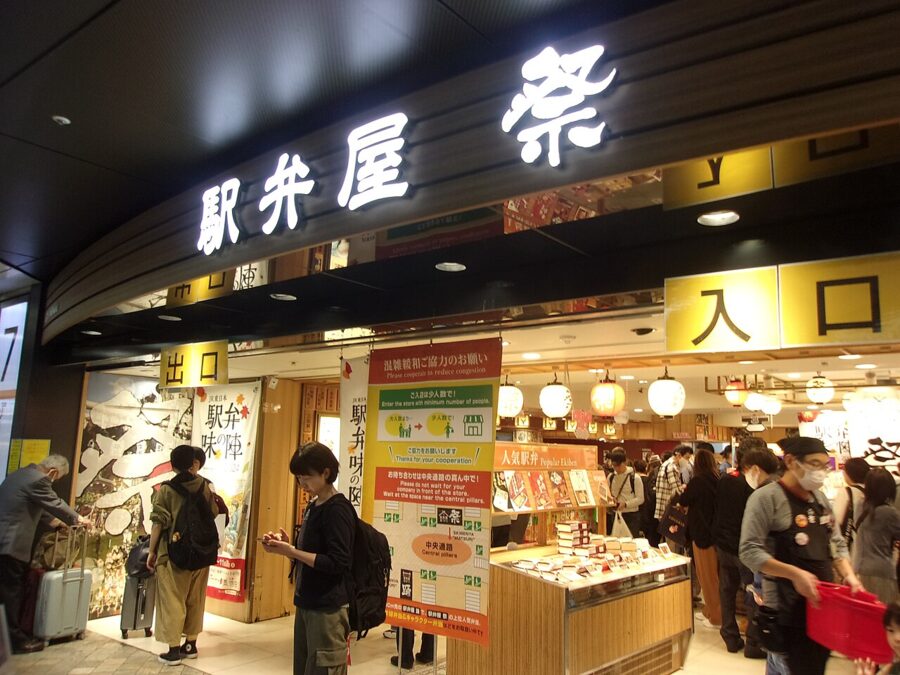
So buy before you board. The ekiben (駅弁), a station boxed lunch, is the tradition, and Ekibenya Matsuri (駅弁屋 祭) in the Gransta area inside the gates at Tokyo Station sells boxes from all over the country, open 05:30 to 22:00. Tokaido passengers will also find ekiben stalls on their own platforms.

Peak periods
The Shinkansen is busiest at New Year, in Golden Week (late April to early May) and at Obon in mid-August, and JR Central now treats the three-day weekends almost the same way. On those dates every Nozomi seat is reserved: cars 1 and 2 are sold as reserved, and a non-reserved ticket lets you stand in the aisle but not sit. The Hikari, Kodama and the Sanyo’s own trains keep their non-reserved cars.
For the rest of fiscal 2026 the all-reserved Nozomi dates are 25 December 2026 to 5 January 2027, 9 to 11 January and 20 to 22 March 2027. On dates like those, book at 10:00 a month ahead or accept the Kodama.

The JR Pass on the Shinkansen
The nationwide Japan Rail Pass covers every Shinkansen line from Tokyo, seat reservations included. As of November 2026 a 7-day ordinary pass costs ¥50,000 bought on the official site and ¥53,000 through overseas agents, whose prices rose on 1 October 2026; the official site has held the old price for a limited, unspecified period. Bought on the official site, the pass also lets you reserve seats online before you travel.
The Nozomi and Mizuho are the exception. A pass holder may ride them with a separate NOZOMI MIZUHO ticket, bought in Japan at a JR machine or office for each ride: ¥4,180 from Tokyo to Nagoya, ¥4,960 to Kyoto or Shin-Osaka, ¥6,500 to Hiroshima. Or take the Hikari, which is free with the pass: lose about half an hour to Osaka, keep the ¥4,960.
Whether the pass pays depends on distance. A reserved Nozomi return from Tokyo to Kyoto is ¥28,340, so a single return trip is nowhere near ¥50,000; a week of Tokyo, Kyoto, Hiroshima and back, plus one return trip north, is the kind that pays. Add up the fares for your own week before buying.

Changing at Tokyo and Shinagawa
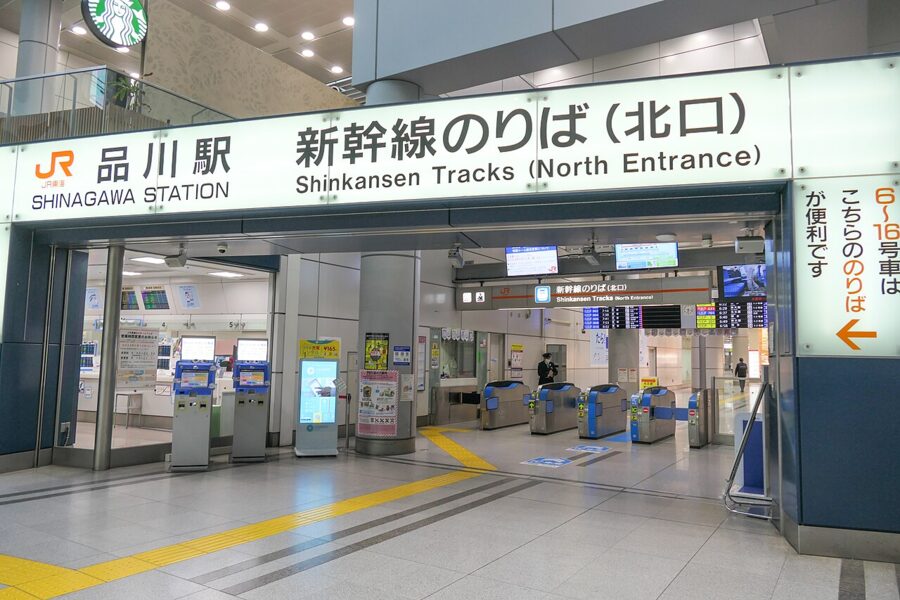
Tokyo Station is two Shinkansen stations side by side: JR Central’s Tokaido platforms 14 to 19 and JR East’s platforms 20 to 23. Between them are transfer gates, so a ticket that covers both, say Kyoto to Sendai, takes you from one to the other without leaving the paid area. JR East’s standard time for the change is eight minutes; allow fifteen with luggage, because the platforms are long and the escalators queue. Tokyo Station rewards knowing which gate you want before you arrive.
For the Tokaido, Shinagawa (品川) is often the better place to board. Every train stops there, it is on the Yamanote Line for Shibuya, Ebisu and Meguro, and the Keikyu line from Haneda Airport arrives there too, on Keikyu. From south-western Tokyo it saves the ride in to Tokyo Station.
Heading north, the equivalent is Ueno, where most JR East Shinkansen stop, or Omiya for Saitama. From any of them the Tokyo subway takes over, and the Kodama to Odawara is the quick start for Hakone.
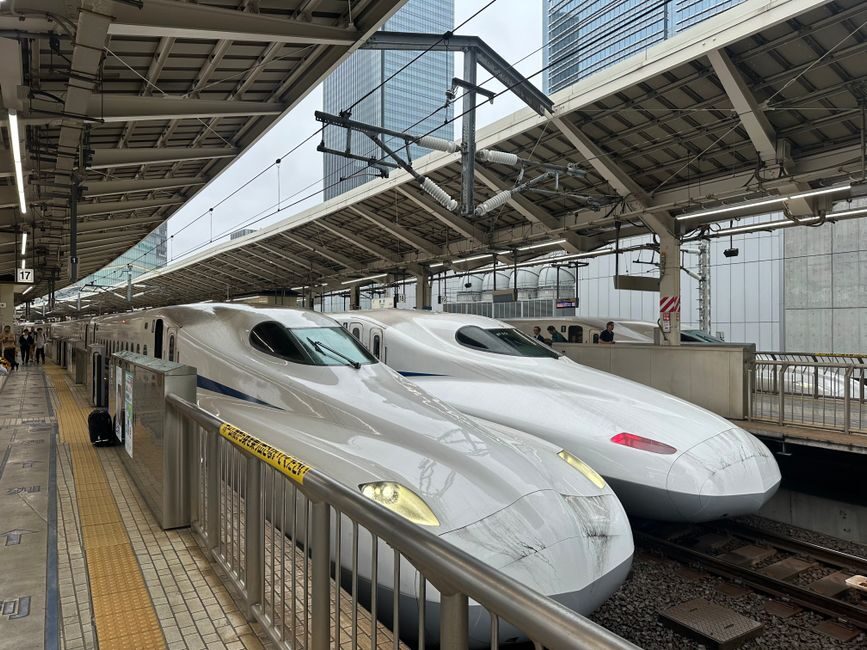
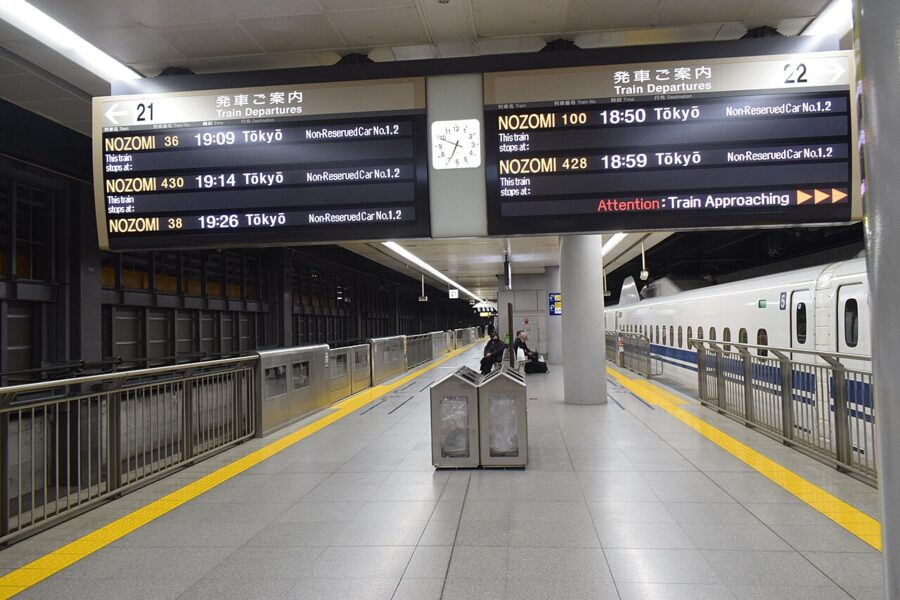



Back at Tokyo, the crew has finished and the doors are open. If you are going west, book seat E on a Nozomi, buy the ekiben inside the gates, and be at the painted lane five minutes before departure. If you hold a pass, the Hikari leaves from the same platform, and it waits for no one either.