
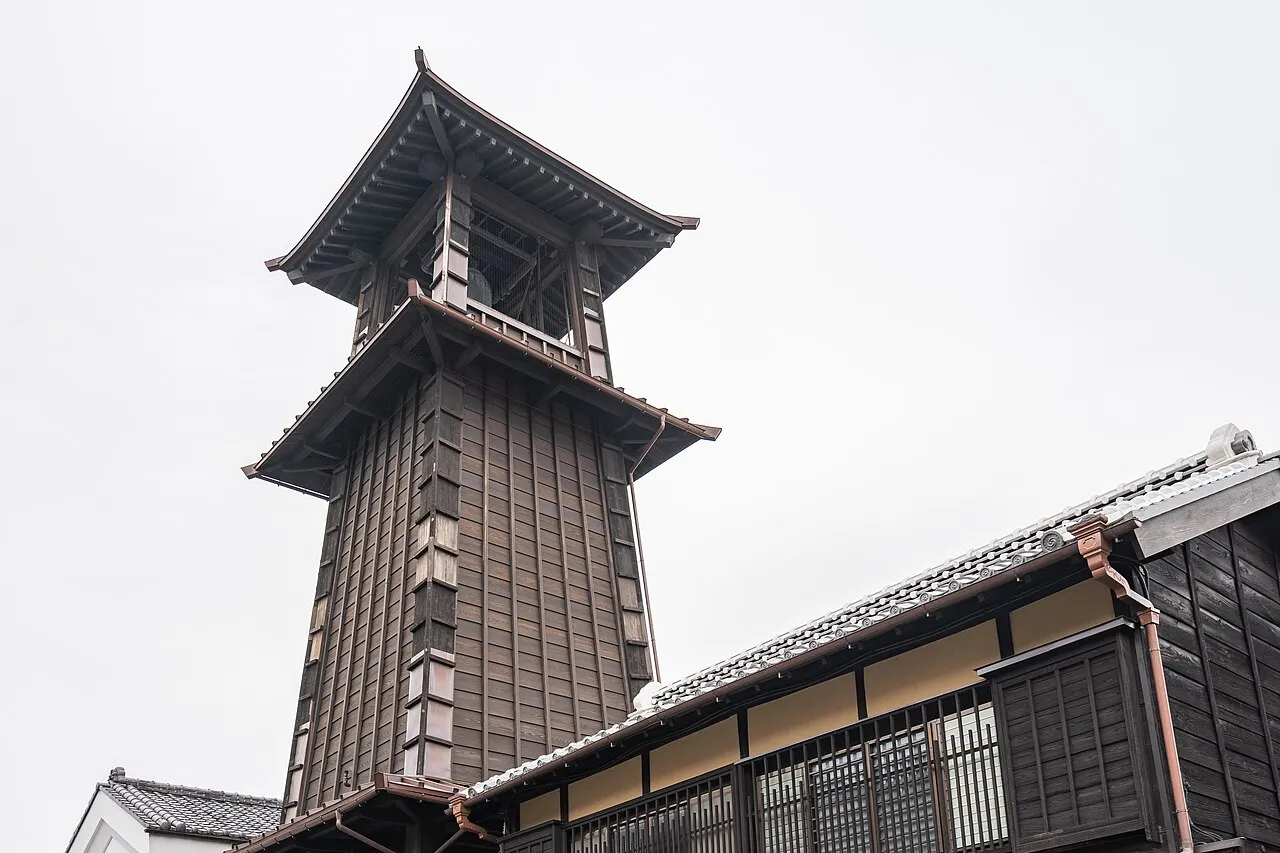

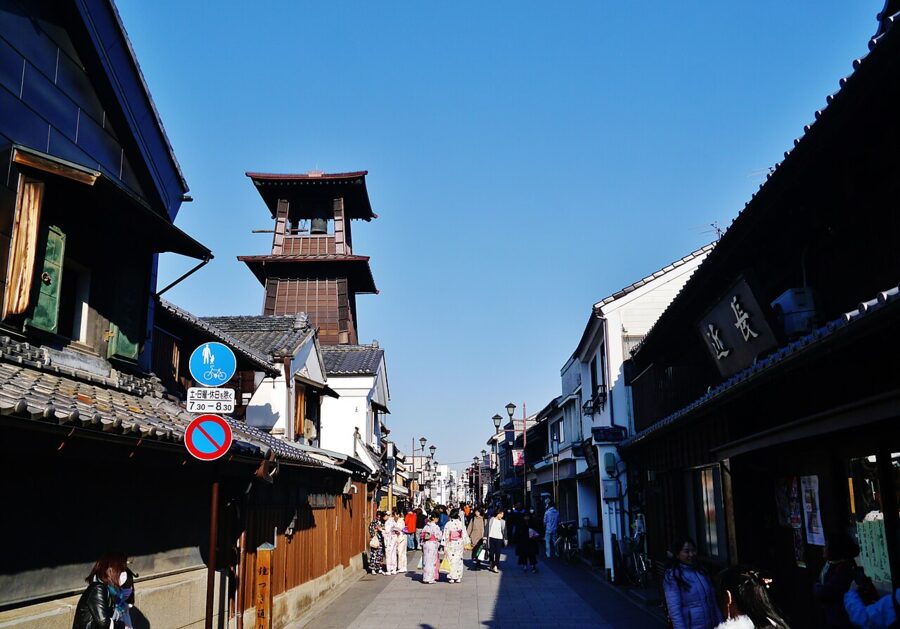
At noon the bell in Kawagoe’s wooden tower strikes, and on a fine Saturday the lane below fills with raised phones. Most of the people holding them came out from Tokyo that morning, on three railways that never meet: Tobu from Ikebukuro, Seibu from its own terminus at Seibu-Shinjuku, and JR from Shinjuku by way of Omiya.
The choice matters more than the distance suggests. Kawagoe is only 30.5 km from Ikebukuro, but the three lines end at three different stations, one of them ten minutes’ walk closer to the old streets, and the fares now differ by more than half. Pick badly and you spend an extra half hour and a few hundred yen to hear the same bell.
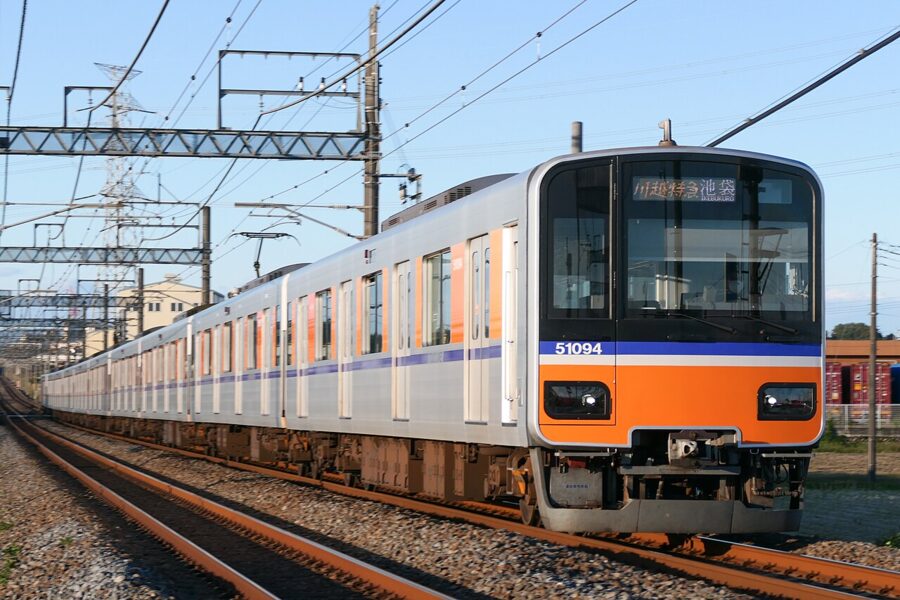
For most people the answer is the Tobu Tojo Line from Ikebukuro: ¥490 (about US$3), 26 to 32 minutes, a train every few minutes. Seibu earns its place if you are staying near Shinjuku, and JR only makes sense with a Japan Rail Pass in your pocket.



Tobu, Seibu or JR: the three ways in
Kawagoe has three stations that matter. Kawagoe (川越), shared by Tobu and JR, is at the south end of town. Kawagoeshi (川越市), one stop further on Tobu, is about halfway to the old streets. Hon-Kawagoe (本川越) is Seibu’s terminus and the closest of the three to the warehouse street.
Fares below are adult singles as of November 2026. JR East and Seibu both raised fares on 14 March 2026; Tobu held its fares, which widened the gap.
| Railway | From | To | Fastest | Usual train | Ticket | IC card |
|---|---|---|---|---|---|---|
| Tobu Tojo Line | Ikebukuro | Kawagoe or Kawagoeshi | 26 min (Kawagoe Tokkyu) | 32 min by express, several an hour | ¥490 | ¥481 |
| Seibu Shinjuku Line | Seibu-Shinjuku | Hon-Kawagoe | 44 min (Koedo, +¥600 seat charge) | about 60 min by express | ¥600 | ¥592 |
| JR Saikyo and Kawagoe Lines | Shinjuku | Kawagoe | about 50 min (rapid) | about 60 min, three rapids an hour | ¥810 | ¥803 |
| Tokyo Metro Fukutoshin and Tobu | Shinjuku-sanchome or Shibuya | Kawagoe | about 45 min from Shibuya | through trains, or change at Wako-shi | ¥590 from Shinjuku-sanchome | – |
A Suica or Pasmo works on all of them, saves a few yen on the IC fare and spares you the fare chart.
Tobu Tojo Line from Ikebukuro
The Tobu Tojo Line leaves from its own platforms on the west side of Ikebukuro, and every train starts there, so you can let a full one go and take a seat on the next. Expresses (急行) run roughly every ten minutes in the middle of the day and reach Kawagoe in 32 minutes.
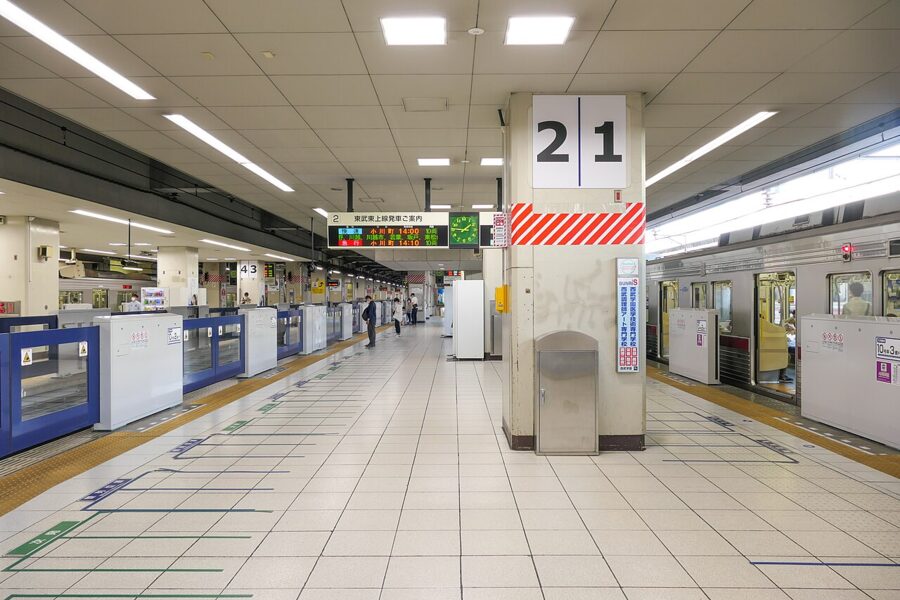

The train worth catching is the Kawagoe Tokkyu (川越特急), which despite the name needs no supplement. As of the November 2026 timetable it leaves Ikebukuro at 10:00, 10:30 and 11:00, weekdays and weekends alike, and takes 26 minutes. Coming back, it leaves Kawagoe at 16:20 and then about every half hour into the evening.
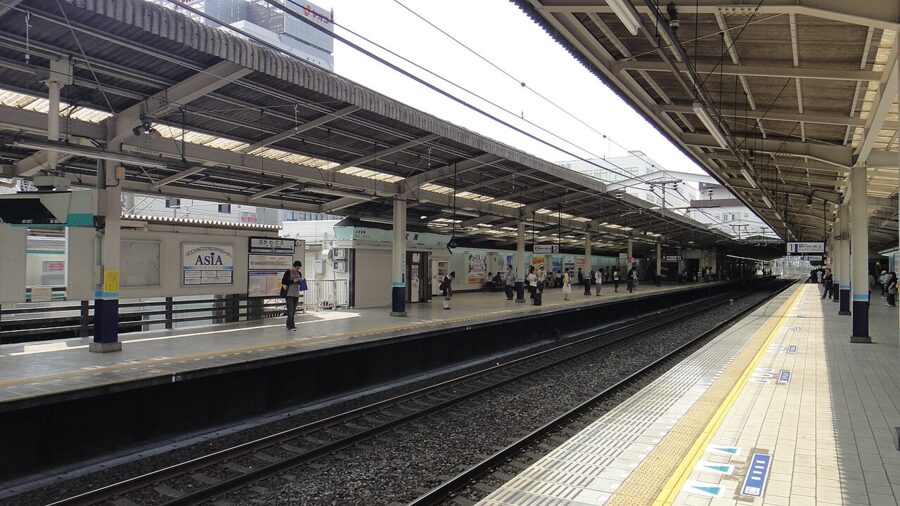

The reserved-seat TJ Liner is a commuter train and no use for a day trip: it leaves Ikebukuro from 17:00 for a seat charge of ¥360 (about US$2). From Shibuya or Yokohama, Fukutoshin Line through trains run straight onto the Tojo Line, with no change at Ikebukuro.
Seibu Shinjuku Line to Hon-Kawagoe
Seibu’s Shinjuku Line does not start at Shinjuku Station. It starts at Seibu-Shinjuku, a separate terminus on the Kabukicho side of Yasukuni-dori, seven or eight minutes’ walk from the JR gates. Takadanobaba, on the Yamanote Line, is the easier place to board.
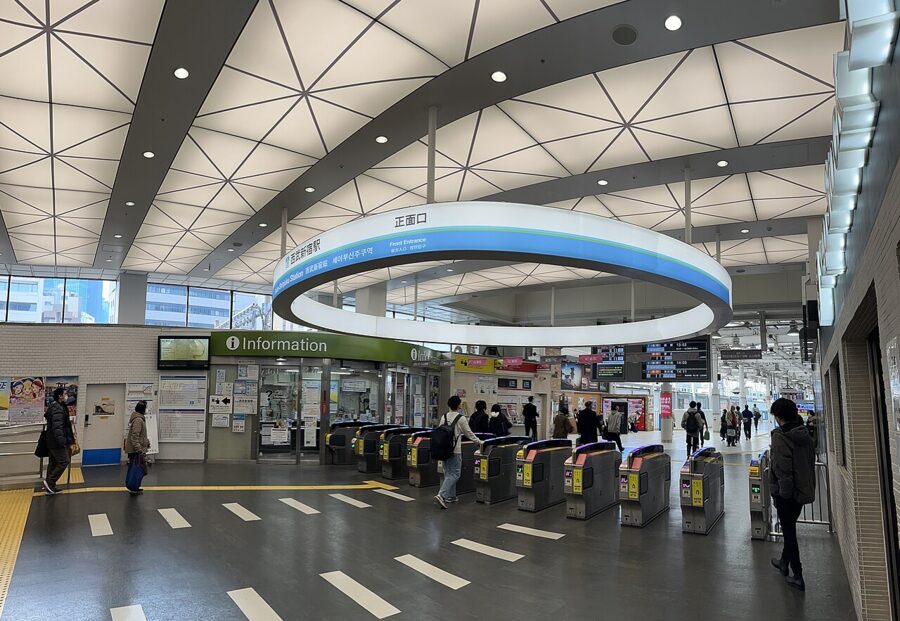

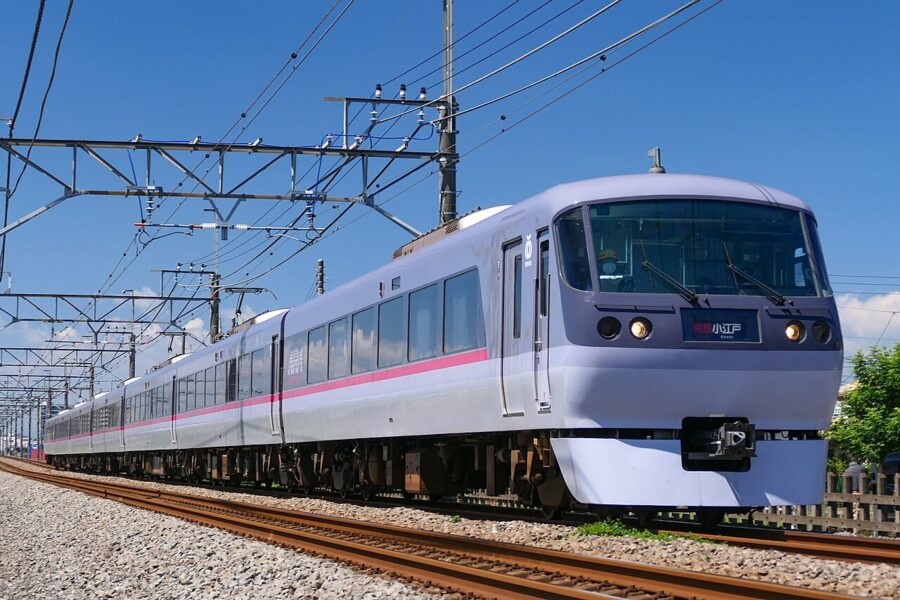
An express takes about an hour to Hon-Kawagoe for ¥600 (about US$4), sometimes with a change on the way. The all-reserved Koedo (小江戸) limited express does it in 44 minutes, stopping at Takadanobaba, Higashi-Murayama, Tokorozawa and Sayamashi, for a charge of ¥600 on top of the fare, ¥200 (about US$1) more if you buy it on board.
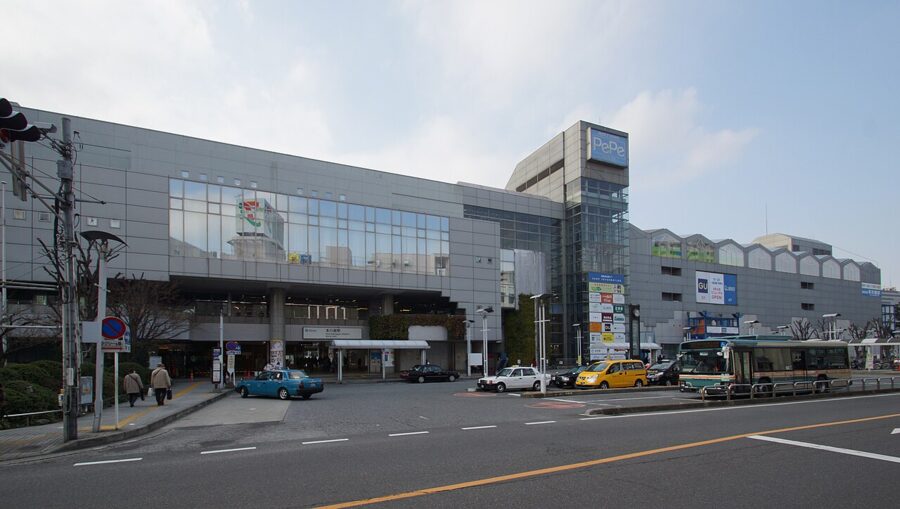

Weekday Koedo trains back from Hon-Kawagoe leave about once an hour, mostly at 33 minutes past. If you want to ride the 10000 series, ride it this winter: from spring 2027 the Koedo becomes the Tokiiro Express, with new trains and extra stops at Tanashi and Shin-Tokorozawa. Seibu had not announced its times or charges as of November 2026.
JR Kawagoe Line from Shinjuku
JR is the slow, dear way in. Saikyo Line rapids run from Shinjuku through Ikebukuro to Omiya, then carry on along the Kawagoe Line and swing back west to Kawagoe. The through rapid takes about 50 minutes from Shinjuku and costs ¥810 (about US$5) after the March 2026 rise, or ¥720 (about US$5) from Ikebukuro, against Tobu’s ¥490.
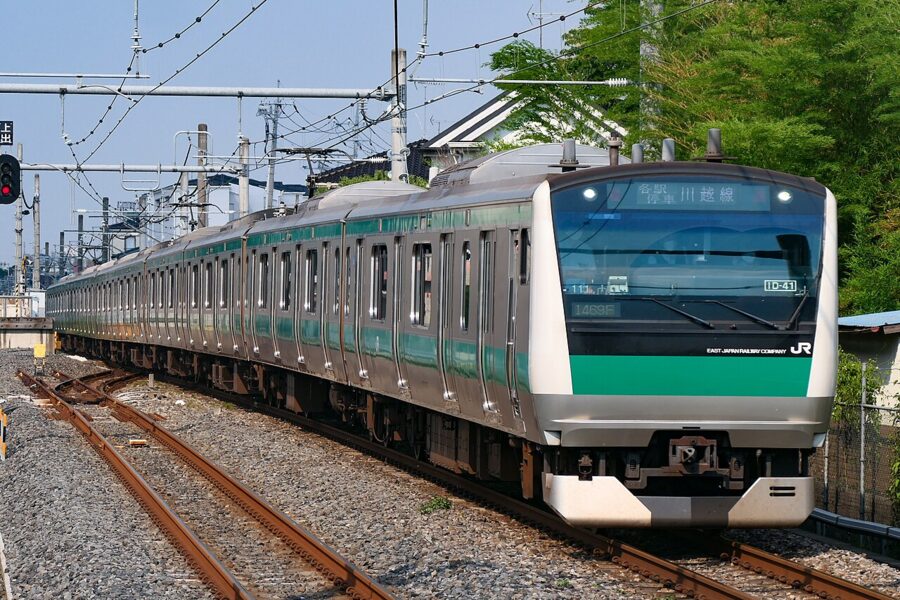

The case for JR is the Japan Rail Pass, which covers the whole route. Look for 快速 (rapid) or 通勤快速 (commuter rapid) running through to Kawagoe; daytime rapids leave Kawagoe for Shinjuku at 5, 25 and 45 minutes past the hour. The trains are E233-7000s, the Saikyo Line’s own units.
Which station for the warehouse street
The warehouse street, Ichibangai (一番街), runs north from the Nakacho crossroads to the Fuda-no-tsuji junction. From Hon-Kawagoe it is about fifteen minutes on foot, from Kawagoeshi a little more, and from Kawagoe about 25 minutes, most of it along the Crea Mall shopping street rather than the main road. Whichever way you come, finish on Taisho Roman Yume-dori (大正浪漫夢通り), a short street of old shopfronts on the way up to Ichibangai.
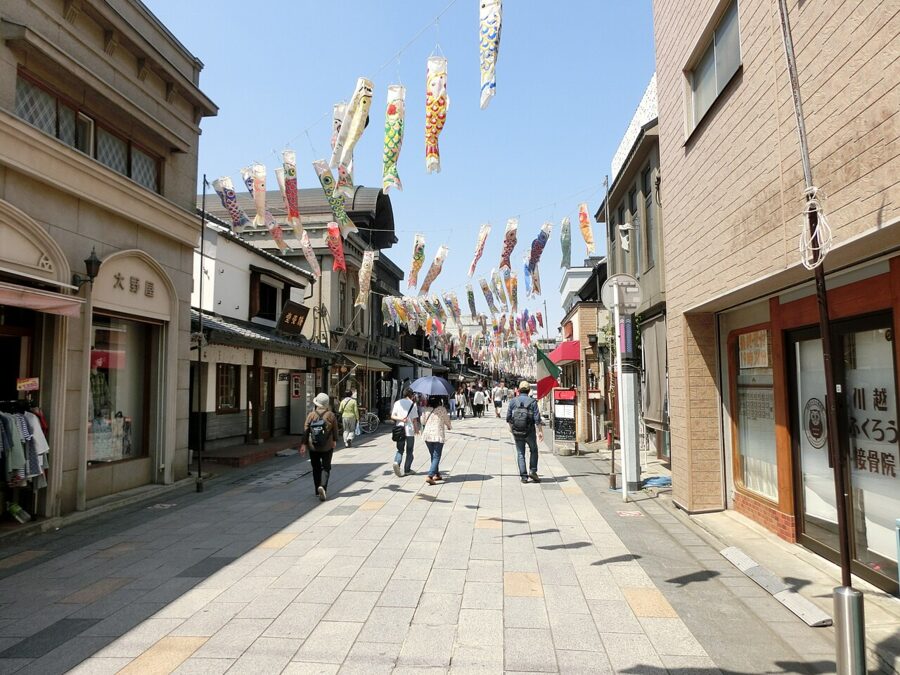
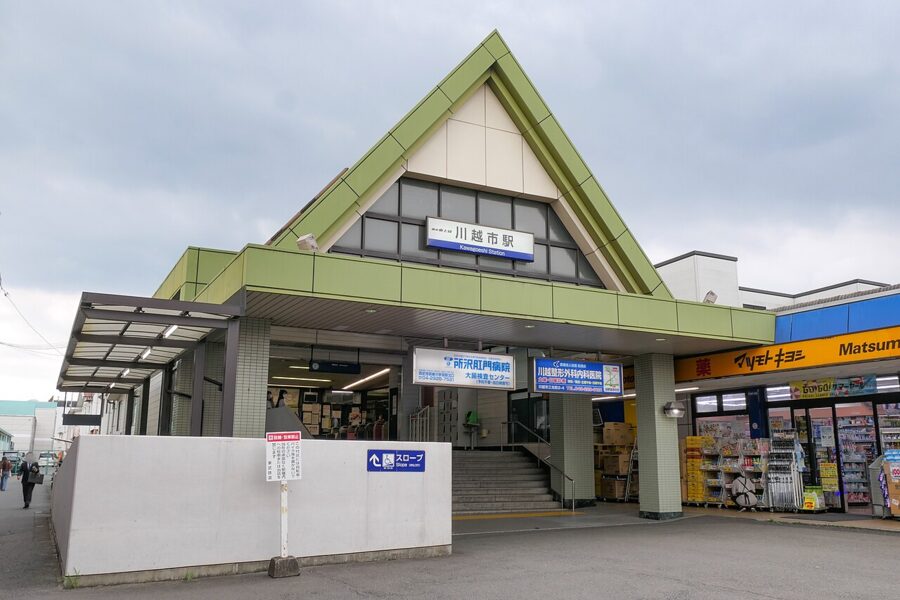

The sensible pattern is to arrive at Kawagoe, walk or bus north, and leave from whichever of Kawagoeshi or Hon-Kawagoe is nearer when your feet give out. On a Tobu ticket Kawagoeshi costs the same and saves the long walk back to the south end.
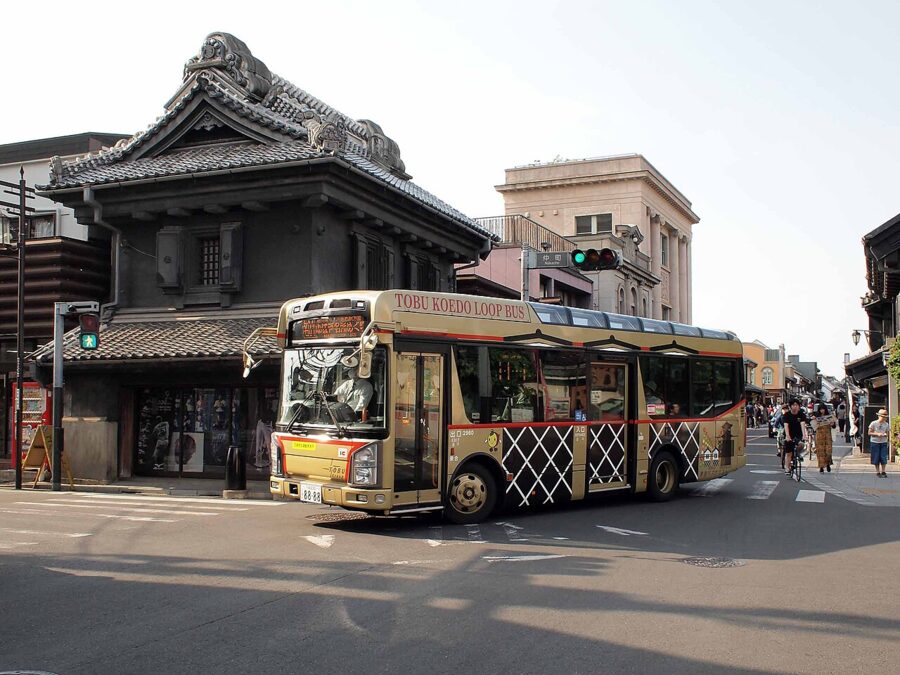
Tobu’s Koedo Meisho Meguri Bus, which Tobu calls the Koedo Loop Bus in English, runs from Kawagoe Station past the main sights, and its one-day ticket costs ¥500 (about US$3). A separate operator runs the Koedo Junkai loop bus that Seibu’s pass includes. On Sunday 29 November 2026 Tobu’s loop bus is suspended from 07:30 to 12:00 for the Koedo Kawagoe Half Marathon.

The passes, and which one pays
A Tobu round trip from Ikebukuro is ¥980 (about US$6). Every Kawagoe pass is built on that, plus local buses and a sheet of shop discounts, so the only real question is whether you will ride the bus.
Tobu sells two versions of the same thing. The KAWAGOE DISCOUNT PASS Premium costs ¥1,200 (about US$8) since 1 April 2026, when Tobu dropped the cheaper bus-less version. It covers the round trip from Ikebukuro to Kawagoe or Kawagoeshi, free rides between those two stations, and a day on Tobu buses in central Kawagoe.
The Japanese version is cheaper. The Koedo Kawagoe Coupon (小江戸川越クーポン) costs ¥1,110 (about US$7) from Ikebukuro for the same train and bus cover, from Tojo Line ticket machines and windows, valid ten days for use on one. Neither works on the two Kawagoe Festival days in October or from 31 December to 3 January.
Against ¥980 for the train and ¥500 for the bus, either pays the moment you would have bought the bus ticket anyway. If you plan to walk, as most people can on a dry day, tap in with your IC card and keep the change. Tobu’s smartphone-only Kawagoe Retro Trip Kippu (川越れとろトリップきっぷ) adds shop vouchers from ¥1,600 (about US$10), and pays only if you wanted those shops.
On Seibu, the SEIBU KAWAGOE PASS is ¥1,000 (about US$6) for a round trip between Hon-Kawagoe and Seibu-Shinjuku, Takadanobaba or Ikebukuro, against ¥1,200 for two tickets. It is for adults with non-Japanese passports and is good for one day. A version with a day on the Koedo Junkai bus is ¥1,500 (about US$9), and neither covers the Koedo’s seat charge. JR has no Kawagoe pass at all.
The warehouse street and the sights
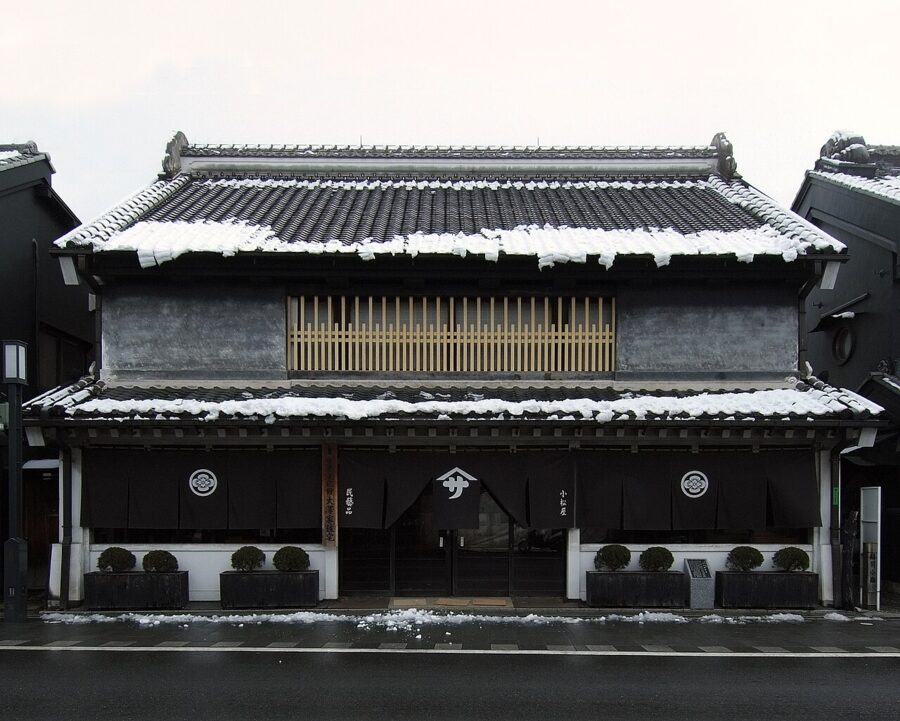
Kawagoe was a castle town that fed Edo by river, and its merchants did well from it. In March 1893 a fire burned a large part of the town, and the merchants who rebuilt chose the fireproof kurazukuri (蔵造り) style: thick black clay walls, heavy tiled roofs and shutters that close like a safe. About twenty of those buildings still line Ichibangai, a national preservation district for traditional buildings since 1999.
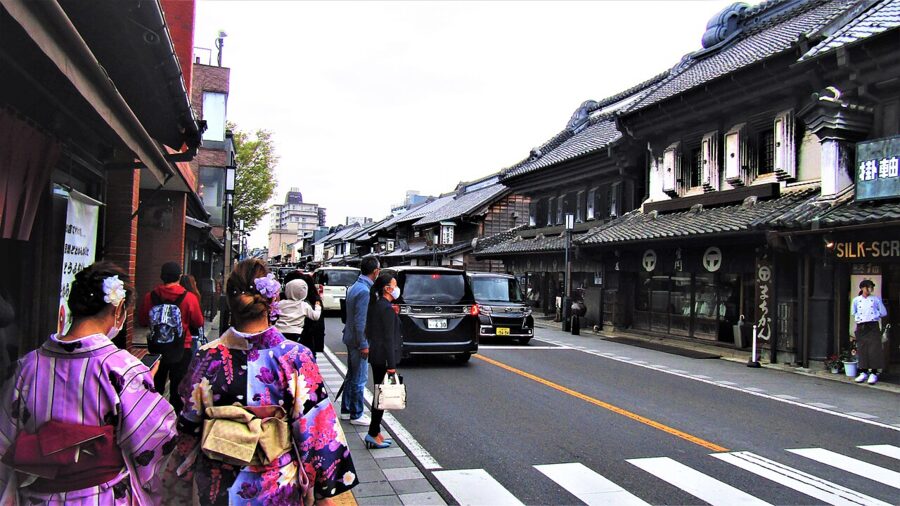

The street is short, and the danger is walking it in ten minutes and wondering what the fuss was. Slow down, look up at the big onigawara ridge tiles, and go inside the shops that let you: the merchants’ houses run deep, with storehouses behind the shopfront.

Toki no Kane, the bell tower
Toki no Kane (時の鐘) stands a few steps east of Ichibangai on a side street, Kanetsuki-dori. A bell tower has stood here since the Kan’ei era (1624–1644), when the lord of Kawagoe Castle, Sakai Tadakatsu, built the first. The present one, three storeys and about 16 m, was rebuilt in 1894 after the great fire.
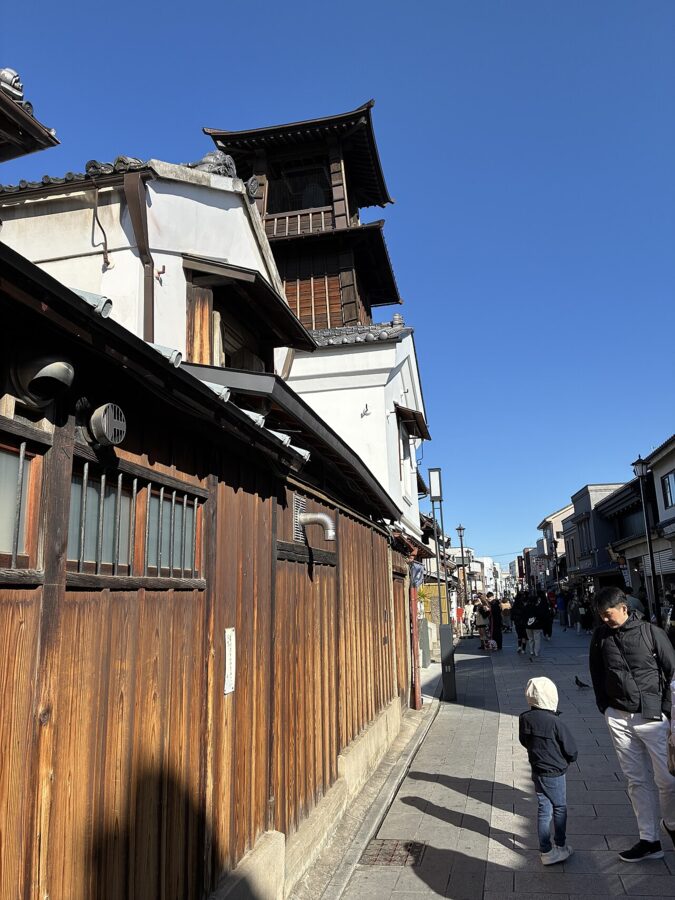

You cannot go up it. The bell rings at 06:00, 12:00, 15:00 and 18:00, and the 15:00 strike draws a fraction of the noon crowd. That is the one I would wait for.
Kashiya Yokocho, Candy Alley
Five minutes north-west of the bell, Kashiya Yokocho (菓子屋横丁) is a crooked, stone-paved lane of sweet shops. It grew after the 1923 earthquake, when Kawagoe confectioners made the cheap sweets Tokyo could no longer make for itself, and it still sells dagashi, the penny sweets of a Showa childhood.
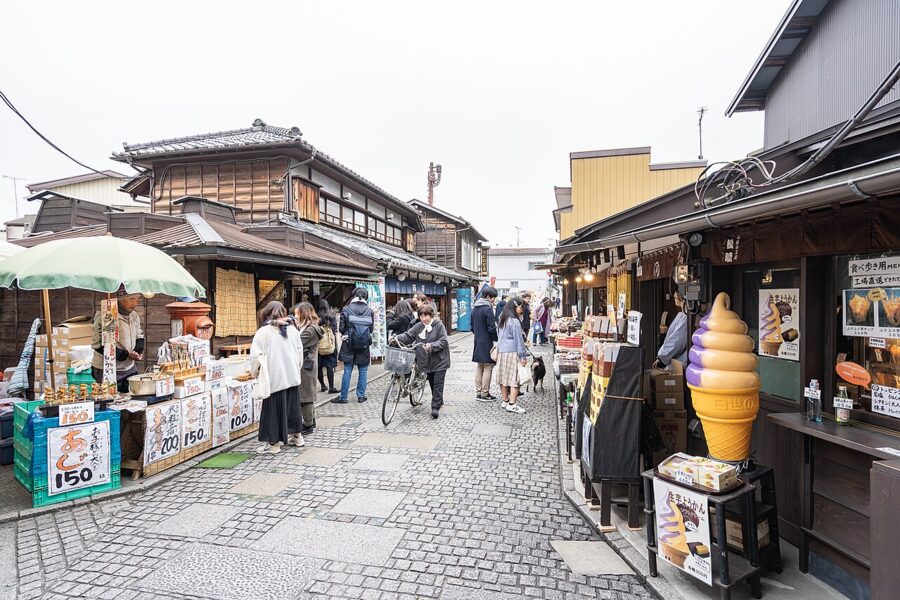

The smell is part of the attraction: the Environment Ministry named the lane one of a hundred places in Japan with a scent worth keeping. Go before 11:00 at a weekend or accept that you will queue for everything.
Kitain and its 538 rakan
Kitain (喜多院) is the big temple in the south-east of town, about fifteen minutes’ walk from Ichibangai. Its abbot Tenkai advised the first three Tokugawa shoguns, and after a fire in 1638 the third, Iemitsu, had halls moved here from Edo Castle. Inside are the room where he is said to have been born and the dressing room of his nurse, Kasuga no Tsubone.
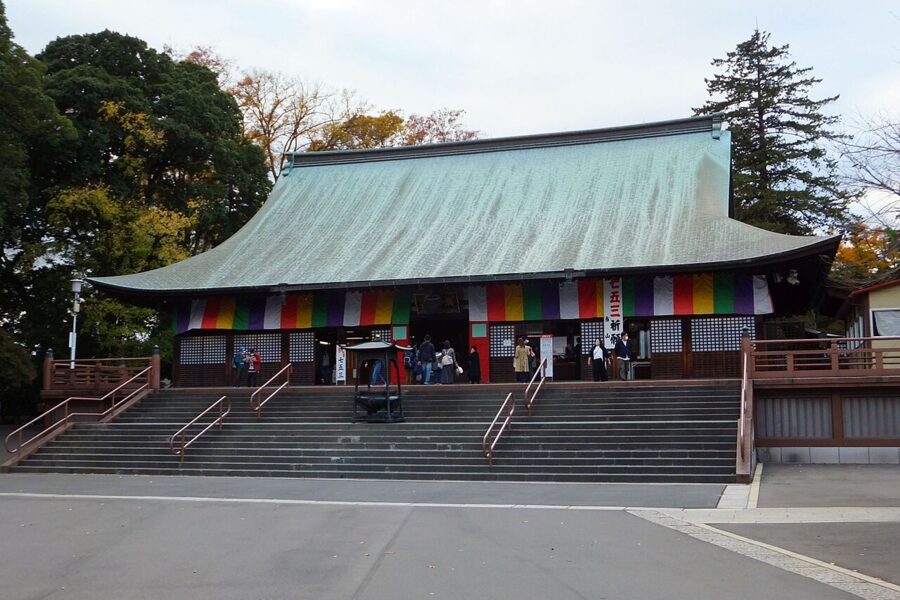

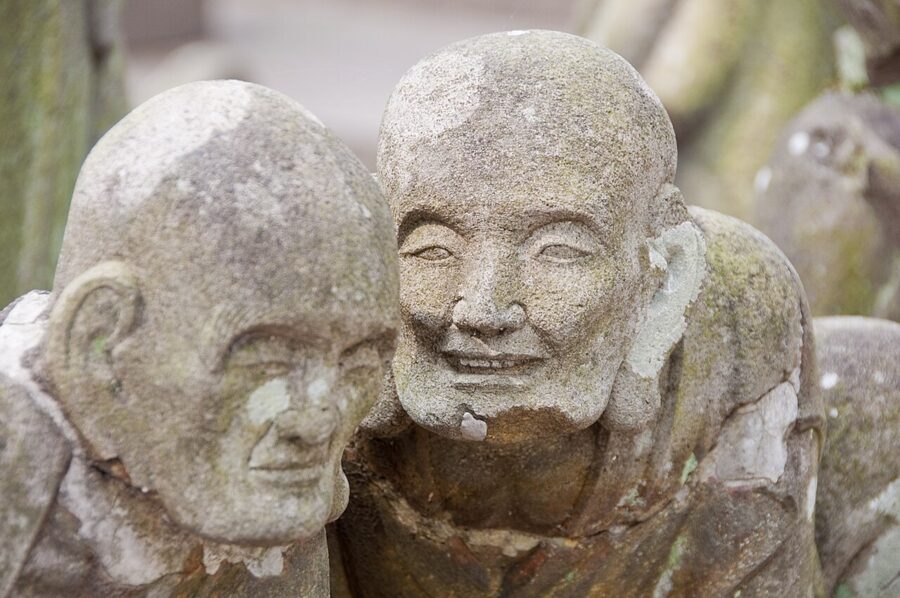
The 500 rakan (五百羅漢) are what people come for: 538 stone disciples of the Buddha in a garden beside the Sanmon gate. Admission to the halls and the rakan is ¥400 (about US$3) as of 2026. On weekdays it opens 09:00–16:30 from 1 March to 23 November and 09:00–16:00 in winter, a little later on Sundays and holidays, with last entry 30 minutes before closing.
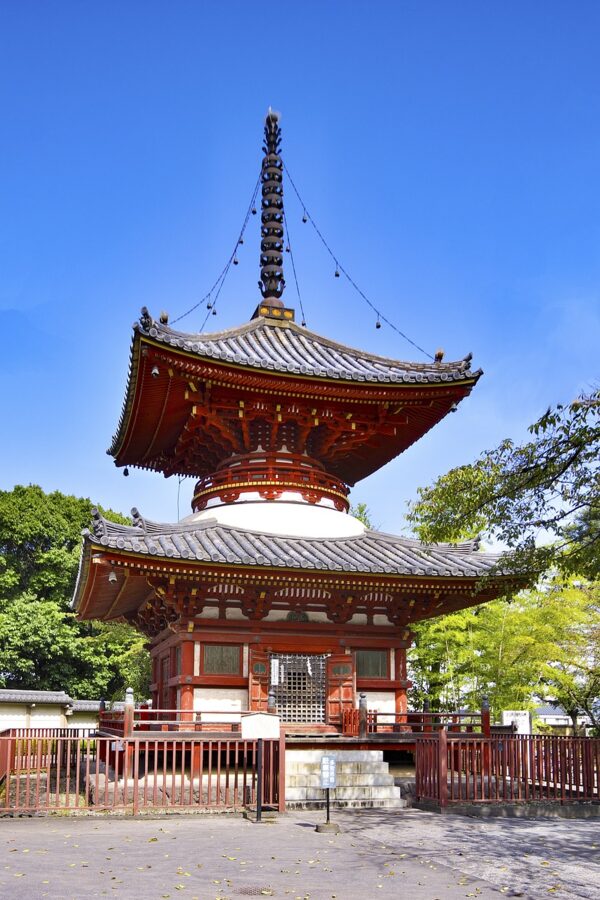
The halls close from 25 December to 8 January and on a few days in February and April. Come in late autumn, when the maples turn.
Hikawa Shrine and the summer wind chimes
Kawagoe Hikawa Shrine (川越氷川神社), about fifteen minutes’ walk north-east of the bell, has been the town’s guardian shrine since the castle was built in 1457, and claims a founding some 1,500 years ago. It enshrines two married couples among its gods, which is why it does such business in matchmaking.
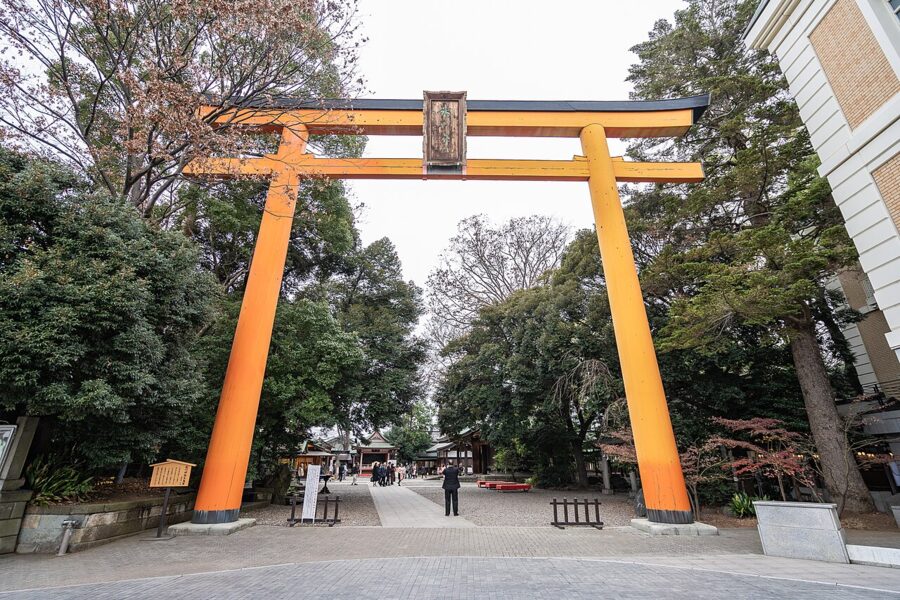

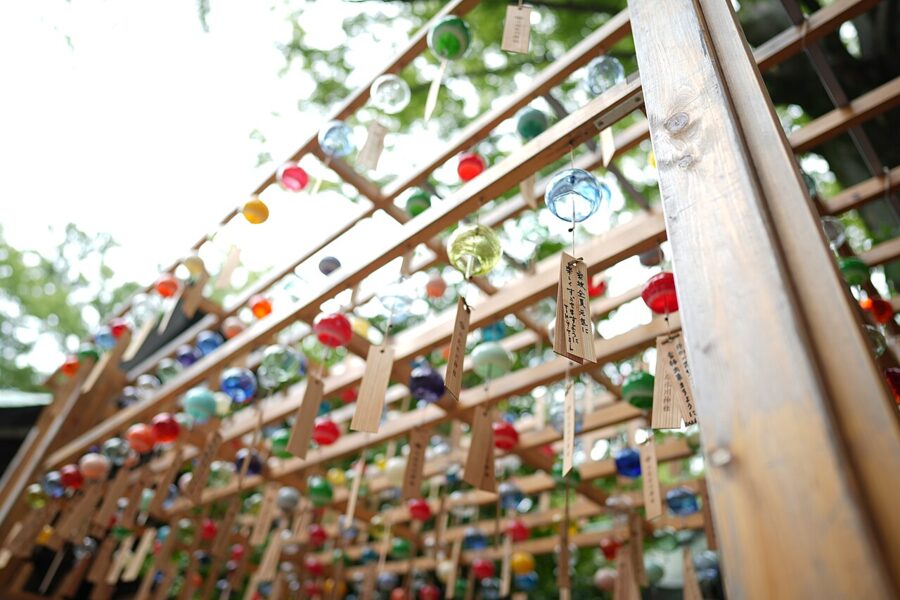
In summer the shrine hangs around 2,000 Edo glass wind chimes along a corridor for the Enmusubi Furin (縁むすび風鈴), and you tie a wooden wish strip to one. The 2026 run lasted from 27 June to 6 September, with the chimes lit after dark, which is when to go. The 2027 dates were not out as of November 2026.

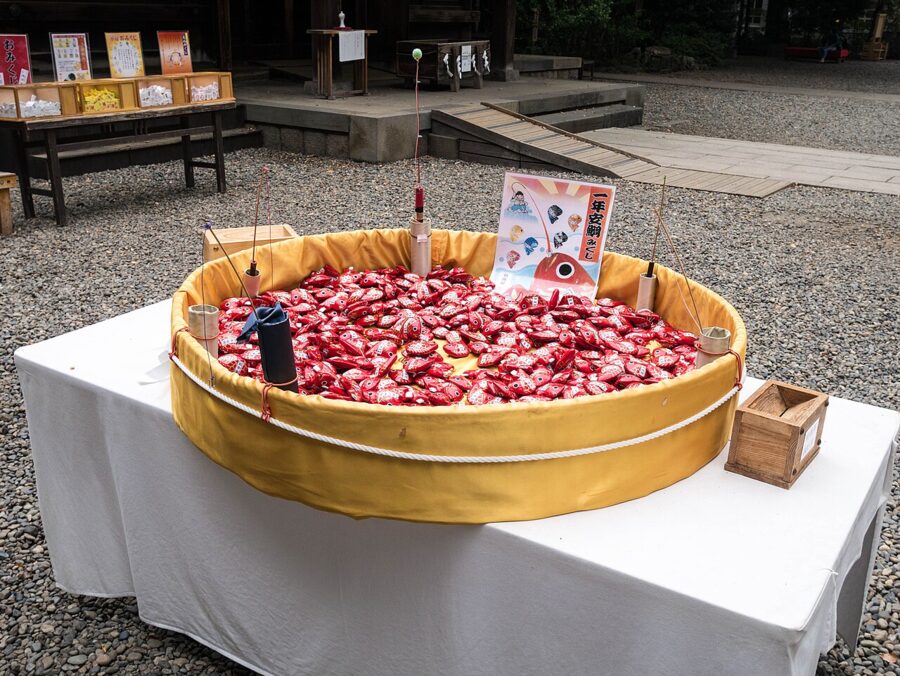
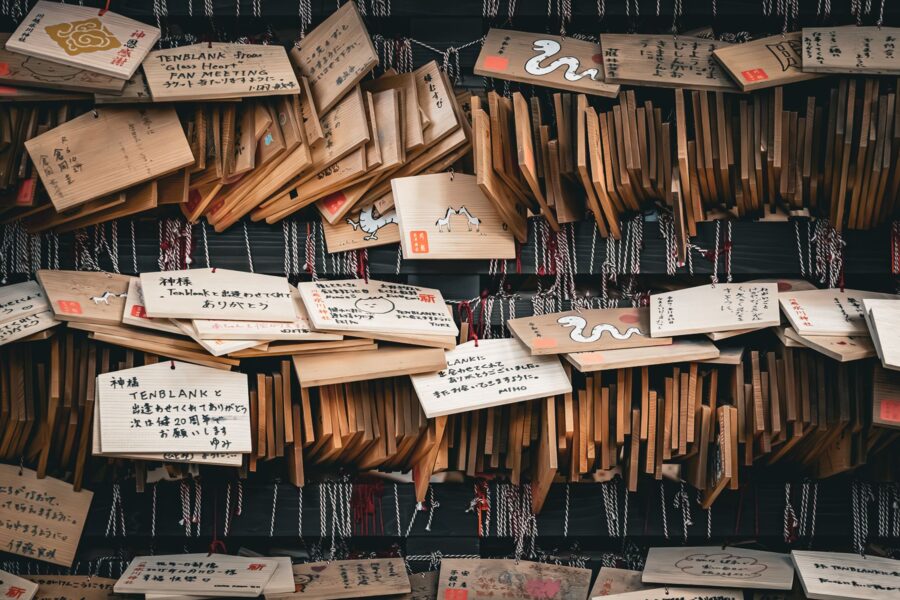
The rest of the year the draw is the fortunes. You fish for one with a small rod, hooking a red sea bream from a basket, and the slip is inside. The ema votive boards, painted with two horses nose to nose, hang so thickly that they form a tunnel.

Sweet potatoes, eel and the October festival
Sweet potatoes made Kawagoe’s name in Edo, where roast-potato sellers had a pun: kuri yori umai jusanri, “better than chestnuts, thirteen ri”. Kuri sounds like nine ri, yori like four more, and Kawagoe is said to lie about thirteen ri, some 52 km, from Nihonbashi. The shops around Ichibangai still sell the potato in every form they can think of.
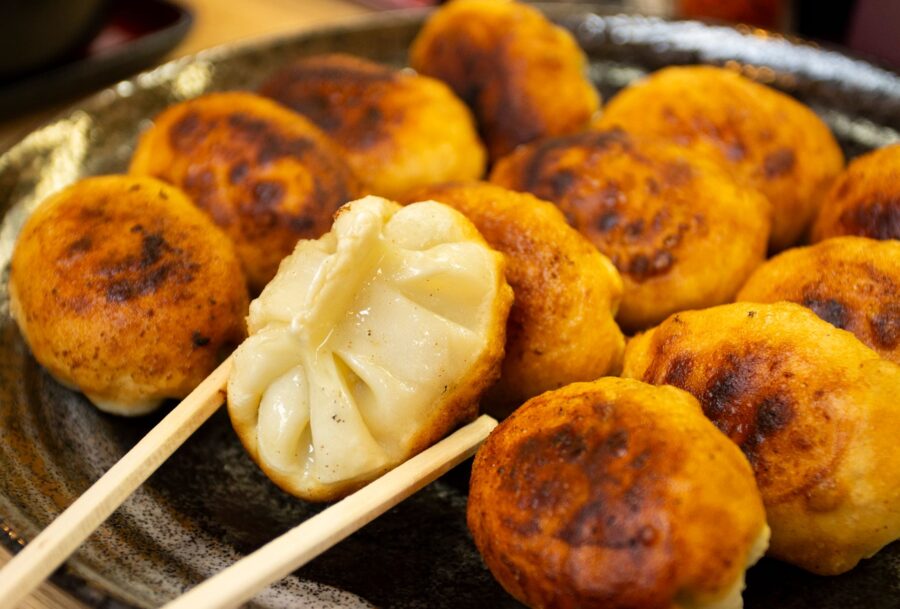
The two things to eat are imo-koi, the confectioner Kasho Umon’s sweet-potato bun, and grilled eel. Kawagoe sits among rivers and was a soy-sauce town, and Ogakiku, in business since 1807, is the famous eel house; its unaju was ¥3,950 (about US$25) in a January 2026 listing, and the weekend queue is long. Torokko, in a kura of the Yamawa crockery shop, serves a sweet-potato mini kaiseki at lunch by reservation, ¥2,400 (about US$15) in the same listing.
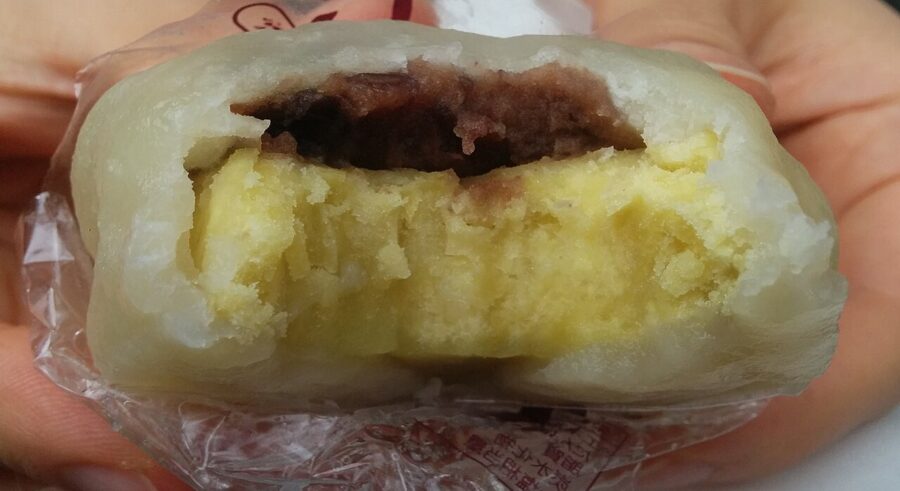

Ichibangai is a daytime street. Do your eating by late afternoon, because the stalls start packing up long before the last train.
The Kawagoe Festival
The Kawagoe Festival (川越まつり) is held on the third Sunday of October and the day before. Tall floats, each topped with a doll from history or legend, are pulled through the old streets with musicians on board, and when two meet they face off in a hikkawase, a contest of music and lanterns. The night ones are the best.
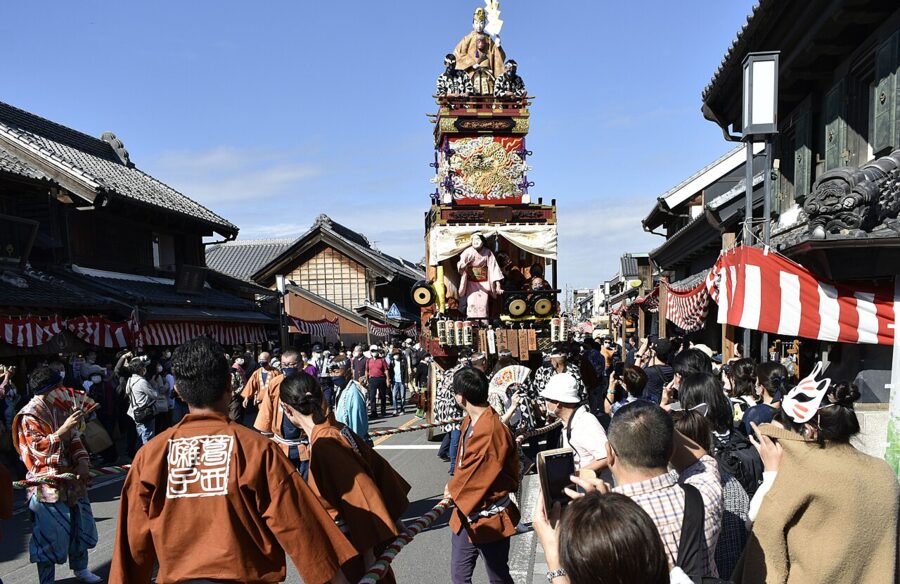

The 2026 festival on 17 and 18 October drew about 666,000 people, despite rain that cancelled the float procession past the city hall. By the rule, 2027’s falls on 16 and 17 October. Go by train, expect Tobu’s passes to be unusable, and expect every train back to Tokyo after dark to be full. Out of season, the Kawagoe Festival Museum (川越まつり会館), just off Ichibangai, keeps real floats on display on a published rota.
Crowds, and when to go
Kawagoe is close, cheap and famous, and on autumn weekends it shows. Ichibangai is busiest from late morning to mid-afternoon. Weekdays are far calmer, and an early weekday train gets you a street with almost nobody on it.
Some people leave disappointed, because the old town is small. Give it half a day, walk the temple, the shrine and the sweet lane as well as Ichibangai, and it holds up. If you would rather have temples and the sea than merchant streets, Kamakura and Enoshima is the other easy day out.
A half day in order
This uses Tobu both ways. From Shinjuku, swap in Seibu and Hon-Kawagoe at either end.
- 10:00 Kawagoe Tokkyu from Ikebukuro, arriving Kawagoe at 10:26. Tap in with your IC card, or buy the Koedo Kawagoe Coupon at the machine if you mean to use the bus.
- 10:40 Bus or walk to Kitain. See the rakan while they are quiet.
- 11:40 Walk to Ichibangai, about fifteen minutes, and work up the street to Kanetsuki-dori for the noon bell.
- 12:15 Lunch: eel if you will queue, potato snacks if you will not.
- 13:30 Kashiya Yokocho, then the Festival Museum or straight on to Hikawa Shrine, about fifteen minutes east.
- 15:00 The quiet bell, if you double back, or a fortune at Hikawa.
- 16:00 Walk or bus to Kawagoe for the 16:20 Kawagoe Tokkyu, in Ikebukuro by about 16:50.
On a Tobu ticket that is ¥980 for the day, plus whatever the potatoes cost. Take the 10:00 from Ikebukuro and be on Kanetsuki-dori before the bell strikes twelve.