
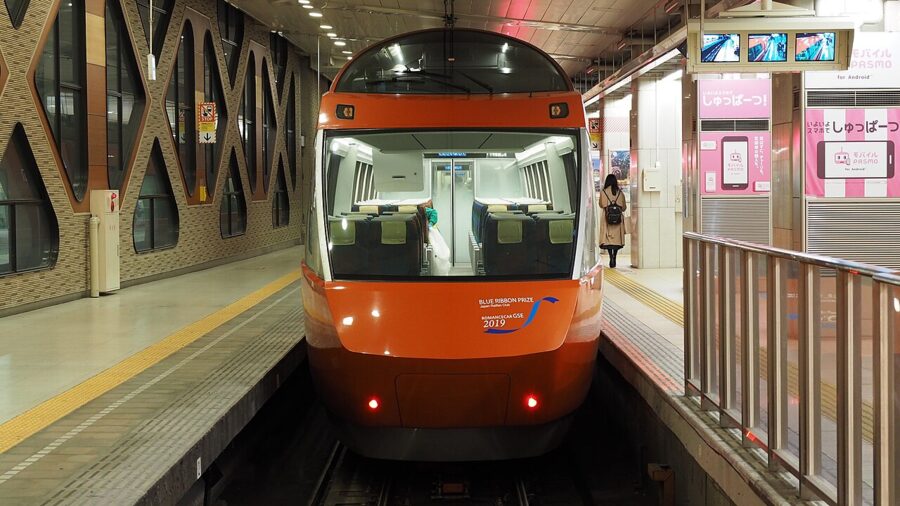
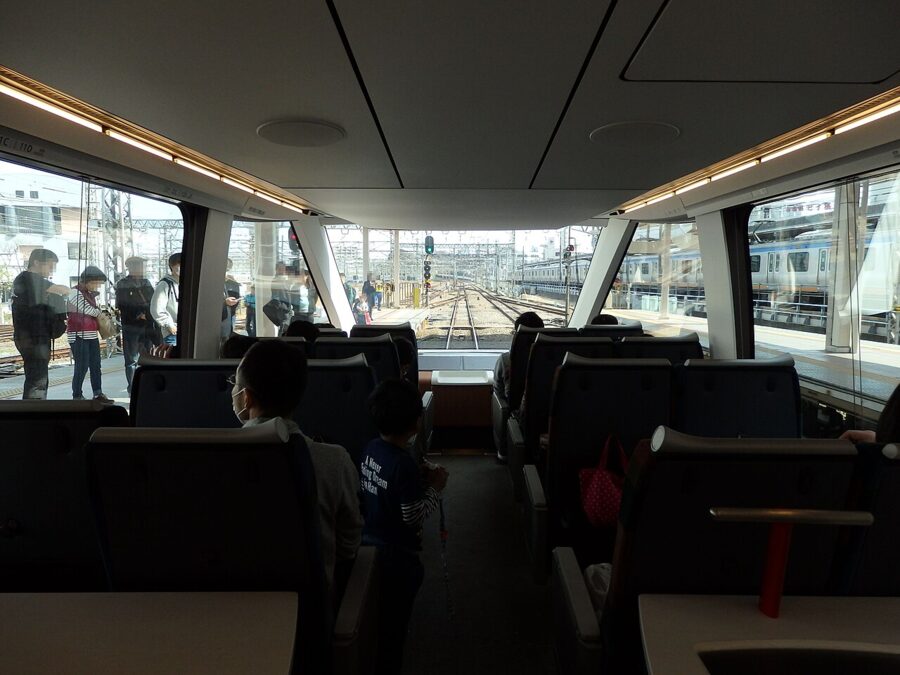
At 10:00 on a weekday the Hakone 3 pulls out of Shinjuku (新宿) and reaches Hakone-Yumoto (箱根湯本) at 11:27. The Hakone 5 leaves an hour later and takes almost exactly as long. Same limited express charge, same destination. One of them is a GSE, the red Romancecar with sixteen seats in its front window, and the other is an EXE, a sensible train built for commuters that has no front view at all.
That is the first decision of a Hakone day, and most people make it without knowing they have. The ticket machine asks for a time, a car and a seat. It does not tell you that Odakyu owns only two GSE sets and rotates them through a handful of Hakone trains a day, or that the observation seats on those trains go on sale at 10:00 a month ahead and on busy dates do not last long.
The rest of the day is easier than it looks: one railway, one pass and one loop of mountain transport, which only goes two ways. Pick the train, buy the right version of the Hakone Freepass, and be on the ropeway before mid-afternoon.

Hakone is about 85 minutes from Shinjuku by Romancecar, two hours by ordinary Odakyu trains with a change at Odawara (小田原), and under an hour from Tokyo Station if you take the Shinkansen to Odawara and the Odakyu shuttle up the valley. The Japan Rail Pass gets you only as far as Odawara. Everything beyond, including the famous loop of mountain railway, cable car, ropeway, pirate ship and bus, belongs to the Odakyu group, which is why the Odakyu pass is the one that matters.
Prices below are as of November 2026. Several changed in the last year: the ropeway, the boats, the buses and the Hakone Freepass all went up on 1 October 2025, and JR East raised its fares on 14 March 2026. The Shinkansen fare to Odawara did not change.
Getting there: Romancecar, ordinary Odakyu or Shinkansen
There are three sensible ways from central Tokyo to Hakone-Yumoto, the station where the Hakone loop starts. Which one wins depends on where you sleep in Tokyo and which pass is in your pocket.
| Route | Time to Hakone-Yumoto | Fare, one way (as of 2026) | Pass |
|---|---|---|---|
| Romancecar, Shinjuku to Hakone-Yumoto, direct | About 85 min (75 on the 09:00 Super Hakone at weekends) | ¥1,270 fare + ¥1,200 limited express charge = ¥2,470 (about US$16); ¥2,420 with an online ticket | Hakone Freepass covers the fare; you still pay the ¥1,200 charge. JR Pass not valid. |
| Ordinary Odakyu (Rapid Express or Express), change at Odawara | About 2 hours | ¥1,270 ticket, ¥1,261 IC | Fully covered by the Shinjuku Hakone Freepass |
| Tokaido Shinkansen (Kodama or Hikari) Tokyo or Shinagawa to Odawara, then Odakyu shuttle | About 30–40 min to Odawara + 15 min up the valley, plus the change | ¥3,280 (about US$21) unreserved, ¥3,810 reserved in normal season; then ¥360 Odawara to Hakone-Yumoto | JR Pass covers the Shinkansen; the Odawara Hakone Freepass covers the shuttle |
| JR Tokaido Line local or rapid, Tokyo to Odawara, then shuttle | About 80–90 min to Odawara + 15 min | ¥1,600 ticket, ¥1,595 IC (since 14 March 2026); then ¥360 | JR Pass covers it to Odawara |
If you are near Shinjuku, take the Romancecar. If you have a JR Pass or you are staying near Tokyo Station, take the Shinkansen to Odawara. The ordinary Odakyu is for the patient and the thrifty.
The Romancecar: which train is which
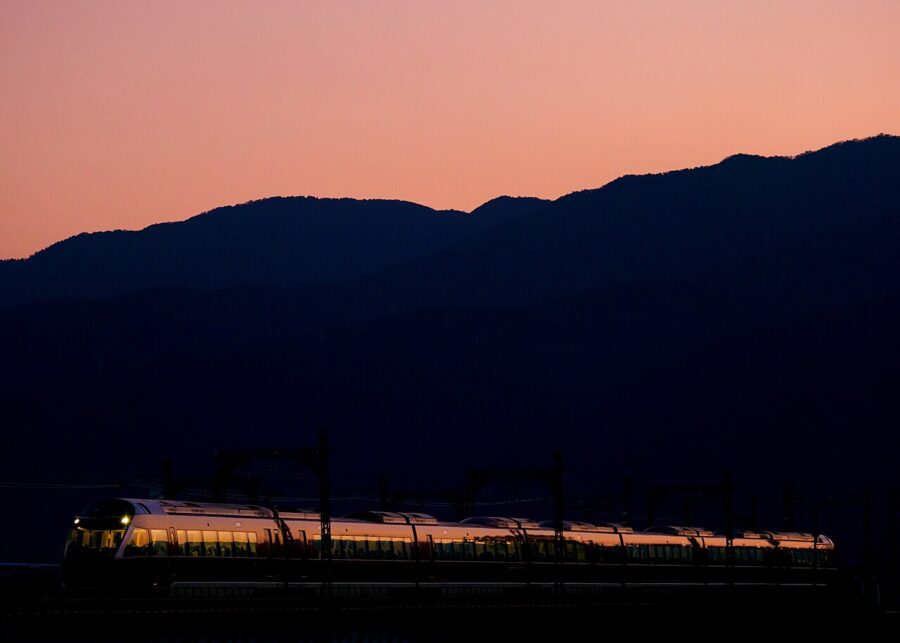
Odakyu runs three Romancecar types on its Hakone services, and the timetable letters are worth learning. The 70000 series GSE has the observation seats, the big side windows and proper space for large suitcases. The 60000 series MSE is the blue one that can run through onto the Tokyo Metro Chiyoda Line, so it handles the Metro Hakone trains that start at Kita-Senju and call at Otemachi, Kasumigaseki and Omote-sando. The 30000 series EXE and its refurbished EXEα sisters are the workhorses: comfortable, no front view, and only the EXEα has a dedicated suitcase area.
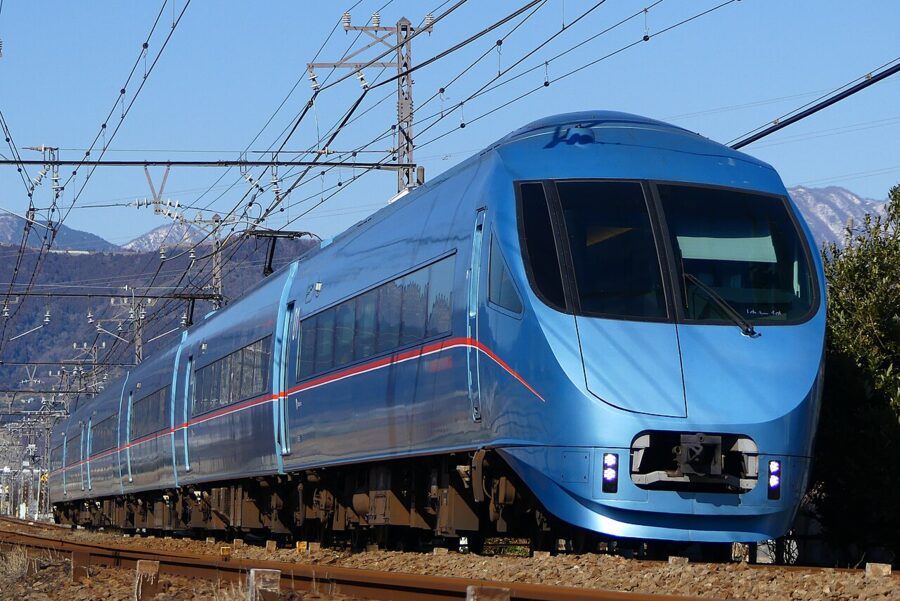

The Odakyu Line trains article covers each series in depth. For a Hakone day the short version is this: the charge is the same whichever train turns up, and the GSE is the one to book if it is running when you want to go. Why a commuter railway runs a luxury train to a mountain resort at all is the thread of the history of the Odakyu Line.
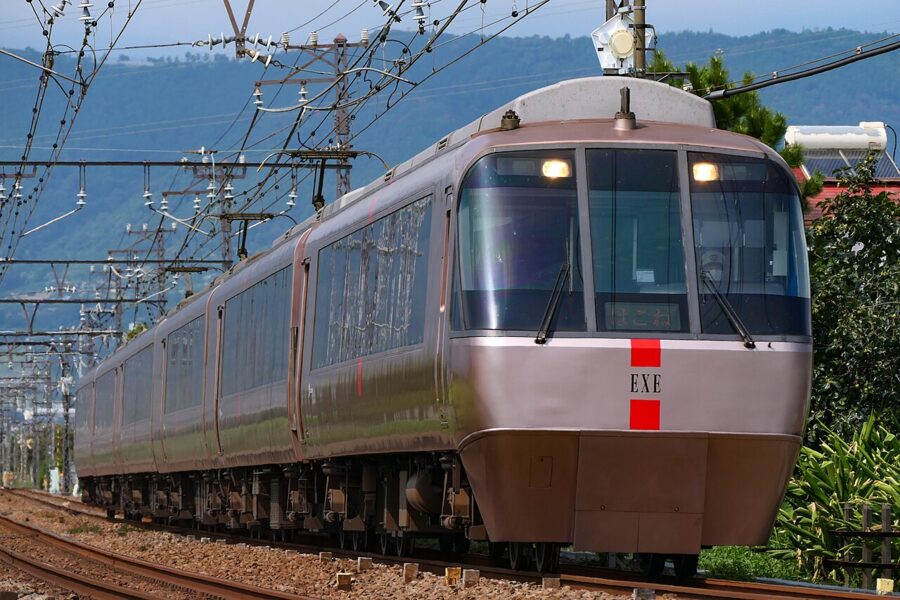

Because there are only two GSE sets, Odakyu publishes a monthly schedule of which trains carry the GSE (in Japanese, but the train numbers and times are easy to read). In November and December 2026 the pattern is the 10:00 Hakone 3, the 13:20 Hakone 27 and, on some days, the 16:00 Hakone 29 on weekdays. At weekends it is the 10:00 Super Hakone 9 and the 13:20 Hakone 21, with the 08:00 Hakone 3 on some dates. Coming back from Hakone-Yumoto, the regular GSE workings are the Hakone 6 (11:35 on weekdays, 11:38 at weekends), the 18:36 Hakone 20 on weekdays and the 18:45 Hakone 28 at weekends.
On weekdays the first Romancecar to Hakone-Yumoto leaves Shinjuku at 07:37 and arrives at 09:22, and the last is the Home Way 5 at 18:00. At weekends the Hakone 1 leaves at 07:00 and is at Hakone-Yumoto by 08:26. The Super Hakone 5 at 09:00 on Saturdays, Sundays and holidays is the fastest train on the line: Odakyu restored its 59-minute run to Odawara in the March 2026 timetable change, and it reaches Hakone-Yumoto at 10:15.
Booking the Romancecar and the observation seats
Every Romancecar seat is reserved. Limited express tickets go on sale at 10:00 Japan time one month before the day of travel, through EMot Online Tickets (smartphone only), the ticket machines and the counters. The limited express charge from Shinjuku is ¥1,200 (about US$8) to Hakone-Yumoto and ¥1,000 to Odawara, and an online ticket saves ¥50. Children aged 6 to 11 pay half.
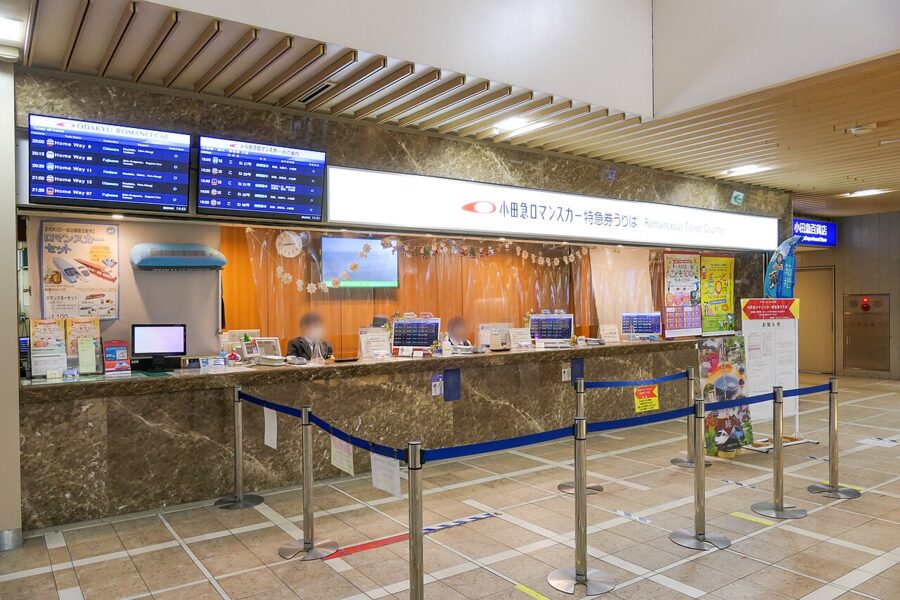

The GSE’s 16 front and 16 rear observation seats cost nothing extra, which is exactly why they sell first. For a weekend in leaf season or hydrangea season, be online at 10:00 a month ahead. Otherwise check back: cancellations come up, and a booked seat can be changed before departure. Refunds cost ¥100, and a missed train cannot be changed or refunded once it has left.
Your gate ticket is separate from the Romancecar ticket. You go through the barrier on a paper ticket, an IC card or the Freepass, and show the limited express ticket on board. A Suica or PASMO works for the fare and charges the slightly lower IC fare (¥1,261 to Hakone-Yumoto). Construction at Shinjuku’s west side keeps moving the stairs and escalators, so allow ten minutes more than you think to find the Romancecar platforms.
The ordinary Odakyu and the change at Odawara
No ordinary Odakyu train goes beyond Odawara. Take a Rapid Express (快速急行) or Express (急行) marked for Odawara from Shinjuku, then change to the four-car shuttle on the Hakone Tozan line for the last 15 minutes up the valley. The whole trip takes about two hours, Odakyu’s own estimate, and costs ¥1,270, or nothing extra on a Shinjuku Hakone Freepass.
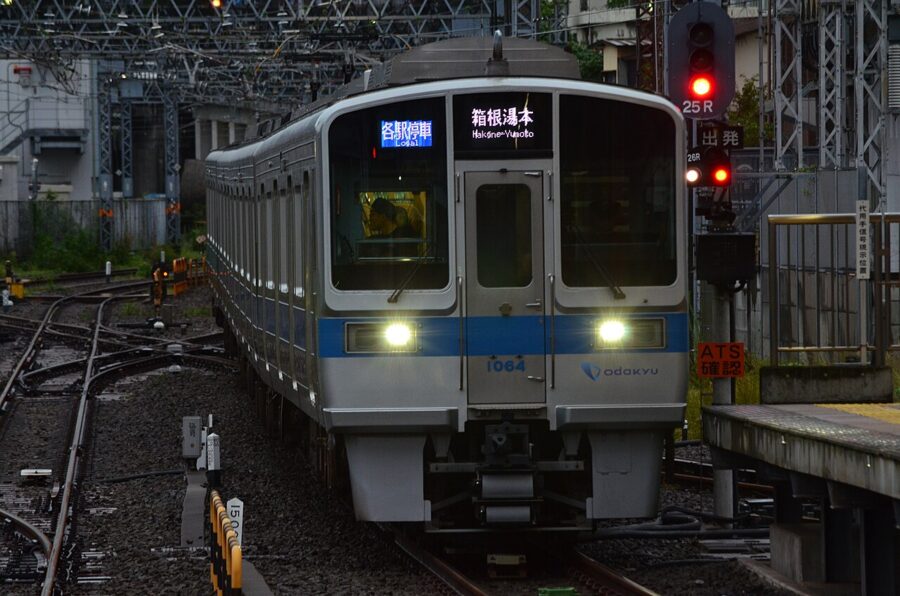

Check the destination board at Shinjuku. The line forks at Sagami-Ono for Enoshima and some trains terminate short of Odawara, so look for 小田原 on the board and on the train. The shuttle runs four or five times an hour in the daytime, and the Romancecars that terminate at Odawara connect with it too.
I would take this route on a Freepass and a quiet weekday morning with a book. On a Saturday in November, when the expresses fill up from the suburbs, spend the ¥1,200.
The Shinkansen to Odawara, with or without a JR Pass
From Tokyo or Shinagawa the Tokaido Shinkansen reaches Odawara in 30 to 40 minutes. Only the Kodama and some Hikari stop there, so check the train before you board; most Nozomi run straight through. The fare is ¥3,280 in an unreserved car or ¥3,810 reserved in the normal season, and the Japan Rail Pass covers it.
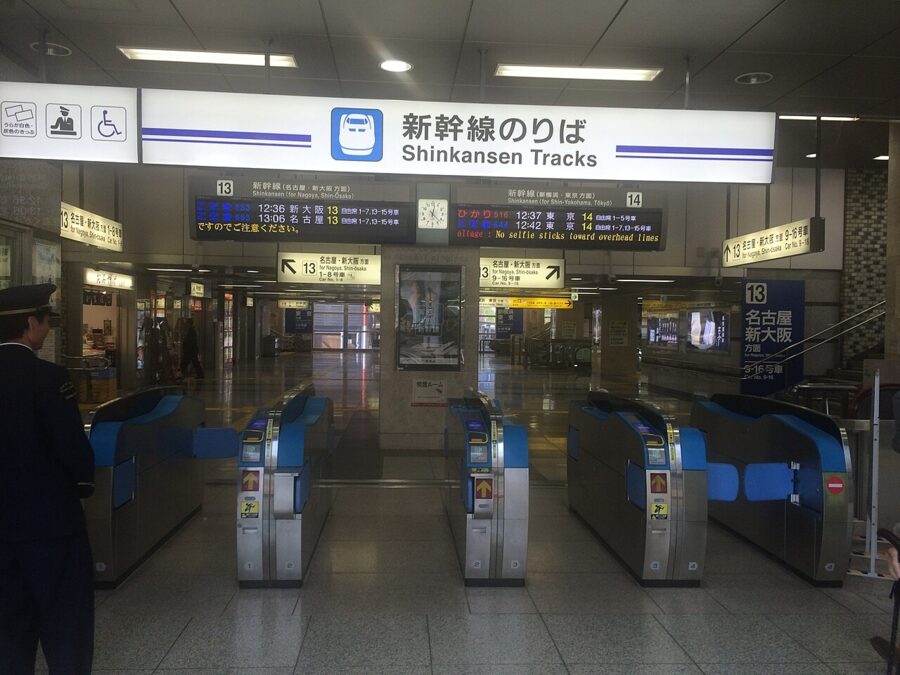

A 7-day Japan Rail Pass costs ¥50,000 bought online, and it is not worth buying for Hakone alone. It is worth using if you already have one. The pass ends at Odawara, so JR Pass holders want the Odawara version of the Hakone Freepass, which starts there.
The fare rules changed in March 2026. JR East raised its fares and the Tokyo–Atami section of the Tokaido line stopped sharing a fare with the Shinkansen, so a ticket routed by Shinkansen is no longer valid on the parallel local line. On Tokaido Line locals the Tokyo–Odawara fare is now ¥1,600, or ¥1,595 by IC; the Shinkansen fare stayed where it was. Buy the ticket for the train you will actually ride.
The Hakone Freepass: price and when it pays
The Hakone Freepass gives two or three days of unlimited rides on eight kinds of transport: the Hakone Tozan railway, the cable car, the Hakone Ropeway, the sightseeing boats, Hakone Tozan buses and Odakyu Highway buses within the Hakone area, the Tokai bus in its designated area, and the sightseeing bus that loops the museums. The Shinjuku version adds one round trip on ordinary Odakyu trains between Shinjuku and Odawara. It also takes a little off admission at around 70 places, including museums and day spas.
| Hakone Freepass (from 1 October 2025) | 2 days, adult | 3 days, adult | Child (6–11), 2 / 3 days |
|---|---|---|---|
| From Shinjuku (includes the Odakyu round trip) | ¥7,100 (about US$46) | ¥7,500 | ¥1,600 / ¥1,850 |
| From Odawara (Hakone area only) | ¥6,000 (about US$39) | ¥6,400 | ¥1,500 / ¥1,750 |
Two things it does not cover. The Romancecar charge is always extra, so a Shinjuku round trip on the Romancecar both ways comes to ¥9,500. And the Izuhakone buses, which share some roads and stops with the Hakone Tozan buses, are not valid on it.
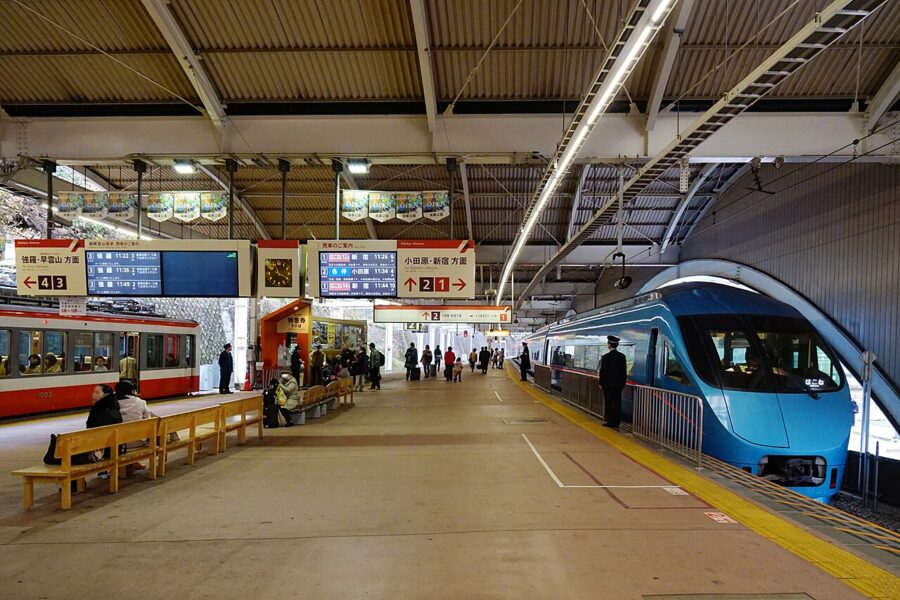

Does it pay? Add up the loop at full price from Shinjuku: ¥2,540 for the Odakyu return, ¥460 for the mountain railway to Gora, ¥2,000 for the ropeway, ¥1,700 for the boat and ¥1,210 for the bus back to Hakone-Yumoto. That is ¥7,910 before the cable car, against ¥7,100 for the pass.
From Odawara the same sum is ¥6,090 against ¥6,000. So the pass pays on any day that does the full loop, and by a wider margin if you ride anything twice or come back the next day.
It does not pay if you only want Hakone-Yumoto’s hot springs and a walk, or if a closure takes the ropeway out of your day. The 2-day pass is the default; the third day costs only ¥400 more and suits a two-night stay. A 2-day pass runs to the last train or bus of the second calendar day, and Odakyu stresses that it is not 48 hours.
Buy it on EMot Online Tickets as a QR code on your phone, or as a paper ticket from Odakyu ticket machines and the Sightseeing Service Centers at Shinjuku, Odawara and Hakone-Yumoto. It goes on sale a month ahead. One phone can hold up to four passes for a group travelling together.
The Hakone loop in order
The loop is five rides: mountain railway, cable car, ropeway, boat and bus. Done in the usual direction it climbs from Hakone-Yumoto to Gora, rises again to Sounzan, crosses the volcanic valley of Owakudani by gondola, drops to Lake Ashi at Togendai, sails to Moto-Hakone and comes back down the old highway by bus. Riding time alone is about three hours. With queues and stops it fills a day.
1. The Hakone Tozan Railway to Gora
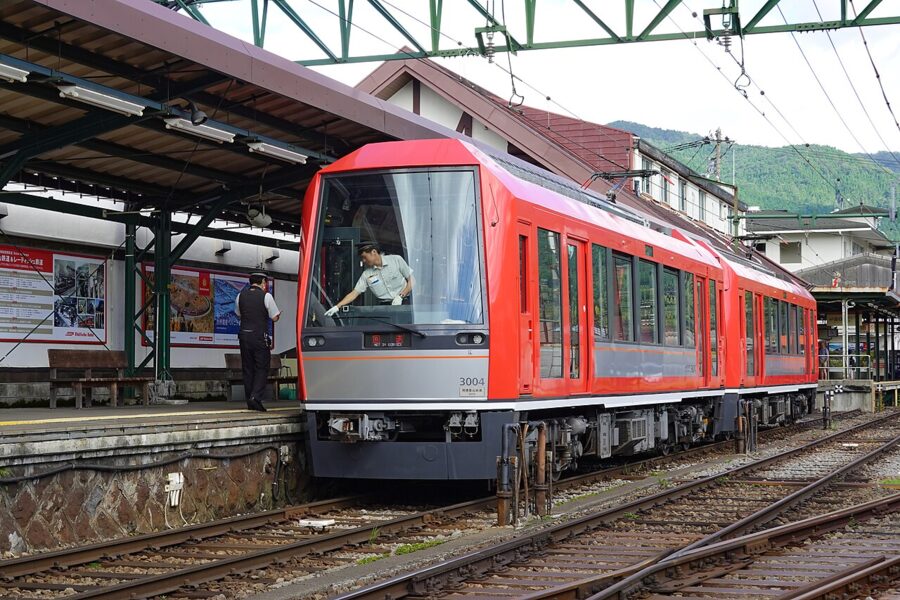
The mountain railway climbs 8.9 km from Hakone-Yumoto to Gora (強羅) in about 40 minutes, on gradients of up to 80 per mille. The operator calls it the steepest adhesion railway in Japan. Trains leave about four times an hour in the daytime, and the fare is ¥460.
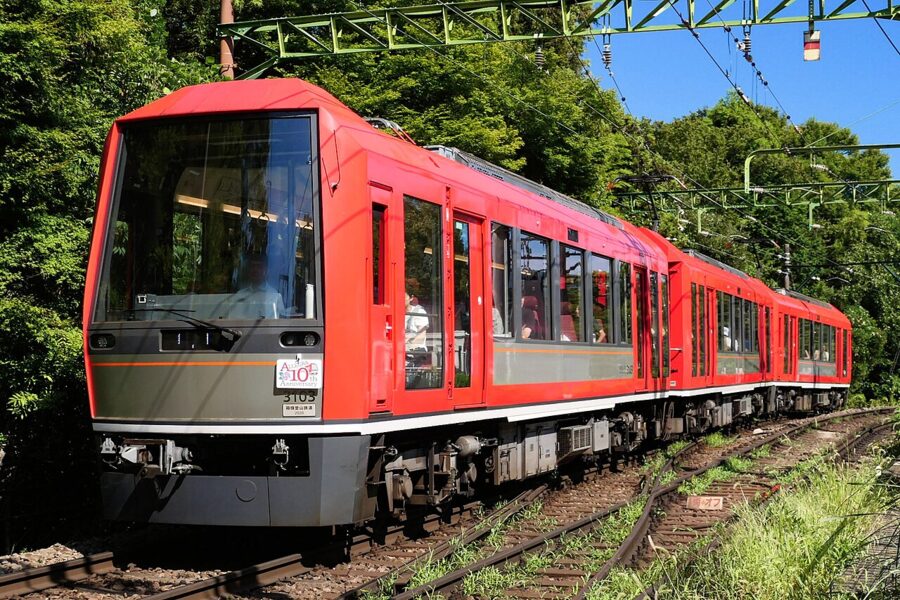
There is no room for curves on this mountainside, so the line zigzags. At three points, Deyama signal station, Ohiradai station and Kami-Ohiradai signal station, the train stops, the driver and conductor walk to opposite ends, and it sets off in the other direction up the next leg. It takes a minute each time.
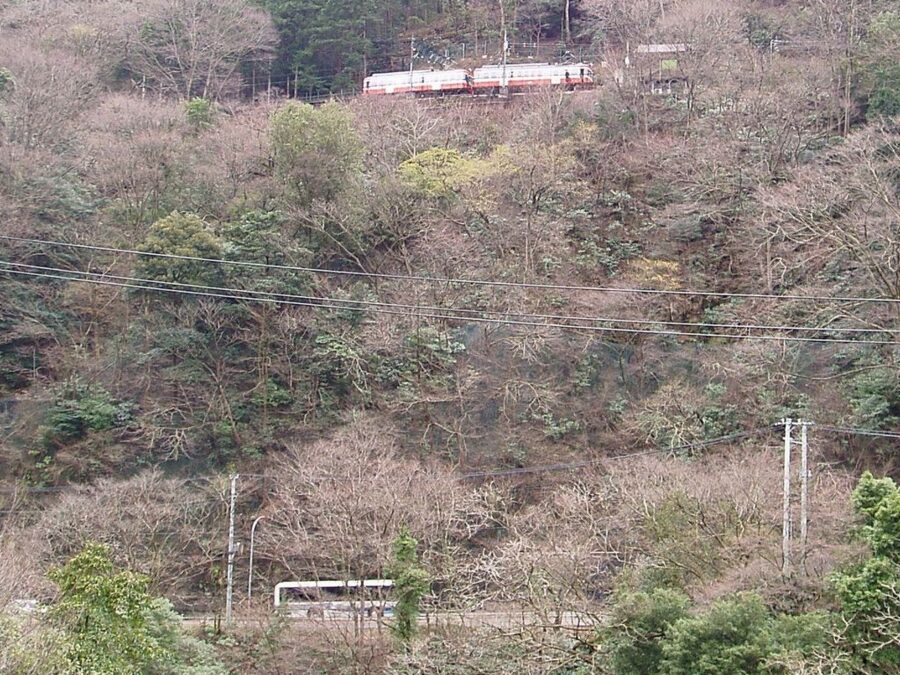
Queues are the risk. On weekends in hydrangea and leaf season the line at Hakone-Yumoto’s platform 3 can mean waiting for the second or third train. Start early, or do the loop in reverse (below).

2. The cable car from Gora to Sounzan
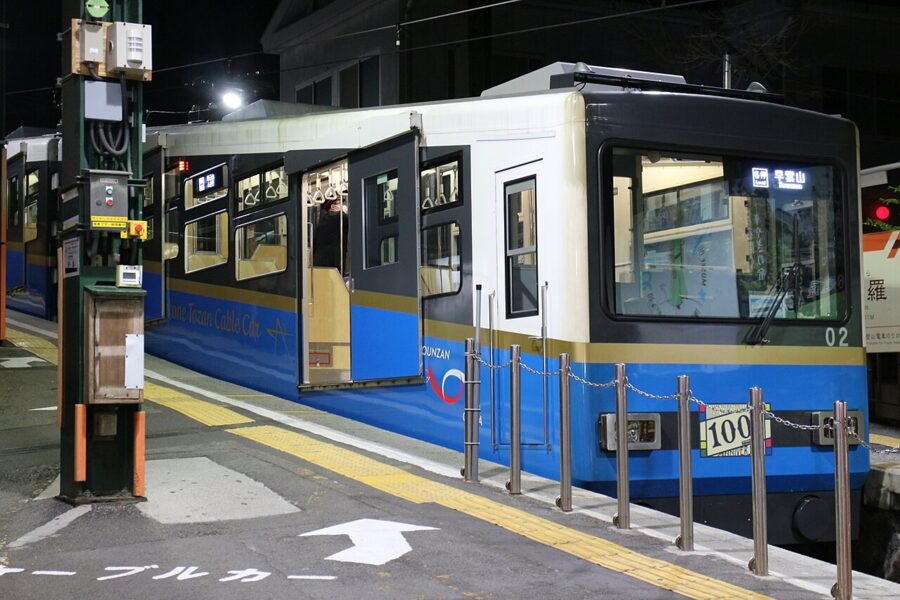
At Gora cross the platform to the Hakone Tozan Cable Car. It climbs 209 m over 1.2 km to Sounzan (早雲山) in about ten minutes, calling at four small stations on the way. The Freepass covers it, and at Gora the same gate serves both the railway’s platform 2 and the cable car.

The Hakone Open-Air Museum is one stop back down the railway and Gora Park is beside the cable car. On an overnight trip, leave them for the second morning.
3. The Hakone Ropeway over Owakudani
Sounzan is the top of the cable car and the bottom of the Hakone Ropeway, about 4 km of gondola to Togendai (桃源台) on Lake Ashi. It runs in three sections of about 15 minutes each, Sounzan to Owakudani (大涌谷), Owakudani to Ubako and Ubako to Togendai, and you change gondolas at Owakudani. The 18-person cabins come round roughly every minute. A one-way ride over the whole route has cost ¥2,000 (about US$13) since October 2025, or ¥3,000 return.
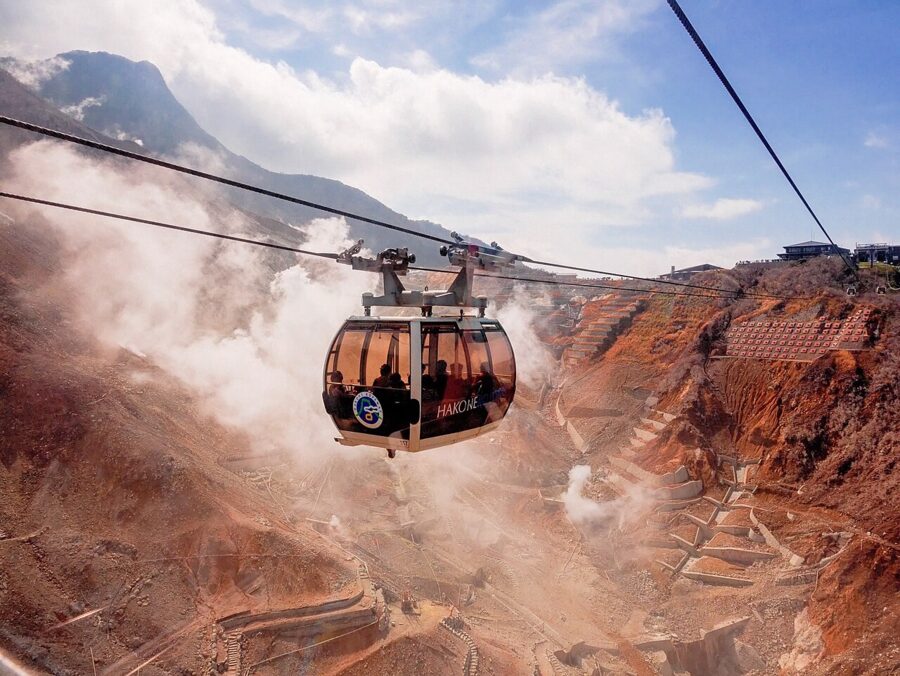

Hours are 09:00 to 17:00 from February to November and 09:00 to 16:15 in December and January. Winds of 30 m/s or more stop it, and so does the annual maintenance (see closures below). This is the ride that sets the timing of the day: if you are not at Sounzan by about 15:00, you will be racing it.
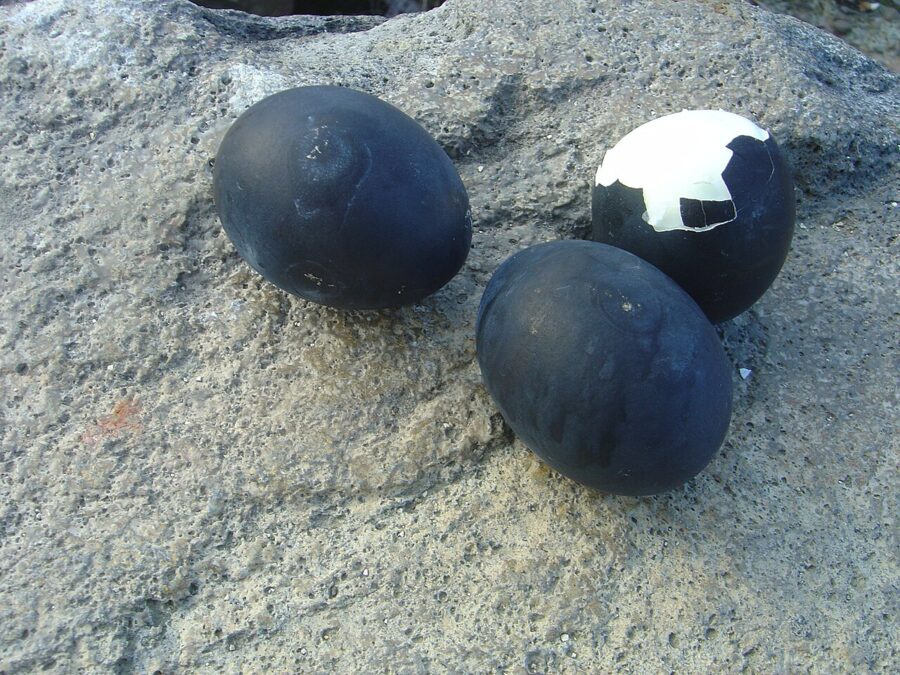
Owakudani is the reason to break the journey. The valley is an active volcanic vent field, and the station has a viewing area called Earth Valley (地球の谷), opened in April 2025, and a restaurant on the second floor, OWAKUDANI KITCHEN, open 10:30 to 16:00 since July 2026. The thing everyone buys is a bag of kuro-tamago, eggs hard-boiled in the hot spring water until the shells turn black.

The gas can be irritating. If you have asthma or other breathing problems, keep the stop short and stay on the marked areas.

4. The boat across Lake Ashi to Moto-Hakone
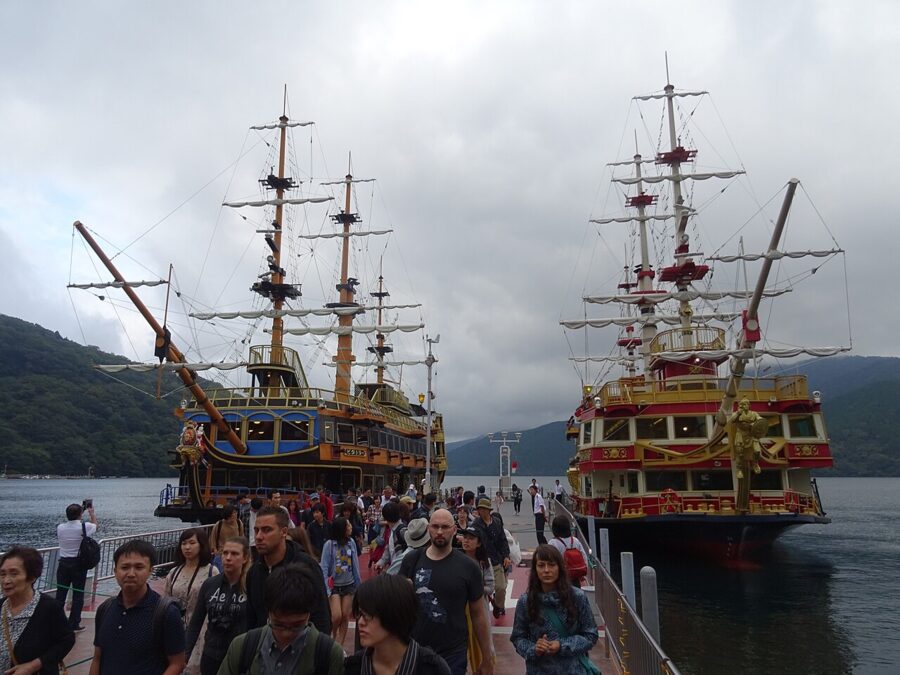
At Togendai the ropeway station opens straight onto the pier of the Hakone Sightseeing Cruise, the so-called pirate ships. They sail to Hakone-machi (箱根町港) and Moto-Hakone (元箱根港) at the south end of the lake in about 25 to 40 minutes. The one-way fare is ¥1,700 (about US$11), and the first-class cabin with its own front deck is ¥800 more each way.
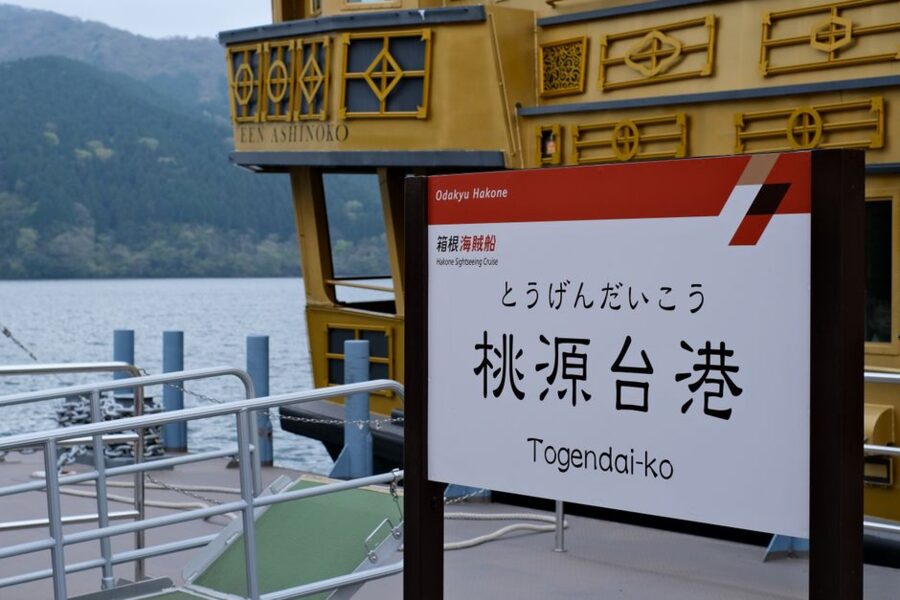
Three ships work the lake: the Queen Ashinoko, the Victory and the Royal II. The Royal II, built in 2013 and modelled on the 18th-century French warship Royal Louis, came back from a refit in July 2026 with a new first class in white and deep red. Inside, the boats are ordinary ferries with themed paint. The point is the deck.

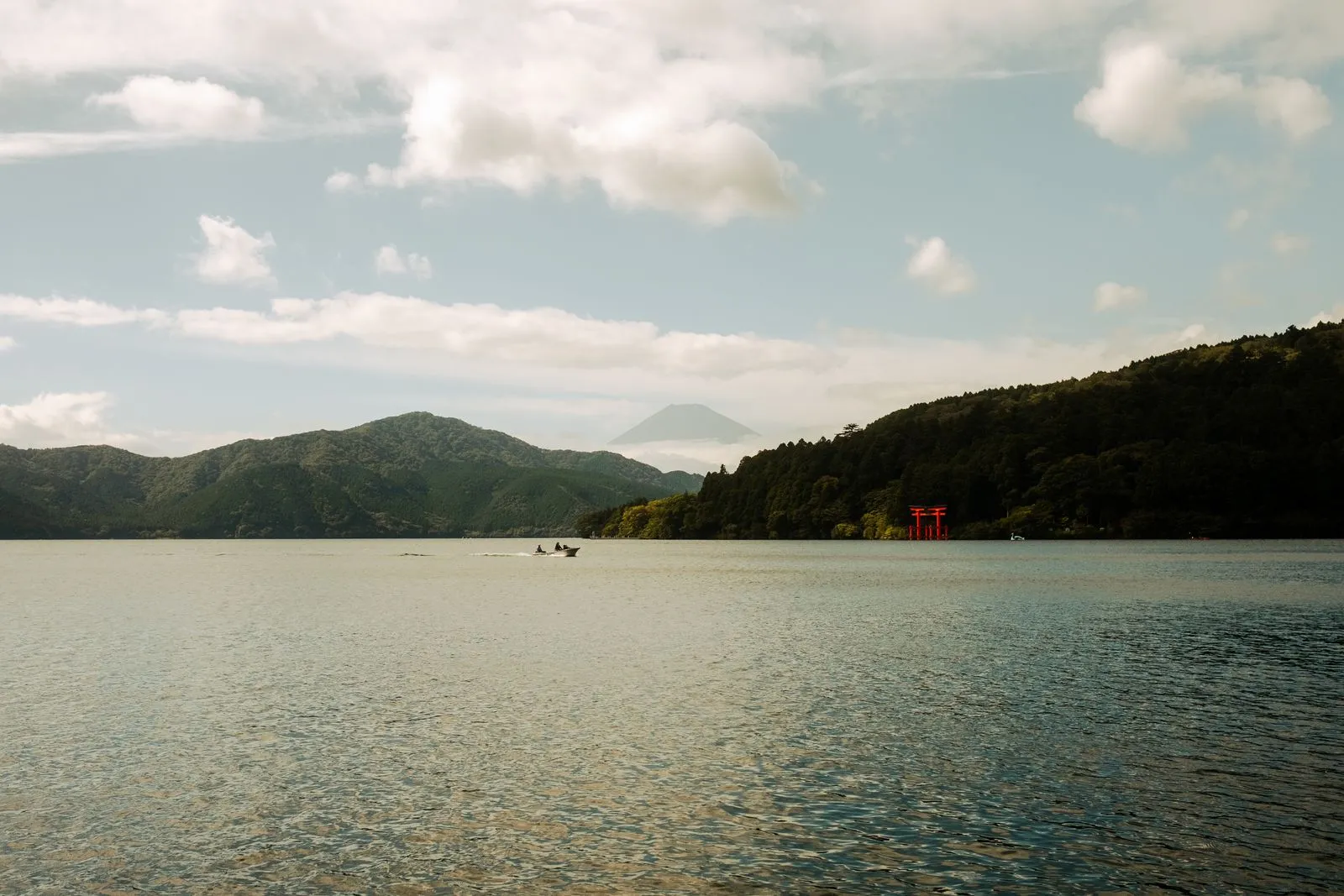
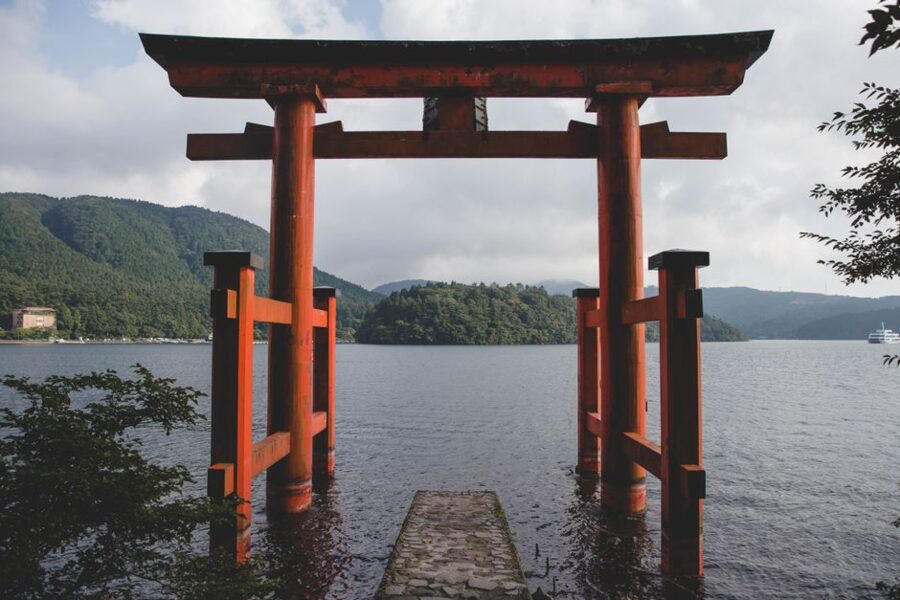
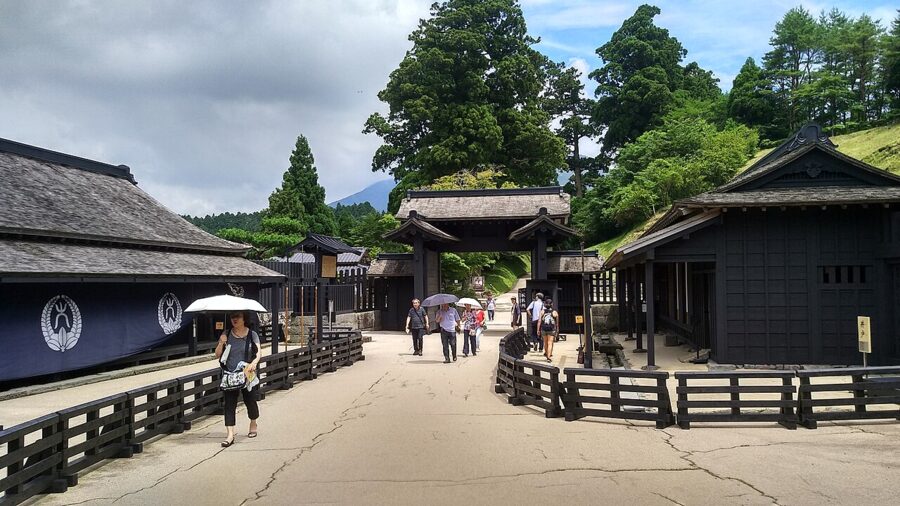
Moto-Hakone is the better stop for most people: Hakone Shrine and its torii in the lake are a short walk along the shore, and the bus back to Hakone-Yumoto leaves from the same place. Hakone-machi is the stop for the reconstructed Hakone checkpoint, and a short boat hop of ¥600 connects the two ports.
5. The bus back to Hakone-Yumoto
From Moto-Hakone, Hakone Tozan buses run down to Hakone-Yumoto Station and on to Odawara from two stands: platform 1 goes via Ashinoyu, Kowakien and Miyanoshita, and platform 2 goes via Hakone-machi and the newer Hakone Shindo road. The fare is ¥1,210 since October 2025, covered by the Freepass. Take whichever leaves first.
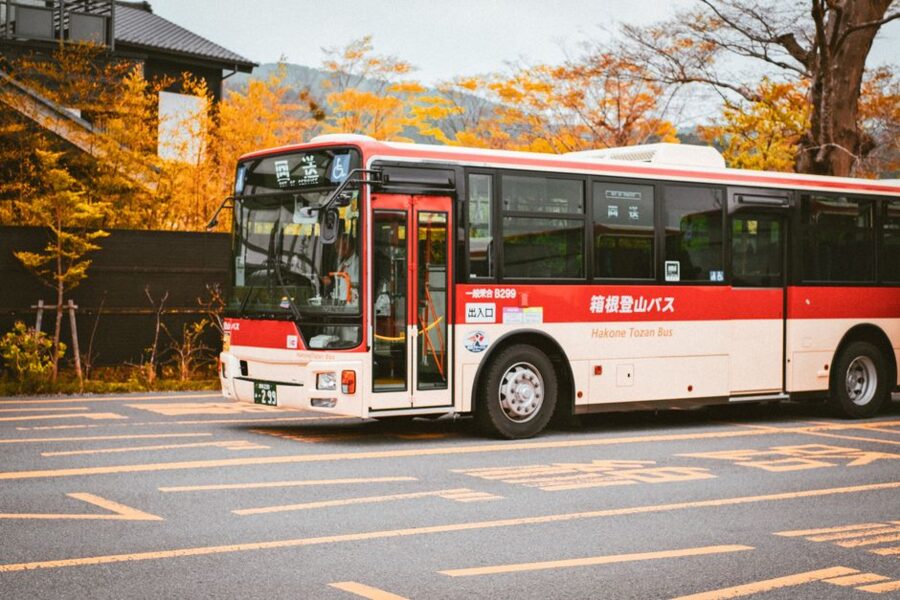
This is the slowest leg on a busy day. The road down to Yumoto is two lanes of mountain switchbacks, and on autumn weekends it queues. At weekends and holidays the Ashinoko Liner offers a guaranteed seat for ¥500, Freepass or not, with a 12:15 from Moto-Hakone to Hakone-Yumoto and a 16:15 to Odawara.
A day or a night: timings
A day trip works if you start early and accept that the loop is the day. Here is a weekday plan that leaves slack:
- 08:11 Hakone 21 from Shinjuku, arriving Hakone-Yumoto 09:53 (on a weekend, the 07:00 Hakone 1 arrives at 08:26).
- 10:00 Mountain railway to Gora, about 40 minutes, then the cable car to Sounzan.
- 11:00 Ropeway to Owakudani. Eggs, the viewing area, lunch.
- 13:00 Ropeway on to Togendai, then the boat to Moto-Hakone.
- 14:30 Hakone Shrine and the torii.
- 16:00 Bus down to Hakone-Yumoto, a bath if there is time, dinner.
- 19:50 The last weekday Romancecar, the Hakone 22, reaches Shinjuku at 21:26 (at weekends the Hakone 74 leaves at 19:52 and arrives at 21:25).
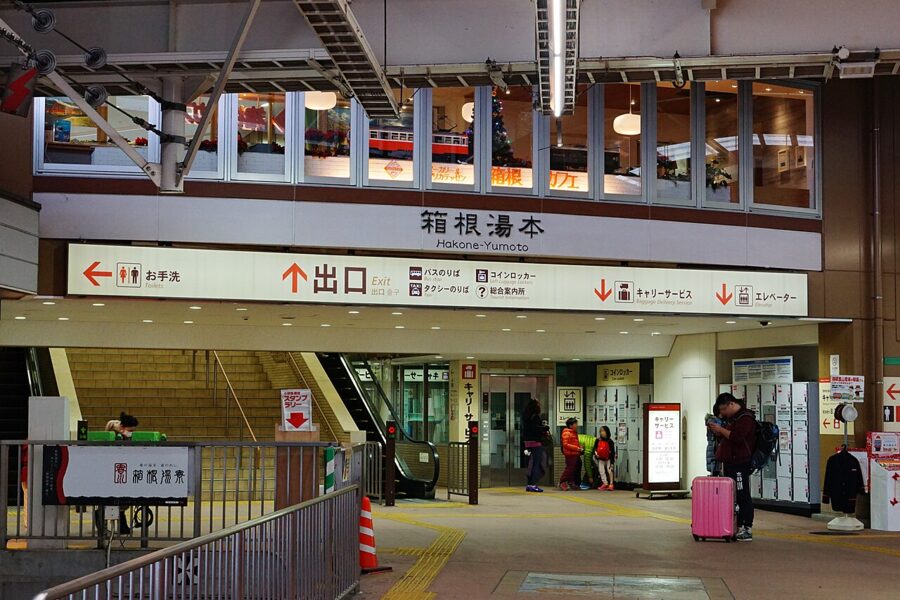

From Hakone-Yumoto the mountain railway runs to Gora from just after 06:00 until about 22:40, but the ropeway and boats keep daytime hours, so on a day trip the binding time is the ropeway’s 17:00 close (16:15 in December and January). If you are behind, ride the ropeway straight through to Togendai and skip the Owakudani stop on the way.
A night in Hakone is better than a day. You can do the loop in the morning, when the ropeway is quiet and Fuji is clearest, and the bath at the end becomes a ryokan bath rather than a rushed one. The second day of the Freepass then covers the museums at Gora and Sengokuhara.
Luggage: forwarding and the Hakone Carry Service
Do not take a suitcase round the loop. The mountain railway is packed, the cable car is stepped, and Owakudani has lockers but not many. The Hakone Carry Service (箱根キャリーサービス), listed in English as the Hakone Luggage Transport Service, solves it: hand your bags in at the counter inside Hakone-Yumoto Station between 08:30 and 12:00 (online bookings for the same day close at 11:30) and collect them at your hotel from 15:00.
It costs ¥1,500 a piece for a bag up to 140 cm and 15 kg, or ¥2,500 up to 200 cm and 30 kg, and only partner hotels and inns in Hakone take deliveries. Going home, leave the bags at your hotel’s front desk by 10:00 and pick them up at Hakone-Yumoto between 13:30 and 18:30. Day-trippers can leave bags at the Sightseeing Service Center in Shinjuku.
Seasons, closures and the weather
Hakone is a year-round trip, but three things change the day: the flowers on the mountain railway, the leaves, and whether Fuji shows at all.
Hydrangeas on the mountain railway
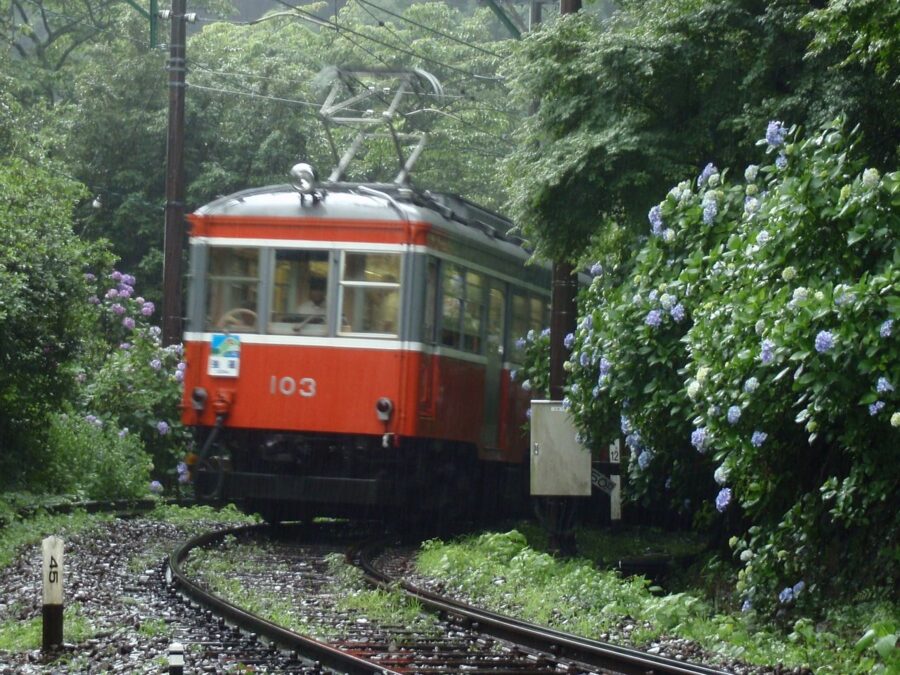
The hydrangeas along the Hakone Tozan line begin to flower around mid-June, and because the line climbs over 400 m the peak moves uphill with it until mid-July. The railway calls its trains the ajisai densha (hydrangea trains) in those weeks and runs special evening trains as well. It is beautiful and it is the busiest the line gets.
Autumn leaves and Fuji
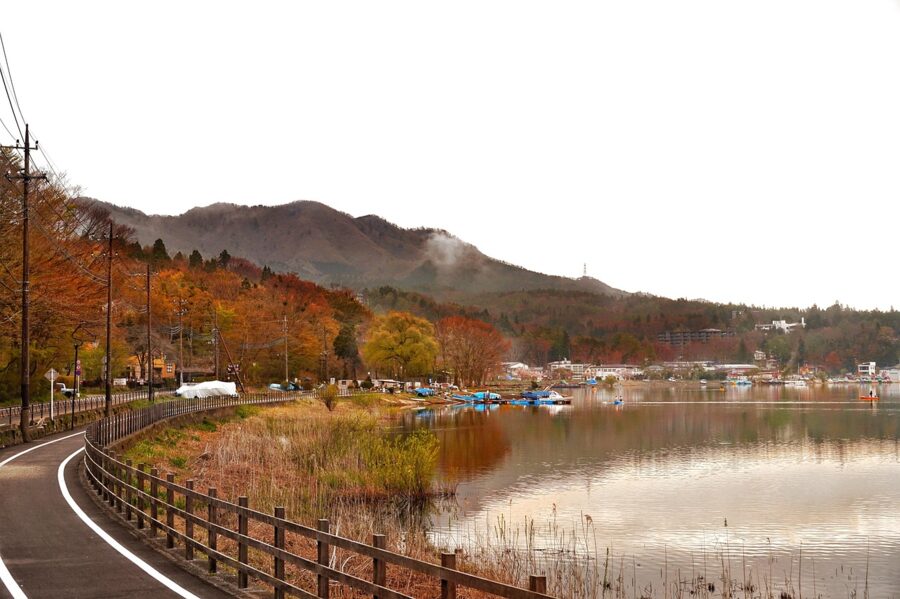
The leaves turn from the top down. Across Hakone the season runs from late October to early December: Lake Ashi usually peaks in early November, Gora Park around late November into December, and the valley at Yumoto last. November weekends are the most crowded of the year; go midweek if you can.
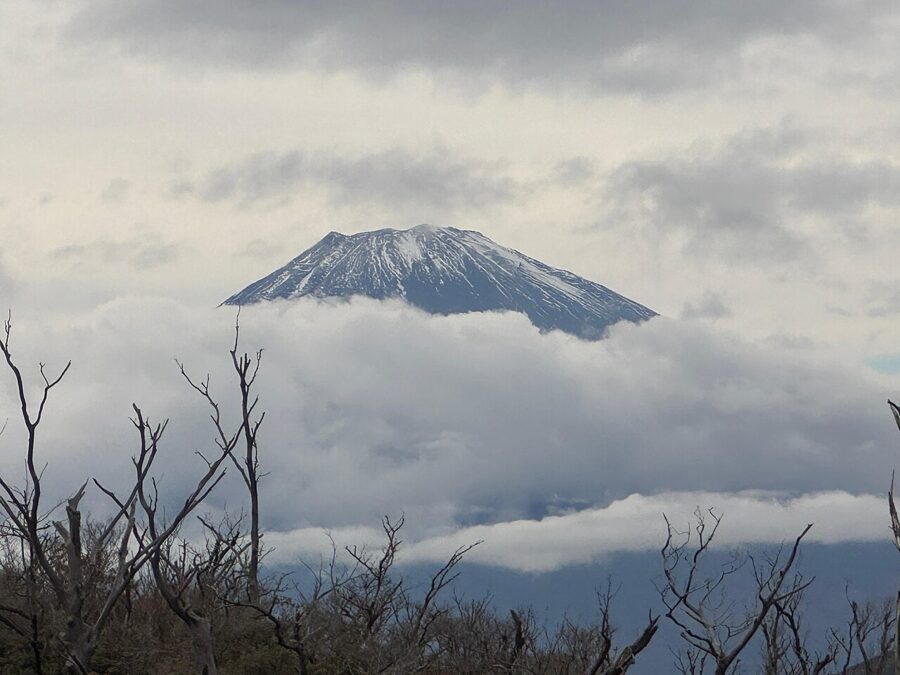
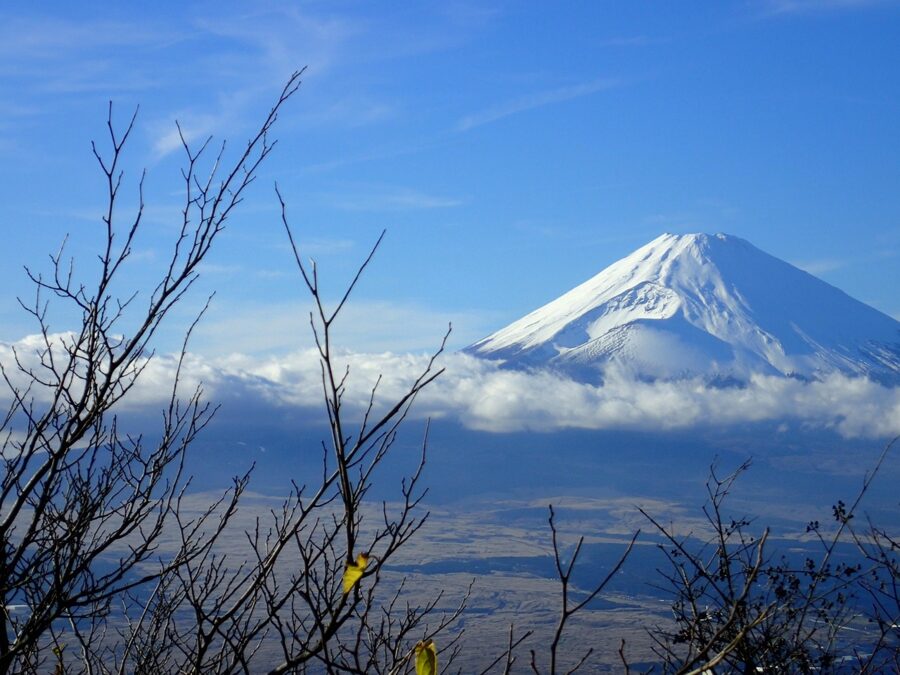
Fuji is not guaranteed. Clear days are most likely in winter (December to February), and mornings are better than afternoons all year; in the humid summer months the mountain can stay hidden for weeks. If Fuji is the point, stay the night and do the ropeway and the lake first thing.
Closures: the ropeway and Owakudani
The ropeway closes in sections for its annual maintenance, with replacement buses. For this winter, the published dates are:
- Owakudani to Sounzan: 7 to 24 December 2026 (buses about 10 minutes each way).
- Togendai to Ubako to Owakudani: 12 January to 26 February 2027 (buses about 15 minutes each way).
Replacement buses run about every 15 minutes on the ropeway’s hours and accept the Freepass. The operator expects them to be crowded and suggests reaching Owakudani on the section that is still running. In December come up through Togendai, ride the ropeway to Owakudani and back, and do the loop in reverse; in January and February go up via Gora and Sounzan as usual and come back down the same way.
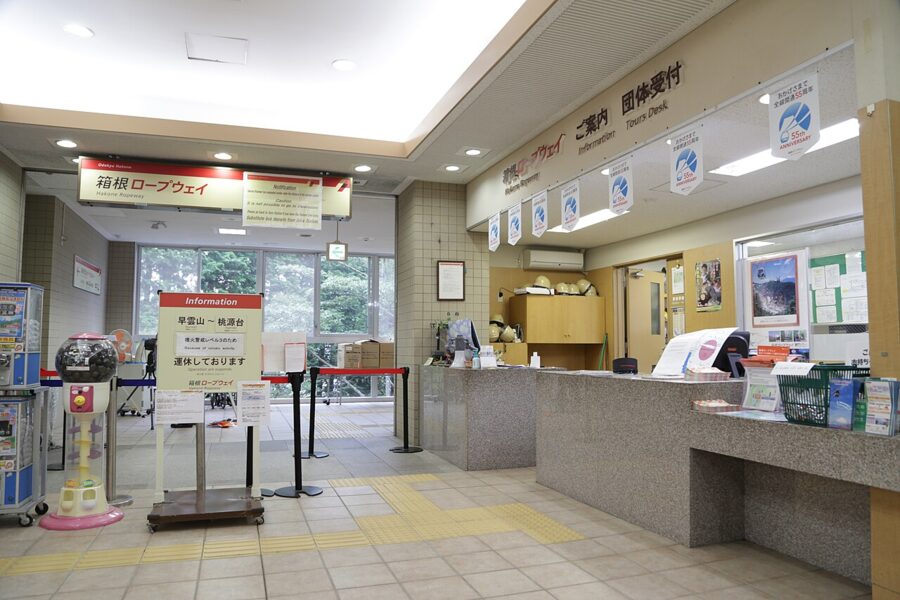

Owakudani is a live volcano. The Japan Meteorological Agency keeps Hakoneyama at alert level 1, its lowest, and its October 2026 monthly report describes low earthquake activity with the vents around Owakudani still steaming strongly. The ropeway has closed for months at a time when the level rose: in 2015, and again in 2019, when the whole line stopped in May, the Togendai to Ubako section outside the restricted zone reopened in September and full service returned in late October. Check the Hakone Navi status page on the morning you travel; if Owakudani is shut, the Tozan buses still link Gora and Lake Ashi through Sengokuhara.
The best order to do it
The standard direction, railway first and bus last, is standard for a reason. It puts the climb in the morning, gets you to Owakudani by lunch and ends at the bus stop nearest Hakone-Yumoto. It is also what everyone else does, so the mountain railway queue at 10:00 on a Saturday is the worst queue of the day.
The reverse loop starts with the bus from Hakone-Yumoto to Moto-Hakone, sails north to Togendai, rides the ropeway over Owakudani to Sounzan and comes down by cable car and mountain railway. You meet the crowds coming the other way rather than standing in them, the lake comes while the morning light is on Fuji, and the switchbacks are a fine way to end the day. The catch is the bus at the start, which on a weekend morning is also full.
My order: on a weekday, the standard loop from an early Romancecar. On a weekend or in hydrangea season, the reverse loop from an early Romancecar, or the standard loop the morning after a night in Hakone. In the ropeway maintenance weeks, plan around the section that is running.
Book the GSE if the schedule gives you one, take the front seats if they are left, and buy the Freepass from whichever end of the journey your ticket starts. The 08:11 Hakone 21 has you at the foot of the mountain railway before ten.