
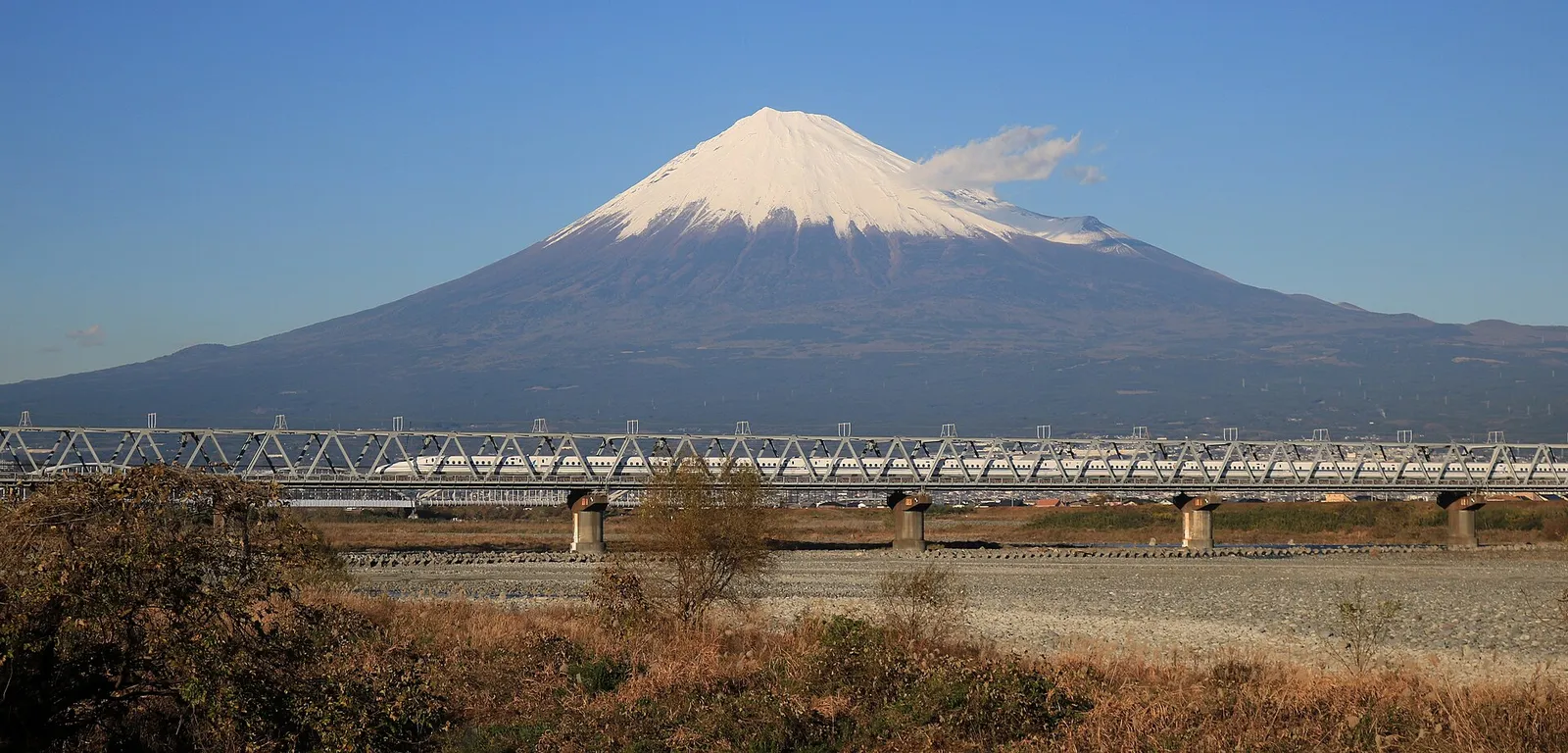

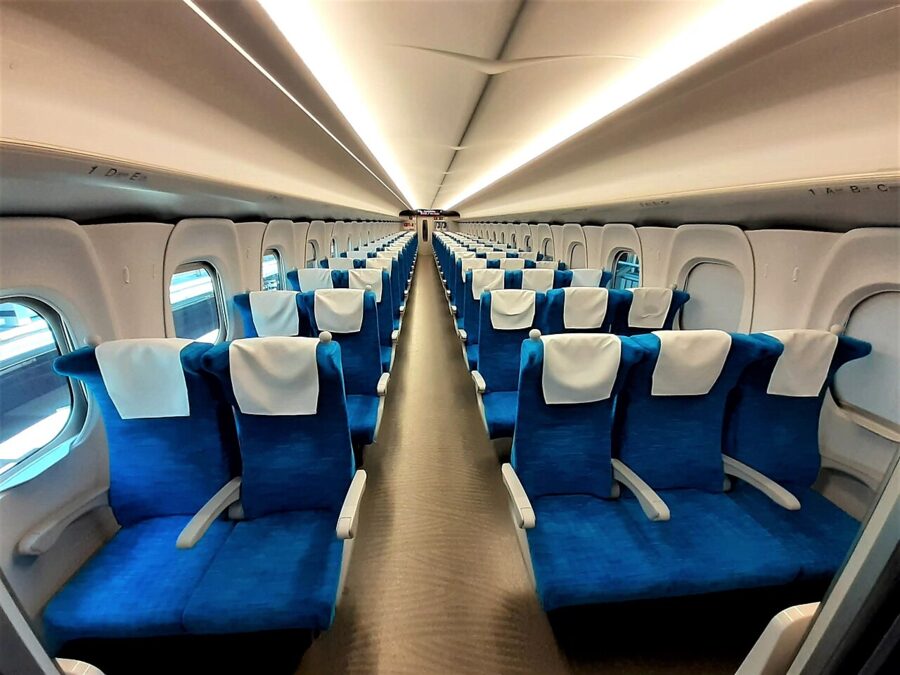
The seat map on the booking screen shows a Shinkansen car as five columns of small squares, A, B and C on one side of the aisle and D and E on the other, and most of the trip to Kyoto turns on which square you tap. Tap an E. It is the window on the two-seat side, and about forty minutes out of Tokyo it is the seat that faces Mount Fuji.
The other decision is the train. Three kinds run the Tokaido Shinkansen (東海道新幹線) between Tokyo and Kyoto, on the same track, from the same platforms and for nearly the same money. The Nozomi takes about 2 hours 15 minutes, the Hikari about 2 hours 40, and the Kodama, which stops everywhere, about 3 hours 40. A reserved seat on a Nozomi costs ¥14,170 (about US$91) one way in the regular season, as of 2026, and the same seat on the slower two costs ¥320 less.
For most people that settles it: the Nozomi, seat E, any time after breakfast. The exceptions are a Japan Rail Pass, a budget that would rather sit on a Kodama than spend an extra ¥3,000, and a suitcase too big for the rack, and each of them changes the booking in a different way.
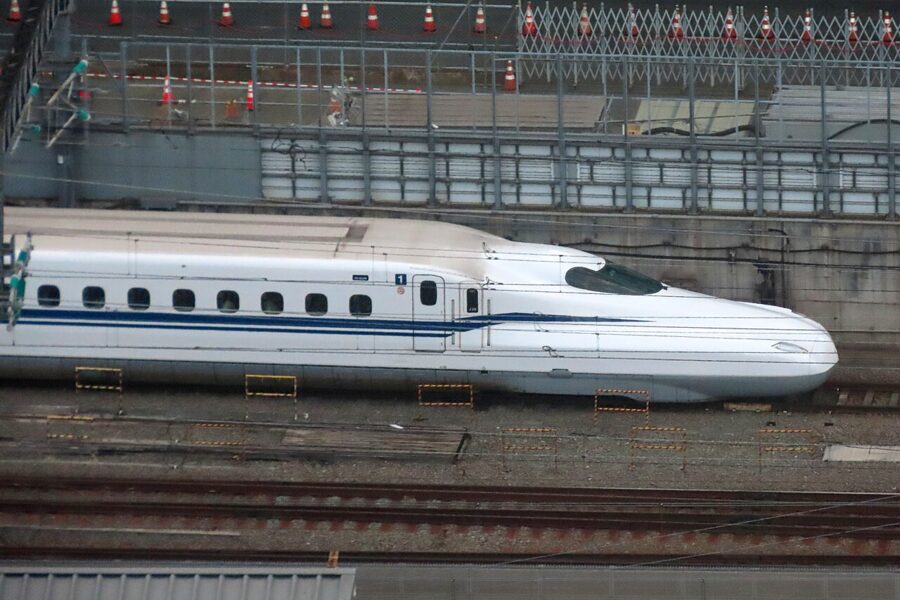

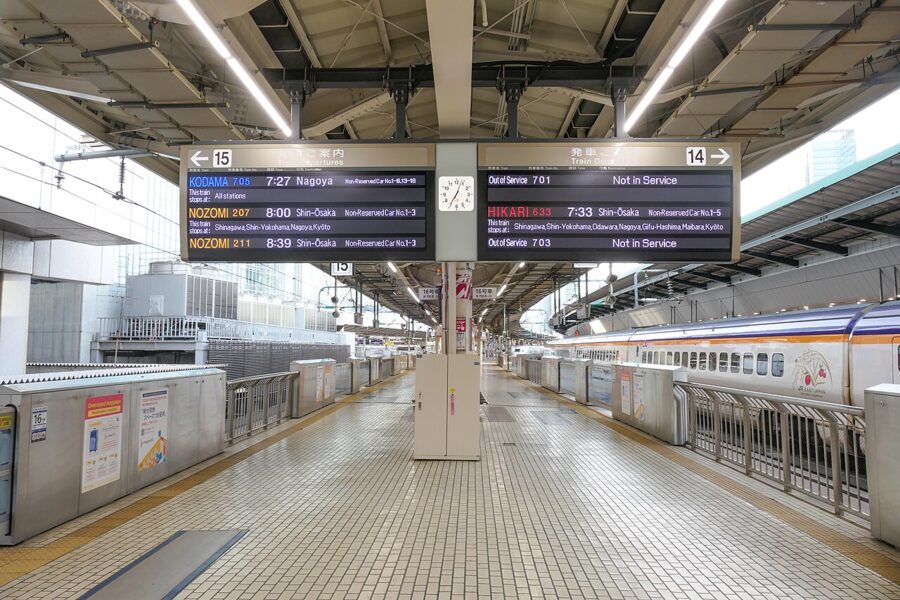


Nozomi, Hikari or Kodama
The whole route is JR Central’s Tokaido Shinkansen, opened in October 1964 between Tokyo and Shin-Osaka as the first line of the Shinkansen (and the start of a long railway story), and Kyoto is the last stop before Shin-Osaka.
| Train | Tokyo to Kyoto | Stops on the way | Reserved seat, regular season | Japan Rail Pass |
|---|---|---|---|---|
| Nozomi (のぞみ) | 2 h 09 – 2 h 16 | Shinagawa, Shin-Yokohama, Nagoya | ¥14,170 | Only with a ¥4,960 NOZOMI MIZUHO ticket |
| Hikari (ひかり) | about 2 h 35 – 2 h 50 | As the Nozomi, plus two to four more | ¥13,850 | Covered, seat included |
| Kodama (こだま) | about 3 h 30 – 3 h 40 | All fourteen stations | ¥13,850 | Covered, seat included |
A non-reserved seat is ¥13,320 (about US$86) on any of the three. Fares are adult, one way, as of November 2026; children from six to eleven pay about half.
The Nozomi is the default for good reason. Several leave Tokyo every hour, from Nozomi 1 at 06:00 to Nozomi 293 at 21:24, which reaches Kyoto at 23:32, on the timetable in force since 14 March 2026 (JR Central’s timetable PDFs list the regular trains). Every one stops at Kyoto, so on an ordinary weekday you can take the next with seats.
The Hikari runs about twice an hour, and its extra stops depend on the train. The Hikari for Shin-Osaka call at one or two of Odawara, the rail gateway to Hakone, Hamamatsu and Toyohashi, then at Gifu-Hashima and Maibara after Nagoya; those running through to Okayama call at places such as Mishima, Shizuoka and Hamamatsu. Either way it reaches Kyoto twenty to thirty-five minutes after a Nozomi leaving at the same time.
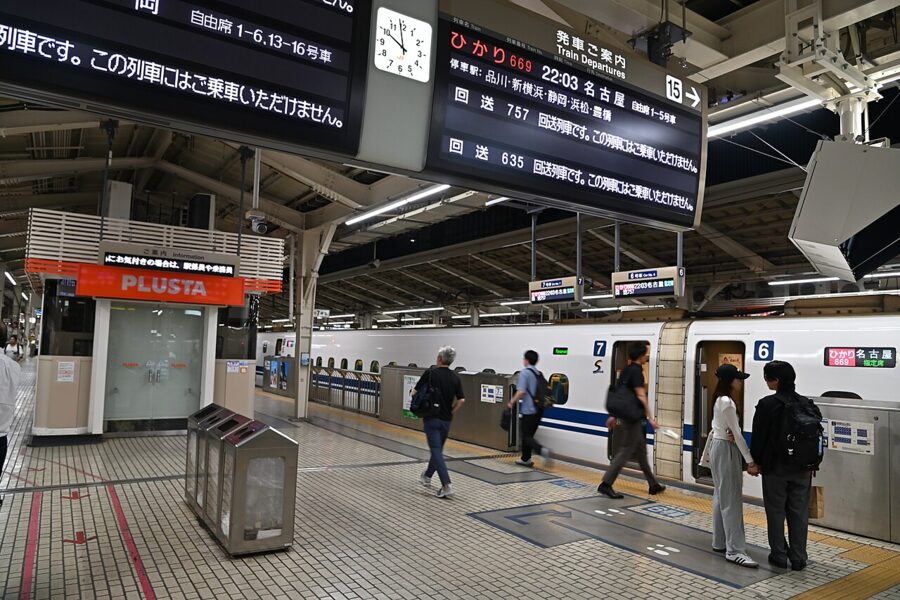
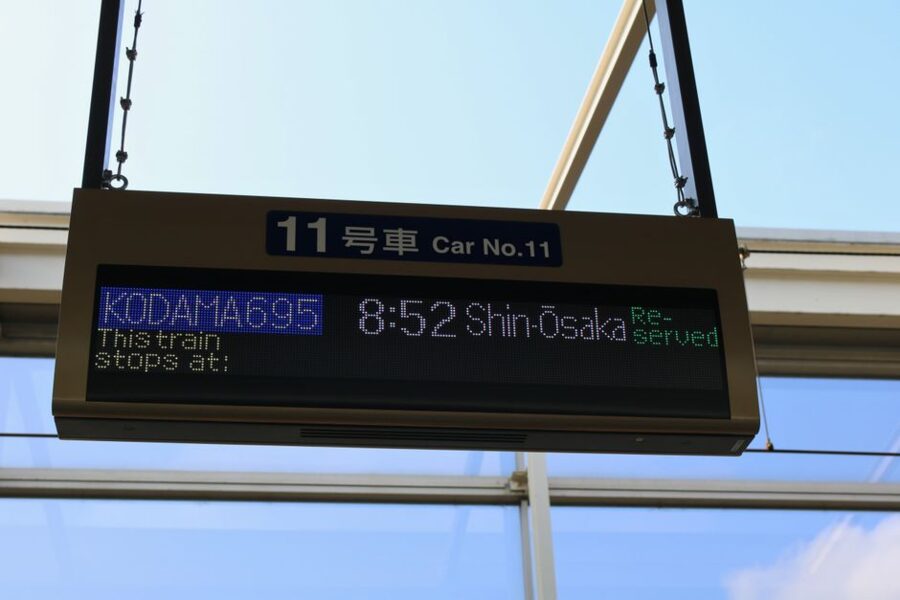
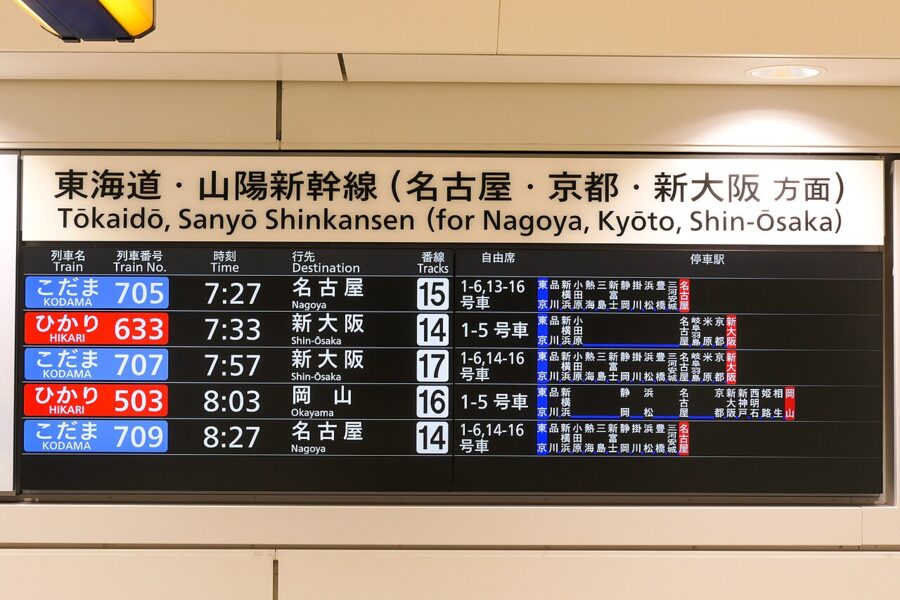
The Kodama calls at all fourteen stations between Tokyo and Kyoto, and waits in the loops while Nozomi pass. Kodama 819, the 10:57 from Tokyo, is in Kyoto at 14:36. Plenty of Kodama end at Nagoya, so check that the board says Shin-Osaka (新大阪) before you sit down.
Late in the evening the choice disappears. The last Hikari and Kodama of the night stop short at Nagoya, Hamamatsu, Shizuoka or Mishima, so after about 20:15 every train that reaches Kyoto is a Nozomi.

Reserved or non-reserved
Every train carries both. On a Nozomi the non-reserved cars (自由席) are cars 1 and 2, and they fill first; the Hikari and Kodama carry more. Sitting non-reserved saves ¥850 on a Nozomi and ¥530 on a Hikari or Kodama, for the same seat.
I would reserve. A Kodama’s non-reserved cars will seat you on a weekday morning, but the Nozomi’s two will not on a Friday evening, and a booked seat is the only way to be sure of an E. Reserved seats cost ¥200 less on off-peak dates and ¥200 or ¥400 more on peak and busiest dates, so the ¥14,170 runs from ¥13,970 to ¥14,570 with the calendar. Non-reserved prices do not move.
The Green Car
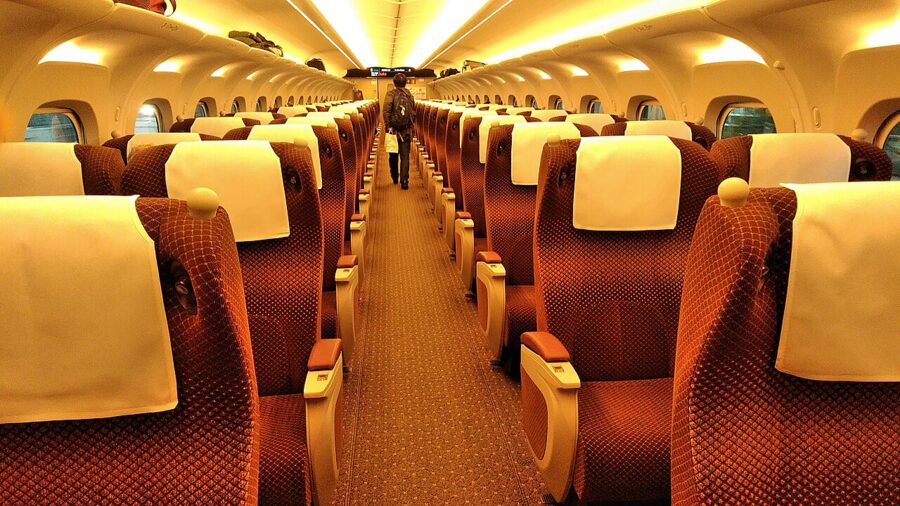
The Green Car (グリーン車) is cars 8 to 10: four seats across instead of five, more room, a footrest and a quieter car. Tokyo to Kyoto costs ¥19,040 (about US$123) on a Nozomi and ¥18,720 on a Hikari or Kodama, as of 2026. The Fuji seat there is D, not E, because the layout is A and B, aisle, C and D.
Above it, since 1 October 2026, is Supreme Class, private rooms on selected N700S Nozomi: a two-person room in car 7 and a one-person room in car 10, booked only online. JR Central publishes prices to Nagoya and Shin-Osaka (¥42,390 for the single room to Shin-Osaka in the regular season on smartEX) but not to Kyoto; the booking screen gives it.

The JR Pass and the Nozomi supplement
The Japan Rail Pass covers the Hikari and the Kodama, seat reservation included. For a Nozomi, a pass holder buys the NOZOMI MIZUHO ticket, ¥4,960 (about US$32) from Tokyo or Shinagawa to Kyoto, at a JR reserved-seat machine or ticket office in Japan, from one month before. It is one ticket per ride, and holders of an ordinary pass can buy it only for an ordinary car.
Thirty minutes is not worth ¥4,960 to me: take the Hikari and book an E on it. As for whether the pass pays at all, a Nozomi return to Kyoto is ¥28,340 (about US$183) and a 7-day ordinary pass ¥50,000 (about US$323), so Tokyo and Kyoto alone never justify it. It starts to pay when the week also takes in Hiroshima or a long trip north.
One rise is already fixed. For tickets bought from 1 July 2027, a reserved Nozomi seat between Tokyo and Kyoto costs ¥700 more, and from 15 December 2027 the Green charge for the trip rises by ¥3,000, according to JR Central and JR West’s October 2026 announcement. Non-reserved seats and Hikari and Kodama reserved seats are not part of the first rise.
Buying and reserving the ticket (as of 2026)
There are three ways to buy, and only one involves a person. Reserved seats open at 10:00 one month before travel at the stations, and earlier online.
smartEX, online
smartEX is JR Central’s booking service, shared with JR West and JR Kyushu, in English, with free membership and an app. A smartEX reserved seat is ¥13,970 on a Nozomi and ¥13,650 on a Hikari or Kodama, ¥200 under the station price; the Green Car is ¥18,840 and ¥18,520. You can book up to a year ahead, with the seat confirmed after 08:00 one month before travel, change trains freely until four minutes before departure, and refund before departure for ¥320.
The seat map is the reason to use it: see the car, tap E, pay by card. At the gate you scan the QR code in the app or a registered IC card, and a paper slip with your seat number comes out; keep it for the conductor. Arriving at Tokyo on a JR line with a Suica or PASMO, you scan the QR code and touch the IC card at the same transfer gate.
smartEX also sells the discount fares. EX Hayatoku 21 puts a Nozomi seat to Kyoto at ¥12,430 (about US$80) booked 21 days ahead, and EX Hayatoku 7 a Hikari or Kodama seat at ¥11,940 (about US$77) seven days ahead, as of 2026. Seats at those prices are limited, and neither can be changed: you cancel for ¥320 and buy again.
The machines and the ticket office
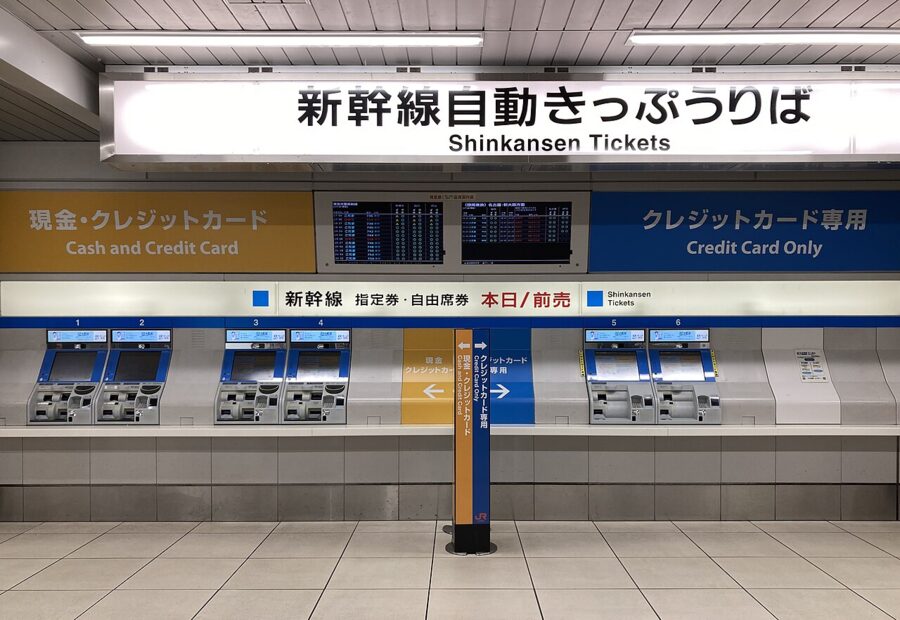
The reserved-seat ticket machines (指定席券売機) at every Shinkansen entrance work in English and take cards. Choose the train, the car and a seat from the map, including the oversized-baggage seats, and the machine prints the base fare (乗車券) and the limited express ticket (特急券), as two tickets or on one. Feed everything into the gate together and keep it until you leave Kyoto Station.
The JR ticket office is for what the machine cannot do: a NOZOMI MIZUHO ticket for a pass holder who would rather ask, a wheelchair space, a refund after a delay. At Tokyo there are offices by the Yaesu gates, with long queues in Golden Week and at New Year.


Tokyo or Shinagawa
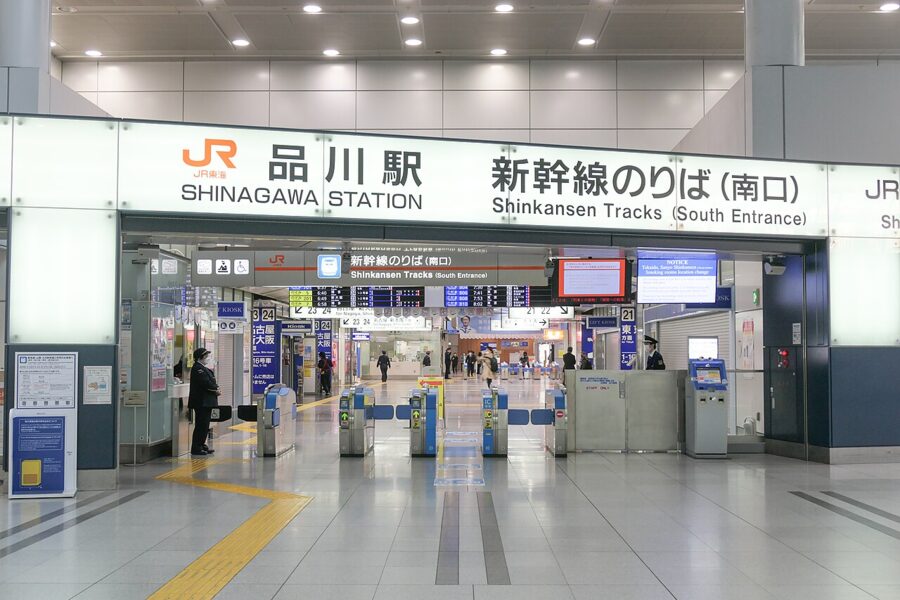
Every Tokaido train starts at Tokyo Station and every Nozomi and Hikari stops at Shinagawa seven minutes later, at the same fare. Choose by where you are coming from.
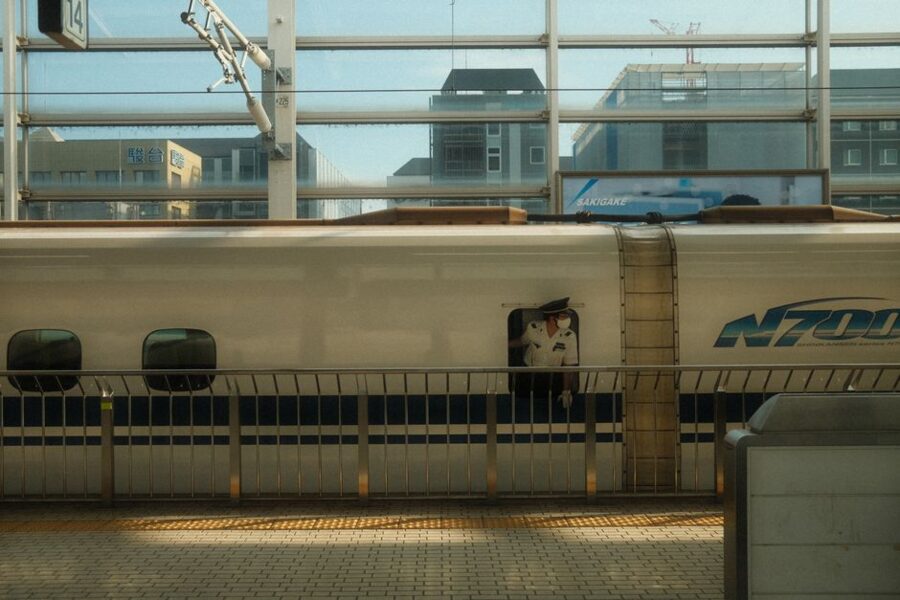
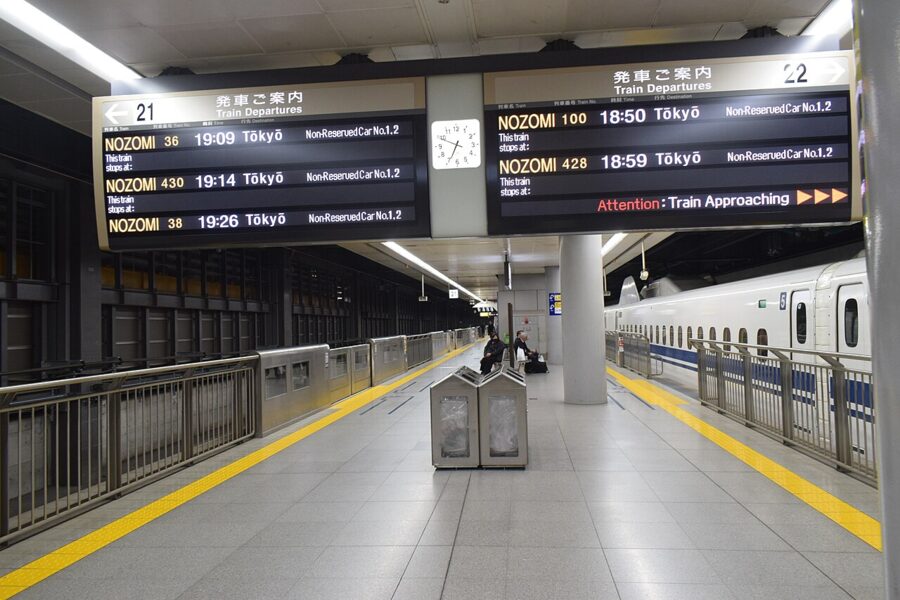
At Tokyo the Tokaido platforms are 14 to 19, on the east side. From the JR lines, go through the Shinkansen Central or South transfer gate without leaving the paid area; from the street or the subway, use a Yaesu gate. Allow fifteen minutes from a Yamanote Line platform to your car, more with luggage, and look at the JR Central station plans first if it is new to you.
Shinagawa is the easier station. Its Shinkansen platforms (23 and 24 for Kyoto) sit side by side, the transfer gates from the Yamanote and Keihin-Tohoku lines are a short walk, and the Keikyu line from Haneda Airport comes in on the west side. It suits anyone staying in the south or west of the city. Shin-Yokohama, eleven minutes further on, does the same for Yokohama.


Seat E and when you will see Fuji
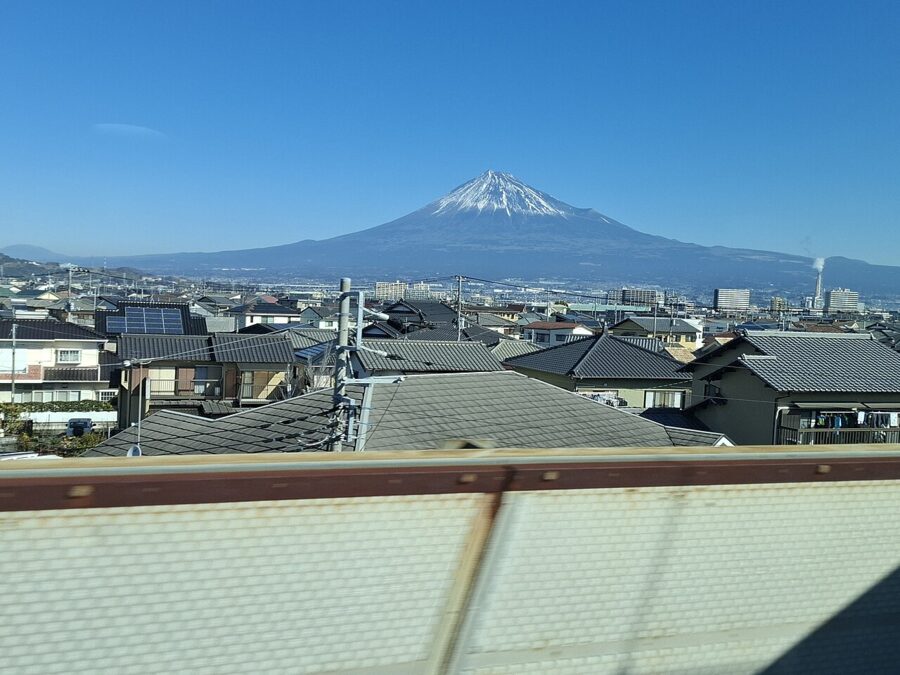
Mount Fuji stands north of the line, on the right going west. In an ordinary car that is seat E; in the Green Car it is D. The letters belong to the train, not the direction, so E is also the Fuji side on the way back, when the mountain is on your left.
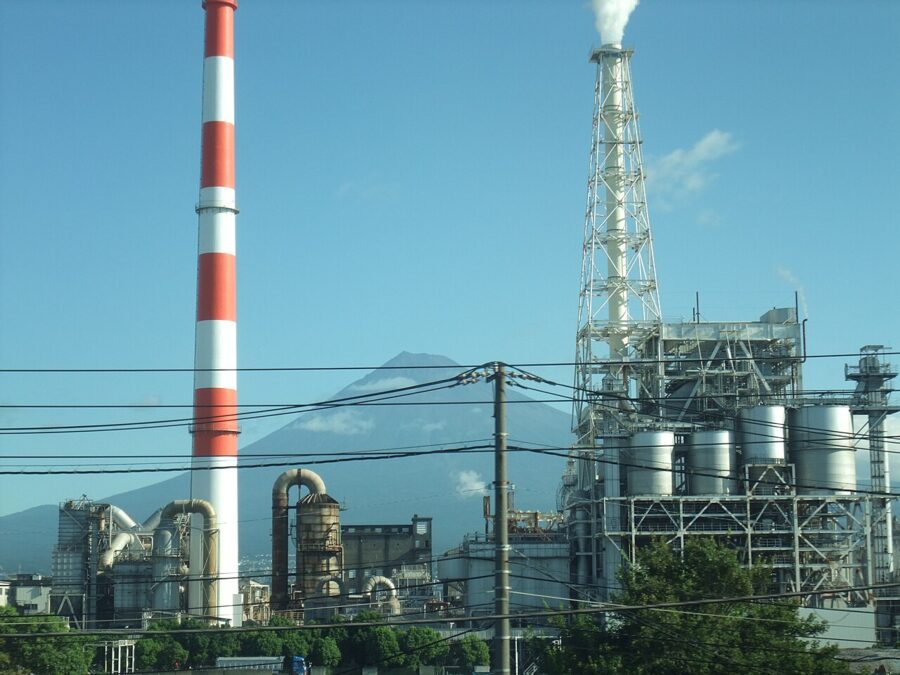
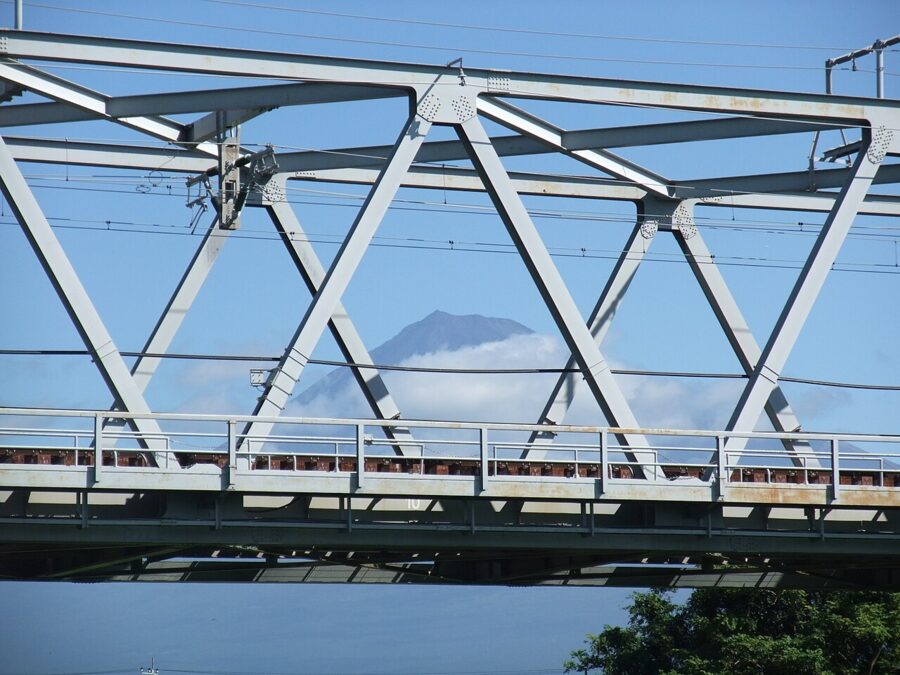
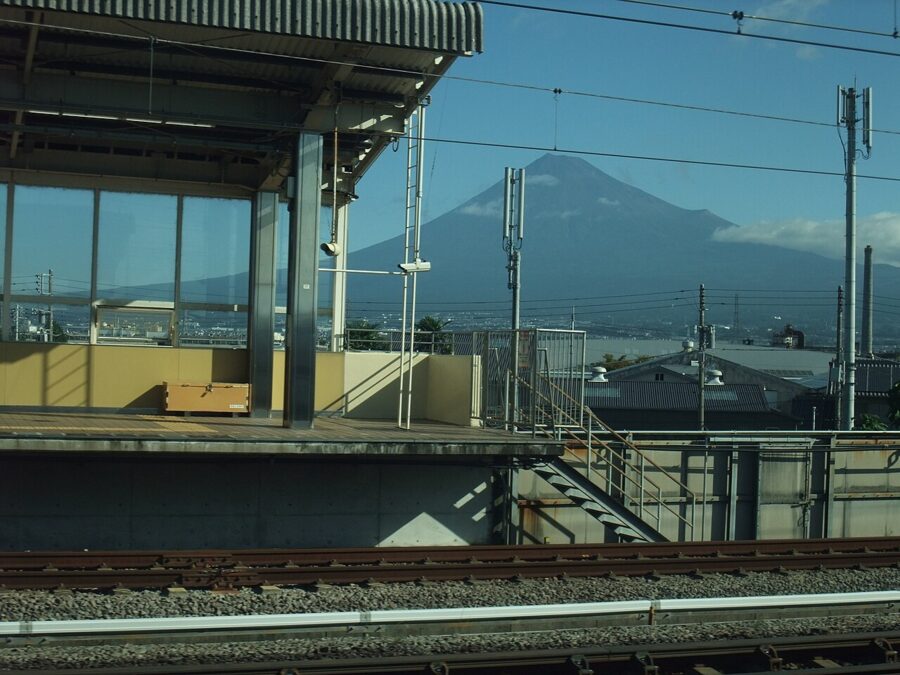
The mountain can show itself, small and far off, soon after Shinagawa, but the part that matters starts after Mishima. A Nozomi passes Mishima roughly forty minutes out of Tokyo, and for the next ten minutes or so Fuji fills the right-hand windows across the flat country around Fuji City, first between factory chimneys, then from the bridge over the Fuji River just west of Shin-Fuji.
That is if it is out. Fuji is often in cloud, and summer haze can hide it on a day that looks clear in Tokyo. The best chance is a clear winter morning, one more argument for a train before 10:00 from December to February.


The left-hand Fuji, and the Hamamatsu stretch
Seat A gets one look of its own. Just after Shizuoka the westbound train crosses the Abe River and for about thirty seconds swings south, which puts Fuji behind the left-hand windows: the “left-side Fuji” (左富士), an old good-luck sight on the Tokaido. It is easy to miss, and no reason to give up an E.
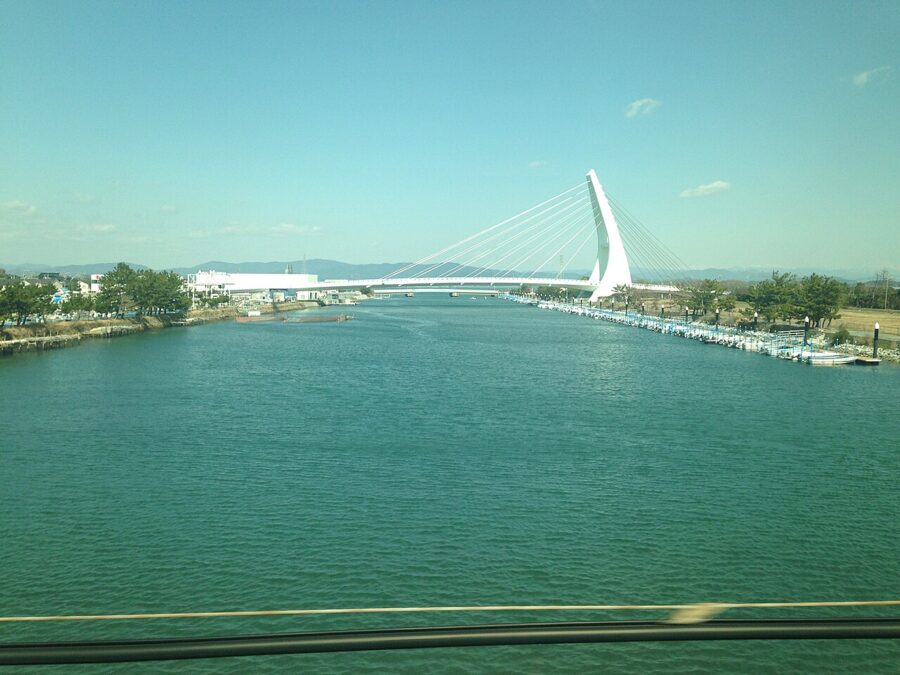
After that the scenery comes in smaller doses. Between Shizuoka and Kakegawa the line runs through tea fields, and beyond Hamamatsu it crosses the southern end of Lake Hamana (浜名湖), with water on both sides. A Hikari often stops at Hamamatsu; a Nozomi goes through at full speed.
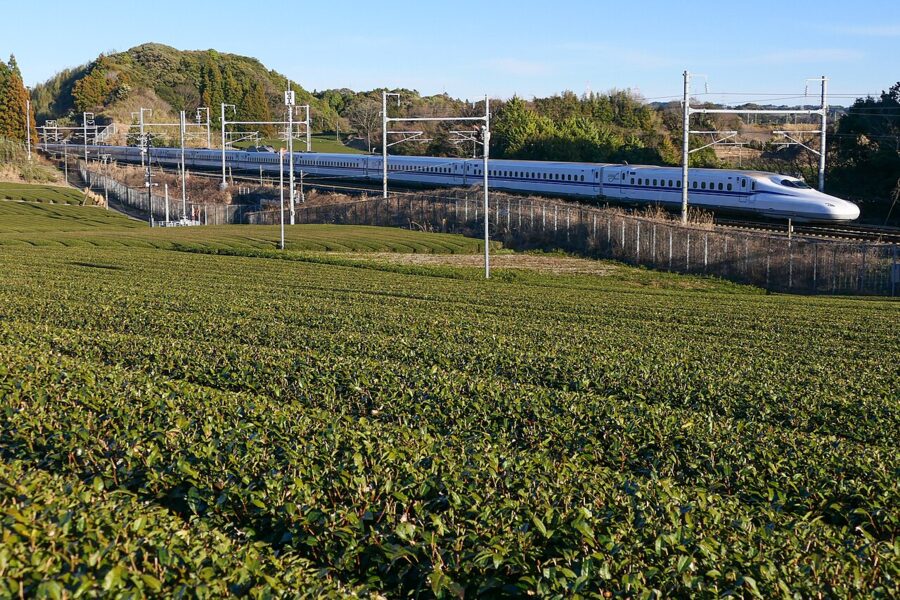
After Nagoya the line crosses the gap at Sekigahara between Gifu-Hashima and Maibara, the one stretch where weather regularly touches the timetable. Snow there means slower running and delays, so do not plan a tight connection in Kyoto on a snowy January day.


Luggage and peak periods
The oversized-baggage rule
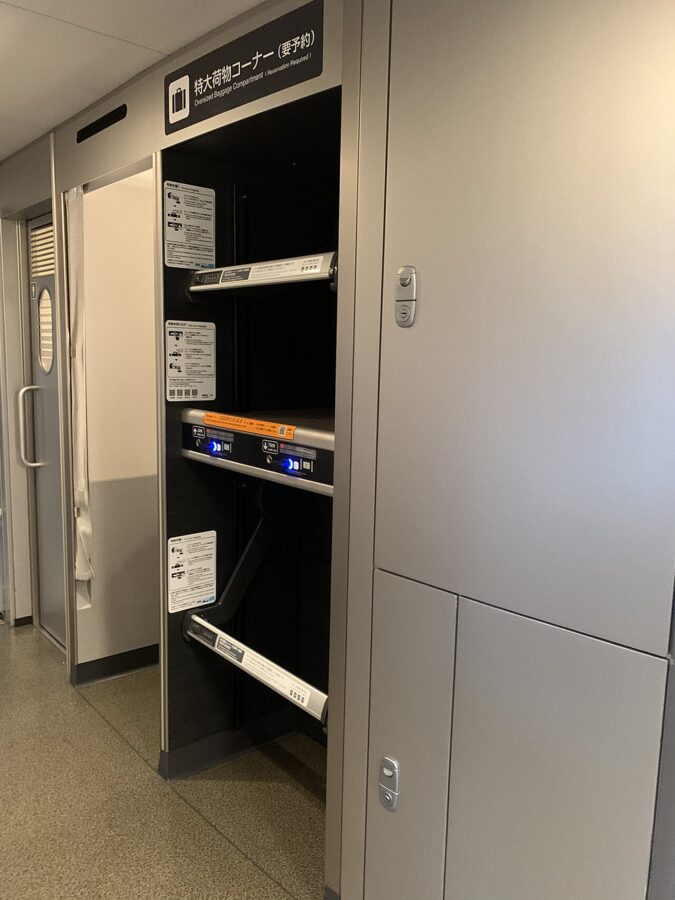
Most luggage needs nothing. Anything whose length, width and height add up to 160 cm or less goes on the rack or at your feet, and you may bring two pieces of up to 30 kg each. Between 161 and 250 cm, a large checked-in suitcase, the Tokaido requires a seat with an oversized baggage area (特大荷物スペースつき座席): a last-row seat with the space behind it kept for your case, at the normal reserved price. Nothing over 250 cm comes on board.
Book it at the machine, the ticket office, on smartEX or, for pass holders, on the JR Pass reservation site. Board without one and the conductor charges ¥1,000 (about US$6) and puts the bag where there is room. These seats go first: JR Central counts 57 on a 16-car Nozomi, 42 on a Hikari and 17 on a Kodama. With several big cases, I would send them ahead from the hotel by luggage forwarding.
Some trains also have a compartment in the deck for one case up to 80 × 60 × 40 cm. JR Central’s English pages describe it both as an open trial and as part of a reserved seat, so if you need it, book the seat that comes with it.

When the trains fill
The Tokaido is busiest at New Year, in Golden Week and at Obon in August, and JR Central now treats long weekends the same way. On those dates every Nozomi seat is reserved: cars 1 and 2 are sold as reserved, and a non-reserved ticket lets you stand in a Nozomi’s deck but not sit. The Hikari and Kodama keep their non-reserved cars.
For the rest of the 2026 financial year the all-reserved Nozomi dates are 25 December 2026 to 5 January 2027, 9 to 11 January and 20 to 22 March 2027. Kyoto adds the cherry blossom at the end of March and early April and the autumn leaves in November; in those weeks I would book the Friday evening train out and the Sunday afternoon train back before anything else, on smartEX as early as it allows or at 10:00 a month ahead. The busiest-season price adds ¥400 to a reserved seat.
Arriving at Kyoto
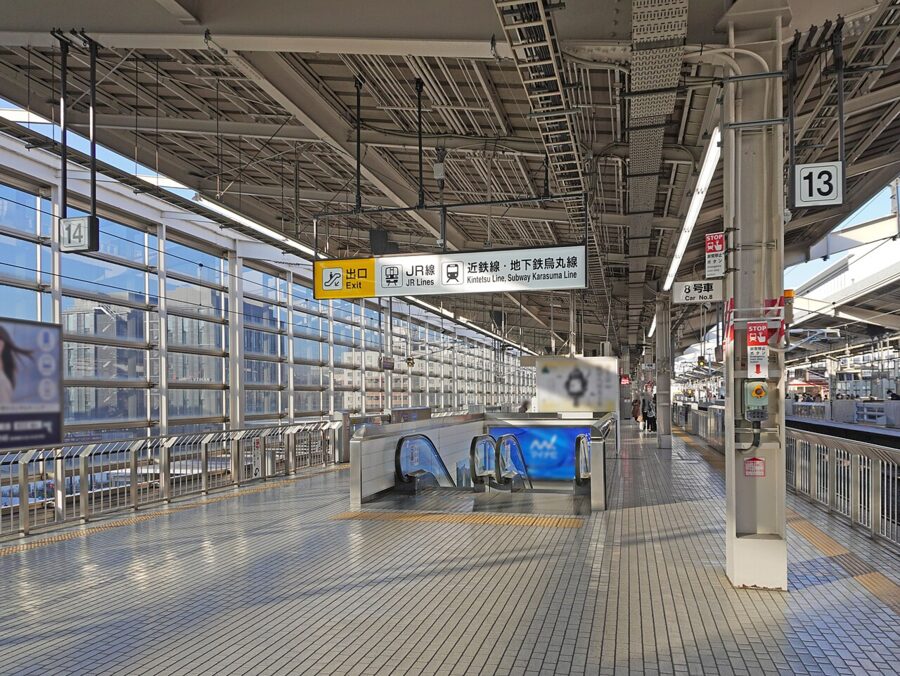
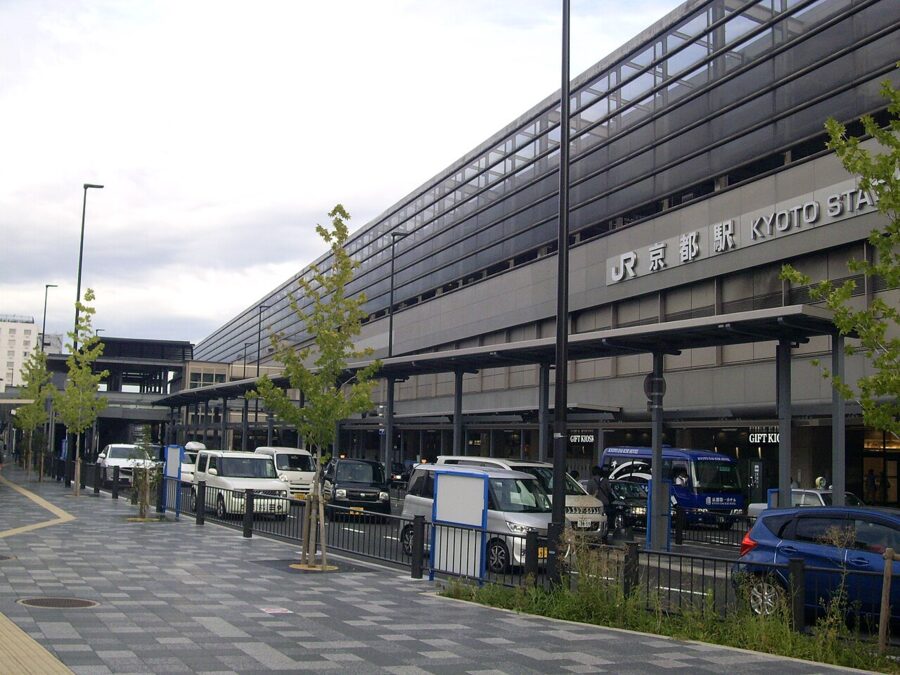
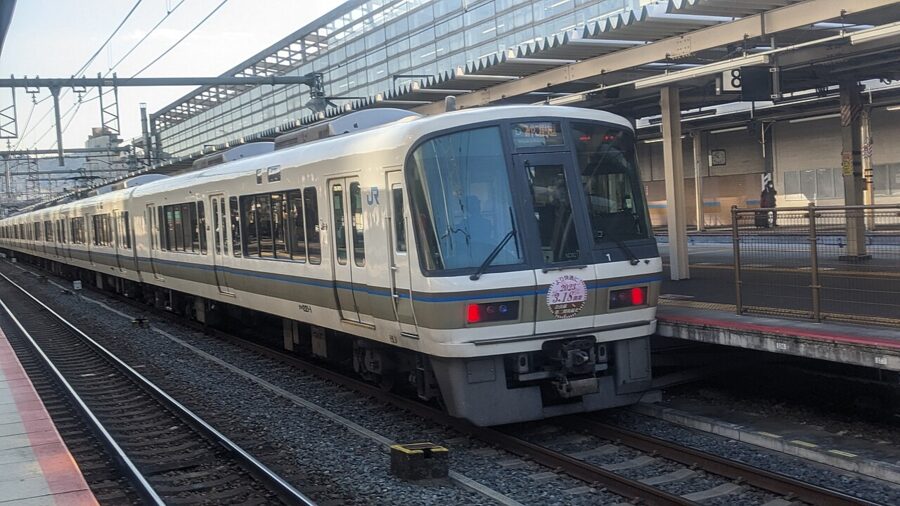
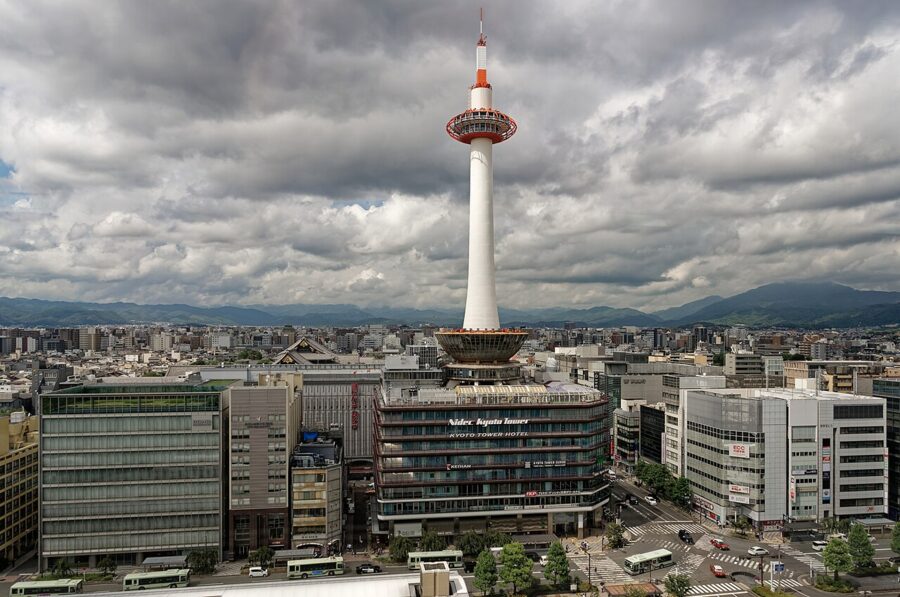
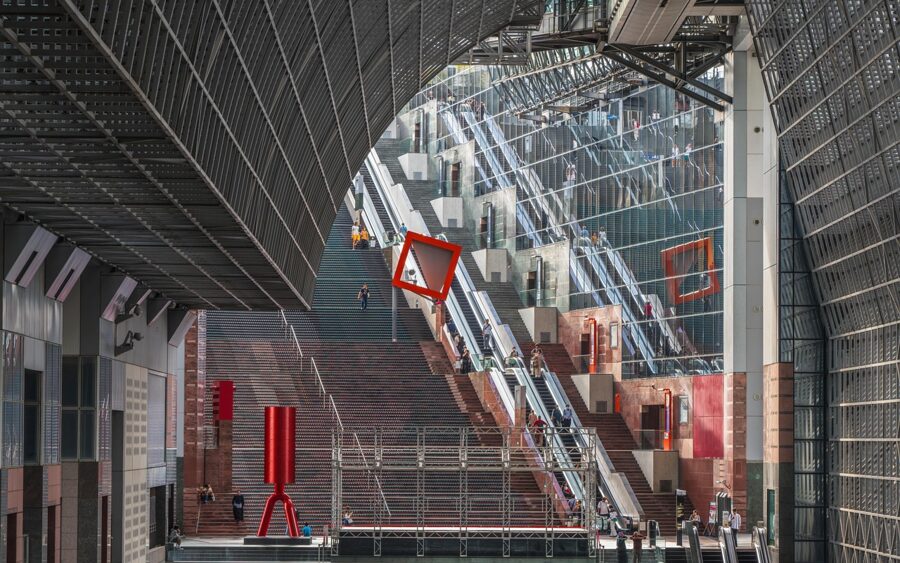
Kyoto Station puts the Shinkansen on its south side. Trains from Tokyo arrive at platforms 13 and 14, and everything else lies north of you: the JR lines, the main concourse, then the Karasuma exit facing Kyoto Tower and most of the city.
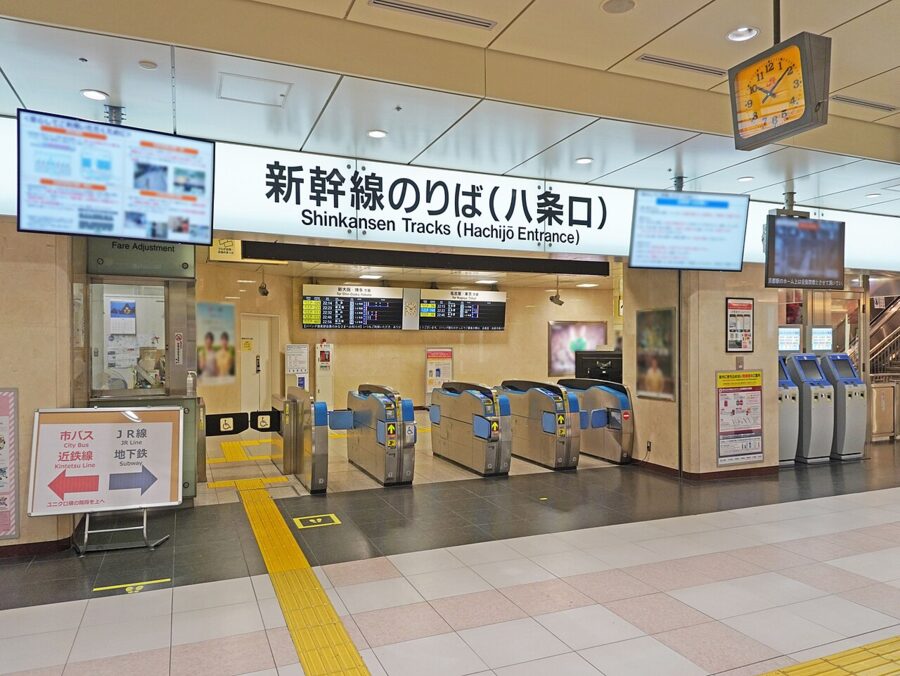
The Shinkansen Hachijo (八条口) gates let you straight out to the south side, with the highway buses, many hotels and a taxi rank. The Shinkansen Central gate leads to the walkway across the JR platforms to the Karasuma exit and the city buses. The transfer gates take you into the JR West side if your ticket goes on to a JR station.



The subway, the Nara Line and the buses
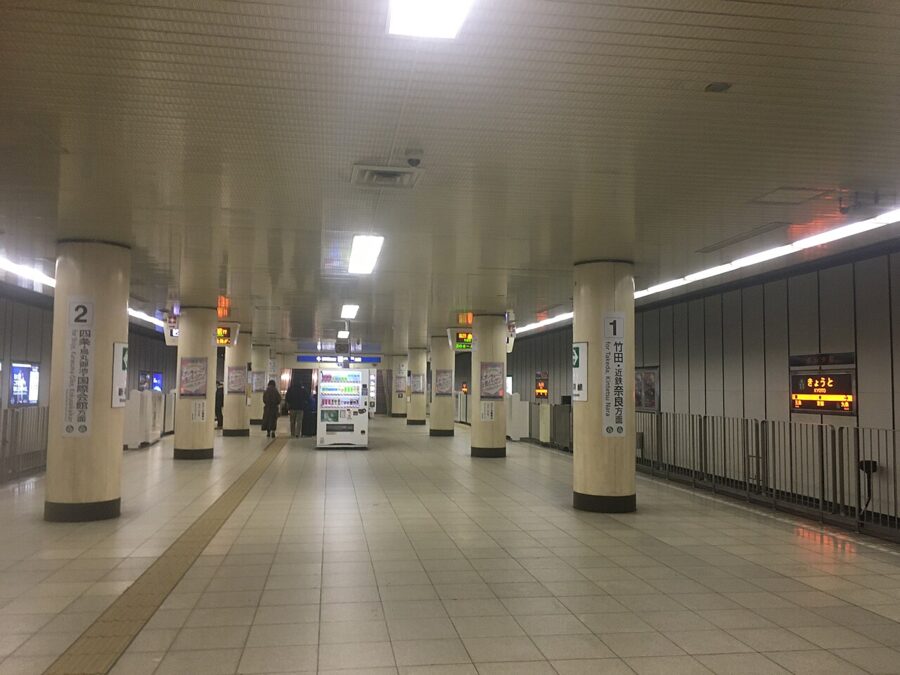
For the city centre, take the subway’s north-south Karasuma Line from Kyoto (K11), with its gates underground at the east end of the station. Shijo (K09), for the shopping streets and the Hankyu line, is two stops; Karasuma Oike (K08), for the Tozai Line, is three. Subway fares start at ¥220 (about US$1.40), and IC cards work.
For Fushimi Inari, take the JR Nara Line from platforms 8 to 10, the JR platforms nearest the Shinkansen: Inari is the second stop on a local train, with the shrine’s gate across the road. The same line goes on to Uji and Nara.
City buses leave from the terminal in front of the Karasuma exit, at a flat ¥230 as of November 2026. The city has set out a two-tier fare for the 2027 financial year, ¥200 for registered residents and around ¥350 to ¥400 for everyone else, and in the busy seasons the buses are the slowest way across Kyoto. With luggage I would take the subway or a taxi.



The cheap ways
The fare barely moves, but a few products undercut it, and all of them trade money for flexibility.
Platt Kodama
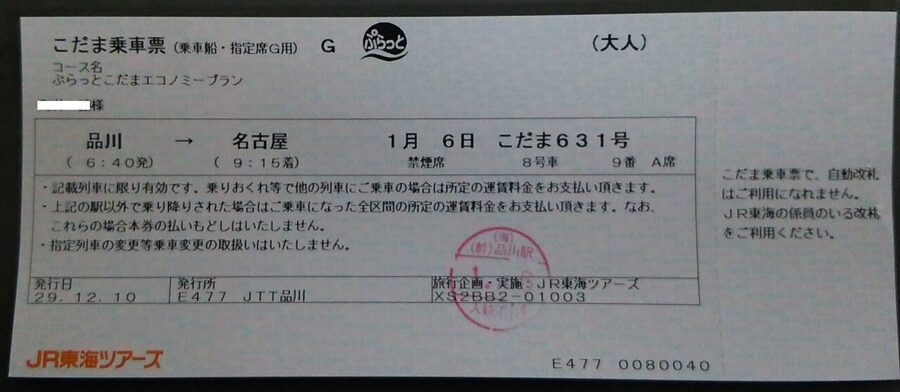
Platt Kodama (ぷらっとこだま) is a one-way package from JR Central’s travel company: a reserved seat on one named Kodama, plus a voucher. As of September 2026 Tokyo or Shinagawa to Kyoto costs ¥10,960 (about US$71) Monday to Thursday, ¥11,300 on Fridays, ¥11,470 at weekends and on holidays and ¥12,660 on busy dates, with the Green Car about ¥1,250 more. That is ¥2,890 under the station price for the same seat.
You book from 10:00 a month ahead until 23:30 the day before, on a Japanese-language site; the ticket is electronic, and the seat is on the Kodama you chose, not the next one with room. Since April 2026 the voucher is one drink or a local coupon worth about ¥1,000. It is not sold in Golden Week, at Obon or over New Year (26 December 2026 to 4 January 2027).
For three and a half hours with a window and a book, I think it is the best value on the line, and the Kodama stops at Shin-Fuji, where on a clear day the mountain stands over the end of the platform for the length of the stop.


The early-booking fares and the non-reserved seat
Three weeks ahead, the EX Hayatoku 21 Nozomi seat at ¥12,430 is the cheapest fast way to Kyoto, and EX Hayatoku 7 at ¥11,940 does the same for a Hikari or Kodama a week ahead. The plain non-reserved seat saves only ¥530 on a Hikari or Kodama, and I would not queue for that.
The overnight bus
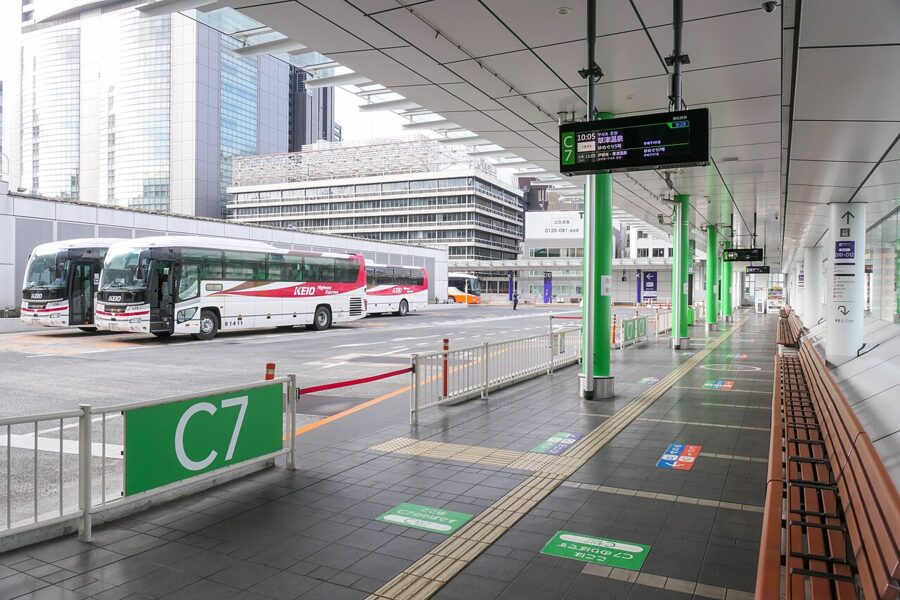
Kyoto has no airport, so the only real alternative is the road. Overnight buses leave Tokyo in the late evening, many from Busta Shinjuku above the south side of Shinjuku Station, and reach the Hachijo side of Kyoto Station early next morning. Fares change daily with the date and seat type, from a fraction of the Shinkansen price midweek to much closer to it on a holiday weekend. It saves a hotel night and costs a night’s sleep; I would do it once.

Osaka as the first stop instead
Every Nozomi runs on to Shin-Osaka, thirteen minutes after Kyoto, for ¥550 more: ¥14,720 (about US$95) reserved. If you are staying in Osaka or flying home from Kansai Airport, it can make sense to go through and see Kyoto by day; the JR Kyoto Line’s special rapid trains link the two cities’ main stations in under half an hour.
Kyoto first suits a short trip and anyone who wants the temples early, before the groups. Osaka first suits a longer one, with Nara, Kobe and Himeji in reach. The ticket is the same shape either way; only the last station changes.

Back on the seat map, the choice is the same square. Take an E on a Nozomi before 10:00 and look up at Mishima; or, if you would rather be early than quick, Nozomi 1 leaves platform 14 at 06:00 and is in Kyoto at 08:09.